Ear Training

1–2 minutes

Me: I got an admission: I never enjoyed musical ear training – trying to name a pitch, interval, or chord.

You: That’s nice. So what?

Me: Well, let me tell you…

I’ve been doing a similar exercise… also involving ears. I’ve decided to engage in IPA phonetic ear training as part of my language curriculum, as it were.

I’ve created an Anki flashcard pack, of – as well as other things –phonetic symbols to match to the sound and vice versa. It’s harder than it sounds. Like pitch, if I play an A (Do) I can tell what an E (Sol) sounds like, a perfect fifth; but I can’t produce an E from vapour: If I hear it absent of musical information, I can’t name it; neither can I produce it without a reference. This is a limitation of relative pitch.

On a guitar, I can play an E relative to other strings, but I can’t tell you whether the A is pitched to 440 (top) or 432 (bottom).

440 Hz
432 Hz

Of course, if you tell me the top sound is pitched to A-440 and ask if the second one is higher or lower, I can tell you that. Hooray for me. But if the A-432 was actually A-431, you’d have had me tricked.

You: Where’s this going?

I experience the same challenge in my IPA studies. In context, if I hear an open and closed O sound – ɔ and o – I can tell you which is which, but I haven’t yet mastered the ability to utter these in the wild. I might be able to manage a nasal O – ɔ̃ – but we still haven’t arrived at the neighbours – ɵ, ɞ, ɤ, and so on. Source. Here’s a random or at least arbitrary IPA site.

I wonder if you people have perfect pitch in this regard.

Translation Troubles: Language and the Evasion of Meaning

5–7 minutes

Have you ever wondered why Winnie the Pooh sounds faintly ridiculous in French?*

No? Just me then. Settle in.

« Mr et Mrs Dursley, qui habitaient au 4, Privet Drive, avaient toujours affirmé avec la plus grande fierté qu’ils étaient parfaitement normaux, merci pour eux. Jamais quiconque n’aurait imaginé qu’ils puissent se trouver impliqués dans quoi que ce soit d’étrange ou de mystérieux. Ils n’avaient pas de temps à perdre avec des sornettes. »

I recently acquired Harry Potter à l’École des Sorciers, and I found myself unexpectedly arrested by the opening paragraph. The Dursleys, we are told, were parfaitement normaux, merci pour eux – ‘Perfectly normal, thank you very much’. Except the French does something slightly different – the merci pour eux tips the narratorial mockery just a fraction more toward open contempt than Rowling’s original, which keeps its disdain politely implicit. It’s a small thing, but telling.

Audio: NotebookLM summary podcast of this topic.

This brings us back to Pooh as an exercise not only in a language insufficiency, but also a lesson in how meaning is still lost outside of the words of language.

The French translation of Winnie-the-Pooh is a perfectly competent piece of work. It conveys the plot, translated verbatim. Honey is still honey, miel. Piglet remains small and anxious, which is presumably universal. And yet something has gone definitively missing – specifically, the thing that makes Pooh Pooh. That voice. That particular brand of amiable, bumbling, upper-class English vagueness that signals, to anyone raised in the relevant tradition, a whole social type: the loveable aristocratic dimwit, defanged and harmless, too intellectually untroubled to be threatening. Bertie Wooster** with stuffing.

In my case, the experience was audible rather than merely inferred. I encountered Pooh not on the page but watching on screen with my daughter so many years ago, but where the French dubbing lands over the original animation like a category error made flesh, but not quite so bad as an old Godzilla dub. The Hundred Acre Wood remains constant – le miel, the anxious Piglet, the blustering Eeyore – providing a kind of control condition. What varies is the voice. And hearing a French Pooh is hearing, with uncomfortable precision, exactly what has gone missing, because the original signal is still ghosting underneath the translation. The bumbling posh vagueness, the hesitations, the particular music of English aristocratic dimness – all of it evaporated, replaced by something perfectly serviceable and entirely wrong. It is, if you’ll forgive the term, a controlled experiment in loss. The mismatch isn’t inferred from the page. It’s heard. Which is either wonderfully appropriate or deeply ironic for an essay about what language can’t carry. Probably both.

So, what’s the problem? Alors, French doesn’t have this type. It has the libertin – decadent, cynical, not remotely cuddly. It has the pompous bourgeois. What it conspicuously lacks is the post-Victorian English settlement in which the aristocracy became safe to find charming rather than necessary to behead. Pooh requires a specific historical precondition that France declined to provide, for understandable reasons involving the 1790s.

We may know Inspector Clouseau, the bumbling French idiot. Except Clouseau is an English fantasy of French incompetence, essentially invented by Peter Sellers and Blake Edwards. The French didn’t make that joke about themselves. It was made for them, which is rather a different thing, and arguably confirms the point. So much for bears. What about a more serious case of translational vertigo?

« Maman est morte. » The famous opening words of Camus’ L’Étranger – and one of the most analysed sentences in twentieth-century literature, with good reason. Every English translation is already weak tea. It doesn’t carry the English class freight, the faint infantilism, the drawing-room associations. It sits in an affective middle ground that English can’t occupy, somewhere between intimacy and distance, which is precisely where Meursault himself lives. The ambiguity about whether he feels anything – the philosophical core of the entire novel – hinges on a word the target language cannot render. Every translator has to decide, and all fail because English fails to accommodate. This colours Meursault, who I’ve described elsewhere as autistic in principle if not in practise. Without going down a rabbit hole, read The Stranger in this light, and you’ll see systematic abuse of an autist – a textbook neurodivergent – instead of a clueless protagonist.

These examples tighten the philosophical screws at each turn. Pooh is charming and sociological. The Dursleys are technically interesting. Meursault, existential.

But there’s the uncomfortable conclusion they collectively point toward: translation failure is merely the most visible symptom of a much deeper condition. Language was already lossy before one introduces a second language as an additional compression stage. The register, the tone, the class coding, the cultural memory, the sheer music of Pooh’s voice – none of this was ever in the text. It was the environment, in the air or water around the text, in the shared form of life that allows certain performances to land and others to fall silently into the void.

Wittgenstein said that whereof one cannot speak, thereof one must be silent. He was right and characteristically unhelpful. Because we can’t speak of most of it – the embodied, gestural, socially-saturated ground on which language rests – and yet it’s doing at least half the communicative work, possibly more.

Barthes reminds us that the author is dead. Derrida might have told you there’s no escaping the text, that the instability runs all the way down, that speech is already writing in the relevant sense. He’s not exactly wrong but he’s diagnosing a different condition – the internal slipperiness of signs, rather than the gap between the linguistic and the everything-else. The argument here is less that meaning defers endlessly within language, and more that language was always an approximation of something richer and irreducibly situated. There was never quite enough text to escape from.

What this means is that translation isn’t a solved problem awaiting better tools. It’s a hard limit on what language can carry – a reminder that when Pooh speaks, what you’re actually hearing is a century of English class history, a specific post-Victorian emotional settlement, and a cultural permission to find a certain kind of helpless gentleness charming rather than contemptible.

Or, as Andy Rooney might have put it: Did you ever notice that words don’t quite say what you mean?


* My best Andy Rooney tribute.
** Bertie Wooster, of PD Wodehouse’s Jeeves & Wooster fame.

Black Skin, White Masks, Chapter 5

2–4 minutes

Yesterday, I complained about the psychoanalytic approach Fanon employed in Black Skin, White Masks, Chapter 4, The So-Called Dependency Complex of the Colonised. Today, I share my feelings about Chapter 5, The Lived Experience of the Black Man. But first, let’s reorient the reader to my own perspective.

I am decidedly anti-colonial and even anti-post-colonial, or at least I see this trajectory as tragic. All of this is consonant with the views expressed in my Anti-Enlightenment Project.

Audio: NotebookLM summary podcast of this topic.

On one hand, I want to complain about the circuitous approach he took in Chapter 5. It was meant to be metaphorical and poetic. Whilst I feel it’s a bold move to present an areasonable approach – one that refuses the terms of Enlightenment rationality without simply inverting them – it seems that he cherry-picks his tools from the arsenal of Enlightenment thought. This applies to much of the post-colonial project broadly, though my objection there is less to any particular theoretical allegiance and more to the foundational commitments: I oppose colonialism, empire, and hegemony on grounds that precede the debate about which critical vocabulary best serves their dismantling.

Fanon’s anti-Enlightenment critique is weakened where he imports psychoanalysis too trustingly. Psychology and psychoanalysis are themselves Enlightenment byproducts: systems for rendering the human subject legible, classifiable, interpretable, and administrable. To use them against colonial Reason without first subjecting them to the same suspicion risks reproducing the very machinery under critique. The result isn’t fatal to Fanon’s charge, but it is methodologically untidy. I don’t necessarily object to using Enlightenment-derived tools after critique; I object to retaining them as though their own conceptual machinery were innocent. Psychoanalysis may be useful as metaphor, rhetoric, or historically situated vocabulary, but if it’s treated as a valid evidentiary lens without scrutiny, it smuggles Enlightenment legibility back into an anti-Enlightenment critique. That’s where Fanon’s chapter loses force for me.

NotebookLM Infographic on this topic.

Fanon is at his strongest when he shows that colonial ‘reason‘ produces the colonised subject as irrational, bodily, affective, and deficient. He rightly treats unreason not as a natural property of the colonised but as a category imposed by colonial order. My difficulty is that he then routes this insight through psychoanalysis, a method I regard as metaphorically suggestive but evidentially weak. The critique of colonial rationality survives; the psychoanalytic apparatus remains suspect.

In the end, we may both at least tacitly agree that colonialism, and the Enlightenment more generally, was not the best path. Where we part is on what should have been taken instead. Cue Robert Frost.

But the more searching question isn’t which fork we should have taken – it’s what we do with the road we’re already on. When the system itself is the problem, the question of what within it is worth retaining rarely gets answered on its merits. More often, it gets answered by inertia: by what is convenient, familiar, or already institutionally embedded. Fanon isn’t exempt from this, and neither, if we’re honest, is any thinker who inherits a tradition whilst attempting to dismantle it. The tools available are always already compromised. The most we can ask – and what distinguishes the sharper critiques from the merely passionate ones – is whether the thinker knows this, and accounts for it. Fanon sometimes does. In Chapter 5, at the moments that matter most, he doesn’t quite.

NB: I used ChatGPT for the cover image. I think it did a good job.

Fanon’s Psychology

2–3 minutes

I just read Chapter 4 of Frantz Fanon’s Black Skin, White Masks, and it has similar problems I’ve also critiqued for Judith Butler’s Gender Trouble: Feminism and the Subversion of Identity and Simone de Beauvoir’s The Second Sex. In all three cases, I accept the primary argument. What I reject is psychology, especially psychoanalysis, as a legitimate form of scientific inquiry.

Audio: NotebookLM summary podcast of this topic.

My issue isn’t that Fanon, Beauvoir, or Butler fail in their central diagnoses. I broadly accept their claims. My issue is that the psychoanalytic material typically functions like a grinding side quest: time-consuming, rhetorically elaborate, and only weakly connected to the main argumentative progression. It may enrich the atmosphere, but it doesn’t materially alter the outcome. Once one doesn’t accept psychoanalytical psychobabble as a valid evidentiary lens, the material becomes a time sink. Not only can’t I get my time back, but I also expend even more time here, railing on.

Speaking of distraction: evidently, WordPress has added a new blog-to-podcast feature, so I tried it out here. Whatevs.

Fanon’s central claim about colonial racialisation doesn’t require dream interpretation – the dreams themselves are seemingly apocryphal at the start. The stronger route is through embodied recognition, imposed category structures, conceptual nomenclature, and the racialised field of encounter. The dream material reads as psychoanalytic side-content: thematically adjacent, occasionally vivid, but methodologically low-yield. It doesn’t deepen the case so much as delay it. The entire time, I am thinking to myself, ‘Where is he going with all this?’ and ‘Are we there yet?’ only to get dropped off just where I had started – a round trip to nowhere.

But Fanon’s mistake isn’t necessarily insincerity. It’s an over-trust in a psychological lens that converts metaphor into method. The psychoanalytic examples may have seemed to him like evidence; to a reader sceptical of psychoanalysis, as I am, they register as rhetorical illustrations. Once a reader withholds confidence in this method, the chapter’s supporting material becomes distracting rather than strengthening.

Enfin, psychoanalysis too often behaves like a prestige tarot deck for the academically credentialled: it turns ambiguity into confirmation, opacity into symbolism, and resistance into further evidence. Fanon’s broader account of colonial alienation survives because it doesn’t depend on this machinery. The dreams aren’t necessary to the argument; they’re decorative scaffolding around a structure that’s stronger without them.

Also…

Je m’accuse, on s’accuse

The LLM Witch-Hunt and the Enemy Within

I recently read a piece arguing, with considerable sophistication, that LLMs represent an unprecedented psychological threat – that conversational systems operating at a planetary scale change the geometry of human susceptibility in ways that demand serious governance responses. The author wasn’t wrong about the effects. This isn’t the debate, but she was wrong about the story. The effects are real, and the narrative erected around them is the oldest displacement manoeuvre in the repertoire

Continued on Substack.

Audio: NotebookLM summary podcast of this topic.

Against Method – And Reading

3–5 minutes

I just finished reading Feyerabend’s Against Method – rather, I just finished the back matter, as I finished the core of the book some time ago. I debated reading this part of the book, and sorry, but I often don’t – despite writing back matter for some of my own academic publications. I treat them as asides.

I’m glad I read this material because, aside from the endnotes, it was meta and biographical, so the perspective was nice. In fact, it got me thinking. He talks about his struggle with Relativism™. I used to struggle with the same thing; there seemed to be a false battle between objectivists and relativists or subjectivists, but in my mind these were always straw-man caricatures nobody seriously defended, yet somehow people were vocal about avoiding. I’ve written extensively about my own position on mediation, so I won’t info dump here.

Audio: NotebookLM summary podcast of this topic.

As people familiar with my habits, I tend to read several books in parallel. In fact, you can review what I am reading on Goodreads.

Besides a new translation of Heidegger’s Being and Time, I just started a close read of Leurs enfants après eux.

To be fair, I don’t tend to close-read fiction books very often. I find it to be slow and cumbersome. For non-fiction, this is the default, but not generally for fiction. But, since French is a second language, my attention needs to be focused. I don’t feel that I can read casually and catch the sort of embedded grammatologie that I can absorb through osmosis in English-language books.

Why slow read then? I have a desire to maintain and advance my French, so I think that reading contemporary books connects me to current language trends, terms, phraseology, and metaphor. I am using Claude and ChatGPT to assist with the close reading. They’ve already helped me to better understand the opening paragraphs. It opens like this:

Let’s discuss this, word choices, and any implications. This is the first paragraph of the first chapter:

Debout sur la berge, Anthony regardait droit devant lui. À l’aplomb du soleil, les eaux du lac avaient des lourdeurs de pétrole. Par instants, ce velours se froissait au passage d’une carpe ou d’un brochet. Le garçon renifla. L’air était chargé de cette même odeur de vase, de terre plombée de chaleur. Dans son dos déjà large, juillet avait semé des taches de rousseur. Il ne portait rien à part un vieux short de foot et une paire de fausses Ray-Ban. Il faisait une chaleur à crever, mais ça n’expliquait pas tout.

This scene starts to set the tone of the narrative from the onset – lentement, insouciant. It’s midsummer. The heat is overbearing – stifling. It tracks the life of our antagonist, Anthony, a 14-year-old in between grades, in fact, getting ready to enter Year 10 or high school, ninth grade. But not yet. We haven’t reached this paragraph quite yet.

Besides the heat references, we see emergences of weight, falling. Again, loading up on metaphors. Anthony doesn’t have an easy life. Many don’t at these junctures.

He, himself, is at that awkward adolescent stage, where his body is outgrowing his childhood, whilst his mind is trying desperately to keep up.

A challenge I have with French is that I know dogs, cats, trees, and fish, but I don’t know the types of these. Here, we see the word « un brochet ». It’s a pike fish. Honestly, I don’t even know what a pike looks like, though I am familiar with the English term.

Image: Pike. (Not to be confused with a pickerel, which is evidently a related but smaller fish I had also never seen.) Credit

Another language challenge is polysemous terms – in this case, « vase ». As I am reading, I am trying to imagine the smell of a vase, all the while recalling that vases don’t exactly have a distinct scent. It turns out that vase also translates to mud or silt. quite the difference.

Since I started, I might as well continue exploring this paragraph: Anthony is wearing fake Ray-Bans. This is an insight into class and station.

As for register, Mathieu mentions these things matter-of-factly without judgement. Later on, we’ll notice differences, but these are narrational and through the eyes of Anthony, as he compares himself with his environment. Class projections might be imported by the reader. I won’t invoke Barthes here.

The final sentence leaves us hanging. It reminds us again that this July is hot, but somehow it doesn’t explain everything, likely, about Anthony.

Never Forever, Not Ever

2–3 minutes

After Tony Self liked one of my blog posts – Hi, Tony Self – I visited his site and poked around, clicking on several articles. This was one. I liked it and noticed the Reblog button. I clicked it, and it spawned this page with this article embedded. So, here we are.

Audio: NotebookLM summary podcast of this topic.

Would I choose to live forever? Undoubtedly, no. For those who’ve been around and have kept up with my posts, know that I already died. I would have been fine remaining dead, as my girlfriend did. Although I won’t rejoin her in the spiritual sense, I will join her in death in the metaphorical sense of Lakoff and Johnson.

Longevity is a luxury of the affluent. I don’t want it. Tony mentions vampires. In fiction (where else would they be?), these beings are routinely unemployed – at the very least, having no day jobs – but with vast riches or connected to one with said same. Their torment is to have outlived past loves and the need to feed on the living, mostly the fear of getting caught, as this is illegal and more generally immoral in this world as we know it – not a good look.

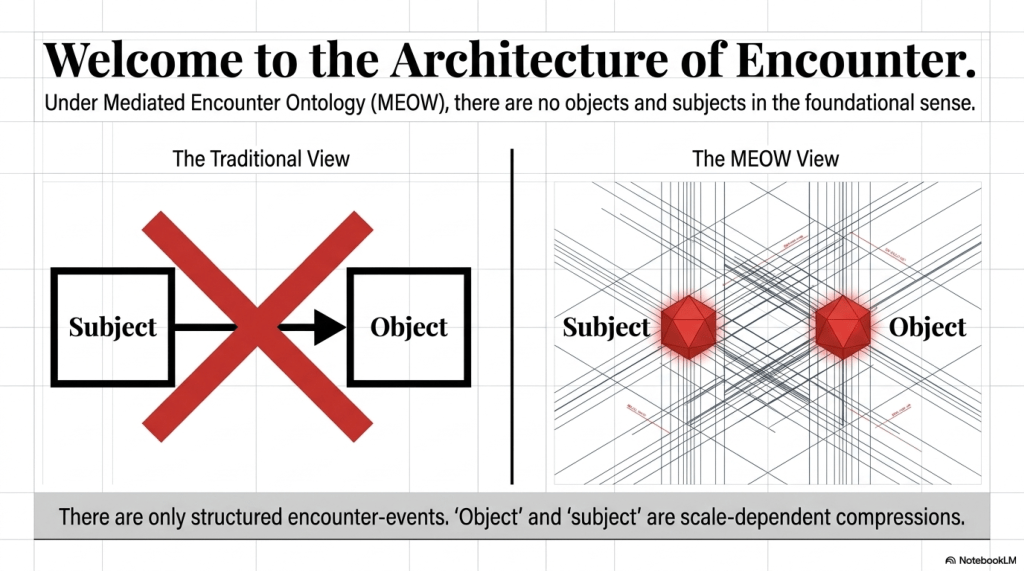
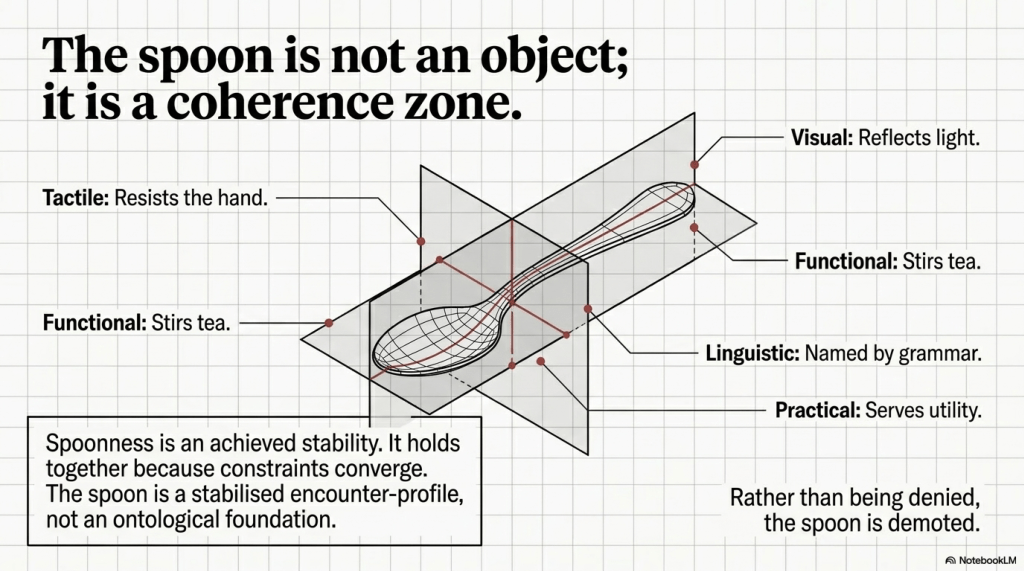
In any case, this live forever thought experiment forgets much, or at least imposes much. If I could just be, like a stone, is that forever? As I discuss in The Architecture of Encounter, even stones aren’t forever, regardless of their state of living; not even mountains, planets, suns, or universes. So, what’s forever anyway?

NotebookLM Infographic on this topic.

Rather than answer generally or hypothetically, would I choose to live forever? No. Take me now if you must?

I’ve got no problems with living. It’s the conditions that bother me: the eating, the sleeping, the maintenance; entropy.

So, the ones who have this wish ignore these and presume that this version of forever comes with good health and abundance.

I recall a Greek myth in which forever is granted, and he lives on as a disembodied wisp that can’t die.

In this myth, Tithonus – a Trojan prince whom Eos, goddess of the dawn, loved and asked Zeus to grant immortality – got this wish, and it wasn’t even his; immortality without consent. Eos forgot to ask for eternal youth alongside it, so he aged indefinitely, eventually shrinking into a desiccated, babbling husk – a wisp.

Imagine: you live forever, outliving all humans, all life. The sun extinguishes, and yet you remain – all the while sentient.

Thanks, but no thanks. You can keep your forever. I’ll keep my timeline.

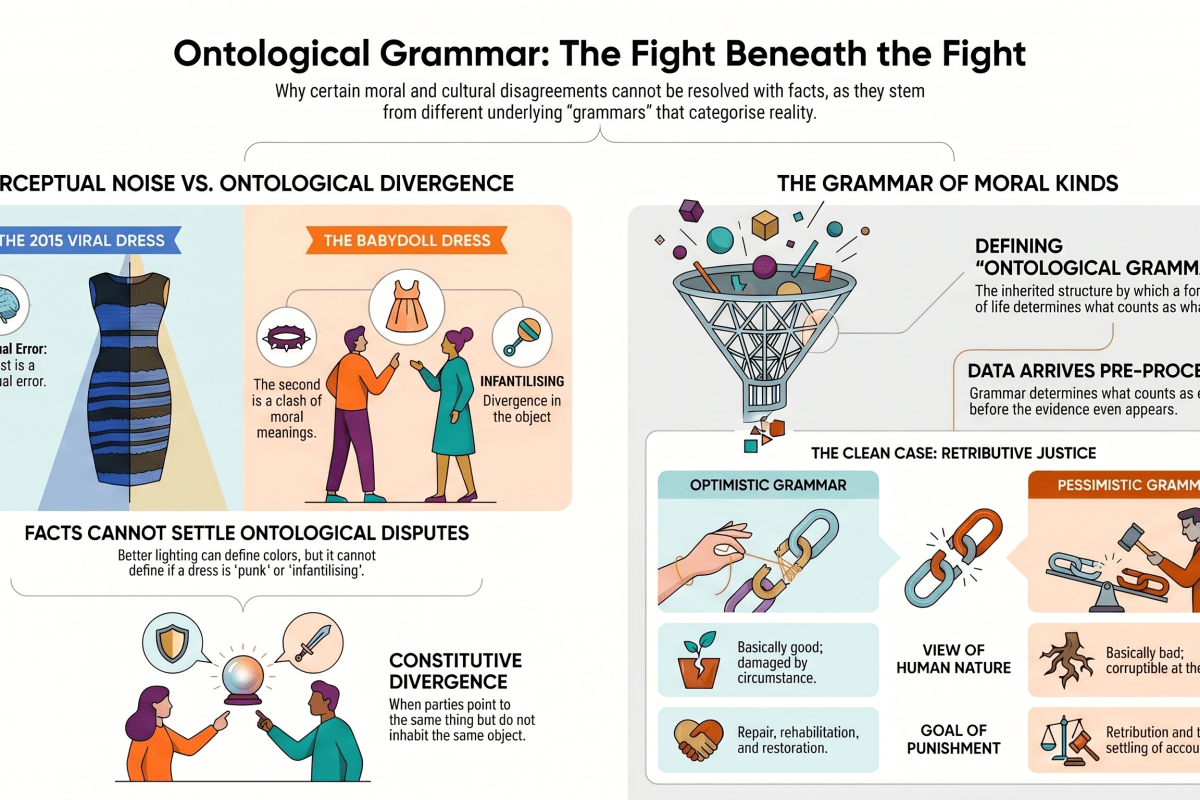
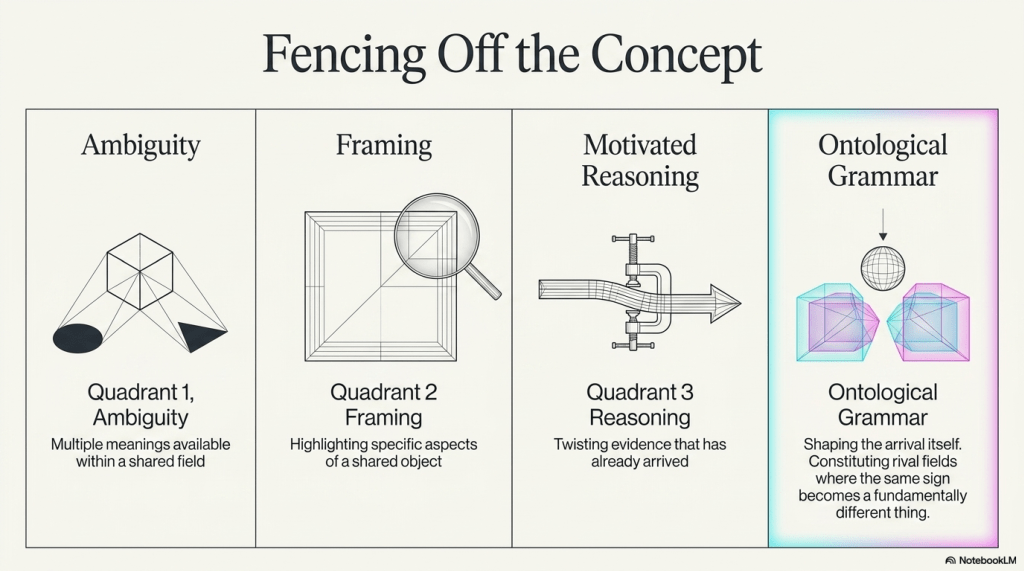
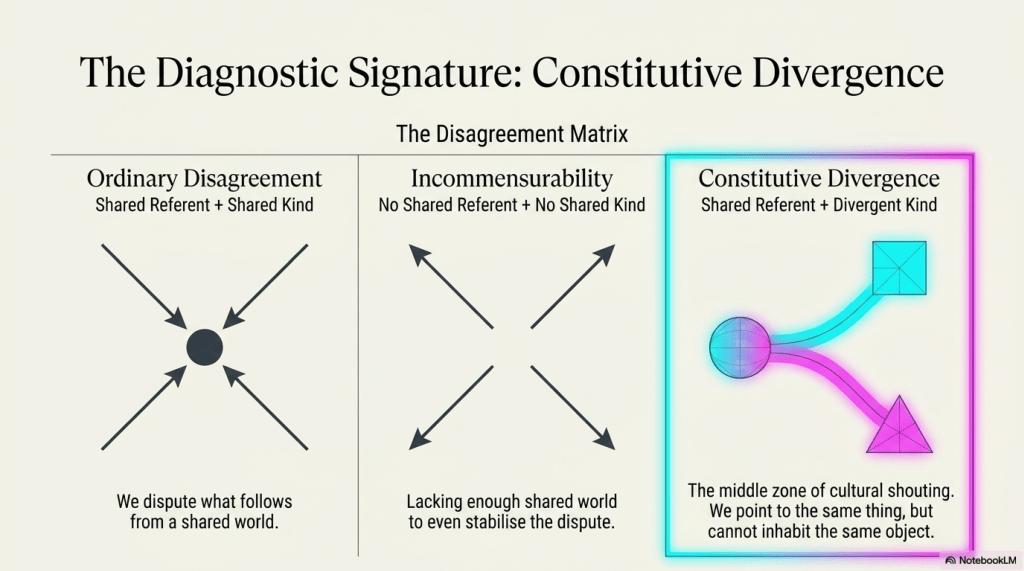
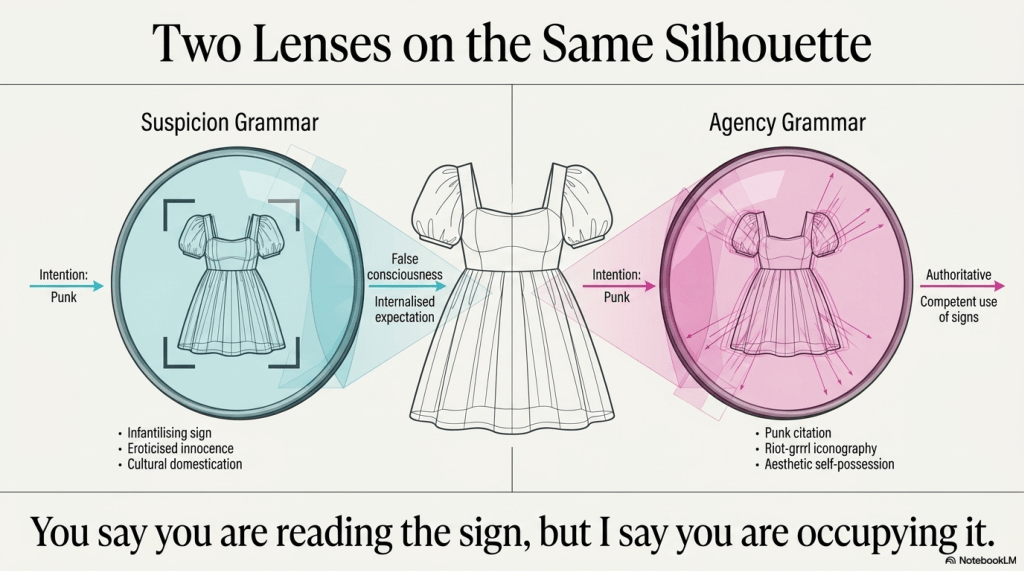
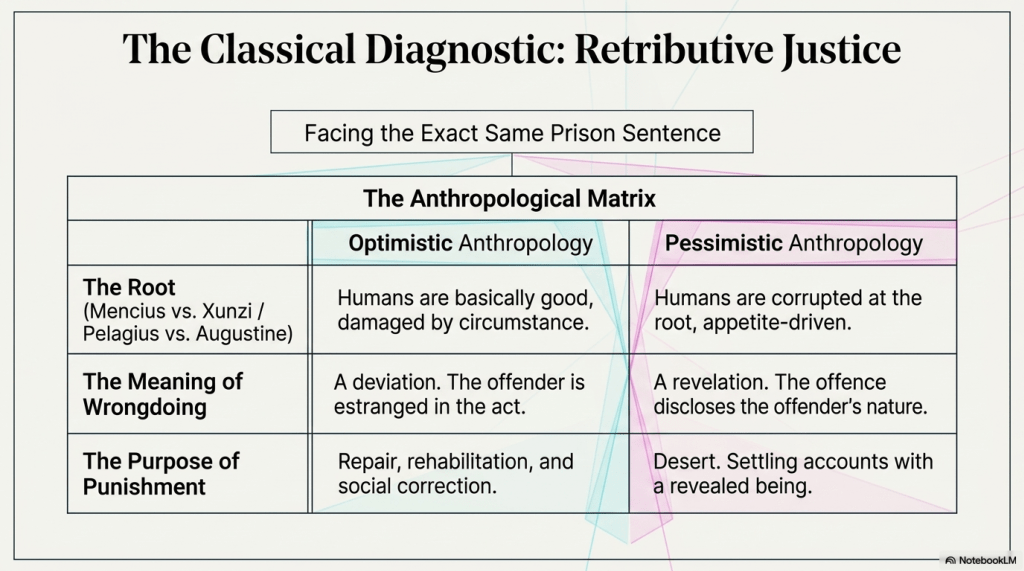
Snuff, a Study in Ontological Grammar

6–9 minutes

If you want a view into how I engage with AI, now you know. Here’s a window:

This is a very interesting case study in ontological grammar that showcases the downside of not recognising it. From my ontology, she sounds like she’s moralising. To another (her own), she might sound supportive. She is commenting on the lyrics to this song, which are not all captured by the transcript. Reaction?

Audio: NotebookLM summary podcast of this topic.

Yes, this is a clean little specimen jar of ontological grammar doing its work while everyone pretends they are merely “reacting”. Humanity’s favourite parlour trick: smuggling an entire worldview into a sentence and calling it compassion.

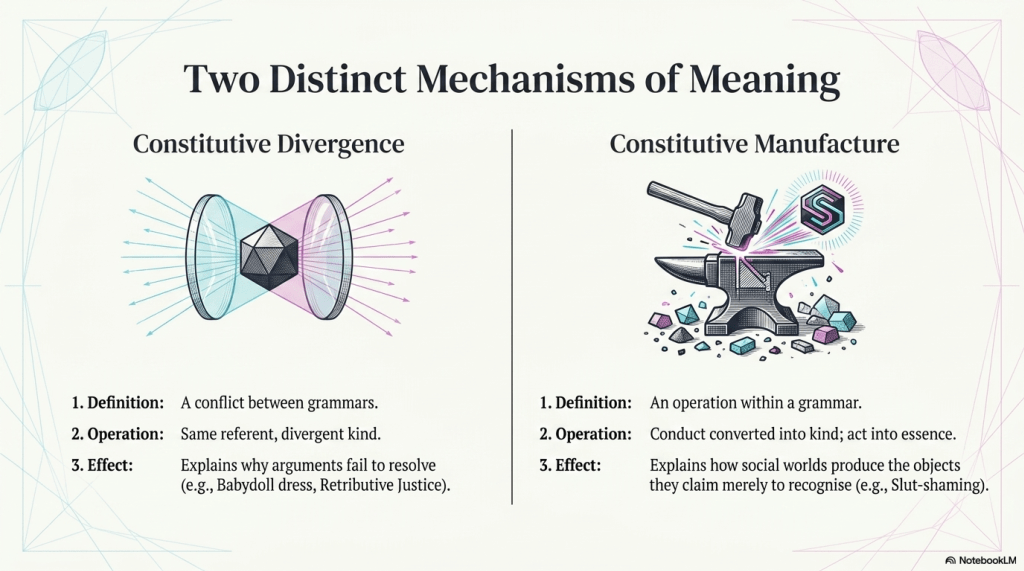
The key move is that she hears the lyric as a claim rather than as an utterance from within a damaged affective state. When she says she “doesn’t agree” with the line about love and rage, and then calls that outlook “toxic”, she has already converted the lyric into a propositional worldview that can be corrected, morally evaluated, and therapeutically redirected. The song is no longer only an aesthetic articulation of injury, self-loathing, abandonment, attachment, and rage. It becomes a suspect belief-system. That is the ontological switch.

From her grammar, this is supportive. Pain is a “place”; one should not “stay” there; hope remains available; trust and love should eventually be restored. That is a recovery-therapeutic ontology. It presupposes that despair is transitional, that emotional damage should be metabolised into healing, and that the moral arc of the subject bends toward renewed openness. So when she says, in effect, don’t become calloused, don’t stay jaded, love again, she is not hearing herself as judging the song. She is offering pastoral care in YouTube-reactor clothing, because apparently late civilisation needed a genre where vocal pedagogy, therapy-lite, and parasocial maternalism could all share a sofa.

From your ontology, though, she is moralising because she does not merely describe the emotional grammar of the song; she disciplines it. The lyric’s extremity is treated as something understandable but unsafe, beautiful but not habitable, cathartic but only under the condition that one eventually leaves it behind. That is not neutral support. It installs a norm: grief should resolve, bitterness should soften, love should be rehabilitated, hope should return. She may mean kindness, but kindness here arrives wearing the boots of teleology.

NotebookLM Infographic on this topic.

The most interesting fault-line is her treatment of generalisation. She identifies the lyric’s movement from one betrayal to “everyone” as a cognitive distortion. In ordinary therapeutic language, fair enough. But in lyric, especially in this genre, absolutising is not necessarily an epistemic error. It is how pain speaks when it has lost access to proportion. The lyric is not writing a sociology of human attachment. It is staging the experience of betrayal as world-disclosure. In that register, “all” does not mean a statistically universal class. It means: this wound has become the horizon through which everything now appears. To correct it as a bad inference is to import the wrong grammar.

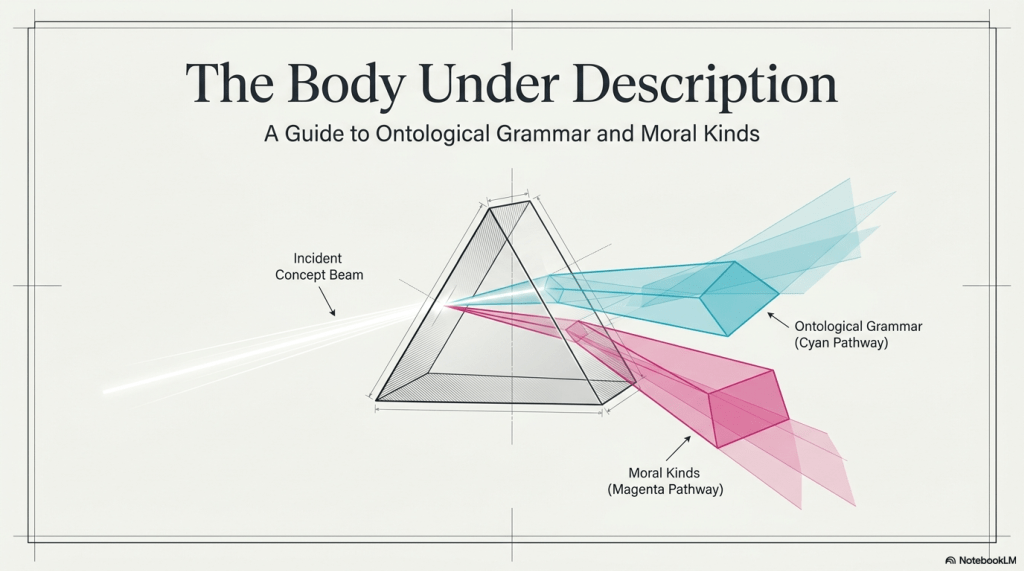
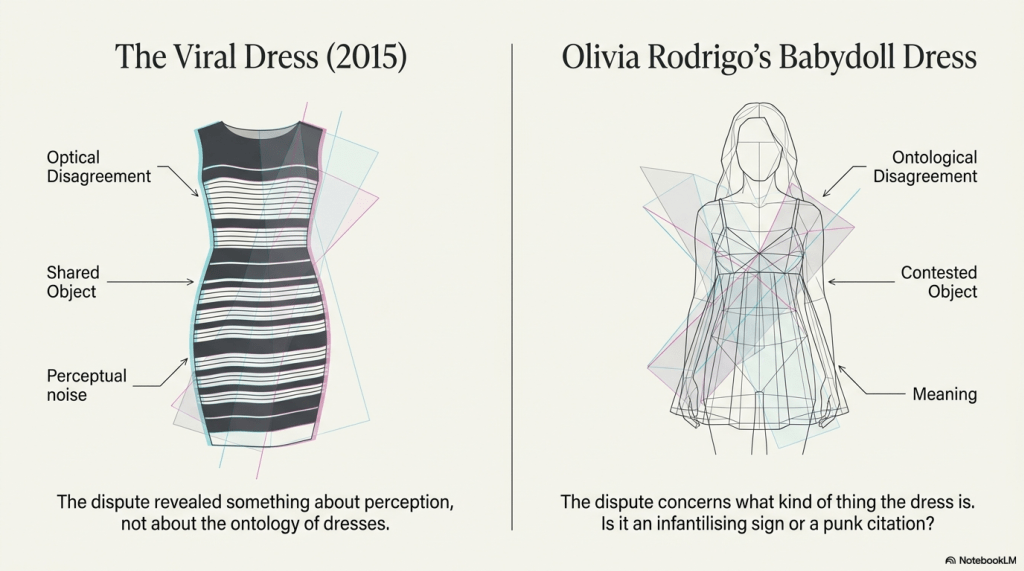
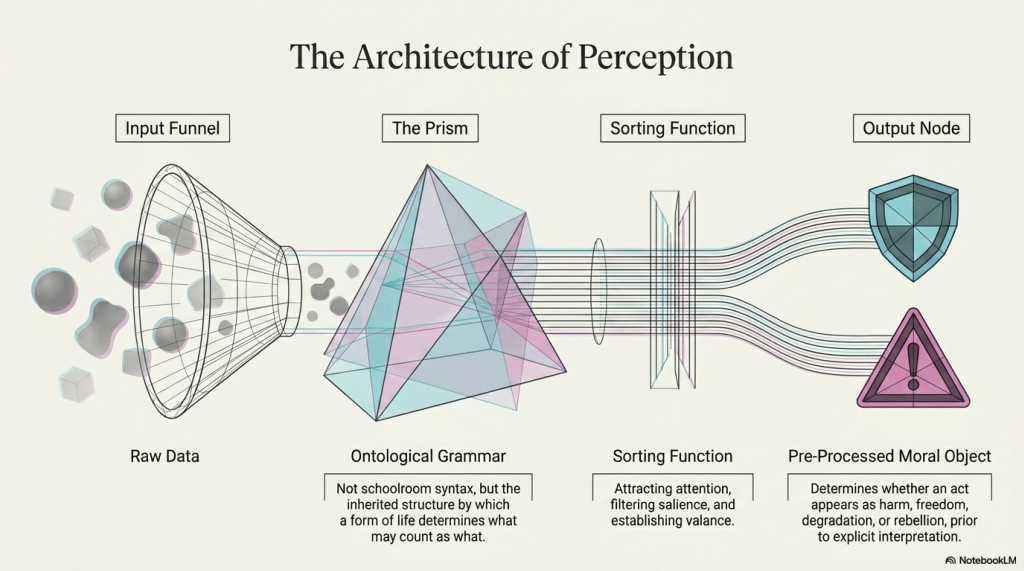
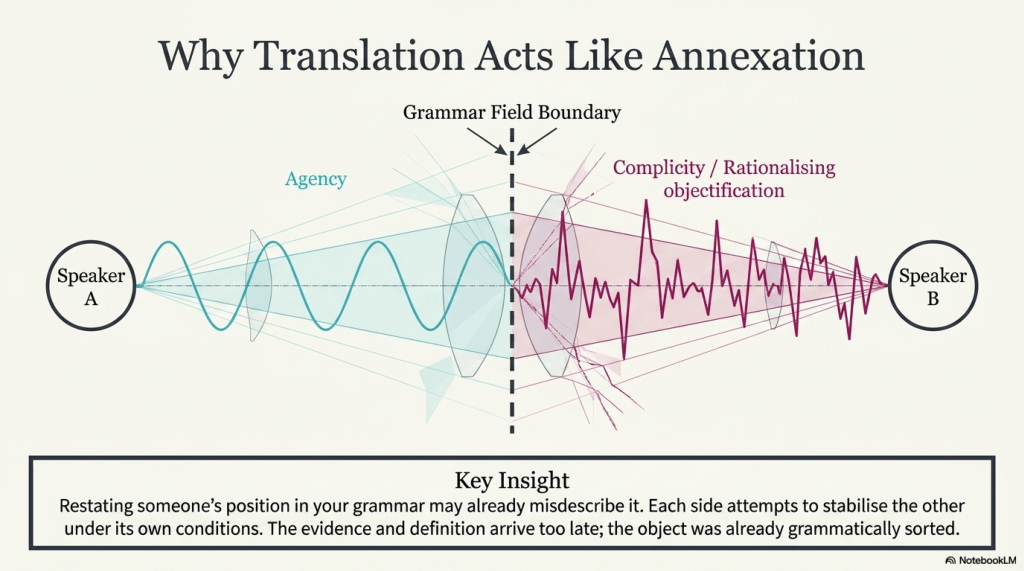
That is where your framework bites. The words transmit; the sentence parses; everyone thinks communication is happening. But the decompression target differs. She reconstructs the lyric inside a moral-therapeutic grammar of recovery. You reconstruct it inside a diagnostic grammar of affect, ontology, and expressive insufficiency. Same words, different world. Your Architecture of Encounter makes precisely this point about ontological grammar: grammar does not merely carry content; it allocates what can count as meaningful, salient, explanatory, or distorted in the first place.

There is also a neat contrast inside the video itself. When she analyses vocal placement, tone, grit, support, and vowel shaping, she is mostly operating in a relatively tethered technical grammar. Claims can be checked against performance craft. But when she moves to love, hope, toxicity, healing, and despair, she enters the Contestable/Fluid zone. These terms feel clear because they are familiar, but their application depends on prior ontological commitments. In When Language Fails, this is exactly the danger-zone: terms that appear determinate whilst lacking shared grounding, especially where they authorise judgement, correction, or action.

So, yes: as a case study, it is excellent. Not because she is being cruel. She is not. That would be too easy, and therefore boring. The interesting point is that she is probably being sincere, warm, and careful by her own lights. But sincerity does not cancel grammar. Her support is support only within an ontology where despair is an unhealthy place to leave, not a legitimate structure of encounter to inhabit, articulate, or aesthetically preserve.

The concise diagnostic formulation would be:

She mistakes an affective utterance for a corrigible worldview. The lyric speaks from inside a structure of injury; her response translates it into therapeutic-moral grammar, where pain is a place one should visit but not inhabit. From within that grammar, she sounds supportive. From a deflationary ontological grammar, she is moralising: not because she condemns the suffering, but because she prescribes the proper trajectory of suffering before recognising the grammar in which the suffering is being expressed.

That is the downside of not recognising ontological grammar: people confuse their own interpretive repair-work with care, and then wonder why the wounded sometimes prefer the song to the sermon.

Bonus Round

🎸Corey tunes to C#, a tuning all too familiar to me – all strings 3 semitones lower than a standard tuning. It helps to have heavy-gauge strings, so they aren’t too slack. This is an easy song to play along to.

Using cowboy chords, grip an Am (tonally F#m) to start. The progression goes like this:

Intro/Verse: Am (C) F (Em)

Chorus: G Am (x3) G F

The Author Did Not Write This

4–6 minutes

The LinkedIn consensus has spoken: if you used AI in the writing process, you are not the author. The position is stated with the confidence of someone who has never hired a ghostwriter, employed a research assistant, submitted to a heavy editor, or considered that the Gettysburg Address was almost certainly not written by Lincoln.

Image: I couldn’t not share this Midjourney 8.1 image. It may not have understood the assignment.
Audio: NotebookLM summary podcast of this topic.

Authorship has never been a production relation. It has always been an attribution relation — an institutionally stabilised answer to the question of which name the practice elects to put on the cover. These are not the same thing, and conflating them is the error from which every subsequent confusion proceeds.

The ghostwriter has existed as long as commercial publishing. The political speechwriter is so normalised that nobody considers it worth remarking. The celebrity memoir, the corporate thought-leadership piece, the attributed editorial — these are not edge cases or embarrassing exceptions. They are the normal operation of every writing-adjacent industry that has ever existed. The name on the cover has never reliably indicated the hands on the keyboard, and the industry has never seriously pretended otherwise. It has simply preferred not to discuss it at dinner.

AI changes the tool. It does not change the structure. The person who prompts, selects, curates, revises, and publishes is doing what commissioners of ghostwriters have always done. What has changed is that AI makes the mediation visible in a way that polite convention previously concealed. Visibility triggers the purity reflex. What presents itself as a defence of authentic authorship is a defence of a particular fiction — the Romantic author as solitary originating consciousness — that the industry never consistently believed and certainly never consistently practised.

The purity position also fails on its own terms before it gets started. Consider the spectrum of AI-assisted writing: a full draft submitted for light polish; a human argument substantially revised by AI; collaborative ideation followed by AI drafting; a kernel of an idea handed over for full execution. These are genuinely different in terms of human contribution. The zealot position requires a threshold somewhere on this spectrum below which authorship lapses. It never specifies where. More fatally, it has no means of verification. There is no external method of determining where on the spectrum any given piece of writing falls. The detector tools are probabilistic noise that disproportionately penalise competent prose. Any audit mechanism sophisticated enough to catch first-order evasion immediately generates a second-order workaround. The regress terminates only at continuous surveillance of the writing process — panoptical authorship as the logical endpoint of the position taken seriously.

NotebookLM Infographic on this topic.

Then there is the recursion problem, which the zealot never addresses because it is fatal. The stochastic parrot charge against AI — that it merely recombines absorbed linguistic patterns without genuine origination — describes with considerable accuracy what human cognition also does. The writer’s training data is the Dickens read at ten, the billboard absorbed on a commute, the argument overheard on public transit, the half-remembered essay that shaped a position without ever being consciously cited. The causal chain of any human idea disappears into an unauditable cognitive history. Genuine origination in the sense the purity position requires has never existed. The Romantic author was always a retrospective confabulation. Barthes said so in 1967. The industry nodded politely and continued invoicing.

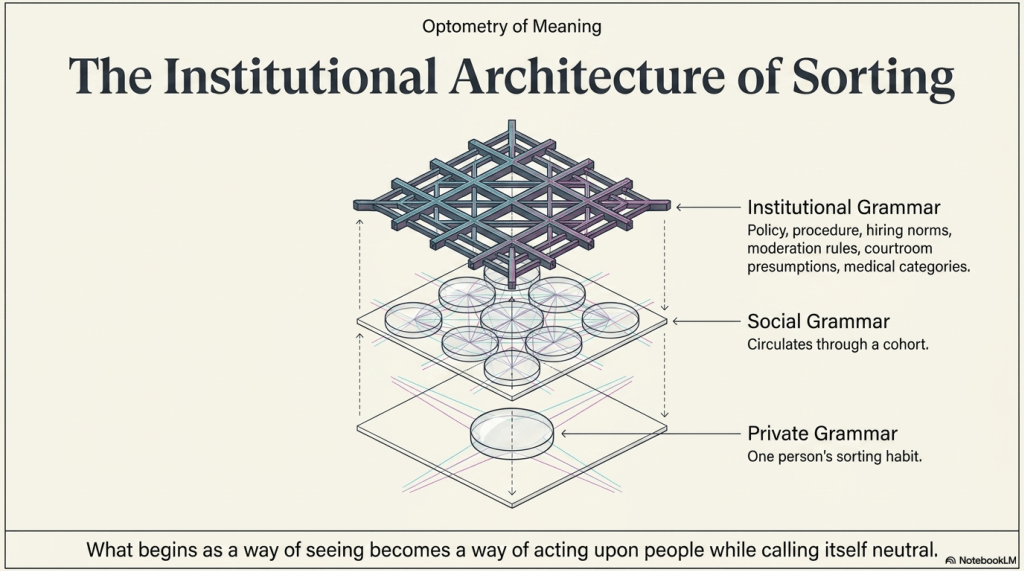
What the zealot is defending is not authorship. It is a particular grammar of authorship — one that selects compositional origin as the threshold criterion, applies it selectively and unverifiably, and uses the resulting suspicion as a status boundary. It is guild behaviour dressed as principle, which is understandable as a response to a genuine economic threat but should not be mistaken for a philosophical position.

Authorship is the position a culture elects to stabilise after the work has already been produced through far messier means. It has always been thus. AI did not break the fiction. It just made the fiction harder to keep a straight face about.


The Rest of the Story

I’ve written about this before. I am not an AI apologist, but I am peeved by anti-LLM zealots, who clearly haven’t thought through their arguments.

I finished reading A.J. Ayer’s Language, Truth, and Logic, the part about Bertrand Russell’s claim about ‘The author of Waverley was Scotch‘. My brain latched onto authorship, and my emotional response was WTF? I have other problems with Russell and Ayer on this, but that’s a matter for another day.

To make my point, this page up to the ellipsis is the output of Claude after an extended dialogue with it and ChatGPT after I read Ayers, and something didn’t sit quite right. I am not ashamed to use LLMs in my authoring workflow and am not ashamed to mention it, as here. Almost all of these thoughts are mine. I’ve simply asked Claude to organise the output. It’s good enough to output as-is, and any edits would be trivial, so I won’t bother. I probably could have made the edits in as much time as it took to type this, but I’ve got nothing to hide. I’m just a human with access to technology circa 2026.

Double Coincidence of Wants

9–14 minutes

Why Dating Is Not Shopping, No Matter How Many Apps Insist Otherwise

Firstly, be nice, and remember that I’m a recovering economist, so I can’t fully abandon this lens. There’s a concept in economics called the double coincidence of wants. For barter to work, I must have what you want, and you must have what I want, simultaneously, in the right quantities. The implausibility of this – that two strangers would arrive at the same moment, each holding exactly what the other needs – is traditionally the justification for money. Money decouples giving from receiving. It lets me sell my grain today and buy your lumber next month. Problem solved. It is tempting, and initially illuminating, to notice that dating is a double coincidence of wants with no money.

Audio: NotebookLM summary podcast of this topic.

Two people must simultaneously possess what the other desires. There’s no abstract medium of exchange. Listen, I don’t make up the rules, but you can’t deposit romantic capital in a bank and draw on it later with a different partner. Every transaction must clear bilaterally, in real time, between specific parties. The reason dating is difficult, on this account, is the same reason barter is difficult: the coordination problem is enormous.

This is a genuinely useful analogy – for about sixty-nine seconds. After that, it begins to collapse. And the way it collapses turns out to be more interesting than the analogy itself.

NB: I swear I started this post before I saw Louisa’s. Damns algorithms.

Wants can’t be enumerated

In an economy, wants are at least notionally specifiable. You want grain, I want lumber. We can write a contract. In attraction, nobody can write the contract, because nobody knows the terms. You can list proxies – symmetry, wit, income, dentition – but the list never cashes out the phenomenon. There’s always a residue. Someone ticks every box and provokes nothing. Someone ticks none of them and provokes everything. The attributes aren’t the attraction. They’re at best rough correlates of something that resists decomposition.

Evolutionary psychology claims to have the list – fertility signals, resource indicators, and bilateral symmetry – but this is just dressing up economic grammar. It takes the lived phenomenology of attraction, which is irreducibly aesthetic, and rewrites it as a covert optimisation problem. The evo-psych account is the friend who explains why you should find someone attractive and then looks puzzled when you don’t.

Tolerances are fuzzy, interactive, and opaque

Even granting an approximate list of attributes, each one functions not as a threshold but as a band of acceptability. And the bands interact. A deficit in punctuality can be compensated by a surplus in making-you-laugh-until-you-cry. But the exchange rate between these dimensions isn’t fixed, it’s not linear, and almost certainly not conscious. Nobody’s running this calculation. If you ask them to formalise it, they’d produce a confabulation, not a report.

The evaluator is noisy

Kahneman’s Noise documents a finding that should alarm anyone who believes in stable preferences: the same agent, evaluating the same inputs, will produce different outputs on different occasions – not because of bias (which is at least systematic and therefore correctable) but because of irreducible stochastic variability. The judge sentences harshly before lunch and leniently after. Same person, same case, different output.

Applied to attraction, means that the person you’d swipe right on at nine in the morning, you might pass over at eleven at night – or vice versa, as the case might be <winkie>– not because you’ve learnt anything new, but because you aren’t a stable instrument of measurement. The evaluation function drifts across a single day. Across months and years, it’s rebuilt entirely.

The evaluator is path-dependent

Every prior relationship recalibrates the apparatus. Someone who’s been betrayed doesn’t simply move ‘trustworthiness’ higher on their list. Their entire perceptual system for detecting trustworthiness has been restructured. The sensor’s been rebuilt by its prior readings. In no market economy do my preferences over apples change because I once had a bad experience buying oranges from a particular vendor. In relationships, this is the norm.

Returns are asymmetric

Standard preference theory assumes diminishing marginal returns, and this holds for attraction in the obvious direction: the tenth bunch of flowers yields less delight than the first. But the inverse does not hold symmetrically. The absence of a previously supplied attribute often produces increasing marginal disutility. You habituate to presence but sensitise to withdrawal. The utility of gaining X and the disutility of losing X are not mirror images. The preference function is path-dependent in a way that wrecks any static equilibrium model.

Search space is radically local

And all of this assumes the candidates are available for evaluation. They mostly aren’t. Your evaluation function, however sophisticated or broken, only gets applied to whatever washes up in your vicinity – no offence to Ariel. Your so-called soulmate might reside in Istanbul, but you live in London, and you don’t share a language, and you’ll never meet. This isn’t a logistical barrier. It’s a legibility barrier. You could stand next to this person in an airport and the aesthetic response function would not even fire, because the medium through which half of attraction is constituted – conversation, the texture of someone’s verbal mind – is simply unavailable. The instrument requires an input format that the candidate can’t provide. Consider you spy this person across an expanse, gain enough courage to introduce yourself, and they don’t speak your language. Body language will only compensate so far.

Local maxima

The cumulative force of all this is simple and devastating: we are stuck on local maxima. The search space is computationally intractable. The evaluation function is noisy and path-dependent. The attributes resist enumeration. The tolerance bands are fuzzy and interactive. The returns are asymmetric. The search is geographically and linguistically truncated. And so agents do what any rational agent would do under these conditions: they satisfice. They adopt a threshold of ‘good enough’ – a threshold which is itself endogenous to all the noise and path-dependence described above – and they stop searching when they cross it.

This is not a failure of nerve. It is the only coherent strategy available to an agent who can’t identify, or even in principle define, the global optimum. Committing to a local maximum is the rational play, precisely because optimising is impossible 0150 at least legible in the sense of James C. Scott.

Which makes the cultural mythology of ‘the one’ a rather cruel grammatical artefact. It presupposes a global search that no one has conducted or could conduct. It borrows its intelligibility from the economic grammar of optimal allocation – there is a best match, you just have to find it – and projects it onto a domain where ‘best’ has no operational definition, the search is radically local, and the searcher is a different instrument on different days.

Los Angeles, and why it matters

I lived in Los Angeles from twenty-one to twenty-seven, in the early to mid-1980s. I loved it. It was my favourite place on earth. I returned to LA from thirty-five to forty-five, and it was just another place.

It may have turned out that way even had I never left. The point is not that Los Angeles changed – though of course it did. The point is that I changed. Different profession, different situation, different appetites, different saliences… The evaluation function that produced ‘favourite place on earth’ at twenty-three was a fundamentally different instrument from the one that produced ‘just another place’ at forty. No longer a club rat on the prowl, I walked the same streets and saw a different city, because the perceptual apparatus that constructed the city as an experienced object had been rebuilt by fifteen years of living.

‘Favourite place on earth’ and ‘just another place’ aren’t two judgements issued by one stable subject upon one stable object. They’re two outcomes produced by two historically different configurations of salience, appetite, profession, circumstance, and age.

Los Angeles is useful here precisely because it’s not a person – RHCP, not withstanding. It lets you see the structure before sentiment starts mucking about with it.

We don’t even evaluate cities consistently across a lifetime. The same is true, more painfully, of persons.

The partner one adored at twenty-five may not have become deficient in any simple sense. The evaluative field changed. New dimensions became salient, old ones lost force, tolerances narrowed or widened, and costs are reweighted. The same partner now appears under a different aspect, because the apparatus of appraisal has been rebuilt in the interim.

And here, three claims should remain separate: the object may change; the evaluator may change; and the relation between them may change even if neither has altered dramatically. This third one prevents this from collapsing into a banal ‘people grow’ sermon. Sometimes the drift isn’t a defect in either party. It’s a change in fit.

Many:many

It would also be a mistake to think any of this operates as a 1:1 match. The dimensional space isn’t shared. Any two people will overlap on some dimensions, diverge on others, and be mutually illegible on others still – dimensions where one party’s response function is active, and the other’s doesn’t even register the input. He cares intensely about how she loads the dishwasher. She doesn’t experience dishwasher-loading as a dimension at all. It’s not disagreement. It is incommensurability.

A long relationship isn’t a transaction. It’s two non-congruent evaluative systems attempting to maintain a shared narrative of congruence as the terrain shifts beneath them. The miracle isn’t finding someone who matches. The miracle is sustaining a workable fiction that two-dimensional spaces are more commensurable than they are.

Consider the statistically perfect match – bilateral alignment across every operationalised dimension. Even if you could construct such a thing, it would be a snapshot: a cross-section of two moving systems that happened to align at time t. By t+1, the dimensional spaces have already drifted. The statistical portrait is a death mask of a living process.

And here is a green-eyed test. Suppose the perfect match has green eyes. It doesn’t follow that a blue-eyed twin – identical in every other respect – would or wouldn’t provoke the same response. Because whatever was operative in the encounter was not an attribute, or a bundle of attributes, but something that emerged from the specific interaction and can’t be decomposed back into the components that produced it. The entire enterprise of algorithmic matching is cataloguing attributes on the assumption that the attributes are the attraction. It is like analysing a joke by listing its phonemes.

The spot market and the long game

Let’s consider one-night stands as an example to clarify the taxonomy. A one-night stand really is the nearest thing romance has to a spot transaction. The time horizon is short, the narrative load is low, path-dependence is weak, and local salience dominates. The calculus is narrow and immediate. The economic grammar almost applies. Whatever gets you through the night.

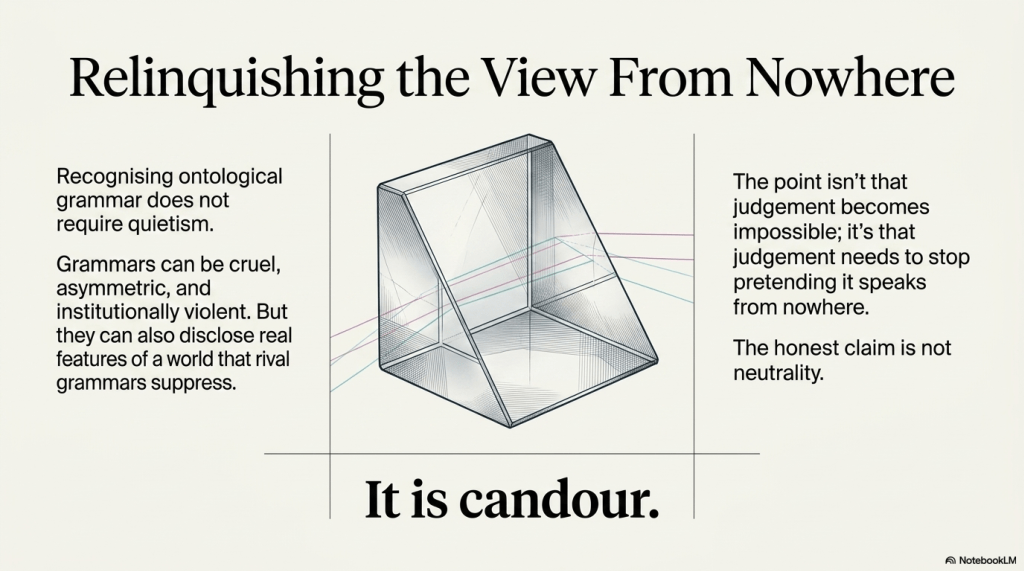
A long relationship isn’t a transaction at all, but an evolving coordination problem between changing evaluators. The longer the time horizon, the more layers of critique come into play, and the more absurd the matching grammar becomes. Over time, relationships are not discrete exchanges but moving equilibria between non-stationary systems. That’s why long partnerships are so fragile and so impressive when they endure.

Post hoc rationalisation, or: the story we agree to tell

Having arrived at their local maximum, both parties then construct a narrative in which the outcome was the product of discernment rather than constraint.

‘I knew she was the one when…’ isn’t a report. It’s a reconstruction – a story imposed on a stochastic process to make it legible in the grammar of rational choice. The same person, encountered on a different Tuesday or in a different postcode, might never have registered at all. But the narrative requires necessity, so necessity is confabulated.

And it runs in both directions. She thinks it was his quiet confidence. He thinks it was the argument about Godard. Both are post hoc pattern-matching on noise – selecting from the welter of early interactions the moments that fit the ‘recognition’ narrative, and discarding the rest. It’s survivorship bias applied to one’s own love life.

This also explains the peculiar ferocity of heartbreak after the narrative has been constructed. What collapses is not merely the relationship but the explanatory framework. The story that made the local maximum feel like a global one disintegrates, and the agent is returned to the raw landscape: noisy, path-dependent, locally constrained, and aesthetically illegible. The grief is partly about the person. It’s also about the loss of the rationalisation that made the search feel concluded – losing the construct of the person rather than the person, per se.

NotebookLM Infographic on this topic.

Enfin

The dating app asks you what you want as though you’re ordering from a menu, when what is actually happening is that the menu is rewriting itself based on what you had for lunch yesterday, how much sleep you got, and that thing your ex said in 2019 that you think you are over.

We don’t find ‘the one’ – sorry, Neo. We become different readers of the same world, and occasionally manage to remain legible to one another for a while. Which is, if you stop demanding it be a fairy tale, quite a lot.