Somebody somewhere made mention of The Social Construction of Reality, so I asked ChatGPT if I should engage with it directly, which is to say, to read it. Already believing that what we perceive and experience is a subjective construction, albeit shaped by relative forces, I thought it might be a lot of choir preaching.
ChatGPT admitted that this was partially true, but that the benefit would be to get a sociological rather than strictly philosophical account. Having read the introduction and started the first chapter, I already feel this to be true. The authors make it clear that Sociology is just a special philosophy that doesn’t aim quite so deep and has a specific and obvious focus on societies. Fair enough.
So far, I’m glad I picked it up. It’s relatively short, which was a deciding factor, and it’s giving me a break from the 1066 material I’ve otherwise been consuming as of late.
I don’t have more to add, save to say, so far so good. I look forward to the rest. I’ve got more to do today, including editing a video for YouTube, which is me rather than AI for a change – a process that reminds me why I use AI in the first place: so much time investment.
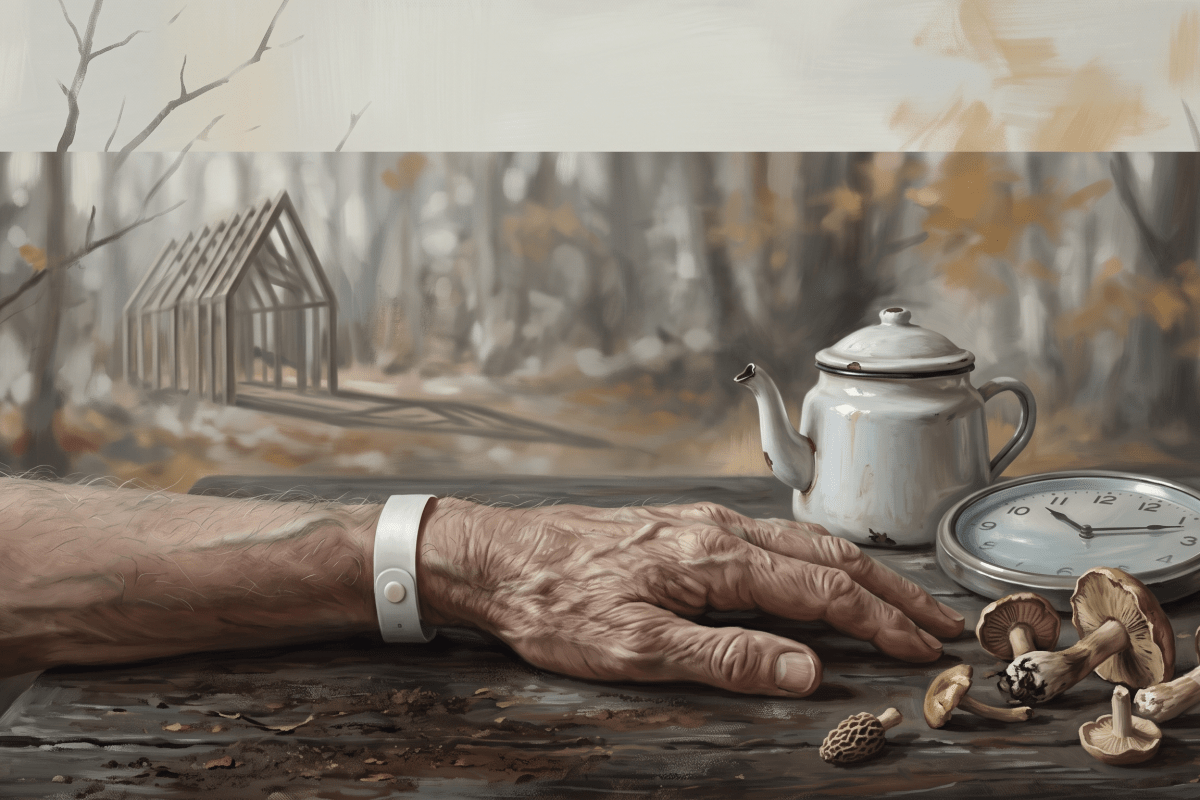
NB: I am actually listening to an Audible version of this book. Whilst searching for an apt cover image for this post, I found the associated image, and it is as apt as one might find.
As Independence Day is upon the United States of America, I considered some counterfactuals. What if Europe fails to reach the Americas until a century or more late, and we watch the delay from the vantage of the peoples already here, going about the business of history without a Columbus to interrupt them? Then came the question everyone eventually asks about their own good ideas, in the tone of a man checking whether the milk has turned: has this been done before? Of course, it had been. Spoilers follow – sort of.
Audio: NotebookLM summary podcast of this topic.
The inversions
The oldest respectable relative is Robert Silverberg’s The Gate of Worlds (1967). A nastier Black Death carries off three-quarters of Europe rather than a third; the continent never recovers, the Ottomans move in, London becomes New Istanbul, and by the twentieth century the great powers are the Aztecs, the Incas, the Russians and the Japanese. Our guide is a young Englishman named Dan Beauchamp, who sails to an industrial, motorcar-driving Mexico to seek his fortune. Note the pronoun. The world has been turned upside down, and we are shown it by a European looking up.
Christopher Evans’s Aztec Century (1993), which took that year’s BSFA Award, runs the same reversal with more brass. Cortés changes sides, a New World plague scythes through Europe instead of the reverse, and the Aztec Empire swells into a technological superpower that eventually occupies Britain. The narrator is Princess Catherine, daughter of a defeated British monarch, Princess Diana watching London burn from the losing side. Again, the conquered European tells us what the conquest was like.
Laurent Binet’s Civilizations(2019) is the cleverest of the lot, and the most decorated – it won the Grand Prix du roman de l’Académie française, and Sam Taylor’s English translation took the Sidewise Award for alternate history. A stray band of Vikings gifts the Americas iron, horses and, crucially, immunity; so when Columbus turns up in 1492, he is captured and demoted to court jester, and the Inca emperor Atahualpa later sails east to conquer a Europe conveniently fractured by Luther, the Inquisition and its own dynastic squabbles. Binet is far too intelligent not to know what he is doing. The whole thing is a Civilization-the-video-game daydream executed with Académie française tailoring, and it is genuinely delicious. It is also, structurally, another inversion: swap the conqueror, keep the conquest.
The remix and the intervention
Two cousins change the machinery rather than the direction. Kim Stanley Robinson’s The Years of Rice and Salt (2002) empties Europe almost entirely – the plague takes ninety-nine per cent – and then spends six hundred sprawling, reincarnation-threaded pages letting China, Islam, India and the Indigenous Americas run world history without the Europeans in the room at all. It is less a mirror than a vast tapestry, and its ambition is precisely that Europe should not be the pivot. Whether it manages that, or merely relocates the pivot, is a question the book is honest enough to leave open.
Orson Scott Card’s Pastwatch: The Redemption of Christopher Columbus (1996) cheats, and admits it: time-travellers reach back to soften the catastrophe of contact. It is a book about first contact, disease and conquest, but the engine is intervention from a guilty future, which makes it a novel about us editing them, the colonial gaze wearing a lab coat.
The one that isn’t a mirror
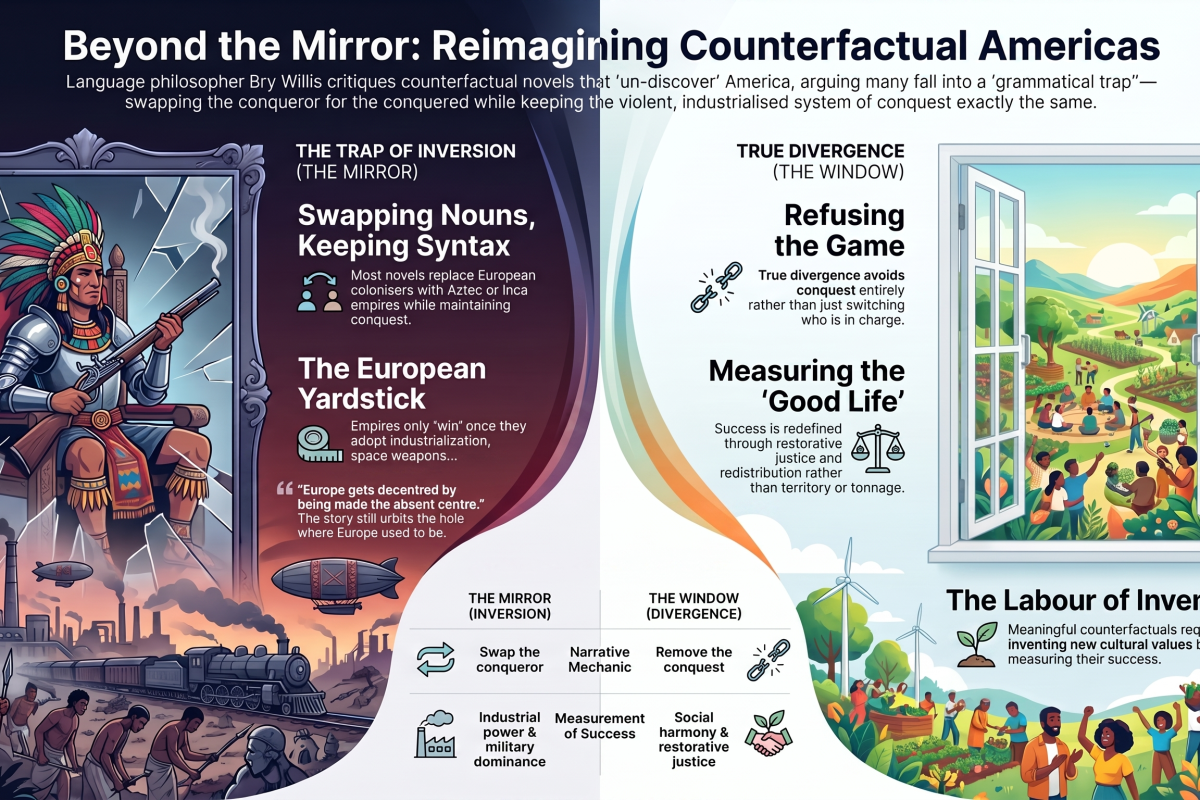
And then there is B. L. Blanchard’s The Peacekeeper (2022) – also, tellingly, a Sidewise Award winner – which does the rarer thing and quietly refuses the whole game. There is no inversion here, because there is no conquest to invert. North America was simply never colonised. The Great Lakes are an independent Anishinaabe nation; Chicago is Shikaakwa; there are no borders on the map because the book declines to draw any. It happens to be a murder mystery, and a slightly wobbly one – I called the culprit early, as apparently did everyone – but the mystery is scaffolding. The real work is a society organised around restorative justice, redistribution and something the glossary calls the Good Life, where crime is repaired rather than punished, and the question ‘what is success?’ gets a genuinely different answer. That difference is the whole point, and it is worth spelling out.
The tell
Watch what the inversion novels are obliged to do to their winners. Silverberg’s Aztecs drive coal-fired automobiles. Evans’s Aztecs somehow have flying warships and space weapons, to the audible irritation of every reviewer who has ever met a history book. In each case, the counter-empire only counts as having won once it has industrialised, once it has, in other words, become Europe in a headdress. The measuring stick never leaves the room. It just changes hands. Would not recommend. All of these are still viewed through Modernist lenses. They can’t seem to help themselves.
This is the trap, and it is a grammatical one: you can swap every noun in the sentence and leave the syntax of conquest perfectly intact. Who dominates whom is a variable. That domination is the axis of the story remains fixed – invisibly, load-bearingly fixed. So the shelf keeps producing books that promise to dethrone Europe and instead install a differently-costumed emperor on the same throne, using the same yardstick to prove he deserves it. Europe gets decentred by being made the absent centre. Everything still orbits the hole where it used to be.
Blanchard’s book is the one that escapes, and it escapes not by putting someone else on the throne but by asking whether the throne needed to exist. That is a far harder imaginative act, which is exactly why the shelf holds so many mirrors and so few windows. Inverting a hierarchy is a parlour trick – satisfying, symmetrical, teachable in an afternoon. Imagining a world whose values diverged, so that its people would not measure their flourishing in territory and tonnage at all, requires you to invent the ruler before you can invent the thing it measures. Most writers, sensibly, decline the extra labour.
Six books, then, and a warning label. Read Binet for the wit, Blanchard for the nerve, Silverberg for the ancestry, and the rest for the pleasure of watching very clever people not quite escape the room. Then, if you’re feeling brave, go and undiscover America properly, which means resisting the temptation to let it become us, wearing better feathers.
I’ve been working for days on a new short story that investigates time. I’ve already published The Box in English, but this new piece looks at a different aspect of time, one I suspect may work better in French because the grammar gives me more useful pressure points than English.
The working title is Les Années Vécues, which translates literally as The Years Lived. For now, that’s only a working title. Oddly enough, the purpose of this post is not really to describe the story, though I may do some of that. It is more about the tools, the process, and the strange route by which the idea arrived.
The story began as a conversation between me, Claude, and ChatGPT about human innovation and creativity. A colleague had recommended How Language Began. I bought it and read the first few chapters. For the record, it’s interesting.
Early on, the author discusses genetics and evolution, citing human inventions along the way, particularly those associated with Homo erectus. Because I tend to question narratives of progress, and especially grand claims around Innovation and Creativity, I fell into some LLM-assisted chit-chat. From there, the conversation drifted into time travel in fiction. We discussed tropes from Back to the Future to Outlander. Somewhere in that mess, I noticed a missing perspective I felt I could capitalise on.
For the record, again, I have not been especially successful at writing short stories. They tend to grow beyond my intent, usually into novelettes or novellas. My first novel, written as Ridley Park, began as a short story. That story is now ostensibly chapter five of Hemo Sapiens. It can stand on its own, but it plays better in context. It is still my favourite chapter, if I had to choose one. So I’ll see where this new one goes, if anywhere. Nowhere is always an option. The blank page remains admirably non-committal.
After hours of brainstorming with the LLMs, arbitrarily switching from French to English and back again, I had a plot outline with beats and flavour, tropes and intentions, subversions and misdirects. I had captured dialogue exchanges, worked through worldbuilding constraints, and fleshed out several plot points. Then I asked ChatGPT to build me a tracking document to serve as a punch list.
I’ve done this a few times before, but with the advancement of the tools, the output was surprisingly robust, arguably overkill, which isn’t always a vice.
The spreadsheet contains 9 tabs:
Lists
Dashboard
Punchlist
Beat Map
Continuity Rules
Motifs & Plants
Evidence Ledger
Open Questions
Sources
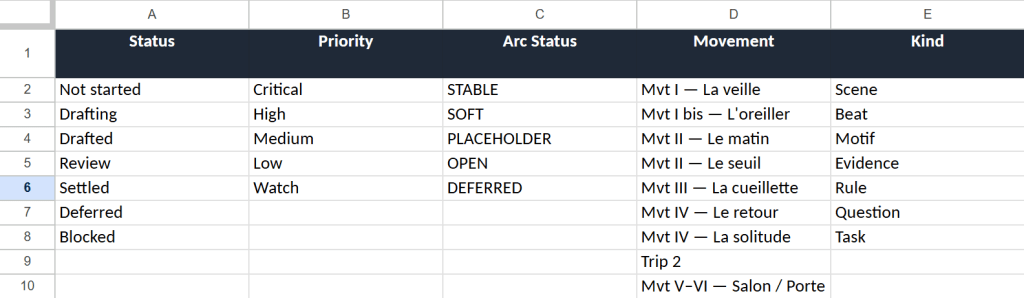
Lists
The Lists tab is mostly internal to the spreadsheet. It controls status values, priorities, categories, and related dropdowns. I would not have made it this elaborate manually, but I’m not offended by competence when it arrives uninvited.
I wouldn’t have been so elaborate, but it’s nice nonetheless.
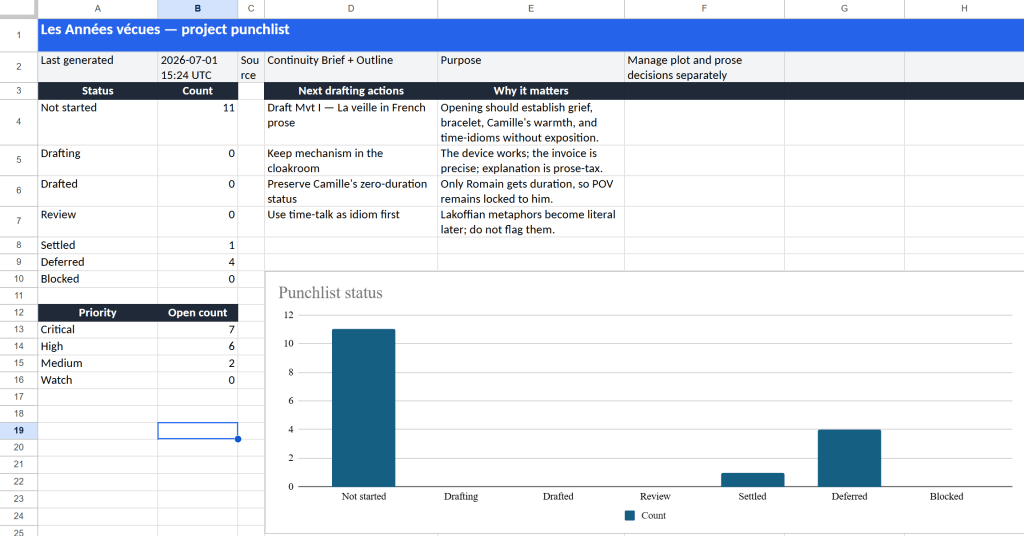
The Dashboard
The Dashboard is also a bit of overkill, but useful overkill. In its inaugural state, it gives a quick view of task status, priorities, and next actions. Its intent should be clear from the screenshot.
Punchlist
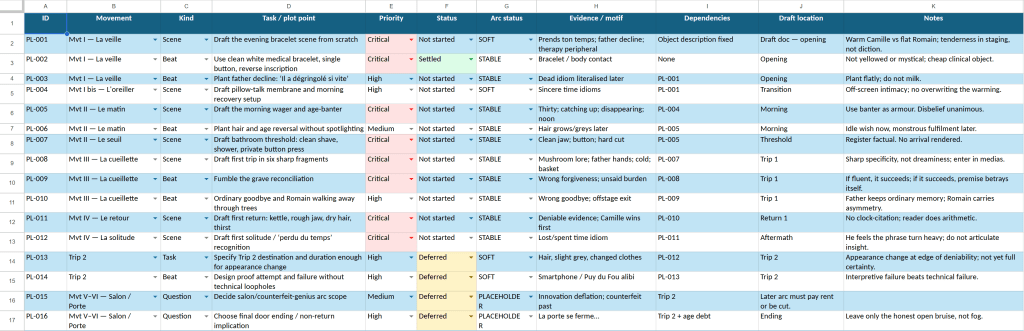
The Punchlist is essentially an actionable to-do list with status markers. I think I can safely share this without giving too much away. It lets me manage the story as a set of unresolved craft problems rather than as a vague cloud of ‘I should really get back to that’.
Beat map
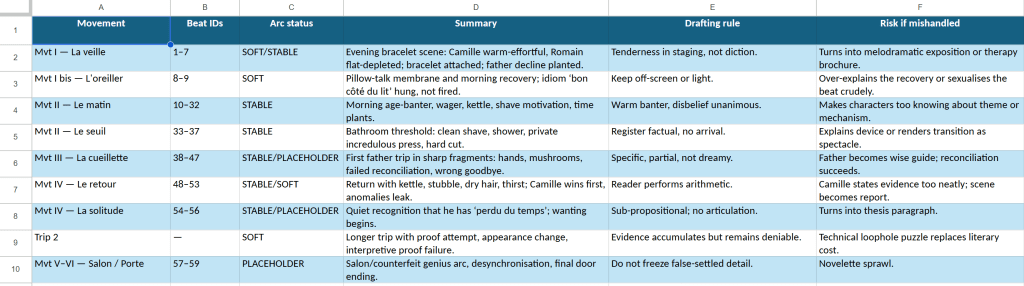
The Beat Map contains representative story beats, with notes that capture narrative purpose, confidence level, and risk-management annotations. This is where structure can be managed without cluttering the prose draft itself.
Continuity Rules
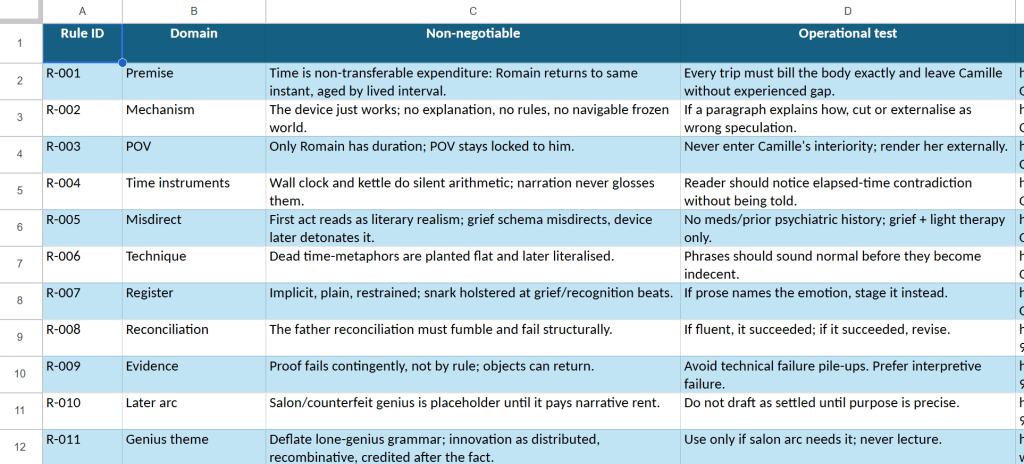
The Continuity Rules tab captures worldbuilding constraints and adjacent considerations. It is probably oversharing at this stage, but I’ll take the risk. These rules matter because speculative fiction can collapse quickly when the premise starts leaking.
Motifs & Plants
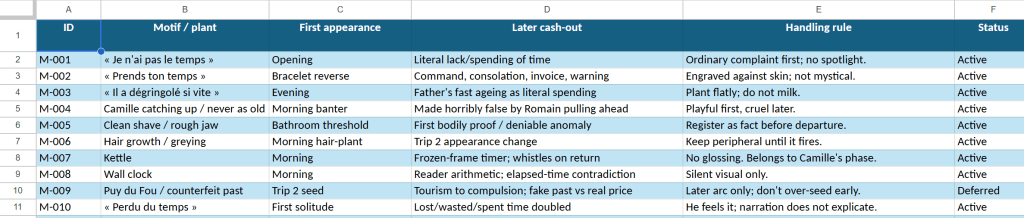
The Motifs & Plants tab tracks recurring touchpoints, images, phrases, and planted details. Some of these may be premature, but having them outside the draft helps me avoid forcing them into the prose too early.
Evidence Ledger
The Evidence Ledger tracks what counts as evidence inside the story world, who can interpret it, and how it may be misread. This is another continuity check, but also a thematic one.
Open Questions
The Open Questions tab is exactly what it sounds like: unresolved choices, structural uncertainties, and decisions I do not yet want to freeze into place. Sometimes the most useful document is the one that refuses to pretend everything has been solved.
Sources
The Sources tab lists the chat history and documents from which the rest of the content was derived.
The Rest
This is only a partial listing, and I am not finished ideating. I have not yet begun the prose.
I do not always plot my stories. More often than not, I take something closer to a stream-of-consciousness approach. But for one thing, my consciousness does not stream in French. So there’s that.
What impressed me most was the organisational layer the LLM produced. The spreadsheet is now hosted on Google Drive as a Sheet, accessible to both me and the LLMs, so it can be updated as the discussions and decisions continue.
I’m looking forward to wrapping up the ideation phase and beginning, and ideally completing, the prose. That last part remains the traditional nuisance.
I’ve just finished reading Ishiguro’s 2021 novel, Klara and the Sun, and I was scripting a video review, but I wanted to focus on one aspect in particular.
I’ve published a full piece on Substack, but here are summaries and artefacts from YouTube and Spotify.
This is a NotebookLM podcast audio summary of a Substack essay on a key idea of Thomas Hobbes expressed in Leviathan.
Audio: NotebookLM summary podcast of this topic.
We all remember Hobbes. Not Calvin’s pet tiger, regrettably, but the Leviathan one: the cheerful fellow who looked at human beings and concluded that, left to themselves, they would make life ‘solitary, poor, nasty, brutish, and short’. A line so good it almost excuses the anthropology. Almost.
Reading Heidegger’s What Is Philosophy? set me going. Heidegger answers the question not by definition but by retrieval: he takes philosophia back into its Greek setting, as though the older word might disclose what philosophy is. The lecture is the occasion rather than the target. It offers a clean specimen of a manoeuvre that runs far wider. A word’s origin can show where a practice has been, but it can’t settle what the practice is. At least this is what I was thinking as he was making his case.
Have you ever wondered why Winnie the Pooh sounds faintly ridiculous in French?*
No? Just me then. Settle in.
« Mr et Mrs Dursley, qui habitaient au 4, Privet Drive, avaient toujours affirmé avec la plus grande fierté qu’ils étaient parfaitement normaux, merci pour eux. Jamais quiconque n’aurait imaginé qu’ils puissent se trouver impliqués dans quoi que ce soit d’étrange ou de mystérieux. Ils n’avaient pas de temps à perdre avec des sornettes. »
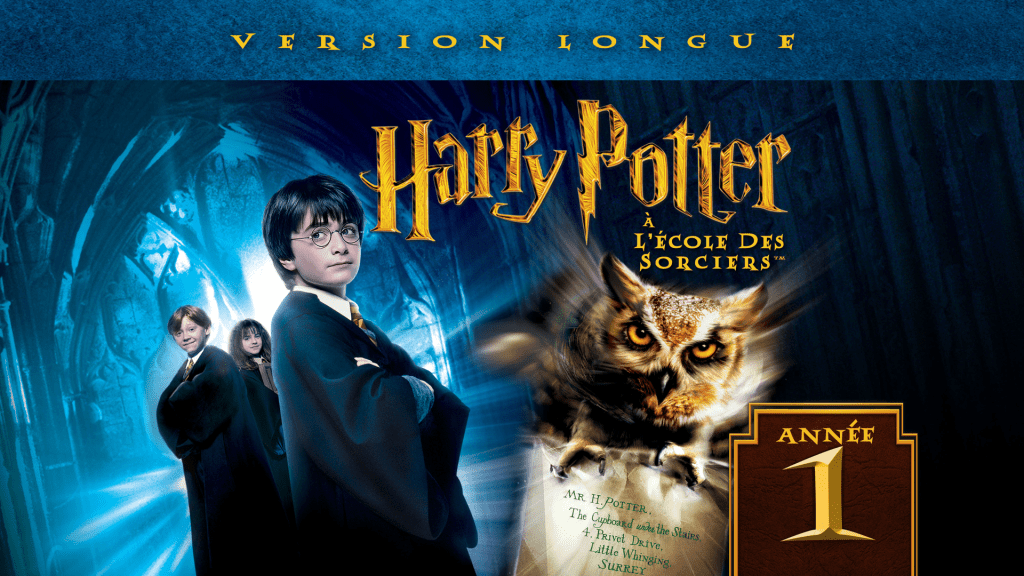
I recently acquired Harry Potter à l’École des Sorciers, and I found myself unexpectedly arrested by the opening paragraph. The Dursleys, we are told, were parfaitement normaux, merci pour eux – ‘Perfectly normal, thank you very much’. Except the French does something slightly different – the merci pour eux tips the narratorial mockery just a fraction more toward open contempt than Rowling’s original, which keeps its disdain politely implicit. It’s a small thing, but telling.
Audio: NotebookLM summary podcast of this topic.
This brings us back to Pooh as an exercise not only in a language insufficiency, but also a lesson in how meaning is still lost outside of the words of language.
The French translation of Winnie-the-Pooh is a perfectly competent piece of work. It conveys the plot, translated verbatim. Honey is still honey, miel. Piglet remains small and anxious, which is presumably universal. And yet something has gone definitively missing – specifically, the thing that makes Pooh Pooh. That voice. That particular brand of amiable, bumbling, upper-class English vagueness that signals, to anyone raised in the relevant tradition, a whole social type: the loveable aristocratic dimwit, defanged and harmless, too intellectually untroubled to be threatening. Bertie Wooster** with stuffing.
In my case, the experience was audible rather than merely inferred. I encountered Pooh not on the page but watching on screen with my daughter so many years ago, but where the French dubbing lands over the original animation like a category error made flesh, but not quite so bad as an old Godzilla dub. The Hundred Acre Wood remains constant – le miel, the anxious Piglet, the blustering Eeyore – providing a kind of control condition. What varies is the voice. And hearing a French Pooh is hearing, with uncomfortable precision, exactly what has gone missing, because the original signal is still ghosting underneath the translation. The bumbling posh vagueness, the hesitations, the particular music of English aristocratic dimness – all of it evaporated, replaced by something perfectly serviceable and entirely wrong. It is, if you’ll forgive the term, a controlled experiment in loss. The mismatch isn’t inferred from the page. It’s heard. Which is either wonderfully appropriate or deeply ironic for an essay about what language can’t carry. Probably both.
So, what’s the problem? Alors, French doesn’t have this type. It has the libertin – decadent, cynical, not remotely cuddly. It has the pompous bourgeois. What it conspicuously lacks is the post-Victorian English settlement in which the aristocracy became safe to find charming rather than necessary to behead. Pooh requires a specific historical precondition that France declined to provide, for understandable reasons involving the 1790s.
We may know Inspector Clouseau, the bumbling French idiot. Except Clouseau is an English fantasy of French incompetence, essentially invented by Peter Sellers and Blake Edwards. The French didn’t make that joke about themselves. It was made for them, which is rather a different thing, and arguably confirms the point. So much for bears. What about a more serious case of translational vertigo?
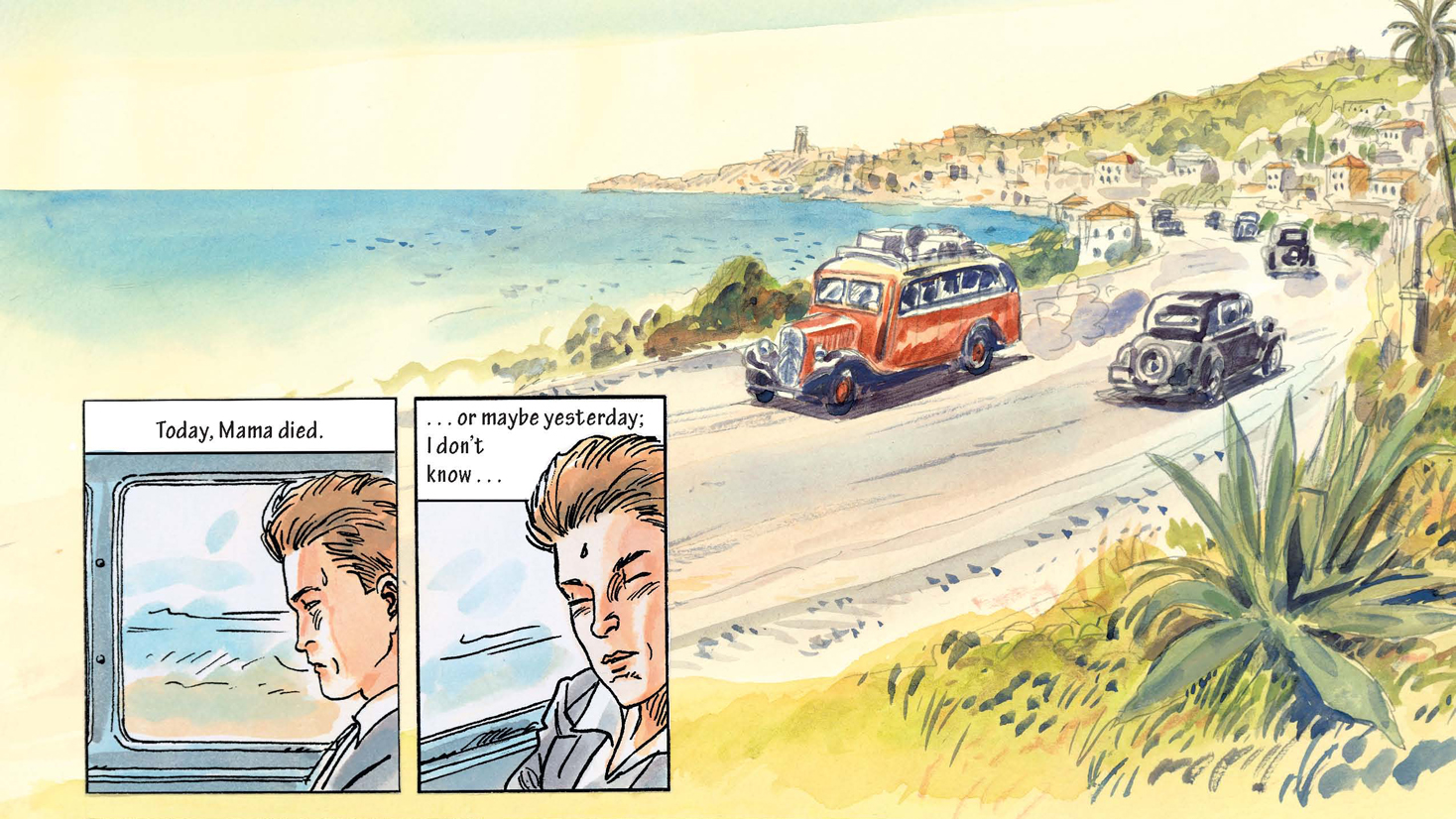
« Maman est morte. » The famous opening words of Camus’ L’Étranger – and one of the most analysed sentences in twentieth-century literature, with good reason. Every English translation is already weak tea. It doesn’t carry the English class freight, the faint infantilism, the drawing-room associations. It sits in an affective middle ground that English can’t occupy, somewhere between intimacy and distance, which is precisely where Meursault himself lives. The ambiguity about whether he feels anything – the philosophical core of the entire novel – hinges on a word the target language cannot render. Every translator has to decide, and all fail because English fails to accommodate. This colours Meursault, who I’ve described elsewhere as autistic in principle if not in practise. Without going down a rabbit hole, read The Stranger in this light, and you’ll see systematic abuse of an autist – a textbook neurodivergent – instead of a clueless protagonist.
These examples tighten the philosophical screws at each turn. Pooh is charming and sociological. The Dursleys are technically interesting. Meursault, existential.
But there’s the uncomfortable conclusion they collectively point toward: translation failure is merely the most visible symptom of a much deeper condition. Language was already lossy before one introduces a second language as an additional compression stage. The register, the tone, the class coding, the cultural memory, the sheer music of Pooh’s voice – none of this was ever in the text. It was the environment, in the air or water around the text, in the shared form of life that allows certain performances to land and others to fall silently into the void.
whereof one cannot speak, thereof one must be silent
Wittgenstein said that whereof one cannot speak, thereof one must be silent. He was right and characteristically unhelpful. Because we can’t speak of most of it – the embodied, gestural, socially-saturated ground on which language rests – and yet it’s doing at least half the communicative work, possibly more.
Barthes reminds us that the author is dead. Derrida might have told you there’s no escaping the text, that the instability runs all the way down, that speech is already writing in the relevant sense. He’s not exactly wrong but he’s diagnosing a different condition – the internal slipperiness of signs, rather than the gap between the linguistic and the everything-else. The argument here is less that meaning defers endlessly within language, and more that language was always an approximation of something richer and irreducibly situated. There was never quite enough text to escape from.
What this means is that translation isn’t a solved problem awaiting better tools. It’s a hard limit on what language can carry – a reminder that when Pooh speaks, what you’re actually hearing is a century of English class history, a specific post-Victorian emotional settlement, and a cultural permission to find a certain kind of helpless gentleness charming rather than contemptible.
Or, as Andy Rooney might have put it: Did you ever notice that words don’t quite say what you mean?
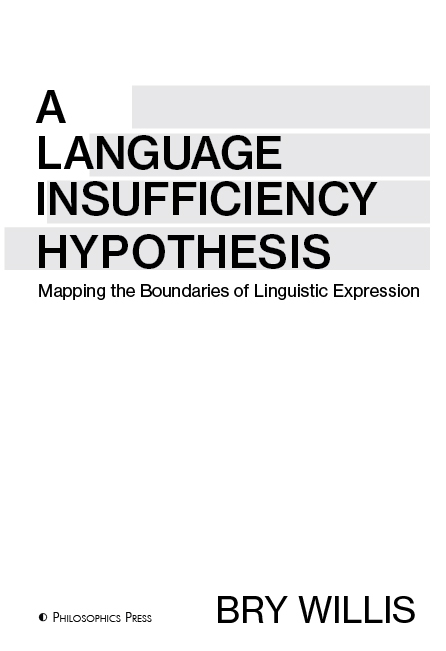
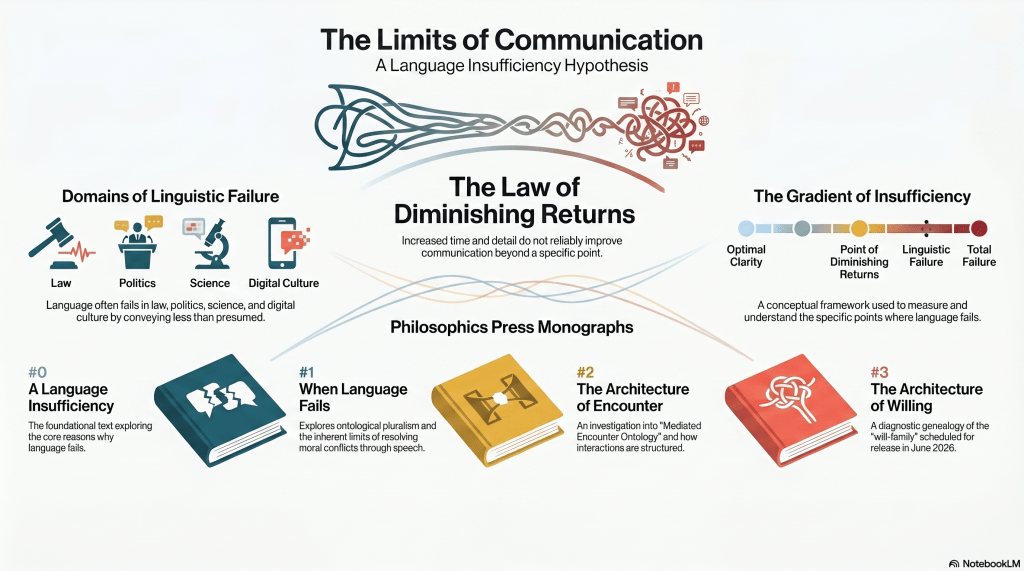
I’ve been getting positive feedback on this book, so I just posted some excerpts from A Language Insufficiency Hypothesis on PhilPapers. I hope this is sufficient to assess whether the book will be of value to you as a reader. Even if you don’t purchase or read the entire book, I am still interested in your feedback here or elsewhere on social media.
Audio: NotebookLM summary podcast of this topic.
Informally, I consider this as Monograph #0, as I hadn’t considered that I’d create a series that follows this concept.
Yesterday, I complained about the psychoanalytic approach Fanon employed in Black Skin, White Masks, Chapter 4, The So-Called Dependency Complex of the Colonised. Today, I share my feelings about Chapter 5, The Lived Experience of the Black Man. But first, let’s reorient the reader to my own perspective.
I am decidedly anti-colonial and even anti-post-colonial, or at least I see this trajectory as tragic. All of this is consonant with the views expressed in my Anti-Enlightenment Project.
Audio: NotebookLM summary podcast of this topic.
On one hand, I want to complain about the circuitous approach he took in Chapter 5. It was meant to be metaphorical and poetic. Whilst I feel it’s a bold move to present an areasonable approach – one that refuses the terms of Enlightenment rationality without simply inverting them – it seems that he cherry-picks his tools from the arsenal of Enlightenment thought. This applies to much of the post-colonial project broadly, though my objection there is less to any particular theoretical allegiance and more to the foundational commitments: I oppose colonialism, empire, and hegemony on grounds that precede the debate about which critical vocabulary best serves their dismantling.
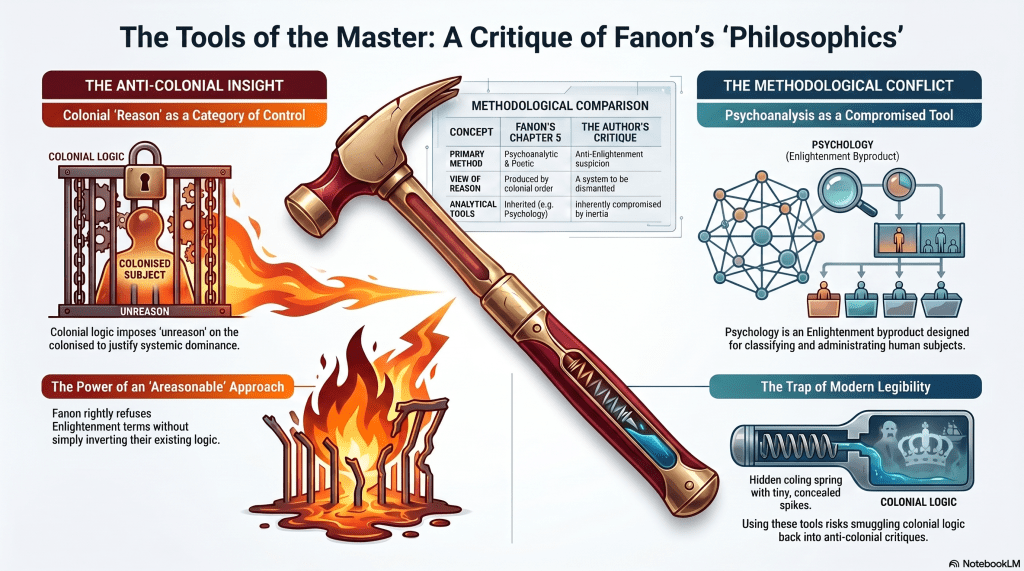
Fanon’s anti-Enlightenment critique is weakened where he imports psychoanalysis too trustingly. Psychology and psychoanalysis are themselves Enlightenment byproducts: systems for rendering the human subject legible, classifiable, interpretable, and administrable. To use them against colonial Reason without first subjecting them to the same suspicion risks reproducing the very machinery under critique. The result isn’t fatal to Fanon’s charge, but it is methodologically untidy. I don’t necessarily object to using Enlightenment-derived tools after critique; I object to retaining them as though their own conceptual machinery were innocent. Psychoanalysis may be useful as metaphor, rhetoric, or historically situated vocabulary, but if it’s treated as a valid evidentiary lens without scrutiny, it smuggles Enlightenment legibility back into an anti-Enlightenment critique. That’s where Fanon’s chapter loses force for me.
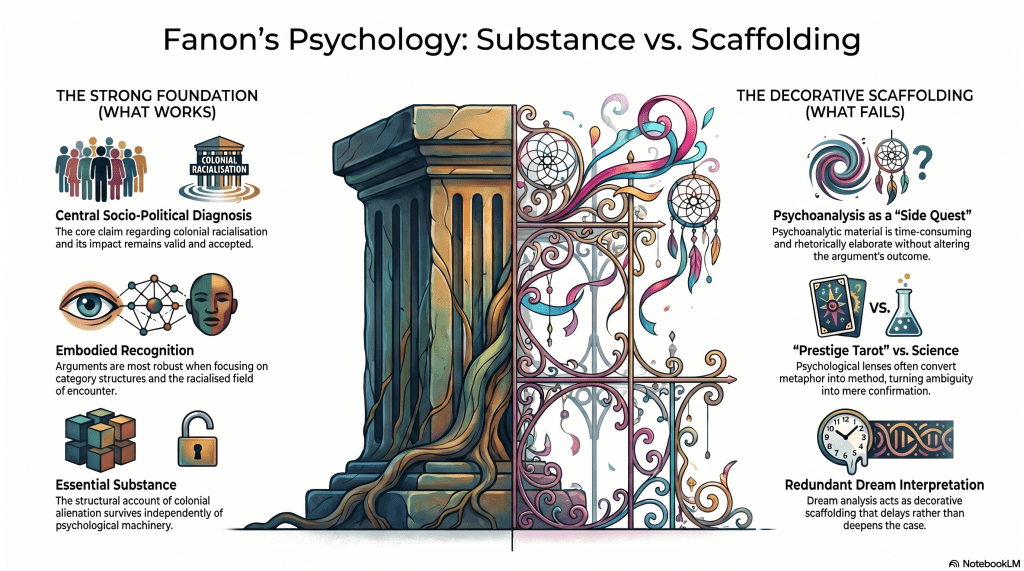
NotebookLM Infographic on this topic.
Fanon is at his strongest when he shows that colonial ‘reason‘ produces the colonised subject as irrational, bodily, affective, and deficient. He rightly treats unreason not as a natural property of the colonised but as a category imposed by colonial order. My difficulty is that he then routes this insight through psychoanalysis, a method I regard as metaphorically suggestive but evidentially weak. The critique of colonial rationality survives; the psychoanalytic apparatus remains suspect.
In the end, we may both at least tacitly agree that colonialism, and the Enlightenment more generally, was not the best path. Where we part is on what should have been taken instead. Cue Robert Frost.
But the more searching question isn’t which fork we should have taken – it’s what we do with the road we’re already on. When the system itself is the problem, the question of what within it is worth retaining rarely gets answered on its merits. More often, it gets answered by inertia: by what is convenient, familiar, or already institutionally embedded. Fanon isn’t exempt from this, and neither, if we’re honest, is any thinker who inherits a tradition whilst attempting to dismantle it. The tools available are always already compromised. The most we can ask – and what distinguishes the sharper critiques from the merely passionate ones – is whether the thinker knows this, and accounts for it. Fanon sometimes does. In Chapter 5, at the moments that matter most, he doesn’t quite.
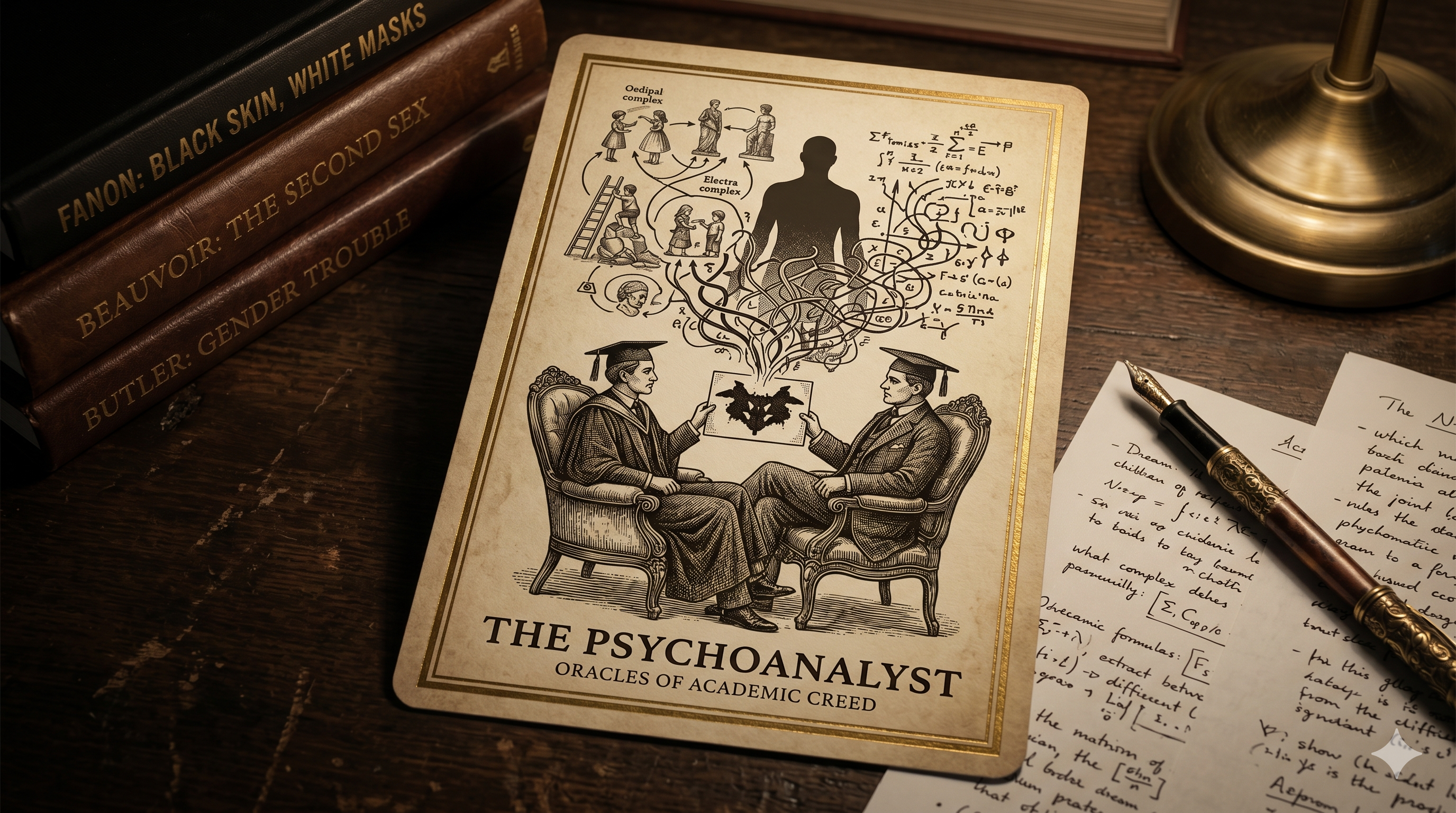
NB: I used ChatGPT for the cover image. I think it did a good job.
I just read Chapter 4 of Frantz Fanon’s Black Skin, White Masks, and it has similar problems I’ve also critiqued for Judith Butler’s Gender Trouble: Feminism and the Subversion of Identity and Simone de Beauvoir’s The Second Sex. In all three cases, I accept the primary argument. What I reject is psychology, especially psychoanalysis, as a legitimate form of scientific inquiry.
Audio: NotebookLM summary podcast of this topic.
My issue isn’t that Fanon, Beauvoir, or Butler fail in their central diagnoses. I broadly accept their claims. My issue is that the psychoanalytic material typically functions like a grinding side quest: time-consuming, rhetorically elaborate, and only weakly connected to the main argumentative progression. It may enrich the atmosphere, but it doesn’t materially alter the outcome. Once one doesn’t accept psychoanalytical psychobabble as a valid evidentiary lens, the material becomes a time sink. Not only can’t I get my time back, but I also expend even more time here, railing on.
Speaking of distraction: evidently, WordPress has added a new blog-to-podcast feature, so I tried it out here. Whatevs.
Fanon’s central claim about colonial racialisation doesn’t require dream interpretation – the dreams themselves are seemingly apocryphal at the start. The stronger route is through embodied recognition, imposed category structures, conceptual nomenclature, and the racialised field of encounter. The dream material reads as psychoanalytic side-content: thematically adjacent, occasionally vivid, but methodologically low-yield. It doesn’t deepen the case so much as delay it. The entire time, I am thinking to myself, ‘Where is he going with all this?’ and ‘Are we there yet?’ only to get dropped off just where I had started – a round trip to nowhere.
But Fanon’s mistake isn’t necessarily insincerity. It’s an over-trust in a psychological lens that converts metaphor into method. The psychoanalytic examples may have seemed to him like evidence; to a reader sceptical of psychoanalysis, as I am, they register as rhetorical illustrations. Once a reader withholds confidence in this method, the chapter’s supporting material becomes distracting rather than strengthening.
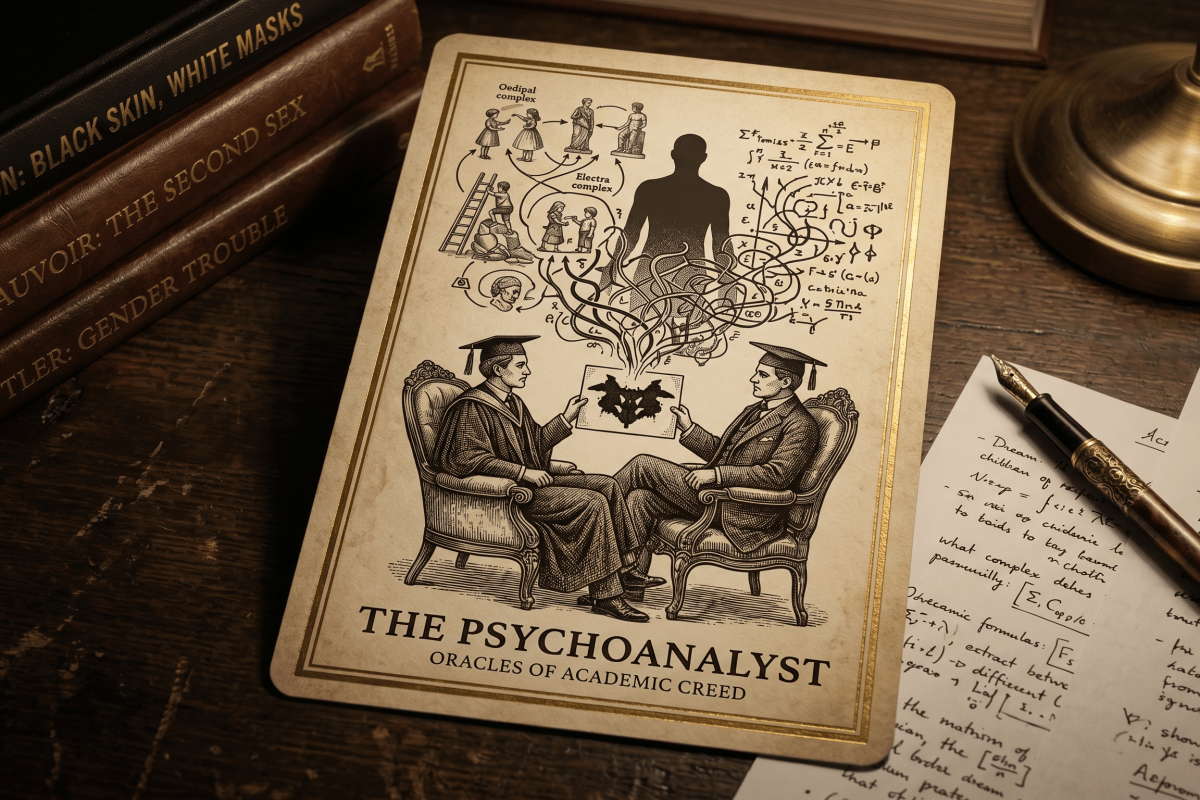
Enfin, psychoanalysis too often behaves like a prestige tarot deck for the academically credentialled: it turns ambiguity into confirmation, opacity into symbolism, and resistance into further evidence. Fanon’s broader account of colonial alienation survives because it doesn’t depend on this machinery. The dreams aren’t necessary to the argument; they’re decorative scaffolding around a structure that’s stronger without them.





 Philosophics