Me: I got an admission: I never enjoyed musical ear training – trying to name a pitch, interval, or chord.
You: That’s nice. So what?
Me: Well, let me tell you…
I’ve been doing a similar exercise… also involving ears. I’ve decided to engage in IPA phonetic ear training as part of my language curriculum, as it were.
I’ve created an Anki flashcard pack, of – as well as other things –phonetic symbols to match to the sound and vice versa. It’s harder than it sounds. Like pitch, if I play an A (Do) I can tell what an E (Sol) sounds like, a perfect fifth; but I can’t produce an E from vapour: If I hear it absent of musical information, I can’t name it; neither can I produce it without a reference. This is a limitation of relative pitch.
On a guitar, I can play an E relative to other strings, but I can’t tell you whether the A is pitched to 440 (top) or 432 (bottom).
Of course, if you tell me the top sound is pitched to A-440 and ask if the second one is higher or lower, I can tell you that. Hooray for me. But if the A-432 was actually A-431, you’d have had me tricked.
You: Where’s this going?
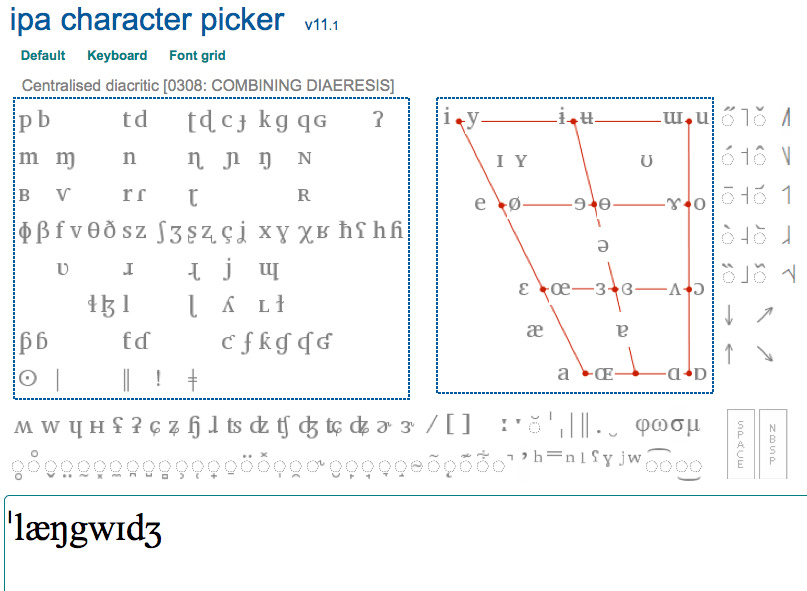
I experience the same challenge in my IPA studies. In context, if I hear an open and closed O sound – ɔ and o – I can tell you which is which, but I haven’t yet mastered the ability to utter these in the wild. I might be able to manage a nasal O – ɔ̃ – but we still haven’t arrived at the neighbours – ɵ, ɞ, ɤ, and so on. Source. Here’s a random or at least arbitrary IPA site.
I wonder if you people have perfect pitch in this regard.

