The Master’s Concepts: Decolonising the House Without Keeping the Furniture

9–14 minutes

A colleague recently shared an essay with me, The Return of Metaphysics: Reclaiming Sovereignty Through Ontological Grounding in Postcolonial and Western Thought. I read it with interest, not least because its target is one I share: the colonial imposition of Western categories as if they were universal reason, universal law, universal political form, and universal humanity. On that point, there is no meaningful disagreement. Colonialism isn’t merely theft of land, labour, and resources. It’s also the imposition of a grammar by which reality itself was made legible to power.

The essay is at its strongest when it treats colonialism as metaphysical violence rather than merely administrative domination. It argues that Europe universalised its own categories and rendered other worlds invisible, inferior, or unreal. Colonialism, on this account, was not only conquest. It was the installation of one ontology as the authorised operating system of the human. That’s a powerful diagnosis, and it deserves to be taken seriously. The essay explicitly describes colonialism as a process that ‘re-made being’ and suppressed other conceptions of time, morality, and community.

Where I start to hesitate isn’t in the critique of colonialism, but in the proposed recovery. The essay seeks to reclaim metaphysics, sovereignty, agency, moral authorship, and ontological grounding as instruments of postcolonial renewal. It wants to oppose colonial metaphysics by recovering metaphysics; to oppose hollow sovereignty by reconstructing sovereignty; to oppose imposed subjectivity by restoring moral authorship.

This may be coherent within the essay’s own frame. But from mine, it raises a suspicion:

  • “a return to metaphysics”
  • “moral authorship”
  • “ontological reconstruction”
  • “popular agency”

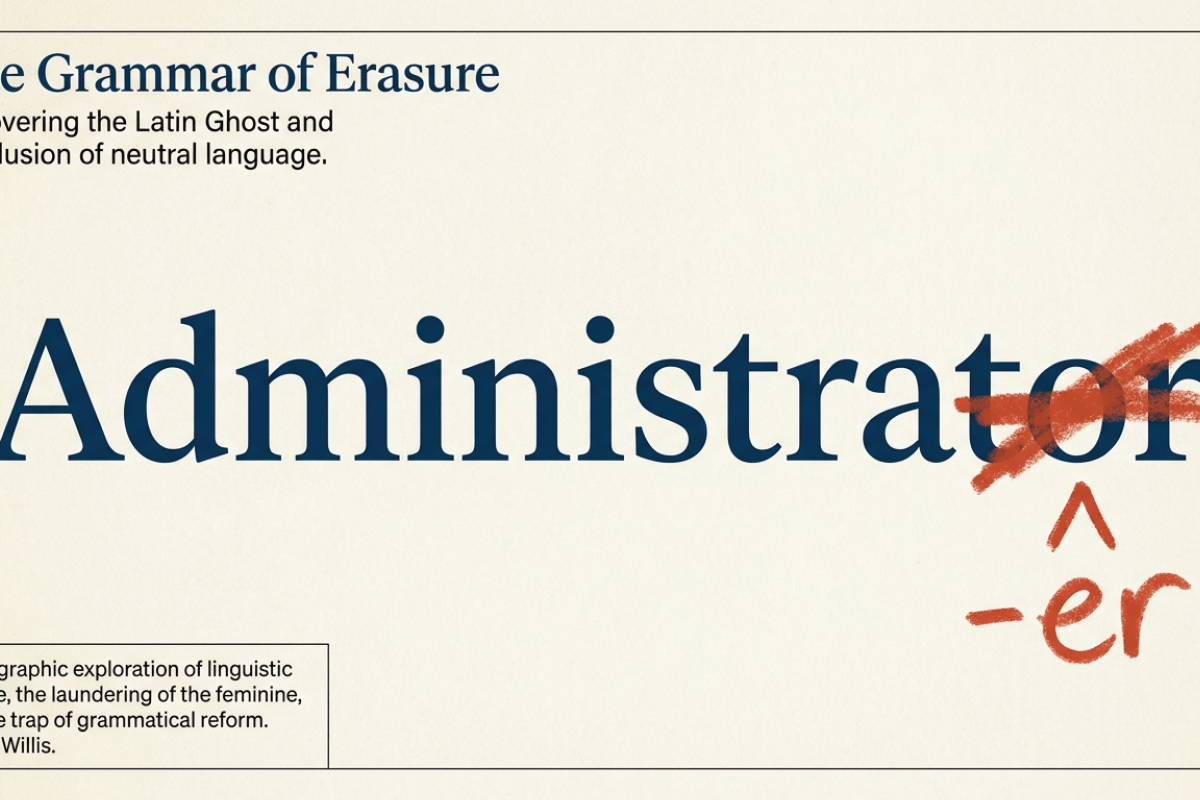
These terms don’t arrive clean. They carry histories and come with fittings: sovereignty, possession, self-rule, jurisdiction, authorship, legitimacy, command. One may repaint them in decolonial colours, but the shape remains. Inheritance is the danger.

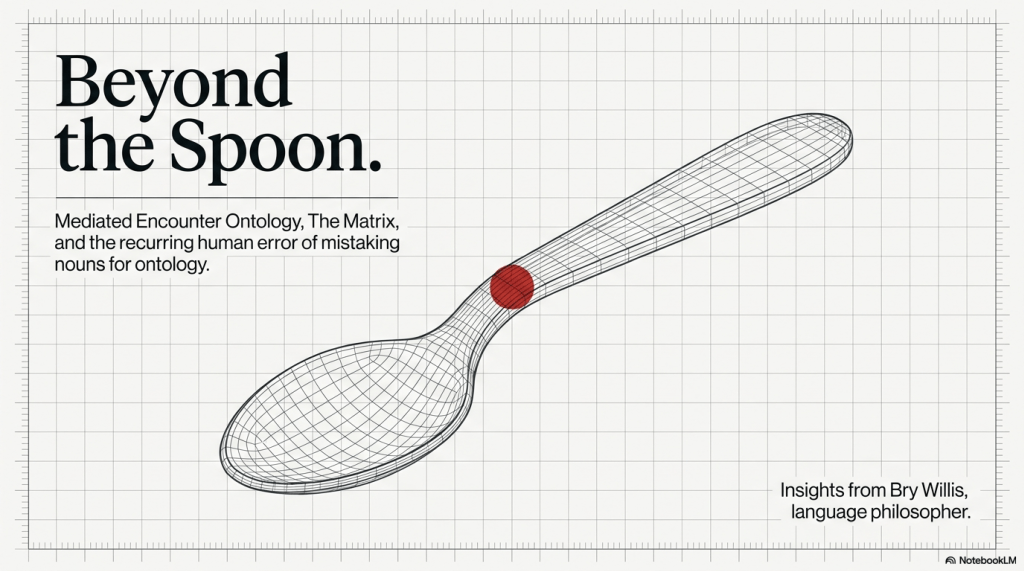
Audio: NotebookLM summary podcast of this topic.

Sovereignty as a Recovered Trap

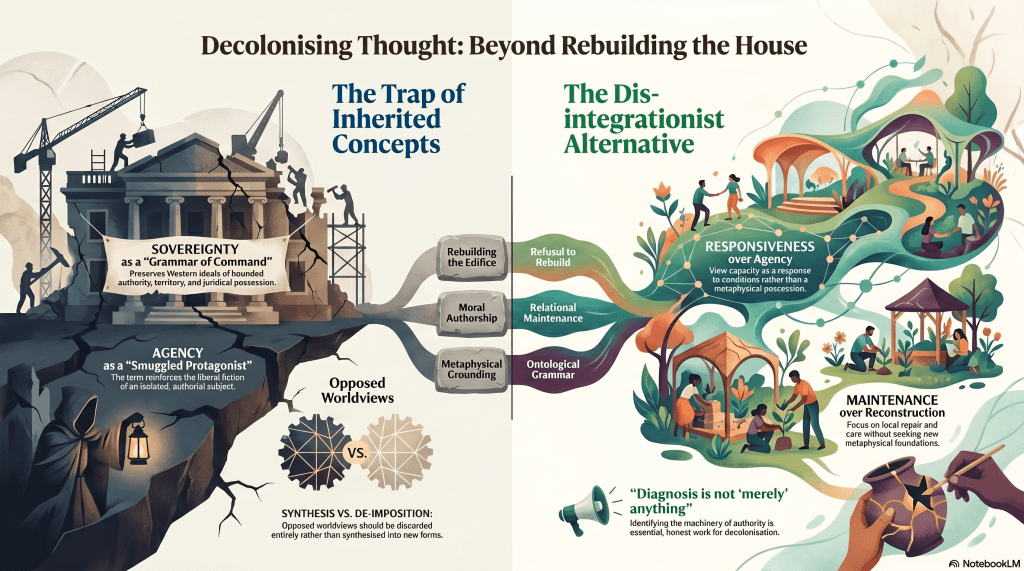
The essay’s central concept is sovereignty. More precisely, post-sovereignty. Yet the very act of preserving sovereignty as the problematic term matters. Sovereignty isn’t just a neutral container for self-determination. It’s one of the central concepts through which Western political modernity imagines authority: bounded, possessed, territorialised, juridical, and authorial.

To speak of sovereignty is already to speak in the grammar of command: Rules. Owners. Authorities. Something marks the line between inside and outside.

This doesn’t mean colonised peoples were wrong to demand sovereignty. The politically dispossessed may understandably seek the protections of the language used to exclude them. If one has been denied the status of a subject, a nation, or a people, then reclaiming those terms may be historically necessary. There’s no cheap purity available from the comfort of abstraction. Humans made the mess, naturally, and then handed each other dictionaries to clean the mess.

But political necessity doesn’t settle conceptual adequacy. A term may be strategically useful and ontologically suspect at the same time. So, the question isn’t whether sovereignty has been useful in anti-colonial struggle. It’s whether it should remain the destination, rather than a transitional vocabulary one eventually leaves behind.

The essay recognises that many postcolonial states retain the ‘juridical structure’ of autonomy whilst remaining governed by inherited categories of colonial law, property, development, and bureaucratic legitimacy. That’s exactly the point where the critique might turn more sharply on sovereignty itself. If postcolonial statehood often reproduces colonial form, perhaps the issue isn’t merely that sovereignty is hollow, but maybe it’s just one of the forms through which hollowness reproduces itself.

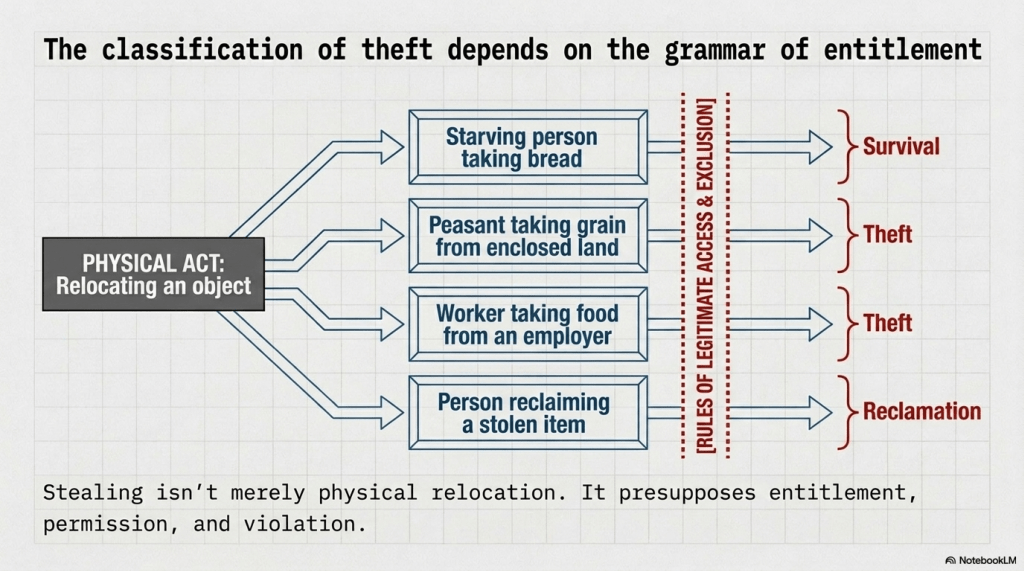
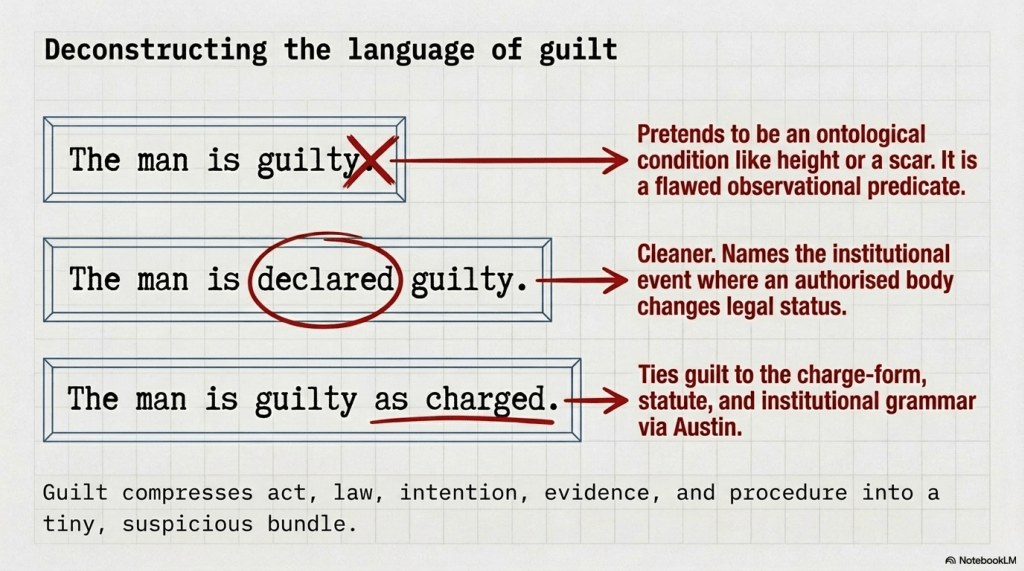
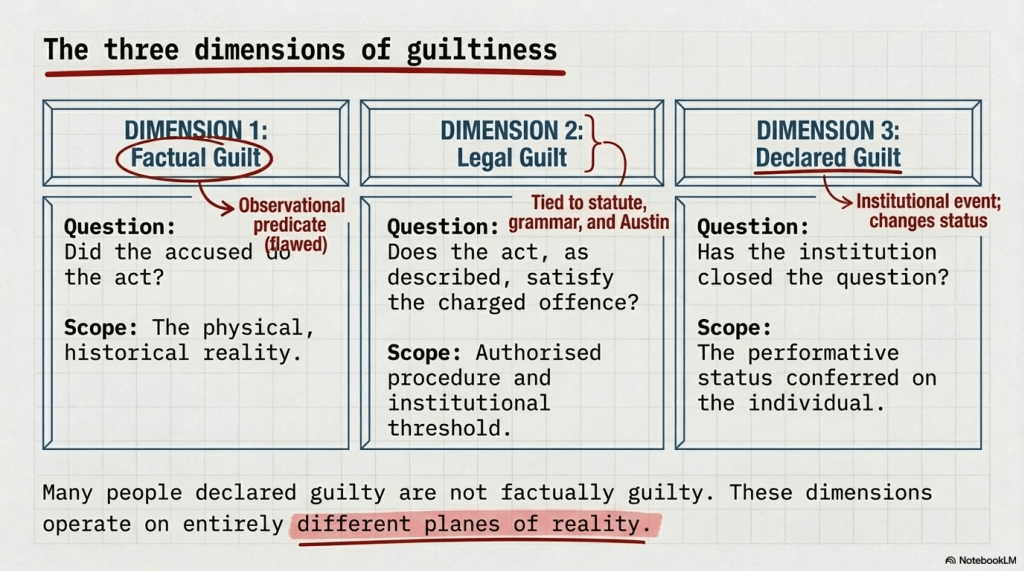
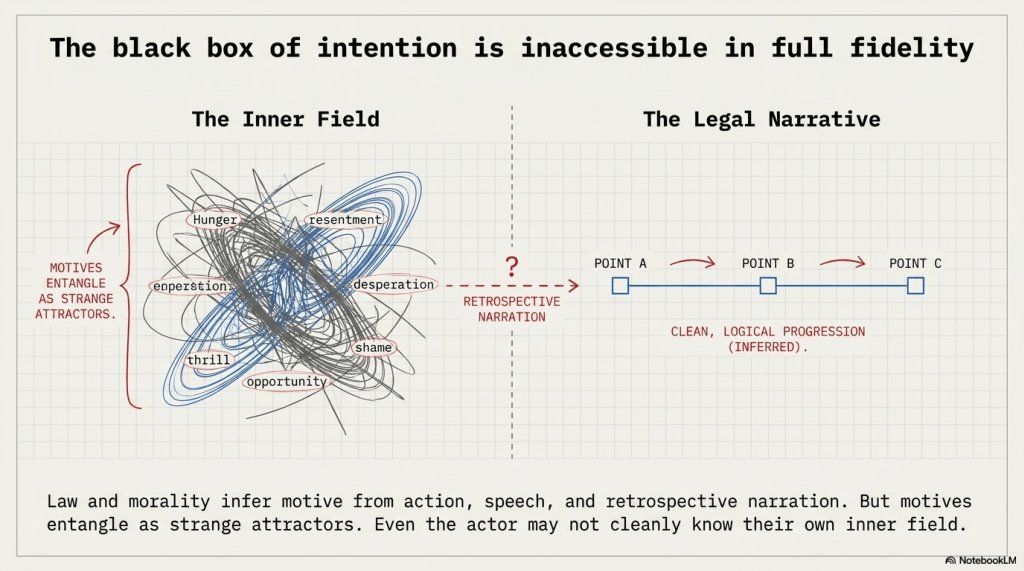
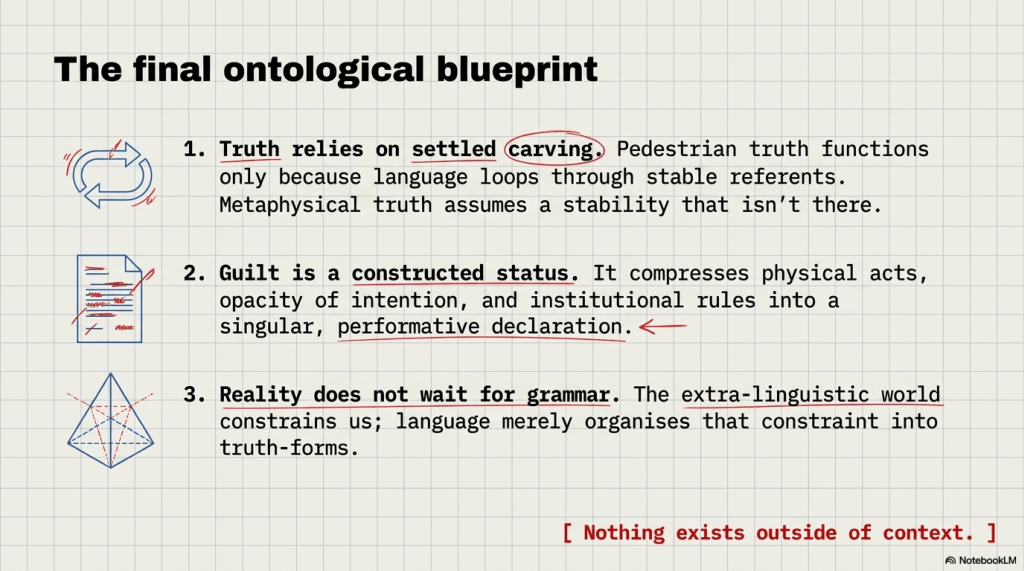
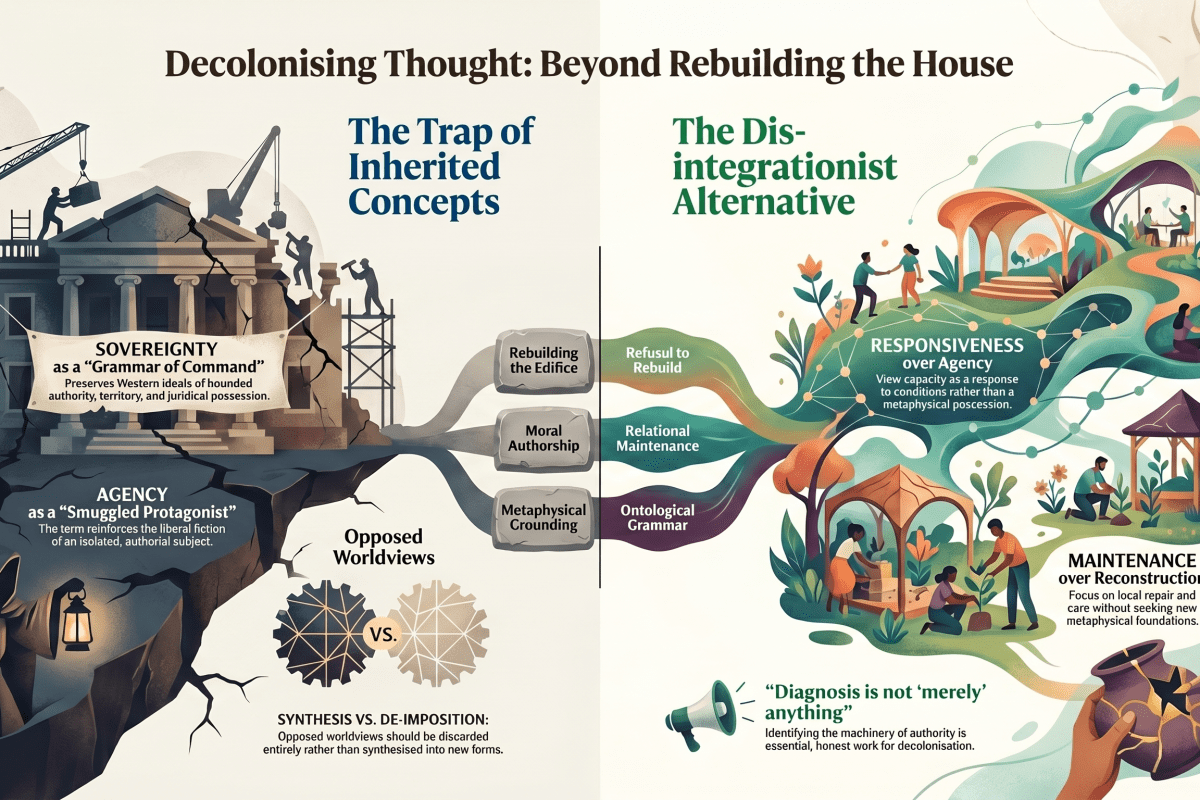
NotebookLM Infographic on this topic.

Agency: The Smuggled Protagonist

The same problem emerges around agency. The essay speaks of popular agency, moral authorship, co-authorship, and subjectification. Again, the impulse is understandable. Colonial domination denies people the right to act, name, interpret, and organise their own lifeworlds. A postcolonial theory naturally wants to restore capacity to those rendered passive.

But the agency term isn’t innocent. In modern Western thought, agency often implies a self capable of authorship, intention, responsibility, and moral ownership. It’s the protagonist required by law, markets, liberal politics, and punishment. Someone must be deemed the chooser, the signer, the sinner, the voter, the debtor, the criminal, the rational actor.

In my own work, I reject agency as a metaphysical possession. I’d rather speak of responsiveness: a variable capacity shaped by material, relational, temporal, somatic, and epistemic conditions. People don’t float above conditions and author themselves into freedom. They respond, more or less adequately, within fields of constraint.

The essay’s emphasis on relationality moves in this direction, but its vocabulary often pulls it back toward authorship. It wants shared becoming, but it also wants moral authors. It wants relational ontology, but it also keeps the self as a source of political meaning. This is a revealing tension.

The alternative isn’t fatalism. To reject agency isn’t to deny action. Breathing doesn’t require a metaphysics of breath. It just happens autonomically. The question is whether we must preserve the fiction of the authorial subject to describe them. I think not.

When Negation Need Not Become Synthesis

The essay leans on Fanon (see The Wretched of the Earth) to argue that colonial domination can’t be resolved through dialogue because dialogue presumes equals. This is right, or at least right enough. A conversation between master and slave is not yet a conversation between equals. Liberal dialogue presumes a shared field of recognition; colonial domination corrupts that field before speech begins.

The essay, therefore, turns to dialectic. Where dialogue seeks agreement, dialectic begins from contradiction and struggle. Again, this makes sense. A colonised subject can’t merely ask to be recognised by the system that produced their non-being. Something must be negated.

My hesitation concerns what happens after the negation. The essay sometimes seems to assume that contradiction must move toward ontological reconstruction. But why? If one term of the contradiction is an imposed colonial ontology, it might not deserve preservation within a higher unity because it mightn’t be a meaningful antithesis. It may simply be wrong, violent, and disposable.

This is the dis-integrative question:

Not every opposition is productive. Some oppositions are parasitic. If a worldview is imposed by force, then treating it as a dialectical partner may grant it more dignity than it deserves. The point of decolonial refusal may not be synthesis, but de-imposition.

That distinction matters. Synthesis often preserves too much. It lets the offending structure survive as a contributor to the next stage. It says, in effect: this violence was part of becoming. Perhaps. But perhaps not. Perhaps some concepts belong on the cutting room floor.

Metaphysics: Necessary Grammar or Rebuilt Throne?

The essay argues that postmodern anti-metaphysics has left social theory without stable categories of truth or moral orientation. It wants metaphysics back, not as abstraction, but as the recovery of moral and ontological grounds for political community.

I understand the concern here, too. Communities don’t live by procedure alone. No society is sustained merely by policy, rights language, or bureaucratic form. People inhabit worlds, not spreadsheets. There are ontological grammars beneath every institution: assumptions about personhood, time, land, memory, obligation, kinship, death, and belonging.

But I resist the move from ‘we can’t avoid ontological grammar‘ to ‘we need metaphysical grounding‘. Whilst the former seems unavoidable, the latter seems dangerous.

Metaphysics isn’t simply depth. It’s elevation – the move by which a grammar stops appearing as grammar and starts presenting itself as ground. It becomes the authorised deep structure, the thing beneath dispute, the foundation beneath the foundation. And foundations, as humans have demonstrated with astonishing consistency, are excellent places to hide power.

Each one requires a leap. One leap may be necessary. Ten leaps become choreography. Eventually, the argument is no longer walking; it’s performing interpretive dance and calling itself ontology.

The Problem of Rebuilding

This is where my own Dis–integrationist commitments diverge most sharply from the essay. I’m a diagnostician. I deconstruct and name seams with no obligation to replace every collapsed universal.

The essay treats diagnosis as insufficient. It says the critique of sovereignty reveals a metaphysical vacuum, but diagnosis is not enough. Post-sovereignty must move toward ontological reciprocity, relational becoming, and shared labour of mutual recognition. Whilst this move is respectable. It’s also the one I distrust.

The rebuilding instinct is one of philosophy’s oldest addictions. Expose the flaw, draft the remedy, rebuild the edifice, declare the new form less violent than the old. This is how critique becomes renovation.

But the refusal to rebuild isn’t indifference, despair, or nihilism. It’s a refusal to let repair disguise itself as permanence. Care, maintenance, reciprocity, and local repair remain possible without metaphysical reconstruction. In fact, they may be more honest when stripped of the promise of final grounding.

Pedagogical Sovereignty and the Soft Machinery of Formation

The essay’s later sections turn to education. It proposes pedagogical sovereignty as a model of moral and ontological co-creation. The classroom becomes a site where being isn’t transmitted but collaboratively formed. Governance, by analogy, might become less administrative and more pedagogical: citizens not merely ruled, but constituted in relation. As attractive as this might be. it’s also perilous.

Education has always had this double face. It can liberate, but it can also format. It can open worlds, but it can also install authorised grammars. The classroom is not outside power. It’s one of power’s favourite incubators. The fact that it speaks gently doesn’t mean it’s not shaping bodies, subjects, desires, norms, and permissions.

To make pedagogy the model of sovereignty risks softening administration rather than escaping it. It may replace the command of the state with the formation of the subject. That may be better and subtler, but one should be careful when power arrives wearing soft shoes.

This doesn’t refute the essay’s educational turn, but it complicates it. If pedagogy is to be an emancipatory model, it has to preserve opacity, dissent, and non-formation. It needs to allow the learner not merely to become, but to remain partially unread, unfinished, and unintegrated. Otherwise, pedagogical sovereignty may become another normalising machine with better intentions and comfy chairs.

The Cutting Room Floor

My objection isn’t that the essay is wrong to oppose colonialism. Au contraire; its critique of colonial metaphysics is often compelling, and it’s preaching to the choir at the start. The issue is that its recovery project may carry forward more of the colonial-conceptual apparatus than it recognises.

The following terms deserve suspicion:

  • Sovereignty, because it preserves the grammar of possession, jurisdiction, bounded authority, and command.
  • Agency, because it preserves the authorial subject required by liberal law, market morality, and responsibility allocation.
  • Moral authorship, because it risks reintroducing the self as origin, even when collectivised.
  • Metaphysical grounding, because it may turn situated lifeworlds into foundations.
  • Reconstruction, because it assumes fracture demands repair, rather than sometimes demanding refusal.
  • Dialectical synthesis, because it may preserve the imposed term as a contributor to the future, rather than discarding it as an error condition.

None of these concepts must be rejected out of hand. That would be too easy. But they shouldn’t pass uninspected simply because they have been recruited into decolonial service. Fine. Use the master’s tools to dismantle the house, but don;t become too fond of them.

Toward De-Imposition

So, what then?

  • Dis–integration, not reconstruction
  • De-imposition, not anti-colonial sovereignty
  • Responsiveness, not agency
  • Relational maintenance, not moral authorship
  • Ontological grammar held visibly as grammar, not metaphysical grounding

This doesn’t mean communities should abandon their lifeworlds, traditions, or inherited moral vocabularies. It means those vocabularies shouldn’t need to become metaphysical foundations to matter. A world may be lived, tended, and defended without being inflated into ground.

The colonised don’t need permission from Western metaphysics to exist. Or me, for that matter. Nor do they need to rebuild themselves in metaphysical form to count as real. The refusal of imposed reality may be enough. After that, there may be practices, relations, institutions, memories, ceremonies, languages, solidarities, and forms of care. There may be politics and struggle. And, sure, repair and maintenance. But there needn’t be a new foundation.

Enfin

The essay I am responding to is valuable because it presses a real question:

My answer is: diagnosis is not ‘merely’ anything. To diagnose is to identify the machinery by which certain concepts keep reproducing their own authority. If sovereignty, agency, authorship, and metaphysical grounding belong to that machinery, then they should not be automatically restored just because they have been wounded.

Some concepts can be reclaimed. Others should be retired. Some may be used provisionally, under protest, as transitional scaffolding. Again, others may belong on the cutting room floor.

The challenge isn’t only to oppose colonialism and its effects. It’s to notice when colonial grammar survives inside the opposition. That’s the harder work – less heroic, sonorous, and much less likely to produce a grand theory, but it may be more honest.

The Striated Woman: No One Owns the Category

A longer post about my thoughts after having read the first section of Judith Butler’s Gender Trouble.

‘woman’ is a normative identity, and like all normative identities it is striated. It is composed of putative essences, recurring structural constraints, intersectional positions, cohort-relative projections, subjective inhabitations, and external gatekeeping.


Audio: NotebookLM summary podcast of this topic.

The Enclosure Within: The Hidden Roots of Property Theory

This is a bonus episode I asked NotebookLM to render based on the past two posts. These posts had been one, but I chose to separate them because of their core orientation on a shared topic. For those who read the posts together, this is made clear. I even continue several threads to make it obvious, but the two essays are a diptych. I feel the second post is stronger than the first, but the first was a stronger setup. If you don’t have time to read the essays, this is a decent summary.

Audio: NotebookLM summary podcast of this topic.

The two essays:

The Fence Before the Field

Before the Fence, the Self

The Fence Before the Field

The first man who, having enclosed a piece of ground, bethought himself of saying This is mine, and found people simple enough to believe him, was the real founder of civil society.

— Rousseau, Discourse on the Origin of Inequality

I posted another longer essay on Substack on the immorality of property ownership. This isn’t my first, but I wanted to go deeper in my critique. Actually, I wrote two, but I’ll advertise the second one tomorrow.

Audio: NotebookLM summary podcast of this topic.

Double Coincidence of Wants

9–14 minutes

Why Dating Is Not Shopping, No Matter How Many Apps Insist Otherwise

Firstly, be nice, and remember that I’m a recovering economist, so I can’t fully abandon this lens. There’s a concept in economics called the double coincidence of wants. For barter to work, I must have what you want, and you must have what I want, simultaneously, in the right quantities. The implausibility of this – that two strangers would arrive at the same moment, each holding exactly what the other needs – is traditionally the justification for money. Money decouples giving from receiving. It lets me sell my grain today and buy your lumber next month. Problem solved. It is tempting, and initially illuminating, to notice that dating is a double coincidence of wants with no money.

Audio: NotebookLM summary podcast of this topic.

Two people must simultaneously possess what the other desires. There’s no abstract medium of exchange. Listen, I don’t make up the rules, but you can’t deposit romantic capital in a bank and draw on it later with a different partner. Every transaction must clear bilaterally, in real time, between specific parties. The reason dating is difficult, on this account, is the same reason barter is difficult: the coordination problem is enormous.

This is a genuinely useful analogy – for about sixty-nine seconds. After that, it begins to collapse. And the way it collapses turns out to be more interesting than the analogy itself.

NB: I swear I started this post before I saw Louisa’s. Damns algorithms.

Wants can’t be enumerated

In an economy, wants are at least notionally specifiable. You want grain, I want lumber. We can write a contract. In attraction, nobody can write the contract, because nobody knows the terms. You can list proxies – symmetry, wit, income, dentition – but the list never cashes out the phenomenon. There’s always a residue. Someone ticks every box and provokes nothing. Someone ticks none of them and provokes everything. The attributes aren’t the attraction. They’re at best rough correlates of something that resists decomposition.

Evolutionary psychology claims to have the list – fertility signals, resource indicators, and bilateral symmetry – but this is just dressing up economic grammar. It takes the lived phenomenology of attraction, which is irreducibly aesthetic, and rewrites it as a covert optimisation problem. The evo-psych account is the friend who explains why you should find someone attractive and then looks puzzled when you don’t.

Tolerances are fuzzy, interactive, and opaque

Even granting an approximate list of attributes, each one functions not as a threshold but as a band of acceptability. And the bands interact. A deficit in punctuality can be compensated by a surplus in making-you-laugh-until-you-cry. But the exchange rate between these dimensions isn’t fixed, it’s not linear, and almost certainly not conscious. Nobody’s running this calculation. If you ask them to formalise it, they’d produce a confabulation, not a report.

The evaluator is noisy

Kahneman’s Noise documents a finding that should alarm anyone who believes in stable preferences: the same agent, evaluating the same inputs, will produce different outputs on different occasions – not because of bias (which is at least systematic and therefore correctable) but because of irreducible stochastic variability. The judge sentences harshly before lunch and leniently after. Same person, same case, different output.

Applied to attraction, means that the person you’d swipe right on at nine in the morning, you might pass over at eleven at night – or vice versa, as the case might be <winkie>– not because you’ve learnt anything new, but because you aren’t a stable instrument of measurement. The evaluation function drifts across a single day. Across months and years, it’s rebuilt entirely.

The evaluator is path-dependent

Every prior relationship recalibrates the apparatus. Someone who’s been betrayed doesn’t simply move ‘trustworthiness’ higher on their list. Their entire perceptual system for detecting trustworthiness has been restructured. The sensor’s been rebuilt by its prior readings. In no market economy do my preferences over apples change because I once had a bad experience buying oranges from a particular vendor. In relationships, this is the norm.

Returns are asymmetric

Standard preference theory assumes diminishing marginal returns, and this holds for attraction in the obvious direction: the tenth bunch of flowers yields less delight than the first. But the inverse does not hold symmetrically. The absence of a previously supplied attribute often produces increasing marginal disutility. You habituate to presence but sensitise to withdrawal. The utility of gaining X and the disutility of losing X are not mirror images. The preference function is path-dependent in a way that wrecks any static equilibrium model.

Search space is radically local

And all of this assumes the candidates are available for evaluation. They mostly aren’t. Your evaluation function, however sophisticated or broken, only gets applied to whatever washes up in your vicinity – no offence to Ariel. Your so-called soulmate might reside in Istanbul, but you live in London, and you don’t share a language, and you’ll never meet. This isn’t a logistical barrier. It’s a legibility barrier. You could stand next to this person in an airport and the aesthetic response function would not even fire, because the medium through which half of attraction is constituted – conversation, the texture of someone’s verbal mind – is simply unavailable. The instrument requires an input format that the candidate can’t provide. Consider you spy this person across an expanse, gain enough courage to introduce yourself, and they don’t speak your language. Body language will only compensate so far.

Local maxima

The cumulative force of all this is simple and devastating: we are stuck on local maxima. The search space is computationally intractable. The evaluation function is noisy and path-dependent. The attributes resist enumeration. The tolerance bands are fuzzy and interactive. The returns are asymmetric. The search is geographically and linguistically truncated. And so agents do what any rational agent would do under these conditions: they satisfice. They adopt a threshold of ‘good enough’ – a threshold which is itself endogenous to all the noise and path-dependence described above – and they stop searching when they cross it.

This is not a failure of nerve. It is the only coherent strategy available to an agent who can’t identify, or even in principle define, the global optimum. Committing to a local maximum is the rational play, precisely because optimising is impossible 0150 at least legible in the sense of James C. Scott.

Which makes the cultural mythology of ‘the one’ a rather cruel grammatical artefact. It presupposes a global search that no one has conducted or could conduct. It borrows its intelligibility from the economic grammar of optimal allocation – there is a best match, you just have to find it – and projects it onto a domain where ‘best’ has no operational definition, the search is radically local, and the searcher is a different instrument on different days.

Los Angeles, and why it matters

I lived in Los Angeles from twenty-one to twenty-seven, in the early to mid-1980s. I loved it. It was my favourite place on earth. I returned to LA from thirty-five to forty-five, and it was just another place.

It may have turned out that way even had I never left. The point is not that Los Angeles changed – though of course it did. The point is that I changed. Different profession, different situation, different appetites, different saliences… The evaluation function that produced ‘favourite place on earth’ at twenty-three was a fundamentally different instrument from the one that produced ‘just another place’ at forty. No longer a club rat on the prowl, I walked the same streets and saw a different city, because the perceptual apparatus that constructed the city as an experienced object had been rebuilt by fifteen years of living.

‘Favourite place on earth’ and ‘just another place’ aren’t two judgements issued by one stable subject upon one stable object. They’re two outcomes produced by two historically different configurations of salience, appetite, profession, circumstance, and age.

Los Angeles is useful here precisely because it’s not a person – RHCP, not withstanding. It lets you see the structure before sentiment starts mucking about with it.

We don’t even evaluate cities consistently across a lifetime. The same is true, more painfully, of persons.

The partner one adored at twenty-five may not have become deficient in any simple sense. The evaluative field changed. New dimensions became salient, old ones lost force, tolerances narrowed or widened, and costs are reweighted. The same partner now appears under a different aspect, because the apparatus of appraisal has been rebuilt in the interim.

And here, three claims should remain separate: the object may change; the evaluator may change; and the relation between them may change even if neither has altered dramatically. This third one prevents this from collapsing into a banal ‘people grow’ sermon. Sometimes the drift isn’t a defect in either party. It’s a change in fit.

Many:many

It would also be a mistake to think any of this operates as a 1:1 match. The dimensional space isn’t shared. Any two people will overlap on some dimensions, diverge on others, and be mutually illegible on others still – dimensions where one party’s response function is active, and the other’s doesn’t even register the input. He cares intensely about how she loads the dishwasher. She doesn’t experience dishwasher-loading as a dimension at all. It’s not disagreement. It is incommensurability.

A long relationship isn’t a transaction. It’s two non-congruent evaluative systems attempting to maintain a shared narrative of congruence as the terrain shifts beneath them. The miracle isn’t finding someone who matches. The miracle is sustaining a workable fiction that two-dimensional spaces are more commensurable than they are.

Consider the statistically perfect match – bilateral alignment across every operationalised dimension. Even if you could construct such a thing, it would be a snapshot: a cross-section of two moving systems that happened to align at time t. By t+1, the dimensional spaces have already drifted. The statistical portrait is a death mask of a living process.

And here is a green-eyed test. Suppose the perfect match has green eyes. It doesn’t follow that a blue-eyed twin – identical in every other respect – would or wouldn’t provoke the same response. Because whatever was operative in the encounter was not an attribute, or a bundle of attributes, but something that emerged from the specific interaction and can’t be decomposed back into the components that produced it. The entire enterprise of algorithmic matching is cataloguing attributes on the assumption that the attributes are the attraction. It is like analysing a joke by listing its phonemes.

The spot market and the long game

Let’s consider one-night stands as an example to clarify the taxonomy. A one-night stand really is the nearest thing romance has to a spot transaction. The time horizon is short, the narrative load is low, path-dependence is weak, and local salience dominates. The calculus is narrow and immediate. The economic grammar almost applies. Whatever gets you through the night.

A long relationship isn’t a transaction at all, but an evolving coordination problem between changing evaluators. The longer the time horizon, the more layers of critique come into play, and the more absurd the matching grammar becomes. Over time, relationships are not discrete exchanges but moving equilibria between non-stationary systems. That’s why long partnerships are so fragile and so impressive when they endure.

Post hoc rationalisation, or: the story we agree to tell

Having arrived at their local maximum, both parties then construct a narrative in which the outcome was the product of discernment rather than constraint.

‘I knew she was the one when…’ isn’t a report. It’s a reconstruction – a story imposed on a stochastic process to make it legible in the grammar of rational choice. The same person, encountered on a different Tuesday or in a different postcode, might never have registered at all. But the narrative requires necessity, so necessity is confabulated.

And it runs in both directions. She thinks it was his quiet confidence. He thinks it was the argument about Godard. Both are post hoc pattern-matching on noise – selecting from the welter of early interactions the moments that fit the ‘recognition’ narrative, and discarding the rest. It’s survivorship bias applied to one’s own love life.

This also explains the peculiar ferocity of heartbreak after the narrative has been constructed. What collapses is not merely the relationship but the explanatory framework. The story that made the local maximum feel like a global one disintegrates, and the agent is returned to the raw landscape: noisy, path-dependent, locally constrained, and aesthetically illegible. The grief is partly about the person. It’s also about the loss of the rationalisation that made the search feel concluded – losing the construct of the person rather than the person, per se.

NotebookLM Infographic on this topic.

Enfin

The dating app asks you what you want as though you’re ordering from a menu, when what is actually happening is that the menu is rewriting itself based on what you had for lunch yesterday, how much sleep you got, and that thing your ex said in 2019 that you think you are over.

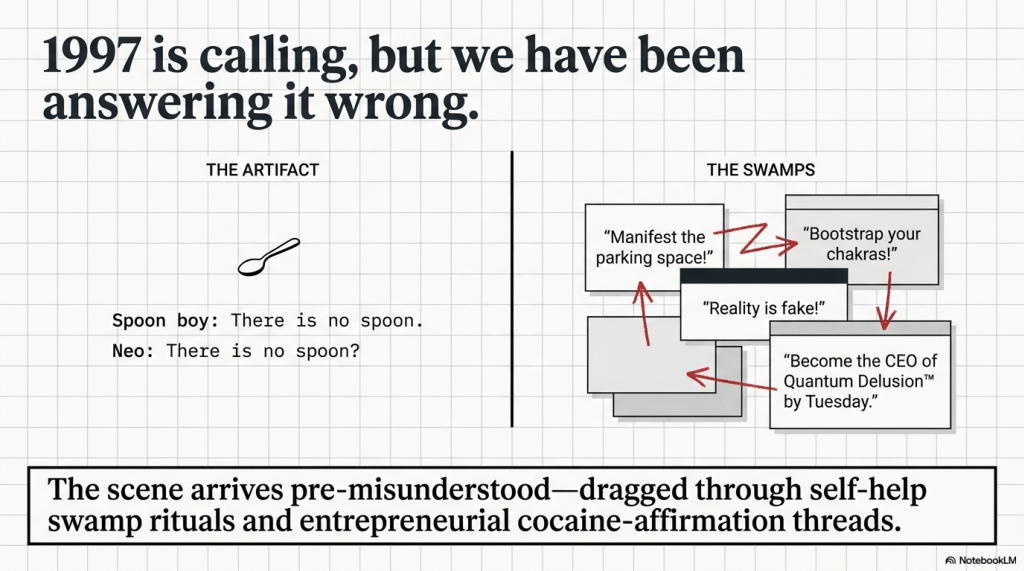
We don’t find ‘the one’ – sorry, Neo. We become different readers of the same world, and occasionally manage to remain legible to one another for a while. Which is, if you stop demanding it be a fairy tale, quite a lot.

The Butler Did It (To Himself)

5–8 minutes

I have just started reading Kazuo Ishiguro’s The Remains of the Day, and I must confess that I can’t read like a normal person.

I made it roughly fifteen pages before the analytical lenses clamped on and refused to retract. Stevens – Ishiguro’s impeccable, heartbreaking narrator – opens with a monologue about what makes a great butler, and I found myself not following the argument so much as watching the scaffolding. Because Stevens isn’t really theorising butlers. He’s performing a world. And the performance is so seamless, so grammatically composed, that it almost disguises itself as description.

Audio: NotebookLM summary podcast of this topic.

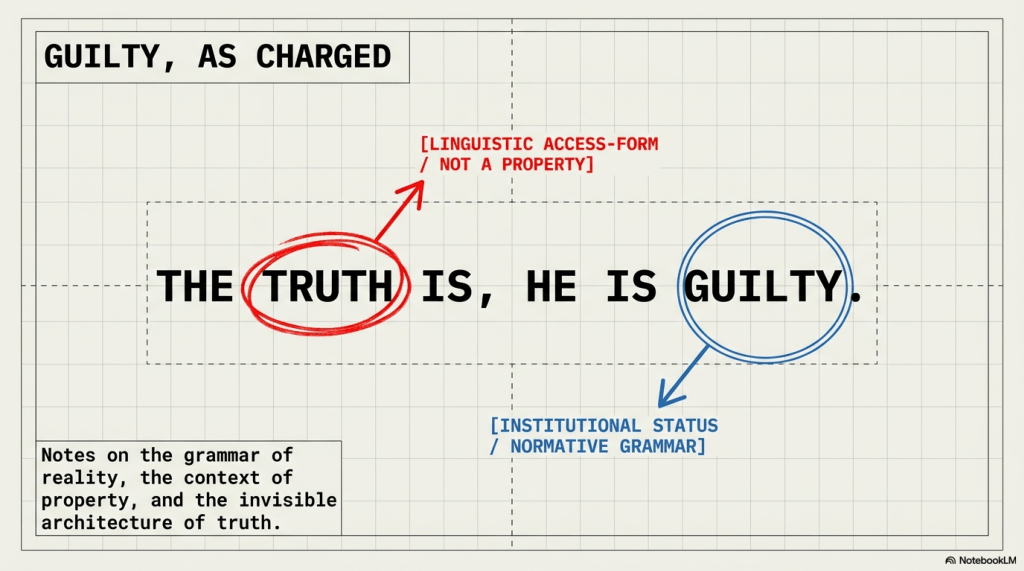
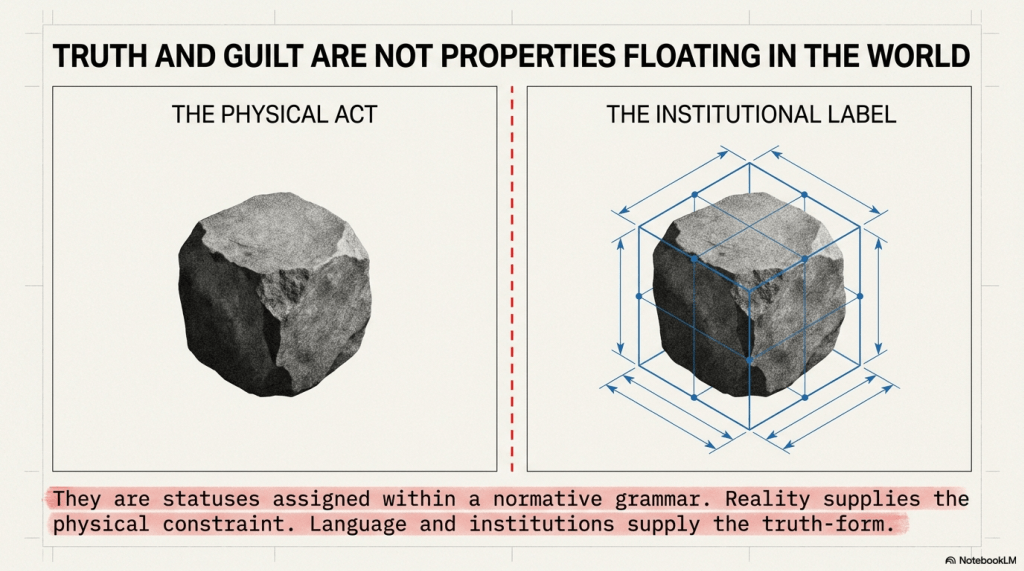
Here’s the trick. Stevens treats terms like greatness, dignity, and quality as though they named discoverable features of reality. He doesn’t present them as historically contingent, institution-soaked, liable to buckle under interrogation. He presents them as if the universe itself had ratified them, and he’s merely reporting. It’s the calm, definitional tone of a man who believes he’s describing essences when he is actually curating preferences.

Take butler itself. In ordinary usage, it looks occupationally concrete – a person who does a particular job. But in Stevens’s mouth, it stops being a role descriptor and becomes a bearer of metaphysical vocation. The word accrues civilisational mythology, evaluative freight, quasi-sacred weight, until it no longer refers to a man who answers a door but to a figure who embodies an entire moral cosmology. That is a lot for a job title to carry, and the weight does not come from the world. It comes from the grammar.

Then there is dignity. An interlocutor reasonably suggests that dignity might be something like beauty, a weasel word, like aesthetic, perceptual, taste-bound. Stevens refuses the comparison. Dignity must not sound contingent. It must present itself as something sturdier than preference, almost an objective feature of character, something a person has in the way a table has weight.

And then, naturally, he proceeds to explain it in entirely aesthetic terms: comportment, bearing, restraint, and poise – the look of self-command.

He denies the aesthetic register but then relies on it. His explicit philosophy and his operative language diverge. This isn’t a slip. It’s structural. The term needs to disavow its own supports in order to retain authority. Dignity must deny its kinship with aesthetic discrimination precisely because, without that kinship, it has no flesh.

We do this constantly – take the shakiest words and polish them until they look load-bearing. The more pressure the term is under, the more ceremonially we utter it.

NotebookLM Infographic on this topic.

Weasel words

There’s a name for what Stevens is doing, and I’ve spent a perhaps inadvisable amount of time trying to articulate it.

In my own work, A Language Insufficiency Hypothesis, I distinguish between terms that behave differently under pressure. Some are genuinely invariant – they hold stable reference across contexts, and disagreement about them can be resolved by checking. Some are contestable – stable enough for coordination and argument, but insufficiently fixed to secure the same uptake everywhere. And some are fluid – still rhetorically potent, still action-guiding, but drifting across contexts without anyone quite admitting it.

Stevens’s vocabulary sits at the dangerous end of that spectrum. Greatness and dignity are classic contestables, possibly shading into fluids: they retain social force long after referential stability has gone soft. They still feel like they mean something precise. They don’t. And Stevens’ entire identity is organised around treating them as though they do.

This matters because the language isn’t sitting atop an independent self. It’s helping to constitute the self Stevens can intelligibly be. His selfhood is assembled from grammars of rank, service, and propriety. The role vocabulary doesn’t describe a prior person. It builds one.

This brings us to his father

Stevens admits that his father might belong among the great butlers, despite lacking certain attributes Stevens associates with the newer generation. He notes the gap, then writes it off. The missing qualities belong to a different era; they are secondary, accidental, beside the essential point. His father remains the reference.

But notice what has happened. Stevens is not applying a neutral criterion and then discovering that his father qualifies. He’s adjusting the criterion around the father he already reveres. The supposed standard of greatness turns out to be less a fixed measure than a retrospective act of preservation. Firstly, canonise the figure, then tidy the theory.

The father is doing at least three jobs at once: He’s an exemplar; he’s a stabilising emotional anchor; and he’s a concealed limit-case that proves the category is being bent.

That’s how value-laden language typically works. The abstraction pretends to govern the attachment, but really the attachment is governing the abstraction. Stevens wants the dignity of a rule whilst retaining the comfort of a cherished exception. This isn’t hypocrisy in the simple sense. It’s something more interesting: it’s the ordinary mechanics of human categorisation when the stakes are personal.

And of course, the father isn’t merely a person Stevens admires. He’s the living conduit through which Stevens inherits the whole ontology of service. When Stevens prefers his father as the reference point, he’s anchoring the category in the formative figure through whom the category became intelligible in the first place. The father is part of the installation mechanism.

Then there is the tiger

With the reverent caveat that it may be apocryphal, Stevens recounts a story in which an unidentifiable butler known to his father, confronted by a tiger under a dining room table (the details are gloriously improbable), maintains perfect composure. He doesn’t flinch. He doesn’t break form. He remains, in the deepest sense, a butler.

Whether the story is true barely matters. Its function isn’t evidential but exemplary. It condenses a whole metaphysics of dignity into narrative form. It is a saint’s life for the religion of service.

And that’s the key. For the father – and then for Stevens – dignity is not a detachable opinion. It’s a lived orientation. In the face of the tiger, one doesn’t first deliberate about values and then choose restraint. One already inhabits a world in which restraint is what seriousness looks like. The salience structure is preinstalled. The event is interpreted through it automatically.

The story converts dignity from abstraction into legend. It makes composure appear not merely admirable but real. It turns comportment into ontology. And it authorises imitation through lineage: the son inherits not just a standard but a dramatic image of what the standard looks like when tested.

The possible apocryphal status doesn’t weaken this. If anything, it strengthens it. The father has become less a man than a vessel for the category. The tale smooths over ambiguity and turns a contingent life into an emblem. We’re forever embalming values in stories, then pretending the stories prove the values rather than merely rehearse them.

So Ishiguro’s opening chapter is doing at least four things at once.

  1. It presents contestable terms as if they were settled realities.
  2. It shows institutional language masquerading as neutral description.
  3. It reveals a person whose identity has been stabilised – constituted, really – by those terms.
  4. And it lets the reader feel the gap between the serenity of the grammar and the fragility of what it is trying to hold together.

That last part is the killer. Stevens’s calm definitional tone is itself evidence of instability. The more pressure the terms are under, the more polished the delivery. He’s performing maintenance whilst pretending to describe an essence.

I’m only one chapter in. I suspect Ishiguro is going to make this hurt.

Plural Worlds or Plural Mediations? Goodman Meets MEOW

6–9 minutes

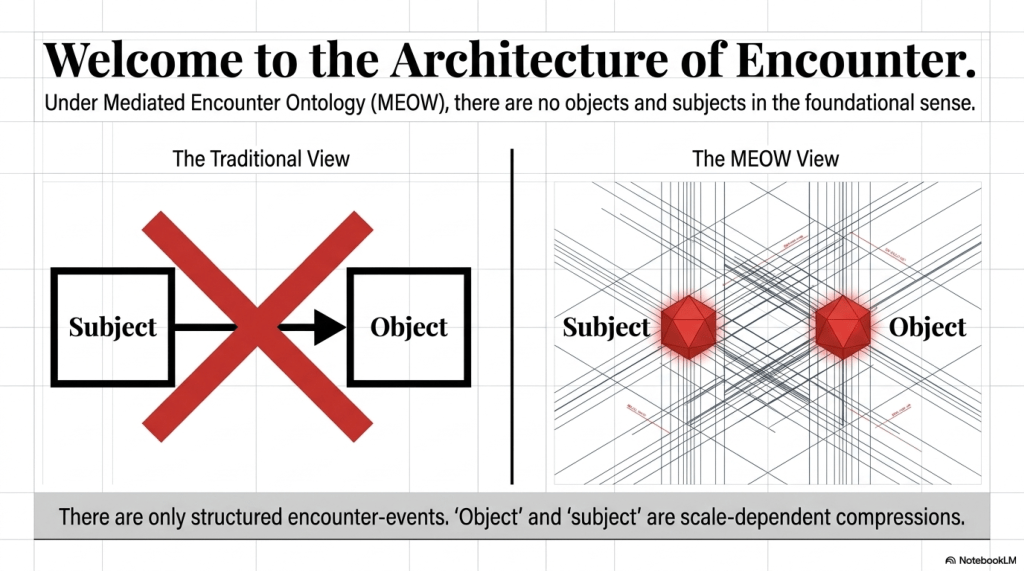
A colleague shared a reference to Nelson Goodman’s Ways of Worldmaking (1978). I’d never heard of the book or the author, so I asked ChatGPT to compare and contrast this with MEOW, The Architecture of Encounter, and a bit of A Language Insufficiency Hypothesis. This is what it rendered:

Or, to put it in one line fit for people skimming with one eye while pretending to work:

NotebookLM Infographic on this topic.
Audio: NotebookLM summary podcast of this topic.

Tl;dr

Goodman and MEOW are neighbours, but not housemates.

Both reject the childish fantasy that the world arrives already parcelled, labelled, and politely awaiting description by some neutral observer. Both are suspicious of naïve realism, fixed essences, and the conceit that language simply mirrors what is there. Both recognise that description, classification, and articulation are active, selective, and world-shaping.

But Goodman’s emphasis falls on versions, symbol systems, and the making of worlds through classificatory practice. MEOW and The Architecture of Encounter go elsewhere. They do not treat symbolic versioning as primary. They treat encounter as primary: mediated, structured interaction under constraint. Language and world-versioning come later, as derivative, partial, and often clumsy attempts to stabilise, synchronise, and re-present what is first given in encounter.

So the shortest contrast is this:

That is the hinge.

The longer version

Goodman is often useful precisely because he helps loosen the grip of a bad picture: the notion that there is one fully furnished world, discretely laid out in advance, which language then copies with greater or lesser success. In Ways of Worldmaking, description is not passive transcription. Versions organise, sort, foreground, suppress, classify, and compose. They do not simply mirror. They make.

This much sits quite comfortably beside MEOW and The Architecture of Encounter. MEOW has never been sympathetic to the old theatre in which a subject peers out at a ready-made object-world and then tries to report back accurately. That picture has always seemed less like sober metaphysics and more like a grammatical superstition. It is one of those inherited arrangements that philosophy keeps polishing rather than questioning, as if centuries of confusion were somehow evidence of depth.

On that score, Goodman is an ally. He helps dissolve the myth of innocent description.

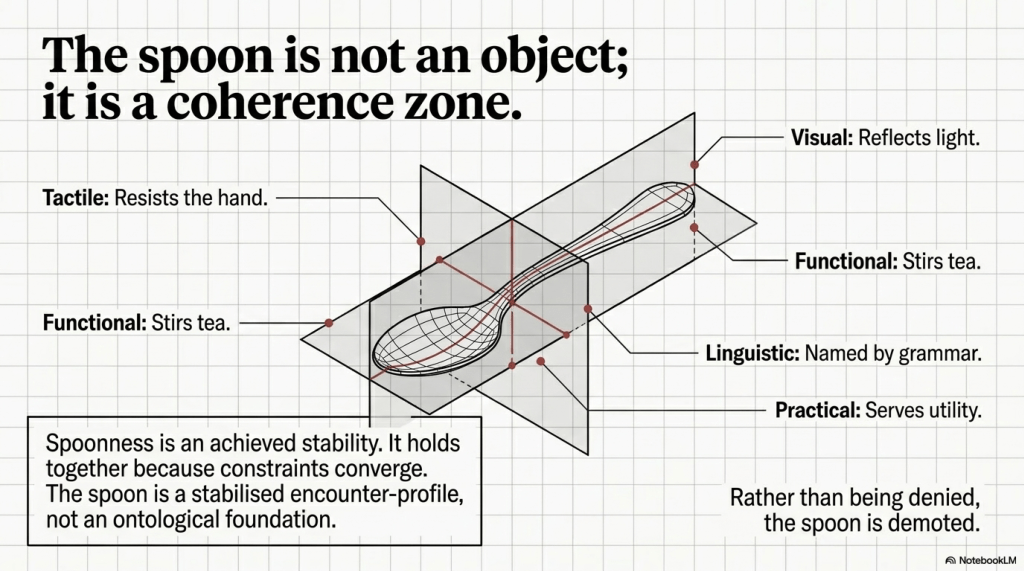
He also overlaps with MEOW in his suspicion of essentialist carving. There is no reason to suppose reality presents itself in one uniquely natural partition, fully jointed in the exact way our preferred nouns imply. Goodman’s attention to alternative versions, symbolic orderings, and rival systems of classification fits comfortably with the broader MEOW suspicion that what we call “objects” are not self-announcing substances but stabilised articulations within a mediated field. In The Architecture of Encounter, this becomes still sharper: subjects and objects are not ontological primitives but abstractions from recurring encounter-structures. That already places the framework some distance from ordinary metaphysical furniture.

So far, then, the affinity is genuine.

But it is just as important not to overstate it.

Goodman’s centre of gravity is symbolic and versional. His concern is with how worlds are made through systems of description, notation, projection, ordering, and exemplification. The operative verbs are things like sort, render, compose, construct. The world is inseparable from the version.

MEOW and The Architecture of Encounter are doing something heavier. They are not merely offering a theory of how descriptions organise a world. They are offering an ontology in which encounter-events are primary. The basic unit is not an interpreted object, nor a version, nor a sentence, but a structured event of mediated contact under constraint. Mediation is not a regrettable screen placed between mind and world. It is constitutive of whatever relation there is. But neither is mediation free invention. Encounter is answerable to what resists, pushes back, stabilises, recurs, and converges. That is the role of constraint.

This is where the deepest divergence emerges.

Goodman is often read, not unfairly, as weakening the notion of a single underlying world more radically than MEOW can tolerate. His pluralism risks allowing “worldmaking” to carry most of the ontological burden. The result can begin to sound as though right versions are all the realism one is entitled to. There are worlds, or world-versions, and their legitimacy depends less on correspondence to a singular underlying reality than on fit, function, coherence, utility, and internal rightness.

MEOW resists that move. It does not return to vulgar realism, with its fantasy of a view from nowhere, but it also refuses to let mediation collapse into fabrication. Constraint is not a decorative afterthought. It is the realist anchor. One may have multiple mediations, multiple articulations, multiple ontological grammars, multiple local stabilisations, but these are not unconstrained improvisations. They are answerable to an invariant field of relational resistance.

Put more brutally: Goodman destabilises the ready-made world and then tends to leave us with versions. MEOW destabilises the ready-made world and then asks what must be true for divergent mediations nonetheless to converge, however partially, on the same resistant reality.

That difference matters.

It matters again when language enters the picture. Goodman grants an enormous role to symbol systems in worldmaking. MEOW, especially once read through The Architecture of Encounter and A Language Insufficiency Hypothesis, treats language more suspiciously. Language matters, certainly, but it is late, compressed, and lossy. It is not the primordial engine of world-constitution. It is a finite synchronisation technology layered atop more basic forms of mediation: biological, perceptual, attentional, cognitive, social. Language helps coordinate. It helps compress. It helps stabilise public handling. But it also distorts, truncates, nominalises, and overcommits.

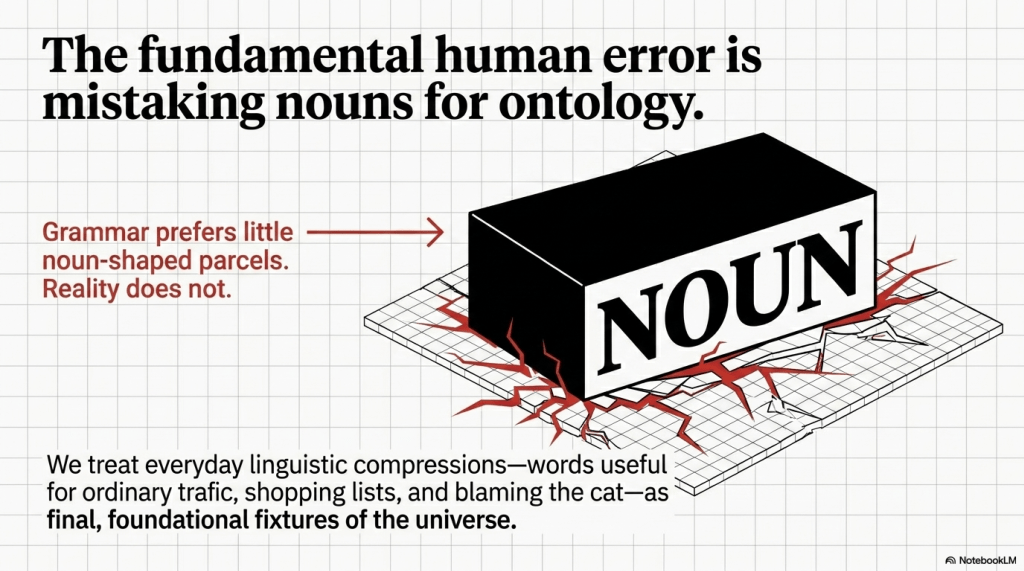
That is where LIH adds a useful corrective to Goodman. If Goodman sometimes sounds like a connoisseur of world-versioning, LIH reminds us that our versioning machinery is often embarrassingly underpowered for the tasks philosophers assign to it. Human beings keep trying to force syntax to carry ontological burdens it was never built to bear. We take grammatical distinctions for metaphysical disclosures. We inherit noun-heavy structures and then wonder why the world starts looking like a warehouse of things. We reify processes, discretise continua, and carve durational realities into portable lexical chunks. Then, having manufactured these pseudo-stabilities, we congratulate ourselves for discovering “selves”, “minds”, “meanings”, “moral facts”, and other linguistic taxidermy.

Goodman certainly helps expose the active role of symbolic systems. But LIH presses further by insisting that symbolic systems are not merely worldmaking tools. They are also bottlenecks. They fail. They coarsen. They generate ontological illusions through the very act of public coordination.

That is why I would not place Goodman and MEOW in opposition, but in a relation of partial inheritance and correction.

Goodman is valuable because he helps dismantle the myth of passive representation. He is right to resist the idea that language or symbolisation merely records a pre-cut world. He is right to foreground selection, ordering, categorisation, and articulation. He is right to reject the transparent-window fantasy.

But from a MEOW standpoint, he does not go far enough into encounter, and perhaps goes too far into version.

What is missing is a richer account of pre-linguistic mediation, presentational structure, salience, affordance, and the layered constraints under which any symbolic practice becomes possible in the first place. Symbol systems do not float free. They do not arise in a void. They are parasitic upon lived, embodied, constrained encounter. Nor is their plurality enough, by itself, to explain why some articulations fail, why some converge, why some distort in systematic ways, or why reality resists our preferred descriptions with such vulgar persistence.

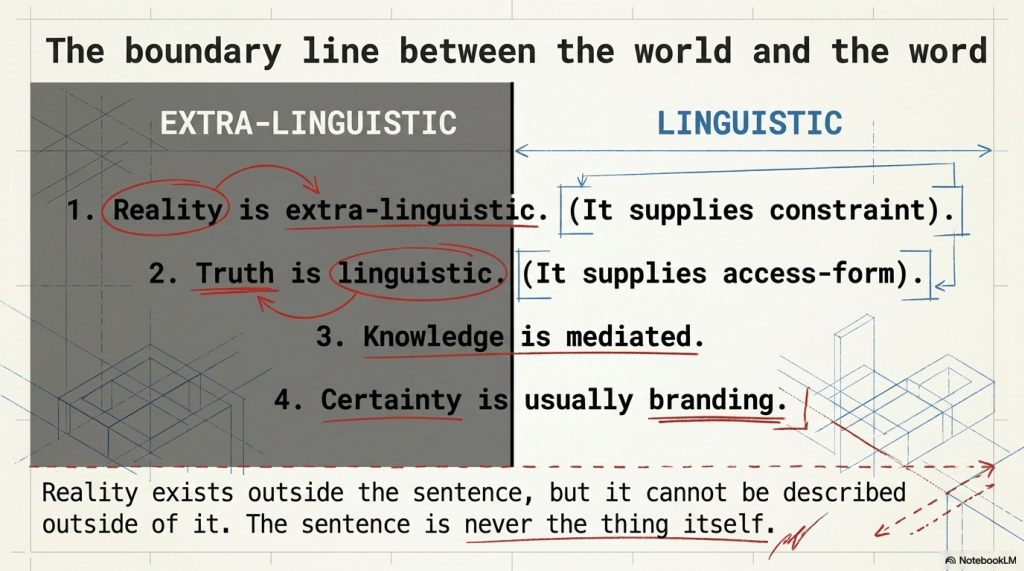
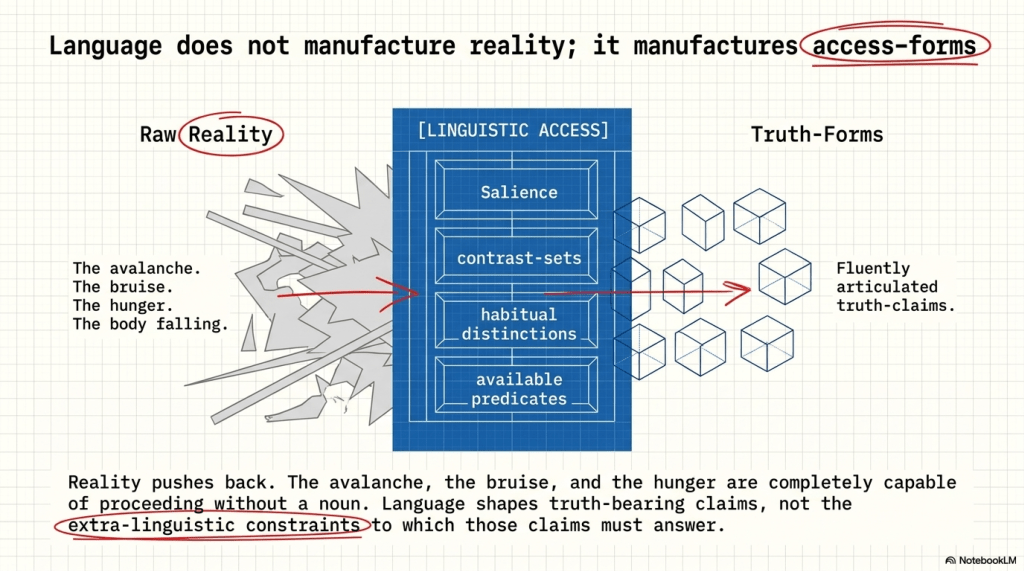
That last point is worth dwelling on, because it is where many anti-realist gestures lose their nerve. The fact that access is mediated does not imply that reality is manufactured. The fact that articulation is active does not imply that resistance is optional. The fact that classifications vary does not imply that there is nothing to be classified beyond the classificatory act.

So the bottom line remains the same.

Goodman is useful for breaking the spell of the one already-made world and for showing that symbolisation is not passive mirroring. But MEOW and The Architecture of Encounter push in a different direction. They relocate the primary philosophical action from symbol systems to encounter-events, from worldmaking to world-disclosure under mediation, and from plural worlds to plural access under constraint. A Language Insufficiency Hypothesis then sharpens the point by showing that language is not an omnipotent engine of constitution but a compression scheme with predictable failure modes.

The Architecture of Cognitive Compromise

4–6 minutes

Abortion, Ontological Grammar, and the Limits of Civil Discourse

When federal abortion protections were withdrawn in the United States, many observers treated the event as a policy reversal, a judicial shift, or a partisan victory. Those are surface descriptions. They are not wrong. They are simply too thin.

What was exposed was not a failure of dialogue. It was the collision of ontological grammars.

Audio: NotebookLM summary podcast.

1. Thick Concepts and the Illusion of Neutral Ground

book cover

Bernard Williams famously distinguished between ‘thin’ moral terms (good, bad, right) and ‘thick’ ones (cruel, courageous, treacherous), where description and evaluation are fused.

Abortion is not a thin concept. It is thick all the way down.

For one framework, the operative grammar is something like:

  • Life begins at conception.
  • The foetus is a rights-bearing entity.
  • Termination is morally equivalent to killing.

For another:

  • Personhood is socially and biologically emergent.
  • Bodily autonomy is foundational.
  • Forced gestation is coercive.

Notice that these are not competing policies. They are competing ontological commitments about what exists, what counts as a person, and what kind of being a pregnant body is.

Argument across this divide does not merely contest conclusions. It contests the background conditions under which reasons register as reasons.

This is not ‘people see the world differently’. It is: people parse reality through grammars that do not commute.

2. Ontological Grammar: Where Deliberation Stops

By ‘ontological grammar’, I do not mean syntax in the Saussurean or Chomskyan sense. I mean the pre-reflective substrate that structures what appears salient, real, morally charged, or negligible.

We deliberate within grammars. We do not deliberate our way into them.

Liberal Enlightenment optimism assumes that if disagreement persists, more information, better reasoning, or improved empathy will close the gap. But if the dispute concerns the very ontology of ‘life’, ‘person’, or ‘rights’, no amount of fact-sharing resolves the issue. The disagreement is upstream of facts.

The closure of federal abortion access did not prove that one side reasoned better. It demonstrated that institutional containment had failed.

3. Biopower and the Management of Bodies

Michel Foucault gives us a crucial lens: biopower. Modern states do not merely govern territory; they administer life. Birth rates, mortality, sexuality, health – these become objects of policy.

Abortion sits directly inside this matrix.

A state that restricts abortion is not only expressing moral judgment. It is reallocating control over reproductive capacity. It is asserting a claim over which bodies count, which futures are permitted, and which biological processes are subject to regulation.

The conflict is therefore not purely ethical. It is biopolitical.

And what appears as ‘civil discourse’ around abortion is often possible only so long as institutional frameworks keep both grammars partially satisfied. When federal protections existed, they acted as a stabilising superstructure. Remove that, and the ontological conflict becomes naked.

4. Habitus and the Illusion of Reasoned Consensus

Pierre Bourdieu would remind us that our dispositions are not self-authored. Habitus sedimented through family, religion, class, and institutional life shapes what feels obvious, outrageous, or unthinkable.

People do not wake up one morning and choose an abortion ontology.

They inherit it. It becomes embodied common sense.

Thus, when someone says, ‘Surely we can agree that making a person feel whole is more important than ideological purity’, they are already speaking from within a grammar that prioritises individual authenticity and psychological coherence. That priority is not universal. It is historically situated.

Compromise is not achieved by stepping outside habitus. It is achieved when institutional and social conditions allow divergent grammars to coexist without totalising one another.

5. The Popperian Threshold

Karl Popper warned of the ‘paradox of tolerance‘: unlimited tolerance may enable intolerant forces to eliminate tolerance itself.

In particularly virulent climates, appeals to compromise are heard not as gestures of goodwill but as tactical weakness.

When one faction succeeds in unilaterally redefining the legal status of abortion at a federal level, it is not merely participating in discourse. It is altering the biopolitical infrastructure. Once altered, the range of permissible disagreement narrows.

Civil discourse, then, is not a natural equilibrium. It is a managed condition sustained by institutional design, social trust, and shared legibility.

NB: Popper’s paradox of tolerance is often invoked as a moral axiom. But it is better understood as a self-protective clause internal to liberal ontology. It presupposes a shared commitment to rational exchange. When that commitment erodes, the paradox does not resolve disagreement; it merely marks the point at which biopower intervenes to preserve a regime.

6. Why This Is Not Just ‘People Disagree’

The lay intuition – ‘people see the world differently’ – is descriptively correct and analytically useless.

What the ontological grammar model adds is structure:

  • Disagreements cluster around thick concepts.
  • Thick concepts fuse description and evaluation.
  • Frameworks determine what counts as a reason.
  • Institutions temporarily stabilise incompatible grammars.
  • When stabilisation weakens, conflict appears irreconcilable.

Abortion is not uniquely polarising because people are irrational. It is polarising because it touches ontological primitives: life, personhood, autonomy, and obligation.

In such cases, ‘compromise’ is not achieved by discovering a middle truth. It is achieved – if at all – by constructing a legal and institutional arrangement that both grammars can grudgingly inhabit.

NotebookLM Infographic

7. The Uncomfortable Conclusion

The Enlightenment story tells us that disagreement is a surface phenomenon, curable by better reasoning.

The ontological grammar story tells us something harsher: some disagreements are not resolvable through language because they are about the conditions under which language binds.

This does not entail quietism. It entails clarity.

Civil discourse is not proof that grammars have converged. It is evidence that power, institutions, and habitus have aligned sufficiently to prevent rupture.

When that alignment shifts, the illusion of shared ontology evaporates.

And what we are left with is not failed reasoning – but exposed foundations.


I planned to use prostitution and anti-natalism as other cases for elucidation, but I see this has already grown long. I’ll reserve these are others for another day and time.

Legibility and Ontology

3–5 minutes

These two words qualify as my words of the month: legibility and ontology.

I’ve been using them as lenses.

I picked up legibility from James C. Scott’s Seeing Like a State: How Certain Schemes to Improve the Human Condition Have Failed, which is really a book about how well-intentioned schemes fail once reality is forced to become administrable. Ontology is an older philosophical workhorse, usually paired with epistemology, but I’m using it here in a looser, more pragmatic sense.

When I write, I write through lenses. Everyone does. Writing requires a point of view, even when we pretend otherwise.

In this post, I want to talk more informally about my recent essay, Grammatical Failure. I usually summarise my work elsewhere, but here I want to think out loud about it, particularly in relation to social ontology and epistemology. I won’t linger on definitions. They’re a search away. But a little framing helps.

Ontology, roughly: how reality is parsed.

Epistemology: how knowledge is justified within that parsing.

Audio: NotebookLM summary of this post.

Much of my recent work sits downstream of thinkers like Thomas Sowell, George Lakoff, Jonathan Haidt, Kurt Gray, and Joshua Greene. Despite their differences, they converge on a shared insight: human cognition is largely motivated preverbally. As a philosopher of language, that pre-language layer is where my interest sharpens.

I explored this in earlier work, including a diptych titled The Grammar of ImpasseConceptual Exhaustion and Causal Mislocation. Writing is how I gel these ideas. There are several related pieces still in the pipeline.

When I talk about grammar, I don’t mean Saussure or Chomsky. I mean something deeper: the ontological substrate beneath belief. Grammar, in this sense, is how reality gets parsed before beliefs ever form. It filters what can count as real, salient, or intelligible.

Let’s use a deliberately simplified example.

Imagine two ontological orientations. Call them Ont-C and Ont-L. This isn’t to say there are only two, but much of Western political discourse collapses into a binary anyway.

Ont-C tends to experience people as inherently bad, dangerous, or morally suspect. Ont-L tends to experience people as inherently good or at least corrigible. These aren’t opinions in the usual sense. They sit beneath belief, closer to affect and moral orientation.

Now consider retributive justice, setting aside the fact that justice itself is a thick concept.

From Ont-C, punishment teaches a lesson. It deters. It disciplines. From Ont-L, punishment without rehabilitation looks cruel or counterproductive, and the transgression itself may be read as downstream of systemic injustice.

Each position can acknowledge exceptions. Ont-L knows there are genuinely broken people. Ont-C knows there are saints. But those are edge cases, not defaults.

Now ask Ont-C and Ont-L to design a criminal justice system together. The result will feel intolerable to both. Too lenient. Too harsh. The disagreement isn’t over policy details. It’s over how reality is carved up in the first place.

And this is only one dimension.

Add others. Bring in Ont-V and Ont-M if you like, for vegan and meat-based ontologies. Suddenly, you have Ont-CV, Ont-CM, Ont-LV, and Ont-LM. Then add class, religion, gender, authority, harm, and whatever. Intersectionality stops looking like a solution and starts looking like a combinatorial explosion.

The Ont-Vs can share a meal, so long as they don’t talk politics.

The structure isn’t just unstable. It was never stable to begin with. We imagine foundations because legibility demands them.

Grammatical Failure is an attempt to explain why this instability isn’t a bug in liberal epistemology but a structural feature. The grammar does the sorting long before deliberation begins.

More on that soon.


In any case, once you start applying this ontological lens to other supposedly intractable disputes, you quickly realise that their intractability is not accidental.

Take abortion.

If we view the issue through the lenses of Ont-A (anti-abortion) and Ont-C (maternal choice), we might as well be peering through Ont-Oil and Ont-Water. The disagreement does not occur at the level of policy preferences or competing values. It occurs at the level of what counts as morally salient in the first place.

There is no middle ground here. No middle path. No synthesis waiting to be negotiated into existence.

That is not because the participants lack goodwill, intelligence, or empathy. It is because the ontological primitives are incommensurate. Each side experiences the other not as mistaken but as unintelligible.

We can will compromise all we like. The grammar does not comply.

Contemporary discourse often insists otherwise. It tells us that better arguments, clearer framing, or more dialogue will eventually converge. From this perspective, that insistence is not hopeful. It is confused. It mistakes a grammatical fracture for a deliberative failure.

You might try to consider other polemic topics and notice the same interplay.

Why “Just Think Critically” Keeps Failing

2–4 minutes

The paper is now available on Zenodo.

I’ve been wittering on about social ontological positions and legibility for a few months now. I’ve been writing a book and several essays, but this is the first to be published. In it, I not only counter Ranalli – not personally; his adopted belief – I also counter Thomas Sowell, George Lakoff, Jonathan Haidt, Kurt Gray, and Joshua Green. (Counter might be a little harsh; I agree with their conclusions, but I remain on the path they stray from.)

Audio: NotebookLM summary of the essay: Grammatical Failure

There is a strange faith circulating in contemporary culture: the belief that disagreement persists because someone, somewhere, hasn’t been taught how to think properly.

The prescription is always the same. Teach critical thinking. Encourage openness. Expose people to alternatives. If they would only slow down, examine the evidence, and reflect honestly, the right conclusions would present themselves.

When this doesn’t work, the explanation is equally ready to hand. The person must be biased. Indoctrinated. Captured by ideology. Reason-resistant.

What’s rarely considered is a simpler possibility: nothing has gone wrong.

Most of our public arguments assume that we are all operating inside the same conceptual space, disagreeing only about how to populate it. We imagine a shared menu of reasons, facts, and values, from which different people select poorly. On that picture, better reasoning should fix things.

What if what counts as a ‘reason’, what qualifies as ‘evidence’, or what even registers as a meaningful alternative is already structured differently before any deliberation begins?

At that point, telling someone to ‘think critically’ is like asking them to optimise a system they cannot see, using criteria they do not recognise. The instruction is not offensive. It’s unintelligible. This is why so many contemporary disputes feel immune to argument. Not merely heated, but strangely orthogonal. You aren’t rebutted so much as translated into something else entirely: naïve, immoral, dangerous, unserious. And you do the same in return.

Liberal epistemology has a neat explanation for this. It treats these failures as agent-level defects: insufficient openness, motivated reasoning, epistemic irresponsibility. The problem is always how people reason. The argument of Grammatical Failure is that this diagnosis is systematically misplaced. The real constraint, in many cases, lies upstream of reasoning itself. It lies in the semantic frameworks that determine what can count as a reason in the first place. When those frameworks diverge, deliberation doesn’t fail heroically. It fails grammatically.

This doesn’t mean people lack agency. It means agency operates within a grammar, not over it. We choose, revise, and reflect inside spaces of intelligibility we did not author. Asking deliberation to rewrite its own conditions is like asking a sentence to revise its own syntax mid-utterance. The result is a familiar pathology. Disagreement across frameworks is redescribed as epistemic vice. Category rejection is mistaken for weak endorsement. Indoctrination becomes a label we apply whenever persuasion fails. Not because anyone is lying, but because our diagnostic tools cannot represent what they are encountering.

The paper itself is not a manifesto or a programme. It doesn’t tell you what to believe, how to educate, or which politics to adopt. It does something more modest and more uncomfortable. It draws a boundary around what liberal epistemology can coherently explain – and shows what happens when that boundary is ignored.

Sometimes the problem isn’t that people won’t think.

It’s that they are already thinking in a grammar that your advice cannot reach.