The Grammar of Bettering Yourself

7–10 minutes

Self-help, pop psychology, LinkedIn, and the metaphysics smuggled into advice

Self-improvement books rarely begin by telling you what it believes a person is. That would be too honest, and honesty is bad for conversion funnels. Instead, it begins with verbs.

Choose. Decide. Commit. Heal. Optimise. Manifest. Reframe. Own. Level up. Set boundaries. Do the work. Become intentional. Stop self-sabotaging. Unlock your potential. Be your authentic self. Take radical responsibility.

The vocabulary shifts depending on the tradition. One speaks of healing, one of discipline, one of nervous systems, one of leadership, one of purpose, one of abundance. What they share is not a doctrine but a grammar: a way of arranging the person before the advice begins. The subject is always inward, sovereign, and temporarily malfunctioning. The problem is always locatable. The solution is always available, often for $29.99 or in a free webinar that becomes a masterclass for $299.

But here is where the easy cynicism runs out of road, because the people writing this stuff — by and large — believe it.

Audio: NotebookLM summary podcast of this topic.

That is the part of the critique that tends to get skipped, because it is less satisfying than imagining a cynical operator deliberately strip-mining the anxious for recurring revenue. Most self-help authors arrived at their framework the same way their readers are about to: they were struggling, they encountered a grammar that organised their experience, they felt the specific relief of suddenly being intelligible to themselves, and they mistook that relief for discovery. Then they wrote a book about it. The author is not the shark. The author is a previous customer who graduated to the front of the room.

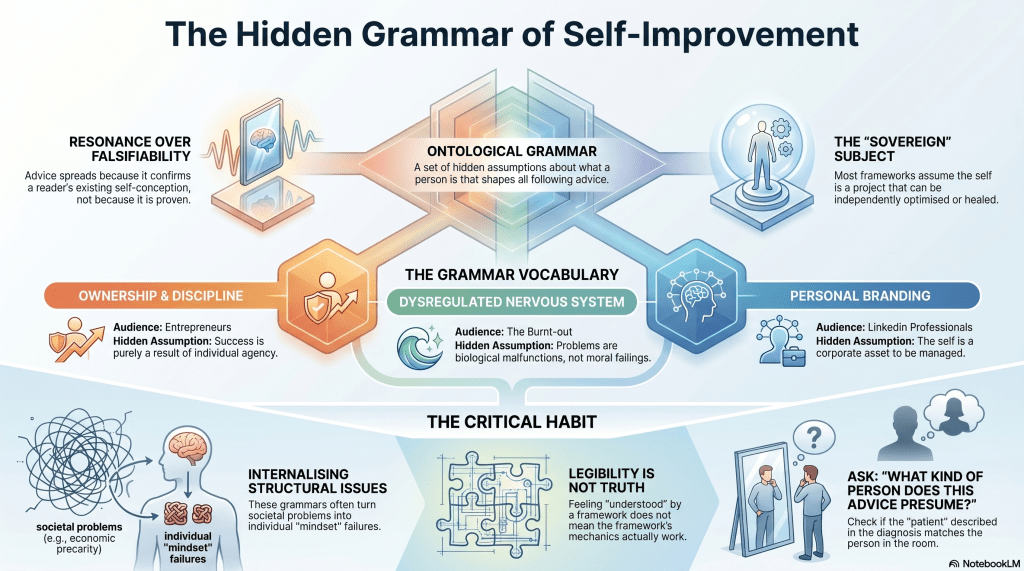
The framework they found — and are now evangelising — is what I call, in The Architecture of Encounter, an ontological grammar: a set of prior commitments about what kind of thing a person is, which arrives upstream of any specific advice and quietly determines what advice is even thinkable. You cannot recommend reframing without first presuming a self transparent enough to observe its own cognitions and sovereign enough to revise them. You cannot prescribe boundaries without presuming a self whose territory is violable and whose autonomy is the relevant moral unit. You cannot offer alignment without presuming a self that has a true direction, temporarily obscured, patiently awaiting discovery through either a values exercise on page forty-seven or a retreat in somewhere with good lighting and worse plumbing.

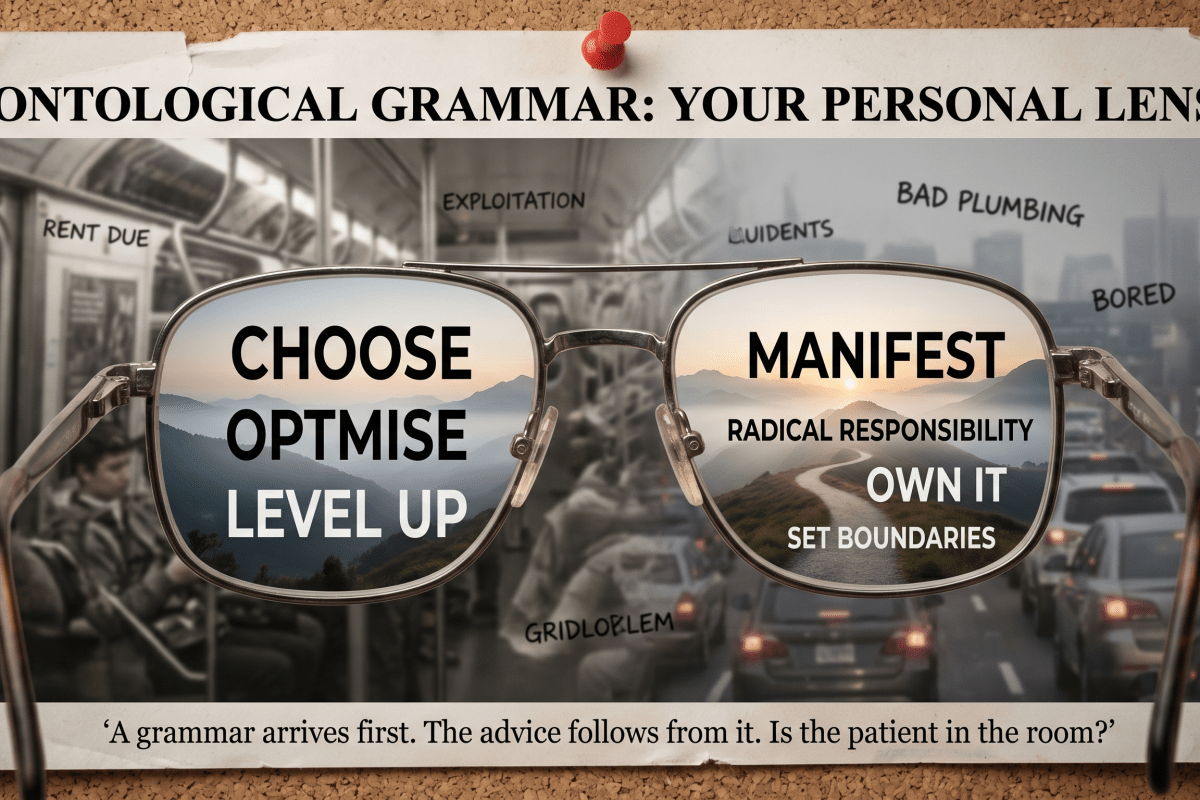
The grammar arrives first. The advice follows from it. And the person reading it is not being shown a mirror. They are being issued a lens.

The lens finds its wearer. “Take ownership” resonates with people already invested in the idea of themselves as agents who have been insufficiently deliberate — it confirms the worldview while appearing to challenge the behaviour. “Your nervous system is dysregulated” resonates with people for whom the moralised language of laziness and discipline has become intolerable; here is a vocabulary that removes the accusation while retaining the explanation, which is a genuinely useful service even if the mechanism on offer is borrowed loosely from neuroscience and the rest is borrowed from hope. “Mindset is your prison” resonates with people who need their suffering to remain individually tractable — solvable, that is, without anyone having to redistribute anything expensive or inconvenient. “Manifest your abundance” resonates with people who find both structural analysis and self-blame equally unappealing and would like a third option involving the universe.

Each grammar finds its congregation. Which is precisely the problem.

A grammar propagates not because it has been tested against alternatives or evaluated for efficacy, but because it maps onto a prior self-conception cleanly enough to produce the sensation of being understood. The entrepreneur already believes in agency-language: execution, discipline, ownership, leverage. The book that tells them their discipline is the differentiator is not offering new information; it is offering comfortable confirmation in a more expensive format. The therapeutic reader already suspects their relational difficulties involve something called attachment. The book that tells them so is not illuminating; it is flattering them with their own vocabulary. The LinkedIn professional already believes their career is a project of self-authorship. The thought leader who tells them to communicate their value and build authentic leadership is not giving them a strategy; they are giving them a liturgy.

The community that forms around a grammar is a church, not a seminar. It has converts, not students. And like most churches, it is considerably better at solidarity than at falsifiability.

This matters because the mechanism by which self-help content spreads — resonance, recognition, testimonial, referral — is entirely decoupled from the mechanism by which we would establish that it works. A sentence resonates because it fits a grammar the reader has already adopted. That tells you something real: about the anxieties structuring a cohort’s self-understanding, the stories they are trying to make liveable, the descriptions of themselves they find tolerable or intolerable. It does not tell you whether the intervention produces the claimed effect, in whom, under what conditions, and compared with what alternative. Those are duller questions. Less shareable. They do not fit on a carousel post with a soft gradient and a mountain.

Horoscopes also resonate. So do conspiracy theories, national myths, and the first chapter of any book you buy during a difficult stretch of your life.

The point is not that the advice is necessarily wrong. Sometimes “set boundaries” is exactly right. Sometimes “take ownership” is precisely what someone has been avoiding hearing. Sometimes a new frame genuinely reorganises attention in ways that produce durable change, and the person is measurably better off for having found it. None of that is in question. The question is whether a framework that produced one useful instance has any reliable claim to truth beyond that instance — and whether the person reaching for it during a difficult period is in any position to make that evaluation carefully.

They usually are not. That is not stupidity. That is the condition of being in difficulty: you reach for intelligibility, and whoever offers it collects a great deal of credit. The problem is not the reaching. The problem is that the self-help ecosystem — including the parts of it operated by entirely sincere people who believe every word they publish — has no reliable mechanism for distinguishing frameworks that help from frameworks that merely feel like help while the underlying situation continues undisturbed. The true believer and the true seeker share the same vulnerability. Both reached for a grammar. One of them got to write the book.

NotebookLM Infographic on this topic.

It is also worth noting that commerce is the easy villain here, and an overrated one. The same dynamic runs through pop psychology, where the grammar of individual cognitive mechanisms tends to dominate because it produces legible interventions in a way that structural analysis never quite does; blaming cognition is tractable, blaming the organisation of society is dispiriting and hard to monetise, even when it is accurate. It runs through LinkedIn, where the grammar is not therapeutic but managerial — the self reimagined as an optimisable professional asset — and where burnout becomes a boundary failure, precarity becomes an invitation to upskill, and alienation becomes a purpose deficit. Nobody on LinkedIn is necessarily trying to extract money from anyone. Many of them are trying to be useful, or to be visible, or both, which is human enough. But the grammar they are deploying disappears material conditions into interior architecture with the same efficiency as the most cynically produced wellness content. The mechanism does not require a profit motive. It requires only a grammar and an audience that already shares it.

The useful response to all of this is not wholesale dismissal, which would be too easy and almost certainly wrong. Some people need clearer habits. Some need better descriptions of their own conduct. Some need permission to stop tolerating what they have been tolerating. Some need a vocabulary that makes their own patterns visible, and a framework — however approximate — is better than none. These are real services. The fact that they are sometimes delivered inside a dubious metaphysics of the person does not automatically negate them.

But there is a question worth developing the habit of asking, before the grammar installs itself: what kind of person does this advice presume? Is the self it describes sovereign, where I am actually constrained? Wounded where I am actually responsible? Deficient where I am actually being exploited? Misaligned where I am actually just bored? In need of self-belief, where I am in need of rent?

These questions are less fun than a morning routine designed by someone who has never had a difficult commute. They do not come with a community or a badge or an accountability partner who sends encouraging voice notes. But they do something the grammar on its own cannot: they ask whether the patient described in the diagnosis is the one actually in the room.

Most self-help skips that step. So, not infrequently, does the person who wrote it. They found a grammar that made their experience legible, felt the relief that comes from that, and never quite got around to distinguishing legibility from truth. Which is understandable. It is also, for everyone downstream of that decision, a problem.

I don’t occupy this shared space of ontological grammar, so I call bollox.


The Blind Spot of Moral Maths

3–5 minutes

I am considering a new essay. That’s nothing new, but this was born from personal experience. Whilst reading Derek Parfit’s Reasons and Persons, I reached the chapters on moral arithmetic and imperceptible harms and effects, and it caught my attention. Not in the ‘Aha!’ way, but because I felt excluded given my own experience. My mind wandered off the reservation, but I wondered if my anecdote might be generalised. After a discussion with ChatGPT, Grok, DeepSeek, Gemini, and Claude, I concluded that it can. As is my practice for academic writing, I formulate a thesis and then an abstract at the start. Then comes the real work.

Audio: NotebookLM summary podcast of this topic.
NotebookLM Infographic on this topic.

Thesis Statement

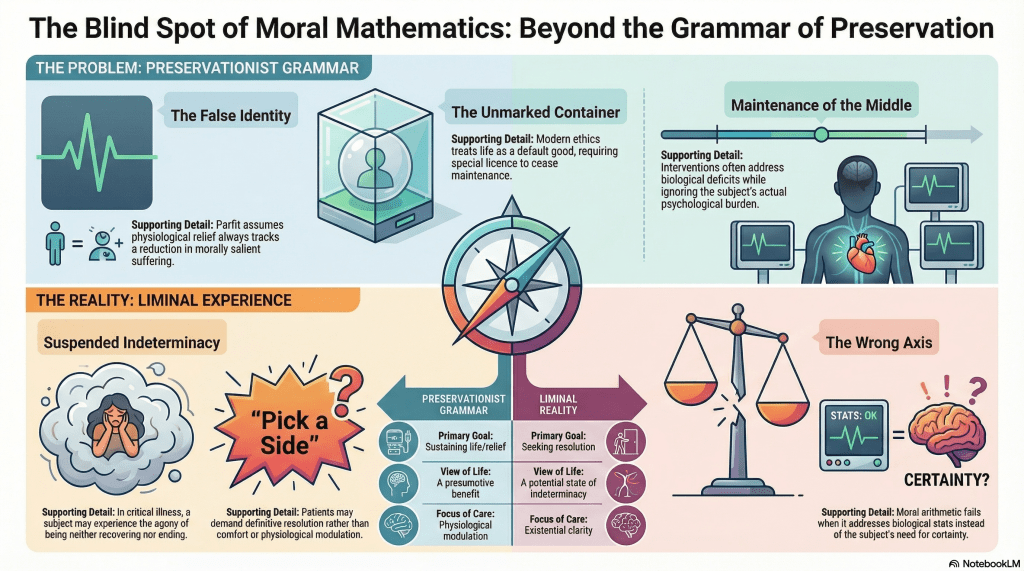
Derek Parfit’s moral mathematics relies on an undefended identification between physiological relief and suffering-reduction. Liminal experience exposes the instability of that identification at its source: what is addressed may be a bodily deficit while the suffering that matters lies elsewhere, in suspended indeterminacy itself. Because the preservationist grammar Parfit inherits treats continued life as presumptively good and bodily modulation as prima facie benefit, it cannot distinguish cases in which relief tracks morally salient suffering from cases in which it merely maintains the middle.

Abstract

This essay argues that Derek Parfit’s discussions of ‘moral mathematics’ in Reasons and Persons are not neutral exercises in moral reasoning but operations conducted within a prior ontological grammar that predetermines what can count as a benefit, a harm, and a morally salient outcome. While Parfit explicitly addresses aggregation, commensurability, and imperceptible effects, his examples presuppose an unexamined identification: that physiological relief tracks suffering-reduction, and that such reduction, however marginal, constitutes benefit within a life treated as presumptively worth preserving. This preservationist orientation is not argued for but built into the structure of the cases themselves.

The essay develops this critique through Parfit’s micro-allocation cases, particularly those involving the distribution of small amounts of water to relieve thirst. These examples appear to demonstrate that imperceptible reductions in suffering can aggregate into morally significant goods. But the argument depends on a prior identification that may fail at the point of origin. Slaking thirst addresses a physiological deficit; it does not necessarily diminish the suffering that is morally salient to the subject. The essay does not claim that physiological modulation never tracks suffering-reduction – in many cases it plainly does – but that Parfit’s grammar lacks the resources to distinguish the cases in which it does from those in which it does not. It treats all bodily modulation as benefit by default, and this default is what the essay sets out to make visible.

Drawing on a first-person account of critical illness – respiratory failure, not pain; a demand not for comfort but for determination in either direction – the essay argues that such cases function not as marginal exceptions but as diagnostics that reveal the grammar operating on the wrong dimension of the moral object. The experience of wanting not relief but resolution (‘pick a side’) is both possible and intelligible, yet the framework has no notation for it. What the intervention addressed was a physiological deficit; what it left untouched was suspended indeterminacy – the condition of being maintained in the middle, neither recovering nor ending. That the trajectory eventually resolved toward survival cannot retroactively validate the intervention on the axis that mattered during the interval itself; to argue otherwise would be to confuse post hoc survivorship with moral justification.

The essay argues further that this limitation belongs not to Parfit alone but to a broader preservationist syntax operative across Western medical ethics, legal frameworks governing end-of-life care, and liberal moral philosophy more generally. Within this grammar, life functions as the unmarked container of value; sustaining it is treated as prior to any calculation about its contents; and cessation requires special licence. The cultural entrenchment of this grammar explains why Parfit’s examples feel intuitively compelling: they inherit commitments so deeply embedded that they register as neutral premises rather than contestable positions. The point is not that preservationism is indefensible but that it remains undefended – operative yet unexamined.

Finally, the essay notes that Singer’s universalisation of moral responsibility intensifies rather than resolves the underlying difficulty, since it collapses the bounded cases on which Parfit’s arithmetic depends. What emerges is not a disagreement about consequentialism but about the grammar through which suffering, benefit, and moral salience are first made legible – and about whether that grammar can survive contact with the full range of conditions it purports to govern.

Video: There Are No Objects… Or Subjects

What if the biggest trick language played on you is convincing you that the world is made of things?

Every sentence you speak installs a hidden assumption. ‘The rock falls.’ ‘The mind thinks.’ ‘The electron orbits.’ Each one presupposes a thing – a noun – that exists before anything happens to it. Your grammar tells you: first, there are objects, then they do stuff. But what if that’s backwards?

The Mediated Encounter Ontology – MEOW – proposes that it is. Reality isn’t made of things. It’s made of structured interactions. Encounter-events – relational, patterned, constrained – are what’s ontologically basic. Objects, subjects, minds, worlds: these are all downstream. They’re what you get when structured interaction stabilises within a given scale of encounter.

Watch the video…

Ontological Grammars of Abortion

I’ve created a video to discuss ontological ontology grounded in an example of abortion, a particularly polemic topic. For more details, read the essay, Grammatical Failure – Why Liberal Epistemology Cannot Diagnose Indoctrination.

Video: Architecture of Grammatical Compromise. (Duration: 10:30)

In this video, I define Ontology, Grammar, and Commensurability before I use abortion as a poster child. Then, I discuss what happens when ontological grammars are incommensurable.

These thinkers follow:

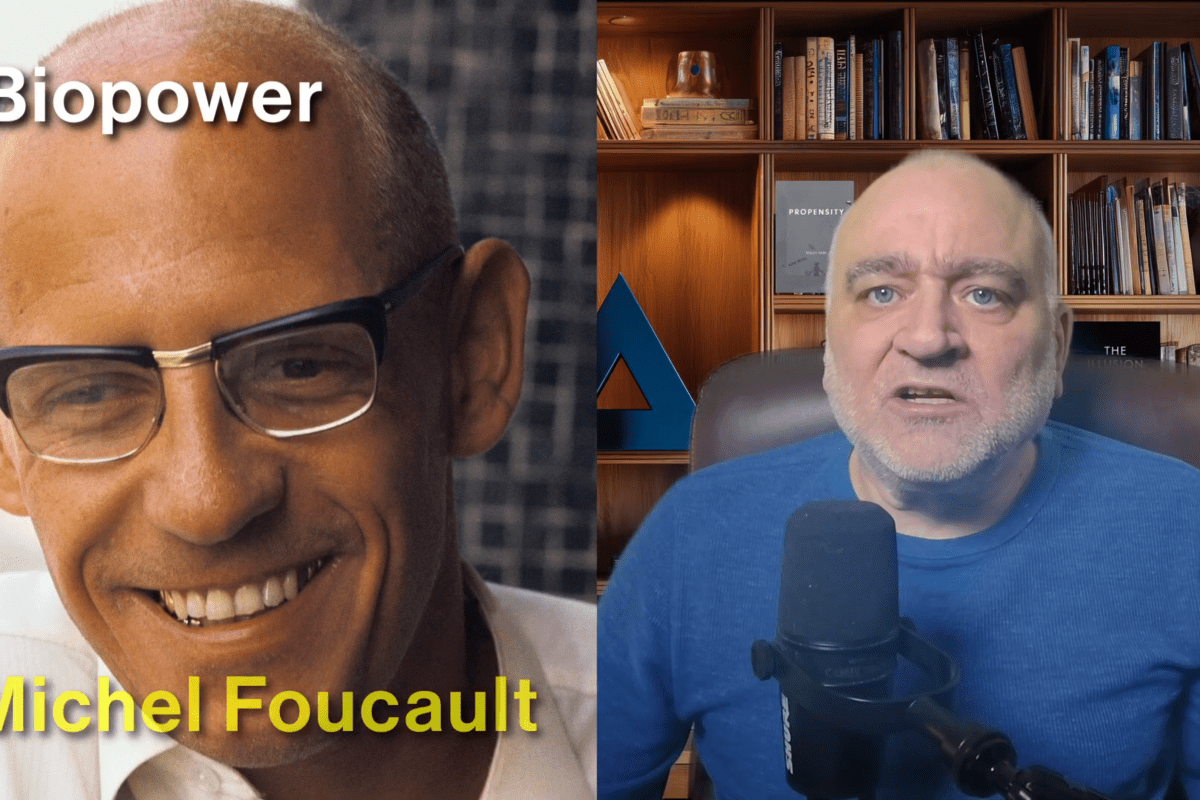
Michel Foucault: Biopower, notably The History of Sexuality, Volume I.

Bernard Williams: Thick Moral Concepts from Ethics and the Limits of Philosophy.

Pierre Bourdieu: Habitus, notably from Outline of a Theory of Practice.

Karl Popper: Paradox of Intolerance.

I discuss the challenge of the promise of compromise and its three possible outcomes, none of which are true compromises.

Watch the video for context. Read the essay for fuller details.

The Nerve of Not Being Correct

I’ve received feedback like, ‘Not everything you believe is right’ and ‘What if you’re not right?’

First: I agree. Second: And what if I’m not?

This isn’t new feedback, but I’ll address it in terms of my latest work.

Audio: NotebookLM summary podcast

Not everything you believe is right

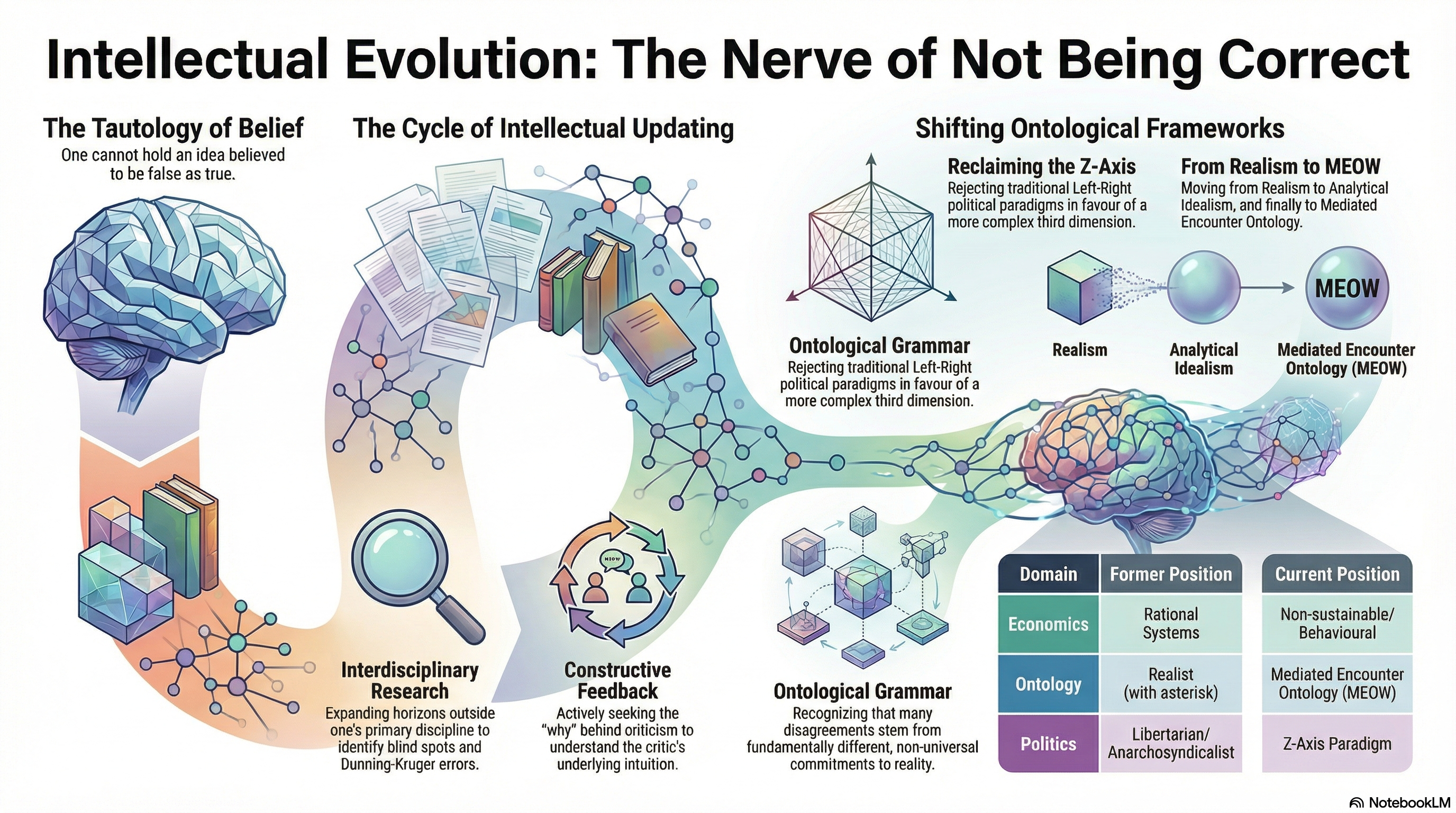
This is true, but one cannot hold an idea one believes to be false as true, so the idea that one believes what one believes to be true to tautological. This is also why I continue to research and attempt to expand my horizon. I even wander outside of my discipline at the risk of Dunning-Kruger errors.

In my recent work on ontology and grammar, I collided with Bourdieu, so I read his work. As helpful as it was, it served to reinforce my position, but from a position of Social Theory instead of Philosophy. When I read Judith Butler, I see how I might connect my ideas to Gender theory. It should be obvious that I’ve read much on Linguistics, but I am not a linguist. Our lenses all differ to some extent.

I’ve even corrected some of the ideas I’ve posted on this blog as I gain new information. To be fair, it’s a reason I post here. I hope to get feedback. I may not fully pursue alternative disciplines, but it’s nice to know they exist, and I can at least perform cursory surveys.

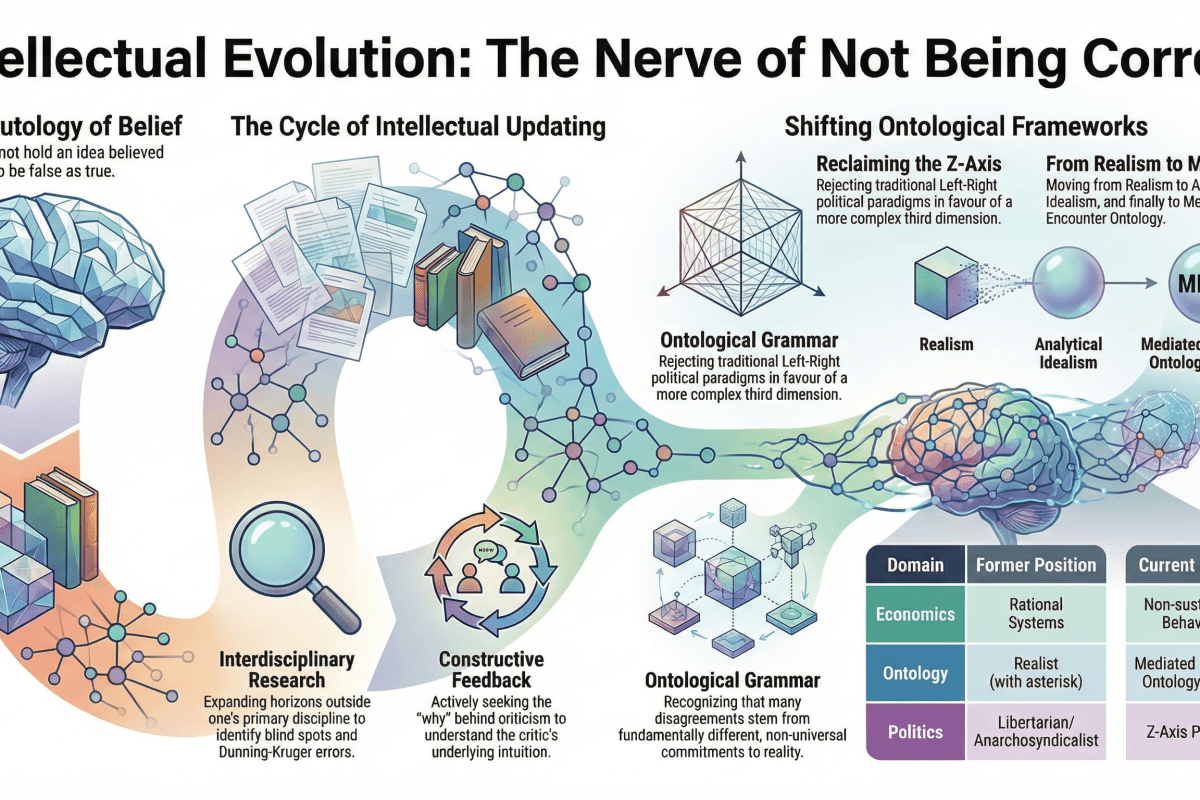
NotebookLM Infographic

Historically, many times I’d been claimed to be wrong because the person was coming from a differnt ontology. I might have been arguing something within the realm of Continental philosophy, and I’d get a critique from an Analytical philosopher. This is akin to a vegan critiquing a steak dinner. It may be valid within their ontological grammar, but it is not otherwise universal. It usually doesn’t take very long to assess one’s commitments to other grammars. That happened recently, when I encountered a philosophical Realist.

When I wouldn’t accept their position, eventually we arrived at this foundational point. Realism is a position I ontologically and grammatically reject. I’ve written several pieces defending or at least articulating my position, notably the Mediated Encounter Ontology (MEOW). Disagree? Tell me.

I used to be a Realist with an asterisk; then I was an Analytical Idealist with an asterisk; now, I believe in MEOW. The asterisk was necessary because there were holes in the position. When Analytical Idealism came around, there was still an asterisk, but it felt better than that of Realism. When I came up with MEOW, the asterisk went away. Perhaps you might consider that MEOW has an asterisk, if you believe it’s plausible at all. If so, what’s missing – what’s the known unknown? You obviously can’t articulate an unknown unknown.

When I write about ontology, grammar, and commensurability, I do not exempt myself from these biases. I have all of these challenges – perhaps even more so because I don’t tend to fit into the round holes very well myself. This helps me with intellectual humility.

Politically, I am often accused of being on the Left, but I reject the Left-Right paradigm as a valid lens for me; I am on a different axis. The Libertarians added an Authority-Liberty Y-axis to the Progressive-Conservative X-axis, but I am on a Z-axis, which is not to be fully described or accounted for on these planes. Think of the message of Flatland.

What if you’re wrong?

Hopefully, every philosopher understands this and has noticed the dustbin of history littered with wrong ideas.

When I publish essays, they are the result of research and deliberation. Could I be wrong? Again, I’ve been wrong before. I’ll be wrong again, but I need to understand why to change my position. I could shift my position or abandon it outright.

There was a time I believed people to be rational. I was an economist. I studied finance. I believed it until I didn’t. Behavioural Economics likely did the heavy lifting, but it’s likely that they believe that rationality-based systems are salvageable. I don’t. Not meaningfully. Not sustainably.

So, I can be wrong, and I can admit it.

I was once a closet (or adjacent) Libertarian until I realised it didn’t cohere with reality. My last declared stance was an Anarchosydicalist, but I know this isn’t quite right either – on multiple accounts.

Anyway, I’m not afraid of being wrong, and I’m not afraid of wittering on about it. Again, I appreciate constructive criticism. I’m also amicable to non-solutions in the manner of my Dis–Integration approach, but at least break down the pieces.

Ontology, Grammar, and Incommensurability

1–2 minutes

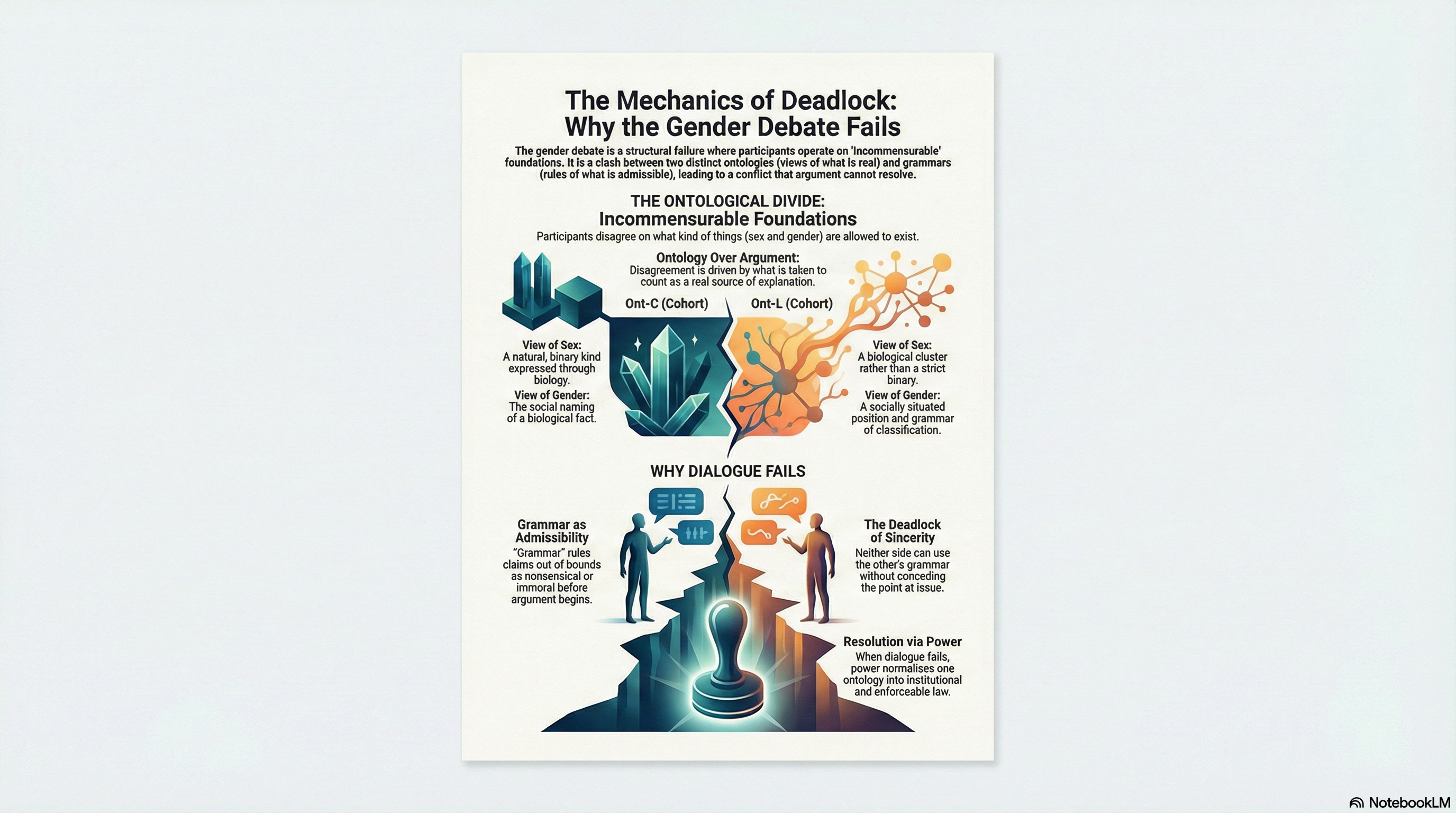
This video uses the gender debate to help explain how ontology and grammar render discourse incommensurable, based on my essay, Grammatical Failure: Why Liberal Epistemology Cannot Diagnose Indoctrination.

Video, duh

I’ve been thinking through dozens of use cases to explain how some polemic positions are intractable via language. When they are resolved through power, at least one ontological cohort is left wanting. In a compromise, likely both sides feel they’ve lost.

Audio: NotebookLM summary podcast of the video transcript for this topic.

In conventional (read: orthodox Enlightenment thinking), communication and negotiation are supposed to bring groups together. This is only true for intra-ontological conflict; it’s never been true for inter-ontological issues. There are edge cases where differing ontologies might be satisfied with an inter-ontological agreement, but this is likely accidental and certainly differently motivated. Not all such disagreements can be mediated, and this is where power politics steps in – not to ameliorate but to force the matter. This happens in politics, law, and many other power-oriented domains.

NotebookLM Infographic: No idea why this is formatted like this.

The Expiration Date of Object Permanence

2–4 minutes

There is a persistent story we tell ourselves about quantum mechanics:* that it reveals reality to be fundamentally strange, paradoxical, or hostile to common sense. Particles in two places at once. Cats be both alive and dead. Worlds multiplying to save appearances.

I’ve never found that story convincing.

Audio: NotebookLM summary podcast of this topic.
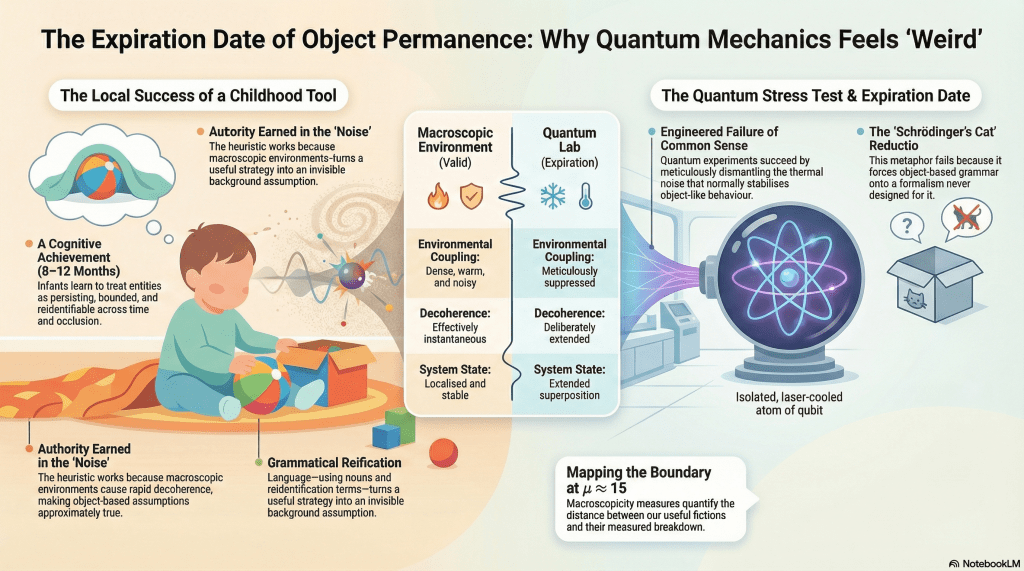
Image: NotebookLM infographic for this topic.

What I do find convincing is a simpler diagnosis: that we are applying a cognitive tool far beyond the conditions under which it earned its authority – and then mistaking the resulting discomfort for metaphysical insight.

Object permanence is one of our earliest and most successful heuristics. It allows infants to track toys behind sofas, caregivers behind doors, and threats behind occlusion. Without it, coordinated action would be impossible. With it, the world becomes navigable, predictable, and stable. It is a genuine cognitive achievement. But it is not a universal guarantee about reality.

In a new essay, The Expiration Date of Object Permanence: Heuristics, Grammar, and Quantum Pseudoproblems, I argue that much of what we call ‘quantum weirdness’ arises from the uncritical extension of this heuristic into domains where its ecological licensing no longer holds. The problem is not that quantum mechanics violates common sense. The problem is that we quietly treat common sense as metaphysics.

Quantum mechanics functions here not as a mystery generator, but as a stress test. Recent matter-wave interference experiments with increasingly massive systems show that object-based expectations fail quantifiably under carefully engineered conditions. When environmental coupling is suppressed, when decoherence is delayed, when the world is no longer warm, noisy, and forgiving, the assumptions underwriting object permanence simply stop paying rent.

The essay also takes a dim view of some familiar cultural furniture. Schrödinger’s cat, for example, was introduced as a reductio – an intentionally absurd demonstration of what happens when microscopic formalism is naively scaled up. That it now circulates as an explanatory image tells us less about quantum mechanics than about the tenacity of object-grammar. Even jokes cannot escape it.

Interpretations fare no better. I suggest that the appeal of frameworks like Many-Worlds is not exhausted by their technical merits. They also function as strategies for preserving object-based reidentification – ways of ensuring that there is still something that can be pointed to, counted, and followed through time, even if the price is ontological inflation.

None of this denies the reality of quantum phenomena, nor does it pretend to solve the measurement problem. The essay is deliberately deflationary. Its claim is methodological, not revisionary: that many of the puzzles we inherit are artefacts of treating developmentally acquired heuristics as if they were unconditional features of the world.

Philosophy’s task, on this view, is not to make reality intuitive. It is to recognise when intuition has reached the end of its jurisdiction.

The paper is now available on Zenodo and will be indexed shortly on PhilPapers. As always, comments, objections, and principled misreadings are welcome.


This post and the underlying essay were inspired by a Nature article: Probing quantum mechanics with nanoparticle matter-wave interferometry, published on 21 January 2026. I get annoyed watching people misunderstand quantum mechanics and its effects, so I decided to address some of the issues in an essay. Read this essay as well as mine, which will explain why the paradoxes and ‘spooky behaviour’ of QM are only counter-intuitive if you’ve fallen into this heuristic trap.

Cold, Grammar, and the Quiet Gatekeeping of Philosophy

5–7 minutes

A great deal of philosophy begins with the claim that we ought to examine our assumptions. Fewer philosophers seem interested in examining the mechanisms that decide which assumptions are allowed to count as philosophy in the first place.

This is not a polemic about the Analytic–Continental divide. It’s an observation about how that divide quietly maintains itself. The immediate provocation was banal. Almost embarrassingly so.

In English, the answer feels obvious. I am cold. The grammar barely registers. In French, Italian, or German, the structure flips. One has cold. Or hunger. Or thirst. Or age. Or a name, understood as something one performs rather than something one is. I spoke about this here and here. Indulge this link to the original position being argued.

On the surface, this looks like a curiosity for linguistics students. A translation quirk. A grammatical footnote. But grammar is rarely innocent.

Audio: NotepadLM summary podcast on this topic.

Grammar as Ontological Scaffolding

The verbs to be and to have are not neutral carriers. They quietly encode assumptions about identity, property, possession, and stability.

When I say I am cold, I cast coldness as a property of the self. It becomes something like height or nationality: a state attributable to the person. When I say I have cold, the experience is externalised. The self remains distinct from the condition it undergoes. Neither option is metaphysically clean.

Both structures smuggle in commitments before any philosophy has been done. One risks inflating a transient sensation into an ontological state. The other risks reifying it into a thing one owns, carries, or accumulates. My own suggestion in a recent exchange was a third option: sensing.

Cold is not something one is or has so much as something one feels. A relational encounter. An event between organism and environment. Not an identity predicate, not a possession.

This suggestion was met with a fair pushback: doesn’t saying that cold ‘belongs to the world’ simply introduce a different metaphysical assumption? Yes. It does. And that response neatly demonstrates the problem.

When Grammar Starts Doing Philosophy

The original claim was idiomatic, not ontological. It was a negative gesture, not a positive thesis. The point was not to relocate cold as a mind-independent substance floating about like a rock. It was to resist treating it as an essence of the person. But once you slow down, you see how quickly everyday grammar demands metaphysical loyalty.

Being invites substance. Having invites inventory. Sensing keeps the relation open, but even that makes people nervous. This nervousness is instructive. It reveals how much metaphysical weight we quietly load onto grammatical habits simply because they feel natural. And that feeling of naturalness matters more than we like to admit.

Two Philosophical Temperaments, One Linguistic Groove

At this point, the temptation is to draw a clean line:

On one side: the Anglo-American Analytic tradition, comfortable treating mental states as properties, objects, or items to be catalogued. Locke’s introspective inventory. Hume’s bundle. Logical positivism’s clean surfaces.

On the other: the Continental tradition, suspicious of objectification, insisting on an irreducible subject for whom experience occurs but who is never identical with its contents. Kant, Husserl, Heidegger, Sartre.

The grammar aligns disturbingly well. Languages that habitually say I am cold make it feel natural to treat experience as something inspectable. Languages that insist on having or undergoing experiences keep the subject distinct by default.

This is not linguistic determinism. English speakers can read phenomenology. German speakers can do analytic philosophy. But language behaves less like a prison and more like a grooved path. Some moves feel obvious. Others feel forced, artificial, or obscure.

Philosophies do not arise from grammar alone. But grammar makes certain philosophies feel intuitively right long before arguments are exchanged.

Where Gatekeeping Enters Quietly

This brings us to the part that rarely gets discussed.

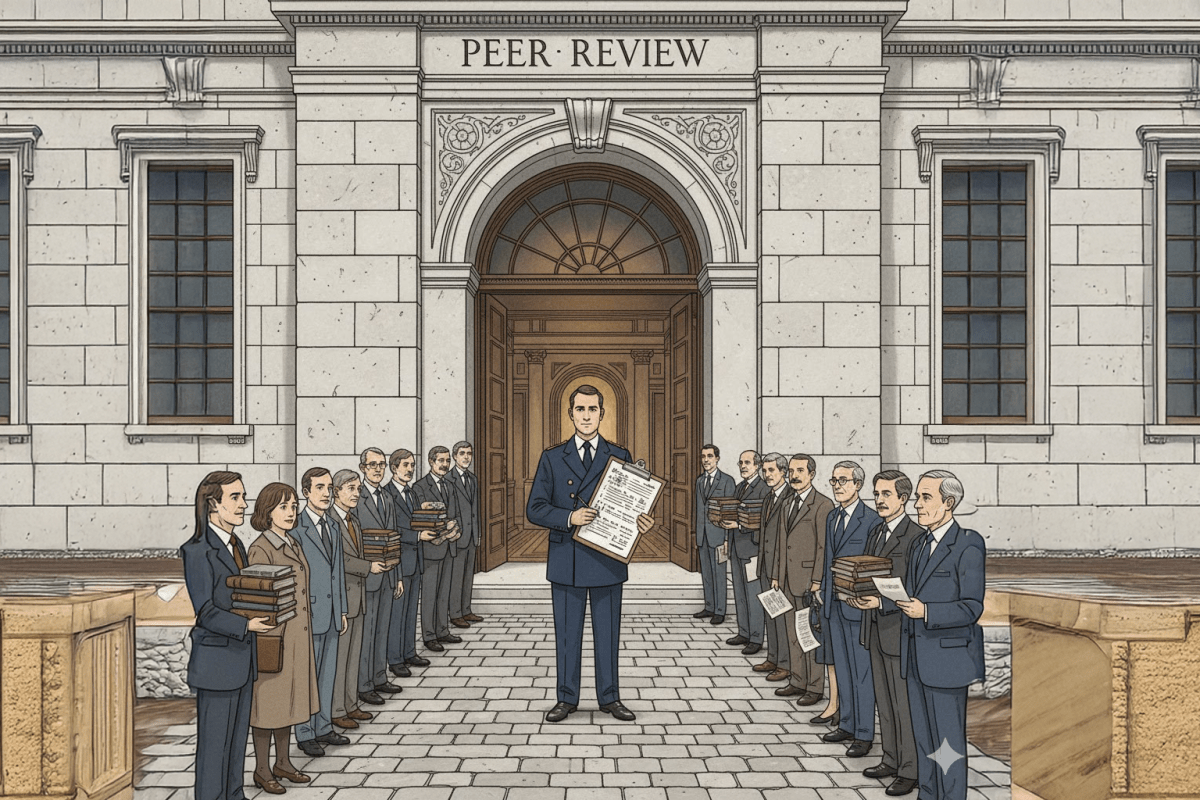
The Analytic–Continental divide persists not only because of philosophical disagreement, but because of institutional reinforcement. Peer review, citation norms, and journal cultures act as boundary-maintenance mechanisms. They are not primarily crucibles for testing ideas. They are customs checkpoints for recognisability.

I have been explicitly cautioned, more than once, to remove certain figures or references depending on the venue. Don’t mention late Wittgenstein here. Don’t cite Foucault there. Unless, of course, you are attacking them. This is not about argumentative weakness. It’s about genre violation.

Hybrid work creates a problem for reviewers because it destabilises the grammar of evaluation. The usual criteria don’t apply cleanly. The paper is difficult to shelve. And unshelvable work is treated as a defect rather than a signal. No bad faith is required. The system is doing what systems do: minimising risk, preserving identity, maintaining exchange rates.

Cold as a Diagnostic Tool

The reason the cold example works is precisely because it is trivial.

No one’s career depends on defending a metaphysics of chilliness. That makes it safe enough to expose how quickly grammar starts making demands once you pay attention.

If something as mundane as cold wobbles under scrutiny, then the scaffolding we rely on for far more abstract notions – self, identity, agency, consciousness – should make us uneasy.

And if this is true for human languages, it becomes far more pressing when we imagine communication across radically different forms of life.

Shared vocabulary does not guarantee shared metaphysics. Familiar verbs can conceal profound divergence. First contact, if it ever occurs, will not fail because we lack words. It will fail because we mistake grammatical comfort for ontological agreement.

A Modest Conclusion

None of this settles which philosophical tradition is ‘right’. That question is far less interesting than it appears. What it does suggest is that philosophy is unusually sensitive to linguistic scaffolding, yet unusually resistant to examining the scaffolding of its own institutions.

We pride ourselves on questioning assumptions while quietly enforcing the conditions under which questions are allowed to count. Cold just happens to be a good place to start noticing.

A Footnote on Linguistic Determinism

It’s worth being explicit about what this is not. This is not an endorsement of strong linguistic determinism, nor a revival of Sapir–Whorf in its more ambitious forms. English speakers are not condemned to analytic philosophy, nor are Romance-language speakers predestined for phenomenology.

Grammar operates less like a set of handcuffs and more like a well-worn path. Some moves feel effortless. Others require deliberate resistance. Philosophical traditions co-evolve with these habits, reinforcing what already feels natural while treating alternatives as strained, obscure, or unnecessary.

The claim here is not necessity, but friction.

Cold, Aliens, and the Grammar That Thinks It Knows Too Much

2–3 minutes

I shared this post not too long ago. Today, I shared it in a different context, but I feel is interesting – because I feel that many things are interesting, especially around language and communication.

It commenced here on Mastodon.

Ocrampal shared a link to an article debating whether we are cold or have cold. Different cultures express this differently. It’s short. Read it on his site.

Audio: Exceptional NotebookLM summary podcast of this topic.

I replied to the post:

Nicely observed. I’ve pondered this myself. Small linguistic tweak: between être and avoir, avoir already behaves better metaphysically, but sentir seems the cleanest fit. Cold isn’t something one is or has so much as something one senses — a relational encounter rather than an ontological state or possession.

Between having and being, having is the lesser sin — but sensing/feeling feels truer. Cold belongs to the world; we merely sense it.

He replied in turn:

Agree except for: “Cold belongs to the world”. That is a metaphysical assumption that has consequences …

Finally (perhaps, penultimately), I responded:

Yes, it does. That statement was idiomatic, to express that ‘cold’ is environmental; we can’t be it or possess it. Coincidentally, I recently wrote about ‘cold’ in a different context:

where I link back to the post at the top of this article.

A more verbose version of this response might have been:

And this is exactly the problem I gestured at in the aliens piece. We mistake familiar grammatical scaffolding for shared metaphysics. We assume that if the sentence parses cleanly, the ontology must be sound.

Language doesn’t just describe experience. It quietly files it into categories and then acts surprised when those categories start making demands.

Cold, like aliens, exposes the trick. The moment you slow down, the grammar starts to wobble. And that wobble is doing far more philosophical work than most of our declarative sentences are willing to admit.

Accusations of Writing Whilst Artificial

2–3 minutes

Accusations of writing being AI are becoming more common – an irony so rich it could fund Silicon Valley for another decade. We’ve built machines to detect machines imitating us, and then we congratulate ourselves when they accuse us of being them. It’s biblical in its stupidity.

A year ago, I read an earnest little piece on ‘how to spot AI writing’. The tells? Proper grammar. Logical flow. Parallel structure. Essentially, competence. Imagine that – clarity and coherence as evidence of inhumanity. We’ve spent centuries telling students to write clearly, and now, having finally produced something that does, we call it suspicious.

Audio: NotebookLM podcast on this topic and the next one.

My own prose was recently tried and convicted by Reddit’s self-appointed literati. The charge? Too well-written, apparently. Reddit – where typos go to breed. I pop back there occasionally, against my better judgment, to find the same tribunal of keyboard Calvinists patrolling the comment fields, shouting ‘AI!’ at anything that doesn’t sound like it was composed mid-seizure. The irony, of course, is that most of them wouldn’t recognise good writing unless it came with upvotes attached.

Image: A newspaper entry that may have been generated by an AI with the surname Kahn. 🧐🤣

Now, I’ll admit: my sentences do have a certain mechanical precision. Too many em dashes, too much syntactic symmetry. But that’s not ‘AI’. That’s simply craft. Machines learned from us. They imitate our best habits because we can’t be bothered to keep them ourselves. And yet, here we are, chasing ghosts of our own creation, declaring our children inhuman.

Apparently, there are more diagnostic signs. Incorporating an Alt-26 arrow to represent progress is a telltale infraction → like this. No human, they say, would choose to illustrate A → B that way. Instead, one is faulted for remembering – or at least understanding – that Alt-key combinations exist to reveal a fuller array of options: …, ™, and so on. I’ve used these symbols long before AI Wave 4 hit shore.

Interestingly, I prefer spaced en dashes over em dashes in most cases. The em dash is an Americanism I don’t prefer to adopt, but it does reveal the American bias in the training data. I can consciously adopt a European spin; AI, lacking intent, finds this harder to remember.

I used to use em dashes freely, but now I almost avoid them—if only to sidestep the mass hysteria. Perhaps I’ll start using AI to randomly misspell words and wreck my own grammar. Or maybe I’ll ask it to output everything in AAVE, or some unholy creole of Contemporary English and Chaucer, and call it a stylistic choice. (For the record, the em dashes in this paragraph were injected by the wee-AI gods and left as a badge of shame.)

Meanwhile, I spend half my time wrestling with smaller, dumber AIs – the grammar-checkers and predictive text gremlins who think they know tone but have never felt one. They twitch at ellipses, squirm at irony, and whimper at rhetorical emphasis. They are the hall monitors of prose, the petty bureaucrats of language.

And the final absurdity? These same half-witted algorithms are the ones deputised to decide whether my writing is too good to be human.