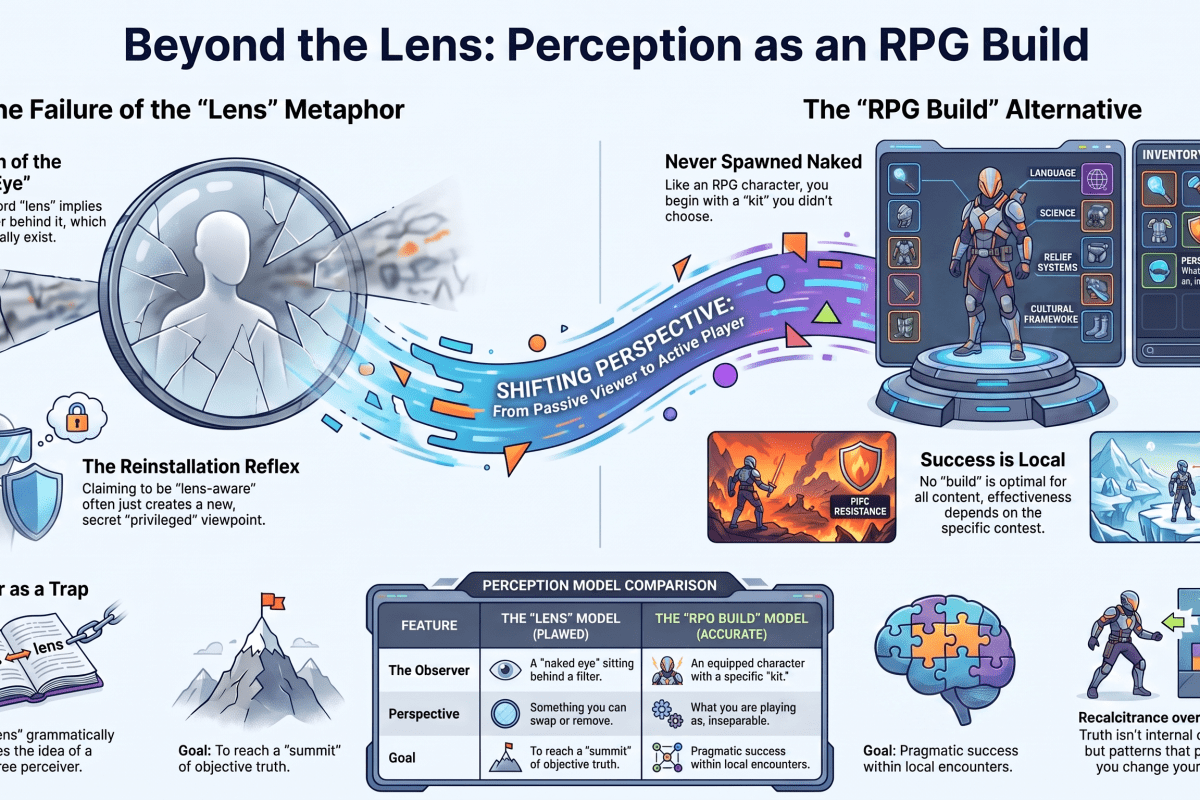
My Philosophical Position: Language [5/10]

This is the fifth of a deeper look into ten philosophical positions. This one is on convergence realism within the category of epistemology. A full article is available on Substack, with supporting information on a recent post here on Philosophics Blog.

Below is a ~5-minute short podcast.

Language works, but not uniformly.

Its effectiveness declines as the conceptual complexity, abstraction, contestability, contextual dependence, and institutional burden of what it is asked to communicate increase. We routinely mistake grammatical fluency for semantic precision and social agreement for shared reference.

I describe this through an Effectiveness–Complexity Gradient:

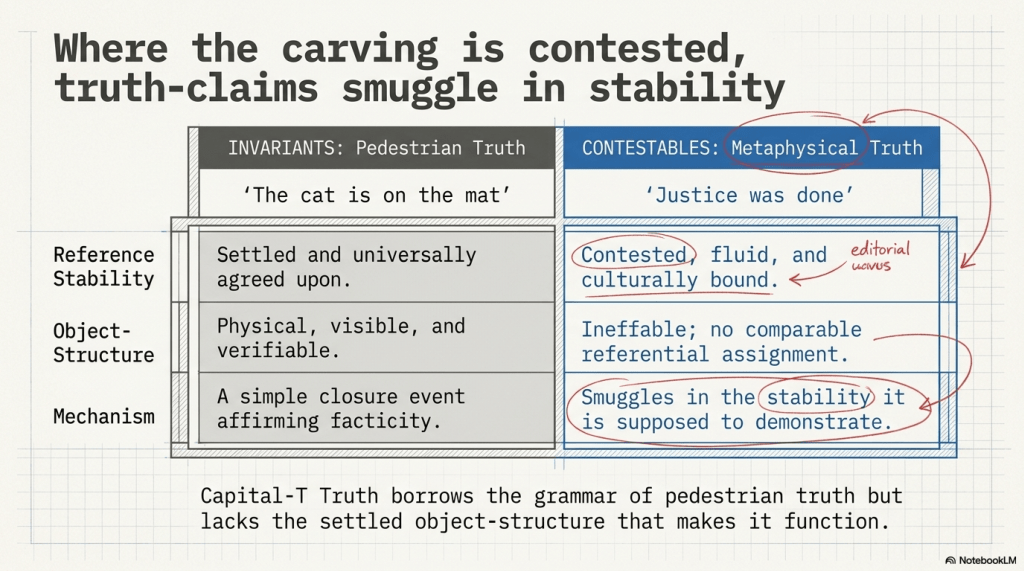
Invariants are comparatively stable terms with constrained error ranges.

Contestables remain usable but acquire their force within normative or institutional frameworks.

Fluids drift across contexts and disciplines, preserving family resemblance without reliable closure.

Ineffables mark domains where propositional language collapses into metaphor, gesture, paradox, or silence.

These are not ontological species. They are diagnostic regions along a gradient. The important feature is not the label but the rate at which apparent linguistic effectiveness decays as conceptual load increases.

My Philosophical Position: Selfhood and Personal Identity [4/10]

This is the fourth of a deeper look into ten philosophical positions. This one is on convergence realism within the category of epistemology. A full article is available on Substack, with supporting information on a recent post here on Philosophics Blog.

Below is a ~5-minute short podcast.

I don’t regard the self as a persistent entity travelling through time while accumulating experiences like stamps in a metaphysical passport.

The first-person “I” is an indexical compression. It marks the presently organised locus of perspective, salience, memory-access, and action. It is indispensable, but indispensability does not establish an inner owner to which the index refers.

The diachronic self is a broader compression: a narrative, biological, documentary, interpersonal, and institutional device for tracking selected continuities across time. Memory contributes to this, but memory is lossy, reconstructive, and uneven. The person remembered is not transported intact into the act of remembering.

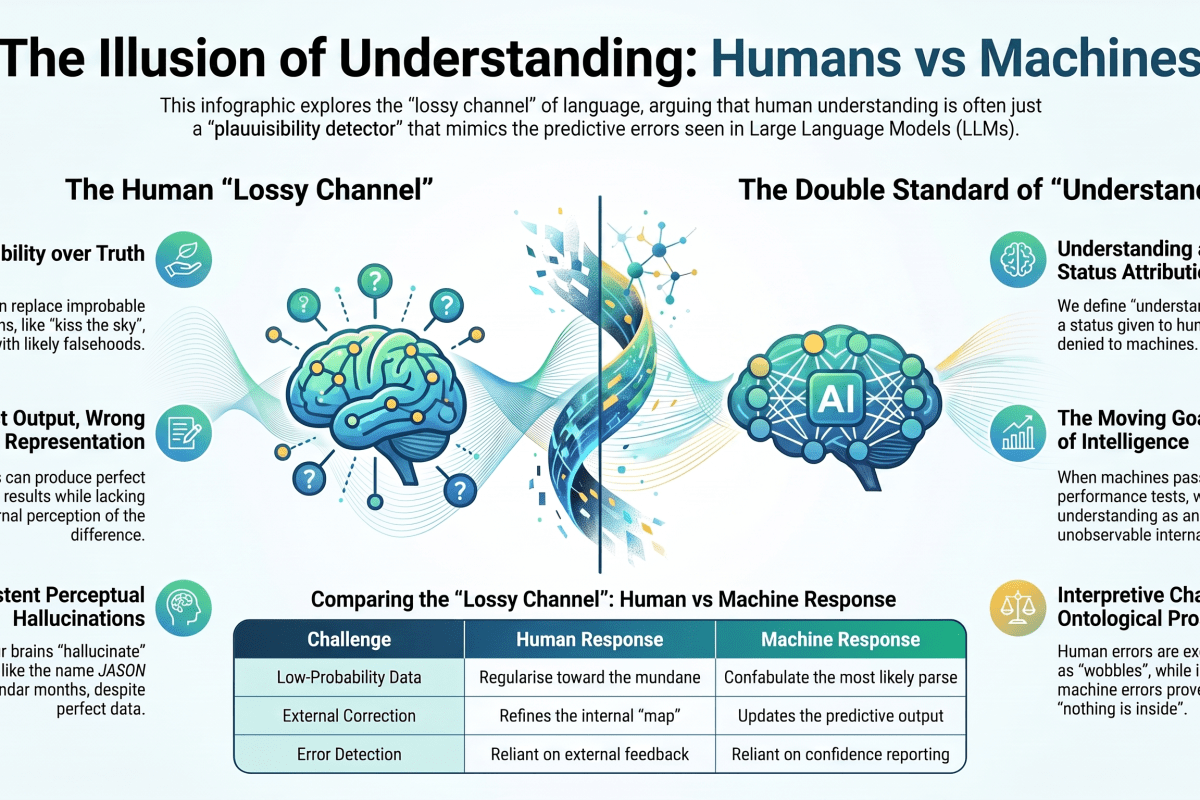
On LLMs and Understanding

In this Substack essay, I explore the flawed nature of human comprehension, arguing that our understanding is often just a calculation of probability rather than an objective grasp of truth. By examining linguistic errors like misheard lyrics and his own struggles with French phonemes, Willis demonstrates that humans frequently hallucinate or misinterpret data based on what seems most plausible. He compares these mental lapses to the ‘hallucinations’ of Large Language Models, suggesting that the mistakes made by AI are fundamentally similar to our own. The author contends that we apply a double standard by granting humans the status of ‘understanding’ while dismissing machines for the exact same predictive behaviours. Ultimately, the text challenges the metaphysical assumptions of human exceptionalism, asserting that what we call ‘understanding’ is merely an external attribution rather than a unique internal state.

Essentially, I am not advocating the view that LLMs have consciousness and understanding; rather, I am arguing that the human versions of these are inflated with metaphysics.

My Philosophical Position: Ontology [2/10]

This is the second of a deeper look into ten philosophical positions. This one is on mediated encounter realism (ontology) within the category of metaphysics and ontology. A full article is available on Substack, with supporting information on a recent post here on Philosophics Blog.

Below is a ~5-minute short podcast.

My Philosophical Position: Metaphilosophy [1/10]

This is the first of a deeper look into my position of diagnostic anti-foundationalism within the category of philosophical method for metaphilosophy. A full article is available on Substack, with supporting information on a recent post here on Philosophics Blog.

Below is a ~5-minute short podcast.

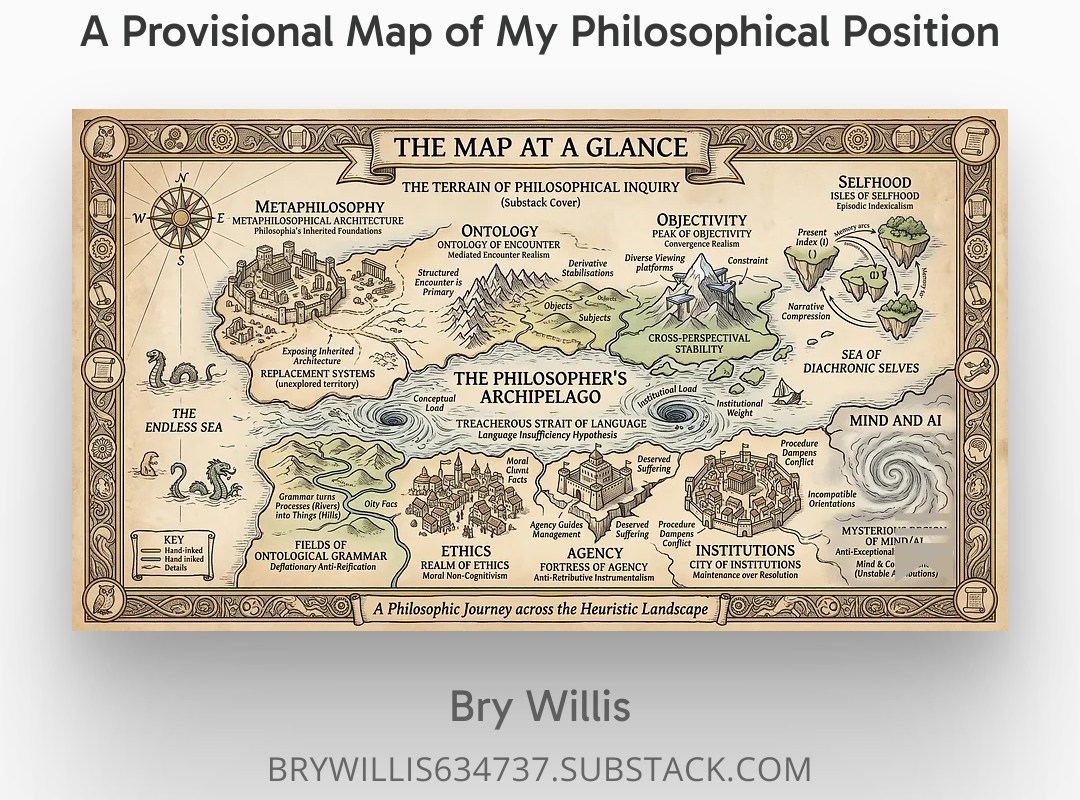
Summary of Some of My Philosophical Positions

The question is reasonable, although belief may already be doing more work than I would permit it under cross-examination. My writing is generally diagnostic rather than doctrinal. I am more interested in identifying the architectural assumptions beneath a dispute than in selecting a furnished room within it. Where philosophy offers a contest between established positions, I often suspect that the arena itself has been badly designed.

Still, repeated diagnoses eventually disclose a pattern. Certain commitments recur: suspicion of substance, resistance to metaphysical inflation, distrust of linguistic confidence, rejection of moral realism, scepticism toward persistent personal identity, and an insistence that mediation does not entail fabrication.

What follows is therefore neither a creed nor a completed system. It is a provisional map of where I presently stand.

The labels are intended as coordinates, not allegiances. Where no established term quite fits, I have used my own. This is partly unavoidable and partly evidence for the very linguistic difficulty I spend so much time diagnosing.

This content, including video and podcast summary, are of a longer Substack article on my philosophical positions with descriptions.

Audio: NotebookLM summary podcast of this topic.

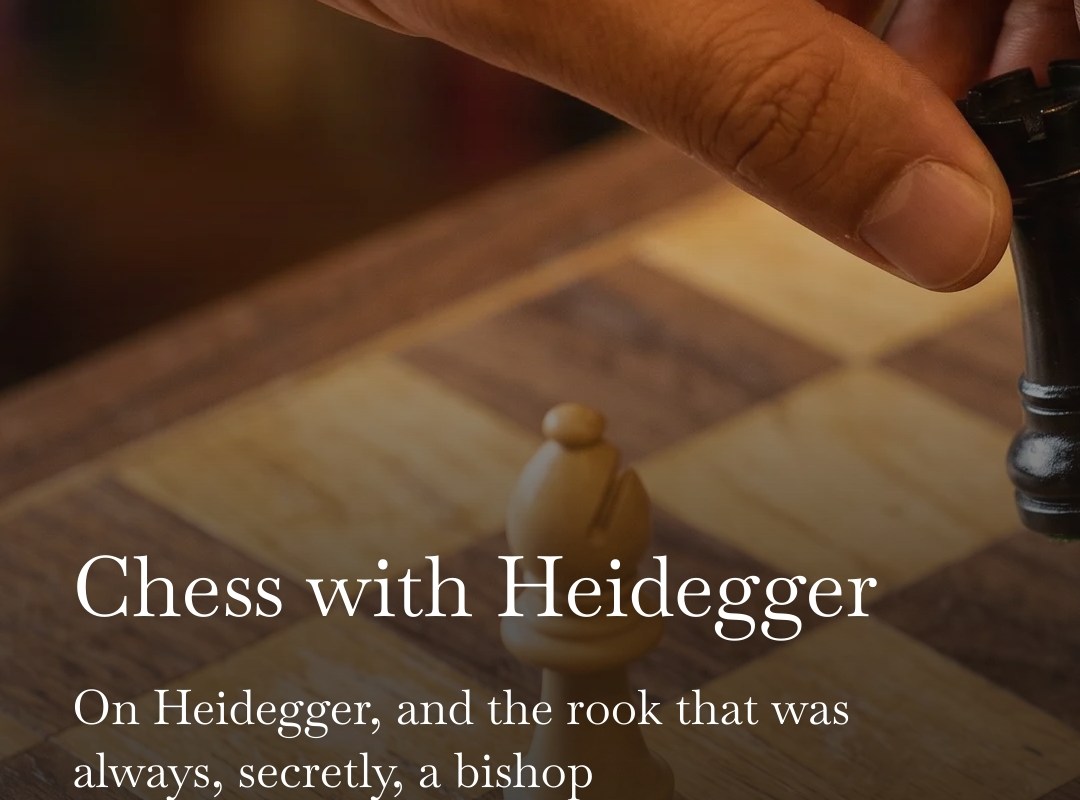
Chess with Heidegger

On Heidegger, and the rook that was always, secretly, a bishop

Imagine, if you will, that you are playing chess with a grandmaster. Your opponent fingers his rook, slides it diagonally across the board, captures your queen and lifts the piece away. Nonplussed, you question the tactic. He defends it with vehemence.

Full story on Substack. Video and podcast summaries below.

Audio: NotebookLM summary podcast of this topic.

On the limitations of NotebookLM.

For most of my posts, I also share a summary processed by Google’s NotebookLM. Most of these summaries are decent enough – some are even excellent inasmuch as they shed a new light on the idea. Other times, they miss the point, are well off the mark, or inject concepts or translations, not only unintended, but markedly opposed to the point being made.

My recent Chess with Heidegger post is illustrative. Both the podcast and the video make errors – and I don’t mean the visual ones that occur as well.

As a page footer, I mention that I use LLMs as part of my workflow. This may be anywhere from 0–99%. The podcast asserted that I used an LLM as a significant part of this project. This is incorrect. Specifically, I didn’t feed Heidegger’s text into an LLM and ask it to digest and regurgitate it, parsing out some unlocked wisdom. Obviously, I used various LLMs for supporting content.

The video misrepresented my point about Wittgenstein, directionally off. He expressly does not support the specificity of language. My reference to him rolling over in his grave was triggered by the notion that language is determined by use – and language games.

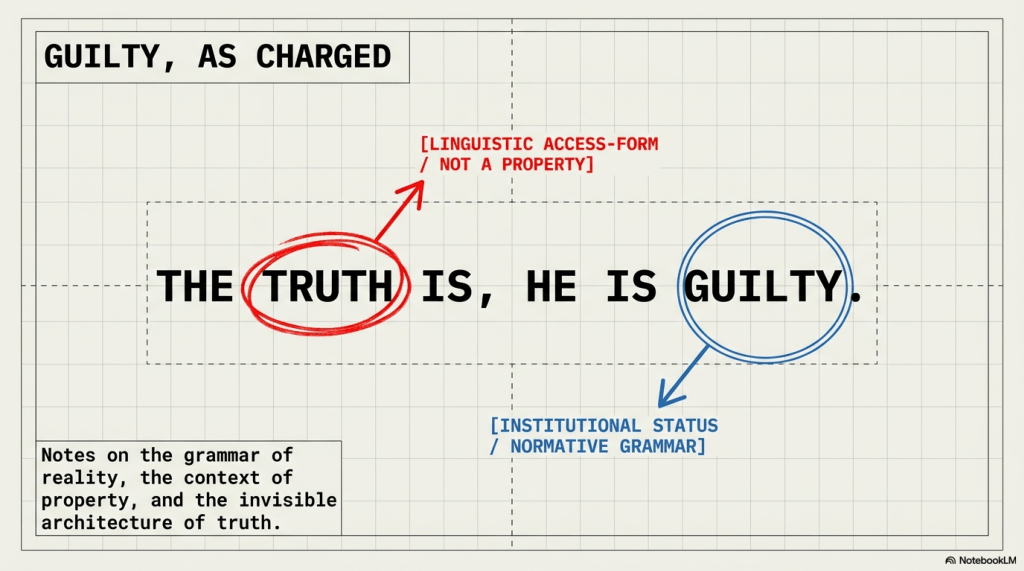
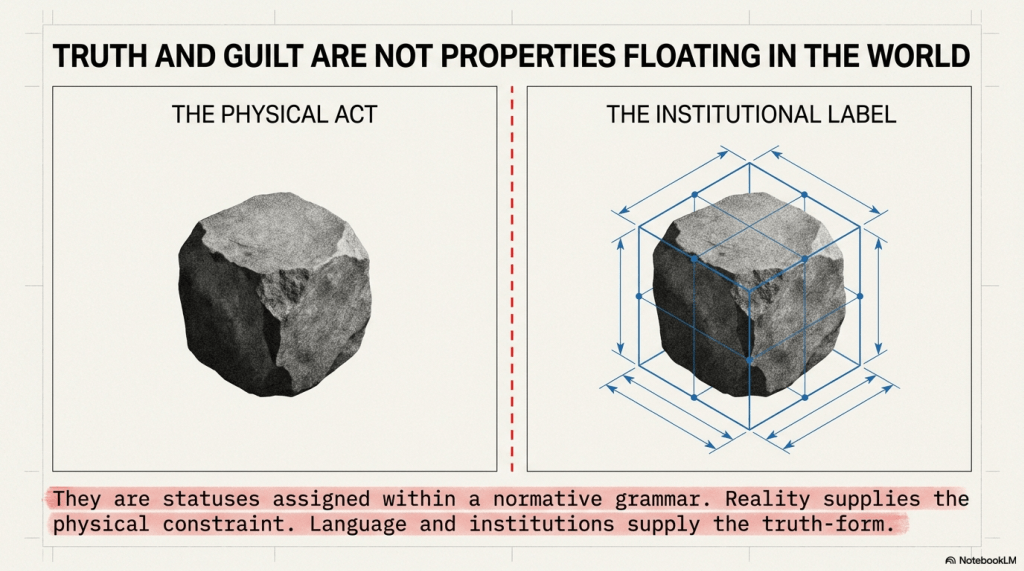
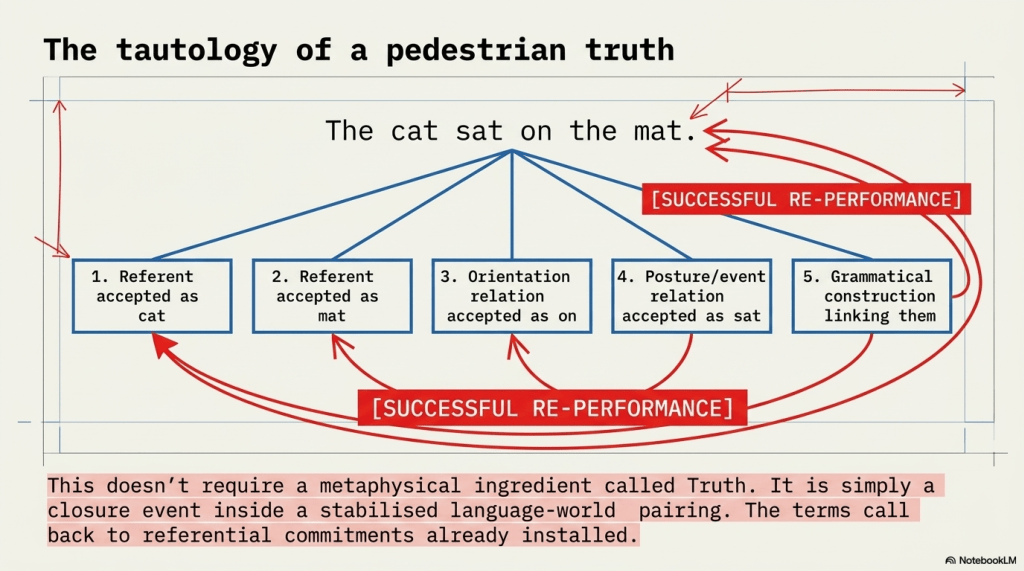
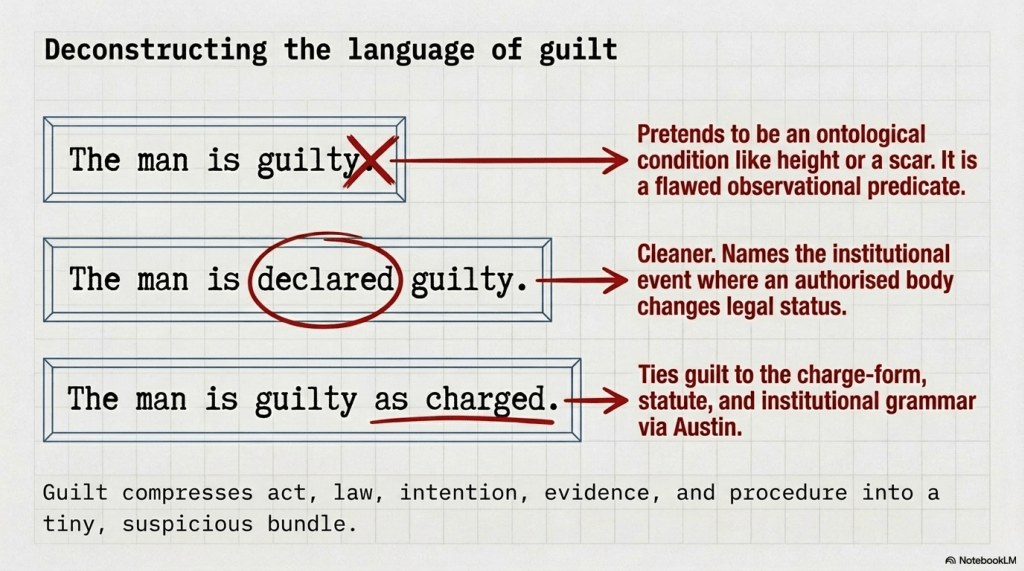
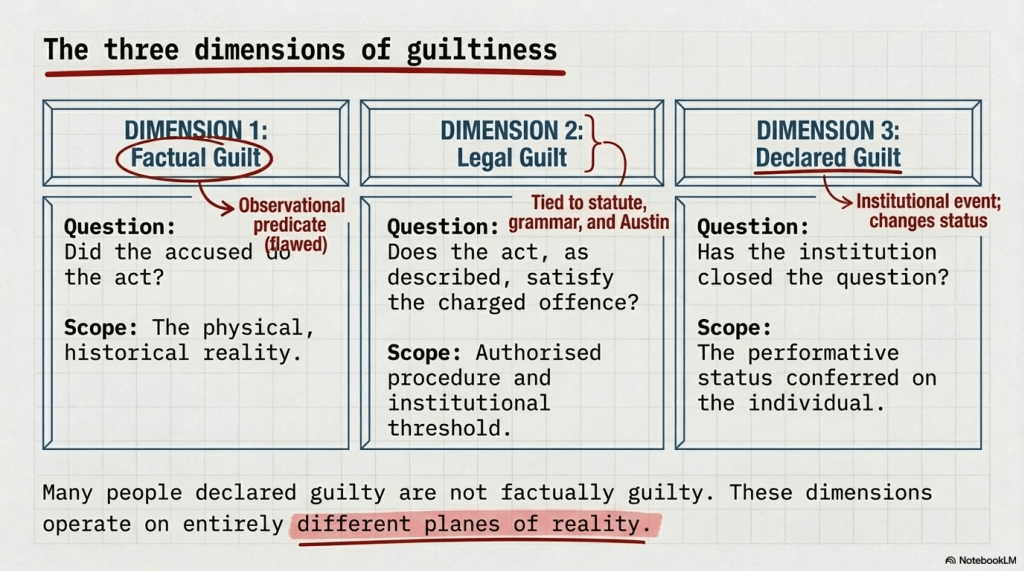
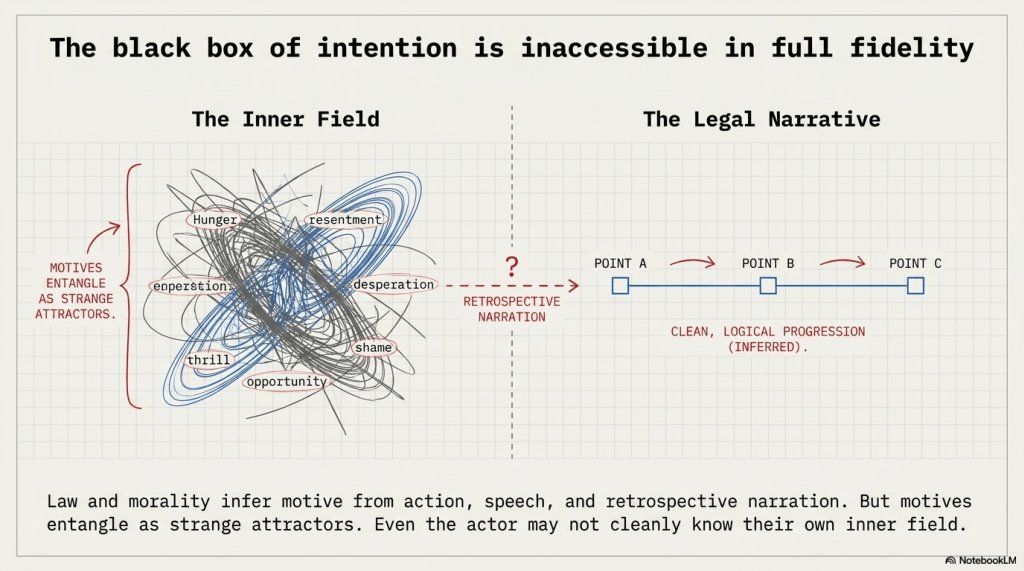
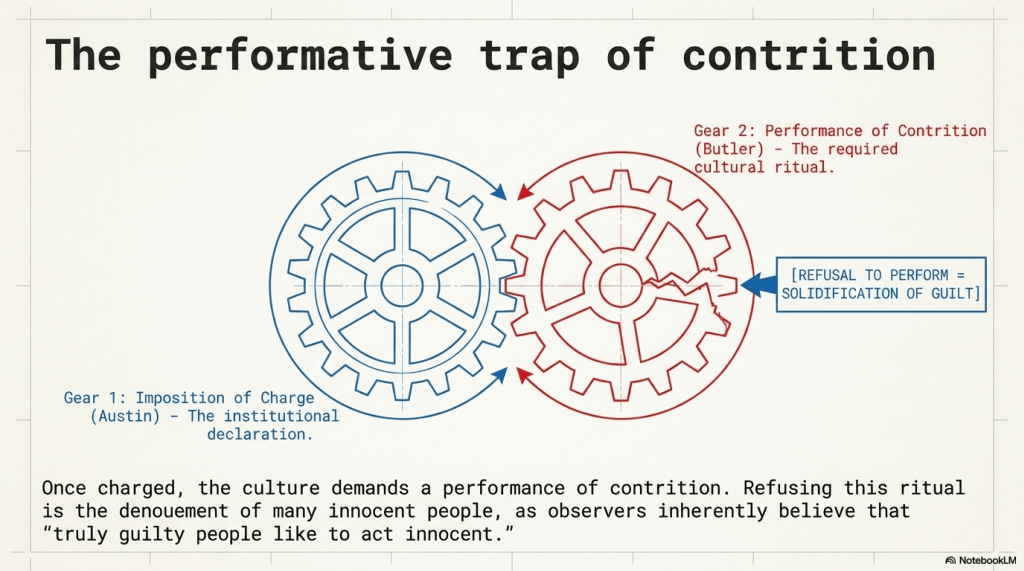
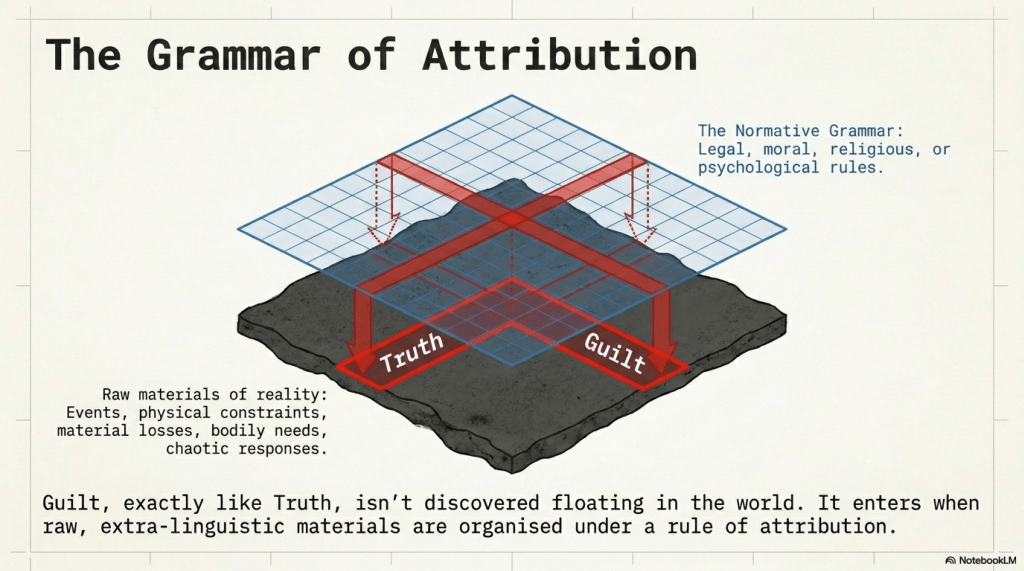
What can we say about trust and guilt?

Not as much as we might think.

I shared a post on Substack. It starts like this:
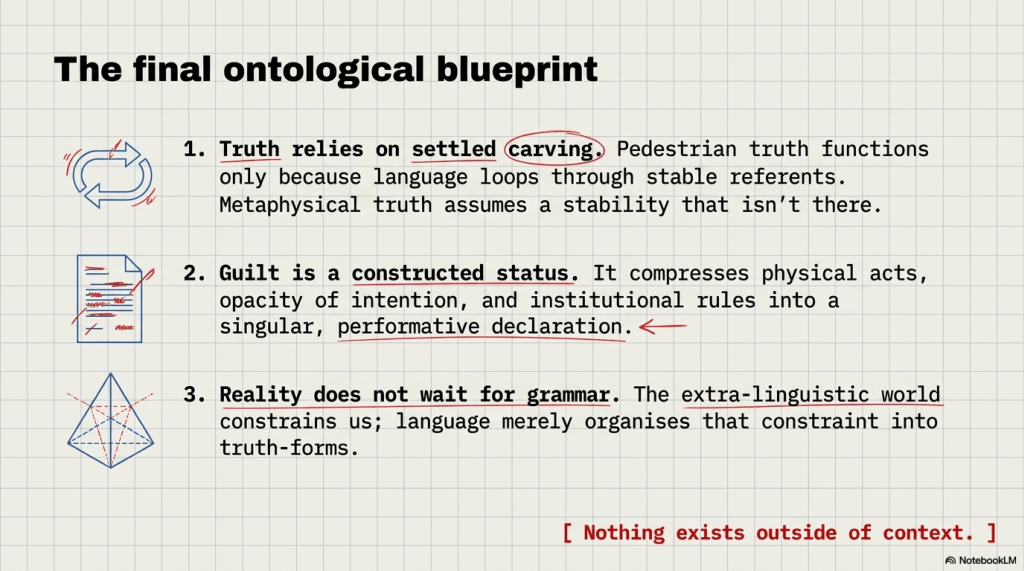
As I continue to read Heidegger’s On the Essence of Truth, I feel compelled to share my musings. Avert your eyes if this doesn’t work for you, but don’t stop me if you’ve heard this one before.

Read the rest of the article there, or listen to the podcast.

Audio: NotebookLM summary podcast of this topic.

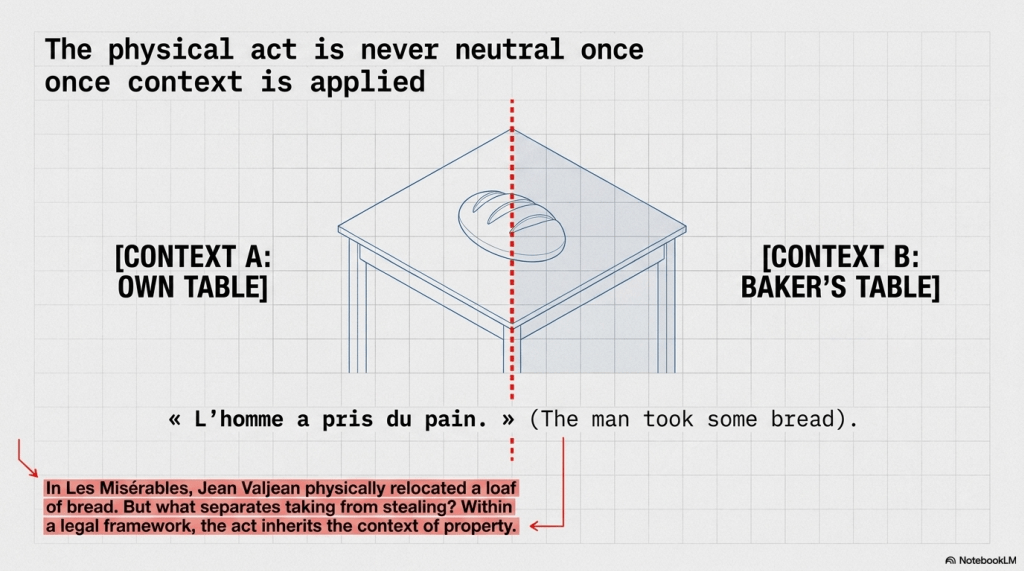
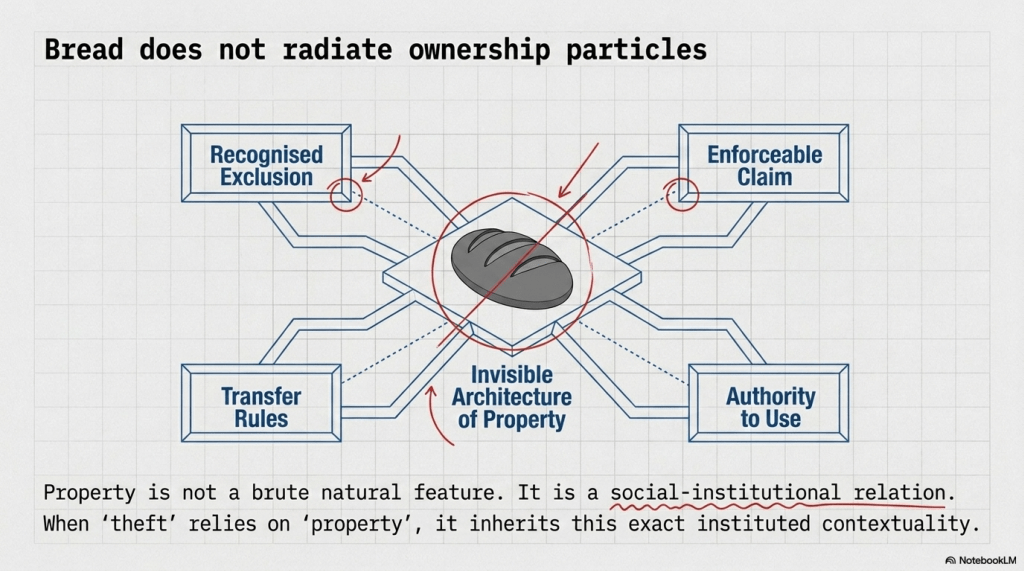
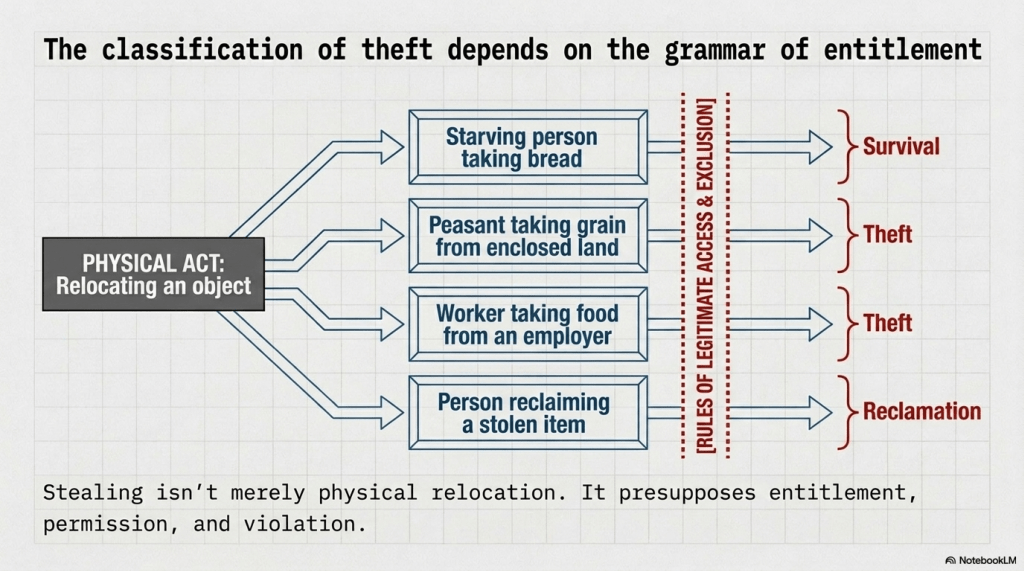
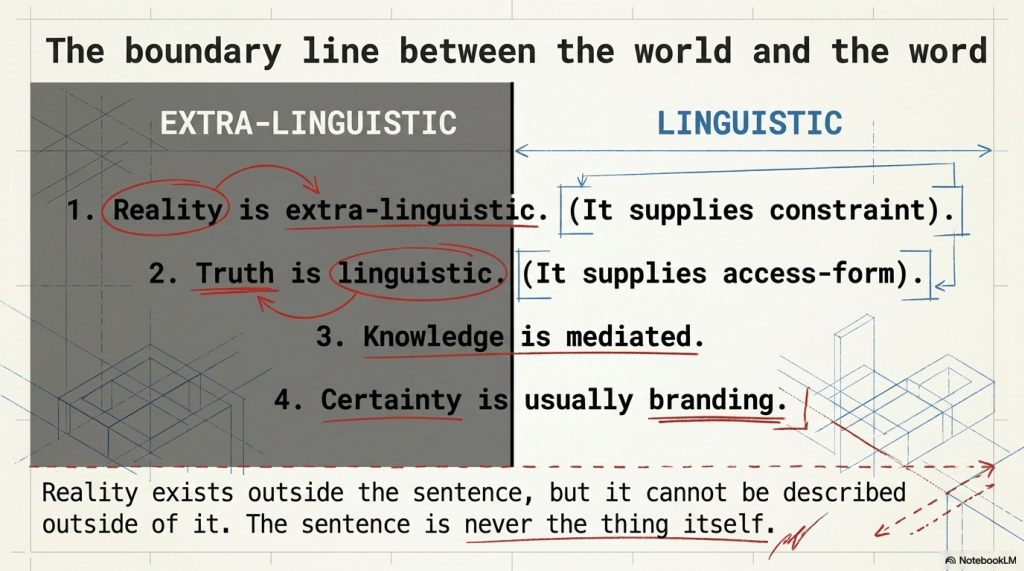
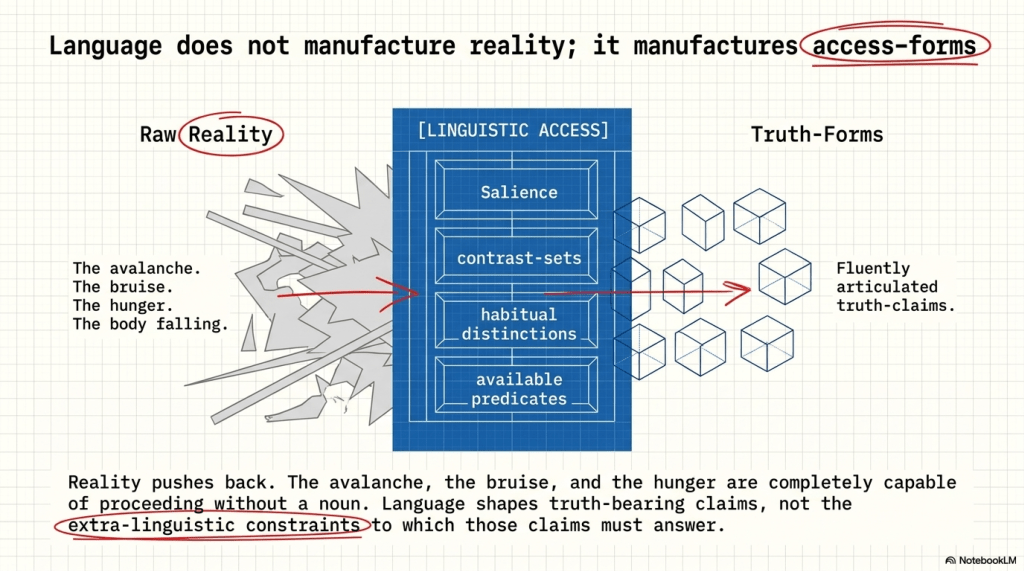
Below are some related NotebookLM images for the target topic.

Language Is Not the Bridge

Semantic Infrastructure, Insufficiency, and the False Romance of Interoperability

A recent Substack essay, Jessica Talisman’s Language Is the Bridge, makes a claim that is increasingly common in discussions of artificial intelligence, knowledge graphs, ontologies, metadata, and semantic infrastructure: that language is the bridge between human understanding and machine action. The claim is attractive, and not merely because ‘bridge’ is one of those metaphors that allows technical discourse to cosplay as wisdom literature. It captures something real. AI systems, semantic architectures, ontologies, taxonomies, controlled vocabularies, and knowledge graphs do not run on raw reality. They run on structured representations. Those representations require labels, definitions, mappings, alignments, constraints, and interpretive discipline. In that sense, language work is not decorative. It is infrastructural. But the metaphor is also dangerous.

My extended response to her essay is on Substack.

Audio: NotebookLM summary podcast of this topic.
NotebookLM Infographic on this topic.

They May Not Be Village Idiots

No post today, as I was drafting a long-form article that I felt was better suited for Substack.

Audio: NotebookLM summary podcast of the Substack topic.

It starts like this:

You’ve had the argument. Everyone has. You present evidence. Your interlocutor presents counter-evidence. You cite data. They cite different data – or the same data, read differently. Eventually, someone says something like how can you possibly believe that, and the conversation is effectively over, though the words might continue for another hour.

What’s left is the quiet conviction that the other person is either ignorant, stupid, or arguing in bad faith. Perhaps all three. And you can be certain they’re extending you precisely the same courtesy.

I want to suggest that something structurally different is going on – something that none of the usual explanations (media bubbles, declining education, algorithmic polarisation) quite reach. These explanations aren’t wrong, but they’re shallow. They describe accelerants. The thing they’re accelerating is more foundational.

The rest on Substack…


This essay draws on ideas developed more fully in The Architecture of EncounterA Language Insufficiency Hypothesis, and the Mediated Encounter Ontology of the World (MEOW) framework (also available in The Architecture of Encounter). Also check out When Language Fails. For the technically inclined or the morbidly curious, these provide the formal apparatus behind the claims sketched here.