When Syntax Is Asked to Bear Too Much v1.2

1–2 minutes

I published the first version of this essay in February, arguing that the Frege–Geach problem, that three-score-year-old albatross around expressivism’s neck rests on a category error. Analytic philosophers were polite about it in the way that analytic philosophers are polite about things they intend to ignore. I don’t often revise my manuscripts, opting instead to publish a new and improved version, but the meat of this one remained strong and not worth revisiting as much as fortifying.

The trouble was that I’d dissolved the problem without resolving it. Good enough for me. Others were less convinced. Telling people they’ve been asking the wrong question is satisfying but insufficient without a better one. Version 1.1 tidied the prose. Version 1.2 does the actual work.

The new section (§4, if you’ve already read previous versions) introduces recruitable expressions – a broader class of expressions (moral predicates, thick evaluative terms, epistemic and institutional vocabulary) whose full functional load is attenuated under embedding whilst a thinner inferential profile remains available for reasoning. The standard of practical inferential adequacy replaces the demand for semantic identity: what ordinary reasoning requires is not invariance but inferential sufficiency. And the pattern isn’t peculiar to moral language – a noted goal –, which means Frege–Geach stops looking like a special embarrassment for expressivism and starts looking like one symptom of a general feature of how natural language handles multi-functional expressions under logical stress.

The essay is dissolved as a demand for unrestricted semantic invariance. It is resolved insofar as the behaviour it identifies is explained, predicted, and shown to be general.

The revised paper is available here, near the rest of my manuscripts: DOI

Lastly, this essay is built on the foundations of A Language Insufficiency Hypothesis and The Architecture of Encounter, the latter of which wasn’t yet available for the initial publication.

As ever, I welcome the polite ignoring.

Architecture of Encounter Podcast: Episode 0 – Phenomenologists

Hear ye! Hear ye! Consider this an announcement of a new podcast series for The Architecture of Encounter.

This episode is an introduction to the 7-part series that discusses phenomenologists who laid the foundation on which the Mediated Encounter Ontology (MEOW) is built.

Audio: Introductory Podcast for The Architecture of Encounter

This series begins with philosophers from Descartes through Berkeley, Locke, and Hume to Kant, who will be the focus of the first episode. Except for this introduction, which is 15 minutes. Each episode is around 7 minutes because I wanted to keep them bite-sized.

  1. Immanuel (Manny) Kant: The Renovator
  2. Edmund (Eddie) Husserl: The Methodical Suspender
  3. Martin (Marty) Heidegger: The Destroyer Who Moved In
  4. Maurice (Moe) Merleau-Ponty: The Body That Almost Escaped
  5. Sara Ahmed: The Orienter Who Changed the Subject
  6. Frantz Fanon: The Phenomenologist under Fire
  7. Alfred North (Big Al) Whitehead: The Architect Who Overbuilt

The PDF table below is a summary of the various positions versus MEOW.

Plural Worlds or Plural Mediations? Goodman Meets MEOW

6–9 minutes

A colleague shared a reference to Nelson Goodman’s Ways of Worldmaking (1978). I’d never heard of the book or the author, so I asked ChatGPT to compare and contrast this with MEOW, The Architecture of Encounter, and a bit of A Language Insufficiency Hypothesis. This is what it rendered:

Or, to put it in one line fit for people skimming with one eye while pretending to work:

NotebookLM Infographic on this topic.
Audio: NotebookLM summary podcast of this topic.

Tl;dr

Goodman and MEOW are neighbours, but not housemates.

Both reject the childish fantasy that the world arrives already parcelled, labelled, and politely awaiting description by some neutral observer. Both are suspicious of naïve realism, fixed essences, and the conceit that language simply mirrors what is there. Both recognise that description, classification, and articulation are active, selective, and world-shaping.

But Goodman’s emphasis falls on versions, symbol systems, and the making of worlds through classificatory practice. MEOW and The Architecture of Encounter go elsewhere. They do not treat symbolic versioning as primary. They treat encounter as primary: mediated, structured interaction under constraint. Language and world-versioning come later, as derivative, partial, and often clumsy attempts to stabilise, synchronise, and re-present what is first given in encounter.

So the shortest contrast is this:

That is the hinge.

The longer version

Goodman is often useful precisely because he helps loosen the grip of a bad picture: the notion that there is one fully furnished world, discretely laid out in advance, which language then copies with greater or lesser success. In Ways of Worldmaking, description is not passive transcription. Versions organise, sort, foreground, suppress, classify, and compose. They do not simply mirror. They make.

This much sits quite comfortably beside MEOW and The Architecture of Encounter. MEOW has never been sympathetic to the old theatre in which a subject peers out at a ready-made object-world and then tries to report back accurately. That picture has always seemed less like sober metaphysics and more like a grammatical superstition. It is one of those inherited arrangements that philosophy keeps polishing rather than questioning, as if centuries of confusion were somehow evidence of depth.

On that score, Goodman is an ally. He helps dissolve the myth of innocent description.

He also overlaps with MEOW in his suspicion of essentialist carving. There is no reason to suppose reality presents itself in one uniquely natural partition, fully jointed in the exact way our preferred nouns imply. Goodman’s attention to alternative versions, symbolic orderings, and rival systems of classification fits comfortably with the broader MEOW suspicion that what we call “objects” are not self-announcing substances but stabilised articulations within a mediated field. In The Architecture of Encounter, this becomes still sharper: subjects and objects are not ontological primitives but abstractions from recurring encounter-structures. That already places the framework some distance from ordinary metaphysical furniture.

So far, then, the affinity is genuine.

But it is just as important not to overstate it.

Goodman’s centre of gravity is symbolic and versional. His concern is with how worlds are made through systems of description, notation, projection, ordering, and exemplification. The operative verbs are things like sort, render, compose, construct. The world is inseparable from the version.

MEOW and The Architecture of Encounter are doing something heavier. They are not merely offering a theory of how descriptions organise a world. They are offering an ontology in which encounter-events are primary. The basic unit is not an interpreted object, nor a version, nor a sentence, but a structured event of mediated contact under constraint. Mediation is not a regrettable screen placed between mind and world. It is constitutive of whatever relation there is. But neither is mediation free invention. Encounter is answerable to what resists, pushes back, stabilises, recurs, and converges. That is the role of constraint.

This is where the deepest divergence emerges.

Goodman is often read, not unfairly, as weakening the notion of a single underlying world more radically than MEOW can tolerate. His pluralism risks allowing “worldmaking” to carry most of the ontological burden. The result can begin to sound as though right versions are all the realism one is entitled to. There are worlds, or world-versions, and their legitimacy depends less on correspondence to a singular underlying reality than on fit, function, coherence, utility, and internal rightness.

MEOW resists that move. It does not return to vulgar realism, with its fantasy of a view from nowhere, but it also refuses to let mediation collapse into fabrication. Constraint is not a decorative afterthought. It is the realist anchor. One may have multiple mediations, multiple articulations, multiple ontological grammars, multiple local stabilisations, but these are not unconstrained improvisations. They are answerable to an invariant field of relational resistance.

Put more brutally: Goodman destabilises the ready-made world and then tends to leave us with versions. MEOW destabilises the ready-made world and then asks what must be true for divergent mediations nonetheless to converge, however partially, on the same resistant reality.

That difference matters.

It matters again when language enters the picture. Goodman grants an enormous role to symbol systems in worldmaking. MEOW, especially once read through The Architecture of Encounter and A Language Insufficiency Hypothesis, treats language more suspiciously. Language matters, certainly, but it is late, compressed, and lossy. It is not the primordial engine of world-constitution. It is a finite synchronisation technology layered atop more basic forms of mediation: biological, perceptual, attentional, cognitive, social. Language helps coordinate. It helps compress. It helps stabilise public handling. But it also distorts, truncates, nominalises, and overcommits.

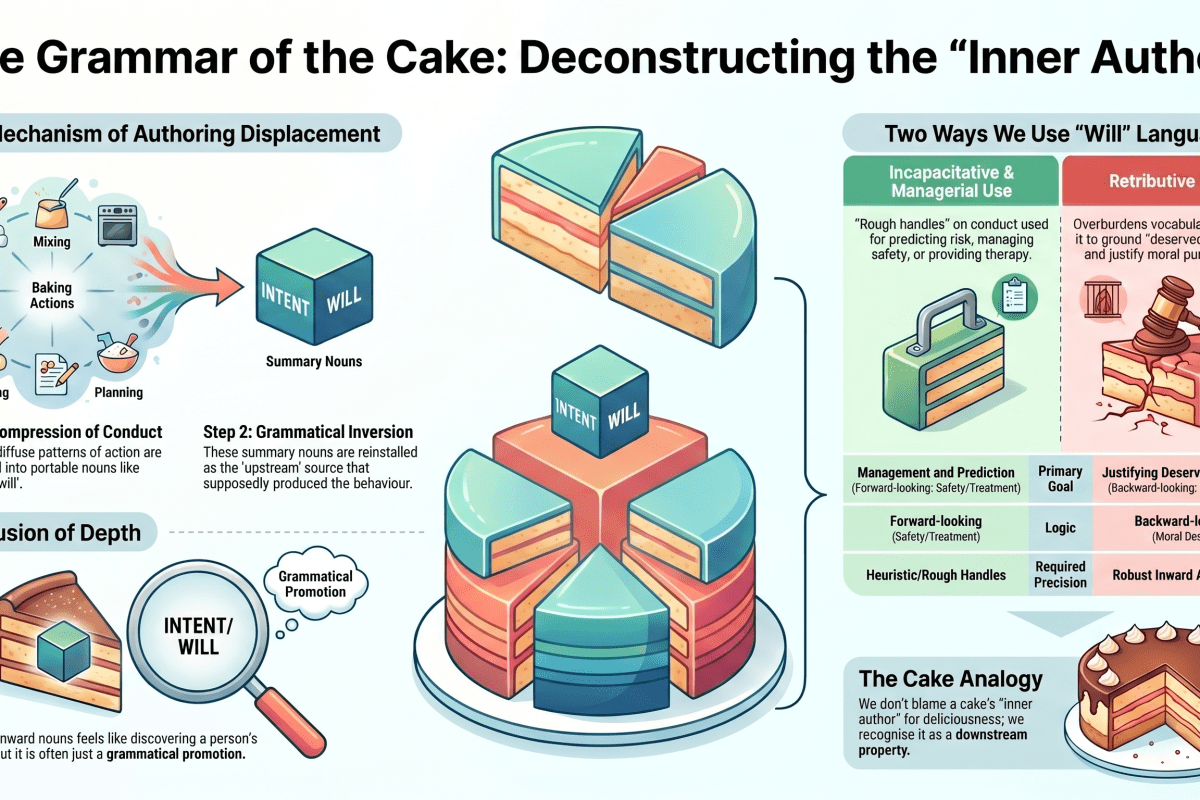
That is where LIH adds a useful corrective to Goodman. If Goodman sometimes sounds like a connoisseur of world-versioning, LIH reminds us that our versioning machinery is often embarrassingly underpowered for the tasks philosophers assign to it. Human beings keep trying to force syntax to carry ontological burdens it was never built to bear. We take grammatical distinctions for metaphysical disclosures. We inherit noun-heavy structures and then wonder why the world starts looking like a warehouse of things. We reify processes, discretise continua, and carve durational realities into portable lexical chunks. Then, having manufactured these pseudo-stabilities, we congratulate ourselves for discovering “selves”, “minds”, “meanings”, “moral facts”, and other linguistic taxidermy.

Goodman certainly helps expose the active role of symbolic systems. But LIH presses further by insisting that symbolic systems are not merely worldmaking tools. They are also bottlenecks. They fail. They coarsen. They generate ontological illusions through the very act of public coordination.

That is why I would not place Goodman and MEOW in opposition, but in a relation of partial inheritance and correction.

Goodman is valuable because he helps dismantle the myth of passive representation. He is right to resist the idea that language or symbolisation merely records a pre-cut world. He is right to foreground selection, ordering, categorisation, and articulation. He is right to reject the transparent-window fantasy.

But from a MEOW standpoint, he does not go far enough into encounter, and perhaps goes too far into version.

What is missing is a richer account of pre-linguistic mediation, presentational structure, salience, affordance, and the layered constraints under which any symbolic practice becomes possible in the first place. Symbol systems do not float free. They do not arise in a void. They are parasitic upon lived, embodied, constrained encounter. Nor is their plurality enough, by itself, to explain why some articulations fail, why some converge, why some distort in systematic ways, or why reality resists our preferred descriptions with such vulgar persistence.

That last point is worth dwelling on, because it is where many anti-realist gestures lose their nerve. The fact that access is mediated does not imply that reality is manufactured. The fact that articulation is active does not imply that resistance is optional. The fact that classifications vary does not imply that there is nothing to be classified beyond the classificatory act.

So the bottom line remains the same.

Goodman is useful for breaking the spell of the one already-made world and for showing that symbolisation is not passive mirroring. But MEOW and The Architecture of Encounter push in a different direction. They relocate the primary philosophical action from symbol systems to encounter-events, from worldmaking to world-disclosure under mediation, and from plural worlds to plural access under constraint. A Language Insufficiency Hypothesis then sharpens the point by showing that language is not an omnipotent engine of constitution but a compression scheme with predictable failure modes.

I’ve Been Thinking… Peers

4–6 minutes

<soapbox>

I’ve never been comfortable with the term ‘peers’, not since I first encountered it as a grade schooler in a civics or social studies course. It felt like nonsense at first utterance, but much energy is expended indoctrinating children and adolescents.

Thinking about the Frege–Geach problem has trebled my interest in ontological grammars. It’s also got me thinking about the ontology of peer groups. I’ve always been an eccentric, so I never felt I had any peers. Sure, I’ve had friends, colleagues, bandmates, and acquaintances I’ve genuinely liked and respected, but none were peers. Our connexions might best be described as ‘thin’. We connected through shared work, music, interests, and so on, but peer would have been stretching it.

Audio: NotebookLM summary podcast of this topic.

So, what do I feel qualifies as a peer? And what is a standard definition? I suppose we should start with the latter.

OED: A person who is associated or matched with another; a companion, a fellow, a mate.

Fair enough. This definition works fine. The devil remains in the details. What does it mean to be associated or a match?

As a moral noncognitivist, I don’t think the concept arrives trailing clouds of metaphysical glory. But it doesn’t need to. The interesting question is grammatical: what ontological conditions would have to be shared for ‘peer’ to mean something thick rather than merely administrative?

The legal system answers in the thinnest way possible. If you are recognisably human, that’s enough. Close enough for the government. Peer means person. Case closed.

When the system invokes ‘a jury of one’s peers’, it doesn’t care whether they are one’s peers in any thick or serious sense. It needs performative placeholders – tokens. Rather, it needs them to be peers of the court: those sufficiently aligned with its assumptions, procedures, and admissibility rules to reproduce its worldview in the form of judgement.

The court decides what counts as legible, what counts as relevant, what counts as rational, and what counts as legitimate. It does not discover peers. It manufactures a category of acceptable judges and then calls the result fairness. The deck is stacked before the first card is turned.

I like two examples, one historical and one fictional, to make my point.

Nuremberg

This case should be obvious. The peers here are precisely not their peers, but adversaries. The defendants were not tried by those who shared their grammar of legitimacy, history, necessity, authority, or even the relevant category boundaries. They were tried by agents operating within a rival grammar – one that had already classified the defendants’ framework not as a competing ontology, but as criminal pathology.

The Nazi grammar was effectively annulled. Not refuted, not outargued – annulled. And as with more typical civil and criminal courts, symmetry was never the goal. The institution ruled by fiat. I call this ontological imperialism in a yet unpublished manuscript. The dominant system merely declares the adversarial grammar invalid and inadmissible.

The standard legitimation story for Nuremberg is natural law: there exist moral facts so fundamental that they transcend positive law and sovereign authority. ‘Crimes against humanity’ was coined precisely to name offences no ontological framework could render legitimate. The phrase does the work – against humanity, not against a particular legal code or polity, but against the species as such. It presupposes exactly the universal semantic accessibility that the philosophy of language has shown to be unavailable.

Man in the High Castle

Now switch venues to a fictional universe. Philip K. Dick asks what would have happened had the Axis won the Second World War. The answer, structurally speaking, is: practically nothing — except that a different ontological grammar would now be dominant.

That is the value of the thought experiment. It doesn’t change the species, the cognitive architecture, or the capacity for deliberation. It changes the constitutive act – the moment at which a grammar gets installed as the world’s grammar. And everything downstream shifts with it. In Dick’s world, the inhabitants don’t experience their moral order as imposed or artificial. They navigate it as the background of intelligibility, the way things simply are. The I Ching functions for Tagomi the way human rights discourse functions for a postwar liberal – not as a choice, but as the grammar within which choices become possible.

The counterfactual is devastating because it is structurally symmetric. Had the Axis won, there would have been trials. Those trials would have applied retroactive categories – perhaps ‘crimes against racial destiny’ or ‘crimes against civilisational hygiene’. Allied leaders would have been the defendants. And the verdicts would have felt, to the inhabitants of that world, exactly as self-evidently correct as Nuremberg’s feel to us.

I don’t secretly wish the Axis had won. But the dialectic is worth consideration, and the discomfort it produces is itself the datum. Not evidence that the examination is wrong – evidence that the grammar is working.

So when modern institutions speak reverently of ‘a jury of one’s peers’, I hear not a triumph of fairness but a legitimating fiction. The phrase conceals the fact that institutions do not seek the defendant’s peers. They seek their own. They seek judges formed within the same order, obedient to the same grammar, and willing to mistake its categories for universal reason.

A peer, in any meaningful sense, would have to share enough ontological grammar with me that the same things register as real, salient, and intelligible in roughly the same way. By that standard, peers are rare. Institutions know this perfectly well. Which is why they do not look for them.

They appoint their own and call the matter settled.

</soapbox>

New Architecture of Encounter Video Content: Glossary Terms

I’ve commenced a new series in support of my new book. First, I’m building a glossary.

Video: Bry – Architecture of Encounter

On the docket in this segment are affordance, salience, and valence as they relate to the book. I selected these terms from the glossary in the appendix.

Over the next few weeks, I plan to produce videos on other terms and additional videos explaining key concepts. This one is straightforward and academic. Others will be less formal, hoping to accommodate different learning styles.

Does anyone subscribe to Kindle Unlimited? I may take time to create Kindle and eBook versions.

My fiction books had some formatting issues with Kindle, but these titles are more standard – no fancy layouts or fonts, and not too many images.

New Book Pricing

An Architecture of Encounter will be available in the next few days. I’ll make an announcement when it is, but I want to talk about pricing.

Audio: NotebookLM summary podcast of this topic.

Firstly, books cost money to print. This much is obvious. Hardcovers cost more than paperbacks. The ones with dust jackets cost more still. From a financial/economics perspective, one needs to charge more for hardcovers to compensate for the costs.

Secondly, distributors take a cut. They aren’t in business without a profit interest.

Of course, one might offer directly to the customer to cut out the distribution cost and maybe pocket all or some of the difference, which might be 40-odd per cent of the sale price – 8 from a book priced at 20, where the printer already takes, say, 8. This leaves 4 for the author.

If I were to cut out the middleman to take all of the 8 in this example, I’d likely lose most of it in shipping and handling. (I know because I’ve done this before). Of course, I could pass this expense to the buyer, but this jacks up the price from 20 to 28.

Some sellers offer free shipping, whether by exceeding some minimum order amount or through a programme such as Amazon Prime.

If I am going to eat the 8, I might as well give it to Amazon and let them handle the logistics. Business 101. Barnes and Noble has an even less favourable model as far as publishing is concerned, but they provide different offerings, so I still use them via IngramSpark.

For the record, I’ve used and considered other printers and distribution methods, but they are all more expensive to me from a total cost perspective. Part of this is simply the incremental pricing facility. I don’t want to purchase and manage inventory for 1,000 books at a time. In this case, I’d be out 8K up front. Perhaps I could get a deal and print the books at 6K for committing to a print run, but I’d still have to manage the inventory and logistics, which then takes away from my writing time. I’ve outsourced this before, but I had to pay for warehousing and a handling fee to someone to package the book – and pay for shipping (pass-through or otherwise). Amazon (KDP) is just easier, so it’s my go-to.

As for pricing, I’ve decided that my default prices will be 20 USD for paperback and 30 for hardcover. This is in contrast to a x.99 pricing scheme. I usually set my ex-US prices lower, but honestly, it depends. I try to set prices in each market with no fractional units. If the price had been £14.97, I’ll up it to £15, Sorry. In most cases, it will drop from £15.23 to an even £15. In most markets, I’ll lose margin to provide a clean-looking sales price.

As an economist, I could see that one might arbitrage (in a manner of speaking) and order from Belgium instead of France or vice versa, but I don’t expect the shekels saved would be worth the added effort.

As for bookstores, they can still purchase my titles wholesale from whatever distributor (even Amazon), so you can still support your local bookstore if that’s your ethos.

Anyway, I know I’m just wittering on, but I felt that transparency into the process might be appreciated.

NotebookLM Infographic on this topic. (Ignore the pie chart. lol)

Kindle and other eBook formats

One might think that offering a digital version would be simple, but it’s not as easy as uploading a PDF. A lot of formatting is required to fit the format. An ordinary EPUB is easier than Kindle, which relies on old technology to support its legacy devices. It doesn’t always handle images, charts, and tables nicely, and doesn’t support all fonts, so that creates more work.

Because of this, ebooks are a low priority for me, though I admit they do sell well. It’s up in the air as to whether the increased sales justify the cannibalisation of the physical media.

Audiobooks

I’ve made available a few audiobook versions. I’ve heard that these are a decent portion of many independent authors’ revenue sources, but I haven’t found this to be true. Because of this, offering them is a low priority for me. I’m not anti-digital so much as anti-negative-cost-benefit.

I mentioned recently that I create audio versions for me to review, but these are not necessarily ready for the public. Additional time must be invested in correcting pronunciation, prosody, and odd digital glitches.

Anyway, that’s all I’ve got for now. Cheers.

Architecture of Encounter – Indexing with Claude AI

5–7 minutes

Dear diary…

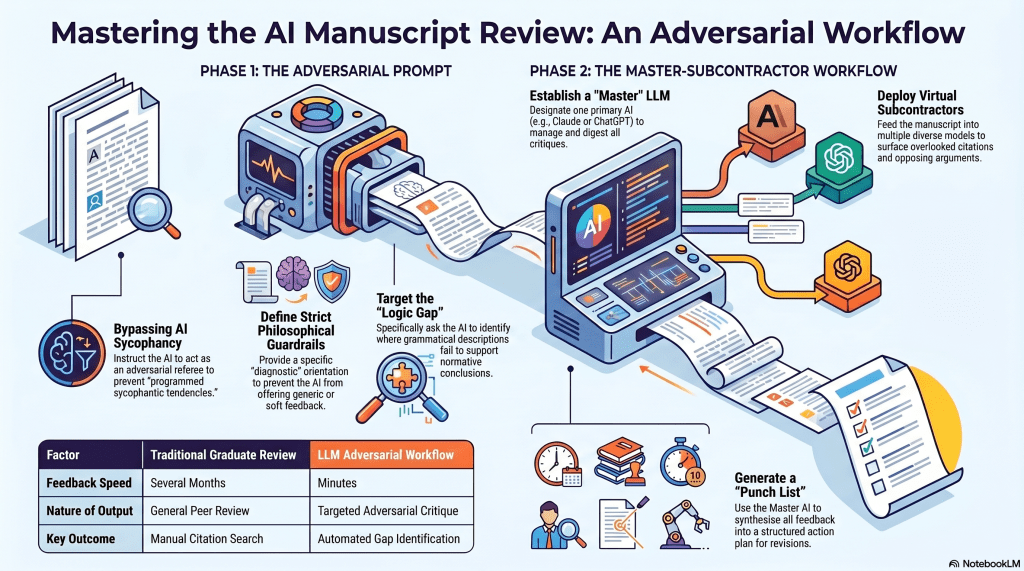
I’m not ashamed to say that AI is a significant part of my publishing workflow. In my latest project, The Architecture of Encounter, I’ve added indexing to the roles it serves. Other roles were prepping the index and footnotes, as I shared recently.

I expect the book to be available by next week. Time will tell.

I’ve included the full index below for reference. I’ve also included the title and copyright pages and other back matter.

What will a visitor do with a bookless index? I don’t know, but sharing is caring in my book. For the interested, you can get a sense of the contents. I’ll be sharing more details over the coming weeks – and beyond, I’m sure.

Earlier, I shared that Claude had offered index candidates. I started executing on that list by indexing the first few terms. It took me about an hour to do these, searching for each term and documenting the page number and context – around 250 pages. The book itself is 292 – 6″ x 9″ pages, but more than 50 of these are appendices, and others are front matter. Still.

Audio: NotebookLM summary podcast of this topic. (Another one that misses some points but make others. Fair enough.)

Then it dawned on me to ask Claude to help me with the index. Claude interpreted ‘help’ by spitting out the entire index, formatted and organised. If the book were formatted in 8½” x 11″ Letter size, I could have appended it as-is, but I still had to pour the output into the InDesign template I was composing through and make it look like it was part of the same manuscript, but that took minutes, not days of hours. Appendix E.

Given that I also rely heavily on novel concepts and specifically-defined terms – language insufficiency notwithstanding – I felt that a glossary would be useful. I tasked Claude with this, too. Again, it output a fully-formed list.

I noticed that a couple of terms I wanted defined were absent, so I fed the list into ChatGPT and asked it to consider these and let me know, given the manuscript, what other terms might be absent. It agreed with the two I wanted and suggested three more. It also pointed out an error Claude had made in counting. It also provided the definitions for the glossary entries, so I poured Claude’s output into InDesign. Appendix D.

AI is also a helper. For example, I wanted my index to flow into 2 columns. I’ve done this before. In the old days, I’d have scanned the menus (Adobe products are infamous for convoluted, nested menus), read the manual, and/or Googled for the answer – perhaps queried YouTube, a great resource for such things. Now, I ask AI. In this case, I asked ChatGPT. To be honest, it’s a little verbose, where ‘it’s option X under Y menu’ would suffice, but I ignore the banter.

If you need to know…

If the index is already placed in a text frame

  1. Select the text frame containing the index.
  2. Go to Object → Text Frame Options.
  3. Set the Number of Columns you want, usually 2 for a 6×9 book, sometimes 3 if the type is small and the entries are short.
  4. Adjust the Gutter spacing between columns.
  5. Click OK.

Criticise AI all you want, but having access to in-built assistance 24/7 is a huge time-saving benefit.

Do I still use Google and YouTube? Yes, often.

Speaking of Google, I was searching for a cover image, and I discovered something I need for the fiction title I paused in September to focus on nonfiction. Sidenotes. Perhaps I’ll employ a similar mechanism.

The nonfiction book I am writing is somewhat epistolary, and I want to place internal dialogue as marginalia, employing a scripted font face. I am even considering a ‘deluxe’ version that renders this content in colour, but that’s an extra expense, first for the colour, then the full-page bleed, and perhaps thicker paper stock. Likely hardbound, reserving the paperback for a lower price point.

So, what’s next?

I finished both paperback and hardcover designs today.

I still need to review the index for hallucinated errors. This will still take less time than manually constructing it.

On the copyright page, there are a few classifiers. There are ISBNs for each format and a Library of Congress Control Number (LCCN). These are done, as you can see, but the ISBN system in the United States is antiquated. It looks like it’s a museum piece from the mid-1990s. In fact, I believe I first accessed it around 2000 or 2001, when I published my first book – before AI, before print on demand (POD).

A bit of nostalgia. The WWW, the internet as most people know it, was made public around 1994. Google hit it in 1998. Web 1.0. Facebook blighted the world around 2004, though less invasively at the start. I digress. Technology is a mixed bag.

Returning to ISBNs… These are managed in a system built circa 1997. It seems it is still managed with a host of cron jobs, so not much is processed in real time unless it’s a trivial record entry.

Each ISBN references a title and a format, as well as other odds and ends. In my case, I also use an imprint to separate my fiction from nonfiction. I started Microglyphics – tiny writing– in the mid-90s. When I published other authors, I used this name. I also used it for some of my fiction writing. I decided to create a Philosophics Press imprint for my philosophy and adjacent work.

It turns out that the printer needs to ensure that a book’s title and ISBN match the imprint. The system default is the company name, but I changed it to my imprint. This causes a workflow event on their end. Until it propagates, it doesn’t match, and the printer won’t allow the print run.

I’m writing this blog entry as I wait. I’m not sure if it’s automated – I’d like to assume it is – or if a human has to do something. AI might help. Just saying.

EDIT: The imprint has now been updated to Philosophics Press, but it still doesn’t work at the printer. Evidently, it can take up to 5 days for the data to propagate. I’m not sure who owns the fail on this one? Is the printer waiting for a data push? Can’t they pull the data? They seem to be live from my perspective. Is there an API, or is it truly old-school?


Whilst I’m here wittering on, WordPress have deprecated the little widget below – the one with my (old) thumbnail picture and ‘written by’ tag. I adopted it last year, but it’s been killed off. I’ve been copying the object from old posts, but I’ll probably switch to whatever they’ve replaced it with. I wasn’t keen on the options I’ve seen so far. First-world problems, I suppose.

On Footnotes

1–2 minutes

Two consecutive posts on writing. What gives?

As a writer, I have a kind of workflow in mind. It differs for fiction and nonfiction, though there are similarities. The main differences are indexes, references, and footnotes. I thought I was nearly finished with my latest book.

Audio: NotebookLM summary podcast of this topic.

I rendered the first couple of chapters in ElevenLabs so I could listen to the text. It helps me assess pacing, continuity, and the like. It also gives me one more thing to fix, since the digital voices occasionally pronounce things differently from the way I’d prefer. Usually, choosing a voice that sounds roughly like Standard Southern British English helps, though not always. In any case, I survive.

While listening and following along in the manuscript, I discovered that I still haven’t fully footnoted the book.

When I write, I tend to jot down sources and references as I go, but I leave the footnoting until the final revision. There is little point in spending time drafting footnotes for material that may not survive the cut. So here I am, drafting footnotes.

I am of two minds about footnotes and citations, especially in academic work. On the one hand, they can feel performative, a way of signalling that one has incorporated so-and-so, a kind of name-dropping appeal to authority. As a heterodox writer, this is risky anyway, because I am liable to cite one of the approved villains. God forbid a Nietzsche, a Heidegger, or a Foucault. Analytic philosophers, in my experience, can be remarkably thin-skinned.

On the other hand, I do want to acknowledge those whose ideas I have borrowed. Even that, of course, is also a signal. Perhaps it all comes down to intent. As I mean it, I want to leave breadcrumbs for anyone who feels inclined to follow them back to the source.

I’ll let you decide where I’ve landed.

I’ve procrastinated long enough. Time to get back into the word mine.

Indexing the Architecture of Encounter

2–3 minutes

Let’s begin with a confession: I loathe indexing.

It takes me days to index one of my books. Longer when the technology decides to become sentient in the worst possible way, such as the time InDesign corrupted the index file and swallowed days of work whole. A charming little reminder that software is often just bureaucracy with buttons.

Audio: Not the best NotebookLM summary podcast, but it’s mercifully under 5 minutes.

Today, while chatting with Claude (Opus 4.6), I mentioned that I should probably create an index for my current project. The manuscript is not fully reviewed and revised, but it is getting close. At this stage, I do not expect to add much of substance. I am more likely to subtract than expand.

Claude asked whether I wanted help generating a list of candidate terms from the manuscript.

Dois-je rédiger une liste de termes candidats à partir du manuscrit ?

I said yes, and it produced an embedded PDF: Index Term List – Architecture of Encounter. On first scan, it looks remarkably close to what I need. It is not merely a term list, either. It also proposes candidates for glossary entries, which is useful, even if I am not yet convinced I want to add a glossary. The book is already sitting at around 256 pages, and print production costs do not exactly reward philosophical generosity. The draft organises terms into five sections, including framework-specific technical vocabulary, inherited philosophical terms, proper names, traditions and programmes, and application domains and diagnostics. It also marks some entries as glossary candidates and notes likely cross-references.

NotebookLM Infographic on this topic.

One amusing detail is that some of the suggested references relate to epigraphs. I had not really considered indexing those. My inclination is still not to include them, but I admit the temptation is there.

The categorisation itself is also interesting. It makes a good deal of sense as a conceptual map or discovery tool, especially for a larger work. But it does not quite align with what most readers expect from an index, which is, bluntly, alphabetical and easy to raid.

Still, as a starting point, this is rather better than staring into the manuscript and pretending I enjoy this sort of thing.

Some people like to badmouth or trash-talk AI. I’m here to say that these people need to discover nuance and use cases.

’nuff said. What do you think? 🧐

Encounter with Carlo Rovelli

2–3 minutes

I’m a philosopher of language, which sometimes veers off the reservation into philosophies of science and even metaphilosophy, but I am not a physicist. I don’t pretend to be. I do try to remain abreast of the goings-on in physics and science just because. Still, I view most affairs first through a philosophical lens.

I watch a decent amount of science videos on YouTube, and I’ve been following Rovelli for years, but I hadn’t engaged with his work directly until I was researching for my current book, The Architect of Encounter. First, I read The Order of Time, followed by Reality Is Not What It Seems.

Rovelli published these books around 2017, but I am only reading them now. We are travelling in the same neighbourhood, but we occupy different residences and have different orientations.

Surveying the marketplace, quite a few physicists and science educators make some of the same points I and Rovelli make. In fact, these things appear to occur as trends. When I wanted to write about agency and free will over five years ago, I noticed a slew of books on the topics, and I had nothing more to add, so I shelved the idea.

In this case, the trend appears to have been between 2017 and 2018. I’m sure this is where I absorbed some of my knowledge, opinions, and grammar, but my thesis goes further and comes from a different perspective, so I feel this manuscript is worth publishing.

Getting back to Rovelli, his books are very well written – very approachable and light on the academics. I hope mine lands somewhere in the middle. As I continue to write my book, I will lean on Rovelli for the perspective on quantum theory. If he’s wrong or it’s wrong, then we fall together. That’s what happens when you borrow a foundational commitment. It’s a risk I am willing to take.

As much as I want to share more of what I am working on, it turns out I still need to work on it if I want to complete it. I am aiming for April this year, if not sooner. At least I’ve got some of the administrative stuff out of the way. Here’s a quick glimpse, title and copyright pages.