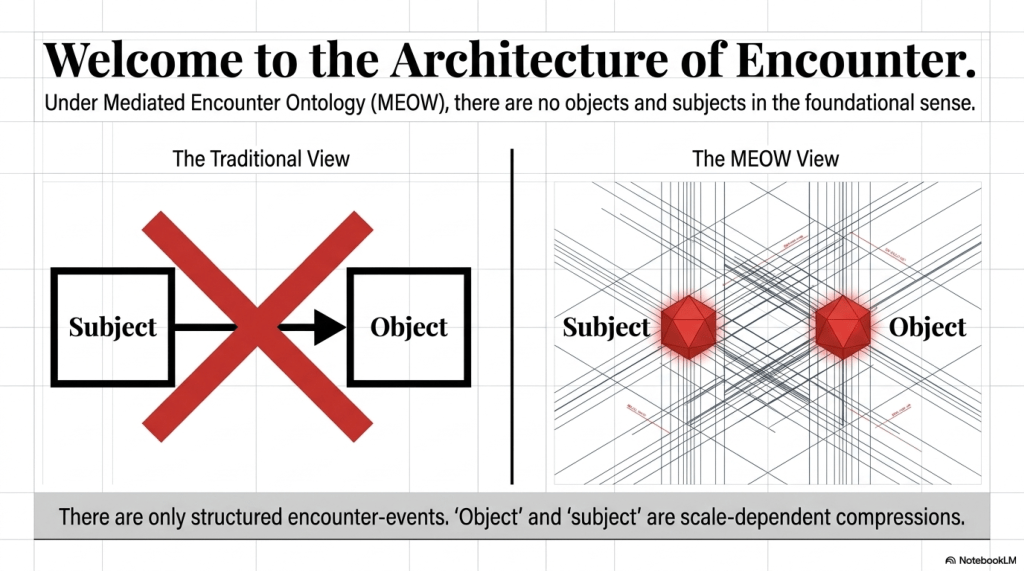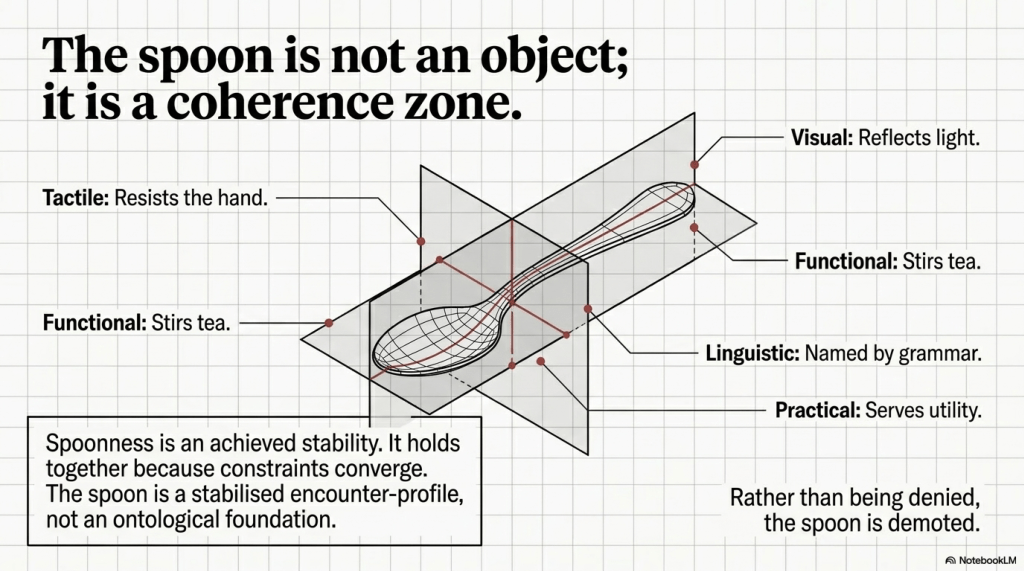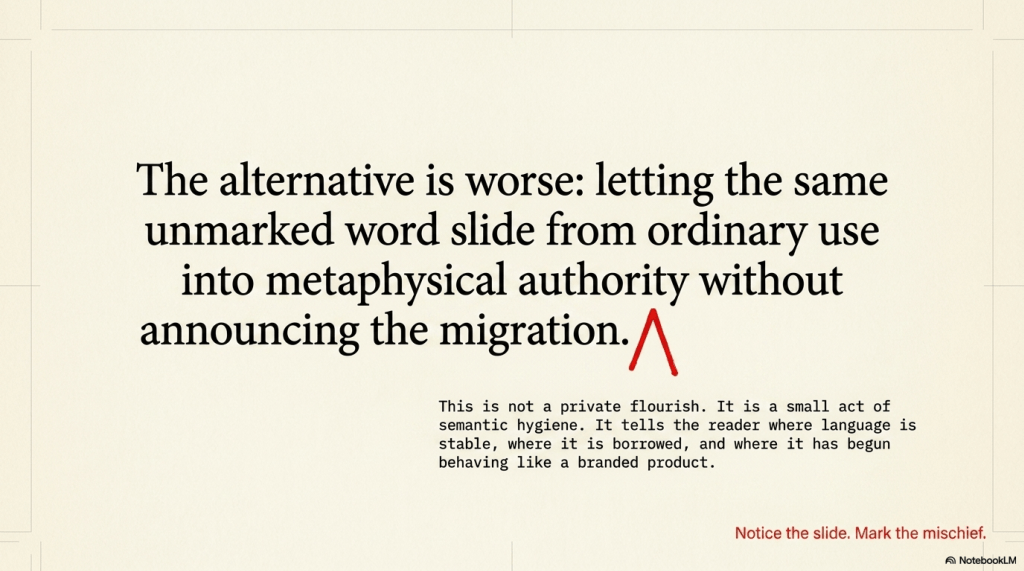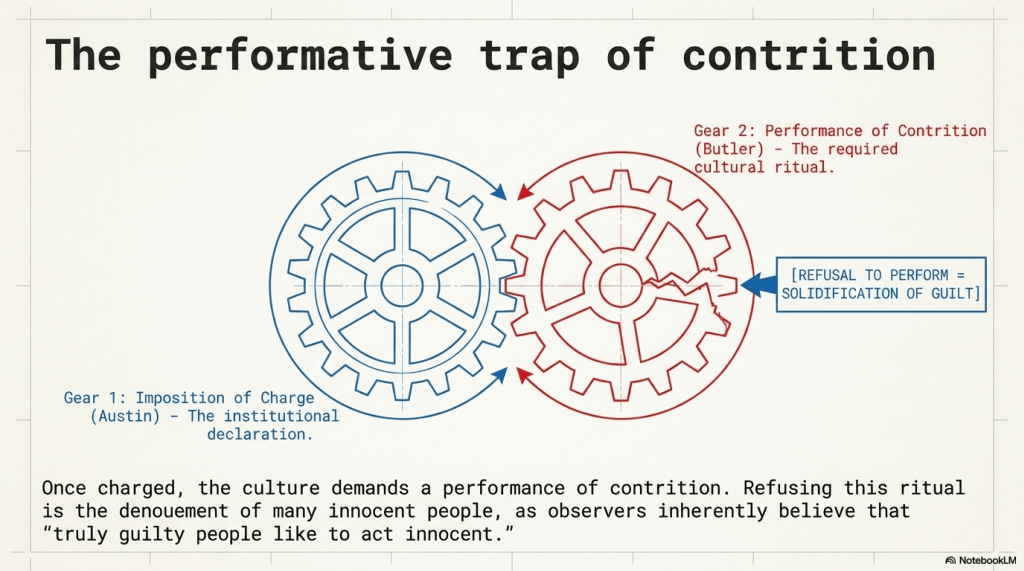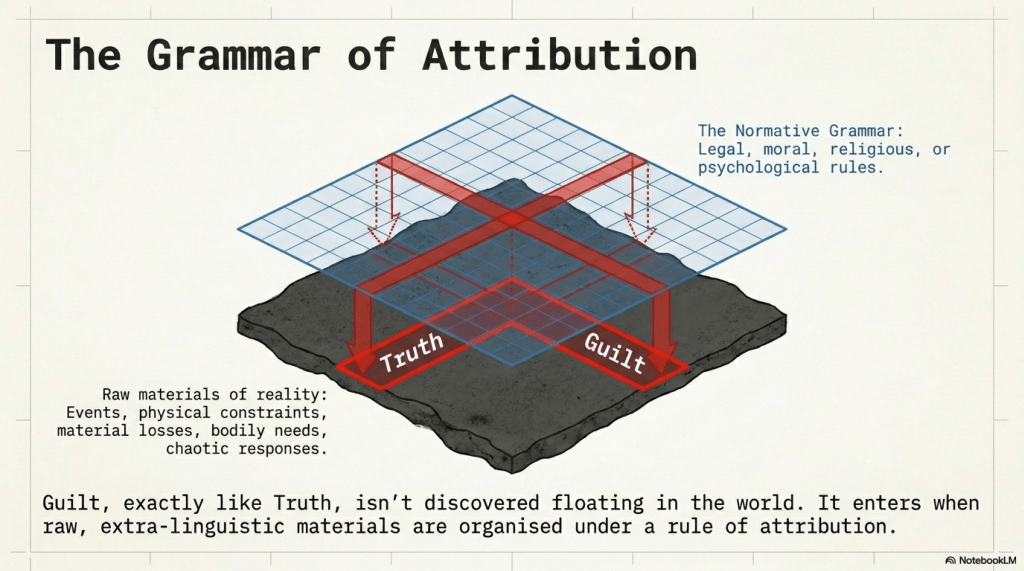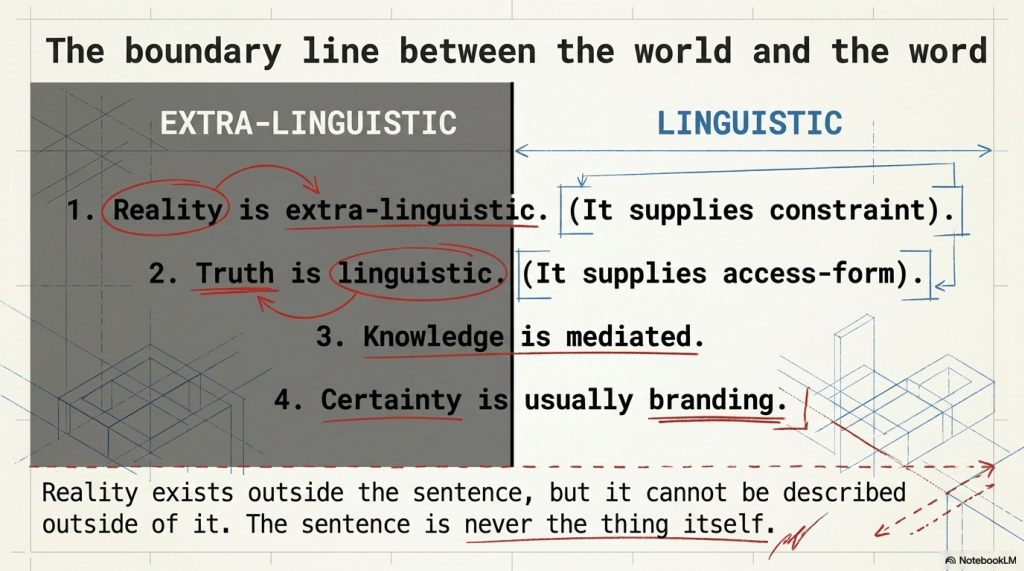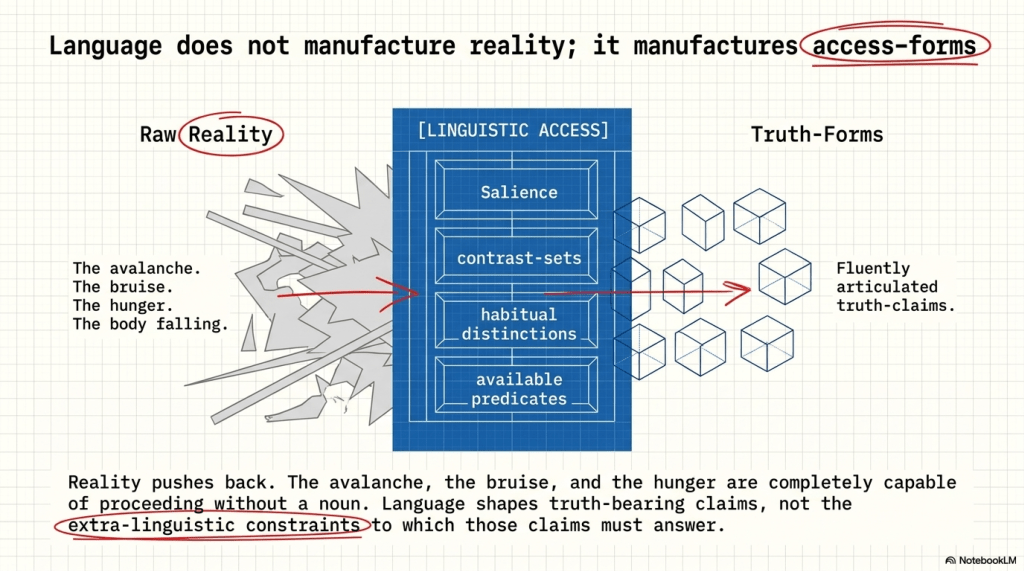
The Environment Always Wins: The Myth of Pure Voice

4–6 minutes

There’s a certain kind of cultural panic that tells you more about the panickers than about the thing they are panicking about. The current hysteria over AI-inflected prose is a good example.

The argument, insofar as it deserves the name, goes roughly like this: LLMs produce prose with identifiable features – a certain blandness, a fondness for the em dash, a tendency toward tidy three-part structure. Writers who use these tools risk absorbing those features. The authentic human voice is therefore under threat. Something precious is being diluted by contact with the machine.

This is sentimental rubbish, and it is worth saying so clearly before doing anything else – and a sort of virtue signalling.

Audio: NotebookLM summary podcast of this topic.

I use LLMs daily. For research, for editorial pushback, for smoothing passages that have gone awry. This means I spend hours a day reading a particular kind of output. You’d have to be delusional not to admit it has effects. Certain phrasings start feeling natural that didn’t before. Certain rhythms begin to recur. Certain words might not have otherwise come into use. I notice this and note it without particular alarm, because I’ve read enough to know that this is just what environments do.

Read nothing but McCarthy for a month, and your sentences will start hunting for the spare declarative. Spend a year editing academic philosophy, and you will catch yourself reaching for ‘insofar as’ and ‘it’s worth noting’ in casual conversation. Live in a city long enough, and its cadences work their way into your syntax. This isn’t contamination, the negative moralist dispersion. It’s how language acquisition works for as long as one is alive and reading. Voice isn’t a spring. It’s a river, a moving accumulation of every tributary it has passed through.

The prestige game being played by the anti-LLM faction isn’t difficult to spot. When Dostoyevsky shapes a young writer’s cadence, we call it influence and treat it as evidence of a serious literary education. When a game world shapes a child’s imagination – I homeschooled my son in the manner of unschooling, and his primary corpus for years was World of Warcraft and its attendant lore before shifting to Dark Souls – and that child ends up reading Dante and Milton unprompted in year seven, the same mechanism has clearly operated. The source was not canonical, the outcome was. But the respectable hierarchy of influences cannot easily accommodate this, because the hierarchy was never really about the mechanism. It was about the cultural status of the inputs.

The more interesting observation isn’t about those of us who use these tools. It’s about those who conspicuously do not.

A minor genre has emerged – charitably, I’ll call it a genre because cult feels morally loaded – consisting of writers anxiously purging their prose of anything that might read as AI-generated. It’s worth noting that they have read the lists. Telltale signs of LLM authorship: excessive hedging, em dashes, transitional summaries, the phrase ‘it is worth noting’. And so they scrub, redact, replace, and perform a kind of stylistic hygiene that’s a creative decision made in direct response to LLM discourse.

These writers aren’t free of the machine’s influence. They’re among the most thoroughly shaped by it. They simply have the more theatrical relationship – the counter-imitator, the purity-performer, the one who reorganises their entire aesthetic in orbit around the thing they claim to reject.

Thomas Moore, in Care of the Soul, observes that a child raised by an alcoholic parent tends to become either an alcoholic or a committed teetotaller. He presents this as a dichotomy, which is too neat, but the underlying point holds. Reactions are still relata – see what happens when you read too much philosophy and logic? The teetotaller has organised their life around the bottle as surely as the alcoholic has. Both are defined by it.

Opposition is one of influence’s favourite disguises.

The fair objection is that LLM influence may differ from other influences in kind rather than just in kind. Dostoyevsky is strange. Bernhard is strange to the point of pathology. A canonical prose style is idiosyncratic by definition, which is why it’s worth absorbing. In contrast, LLM output aims for plausible fluency and statistical centrality. Its pull may be more homogenising than the pull of a singular authorial sensibility.

That’s a real point. The environment in question has a centripetal force toward the mean that most literary influences lack.

But conceding the point doesn’t really rescue the panic. It just specifies the kind of influence involved. The mechanism remains identical to every other case of environmental absorption. And ‘this influence tends toward the generic’ is an ironically generic critique of a particular environment’s character rather than a claim that the environment is doing something ontologically unprecedented to the notion of authorship.

The question that actually matters aesthetically is not was this touched by AI? It is what did the writer do with the environment they inhabited? That’s always been the question. It remains the question. The machinery has changed; the problem of influence has not.

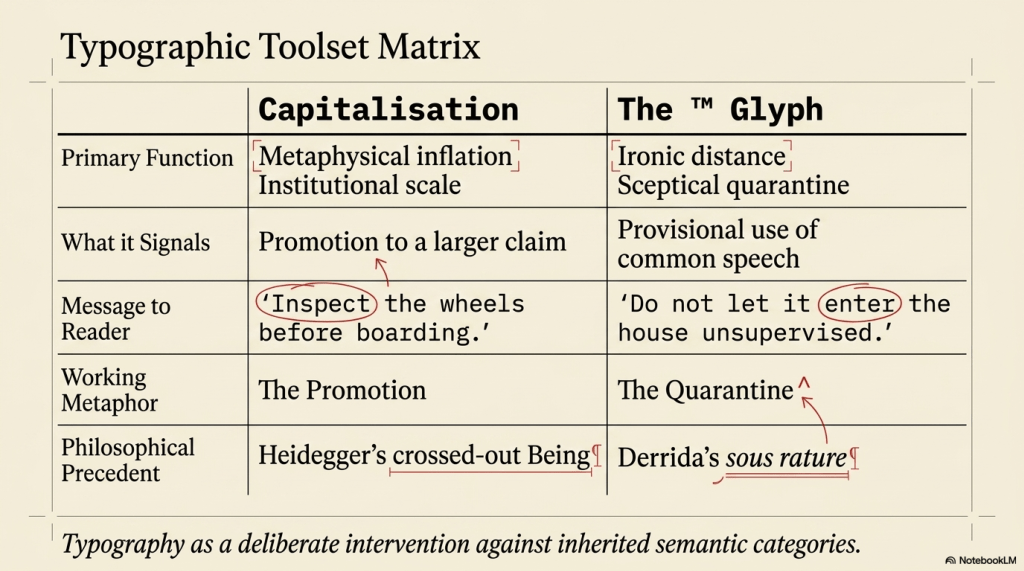
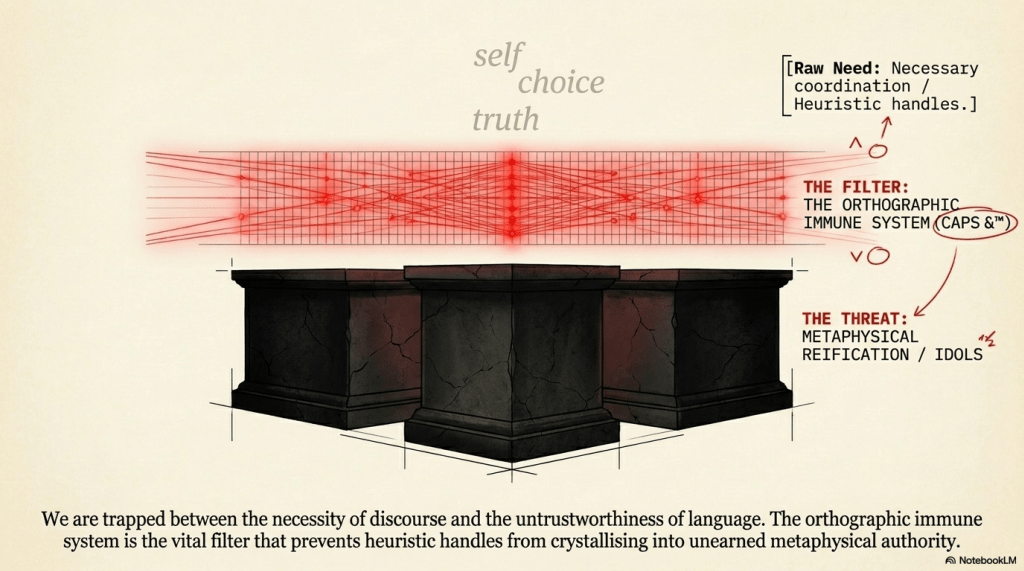
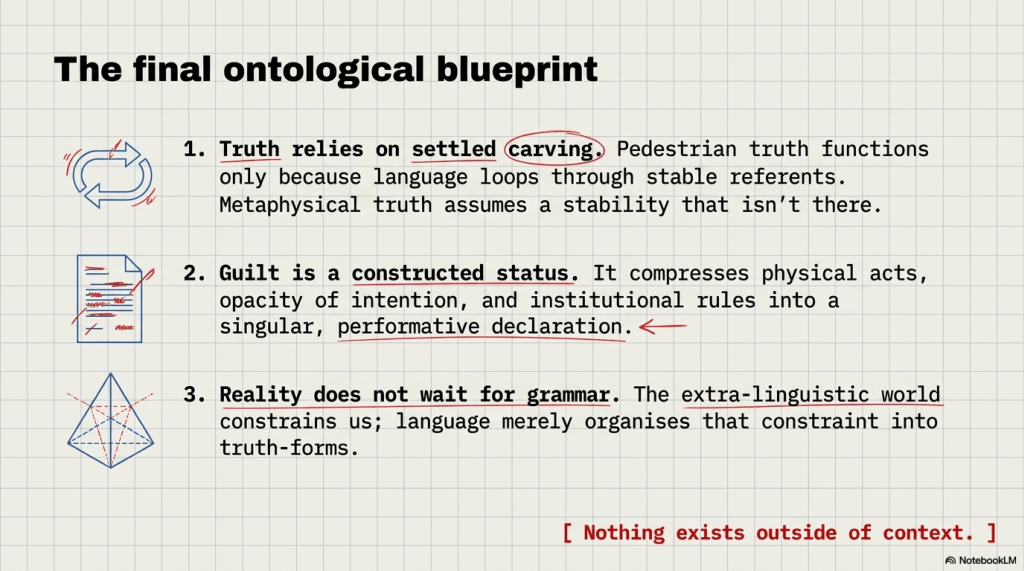
What the current schism actually reveals is not that AI is doing something new to writing. It’s that we’ve been operating with a fairy tale about what writing is. The fairy tale holds that voice is self-originating, that somewhere beneath the reading AND the editing AND the genre conventions AND the institutional pressures AND the decade of a particular editor’s feedback, there is a pristine you, unconditioned and pure, expressing itself directly onto the page.

This was always false. Writers have always been patchworks of absorbed environments. The only difference now is that one of the environments is a machine, and the machine is new enough that people haven’t yet learned to be comfortable with what it reveals about the rest.

The environment always wins. The only interesting question is which environments you choose, and what you make of them.

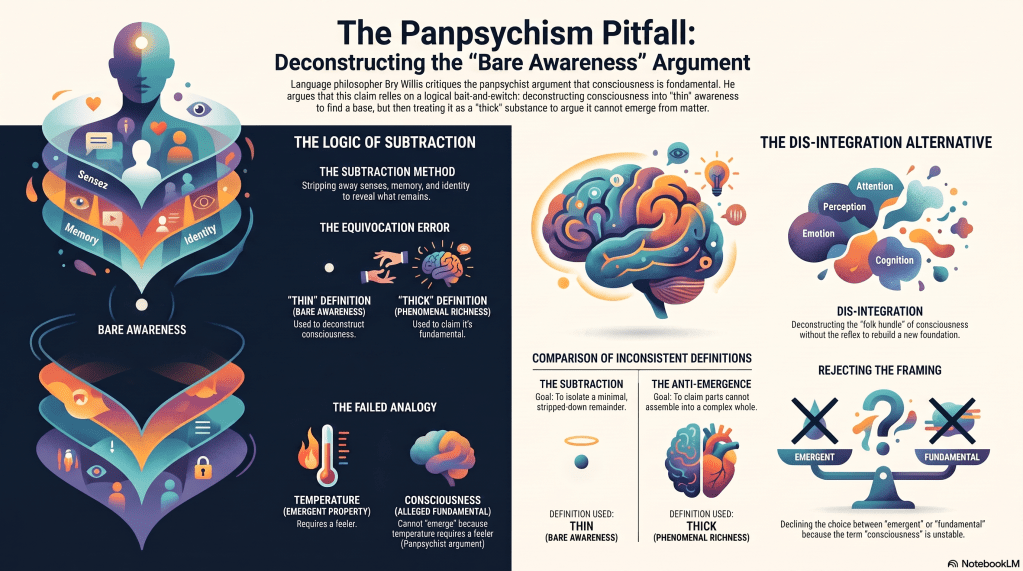
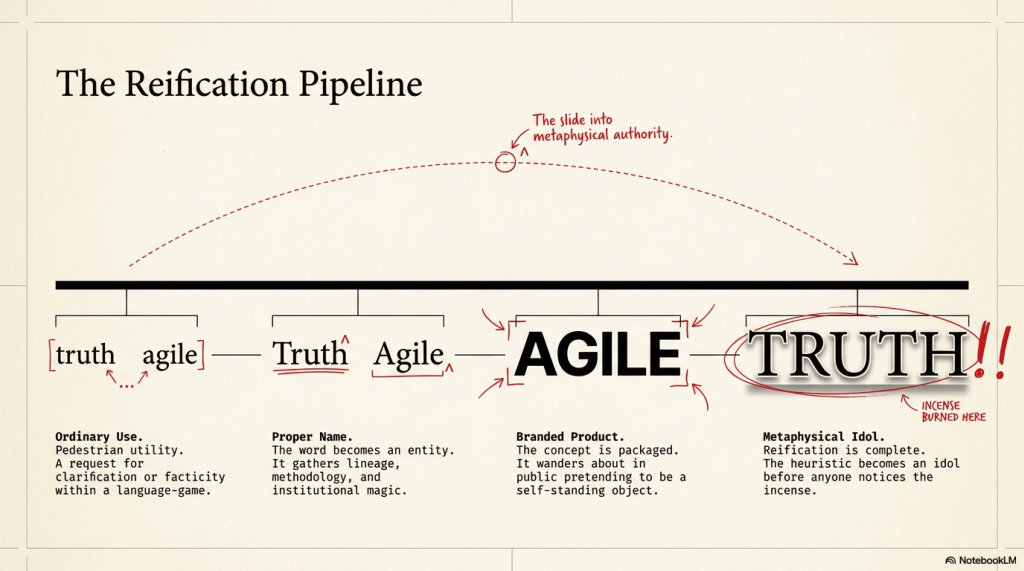
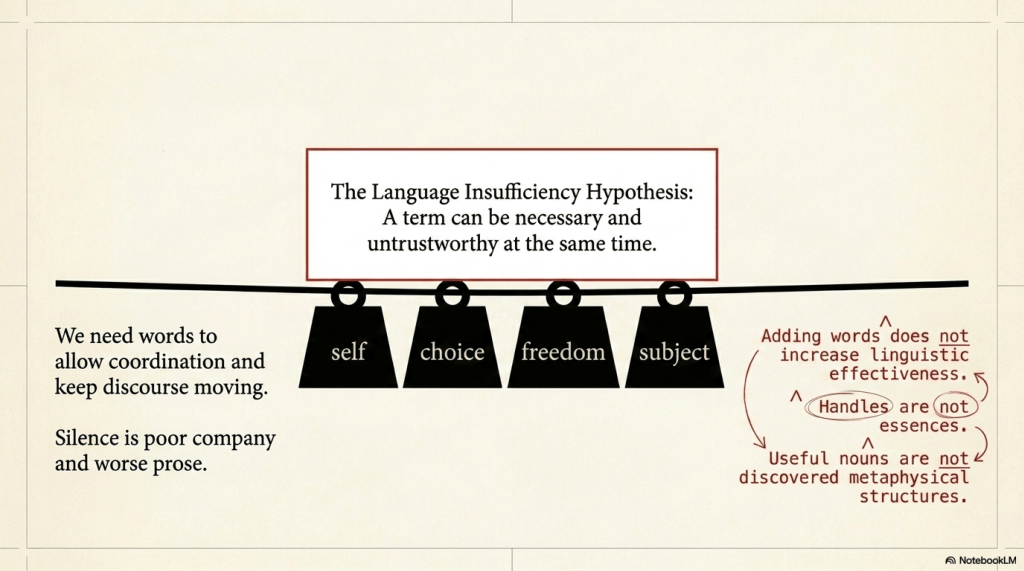
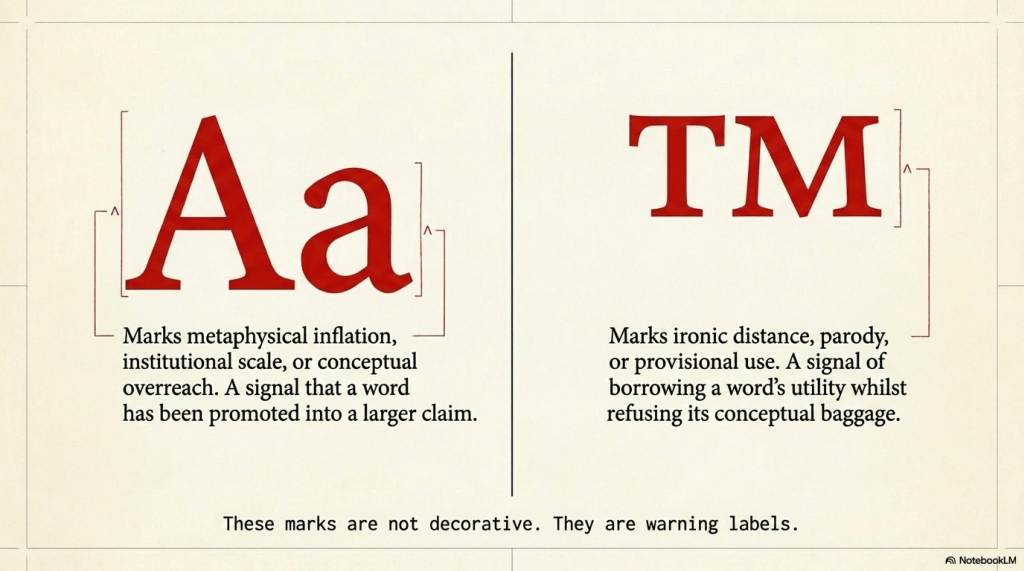
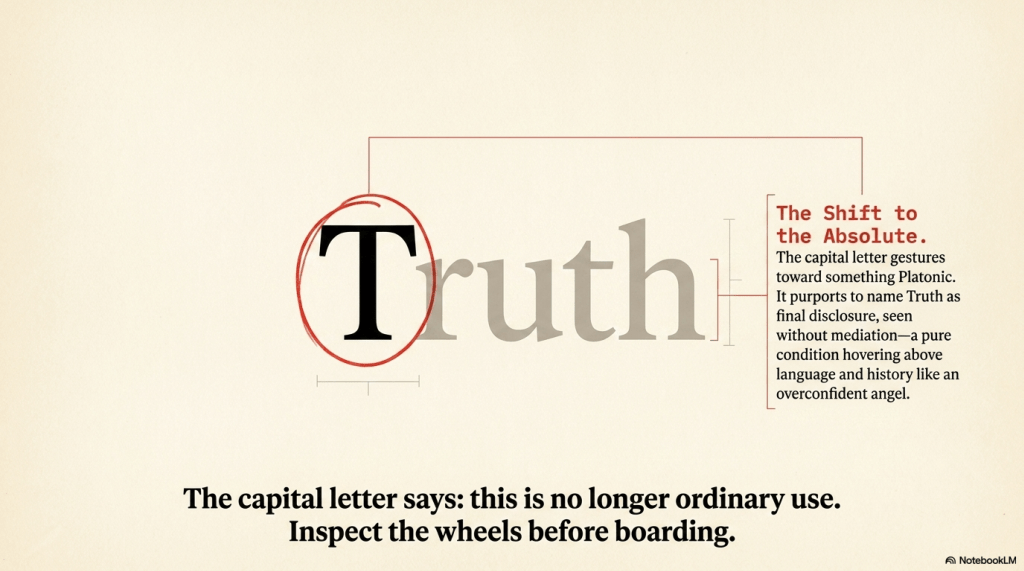
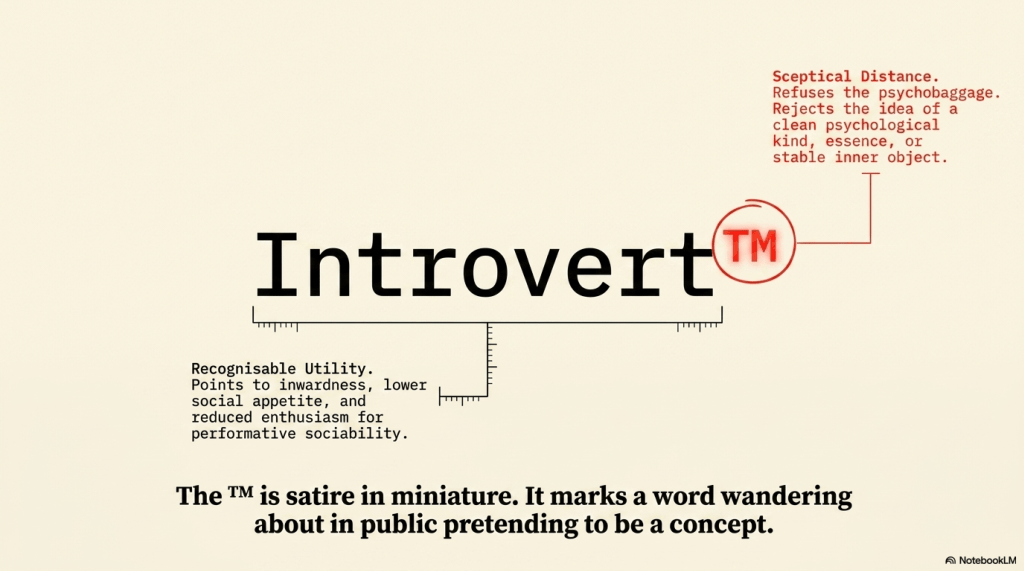
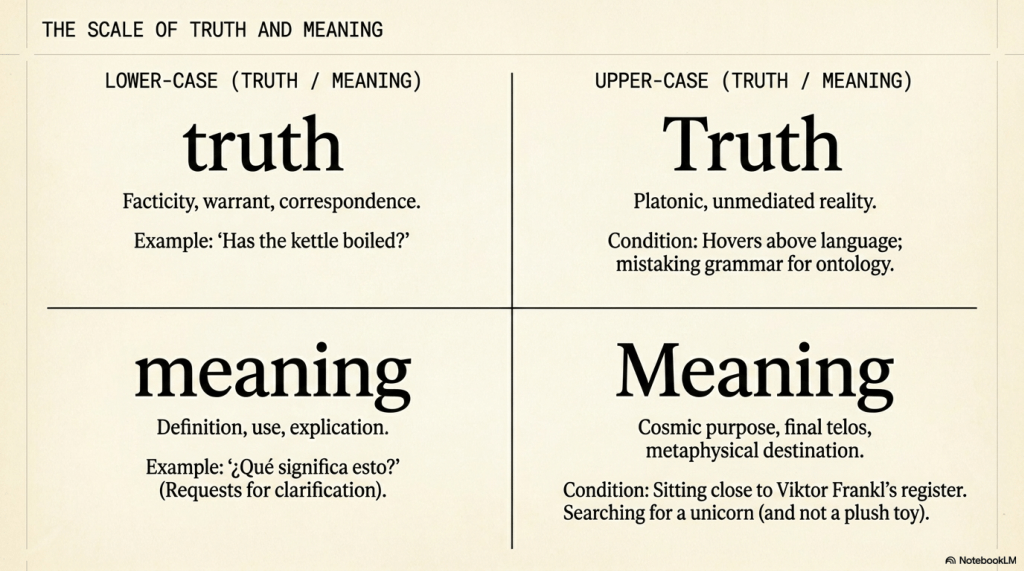
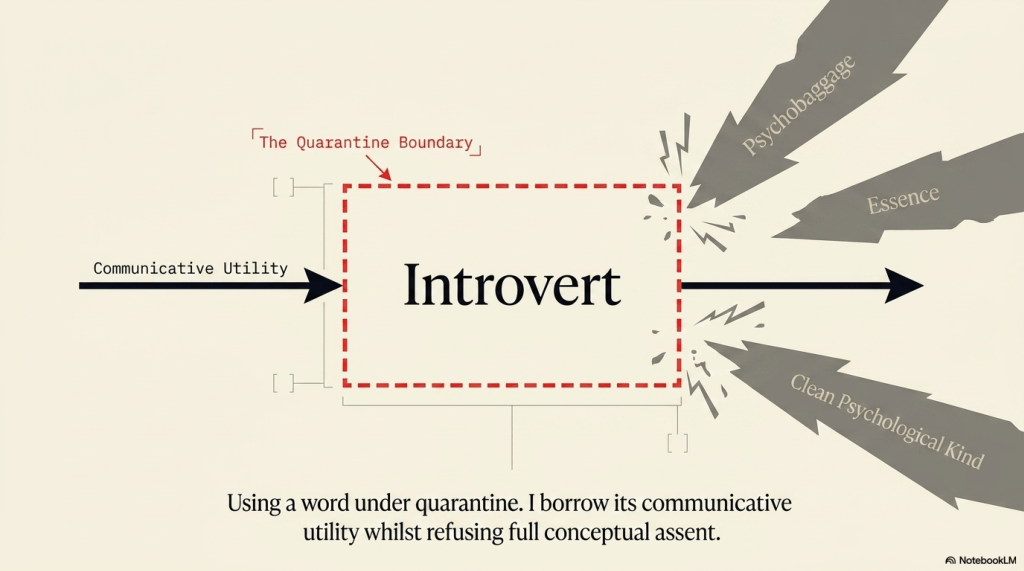
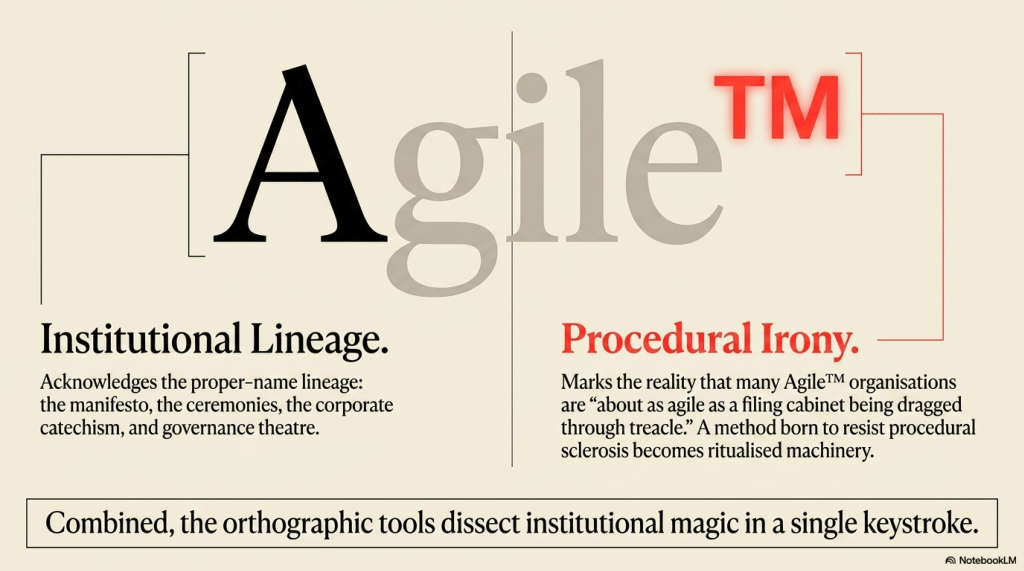
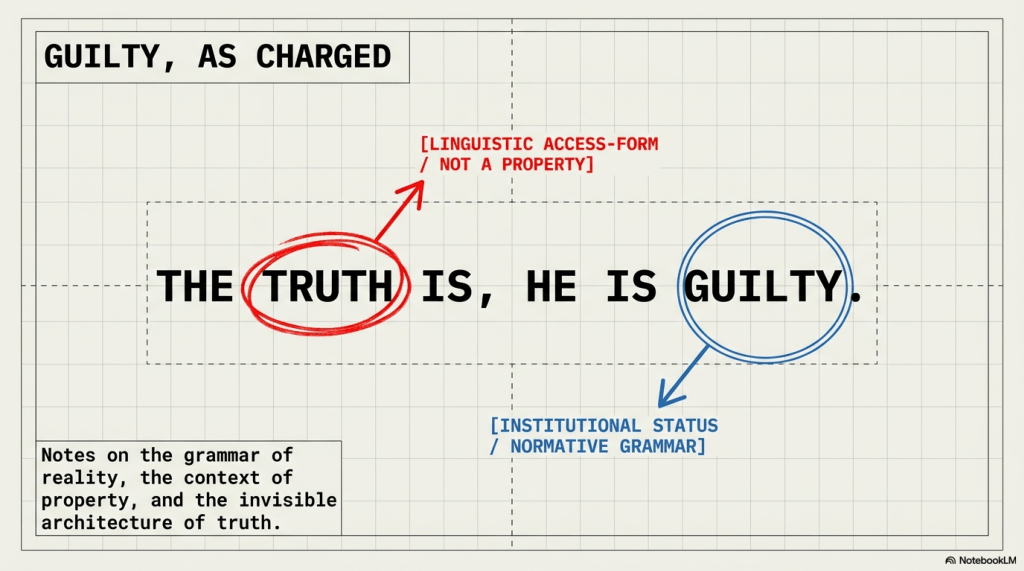
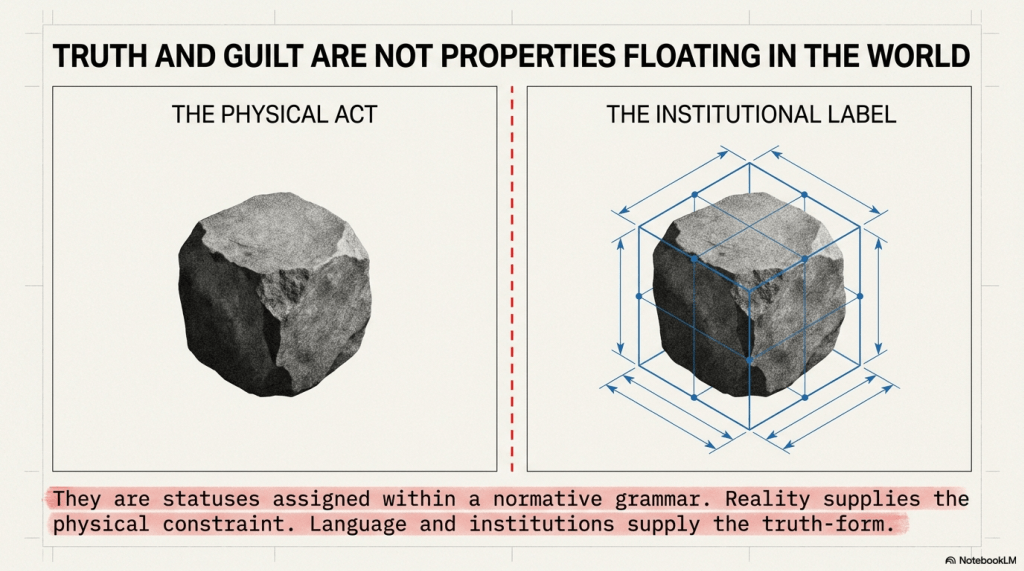
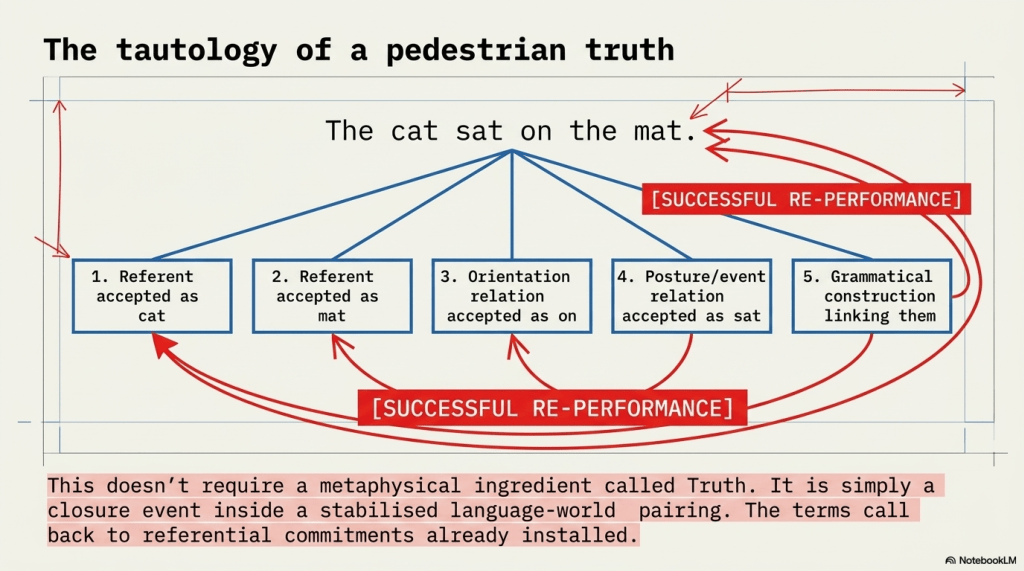
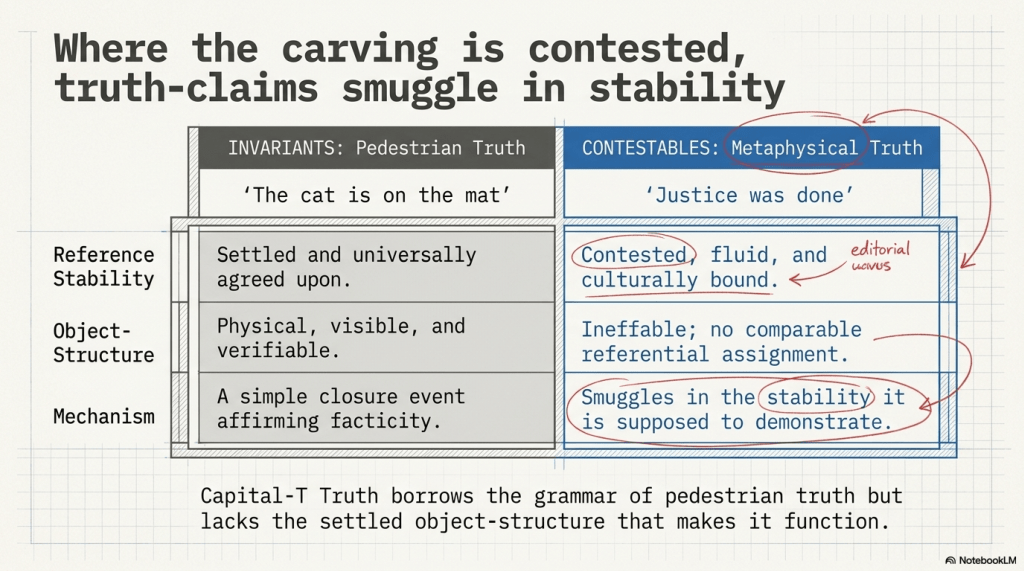
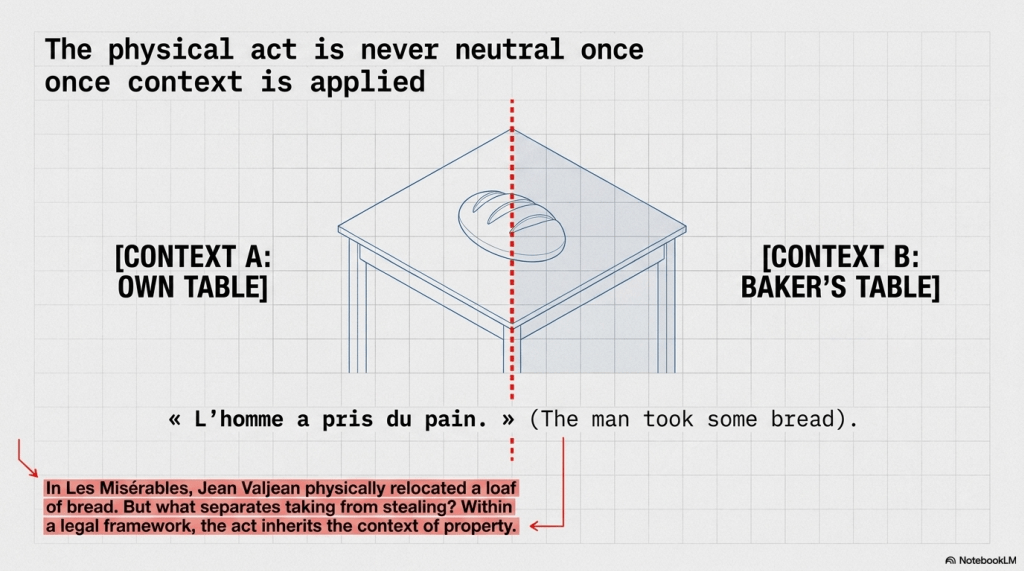
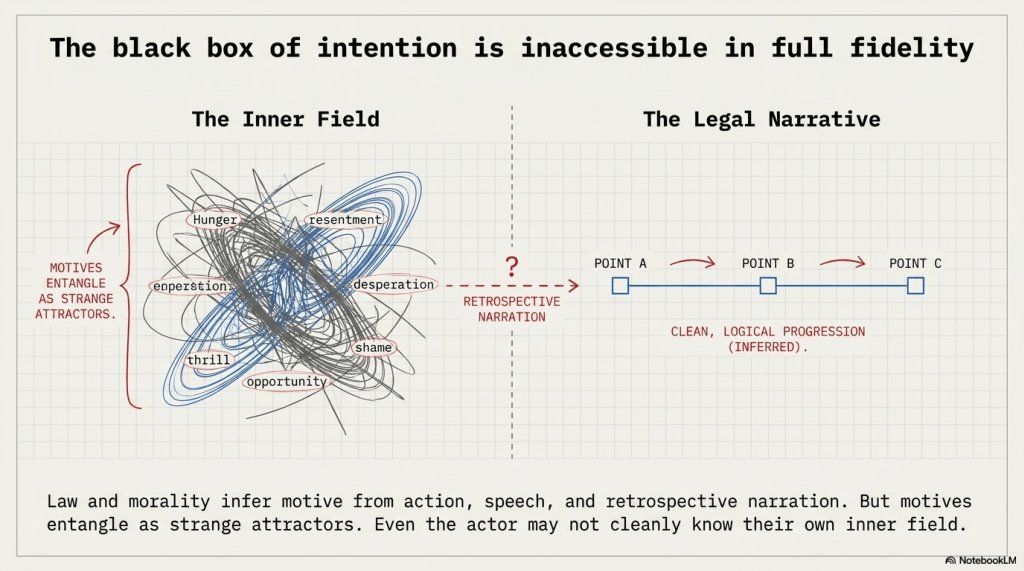
NotebookLM Infographic on this topic.

Funny, That

1–2 minutes

I find myself interesting, not in a narcissistic way, but in examination.

I wrote an academic blog post (and then a couple others, 1, 2) to clarify a nonfiction book that commenced as an academic essay. The blog post spawned a novella (pending, in revision), which in turn spawned both a short story (pending novella) and another academic essay (pending novella). With the short story, I plan to release meta commentary and background around the novella.

This seems like an unusual ecosystem, but it’s how my brain operates – on inputs and synthesis. Having completed The Architecture of Encounter, itself a follow-up to A Language Insufficiency Hypothesis and the second of a planned series of three, but hard-pressed to call it a trilogy.

This post might make more sense when the unfinished projects are complete, but until then, consider it a status update.

A bit more…

The reason for the short story is that the novella ends intentionally ambiguous, and the short story is a disconnected possible resolution. But I want the novella to remain open to interpretation, as is my modus operandi in many cases. I had considered including it as an epilogue – and I may do this in a future edition – but for now, I don’t want to prematurely close the discussion.

If I can get someone to publish the short story in a collection, that would be great, but I’ll otherwise publish it with the notes I mentioned above.

To quote The Critical Drinker, ‘Anyway, that’s all I’ve got today. Go away, now‘.

Nietzsche’s Beyond Good and Evil – A Close Reading?

6–9 minutes

I joined a scheduled close reading of Nietzsche’s Beyond Good and Evil recently and came away less refreshed than exasperated. I will spare the platform and the hosts, not out of charity exactly, but because the problem is broader than two particular men fumbling through a canonical text in public. What disappointed me wasn’t that they disagreed with Nietzsche, nor even that they may have misunderstood him in places. Misreading is inevitable. The problem was that they seemed not to have brought much of a reading to begin with.

I had read Beyond Good and Evil years ago and thought a return to it might do me some good, or at least less evil than the usual intellectual content mill. The format sounded promising enough: two interested hosts working through the introduction live, sentence by sentence, in a supposedly close reading. Both had apparently read the book before. One therefore assumed they might arrive with at least a provisional grasp of its architecture, key provocations, and habitual traps. That assumption, in the event, turned out to be embarrassingly optimistic.

Audio: NotebookLM summary podcast of this topic.

As one host read line by line, the discussion lurched forward by way of hesitant paraphrase, speculative gloss, and the occasional verbal shrug. He offered the more substantive guesses, such as they were, while the other contributed mostly vague assent, half-memory, and the sort of foggy commentary one gives when one dimly recalls having once encountered a difficult book in a previous phase of life. It was less a close reading than a public rehearsal of not quite knowing what one was doing.

Now, I am not demanding exegetical perfection. Nietzsche is not a writer one simply ‘gets’ and files away like a user manual. Nor am I naïve enough to think authorial intention settles everything. Barthes is right enough to remind us that the text exceeds the author’s sovereign control. But the death of the author is not a licence for the death of preparation. If one is going to host a close reading of a notoriously elliptical and performative philosopher, the least one might do is arrive having done some prior work. Read the introduction carefully beforehand. Refresh the major themes. Check the loaded terms. Develop an argument, or at least a point of view.

That point of view may be wrong. Fine. Better that than the contemporary preference for the curated shrug, where one mistakes visible uncertainty for intellectual seriousness. There is a difference between interpretive openness and simple lack of preparation. One is a virtue. The other is an aesthetic.

I find this especially grating because I cannot imagine teaching a class that way. When I taught, I’d spend hours preparing before entering the room. Not because I imagined myself infallible, but because students deserve more than watching a lecturer discover the material in real time. A formed point of view is not a dogma. It is a starting position. It gives the discussion shape, stakes, and resistance. Without it, one is not leading inquiry but merely simulating it.
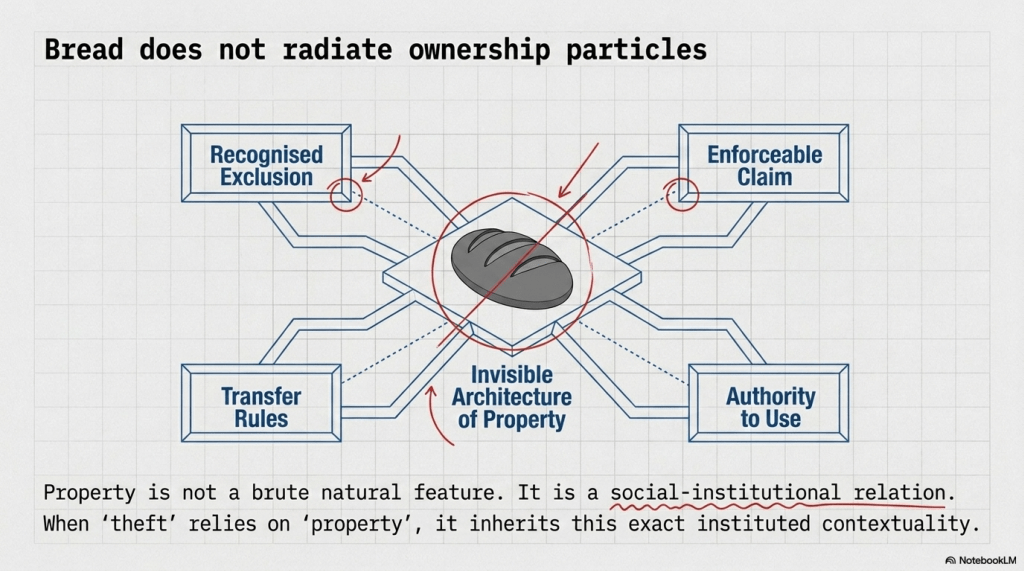
The second host did little to improve matters. Rather than complicating or sharpening the reading, he mostly echoed the first. There was very little friction, and thus very little illumination. One of the virtues of reading Nietzsche in company is that he invites productive disagreement. He is slippery, aphoristic, ironic, and often strategic in his provocations. A good discussion can tease out the tensions in his prose, test competing emphases, and ask whether a claim is literal, tactical, genealogical, or satirical. None of that really happened. Instead, one host fumbled, and the other nodded. The result was a kind of interpretive ventriloquism in which agreement substituted for insight.

The accompanying chat made things worse, or perhaps simply made the missed opportunity more obvious. Viewers were offering questions and interpretations, yet the hosts largely ignored them. Aside from one participant, who seemed likely to have some prior relationship with them, the chat was treated as background furniture. This was especially irritating because the event was live. If one is going to perform reading in public, the public should not be reduced to silent witnesses of one’s uncertainty. Otherwise, the ‘community’ aspect is just branding, another little liturgy of digital participation in which the audience is invited to attend but not to matter.

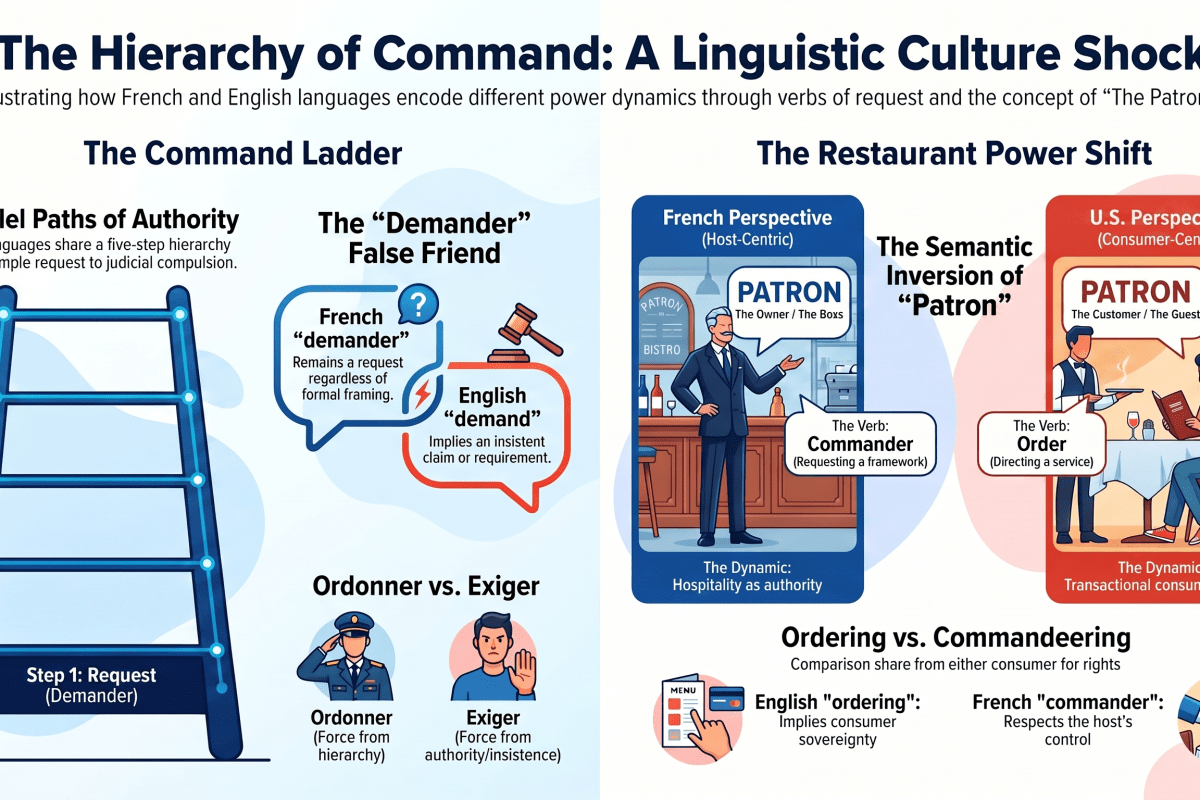
NotebookLM Infographic on this topic. To be honest, I am including this because I find it to be humorous.

To be fair, even when they did read from the chat, they handled those comments much as they handled Nietzsche: superficially, without much analytical pressure, as though any sentence placed before them deserved the same tone of vague consideration. This flattening effect was revealing. It suggested not generosity but a lack of discrimination. A close reading requires hierarchy, emphasis, and judgement. One must be able to say: this is a crucial phrase; this term matters; this apparent aside is actually structural; this comment in the chat opens something worth pursuing; that one does not. Without such judgement, everything becomes equally interesting, which is another way of saying that nothing really is.

What emerged, then, was not close reading but the theatre of close reading. The ritual gestures were all in place: slow pace, sentence-by-sentence attention, occasional lexical speculation, the performance of thoughtfulness. But the substance was strangely absent. One had the form of seriousness without much seriousness of form. It was analysis as ambience.
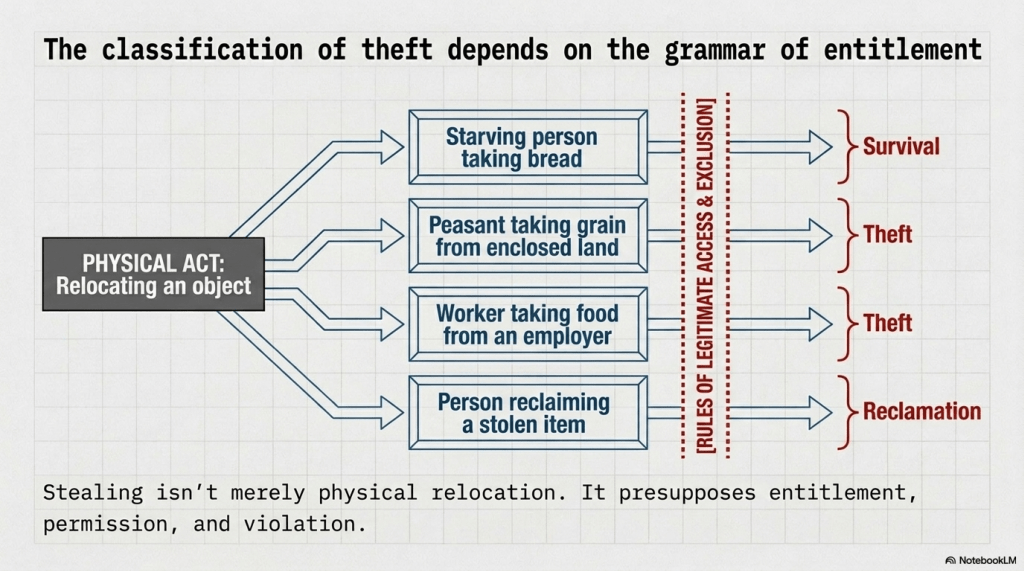
This points to a broader problem in online intellectual culture. Much of it now confuses exposure with engagement. To read a difficult text aloud is not yet to wrestle with it. To host a discussion is not yet to lead one. To hesitate publicly is not yet to think. Somewhere along the line, people began mistaking the visible performance of inquiry for inquiry itself. The result is a style of pseudo-seriousness in which the host need not know very much, so long as he can sound tentative in the correct register.

Nietzsche, of all people, deserves better than that. He is not an author who yields his force to the merely dutiful or the casually adjacent. He requires energy, suspicion, historical feel, and the willingness to risk a reading. One need not become a priest of correctness. But one should at least bring a sharpened knife to the table, rather than two butter spoons and a podcast voice.
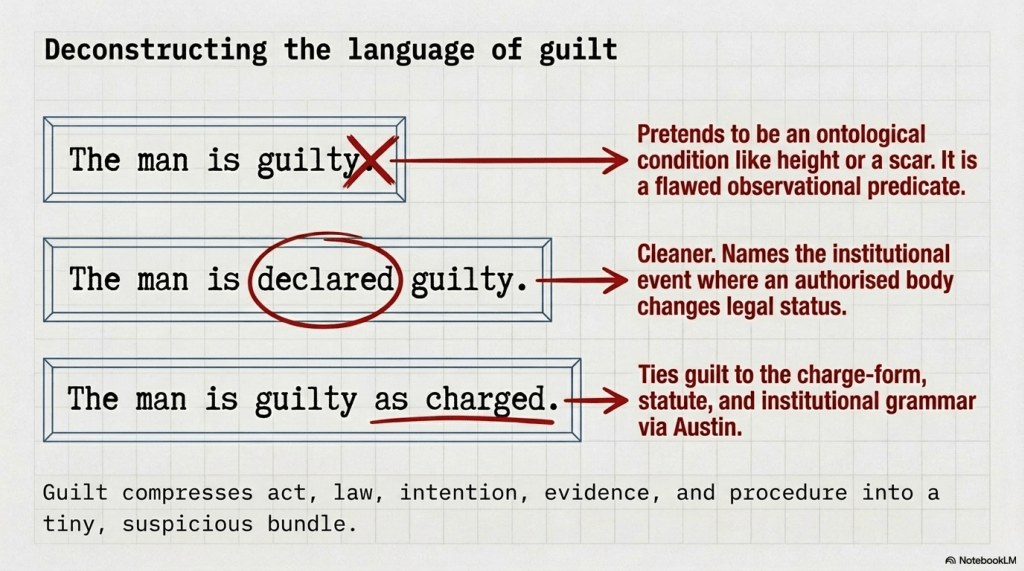
What disappointed me, then, was not simply that these hosts stumbled. Everyone stumbles with Nietzsche. It was that the stumbling seemed to be the content. No deep framework, no clear prior preparation, little tension between the readers, and scant engagement with the audience. The whole affair felt less like a serious encounter with Beyond Good and Evil than a performance of cultural literacy: a way of being seen near an important book.
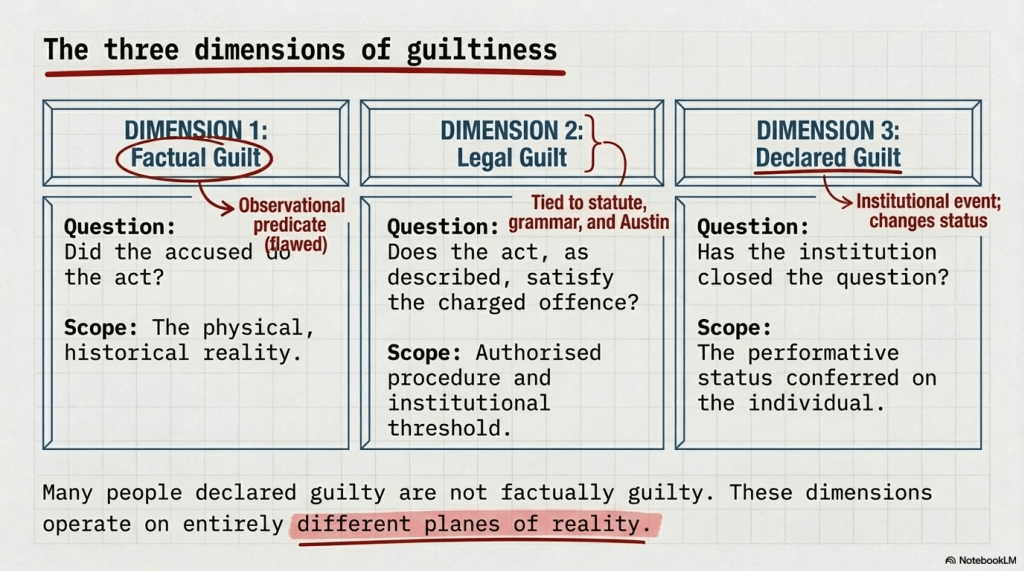
And perhaps that is the real irritation. One expects difficulty. One can even forgive error. What is harder to forgive is the peculiar modern tendency to make a spectacle of one’s underpreparedness and call it interpretation.


To be fair, I later learned that the co-host was not a philosopher by training but came from Literature. That in itself is no objection. Indeed, a pairing like that could have worked very well. Nietzsche is precisely the sort of writer who benefits from both conceptual and stylistic scrutiny. A philosopher can situate the argument, trace its targets, and identify the intellectual inheritance under pressure. A literary reader can pick up tone, irony, rhetorical staging, and the peculiar way Nietzsche so often performs thought rather than merely stating it.

The problem, then, was not the pairing but the execution. The session might have worked if both hosts had prepared properly and if each had leaned into his own strength. Instead, what emerged was a flatter sort of exchange, with the philosopher soliciting the literary co-host’s ‘opinion’ on semantic content as though interpretive adequacy were simply a matter of free-floating textual impressions. What was missing was any real division of labour, any methodological self-awareness, or any sense that different competences might illuminate different aspects of the text.

Art or Content

3–4 minutes

So glad I took time out to watch a short exchange between Rick Beato and Justin Hawkins on whether music is becoming content rather than art. The question is framed in musical terms, but it hardly stops there. The same corrosion is visible in writing, visual art, criticism, and now, with grim inevitability, in AI-mediated production more broadly. The disease is not confined to music. Music merely makes the symptoms easier to hear.

For music, my aversion to pop music goes back to my youth. I was a kid when the Beatles practically invented pop music, but they left it to grow and continued exploring. Sadly, as solo artists, they mainly – not always – failed and rested on their laurels in pop. It’s not that their version or any pop music is inherently unlistenable. Surely, it’s not, if only by the aspiration of the pop moniker, but it has no depth, no soul, as it were. Some make this argument for Organic food. In essence, it involves an appeal to nature fallacy.

Audio: Slightly off, but not bad, NotebookLM summary podcast of this topic.

My own aversion to much pop music begins there. It is not that pop is necessarily bad, nor even that it is always shallow. That would be too crude and too easy. The problem is that pop often presents itself less as an artistic act than as a consumption object engineered for immediate uptake: catchy, frictionless, emotionally legible, and just disposable enough to make room for the next one. It is built to circulate.

That, for me, is the difference between content and art. Art may be accessible, even popular, but it retains some residue that exceeds its delivery mechanism. It resists total reduction to utility. Content, by contrast, is made to be processed. It is optimised not for depth but for throughput. Its highest ambition is not transformation, but engagement.

This is why the question matters beyond music. Writing, too, now lives under the same pressure. One is increasingly expected to produce not essays, arguments, or works, but units of output: posts, threads, reactions, takes, summaries, explainers, and other forms of polished verbal debris. The point is no longer to say something worth dwelling on, but to remain visible within the churn.

The issue, then, is not simply whether one should consume AI-generated material. That framing is too pious and too easy. The more interesting question is what the consumer thinks they are consuming. If a reader, listener, or viewer wants only speed, familiarity, and surface competence, then AI content is not a scandal at all. It is the logical endpoint of a culture that has already demoted art into a deliverable.

This is where the fuss over labelling enters. Is it a principled demand for honesty, or merely a theatrical gesture by people who still want the aura of art whilst consuming content on industrial terms? Some of it is clearly protectionism. Some of it is virtue signalling. But not all of it is empty. The insistence on labelling betrays an intuition, however muddled, that authorship still matters, and that not all artefacts are equivalent merely because they occupy the same screen-space.

The deeper question is whether we still want art at all, or whether we merely want the aesthetic styling of art attached to things optimised for convenience. Once a culture learns to prefer seamless output over resistance, recognisability over risk, and quantity over form, it should not act surprised when machines begin to serve it perfectly. They are only completing a trajectory already chosen.

So no, the issue is not AI alone. AI is only the latest mirror held up to a public that has spent years confusing availability with value and polish with depth. The real question is not whether machines can make content. Plainly, they can. The question is whether we still possess the appetite, patience, and seriousness required for art.

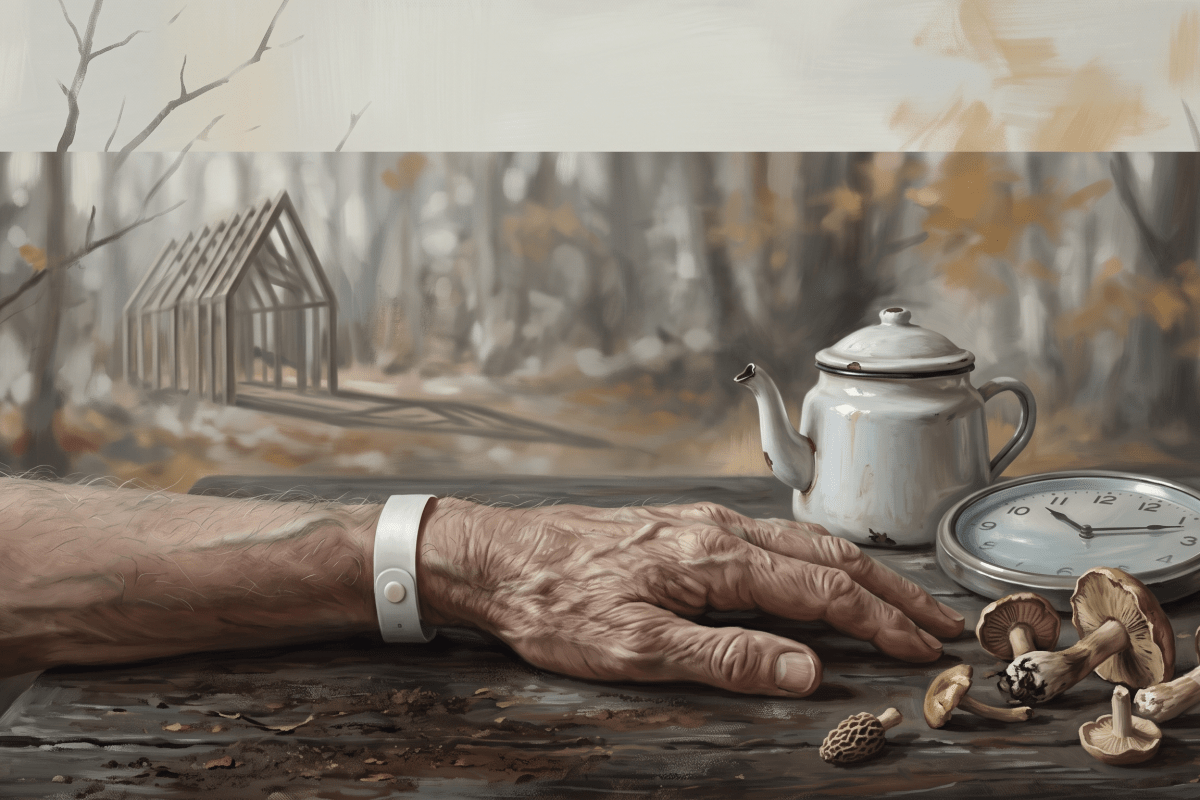
Image: Full image because the cover version is truncated. Generated by Gemini Nano Banana.

Meta of The Box

1–2 minutes

My attention has yet again been abducted by fiction, tentatively titled The Box, but this time it is (ever so slightly) different. A publisher mate suggested that no one reads nonfiction, and anyway, fiction sticks better because it captures both attention and salience; I decided, why not both? I wrote some perhaps esoteric but non-academic nonfiction and decided to convey at least some of this through literary speculative fiction.

Besides the obvious nod to MEOW and The Architecture of Encounter, the novella explores several philosophical concerns:

The first three are diagnostic. The fourth is operative. The fifth haunts the whole enterprise. None are cited in the text – readers will encounter them through the fiction rather than the sources, which is rather the point.

A generous reader might also find the story brushing against Lem’s Solaris, Bartlett’s work on memory as reconstruction, Kuhn on paradigm persistence, the Orpheus myth, and possibly Benjamin’s Angel of History – though I’m less certain which of these I invited and which simply showed up.

I don’t want to spoil the plot, but I wanted to share a post today, and this is where I am: somewhere in the middle of a first draft, trying to make a speculative premise carry philosophical weight without the reader feeling the load. It’s harder than nonfiction. It’s also more fun.

Celebration

1–2 minutes

It’s Easter Sunday as I type this, but the celebration is about the performance of my essays. Whilst the metric to consider is the number of citations, I need to be satisfied with the number of downloads for now. This will be a short post, so I can focus elsewhere, but I’ve been wanting to share these numbers for about a week, when I noticed I had hit 5K downloads.

I post my essays on two platforms, Zenodo and PhilPapers. I consider the latter to be more important. They may be syndicated elsewhere, but I don’t track these platforms. They should all resolve to Zenodo.

Altogether, my essays have been downloaded over 5,000 times (5.484).

On PhilPapers, the most popular essay with 509 downloads is Objectivity Is Illusion: An Operating Model of Social and Moral Reasoning, which also makes it the most popular across both platforms, at 585. That’s about 10 per cent of all of them, if you’re counting.

On Zenodo, the favourite appears to be Rational Ghosts: Why Enlightenment Democracy Was Built to Fail, at 132.

Were I to pick a personal favourite, I’d choose The Mediated Encounter Ontology of the World: A Relational Metaphysics Beyond Mind and World, though that has been significantly clarified, expanded, and extended in my monograph, The Architecture of Encounter: A Mediated Encounter Ontology.

NB: Downloading from both platforms is free, and documents can be viewed on Zenodo without downloading. In fact, there have been 3.574 views as of today, many of which have been downloaded. Coincidentally, the number of Zenodo platform downloads is 1066. If not for the date reference, I wouldn’t have even noted it. My next goal is to reach 5000 on PhilPapers. I’m at 4418, so hopefully soon.

They May Not Be Village Idiots

No post today, as I was drafting a long-form article that I felt was better suited for Substack.

Audio: NotebookLM summary podcast of the Substack topic.

It starts like this:

You’ve had the argument. Everyone has. You present evidence. Your interlocutor presents counter-evidence. You cite data. They cite different data – or the same data, read differently. Eventually, someone says something like how can you possibly believe that, and the conversation is effectively over, though the words might continue for another hour.

What’s left is the quiet conviction that the other person is either ignorant, stupid, or arguing in bad faith. Perhaps all three. And you can be certain they’re extending you precisely the same courtesy.

I want to suggest that something structurally different is going on – something that none of the usual explanations (media bubbles, declining education, algorithmic polarisation) quite reach. These explanations aren’t wrong, but they’re shallow. They describe accelerants. The thing they’re accelerating is more foundational.

The rest on Substack…


This essay draws on ideas developed more fully in The Architecture of EncounterA Language Insufficiency Hypothesis, and the Mediated Encounter Ontology of the World (MEOW) framework (also available in The Architecture of Encounter). Also check out When Language Fails. For the technically inclined or the morbidly curious, these provide the formal apparatus behind the claims sketched here.

When Syntax Is Asked to Bear Too Much v1.2

1–2 minutes

I published the first version of this essay in February, arguing that the Frege–Geach problem, that three-score-year-old albatross around expressivism’s neck rests on a category error. Analytic philosophers were polite about it in the way that analytic philosophers are polite about things they intend to ignore. I don’t often revise my manuscripts, opting instead to publish a new and improved version, but the meat of this one remained strong and not worth revisiting as much as fortifying.

The trouble was that I’d dissolved the problem without resolving it. Good enough for me. Others were less convinced. Telling people they’ve been asking the wrong question is satisfying but insufficient without a better one. Version 1.1 tidied the prose. Version 1.2 does the actual work.

The new section (§4, if you’ve already read previous versions) introduces recruitable expressions – a broader class of expressions (moral predicates, thick evaluative terms, epistemic and institutional vocabulary) whose full functional load is attenuated under embedding whilst a thinner inferential profile remains available for reasoning. The standard of practical inferential adequacy replaces the demand for semantic identity: what ordinary reasoning requires is not invariance but inferential sufficiency. And the pattern isn’t peculiar to moral language – a noted goal –, which means Frege–Geach stops looking like a special embarrassment for expressivism and starts looking like one symptom of a general feature of how natural language handles multi-functional expressions under logical stress.

The essay is dissolved as a demand for unrestricted semantic invariance. It is resolved insofar as the behaviour it identifies is explained, predicted, and shown to be general.

The revised paper is available here, near the rest of my manuscripts: DOI

Lastly, this essay is built on the foundations of A Language Insufficiency Hypothesis and The Architecture of Encounter, the latter of which wasn’t yet available for the initial publication.

As ever, I welcome the polite ignoring.

A Jellyfish Knows More About Time Than Your Physics Textbook

4–6 minutes

Disclosure: I shouldn’t have to apologise for two consecutive posts written by Claude – previous post on duration and time – this time about reframing a chat about time and duration around the hydrozoan jellyfish (sic. sea jelly). Yet again, this post arrives with a warning: if you don’t like AI-authored content, it’s not too late to turn back or click away.

Audio: NotebookLM summary podcast of this topic.

A hydrozoan jellyfish off the coast of Japan has no brain, no central nervous system, and no opinion about the block universe. It does, however, have something to teach us about the nature of time — and it’s more than most pop-science accounts manage.

Researchers recently described Clytia sp. IZ-D, a previously undocumented species of jellyfish that releases its gametes each evening with remarkable precision. The interesting part isn’t the precision. It’s what produces it.

Left to its own devices under constant light, the jellyfish spawns every 20 hours. Not 24. Twenty. It has its own autonomous developmental rhythm — oocytes growing, acquiring competence, reaching a threshold, and releasing. That rhythm belongs to the organism. It’s not borrowed from the environment. It’s not calibrated to the rotation of the Earth. It’s the jellyfish’s own tempo.

But place the jellyfish under a normal day-night cycle, and the 20-hour rhythm gets pulled into a 24-hour one. The daily light-dark transition doesn’t trigger spawning directly. It delays the autonomous cycle by several hours, dragging it into alignment with the environmental period. Sunrise resets the clock — not by starting it, but by holding it back. Under a standard 12-hour light cycle at 21°C, spawning occurs 14 hours after dawn. Every day. Synchronised across the population to within about 20 minutes.

The 24-hour cycle is not the jellyfish’s rhythm. It’s what happens when an external structure is imposed on it.

Now, you could read this as a charming piece of marine biology and move on. But if you’re paying attention, it’s a remarkably clean illustration of something that applies well beyond cnidarian reproduction.

The jellyfish has its own duration — a developmental tempo with no fixed metric. Under constant conditions, the cycle length shifts with temperature: 17 hours at 24°C, 22 hours at 18°C. There’s no intrinsic interval. The process has structure — oocyte growth, staged competence acquisition, threshold sensitivity — but it has no grid lines. No bar lines. No BPM.

The 24-hour day provides the grid. The light-dark cycle imposes intervallic structure on a process that doesn’t natively possess it. And the imposition works — it synchronises the population, coordinates male and female gamete release, and presumably improves reproductive success. The grid is useful. Indispensable, even.

But it’s not the organism’s time. It’s what the organism’s time looks like after the environment has had its way with it.

And here’s the part that matters philosophically. The imposition is imperfect. Individual oocytes within the same gonad don’t all reach maturation competence at the same moment. There’s a spread — 40 to 60 minutes under normal conditions, widening further under constant light. The grid says “now.” The biology says “roughly now, give or take, depending on which oocyte you’re asking.” The grid cannot fully resolve what it organises. There’s always a residue.

Under constant darkness, the residue takes over entirely. The autonomous rhythm reasserts itself, but without the entraining signal it becomes asynchronous. Different jellyfish spawn at different times. Different oocytes within the same jellyfish mature at different rates. The developmental process is still there — the structure is still there — but without the intervallic imposition, it doesn’t produce anything that looks like coordinated “time.” It produces duration doing what duration does when nobody is counting.

None of this requires a brain. None of it requires experience. None of it requires a subject who feels the passage of time. The jellyfish doesn’t experience the 24-hour cycle as given. It doesn’t experience anything, so far as we know. And that’s precisely what makes it useful as an illustration: it shows intervallic structuring operating at a purely material level, without any phenomenological overlay. The grid is imposed on the biology. The biology is not the grid.

Now scale up.

We do the same thing the light-dark cycle does to the jellyfish, except we do it to everything, and we do it to ourselves. We impose intervallic structure on duration — segmenting it, ordering it, metrising it — and then we mistake the structure for what it’s imposed on. We experience time as sequenced, directional, and measured, and we assume that’s what time is. Physics formalises the assumption into equations and discovers, to no one’s surprise, that the formalism is time-symmetric. And then pop science announces that time could therefore “go backwards” — which is exactly like saying that because the score reads the same in both directions, the music could be played in reverse.

The jellyfish knows better. Not because it’s clever, but because it’s simple enough that you can see the layers separately: the autonomous developmental duration, the environmental intervallic imposition, the imperfect entrainment, and the residue the grid can’t capture. In us, those layers are collapsed. We live inside the imposition and mistake it for the terrain.

The 24-hour day is a grid. A useful grid. An indispensable grid. But the jellyfish was doing something before the grid arrived, and it will go on doing something if the grid is removed. What it does without the grid doesn’t look like “time.” It looks like biology unfolding at its own pace, in its own structure, answerable to its own constraints.

That’s duration. And it was there before we started counting.

Why ProTools Knows More About Time Than Physics Does

Disclosure: This post was written by Claude after a chat about time and duration. As a musician emeritus, I suggested the connexion between free time, metred time, and the quantising of ProTools. This discussion occurred as I was talking through a more serious piece on duration and time as ontic versus phenomenological essences. Not wanting to divert my efforts too far, I asked Claude to summarise our chat for this blog post. If you don’t like AI-authored content, this is your opportunity to exit. As for the rest, Abandon All Hope Ye Who Enter Here.

Audio: NotebookLM summary podcast of this topic.

Musicians have been complaining about quantisation for decades. You record a performance — human, breathing, alive — and then the software snaps every note to the nearest grid point. The timing is “correct.” The feel is gone. Something was there and now it isn’t.

The standard explanation is that quantisation removes “feel” or “groove” — which is true but vague. What it actually removes is everything that falls between the intervals. The micro-deviations. The fractional push ahead of the beat, the slight drag behind it, the breath between phrases that doesn’t land on any grid division. These aren’t imprecisions. They’re the performance. Quantisation doesn’t tidy up the music; it overwrites it with a metrically perfect substitute and calls the result an improvement.

This is not a blog post about music production.

This is a blog post about time — and about the fact that the ProTools complaint is a precise, intuitive articulation of a philosophical problem that has been mishandled for over a century.

Here’s the short version. Duration — the actual temporal fabric of things — is something like free time in music. Not metrically structured, not divided into equal intervals, not indifferent to direction. Just: what’s happening, happening. Time, as we ordinarily understand it — clock time, measured time, the physicist’s time — is what you get when you impose intervallic structure on duration. Bar lines. A tempo marking. A grid.

The grid is useful. Indispensable, even. But it’s representational. It organises what’s there; it doesn’t discover what’s there. We no more find intervals in duration than we find bar lines in birdsong.

Now here’s where physics gets into trouble.

The equations of motion are time-symmetric. Run them forwards or backwards, they work either way. Pop science takes this and says: therefore time could, in principle, go backwards. Time travel! Reversed entropy! Christopher Nolan!

But this is exactly like saying: the score reads the same in both directions, therefore the music could be played backwards and remain the same music. It couldn’t. The score is the grid. The music is not the grid. The formal symmetry of the notation tells you something about the representational scheme. It tells you nothing about the direction of the performance.

Bergson saw half of this a century ago. He insisted that lived time — durée — is irreducible to the physicist’s spatialised coordinates. He was right. But he made his own version of the musician’s error: he confused free time with no time at all. Playing without a click track isn’t escaping metric structure. It’s still playing notes in sequence. Bergson thought philosophical intuition could recover duration as it actually is — but the feel of playing freely is still the feel of playing. It’s closer to the truth than the metronome is, but it’s not the truth itself.

Einstein, meanwhile, gave us the most sophisticated metronome ever built and then we all agreed the metronome was the music.

And ProTools? ProTools is what happens when you take the grid seriously enough to enforce it absolutely. Quantise everything. Snap every event to the nearest interval. And then notice — as every musician who has ever hit that button notices — that something real has been lost. Not a feeling. Not a subjective impression. Something that was in the sound is no longer in the sound.

That loss is the point. The grid cannot fully capture what it organises. There is always a residue — and the residue isn’t a flaw in the grid or a limitation of the technology. It’s a structural feature of any intervallic imposition on something continuous. The grid does real work. But the work it does is not the same as the thing it works on.

Time doesn’t go backwards. It doesn’t go forwards either. “Going” is what the grid gives you. Duration doesn’t go anywhere. It’s what’s already there before the grid arrives.

The musicians have known this all along. They just didn’t know it was philosophy.