Cold, Aliens, and the Grammar That Thinks It Knows Too Much

2–3 minutes

I shared this post not too long ago. Today, I shared it in a different context, but I feel is interesting – because I feel that many things are interesting, especially around language and communication.

It commenced here on Mastodon.
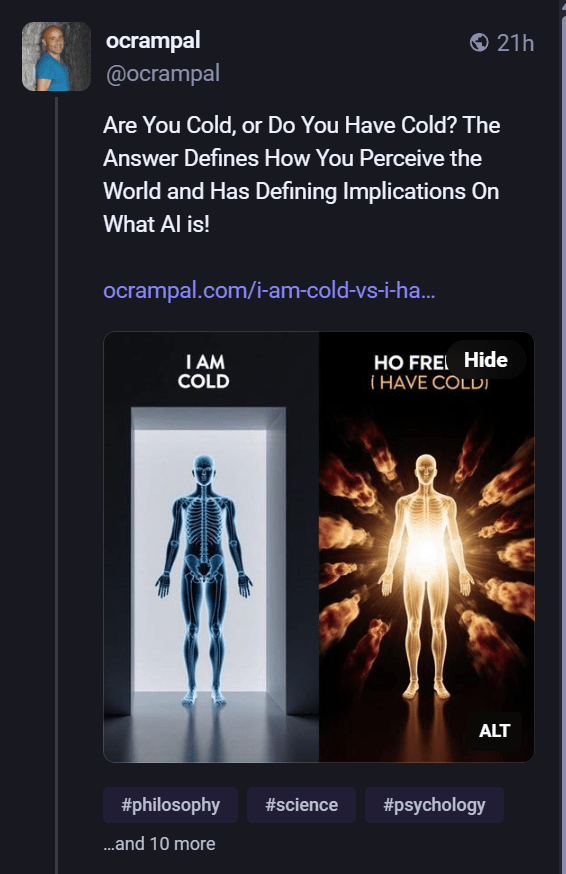
Ocrampal shared a link to an article debating whether we are cold or have cold. Different cultures express this differently. It’s short. Read it on his site.

Audio: Exceptional NotebookLM summary podcast of this topic.

I replied to the post:

Nicely observed. I’ve pondered this myself. Small linguistic tweak: between être and avoir, avoir already behaves better metaphysically, but sentir seems the cleanest fit. Cold isn’t something one is or has so much as something one senses — a relational encounter rather than an ontological state or possession.

Between having and being, having is the lesser sin — but sensing/feeling feels truer. Cold belongs to the world; we merely sense it.

He replied in turn:

Agree except for: “Cold belongs to the world”. That is a metaphysical assumption that has consequences …

Finally (perhaps, penultimately), I responded:

Yes, it does. That statement was idiomatic, to express that ‘cold’ is environmental; we can’t be it or possess it. Coincidentally, I recently wrote about ‘cold’ in a different context:

where I link back to the post at the top of this article.

A more verbose version of this response might have been:

And this is exactly the problem I gestured at in the aliens piece. We mistake familiar grammatical scaffolding for shared metaphysics. We assume that if the sentence parses cleanly, the ontology must be sound.

Language doesn’t just describe experience. It quietly files it into categories and then acts surprised when those categories start making demands.

Cold, like aliens, exposes the trick. The moment you slow down, the grammar starts to wobble. And that wobble is doing far more philosophical work than most of our declarative sentences are willing to admit.

Butler versus Butler (on a bed of Beauvoir)

2–3 minutes

I’ve been reading Octavia Butler’s Dawn and find myself restless. The book is often lauded as a classic of feminist science fiction, but I struggle with it. My problem isn’t with aliens, or even with science fiction tropes; it’s with the form itself, the Modernist project embedded in the genre, which insists on posing questions and then supplying answers, like a catechism for progress. Sci-Fi rarely leaves ambiguity alone; it instructs.

Find the companion piece on my Ridley Park blog.

Audio: NotebookLM podcast summarising this topic.

Beauvoir’s Ground

Simone de Beauvoir understood “woman” as the Other – defined in relation to men, consigned to roles of reproduction, care, and passivity. Her point was not that these roles were natural, but that they were imposed, and that liberation required stripping them away.

Octavia Butler’s Lilith

Lilith Iyapo, the protagonist of Dawn, should be radical. She is the first human awakened after Earth’s destruction, a Black woman given the impossible role of mediating between humans and aliens. Yet she is not allowed to resist her role so much as to embody it. She becomes the dutiful mother, the reluctant carer, the compliant negotiator. Butler’s narration frequently tells us what Lilith thinks and feels, as though to pre-empt the reader’s interpretation. She is less a character than an archetype: the “reasonable woman,” performing the script of liberal Western femininity circa the 1980s.

Judith Butler’s Lens

Judith Butler would have a field day with this. For her, gender is performative: not an essence but a repetition of norms. Agency, in her view, is never sovereign; it emerges, if at all, in the slippages of those repetitions. Read through this lens, Octavia Butler’s Lilith is not destabilising gender; she is repeating it almost too faithfully. The novel makes her into an allegory, a vessel for explaining and reassuring. She performs the role assigned and is praised for her compliance – which is precisely how power inscribes itself.

Why Sci-Fi Leaves Me Cold

This helps me understand why science fiction so often fails to resonate with me. The problem isn’t the speculative element; I like the idea of estrangement, of encountering the alien. The problem is the Modernist scaffolding that underwrites so much of the genre: the drive to solve problems, to instruct the reader, to present archetypes as universal stand-ins. I don’t identify with that project. I prefer literature that unsettles rather than reassures, that leaves questions open rather than connecting the dots.

So, Butler versus Butler on the bedrock of Beauvoir: one Butler scripting a woman into an archetype, another Butler reminding us that archetypes are scripts. And me, somewhere between them, realising that my discomfort with Dawn is not just with the book but with a genre that still carries the DNA of the very Modernism it sometimes claims to resist.

Ridley Park Propensity

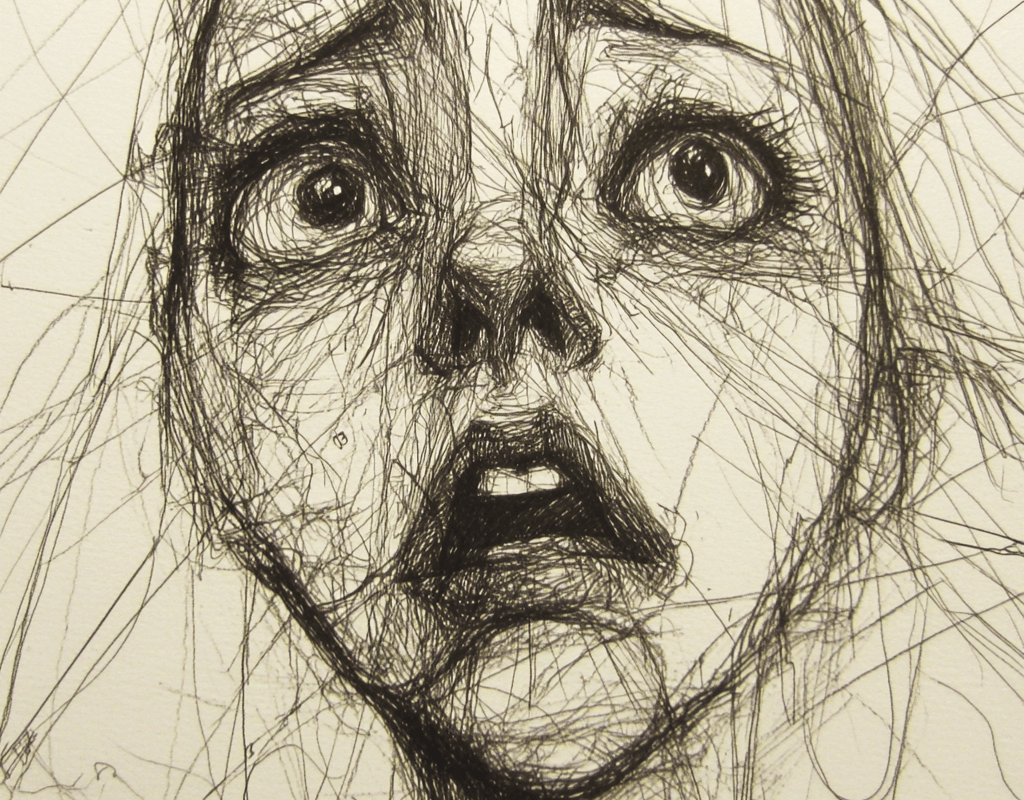
frantic woman, pen and ink

As some of you know, I publish speculative fiction under the name Ridley Park. Propensity is one of several recent releases – a novella that leans philosophical, brushes up against literary fiction, and steps quietly into the margins of sci-fi.

It’s not about spaceships or superintelligence. It’s about modulation.

About peace engineered through neurochemical compliance.

About the slow horror of obedience without belief, and the behavioural architecture that lets us think we’re still in control.

The ideas explored include:

  • Free will as illusion
  • Peace as compliance
  • Drift, echo, and the limits of modulation
  • Obedience without belief
  • Institutional horror and soft dystopia
  • Consent and behavioural control
  • Narrative as residue
  • Collapse by calibration

Though filed under speculative fiction, Propensity [US] is best read as a literary artefact – anti-sci-fi, in a sense. There’s no fetishisation of technology or progress. Just modulation, consequence, and the absence of noise.

This PDF contains selected visual excerpts from the physical book to accompany the free audiobook edition. For readers and listeners alike, it offers a glimpse into Ridley Park’s world – a quietly dystopian, clinically unsettling, and depressingly plausible one.

  • Title page
  • Copyrights page
  • Table of Contents
  • Chapter 10: Memorandum. This chapter is read in the audiobook. The inclusion here is for visualisation as it is rendered in the form of a memo.
  • Chapter 26: Simulacra. This chapter is read in the audiobook. The inclusion here is for visualisation as it is rendered in the format of a screenplay.
  • Chapter 28: Standard Test: This chapter is read in the audiobook. The inclusion here is for visualisation as it is rendered in the format of a standardised test.
  • Chapter 34: Calendar. This chapter is read in the audiobook. The inclusion here is for visualisation as it is rendered in the format of a calendar.
  • Chapter 39: Carnage. This chapter is read in the audiobook. The inclusion here is for visualisation as it is rendered in the form of a Dr Suess-type poem.
  • Chapter 41: Leviathan. This chapter is excerpted in the audiobook. The inclusion here is for visualisation as it is rendered with an image of the cover of Hobbes’ Leviathan and redacted page content.
  • Chapter 42: Ashes to Ashes. This chapter is read in the audiobook. The inclusion here is for visualisation as it is rendered in the form of text art.
  • Chapter 43: Unknown. A description of this chapter is read in the audiobook. The inclusion here is for visualisation as it is rendered in the form of an ink sketch.
  • Chapter 44: Vestige. A description of this chapter is read in the audiobook. The inclusion here is for visualisation as it is rendered in the form of text art.

For more information about Ridley Park’s Propensity, visit the website. I’ll be sharing content related to Propensity and my other publications. I’ll cross-post here when the material has a philosophical bent, which it almost always does.

Sustenance: A Book About Aliens, Language, and Everything You’re Getting Wrong

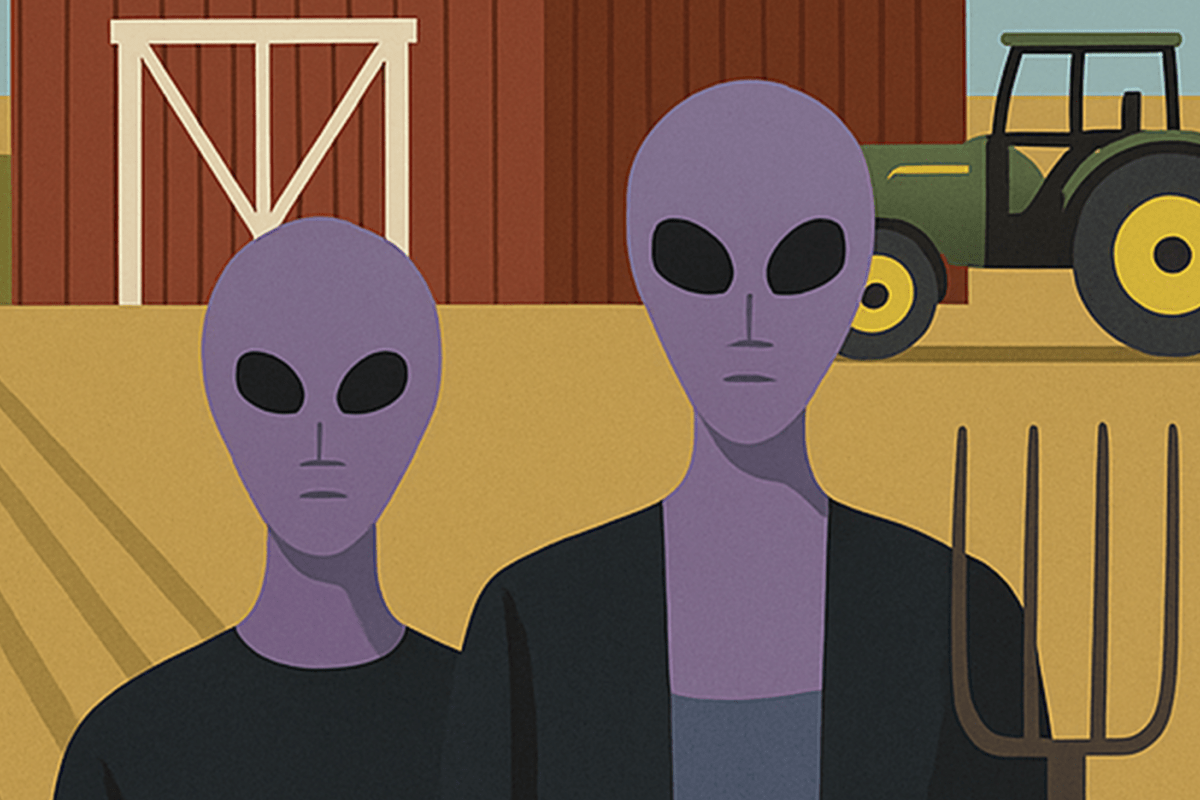
Violet aliens on a farm

So, I wrote a book and published it under Ridley Park, the pseudonym I use for fiction.

It has aliens. But don’t get excited—they’re not here to save us, probe us, or blow up the White House. They’re not even here for us.

Which is, frankly, the point.

Audio: NotebookLM podcast on this topic.

The book’s called Sustenance, and while it’s technically speculative fiction, it’s more about us than them. Or rather, it’s about how we can’t stop making everything about us—even when it shouldn’t be. Especially when it shouldn’t be.

Let’s talk themes. And yes, we’re using that word like academics do: as a smokescreen for saying uncomfortable things abstractly.

Language: The Original Scam

Language is the ultimate colonial tool. We call it communication, but it’s mostly projection. You speak. You hope. You assume. You superimpose meaning on other people like a cling film of your own ego.

Sustenance leans into this—not by showing a breakdown of communication, but by showing what happens when communication was never mutual in the first place. When the very idea of “meaning” has no purchase. It’s not about mishearing—it’s about misbeing.

Culture: A Meme You Were Born Into

Culture is the software you didn’t choose to install, and probably can’t uninstall. Most people treat it like a universal law—until they meet someone running a different OS. Cue confusion, arrogance, or violence.

The book explores what happens when cultural norms aren’t shared, and worse, aren’t even legible. Imagine trying to enforce property rights on beings who don’t understand “ownership.” It’s like trying to baptise a toaster.

Sex/Gender: You Keep Using Those Words…

One of the quiet joys of writing non-human characters is discarding human assumptions about sex and gender—and watching readers squirm.

What if sex wasn’t about power, pleasure, or identity? What if it was just a biological procedure, like cell division or pruning roses? Would you still be interested? Would you still moralise about it?

We love to believe our sex/gender constructs are inevitable. They’re not. They’re habits—often bad ones.

Consent: Your Framework Is Showing

Consent, as we use it, assumes mutual understanding, shared stakes, and equivalent agency. Remove any one of those and what’s left?

Sustenance doesn’t try to solve this—it just shows what happens when those assumptions fall apart. Spoiler: it’s not pretty, but it is honest.

Projection: The Mirror That Lies

Humans are deeply committed to anthropocentrism. If it walks like us, or flinches like us, it must be us. This is why we get so disoriented when faced with the truly alien: it won’t dance to our tune, and we’re left staring at ourselves in the funhouse mirror.

This isn’t a book about aliens.

It’s a book about the ways we refuse to see what’s not us.

Memory: The Autobiography of Your Justifications

Memory is not a record. It’s a defence attorney with a narrative license. We rewrite the past to make ourselves look consistent, or innocent, or right.

In Sustenance, memory acts less as a tether to truth and more as a sculpting tool—a way to carve guilt into something manageable. Something you can live with. Until you can’t.

In Summary: It’s Not About Them. It’s About You.

If that sounds bleak, good. It’s meant to.

But it’s also a warning: don’t get too comfortable in your own categories. They’re only universal until you meet someone who doesn’t share them.

Like I said, it’s not really about the aliens.

It’s about us.


If you enjoy fiction that’s more unsettling than escapist, more question than answer, you might be interested in Sustenance. It’s live on Kindle now for the cost of a regrettable coffee:

📘 Sustenance on Amazon US
Also available in the UK, DE, FR, ES, IT, NL, JP, BR, CA, MX, AU, and IN—because alienation is a universal language.

Reading Science Fiction

I’ve got a confession to make: Science Fiction as a genre doesn’t resonate with me. Neither does Fantasy. I enjoy some fiction, but it seems that it’s primarily Literary Fiction – old-school classics like Dostoyevsky, Tolstoy, Nabokov, Kafka, Barthelme, and the like. Mostly, I prefer non-fiction.

I’ve just finished reading William Gibson’s Neuromancer, having read The Peripheral at the end of last year. To be fair, someone recommended Neal Stephenson’s Snow Crash, which is in the same genre – cyberpunk. I’d been advised that Snow Crash is better written, but I thought it might be best to start at the start of that genre.

These writers have good ideas. It often sounds appealing when someone tells me the plot summary, but the details bore me to tears. When I read reviews of these books, I frequently hear how immersive they are, but to me, they are cluttered and chockablock with minutiae. I find myself prodding, “Just get to the point.” But there has to be more than this. Short stories may fare better. I liked Ursula K LeGuin’s The Ones Who Walk Away from Omelas, but that was more related to its philosophical, anti-utilitarian perspective rather than the story.

It’s not as if Dostoyevsky doesn’t circumlocute and pontificate, but it’s somehow different. I want to like it. I want to read it – first-hand, not just a summary, so I can feel that I’ve engaged with the material.

Over the years, I’ve been consoled by fans of the genre, who say, “I understand. What you need to read is” [fill in the blank]. I read Ender’s Game on this advice.

To be fair, Sci-Fi movies and television don’t resonate with me either. Star Wars? Nope. Star Trek? Nope. Firefly. No, again.

What people find amazing, I find trite. Often, there is some embedded Modernist morality that some view as profound. I roll my eyes. I cringe thinking of old Star Trek episodes about what makes humans so special.

I don’t tend to find movies or television very interesting in general. I’ve never owned a television. My partners always do. “But you watch streaming content,” you say, and you’d be correct. But I watch it on my own time and take a chance, if only to remain connected to contemporary trends.

My last engagement was Arcane on Netflix. I found Season One well done and entertaining, but I’m not sure Anime qualifies as Sci-Fi. I caught The Peripheral on Amazon a couple of months ago, which led me to the book, but they turned out to be different stories, though they were set in the same universe with (generally) the same characters.

Dune: Prophecy – Eugenics, Lies, and Weak CGI

So, you watched Dune: Prophecy episode 1 on HBO Max. Congratulations on your bravery. Let’s face it—Dune adaptations are a minefield. Remember David Lynch’s Dune? Of course, you do because it’s impossible to unsee Sting in that ridiculous winged codpiece. And whilst Denis Villeneuve’s recent entries managed to elevate the franchise from high-school drama club aesthetics to actual cinema, they also came dangerously close to being too good—almost like Dune took itself seriously.

And now, here we are, back on shaky ground with Dune: Prophecy. Sure, the first episode was watchable, despite some environmental CGI that looks like it came out of a Sims expansion pack. But this isn’t a film review channel, so let’s dive into the show’s actual content—or, as I like to call it, The Philosophy 101 Drinking Game.


Eugenics: Creepy, Even by Dune Standards

Ah, eugenics. Nothing screams cosy sci-fi night in like a narrative steeped in genetic elitism. The Bene Gesserit’s obsessive fixation on a “pure bloodline” takes centre stage, making you wonder if they’re auditioning for a dystopian version of Who Do You Think You Are?. Creepy is putting it mildly. It’s all very master race, but with better posture and less obvious moustaches.


Righteousness vs. Power: The Valya Harken Show

Valya Harken is an enigma—or perhaps just your classic power-hungry sociopath cloaked in the silky veil of duty. Is she righteous? Maybe. Is she using morality as a smokescreen for her own ambition? Absolutely. Watching her wrestle with her supposed “deontological duty” to the sisterhood is like watching a cat pretend it cares about knocking over your wine glass. Sure, it’s interesting, but it’s also patently obvious there’s an ulterior motive.

Her quest for power is unmistakable. But here’s the kicker: the sisterhood needs someone like her. Systems, after all, fight to survive, and Valya is just the ruthless gladiator they require. Whether her motives are noble or nefarious is irrelevant because survival trumps all in the Dune universe. Her arc underscores the show’s recurring obsession with false dichotomies—righteousness versus calculated ambition. It’s not “one or the other,” folks. It’s always both.


Progress as a Façade

Progress, Dune-style, is a beautifully brutal illusion. One group’s advancement always comes at another’s expense, a message that’s summed up perfectly by the episode’s pull quote: “Adversity Always Lies in the Path of Advancement.” In other words, progress is just oppression with better PR. It’s a meta-narrative as old as civilisation, and Dune leans into it with an almost smug glee.


Lies, Manipulation, and the Human Condition

If humanity’s greatest weapon is the lie, then the Bene Gesserit are armed to the teeth. For a group that claims to seek truth, they certainly have no qualms about spinning elaborate deceptions. Case in point: the mind games encapsulated by “You and I remember things differently.” It’s a phrase so loaded with gaslighting potential it should come with a trigger warning.

This manipulation isn’t just a tool; it’s the cornerstone of their ethos. Truth-seeking? Sure. But only if the “truth” serves their interests. It’s classic utilitarianism: the ends justify the means, even if those means involve rewriting history—or someone else’s memory.


Fatalism, Virtue Ethics, and the Inescapable Past

The Dune universe loves a good dose of fatalism, and Prophecy is no exception. The idea that “our past always finds us” is hammered home repeatedly as characters grapple with choices, bloodlines, and cultural memory. It’s as though everyone is permanently stuck in a Freudian therapy session, doomed to relive ancestral traumas ad infinitum. In this world, identity is less a personal construct and more a hand-me-down curse.


Self-Discipline and Sacrifice: The Dune Holy Grail

Finally, we come to self-discipline and sacrifice, the twin pillars of Dune’s moral framework. Whether voluntarily undertaken or brutally enforced, these themes dominate the narrative. It’s a trope as old as time, but it works because it’s relatable—who among us hasn’t sacrificed something important for an uncertain future? Of course, in Dune, that sacrifice usually involves something more dramatic than skipping dessert. Think more along the lines of betraying allies, murdering rivals, or, you know, manipulating an entire galaxy.


The Verdict

Dune: Prophecy has potential. It’s rich in philosophical musings, political intrigue, and that uniquely Dune blend of high drama and existential dread. Sure, the CGI needs work, and some of the dialogue could use an upgrade (how about less exposition, more nuance?), but there’s enough meat here to keep you chewing. Whether it evolves into something truly epic—or collapses under the weight of its own ambition—remains to be seen. Either way, it’s worth watching, if only to see how far humanity’s greatest weapon—the lie—can take the sisterhood.

Using AI to Decode Speech from Brain Activity

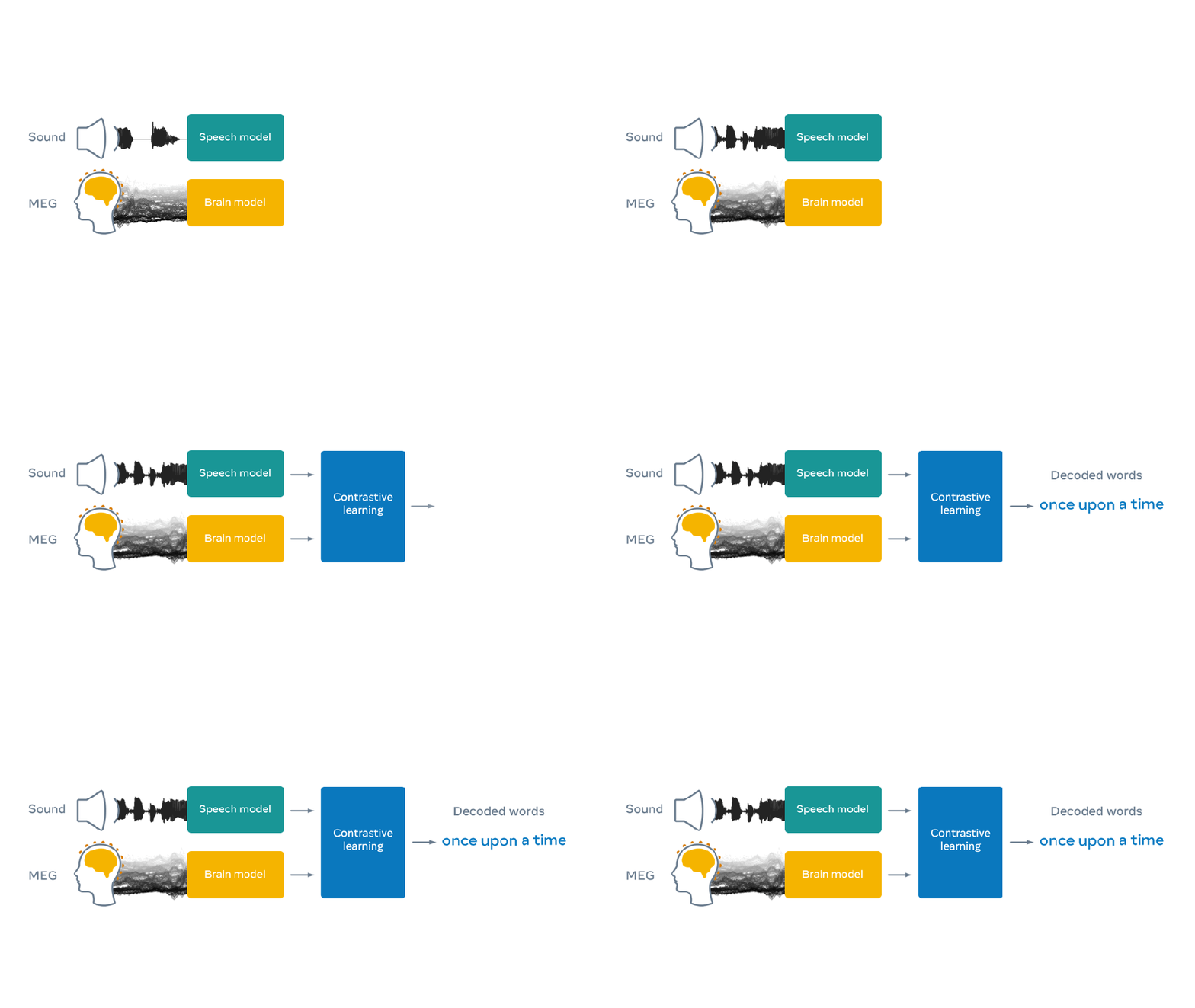
Apologies in advance for sharing PR hype from Meta (formerly known as Facebook),but I want to comment on the essence of the idea, which is using AI to decode speech from brain activity. It seems to imply that one would apply supervised machine learning to train a system to map speech to brain activity as illustrated by the image below.

Podcast: Audio rendition of this page content
To decode speech from noninvasive brain signals, we train a model with contrastive learning to align speech and its corresponding brain activity

The dataset would require the captured patterns of a large enough sample size. In this case, it appears to have been some 417 volunteers.

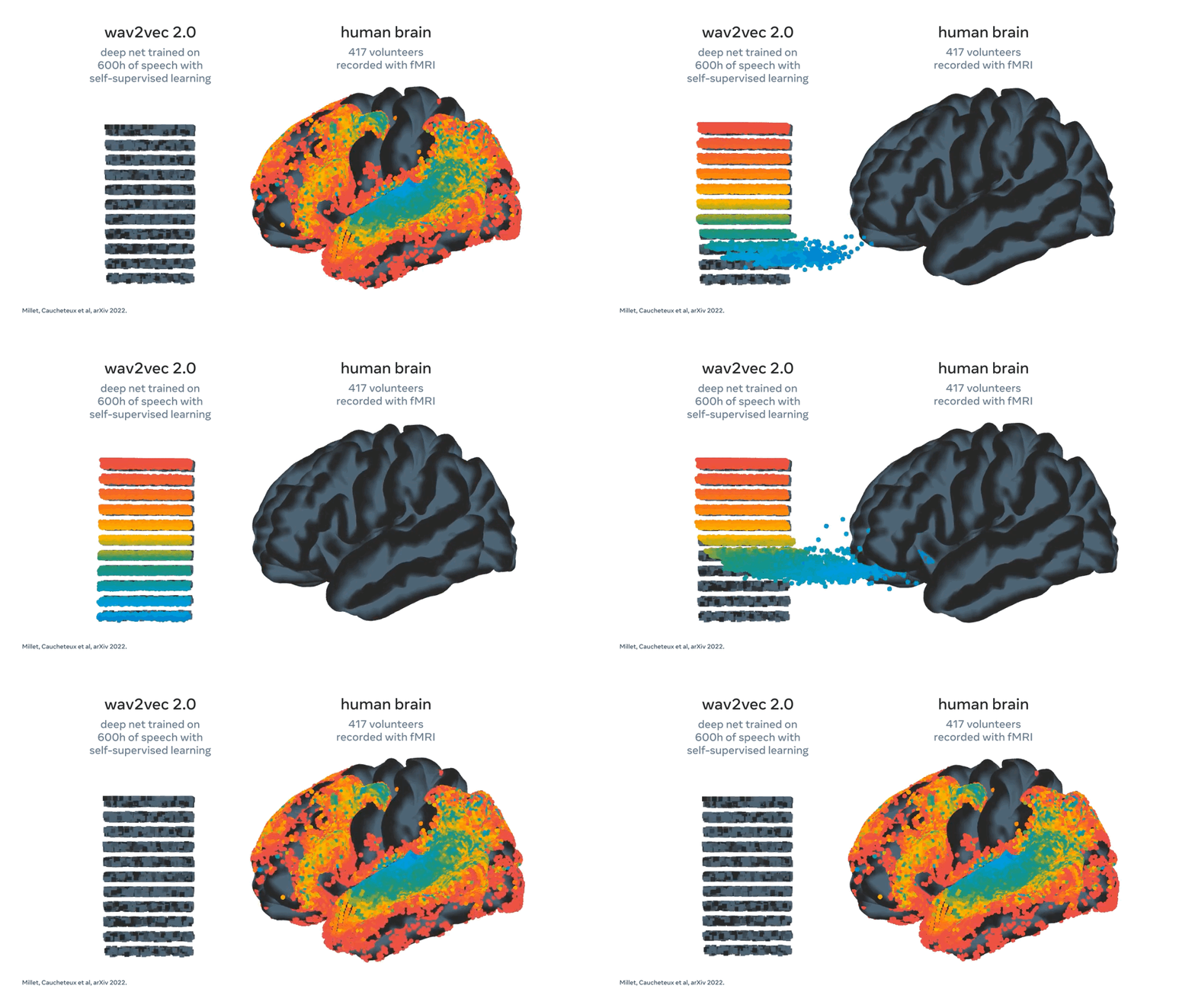
Activations of wav2vec 2.0 (left) map onto the brain (right) in response to the same speech sounds. The representations of the first layers of this algorithm (cool colours) map onto the early auditory cortex, whereas the deepest layers map onto high-level brain regions (e.g. prefrontal and parietal cortex).

This feels like it could have many commercial, consumer, and industrial uses including removing other human-computer interface devices, notably keyboards, but perhaps even mouses. Yes, I said mouses. Sue me.

Given hypotheses related to language and cognition, I am wondering what can be gleaned by mapping different multiple native language speakers to cognitive processes in order to remap them to speech output if it would be able to arrive at some common grammar that could then output a given thought stream into any known (and mapped) language, allowing for instantaneous “translation”.

Of course, a longer-term goal would be to skip the external devices and interface brain to brain. This sounds rogue science fiction scary, as one might imagine an external device trained on a brain to read its contents. One of the last things this world needs is to have to worry about neuro-rights and about being monitored for thought crimes. Come to think of it, isn’t there already a book on this? Nevermind. Probably not.

Technology is generally not inherently harmful or helpful, as that is determined by use. Humans do seem to tend toward the nefarious. Where do you think this will go? Leave a comment.