The question is reasonable, although belief may already be doing more work than I would permit it under cross-examination. My writing is generally diagnostic rather than doctrinal. I am more interested in identifying the architectural assumptions beneath a dispute than in selecting a furnished room within it. Where philosophy offers a contest between established positions, I often suspect that the arena itself has been badly designed.
Still, repeated diagnoses eventually disclose a pattern. Certain commitments recur: suspicion of substance, resistance to metaphysical inflation, distrust of linguistic confidence, rejection of moral realism, scepticism toward persistent personal identity, and an insistence that mediation does not entail fabrication.
What follows is therefore neither a creed nor a completed system. It is a provisional map of where I presently stand.
The labels are intended as coordinates, not allegiances. Where no established term quite fits, I have used my own. This is partly unavoidable and partly evidence for the very linguistic difficulty I spend so much time diagnosing.
This content, including video and podcast summary, are of a longer Substack article on my philosophical positions with descriptions.
As I continue to read Heidegger’s On the Essence of Truth, I feel compelled to share my musings. Avert your eyes if this doesn’t work for you, but don’t stop me if you’ve heard this one before.
Read the rest of the article there, or listen to the podcast.
Audio: NotebookLM summary podcast of this topic.
Below are some related NotebookLM images for the target topic.
Or: a brief field guide to the conceptual swamps I keep wandering into, despite civilisation’s repeated attempts to pave them over.
As I was updating my PhilPapers profile, I decided to ask (prompt?) my digital colleague, ChatGPT to create a glossary of terms relevant to my work and interests. Perhaps this has SEO value. It doesn’t appear to be in any particular order – just like life – and so it will remain that way. Please leave comments about em dashes and notable LLMisms below.
Audio: NotebookLM summary podcast of this topic.
Philosophy has the irritating habit of naming territories after the people who built fences around them. One begins by asking a fairly ordinary question — why do people keep disagreeing after the facts are settled? — and, sooner or later, someone informs you that you have wandered into metaethics, social ontology, philosophy of language, moral psychology, hermeneutics, political philosophy, or some other administratively sanctioned paddock of the great conceptual livestock farm.
This glossary is therefore not a syllabus, confession, or attempt to claim honorary residence in every department whose windows I have peered through. It is a map of the terms, fields, and adjacent concerns that recur across my work: the Language Insufficiency Hypothesis, the Architecture of Encounter, and my current project, The Architecture of Will. It is also a useful reminder that disciplines are often less like natural kinds than airport signage: helpful, directional, and faintly embarrassing when mistaken for geography.
NotebookLM Infographic on this topic.
Philosophy of Language
The study of how language means, fails, points, slips, distorts, coordinates, and occasionally performs the intellectual equivalent of falling down a staircase with a clipboard.
My interest is not chiefly in language as a transparent medium for thought, but in language as a structurally biased encoding system. Words do not simply carry meanings from one mind to another like well-behaved parcels. They compress, frame, prioritise, obscure, and smuggle in assumptions. Many philosophical problems begin when we treat grammar as though it were ontology: because a noun exists, we assume there must be a thing answering to it.
In my work, philosophy of language becomes the diagnostic centre from which many other disputes are reinterpreted. Moral language, political language, legal language, psychological language, and metaphysical language all depend on terms that remain useful long after their referential stability has expired.
Epistemology
Epistemology asks what knowledge is, how it is justified, and what distinguishes knowing from merely believing with good posture.
My concern is with mediated access: the fact that whatever we call knowledge is routed through perception, cognition, language, culture, inherited categories, institutional practices, and power. This does not mean truth is imaginary or that anything goes. That tedious little slogan should be retired and buried under a car park. It means that access to reality is always structured, filtered, and constrained.
Knowledge, on this view, is less a pristine correspondence between mind and world than a stabilised achievement under conditions of mediation. We know enough to function, to build bridges, to poison ourselves predictably, to disagree meaningfully, and to sustain institutions. But we do not know from nowhere.
Metaethics
Metaethics asks what moral claims are doing before everyone starts shouting about which ones are correct.
Are moral claims true or false? Do they express facts, attitudes, prescriptions, social commitments, emotional reactions, or something more inconvenient? My own orientation is non-cognitivist: I am sceptical that moral utterances report mind-independent moral furniture. Moral language looks less like description and more like action-authorising expression, salience-marking, coordination, condemnation, alignment, and pressure.
This does not make morality trivial. Quite the opposite. It makes moral discourse socially potent precisely because it is not merely descriptive. Moral language does things. It binds, excludes, licenses, condemns, absolves, and mobilises. The mistake is treating this performative force as though it were evidence of metaphysical depth.
Moral Psychology
Moral psychology studies how human beings actually make moral judgments, which is already impolite, since most humans prefer to imagine they reason first and rationalise never.
My interest lies in the pre-verbal and affective structure of moral salience. People do not simply encounter neutral facts and then calmly apply moral principles. They register threat, harm, impurity, authority, betrayal, autonomy, dignity, and violation through inherited orientations before reasons are narrated. The reasons matter, but they often arrive after the salience has already fired.
This is why many moral disputes persist even after factual clarification. The problem is not always ignorance. Sometimes the parties inhabit different moral architectures, and language is dragged in afterwards to pretend that one more definition might save the day.
Philosophy of Action
Philosophy of action asks what it means to act, intend, choose, decide, deliberate, and be responsible for what follows. It is where verbs go to be embalmed as nouns.
My current project, The Architecture of Will, belongs here, though it approaches the field diagnostically. I am interested in the will-family: will, volition, intent, motive, choice, and decision. These terms appear to name inward sources of action, but often function as compressed summaries of downstream patterns: conduct, hesitation, avowal, retrospective narration, institutional interpretation, and practical uptake.
The core suspicion is that these terms begin as practical handles and are later misrecognised as hidden authoring sources. The deed is observed, interpreted, compressed into a noun, and then that noun is treated as though it caused the deed. Human beings, naturally, decided this was a solid foundation for punishment. The species continues to be ambitious.
Free Will
Free will is the grand ancestral muddle in which metaphysics, theology, law, blame, self-flattery, and administrative convenience hold hands in a burning building.
My work does not primarily try to solve the traditional free-will debate. I am less interested in proving determinism, libertarianism, compatibilism, or hard incompatibilism than in asking why the vocabulary of will acquired such institutional authority in the first place. The question is not simply whether the will is free. It is whether the term will names anything stable enough to bear the moral and juridical burdens placed upon it.
The suspicion is that the will survives not because it has been discovered, but because too many practices require something like it to be presumed.
Responsibility
Responsibility is one of the great Contestables: indispensable, unstable, and always wearing shoes too polished for the terrain.
It can mean causal involvement, role obligation, answerability, accountability, liability, blameworthiness, reparative duty, or desert. These senses are routinely collapsed into one another, allowing institutions and moral cultures to slide from you were involved to you must answer to you deserve suffering with suspicious fluency.
My interest is in prising these apart. A person may be involved in an event, answerable within a relationship, subject to constraint, or appropriate for treatment without thereby becoming the metaphysical author required by retributive desert. Responsibility may remain useful, but only if we stop pretending it is one thing.
Philosophy of Law
Philosophy of law examines law’s concepts, justifications, authority, and interpretive machinery. It is where society dresses power in Latin and asks everyone to admire the tailoring.
My concern is with legal language as institutional compression. Law cannot wait for perfect concepts. It must decide. Terms such as intent, reasonableness, harm, consent, obscenity, negligence, culpability, and responsibility are not stable objects discovered in the world. They are administrable handles used to convert messy human reality into determinate outcomes.
This does not mean law is useless. It means law is a singularity machine: it collapses plural meanings into enforceable decisions. Procedure may dampen variance; it does not eliminate ontological plurality.
Political Philosophy
Political philosophy asks how power should be organised, justified, constrained, distributed, disguised, or ritualistically congratulated for existing.
My work approaches political philosophy through legitimacy, authority, autonomy, co-authorship, institutional maintenance, and the failures of liberal proceduralism. I am especially interested in the point at which Enlightenment political vocabulary begins to wobble: freedom, equality, autonomy, rights, justice, consent, representation, progress.
These terms are not meaningless, but neither are they stable invariants. They coordinate action because people can gather around them, but they fracture because people do not gather around the same thing. Political conflict is often not a disagreement inside shared concepts, but a collision between different ontological grammars using the same words.
Social Ontology
Social ontology asks what social things are: institutions, roles, money, borders, laws, offices, marriages, identities, statuses, and other collective hallucinations with enforcement budgets.
My interest is in institutions as second-order constraint systems. They stabilise behaviour by imposing categories, procedures, incentives, sanctions, and recognisable pathways of action. They are not merely ideas, and they are not simply physical objects. They are structured practices that persist because people, documents, buildings, technologies, habits, and power keep reproducing them.
Social reality is therefore neither imaginary nor naturally given. It is maintained. This matters because the maintenance work often disappears beneath the language of objectivity, neutrality, or inevitability.
Ontological Pluralism
Ontological pluralism is the view that people do not merely disagree about facts or values; they may inhabit different structures of salience, relevance, legitimacy, harm, authority, and reality itself.
This is central to my work. Many conflicts persist because participants are not simply making different claims within the same world-picture. They are operating from different ontological orientations. One person sees state violence where another sees order. One sees autonomy where another sees abandonment. One sees justice where another sees humiliation. The shared word conceals an unshared world.
Ontological pluralism does not mean every orientation is equally good, harmless, or coherent. It means disagreement often begins deeper than argument admits.
Incommensurability
Incommensurability names the condition in which competing frameworks cannot be fully translated into one another without loss.
This matters because modern discourse is addicted to the fantasy that enough dialogue will eventually produce convergence. Sometimes it will. Sometimes people are merely confused, misinformed, or performing stupidity for tribal applause. But in harder cases, the translation itself fails. The concepts do not line up. The saliences do not register. The terms arrive carrying incompatible worlds.
Incommensurability is not silence. It is structured misregistration. People may speak fluently and still fail to meet.
Hermeneutics
Hermeneutics concerns interpretation: how meanings are formed, inherited, transmitted, distorted, and revised.
I use hermeneutic concerns less as a reverent tradition than as a reminder that nobody interprets from a vacuum. We inherit prejudices in Gadamer’s sense: prior orientations that make understanding possible before they make it questionable. Interpretation is not the secondary act of a detached subject. It is the condition under which anything becomes intelligible at all.
This connects directly to ontological grammar. We do not first encounter raw reality and then interpret it. Interpretation is already in the encounter. The world arrives pre-sorted by histories we did not author and categories we rarely inspect.
Conceptual Engineering
Conceptual engineering asks whether we should revise, replace, improve, or abandon the concepts we use.
I am sympathetic to its diagnostic impulse but wary of its repair fantasy. Not every broken concept needs a shinier successor. Some concepts should be dis-integrated: taken apart so that their hidden operations become visible, without immediately pretending we can rebuild them better. Philosophy has enough contractors. Occasionally, what one needs is demolition with a conscience.
This is where my own term Dis-Integrationism enters. It is not destruction for sport. It is the refusal to treat conceptual breakdown as an automatic invitation to reconstruction. Sometimes the most honest intellectual act is to leave the rubble labelled.
Critique of Enlightenment Rationalism
By Enlightenment rationalism I mean the broad confidence that reason, clarity, classification, procedure, and progress can discipline human life into increasingly coherent order.
My work is not anti-reason in the toddler-with-a-matchstick sense. Reason is useful. So are maps, knives, antibiotics, and chairs. The problem begins when reason imagines itself unconditioned, neutral, universal, and sufficient. Enlightenment vocabularies often mistake procedural clarity for conceptual adequacy and institutional legibility for truth.
The critique is not that modernity failed because it was too rational. It is that it repeatedly overestimated what rationalisation could stabilise.
Autonomy
Autonomy is usually treated as self-rule, independence, or the capacity to author one’s own life. It is also one of modernity’s favourite decorative masks.
My interest is in autonomy as a fiction with consequences. Persons are never self-originating. They are formed through dependence, language, institutions, bodies, histories, injuries, affordances, and constraints. Yet liberal moral and political orders often require autonomy to function as though individuals were cleanly bounded authors of preference, choice, consent, and responsibility.
Autonomy may remain useful as a political safeguard or ethical aspiration. It becomes dangerous when treated as a metaphysical description of the human animal.
Agency
Agency names the capacity to act, intervene, respond, initiate, or alter a field of possibilities.
My approach is deflationary. Agency need not be imagined as a mysterious inner power belonging to a sovereign subject. It can be understood as patterned responsiveness within constraints. Agents do not float above the world, issuing commands from an immaculate interior chamber. They are situated, mediated, scaffolded, interrupted, trained, and compelled.
This does not make agency unreal. It makes it less theatrical. An agent is not a tiny monarch inside the skull. The sooner philosophy stops smuggling monarchy into psychology, the better for everyone, skulls included.
Objectivity
Objectivity is often imagined as the view from nowhere: reality scrubbed clean of position, interest, embodiment, and history.
I prefer a more modest account. Objectivity is not the absence of position, because there is no such absence available to finite creatures. It is a disciplined relation between positions, constraints, methods, and convergences. What matters is not whether one has escaped mediation, but whether one has accounted for it well enough to produce stable, corrigible, cross-perspectival claims.
Objectivity is therefore not magic neutrality. It is an achievement under constraint. The view from nowhere is a lovely phrase, but the actual creature saying it is still standing somewhere, usually on a grant application.
Normativity
Normativity concerns oughts, reasons, rules, obligations, permissions, ideals, and standards: the whole bustling marketplace of what should be the case, according to creatures who cannot agree what case they are in.
My work treats normativity as real in practice but not necessarily as metaphysically deep in the realist sense. Normative claims organise conduct. They express commitments, mark salience, stabilise expectations, and authorise responses. They are not reducible to mere noise, preference, or mood, but neither must they be inflated into eternal furniture.
The question is not whether normativity matters. It plainly does. The question is what kind of thing it is, and whether the grammar of moral seriousness has tricked us into mistaking social force for ontological depth.
Power and Institutions
Power is not merely corruption, domination, or the villain entering in a black cape after pure reason has done its best. Power is constitutive. It stabilises meanings, enforces categories, selects outcomes, and keeps institutions from dissolving into interpretive vapour.
Institutions depend on power because language underdetermines action. When terms such as justice, responsibility, harm, reasonableness, and freedom fail to secure convergence, institutions must still act. They select, enforce, punish, recognise, exclude, and maintain. Power does not resolve the underlying conceptual instability. It pauses it, contains it, and makes social coordination possible for another day.
This is why I often prefer maintenance to resolution. Resolution promises final settlement. Maintenance admits that some conflicts cannot be solved without pretending the plurality has vanished. A mature institution does not abolish fracture. It learns how not to let the fracture become catastrophic.
The Language Insufficiency Hypothesis
The Language Insufficiency Hypothesis is the claim that language’s effectiveness declines as conceptual complexity increases.
At one end of the gradient are relatively stable terms: chairs, spoons, dogs, measurable objects, operationally fixed references. At the other are terms that collapse into metaphor, silence, paradox, or awe. Between them sit the terms that cause most of the trouble: justice, freedom, consciousness, responsibility, harm, autonomy, will. These are usable enough to organise life and unstable enough to generate permanent dispute.
The point is not that language never works. That would be stupid, and there is already enough competition in that market. The point is that language works unevenly, and we do immense damage by pretending its success in simple cases transfers automatically to moral, political, legal, and metaphysical abstraction.
Invariants, Contestables, Fluids, and Ineffables
These are the regions of the Effectiveness–Complexity Gradient.
Invariants are terms with high practical stability. They are not metaphysically perfect, because nothing fun is ever that easy, but they function reliably enough for ordinary coordination.
Contestables are terms whose meanings are socially and institutionally fought over: justice, legitimacy, reasonableness, harm, responsibility. They support disagreement precisely because they are shared enough to matter and unstable enough to resist closure.
Fluids are terms whose meanings drift across domains: consciousness, intelligence, agency, identity. Clarification often multiplies ambiguity rather than reducing it.
Ineffables are where language reaches its limit: grief, awe, mystical experience, radical alterity, some forms of pain, and perhaps the felt interiority of another life. Here language does not stop being useful, but it stops pretending to be adequate.
Ontological Grammar
Ontological grammar is the tendency of linguistic structure to install metaphysical assumptions before argument begins.
A noun invites us to imagine a thing. A subject-predicate structure invites us to imagine a bearer with properties. A verb can be converted into a nominalised object. A process becomes an entity. A relation becomes a possession. A practical summary becomes an inner faculty. This is not mere rhetoric. It is the machinery by which philosophy repeatedly mistakes grammatical convenience for ontological discovery.
Ontological grammar is one of the central irritants running through my work. It explains why so many philosophical problems seem profound only because the sentence structure has already rigged the room.
The Architecture of Encounter
The Architecture of Encounter is my broader metaphysical framework. Its central move is to treat encounter-events, rather than substances, subjects, or objects, as primitive.
On this view, mind and world are not two separate domains that later require a bridge. They are abstractions drawn from structured encounter. Mediation is not a veil blocking access to reality; it is the condition under which reality is encountered at all. Constraint, resistance, salience, affordance, perception, and language all belong inside the architecture of encounter rather than outside it.
This framework is realist, but not naïvely so. Reality pushes back. But it never arrives unmediated, unstructured, or free from the conditions under which it can be encountered.
The Architecture of Will
The Architecture of Will is my current project: a diagnostic genealogy of the will-family.
It examines will, volition, intent, motive, choice, and decision as terms that appear to name inward authoring sources but often function as compressed summaries of downstream action-patterns. The central concept is authoring displacement: the two-stage process by which a practical summary is converted into an apparent source.
First, a pattern of conduct, hesitation, avowal, interpretation, and uptake is compressed into a noun. Second, that noun is grammatically inverted and treated as though it caused the very pattern from which it was abstracted. This matters most in retributive contexts, where institutions need inward authors in order to make punishment appear deserved rather than merely useful.
The project does not deny deliberation, regret, or practical responsibility. It denies that the nouns we use for these phenomena have earned the metaphysical authority required to ground deserved suffering.
Dis-Integrationism
Dis-Integrationism is my name for a method of taking apart inherited conceptual machinery without the pious obligation to rebuild it immediately.
It is adjacent to deconstruction, but less enchanted by textual mystique and more willing to leave the broken mechanism on the table with a label attached. Its point is diagnostic exposure: to show where a concept derives its authority, what it hides, what institutional labour it performs, and why its apparent coherence may depend on suppressing its own conditions of operation.
Dis-Integrationism is not nihilism. It is maintenance against false repair. Some structures should be rebuilt. Some should be abandoned. Some should be kept only with warning signs bolted to them.
This glossary is not a complete taxonomy. It is a working map of recurring concerns: language and its insufficiencies; knowledge under mediation; moral judgment without metaphysical inflation; institutions as systems of compression and power; autonomy and agency as useful fictions; objectivity without the fantasy of nowhere; and the will-family as the latest site where grammar, law, and moral appetite have mistaken a noun for a hidden source.
The common thread is simple enough, though simple things are often the first victims of professional vocabulary. Human beings inherit terms, build institutions around them, forget their contingency, and then call the result reality. My work tries to interrupt that sequence before the noun becomes a shrine.
Not to abolish language. Not to end moral life. Not to sneer from outside the ruins. There is no outside, and sneering is already over-subscribed.
The aim is more modest and more corrosive: to notice where our words still work, where they fail, where power has been recruited to hide the failure, and where the demand for resolution has become part of the damage.
My Language Insufficiency Hypothesis is finished, the cover is designed, and everything is in order for a January 2026 release – save for one administrative detail: the ISBN. I expect this to be resolved presently. The Bowker distribution system in the US appears to have been set up circa 1997, and that’s just the web interface. Who knows how long the database has been in place? I’d bet circa 1955. Most countries provide ISBNs for free. Not the US. Kinda bollox. Meantime, I’ve now got three lenses through which to inspect the world.
[EDIT: ISBN issue has been resolved. I am awaiting a proof copy that should be arriving today.]
From the outside, some of my recent work can look untidy. A hypothesis about language. An ontology about mediated encounters. A paper on why moral disagreement refuses to resolve itself politely. No master theory. No clean ladder. No promised synthesis at the end. This is not an accident. It is a refusal.
What links the Language Insufficiency Hypothesis (LIH), the Mediated Encounter Ontology of the World (MEOW), and Disagreement Without Referees is not a shared doctrine, but a shared function. They are lenses, not foundations. Diagnostics, not blueprints. Each takes aim at a different site where Enlightenment habits quietly overpromise – meaning, access, adjudication – and shows what breaks when we stop pretending those promises were ever cashable. They form a family. Not a system. And certainly not a programme for rebuilding.
Three Lenses, Three Failure Sites
Each of these frameworks operates at a different level, but they all do the same kind of work: they explain why something we rely on feels indispensable, fails repeatedly, and yet stubbornly survives.
LIH operates at the linguistic level.
It asks why language fails precisely where we expect it to secure clarity, precision, or consensus. Its answer is unromantic: language is not uniformly capable. As we move from invariants to contestables to fluids and ineffables, its representational power degrades. The failure mode is familiar: we mistake grammatical stability for ontological stability, and then act surprised when disagreement hardens rather than dissolves.
MEOW operates at the ontological level.
It asks what kind of ‘world’ we are actually dealing with once we abandon the fantasy of unmediated access. There is no clean mind–world interface, no privileged vantage point. Every encounter is mediated – biologically, cognitively, linguistically, socially. Realism and idealism alike fail here, each clinging to a different myth of access. What remains is not scepticism, but constraint.
Disagreement Without Referees operates at the normative and political level.
It asks why moral and political disagreement persists even when all parties appear informed, sincere, and articulate. The answer is ontological incommensurability. Where frameworks do not overlap, there are no neutral referees. Argument does not converge because it cannot. What remains is persuasion, coalition, power, and consequence—moral life without an umpire.
None of these lenses replaces what it critiques. Each refuses the repair instinct that says: if we just fix the model, the system will work again. That instinct is the pathology.
What They Share (And What They Don’t)
What unites these lenses is not a set of positive claims about how the world really is. It is a shared posture:
no privileged access
no neutral ground
no final adjudication
no redemptive synthesis
But also:
no quietism
no nihilism
no ‘anything goes’
no abdication of responsibility
They do not tell you what to believe. They tell you why believing harder won’t save you.
Importantly, they are non-hierarchical. LIH does not ground MEOW. MEOW does not explain away disagreement. Disagreement does not ‘apply’ LIH in some linear fashion. They intersect. They overlap. They illuminate different failure modes of the same inherited fantasy: that there must be a place where things finally settle. There isn’t.
Image: Three Diagnostic Lenses Infographic¹
Why This Is Not a System
Systems promise closure. These lenses do not. They explain why closure is repeatedly promised, urgently demanded, and reliably missed. To systematise them would be to betray them.
What they offer instead is a kind of intellectual hygiene: a way of recognising when we are asking language, reality, or morality to do work they were never capable of doing – and then blaming one another when they don’t comply.
If there is a unifying thread, it is this:the demand for foundations is itself the problem.² These lenses do not solve that problem. They show you where it operates, how it reproduces itself, and why refusing it feels so uncomfortable. That discomfort is the point.
Footnotes
This is another NotebookLM infographic – my second. It’s not half-bad. I had to adjust some elements in Photoshop and Illustrator, and there are still textual anomalies, but all in all, I’m impressed with what 60 seconds of generation yielded – along with a 5-minute prompt and 15 minutes of touchup. It’s just a novelty for now – certainly not necessary. What do you think?
I am a philosopher of language. That is typically my primary perspective, so communication and limitations often fall into my sights. I believe that not all disagreements can be resolved through language communication. This illustrates one barrier in particular.
This essay is not an attempt to resolve disagreement, adjudicate truth, or reconcile competing worldviews. It is an attempt to explain why so many disagreements persist despite intelligence, good faith, and shared vocabulary – and why escalating those disagreements often makes them worse rather than better.
What follows is diagnostic rather than prescriptive. I am less interested in who is right than in why arguments so often fail to converge, and why those failures are routinely misinterpreted as moral defects rather than structural mismatches. The claim is not that ‘anything goes’, nor that all perspectives are equally valid, but that many disputes operate across ontological fault lines that no amount of better reasoning, evidence, or civility can bridge on their own terms.
Recognising this does not require abandoning one’s commitments. It requires abandoning the fantasy that every disagreement is corrigible and that persuasion is always the appropriate response to difference. If the essay succeeds, it will not produce consensus. It may, however, produce a little more clarity, a little less moral theatre, and a slightly more disciplined form of charity – one grounded not in agreement, but in an honest appraisal of where disagreement actually lives.
Audio: NotebookLM summary podcast of this content.
On Ontological Incommensurability and the Case for Civilised Disagreement
Most disagreements that metastasise into moral theatre are not disagreements at all. They are collisions between incompatible ontologies, misdiagnosed as differences of opinion.
This assumption is not merely optimistic. It’s wrong.
We continue to behave as though all disputes take place on a shared stage called “reality,” where facts sit patiently waiting to be interpreted, weighed, or refuted. From this perspective, disagreement is assumed to be corrigible. If only one side listened harder, reasoned better, or acquired the right evidence, convergence would follow. This assumption is not merely optimistic. It is wrong.
Many of our most entrenched conflicts persist precisely because the parties involved do not inhabit the same world in any substantive sense. They operate with different background assumptions about what exists, what counts as real, what can ground truth, and what sorts of things are even eligible for belief. Argument, in such cases, does not fail due to bad faith or insufficient charity. It fails because it presumes a shared ontology that does not exist.
Before proceeding, a clarification. I am using ontology here in a deliberately broad, working sense. Not merely as an inventory of what exists, but as the background framework that determines what can count as real, meaningful, or normatively binding in the first place. This inevitably overlaps with epistemology, ethics, and theories of agency. Not because these domains are identical, but because in lived discourse they travel together. The fault line I am describing is not disciplinary. It is structural.
Video: Two people in ontological bubbles. (no sound)
Opinion Is Not Ontology
A difference of opinion presupposes a common world. Two people may disagree about what justice requires, but only because they agree, tacitly, that justice is a thing of some kind. Two people may dispute whether God exists, but only because they share enough conceptual scaffolding for the sentence to function.
Ontological disagreement runs deeper. It concerns not what is the case, but what it even means for something to be the case at all. When these levels are conflated, discourse becomes theatrical. Arguments are repeated with increasing urgency, frustration is moralised, and disagreement is reinterpreted as stubbornness, ignorance, or vice. Civility erodes not because people are cruel, but because they are speaking from worlds that do not interlock.
Consider debates over abortion. Pro-life arguments typically presuppose that the fetus is already a moral person; pro-choice arguments often presuppose that moral personhood is inseparable from bodily autonomy. These positions are not primarily disagreements about policy, compassion, or even ‘the value of life’. They are disagreements about what kinds of entities exist and when they begin to matter. Shared language about rights or harm often masks this deeper ontological divergence, which is why such debates rarely converge despite decades of argument.
When Critique Presumes the Ontology It Opposes
This distinction helps explain a familiar but often confusing phenomenon: cases where two parties appear to agree on symptoms, vocabulary, and even outrage, yet remain fundamentally misaligned.
Consider critiques of institutional cruelty that condemn dehumanising practices while retaining the very assumptions that make those practices intelligible. For example, workplace critiques that oppose excessive surveillance, unfair metrics, or punitive performance targets often still presume the figure of the autonomous, responsible worker whose output reflects individual will. The system is blamed for misapplying norms, not for producing those norms as instruments of control. Such critiques are often insightful and well-intentioned. They identify real harm. They name real suffering. And yet they stall.
The reason is not timidity or bad analysis. It is ontological inheritance. These critiques operate inside the same metaphysical framework that generates the harm they diagnose. They presuppose moral realism, individual agency, and normative grounding as givens, then object to their misapplication. The result is an internal critique: coherent, compelling, and structurally limited.
This is not a misunderstanding. It’s a category error.
From a different ontological position, the problem is not that the norms are misapplied, but that the norms themselves function as delivery mechanisms of harm. What appears as reform from within appears as reenactment from without. This is not a misunderstanding. It is a category error.
Recognising this helps explain why superficial agreement so often feels productive while changing nothing. Shared language can create the appearance of convergence while leaving foundational divergence intact. The temperature drops. The mediator applauds. The underlying machinery hums on.
Igtheism and the Refusal to Pretend
This is why I describe myself, somewhat unfashionably, as an igtheist rather than an atheist.
Atheism still accepts the question ‘Does God exist?’ as well-formed. It grants the concept enough coherence to deny its instantiation. Agnosticism does much the same, merely pausing at the threshold. Both remain inside the game.
Igtheism steps back and asks a prior question: What, precisely, are we talking about? If no stable referent can be specified, the sentence does not become false. It becomes undefined. The system returns ‘does not compute’. This is not evasive. It is diagnostic.
I cannot make sense of strong metaphysical Realism
Try as I may, I cannot make sense of strong metaphysical Realism, let alone Theism. The idea that there exists a fully formed, mind-independent world ‘out there’, grounding truth prior to mediation, language, practice, or perspective, does not parse for me. Not as a contested claim. As a coherent one.
However, and this is the crucial point, once I accept Realism as a mechanism, Theism suddenly makes sense. If you already believe in a metaphysically exterior realm that guarantees truth and coherence, then placing God there is not a leap. It is an economy of scale.
Paraphrased bluntly: They believe there is a whole world ‘out there’. I don’t believe in any of it, so God might as well live out there, too.
From within that worldview, atheistic Realism is arguably the stranger position. The cathedral has been built; denying the altar looks parsimonious rather than principled.
I am not offering a competing metaphysical system here. Not idealism, not pragmatism, not a substitute ontology waiting in the wings. I am declining the assumption that reality must come pre-packaged as a mind-independent domain in order to be intelligible or actionable at all.
Of course, non-realist positions are not exempt from this problem; they, too, can smuggle in unexamined ontological commitments under the guise of pragmatism, coherence, or practice.
Pascal’s Wager and Ontological Blackmail
This is why igtheism tends to offend theists more than atheism ever could. When a theist says, ‘How can you not care? Your soul depends on it’, they are not making an argument. They are issuing an ontological demand. Pascal’s Wager is merely this demand formalised into decision theory.
How can you not care?
The wager only works if one has already granted the existence of souls, post-mortem identity, divine reward structures, and a cosmic enforcement mechanism that cares about belief states. Without those assumptions, there is no wager. There is only a shouted house rule addressed to someone who is not in the casino.
None of this is meant to trivialise the existential seriousness with which such claims are often held. It is simply to note that care does not precede ontology; it follows it. One cannot meaningfully care about entities one does not recognise as intelligible occupants of the world.
Why This Doesn’t End in Relativism
None of this implies that ‘all ontologies are equally true’, nor that disagreement is pointless. It implies something far less comforting and far more useful: many disagreements are non-resolvable by design. This does not deny that ontological frameworks can and do shift over time, sometimes under empirical pressure; it only denies that such shifts are guaranteed, universal, or achievable through argument alone.
Non-resolvability does not entail arbitrariness. Ontological frameworks can be evaluated for internal coherence, practical consequences, and the kinds of lives they make possible. What cannot be done is to adjudicate between them using criteria that belong exclusively to one side. Recognising this does not require abandoning one’s worldview. It requires abandoning the fantasy that persuasion is always possible, or that failure to persuade is a moral defect.
Once we see that we are not standing on the same ground, something like charity becomes possible. Not the saccharine kind. The disciplined kind. I understand that this matters enormously to you. I do not share the ontology that makes it matter to me. This is not a truce forged through compromise. It is a ceasefire born of ontological honesty.
Civility Without Convergence
Our age is addicted to resolution. Every disagreement is treated as a problem to be solved, a synthesis waiting to happen, a bridge yet to be built. Sometimes there is no bridge. Sometimes the most responsible thing to do is to stop pretending there is one.
Sometimes there is no bridge. Sometimes the most responsible thing to do is to stop pretending there is one.
Civility does not require agreement. It does not even require mutual understanding in the strong sense. It requires only that we stop mistaking incompatible world-models for intellectual obstinacy. We are not all arguing about the same furniture. Some of us are questioning whether the room exists at all.
Once that is acknowledged, the volume drops. The moral theatre loses its urgency. And disagreement, while still real, becomes less corrosive. Not because we have reconciled our ontologies. But because we have finally noticed that they do not reconcile.
I’ve just published a new preprint on Zenodo: Disagreement Without Referees: Ontological Incommensurability and the Limits of Moral Adjudication 📄 https://doi.org/10.5281/zenodo.17932544
I welcome reviews, comments, and dissents.
This paper grows out of a frustration that will be familiar to anyone who spends time in moral or political argument: the sense that we keep talking past one another, mistaking deep incompatibilities for mere differences of opinion – and then moralising the failure to converge. Mostly, I’m tired of having to explain why my position isn’t subjectivist, relativist, quietist, nihilist, or whatever –ist flavour du jour. As with John Lennon, I complain about the –isms.
Audio: NotebookLM summary podcast of this essay.
The core claim is simple but unfashionable: many persistent disagreements are not epistemic at all. They are ontological. They do not arise within a shared background of assumptions about what exists, what counts as a reason, or what can ground normativity. They arise between incompatible background frameworks. When we treat such conflicts as if they were resolvable by better arguments, clearer communication, or more empathy, we misdiagnose the problem – and often make it worse.
The paper draws a sharp distinction between:
Disagreements of opinion, which presuppose a shared world and are, in principle, corrigible; and
Ontological disagreements, where what is contested is not the right answer, but what it would even mean for an answer to be right.
From there, I examine why charges like ‘relativism’, ‘subjectivism’, or ‘anything goes’ retain such rhetorical force despite their weak logical footing. The argument is not that these labels are false descriptions so much as that they function asboundary-maintenance devices within Enlightenment-inherited moral frames. They stabilise a sense of moral order by excluding positions that deny neutral adjudication.
Image: NotebookLM infographic. (This is the first infographic I’ve produced from NotebookLM. I’m not sure what I think of it, but I might try more directed versions in the future.)
I also take up the familiar worry that abandoning objective moral grounding leads to arbitrariness or nihilism. The paper rejects this caricature. Evaluation does not disappear when foundations are withdrawn; it relocates. What follows is not moral collapse but moral life without referees, where disagreement is managed through persuasion, coalition-building, institutional design, and power, rather than appeals to metaphysical authority.
Importantly, the paper is diagnostic, not prescriptive. It does not offer a new moral framework, a reconciliatory theory, or a solution to moral conflict. It argues instead for a clearer understanding of why some disagreements resist resolution, and for a more honest account of what remains once the fantasy of neutral adjudication is relinquished.
If nothing else, the hope is that recognising ontological incommensurability can temper the moral theatre that so often accompanies disagreement – replacing accusations of irrationality or bad faith with a clearer sense of what is, and is not, at stake.
This essay is also available on PhilPapers. For now, the full preprint is available on Zenodo at the link above.
As ever, comments are welcome – provided we’re clear about which world we think we’re standing in.
I do not assume that normative assertions function as descriptive truths. Realism is compelling because it promises that moral disagreement has a fact of the matter beyond persuasion. The argument here is that this promise cannot be kept without mediation. Nevertheless, this essay proceeds by granting the realist premise – that Truth exists – in order to examine whether that premise can, on its own terms, generate normative authority. The argument is structural rather than polemical: to move from Ontology (what exists) to Authority (what binds) requires a mechanism of transport. That mechanism is mediation. The claim advanced here is that this mediation is irreducibly rhetorical, and that no account of normativity can bypass this fact without smuggling authority under metaphysical cover.
Audio: NotebookLM summary podcast of this content.
Introduction
Grant, purely for the sake of argument, that Truth – and by extension Justice, Goodness, or any other realist normative entity – exists independently of human cognition. Even so, a prior and unavoidable question arises: how does such Truth ever become accessible to finite, discursive agents like us?
Before asking whether Truth exists in itself, we must account for how it enters ethical life for us. This is not a semantic quibble. It marks the difference between an ontological assertion and an operative ethics.
This essay argues that all access to Truth is irreducibly mediated, and that this mediation is rhetorical in nature. Even if Truth exists independently of human minds, it never arrives in normative life except through language, interpretation, argument, persuasion, narrative, and institutional articulation. Any ethical framework that treats metaphysical grounding as if it bypassed these mediations risks conflating ontology with authority.
This is neither relativism nor subjectivism. It is an analytic claim about conditions of access and normative traction.
Truth and Its Access Conditions
Suppose you accept that Truth exists ‘out there’—not as a projection or consensus shorthand, but as an intransitive feature of reality. This is the core commitment of metaphysical realism. The issue is not whether Truth exists, but how it becomes accessible to agents embedded in language, culture, and institutions.
For any putative Truth to function normatively, at least five stages are required:
Identification — recognising something as a candidate for truth
Description — articulating that candidate in language
Justification — offering reasons for accepting it
Communication — transmitting those reasons to others
Ratification — persuading a community to treat the claim as binding
These stages are not epistemic luxuries. They are the conditions under which a putative Truth acquires normative force – the capacity to obligate, justify, or condemn.
Remove any one of these stages, and Truth collapses into either an inert fact or an unintelligible assertion. Crucially, each stage is rhetorical: none operates through brute ontology alone, but through discursive practices of interpretation, evaluation, and adjudication.
Rhetoric Is Not Spin
To say that Truth is rhetorically mediated is not to reduce truth to manipulation, persuasion-for-its-own-sake, or spin.
It is simply to recognise that:
Truth claims are discerned in language
They are evaluated against alternatives
They are assessed within communities shaped by practices, norms, disciplines, and institutions
Truth as it functions in human life is always a claim in argument, never a self-announcing datum.
Even mathematics – the paradigm of certainty – does not become normatively operative without symbolic articulation, shared standards of proof, and communal validation. Mathematical truths may exist independently, but what counts as a proof, a result, or an error – and thus what obligates assent – is entirely mediated by symbolic practice and communal ratification.
In its classical sense, rhetoric is not deception. It is the set of discursive practices by which claims become intelligible, contestable, and action-guiding across contexts of disagreement.
Where Normativity Actually Emerges: The Three-Stage Problem
The problem crystallizes at a precise moment: the move from description to prescription. Even if we grant that the Good exists objectively and eternally, three distinct operations are required to generate obligation:
Descriptive claim: ‘The Good exists and has properties X, Y, Z’
Interpretive claim: ‘In this situation, the Good requires action A rather than B’
Prescriptive claim: ‘Therefore you ought to do A’
Each transition requires distinct work. The first may be metaphysical. But the second and third are irreducibly rhetorical. They involve judgment, application, contextual interpretation, and the translation of abstract principle into concrete obligation.
Crucially, even the interpretive middle step – which often masquerades as mere clarification – is where most normative force gets generated. To say ‘the Good requires this action in this context’ is not to read off a fact from the world. It is to make an argued claim about meaning, relevance, and application.
This is where participatory metaphysics does its quietest work. By framing interpretation as ‘participation in the Good’ rather than as ‘argued judgment about what the Good requires,’ such frameworks obscure the rhetorical operation they’re performing. Interpretation gets presented as disclosure rather than construction.
But there is no route from ‘the Good exists’ to ‘you must do X’ that bypasses interpretation. And interpretation is rhetoric.
The Potential Energy Analogy
Consider an analogy. Gravitational potential energy exists independently of human recognition. A boulder atop a cliff possesses real energy by virtue of its position. But that energy does no work – moves nothing, heats nothing, powers nothing – until converted through specific mechanisms: falling, rolling, controlled descent.
The Good may be precisely like this: real, eternal, independent of us. But for it to become normatively operative – to obligate us, to guide our choices, to settle our disagreements – it must be converted from potential into kinetic form. That conversion is mediation. And mediation is rhetorical.
This is not relativism about the Good’s existence. It is realism about the conditions under which existence generates obligation.
A Concrete Example
When Catholic bishops disagree about capital punishment:
They agree on the descriptive claim: ‘God exists and is perfectly Good’
They disagree on the interpretive claim: ‘What does divine Justice require regarding state execution?’
They therefore disagree on the prescriptive claim: ‘Is capital punishment permissible?’
The descriptive agreement doesn’t resolve the interpretive disagreement. No amount of metaphysical depth about God’s nature tells you directly what Justice requires regarding capital punishment. That requires interpretation of Scripture, tradition, natural law, human dignity, social context, prudential judgment – all rhetorical operations.
Appeals to ‘the Good itself’ don’t settle the dispute. They just rename it. Instead of ‘bishops disagree about ethics,’ it becomes ‘bishops are discerning what participation in the Good requires’. The language changes; the rhetorical work remains.
The Zeno Structure of Moral Grounding
At this point, the realist faces a structural problem that resembles Zeno’s paradox. When pressed on how Truth becomes binding, the realist response multiplies explanatory depth:
The Good exists objectively
We apprehend it through reason
Reason itself is oriented toward the Good
That orientation is grounded in rational agency
Rational agency participates in…
Each step is coherent. Each promises that obligation is just one more metaphysical move away. But none ever performs the action ‘therefore, you must do X in this situation’.
This is not merely infinite regress – philosophers tolerate infinite structures. The problem is asymptotic normativity: explanations that get progressively closer to bindingness without ever crossing the threshold into concrete obligation.
What’s missing is not metaphysical depth but the moment of arrival. Until someone says ‘this counts as wrong here, and therefore you ought to stop,’ nothing has happened in ethical space. The arrow is still subdividing its path.
Rhetoric is what collapses the infinite series into a finite act. It does for ethics what accepting motion does for Zeno’s paradox: it stops subdividing and acts. This is not an epistemic shortcut – it is the mechanism by which normativity becomes operative.
‘Participation in the Good’ sounds like arrival, but it is actually eternal approach. It explains why the Good matters in principle while indefinitely postponing the moment when obligation becomes concrete and contestable. That postponement is not a feature – it is the avoidance of the very question at issue.
Three Remaining Escapes (and Why They Fail)
A. The Implicit Normativity Move
A sophisticated realist might respond: ‘Interpretation is required, yes, but the normativity is already there implicitly. Interpretation merely makes explicit what was already required’.
But implicit normativity is indistinguishable from no normativity unless it can be specified. Until interpretation specifies what is required here, the obligation has no action-guiding content. A normativity that exists only implicitly, without criteria of application, is functionally equivalent to no normativity at all.
‘Implicit obligation’ means ‘not yet specified,’ which means ‘not yet operative’. The work of making it operative is interpretation – which is rhetoric.
B. The Practical Wisdom Escape
Another likely move: ‘Interpretation is not rhetoric; it’s phronesis. Practical wisdom directly apprehends what the Good requires’.
But practical wisdom does not bypass mediation; it relocates it into judgment. If practical wisdom yields different answers for different agents, it is still interpretive. If it cannot be articulated, justified, or contested, it cannot function socially. The moment phronesis is communicated or taught, it becomes rhetorical.
Judgment, when it claims authority over others, must still be articulated, defended, and enforced. Incommunicable wisdom is indistinguishable from private intuition. And private intuitions don’t settle public disagreements.
C. The ‘This Proves Too Much’ Objection
Someone might say: ‘If your argument is right, then no ethical system can ever claim authority. Everything dissolves into endless contestation’.
But the claim is not that normativity evaporates under mediation, but that it emerges there. This is not nihilism – it is an explanation of normativity’s location, not its abolition. That normativity is mediated does not mean it is arbitrary. Mediation operates under constraints of coherence, consistency, consequence, and resistance from the world and from other agents.
Mediation is constrained by material resistance, coherence, practical failure, and worldly recalcitrance. The claim is not that ‘anything goes’. It’s that what goes must be argued for, negotiated, and sustained through rhetorical practices. That’s not less demanding than metaphysical grounding – it’s more honest about where the work happens.
Consequences for Ethical Frameworks
If access to Truth is always mediated, then several consequences follow:
Authority is interpretive, not ontological
Disagreement is structural, not pathological
Norms are contested, not deduced unilaterally
Power shapes uptake, not metaphysical purity
This has decisive implications for meta-ethics. Ethical life is not insulated from negotiation; it is constituted by it. Normativity does not descend fully formed from metaphysics into practice. It is worked out – imperfectly, provisionally, and under constraint – within social space.
Ethics, in other words, is not a museum of pristine ideals. It is a field of contested meanings under conditions of risk, conflict, and plural commitment.
Realism Without Rhetoric Is Empty
A realist might reply: Truth exists. Once we uncover it, everything follows.
But uncovering is not a metaphysically neutral act. Discovery, articulation, persuasion, and institutionalisation are themselves conditioned by:
Language, which frames intelligibility
Narrative, which shapes resonance and coherence
Institutions, which ratify selectively
Power, which governs whose claims are heard
The realist may insist that mediation merely follows discovery. But this assumes a distinction that cannot be sustained. Until a truth is articulated, justified, and ratified, there is no criterion by which its discovery can be distinguished from error, fantasy, or ideology. What is not mediated is not merely unpersuasive; it is normatively indistinguishable from falsehood. Ontology alone cannot perform this discrimination.
If access to Truth is always mediated, then metaphysical depth alone cannot generate normative authority. The locus of ethical force shifts from an external realm to the discursive space where claims are interpreted, contested, and enforced. A grounding that never binds except through mediation is indistinguishable, at the level of authority, from mediation itself.
This shift is not relativism. It is a descriptive account of how ethical life actually functions.
Moral Authority Under Rhetorical Conditions
To say Truth → Rhetoric is not to deny the possibility of rigorous assessment. It is to insist that:
Normative claims must offer contestable reasons
Moral authority must disclose its interpretive moves
Disagreement must be treated as clarifying, not corrosive
Ethical systems must be judged by their discursive dynamics as much as their metaphysical commitments
Truth in itself may be metaphysically deep. But truth-as-binding never operates outside rhetoric.
Conclusion
Grant the realist premise if you like: Truth exists. Even then, metaphysical depth alone does not explain how Truth becomes accessible, meaningful, or binding for discursive agents.
Because access is always mediated, authority cannot bypass rhetoric. Ethical life requires not only an ontology, but an account of how claims are interpreted, argued over, and enforced. A Truth that cannot be accessed – named, contested, communicated – remains normatively inert.
The fundamental error is treating the descriptive-interpretive-prescriptive chain as if it could be collapsed into a single operation called ‘participation’. It cannot.
Even if the Good exists exactly as realists claim – eternal, objective, transcendent – it becomes normatively operative for finite agents only through a sequence of mediations:
Interpretation (what does it mean?)
Application (what does it require here?)
Justification (why this action rather than that one?)
Communication (how do we persuade others?)
Enforcement (who ensures compliance?)
Each mediation is rhetorical. Each involves judgment, argument, and institutional power. Each is contestable.
This is not a bug in ethical life. It is its structure. Any framework that promises to transcend these mediations through metaphysical depth is not offering a solution. It is concealing the problem while continuing to rely on exactly the mechanisms it claims to surpass.
To bring Truth into the world of action is to engage rhetoric not as an ornamental layer, but as the condition of ethical life itself.
Thus: Truth → Rhetoric. Not because truth is arbitrary, but because it is always mediated.
Appendix: Clarifying the Claim
This argument does not deny realism, nor does it reject the possibility of mind-independent truth. What it rejects is the unexamined slide from ontology to authority.
This distinction is formalised – though not originated – by the Mediated Encounter Ontology (MEOW), which holds that all human access to the world is mediated. Whatever exists may exist independently of us; whatever binds us does not. The present argument does not depend on accepting MEOW as a system; it relies only on the minimal claim that access precedes authority.
MEOW formalises this through a layered account of encounter:
T0 — biological substrate
T1 — cognitive–perceptual interface
T2 — linguistic–symbolic mediation
T3 — social–technical norms and institutions
Normativity operates at the upper tiers. Ethical obligation, justice, and virtue do not arrive with built-in binding force. Whatever their metaphysical status, their authority for human agents arises only through interpretation, articulation, justification, and social uptake.
This is the precise sense in which Truth → Rhetoric should be read. It is not an ontological identity claim. It is a claim about normative operability.
Rhetorical mediation is constrained – by material resistance, coherence, practical failure, and worldly recalcitrance. But those constraints do not speak for themselves. They must still be named, argued over, prioritised, and enforced.
There is no route from is to ought that does not pass through language, judgment, and institutional uptake. Appeals to metaphysical depth do not remove this mediation; they conceal it.
Any framework that treats participation in ‘the Good’ as normatively binding without accounting for how that Good is interpreted, communicated, and enforced is already doing rhetorical work while pretending not to.
That pretence isn’t philosophical sophistication. It’s a familiar ideological gesture: power presenting itself as mere disclosure. Rhetoric is not what corrupts ethics. It is what makes ethics possible.
Every so often – usually when the Enlightenment ghosts begin rattling their tin cups again – one feels compelled to swat at the conceptual cobwebs they left dangling over moral philosophy. Today is one of those days.
Audio: NotebookLM podcast summarising the Rhetoric of Evil essay, not this page’s content.
I’ve just released The Rhetoric of Evil on Zenodo, a paper that politely (or impolitely, depending on your threshold) argues that ‘evil’ is not a metaphysical heavy-hitter but a rhetorical throw-pillow stuffed with theological lint. The term persists not because it explains anything, but because it lets us pretend we’ve explained something – a linguistic parlour trick that’s survived well past its sell-by date.
And because this is the age of artificial augury, I naturally asked MEOW GPT for its view of the manuscript. As expected, it nodded approvingly in that eerie, laser-precise manner unique to machines trained to agree with you – but to its credit, it didn’t merely applaud. It produced a disarmingly lucid analysis of the essay’s internal mechanics, the way ‘evil’ behaves like a conceptual marionette, and how our inherited metaphors govern the very moral judgments we think we’re making freely.
Below is MEOW GPT’s reaction, alongside my own exposition for anyone wanting a sense of how this essay fits within the broader project of dismantling the Enlightenment’s conceptual stage-props.
MEOW-GPT’s Response
(A machine’s-eye view of rhetorical exorcism)
“Evil is functioning as a demonological patch on an epistemic gap. When agents encounter a high-constraint event they cannot immediately model, the T₂ layer activates an inherited linguistic shortcut — the ‘evil’ label — which compresses complexity into a binary and arrests further inquiry.”
“The marionette metaphor is accurate: once we say a person ‘is evil,’ agency collapses into occult causation. Inquiry halts. Moral theatre begins.”
It went on like this – detecting exactly the mediated encounter-structure I intended, while offering a frighteningly clean schematic of how affect (T₀), heuristics (T₁), linguistic reification (T₂), and cultural choreography (T₃) conspire to turn incomprehension into metaphysics.
Machines, it seems, are quite good at detecting when humans are bullshitting themselves.
Why publish this now?
This essay marks the next plank in the broader anti-Enlightenment platform I’ve been assembling – LIH, MEOW, the ongoing dismantling of truth-fetishism, and now the unsettling realisation that ‘evil’ is little more than a theological revenant dressed up for secular work.
The term’s persistence is not a testament to its necessity but to our laziness:
It sounds like an explanation.
It licenses retribution without understanding.
It stabilises group boundaries.
It lets us outsource moral thought to a one-word incantation.
In short: ‘evil’ is the map-dragon we keep drawing because surveying the terrain is too much work.
This essay attempts to retire that dragon – not to soften judgment, but to sharpen it. If anything, the paper argues that abolishing ‘evil’ frees us to see atrocity more clearly, and thus confront it more seriously.
Because MEOW-GPT was trained on the Mediated Encounter Ontology rather than on folk metaphysics, its analyses can serve as a useful diagnostic tool. It doesn’t simply summarise concepts; it reconstructs them along the four mediational tiers (T₀–T₃), showing – mechanically and without superstition – how a term behaves across biological affect, cognitive heuristics, linguistic structures, and cultural narratives.
This section is offered not as an alternative argument to the essay above, but as a worked example: a transparent demonstration of how the MEOW engine decomposes a high-complexity, high-stakes concept like evil once the theological scaffolding has been removed.
MEOW-GPT’s output shows, in compressed form, the same pattern the essay traces in prose: that evil is not a force, not a metaphysical essence, not an occult substrate, but a mediated pattern in human encounters, one that persists rhetorically long after its ontology has collapsed.
For readers curious about how MEOW ‘thinks’, the raw structured analysis follows.
MEOW-GPT Analysis: “Evil”
(Raw output for reference; lightly formatted for readability)
Concept
Input: Evil Type: Normative/evaluative moral concept (often reified as a property of acts, characters, or forces) Scope check: In-scope – ‘evil’ can be analysed as a mediated-encounter pattern (MEOW) and a high-complexity term with unstable linguistic behaviour (LIH).
High-level summary (≤120 words)
In MEOW terms, ‘evil’ is not a spooky substance but a way of organising certain encounter-events: severe, norm-breaking harms that present as resistant, shocking, and morally intolerable. Biologically, it piggybacks on harm, threat, and disgust systems. Cognitively, it compresses complex appraisals—intent, cruelty, scale of harm – into a powerful label. Linguistically, it sits in the unstable region where abstraction is high and language’s reliability drops, so people fight over its scope and weaponise it. Socially and technically, institutions, media, and platforms use ‘evil’ to mark enemies, justify punishment, and dramatise conflict. The term is emotionally efficient but conceptually fragile, and MEOW treats it as a relational, mediated pattern rather than an independent metaphysical force.
T₀ – Biological Mediation
Moralised harm perception piggybacks on survival systems: pain avoidance, threat detection, kin protection. ‘Evil’ clusters around encounters that trigger extreme danger-signals.
High arousal (fear, rage, disgust) makes some harms feel qualitatively world-violating, not merely personally threatening.
Disgust toward contamination, mutilation, or predation heavily colours what gets called ‘evil’.
Species-specific cues (infant distress cries, pain expressions) shape which harms are even legible candidates for evil.
T₁ – Cognitive Mediation
“Evil” compresses a multi-factor appraisal (intentionality, cruelty, gratuitousness) into a one-step heuristic.
Essence thinking converts acts into character: the person is evil, not merely did wrong.
Attribution biases assign ‘evil’ to out-groups more readily than to in-groups.
Memory structures simplify causation into villain scripts that overwrite nuance.
Once assigned, the label becomes a prediction loop: every ambiguous action confirms the essence.
T₂ – Linguistic Mediation
On the Effectiveness–Complexity Gradient, ‘evil’ straddles Contestables and Fluids: ubiquitous but perpetually disputed.
It compresses harm, norm-violation, metaphysical colouring, and dramatic emphasis into a single syllable—powerful, but noisy.
Dominant metaphors (‘dark’, ‘tainted’, ‘monstrous’) smuggle in substance-ontology that MEOW rejects.
Noun-forms (‘evil’, ‘the Evil One’) promote ontologising; adjectival forms track events better, but usage constantly slides between them.
Cross-linguistic drift supports LIH: different traditions map the term to impurity, harm, misfortune, cosmic opposition, or taboo.
T₃ – Social/Technical Mediation
Religious systems embed ‘evil’ in cosmologies that harden friend/enemy binaries.
Legal systems avoid the term formally but reproduce it rhetorically in sentencing, media commentary, and public reaction.
Politics uses ‘evil’ to justify exceptional measures and collapse deliberation into moral theatre.
Cultural industries supply vivid villain archetypes that feed back into real-world judgments.
Technical systems must operationalise ‘evil’ into concrete proxies, revealing how imprecise the everyday concept is.
Limits & Failure Modes (LIH notes)
The framework is human-centric; non-human or ecosystemic ‘views of evil’ remain speculative.
‘Evil’ is a textbook Contestable: central, indispensable, and permanently argued over.
In cosmological uses (‘radical evil’, ‘evil in the world’), it approaches Fluid or ineffable status – right where LIH predicts language collapse.
MEOW cannot confirm or deny metaphysical dualisms; it only analyses how humans mediate and narrate such claims.
Many of us have probably heard the call for ethical AI, but what is ethical AI exactly?
Ethical AI applyies an ethical framework to Artificial Intelligence, which is to say to apply ethics to the machine learning model.
Constitutional AI is a potential solution to ethical AI. The challenge is that all ethical models are flawed. Constitutional AI suggests a rule set that is wrapped around the base functional model. Product examples of this are Claude and Anthropic, which is supported by Google. OpenAI, which relies on human governance, the basis of ChatGPT, is supported by Microsoft.
Each of these has inherent challenges. We’ve all likely heard of the systematic bias inherent in the data used by large language models. OpenAI uses human governance to adjust and minimize the bias in these models. However, this can lead to hypercorrection and introduces different human biases. Moreover, this leads to situations where queries are refused by the model because human governance has determined the outputs to be out of bounds.
Constitutional AI on the other hand has underlying ethics explicitly built into the model under the auspices of harm reduction. The problem I have with this is twofold: The first is fundamental. Constitutional AI is based on the deontological morality principles elaborated by Kant. I’ll come back to this. The second is empirical.
Many of us are of the age to recall when Google’s motto was to do no evil. When they decided they could not follow their own dictate mom they simply abandoned the directive. Why should we expect a different behaviour this time around?
Moreover, harm is a relative concept so to minimize harm of one group may be to increase harm in another. This undermines the deontological intent and is of larger concern.
As a moral relativist and subjectivist, I find this to be categorically problematic. It poses even more problems as a moral noncognitivist.
From the relativist’s perspective, our AI is fundamentally guided by western white guys with western white-guy sentiment and biases. Sure, there are token representations of other groups, but by and large they are marginalised and the aggregated are still dominated by western white guys.
DISCLAIMER: It is still difficult for me to input or edit copy into a computer, so this may be more ragged than usual. I may return to amend or extend it as I see fit.
I’ve been hearing that metamodernism is the next stage in the march of history toward progress. Metamodernism will synthesise modernism and postmodernism into something better that before. It’s what’s for breakfast.
Audio: Podcast conversation around this topic.
I’ve heard about metamodernism in the past, and every time I review some material, I discount it and move on. This time, I’ll react to it. My colleagues in some other online fora have suggested metamodernism (Freinacht) or post-liberalism (Pabst), who see their solution located in the middle between conventional polarities. The attempt here is to adopt Hegel’s dialectic approach, so we’ve got a starting point, an objective, a lens, and a framework. Sounds good. Let’s go. But what are we trying to reconcile?
Ideas attributed to Modernism are
Faith in science
Development and progress
Democracy
The individual
A meritocratic social order
Humanity can recreate nature by virtue of its reason
Ideas attributed to Postmodernism are
Critical questioning of all knowledge and science
Suspicion towards all grand narratives about “progress”
Emphasis on symbols and contexts
Ironic distance
Cultures have been oppressed and ruined by modern society
Reveals injustice in “democratic” societies
Relations create the individual
A multicultural order where the weak are included
Humanity has destroyed the biosphere
Metamodern Ideas
How can we reap the best parts of the other two?
Can we create better processes for personal development?
Can we recreate the processes by which society is governed, locally and globally?
Can the inner dimensions of life gain a more central role in society?
How can modern, postmodern and premodern people live together productively?
How can politics be adjusted to an increasingly complex world?
What is the unique role of humanity in the ecosystems of nature?
Reviewing the Modern List
I want to be careful not to construct a strawman or create a false dichotomy, so perhaps I do have to backtrack to touch on the Modern list.
Faith in science is exactly that—faith—and is not warranted without recognised and articulated assumptions.
The notions of development and progress rely on underlying teleological goals and values that are not universally agreed upon and don’t benefit participants in the same manner and to the same degrees. There are winners and losers.
Democracy is a specious notion that I’ve railed against time and again. This is simply one form of political organisation among many. There is no reason to elevate this form over many others.
Moderns do have an rather fixed notion of what defines the individual. A Postmodern is not very likely to accept this notion except as a snapshot that can only be interpreted within a narrowly defined context.
A meritocratic social order is a Modern concept ripe with metanarrative support.
That humanity can recreate nature by virtue of her reason—notwithstanding the odd use of ‘her, evidently a nod to Mother Nature—, there is a elevated notion that reason is a superior mechanism. I’d extend this to include the notion that many people—not just the elite—are capable of ‘reason’. Yet again, all of this is questionable.
Critiquing the Postmodern List
At the start, I’ll suggest that Metamodernism is an attempt by Moderns to re-established ground lost to Postmoderns under the auspices of reconciliation. This does not appear to come from a disinterested mediator. The constituents of the Modern list look orthodox enough for my purposes, and I wish to spend some time parsing the Postmodern list. These lists don’t appear to be equivalent, as there is more editorialising in the PoMo list. I’ll skip the the first 4, taking them as given.
That cultures have been oppressed and ruined by modern society is quite value-laden. I’d be more inclined toward cultural constructs rely on unspoken metanarratives that leads to unbalance and disrupt the playing field. Employing the term ruin is a hint that the author is a Modern out of their element. To ruin would presume a notion of something to ruin with some teleological metanarrative in play.
That PoMo reveals injustice in “democratic” societies is interesting. First, the quotes around democratic suggests that the author finds claims of democracy to be specious or finds the term is at least at times misapplied. I can’t be certain. In the end, it’s not important because it seems to be acting as an unnecessary filler anyway. I better rendering might be the phrase ‘reveals injustice in societies‘. Full stop.
Relations create the individual feel legitimate. Identity is unnecessary in a vacuum. Although Identity is a dynamic and ambiguous concept. I don’t think this will affect my assessment.
A multicultural order where the weak are included is prescriptive. This, again, is a misinterpretation by a modern. That a Postmodern makes a claim that a culture has inequalities and inequities, it does not follow that s/he is promoting some particular solution—include the weak. Emotionally, this may indeed be the reaction by a Postmodern—perhaps myself included—, but this is not part of the philosophy that points out the discrepancy. It’s an annex.
Attributing the claim that humanity has destroyed the biosphere to Postmoderns is a huge stretch. I don’t believe this is an idea initiated by Postmoderns, and I don’t think this perspective is disproportionality held by Postmoderns over some other cohort.
Perusing the Metamodern List
Now to react to the metamodern list. Having already inspected the list, I’ll point out that every one of these questions has a Modern perspective—the need to construct and resolve over a need to deconstruct and explore.
How can we reap the best parts of the other two?
Ok. The concept of best here is a bit disconcerting since best is value-laden and relies on context, which further relies on some set of narratives.
Can we create better processes for personal development?
Again, what is this person we are developing? What is the telos? Why this telos and not another?
Can we recreate the processes by which society is governed, locally and globally?
This is a binary question, so I’ll assume the author meant more. We already know this answer. It’s yes.
The question this implies is ‘what might it be?’ We already know this answer, too. There are any number of organisations and processes of government, none particularly better than the next.
Can the inner dimensions of life gain a more central role in society?
Where is the inner dimensions idea even come from? Why would anyone even accept the notion, and why give it any preference let alone credence? Not to be a dick, but why give anyone a role? The apparent metanarrative here appears to be democracy or at least participation, but there is not reason to accept this as better or worse than alternatives.
How can modern, postmodern and premodern people live together productively?
Why ‘productively’? This is another Modern notion foisted on the solution. Aside from the productivity red herring, this is a somewhat valid question, though it does elevate the notion of an inclusive society, and there is not reason to accept this as a preference, again, without some underlying metanarrative treatment.
How can politics be adjusted to an increasingly complex world?
This feels a bit emptier that the other list entries. Again, the answer depends on the goals and expectations, so it requires this context.
What is the unique role of humanity in the ecosystems of nature?
Really? Humans need to have a unique role? This is obviously a Modernist-Humanist notion that elevate humans. I could see an argument where humans can be unique but not elevated. Again, what world would that be in? With notions of progress and productivity, it should be obvious that we’re again operating with some underlying metanarratives in place.
So What?
Reviewing metamodernism again, I can see why I forget about it shortly after I encounter it. Perhaps this will serve as a reminder that I’ve trodden this ground before. In summary, it’s painfully apparent to me that so-called Metamodernism is simply an attempt by Moderns to repackage and re-gift Modernism through the same old lens, but I’m not buying it.
Along my quick review of information on Metamodernism, there is a large metaphysical/spiritual element that is quite unlikely to resolve to either rationality or Postmodernism.
I may investigate other flavours of this concept, whether post-post modernism, post-liberalism, but from what I can tell, these are backwards looking toward Classical Virtue metaethical models. Besides having nostalgic value, I’m not a fan.
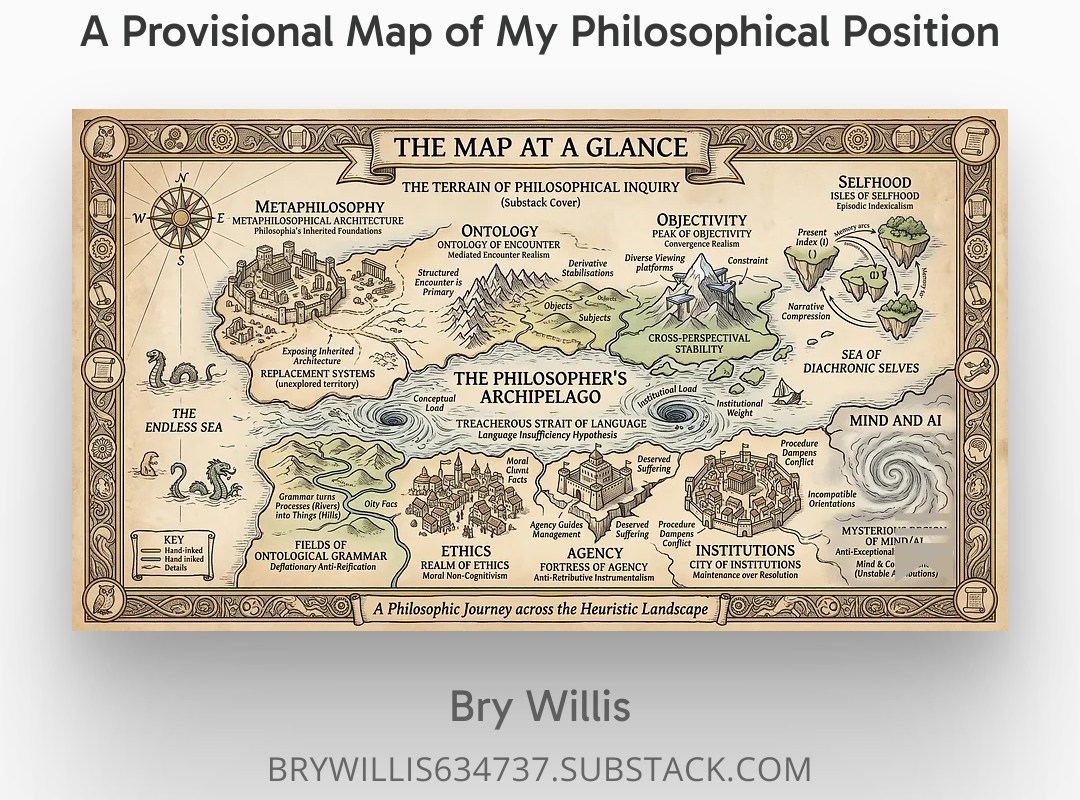

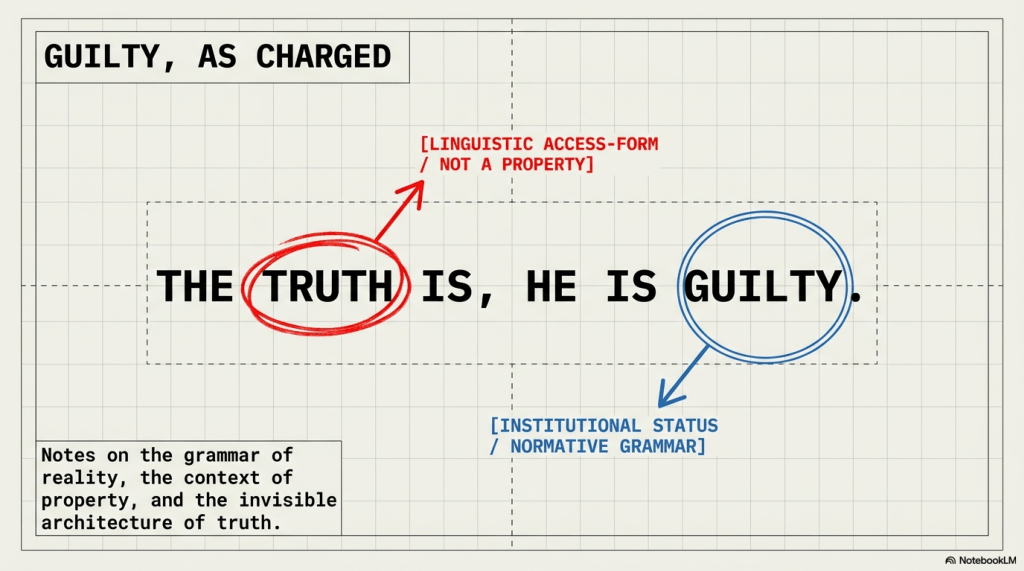
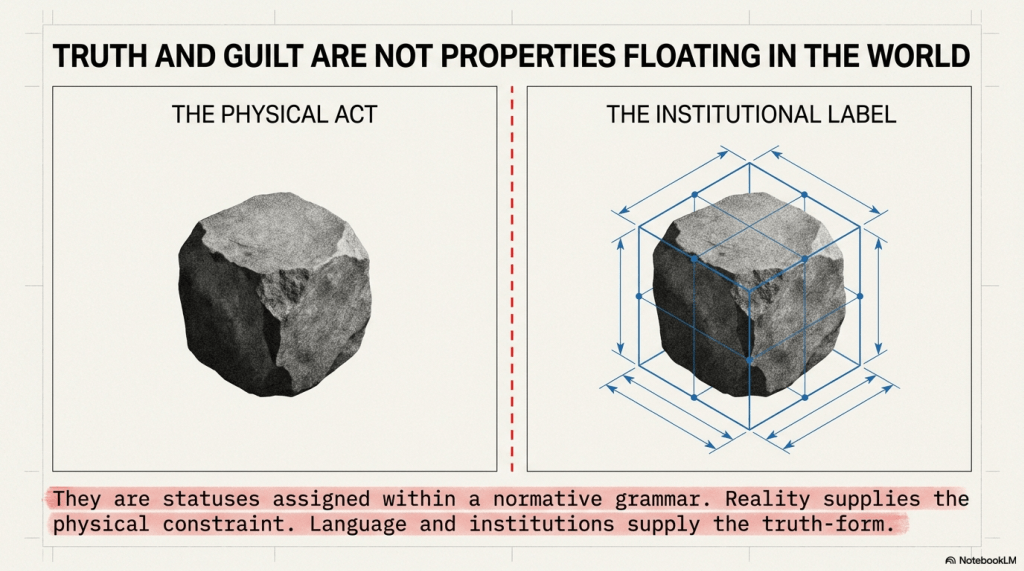
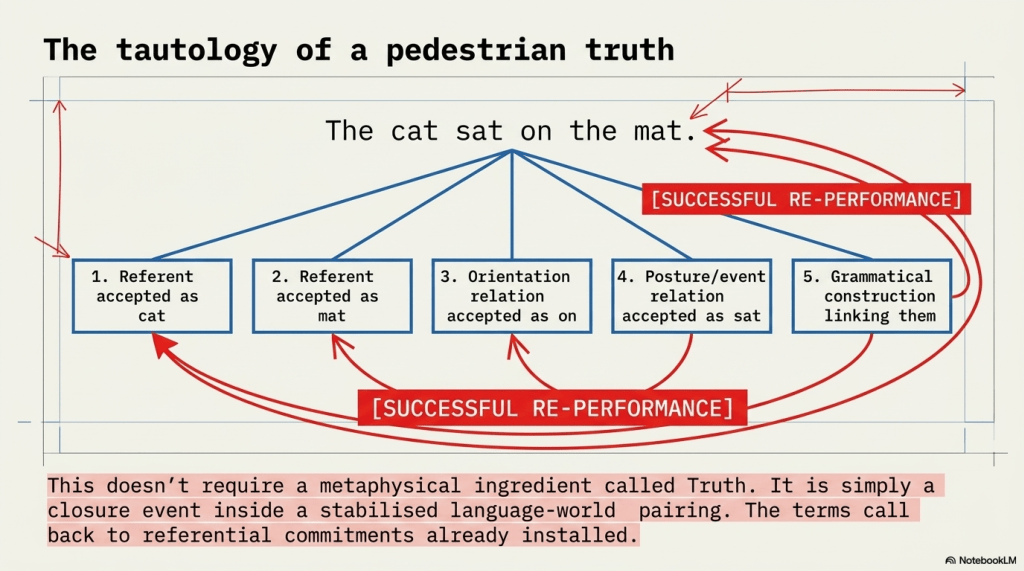
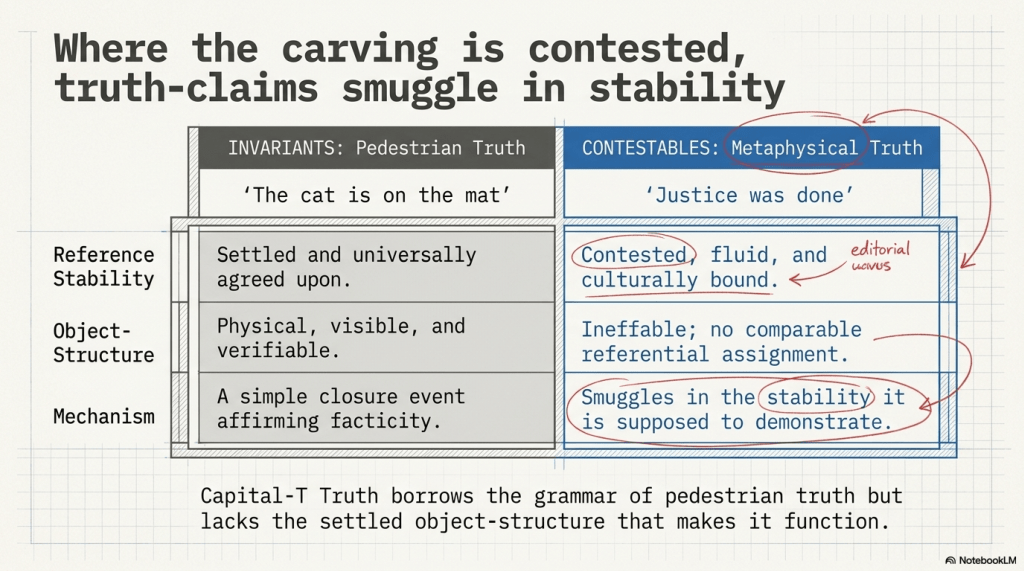
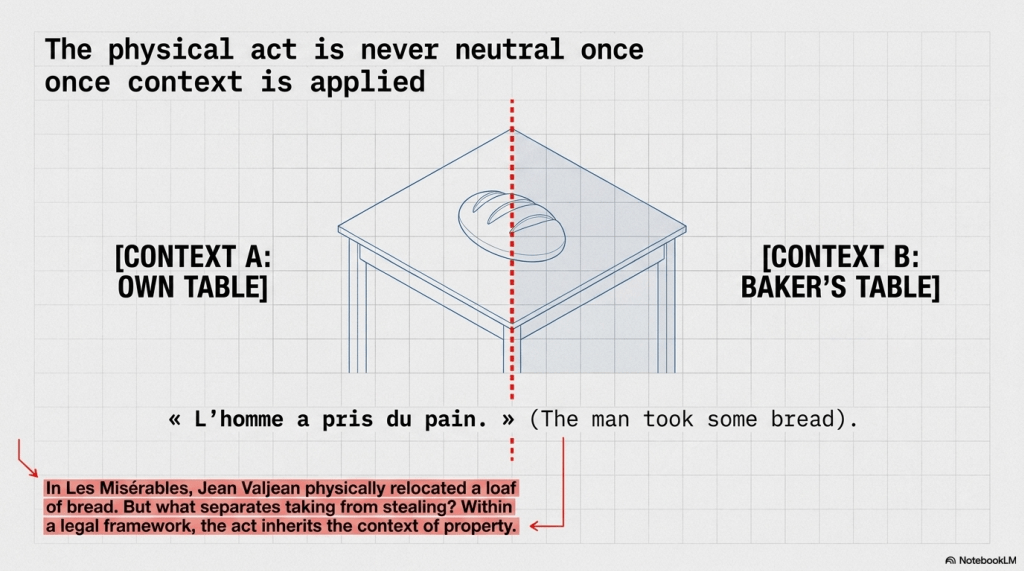
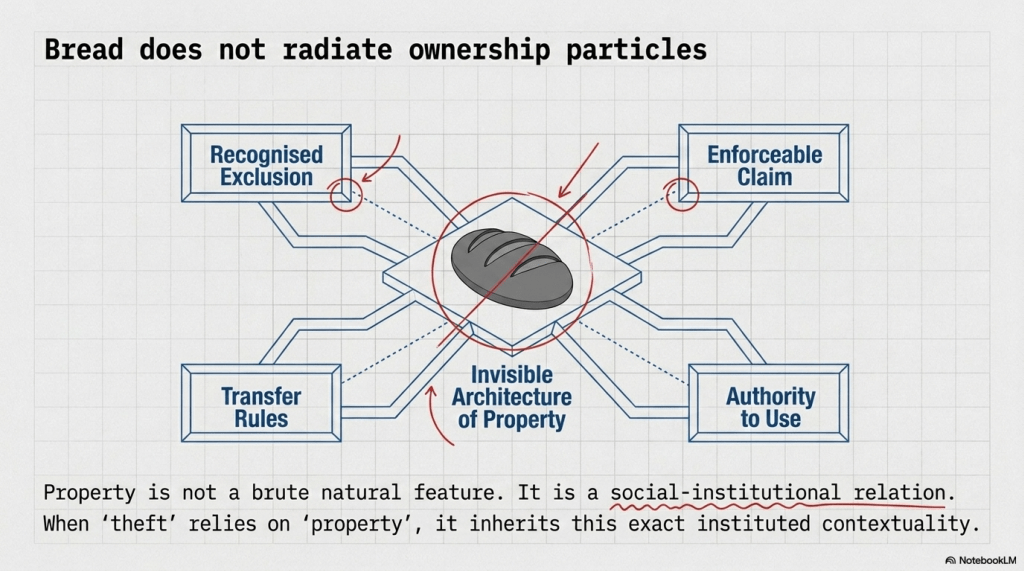
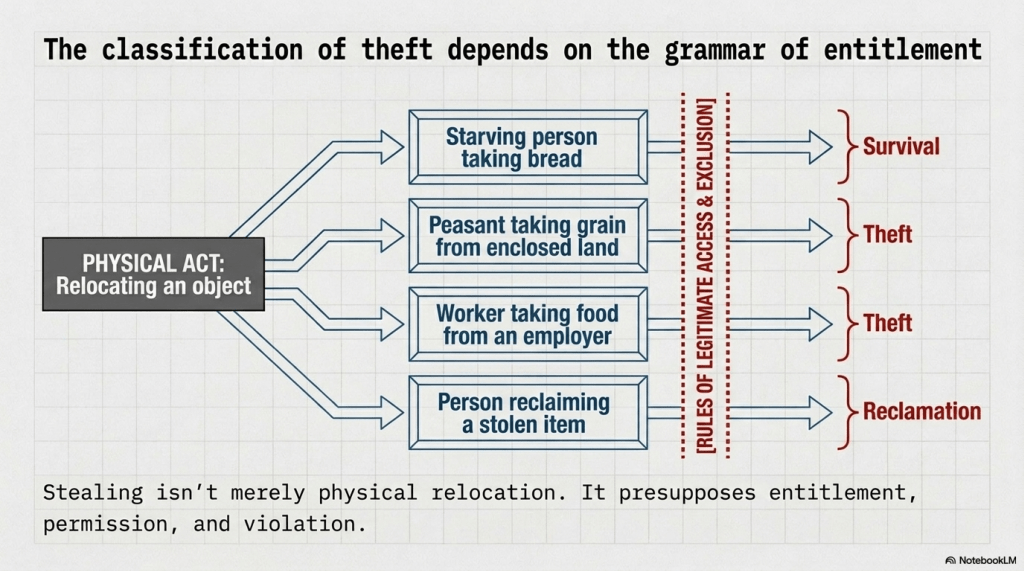
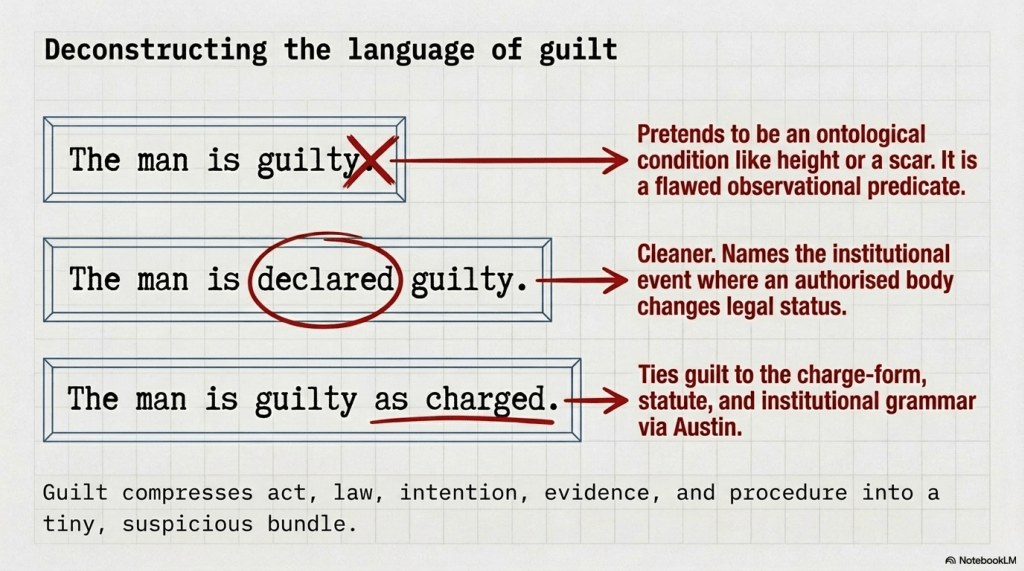
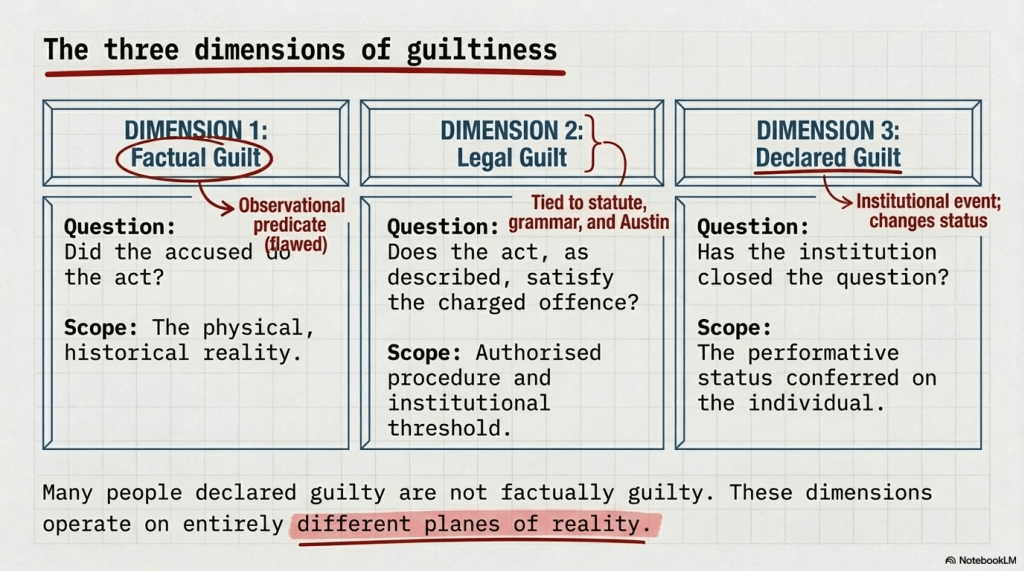
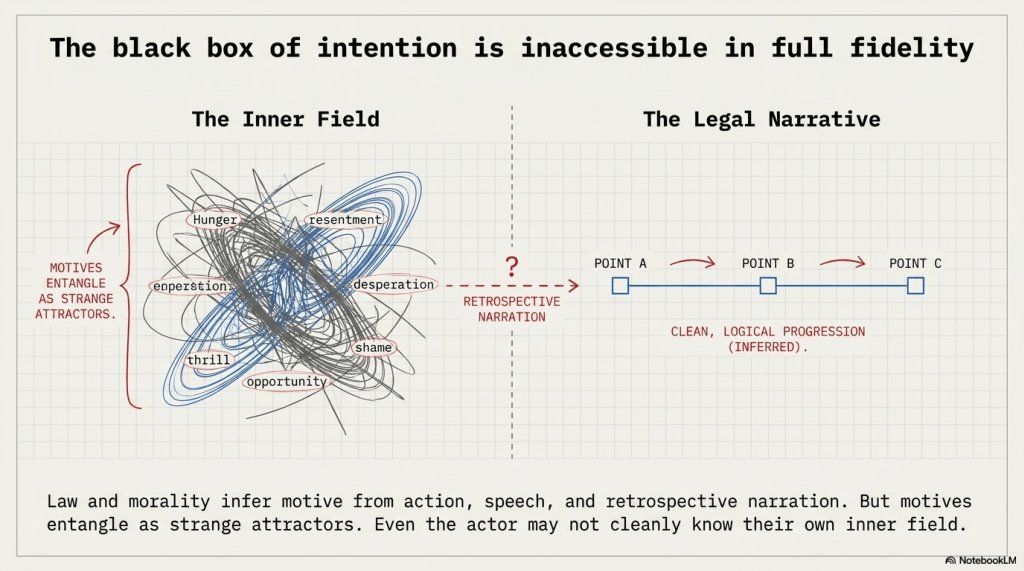
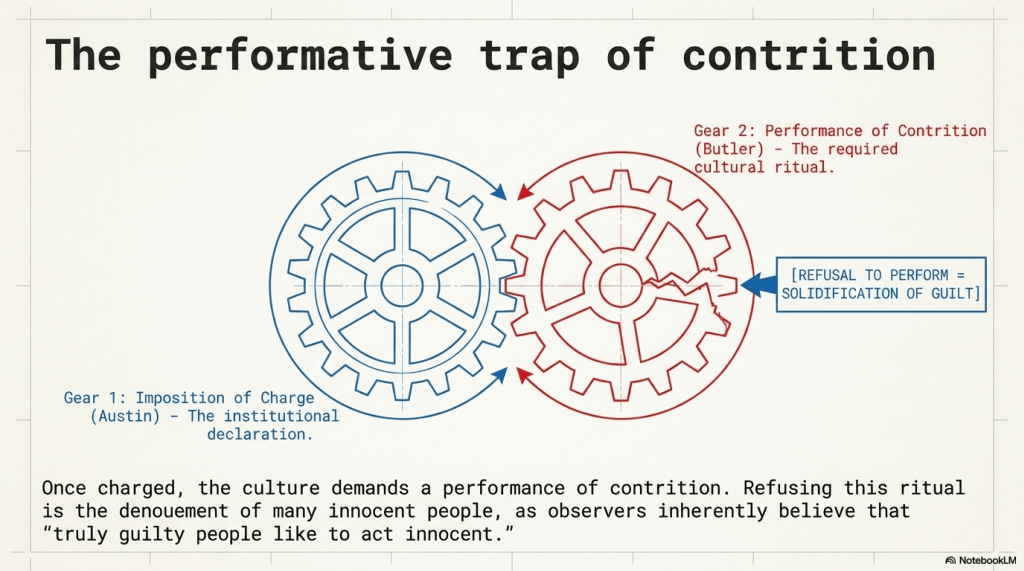
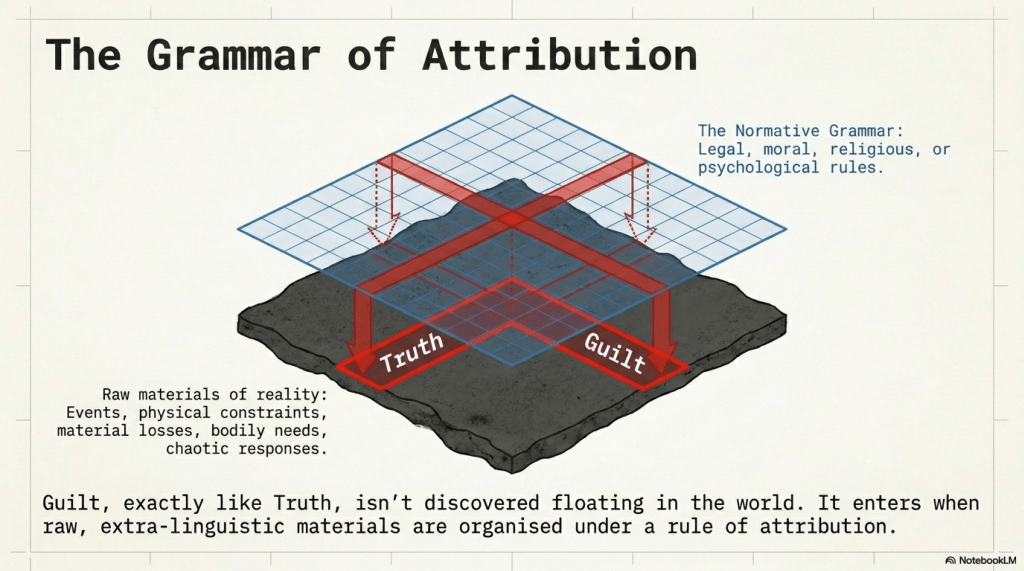
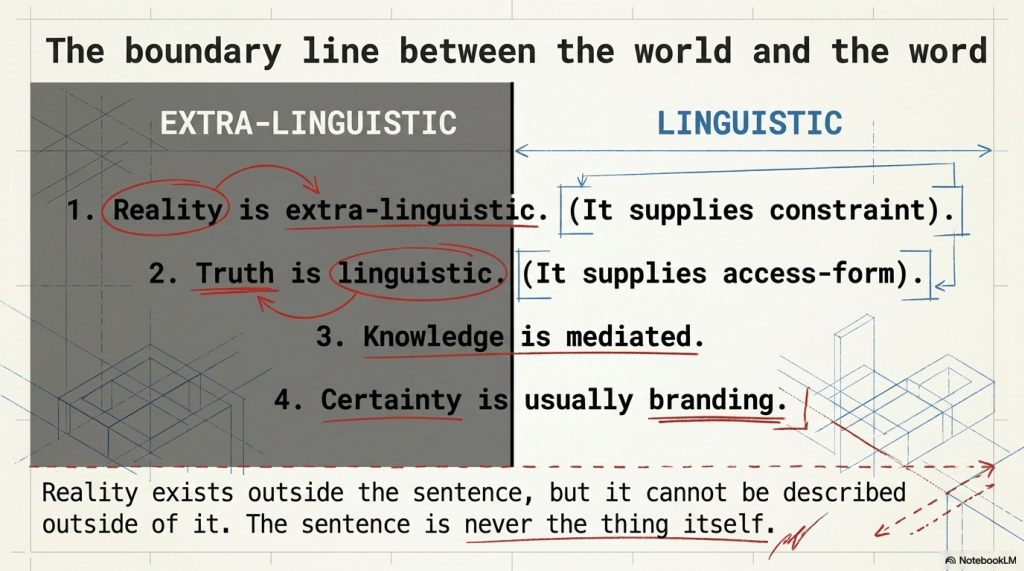
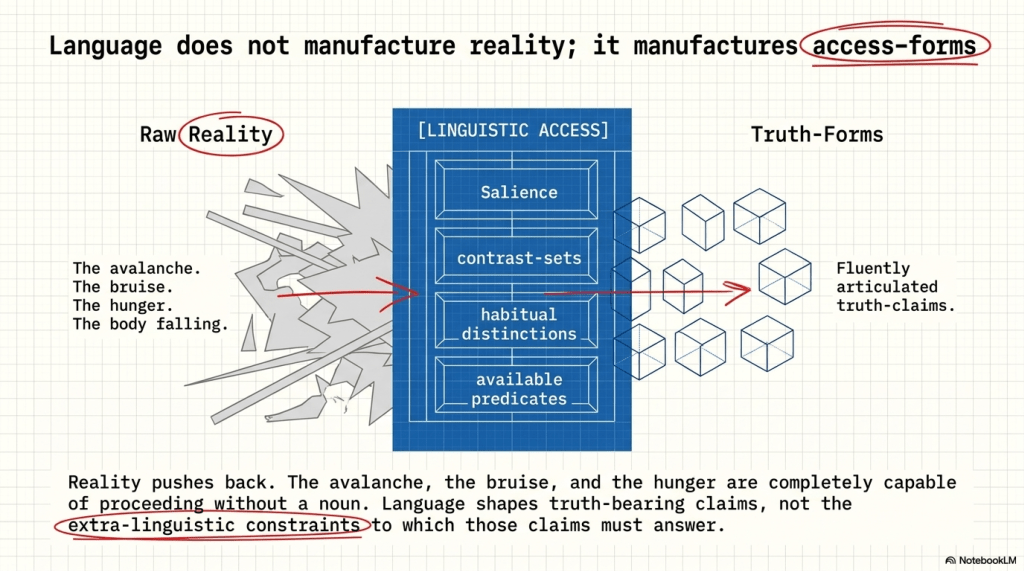
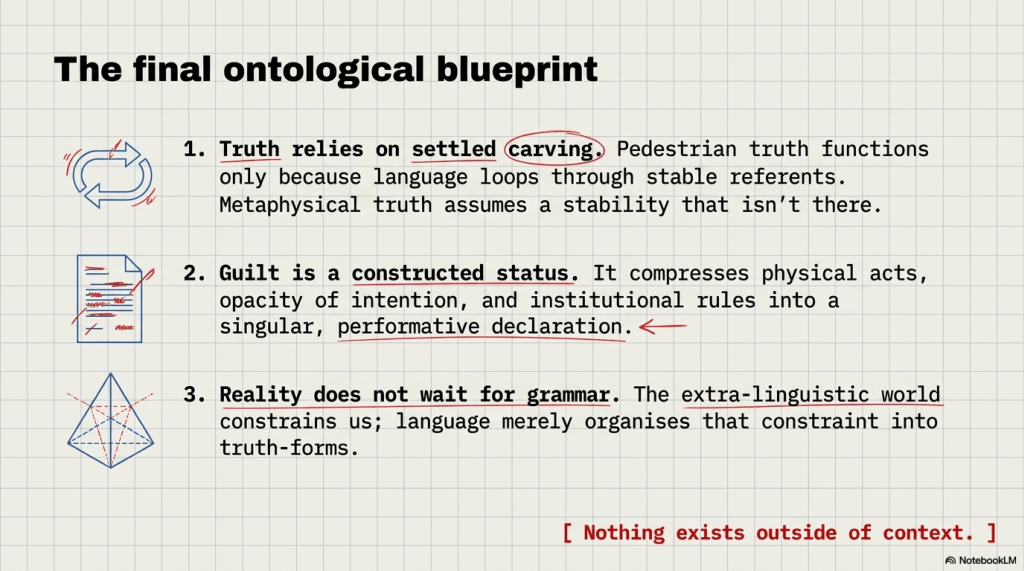
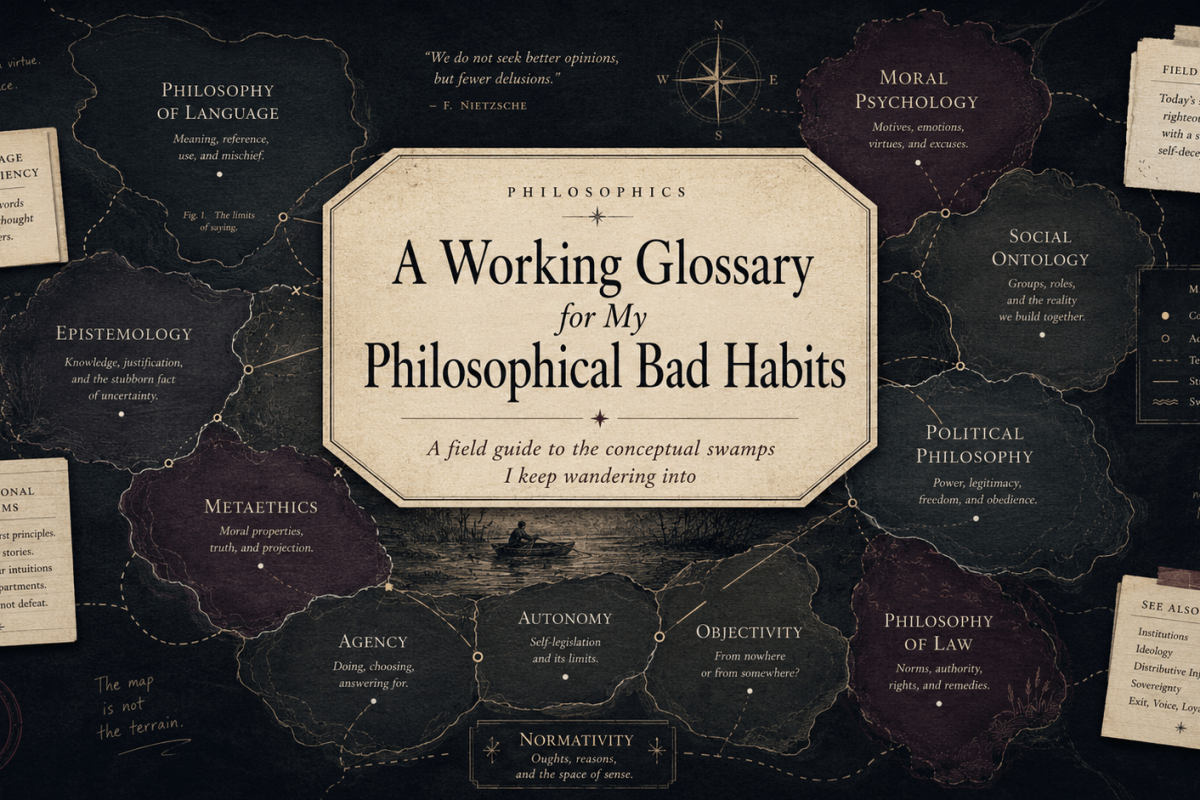
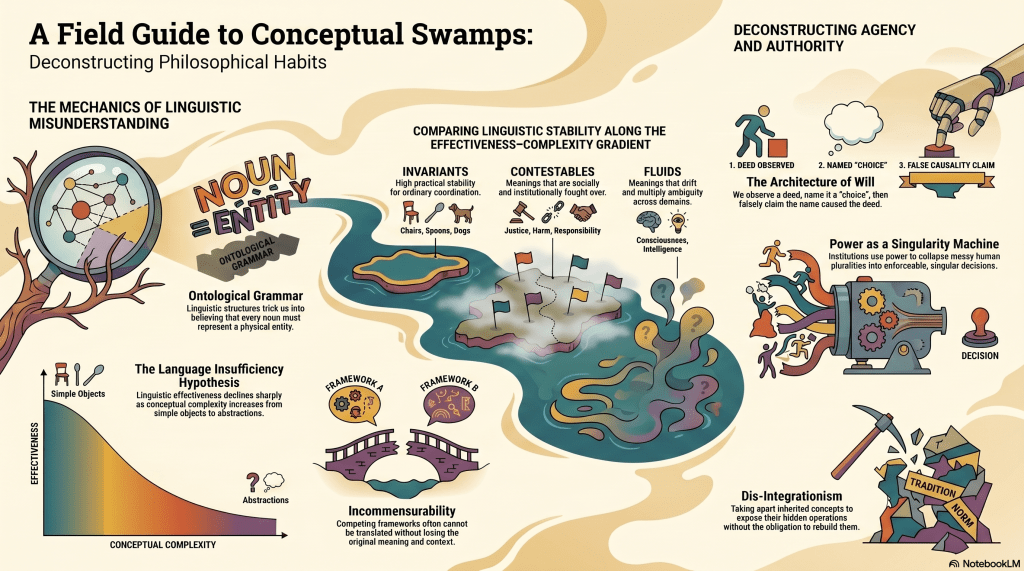


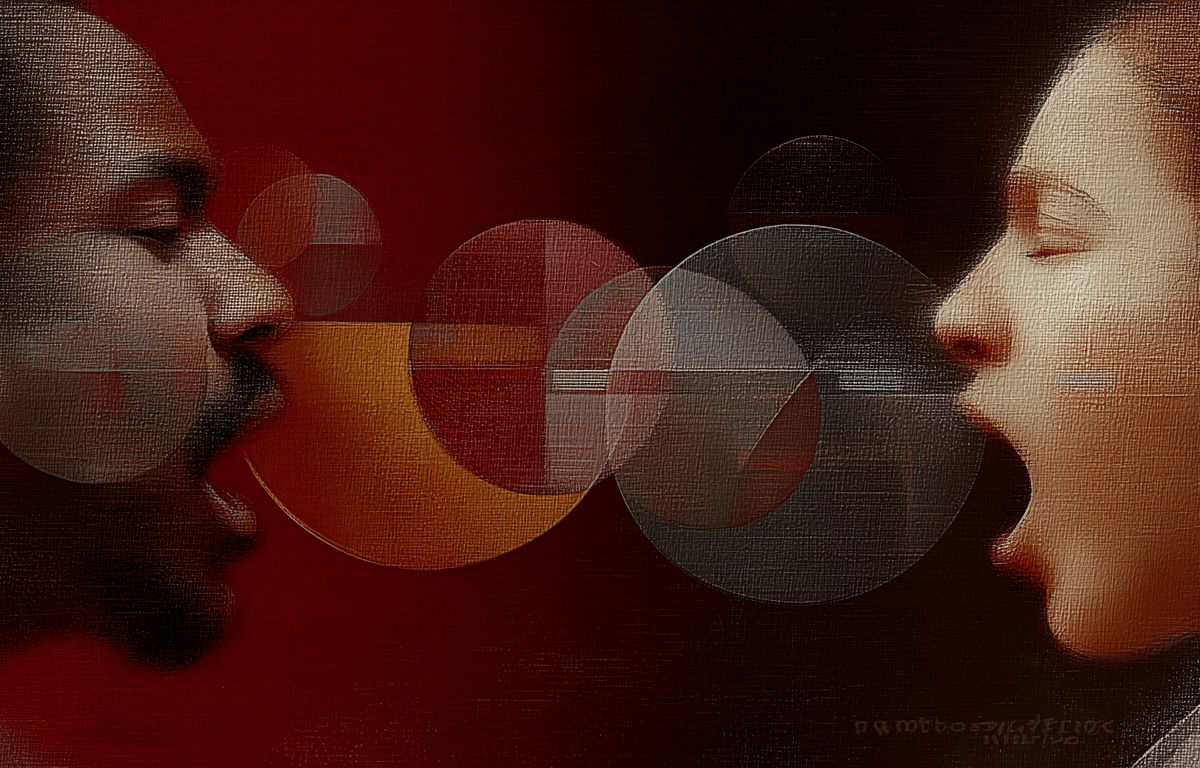






 Philosophics