A video summary of Chapter 3 of A Language Insufficiency Hypothesis
Complete chapter on Substack: https://brywillis634737.substack.com/p/a-language-insufficiency-hypothesis
Socio-political philosophical musings
A video summary of Chapter 3 of A Language Insufficiency Hypothesis
Complete chapter on Substack: https://brywillis634737.substack.com/p/a-language-insufficiency-hypothesis
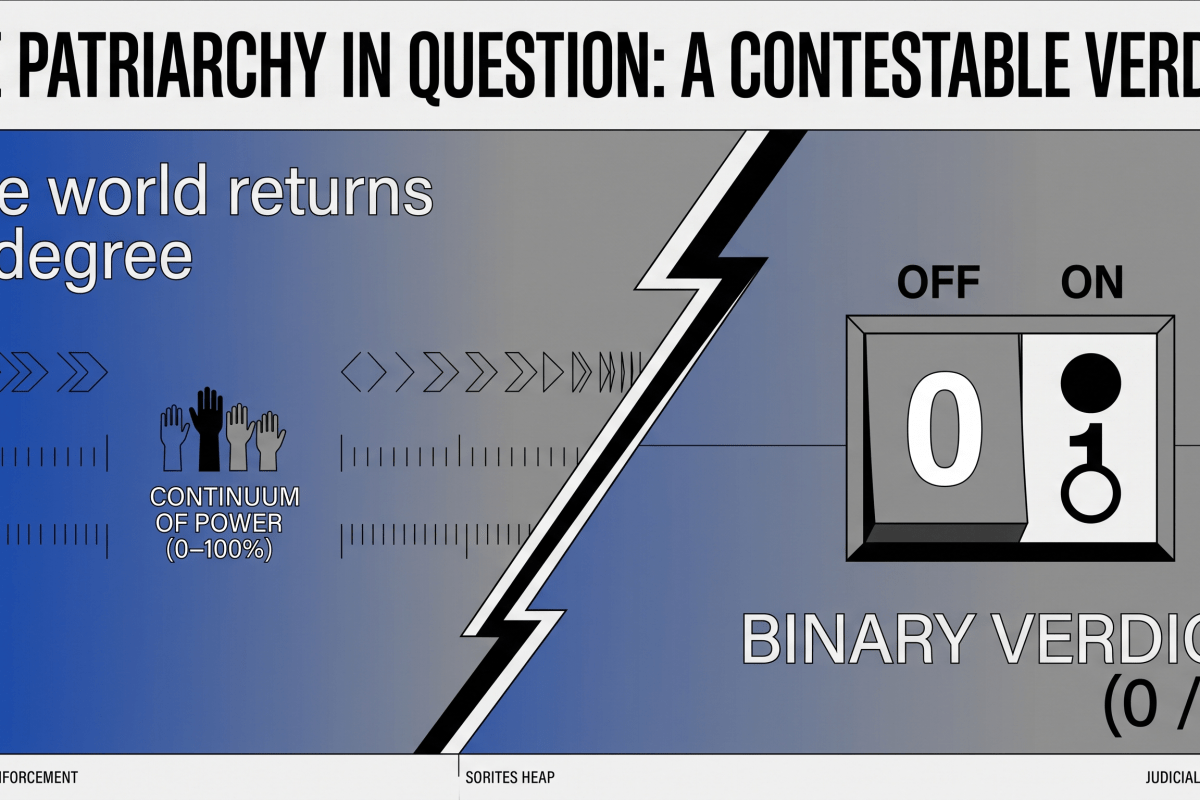
I recently made a teaser for this post. Here is a video summary before you visit.
I often get asked what my deal is with activist topics. It’s not that I don’t care about the issues, per se, but my interest is more in the way they are framed and positioned. I feel that many issues are such because of rhetorical tricks and language insufficiencies. That’s my bag.
I loathe patriarchy as much as the next bloke, but I need to ask what it is in the first place. Does anyone actually defend patriarchy? Is defending the patriarchy the same as the notion of it? If y=one is against it, what exactly is one against.
Nickdruryfad commented recently on another post that I need to get out of my left hemisphere. Point taken, but this is – at least metaphorically speaking – where speech and categories live. The right hemisphere is only interested in attention and capturing re-presentation. The left is about language, syntax, and semantics. To be honest, I don’t believe the right hemisphere is about anything. It’s rather Zen, methinks. It may be creative, but it’s not so much communicative.

Those who follow me closely know that I am not a supporter of Democracy or Enlightenment Age ideals. I published an extended post on Substack, after which I had a bit of an epiphany.
In brief, for expansion later, is my realisation that Democracy – nor the so-called Justice system – is not a utilitarian or consequentialist project. Although I have issues with all normative ethics stances, I am particularly not a deontologist. This disconnect has caused me much consternation.
Through a utilitarian lens, I had been primed to expect better outcomes – considerations for the Greater Good™ and all. This is the source of my disillusionment.
Through a deontological lens, democracy and justice are about the repeatability of processes, not outcomes. Outcomes are a secondary byproduct despite being framed as a main event.
Even though neither of these is empirically evident, it feels more honest to present it this way. Of course, the rhetoric would require more effort. We’re not all Kantians.
Anyway, I just wanted to capture the moment before considering this in more detail and sharing a position piece later.
Were you already aware of this distinction? In so, does it matter? In any case, does it matter? Enquiring minds want to know.

I published a Substack essay response on Oliver Neutert’s Calibrating Superintelligence. Here is a video summary.
The philosophies of Oliver and I are substantially similar. Whilst I think his governance ideas may work fine in a controlled corporate environment – ostensibly a monarchy – they diverge at scale.

I read from the Wrong Curve: Free Speech, Pseudo-Invariance, and the Grammar of Liberal Rights. This essay is freely available on Zenodo at https://doi.org/10.5281/zenodo.19636760. This segment is the Abstract and the Introduction.
In this essay, I argue that free speech discourse is structured by a category error whose source lies upstream of speech itself: in the treatment of ‘freedom’ as a stable philosophical primitive when it functions, in practice, as an essentially contested concept operating under a systematically inflated presumption of effectiveness.
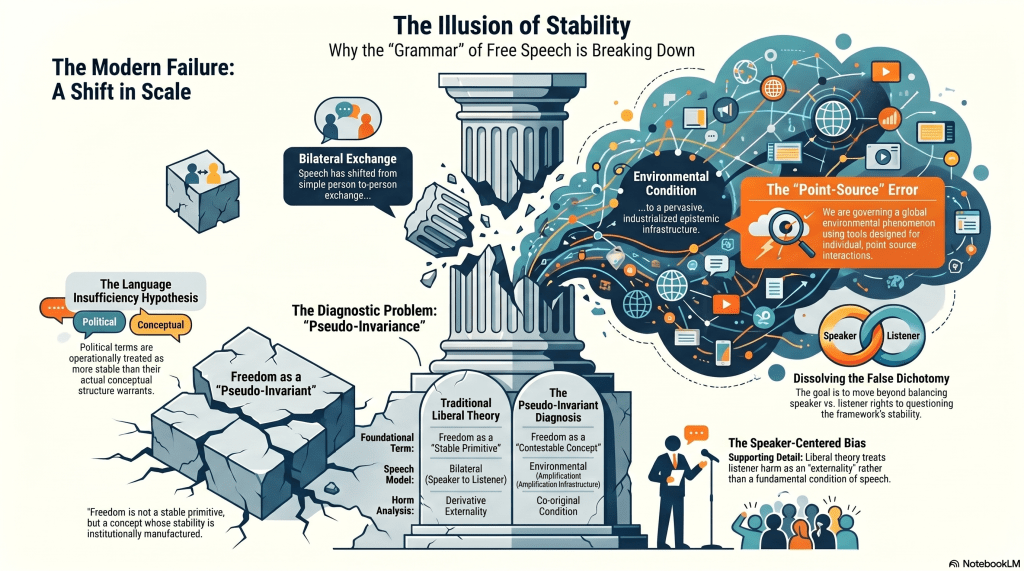
tl;dr: I don’t believe in free speech.
We’ve all likely heard that the freedom to swing one’s fist ends at the tip of another’s nose. I can accept this without argument for the purpose of this assertion. Your freedom TO violates my freedom FROM.
The problem is that one’s words don’t stop. In some cases, they continue in the manner of pollution that I don’t want my ear holes to be exposed to this noise. In the social media age, this effect is trebled and molests my eyes. This is especially egregious for misinformation and disinformation, which is to say, much of the internet and beyond.
This impact hasn’t been suitably addressed, so I wrote about it. Here, I read.

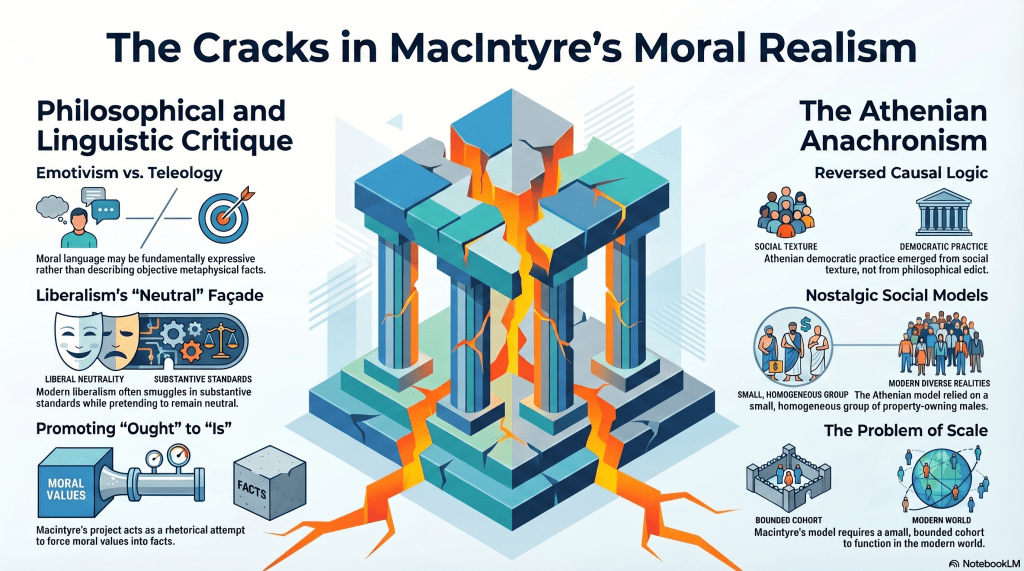
Alasdair MacIntyre is persuasive when he argues that moral discourse is never neutral, and that modern liberalism smuggles in substantive standards while pretending not to. But he dismisses emotivism too quickly as a cultural disaster rather than considering whether it might describe moral language more accurately than his own teleological alternative. If moral utterance is fundamentally prescriptive or expressive rather than descriptive, then the collapse of ‘view from nowhere’ morality doesn’t send us scurrying back to Aristotle. It simply shows that moral language was never doing the metaphysical work MacIntyre wants from it.
The Aristotelian remedy also depends on a nostalgic and anachronistic social model. The Athens he implicitly romanticises was a small polis whose demos consisted of citizens, meaning property-owning males, already bound by shared norms, proximity, and cultural inheritance. In other words, the sort of thick local world that made a certain kind of practical ethical life possible in the first place. MacIntyre’s causal arrow points the wrong way. In Athens, democratic practice emerged from that prior social texture. You do not reproduce the same conditions by philosophical edict.
To put it more bluntly: I don’t think moral realism is tenable, and I am not convinced MacIntyre really thinks so either. His project reads less like a discovery of moral facts than an attempt to promote an ought into an is by force of inheritance and rhetorical confidence. If he carved out a bounded cohort and imposed the right shared practices, perhaps something like his model could function. He may need to annex a reasonably sized car park for the purpose.
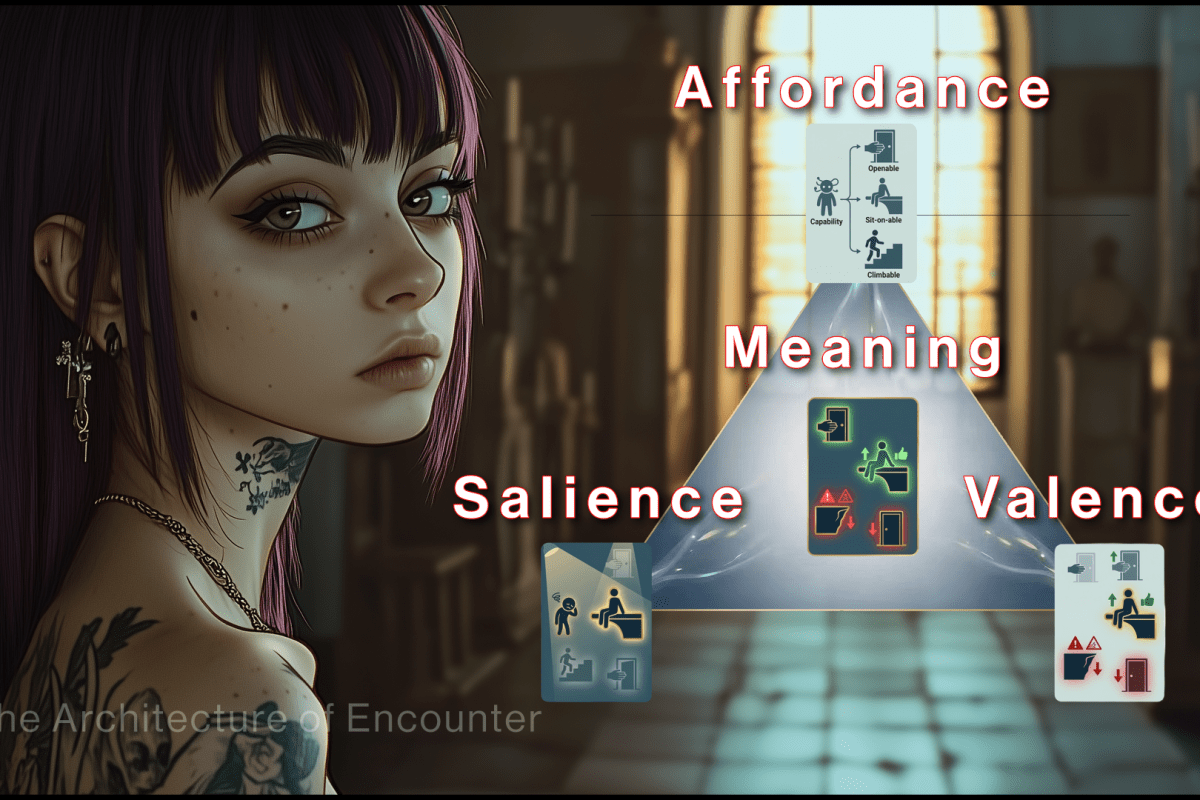
What do attention, affordance, salience, and valence have to do with meaning, and what is the architecture of encounter?
I’m still trying to figure out how to simplify these concepts. How am I doing?
Short and sweet.
I’ve created a video to discuss ontological ontology grounded in an example of abortion, a particularly polemic topic. For more details, read the essay, Grammatical Failure – Why Liberal Epistemology Cannot Diagnose Indoctrination.
In this video, I define Ontology, Grammar, and Commensurability before I use abortion as a poster child. Then, I discuss what happens when ontological grammars are incommensurable.
These thinkers follow:
Michel Foucault: Biopower, notably The History of Sexuality, Volume I.
Bernard Williams: Thick Moral Concepts from Ethics and the Limits of Philosophy.
Pierre Bourdieu: Habitus, notably from Outline of a Theory of Practice.
Karl Popper: Paradox of Intolerance.
I discuss the challenge of the promise of compromise and its three possible outcomes, none of which are true compromises.
Watch the video for context. Read the essay for fuller details.

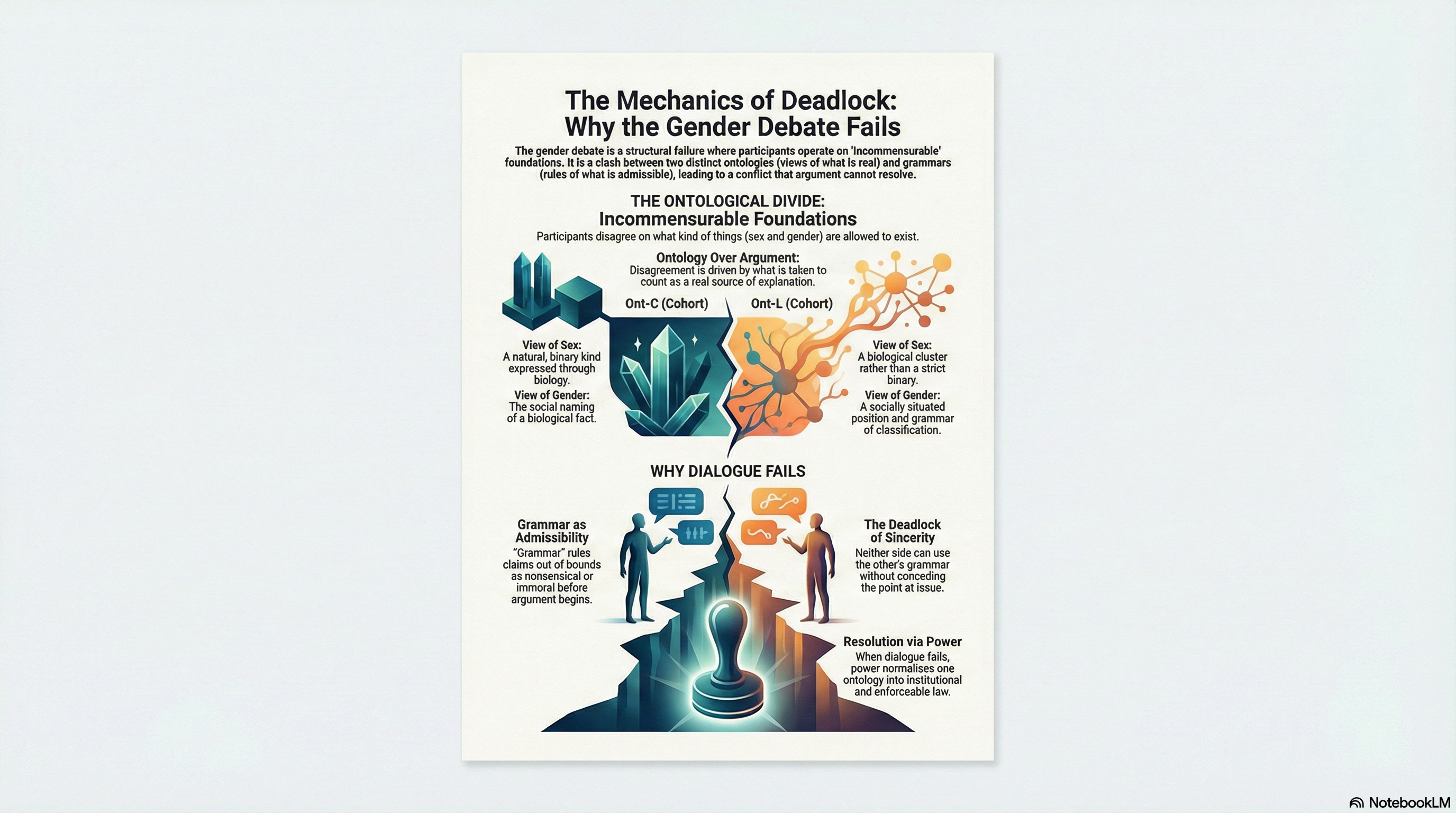
This video uses the gender debate to help explain how ontology and grammar render discourse incommensurable, based on my essay, Grammatical Failure: Why Liberal Epistemology Cannot Diagnose Indoctrination.
I’ve been thinking through dozens of use cases to explain how some polemic positions are intractable via language. When they are resolved through power, at least one ontological cohort is left wanting. In a compromise, likely both sides feel they’ve lost.
I’ll post a separate announcement presently, but I want to share my new Legibility GPT to assess concepts for ontological and grammatical commensurability.
In conventional (read: orthodox Enlightenment thinking), communication and negotiation are supposed to bring groups together. This is only true for intra-ontological conflict; it’s never been true for inter-ontological issues. There are edge cases where differing ontologies might be satisfied with an inter-ontological agreement, but this is likely accidental and certainly differently motivated. Not all such disagreements can be mediated, and this is where power politics steps in – not to ameliorate but to force the matter. This happens in politics, law, and many other power-oriented domains.

Yes, I am still focusing on writing my ontology papers, but I still come up for air. Over lunch, I found this: Jonny Thomson showcasing Judge Coleridge: The Duty. Watch it.
This really got my hamster wheel cranking. In fact, it gave me another essay idea mired in formal logic. Yuck, I know.
My brief post here is to share this and ask why I don’t share ‘positive’ posts. Pretty much everything is critical. For one, it’s how my brain works. For two, I don’t really know.
When I see something, I instantly want to tear it apart, not for the sake of malice but because my mind registers it as WTAF?
In short, the judge says that one cannot privilege one’s own life over others. Of course, this got my hamster on steroids, considering the implication: does this invalidate self-defence? Wouldn’t it? 🧐
The answer is yes – but only if Law were tethered to Morality, which it isn’t. This will be my essay. Who knows when I’ll have time to write it? Please, stand by. Cheers.
What are your thoughts? Maybe I’ll share this as a video response on YouTube and TikTok. Time will tell – and it evidently heals all wounds.

