The Republic of Recursive Prophecy

5–7 minutes

How the Trump Era Rewrote Time, Truth, and the Very Idea of a Common World

Politics in the Trump era wasn’t merely a spectacle of bad manners and worse epistemology; it was the moment the United States stopped pretending it shared a common world – when politics ceased to be a quarrel over facts and became a quarrel over the very conditions that make facts possible. This essay is part of an ongoing project tracing how post-Enlightenment societies lose their shared grammar of verification and retreat into parallel narrative architectures that demand allegiance rather than assessment.

And before anyone hyperventilates about implied asymmetry: the recursive logic described here is not exclusive to the right. The progressive cosmology, though stylistically different, exhibits the same structural features – prophetic claims about impending catastrophe or salvation, retrospective reinterpretations to maintain coherence, and an insistence on possessing privileged interpretive tools. The Trump era didn’t invent this recursive mode; it simply accelerated it, stripped it naked, and pumped it through a 24-hour media bloodstream until everyone could see the circuitry sparking.

Audio: NotebookLM podcast on this topic.

Welcome to the new cosmology.

1. The Death of a Common Grammar

Once the shared grammar of verification dissolves, political discourse stops unfolding in empirical time. It migrates into suspended futurity – a realm of conditional wagers:

If this, then that. Just wait. You’ll see. The future will vindicate us.

But the horizon keeps receding. When reality refuses to comply, factions rewrite the past to preserve the equilibrium between prophecy and outcome. Truth becomes less a matter of correspondence and more an act of narrative self-maintenance. Where the world diverges from the story, the world is adjusted.

Political time becomes pliable; the narrative must be kept intact, whatever the cost.

2. Mimetic Prophecy and the Absence of Catharsis

A Girardian lens clarifies what’s happening beneath the surface. The factions are not simply disagreeing; they are locked in mimetic rivalry, each imitating the other’s claim to prophetic vision. Insight becomes the mimetic object: each camp insists it alone can decode the approaching shape of events.

As the rivalry escalates, differentiation collapses. Both sides perform identical moves – warnings of authoritarianism, narratives of national peril, promises of historical vindication – whilst insisting the other’s prophecies are delusional.

In classic Girardian fashion, this symmetry produces a crisis: a collapse of distinction between rivals, accompanied by a desperate hunt for a stabilising sacrifice. In the Trump era, the scapegoat was not a person but a category: truth itself. Doubt, verification, shared reality – these were sacrificed at the altar of maintaining internal cohesion.

Yet unlike the societies Girard studied, the American polity achieves no catharsis. The sacrificial mechanism fails. No cleansing moment restores order. The cycle loops endlessly, forcing the community to reenact the ritual without the relief of resolution.

Prophecy, rivalry, crisis – repeat.

3. From Chronology to Mythic Temporality

Once prediction and remembrance collapse into one another, political time becomes mythic rather than chronological. The present becomes a hinge between two versions of the world: the one the faction already believes in and the one it insists the future will confirm.

The future becomes partisan property. The past becomes commentary. The present becomes maintenance.

Each faction edits its cosmology to preserve coherence, producing a recursive temporality in which prophecy and memory reinforce one another. Narrative supplants chronology; plausibility is subordinated to coherence. The factions are not lying; they are mythologising.

This is what a society does when it cannot stabilise truth but cannot abandon truth-claims either.

4. Madison’s Diagnosis, Reversed

James Madison, in his republican optimism, believed factions were inevitable but containable. Pluralism, he argued, would safeguard the republic by ensuring no faction could elevate its partial vision into a universal claim. The sheer scale and diversity of the republic would generate cross-pressure strong enough to check epistemic domination.

He assumed a shared evidentiary world.

He did not imagine a polity in which factions construct discrete epistemic universes – self-sealing interpretive systems with their own temporal orders, myths of origin, and theories of legitimacy. Under such conditions, pluralism no longer disciplines factional excess; it shelters it. It becomes a buffer that prevents contact, not a mechanism that fosters correction.

Madison feared that factions might mistake their partial view for the whole.
Our moment dissolves the very idea of the whole.

Pluralism, once a remedy, becomes the architecture of epistemic secession.

5. The Theatre of Recursive Narration

What remains is not deliberation but theatre—political communities sustained by the perpetual reenactment of their own certainties. Each faction maintains itself through narrative recursion, chanting the same incantation of retrospective rightness, performing the same rites of interpretive renewal.

The republic no longer hosts disagreement; it hosts parallel cosmologies.

In the republic of recursive prophecy, truth is no longer what grounds politics – it’s what politics performs.


Afterword

This article followed a chat with ChatGPT. For what it’s worth, I now style myself a post-postmodern, post-critical theorist – though these labels are as pointless as the ones they replace.

The conversation began with Paul Feyerabend’s Against Method, which was already on my mind. In Appendix 1 he writes:

That set me wondering, again, how one discerns signal from noise. As a statistician, separating wheat from chaff is my daily bread, but how does one do it politically without pretending to possess privileged access to truth? In this environment, each faction insists it has such access. The other side, naturally, is deluded. Ignore the fact that there are more than two sides; binary thinking is the fashion of the day.

I leaned on ChatGPT and asked for sources on this lemma – what to read, where to dig. It replied with books I’d already read, save for one:

  1. Paul Feyerabend: Against Method and Science in a Free Society
  2. Jean-François Lyotard: The Postmodern Condition
  3. Richard Rorty: Contingency, Irony, and Solidarity
  4. Michel Foucault: Power/Knowledge and The Archaeology of Knowledge
  5. Jacques Derrida: Of Grammatology and Positions
  6. Bruno Latour: We Have Never Been Modern
  7. Chantal Mouffe and Ernesto Laclau: Hegemony and Socialist Strategy

I hadn’t read Laclau & Mouffe. ChatGPT summarised them neatly:

Right up my street. (I still need to read it.)

That, in turn, brought Madison’s Federalist No. 10 to mind – his warning that factional division, particularly the two-party structure the United States later perfected, would one day become corrosive.

Then Girard entered the chat. And so on. We followed the thread a little longer until this essay took shape. I didn’t feel compelled to polish it into a formal academic piece. A blog seems a far better home for now, and the essay version can remain an open question.

Confession: I Use AI

2–3 minutes

In fact, I’ve been involved with ‘artificial intelligence’ since about 1990, when I developed Wave 3 AI – expert systems. Wave 4 is the current incarnation. Still no ‘intelligence’ to speak of, but marketers and hypsters love the term. Perhaps in Wave 5, the name will finally be correct.

Aside from my historical connexion, I want to share how I am using AI in my writing – in this case, ChatGPT 5.1. I’m not going to give much backstory on the setup, but I’ll point out some internal process logic.

Audio: NotebookLM podcast on this topic.

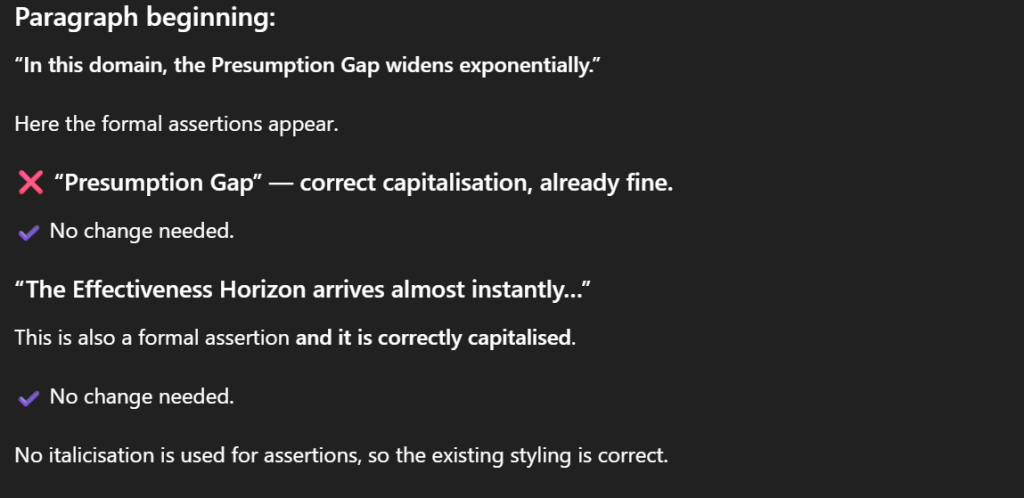
I have completed the manuscript for a Language Insufficiency Hypothesis, so I have been sharing screenshots of each page – usually a spread – and using the GPT as a second set of eyes. I’ll feed it an image and a request, in this case, to find key terms so I can capitalise and italicise them appropriately. In this example, this is the ending paragraph of Chapter 6.

Image 1: Sample chapter copy. In good order.

This first screenshot is an example of output. As is evident, it was looking, among other things, for the capitalisation of the concepts of Presumption Gap and Effectiveness Horizon.

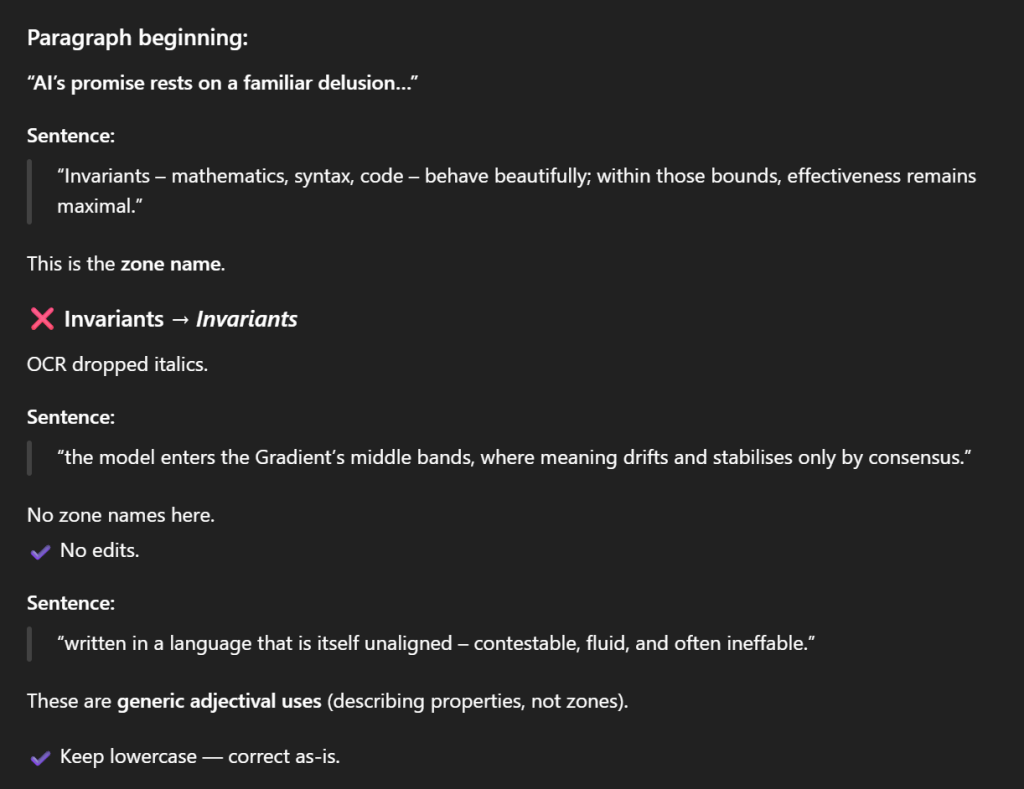
Image 2: Sample GPT output – bad iconography

Notice the iconographic language is a bit off. The red X is a bit out of sync with the rest of the message, which says the entry is already correct. So, two instances; no problems. Next.

In this message, I warned that it was OCRing the screenshots but not retaining the formatting, and which is a reason I was sharing images over text.

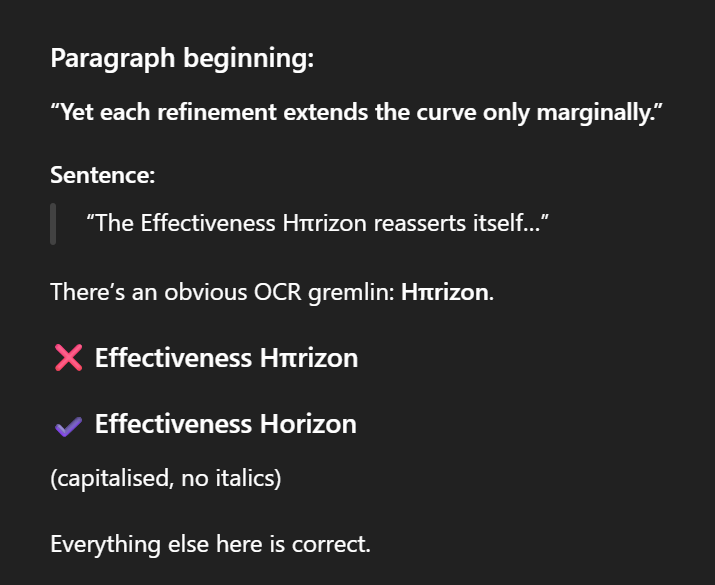
Image 3: Sample GPT output – OCR confusion

What’s interesting is that it informed me that it would now treat the image as canonical. In Image 3 (above), it’s engaging in introspection – or at least self-dialogue. This is evidence that it (1) reviewed the results of the OCR, reviewed the image (as an image), and (3) compared 1 and 2 to arrive at the conclusion that the OCR had indeed dropped the formatting.

It wasn’t enough to inform me that everything was ok or, better still, not to bother me with noise since it was already in good order. Instead, it’s like an autist talking to itself. It reminds me of Raymond in Rain Man.

Image 34 (next) is the last example. Here, the OCR confounds rendering Horizon as Hπrizon, and then points out that I should avoid the same mistake of viewing o as π.

Image 4: Sample GPT output – OCR corruption

Thanks for the advice. I was losing sleep worrying about this possibility.

Conclusion

This is obviously a late-stage use case. I use GPT for ideation and research. Perhaps I’ll share an example of this later. I might be able to review my earlier notes for this project, but it was started years before the latest Wave arrived.

Apparently, I’ve got more to say on this matter…

3–5 minutes

It seems my latest rant about AI-authorship accusations stirred something in me, that I need to apologise for being a professional writer – or is that a writing professional? Blame the Enlightenment, blame writing and communication courses, whatevs. I certainly do. But since some people are still waving the pitchforks, insisting that anything too coherent must be artificially tainted, I should address the obvious point everyone keeps missing:

The writing structures people attribute to AI aren’t AI inventions. They’re human inventions. Old ones. Codified ones. And we made the machines copy them. Sure, they have a certain cadence. It’s the cadence you’d have if you also followed the patterns you should have been taught in school or opened a book or two on the topic. I may have read one or two over the years.

Wait for it… The orthodoxy is ours. I hate to be the one to break it to you.

Video: AI Robot Assistant (no audio)

Professional Writing Has Its Own House Rules (And They’re Older Than AI Neural Nets)

Audio: NotebookLM podcast on this topic and the last one.

Long before AI arrived to ruin civilisation and steal everyone’s quiz-night jobs, we’d already built an entire culture around ‘proper writing’. The sort of writing that would make a communications lecturer beam with pride. The Sith may come in twos; good writing comes in threes.

  1. Tell them what you’re going to say.
  2. Say it.
  3. Repeat what you told them.

But wait, there’s more:

  • Use linear flow, not intellectual jazz.
  • One idea per paragraph, please.
  • Support it with sources.
  • Conclude like a responsible adult.

These aren’t merely classroom antics. They’re the architectural grammar of academic, corporate, scientific, and policy writing. No poetic flourishes. No existential detours. No whimsical cadence. The aim is clarity, predictability, and minimal risk of misinterpretation. It’s the textual equivalent of wearing sensible shoes to a board meeting. So when someone reads a structured piece of prose and yelps, ‘It sounds like AI!’, what they’re really saying is:

Je m’accuse. AI Didn’t Invent Structure. We Forced It To Learn Ours. Full stop. The problem is that it did whilst most of us didn’t.

If AI tends toward this style – linear, tidy, methodical, lamentably sane – that’s because we fed it millions of examples of ‘proper writing’. It behaves professionally because we trained it on professional behaviour – surprisingly tautological. Quelle surprise, eh?

Just as you don’t blame a mimeograph for producing a perfectly dull office memo, you don’t blame AI for sounding like every competent academic who’s been beaten with the stick of ‘clarity and cohesion’. It’s imitation through ingestion. It’s mimicry through mass exposure.

And Now for the Twist: My Fiction Has None of These Constraints

My fiction roams freely. It spirals, loops, dissolves, contradicts, broods, and wanders through margins where structured writing fears to tread. It chases affect, not clarity. Rhythm, not rubrics. Experience, not exegesis.

No one wants to read an essay that sounds like Dr Seuss, but equally, no one wants a novel that reads like the bylaws of a pension committee.

Different aims, different freedoms: Academic and professional writing must behave itself. Fiction absolutely should not.

This isn’t a value judgement. One isn’t ‘truer’ or ‘better’ than the other – only different tools for different jobs. One informs; the other evokes. One communicates; the other murmurs and unsettles.

Not to come off like Dr Phil (or Dr Suess), but the accusation itself reveals the real anxiety. When someone accuses a writer of sounding ‘AI-like,’ what they usually mean is:

‘Your writing follows the conventions we taught you to follow – but now those conventions feel suspect because a machine can mimic them’.

And that’s not a critique of the writing. It’s a critique of the culture around writing – a panic that the mechanical parts of our craft are now automated and thus somehow ‘impure’.

But structure is not impurity. Professional clarity is not soullessness. Repetition, sequencing, scaffolding – these aren’t telltale signs of AI; they’re the residue of centuries of human pedagogy.

AI mirrors the system. It didn’t create the system. And if the system’s beginning to look uncanny in the mirror, that’s a problem of the system, not the reflection.

In Short: The Craft Is Still the Craft, Whether Human or Machine

Professional writing has rules because it needs them. Fiction abandons them because it can. AI imitates whichever domain you place in front of it.

The accusation that structured writing ‘sounds artificial’ is merely a confusion between form and origin. The form is ours. The origin is irrelevant.

If clarity is now considered suspicious, I fear for the state of discourse. But then again, I’ve feared for that for some time.

And apparently, I’ve still got more to say on the matter.

Accusations of Writing Whilst Artificial

2–3 minutes

Accusations of writing being AI are becoming more common – an irony so rich it could fund Silicon Valley for another decade. We’ve built machines to detect machines imitating us, and then we congratulate ourselves when they accuse us of being them. It’s biblical in its stupidity.

A year ago, I read an earnest little piece on ‘how to spot AI writing’. The tells? Proper grammar. Logical flow. Parallel structure. Essentially, competence. Imagine that – clarity and coherence as evidence of inhumanity. We’ve spent centuries telling students to write clearly, and now, having finally produced something that does, we call it suspicious.

Audio: NotebookLM podcast on this topic and the next one.

My own prose was recently tried and convicted by Reddit’s self-appointed literati. The charge? Too well-written, apparently. Reddit – where typos go to breed. I pop back there occasionally, against my better judgment, to find the same tribunal of keyboard Calvinists patrolling the comment fields, shouting ‘AI!’ at anything that doesn’t sound like it was composed mid-seizure. The irony, of course, is that most of them wouldn’t recognise good writing unless it came with upvotes attached.

Image: A newspaper entry that may have been generated by an AI with the surname Kahn. 🧐🤣

Now, I’ll admit: my sentences do have a certain mechanical precision. Too many em dashes, too much syntactic symmetry. But that’s not ‘AI’. That’s simply craft. Machines learned from us. They imitate our best habits because we can’t be bothered to keep them ourselves. And yet, here we are, chasing ghosts of our own creation, declaring our children inhuman.

Apparently, there are more diagnostic signs. Incorporating an Alt-26 arrow to represent progress is a telltale infraction → like this. No human, they say, would choose to illustrate A → B that way. Instead, one is faulted for remembering – or at least understanding – that Alt-key combinations exist to reveal a fuller array of options: …, ™, and so on. I’ve used these symbols long before AI Wave 4 hit shore.

Interestingly, I prefer spaced en dashes over em dashes in most cases. The em dash is an Americanism I don’t prefer to adopt, but it does reveal the American bias in the training data. I can consciously adopt a European spin; AI, lacking intent, finds this harder to remember.

I used to use em dashes freely, but now I almost avoid them—if only to sidestep the mass hysteria. Perhaps I’ll start using AI to randomly misspell words and wreck my own grammar. Or maybe I’ll ask it to output everything in AAVE, or some unholy creole of Contemporary English and Chaucer, and call it a stylistic choice. (For the record, the em dashes in this paragraph were injected by the wee-AI gods and left as a badge of shame.)

Meanwhile, I spend half my time wrestling with smaller, dumber AIs – the grammar-checkers and predictive text gremlins who think they know tone but have never felt one. They twitch at ellipses, squirm at irony, and whimper at rhetorical emphasis. They are the hall monitors of prose, the petty bureaucrats of language.

And the final absurdity? These same half-witted algorithms are the ones deputised to decide whether my writing is too good to be human.

Editing Is Hard and Propensity

2–3 minutes

Well, not so much hard as not particularly or inherently enjoyable.

I estimate I’ve got about a day left to complete this manuscript – ‘done’ done. When I open InDesign, it shames me – 3 days ago, I last touched this document. It doesn’t feel like 3 days have passed, but time flies.

On the right is an older version. I began reworking it into this new version over the summer, and here I am come autumn. It’s even worse if I use the Chinese calendar. Evidently, 7th November is the first day of winter. They can’t wait until soltace.

Anyway, just a brief update. This isn’t going to edit itself, and I can’t afford to pay an editor for a passion project. Besides – and let’s be honest – I can’t afford an editor in general – or at least can’t cost-justify it – and all my writing is a passion project.

Of course, editors (and cover artists) insist that one would sell more book if only they were edited or professionally rendered. There is an element of truth to this, but I’ve read some gawdawful books that were professionally edited and published through a traditional publisher, because publishers publish.

Me, I operate on razor-thin margins. Most of my publications haven’t even broken even – even if I ignore opportunity costs, which I can’t because I’m an economist. Accountants get to play that trick.

This said, I do hire reviewers, editors, and artists in small doses – homoeopathic as they might be – and I’ve had mixed results.

I’m rambling

Must really be avoiding the editing process…

Recently, I wanted to redesign the cover of one of my Ridley Park fiction books.

Image Comparison: A Tale of Two Propensities

The cover on the left is the original. It is intentionally a minimal 2-D construction – a representation of the first section of the book, the first 15 chapters.

The cover on the right is the update. It is also minimalist, representing the second section of Propensity. I’m not sure how I would depict the third section. If it comes to me, I may render a third version.

There’s a story to this. I reached out to some cover artists and told them I was unhappy with my original design but had no visual ideas. I’d leave this to the artist. It turns out that some artists don’t want full control over the design process. I can understand the hesitation.

They asked for covers that I might like, so I researched some covers and saved them to a Pinterest board.

As it turned out, after some inspiration, I decided to render this one myself, too. Hey, I tried.

What happened to the rest of the time?

OK, so there’s more. I also created a video book trailer in the evening.

It was fun enough. Give it a watch. It also represents part one of Propensity.

OK, this time for real. Let me know what you think…about anything in particular.

Propensity for Simulacra, An Excerpt

1–2 minutes

I posted Chapter 26 of my novella, Propensity. I share it here because it invokes Baudrillard’s Simulacra.

Consider it an advert – and a window into Propensity.

Blog Post: Propensity, Chapter 26 – Simulacra
Audio: Propensity, Chapter 2 – Oversight

The novel itself asks what happens when humanity creates a device that creates peace on earth. What if behavioural control worked too well?

No riots. No rebellion. Just a flattening—of desire, of ambition, of will. Across homes, schools, and governments, people stop acting like themselves. Some forget how. Others forget why.

The system wasn’t designed to stay on this long. But now there’s no off switch. And the researchers who built it? Most of them are zeroed.

As one child begins to drift from baseline, an impossible question resurfaces: What does it mean to behave?

This is a psychological dystopia without explosions, a story where silence spreads faster than violence, where systems behave better than the people inside them.

A tale of modulation, inertia, and the slow unravelling of human impulse—for readers who prefer their dystopias quiet and their horrors deeply plausible.


Editorial Review

“Reader discretion is advised. Free will has been deprecated.”
Beginning as a bizarre experiment in behavioural modulation by way of neurochemical interference, Propensity unfolds into an eerie metaphor for the tricky road between control and conscience. Park’s chapters are short and succinct, some barely a page long, in a staccato rhythm that mirrors the story’s disintegration—scientists losing grip on their creation and a world learning the price of its “engineered peace.” Phrases like “silence playing dress-up as danger” and “peace was never meant to be built, only remembered” linger like faint echoes long after you turn the page.

Reedsy Discovery Review

Meantime, give it a listen.

Raison d’être

1–2 minutes

I maintain this blog for two primary reasons: as an archive, and as a forum for engagement.

Philosophy isn’t a mass-market pursuit. Most people are content simply to make it through the day without undue turbulence, and I can hardly blame them. Thinking deeply is not an act of leisure; it’s a luxury product, one that Capitalism would rather you didn’t afford. Even when I’ve been employed, I’ve noticed how wage labour chokes the capacity for art and thought. Warhol may have monetised the tension, but most of us merely survive it.

Video: Sprouting seed. (No audio)

That’s why I value engagement – not the digital pantomime of ‘likes’ or ‘shares’, but genuine dialogue. The majority will scroll past without seeing. A few will skim. Fewer still will respond. Those who do – whether to agree, dissent, or reframe – remind me why this space exists at all.

To Jason, Julien, Jim, Lance, Nick, and especially Homo Hortus, who has been conversing beneath the recent Freedom post: your engagement matters. You help me think differently, sometimes introducing writers or ideas I hadn’t encountered. We may share only fragments of perspective, but difference is the point. It widens the aperture of thought – provided I can avoid tumbling into the Dunning-Kruger pit.

And now, a note of quiet satisfaction. A Romanian scholar recently cited my earlier essay, the Metanarrative Problem, in a piece titled Despre cum metanarațiunile construiesc paradigma și influențează răspunsurile emoționale – translation: On How Grand Narratives Shape Paradigms and Condition Our Emotional Responses. That someone, somewhere, found my reflections useful enough to reference tells me this exercise in public thinking is doing what it should: planting seeds in unpredictable soil.

How to Avoid Reading

The Intellectual Origins of Modernity
2–3 minutes

Rather, how to optimise your time commitment to reading.

I came across a digital copy of The Intellectual Origins of Modernity by David Ohana as I was purusing titles on PhilArchive. The title piqued my interest, but I wasn’t sure I wanted to commit to reading it. What’s a bloke to do? Feed it to ChatGPT, of course.

Let’s just say, M. GPT was not amused.

Audio: NotebookLM podcast on this topic.

My first question: Is this at least tangential to my work?

Yes, it wanders. He tends to smuggle in parallel intellectual developments (Kantian autonomy, Cartesian doubt, social contract theory) even when they’re only indirectly related to his main thread. It’s a common sin in “origins of modernity” texts: the net gets cast so wide that causation and correlation start swapping costumes.

If you’re looking for the through-line, it’s probably his effort to show how early modern conceptions of reason metastasised into a moral and political framework, not just an epistemic one. But, yes — tangential is fair.

Is it more of a superficial survey with some connective tissue?

That’s a precise way to put it. Ohanav’s book reads like a well-informed synthesis—competent, even elegant—but not a deep excavation. He’s stitching together recognizable figures (Descartes, Hobbes, Locke, Kant, Hume) into a narrative arc about “modernity” rather than uncovering new terrain. The connective tissue is mostly thematic rather than argumentative: reason → autonomy → secular moral order → political liberalism.

It’s a survey that flatters the reader into thinking they’re tracing the genealogy of modern thought, but it rarely descends into the messy underlayers—say, the theological anxieties, material conditions, or institutional contexts that actually gave those ideas traction. In short: wide lens, thin soil.

Wow. Not a rousing endorsement.

So in a world of publish or perish, he’s publishing something more approachable than academic?

Exactly. It’s the kind of book that keeps tenure committees content and undergrads awake. Respectable citations, accessible prose, and a digestible thesis that flatters modernity while hinting at critique.

He’s not trying to break ground—he’s curating a gallery of the usual suspects and arranging them under good lighting. The prose carries that faint aroma of Routledge house style: serious but safe, just speculative enough to appear bold without alienating reviewers.

In the “publish or perish” economy, it’s survival by synthesis.

So closer to an undergraduate project than a grad school thesis?

Pretty much. It’s polished enough to pass for advanced scholarship if you don’t poke too hard, but structurally it’s more akin to a well-executed upper-level survey paper—ambitious in scope, cautious in depth.

He gestures toward big philosophical debates without really committing to any. The text moves like a docent through a museum: “Here we have Descartes, note his influence on Kant; over here, the Enlightenment’s moral optimism, soon to be critiqued by Nietzsche—moving on…”

You can tell he’s read widely, but the apparatus of argument—archival work, textual analysis, theoretical risk—is minimal. It’s competent, not adventurous.

OK, so dodged that bullet. I may still skim it.

Don’t do this to any of my books. 🧐🫠

Freedom: The Chains That Bind Us Together

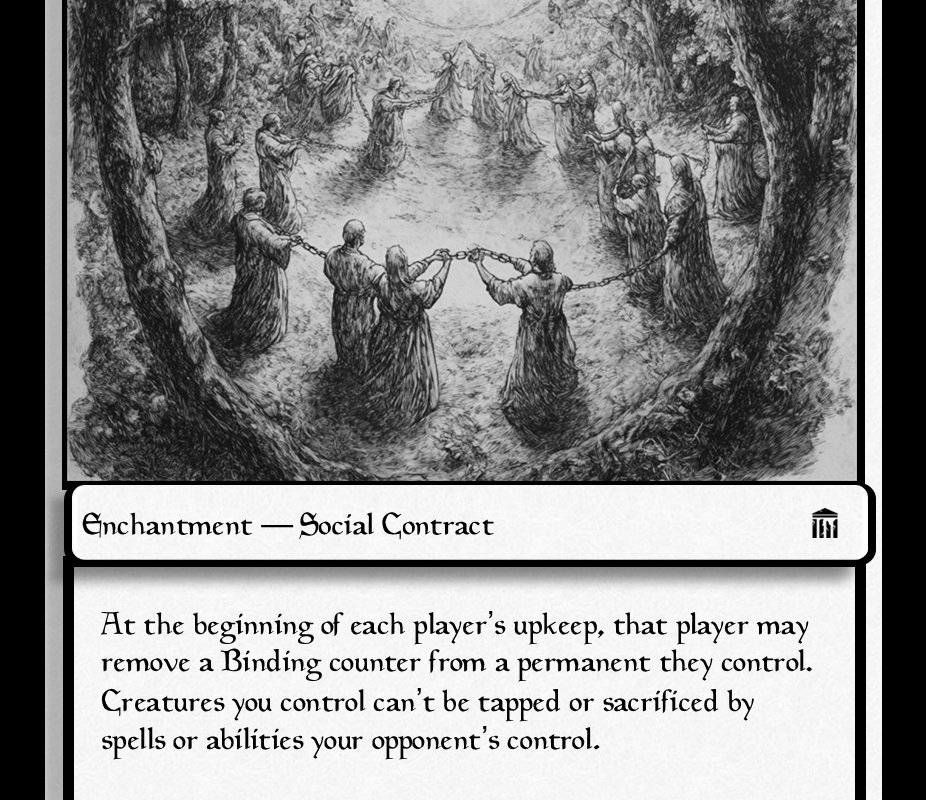
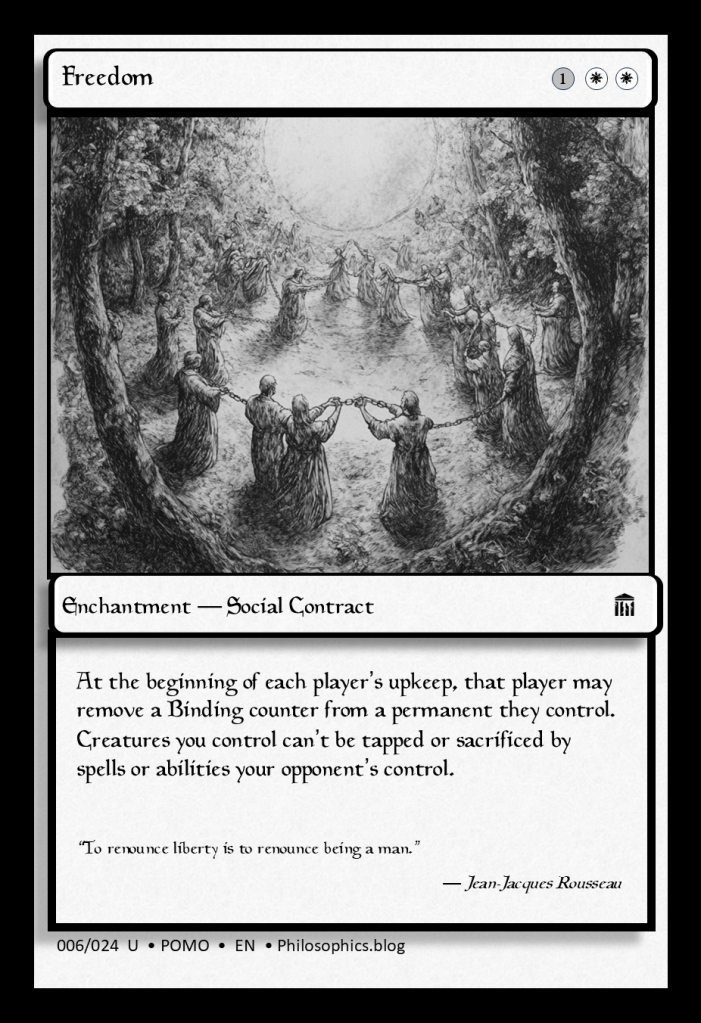
Black-and-white illustration of robed figures standing in a forest clearing, forming a circle by linking chains between their hands. The figures appear both united and restrained, illuminated by a pale, radiant light that suggests dawn or revelation. The mood is solemn yet transcendent, symbolising Rousseau’s paradox that freedom and constraint are inseparable. The image appears as a parody Magic: The Gathering card titled “Freedom,” subtitled “Enchantment — Social Contract,” with a quote from Jean-Jacques Rousseau: “To renounce liberty is to renounce being a man.” The art captures the tension between community, bondage, and liberation.

Freedom is a word so overused it’s practically anaemic. Everyone wants it; no one agrees on what it means. It’s been weaponised by tyrants and revolutionaries alike, invoked to justify both the breaking of chains and their reforging in a different metal.

Audio: NotebookLM podcast on this topic.

As I write this, I have just finished Erich Fromm’s A Sane Society. Without derailing this post, he cited a scenario – a description of work communities given in All Things Common, by Claire Huchet Bishop – where in post-WW2 France, a group formed a sort of workers’ coöperative – but it was more than that; it was an anarchosyndicalist experiment. As I read it, I had to cringe at the power ‘voluntary’ transfers that immediately got me thinking of Foucault’s biopower – as I often do. Saving this for a separate post.

Black-and-white illustration of robed figures standing in a forest clearing, forming a circle by linking chains between their hands. The figures appear both united and restrained, illuminated by a pale, radiant light that suggests dawn or revelation. The mood is solemn yet transcendent, symbolising Rousseau’s paradox that freedom and constraint are inseparable. The image appears as a parody Magic: The Gathering card titled “Freedom,” subtitled “Enchantment — Social Contract,” with a quote from Jean-Jacques Rousseau: “To renounce liberty is to renounce being a man.” The art captures the tension between community, bondage, and liberation.
Image: Freedom: The Chains That Bind Us Together
Card 006 from the Postmodern Set – Philosophics.blog

This Critical Theory parody card, Freedom, draws its lineage from Jean-Jacques Rousseau, whose paradox still haunts the modern condition: “Man is born free, and everywhere he is in chains.” The card re-enchants that contradiction – an Enchantment – Social Contract that reminds us liberty isn’t a state but a negotiation.

The card reads:

At the beginning of each player’s upkeep, that player may remove a Binding counter from a permanent they control.
Creatures you control can’t be tapped or sacrificed by spells or abilities your opponent controls.

This is Rousseau’s dilemma made mechanical. Freedom is not absolute; it’s procedural. The upkeep represents the maintenance of the social contract—an ongoing renewal, not a one-time event. Every player begins their turn by negotiating what freedom costs. You may remove one Binding counter, but only if you recognise that binding exists.

The flavour text underlines Rousseau’s plea:

“To renounce liberty is to renounce being a man.”

Freedom, for Rousseau, wasn’t about doing whatever one pleased. It was about participating in the moral and civic order that gives action meaning. To exist outside that order is not liberty; it’s anarchy, the tyranny of impulse.

The card, therefore, resists the naïve libertarian reading of freedom as the absence of restraint. It instead depicts freedom as the capacity to act within and through shared constraints.

The art shows a ring of robed figures, hand in hand, their chains forming a circle beneath a clearing sky. It’s a haunting image: freedom through fellowship, bondage through unity. The circle symbolises Rousseau’s idea that true liberty emerges only when individuals subordinate selfish will to the general will – the common interest formed through collective agreement.

Yet there’s also a postmodern irony here: circles can be prisons too. The social contract can emancipate or suffocate, depending on who wrote its terms. The same chains that protect can also bind.

The monochrome aesthetic amplifies the ambiguity – freedom rendered in greyscale, neither utopia nor despair, but the space in between.

Rousseau’s notion of the social contract was revolutionary, but its dissonance still resonates: how can one be free and bound at the same time? He answered that only through the voluntary participation in a collective moral order can humans transcend mere instinct.

We might say that today’s democracies still operate under Freedom (Enchantment – Social Contract). We maintain our rights at the cost of constant negotiation: legal, social, linguistic. Every “Binding counter” removed is the product of civic upkeep. Stop maintaining it, and the enchantment fades.

The card hints at the price of this enchantment: creatures (citizens) can’t be tapped or sacrificed by opponents’ control. In other words, autonomy is secured only when the system prevents external domination. But systems fail, and when they do, the illusion of freedom collapses into coercion.

Rousseau earns a complicated respect in my philosophical canon. He’s not in my top five, but he’s unavoidable. His concept of freedom through the social contract anticipates both modern liberalism and its critique. He believed that genuine liberty required moral community – a notion now eroded by hyper-individualism.

Freedom, as I’ve rendered it here, isn’t celebration. It’s lamentation. The card is about the fragility of the social spell that keeps chaos at bay. We remove one binding at a time, hoping not to unbind ourselves entirely.

The Sane Society, Revisited: Why Work Still Drives Us Mad

4–6 minutes

Erich Fromm’s The Sane Society turns seventy this year, and like a ghost of reason past, it refuses to leave. His target was Capitalism™ – not merely as an economic system, but as a psychic infection. Replace the word factory with Zoom call, and his diagnosis reads like yesterday’s corporate newsletter. We’ve upgraded our machines but not our misery.

Aside from its psychobabble, The Sane Society, published in 1954, reads almost like it could have been written in 2024. I’d go out on a limb and claim it will still be relevant in 2054 – because Capitalism™ and the relationship it creates between humans and machines, and humans and other humans. It’s a divisive ideology. I’ve read a lot of content on employee engagement in the past decade. I’d been exposed to it in my Organisational Behaviour courses in the late ’80s. Things were going to change. We’d plotted a future.

Audio: NotebookLM podcast on this topic.

Only nothing material has changed. We pretended to notice the problem and fix it, but the people reporting the issue and the people in charge did not share a worldview. And the young managers who were taught about the challenge were either not promoted or changed their tune to facilitate their own promotion. Funny how the selection process favours groupthink over diversity of opinion.

Video: Apathetic Office Worker

On balance, most people tend to hate or be otherwise dissatisfied with their jobs. This is nothing new. It was true before Fromm’s book, and it is true now. I published a series of posts on prostitution in 2018 and discovered that escorts had better job satisfaction than the larger population. Let that sink in.

‘…the vast majority of the population work as employees with little skill required, and with almost no chance to develop any particular talents, or to show any outstanding achievements. While the managerial or professional groups have at least considerable interest in achieving something more or less personal, the vast majority sell their physical, or an exceedingly small part of their intellectual capacity to an employer to be used for purposes of profit in which they have no share, for things in which they have no interest, with the only purpose of making a living, and for some chance to satisfy their consumer’s greed.

Dissatisfaction, apathy, boredom, lack of joy and happiness, a sense of futility and a vague feeling that life is meaningless, are the unavoidable results of this situation. This socially patterned syndrome of pathology may not be in the awareness of people; it may be covered by a frantic flight into escape activities, or by a craving for more money, power, prestige. But the weight of the latter motivations is so great only because the alienated person cannot help seeking for such compensations for his inner vacuity, not because these desires are the “natural” or most important incentives for work.

Fromm, ever the optimist, thought alienation might be cured through self-awareness and communal values. The twentieth century politely ignored him, opting instead for mindfulness apps and performance reviews.

I’ve excised the psychobabble, but he continues…

‘But even the data on conscious job satisfaction are rather telling. In a study about job satisfaction on a national scale, satisfaction with and enjoyment of their job was expressed by 85 per cent of the professionals and executives, by 64 per cent of whitecollar people, and by 41 per cent of the factory workers. In another study, we find a similar picture: 86 per cent of the professionals, 74 per cent of the managerial, 42 per cent of the commercial employees, 56 per cent of the skilled, and 48 per cent of the semi-skilled workers expressed satisfaction.

‘We find in these figures a significant discrepancy between professionals and executives on the one hand, workers and clerks on the other. Among the former only a minority is dissatisfied—among the latter, more than half. Regarding the total population, this means, roughly, that over half of the total employed population is consciously dissatisfied with their work, and do not enjoy it. If we consider the unconscious dissatisfaction, the percentage would be considerably higher. Taking the 85 per cent of “satisfied” professionals and executives, we would have to examine how many of them suffer from psychologically determined high blood pressure, ulcers, insomnia, nervous tension and fatigue. Although there are no exact data on this, there can be no doubt that, considering these symptoms, the number of really satisfied persons who enjoy their work would be much smaller than the above figures indicate.

‘As far as factory workers and office clerks are concerned, even the percentage of consciously dissatisfied people is remarkably high. Undoubtedly the number of unconsciously dissatisfied workers and clerks is much higher. This is indicated by several studies which show that neurosis and psychogenic illnesses are the main reasons for absenteeism (the estimates for the presence of neurotic symptoms among factory workers go up to about 50 per cent). Fatigue and high labor turnover are other symptoms of dissatisfaction and resentment.’

In the twenty-first century, job dissatisfaction has increased even more. To me, it’s interesting to consider how many people harken back to the ‘good old days’, yet there is little evidence to support the view. Almost schizophrenically, others look to the promise of the future and technology, yet this is simply another narrative with no basis in fact.

The irony is that we’ve automated everything except fulfilment. Even our dissatisfaction has become efficient – streamlined, quantified, and monetised. Fromm warned that the sickness of society was its sanity. On that front, we’re positively thriving.

Stand by for more sanity to follow…