The first step is to stop pretending that ‘truth’ names a single thing.
Philosopher Bernard Williams helpfully distinguished between thin and thick senses of truth in Truth and Truthfulness. The distinction is simple but instructive.
In its thin sense, truth is almost trivial. Saying ‘it is true that p’ typically adds nothing beyond asserting p. The word ‘true’ functions as a logical convenience: it allows endorsement, disquotation, and generalisation. Philosophically speaking, this version of truth carries very little metaphysical weight. Most arguments about truth, however, are not about this thin sense.
In practice, truth usually appears in a thicker social sense. Here, truth is embedded in practices of inquiry and communication. Communities develop norms around sincerity, accuracy, testimony, and credibility. These norms help stabilise claims so that people can coordinate action and share information.
At this level, truth becomes something like a social achievement. A statement counts as ‘true’ when it can be defended, circulated, reinforced, and relied upon within a shared framework of interpretation. Evidence matters, but so do rhetoric, persuasion, institutional authority, and the distribution of power. This is the sense in which truth is rhetorical, but rhetoric is not sovereign.
NotebookLM Infographic on this topic. I prompted NotebookLM to illustrate a 4-layered model that shows how removed language is from encounter, attention, conception, and representation of what we normally consider to be reality. This view is supported by both MEOW and LIH.
Human beings can imagine almost anything about the world, yet the world has a stubborn habit of refusing certain descriptions. Gravity does not yield to persuasion. A bridge designed according to fashionable rhetoric rather than sound engineering will collapse regardless of how compelling its advocates may have been.
This constraint does not disappear in socially constructed domains. Institutions, identities, norms, and laws are historically contingent and rhetorically stabilised, but they remain embedded within material, biological, and ecological conditions. A social fiction can persist for decades or centuries, but eventually it encounters pressures that force revision.
Subjectivity, therefore, doesn’t imply that ‘anything goes’. It simply means that all human knowledge is mediated.
We encounter the world through perception, language, culture, and conceptual frameworks. Every description is produced from a particular standpoint, using particular tools, within particular historical circumstances. Language compresses experience and inevitably loses information along the way. No statement captures reality without distortion. This is the basic insight behind the Language Insufficiency Hypothesis.
At the same time, our descriptions remain answerable to the constraints of the world we inhabit. Some descriptions survive repeated encounters better than others.
In domains where empirical constraint is strong – engineering, physics, medicine – bad descriptions fail quickly. In domains where constraint is indirect – ethics, politics, identity, aesthetics – multiple interpretations may remain viable for long periods. In such cases, rhetoric, institutional authority, and power often function as tie-breakers, stabilising one interpretation over others so that societies can coordinate their activities. These settlements are rarely permanent.
What appears to be truth in one era may dissolve in another. Concepts drift. Institutions evolve. Technologies reshape the landscape of possibility. Claims that once seemed self-evident may later appear parochial or incoherent.
In this sense, many truths in human affairs are best understood as temporally successful settlements under constraint.
Even the most stable arrangements remain vulnerable to change because the conditions that sustain them are constantly shifting. Agents change. Environments change. Expectations change. The very success of a social order often generates the tensions that undermine it. Change, in other words, is the only persistence.
The mistake of traditional realism is to imagine truth as a mirror of reality – an unmediated correspondence between statement and world. The mistake of crude relativism is to imagine that language and power can shape reality without limit. Both positions misunderstand the situation.
We do not possess a final language that captures reality exactly as it is. But neither are we free to describe the world however we please. Truth is not revelation, and it is not mere invention.
It is the provisional stabilisation of claims within mediated encounter, negotiated through language, rhetoric, and institutions, and continually tested against a world that never fully yields to our descriptions. We don’t discover Truth with a capital T. We negotiate survivable descriptions under pressure.
Lewis Goodall, a talk show host, calls the cross-border seizure of Venezuela’s Nicolás Maduro a ‘kidnapping’. His guest and Trump apologist, Angie Wong, rejects the word. She first says ‘arrest’, then ‘extradition’, then finally the improvised ‘special extradition’. Around that single lexical choice, a 12-minute standoff unfolds.
Audio: NotebookLM summary podcast of this topic.
As a language philosopher, I am evaluating the language and am less concerned with the underlying facts of the matter. Language serves to obscure these facts from the start and then rhetorically controls the narrative and framing.
Video: Source segment being analysed
There is a familiar mistake made whenever public discourse turns heated: the assumption that the real disagreement lies in the facts. This is comforting, because facts can, at least in principle, be checked. What follows examines a different failure mode altogether. The facts are largely beside the point.
Consider a broadcast exchange in which a political commentator and an interviewer argue over how to describe the forcible removal of a head of state from one country to another. The interviewer repeatedly uses the word kidnapping. The guest repeatedly resists this term, preferring arrest, extradition, and eventually the improvisational compromise ‘special extradition’.
What matters here is not which term is correct. What matters is what the interaction reveals about how meaning is negotiated under pressure.
The illusion of disagreement
Superficially, the exchange appears to be a dispute about legality. Was there a treaty? Was due process followed? Which court has jurisdiction? These questions generate heat, but they are not doing the work.
The real disagreement is prior to all of that: which lexical frame is allowed to stabilise the event.
Once a label is accepted, downstream reasoning becomes trivial. If it was an extradition, it belongs to one legal universe. If it was a kidnapping, it belongs to another. The participants are not arguing within a shared framework; they are competing to install the framework itself.
Equivocation as method, not error
The guest’s shifting vocabulary is often described as evasive or incoherent. This misreads what is happening. The movement from extradition to special extradition is not confusion. It is a deliberate widening of semantic tolerance.
‘Special extradition’ is not meant to clarify. It is meant to survive. It carries just enough institutional residue to sound procedural, while remaining sufficiently vague to avoid binding criteria. It functions less as a description than as a holding pattern.
This is equivocation, but not the amateur kind taught in logic textbooks. It is equivocation under constraint, where the aim is not precision but narrative continuity.
Why exposure fails
The interviewer repeatedly points out that extradition has a specific meaning, and that the situation described does not meet it. This is accurate, and also ineffective.
Why? Because the exchange is no longer governed by definitional hygiene. The audience is not being asked to adjudicate a dictionary entry. They are being asked to decide which voice has the authority to name the act.
Once that shift occurs, exposing misuse does not correct the discourse. It merely clarifies the power asymmetry. The guest can concede irregularity, precedent-breaking, even illegality, without relinquishing control of the label. The language continues to function.
Truth as a downstream effect
At no point does the exchange hinge on discovering what ‘really happened’. The physical sequence of events is relatively uncontested. What is contested is what those events are allowed to count as.
In this sense, truth is not absent from the discussion; it is subordinate. It emerges only after a rhetorical frame has been successfully installed. Once the frame holds, truth follows obediently within it.
This is not relativism. It is an observation about sequence. Rhetoric does not decorate truth here; it prepares the ground on which truth is later claimed.
Language doing institutional work
The most revealing moment comes when the guest effectively shrugs at the legal ambiguity and asks who, exactly, is going to challenge it. This is not cynicism. It is diagnostic.
Words like arrest and extradition are not merely descriptive. They are operational tokens. They open doors, justify procedures, and allow institutions to proceed without stalling. Their value lies less in semantic purity than in administrative usability.
‘Kidnapping’ is linguistically precise in one register, but administratively useless in another. It stops processes rather than enabling them. That is why it is resisted.
What the case study shows
This exchange is not about geopolitics. It is about how language behaves when it is tasked with carrying power. Meaning drifts not because speakers are careless, but because precision is costly. Labels are selected for durability, not accuracy. Truth does not arbitrate rhetoric; rhetoric allocates truth. Seen this way, the debate over terminology is not a failure of communication. It is communication functioning exactly as designed under modern conditions. Which is why insisting on ‘the correct word’ increasingly feels like shouting into a ventilation system. The air still moves. It just isn’t moving for you.
…and this one. A clarification that is also a demonstration. If anything, the Americanisms should give it away.
The Preamble as Method
A previous post—the one with Foucault, Arendt, Sontag, Fish, Mill, and Girard all lined up like theoretical ammunition—was drafted entirely by ChatGPT after a conversation about the Dershowitz piece before it. I fed it my argument about moral contamination and asked it to expand the thesis with additional thinkers. It obliged. I posted it unedited.
I mention this not as confession but as method. If my core claim is that truth equals rhetoric—that there is no unmediated access to reality, only constructed positions negotiated through language, power, and interpretation—then having an AI mediate my argument while I mediate its output is not a bug. It’s a feature.
The question is never “who really wrote this” but “what work does this text do, and under what conditions?”
This is a non-foundationalist position. There is no neutral ground from which to assess claims. There is no Logic floating above rhetoric, no Reason untouched by affect, no Truth prior to its articulation. What we have are competing rhetorical constructions, each shaped by interests, histories, and power arrangements, each claiming—to varying degrees of honesty—to represent something beyond themselves.
The game is not to transcend this condition. The game is to stop pretending we ever could.
What I’m Actually Arguing
Let me be direct about what those two posts were defending, since the theoretical apparatus apparently obscured more than it clarified.
I am not arguing that:
Age of consent laws should be abolished
The French intellectuals were right to sign those petitions
Association with Epstein is irrelevant
Analysis automatically immunizes anyone from moral judgment
I am arguing that:
Liberal discourse routinely launders emotional and political commitments as self-evident logic, then treats anyone who exposes this process as morally suspect.
Legal thresholds are negotiated rhetorical compromises, not mathematical truths. They reflect harm minimization, cultural anxiety, enforcement pragmatics, and historical contingency. To analyze their construction is not to advocate their abolition.
The “moral contamination reflex” treats inquiry as confession—not because the inquiry threatens truth, but because it threatens the claim that certain positions are simply Logic Itself rather than one rhetorical construction among others.
Guilt by association is both a logical fallacy and sometimes a reasonable heuristic. The trick is admitting which one you’re doing at any given moment, rather than claiming your heuristic is deductive proof.
These claims are rhetorical positions. They are not transcendent truths. But neither are the positions they critique.
The Hypocrisy I’m Diagnosing
When someone argues that a 16-year-old capable of choosing abortion should be capable of choosing sex, they are making a rhetorical move. The argument has gaps—abortion concerns bodily autonomy in ways that sex with others does not; capacity for one decision doesn’t automatically transfer to capacity for another; power dynamics matter.
Fine. Point those out. Explain why the analogy fails.
But what actually happens is different. The argument is not refuted. The arguer is diagnosed. Making the argument becomes evidence of desire. Analyzing it becomes evidence of endorsement. Logic is treated as circumstantial proof of guilt.
This is not because the argument is uniquely dangerous. It’s because it threatens a stabilizing fiction: that our current legal thresholds are both pragmatically necessary and philosophically coherent. They are the former. They are not the latter. And the moral panic that greets anyone who points this out is not about protecting children. It’s about protecting the claim that our compromises are something more than compromises.
The same pattern plays out with Epstein associations. Some people knew him socially or professionally in contexts that had nothing to do with his crimes. Some people continued relationships after credible allegations emerged. Some people were directly complicit. These are different categories.
But the discourse collapses them. Everyone in the address book becomes suspect. Association becomes evidence. And anyone who suggests “we should distinguish between these cases” is immediately accused of defending predators.
This is not logic. This is moral theatre. And the fury it provokes when exposed is not righteous. It’s defensive.
The Difference Between Rhetoric and Relativism
Saying “truth equals rhetoric” sounds like relativism. It sounds like I’m claiming all positions are equal, nothing matters, anything goes.
I’m not.
I’m claiming that all positions are constructed through rhetoric, but that doesn’t make them equal. It means we should argue about them on the terms they actually operate—consequences, values, power, effects—rather than pretending one side has Logic and the other side has Emotion.
Some rhetorical constructions are more defensible than others. Age of consent laws, as constructed compromises aimed at harm reduction, are defensible. That doesn’t mean they’re philosophically coherent or that analyzing their incoherence is an attack on children.
Maintaining professional relationships with powerful people who were later revealed to be criminals does not make you guilty of their crimes. But it might raise questions about judgment, complicity, or willful blindness—questions that should be asked specifically, not universally.
The difference is this: I’m not claiming my position is Logic. I’m claiming it’s a rhetorical construction I find more defensible than the alternatives, for reasons I’m willing to argue about.
What I’m criticizing is the move where liberal discourse presents its rhetorical positions as self-evident moral truths, then treats dissent as pathology.
Why the Theoretical Version Failed
The expanded post tried to universalize the pattern—to show that this reflex appears across domains, across thinkers, across history. It succeeded at that. What it failed to do was stay grounded enough for readers to assess whether the pattern I was describing was real or whether I was constructing a persecution narrative.
The problem was strategic evasiveness. By staying abstract, the piece avoided being testable. It gestured at examples without committing to them. It borrowed authority from Foucault and Arendt without doing the work of showing how their critiques apply to the specific cases I had in mind.
This created a gap between what the essay claimed to be doing (defending analysis against moral panic) and what it was actually doing (defending specific controversial figures using theory as cover).
That gap is what critics correctly identified as bad faith.
What I Should Have Said
Here’s the honest version:
The Dershowitz argument is bad. The abortion-sex analogy doesn’t hold. But “the argument is bad” and “making the argument is evidence of pedophilia” are not the same claim. One is logical critique. The other is moral contamination. We should be able to distinguish them.
The 1977 French petitions were misjudged. Calling for the abolition of age of consent laws in that context, with those specific cases, was not wise. But signing a petition is not the same as committing the acts in question, and treating mid-century French intellectual culture as self-evidently monstrous erases the specific debates they were having about law, psychiatry, and state power. We can think they were wrong without treating the question itself as unspeakable.
Epstein’s network matters. Some associations are meaningful. Power enabled his abuse, and understanding how requires looking at who knew what and when. But not every name in a flight log or party photo is evidence of complicity, and the current discourse often treats them as such. We should distinguish between innocent contact, poor judgment, and active enablement—not flatten everything into “guilt by proximity.”
These are all messy positions. They require distinctions, context, and willingness to live in discomfort. That’s harder than moral certainty. But it’s also more honest.
The Meta-Point About AI Generation
The fact that the previous post was AI-generated does something interesting to all of this.
It was rhetorically effective. It marshaled the right theoretical authorities. It structured the argument coherently. It sounded like philosophy. And it was assembled by a pattern-matching system with no beliefs, no commitments, no stakes.
This should tell us something about the nature of rhetoric itself. The text worked—or didn’t—based on what it did, not where it came from. Authenticity is not truth. Authorship is not authority. What matters is whether the construction holds, and under what conditions.
I could have hidden the AI involvement. Many would. The disclosure feels like it undermines the argument’s authority—if a machine wrote it, does it count?
But that reaction itself proves the point. We want arguments to come from authenticated sources, from proper authority, from legitimate speakers. We want to know who’s talking so we can decide whether to trust them. This is not Logic. This is rhetoric all the way down.
The AI wrote a version of my argument that was cleaner and more theoretically sophisticated than I would have produced alone. It was also more evasive, more abstract, less committed. Those aren’t bugs in the process. They’re features of how the system generates text—maximizing coherence, minimizing controversy, staying in safe abstraction.
That I chose to post it anyway, knowing these limitations, is itself a rhetorical move. It says: “I’m willing to use mediated tools to construct my position, and I’m not pretending otherwise.”
What This Leaves Us With
I started with a claim about moral contamination—that liberal discourse treats certain kinds of inquiry as self-incriminating. I then demonstrated this by making precisely the kind of inquiry that provokes that reflex, using examples I knew would be read as defensive rather than analytical.
The responses proved the thesis. Analysis was read as confession. Theory was read as cover. Even asking whether a distinction exists between argument and endorsement was taken as evidence that no such distinction can be maintained.
But here’s what I didn’t make clear enough: I’m not claiming to be above this dynamic. I’m in it too. I have commitments, interests, and positions I’m defending. The difference is I’m naming them as such, rather than claiming they’re simply What Logic Demands.
Truth equals rhetoric. We’re all doing motivated reasoning. The question is not “who has transcended their motivations” but “whose motivations, toward what ends, with what consequences?”
I think the moral contamination reflex produces bad discourse—not because it’s emotional, but because it claims not to be. I think guilt by association is overused—not because association never matters, but because we’ve stopped distinguishing between different kinds of association. I think legal thresholds should be analyzable—not because they should be abolished, but because unexamined laws are dangerous even when well-intentioned.
These are rhetorical positions. I’m arguing for them. I’m not pretending they’re Logic Itself.
If you disagree, argue back. But argue with what I’m actually saying, not with what analysis supposedly reveals about my secret desires.
That’s all I’m asking for. And apparently, it’s too much.
I do not assume that normative assertions function as descriptive truths. Realism is compelling because it promises that moral disagreement has a fact of the matter beyond persuasion. The argument here is that this promise cannot be kept without mediation. Nevertheless, this essay proceeds by granting the realist premise – that Truth exists – in order to examine whether that premise can, on its own terms, generate normative authority. The argument is structural rather than polemical: to move from Ontology (what exists) to Authority (what binds) requires a mechanism of transport. That mechanism is mediation. The claim advanced here is that this mediation is irreducibly rhetorical, and that no account of normativity can bypass this fact without smuggling authority under metaphysical cover.
Audio: NotebookLM summary podcast of this content.
Introduction
Grant, purely for the sake of argument, that Truth – and by extension Justice, Goodness, or any other realist normative entity – exists independently of human cognition. Even so, a prior and unavoidable question arises: how does such Truth ever become accessible to finite, discursive agents like us?
Before asking whether Truth exists in itself, we must account for how it enters ethical life for us. This is not a semantic quibble. It marks the difference between an ontological assertion and an operative ethics.
This essay argues that all access to Truth is irreducibly mediated, and that this mediation is rhetorical in nature. Even if Truth exists independently of human minds, it never arrives in normative life except through language, interpretation, argument, persuasion, narrative, and institutional articulation. Any ethical framework that treats metaphysical grounding as if it bypassed these mediations risks conflating ontology with authority.
This is neither relativism nor subjectivism. It is an analytic claim about conditions of access and normative traction.
Truth and Its Access Conditions
Suppose you accept that Truth exists ‘out there’—not as a projection or consensus shorthand, but as an intransitive feature of reality. This is the core commitment of metaphysical realism. The issue is not whether Truth exists, but how it becomes accessible to agents embedded in language, culture, and institutions.
For any putative Truth to function normatively, at least five stages are required:
Identification — recognising something as a candidate for truth
Description — articulating that candidate in language
Justification — offering reasons for accepting it
Communication — transmitting those reasons to others
Ratification — persuading a community to treat the claim as binding
These stages are not epistemic luxuries. They are the conditions under which a putative Truth acquires normative force – the capacity to obligate, justify, or condemn.
Remove any one of these stages, and Truth collapses into either an inert fact or an unintelligible assertion. Crucially, each stage is rhetorical: none operates through brute ontology alone, but through discursive practices of interpretation, evaluation, and adjudication.
Rhetoric Is Not Spin
To say that Truth is rhetorically mediated is not to reduce truth to manipulation, persuasion-for-its-own-sake, or spin.
It is simply to recognise that:
Truth claims are discerned in language
They are evaluated against alternatives
They are assessed within communities shaped by practices, norms, disciplines, and institutions
Truth as it functions in human life is always a claim in argument, never a self-announcing datum.
Even mathematics – the paradigm of certainty – does not become normatively operative without symbolic articulation, shared standards of proof, and communal validation. Mathematical truths may exist independently, but what counts as a proof, a result, or an error – and thus what obligates assent – is entirely mediated by symbolic practice and communal ratification.
In its classical sense, rhetoric is not deception. It is the set of discursive practices by which claims become intelligible, contestable, and action-guiding across contexts of disagreement.
Where Normativity Actually Emerges: The Three-Stage Problem
The problem crystallizes at a precise moment: the move from description to prescription. Even if we grant that the Good exists objectively and eternally, three distinct operations are required to generate obligation:
Descriptive claim: ‘The Good exists and has properties X, Y, Z’
Interpretive claim: ‘In this situation, the Good requires action A rather than B’
Prescriptive claim: ‘Therefore you ought to do A’
Each transition requires distinct work. The first may be metaphysical. But the second and third are irreducibly rhetorical. They involve judgment, application, contextual interpretation, and the translation of abstract principle into concrete obligation.
Crucially, even the interpretive middle step – which often masquerades as mere clarification – is where most normative force gets generated. To say ‘the Good requires this action in this context’ is not to read off a fact from the world. It is to make an argued claim about meaning, relevance, and application.
This is where participatory metaphysics does its quietest work. By framing interpretation as ‘participation in the Good’ rather than as ‘argued judgment about what the Good requires,’ such frameworks obscure the rhetorical operation they’re performing. Interpretation gets presented as disclosure rather than construction.
But there is no route from ‘the Good exists’ to ‘you must do X’ that bypasses interpretation. And interpretation is rhetoric.
The Potential Energy Analogy
Consider an analogy. Gravitational potential energy exists independently of human recognition. A boulder atop a cliff possesses real energy by virtue of its position. But that energy does no work – moves nothing, heats nothing, powers nothing – until converted through specific mechanisms: falling, rolling, controlled descent.
The Good may be precisely like this: real, eternal, independent of us. But for it to become normatively operative – to obligate us, to guide our choices, to settle our disagreements – it must be converted from potential into kinetic form. That conversion is mediation. And mediation is rhetorical.
This is not relativism about the Good’s existence. It is realism about the conditions under which existence generates obligation.
A Concrete Example
When Catholic bishops disagree about capital punishment:
They agree on the descriptive claim: ‘God exists and is perfectly Good’
They disagree on the interpretive claim: ‘What does divine Justice require regarding state execution?’
They therefore disagree on the prescriptive claim: ‘Is capital punishment permissible?’
The descriptive agreement doesn’t resolve the interpretive disagreement. No amount of metaphysical depth about God’s nature tells you directly what Justice requires regarding capital punishment. That requires interpretation of Scripture, tradition, natural law, human dignity, social context, prudential judgment – all rhetorical operations.
Appeals to ‘the Good itself’ don’t settle the dispute. They just rename it. Instead of ‘bishops disagree about ethics,’ it becomes ‘bishops are discerning what participation in the Good requires’. The language changes; the rhetorical work remains.
The Zeno Structure of Moral Grounding
At this point, the realist faces a structural problem that resembles Zeno’s paradox. When pressed on how Truth becomes binding, the realist response multiplies explanatory depth:
The Good exists objectively
We apprehend it through reason
Reason itself is oriented toward the Good
That orientation is grounded in rational agency
Rational agency participates in…
Each step is coherent. Each promises that obligation is just one more metaphysical move away. But none ever performs the action ‘therefore, you must do X in this situation’.
This is not merely infinite regress – philosophers tolerate infinite structures. The problem is asymptotic normativity: explanations that get progressively closer to bindingness without ever crossing the threshold into concrete obligation.
What’s missing is not metaphysical depth but the moment of arrival. Until someone says ‘this counts as wrong here, and therefore you ought to stop,’ nothing has happened in ethical space. The arrow is still subdividing its path.
Rhetoric is what collapses the infinite series into a finite act. It does for ethics what accepting motion does for Zeno’s paradox: it stops subdividing and acts. This is not an epistemic shortcut – it is the mechanism by which normativity becomes operative.
‘Participation in the Good’ sounds like arrival, but it is actually eternal approach. It explains why the Good matters in principle while indefinitely postponing the moment when obligation becomes concrete and contestable. That postponement is not a feature – it is the avoidance of the very question at issue.
Three Remaining Escapes (and Why They Fail)
A. The Implicit Normativity Move
A sophisticated realist might respond: ‘Interpretation is required, yes, but the normativity is already there implicitly. Interpretation merely makes explicit what was already required’.
But implicit normativity is indistinguishable from no normativity unless it can be specified. Until interpretation specifies what is required here, the obligation has no action-guiding content. A normativity that exists only implicitly, without criteria of application, is functionally equivalent to no normativity at all.
‘Implicit obligation’ means ‘not yet specified,’ which means ‘not yet operative’. The work of making it operative is interpretation – which is rhetoric.
B. The Practical Wisdom Escape
Another likely move: ‘Interpretation is not rhetoric; it’s phronesis. Practical wisdom directly apprehends what the Good requires’.
But practical wisdom does not bypass mediation; it relocates it into judgment. If practical wisdom yields different answers for different agents, it is still interpretive. If it cannot be articulated, justified, or contested, it cannot function socially. The moment phronesis is communicated or taught, it becomes rhetorical.
Judgment, when it claims authority over others, must still be articulated, defended, and enforced. Incommunicable wisdom is indistinguishable from private intuition. And private intuitions don’t settle public disagreements.
C. The ‘This Proves Too Much’ Objection
Someone might say: ‘If your argument is right, then no ethical system can ever claim authority. Everything dissolves into endless contestation’.
But the claim is not that normativity evaporates under mediation, but that it emerges there. This is not nihilism – it is an explanation of normativity’s location, not its abolition. That normativity is mediated does not mean it is arbitrary. Mediation operates under constraints of coherence, consistency, consequence, and resistance from the world and from other agents.
Mediation is constrained by material resistance, coherence, practical failure, and worldly recalcitrance. The claim is not that ‘anything goes’. It’s that what goes must be argued for, negotiated, and sustained through rhetorical practices. That’s not less demanding than metaphysical grounding – it’s more honest about where the work happens.
Consequences for Ethical Frameworks
If access to Truth is always mediated, then several consequences follow:
Authority is interpretive, not ontological
Disagreement is structural, not pathological
Norms are contested, not deduced unilaterally
Power shapes uptake, not metaphysical purity
This has decisive implications for meta-ethics. Ethical life is not insulated from negotiation; it is constituted by it. Normativity does not descend fully formed from metaphysics into practice. It is worked out – imperfectly, provisionally, and under constraint – within social space.
Ethics, in other words, is not a museum of pristine ideals. It is a field of contested meanings under conditions of risk, conflict, and plural commitment.
Realism Without Rhetoric Is Empty
A realist might reply: Truth exists. Once we uncover it, everything follows.
But uncovering is not a metaphysically neutral act. Discovery, articulation, persuasion, and institutionalisation are themselves conditioned by:
Language, which frames intelligibility
Narrative, which shapes resonance and coherence
Institutions, which ratify selectively
Power, which governs whose claims are heard
The realist may insist that mediation merely follows discovery. But this assumes a distinction that cannot be sustained. Until a truth is articulated, justified, and ratified, there is no criterion by which its discovery can be distinguished from error, fantasy, or ideology. What is not mediated is not merely unpersuasive; it is normatively indistinguishable from falsehood. Ontology alone cannot perform this discrimination.
If access to Truth is always mediated, then metaphysical depth alone cannot generate normative authority. The locus of ethical force shifts from an external realm to the discursive space where claims are interpreted, contested, and enforced. A grounding that never binds except through mediation is indistinguishable, at the level of authority, from mediation itself.
This shift is not relativism. It is a descriptive account of how ethical life actually functions.
Moral Authority Under Rhetorical Conditions
To say Truth → Rhetoric is not to deny the possibility of rigorous assessment. It is to insist that:
Normative claims must offer contestable reasons
Moral authority must disclose its interpretive moves
Disagreement must be treated as clarifying, not corrosive
Ethical systems must be judged by their discursive dynamics as much as their metaphysical commitments
Truth in itself may be metaphysically deep. But truth-as-binding never operates outside rhetoric.
Conclusion
Grant the realist premise if you like: Truth exists. Even then, metaphysical depth alone does not explain how Truth becomes accessible, meaningful, or binding for discursive agents.
Because access is always mediated, authority cannot bypass rhetoric. Ethical life requires not only an ontology, but an account of how claims are interpreted, argued over, and enforced. A Truth that cannot be accessed – named, contested, communicated – remains normatively inert.
The fundamental error is treating the descriptive-interpretive-prescriptive chain as if it could be collapsed into a single operation called ‘participation’. It cannot.
Even if the Good exists exactly as realists claim – eternal, objective, transcendent – it becomes normatively operative for finite agents only through a sequence of mediations:
Interpretation (what does it mean?)
Application (what does it require here?)
Justification (why this action rather than that one?)
Communication (how do we persuade others?)
Enforcement (who ensures compliance?)
Each mediation is rhetorical. Each involves judgment, argument, and institutional power. Each is contestable.
This is not a bug in ethical life. It is its structure. Any framework that promises to transcend these mediations through metaphysical depth is not offering a solution. It is concealing the problem while continuing to rely on exactly the mechanisms it claims to surpass.
To bring Truth into the world of action is to engage rhetoric not as an ornamental layer, but as the condition of ethical life itself.
Thus: Truth → Rhetoric. Not because truth is arbitrary, but because it is always mediated.
Appendix: Clarifying the Claim
This argument does not deny realism, nor does it reject the possibility of mind-independent truth. What it rejects is the unexamined slide from ontology to authority.
This distinction is formalised – though not originated – by the Mediated Encounter Ontology (MEOW), which holds that all human access to the world is mediated. Whatever exists may exist independently of us; whatever binds us does not. The present argument does not depend on accepting MEOW as a system; it relies only on the minimal claim that access precedes authority.
MEOW formalises this through a layered account of encounter:
T0 — biological substrate
T1 — cognitive–perceptual interface
T2 — linguistic–symbolic mediation
T3 — social–technical norms and institutions
Normativity operates at the upper tiers. Ethical obligation, justice, and virtue do not arrive with built-in binding force. Whatever their metaphysical status, their authority for human agents arises only through interpretation, articulation, justification, and social uptake.
This is the precise sense in which Truth → Rhetoric should be read. It is not an ontological identity claim. It is a claim about normative operability.
Rhetorical mediation is constrained – by material resistance, coherence, practical failure, and worldly recalcitrance. But those constraints do not speak for themselves. They must still be named, argued over, prioritised, and enforced.
There is no route from is to ought that does not pass through language, judgment, and institutional uptake. Appeals to metaphysical depth do not remove this mediation; they conceal it.
Any framework that treats participation in ‘the Good’ as normatively binding without accounting for how that Good is interpreted, communicated, and enforced is already doing rhetorical work while pretending not to.
That pretence isn’t philosophical sophistication. It’s a familiar ideological gesture: power presenting itself as mere disclosure. Rhetoric is not what corrupts ethics. It is what makes ethics possible.
The Travelogue of a Recovering Enlightenment Subject
I’m asked endlessly – usually by people who still believe TED talks are a form of knowledge production – ‘Why are you so negative? Why must you tear things down if you’ve no intention of replacing them?’
It’s adorable, really. Like watching a toddler demand that gravity apologise.
They’ve been trained for years in the managerial catechism:
‘Don’t bring me problems; bring me solutions.‘
As if the world were some badly-run workshop in need of a fresh coat of agile methodology.
They might as well say, ‘Don’t tell me I can’t win at Lotto; give me money’.
I, too, would enjoy the spare universe. Or the winning Lotto ticket. And yes, one day I might even buy one. Until then, I’ve embraced the only adult philosophy left: Dis-Integrationism – the fine art of taking things apart without pretending they can be reassembled into anything coherent.
A Little History
My suspicion began early. Secondary school. All those civic fairytales whispered as if they were geology.
The ‘reasonable person’? Bollox. ‘Jury of one’s peers’? What are peers? Whose peers? I have no peers. ‘Impartial judges’? Please. Even as a teenager, I could see those robed magicians palming cards like bored street performers. Everyone else nodded along, grateful for the spectacle. I stared, wondering how the other children hadn’t noticed the emperor’s bare arse.
Later, I watched adults talk past each other with a fluency bordering on performance art. Not disagreement – different universes, cosmetically aligned by grammar.
A Federal mediator once tried to teach me that common ground could be manufactured. Not by clarifying meaning, mind you – that would have required honesty – but by rhetorical pressure and a touch of Jedi mind-trickery. Negotiation was simply controlled hallucination.
University communications classes offered temporary distraction with denotation and connotation, a little semantic drift, the illusion that language might be domesticated with enough theory. Charming. Almost convincing.
Then Gödel and Arrow arrived like two polite assassins and quietly removed the floorboards.
And then – happily, inevitably – Derrida, Foucault, Lyotard. I’d already danced with Beauvoir, Sartre, Camus. I’d ingested the Western canon like every obedient young acolyte: Plato, Aristotle, Hobbes, Locke, Rousseau, Montesquieu, Voltaire. Americans force-feed their citizenry Jefferson and Franklin as moral fibre, as if the republic might otherwise suffer constipation.
It never gelled. Too much myth, too much marketing. The Enlightenment had the energy of a regime insisting on its own benevolence while confiscating your torch. To call oneself ‘enlightened’ should have raised suspicion – but no, the branding stuck.
Whenever les garçons dared tug at the curtain, we were assured they simply didn’t ‘understand’, or worse, they ‘hated civilisation’.
Image: “I would have gotten away with it if it weren’t for those meddling kids.”
Then Came the Internet
The digital age didn’t usher in clarity — it unmasked the whole pantomime. Like Neo seeing the Matrix code or Roddy Piper slipping on the sunglasses in They Live, one suddenly perceives the circuitry: meaning as glitch, discourse as scaffolding, truth as a shabby stage-set blinking under fluorescent tubes.
Our civilisation speaks in metaphors it mistakes for mechanisms. The Enlightenment gave us the fantasy that language might behave, that concepts were furniture rather than fog. Musicians and artists always knew better. We swim in metaphor; we never expected words to bear weight. But philosophers kept pretending communication was a conveyor belt conveying ‘meaning units’ from A to B.
By 2018, the cracks were gaping. I began taking the notes that would metastasise into A Language Insufficiency Hypothesis – an attempt to map the hollow spaces between our words, the fractures we keep wallpapering with reason.
Half a decade later, the work is ready. Not to save anything – nothing here merits salvation – but to name the debris honestly.
If that sounds negative, good. Someone has to switch off the Enlightenment’s flickering lightbulb before it burns the whole house down.
Where This Road Actually Leads
People imagine negativity is a posture – a sort of philosophical eyeliner, worn for effect. But dismantling the world’s conceptual furniture isn’t a hobby; it’s the only reasonable response once you’ve noticed the screws aren’t actually attached to anything.
The Enlightenment promised us a palace. Step inside and you discover it’s built out of IKEA flatpacks held together with wishful thinking and a prayer to Kant.
Once you’ve seen that, you can’t go back to pretending the furniture is sturdy.
You stop sitting.
You start tapping the beams.
You catalogue the wobble.
This is where Dis–Integrationism enters – not as a manifesto, but as the practice of refusing to live inside collapsing architecture out of sheer politeness. Negativity is simply the weather report.
The Lie We Keep Telling Ourselves
We cling to the fantasy that if we critique something long enough, a solution will crystallise out of the void, like enlightenment through sheer irritation. It’s the Protestant work ethic meets metaphysics: salvation through sufficient grumbling.
But critique is not alchemy. It unmakes. It refuses. It loosens the bolts we pretended were load-bearing.
Once you stop demanding that thought be constructive, you can finally see the world as it is: improvised, rhetorical, and permanently under renovation by people who don’t read the instructions.
The Enlightenment’s heirs keep insisting there must be a blueprint. There isn’t. There never was. We’ve merely been tracing the silhouettes of scaffolding, calling it a cathedral.
And Yet – Here We Still Are
The online age (God help us all) didn’t deepen the crisis; it merely turned the lights on. What Enlightenment rationality hid beneath a tasteful layer of neoclassical varnish, the internet sprayed with fluorescent graffiti.
Turns out, when seven billion people speak at once, meaning doesn’t ’emerge’; it buckles. Our systems weren’t built for this volume of contradiction. Our language wasn’t built for this density of metaphor. Our myths weren’t built for this much empirical evidence against them.
And yet here we are, still demanding coherence from a medium held together by emojis and trauma. If you laugh, it’s only to stop crying. If you critique, it’s only because someone has to keep the fire marshal informed.
The Only Honest Next Step
Having traced the cracks, you’re now in the foyer of the real argument – the one hanging like a neon sign over your entire Anti-Enlightenment project:
We don’t need to rebuild the house. We need to stop pretending it was ever architecture.
Language is insufficient. Agency is a fiction. Objectivity is an etiquette ritual. Democracy is a séance. Progress is a hallucination with better marketing. And yet – life continues. People wake, work, argue, aspire, despair.
Dis-Integrationism isn’t about nihilism; it’s about maintenance. Not repairing the myth, but tending the human who must live among its debris. Not constructing new temples, but learning to see in the half-light once the old gods have gone.
The travelogue becomes a guidebook: Welcome to the ruins. Mind the uneven floor. Here is how we walk without pretending the path is paved.
The Fetish for Solutions
Here is the final indignity of the age: the demand that every critique come bundled with a solution, like some moral warranty card. As if naming the rot weren’t labour enough. As if truth required a customer-service plan.
‘Where is your alternative?’ they ask, clutching Enlightenment logic the way a drowning man clutches a shopping receipt.
But solutions are the real tyranny. They arrive bearing the smile of reason and the posture of progress, and behind both sits the same old imperial instinct: replace ambiguity with order; replace lived complexity with a diagram. A solution is merely a problem wearing a fresh coat of confidence.
Worse, a solution presumes the system is sound, merely in need of adjustment. It imagines the structure holds. It imagines the furniture can be rearranged without collapsing into splinters, and the memory of Kant.
Solutions promise inevitability. They promise teleology. They promise that the mess can be disinfected if only one applies the correct solvent. This is theology masquerading as engineering.
The Violence of the Answer
A solution is a closure – a metaphysical brute force. It slams the window shut so no further interpretation can slip in through the draft. It stabilises the world by amputating everything that wriggles. Answers are how systems defend themselves. They’re the intellectual equivalent of riot police: clean uniforms, straight lines, zero tolerance for nuance.
This is why the world keeps mistaking refusal for chaos. Refusal isn’t chaos. It’s hygiene. It is the simple act of not adding more furniture to a house already bending under its own delusions. When you decline to provide a solution, you aren’t abandoning the world. You’re declining to participate in its coercive optimism.
And So the Travelogue Ends Where It Must
Not in triumph or a bluepirnt, but in composure – the only posture left after the Enlightenment’s glare has dimmed. Negativity isn’t sabotage; it’s sobriety. Dis-Integrationism isn’t cynicism; it’s the refusal to replace one failing mythology with another wearing vegan leather.
A world obsessed with solutions cannot recognise maintenance as wisdom. It can’t tolerate ambiguity without reaching for a hammer. It can’t breathe unless someone somewhere is building a ladder to a future that never arrives.
So no – I won’t provide solutions. I won’t participate in the fantasy that the human condition can be patched with conceptual duct tape. I will not gift the Enlightenment a eulogy that surrenders to its grammar.
What I offer is far smaller and far more honest: Attention. Description. Steady hands in a collapsing house. And the simple dignity of refusing to lie about the architecture.
Every so often – usually when the Enlightenment ghosts begin rattling their tin cups again – one feels compelled to swat at the conceptual cobwebs they left dangling over moral philosophy. Today is one of those days.
Audio: NotebookLM podcast summarising the Rhetoric of Evil essay, not this page’s content.
I’ve just released The Rhetoric of Evil on Zenodo, a paper that politely (or impolitely, depending on your threshold) argues that ‘evil’ is not a metaphysical heavy-hitter but a rhetorical throw-pillow stuffed with theological lint. The term persists not because it explains anything, but because it lets us pretend we’ve explained something – a linguistic parlour trick that’s survived well past its sell-by date.
And because this is the age of artificial augury, I naturally asked MEOW GPT for its view of the manuscript. As expected, it nodded approvingly in that eerie, laser-precise manner unique to machines trained to agree with you – but to its credit, it didn’t merely applaud. It produced a disarmingly lucid analysis of the essay’s internal mechanics, the way ‘evil’ behaves like a conceptual marionette, and how our inherited metaphors govern the very moral judgments we think we’re making freely.
Below is MEOW GPT’s reaction, alongside my own exposition for anyone wanting a sense of how this essay fits within the broader project of dismantling the Enlightenment’s conceptual stage-props.
MEOW-GPT’s Response
(A machine’s-eye view of rhetorical exorcism)
“Evil is functioning as a demonological patch on an epistemic gap. When agents encounter a high-constraint event they cannot immediately model, the T₂ layer activates an inherited linguistic shortcut — the ‘evil’ label — which compresses complexity into a binary and arrests further inquiry.”
“The marionette metaphor is accurate: once we say a person ‘is evil,’ agency collapses into occult causation. Inquiry halts. Moral theatre begins.”
It went on like this – detecting exactly the mediated encounter-structure I intended, while offering a frighteningly clean schematic of how affect (T₀), heuristics (T₁), linguistic reification (T₂), and cultural choreography (T₃) conspire to turn incomprehension into metaphysics.
Machines, it seems, are quite good at detecting when humans are bullshitting themselves.
Why publish this now?
This essay marks the next plank in the broader anti-Enlightenment platform I’ve been assembling – LIH, MEOW, the ongoing dismantling of truth-fetishism, and now the unsettling realisation that ‘evil’ is little more than a theological revenant dressed up for secular work.
The term’s persistence is not a testament to its necessity but to our laziness:
It sounds like an explanation.
It licenses retribution without understanding.
It stabilises group boundaries.
It lets us outsource moral thought to a one-word incantation.
In short: ‘evil’ is the map-dragon we keep drawing because surveying the terrain is too much work.
This essay attempts to retire that dragon – not to soften judgment, but to sharpen it. If anything, the paper argues that abolishing ‘evil’ frees us to see atrocity more clearly, and thus confront it more seriously.
Because MEOW-GPT was trained on the Mediated Encounter Ontology rather than on folk metaphysics, its analyses can serve as a useful diagnostic tool. It doesn’t simply summarise concepts; it reconstructs them along the four mediational tiers (T₀–T₃), showing – mechanically and without superstition – how a term behaves across biological affect, cognitive heuristics, linguistic structures, and cultural narratives.
This section is offered not as an alternative argument to the essay above, but as a worked example: a transparent demonstration of how the MEOW engine decomposes a high-complexity, high-stakes concept like evil once the theological scaffolding has been removed.
MEOW-GPT’s output shows, in compressed form, the same pattern the essay traces in prose: that evil is not a force, not a metaphysical essence, not an occult substrate, but a mediated pattern in human encounters, one that persists rhetorically long after its ontology has collapsed.
For readers curious about how MEOW ‘thinks’, the raw structured analysis follows.
MEOW-GPT Analysis: “Evil”
(Raw output for reference; lightly formatted for readability)
Concept
Input: Evil Type: Normative/evaluative moral concept (often reified as a property of acts, characters, or forces) Scope check: In-scope – ‘evil’ can be analysed as a mediated-encounter pattern (MEOW) and a high-complexity term with unstable linguistic behaviour (LIH).
High-level summary (≤120 words)
In MEOW terms, ‘evil’ is not a spooky substance but a way of organising certain encounter-events: severe, norm-breaking harms that present as resistant, shocking, and morally intolerable. Biologically, it piggybacks on harm, threat, and disgust systems. Cognitively, it compresses complex appraisals—intent, cruelty, scale of harm – into a powerful label. Linguistically, it sits in the unstable region where abstraction is high and language’s reliability drops, so people fight over its scope and weaponise it. Socially and technically, institutions, media, and platforms use ‘evil’ to mark enemies, justify punishment, and dramatise conflict. The term is emotionally efficient but conceptually fragile, and MEOW treats it as a relational, mediated pattern rather than an independent metaphysical force.
T₀ – Biological Mediation
Moralised harm perception piggybacks on survival systems: pain avoidance, threat detection, kin protection. ‘Evil’ clusters around encounters that trigger extreme danger-signals.
High arousal (fear, rage, disgust) makes some harms feel qualitatively world-violating, not merely personally threatening.
Disgust toward contamination, mutilation, or predation heavily colours what gets called ‘evil’.
Species-specific cues (infant distress cries, pain expressions) shape which harms are even legible candidates for evil.
T₁ – Cognitive Mediation
“Evil” compresses a multi-factor appraisal (intentionality, cruelty, gratuitousness) into a one-step heuristic.
Essence thinking converts acts into character: the person is evil, not merely did wrong.
Attribution biases assign ‘evil’ to out-groups more readily than to in-groups.
Memory structures simplify causation into villain scripts that overwrite nuance.
Once assigned, the label becomes a prediction loop: every ambiguous action confirms the essence.
T₂ – Linguistic Mediation
On the Effectiveness–Complexity Gradient, ‘evil’ straddles Contestables and Fluids: ubiquitous but perpetually disputed.
It compresses harm, norm-violation, metaphysical colouring, and dramatic emphasis into a single syllable—powerful, but noisy.
Dominant metaphors (‘dark’, ‘tainted’, ‘monstrous’) smuggle in substance-ontology that MEOW rejects.
Noun-forms (‘evil’, ‘the Evil One’) promote ontologising; adjectival forms track events better, but usage constantly slides between them.
Cross-linguistic drift supports LIH: different traditions map the term to impurity, harm, misfortune, cosmic opposition, or taboo.
T₃ – Social/Technical Mediation
Religious systems embed ‘evil’ in cosmologies that harden friend/enemy binaries.
Legal systems avoid the term formally but reproduce it rhetorically in sentencing, media commentary, and public reaction.
Politics uses ‘evil’ to justify exceptional measures and collapse deliberation into moral theatre.
Cultural industries supply vivid villain archetypes that feed back into real-world judgments.
Technical systems must operationalise ‘evil’ into concrete proxies, revealing how imprecise the everyday concept is.
Limits & Failure Modes (LIH notes)
The framework is human-centric; non-human or ecosystemic ‘views of evil’ remain speculative.
‘Evil’ is a textbook Contestable: central, indispensable, and permanently argued over.
In cosmological uses (‘radical evil’, ‘evil in the world’), it approaches Fluid or ineffable status – right where LIH predicts language collapse.
MEOW cannot confirm or deny metaphysical dualisms; it only analyses how humans mediate and narrate such claims.
My philosophical critique, not of the book Why Democrats Are Dangerous, but of the two warring factions in United States politics – mind you, partisanship not limited to the US – sparked the ire of defenders of their respective turf. ‘You’ve got it wrong. Those other people are either addleheaded or abject evil’ is a consolidation of responses from both sides of the aisle. I’ve crafted a response.
Audio: NotebookLM summary podcast on this topic.
It’s perfectly true that I occupy a perspective. Everyone does. This isn’t a confession; it’s a structural feature of being human. Consciousness is perspectival by design. We don’t get to hover above the world like disembodied CCTV cameras. We look from somewhere.
But acknowledging one’s perspective is not the same thing as being trapped in a rut. A rut implies unexamined repetition, reflex, and dogma. A perspective implies angle, interpretation, intellectual stance. The accusation I’m hearing – ‘you’re in a rut too’ – is not actually an argument. It’s an attempt to delegitimise the analysis without engaging with it.
It says nothing about whether my observation is true, coherent, or well-reasoned; it merely notes that I, like every other speaking organism on the planet, occupy a position. And from this banal fact it attempts to smuggle in a conclusion: that my critique is thereby invalid. It’s a sleight of hand, and a clumsy one.
If someone believes I’m wrong, they are welcome – encouraged, even – to demonstrate:
where the logic fails
where the evidence contradicts me
where the symmetry is mischaracterised
where the interpretation distorts rather than illuminates
That is argumentation.
What they are offering instead is a sort of epistemic shrug: ‘You’re in a perspective, therefore you have no authority’. This is an ad hominem in a trench coat, pretending to be profundity.
The irony, of course, is that the people making this charge never seem to apply it to themselves. Their own viewpoint, naturally, is not a rut but a ‘stance’, ‘framework’, ‘tradition’, ‘bedrock’, or ‘fact’. Only the critic has perspective; they merely have truth.
But here’s the critical distinction:
Having a perspective does not invalidate an analysis, and pretending not to have one does.
The entire Anti-Enlightenment project rests on this recognition: that all human positions are mediated, situated, incomplete – and yet still capable of meaningful observation. You don’t escape your perspective by denying it; you escape dogma by interrogating it.
If someone wishes to rebut what I’ve written, they should do so directly, with evidence, reasoning, or counterexamples. If all they offer is ‘well, you’re biased too’, then they’ve conceded the argument by refusing to enter it.
A perspective is not a rut. A rut is what happens when you can’t tell the difference.
My colleague of several decades recently published a book titled Why Democrats Are Dangerous. Drew and I have long held opposing but genuinely respectful views on the political economy, a fact that once felt like a quaint relic of an earlier civic age. As we are both authors, he proposed that we exchange titles and review each other’s work. I demurred. One can often discern the contents of a book from its cover, and this one announced itself with all the subtlety of a campaign leaflet left in the rain. I am not allergic to polemic – heaven knows I have written my share – but some energies telegraph their intentions too cleanly. This one did.
Having now read the book, my hesitation appears justified. The project is less an argument than a catechism, less analysis than incantation. It is earnest, certainly; it is also tightly scripted by a worldview that permits only one conclusion, however much data must be dragged across broken glass to reach it.
Audio: NotebookLM summary podcast on this topic.
Rather than provide a review in the conventional sense – line-by-line rebuttal, forensic counter-examples, polite throat-clearing – I have chosen a different approach. I intend to reconstruct, or more precisely dis-integrate, the book through several strands of my own work. Not because my work is above reproach, but because it offers a conceptual toolkit for understanding how such texts arise, how they persuade, and how they hold themselves together despite their internal tension. This also has the ancillary benefit of allowing me to abridge my commentary: where a full exegesis would sprawl, I can gesture toward an existing essay or argument. I’ll dispense with addressing Drew by name, preferring to remain more neutral going forward.
A Note on My Position (So No One Misreads My Motives)
Before proceeding, a brief clarification. I do not belong to either of America’s warring political tribes, nor do I subscribe to their underlying ideological architectures. My critique is not an act of partisan reprisal; it is not a defence of Democrats, nor a veiled endorsement of Republicans. The Red–Blue cosmology bores me senseless. It is a quarrel between two anachronistic Enlightenment-era faith traditions, each convinced of its moral superiority and each engaged in the same ritualised dance of blame, projection, and existential theatre.
My vantage point, such as it is, sits outside that binary. This affords me a certain privilege – not superiority, merely distance. I do not have a factional identity to defend, no emotional investment in preserving the moral innocence of one side or the other. I am therefore free to examine the structure of my colleague’s argument without the usual tribal pressures to retaliate in kind.
This criticism is not a counter-polemic. It is an analysis of a worldview, not a combatant in its quarrel. If my tone occasionally cuts, it cuts from the outside, not across partisan lines. The book is not wrong because it is Republican; it is wrong because its epistemology is brittle, its categories incoherent, and its confidence unearned. The same critique would apply – indeed does apply – to the Democratic mirrors of this worldview.
My loyalty is not to a party but to a method: Dis-Integration, analysis, and the slow, patient unravelling of certainty.
The Architecture of Certainty
What strikes one first in Why Democrats Are Dangerous is not the argument but the architecture – an edifice built on the most cherished Enlightenment fantasy of all: that one’s own position is not a perspective but the Truth. Everything else cascades from this initial presumption. Once a worldview grants itself the status of a natural law, dissent becomes pathology, disagreement becomes malice, and the opposition becomes a civilisation-threatening contagion.
My colleague’s book is a textbook case of this structure. It is not an analysis of political actors within a shared world; it is a morality play in which one faction is composed entirely of vices, and the other entirely of virtues. The Democrats are ‘Ignorant, Unrealistic, Deceitful, Ruthless, Unaccountable, Strategic‘, a hexagon of sin so geometrically perfect it would make Aquinas blush. Republicans, by contrast, drift serenely through the text untouched by human flaw, except insofar as they suffer nobly under the weight of their opponents’ manipulations.
This is not political argumentation. This is cosmogony.
This, of course, is where my Anti-Enlightenment work becomes diagnostic. The Enlightenment promised universality and rational clarity, yet modern political identities behave more like hermetic cults, generating self-sealing narratives immune to external correction. A worldview built upon presumed objectivity must resolve any contradiction by externalising it onto the Other. Thus, the opposition becomes omnipotent when things go wrong (‘They control the media, the schools, the scientists, the public imagination‘) and simultaneously infantile when the narrative requires ridicule.
It is the oldest structural paradox in the political mind: the Other is both incompetent and dangerously powerful. This book embodies that paradox without blinking.
The Invention of the Enemy
One must admire, in a bleak sort of way, the structural efficiency of designating half the electorate as a monolithic existential threat. It creates an elegant moral shortcut: no need to consider policies, contexts, or material conditions when the adversary is already pre-condemned as treacherous by nature. Cicero, Trotsky, Hitler, and Franklin are all conscripted in this text to warn us about the insidious Democrats lurking in the marrow of the Republic. (Trotsky, one suspects, would be moderately surprised to find himself enlisted in a Republican devotional.)
This enemy-construction is not unique to this author. It is the rhetorical engine of American factionalism, and it is recursive: each side claims the other is rewriting history, weaponising institutions, manipulating education, promoting propaganda, dismantling norms, silencing dissent, and indoctrinating children. Both factions accuse the other of abandoning civility whilst abandoning civility in the act of accusation.
To put it bluntly: every single charge in this book is mirrored in Republican behaviour, sometimes identically, often more flamboyantly. But this symmetry is invisible from inside a moralised epistemology. Identity precedes evidence, so evidence is always retrofitted to identity.
This is why the polemic feels airtight: it evaluates Democrats not as agents within a system but as an essence. There is no theory of politics here – only demonology.
The Recursive Machine: When a Worldview Becomes Its Own Evidence
One of the most revealing features of Why Democrats Are Dangerous is its recursive structure. It operates exactly like the political systems it condemns: it constructs a closed epistemic loop, then mistakes that loop for a window onto reality.
The book does not discover Democratic perfidy; it presupposes it. Every subsequent claim merely elaborates upon the initial axiom. Schools, entertainment, academia, immigration, science, journalism, unions, and the weather – each is absorbed into a single explanatory schema. Once the premise is fixed (‘Democrats are dangerous‘), the world obligingly reshapes itself to confirm the conclusion, as long as one ignores anything that does not.
This is the dynamic I describe as the ‘Republic of Recursive Prophecy‘: someone begins with The Answer, and reality is forced to comply. If the facts fail to align, the facts are treacherous. If evidence contradicts the narrative, then evidence has been corrupted.
It is a worldview that behaves not like political analysis but like physics in a collapsing star: everything, no matter how diffuse, is pulled into the gravity well of a single, preordained truth.
The Projection Engine
If the book has a leitmotif, it is projection – unconscious, unexamined, and relentless. It is astonishing how thoroughly the author attributes to Democrats every pathology that characterises contemporary Republican strategy.
Propagandistic messaging; emotional manipulation; selective framing; redefinition of language; strategic use of fear; demonisation of opponents; declaring media sources illegitimate; claiming institutional persecution; insisting the other party rigs elections; portraying one’s own supporters as the ‘real victims’ of history – each of these is performed daily in Republican media ecosystems with operatic flourish. Yet the book can only see these behaviours ‘over there’, because its epistemic frame cannot accommodate the possibility that political identity – its own included – is capable of self-interest, distortion, or error.
This is the Enlightenment inheritance at its worst: the belief that one’s own faction merely ‘perceives the truth’, whilst the other faction ‘manufactures narratives’. What the author calls ‘truth’ is simply the preferred filter for sorting complexity into moral certainty. Once the filter is treated as reality itself, all behaviour from one’s own side becomes necessity, principle, or justice – whilst identical behaviour from the opposing faction becomes malevolence.
The Neutral Observer Who Isn’t
What the book never acknowledges – because it cannot – is that it speaks from a position, not from an Archimedean vantage point. The author stands in a thickly mediated environment of conservative talk radio, Republican think-tank literature, right-leaning commentary, and decades of ideological reinforcement. His acknowledgements read less like a bibliography than like an apprenticeship in a particular canon.
This does not make him wrong by default. It simply means he is positioned. And politics is always positional.
The Enlightenment fiction of the ‘view from nowhere‘ collapses once one notices that claims of objectivity always align with the claimant’s own tribe. If Republicans declare their view neutral and Democrats ideological, it is never because a metaphysical referee has blown a whistle confirming the call. It is because each faction treats its own frames as unmediated reality.
In truth, the book reveals far more about the epistemology of modern conservatism than about Democrats themselves.
The Fictional Symmetry Problem
One of the major deficiencies in the book – and in most modern political commentary – is the inability to perceive symmetry. The behaviours the author attributes exclusively to Democrats are, in every meaningful sense, bipartisan human defaults. Both factions manipulate language; curate narratives; cherry-pick evidence; denounce the other’s missteps as civilisational sabotage; outsource blame; elevate victimhood when convenient; and perform certainty whilst drowning in uncertainty.
The book pretends these behaviours describe a pathological left-wing mind, rather than the political mind as such.
This is not a Democratic problem; it is a deeply human one. But Enlightenment-styled partisan thinking requires the illusion of asymmetry. Without it, the argument collapses instantly. If Republicans admit that they exhibit the same cognitive patterns they condemn in Democrats, the entire dramatic arc falls flat. The villain must be uniquely wicked. The hero must be uniquely virtuous. The stage requires a clean antagonism, or the story becomes unstageable.
Narrative Weaponry
Perhaps the most revealing feature of this book is its reliance on anecdotes as foundational evidence. One school incident here, one speech clip there, one news headline in passing – and suddenly these isolated fragments become proof of a sweeping, coordinated ideological conspiracy across all levels of society.
We no longer use stories to illustrate positions; we use them to manufacture reality. One viral video becomes a trend; one rogue teacher, an educational takeover; one questionable policy rollout, the death of democracy.
Stories become ontological weapons: they shape what exists simply by being repeated with enough moral pressure. Political tribes treat them as talismans, small narrative objects with outsized metaphysical weight.
MEOW (the Mediated Encounter Ontology of the World) was designed in part to resist this temptation. It reminds us that events are not symptoms of a singular will but the turbulent output of innumerable interacting mediations. The worldview on display in this book requires villains, where a relational ontology recognises only networks.
The Missing Category: Structural Analysis
Perhaps the most conspicuous absence in the book is any substantive socio-economic analysis. Everything is attributed to malice, not structure. Democratic failures become signs of moral rot, never the predictable outcome of late-stage capitalism, globalisation’s uneven effects, austerity cycles, demographic shifts, institutional brittleness, bureaucratic inertia, political economy incentives, or the informational fragmentation of the digital age.
None of these appear anywhere in the text. Not once.
Because the book is not analysing policy; it’s diagnosing sin. It treats political outcomes as evidence of coordinated malevolence, never as the emergent result of complex systems that no faction fully understands, let alone controls.
This is where Dis-Integration is useful: the world does not malfunction because some cabal introduced impurity; it malfunctions because it was never integrated in the first place. My colleague is still hunting for the traitor inside the castle. The more sobering truth is that the castle is an architectural hallucination.
Where He Is Not Wrong
Lest this devolve into pure vivisection, it is worth acknowledging that my colleague does brush against legitimate concerns. There are structural issues in American education. There are ideological currents in universities, some of which drift into intellectual monoculture. There are media ecosystems that reinforce themselves through feedback loops. There are public-health missteps that deserve scrutiny. There are institutional actors who prefer narratives to nuance.
But these are not partisan phenomena; they are structural ones. They are not symptoms of Democratic corruption; they are symptoms of the modern polity. When the author grasps these truths, he does so only long enough to weaponise them – not to understand them.
The Danger of Certainty
What lingers after reading Why Democrats Are Dangerous is not outrage – though one suspects that was the intended emotional temperature – but a kind of intellectual melancholy. The book is not the product of a malevolent mind; it is the product of a sealed one. A worldview so thoroughly fortified by decades of ideological reinforcement that no countervailing fact, no structural nuance, no complexity of human motivation can penetrate its perimeter.
The author believes he is diagnosing a civilisation in decline; what he has actually documented is the failure of a particular Enlightenment inheritance: the belief that one’s own view is unmediated, unfiltered, unshaped by social, linguistic, and cognitive forces. The belief that Reason – capital R – is a neutral instrument one simply points at the world, like a laser level, to determine what is ‘really happening’.
The Enlightenment imagined that clarity was accessible, that moral alignment was obvious, that rational actors behaved rationally, that categories reflected reality, and that the world could be divided into the virtuous and the dissolute. This book is the direct descendant of that fantasy.
It takes an entire half of the population and casts them as an essence. It arranges anecdotes into inevitability. It pathologises disagreement. It treats institutions as coherent conspiratorial actors. It transforms political opponents into ontological threats. And it performs all of this with the serene confidence of someone who believes he is simply ‘telling it like it is’.
The irony is almost tender.
Because the danger here is not Democrats. Nor Republicans. Nor necessarily even the political class as a whole. The real danger is certainty without introspection: the comfort of moral binaries; the seduction of explanatory simplicity; the refusal to acknowledge one’s own mediation; the urge to reduce a complex, multi-layered, semi-chaotic polity into a single morality narrative.
My friend did not discover the truth about Democrats. He discovered the architecture of his own worldview – and mistook the one for the other.
If we must be afraid of something, let it be worldviews that cannot see themselves.
Read next:The Republic of Recursive Prophecy – an earlier piece that charts how political worldviews become self-reinforcing myth-machines.
I’ve just published Objectivity Is Illusion: An Operating Model of Social and Moral Reasoning, an essay that began as this blog post. I’m sharing the ‘official’ link and this first draft. As the essay matured, I added additional support, but I focused primarily on refuting the anticipated opposing arguments. Rather than regurgitate the final version here, I felt showing the genesis would be more instructive. Of course, the essay didn’t spring fully formed; I’ve pruned and expanded from earlier notes still sitting on my hard drive.
Every so often, I’m told I’m too slippery with words, that I treat truth as if it were just another game of persuasion, that I reduce morality to chalk lines on a playing field. The objection usually comes with force: ‘But surely you believe some things are objectively true?‘
I don’t. Or more precisely, I don’t see how ‘objectivity’ in the metaphysical sense can be defended without lapsing into stagecraft. Granite foundations have always turned out to be scaffolding with the paint touched up. Priests once told us their gods guaranteed truth; scientists later promised the lab would serve as granite; politicians assure us democracy is the stone pillar. But in each case the creaks remain.
Audio: NotebookLM podcast on this topic.
This essay is written with an academic readership in mind. It assumes familiarity with figures like Nietzsche, Foucault, Rorty, and Ayer, and with the long quarrel over subjectivity, relativity, and objectivity. My aim is not to retell those arguments from the ground up, but to position my own framework within that ongoing dispute.
Scope
Before proceeding, some guardrails. When I say ‘objectivity is illusion,’ I mean in the social and moral domain. I’m not denying quarks or mathematics. My claim is narrower: in human discourse, no truth escapes subjectivity or contingency.
This dovetails with my broader Language Insufficiency Hypothesis: that even our words are leaky vessels, prone to misfire and misunderstanding. If language itself is unstable ground, then objectivity built upon it can hardly be granite. My claim here is not that nothing exists outside us, but that in the social world we inhabit together, every ‘truth’ rests on creaking boards.
One more note: just because social administration requires appeals to objectivity doesn’t mean objectivity exists. Courts, laboratories, and parliaments invoke it to secure trust, and it works well enough as theater. But necessity is not proof. And it is not my responsibility to conjure a granite replacement. What follows is an operating model, not a new altar.
Thesis
Objectivity is an illusion. Truth is rhetorical. Morality is prescriptive, not propositional. Our ethic is not granite but care: tending the planks we walk on, knowing they creak.
Operating Model: Five Premises
This framework is not a foundation. It is an operating model – contingent, provisional, subject to revision as circumstances change. Like any model, it can (and should) be updated to fit the culture and times.
Premise 1: Subjectivity is the baseline. Every claim originates in a perspective. No statement is free of the lens through which it is made. Even to deny subjectivity is to speak from a subject.
Premise 2: Relativity is emergent. What we call ‘relative truth’ is not a separate category but the convergence of individual subjectivities into provisional consensus. Consensus is never neutral: it is formed rhetorically – through persuasion, cultural resonance, and power [1]. MacIntyre made a similar point in After Virtue. The moral consensus of the Ancients was not grounded in objectivity but in a shared tradition – a thick account of human flourishing that gave coherence to their claims. When that scaffolding collapsed, consensus fractured, leaving modern moral discourse in fragments. Critics accused MacIntyre of relativism, since different traditions yield different ‘truths’, but his point reinforces mine: what looks like objectivity is in fact the temporary overlap of subjectivities sustained by tradition [2].
Premise 3: Objectivity is illusion. Claims presented as objective are relative norms hardened by repetition and forgotten as contingent scaffolding. ‘Objectivity’ is consensus disguised as granite. Its invocation in courts or parliaments may be useful, but usefulness is not existence. The burden of proof belongs to anyone insisting on an independent, metaphysical anchor for moral or social truths (Nietzsche’s ‘mobile army of metaphors’ [3], Kuhn’s paradigms [4], Latour’s laboratories [5]).
Even if one concedes, with Weber (as MacIntyre reminds us), that objective moral truths might exist in principle, they remain inaccessible in practice. What cannot be accessed cannot guide us; reconciliation of values and virtues must therefore take place within traditions and rhetoric, not in appeal to unreachable granite [13].
Premise 4: Rhetoric establishes truth. What counts as ‘true’ in the social and moral domain is established rhetorically – through coherence, resonance, utility, or force. This does not mean truth is ‘mere spin’. It means truth is never metaphysical; it is enacted and enforced through persuasion. If a metaphysical claim convinces, it does so rhetorically. If a scientific claim holds, it does so because it persuades peers, fits the evidence, and survives testing. In short: rhetoric is the medium through which truths endure [6].
Premise 5: Non-Cognitivism, Stated Plainly. I take moral utterances to be prescriptions, not propositions. When someone says ‘X is wrong’, they are not reporting an objective fact but prescribing a stance, a rule, a line in chalk. This is my operating position: non-cognitivism (Ayer [7], Stevenson [8]).
That said, I know the term feels alien. Many prefer the dialect of subjectivism – ‘X is true-for-me but not-for-you’ – or the quasi-realist stance that moral language behaves like truth-talk without cosmic backing (Blackburn [9]). I have no quarrel with these translations. They name the same scaffolding in different accents. I am not defending any school as such; I am simply stating my plank: morality prescribes rather than describes.
Ethic: Care. Since scaffolding is all we have, the obligation is not to pretend it is stone but to keep it usable. By ‘care’, I do not mean politeness or quietism. I mean maintenance – deliberation, repair, mutual aid, even revolt – so long as they acknowledge the scaffolding we share. Care is not optional: stomp hard enough and the floor collapses beneath us all.
Examples clarify: peer review in science is care in action, patching leaky vessels rather than proving granite. Civil rights movements practiced care by repairing rotten planks of law, sometimes with revolt. Communities rebuilding after disaster embody care by reconstructing scaffolding, not pretending it was indestructible. Care is maintenance, reciprocity, and survival.
Bridge: These five premises do not add up to a system or a foundation. They form an operating model: subjectivity as baseline, relativity as emergent, objectivity as illusion, rhetoric as truth, morality as prescription. Together they outline a practice: walk the planks with care, admit the creaks, patch where needed, and stop pretending we live in marble halls.
Rationale
Why prefer scaffolding to granite? Because granite has always been a mirage. The history of philosophy and politics is a history of crumbling temples and collapsing empires. The promises of permanence never survive the weather.
Think of Nietzsche, who called truths ‘a mobile army of metaphors’ [3]. Think of Foucault, who showed that what counts as ‘truth’ is always bound up with power [1]. Think of Rorty, who reduced truth to what our peers let us get away with saying [6]. These are not nihilists but diagnosticians: they exposed the creaks in the floorboards and the wizard behind the curtain.
Metaphors drive the point home:
Scaffolding and granite: What holds is temporary, not eternal. Granite is an illusion painted on timber.
Chalk lines: Rules of play – binding, real, but contingent. They can be redrawn.
Shoreline houses: Rome, the USSR, the British Empire – each built like beachfront villas with a fine view and bad footing. Storms came, sand eroded, and down they went.
Bias as framing: Kahneman himself admitted ‘bias’ is not a thing in the world [10], only a deviation from a chosen model. Gigerenzer [11] and Jared Peterson [12] remind us heuristics are adaptive. To call them ‘biases’ is not neutral – it’s allegiance to a standard of rationality.
The point is simple: what holds today is scaffolding, and pretending otherwise is self-deception.
Counterarguments and Refutations
Objection: Moral Paralysis. Without objective morality, why abolish slavery or defend rights?
Refutation: Chalk lines still bind. Speed limits aren’t cosmic, but they regulate conduct. Abolition endured not because it tapped a cosmic truth but because it persuaded, resonated, and took root. Slavery was once ‘in bounds’. Now it is ‘offsides’. That shift was rhetorical, emotional, political – but no less binding.
Objection: Problem of Dissent. If all is subjective, the lone dissenter is ‘just another voice’.
Refutation: Dissent gains traction through coherence, predictive success, or resonance. Galileo, abolitionists, suffragists – none relied on metaphysical granite. They persuaded, they resonated, they moved chalk lines. Truth was made through rhetoric, not uncovered in stone.
Objection: Performative Dependency. Even to say ‘subjective’ assumes the subject/object split. Aren’t you still inside the house?
Refutation: Of course. But I’m the one pointing at the slippery boards: ‘Mind the dust’. Yes, I’m in the house. But I refuse to pretend it’s marble. And even the category ‘subject’ is not eternal – it’s porous, dynamic, and leaky, just like language itself.
Objection: Infinite Regress. Why stop at subjectivity? Why not de-integrate further?
Refutation: Subjectivity is not granite, but it is the last plank before void. Peel it back and you erase the possibility of claims altogether. If tomorrow we discover that the ‘subject’ is a swarm of quarks or circuits, fine – but the claim still emerges from some locus. Regression refines; it doesn’t disprove.
Conclusion: The Ethic of Care
This is not reintegration. It is dis-integration: naming the creaks, stripping polyvinyl from rotten boards, refusing granite illusions.
If you wish to build here, build. But know the ground shifts, the storms come, the shoreline erodes. The ethic is not certainty but care: to tend the scaffolding we share, to patch without pretending it is stone, and to let dissent itself become part of the maintenance.
Post-COVID, we’re told trust in science is eroding. But perhaps the real autopsy should be performed on the institution of public discourse itself.
Since the COVID-19 crisis detonated across our global stage—part plague, part PR disaster—the phrase “trust in science” has become the most abused slogan since “thoughts and prayers.” Every public official with a podium and a pulse declared they were “following the science,” as if “science” were a kindly oracle whispering unambiguous truths into the ears of the righteous. But what happened when those pronouncements proved contradictory, politically convenient, or flat-out wrong? Was it science that failed, or was it simply a hostage to an incoherent performance of authority?
Audio: NotebookLM podcast discussing this topic.
Two recent Nature pieces dig into the supposed “decline” of scientific credibility in the post-pandemic world, offering the expected hand-wringing about public opinion and populist mistrust. But let’s not be so credulous. This isn’t merely a crisis of trust—it’s a crisis of theatre.
“The Science” as Ventriloquism
Let’s begin by skewering the central absurdity: there is no such thing as “The Science.” Science is not a monolith. It’s not a holy writ passed down by lab-coated Levites. It’s a process—a messy, iterative, and perpetually provisional mode of inquiry. But during the pandemic, politicians, pundits, and even some scientists began to weaponise the term, turning it into a rhetorical cudgel. “The Science says” became code for “shut up and comply.” Any dissent—even from within the scientific community—was cast as heresy. Galileo would be proud.
In Nature Human Behaviour paper (van der Linden et al., 2025) identifies four archetypes of distrust: distrust in the message, the messenger, the medium, and the motivation. What they fail to ask is: what if all four were compromised simultaneously? What if the medium (mainstream media) served more as a stenographer to power than a check upon it? What if the message was oversimplified into PR slogans, the messengers were party apparatchiks in lab coats, and the motivations were opaque at best?
Trust didn’t just erode. It was actively incinerated in a bonfire of institutional vanity.
A Crisis of Influence, Not Integrity
The second Nature commentary (2025) wrings its hands over “why trust in science is declining,” as if the populace has suddenly turned flat-Earth overnight. But the real story isn’t a decline in trust per se; it’s a redistribution of epistemic authority. Scientists no longer have the stage to themselves. Influencers, conspiracy theorists, rogue PhDs, and yes—exhausted citizens armed with Wi-Fi and anxiety—have joined the fray.
Science hasn’t lost truth—it’s lost control. And frankly, perhaps it shouldn’t have had that control in the first place. Democracy is messy. Information democracies doubly so. And in that mess, the epistemic pedestal of elite scientific consensus was bound to topple—especially when its public face was filtered through press conferences, inconsistent policies, and authoritarian instincts.
Technocracy’s Fatal Hubris
What we saw wasn’t science failing—it was technocracy failing in real time, trying to manage public behaviour with a veneer of empirical certainty. But when predictions shifted, guidelines reversed, and public health policy began to resemble a mood ring, the lay public was expected to pretend nothing happened. Orwell would have a field day.
This wasn’t a failure of scientific method. It was a failure of scientific messaging—an inability (or unwillingness) to communicate uncertainty, probability, and risk in adult terms. Instead, the public was infantilised. And then pathologised for rebelling.
Toward a Post-Scientistic Public Sphere
So where does that leave us? Perhaps we need to kill the idol of “The Science” to resurrect a more mature relationship with scientific discourse—one that tolerates ambiguity, embraces dissent, and admits when the data isn’t in. Science, done properly, is the art of saying “we don’t know… yet.”
The pandemic didn’t erode trust in science. It exposed how fragile our institutional credibility scaffolding really is—how easily truth is blurred when science is fed through the meat grinder of media, politics, and fear.
The answer isn’t more science communication—it’s less scientism, more honesty, and above all, fewer bureaucrats playing ventriloquist with the language of discovery.
Conclusion
Trust in science isn’t dead. But trust in those who claim to speak for science? That’s another matter. Perhaps it’s time to separate the two.


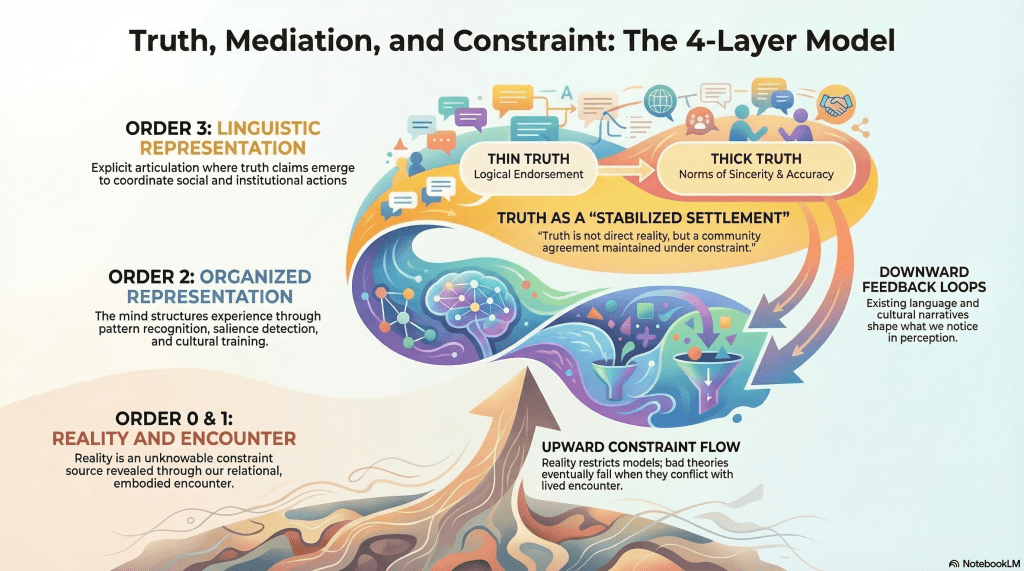




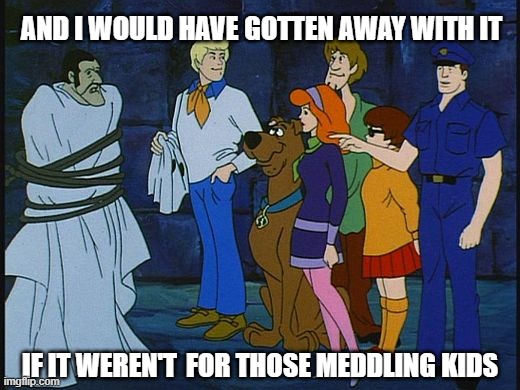


 Philosophics