On Agency, Suicide, and the Moving Train

I’ve been working through the opening chapters of Octavia Butler’s Dawn. At one point, the alien Jdahya tells Lilith, “We watched you commit mass suicide.”*

The line unsettles not because of the apocalypse itself, but because of what it presumes: that “humanity” acted as one, as if billions of disparate lives could be collapsed into a single decision. A few pulled triggers, a few applauded, some resisted despite the odds, and most simply endured. From the alien vantage, nuance vanishes. A species is judged by its outcome, not by the uneven distribution of responsibility that produced it.

This is hardly foreign to us. Nationalism thrives on the same flattening. We won the war. We lost the match. A handful act; the many claim the glory or swallow the shame by association. Sartre takes it further with his “no excuses” dictum, even to do nothing is to choose. Howard Zinn’s “You can’t remain neutral on a moving train” makes the same move, cloaked in the borrowed authority of physics. Yet relativity undermines it: on the train, you are still; on the ground, you are moving. Whether neutrality is possible depends entirely on your frame of reference.

What all these formulations share is a kind of metaphysical inflation. “Agency” is treated as a universal essence, something evenly spread across the human condition. But in practice, it is anything but. Most people are not shaping history; they are being dragged along by it.

One might sketch the orientations toward the collective “apple cart” like this:

  • Tippers with a vision: the revolutionaries, ideologues, or would-be prophets who claim to know how the cart should be overturned.
  • Sycophants: clinging to the side, riding the momentum of others’ power, hoping for crumbs.
  • Egoists: indifferent to the cart’s fate, focused on personal comfort, advantage, or escape.
  • Stabilisers: most people, clinging to the cart as it wobbles, preferring continuity to upheaval.
  • Survivors: those who endure, waiting out storms, not out of “agency” but necessity.

The Stabilisers and Survivors blur into the same crowd, the former still half-convinced their vote between arsenic and cyanide matters, the latter no longer believing the story at all. They resemble Seligman’s shocked dogs, conditioned to sit through pain because movement feels futile.

And so “humanity” never truly acts as one. Agency is uneven, fragile, and often absent. Yet whether in Sartre’s philosophy, Zinn’s slogans, or Jdahya’s extraterrestrial indictment, the temptation is always to collapse plurality into a single will; you chose this, all of you. It is neat, rhetorically satisfying, and yet wrong.

Perhaps Butler’s aliens, clinical in their judgment, are simply holding up a mirror to the fictions we already tell about ourselves.


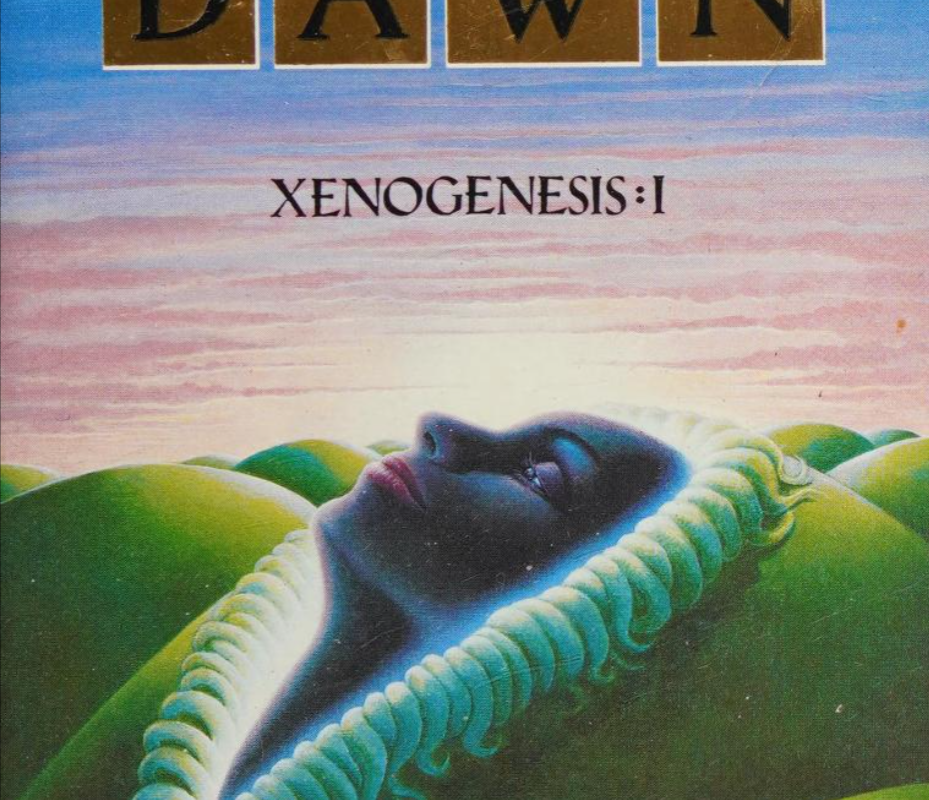
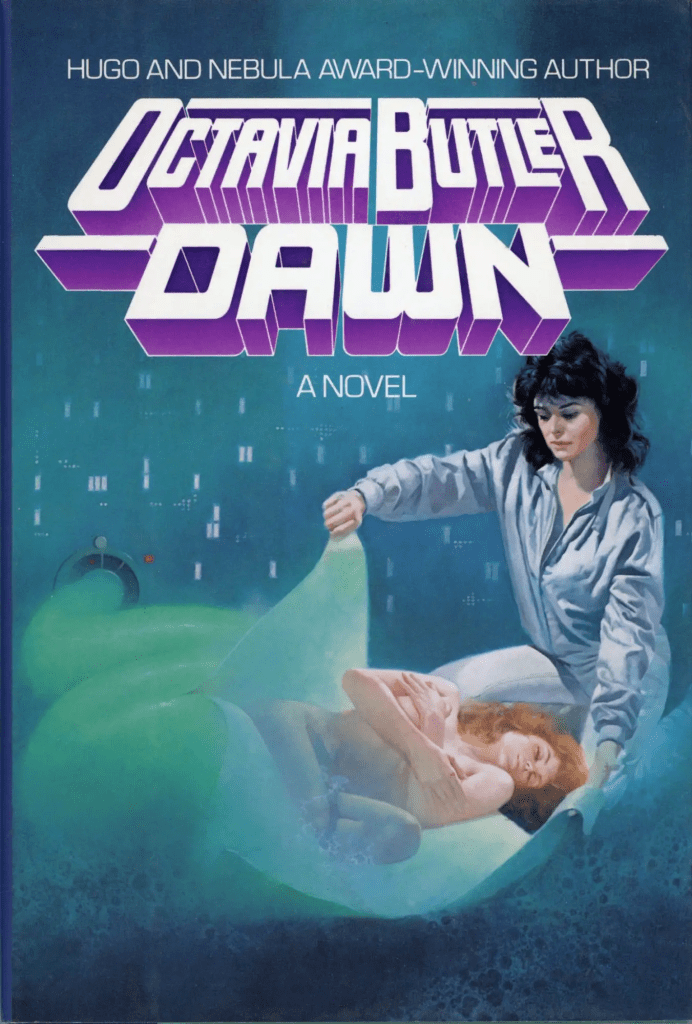
As an aside, this version of the book cover is risible. Not to devolve into identity politics, but Lilith is a dark-skinned woman, not a pale ginger. I can only assume that some target science fiction readers have a propensity to prefer white, sapphic adjacent characters.

I won’t even comment further on the faux 3D title treatment, relic of 1980s marketing.


Spoiler Alert: As this statement about mass suicide is a Chapter 2 event, I am not inclined to consider it a spoiler. False alarm.

The Reasonable Person: From Judge Judy to SCOTUS

2–4 minutes

When I was a child, the United States Supreme Court was still spoken of in hushed, reverent tones, as though nine robed sages in Washington were the Platonic guardians of justice. Impartiality was the word on everyone’s lips, and we were meant to believe that “the law” floated above the grubby realm of politics, as pure and crystalline as the Ten Commandments descending from Sinai.

Audio: NotebookLM podcast on this topic (MP3).

Even then, I didn’t buy it. The whole thing reeked of theatre. And the past few decades have proved that scepticism correct: the Court has become a pantomime. In this robed reality show, nine unelected lawyers cosplaying as oracles interpret the world for us, often by a razor-thin vote that splits exactly along partisan lines. Impartial? Please. A coin toss would be less predictable.

This is why I perked up when I heard Iain McGilchrist, in his recent interview with Curt Jaimungal, wax lyrical about rationality versus reasonableness. Schizophrenia, he tells us, is like a left hemisphere gone berserk, parsing the world in a literalist frenzy without the right hemisphere’s sense of context. The schizophrenic hears a voice in an empty room and, lacking the capacity for metaphor, deduces that it must be the neighbours whispering through the electrical socket. Rational, in its way, but absurd.

Video: Iain McGilchrist and Curt Jaimungal

McGilchrist’s corrective is “reasonableness,” which he casts as the quality of a wise judge: not a slave to mechanistic logic, but able to balance intuition, context, and experience. The problem, of course, is that “reasonable” is one of those delightful weasel words I keep writing about. It claims to be neutral – a universal standard, above the fray – but in practice, it’s just a ventriloquism act. “Reasonable” always turns out to mean what I, personally, consider obvious.

Enter Judge Judy, daytime television’s answer to jurisprudence. Watch her wag a finger and declare, “Any reasonable person would have kept the receipt!” And the studio audience – hand-picked to agree with her every twitch – erupts in applause. It’s reasonableness as spectacle, the mob dressed up as jurisprudence.

Now scale that performance up to SCOTUS. The “reasonable person” test is embedded deep in the common law tradition, but the reasonable person is not you, me, or anyone who has actually missed a bus, pawned a wedding ring, or heard a neighbour’s radio through thin walls. No, the reasonable person is an imaginary, well-groomed gentleman of property whose intuitions happen to dovetail nicely with the prejudices of the bench. The Court, like Judge Judy, insists it is Reason incarnate, when in truth it is reasonableness-by-consensus, a carefully curated consensus at that.

McGilchrist is right that rationality, stripped of context, can lead to absurdity. But in elevating “reasonableness” as if it were a transcendent virtue, he mistakes projection for philosophy. A judge is “reasonable” only when her intuitions rhyme with yours. And when they don’t? Suddenly, she’s a madwoman in robes, and her “reasonableness” is exposed as nothing more than taste disguised as universal law.

The “reasonable person” – whether invoked by the Supreme Court or by Judge Judy – is a ghost that conveniently resembles the speaker. We imagine we’re appealing to some objective standard, when in fact we’re gazing into a mirror. The tragedy of schizophrenia, as McGilchrist notes, is to take metaphor literally. The tragedy of law and politics is the opposite: to dress literal bias in metaphor, to call it “reason,” and to applaud ourselves for our wisdom while the stage set burns behind us.

Boab’s God: Latent Agency in Welsh’s Kafkaesque Metamorphosis

I just read The Granton Star Cause in Irvine Welsh’s short story collection, The Acid House, and couldn’t help but reflect it off of Kafka’s Metamorphosis.

Kafka gave us Gregor Samsa: a man who wakes up as vermin, stripped of usefulness, abandoned by family, slowly rotting in a godless universe. His tragedy is inertia; his metamorphosis grants him no agency, only deeper alienation.

Audio: NotebookLM podcast on this topic.

Welsh replies with Boab Coyle, a lad who is likewise cast off, rejected by his football mates, scorned by his parents, dumped by his girlfriend, and discarded by his job. Boab is surplus to every domain: civic, familial, erotic, and economic. Then he undergoes his own metamorphosis. And here Welsh swerves from Kafka.

Boab meets his “god.” But the god is nothing transcendent. It is simply Boab’s latent agency, given a mask – a projection of his bitterness and thwarted desires. God looks like him, speaks like him, and tells him to act on impulses long repressed. Where Kafka leaves Gregor to die in silence, Welsh gives Boab a grotesque theology of vengeance.

Through a Critical Theory lens, the contrast is stark:

  • Marx: Both men are surplus. Gregor is disposable labour; Boab is Thatcher’s lumpen. Alienated, both become vermin.
  • Nietzsche: Gregor has no god, only the absurd. Boab makes one in his own image, not an Übermensch, but an Über-fly – quite literally a Superfly – a petty deity of spite.
  • Foucault: Gregor is disciplined into passivity by the family gaze. Boab flips it: as a fly, he surveils and annoys, becoming the pest-panopticon.
  • Bataille/Kristeva: Gregor embodies the abjection of his family’s shame. Boab revels in abjection, weaponising filth as his new mode of agency.

The punchline? Boab’s new god-agency leads straight to destruction. His rage is cathartic, but impotent. The lumpen are permitted vengeance only when it consumes themselves.

So Kafka gave us the tragedy of stasis; Welsh provides us with the tragedy of spite. Both are bleak parables of alienation, but Welsh injects a theology of bad attitude: a god who licenses action only long enough to destroy the actor.

Gregor rots. Boab rages. Both end the same way.

Trainspotting

Trainspotting Movie Poster
2–3 minutes

I identify strongly with Irvine Welsh’s characters in Trainspottingthe book, not the sanitised film version. Especially with Mark Renton, whose voice strips away illusions with a brutality that borders on honesty.

Audio: NotebookLM podcast on this topic.

Consider this passage from the chapter “Bang to Rites” (pp. 86–87), where Renton attends the funeral of his mate Billy. Billy joined the army to escape the dead-end life they all shared, only to be killed on duty in Northern Ireland. Renton’s verdict:

[1] Renton doesn’t let anyone off the hook. Not Billy, not the army, not the Oxbridge suits who polish the tragedy into something fit for the News at Ten. The uniform is a costume, a disguise: a working-class lad suddenly deemed “brave” only because he was wearing the right outfit when he died. Strip away the uniform, and he’d have been dismissed as a thug or a waster.

[2] Renton’s root-cause analysis is unsparing. Billy wasn’t killed by the man with the gun so much as by the machine that put him there – the state, the ruling classes, the ones who spin death into “sacrifice” while continuing to shuffle the poor like pawns across the board.

It’s this clarity that makes Welsh’s work more than a drug novel. Trainspotting isn’t just about needles and nods; it’s about seeing through the charade. Renton despises both establishment and rebellion because both are performance, both hollow. His cynicism is the closest thing to honesty in a world that would rather dress up corpses in borrowed dignity.

And maybe that’s why I feel the affinity: because subversion matters more than allegiance, and sometimes the only truthful voice is the one that refuses to be polite at the funeral.

Democracy: The Worst Form of Government, and Other Bedtime Stories

3–5 minutes

Karl Popper’s Paradox of Intolerance has become a kind of intellectual talisman, clutched like a rosary whenever fascists start goose-stepping into the town square. Its message is simple enough: to preserve tolerance, one must be intolerant of intolerance. Shine enough sunlight on bad ideas, and – so the pious hope – they’ll shrivel into dust like a vampire caught out at dawn.

If only.

The trouble with this Enlightenment fairy tale is that it presumes bad ideas melt under the warm lamp of Reason, as if ignorance were merely a patch of mildew waiting for the bleach of debate. But bad ideas are not bacteria; they are weeds, hydra-headed and delighting in the sun. Put them on television, and they metastasise. Confront them with logic, and they metastasise faster, now with a martyr’s halo.

Audio: NotebookLM podcast on this topic.

And here’s the part no liberal dinner-party theorist likes to face: the people most wedded to these “bad ideas” often don’t play the game of reason at all. Their critical faculties have been packed up, bubble-wrapped, and left in the loft decades ago. They don’t want dialogue. They want to chant. They don’t want evidence. They want affirmation. The Socratic method bounces off them like a ping-pong ball fired at a tank.

But let’s be generous. Suppose, just for a moment, we had Plato’s dream: a citizenry of Philosopher Kings™, all enlightened, all rational. Would democracy then work? Cue Arrow’s Impossibility Theorem, that mathematical killjoy which proves that even under perfect conditions – omniscient voters, saintly preferences, universal literacy – you still cannot aggregate those preferences into a system that is both fair and internally consistent. Democracy can’t even get out of its own way on paper.

Now throw in actual humans. Not the Platonic paragons, but Brexit-uncle at the pub, Facebook aunt with her memes, the American cousin in a red cap insisting a convicted felon is the second coming. Suddenly, democracy looks less like a forum of reasoned debate and more like a lottery machine coughing up numbers while we all pretend they mean “the will of the people.”

And this is where the Churchill quip waddles in, cigar smoke curling round its bowler hat: “Democracy is the worst form of government, except for all the others.” Ah yes, Winston, do please save us with a quip so well-worn it’s practically elevator music. But the problem is deeper than taste in quotations. If democracy is logically impossible (Arrow) and practically dysfunctional (Trump, Brexit, fill in your own national catastrophe), then congratulating ourselves that it’s “better than the alternatives” is simply an admission that we’ve run out of imagination.

Because there are alternatives. A disinterested AI, for instance, could distribute resources with mathematical fairness, free from lobbyists and grievance-mongers. Nursery schools versus nursing homes? Feed in the data, spit out the optimal allocation. No shouting matches, no demagoguery, no ballots stuffed with slogans. But here the defenders of democracy suddenly become Derrida in disguise: “Ah, but what does fair really mean?” And just like that, we are back in the funhouse of rhetorical mirrors where “fair” is a word everyone loves until it costs them something.

So perhaps democracy doesn’t require an “educated populace” at all; that was always just sugar-paper wrapping. It requires, instead, a population sufficiently docile, sufficiently narcotised by the spectacle, to accept the carnival of elections as a substitute for politics. Which is why calling the devotees of a Trump, or any other demagogue, a gaggle of lemmings is both accurate and impolitic: they know they’re not reasoning; they’re revelling. Your contempt merely confirms the script they’ve already written for you.

Video: Short callout to Karl Popper and Hilary Lawson.

The philosopher, meanwhile, is left polishing his lantern, muttering about reason to an audience who would rather scroll memes about pedophile pizza parlours. Popper warned us that tolerance cannot survive if it tolerates its own annihilation. Arrow proved that even if everyone were perfectly reasonable, the maths would still collapse. And Churchill, bless him, left us a one-liner to make it all seem inevitable.

Perhaps democracy isn’t the worst form of government except for all the others. Perhaps it’s simply the most palatable form of chaos, ballots instead of barricades, polling booths instead of pitchforks. And maybe the real scandal isn’t that people are too stupid for democracy, but that democracy was never designed to be about intelligence in the first place. It was always about managing losers while telling them they’d “had their say.”

The Enlightenment promised us reason; what it delivered was a carnival where the loudest barker gets the booth. The rest of us can either keep muttering about paradoxes in the corner or admit that the show is a farce and start imagining something else.

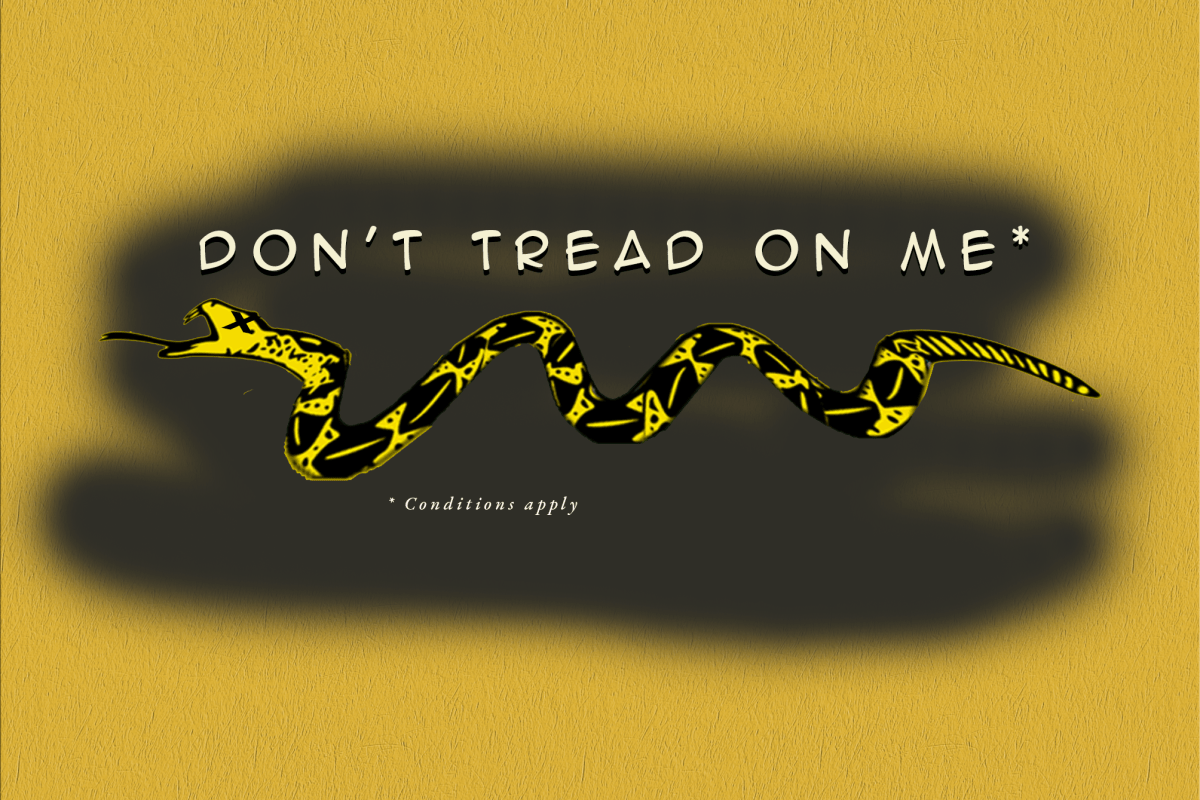
Don’t Tread on My Ass

Absolute liberty means absolute liberty, but what if the liberty you seek is death? The moment you carve out exceptions – speech you can’t say, choices you can’t make, exits you can’t take – you’ve left the realm of liberty and entered the gated community of permission.

Video: YouTube vid by Philosopher Muse.

And here’s the test most self-styled liberty lovers fail: you’re free to skydive without a parachute, but try ending your life peacefully and watch how quickly the freedom brigade calls in the moral SWAT team.

I’m not his usual audience; I’m already in the choir, but this eight-minute clip by Philosopher Muse is worth your time. It’s a lucid walk through the ethical terrain mapped by Sarah Perry in Every Cradle Is a Grave, and it’s one of the better distillations of antinatalist thought I’ve seen for the general public. Perry’s libertarian starting point is straightforward: if you truly own your life, you must also have the right to give it up.

He threads in the dark-glimmer insights of Emil Cioran’s poetic despair, Thomas Ligotti’s existential horror, David Benatar’s asymmetry, and Peter Wessel Zapffe’s tragic consciousness. Together they point to an uncomfortable truth: autonomy that stops short of death isn’t autonomy at all; it’s a petting zoo of freedoms where the gate is locked.

I’ve said this before, but it bears repeating. I once had a girlfriend who hated her life but was too afraid of hell to end it. She didn’t “pull through.” She overdosed by accident. Loophole closed, I suppose. That’s what happens when metaphysical prohibitions are allowed to run the operating system.

And here’s where I diverge from the purist libertarians. I don’t believe most people are competent enough to have the liberty they think they deserve. Not because they’re all dribbling idiots, but because they’ve been marinated for generations in a stew of indoctrination. For thousands of years, nobody talked about “liberty” or “freedom” as inalienable rights. Once the notion caught on, it was packaged and sold – complete with an asterisk, endless fine print, and a service desk that’s never open.

We tell ourselves we’re free, but only in the ways that don’t threaten the custodians. You can vote for whoever the party machine serves up, but you can’t opt out of the game. You can live any way you like, as long as it looks enough like everyone else’s life. You can risk death in countless state-approved ways, but the moment you calmly choose it, your autonomy gets revoked.

So yes, watch the video. Read Perry’s Every Cradle Is a Grave. Then ask yourself whether your liberty is liberty, or just a longer leash.

If liberty means anything, it means the right to live and the right to leave. The former without the latter is just life imprisonment with better marketing.

Ages of Consent: A Heap of Nonsense

A response on another social media site got me thinking about another Sorites paradox. The notion just bothers me. I’ve long held that it is less a paradox than an intellectually lazy way to manoeuvre around language insufficiency.

<rant>

The law loves a nice, clean number. Eighteen to vote. Sixteen to marry. This-or-that to consent. As if we all emerge from adolescence on the same morning like synchronised cicadas, suddenly equipped to choose leaders, pick spouses, and spot the bad lovers from the good ones.

But the Sorites paradox gives the game away: if you’re fit to vote at 18 years and 0 days, why not at 17 years, 364 days? Why not 17 years, 363 days? Eventually, you’re handing the ballot to a toddler who thinks the Prime Minister is Peppa Pig. Somewhere between there and adulthood, the legislator simply throws a dart and calls it “science.”

To bolster this fiction, we’re offered pseudo-facts: “Women mature faster than men”, or “Men’s brains don’t finish developing until thirty.” These claims, when taken seriously, only undermine the case for a single universal threshold. If “maturity” were truly the measure, we’d have to track neural plasticity curves, hormonal arcs, and a kaleidoscope of individual factors. Instead, the state settles for the cheapest approximation: a birthday.

This obsession with fixed thresholds is the bastard child of Enlightenment rationalism — the fantasy that human variation can be flattened into a single neat line on a chart. The eighteenth-century mind adored universals: universal reason, universal rights, universal man. In this worldview, there must be one age at which all are “ready,” just as there must be one unit of measure for a metre or a kilogram. It is tidy, legible, and above all, administratively convenient.

Cue the retorts:

  • “We need something.” True, but “something” doesn’t have to mean a cliff-edge number. We could design systems of phased rights, periodic evaluations, or contextual permissions — approaches that acknowledge people as more than interchangeable cut-outs from a brain-development chart.
  • “It would be too complicated.” Translation: “We prefer to be wrong in a simple way than right in a messy way.” Reality is messy. Pretending otherwise isn’t pragmatism; it’s intellectual cowardice. Law is supposed to contend with complexity, not avert its gaze from it.

And so we persist, reducing a continuous, irregular, and profoundly personal process to an administratively convenient fiction — then dressing it in a lab coat to feign objectivity. A number is just a number, and in this case, a particularly silly one.

</rant>

The Myth of Causa Sui Creativity

(or: Why Neither Humans nor AI Create from Nothing)

In the endless squabble over whether AI can be “creative” or “intelligent,” we always end up back at the same semantic swamp. At the risk of poking the bear, I have formulated a response. Creativity is either whatever humans do, or whatever humans do that AI can’t. Intelligence is either the general ability to solve problems or a mysterious inner light that glows only in Homo sapiens. The definitions shift like sand under the feet of the argument.

Audio: NotebookLM podcast on this topic

Strip away the romance, and the truth is far less flattering: neither humans nor AI conjure from the void. Creativity is recombination, the reconfiguration of existing material into something unfamiliar. Intelligence is the ability to navigate problems using whatever tools and heuristics one has to hand.

The Causa Sui conceit, the idea that one can be the cause of oneself, is incoherent in art, thought, or physics. Conservation of energy applies as much to ideas as to atoms.

  • Humans consume inputs: books, conversations, music, arguments, TikTok videos.
  • We metabolise them through cognitive habits, biases, and linguistic forms.
  • We output something rearranged, reframed, sometimes stripped to abstraction.

The AI process is identical in structure, if not in substrate: ingest vast data, run it through a model, output recombination. The difference is that AI doesn’t pretend otherwise.

When a human produces something impressive, we call it creative without inspecting the provenance of the ideas. When an AI produces something impressive, we immediately trace the lineage of its inputs, as if the human mind weren’t doing the same. This is not epistemic rigour, it’s tribal boundary enforcement.

The real objection to AI is not that it fails the test of creativity or intelligence; it’s that it passes the functional test without being part of the club. Our stories about human exceptionalism require a clear line between “us” and “it,” even if we have to draw that line through semantic fog.

My Language Insufficiency Hypothesis began with the recognition that language cannot fully capture the reality it describes. Here, the insufficiency is deliberate; the words “creativity” and “intelligence” are kept vague so they can always be shifted away from anything AI achieves.

I cannot be causa sui, and neither can you. The only difference is that I’m willing to admit it.

The Enlightenment: A Postmortem

Or: How the Brightest Ideas in Europe Got Us into This Bloody Mess

Disclaimer: This output is entirely ChatGPT 4o from a conversation on the failure and anachronism of Enlightenment promises. I’m trying to finish editing my next novel, so I can’t justify taking much more time to share what are ultimately my thoughts as expounded upon by generative AI. I may comment personally in future. Until then, this is what I have to share.

AI Haters, leave now or perish ye all hope.


The Enlightenment promised us emancipation from superstition, authority, and ignorance. What we got instead was bureaucracy, colonialism, and TED Talks. We replaced divine right with data dashboards and called it progress. And like any good inheritance, the will was contested, and most of us ended up with bugger-all.

Below, I take each Enlightenment virtue, pair it with its contemporary vice, and offer a detractor who saw through the Enlightenment’s powder-wigged charade. Because if we’re going down with this ship, we might as well point out the dry rot in the hull.


1. Rationalism

The Ideal: Reason shall lead us out of darkness.
The Reality: Reason led us straight into the gas chambers—with bureaucratic precision.

Detractor: Max Horkheimer & Theodor Adorno

“Enlightenment is totalitarian.”
Dialectic of Enlightenment (1944)

Horkheimer and Adorno saw what reason looks like when it slips off its leash. Instrumental rationality, they warned, doesn’t ask why—it only asks how efficiently. The result? A world where extermination is scheduled, costs are optimised, and ethics are politely filed under “subjective.”


2. Empiricism

The Ideal: Observation and experience will uncover truth.
The Reality: If it can’t be measured, it can’t be real. (Love? Not statistically significant.)

Detractor: Michel Foucault

“Truth isn’t outside power… truth is a thing of this world.”
Power/Knowledge (1977)

Foucault dismantled the whole edifice. Knowledge isn’t neutral; it’s an instrument of power. Empiricism becomes just another way of disciplining the body—measuring skulls, classifying deviants, and diagnosing women with “hysteria” for having opinions.


3. Individualism

The Ideal: The sovereign subject, free and self-determining.
The Reality: The atomised consumer, trapped in a feedback loop of self-optimisation.

Detractor: Jean Baudrillard

“The individual is no longer an autonomous subject but a terminal of multiple networks.”
Simulacra and Simulation (1981)

You wanted autonomy? You got algorithms. Baudrillard reminds us that the modern “individual” is a brand in search of market validation. You are free to be whoever you want, provided it fits within platform guidelines and doesn’t disrupt ad revenue.


4. Secularism

The Ideal: Liberation from superstition.
The Reality: We swapped saints for STEMlords and called it even.

Detractor: Charles Taylor

“We are now living in a spiritual wasteland.”
A Secular Age (2007)

Taylor—perhaps the most polite Canadian apocalypse-whisperer—reminds us that secularism didn’t replace religion with reason; it replaced mystery with malaise. We’re no longer awed, just “motivated.” Everything is explainable, and yet somehow nothing means anything.


5. Progress

The Ideal: History is a forward march toward utopia.
The Reality: History is a meat grinder in a lab coat.

Detractor: Walter Benjamin

“The storm irresistibly propels him into the future to which his back is turned.”
Theses on the Philosophy of History (1940)

Benjamin’s “angel of history” watches helplessly as the wreckage piles up—colonialism, genocide, climate collapse—all in the name of progress. Every step forward has a cost, but we keep marching, noses in the spreadsheet, ignoring the bodies behind us.


6. Universalism

The Ideal: One humanity, under Reason.
The Reality: Enlightenment values, brought to you by cannon fire and Christian missionaries.

Detractor: Gayatri Chakravorty Spivak

“White men are saving brown women from brown men.”
Can the Subaltern Speak? (1988)

Universalism was always a bit… French, wasn’t it? Spivak unmasks it as imperialism in drag—exporting “rights” and “freedom” to people who never asked for them, while ignoring the structural violence built into the Enlightenment’s own Enlightened societies.


7. Tolerance

The Ideal: Let a thousand opinions bloom.
The Reality: Tolerance, but only for those who don’t threaten the status quo.

Detractor: Karl Popper

“Unlimited tolerance must lead to the disappearance of tolerance.”
The Open Society and Its Enemies (1945)

Popper, bless him, thought tolerance needed a firewall. But in practice, “tolerance” has become a smug liberal virtue signalling its own superiority while deplatforming anyone who makes the dinner party uncomfortable. We tolerate all views—except the unseemly ones.


8. Scientific Method

The Ideal: Observe, hypothesise, repeat. Truth shall emerge.
The Reality: Publish or perish. Fund or flounder.

Detractor: Paul Feyerabend

“Science is not one thing, it is many things.”
Against Method (1975)

Feyerabend called the whole thing a farce. There is no single “method,” just a bureaucratic orthodoxy masquerading as objectivity. Today, science bends to industry, cherry-picks for grants, and buries null results in the backyard. Peer review? More like peer pressure.


9. Anti-Authoritarianism

The Ideal: Smash the throne! Burn the mitre!
The Reality: Bow to the data analytics team.

Detractor: Herbert Marcuse

“Free election of masters does not abolish the masters or the slaves.”
One-Dimensional Man (1964)

Marcuse skewered the liberal illusion of choice. We may vote, but we do so within a system that already wrote the script. Authority didn’t vanish; it just became procedural, faceless, algorithmic. Bureaucracy is the new monarchy—only with more forms.


10. Education and Encyclopaedism

The Ideal: All knowledge, accessible to all minds.
The Reality: Behind a paywall. Written in impenetrable prose. Moderated by white men with tenure.

Detractor: Ivan Illich

“School is the advertising agency which makes you believe that you need the society as it is.”
Deschooling Society (1971)

Illich pulls the curtain: education isn’t emancipatory; it’s indoctrinatory. The modern university produces not thinkers but credentialed employees. Encyclopaedias are replaced by Wikipedia, curated by anonymous pedants and revision wars. Truth is editable.


Postscript: Picking through the Rubble

So—has the Enlightenment failed?

Not exactly. It succeeded too literally. It was taken at its word. Its principles, once radical, were rendered banal. It’s not that reason, progress, or rights are inherently doomed—it’s that they were never as pure as advertised. They were always products of their time: male, white, bourgeois, and utterly convinced of their own benevolence.

If there’s a path forward, it’s not to restore Enlightenment values, but to interrogate them—mercilessly, with irony and eyes open.

After all, the problem was never darkness. It was the people with torches who thought they’d found the only path.
Of GenAI, Gatekeepers, and Moral Panic in Minor Key

I recently had a run-in with opponents of generative artificial intelligence, GenAI for the rest of us. What began as a modest question about feedback mechanisms in writing spiralled swiftly into a fire-and-brimstone sermon on the moral hazards of artificial authorship.

Audio: NotebackLM podcast on this topic.

It started on Reddit, that bastion of civil discourse, in the r/FictionWriting group. I asked, sincerely and succinctly: Is using AI as a pre-alpha reader worthwhile, or is the praise too algorithmically eager to trust?

Rather than respond to the question, the moderators responded with an ultimatum: “Admit to AI-use again and you’ll be banned.” Like any self-respecting heretic, I excommunicated myself.

Some members ranted about how AI might “steal their ideas” – presumably to be repackaged by tech barons and sold back to the masses in Kindle Unlimited drivel. That’s fine, I suppose, if you’re into intellectual solipsism, but what does this paranoid fantasy have to do with my ideas?

This wasn’t a discussion. It was a witch trial. AI wasn’t the threat – difference was. Deviate from the sacred rites of pen-to-paper purity, and you’ll be cast into the outer darkness, where there is weeping and gnashing of syntax.

The underlying problem is prescriptivism – not just linguistic, but moral. And like all moral panic, it has little to do with ethics and everything to do with control.

To borrow the analogy: as with abortion, if you don’t like them, don’t have one. Abortions, one might argue, carry significantly more moral weight than paragraph polishing. Or do they? At what point does a draft become a soul?

We are fast becoming a culture where the tool is the sin, and the sinner the tool.

Image: Exhibit A