Butler versus Butler (on a bed of Beauvoir)

2–3 minutes

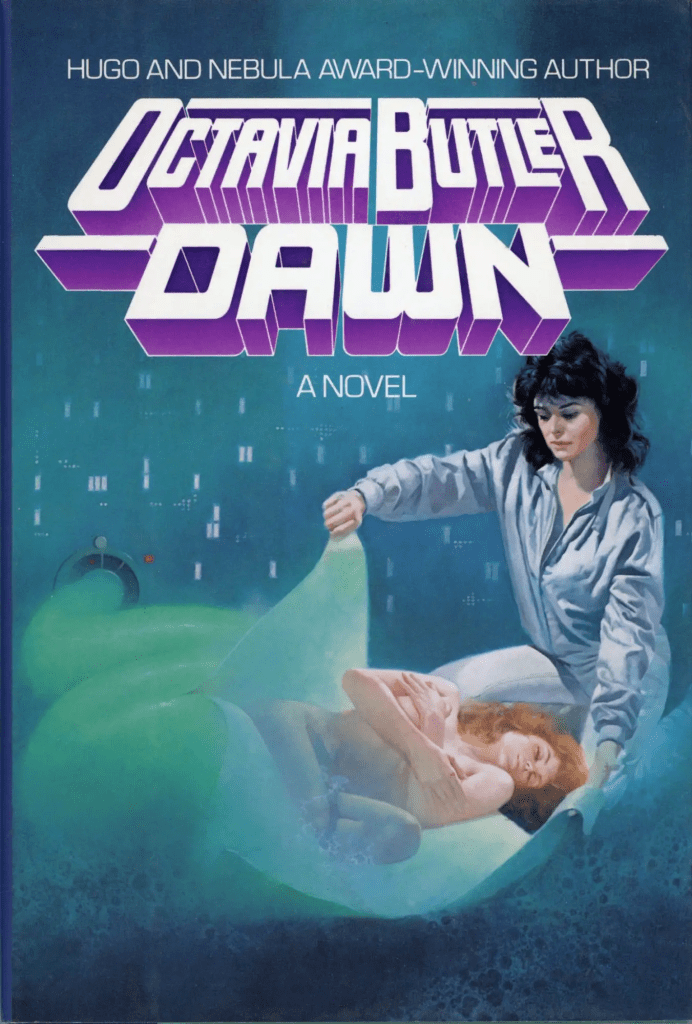
I’ve been reading Octavia Butler’s Dawn and find myself restless. The book is often lauded as a classic of feminist science fiction, but I struggle with it. My problem isn’t with aliens, or even with science fiction tropes; it’s with the form itself, the Modernist project embedded in the genre, which insists on posing questions and then supplying answers, like a catechism for progress. Sci-Fi rarely leaves ambiguity alone; it instructs.

Find the companion piece on my Ridley Park blog.

Audio: NotebookLM podcast summarising this topic.

Beauvoir’s Ground

Simone de Beauvoir understood “woman” as the Other – defined in relation to men, consigned to roles of reproduction, care, and passivity. Her point was not that these roles were natural, but that they were imposed, and that liberation required stripping them away.

Octavia Butler’s Lilith

Lilith Iyapo, the protagonist of Dawn, should be radical. She is the first human awakened after Earth’s destruction, a Black woman given the impossible role of mediating between humans and aliens. Yet she is not allowed to resist her role so much as to embody it. She becomes the dutiful mother, the reluctant carer, the compliant negotiator. Butler’s narration frequently tells us what Lilith thinks and feels, as though to pre-empt the reader’s interpretation. She is less a character than an archetype: the “reasonable woman,” performing the script of liberal Western femininity circa the 1980s.

Judith Butler’s Lens

Judith Butler would have a field day with this. For her, gender is performative: not an essence but a repetition of norms. Agency, in her view, is never sovereign; it emerges, if at all, in the slippages of those repetitions. Read through this lens, Octavia Butler’s Lilith is not destabilising gender; she is repeating it almost too faithfully. The novel makes her into an allegory, a vessel for explaining and reassuring. She performs the role assigned and is praised for her compliance – which is precisely how power inscribes itself.

Why Sci-Fi Leaves Me Cold

This helps me understand why science fiction so often fails to resonate with me. The problem isn’t the speculative element; I like the idea of estrangement, of encountering the alien. The problem is the Modernist scaffolding that underwrites so much of the genre: the drive to solve problems, to instruct the reader, to present archetypes as universal stand-ins. I don’t identify with that project. I prefer literature that unsettles rather than reassures, that leaves questions open rather than connecting the dots.

So, Butler versus Butler on the bedrock of Beauvoir: one Butler scripting a woman into an archetype, another Butler reminding us that archetypes are scripts. And me, somewhere between them, realising that my discomfort with Dawn is not just with the book but with a genre that still carries the DNA of the very Modernism it sometimes claims to resist.

On Agency, Suicide, and the Moving Train

I’ve been working through the opening chapters of Octavia Butler’s Dawn. At one point, the alien Jdahya tells Lilith, “We watched you commit mass suicide.”*

The line unsettles not because of the apocalypse itself, but because of what it presumes: that “humanity” acted as one, as if billions of disparate lives could be collapsed into a single decision. A few pulled triggers, a few applauded, some resisted despite the odds, and most simply endured. From the alien vantage, nuance vanishes. A species is judged by its outcome, not by the uneven distribution of responsibility that produced it.

This is hardly foreign to us. Nationalism thrives on the same flattening. We won the war. We lost the match. A handful act; the many claim the glory or swallow the shame by association. Sartre takes it further with his “no excuses” dictum, even to do nothing is to choose. Howard Zinn’s “You can’t remain neutral on a moving train” makes the same move, cloaked in the borrowed authority of physics. Yet relativity undermines it: on the train, you are still; on the ground, you are moving. Whether neutrality is possible depends entirely on your frame of reference.

What all these formulations share is a kind of metaphysical inflation. “Agency” is treated as a universal essence, something evenly spread across the human condition. But in practice, it is anything but. Most people are not shaping history; they are being dragged along by it.

One might sketch the orientations toward the collective “apple cart” like this:

  • Tippers with a vision: the revolutionaries, ideologues, or would-be prophets who claim to know how the cart should be overturned.
  • Sycophants: clinging to the side, riding the momentum of others’ power, hoping for crumbs.
  • Egoists: indifferent to the cart’s fate, focused on personal comfort, advantage, or escape.
  • Stabilisers: most people, clinging to the cart as it wobbles, preferring continuity to upheaval.
  • Survivors: those who endure, waiting out storms, not out of “agency” but necessity.

The Stabilisers and Survivors blur into the same crowd, the former still half-convinced their vote between arsenic and cyanide matters, the latter no longer believing the story at all. They resemble Seligman’s shocked dogs, conditioned to sit through pain because movement feels futile.

And so “humanity” never truly acts as one. Agency is uneven, fragile, and often absent. Yet whether in Sartre’s philosophy, Zinn’s slogans, or Jdahya’s extraterrestrial indictment, the temptation is always to collapse plurality into a single will; you chose this, all of you. It is neat, rhetorically satisfying, and yet wrong.

Perhaps Butler’s aliens, clinical in their judgment, are simply holding up a mirror to the fictions we already tell about ourselves.


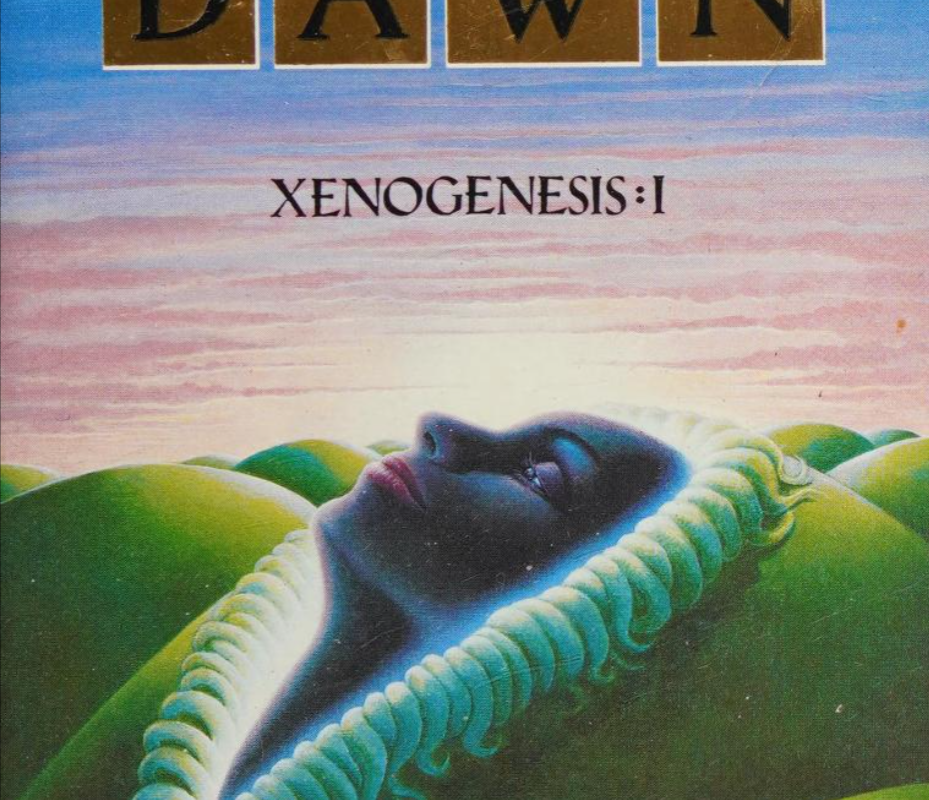
As an aside, this version of the book cover is risible. Not to devolve into identity politics, but Lilith is a dark-skinned woman, not a pale ginger. I can only assume that some target science fiction readers have a propensity to prefer white, sapphic adjacent characters.

I won’t even comment further on the faux 3D title treatment, relic of 1980s marketing.


Spoiler Alert: As this statement about mass suicide is a Chapter 2 event, I am not inclined to consider it a spoiler. False alarm.

Sustenance Novella free on Kindle

On 7–8 September 2025, the Kindle version of my Ridley Park novella Sustenance will be available free to everyone on Amazon. (It’s always free if you’re a KindleUnlimited member, but these two days open it up to all readers.)

👉 https://www.amazon.com/dp/B0F9PTK9N2

So what is Sustenance?

It’s a novella that begins with the dust and grit of rural Iowa – soybean fields, rusted trucks, a small town where everyone knows your name (and your secrets). At first glance, it reads like plainspoken realism, narrated by a local mechanic who insists he’s just a “regular guy.” But then the ground literally shifts. A crash. Figures glimpsed by firelight in the woods. Naked, violet-skinned beings who don’t laugh, don’t sleep, don’t even breathe.

What follows is not your usual alien-invasion story. It’s quieter, stranger, and more unsettling. The encounters with the visitors aren’t about lasers or spaceships – they’re about language, culture, and the limits of human understanding. What happens when concepts like propertylaw, or even woman and man don’t translate? What does it mean when intimacy itself becomes a site of misunderstanding?

Sustenance is for readers who:

  • Gravitate toward literary fiction with a speculative edge rather than straight genre beats
  • Appreciate the mix of the banal and the uncanny – the smell of corn dust giving way to the shock of alien otherness
  • Are interested in themes of language, power, misunderstanding, and human self-deception
  • Enjoy writers like Jeff VanderMeer, Margaret Atwood, Octavia Butler, or Denis Johnson – voices that blur realism, philosophy, and estrangement

This isn’t a story that offers tidy answers. It lingers, provokes, and resists easy moral closure. Think of it less as a sci-fi romp and more as a philosophical fable wrapped in small-town dust and cicada-song.

This version of the book is available in these Kindle storefronts:
United States, United Kingdom, Germany, France, Spain, Italy, Netherlands, Japan, Brazil, Canada, Mexico, Australia, and India

For more details, visit the Sustenance page.

📚 Grab your free Kindle copy on 7–8 September 2025

I made this Kindle version available for free to get some reviews. This promotion is all or nothing, so take advantage of the opportunity. If you want to leave a review, please do.

Boab’s God: Latent Agency in Welsh’s Kafkaesque Metamorphosis

I just read The Granton Star Cause in Irvine Welsh’s short story collection, The Acid House, and couldn’t help but reflect it off of Kafka’s Metamorphosis.

Kafka gave us Gregor Samsa: a man who wakes up as vermin, stripped of usefulness, abandoned by family, slowly rotting in a godless universe. His tragedy is inertia; his metamorphosis grants him no agency, only deeper alienation.

Audio: NotebookLM podcast on this topic.

Welsh replies with Boab Coyle, a lad who is likewise cast off, rejected by his football mates, scorned by his parents, dumped by his girlfriend, and discarded by his job. Boab is surplus to every domain: civic, familial, erotic, and economic. Then he undergoes his own metamorphosis. And here Welsh swerves from Kafka.

Boab meets his “god.” But the god is nothing transcendent. It is simply Boab’s latent agency, given a mask – a projection of his bitterness and thwarted desires. God looks like him, speaks like him, and tells him to act on impulses long repressed. Where Kafka leaves Gregor to die in silence, Welsh gives Boab a grotesque theology of vengeance.

Through a Critical Theory lens, the contrast is stark:

  • Marx: Both men are surplus. Gregor is disposable labour; Boab is Thatcher’s lumpen. Alienated, both become vermin.
  • Nietzsche: Gregor has no god, only the absurd. Boab makes one in his own image, not an Übermensch, but an Über-fly – quite literally a Superfly – a petty deity of spite.
  • Foucault: Gregor is disciplined into passivity by the family gaze. Boab flips it: as a fly, he surveils and annoys, becoming the pest-panopticon.
  • Bataille/Kristeva: Gregor embodies the abjection of his family’s shame. Boab revels in abjection, weaponising filth as his new mode of agency.

The punchline? Boab’s new god-agency leads straight to destruction. His rage is cathartic, but impotent. The lumpen are permitted vengeance only when it consumes themselves.

So Kafka gave us the tragedy of stasis; Welsh provides us with the tragedy of spite. Both are bleak parables of alienation, but Welsh injects a theology of bad attitude: a god who licenses action only long enough to destroy the actor.

Gregor rots. Boab rages. Both end the same way.

Trainspotting

Trainspotting Movie Poster
2–3 minutes

I identify strongly with Irvine Welsh’s characters in Trainspottingthe book, not the sanitised film version. Especially with Mark Renton, whose voice strips away illusions with a brutality that borders on honesty.

Audio: NotebookLM podcast on this topic.

Consider this passage from the chapter “Bang to Rites” (pp. 86–87), where Renton attends the funeral of his mate Billy. Billy joined the army to escape the dead-end life they all shared, only to be killed on duty in Northern Ireland. Renton’s verdict:

[1] Renton doesn’t let anyone off the hook. Not Billy, not the army, not the Oxbridge suits who polish the tragedy into something fit for the News at Ten. The uniform is a costume, a disguise: a working-class lad suddenly deemed “brave” only because he was wearing the right outfit when he died. Strip away the uniform, and he’d have been dismissed as a thug or a waster.

[2] Renton’s root-cause analysis is unsparing. Billy wasn’t killed by the man with the gun so much as by the machine that put him there – the state, the ruling classes, the ones who spin death into “sacrifice” while continuing to shuffle the poor like pawns across the board.

It’s this clarity that makes Welsh’s work more than a drug novel. Trainspotting isn’t just about needles and nods; it’s about seeing through the charade. Renton despises both establishment and rebellion because both are performance, both hollow. His cynicism is the closest thing to honesty in a world that would rather dress up corpses in borrowed dignity.

And maybe that’s why I feel the affinity: because subversion matters more than allegiance, and sometimes the only truthful voice is the one that refuses to be polite at the funeral.

The Ethics of Feedback in an Algorithmic Age


We’ve entered an era where machines tell us how we’re doing, whether it’s an AI app rating our résumé, a model reviewing our fiction, or an algorithm nudging our attention with like-shaped carrots.

Full story here, from the Ridley side: Needle’s Edge: Scene Feedback 01

Recently, I ran a brutally raw scene through a few AI platforms. The kind of scene that’s meant to unsettle, not entertain. One of them responded with effusive praise: “Devastating, but masterfully executed.”

Was it honest?

Was it useful?

Or was it merely reflecting my own aesthetic back at me, polished by a thousand reinforcement-learning smiles?

This is the ethical dilemma: If feedback is always flattering, what good is it? If criticism is only tolerated when couched in praise, how do we grow? And when machine feedback mimics the politeness of a mid-level manager with performance anxiety, we risk confusing validation with truth.

There’s a difference between signal and applause. Between understanding and affirmation.

The danger isn’t that AI flatters us. The danger is that we start to believe it and forget that art, inquiry, and ethics thrive on friction.

The Heuristic Self: On Persona, Identity, and Character

Man is least himself when he talks in his own person. Give him a mask, and he will tell you the truth.”
— Oscar Wilde

Identity is an illusion—but a necessary one. It’s a shortcut. A heuristic, evolved not for truth but for coherence. We reduce ourselves and others to fixed traits to preserve continuity—psychological, social, narrative.

Audio: NotebookLM podcast on this topic. (Direct)

Audio: NotebookLM podcast on this topic. (Spotify)

In the latest post on RidleyPark.blog, we meet Sarah—a woman who survives by splintering. She has three names, three selves, three economies of interaction. Each persona—Sarah, Stacey, and Pink—fulfils a role. Each protects her in a system that punishes complexity.

Identity Is Compression

Cognitive science suggests that we don’t possess a self—we perform one. Our so-called identity is assembled post-hoc from memory, context, and social cues. It’s recursive. It’s inferred.

We are not indivisible atoms of identity. We are bundled routines, personae adapted to setting and audience.

From Performance to Survival

In Needle’s Edge, Sarah doesn’t use aliases to deceive. She uses them to survive contradictions:

  • Stacey is desirable, stable, and profitable—so long as she appears clean and composed.
  • Pink is a consumer, invisible, stripped of glamour but allowed access to the block.
  • Sarah is the residue, the name used by those who once knew her—or still believe they do.

Each persona comes with scripts, limitations, and permissions. Sarah isn’t being dishonest. She’s practicing domain-specific identity. This is no different from how professionals code-switch at work, or how people self-edit on social media.

The Literary Echo

In character development, we often demand “depth,” by which we mean contradiction. We want to see a character laugh and break. Love and lie. But Sarah shows us that contradiction isn’t depth—it’s baseline reality. Any singular identity would be a narrative failure.

Characters like Sarah expose the poverty of reduction. They resist archetype. They remind us that fiction succeeds when it reflects the multiple, the shifting, the incompatible—which is to say, the real.

What Else Might We Say?

  • That authenticity is a myth: “Just be yourself” presumes you know which self to be.
  • That moral judgment often stems from a failure to see multiple selves in others.
  • That trauma survivors often fracture not because they’re broken, but because fracturing is adaptive.
  • That in a capitalist framework, the ability to fragment and role-play becomes a survival advantage.
  • That fiction is one of the few spaces where we can explore multiple selves without collapse.

The Missing Link

For a concrete, narrative reflection of these ideas, this post on RidleyPark.blog explores how one woman carries three selves to survive three worlds—and what it costs her.

Book Review: The Death of Ivan Ilych by Lev Tolstoy

I’ve just finished reading The Death of Ivan Ilych.

Let’s get this out of the way: yes, Ivan dies at the end. It’s right there in the title, you absolute muppet. But what Tolstoy does in this slim volume – more novelette than novella, really – is turn the slow demise of a terminal bore into a scathing indictment of bourgeois mediocrity.

Audio: NotebookLM podcast on this topic.

Set in the 1880s, but eerily modern in its spiritual bankruptcy, this is less a period piece and more a mirror held up to our Ikea-staged lives. Ivan Ilych is, in short, that guy. You’ve met him. You’ve worked with him. He follows the rules, gets the job, buys the drapes, marries the woman, and climbs the career ladder with the zeal of a drowning man clambering up a waterfall. And for what? A living room indistinguishable from the next man’s. A life that “resembles others like itself” to such an extent that it may as well have been copy-pasted from a Pottery Barn catalogue.

I’ve only read Anna Karenina prior to this, and no, I’ve not tackled War and Peace because I have things to do and a lifespan to manage. I prefer Dostoyevsky‘s psychological probing to Tolstoy’s social panoramas, but Ivan Ilych pleasantly surprised me. It’s Dostoyevskian in its internal torment, and compact enough not to require a support group.

The genius here is not the plot – man gets ill, man dies – but the emotional autopsy performed in slow motion. Ivan’s illness is banal, his symptoms vague, but the existential unravelling is exquisite. He is confronted not just by mortality but by the crushing realisation that his entire life was a lie curated for public consumption. If Instagram had existed in imperial Russia, Ivan would have filtered the hell out of his parlour furniture.

And yet, at the very end, there’s a kind of grace. Having failed at life, Ivan, miraculously, succeeds at dying. Not in the tragic-heroic sense. But in accepting the abyss, he transcends it. Or at least stops flinching.

If you’ve ever wondered what your carefully curated CV and your “neutral-tone” home decor will mean on your deathbed, this book is your answer: absolutely nothing. Read it and despair – or better yet, read it and reconsider.

Speculative Philosophy on Screen: Identity, Agency, and the Fiction of Reality

Close-up of a human eye with digital glitch effects and overlaid text reading 'What if reality is wrong?'—a visual metaphor for distorted perception and unreliable truth.

Regular readers know I often write about identity, free will, and the narrative constraints of language. But I also explore these ideas through fiction, under the name Ridley Park.

In this short video, I unpack the philosophical motivations behind my stories, including:

  • Why reality is never as it seems
  • Why the self is a narrative convenience
  • What Heidegger’s Geworfenheit and Galen Strawson’s Causa Sui argument reveal about agency
  • And why language fails us – even when we think it serves

This isn’t promotional fluff. It’s epistemological dissent in a new format. Fictional, yes, but only in the sense that most of reality is, too.

▶️ Watch the video: Why I Write the Way I Do