The Scientist’s Dilemma: Truth-Seeking in an Age of Institutional Constraints

In an idealised vision of science, the laboratory is a hallowed space of discovery and intellectual rigour, where scientists chase insights that reshape the world. Yet, in a reflection as candid as it is disconcerting, Sabine Hossenfelder pulls back the curtain on a reality few outside academia ever glimpse. She reveals an industry often more concerned with securing grants and maintaining institutional structures than with the philosophical ideals of knowledge and truth. In her journey from academic scientist to science communicator, Hossenfelder confronts the limitations imposed on those who dare to challenge the mainstream — a dilemma that raises fundamental questions about the relationship between truth, knowledge, and institutional power.

I’ve also created a podcast to discuss Sabine’s topic. Part 2 is also available.

Institutionalised Knowledge: A Double-Edged Sword

The history of science is often framed as a relentless quest for truth, independent of cultural or economic pressures. But as science became more institutionalised, a paradox emerged. On the one hand, large academic structures offer resources, collaboration, and legitimacy, enabling ambitious research to flourish. On the other, they impose constraints, creating an ecosystem where institutional priorities — often financial — can easily overshadow intellectual integrity. The grant-based funding system, which prioritises projects likely to yield quick results or conform to popular trends, inherently discourages research that is too risky or “edgy.” Thus, scientific inquiry can become a compromise, a performance in which scientists must balance their pursuit of truth with the practicalities of securing their positions within the system.

Hossenfelder’s account reveals the philosophical implications of this arrangement: by steering researchers toward commercially viable or “safe” topics, institutions reshape not just what knowledge is pursued but also how knowledge itself is conceptualised. A system prioritising funding over foundational curiosity risks constraining science to shallow waters, where safe, incremental advances take precedence over paradigm-shifting discoveries.

Gender, Equity, and the Paradoxes of Representation

Hossenfelder’s experience with gender-based bias in her early career unveils a further paradox of institutional science. Being advised to apply for scholarships specifically for women, rather than being offered a job outright, reinforced a stereotype that women in science might be less capable or less deserving of direct support. Though well-intentioned, such programs can perpetuate inequality by distinguishing between “real” hires and “funded outsiders.” For Hossenfelder, this distinction created a unique strain on her identity as a scientist, leaving her caught between competing narratives: one of hard-earned expertise and one of institutionalised otherness.

The implications of this dilemma are profound. Philosophically, they touch on questions of identity and value: How does an individual scientist maintain a sense of purpose when confronted with systems that, however subtly, diminish their role or undercut their value? And how might institutional structures evolve to genuinely support underrepresented groups without reinforcing the very prejudices they seek to dismantle?

The Paper Mill and the Pursuit of Legacy

Another powerful critique in Hossenfelder’s reflection is her insight into academia as a “paper production machine.” In this system, academics are pushed to publish continuously, often at the expense of quality or depth, to secure their standing and secure further funding. This structure, which rewards volume over insight, distorts the very foundation of scientific inquiry. A paper may become less a beacon of truth and more a token in an endless cycle of academic currency.

This pursuit of constant output reveals the philosopher’s age-old tension between legacy and ephemerality. In a system driven by constant publication, scientific “advancements” are at risk of being rendered meaningless, subsumed by an industry that prizes short-term gains over enduring impact. For scientists like Hossenfelder, this treadmill of productivity diminishes the romantic notion of a career in science. It highlights a contemporary existential question: Can a career built on constant output yield a genuine legacy, or does it risk becoming mere noise in an endless stream of data?

Leaving the Ivory Tower: Science Communication and the Ethics of Accessibility

Hossenfelder’s decision to leave academia for science communication raises a question central to contemporary philosophy: What is the ethical responsibility of a scientist to the public? When institutional science falters in its pursuit of truth, perhaps scientists have a duty to step beyond its walls and speak directly to the public. In her pivot to YouTube, Hossenfelder finds a new audience, one driven not by academic pressures but by genuine curiosity.

This shift embodies a broader rethinking of what it means to be a scientist today. Rather than publishing in academic journals read by a narrow circle of peers, Hossenfelder now shares her insights with a public eager to understand the cosmos. It’s a move that redefines knowledge dissemination, making science a dialogue rather than an insular monologue. Philosophically, her journey suggests that in an age where institutions may constrain truth, the public sphere might become a more authentic arena for its pursuit.

Conclusion: A New Paradigm for Scientific Integrity

Hossenfelder’s reflections are not merely the story of a disillusioned scientist; they are a call to re-evaluate the structures that define modern science. Her journey underscores the need for institutional reform — not only to allow for freer intellectual exploration but also to foster a science that serves humanity rather than merely serving itself.

Ultimately, the scientist’s dilemma that Hossenfelder presents is a philosophical one: How does one remain true to the quest for knowledge in an age of institutional compromise? As she shares her story, she opens the door to a conversation that transcends science itself, calling us all to consider what it means to seek truth in a world that may have forgotten its value. Her insights remind us that the pursuit of knowledge, while often fraught, is ultimately a deeply personal, ethical journey, one that extends beyond the walls of academia into the broader, often messier realm of human understanding.


Decolonising the Mind

Ngũgĩ wa Thiong’o published “Decolonising the Mind” in 1986. David Guignion shares a 2-part summary analysis of the work on his Theory and Philosophy site.

I used NotebookLLM to produce this short podcast: [Content no longer extant] https://notebooklm.google.com/notebook/7698ab0b-43ab-47d4-a50f-703866cfb1b9/audio

Decolonising the Mind: A Summary

Ngũgĩ wa Thiong’o’s book Decolonising the Mind centres on the profound impact of colonialism on language, culture, and thought. It argues that imposing a foreign language on colonised people is a key tool of imperial domination. This linguistic imperialism leads to colonial alienation, separating the colonised from their own culture and forcing them to view the world through the lens of the coloniser.

Here are some key points from the concept of decolonising the mind:

  • Language is intimately tied to culture and worldview: Language shapes how individuals perceive and understand the world. When colonised people are forced to adopt the language of the coloniser, they are also compelled to adopt their cultural framework and values.
  • Colonial education systems perpetuate mental control: By privileging the coloniser’s language and devaluing indigenous languages, colonial education systems reinforce the dominance of the coloniser’s culture and worldview. This process results in colonised children being alienated from their own cultural heritage and internalising a sense of inferiority.
  • Reclaiming indigenous languages is crucial for decolonisation: wa Thiong’o advocates for a return to writing and creating in indigenous African languages. He sees this as an act of resistance against linguistic imperialism and a way to reconnect with authentic African cultures. He further argues that it’s not enough to simply write in indigenous languages; the content must also reflect the struggles and experiences of the people, particularly the peasantry and working class.
  • The concept extends beyond literature: While wa Thiong’o focuses on language in literature, the concept of decolonising the mind has broader implications. It calls for a critical examination of all aspects of life affected by colonialism, including education, politics, and economics.

It is important to note that decolonising the mind is a complex and ongoing process. There are debates about the role of European languages in postcolonial societies, and the concept itself continues to evolve. However, wa Thiong’o’s work remains a seminal text in postcolonial studies, raising crucial questions about the enduring legacy of colonialism on thought and culture.

Ridley Park Side Project

I’ve been MIA here for a couple of reasons:

  1. I’ve been recovering from physical challenges that affect my mobility and ability to interface with a computer, diminishing my productivity in such matters to about 10 or 20 per cent.
  2. I’ve been focusing my energy (besides that on recovery) on writing fiction under my Ridley Park pseudonym.

As for my physical concerns, I won’t bore you. I’d rather discuss my side project, which in the absence of employment turns out to be my primary focus. Currently, I am world-building, so I can explore philosophical and sociological issues in a safe space.

This world is contemporary Earth and the near future—at least for now, as I am leaving a lot of room to explore. Check out my Ridley Park blog if you are interested in specifics. Here, I just want to focus on the philosophical aspects and ramifications, using this story world as a reference, so I’ll provide a brief setup upon which to build.

In this world, a scientist has genetically engineered an embryo (for reasons) and ends up with quasi-vampires, a subspecies of humans—or is it? This cohort is human for all intents and purposes, except they need to ‘drink’ blood to survive. They’ve got fangs and an internal organ used to process and metabolise the blood. He decides to clone these and create a new population. In time, he improves on the genetics in the manner described here. The first short story (flash fiction) I’ve shared is Hemo Sapiens: The Unidentified, but let’s get onto the philosophical aspects.

Podcast: Audio rendtion of Hemo Sapiens: The Unidentified (Runtime: 5:25).

In this world, I shed light on what makes humans human. What happens when we need to coexist with a similar species? What if we treat them as second-class citizens? What if they become physically and intellectually superior?

Are these people a new species or a new race? Or are they just transhumans? What rights do they have? As a new race, perhaps it’s earier to fathom them and grant them human rights, but what if they are a new species? We haven’t had a great track record of granting rights to other species.

And what’s their immigration status? A common reaction to ‘immigrants’ is to ‘send them back to where they came from’. But what if they came from here? What if they were raised here and speak our language? In this case, they are raised near Manchester in the UK. They speak English. They are not only sentient beings at the start, they have above average IQs and have general cultural awareness. Some speak a second language. Save for the fangs, all outward appearances show them as human.

Until they are discovered by authorities, they are raised in a greenhouse environment. By the time they are discovered, there are five versions of them—alpha through epsilon—, and some have started reproducing, so we get to explore these dynamics, too. Some have tagged these people—are they people?—as homo sapiens sanguinius—bloodsucking intelligent man. Affectionately, I call them hemo sapiens.

I’ll return here as I produce more content there. I prefer not to create spoilers. Although I am working on several stories in different formats (short story, novella, novel, and so on), I’ll publish them (somewhere), provide literary analysis on my Ridley Park blog and provide philosophical commentary here. I hope you’ll join me and participate in the discussion.

Systematic Violence

As humans, we often leverage systems. They seem to make life easier. Whether a routine or a step-by-step instruction through an unknown process, a system can guide us. Systems are also connected, interactive entities, but that’s not for this segment. I am more interested in the loss of humanity that systematic processes and bureaucracy bring, so I am interested in imposed systems rather than systems we invent to find our keys and wallets.

Podcast: Audio rendition of this page content
Image: Spectrum of System versus Human

If we consider systematisation and humanity on a scale, we can see that any move toward systematisation comes at the expense of humanity. It might make logical sense to make this trade-off to some degree or another. The biggest hit to humanity is the one-size-fits-all approach to a problem. It removes autonomy or human agency from the equation. If a system can be that mechanised, then automate it. Don’t assign a human to do it. This is an act of violence.

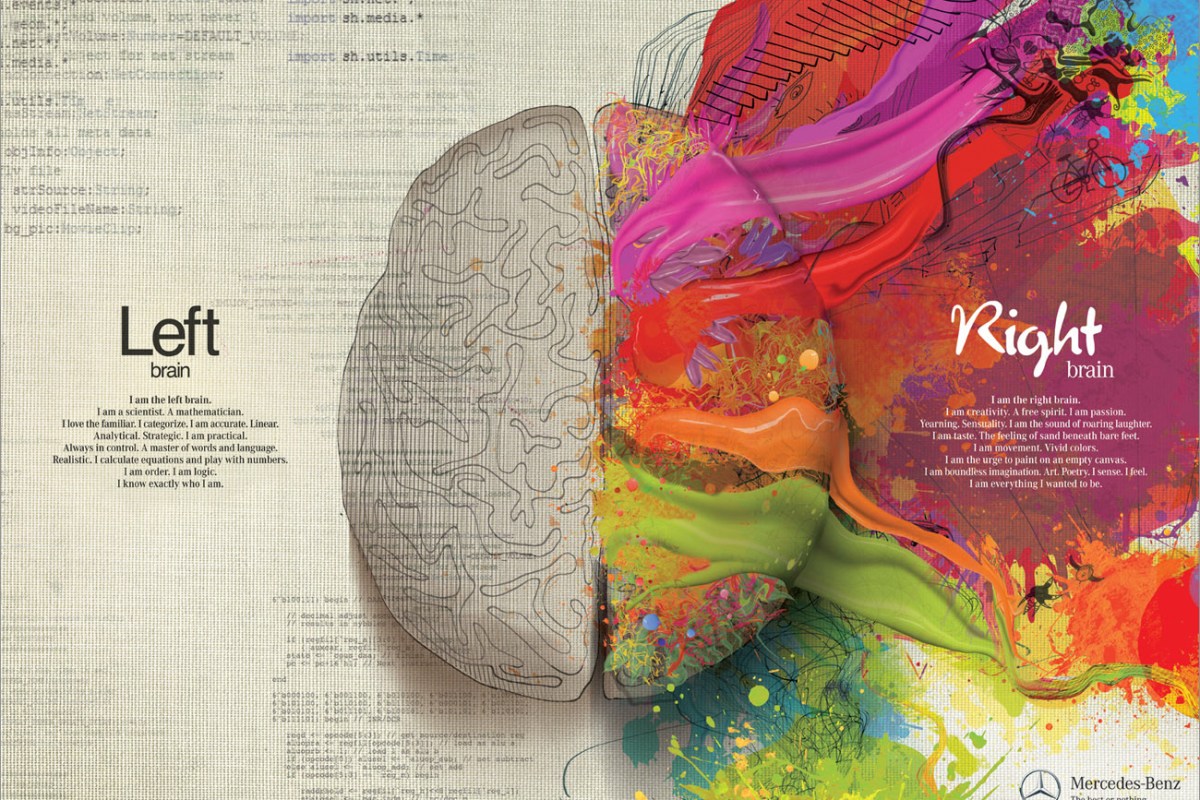
As I’ve been reading and writing a lot about Iain McGilchrist’s work lately, I feel one can easily map this to left versus right cerebral hemisphere dominance. System-building is inherently human, but it’s in the domain of the left hemisphere. But my imposition of a system on another is violence—one might even argue that it’s immoral.

As with bureaucracy, these imposed systems are Procrustean beds. Everyone will fit, no matter what. And when human beings need to interact with systems, we can not only feel the lack of humanity, but our own humanity suffers at the same time.

A close friend of mine recently checked herself into a mental health facility. After a few days, she called and asked if I could bring her a change of clothes and some toiletries—deodorant, soap, and shampoo. She had some in her house, but the packaging needed to be unopened and factory sealed. I stopped at a shop to buy these items and I brought them to the facility.

At the reception area, I needed to be cross-referenced as an authorised visitor, so I was asked to show proof of my identity as if it mattered who was delivering clothing that was going to be checked anyway. No big deal, they recorded my licence number on a form and ask me to fill it out—name, phone number, and what I was delivering.

The form stated that any open consumable items would not be allowed. I signed the form. An attendant took the bag and told me that I needed to remove the ‘chemicals’, that they would not be delivered. I pointed to the lines on the form that read that this restriction was for open items and reinforced that I had just purchased these and showed her the sales receipt. She told me that the patient would need to obtain a doctor’s permission, and she assured me that the patients all had soap.

I’m sure she thought she was being compassionate and assertive. I experienced it as patronising. Me being me, I chided her lack of compassion and humanity, not a great match for a mental health attendant. In fact, it reminded me of a recent post I wrote on Warmth. In it, I suggested that service staff should at least fake conviviality. I take that back. Faux congeniality is patronising. She mimicked me. “Yes, systems are so inhumane, but here we follow a system.” My first thought was of Adolf Eichmann, who kept the trains on schedule without a care for the cargo. This is the violence inherent in systems.

Systems are not illogical. In fact, they are hyper-logical. And that’s the problem, logic is traded off at the expense of empathy. And one might have a strong argument for some accounting or financial system process, but I’ll retort that this should be automated. A human should not have to endure such pettiness.

I can tell that this will devolve quickly into a rant and so I’ll take my leave and not foist this violence upon you.

Underrepresented Class

Podcast: Audio rendition of this page content

I’ve just finished reading Iain McGilchrist’s The Master and His Emissary, having paused The Matter with Things to put it to bed. The book is divided into two sections. The first lays down the neuroscientific base whilst the second contains expository forrays. Technically, one might argue that there are three sections as the last unnumbered chapter seems to stand alone from the second part. It’s only one chapter containing some 36 pages, so I’m not going to lose any sleep over it. But this will not be a book review, as highly recommended as it is.

I’ve been a vocal proponent of hiring neurodiverse people into certain roles. Having read the book and absorbed the rationale, it’s easy to see how it aligns with and supports some of my own experiences. In particular, I’ve noticed that many companies hire autism spectrum on the Aspergers end of the scale. These people tend to be hired into IT and programming roles—functions already having reputations for being staffed with socially awkward and low EQ individuals, characteristics of people on the spectrum. It makes sense because left-hemisphere-dominant managers evaluate this hyper-left-hemisphere-dominant cohort as assets. Without getting too deep into the territory of stereotypes, in general, this group are laser-focused and doggedly pursue tasks at hand without tiring. I’ve met plenty of ADHD-diagnosed people in these roles, too—not as many, but also employed in technology-oriented positions.

The underrepresented class are right-hemisphere-dominant people. To be fair, I’ve encountered many Creative people in Agencies, but their right-hemisphere life is separate from their left and not appreciated in the workplace. They mainly exercise their right-hemisphere life outside of office hours on personal passion projects. I’d also be willing to bet that these people are not truly right-hemisphere-dominant. Rather, they have the ability to balance and allow the left hemisphere to take over during business hours.

In some cases, these people happen to have right-hemisphere insights into a project or have some creative inspiration off hours to benefit the work of the next day. But the right hemisphere is not time-boxed. It doesn’t function on demand. In fact, it shuts down on demand, and the left introduces bootleg knock-offs. Of course, this doesn’t matter, as it is probably better than their left-hemisphere managers and clients and good enough in their eyes. I’m not convinced they’d actually recognise the right-hemisphere solution as better because the left hemisphere prefers its own tribe anyway.

If you are reading this and you are saying, “They’re running a business. They can’t wait for weeks or months for a resource to have the epiphany of a creative solution,” you’ve made my point, and you’ve presented strong evidence that you are operating from your left hemisphere as well. There’s no shame in this. The first step is to admit there’s a problem.

My point is not to antagonise left-hemisphere-dominant people or the fact that they’re at home with other like-minded people. It’s only natural. They usually find right-hemisphere types to be too eccentric for their taste anyway.

But these right- or balanced-hemisphere thinkers, not given the space for their right-hemisphere to yield benefit, are likely in a Creative function, whether in art, illustration, copywriting, or some such. They are like unicorns outside of this context.

As for me, I am at times balanced and at times left. At other times, I’m purely right, though this is admittedly short-lived and unsustainable. But in a balanced state—in a right-shifted mode—, this is where my Gestalt comes into play. One of my roles is to evaluate processes. The left hemisphere analyses in components and pieces. Taking an analytical approach, I can document that the knee bone is connected to the shin bone and the shin bone is connected to the ankle bone and so on, but this requires context, something the left hemisphere is weak at. The left hemisphere will tell us that this is the bone connexion process, as it were. But it’s more than this. It’s meaningless without musculature and connective tissue and a nervous system and a circulatory system. And we’d likely want the person to whom the bones belong to be alive. And how do these bones contribute to function and perambulation? This is a larger system thinking approach.

System thinking is a recommendation for looking at processes, but this is right-hemisphere activity. Most people asked to perform this are left-hemisphere-dominant, so they give it short-shrift.

At the end of this rant, my point is that I hear all about equity, diversity, and inclusion, but this cohort is not only underrepresented but almost nonexistent. To be fair, many of these people wouldn’t feel comfortable behind your walls anyway, aren’t likely to prefer the constraint of your walls, and they’d probably feel like outsiders. But this is the challenge with true inclusion.

Classes are a left-hemisphere operation at the start—male, female, black, white, L, B, G, T, and so on. These are left-hemisphere constructs. But since you are already stuck in this place anyway, let’s consider expanding the neurodiverse class to include right-hemisphere people.

The Matter with Things: Chapter Six Summary: Emotional and Social Intelligence

Index and table of contents

Intro

Chapter 6 of The Matter with Things is titled Emotional and Social Intelligence, following the previous chapters, Attention, Perception, Judgment, and Apprehension. Chapter 7 is about cognitive intelligence.

The gist of chapter 6 is to convey the importance of emotional and social intelligence in forming a full picture of the world. Absent these, reality becomes increasingly tenuous to retain a grip on because the left hemisphere just doesn’t have the emotional awareness to grasp the full picture. 

Audio: Podcast version of this page content

Content

At the start, this chapter reminds us that the right hemisphere not only constructs our sense of self, but it also facilitates the construction of other selves, which allows us to empathise with others. It also allows us to assess intent. And it goes deeper than this.

McGilchrist shares some anecdotes about schizophrenic patients with impaired right hemispheres who believe that nothing is real and that people are play-acting. In hospital, they perceive the ward to be a stage and the medical staff to be actors.

As if by a control knob, changes to the right hemisphere may create a diminished sense of reality as well as an intensified sense—of being hyperaware. This is not dissimilar to certain claims by some with heightened lucidity; however, the data do not permit a clear-cut conclusion. On a related note, the intensified sense may also increase emotional reactions, so one might be more prone to crying—whether tears of joy or sadness.  

Abnormal electrical activity in the right hemisphere can heighten a sense of familiarity leading to a sense of déjà vu. A diminished sense has the contrary effect, reducing a sense of familiarity, leading to a sense of jamais vu, ‘never before seen’, Related to déjà vu, there have been cases of déjà vécu, ‘already experienced’ (rather than seen). Together, over 86% of these phenomena are associated with the right hemisphere.

Recall that each hemisphere controls the body contralaterally, so the right hemisphere controls the left side of the body—hands and arms, eyes, and so on. And it’s deeper than this. For example, being the arbiter of empathy, the left hand (being controlled by the right hemisphere) is used for empathetic touch. Beyond humans, bottleneck dolphins tend to stroke other dolphins with their left flippers.

This affects humans and other animals with a sort of left-eye empathy that even affects how babies are held or otherwise attended to, preferring the left side of the body over the right.

Theory of mind (ToM), a topic in its own right, is a right hemisphere-dominant capability that allows us to empathise with another or to put ourselves into another’s shoes. This ability extends to other species like elephants, apes and dogs, whales and dolphins, crows and magpies, and goats and seals.

The left hemisphere is good at understanding the what of actions

The left hemisphere is good at understanding the what of actions, say picking up a cup or flicking a switch; it’s not so great at discerning the why. Recall in a previous chapter the case of the person with right hemisphere damage automatically picking up a pen or pencil but then not having anything particular in mind to write. The left hemisphere noticed the pen as a writing instrument and picked it up. Without the right hemisphere to provide the why, this person just kept accumulating writing implements.

This can be seen in children with autism. They recognise well enough that a person is doing something—performing some action—, but they just can’t understand why.

He tells us that “a huge body of evidence confirms that the right hemisphere is much superior to the left in receiving, interpreting, recalling or understanding anything that involves emotion.”

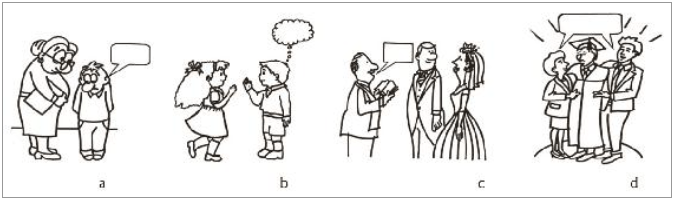
I’ll just share one example, and McGilchrist provides common responses from persons with both hemispheres intact as well as responses with right hemisphere deficits. For image b, a ‘normal’ response is for the respondent to fill in the boy’s talk bubble with ‘Boy, she’s cute.’ A couple of right hemisphere deficit responses were ‘I wonder how big her allowance is’ and ‘Let’s arm-wrestle’, obviously missing context.

The right hemisphere is responsible for understanding emotion, irony, jokes and humour—and the ability to tell the difference between jokes and lies. When told a joke and given an opportunity to fill in the punchline, the language of right hemisphere deficit patients ‘is often excessive and rambling; their comments are often off-colour and their humour is frequently inappropriate; they tend to focus on insignificant details or make tangential remarks’. Moreover, when asked to reconvey a story, the right hemisphere deficit people produced an ‘abundance of embellishments’ to it.

One subject with right hemisphere resection asked, ‘how do you feel?’ responded ‘With my hands’

Other right hemisphere functions are the ability to grasp the semantic nuance and intonation of a speaker. One subject with right hemisphere resection asked, ‘How do you feel?’ He responded, ‘With my hands,’ but he wasn’t joking.

People who have undergone a right hemispherectomy demonstrate a ‘shallow affect, rigidity, [and] lack of imagination’. The left hemisphere seems to prefer denotative speech whilst the right prefers connotative, hence a broader set of possible meanings. Interestingly, yet perhaps not surprisingly, clichés are the domain of the left hemisphere. Poetry and music reside on the right.

Wrapping up this chapter, the right hemisphere tends to serve as the emotional centre, save for anger, which is a left hemisphere activity.

Perspective

In summary, the left brain is very focused. Damage to the right hemisphere mimics the responses of autistic and schizophrenic individuals who interpret inputs differently and without nuance. This nuance often contains emotional or empathetic content that is lost on this cohort.

I am left wondering if schizophrenia and autism are right hemisphere problems, as it were, or if I would be reading into things to arrive at this conclusion.  

Having completed Emotional and Social Intelligence next up is a chapter on Cognitive Intelligence. I hope you’ll join me.

What are your thoughts? What did you think of this chapter? Were there any surprises? Anything of particular interest?

Leave comments below.

VIDEO: The Problem with Postmodernism

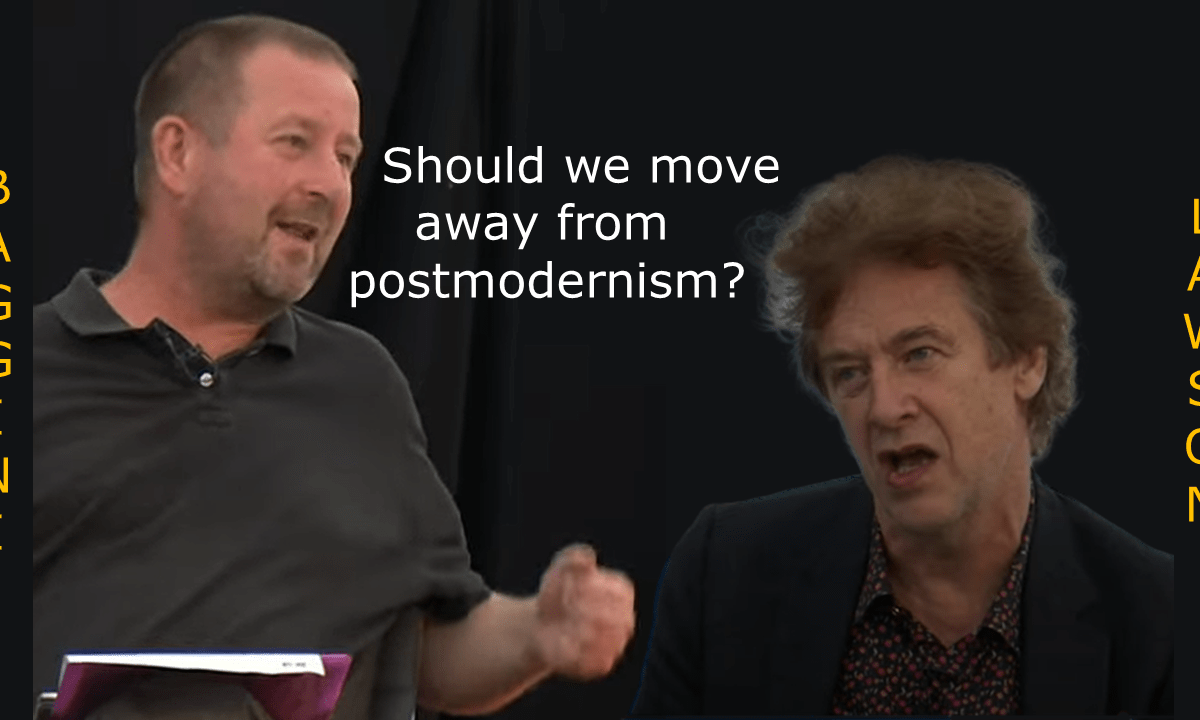
The theme of this Institute of Art and Ideas video is ‘Should we move away from postmodernism?‘

Podcast: Audio rendition of this page content

EDIT: Find my version of this content on YouTube:

Video: Postmodern Defence

At the start, I feel as usual, that the definition of postmodernism is nebulous, and the fora agree, methinks. Toward the end, Hilary Lawson concedes that key actors tied to the early postmodern movement denied being postmoderns, singling out Foucault and Derrida. More on this. Keep reading.

Julian Baggini, the bloke sat on the left and whose positions I am only getting familiar with, starts off the clip. He makes some points, some of which I agree with and others not so much.

He makes a play at claiming that there is some objective truth to be attained, following on with the statement that without this notion, it’s anything goes. I disagree with both of these assertions. Then he cites Thomas Nagel’s The View from Nowhere, wherein he posits that subjectivity and objectivity are extrema on a spectrum and that experience is somewhere in between. This conforms to my beliefs, but there are two provisos. First, the extremum of objective truth is unattainable, objectively speaking. Moreover, as I’ve written before, we have no way of adjudicating whether a given observation is truer than another. It seems that he leaves it that we don’t need to know the absolute truth to know “true enough”, but I think this is both a copout and wrong—but not too wrong for pragmatism to operate.

For example—not mentioned in the clip—, I can imagine that physicists feel that Einsteinian motion physics is truer than Newtonian physics, especially as we need to take measurements nearer to the speed of light. In my thinking, this might provide a better approximation of our notion of the world, but I can also conceive of an Ideal, non-materialistic perspective where both of these are rubbish from the perspective of truth. I feel that people tend to conflate truth with utility.

Julian makes an interesting point about semantics with the claim that “some people” define certain things in such a way as to not possibly be attainable and then claim victory. But what are his three examples? Free will, the self, and objectivity. If you’ve been following me, you’ll know that I might be in his crosshairs because I tend to be in the camp that sees these concepts as sketchy. And to be fair, his claim of defining something in a manner to keep a concept out of bounds is the other side of the same coin as defining something in such a way as to get it into bounds.

The self is different to free will insomuch as it’s a construction. As with any construction, it can exist, but it’s a fiction.

I’ve spoken at length about my position on free will, but I am fairly agnostic and don’t particularly care either way. I feel that the causa sui argument as it applies to human agency is more important in the end. The self is different to free will insomuch as it’s a construction. As with any construction, it can exist, but it’s a fiction. Without interacting with Julian or reading his published works on the self, if there are any, I don’t know how he defines it. And here we are discussing objectivity.

Given Nagel’s objective-subjective polarity, it seems they want to paint postmodernism as claiming that everything is subjective and that science (and religion) hold claims to objectivity. Hilary Lawson, the geezer on the right takes a position between extremes, but he denounces Julian’s claim about objective truth, noting that many people (especially of religious persuasions) make claims on Truth that are diametrically opposed, ostensibly labelling the same object simultaneously black and white. And the object for all intents and purposes is red.

I’ve gotten out of order, but Julie Bindel makes some good points on Feminism and suggests that the philosophical feminists—may I call them pheminists? No? OK then—such as Judith Butler have set women’s rights back by claiming that the category of ‘woman’ is invalid. Minni Salami defended Judith by noting that Butler has helped constructively in some ways and, citing Simone de Beauvoir, that woman is a category established by men to create The Other Sex. Still, Julie—not incorrectly—states that without a category, women (or whatever collective term one decides is representative) cannot be afforded legal protections—because law, as facile as it is, is all about categories and classes.

Hilary reenters the fray and states that it is not acceptable for one person to claim that their lived experience is all that is needed just because that is their truth. To be fair, this feels like a bit of a strawman argument. Perhaps I need to get out more, but I am not familiar with anyone credible making this claim.

I enjoyed watching this clip and processing the information. I hope you do as well. If you have any comments, I’d love to read them.

The Matter with Things: Chapter Four Summary: Judgment

Index and table of contents

This is my take on the fourth chapter of The Matter with Things. Chapters one and two have been posted previously.

Podcast: Audio rendition of this page content

Intro

Chapter four of The Matter with Things is titled Judgment. Following the previous chapters, Attention and Perception, it’s about how we reach conclusions based on what we perceive.

Trust in left versus right hemisphere processing. The right hemisphere is responsible for anchoring us into reality, so if there are cognitive deficits on the right, the left has a tendency toward delusion.  

Content

This chapter opens with a quotation by Maurice Merleau-Ponty, “Perception is a judgment, but one that is unaware of its reasons, which is as much as to say that the object perceived gives itself as a whole and as a unity before we have grasped its intelligible principle.”

Nearly all delusions are due to right hemisphere damage or dysfunction. Distinguishing delusions, which are distorted reality judgments, from hallucinations, which are distorted perceptions, is to some degree arbitrary, since misperceptions can give rise to misbeliefs, and misbeliefs give rise to misperceptions.

Reinforcing previous chapter content, the right hemisphere is holistic whilst the left is narrowly focused. To borrow the metaphor of McGilchrist’s previous book, the right hemisphere is the master whilst the left is the emissary. The right serves as an anchor to the flighty left.

I’ll share the quote he cites by Orrin Devinsky: The unchecked left hemisphere unleashes a creative narrator from the monitoring of self, memory, and reality by the frontal and right hemisphere areas, leading to excessive and false explanations. Further, the left hemisphere’s cognitive style of categorization, often into dual categories, leads it to invent a duplicate or impostor to resolve conflicting information. Delusions result from right hemisphere lesions. But it is the left hemisphere that is deluded.

This serves as an apt summary. The left jumps to conclusions and seems to need closure, so its first answer is its final answer, no matter how implausible. He cites that this need for closure is also a feature of modernity that seems to insist on closure. This need is evidently amplified in schizophrenics.

Here is where I will take liberties and skip the examples of prosopagnosia, delusional misidentification, paranoia, and the rest, save to inform the reader that clinically speaking paranoia has a broader meaning than used idiomatically. It’s not simply the feeling that someone is watching us or out to get us. It also extends to any number of mistaken references to oneself and includes grandiose and religiose delusions.

Another condition that I’ll pause to mention is that of mirror agnosia, where a subject cannot recognise itself in a mirror, and Cotard’s syndrome where a person believes themselves to be dead.

The right hemisphere supports the body’s schema. Rather contrary to previous mentions that the left hemisphere is the map maker, the right hemisphere seems to contain the blueprint for the assembled body. In fact, children born without limbs may still experience phantom limb sensation due to this mapping.

He writes about the connexion between depression and insight, noting “that depression has repeatedly been shown to be associated with greater realism.” And “the evidence is that this is not because insight makes you depressed, but because, up to a point, being depressed gives you insight.” Moreover, depression is linked to the perception of time.

Next, he touches on false memories and confabulation. Quoting Michael Gazzaniga, he writes, “the left hemisphere generates many false reports. But the right brain does not; it provides a much more veridical account.

Next, he writes about the phenomenon of magical thinking, which is “defined as ‘belief in forms of causation that by convention are invalid’.” The jury is still out on which hemisphere this is more dominant. He tells us that, quote, “Magical thinking may not be pathological at all, except in extreme cases.” And citing Peter Brugger writes that “to be ‘totally “unmagical” is very unhealthy’, and reduces one’s capacity to appreciate value and to take enjoyment in life.” Take this as you may.

In describing the role of reasoning in forming judgments, he clarifies that “reasoning is classically associated with the left hemisphere, but in reality, most studies show that both hemispheres contribute to reasoning; and the part played by the right hemisphere is significant.” Interestingly, if not paradoxically, citing Sass and Pienkos, we learn that ‘The most deluded patients with schizophrenia tend to be those whose thinking is more logical.’ And “Eugène Minkowski’s insight that the problem in psychosis is not loss of reason, but its hypertrophy: ‘The mad person is much less frequently “irrational” than is believed: perhaps, indeed, he is never irrational at all.’”

Discussing inductive and deductive reasoning, the left hemisphere is the whipping boy again. Inductive reasoning needs stasis and normalcy—the domain of the left hemisphere—, so much so that it keeps trying to convince us that everything is normal, so when things like the 2008 financial collapse or Covid-19 come along, the left brain defends ‘Who could have predicted that?” whilst the right hemisphere rolls its proverbial eyes. The right brain is the Sherlock Holmes of deductive reasoning.

Humorously, McGilchrist’s conveys in his words, and I quote, “To put it crudely, the right hemisphere is our bullshit detector” whilst the left hemisphere is a pigeon that is easily duped.

Perspective

To summarise, it’s difficult for me to get past my own conviction that the left hemisphere is an abject wanker. This is the part of the brain always looking for order and reason and constructing patterns where they don’t exist. He doesn’t mention pareidolia or apophenia, but I’m willing to wager that the left hemisphere is responsible for this. I’d also be willing to bet that it is responsible for creating nonsensical categories such as race and gender. It just seems like a half-arsed busybody.

The right hemisphere is responsible for constructing a self or a contiguous self and other assemblages, but I don’t want to lose sight of the implication that these are nonetheless constructions. I don’t prefer the term ‘illusion’, as I am more partial to the notion of ‘fiction’. Our sense of self is a fiction, a confluence of senses. And like the notion of money and so many other fictions, whether countries, nationalities, economies, and so on, this fiction can be useful. But it leaves me wondering what the non-fiction version looks like. I am not saying that the delusional state is perhaps driven by some left hemisphere dominance. This is just a different, perhaps less useful fiction. It seems that some self-less model or slices of selves would be a more truthful rendition, if not notably less practical. I suppose the question might be, “What would life be like in a world where there were no constructed selves?”

Of particular interest to me is the prevalence of so-called mental illnesses and the Age of Enlightenment and the sciences, notably mechanistic thinking.

Now that we’ve covered attention, perception and now judgment, we’ll be covering apprehension in the next chapter.  And heads up, by apprehension he doesn’t mean foreboding, so don’t be apprehensive. I hope you’ll join me.

What are your thoughts? What did you think of this chapter? Were there any surprises? Anything of particular interest?

Leave comments below or on the blog.

The Matter with Things: Chapter Three Summary: Perception

Index and table of contents

In this segment, I continue the journey through Iain McGilchrist’s masterwork, The Matter with Things by summarising chapter three, Perception, a followup to the previous chapters, respectively titled Some Preliminaries and Attention. I strongly recommend that you listen to these in turn, but feel free to play the rebel and cut queue. No one will even notice but you, and if you don’t tell, neither shall I. Come join me.

Podcast: Audio rendition of this page content

Intro

Chapter two of The Matter with Things is titled Perception. Following the previous chapter, Attention, it’s about how we perceive what we attend to. Without attention, there is no perception, but perception is not always correspondent with the so-called reality “out there”.  

Content

From the start, McGilchrist wants to assess which hemisphere is more veridical. Spoiler Alert: It’s the right half. But you already knew that because you’ve been keeping pace. And you also know that I feel he is leaving an option on the table, that neither is veridical to the actual terrain; rather, one just better maps the map. But the question essentially resolves to the same place, not as much verity as trust.

Sensory perception occurs in both hemispheres, but it is better in the right hemisphere than the left, as the left has been somewhat relegated to re-presentation over time—the same hemisphere that is better suited for codifying and mapping using symbolic language—something reserved for the brains of primates—which gives us a virtually inexhaustible way of mapping the world.

Perception is holistic, something better handled by the right hemisphere, being as the left hemisphere is more about focus and specificity. On balance, the right hemisphere is the arbiter of performance delegation, whether to perform a task or delegate it to the left hemisphere. About three-quarters of perception functions are right hemisphere processes.

McGilchrist is partial to the position advanced by Merleau-Ponty, that is “perception as a reciprocal encounter.” Perception is not a passive act. It is an interactive intercourse with the environment. What and how we perceive is affected by our experience and the situation.

Visual Perception

Perception involves all the available senses—and by definition none of those otherwise unavailable. He starts with vision. The right hemisphere does a lot of heavy lifting here. It handles size, shape and pattern recognition, contour, shadows, distance and depth, for example, three-dimensional space, and motion and time as well as the ability to recognise objects from unusual angles or from incomplete information, which I tend to think of as playing some Gestalt role. The right also handles colour perception, though the left maintains the colour name mapping.

The left hemisphere is slightly faster at detection, but if what is detected has any signal degradation, the right hemisphere tends to be more accurate. And since the left hemisphere is, what I’ll call lazy, it may tire quickly and space out, so the right hemisphere may have to intervene, if even a bit more slowly. Paradoxically, if the left hemisphere is given more time, its recognition error rate increases. Incidentally, one reason the right hemisphere may respond more slowly is that it is deliberating to attempt to deliver the correct response whilst the left tosses out its first best guess and declares victory. Nailed it!

Nailed It!

Recall from the last chapter that the left hemisphere is also a master of denial, so it is unapologetic when it guesses wrong. I imagine it signalling ‘that’s not a bus’ just as it hits you and then insists that it never was a bus; that injury must have been caused by something else. Perhaps it was an untoward wrecking ball. 

Without delving into details here, McGilchrist points out that much early research might be invalid because it employed cathode ray tubes—CRTs—whose mechanisms present biased information to the visual field, thereby invalidating conclusions.

the left hemisphere is better at recognising tools—hammers and spanners—, but not musical instruments, which it perceives more as living entities

An interesting area for me is that the left hemisphere is better at recognising tools—hammers and spanners—, but not musical instruments, which it perceives more as living entities. And this is an apt segue to auditory perception.   

Auditory Perception.

Whereas the left hemisphere is better at symbolic language processing and “the processing of meaningless noises, such as clicks”, the right hemisphere pretty much handles the rest, from pitch, inflexion, tone, phrasing, metre and complex rhythm, and melody. The left keeps tabs on basic rhythmic patterns. It is assumed that rhyming relies on both hemispheres working in concert.

For most people, music processing is a right hemisphere event, but this is not true for professional musicians, who utilise both hemispheres, likely owing to the musical language translation processing unnecessary for the casual listener.

Olfactory Perception

Interestingly, the acuity of the nose is orders of magnitude superior to that of the eyes and ears. Olfactory recognition and discrimination have a right hemisphere preference, but emotional reactions to scent may be stronger in the left hemisphere.

Gustatory Perception

“Apart from five very basic tastes – salt, sweet, sour, bitter and umami – which come from the tongue, all flavours come from the olfactory sense.” In general, gustatory perception is a right hemisphere function. However, there is an exception for professional wine tasters, who like professional musicians need to map experiences to words associated to rating and naming.

Tactile Perception

Remembering that the right hemisphere controls the left half of the body, whilst the left hemisphere controls the right, the sense of touch is superior in the left hand. Feelings of warmth, and temperature discriminations in general, are associated with right hemisphere activation. Interoception, the ability to perceive the internal workings of the body, is another right hemisphere process.

Local versus Global Perception

Recall that the right hemisphere captures the world holistically whilst the left hemisphere has a laser focus. This equates respectively to global and local perception. As it happens, the right can do both, but the left is limited to local. This means that if the left hemisphere is damaged, the right can pick up the slack, but if the right hemisphere is damaged, the left cannot compensate for the lost holistic perspective. In practice, the right runs the show and delegates to the left when it deems it to be appropriate for the circumstance. For some reason, normal adolescents have a bias toward local perception over global.

Pathologies of Perception

This leads us to abnormalities, such as Alzheimer’s disease. Deterioration of right hemisphere function leads to a sense of disorganisation and loss of sensation. This hemisphere is also responsible for constructing a sense of self and self-awareness. McGilchrist calls out that the term self has multiple meanings. Much of the notion of self is associated with the medial prefrontal cortex in both hemispheres, but the objectified self and the self as an expression of will (in the respect Schopenhauer spoke of) are left brain aspects.

Perception of a contiguous self over time is a right hemisphere function, the loss of which is not uncommon in cases of schizophrenia.

In discussing visual hallucinations and distortions, almost ninety per cent of these have been attributable to right hemisphere anomalies. McGilchrist shares examples over several pages, but I’ll summarise by description alone of what can be categorised under the umbrella term of metamorphopsia. These might lead to object impermanence, or viewing things as too large or too small, too close or too distant, skewed, or the wrong shape altogether. In some cases, only half of an object, including self-perception, was outsized. This might occur on a macro level or a micro level, which is to say that it may be entire objects or bodies or just faces, or just familiar faces or just eyes or just one eye.  This might occur on a macro level or a micro level, which is to say that it may be entire objects or bodies or just faces, or just familiar faces or just eyes or just one eye.

Some of these cases involved motion, for example, the sense that some object is receding away from the observer as the observer draws nearer to it.

After a journey through Charles Dodgson, AKA Lewis Carroll, and Alice in Wonderland, provides a plethora of examples in prose of some of these visual effects.

From visual hallucinations, we wonder through hallucinations of the other senses, though the data points on these are much sparser, but the left hemisphere does seem to be the culprit of most auditory hallucinations.

Perspective

To summarise, I am again left to feel that the left hemisphere is a deadbeat hanger-on. It’s there in a pinch, but it’s an unreliable narrator and worker that falls asleep at the wheel. Psychology does have a position on what a normal person should see and hear and taste and touch, but normal doesn’t mean real. 

I was hoping to see some information and perspective on synaesthesia, a condition where people perceive experiences through sense-perception organs different to normal. These people see music and hear smells or taste colours and so on. We consider this to be anomalous, but does it provide a fitness benefit, and are these people ahead of “normal” people or are they carrying excess baggage that creates a burden, even if the condition is otherwise benign.

Now that we’ve covered attention and perception, we’ll be covering judgment in the next chapter.  I hope you’ll join me.

What are your thoughts? What did you think of this chapter? Have you experienced or know of anyone who has experienced any of these so-called anomalies. Are you familiar with any of the effects mentioned in Alice in Wonderland? Leave comments below.

Using AI to Decode Speech from Brain Activity

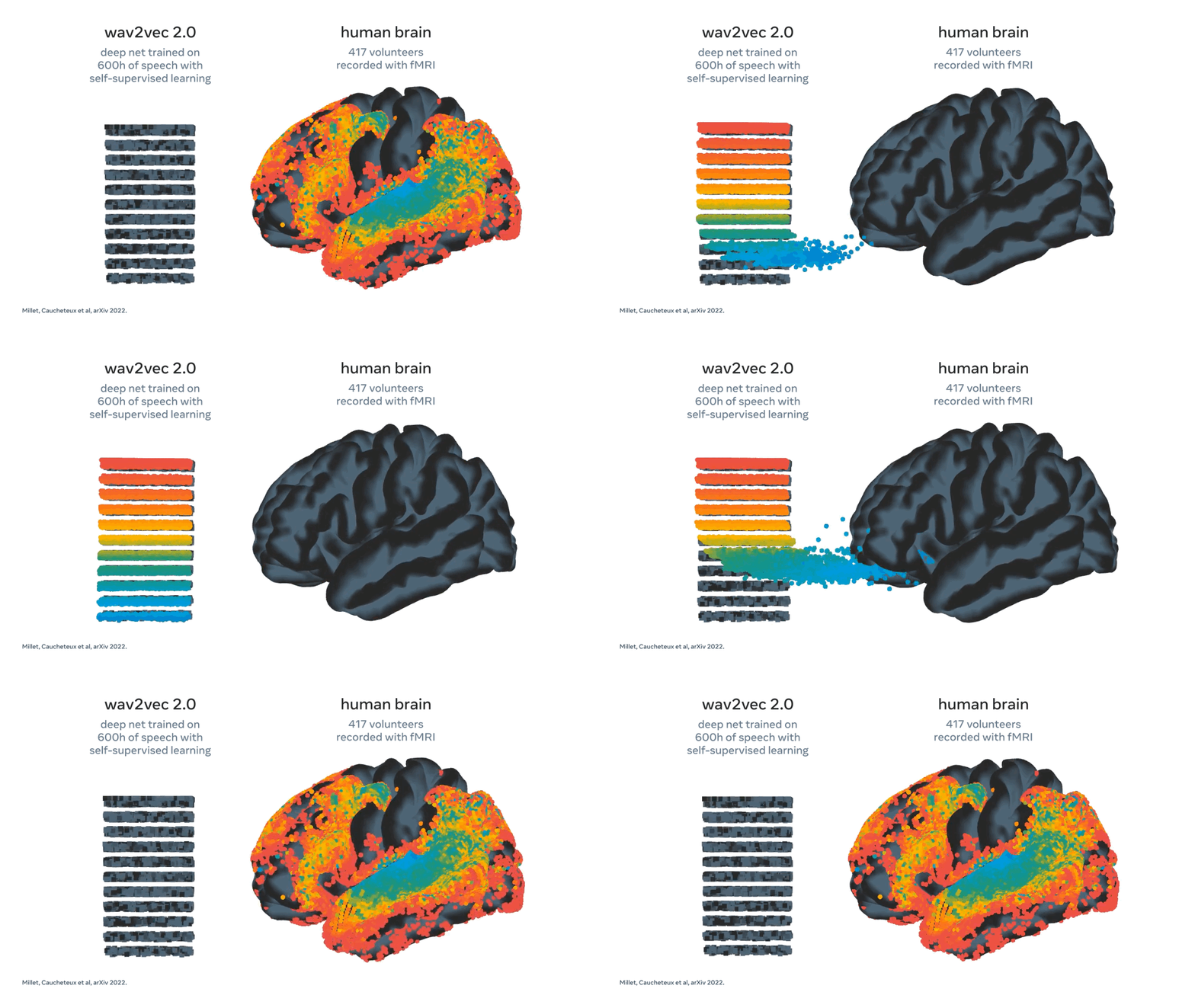
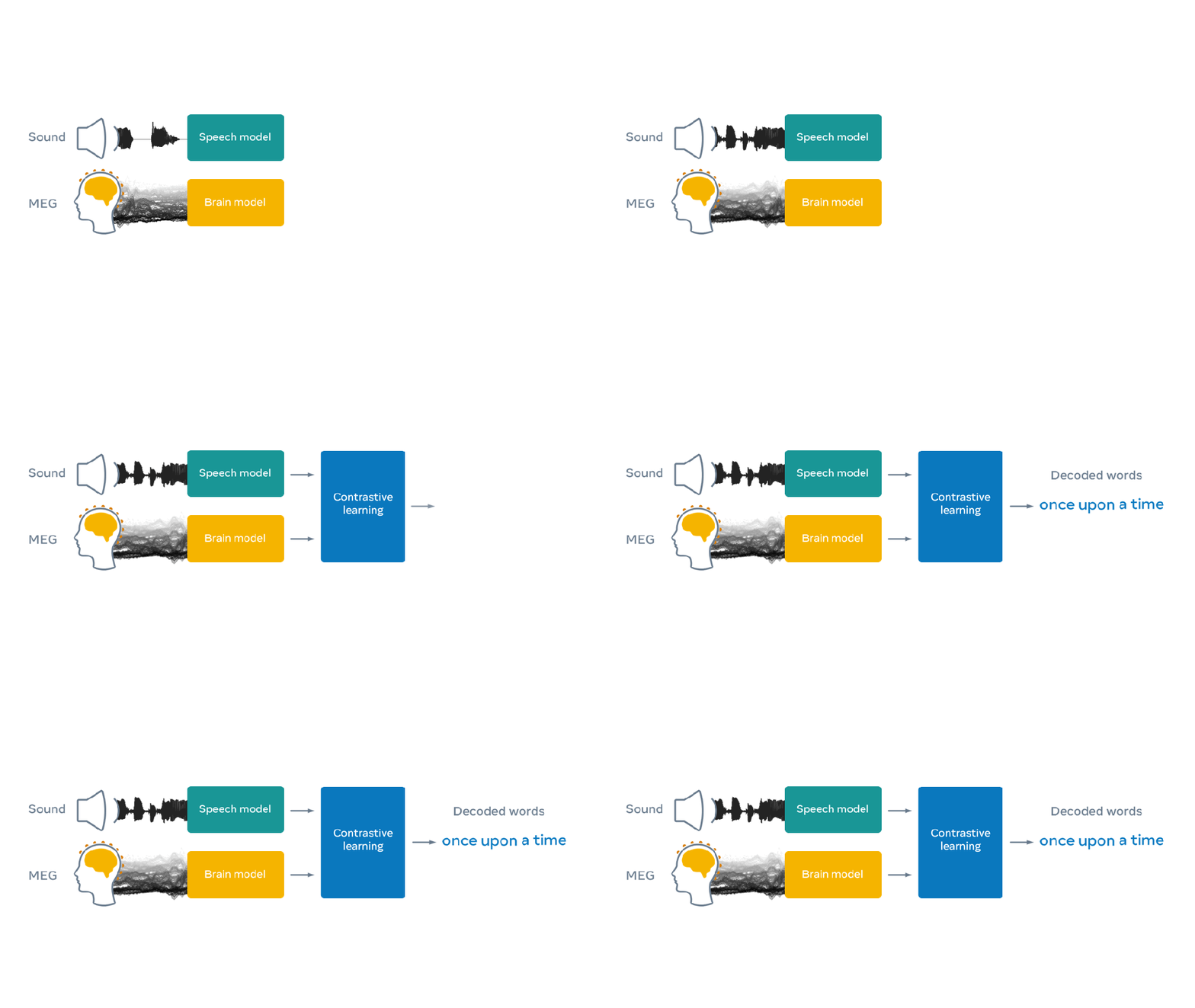
Apologies in advance for sharing PR hype from Meta (formerly known as Facebook),but I want to comment on the essence of the idea, which is using AI to decode speech from brain activity. It seems to imply that one would apply supervised machine learning to train a system to map speech to brain activity as illustrated by the image below.

Podcast: Audio rendition of this page content
To decode speech from noninvasive brain signals, we train a model with contrastive learning to align speech and its corresponding brain activity

The dataset would require the captured patterns of a large enough sample size. In this case, it appears to have been some 417 volunteers.

Activations of wav2vec 2.0 (left) map onto the brain (right) in response to the same speech sounds. The representations of the first layers of this algorithm (cool colours) map onto the early auditory cortex, whereas the deepest layers map onto high-level brain regions (e.g. prefrontal and parietal cortex).

This feels like it could have many commercial, consumer, and industrial uses including removing other human-computer interface devices, notably keyboards, but perhaps even mouses. Yes, I said mouses. Sue me.

Given hypotheses related to language and cognition, I am wondering what can be gleaned by mapping different multiple native language speakers to cognitive processes in order to remap them to speech output if it would be able to arrive at some common grammar that could then output a given thought stream into any known (and mapped) language, allowing for instantaneous “translation”.

Of course, a longer-term goal would be to skip the external devices and interface brain to brain. This sounds rogue science fiction scary, as one might imagine an external device trained on a brain to read its contents. One of the last things this world needs is to have to worry about neuro-rights and about being monitored for thought crimes. Come to think of it, isn’t there already a book on this? Nevermind. Probably not.

Technology is generally not inherently harmful or helpful, as that is determined by use. Humans do seem to tend toward the nefarious. Where do you think this will go? Leave a comment.