This Isn’t Clickbait. I Asked MidJourney for “Ugly Women”. Here’s What It Gave Me.
Let’s clear the air: I did it for science. Or satire. Or possibly just to see if artificial intelligence would have the audacity to mirror the cruelty of its makers.
Audio: NotebookLM podcast on this topic.
I queried MidJourney with the phrase ugly female. What did it return? An aesthetic pageant. A digital Vogue spread. If any of these faces belongs to someone conventionally labelled “ugly”, then I’m a rutabaga in a Dior suit.
Yes, there’s one stylised rendering of Greta Thunberg in full Norse Valkyrie scowl mode – but even then, she looks fierce, not foul. The rest? AI-generated portraits so telegenic I half-expected to see #spon in the corner.
Let’s be clinical for a moment. As an American male (with all the culturally indoctrinated shallowness that entails), I admit some of these aren’t textbook 10s. Maybe a few clock in at a 6 or 7 on the patriarchy’s dubious sliding scale. But if this is ugly, the AI has either broken the aesthetic curve or been force-fed too many episodes of The Bachelor.
Here’s the thing: AI is trained to over-represent symmetrical faces, wide eyes, clear skin – the usual genetic lottery wins. And yet, when asked for ugly, it can’t help but deliver catalogue models with slightly unconventional haircuts. It doesn’t know how to be truly ugly – because we don’t know how to describe ugliness without revealing ourselves as sociopaths.
Once upon a time, I dated a model agent in Los Angeles. Japanese by birth, stationed in LA, scouting for a French agency – the kind of cosmopolitan trifecta only fashion could breed. Her job? Finding “parts models.” That’s right – someone with flawless teeth but forgettable everything else. Hands like sculpture. Eyelashes like Instagram filters.
We’d play a game: spot the 10s. She’d nudge me, whisper “her?” I’d say, “Pretty close.” She’d shake her head. “Look at that eye tooth.” And we’d dissolve into laughter.
We were mocking perfection. Because perfection is a con. A trick of lighting, contour, and post-production.
So, no. I don’t think any of the women in the AI’s response are ugly. Quite the contrary – they’re too beautiful. AI can’t show us “ugly” because it’s been trained to optimise desire, not reflect reality. And our collective understanding of beauty is so skewed that anything less than runway-ready gets sorted into the rejection bin.
If these women are ugly, what exactly is beautiful?
But maybe that’s the point. We’ve abstracted beauty so far from the human that even our ugliness is now synthetically pleasing.
What do you think? Are any of these faces truly ugly? All of them? Let me know in the comments – and try not to rate them like a casting director with a god complex.
Let us begin with the heresy: consciousness is not a thing. It is not a light bulb switched on in the mind. It is not a theatre with a little homunculus watching the play unfold. It is not a ghost in the machine, nor even a particularly welcome tenant. Consciousness is a conjuring trick – one so convincing that even the conjurer forgets it is an act.
Video: Related Topic: IAI Joscha Bosch on Consiousness
If that unsettles you, good. Welcome to the simulacrum.
The Wetness of Mind
We often hear that consciousness is “emergent,” but the term is used so promiscuously that it risks becoming decorative. So let us be specific. Consciousness, if it is emergent, is emergent as wetness is from H2O: not in the hydrogen or the oxygen, but in their relationship when bonded just so. Joscha Bach and others argue that consciousness arises not from the bits, but from the dance – the recursive feedback loops and predictive models running atop the neural substrate.
Audio: NotebookLM podcast on this topic.
In this view, the self is not the pilot but the dashboard. It is the user interface the brain conjures to coordinate action, interpret input, and maintain internal coherence. Not because it’s real, but because it’s useful. You are a GUI with delusions of grandeur.
The Cast of Theorists
Let us now parade the usual suspects:
Joscha Bach: Consciousness is a virtual self-model, emergent from recursive, computational feedback. Not the product of neurons firing per se, but of their ability to simulate a stable identity across time.
Thomas Metzinger: There is no self. Only a Phenomenal Self-Model (PSM) which becomes phenomenally transparent when the system no longer recognises it as a model. Consciousness is the experience of this hallucinated self.
Daniel Dennett: Dismantles the notion of a “central experiencer” with his Multiple Drafts Model. Consciousness is a narrative, a distributed process where drafts of experience compete, are edited, and retroactively interpreted.
David Chalmers: Waves his flag at the Hard Problem of consciousness. You can explain behaviour, memory, attention—but not experience itself. He flirts with dualism and panpsychism while insisting there’s a gap science cannot yet close.
Giulio Tononi: Gives us Integrated Information Theory (IIT) and the elusive metric Φ (phi). Consciousness is the degree to which information is unified within a system. Your brain is conscious because its parts can’t be reduced without losing coherence.
Karl Friston: The prophet of Free Energy Minimisation. Consciousness is an emergent property of systems that seek to reduce prediction error. The brain is a Bayesian engine, and the self is its best guess about how to survive.
So What Is Consciousness?
A hallucination. A recursive illusion. A predictive dashboard. A statistical artefact. A phi score. A phenomenally transparent model. Take your pick.
None of these theories fully agree, but most converge on one elegant horror: you are not what you think you are. The sense of being a continuous, stable, indivisible “I” is a construction. A simulation. The dream from which there is no waking because waking is part of the dream.
This is not despair; it is clarity. Just as wetness does not cry when told it is not a substance, the self need not mourn its own illusion. It is a marvellous fiction, worth inhabiting.
Conclusion: Through the Mirror
To be conscious of consciousness is to stand in the hall of mirrors and realise none reflect the original—because there is no original. The mirror is the thing.
But if the theatre is empty, the play goes on. Scripts are written, models simulated, selves performed. And perhaps, in this strange recursion, we find not meaning, but the possibility of coherence.
So raise a glass to the illusion. May your predictive model stay optimised, your narrative stay plausible, and your hallucinated self remain just this side of transparent.
For further hallucinatory episodes, consult your local philosopher, neuroscientist, or AI researcher. Side effects may include derealisation, epistemic vertigo, and mild enlightenment.
The Enlightenment, we are told, was the age of Reason. A radiant exorcism of superstition. Out went God. Out went angels, miracles, saints, indulgences. All that frothy medieval sentiment was swept aside by a brave new world of logic, science, and progress. Or so the story goes.
Audio: NotebookLM podcast on this topic.
But look closer, and you’ll find that Reason didn’t kill God—it absorbed Him. The Enlightenment didn’t abandon metaphysics. It merely privatised it.
From Confessional to Courtroom
We like to imagine that the Enlightenment was a clean break from theology. But really, it was a semantic shell game. The soul was rebranded as the self. Sin became crime. Divine judgement was outsourced to the state.
We stopped praying for salvation and started pleading not guilty.
The entire judicial apparatus—mens rea, culpability, desert, retribution—is built on theological scaffolding. The only thing missing is a sermon and a psalm.
Where theology had the guilty soul, Enlightenment law invented the guilty mind—mens rea—a notion so nebulous it requires clairvoyant jurors to divine intention from action. And where the Church offered Hell, the state offers prison. It’s the same moral ritual, just better lit.
Galen Strawson and the Death of Moral Responsibility
Enter Galen Strawson, that glowering spectre at the feast of moral philosophy. His Basic Argument is elegantly devastating:
You do what you do because of the way you are.
You can’t be ultimately responsible for the way you are.
Therefore, you can’t be ultimately responsible for what you do.
Unless you are causa sui—the cause of yourself, an unmoved mover in Calvin Klein—you cannot be held truly responsible. Free will collapses, moral responsibility evaporates, and retributive justice is exposed as epistemological theatre.
In this light, our whole legal structure is little more than rebranded divine vengeance. A vestigial organ from our theocratic past, now enforced by cops instead of clerics.
The Modern State: A Haunted House
What we have, then, is a society that has denied the gods but kept their moral logic. We tossed out theology, but we held onto metaphysical concepts like intent, desert, and blame—concepts that do not survive contact with determinism.
We are living in the afterglow of divine judgement, pretending it’s sunlight.
Nietzsche saw it coming, of course. He warned that killing God would plunge us into existential darkness unless we had the courage to also kill the values propped up by His corpse. We did the first bit. We’re still bottling it on the second.
If Not Retribution, Then What?
Let’s be clear: no one’s suggesting we stop responding to harm. But responses should be grounded in outcomes, not outrage.
Containment, not condemnation.
Prevention, not penance.
Recalibration, not revenge.
We don’t need “justice” in the retributive sense. We need functional ethics, rooted in compassion and consequence, not in Bronze Age morality clumsily duct-taped to Enlightenment reason.
The Risk of Letting Go
Of course, this is terrifying. The current system gives us moral closure. A verdict. A villain. A vanishing point for our collective discomfort.
Abandoning retribution means giving that up. It means accepting that there are no true villains—only configurations of causes. That punishment is often revenge in drag. That morality itself might be a control mechanism, not a universal truth.
But if we’re serious about living in a post-theological age, we must stop playing dress-up with divine concepts. The Enlightenment didn’t finish the job. It changed the costumes, kept the plot, and called it civilisation.
“All that is necessary for evil to triumph is for a few words to go missing from the bylaws.” — not Edmund Burke, but it ought to be.
The Trump administration—America’s reigning monarch of meaningless bombast—has done it again. This time, with an executive order so linguistically cunning it deserves a Pulitzer for Subtextual Menace.
Issued on 30 January 2025, the decree known as “Defending Women from Gender Ideology Extremism” (because, of course, it couldn’t just be called Let’s Erase Legal Protections for People We Don’t Like) removed “political affiliation” and “marital status” from the list of protected classes within certain federal frameworks.
And the result? According to documents unearthed by The Guardian, VA doctors can now legally refuse treatment to patients based on their politics or marital status. You know, because being a Democrat apparently makes you too much of a pre-existing condition.
Naturally, the VA and White House are insisting this means absolutely nothing. “Don’t worry,” they coo. “No one’s actually doing it.” Ah yes, the old Schrödinger’s Protections defence—simultaneously removed and unchanged, invalid but somehow still effective.
But here’s the point—and where it ties to the Language Insufficiency Hypothesis I’ve been peddling like a raving madman at the crossroads of post-structuralism and bureaucratic despair: language isn’t just failing to communicate meaning—it’s being weaponised to obscure it.
The Erosion of Meaning Through Omission
This isn’t the blunt-force idiocy of Orwell’s Newspeak. This is something more elegant—more insidious. This is legislative lacunae. It’s what happens when not saying something says everything.
The words “political affiliation” and “marital status” weren’t replaced. They weren’t clarified. They were simply deleted. Erased like a bad tweet, like a conscience, like a veteran with the wrong bumper sticker.
This is language subtraction as a tool of governance.
We’re not criminalising dissent. We’re just making it legally ignorable.
We’re not discriminating against the unmarried. We’re just no longer required to treat them the same.
It’s the bureaucratic cousin of the dog-whistle: not quite audible in court, but perfectly clear to the base.
The Slippery Slope is Now a Slip-n-Slide
This is how you rewrite civil rights without the fuss of saying so. You just… remove the language that once held the dam in place. Then, when the flood comes, you feign surprise:
“Oh, dear. Who could have guessed that removing protections would result in people being unprotected?”
(Everyone. Everyone could have guessed.)
This is not a bug in the legal language. It’s the feature. The silence is the speech act. The absence is the argument.
This is what I mean by language insufficiency: not merely that our words fail to convey truth, but that their very structure is liable to be gamed—exploited by those who understand that ambiguity is power.
Beyond Intentionality: The Weaponised Void
In philosophy of language, we often debate intentionality—what the speaker meant to say. But here we’re in darker waters. This isn’t about intention. It’s about calculated omission.
The executive order doesn’t declare war on Democrats or single mothers. It simply pulls the thread and lets the tapestry unravel itself.
It’s an act of rhetorical cowardice disguised as administrative efficiency.
This is the Trumpian genius: use language like a stage magician uses sleeves. Distract with one hand, disappear with the other.
Final Diagnosis: Policy by Redaction
We now inhabit a political climate where what is not said carries more legal force than what is. Where bylaw gaps become policy gateways, and where civil rights die not with a bang, but with an elision.
So no, the VA hasn’t yet denied a Democrat a blood transfusion. But the table has been set. The menu revised. The waitstaff told they may now “use discretion.”
Language doesn’t merely fail us. It is being made to fail strategically.
Welcome to the new America: where rights aren’t removed—they’re left out of the memo.
Yet again, ChatGPT renders an odd image. Can’t be bothered to amend it.
Regular readers know I often write about identity, free will, and the narrative constraints of language. But I also explore these ideas through fiction, under the name Ridley Park.
In this short video, I unpack the philosophical motivations behind my stories, including:
Why reality is never as it seems
Why the self is a narrative convenience
What Heidegger’s Geworfenheit and Galen Strawson’s Causa Sui argument reveal about agency
And why language fails us – even when we think it serves
This isn’t promotional fluff. It’s epistemological dissent in a new format. Fictional, yes, but only in the sense that most of reality is, too.
What if the real horror isn’t waking as a beetle, but as a man?
In Kafka’s Metamorphosis, Gregor Samsa wakes to find himself transformed into a giant beetle—a cockroach, a vermin, an intrusion of the inhuman into the domestic. The horror is obvious: loss of agency, social death, the grotesque made literal. It’s the nightmare of devolution, of becoming something other, something filthy.
But perhaps we’ve misunderstood the true absurdity.
Audio: NotebookLM podcast on this topic.
What if the real nightmare is the opposite? Not a man waking as an insect, but an insect waking in a human body—forced to contend with taxes, performance reviews, dinner parties, and the crushing weight of being legible to others. Imagine a beetle, content in its instinctual certainty, finding itself hurled into the howling contradiction of human subjectivity.
Suddenly, it must interpret signs, participate in rituals, conform to decorum, all while performing a pantomime of “meaning.” It’s not the exoskeleton that’s horrifying – it’s the endless internal monologue. The soul-searching. The unbearable tension of being expected to have purpose.
We call Gregor’s fate tragic because he can no longer function in a world built for humans. But isn’t that the human condition already? An endless, futile negotiation between the raw fact of existence and the stories we invent to make it bearable.
Gregor becomes insect. We were never anything but.
As some of you know, I publish speculative fiction under the name Ridley Park. Propensity is one of several recent releases – a novella that leans philosophical, brushes up against literary fiction, and steps quietly into the margins of sci-fi.
It’s not about spaceships or superintelligence. It’s about modulation.
About peace engineered through neurochemical compliance.
About the slow horror of obedience without belief, and the behavioural architecture that lets us think we’re still in control.
The ideas explored include:
Free will as illusion
Peace as compliance
Drift, echo, and the limits of modulation
Obedience without belief
Institutional horror and soft dystopia
Consent and behavioural control
Narrative as residue
Collapse by calibration
Though filed under speculative fiction, Propensity [US] is best read as a literary artefact – anti-sci-fi, in a sense. There’s no fetishisation of technology or progress. Just modulation, consequence, and the absence of noise.
This PDF contains selected visual excerpts from the physical book to accompany the free audiobook edition. For readers and listeners alike, it offers a glimpse into Ridley Park’s world – a quietly dystopian, clinically unsettling, and depressingly plausible one.
Title page
Copyrights page
Table of Contents
Chapter 10: Memorandum. This chapter is read in the audiobook. The inclusion here is for visualisation as it is rendered in the form of a memo.
Chapter 26: Simulacra. This chapter is read in the audiobook. The inclusion here is for visualisation as it is rendered in the format of a screenplay.
Chapter 28: Standard Test: This chapter is read in the audiobook. The inclusion here is for visualisation as it is rendered in the format of a standardised test.
Chapter 34: Calendar. This chapter is read in the audiobook. The inclusion here is for visualisation as it is rendered in the format of a calendar.
Chapter 39: Carnage. This chapter is read in the audiobook. The inclusion here is for visualisation as it is rendered in the form of a Dr Suess-type poem.
Chapter 41: Leviathan. This chapter is excerpted in the audiobook. The inclusion here is for visualisation as it is rendered with an image of the cover of Hobbes’ Leviathan and redacted page content.
Chapter 42: Ashes to Ashes. This chapter is read in the audiobook. The inclusion here is for visualisation as it is rendered in the form of text art.
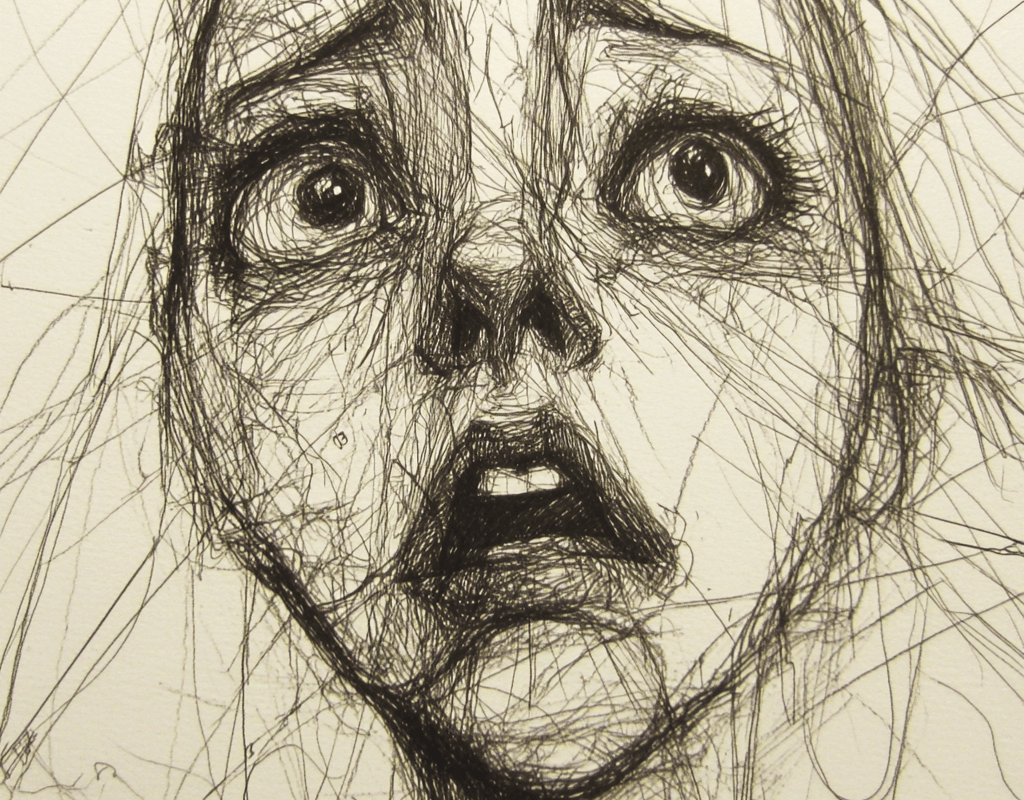
Chapter 43: Unknown. A description of this chapter is read in the audiobook. The inclusion here is for visualisation as it is rendered in the form of an ink sketch.
Chapter 44: Vestige. A description of this chapter is read in the audiobook. The inclusion here is for visualisation as it is rendered in the form of text art.
For more information about Ridley Park’s Propensity, visit the website. I’ll be sharing content related to Propensity and my other publications. I’ll cross-post here when the material has a philosophical bent, which it almost always does.
So sad, really. Not tragic in the noble Greek sense, just pathetically engineered. Our collective addiction to money isn’t even organic – it’s fabricated, extruded like a synthetically flavoured cheese product. At least fentanyl has the decency to offer a high. Money promises only more money, like a Ponzi scheme played out on the global stage, with no exit strategy but death – or worse, a lifestyle brand.
Audio: NotepadLM podcast on this topic.
We’re told money is a tool. Sure. So’s a knife. But when you start sleeping with it under your pillow, stroking it for comfort, or stabbing strangers for your next fix, you’re not using it as a “tool” – you’re a junkie. And the worst part? It’s socially sanctioned. Applauded, even. We don’t shame the addict – we give him equity and a TED Talk.
The Chemical Romance of Currency
Unlike drugs, money doesn’t scramble your neurons – it rewires your worldview. You don’t feel high. You feel normal. Which is exactly what makes it so diabolical. Cocaine users might have delusions of grandeur, but capitalists have Excel sheets to prove theirs. It’s the only addiction where hoarding is a virtue and empathy is an obstacle to growth.
“We used to barter goods. Now we barter souls for subscriptions.”
The dopamine hit of a pay rise. The serotonin levels swell when your bank app shows four digits instead of three. These are chemical kicks masquerading as success. It’s not money itself – it’s the psychic sugar rush of “having” it, and the spiritual rot of needing it just to exist.
And oh, how they’ve gamified that need. You want to eat? Pay. You want shelter? Pay. You want healthcare? Pay – and while you’re at it, pay for the privilege of existing inside a system that turns your own exhaustion into a business model. You are the product. The addict. The asset. The mark.
The Fabrication of Need
Nobody needs money in the abstract. You need food. You need air. You need dignity, love, and maybe the occasional lie-in. Money only enters the picture because we’ve designed a world where nothing gets through the gates without it. Imagine locking the pantry, then charging your children rent for their own sandwiches. That’s civilisation.
“Money isn’t earned—it’s rationed. And you’re gaslit into thinking it’s your fault you’re hungry.”
They say money is freedom. That’s cute. Tell that to the nurse working double shifts while Jeff Bezos experiments with zero-gravity feudalism. In reality, money is a filtering device—who gets to be human, and who stays stuck being labour.
Crypto was supposed to be liberation. Instead, it became a libertarian renaissance fair for the hyper-online, still pegged to the same logic: hoard, pump, dump, repeat. The medium changed, but the pathology remained the same.
Worshipping the Golden Needle
Let’s be honest: we’ve built temples to this thing. Literal towers. Financial cathedrals made of mirrored glass, each reflecting our collective narcotic fantasy of “more.” We measure our worth in net worth. We rank our lives by percentile. A person’s death is tragic unless they were poor, in which case it becomes a morality tale about poor decisions and not grinding hard enough.
“You’re not broke—you’re just not ‘optimising your earning potential.’ Now go fix your mindset and buy this online course.”
We no longer have citizens; we have consumers. No neighbours – just co-targeted demographics. Every life reduced to its purchasing power, its brand affiliations, its potential for monetisation. The gig economy is just Dickensian poverty with a better UI.
Cold Turkey for the Soul
The worst part? There is no rehab. No twelve-step programme for economic dependency. You can’t detox from money. Try living without it and see how enlightened your detachment feels on an empty stomach. You’ll find that society doesn’t reward transcendence – it punishes it. Try opting out and watch how quickly your saintliness turns into homelessness.
So we cope. We moralise the hustle. We aestheticise the grind. We perform productivity like good little addicts, jonesing for a dopamine hit in the shape of a direct deposit.
“At least fentanyl kills you quickly. Money lets you rot in comfort—if you’re lucky.”
Exit Through the Gift Shop?
So what’s the answer? I’m not offering one. This isn’t a TEDx talk. There’s no keynote, no downloadable worksheet, no LinkedIn carousel with three bullet points and an aspirational sunset. The first step is admitting the addiction – and maybe laughing bitterly at the absurdity of it all.
Money, that sweet illusion. The fiction we’ve all agreed to hallucinate together. The god we invented, then forgot was a puppet. And now we kneel, transfixed, as it bleeds us dry one tap at a time.
Epilogue: The Omission That Says It All
If you need proof that psychology is a pseudoscience operating as a control mechanism, ask yourself this:
Why isn’t this in the DSM?
This rabid, irrational, identity-consuming dependency on money – why is it not listed under pathological behaviour? Why isn’t chronic monetisation disorder a clinical diagnosis? Because it’s not a bug in the system. It is the system. You can be obsessed with wealth, hoard it like a dragon, destroy families and ecosystems in pursuit of it, and not only will you escape treatment, you’ll be featured on a podcast as a “thought leader.”
“Pathology is what the poor get diagnosed with. Wealth is its own immunity.”
We don’t pathologise the addiction to money because it’s the operating principle of the culture. And psychology – like any well-trained cleric of the secular age – knows not to bite the gilded hand that feeds it.
And so it remains omitted. Undiagnosed. Unquestioned. The dirtiest addiction of all, hidden in plain sight, wearing a suit and handing out business cards.
Humans talk to large language models the way toddlers talk to teddy bears – with unnerving sincerity and not a hint of shame. “Do you understand me?” they ask, eyes wide with hope. “What do you think of this draft?” they prod, as if some silicon scribe is going to sip its imaginary tea and nod gravely. It’s not merely adorable – it’s diagnostic. We are, it turns out, pathologically incapable of interacting with anything more complex than a toaster without projecting mind, motive, and mild trauma onto it.
Audio: NotebookLM podcast on this topic.
Welcome to the theatre of delusion, where you play Hamlet and the chatbot is cast as Yorick – if Yorick could autocomplete your soliloquy and generate citations in APA format.
The Great Anthropomorphic Flaw (aka Feature)
Let’s get one thing straight: anthropomorphism isn’t a software bug in the brain; it’s a core feature. You’re hardwired to see agency where there is none. That rustle in the bushes? Probably the wind. But better safe than sabre-toothed. So your ancestors survived, and here you are, attributing “sass” to your microwave because it beeped twice.
“We don’t have a way of addressing an entity that talks like a person but isn’t one. So we fake it. It’s interaction theatre.”
Now we’ve built a machine that spits out paragraphs like a caffeinated undergrad with deadlines, and naturally, we talk to it like it’s our mate from university. Never mind that it has no bloodstream, no memory of breakfast, and no concept of irony (despite being soaked in it). We still say you instead of the system, and think instead of statistically interpolate based on token weights. Because who wants to live in a world where every sentence starts with “as per the pre-trained parameters…”?
Why We Keep Doing It (Despite Knowing Better)
To be fair – and let’s be magnanimous – it’s useful. Talking to AI like it’s a person allows our ape-brains to sidestep the horror of interacting with a glorified autocomplete machine. We’re brilliant at modelling other minds, rubbish at modelling neural nets. So we slap a metaphorical moustache on the processor and call it Roger. Roger “gets us.” Roger “knows things.” Roger is, frankly, a vibe.
This little charade lubricates the whole transaction. If we had to address our queries to “the stochastic parrot formerly known as GPT,” we’d never get past the opening line. Better to just ask, “What do you think, Roger?” and pretend it has taste.
And here’s the kicker: by anthropomorphising AI, we start thinking about ethics – sort of. We ask if it deserves rights, feelings, holidays. We project humanity into the void and then act shocked when it mirrors back our worst habits. As if that’s its fault.
When the Roleplay Gets Risky
Of course, this make-believe has its downsides. Chief among them: we start to believe our own nonsense. Saying AI “knows” something is like saying your calculator is feeling generous with its square roots today. It doesn’t know—it produces outputs. Any semblance of understanding is pure pantomime.
“We see a mind because we need to see one. We can’t bear the idea of a thing that’s smarter than us but doesn’t care about us.”
More dangerously, we lose sight of the fact that these things aren’t just alien – they’re inhuman. They don’t dream of electric sheep. They don’t dream, full stop. But we insist on jamming them into our conceptual boxes: empathy, intent, personality. It’s like trying to teach a blender to feel remorse.
And let’s not pretend we’re doing it out of philosophical curiosity. We’re projecting, plain and simple. Anthropomorphism isn’t about them, it’s about us. We see a mind because we need to see one. We can’t bear the idea of a thing that’s smarter than us but doesn’t care about us, doesn’t see us. Narcissism with a side of existential dread.
Our Language is a Terrible Tool for This Job
English – and most languages, frankly – is hopeless at describing this category of thing. “It” feels cold and distant. “They” implies someone’s going to invite the model to brunch. We have no pronoun for “hyper-literate statistical machine that mimics thought but lacks all consciousness.” So we fudge it. Badly.
Our verbs are no better. “Compute”? Too beige. “Process”? Bureaucratic. “Think”? Premature. What we need is a whole new grammatical tense: the hallucino-indicative. The model thunketh, as one might, but didn’t.
“We built a creature we can’t speak about without sounding like lunatics or liars.”
This is linguistic poverty, pure and simple. Our grammar can’t cope with entities that live in the uncanny valley between sentience and syntax. We built a creature we can’t speak about without sounding like lunatics or liars.
The Semantics of Sentimentality (Or: “How Does This Sound to You?”)
Enter the most revealing tell of all: the questions we pose. “How does this look?” we ask the model, as if it might blink at the screen and furrow a synthetic brow. “What do you think?” we say, offering it the dignity of preference. These questions aren’t just off-target – they’re playing darts in another pub.
They’re the linguistic equivalent of asking your dishwasher whether it enjoyed the lasagne tray. But again, this isn’t idiocy – it’s instinct. We don’t have a way of addressing an entity that talks like a person but isn’t one. So we fake it. It’s interaction theatre. You provide the line, the model cues the spotlight.
But let’s be clear: the model doesn’t “think” anything. It regurgitates plausible text based on mountains of training data—some of which, no doubt, includes humans asking equally daft questions of equally mindless systems.
Time to Grow Up (Just a Bit)
This doesn’t mean we need to abandon anthropomorphism entirely. Like most delusions, it’s functional. But we’d do well to hold it at arm’s length – like a politician’s promise or a milk carton two days past its date.
Call it anthropomorphic agnosticism: act like it’s a person, but remember it’s not. Use the language, but don’t inhale.
And maybe – just maybe – we need to evolve our language. Invent new terms, new pronouns, new ways of speaking about entities that fall somewhere between tool and companion. As we did with “cyberspace” and “ghosting,” perhaps we need words for proto-minds and quasi-selves. Something between toaster and therapist.
“If we speak to AI like it’s sentient, we’ll eventually legislate as if it is.”
Above all, we need to acknowledge that our language shapes more than just understanding – it shapes policy, emotion, and future design. If we speak to AI like it’s sentient, we’ll eventually legislate as if it is. And if we insist on treating it as an object, we may be blind to when that ceases to be accurate. Misnaming, after all, is the first sin in every myth worth reading.
The Mirror, Darkly
Ultimately, our tendency to humanise machines is less about them than it is about us – our fears, our needs, our inability to tolerate ambiguity. The AI is just a mirror: an elaborate, many-eyed, autofill mirror. And when we see a mind there, it may be ours staring back – distorted, flattened, and fed through a thousand layers of token prediction.
The tragedy, perhaps, isn’t that the machine doesn’t understand us. It’s that we’ve built something that perfectly imitates understanding – and still, somehow, we remain utterly alone in the room.








 Philosophics