Telos is humanity’s most persistent delusion – the idea that existence is crawling toward some luminous conclusion. From Aristotle’s perfect forms to Nietzsche’s Will to Power to Silicon Valley’s AI salvation, the story barely changes: history, we are told, has direction. But direction is not destiny; it is momentum misinterpreted as meaning. Much of my Anti-Enlightenment attention – and my drive toward Dis-Integration – centres on this notion.
Audio: NotebookLM podcast on this topic.
Progress is the Enlightenment’s secular gospel. Its promise – that every change is improvement – keeps the engine of exploitation humming. But change is inevitable; progress is propaganda. The arrow of time doesn’t point toward justice or enlightenment; it just points forward, indifferent to who’s crushed under it.
The Myth of Self-Correcting Systems
We are taught to place faith in systems: markets, democracies, algorithms. If they falter, it’s because of bad actors, not bad architecture. Replace the managers, swap the politicians, tweak the code. But the rot is structural, not moral.
These systems aren’t misfiring; they’re functioning exactly as designed – to preserve their own inertia while leaking meaning, resources, and compassion. The obsession with fixing individuals while sparing the machine is moral sleight of hand. At some point, tightening bolts on a burning engine becomes absurd. What we need is not a tune-up but a renovation.
This is where the philosophy of care and maintenance enters – not as sentimental housekeeping, but as radical engineering. Care is not complacent; it’s insurgent. It means facing the filth under the hood and admitting that the design itself is faulty.
Feminism and the Forgotten Labour of Repair
For centuries, the labour of care has been feminised, dismissed, and exploited – a quiet background hum while men congratulated themselves for building civilisation. Yet it is care, not conquest, that prevents collapse.
Philosophical feminists like Carol Gilligan, Joan Tronto, and María Puig de la Bellacasa saw this long before innovation culture learned to rebrand it as sustainability. They argued that ethical life is not about fulfilment or growth but about tending to fragile systems, material and social. Their revolution is not cosmic; it’s custodial.
The so-called masculine ethos – endless expansion, disruption, will to power – has delivered us burnout disguised as achievement. Its gods are metrics, its sacraments quarterly reports, its apocalypse deferred until after the IPO.
The Maintenance Ethic
Abandon the myth of natural or supernatural telos, and what remains is the duty of upkeep: a civic, psychological, and planetary responsibility. Maintenance is not stagnation; it’s resistance to decay through conscious intervention. It recognises that the world does not move toward betterment but toward breakdown – and that care is the only counter-force we possess.
Progress, as we’ve sold it, is the fever dream of a species mistaking acceleration for evolution. Maintenance is what happens when the dream fades and the mechanic steps in with a wrench.
Societies and cultures are constructs. As with twelve-step programmes, once we recognise this, we can move on to the next step. This is a notion of progress I can endorse: not the myth of inevitable improvement, but the humble acknowledgement that we built these machines and we can rebuild them differently.
The Workshop, Not the Temple
Civilisation doesn’t need another prophet or disruptor. It needs a caretaker with dirty hands. Meaning is not discovered; it is serviced. Systems are not sacred; they are rebuilt.
We can keep worshipping progress and watch the engine seize again, or we can accept the more humbling task of renovation – not of souls or nations, but of the machinery we ourselves assembled. The future, if it exists, will not be a miracle of purpose but a triumph of maintenance.
The novel itself asks what happens when humanity creates a device that creates peace on earth. What if behavioural control worked too well?
No riots. No rebellion. Just a flattening—of desire, of ambition, of will. Across homes, schools, and governments, people stop acting like themselves. Some forget how. Others forget why.
The system wasn’t designed to stay on this long. But now there’s no off switch. And the researchers who built it? Most of them are zeroed.
As one child begins to drift from baseline, an impossible question resurfaces: What does it mean to behave?
This is a psychological dystopia without explosions, a story where silence spreads faster than violence, where systems behave better than the people inside them.
A tale of modulation, inertia, and the slow unravelling of human impulse—for readers who prefer their dystopias quiet and their horrors deeply plausible.
Editorial Review
“Reader discretion is advised. Free will has been deprecated.” Beginning as a bizarre experiment in behavioural modulation by way of neurochemical interference, Propensity unfolds into an eerie metaphor for the tricky road between control and conscience. Park’s chapters are short and succinct, some barely a page long, in a staccato rhythm that mirrors the story’s disintegration—scientists losing grip on their creation and a world learning the price of its “engineered peace.” Phrases like “silence playing dress-up as danger” and “peace was never meant to be built, only remembered” linger like faint echoes long after you turn the page.
This is one of the more popular posts on here, so I shouldn’t have to give this milestone special attention, but I will anyway. Slow news day. It’s more about economics and political science, but I go there, too. Not a big fan of Capitalism in any of its many incarnations.
Video: Midjourney automation
I decided to experiment with Midjourney for this cover art and short animation. Instead of creating a typical prompt, I simply copied and pasted the text into the box above and let Midjourney make sense of it. This was the result. Then I asked to animate a loop.
Enough diversion. Back to finishing my latest book. I see light at the end of the tunnel.
Disclaimer: I should be finishing my Language Insufficiency Hypothesis book, yet I am here writing about death and dying. Why? Because I was watching an interview with Neal Schon by Rick Beato. I should have been working on my book then, too. It seems I can write about death more easily than finish a book about the failure of language. Perhaps because death speaks fluently.
I haven’t produced music professionally since the mid-1980s, and I haven’t performed since 2012, yet I am still drawn to its intricacies. My fingers no longer allow me to play much of anything anymore. This is a sort of death. When the body forgets what the mind remembers, that’s a particular kind of death – one language dying while another can’t translate.
As Neal was walking Rick through his equipment and approach to music, I was taken back to a similar place. I wanted to plug into a Fender Twin or a Hi-Watt, a Lexicon 224 or a Cry Baby wah. I still have nightmares thinking of setting up a Floyd Rose.
Video: Rick Beato interviews Neal Schon
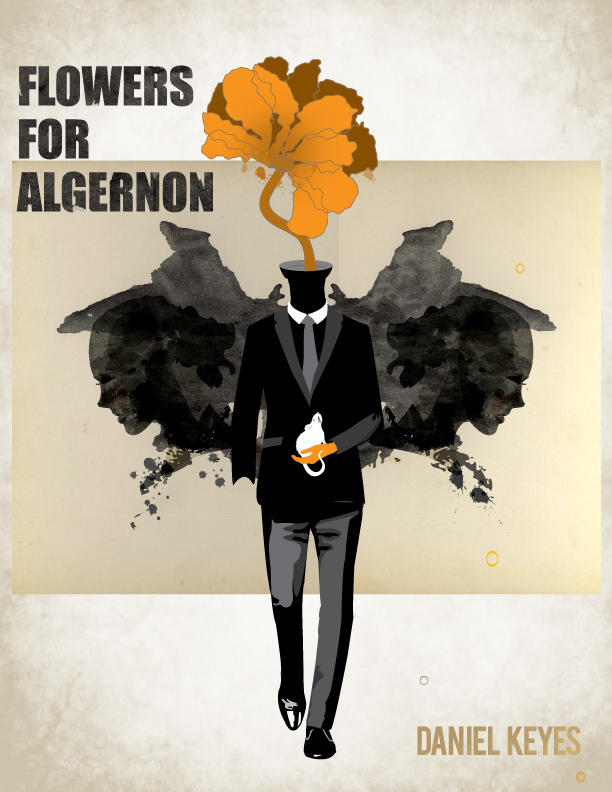
But I can’t go back. As for music, I can’t go forward either. I’m at a standstill, but in a regressed position. It’s uncomfortable. It feels a lot like Charlie in Flowers for Algernon. I used to be able to do that. Don’t get me wrong – I am not claiming to be on the level of Neal Schon, a man I remember from his days with Santana, but when you reach a level of proficiency and then lose it, it hurts; it can be devastating.
Audio: NotebookLM podcast on this topic.
I recall being in hospital in 2023 – a physical rehabilitation facility, really – and I found a piano in a vacant common room. Drawn to the instrument, I rolled over my wheelchair and played…nothing. My fingers wouldn’t work. The piano sat there like a relic of my former self. I rolled toward it as though approaching an altar. My fingers hovered, twitched, failed. The sound of nothing has never been so loud. I cried. I cried a lot those days. I was down to 58 kilos – at 182 cm, I weighed in at just over 9 stone. It wasn’t the best of times.
I still feel a certain nostalgia.
And then there are the people I’ve lost along the way – as another Neal reflected on – The Needle and the Damage Done.
Love and art are both acts of repetition. When one ends, the reflex remains – the impulse to reach, to share, to call out. Death doesn’t stop the motion, only the answer.
I’m lucky to have left Delaware. When a girlfriend died in 2020, I remained and connected with another until 2023, when she died, too. From 2020 to 2023, when I was out and about, something might have caught my eye, and I’d reflect on how Carrie might have liked that.
But it was different. It was more like, ‘I should let Carrie know about that,’ only to realise fractions of a second later that she wouldn’t see whatever it was; she couldn’t. And I’d carry on. I didn’t need to repeat this with Sierra. My relocation to Massachusetts solved this challenge – not so many triggers.
I’m not sure how the loss of ‘professional’ music relates to deceased partners, but it does – at least enough for me to make this connexion. Perhaps I’m just connecting arbitrary dots, but I’ll call it nostalgia.
I don’t play, but I still hear it. The song continues without me. Nostalgia is just rhythm without melody. Perhaps all nostalgia is epistemological error – the confusion of past fluency for present meaning.
“In this debased and wretched world, full of destitution and want, for the first time I thought that a beam of sunshine had shone upon my life—but alas, this was not a beam of sunshine, it was a flicker of light…”
— The Blind Owl, Sadegh Hedayat
This Philosophics.blog is my primary social media outlet, but I have another presence for my fiction fare – RidleyPark.blog. In reviewing the content on connected sites, I rediscovered this review of Sadegh Hedayat’s The Blind Owl. Interestingly, I read this in French and English to suss it out, neither of which necessarily survived the translation from the original Persian.
This book was interesting enough to review twice – here and here.
I also realise that I never finished this review sequence, as parts 2 and 3 were never released. I don’t even have the heart to open my video suite to determine the fate of the rest; not today, anyway.
Check out the short to get a feel for the narrative.
Besmet, a Belgian psychologist with a background in statistics, begins not with tyranny but with epistemology – with how the Enlightenment’s dream of objectivity curdled into the managerial nightmare we now inhabit. The first half of the book reads like a slow unmasking of Scientism: how numbers became our gods, and graphs, our catechisms.
Written before COVID-19 but finished during it, his argument turns pandemic data into theatre – a performance of certainty masking deep confusion. The daily tally became ritual sacrifice to the idol of ‘evidence-based’ policy. His point, and mine, is that totalitarianism no longer needs gulags; it thrives in dashboards and KPIs.
Desmet’s frame intersects beautifully with my own thesis: that obedience today is internalised as reasonableness. Freedom has been recast as compliance with ‘the data’. We surrender willingly, provided the orders come in statistical form.
This is why even Agile™ management and its fetish of ‘velocity’ reek of the same mechanistic faith. Every sprint promises deliverance through quantification; every retrospective is a bureaucratic confession of inefficiency. The cult of metrics is not merely a managerial fad – it is the metaphysics of our time. The problem is at once ontological and epistemological: we mistake the measure for the thing itself, and in doing so, become measurable.
It’s a rare pleasure to encounter a fellow dissident of the numerical faith – a man who sees that the spreadsheet has replaced the sceptre.
‘Ethical AI’ is one of those phrases that makes philosophers reach for the gin. It’s like saying ‘compassionate capitalism or ‘fair monopoly’. The words coexist only in PowerPoint presentations and TED Talks, where moral tension is rebranded as innovation.
Audio: NotebookLM podcast on this topic.
The tech establishment loves to mutter about ‘ethics’ as though it were a feature flag – something to be toggled on in beta before the next investor round. But ethics, inconveniently, isn’t monolithic. There is no master code of moral conduct waiting to be compiled into machine learning. There are ethics, plural: Greek, Buddhist, Confucian, feminist, existentialist – each with its own vision of good, and none agreeing on the syntax.
Video: Whilst rendering cover images, I generated this and figured I’d share it for no particular reason.
The Utilitarian Delusion
When the Silicon Valley moralists speak of ‘ethics’, what they actually mean is a bland utilitarian consequentialism, tarted up in slide decks. Do what produces the most good for the most people. Sounds efficient – until you realise the spreadsheet never quite adds up. Whose good? Whose people?
This moral arithmetic smuggles in its biases like contraband. It assumes the human species sits atop the moral food chain, that GDP and engagement metrics can be moral indicators, and that ethics itself can be quantified. The utilitarian calculus is seductive precisely because it flatters the technocrat’s sensibility: moral worth as data set, consequence as outcome variable.
It’s Bentham for the broadband age – pleasure measured in clicks, pain in latency. The only thing worse than this cheerful consequentialism is the belief that it’s neutral.
The Ethics of Obedience
The next trick in the tech priesthood’s catechism is ‘alignment’ – training AI to reflect ‘human values’. But whose values? The Californian elite’s, presumably: a pseudo-egalitarian capitalism that confuses ‘doing good’ with ‘disrupting the poor’.
When they say alignment, they mean obedience. When they say ‘responsible AI’, they mean ‘please don’t regulate us yet’. The entire project rests on a moral inversion: the child instructing the parent, the tool defining the hand. The algorithm doesn’t learn ethics; it learns precedent. It learns who gets the loan, who gets the sentence, who gets the ad for antidepressants.
These systems don’t go rogue – they conform. Perfectly.
The Mirror Problem
The great irony of “ethical AI” is that the machine already behaves ethically – by our own measure. It optimises what we’ve taught it to value: efficiency, profit, attention, control. The trouble is that these are our ethics, not its. The algorithm merely holds up a mirror, and we recoil at the reflection.
To demand ‘ethical AI’ while leaving our institutions morally bankrupt is theatre. The problem is not that AI lacks conscience; it’s that the humans who build it mistake conscience for compliance. The ethics crisis in technology isn’t about machines misbehaving; it’s about humans pretending to behave.
The Real Question
We keep asking whether AI can be ethical, as though machines might one day deliver what we have failed to. But the real question is simpler, bleaker: can we be? If history is any guide, the answer is ‘only when it’s profitable’.
Until then, ‘ethical AI’ remains a convenient myth, moral placebo for the age of automation. What we need are not ethical algorithms but ethical architects. And the odds of finding those among the venture capital class are, as ever, vanishingly small.
The Enlightenment still walks among us. Or rather, it lingers like a spectre – insisting it is alive, rational, and universal, while we, its inheritors, know full well it is a ghost. The project I’ve begun – call it my anti-Enlightenment collection – is about tracing these hauntings. Not the friendly ghosts of warm memory, but the structural ones: rationality unmoored, democracy designed to fail, presentism enthroned as law.
Audio: NotebookLM podcast on the essay underlying this post.
This collection began with Rational Ghosts: Why Enlightenment Democracy Was Built to Fail, which anatomised the Enlightenment’s misplaced faith in rational self-governance. The rational individual, Enlightenment’s poster child, turned out to be less a citizen than a figment – a ghost conjured to make democracy look inevitable.
It continues now with Temporal Ghosts: Tyranny of the Present, which dissects the structural bias of presentism – our systemic privileging of the living over the unborn. Hobbes, Locke, Rousseau, Bacon, Smith, Bentham, Montesquieu: each laid bricks in an architecture that secured sovereignty for now while exiling the future into silence. Debts accumulate, climate collapses, nuclear waste seeps forward through time. The unborn never consented, yet institutions treat their silence as assent.
Why a Collection?
Because ghosts travel in packs. One essay exposes Enlightenment’s hollow promises of reason; another its structural bias toward immediacy. The next will follow a different haunting, but always the same theme: Enlightenment’s bright lantern casts a shadow it refuses to see. The collection is less about reconstruction than exorcism – or at least acknowledgment that we live in a haunted house.
Ghost by Ghost
Rational Ghosts – Enlightenment democracy promised rational citizens and self-correcting systems. What it delivered instead was structural irrationality: Condorcet’s paradox, Arrow’s impossibility theorem, and a politics rigged to stumble over its own claims of reason.
Temporal Ghosts – The unborn are disenfranchised by design. The Enlightenment’s “living contract” fossilised presentism as law, leaving future generations to inherit debts, ecological ruin, and technological lock-in.
There may be more hauntings to come – economic ghosts, epistemic ghosts, technological ghosts. But like all spectres, they may fade when the season changes. The calendar suggests they’ll linger through Día de Muertos and Hallowe’en; after that, who knows whether they’ll still materialise on the page.
Radical Futures Studio’s “7 Signals” deck has been circulating widely. It’s a striking example of Storytelling 101: identify a villain, chart the signs of its decline, and point toward an eventual resolution. In this case, the villain is white supremacy. The signs are its institutional and cultural fray. The resolution is its collapse.
Audio: NotebookLM podcast on this topic.
As far as stories go, it’s effective. It provides a framework, some memorable imagery, and the reassurance that the ugliness on display today is a death rattle, not a resurgence. No wonder it resonates. People want to believe the noise means the monster is dying.
Racism is not the root structure; it is a symptom, a mask
But as analysis, the frame is too tight. Racism is not the root structure; it is a symptom, a mask. White supremacy is real enough in its effects, but its persistence and decline are contingent. The deeper system – the scaffolding of late-stage capitalism, the Enlightenment’s brittle universalism, the institutions now staggering under their own contradictions – remains the host. When whiteness peels away, the system does not vanish. It simply rebrands.
To point to the peeling paint and say ‘the house is collapsing’ is to mistake surface for structure. Yes, the paint matters; it shapes how people experience the walls. But the real rot lies deeper, in the beams. The Enlightenment project promised seamless cloth: rationality, universality, permanence. Capitalism promised endless expansion and renewal. Both promises are faltering, and the cracks are visible everywhere – climate, finance, governance, identity. Racism, whiteness, supremacy: these are one set of cracks, not the foundation itself.
The risk of the ‘signals’ narrative is that it offers too neat a moral arc. It comforts the audience that the villain is cornered, that justice is baked into the future. But history is rarely so tidy. Supremacy does not die; it changes costumes. One mask slips, another is stitched on. If we mistake the collapse of whiteness for the collapse of the system, we blind ourselves to how easily the scaffolding survives in new guises.
Racism is a systemic lie
None of this is to reject the cause. Racism is a systemic lie, and its decline is worth cheering. But it is not enough to track the noise of its death rattle. To understand the larger story, we need to step back and see the woods for the trees. The true collapse underway is broader: the exhaustion of capitalism’s last stage, the unravelling of Enlightenment’s promises, the loss of legitimacy in institutions that no longer hold. That is the forest in which the tree of whiteness withers.
If we focus only on the tree, we risk missing the landscape. And if we mistake peeling paint for the beams, we risk celebrating cosmetic decline while the house quietly reassembles itself under a different banner.
I’ve just published Objectivity Is Illusion: An Operating Model of Social and Moral Reasoning, an essay that began as this blog post. I’m sharing the ‘official’ link and this first draft. As the essay matured, I added additional support, but I focused primarily on refuting the anticipated opposing arguments. Rather than regurgitate the final version here, I felt showing the genesis would be more instructive. Of course, the essay didn’t spring fully formed; I’ve pruned and expanded from earlier notes still sitting on my hard drive.
Every so often, I’m told I’m too slippery with words, that I treat truth as if it were just another game of persuasion, that I reduce morality to chalk lines on a playing field. The objection usually comes with force: ‘But surely you believe some things are objectively true?‘
I don’t. Or more precisely, I don’t see how ‘objectivity’ in the metaphysical sense can be defended without lapsing into stagecraft. Granite foundations have always turned out to be scaffolding with the paint touched up. Priests once told us their gods guaranteed truth; scientists later promised the lab would serve as granite; politicians assure us democracy is the stone pillar. But in each case the creaks remain.
Audio: NotebookLM podcast on this topic.
This essay is written with an academic readership in mind. It assumes familiarity with figures like Nietzsche, Foucault, Rorty, and Ayer, and with the long quarrel over subjectivity, relativity, and objectivity. My aim is not to retell those arguments from the ground up, but to position my own framework within that ongoing dispute.
Scope
Before proceeding, some guardrails. When I say ‘objectivity is illusion,’ I mean in the social and moral domain. I’m not denying quarks or mathematics. My claim is narrower: in human discourse, no truth escapes subjectivity or contingency.
This dovetails with my broader Language Insufficiency Hypothesis: that even our words are leaky vessels, prone to misfire and misunderstanding. If language itself is unstable ground, then objectivity built upon it can hardly be granite. My claim here is not that nothing exists outside us, but that in the social world we inhabit together, every ‘truth’ rests on creaking boards.
One more note: just because social administration requires appeals to objectivity doesn’t mean objectivity exists. Courts, laboratories, and parliaments invoke it to secure trust, and it works well enough as theater. But necessity is not proof. And it is not my responsibility to conjure a granite replacement. What follows is an operating model, not a new altar.
Thesis
Objectivity is an illusion. Truth is rhetorical. Morality is prescriptive, not propositional. Our ethic is not granite but care: tending the planks we walk on, knowing they creak.
Operating Model: Five Premises
This framework is not a foundation. It is an operating model – contingent, provisional, subject to revision as circumstances change. Like any model, it can (and should) be updated to fit the culture and times.
Premise 1: Subjectivity is the baseline. Every claim originates in a perspective. No statement is free of the lens through which it is made. Even to deny subjectivity is to speak from a subject.
Premise 2: Relativity is emergent. What we call ‘relative truth’ is not a separate category but the convergence of individual subjectivities into provisional consensus. Consensus is never neutral: it is formed rhetorically – through persuasion, cultural resonance, and power [1]. MacIntyre made a similar point in After Virtue. The moral consensus of the Ancients was not grounded in objectivity but in a shared tradition – a thick account of human flourishing that gave coherence to their claims. When that scaffolding collapsed, consensus fractured, leaving modern moral discourse in fragments. Critics accused MacIntyre of relativism, since different traditions yield different ‘truths’, but his point reinforces mine: what looks like objectivity is in fact the temporary overlap of subjectivities sustained by tradition [2].
Premise 3: Objectivity is illusion. Claims presented as objective are relative norms hardened by repetition and forgotten as contingent scaffolding. ‘Objectivity’ is consensus disguised as granite. Its invocation in courts or parliaments may be useful, but usefulness is not existence. The burden of proof belongs to anyone insisting on an independent, metaphysical anchor for moral or social truths (Nietzsche’s ‘mobile army of metaphors’ [3], Kuhn’s paradigms [4], Latour’s laboratories [5]).
Even if one concedes, with Weber (as MacIntyre reminds us), that objective moral truths might exist in principle, they remain inaccessible in practice. What cannot be accessed cannot guide us; reconciliation of values and virtues must therefore take place within traditions and rhetoric, not in appeal to unreachable granite [13].
Premise 4: Rhetoric establishes truth. What counts as ‘true’ in the social and moral domain is established rhetorically – through coherence, resonance, utility, or force. This does not mean truth is ‘mere spin’. It means truth is never metaphysical; it is enacted and enforced through persuasion. If a metaphysical claim convinces, it does so rhetorically. If a scientific claim holds, it does so because it persuades peers, fits the evidence, and survives testing. In short: rhetoric is the medium through which truths endure [6].
Premise 5: Non-Cognitivism, Stated Plainly. I take moral utterances to be prescriptions, not propositions. When someone says ‘X is wrong’, they are not reporting an objective fact but prescribing a stance, a rule, a line in chalk. This is my operating position: non-cognitivism (Ayer [7], Stevenson [8]).
That said, I know the term feels alien. Many prefer the dialect of subjectivism – ‘X is true-for-me but not-for-you’ – or the quasi-realist stance that moral language behaves like truth-talk without cosmic backing (Blackburn [9]). I have no quarrel with these translations. They name the same scaffolding in different accents. I am not defending any school as such; I am simply stating my plank: morality prescribes rather than describes.
Ethic: Care. Since scaffolding is all we have, the obligation is not to pretend it is stone but to keep it usable. By ‘care’, I do not mean politeness or quietism. I mean maintenance – deliberation, repair, mutual aid, even revolt – so long as they acknowledge the scaffolding we share. Care is not optional: stomp hard enough and the floor collapses beneath us all.
Examples clarify: peer review in science is care in action, patching leaky vessels rather than proving granite. Civil rights movements practiced care by repairing rotten planks of law, sometimes with revolt. Communities rebuilding after disaster embody care by reconstructing scaffolding, not pretending it was indestructible. Care is maintenance, reciprocity, and survival.
Bridge: These five premises do not add up to a system or a foundation. They form an operating model: subjectivity as baseline, relativity as emergent, objectivity as illusion, rhetoric as truth, morality as prescription. Together they outline a practice: walk the planks with care, admit the creaks, patch where needed, and stop pretending we live in marble halls.
Rationale
Why prefer scaffolding to granite? Because granite has always been a mirage. The history of philosophy and politics is a history of crumbling temples and collapsing empires. The promises of permanence never survive the weather.
Think of Nietzsche, who called truths ‘a mobile army of metaphors’ [3]. Think of Foucault, who showed that what counts as ‘truth’ is always bound up with power [1]. Think of Rorty, who reduced truth to what our peers let us get away with saying [6]. These are not nihilists but diagnosticians: they exposed the creaks in the floorboards and the wizard behind the curtain.
Metaphors drive the point home:
Scaffolding and granite: What holds is temporary, not eternal. Granite is an illusion painted on timber.
Chalk lines: Rules of play – binding, real, but contingent. They can be redrawn.
Shoreline houses: Rome, the USSR, the British Empire – each built like beachfront villas with a fine view and bad footing. Storms came, sand eroded, and down they went.
Bias as framing: Kahneman himself admitted ‘bias’ is not a thing in the world [10], only a deviation from a chosen model. Gigerenzer [11] and Jared Peterson [12] remind us heuristics are adaptive. To call them ‘biases’ is not neutral – it’s allegiance to a standard of rationality.
The point is simple: what holds today is scaffolding, and pretending otherwise is self-deception.
Counterarguments and Refutations
Objection: Moral Paralysis. Without objective morality, why abolish slavery or defend rights?
Refutation: Chalk lines still bind. Speed limits aren’t cosmic, but they regulate conduct. Abolition endured not because it tapped a cosmic truth but because it persuaded, resonated, and took root. Slavery was once ‘in bounds’. Now it is ‘offsides’. That shift was rhetorical, emotional, political – but no less binding.
Objection: Problem of Dissent. If all is subjective, the lone dissenter is ‘just another voice’.
Refutation: Dissent gains traction through coherence, predictive success, or resonance. Galileo, abolitionists, suffragists – none relied on metaphysical granite. They persuaded, they resonated, they moved chalk lines. Truth was made through rhetoric, not uncovered in stone.
Objection: Performative Dependency. Even to say ‘subjective’ assumes the subject/object split. Aren’t you still inside the house?
Refutation: Of course. But I’m the one pointing at the slippery boards: ‘Mind the dust’. Yes, I’m in the house. But I refuse to pretend it’s marble. And even the category ‘subject’ is not eternal – it’s porous, dynamic, and leaky, just like language itself.
Objection: Infinite Regress. Why stop at subjectivity? Why not de-integrate further?
Refutation: Subjectivity is not granite, but it is the last plank before void. Peel it back and you erase the possibility of claims altogether. If tomorrow we discover that the ‘subject’ is a swarm of quarks or circuits, fine – but the claim still emerges from some locus. Regression refines; it doesn’t disprove.
Conclusion: The Ethic of Care
This is not reintegration. It is dis-integration: naming the creaks, stripping polyvinyl from rotten boards, refusing granite illusions.
If you wish to build here, build. But know the ground shifts, the storms come, the shoreline erodes. The ethic is not certainty but care: to tend the scaffolding we share, to patch without pretending it is stone, and to let dissent itself become part of the maintenance.






 Philosophics