I shared this post not too long ago. Today, I shared it in a different context, but I feel is interesting – because I feel that many things are interesting, especially around language and communication.
Ocrampal shared a link to an article debating whether we are cold or have cold. Different cultures express this differently. It’s short. Read it on his site.
Audio: Exceptional NotebookLM summary podcast of this topic.
I replied to the post:
Nicely observed. I’ve pondered this myself. Small linguistic tweak: between être and avoir, avoir already behaves better metaphysically, but sentir seems the cleanest fit. Cold isn’t something one is or has so much as something one senses — a relational encounter rather than an ontological state or possession.
Between having and being, having is the lesser sin — but sensing/feeling feels truer. Cold belongs to the world; we merely sense it.
He replied in turn:
Agree except for: “Cold belongs to the world”. That is a metaphysical assumption that has consequences …
Finally (perhaps, penultimately), I responded:
Yes, it does. That statement was idiomatic, to express that ‘cold’ is environmental; we can’t be it or possess it. Coincidentally, I recently wrote about ‘cold’ in a different context:
A more verbose version of this response might have been:
This pushback is fair, but I’m not trying to re-ontologise cold. “Belongs to the world” in that context is doing rhetorical, not metaphysical, work; it’s idiomatic.
The point isn’t that cold is a mind-independent substance waiting around like a rock. It’s that whatever cold is, it doesn’t sit comfortably as an identity predicate (‘I am…cold’ – ‘J’ai…froid‘) or a possession (‘I have…cold’ – so, not ‘Je suis…froid‘) – neither to be confused with ‘I have a cold’, a different animal altogether.
‘Sensing’ (‘I feel…cold’ – ‘Je me sens…froid‘ – we have to use the reflexive pronoun, me, here; in English, this syntax has been deprecated) keeps the relation explicit without smuggling in ownership or essence. It leaves cold as an encounter-property, not a thing I contain and not a thing I am.
If anything, that phrasing was meant to resist metaphysical inflation, not commit to it.
And this is exactly the problem I gestured at in the aliens piece. We mistake familiar grammatical scaffolding for shared metaphysics. We assume that if the sentence parses cleanly, the ontology must be sound.
Language doesn’t just describe experience. It quietly files it into categories and then acts surprised when those categories start making demands.
Cold, like aliens, exposes the trick. The moment you slow down, the grammar starts to wobble. And that wobble is doing far more philosophical work than most of our declarative sentences are willing to admit.
Why shared language creates the illusion – not the reality – of shared experience
Human beings routinely assume that if another agent speaks our language, we have achieved genuine mutual understanding. Fluency is treated as a proxy for shared concepts, shared perceptual categories, and even shared consciousness. This assumption appears everywhere: in science fiction, in popular philosophy videos, and in everyday cross-cultural interactions. It is a comforting idea, but philosophically indefensible.
Video: Could You Explain Cold to an Alien? – Hank Green
Recent discussions about whether one could ‘explain cold to an alien’ reveal how deeply this assumption is embedded. Participants in such debates often begin from the tacit premise that language maps transparently onto experience, and that if two interlocutors use the same linguistic term, they must be referring to a comparable phenomenon.
A closer analysis shows that this premise fails at every level.
Audio: NotebookLM summary podcast on this topic.
Shared Language Does Not Imply Shared Phenomenology
Even within the human species, thermal experience is markedly variable. Individuals from colder climates often tolerate temperatures that visitors from warmer regions find unbearable. Acclimation, cultural norms, metabolic adaptation, and learned behavioural patterns all shape what ‘cold’ feels like.
If the same linguistic term corresponds to such divergent experiences within a species, the gap across species becomes unbridgeable.
A reptile, for example, regulates temperature not by feeling cold in any mammalian sense
A reptile, for example, regulates temperature not by feeling cold in any mammalian sense, but by adjusting metabolic output. A thermometer measures cold without experiencing anything at all. Both respond to temperature; neither inhabits the human category ‘cold’.
Thus, the human concept is already species-specific, plastic, and contextually learned — not a universal experiential module waiting to be translated.
Measurement, Behaviour, and Experience Are Distinct
Thermometers and reptiles react to temperature shifts, and yet neither possesses cold-qualia. This distinction illuminates the deeper philosophical point:
Measurement registers a variable.
Behaviour implements a functional response.
Experience is a mediated phenomenon arising from a particular biological and cognitive architecture.
Aliens might measure temperature as precisely as any scientific instrument. That alone tells us nothing about whether they experience anything analogous to human ‘cold’, nor whether the concept is even meaningful within their ecology.
The Problem of Conceptual Export: Why Explanation Fails
Attempts to ‘explain cold’ to hypothetical aliens often jump immediately to molecular description – slower vibrational states, reduced kinetic energy, and so forth. This presumes that the aliens share:
our physical ontology,
our conceptual divisions,
our sense-making framework,
and our valuation of molecular explanation as intrinsically clarifying.
But these assumptions are ungrounded.
Aliens may organise their world around categories we cannot imagine. They may not recognise molecules as explanatory entities. They may not treat thermal variation as affectively laden or behaviourally salient. They may not even carve reality at scales where ‘temperature’ appears as a discrete variable.
When the conceptual scaffolding differs, explanation cannot transfer. The task is not translation but category creation, and there is no guarantee that the requisite categories exist on both sides.
The MEOW Framework: MEOWa vs MEOWb
The Mediated Encounter Ontology (MEOW) clarifies this breakdown by distinguishing four layers of mediation:
T0: biological mediation
T1: cognitive mediation
T2: linguistic mediation
T3: social mediation
Humans run MEOWa, a world structured through mammalian physiology, predictive cognition, metaphor-saturated language, and social-affective narratives.
Aliens (in fiction or speculation) operate MEOWb, a formally parallel mediation stack but with entirely different constituents.
Two systems can speak the same language (T2 alignment) whilst:
perceiving different phenomena (T0 divergence),
interpreting them through incompatible conceptual schemas (T1 divergence),
and embedding them in distinct social-meaning structures (T3 divergence).
Linguistic compatibility does not grant ontological compatibility. MEOWa and MEOWb allow conversation but not comprehension.
Fiction as Illustration: Why Aliens Speaking English Misleads Us
In Sustenance, the aliens speak flawless Standard Southern English. Their linguistic proficiency invites human characters (and readers) to assume shared meaning. Yet beneath the surface:
Their sensory world differs;
their affective architecture differs;
their concepts do not map onto human categories;
and many human experiential terms lack any analogue within their mediation.
The result is not communication but a parallel monologue: the appearance of shared understanding masking profound ontological incommensurability.
The Philosophical Consequence: No Universal Consciousness Template
Underlying all these failures is a deeper speciesist assumption: that consciousness is a universal genus, and that discrete minds differ only in degree. The evidence points elsewhere.
If “cold” varies across humans, fails to apply to reptiles, and becomes meaningless for thermometers, then we have no grounds for projecting it into alien phenomenology. Nor should we assume that other species – biological or artificial – possess the same experiential categories, emotional valences, or conceptual ontologies that humans treat as foundational.
Consciousness is not a universal template awaiting instantiation in multiple substrates. It is alocal ecological achievement, shaped by the mediations of the organism.
Conclusion
When aliens speak English, we hear familiarity and assume understanding. But a shared phonological surface conceals divergent sensory systems, cognitive architectures, conceptual repertoires, and social worlds.
Linguistic familiarity promises comprehension, but delivers only the appearance of it. The deeper truth is simple: Knowing our words is not the same as knowing our world.
And neither aliens, reptiles, nor thermometers inhabit the experiential space we map with those words.
Afterword
Reflections like these are precisely why my Anti-Enlightenment project exists. Much contemporary philosophical commentary remains quietly speciesist and stubbornly anthropomorphic, mistaking human perceptual idiosyncrasies for universal structures of mind. It’s an oddly provincial stance for a culture that prides itself on rational self-awareness.
To be clear, I have nothing against Alex O’Connor. He’s engaging, articulate, and serves as a gateway for many encountering these topics for the first time. But there is a difference between introducing philosophy and examining one’s own conceptual vantage point. What frustrates me is not the earnestness, but the unexamined presumption that the human experiential frame is the measure of all frames.
Having encountered these thought experiments decades ago, I’m not interested in posturing as a weary elder shaking his stick at the next generation. My disappointment lies elsewhere: in the persistent inability of otherwise intelligent thinkers to notice how narrow their perspective really is. They speak confidently from inside the human mediation stack without recognising it as a location – not a vantage point outside the world, but one local ecology among many possible ones.
Until this recognition becomes basic philosophical hygiene, we’ll continue to confuse linguistic familiarity for shared ontology and to mistake the limits of our own embodiment for the limits of consciousness itself.
With the MEOW thesis now roaming freely across the intellectual savannah, knocking over conceptual furniture and frightening the rationalists, it’s time to walk through a simple example. We’ll stay safely within the realm of conscious perception for now. That way, no one panics, and everyone can pretend they’re on familiar ground.
Our case study: colour.
Or rather, the quite embarrassing misunderstanding of colour that Western philosophy has been peddling for roughly three centuries.
Audio: NotebookLM podcast summary of this topic, Colour, Perception, and Mediated Ontology.
The Realist’s Apple: A Comedy of Certainty
Picture an apple on a table: plump, unashamedly spherical, wearing its redness like a badge of honour. The traditional Realist swears it’s red in itself, quite independent of anyone wandering in to admire it. The apple has redness the way it has mass, curvature, and that little bruise from the careless shop assistant. When you enter the room, you ‘see’ the red it’s been proudly radiating all along.
Image 0: Subject viewing red apple.
By school age, most of us are told that apples don’t ‘have’ colour; they merely reflect certain wavelengths. A minor complication. A mechanical detail. Nothing to disturb the fundamental metaphysical fantasy: that redness is still ‘out there’, waiting patiently for your eyes to come collect it.
It’s all very straightforward. Very tidy. And very wrong.
Idealists to the Rescue (Unfortunately)
Ask an Idealist about the apple and the entertainment begins.
The Berkeley devotee insists the apple exists only so long as it’s perceived – esse est percipi – which raises awkward questions about what happens when you step out for a cuppa. God, apparently, keeps the universe running as a kind of 24-hour perceptual babysitter. You may find this profound or you may find it disturbingly clingy.
The Kantian, inevitably wearing a waistcoat, insists the apple-in-itself is forever inaccessible behind the Phenomenal Veil of Mystery. What you experience is the apple-for-you, sculpted by space, time, causality, and a toolkit of categories you never asked for. This explains a lot about post-Kantian philosophy, not least the fixation on walls no one can climb.
Contemporary idealists get creative: proto-experience in everything, cosmic consciousness as universal substrate, matter as a sleepy epiphenomenon of Mind. It’s quite dazzling if you ignore the categories they’re smashing together.
What unites these camps is the conviction that mind is doing the heavy lifting and the world is an afterthought – inconvenient, unruly, and best kept in the margins.
The Shared Mistake: An Architectural Catastrophe
Both Realist and Idealist inherit the same faulty blueprint: mind here, world there – two self-contained realms entering into an epistemic handshake.
Realists cling to unmediated access (a fantasy incompatible with biology). Idealists cling to sovereign mentality (a fantasy incompatible with objectivity).
Both take ‘experience’ to be a relation between two pre-existing domains rather than a single structured encounter.
This is the mistake. Not Realism’s claims about mind-independence. Not Idealism’s claims about mental primacy. The mistake is the architecture – the assumption of two separately-existing somethings that subsequently relate.
MEOW – yes, we’re calling it that – puts it bluntly:
The problem isn’t where colour is. The problem is assuming it has to be in something – mind or world – rather than in the event.
Redness isn’t inside your head or inside the apple. It’s co-constituted by biological, cognitive, linguistic, and cultural mediation interacting with persistent constraint patterns.
Time to peel this onion… er, apple.
The Four Layers of Mediation (T₀–T₃)
A Ridiculously Oversimplified Cheat-Sheet That Still Outperforms Most Metaphysics Syllabi
Structure and Sensitivity: the Architecture You Never Asked For
This is where the Enlightenment’s fantasy of ‘raw perception’ goes to die.
Your visual system transforms, filters, enhances, suppresses, and reconstructs before ‘red’ even reaches consciousness. Cone responses, opponent processes, retinal adaptation, spatial filtering – all of it happening before the poor cortex even gets a look-in.
You never perceive ‘wavelengths’. You perceive the output of a heavily processed biological pipeline.
The biology isn’t the barrier.The biology is the view.
Image 2: Chromatic processing pathway (T₀→T₁): the layered biological transformations that make “red” possible long before consciousness gets involved.
T₁ – Cognitive Mediation
Prediction and Inference: You See What You Expect (Until Constraint Smacks You)
Your cognitive system doesn’t ‘receive’ colour information – it predicts it and updates the guess when necessary.
Memory colour biases perception toward canonical instances. Attentional gating determines what gets processed intensively and what gets summary treatment. Top-down modulation shapes what counts as signal versus noise.
There is no percept without mediation. There is no ‘raw data’ waiting underneath.
The Enlightenment liked to imagine perception as a passive window. Cognition turns that window into a heavily editorialised newsfeed.
Image 3: Expectation and input co-determine the percept: “red” emerges from the encounter, not from either source alone.
T₂ – Linguistic–Conceptual Mediation
Categories and Symbols: How Words Carve the Spectrum
Enter the famous Whorf skirmishes. Do words change perception? Do they merely label pre-existing distinctions? Do Russians really ‘see’ blue differently?
Berlin & Kay gave us focal colour universals – constraint patterns stable across cultures. Roberson et al. gave us the Himba data – linguistic categories reshaping discrimination and salience.
The correct answer is neither universalism nor relativism. It’s MEOW’s favourite refrain:
Mediation varies; constraint persists.
Words don’t invent colours. But they do reorganise the perceptual field, changing what pops and what hides.
Image 4: Different languages carve the same physical continuum differently: English imposes a blue/green split; Himba divides the region into several greens with no blue boundary at all.
T₃ – Cultural–Normative Mediation
Shared Practices: The Social Life of Perception
Your discipline, training, historical context, and shared norms tell you:
which distinctions matter
which differences ‘count’
which patterns get ignored
A Himba herder, a Renaissance painter, and a radiologist do not inhabit the same perceptual world – even when staring at the same patch of light.
Cultural mediation doesn’t rewrite biology; it reorganises priorities, salience, and interpretive readiness.
Image 5: Three observers confronting the same stimulus yet extracting different distinctions: the scientist tracks wavelength, the artist tracks hue and value, and the Himba pastoralist tracks ecologically salient greens. Same object, different salience hierarchies. Not arbitrary – just mediated.
What Seeing Red Actually Involves (Step By Exhausting Step)
You walk into a room. Apple on table. Looks red. What just happened?
T₀ – Biological: Long wavelength light hits L-cones harder than M- and S-cones. Opponent channels compute (L−M). Adaptation shifts baseline. Edge detection fires. You don’t have ‘red’ yet – you have transformed photoreceptor output.
T₁ – Cognitive: Your brain predicts ‘apple, probably red’ based on shape and context. Memory colour pulls toward canonical apple-red. Attention allocates processing resources. Prediction matches input (roughly). System settles: ‘yes, red apple’.
T₂ – Linguistic–Conceptual: The continuous gradient gets binned: ‘red’, not ‘crimson’ or ‘scarlet’ unless you’re a designer. The category provides stability, ties this instance to others, makes it reportable.
T₃ – Cultural–Normative: Does the exact shade matter? Depends whether you’re buying it, photographing it, or painting it. Your practical context determines which distinctions you bother tracking.
And through all of this: Constraint. Metameric matches stay stable. Focal colours persist cross-culturally. Wavelength sensitivities don’t budge. The encounter isn’t arbitrary – but it’s not unmediated either.
What happened wasn’t: Mind Met World. What happened was: an encounter-event unfolded, organised through four mediational layers, exhibiting stable constraint patterns that made it this and not that.
Where This Leaves Us
Colour is not ‘out there’. Colour is not ‘in here’.
Colour is the structured relational event of encounter.
Four mediation layers shape what appears. Constraint patterns stabilise the encounter so we aren’t hallucinating wildly divergent rainbows.
There is no ‘apple as it really is’ waiting behind the encounter. Nor is there a sovereign mind constructing its own private theatre.
There is only the event – where biological structure, cognitive dynamics, conceptual categories, and cultural histories co-emerge with the stable patterns of constraint we lazily call ‘the world’.
The apple was never red ‘in itself’. You were never seeing it ‘as it really is’. And the Enlightenment can finally take off its colour-blind uncle glasses and admit it’s been squinting at the wrong question for three hundred years.
Next time: Why visual illusions aren’t perception failing, but perception revealing itself.
Until then: stop asking where colour ‘really’ lives.
It lives in the event. And the event is mediated, constrained, and real enough.
Update: Please note that I have refined my position on this and documented it in a newer post. It builds upon this idea but clarifies some disconnects and provides me with some ontological distance from Massimi.
There comes a moment in any serious thinker’s life when the metaphysical menu starts looking like a bad buffet: too much on offer, none of it quite edible, and the dishes that appear promising turn out to depend on ingredients you can’t stomach. Realism insists the world is simply there, chugging along regardless of your opinions. Anti-realism points out, inconveniently, that all your access is wildly mediated. Perspectivism adds humility. Constructivism chastises you for overconfidence. Analytic Idealism sweeps matter off the table entirely, until you ask why consciousness spits out such stubbornly consistent patterns.
I’ve been through all of them. Realism*—asterisk for “but what about mediation?” Idealism*—asterisk for “but what about resistance?”
Everything almost worked. And “almost” is the metaphysical kiss of death. “Almost” is where the asterisks live.
Perspectival Realism is the first position I can hold without planting that apologetic little star in the margins.
Audio: NotebookLM podcast summary on this topic.
The Asterisk Journey (Brief, Painless, Necessary)
This isn’t a conversion narrative. It’s a salvage operation. Each station on the journey left me with tools worth keeping.
Layer 1: Iconography (Hoffman, minus the metaphysics)
Perception is not a window. It’s an interface. A species-specific dashboard designed for survival, not truth. Evolution gave you a set of icons—colour patches, contrast edges, looming shapes—not an accurate rendering of reality’s architecture.
Uexküll called this the umwelt: every organism inhabits its own perceptual slice of the world. Bees see ultraviolet; snakes sense heat; humans see embarrassingly little.
This is Layer 1 mediation: Reality-as-filtered-for-primates.
Layer 2: Instrumentation (Kastrup, minus the leap)
Consciousness is the instrument through which reality is measured. Measuring instruments shape the measurements. That doesn’t make the world mind-shaped; it just means you only ever get readings through the apparatus you’ve got.
This is Layer 2 mediation: Your cognitive architecture—predictive priors, attentional limitations, spatial-temporal scaffolding—structures experience before thought arrives.
Where I leave Kastrup behind is the familiar leap: “Because consciousness measures reality, reality must be made of consciousness.” That’s the instrumentality fallacy.
You need consciousness to access the world. That tells you nothing about what the world is.
Layer 3: Linguistic–Cultural Carving (Your home field)
And then comes the mediation philosophers most reliably ignore: language. Language does not describe reality. It carves it.
Some cultures divide colour into eleven categories; some into five. The Müller-Lyer illusion fools Westerners far more than it fools hunter-gatherers. Concepts feel natural only because you inherited them pre-packaged.
This is Layer 3 mediation: the cultural-linguistic filter that makes the world legible—and in the same breath, distorts it.
You mistake the map for the territory because it’s the only map you’ve ever held.
The Hard Problem, Dissolved — Not Solved
When English splits the world into “mental” and “physical,” it accidentally manufactures the “hard problem of consciousness.” Sanskrit traditions carve reality differently and end up with different “mysteries.”
The hard problem isn’t a revelation about reality. It’s a conceptual knot tied by Layer 3 mediation.
Changing the ontology to “everything is mind” doesn’t untie the knot. It just dyes the rope a different colour.
The Triple Lock
Put the three layers together and you get the honest picture:
Your senses give you icons, not the thing-in-itself.
Your cognition structures those icons automatically.
Your culture tells you what the structured icons mean.
And yet—despite all of this—the world pushes back.
Gravity doesn’t care about your interpretive community. Arsenic does not negotiate its effects with your culture. Your beliefs about heat won’t keep your hand from burning.
This is the fulcrum of Perspectival Realism:
Reality is real and resists us, but all access is triply mediated.
The realism remains. The universality does not.
Why Perspectival Realism is Not Relativism
Relativism says: “Everyone’s perspective is equally valid.” Perspectival Realism says: “Everyone’s perspective is equally situated.”
Very different claims.
Some perspectives predict better. Some cohere better. Some survive reality’s resistance better. Some transfer across contexts better. Some correct their own errors faster.
You don’t need a view from nowhere to say that. You just need to notice which maps get you killed less often.
What This Framework Enables
1. Progress without foundation myths
Science improves because reality resists bad models. Mediation doesn’t prevent progress; it’s the condition of it.
2. Critique without arrogance
You can rank perspectives without pretending to hover above them.
3. Cross-cultural dialogue without imperialism or despair
Cultures carve experience differently, but they’re carving the same underlying world. Translation is hard, not impossible.
4. Honest metaphysics
No glamourised escape from sensory embodiment, cognitive bias, or cultural inheritance. Just the patient business of refining our mediated grip on the real.
What Perspectival Realism Actually Claims
Let me make the commitments explicit:
There is a world independent of our representations.
All access to it is mediated by perception, cognition, and culture.
Perspectives can be compared because reality pushes back.
No perspective is unmediated.
The asymptote—Reality-as-it-is—is unreachable.
This isn’t pessimism. It’s maturity.
Why This Is the First Ontology Without an Asterisk
Every worldview before this needed the quiet, shamefaced footnote:
Realism*: “But access is mediated.”
Idealism*: “But resistance is real.”
Perspectivism*: “But we still need to rank perspectives.”
Constructivism*: “But the world’s invariances aren’t constructs.”
Perspectival Realism eats the objections instead of dodging them. There is no asterisk because the worldview is built from the asterisks.
No promises of transcendence. No pretense of universality. No linguistic sleight-of-hand.
Just embodied beings navigating a real world through fallible instruments, shared practices, and cultural grammars—occasionally catching a clearer glimpse, never stepping outside the frame.
The realism remains. The universality does not. And for once, metaphysics isn’t lying to you.
DISCLAIMER: This article was written or output by ChatGPT 5.1. It started as a conversation with Claude Sonnet 4.5, where I had input days of output for evaluation. One of these outputs was the post about Erasmus and the Emissary Who Forgot to Bow. A group chat ensued between me, Claude and ChatGPT.
What started as a discussion about the merits of my position, expressed in the Erasmus-influenced essay, drifted to one about Perspectival Realism. That discussion deepened on ChatGPT, as I further discussed my recent thoughts on the latter topic. I had rendered a Magic: The Gathering parody trading card as I contemplated the subject. It’s how my brain works.
All of this led me to ask ChatGPT to summarise the conversation, and, upon further discussion, I asked it to draft this very article – the first of five.
Perspectival Realism: The First Ontology Without an Asterisk 👈 This article discusses what Perspectival Realism means to me and how I got to this position.
Arriving Late to Massimi’s Party: Perspectival Realism in Parallel I spent another half-hour following Google search results as I wanted to see if anyone else had already been using the term, Perspectival Realism. I ended up on the Oxford publishing site. I found a 2022 book with this name, authored by Michela Massimi. They allowed me to download the book, so I asked ChatGPT to summarise our positions, specifically where we agreed and differed.
Against the Vat: Why Perspectival Realism Survives Every Sceptical Hypothesis At 0500, I returned to bed, but I woke up again at 0700 thinking about how one might differentiate between Putnam’s brain in a vat from Perspectival Realism. ChatGPT asked if I wanted that output in long-form.
The Constraint Interface: Toward a Nexal Ontology Being uncomfortable with the dichotomy between Realism and Idealism, I chatted to come up with terminology that disrupts what I consider a false dichotomy, focusing on the nexus rather than privileging one or the other. Consider this similar to the debate on sex and gender binaries.
Could I have improved on these articles if I had rewritten or polished them? Maybe. What’s the purpose? This is all a result of my concepts and inquiries. I endorse the output. I may return to make edits in future, or I may restate this information in my own voice, but for now, let this serve as notice that I am not afraid of generative AI; I am not afraid that it is going to supplant my thinking. I find that whilst I can prompt GPTs to make connexions or to query who else might be relevant to a topic, it doesn’t generally offer its own initiative, what we term Agency.
As for this particular post, it reads more like a listicle. I could have rendered it more expositional, but the structured thinking is all here; why should I reinvent the wheel just to put skin on these bones? As I said, perhaps I’ll flesh this out for elaboration or publication in future, for now, let this serve as a waypoint and a record of how I got here. This supplants my prior position, the asterisked Analytic Idealism, published in 2022, which supplanted my asterisked Realism. Perhaps I’ll finally be able to settle for an ontology and epistemology with no stars.
Imagine you’re alone in the desert, lost and desperate for water. The sun beats down mercilessly, and the sand stretches out in every direction, an endless sea of dunes. Just as you’re about to give up hope, you spot a palm tree in the distance, swaying gently in the shimmering heat. Your heart leaps – could it be an oasis, a chance for survival? You stumble towards it, but as you approach, the tree seems to flicker and dance, always just out of reach. Is it really there, or is it a mirage, a trick of the mind born of desperation and the desert’s cruel illusions?
Audio: Podcast conversation about this article.
This question – how do we distinguish between objective reality and our subjective perceptions – has haunted philosophers for centuries. From ancient debates between Protagoras and Plato to the radical scepticism of Descartes, thinkers have grappled with the nature of truth and our access to it. Is there an external world that exists independently of our minds, or is reality fundamentally shaped by our individual and collective experiences?
The rise of Enlightenment rationalism in the 17th and 18th centuries sought to establish a firm foundation for objective knowledge. Descartes’ methodological doubt, which questioned the reliability of sense perceptions, and Kant’s exploration of the a priori structures of reason were attempts to secure certainty in the face of relativistic challenges. Yet the spectre of relativism persisted, finding new expressions in
Nietzsche’s perspectivism and the linguistic turn of the 20th century.
Today, the debate between relativism and objectivism remains as pressing as ever. In a world of increasing cultural diversity, competing moral frameworks, and the proliferation of ‘alternative facts,’ the question of whether truth is relative or absolute has far-reaching implications. How do we navigate the labyrinth of subjective experiences and cultural norms whilst still maintaining a commitment to truth and rationality?
In this essay, we will explore the complex relationship between relativism and objectivism, drawing on insights from thinkers such as Thomas Kuhn, Richard Rorty, Michel Foucault, and Paul Feyerabend. By examining how our perceptions and beliefs are shaped by cognitive biases, cultural conditioning, and power dynamics, we will argue for a nuanced understanding of truth that recognises the inescapability of interpretation whilst still preserving the possibility of meaningful dialogue and consensus. Just as the desert wanderer must learn to distinguish between the mirage and the true oasis, we must develop the philosophical tools to navigate the shifting sands of relativism and objectivism. Only by embracing the complexity and ambiguity of the quest for truth can we hope to find our way through the wilderness of human experience.
Defining the Terrain: Objectivism, Subjectivism, and Relativism
Before we can navigate the complex landscape of relativism and objectivism, we must first establish a clear understanding of these core concepts. What do we mean when we speak of objective reality, subjective experience, and relativistic truth?
Objective Reality: The Elusive Ideal
At the heart of the objectivist worldview lies the notion of an external, mind-independent reality. This is the world of physical objects, natural laws, and brute facts – a realm that exists independently of our perceptions, beliefs, or desires. For the objectivist, truth is a matter of correspondence between our ideas and this external reality. When we say that the Earth orbits the Sun or that water boils at 100 degrees Celsius, we are making claims about objective features of the world that hold true regardless of what any individual or culture believes.
However, the concept of objective reality is not without its challenges. As Descartes famously argued in his Meditations, how can we be certain that our perceptions accurately represent the external world? Might we not be deceived by a malicious demon or, in a more modern vein, by a sophisticated simulation? The possibility of perceptual error or illusion suggests that our access to objective reality is always mediated by our subjective experiences.
Subjective Experience: The Inescapable Lens
In contrast to the objectivist emphasis on an external reality, the subjectivist perspective foregrounds the primacy of individual experience. Our perceptions, thoughts, feelings, and beliefs shape our unique engagement with the world, colouring our understanding of truth and meaning. Two individuals may look at the same work of art or confront the same ethical dilemma, yet come away with radically different interpretations based on their personal histories, cultural backgrounds, and emotional states. The subjectivist view finds support in the work of thinkers like David Hume, who argued that our ideas and beliefs arise not from direct access to objective reality, but from the associations and habits of our own minds. More recently, the field of cognitive psychology has revealed the myriad ways in which our perceptions and judgements are shaped by unconscious biases, heuristics, and emotional influences. From the confirmation bias that leads us to seek out information that reinforces our preexisting beliefs to the availability heuristic that causes us to overestimate the likelihood of vivid or easily remembered events, our subjective experiences are permeated by cognitive quirks that distort our understanding of reality.
Relativism: Navigating the Intersubjective Matrix
If objective reality is elusive and subjective experience inescapable, what are we to make of truth and knowledge? This is where relativism enters the picture. Relativism is the view that truth, morality, and meaning are not absolute or universal but are instead relative to particular individuals, cultures, or historical contexts. For the relativist, there is no single, objective standard by which to adjudicate between competing beliefs or values. Rather, truth is always situated within specific interpretive frameworks shaped by the language, norms, and practices of different communities.
One of the most influential articulations of relativism can be found in the work of Thomas Kuhn. In his landmark book, The Structure of Scientific Revolutions, Kuhn argued that even the supposedly objective realm of science is structured by paradigms – overarching theoretical frameworks that determine what counts as legitimate questions, methods, and evidence within a given scientific community. When paradigms shift, as happened during the transition from Newtonian to Einsteinian physics, it’s not simply a matter of uncovering new objective facts. Rather, the very nature of reality and truth undergo a radical transformation.
The relativist perspective highlights the ways in which our understanding of the world is always embedded within cultural and historical contexts. The beliefs and values that we take for granted as natural or self-evident are, in fact, the products of contingent social processes. Michel Foucault’s genealogical investigations into the history of madness, sexuality, and criminality, for example, reveal how our conceptions of normality and deviance have shifted dramatically over time, shaped by the interplay of power, knowledge, and discourse.
Yet relativism need not collapse into an ‘anything goes’ nihilism or scepticism. Richard Rorty argues that we can still engage in meaningful dialogue and work towards pragmatic consensus, even if we abandon the notion of a single, absolute truth. By recognising the contingency and fallibility of our beliefs, we open up space for genuine conversation and mutual understanding across differences.
Conclusion
Objectivism, subjectivism, and relativism offer competing visions of the nature of truth and our relationship to reality. Whilst the dream of objective certainty remains alluring, the challenges posed by perceptual variability, cognitive bias, and cultural diversity suggest that a more nuanced approach is needed. By embracing the insights of relativism – the recognition that truth is always shaped by interpretation and context – we can navigate the complex terrain of human experience with greater humility, openness, and creativity.
As we move forward in this essay, we will explore how the dialectic of objective reality and subjective experience plays out in specific domains, from the perception of physical objects to the construction of scientific knowledge. By engaging with thinkers like Kuhn, Foucault, and Rorty, we will map the contours of a relativistic understanding of truth that acknowledges the inescapability of perspective whilst still preserving the possibility of meaningful dialogue and pragmatic consensus. The path ahead is not a straight line to absolute certainty but a winding trail through the wilderness of interpretation – a journey that demands courage, curiosity, and a willingness to question our most cherished assumptions. The Dialectic of Perception and Interpretation
Having established the key concepts of objectivism, subjectivism, and relativism, we can now delve into the dynamics of how perception and interpretation shape our understanding of reality. This dialectical process unfolds across three interrelated moments: the cultural shaping of perception, the individual’s subjective experience of the world, and the relativistic synthesis of these experiences into a situated understanding of truth.
The Palm Tree: A Case Study in Perceptual Dynamics
To illustrate this dialectic, let us return to the example of the desert wanderer and the palm tree. At first glance, the palm tree seems to be a straightforward object of perception – a physical entity with distinctive features such as a tall, slender trunk and a crown of feathery fronds. Yet even this seemingly simple act of recognition is shaped by a complex interplay of cultural, cognitive, and subjective factors. Firstly, the very concept of a ‘palm tree’ is a product of cultural learning and categorisation. From an early age, we are taught to distinguish between different types of plants and to associate them with specific names, uses, and symbolic meanings. The palm tree, for instance, may evoke associations with tropical paradise, desert oases, or biblical imagery, depending on one’s cultural background and personal experiences. This cultural shaping of perception predisposes us to see the world in certain ways, priming us to recognise and interpret objects according to preexisting schemas and categories.
Secondly, the individual’s subjective experience of the palm tree is mediated by a range of cognitive and perceptual factors. As Kuhn’s off-colour playing card experiment demonstrates, our expectations and prior knowledge can lead us to overlook or misinterpret anomalous stimuli. In the case of the desert wanderer, the intense desire for water and the harsh environmental conditions may distort their perception, causing them to see a mirage where there is none. Moreover, the physiology of the human visual system itself imposes certain constraints on how we process and interpret sensory information, as evidenced by well-known optical illusions such as the Müller-Lyer illusion.
Thirdly, the relativistic synthesis of these cultural and subjective factors yields a situated understanding of the palm tree that is both shaped by and shapes the individual’s broader worldview. The desert wanderer’s recognition of the palm tree as a sign of an oasis is not simply a neutral act of perception but a meaning-making process that reflects their cultural knowledge, personal desires, and embodied experiences. This interpretation, in turn, influences their subsequent actions and beliefs, shaping their understanding of the world and their place within it.
The Science of Perception: From Descartes to Kahneman
The philosophical and scientific study of perception has long grappled with the challenges posed by subjectivity and relativism. Descartes, in his Meditations, famously questioned the reliability of sensory experience, arguing that our perceptions could be deceived by dreams, illusions, or even a malicious demon. This radical doubt laid the groundwork for the epistemological project of modernity, which sought to establish a firm foundation for knowledge based on clear and distinct ideas rather than fallible sensory impressions.
However, as the work of cognitive psychologists like Daniel Kahneman has shown, even our most basic perceptual judgments are subject to a wide range of biases and distortions. From the anchoring effect, which causes us to rely too heavily on the first piece of information we receive, to the availability heuristic, which leads us to overestimate the likelihood of vivid or easily remembered events, our minds are constantly shaping and filtering our experiences in ways that depart from objective reality.
The Relativistic Synthesis: Embracing Perspective
Given the complex interplay of cultural, subjective, and cognitive factors that shape our perceptions, how are we to make sense of truth and knowledge? The relativistic approach suggests that we must abandon the quest for a single, absolute truth and instead embrace the multiplicity of perspectives that arise from our situated experiences.
This is not to say that all interpretations are equally valid or that there are no constraints on our understanding of reality. As Rorty argues, we can still engage in meaningful dialogue and work towards pragmatic consensus by recognising the contingency and fallibility of our beliefs. The goal is not to eliminate perspective but to cultivate a reflexive awareness of how our perspectives shape and are shaped by the world around us.
In the realm of science, for instance, Kuhn’s notion of paradigm shifts highlights how even our most rigorous and objective forms of knowledge are structured by overarching theoretical frameworks that determine what counts as valid evidence and explanation. For example, the transition from Newtonian to Einsteinian physics was not simply a matter of accumulating new facts but a radical reconceptualisation of the nature of space, time, and gravity. By recognising the role of paradigms in shaping scientific understanding, we can appreciate the ways in which our knowledge is always situated within particular historical and cultural contexts.
Conclusion
The dialectic of perception and interpretation reveals the complex dynamics through which our understanding of reality is shaped by an interplay of cultural, subjective, and cognitive factors. From the cultural categorisation of objects to the cognitive biases that distort our judgments, our experiences of the world are always mediated by the lenses of our situated perspectives.
Embracing a relativistic approach to truth and knowledge does not mean abandoning the quest for understanding but rather recognising the inescapability of perspective and the need for ongoing dialogue and reflexivity. By engaging with the work of thinkers like Descartes, Kahneman, Kuhn, and Rorty, we can cultivate a more nuanced and self-aware understanding of how we make sense of the world around us.
As we continue our exploration of relativism and objectivism, we will delve deeper into the implications of this relativistic synthesis for questions of scientific knowledge, moral reasoning, and political discourse. The path ahead is not a simple one, but by embracing the complexity and multiplicity of human experience, we open up new possibilities for understanding and transformation.
Relativism and the Politics of Knowledge
Having explored the dialectical process through which our perceptions and interpretations of reality are shaped by cultural, subjective, and cognitive factors, we now turn to the broader implications of relativism for the nature of scientific knowledge and the influence of power and ideology on the production of truth.
The Social Construction of Scientific Knowledge
One of the key insights of relativistic approaches to science, as developed by thinkers like Thomas Kuhn and Paul Feyerabend, is that scientific knowledge is not a purely objective or value-neutral representation of reality but is instead shaped by the social, historical, and cultural contexts in which it is produced. Kuhn’s notion of paradigm shifts, as we have seen, highlights how even the most rigorous and empirical forms of knowledge are structured by overarching theoretical frameworks that determine what counts as valid evidence and explanation.
This social constructionist view of science challenges the traditional image of the scientist as a disinterested observer, carefully recording the facts of nature without bias or prejudice. Instead, it suggests that scientific knowledge is always informed by the assumptions, values, and interests of the communities that produce it. The questions that scientists ask, the methods they employ, and the conclusions they draw are all shaped by the prevailing paradigms and social norms of their time and place.
Feyerabend takes this critique even further, arguing that the very idea of a single, unified scientific method is a myth that obscures the pluralistic and often chaotic nature of scientific practice. In his view, science is not a monolithic enterprise guided by a set of fixed rules and procedures but a diverse array of practices and approaches that are constantly evolving in response to new empirical challenges and theoretical insights. By embracing a more anarchistic and pluralistic conception of science, Feyerabend suggests, we can open up new possibilities for creative and innovative thinking that are often stifled by the rigid orthodoxies of established paradigms.
The Power/Knowledge Nexus
The social constructionist view of science also highlights the ways in which the production of knowledge is intimately bound up with relations of power and ideology. As Michel Foucault argues in his genealogical investigations of madness, sexuality, and criminality, what counts as true or false, normal or deviant, is not an objective fact of nature but a product of historically contingent systems of discourse and practice that are shaped by the interests and agendas of those in positions of power.
This power/knowledge nexus operates at multiple levels, from the institutional structures that determine what kinds of research get funded and published to the broader cultural and political currents that shape public understanding and policy decisions. The pharmaceutical industry, for example, has been criticised for its role in shaping the research agenda around mental health and illness, promoting a narrow biomedical model that emphasises the use of drugs over other forms of treatment and downplaying the social and environmental factors that contribute to psychological distress.
Similarly, the fossil fuel industry has been accused of spreading misinformation and doubt about the reality and severity of climate change in order to protect its own economic interests and delay the transition to renewable energy sources. These examples illustrate how the production of scientific knowledge is never a purely disinterested or objective process but is always entangled with the material and ideological interests of powerful actors and institutions.
The Paradox of Relativism
The relativistic view of science and knowledge raises a number of important challenges and paradoxes. If all knowledge is socially constructed and shaped by relations of power, does this mean that there is no such thing as objective truth or that all claims to knowledge are equally valid? Does the recognition of multiple paradigms and perspectives lead to a kind of ‘anything goes’ relativism that undermines the very possibility of rational inquiry and debate?
These are serious questions that have been the subject of much debate and controversy among philosophers, sociologists, and historians of science. Some critics of relativism argue that it leads to a kind of self-defeating scepticism or nihilism, in which the very idea of truth or knowledge becomes meaningless. Others worry that relativism opens the door to a dangerous kind of subjectivism or irrationalism, in which any belief or opinion, no matter how baseless or harmful, can be justified on the grounds of cultural or personal perspective.
However, defenders of relativism argue that these fears are overblown and that a more nuanced and sophisticated understanding of the social and historical dimensions of knowledge need not lead to a complete rejection of truth or rationality. Rorty, for example, suggests that we can still engage in meaningful dialogue and debate across different paradigms and perspectives by adopting a pragmatic and fallibilistic approach that recognises the contingency and limitations of all knowledge claims whilst still striving for intersubjective agreement and consensus.
Similarly, Feyerabend argues that the recognition of multiple methodologies and approaches in science need not lead to a chaotic free-for-all but can instead foster a more open and creative dialogue between different traditions and ways of knowing. By embracing a more pluralistic and democratic conception of science, he suggests, we can challenge the dogmatism and authoritarianism of established paradigms and create space for new and innovative ideas to emerge.
Conclusion
The relativistic view of science and knowledge poses significant challenges to traditional conceptions of objectivity, truth, and rationality. By recognising the social, historical, and cultural dimensions of knowledge production, relativism highlights the ways in which even the most rigorous and empirical forms of inquiry are shaped by the assumptions, values, and interests of the communities that produce them.
At the same time, the power/knowledge nexus reminds us that the production of truth is never a neutral or disinterested process but is always entangled with relations of power and ideology that shape what counts as valid or legitimate knowledge. The pharmaceutical industry and the fossil fuel industry provide stark examples of how scientific research can be distorted and manipulated to serve the interests of powerful actors and institutions.
Whilst these insights can be unsettling and even destabilising, they need not lead to a complete rejection of truth or rationality. By adopting a more pragmatic and fallibilistic approach to knowledge, as suggested by thinkers like Rorty and Feyerabend, we can still engage in meaningful dialogue and debate across different paradigms and perspectives whilst recognising the contingency and limitations of all knowledge claims.
Ultimately, the relativistic view of science and knowledge invites us to cultivate a more reflexive and critical stance towards the production of truth, one that is attentive to the social, historical, and political dimensions of knowledge and open to the possibility of multiple ways of knowing and being in the world. By embracing a more pluralistic and democratic conception of science and knowledge, we can challenge the dogmatism and authoritarianism of established paradigms and create space for new and transformative ideas to emerge.
The Ethical and Political Implications of Relativism
Having explored the implications of relativism for scientific knowledge and the role of power in shaping the production of truth, we now turn to the ethical and political dimensions of relativism and consider how a more pluralistic and contextual understanding of truth might inform our approach to questions of social justice, democracy, and human rights.
Relativism and Moral Universalism
One of the most pressing challenges posed by relativism is the question of whether there are any universal moral principles or values that hold true across all cultures and societies. The idea of moral universalism – the belief that there are certain fundamental ethical norms that apply to all human beings, regardless of their particular social or historical context – has a long and venerable history in Western philosophy, from the Kantian idea of the categorical imperative to the utilitarianism of Bentham and Mill.
However, the relativistic view of truth and knowledge poses a serious challenge to the idea of moral universalism. If all truth claims are shaped by the particular social and historical contexts in which they arise, then how can we justify the idea of universal moral principles that transcend these contexts? Doesn’t the recognition of cultural diversity and the multiplicity of moral frameworks around the world undermine the very notion of a single, universal morality?
These questions have been the subject of much debate and controversy among moral philosophers and social theorists. Some defenders of moral relativism argue that the idea of universal moral principles is itself a product of Western cultural imperialism and that any attempt to impose a single moral framework on all societies is a form of ethnocentric domination. Others suggest that whilst there may be some common moral intuitions or sentiments shared by all human beings, these are always mediated by the particular cultural and linguistic contexts in which they are expressed and cannot be reduced to a set of abstract, universal principles.
On the other hand, critics of moral relativism argue that the rejection of universal moral principles leads to a kind of ethical nihilism or subjectivism, in which any action or belief can be justified on the grounds of cultural or personal preference. They point to the existence of widespread moral norms against murder, theft, and deception as evidence of a common human morality that transcends cultural differences and argue that without some notion of universal moral principles, we have no basis for condemning clear cases of injustice or oppression.
Relativism, Democracy, and Human Rights
The debate over moral relativism has important implications for how we think about democracy, human rights, and social justice in a globalised world. If we reject the idea of universal moral principles, then on what basis can we justify the idea of universal human rights, such as the right to life, liberty, and security of person, or the right to freedom of speech and association? How can we condemn human rights abuses or political oppression in other societies without appealing to some notion of universal moral standards? At the same time, the recognition of cultural diversity and the multiplicity of moral frameworks around the world poses challenges for how we think about democracy and political legitimacy. If different societies have different conceptions of the good life and the just society, then how can we adjudicate between these competing visions in a way that respects cultural differences whilst still upholding basic principles of human rights and democratic governance?
One possible response to these challenges is to adopt a more pragmatic and contextual approach to questions of ethics and politics, one that recognises the irreducible plurality of moral and political frameworks whilst still striving for some degree of cross-cultural dialogue and understanding. This approach, which has been developed by thinkers like Richard Rorty and Jürgen Habermas, emphasises the importance of democratic deliberation and the public use of reason as a way of navigating the tensions between cultural diversity and moral universalism.
On this view, the goal of ethics and politics is not to establish a single, universal set of moral principles that applies to all societies but rather to foster a more open and inclusive dialogue between different cultural and moral traditions, one that allows for the possibility of mutual learning and transformation. By engaging in this kind of intercultural dialogue, we can work towards a more nuanced and contextual understanding of human rights and social justice, one that takes into account the particular histories, struggles, and aspirations of different communities whilst still upholding basic principles of human dignity and democratic participation.
Conclusion
The ethical and political implications of relativism are complex and far-reaching and raise fundamental questions about the nature of morality, democracy, and human rights in a globalised world. Whilst the recognition of cultural diversity and the multiplicity of moral frameworks pose challenges to traditional notions of moral universalism, it need not lead to a complete rejection of universal moral principles or a descent into ethical nihilism.
By adopting a more pragmatic and contextual approach to ethics and politics, one that emphasises the importance of democratic deliberation and intercultural dialogue, we can work towards a more nuanced and inclusive understanding of social justice and human rights, one that takes into account the irreducible plurality of human experience whilst still striving for some degree of cross-cultural understanding and solidarity.
Ultimately, the challenge of relativism is not to abandon the search for truth or the quest for a more just and humane world but rather to recognise the complexity and contingency of these endeavours and to approach them with a spirit of humility, openness, and critical reflection. By embracing the insights of relativism whilst still upholding the values of democracy, human rights, and social justice, we can chart a path towards a more pluralistic and emancipatory vision of human flourishing.
Conclusion: Navigating the Labyrinth of Relativism
Throughout this essay, we have explored the complex relationship between relativism, objectivism, and the nature of truth. We have argued for a more nuanced and contextual understanding of truth that recognises the inescapable influence of culture, subjectivity, and power in shaping our knowledge and beliefs. By examining the paradoxes and tensions between the idea of an objective reality and the subjective nature of human experience, we have sought to challenge traditional assumptions about the neutrality and universality of knowledge.
In the first section, we introduced the central paradox of objectivism and subjectivism, highlighting the ways in which the lenses of perception, interpretation, and cultural conditioning always mediate our understanding of reality. Using the metaphor of the desert wanderer and the palm tree, we explored how even our most fundamental experiences of the world are shaped by a complex interplay of sensory input, cognitive processing, and cultural meaning-making.
In the second section, we delved deeper into the dialectic of perception and interpretation, drawing on insights from thinkers like Descartes, Kahneman, and Kuhn to show how a dynamic interplay between cultural frameworks, individual experience, and the social construction of meaning shapes our understanding of reality. We argued that embracing a more relativistic approach to truth need not lead to a complete rejection of objectivity or rationality, but rather invites us to cultivate a more reflexive and self-critical stance towards the production of knowledge.
In the third section, we explored the politics of knowledge, examining how scientific knowledge is shaped by social, historical, and ideological factors and how the power/knowledge nexus operates to privilege certain forms of knowledge and marginalise others. Drawing on the work of Foucault and other social constructionists, we challenged the traditional view of science as a neutral and objective enterprise and argued for a more pluralistic and democratic approach to knowledge production.
Finally, in the fourth section, we considered the ethical and political implications of relativism, discussing how a more contextual and dialogical understanding of truth might transform our approach to questions of moral universalism, human rights, and social justice. Whilst acknowledging the challenges and paradoxes posed by relativism, we suggested that a pragmatic approach based on democratic deliberation and intercultural dialogue offers a promising way forward.
Ultimately, the labyrinth of relativism is not a simple or straightforward path but rather a complex and challenging terrain that requires ongoing navigation and negotiation. By embracing a more relativistic understanding of truth, we are invited to confront the contingency and partiality of our own perspectives and to engage in a more honest and authentic dialogue with others. This demands a willingness to question our assumptions, to listen to alternative viewpoints, and to remain open to the possibility of transformation and growth.
At the same time, relativism’s insights need not lead to a complete abandonment of the search for truth or the quest for a more just and humane world. Rather, they can inspire us to approach these endeavours with a spirit of humility, curiosity, and critical reflection, recognising the irreducible complexity and diversity of human experience. By engaging in the kind of intercultural dialogue and democratic deliberation that relativism demands, we can work towards a more inclusive and emancipatory vision of knowledge, ethics, and politics.
In the end, the labyrinth of relativism is not a puzzle to be solved or a destination to be reached but rather an ongoing journey of discovery and transformation. It invites us to embrace the multiplicity and contingency of human experience, challenge our assumptions and biases, and remain open to the possibility of new and unexpected insights. Whilst the path may be difficult and the challenges profound, it offers a more honest, authentic, and liberating approach to understanding ourselves and our world.
As we navigate the twists and turns of this labyrinth, we must remember that the search for truth is not a solitary or isolated endeavour but a collective and dialogical one. It requires us to engage with others in a spirit of openness, empathy, and mutual respect, recognising the ways in which our own perspectives are shaped by the particular contexts and experiences that we bring to the table. By cultivating this kind of intercultural understanding and solidarity, we can work towards a more just and equitable world that honours all human beings’ diversity and dignity.
So, let us embark on this journey with courage and compassion, knowing that the path and destination are uncertain. Let us embrace the complexity and ambiguity of the human condition and remain committed to the ongoing search for truth, justice, and understanding. Only by navigating the labyrinth of relativism can we hope to glimpse the elusive and ever-changing nature of reality and create a world that is more inclusive, humane, and authentically our own.
I’ve written a lot on the insufficiency of language, and it’s not even an original idea. Language, our primary tool for sharing thoughts and ideas, harbours a fundamental flaw: it’s inherently insufficient for conveying precise meaning. While this observation isn’t novel, recent developments in artificial intelligence provide us with new ways to illuminate and examine this limitation. Through a progression from simple geometry to complex abstractions, we can explore how language both serves and fails us in different contexts.
The Simple Made Complex
Consider what appears to be a straightforward instruction: Draw a 1-millimetre square in the centre of an A4 sheet of paper using an HB pencil and a ruler. Despite the mathematical precision of these specifications, two people following these exact instructions would likely produce different results. The variables are numerous: ruler calibration, pencil sharpness, line thickness, paper texture, applied pressure, interpretation of “centre,” and even ambient conditions affecting the paper.
This example reveals a paradox: the more precisely we attempt to specify requirements, the more variables we introduce, creating additional points of potential divergence. Even in mathematics and formal logic—languages specifically designed to eliminate ambiguity—we cannot escape this fundamental problem.
Precision vs Accuracy: A Useful Lens
The scientific distinction between precision and accuracy provides a valuable framework for understanding these limitations. In measurement, precision refers to the consistency of results (how close repeated measurements are to each other), while accuracy describes how close these measurements are to the true value.
Returning to our square example:
Precision: Two people might consistently reproduce their own squares with exact dimensions
Accuracy: Yet neither might capture the “true” square we intended to convey
As we move from geometric shapes to natural objects, this distinction becomes even more revealing. Consider a maple tree in autumn. We might precisely convey certain categorical aspects (“maple,” “autumn colours”), but accurately describing the exact arrangement of branches and leaves becomes increasingly difficult.
The Target of Meaning: Precision vs. Accuracy in Communication
To understand language’s limitations, we can borrow an illuminating concept from the world of measurement: the distinction between precision and accuracy. Imagine a target with a bullseye, where the bullseye represents perfect communication of meaning. Just as archers might hit different parts of a target, our attempts at communication can vary in both precision and accuracy.
Consider four scenarios:
Low Precision, Low Accuracy When describing our autumn maple tree, we might say “it’s a big tree with colourful leaves.” This description is neither precise (it could apply to many trees) nor accurate (it misses the specific characteristics that make our maple unique). The communication scatters widely and misses the mark entirely.
High Precision, Low Accuracy We might describe the tree as “a 47-foot tall maple with exactly 23,487 leaves displaying RGB color values of #FF4500.” This description is precisely specific but entirely misses the meaningful essence of the tree we’re trying to describe. Like arrows clustering tightly in the wrong spot, we’re consistently missing the point.
Low Precision, High Accuracy “It’s sort of spreading out, you know, with those typical maple leaves turning reddish-orange, kind of graceful looking.” While imprecise, this description might actually capture something true about the tree’s essence. The arrows scatter, but their centre mass hits the target.
High Precision, High Accuracy This ideal state is rarely achievable in complex communication. Even in our simple geometric example of drawing a 1mm square, achieving both precise specifications and accurate execution proves challenging. With natural objects and abstract concepts, this challenge compounds exponentially.
The Communication Paradox
This framework reveals a crucial paradox in language: often, our attempts to increase precision (by adding more specific details) can actually decrease accuracy (by moving us further from the essential meaning we’re trying to convey). Consider legal documents: their high precision often comes at the cost of accurately conveying meaning to most readers.
Implications for AI Communication
This precision-accuracy framework helps explain why AI systems like our Midjourney experiment show asymptotic behaviour. The system might achieve high precision (consistently generating similar images based on descriptions) while struggling with accuracy (matching the original intended image), or vice versa. The gap between human intention and machine interpretation often manifests as a trade-off between these two qualities.
Our challenge, both in human-to-human and human-to-AI communication, isn’t to achieve perfect precision and accuracy—a likely impossible goal—but to find the optimal balance for each context. Sometimes, like in poetry, low precision might better serve accurate meaning. In other contexts, like technical specifications, high precision becomes crucial despite potential sacrifices in broader accuracy.
The Power and Limits of Distinction
This leads us to a crucial insight from Ferdinand de Saussure’s semiotics about the relationship between signifier (the word) and signified (the concept or object). Language proves remarkably effective when its primary task is distinction among a limited set. In a garden containing three trees—a pine, a maple, and a willow—asking someone to “point to the pine” will likely succeed. The shared understanding of these categorical distinctions allows for reliable communication.
However, this effectiveness dramatically diminishes when we move from distinction to description. In a forest of a thousand pines, describing one specific tree becomes nearly impossible. Each additional descriptive detail (“the tall one with a bent branch pointing east”) paradoxically makes precise identification both more specific and less likely to succeed.
An AI Experiment in Description
To explore this phenomenon systematically, I conducted an experiment using Midjourney 6.1, a state-of-the-art image generation AI. The methodology was simple:
Generate an initial image
Describe the generated image in words
Use that description to generate a new image
Repeat the process multiple times
Attempt to refine the description to close the gap
Continue iterations
The results support an asymptotic hypothesis: while subsequent iterations might approach the original image, they never fully converge. This isn’t merely a limitation of the AI system but rather a demonstration of language’s fundamental insufficiency.
A cute woman and her dog stand next to a tree
One can already analyse this for improvements, but let’s parse it together.
a cute woman
With this, we know we are referencing a woman, a female of the human species. There are billions of women in the world. What does she look like? What colour, height, ethnicity, and phenotypical attributes does she embody?
We also know she’s cute – whatever that means to the sender and receiver of these instructions.
I used an indefinite article, a, so there is one cute woman. Is she alone, or is she one from a group?
It should be obvious that we could provide more adjectives (and perhaps adjectives) to better convey our subject. We’ll get there, but let’s move on.
and
We’ve got a conjunction here. Let’s see what it connects to.
her dog
She’s with a dog. In fact, it’s her dog. This possession may not be conveyable or differentiable from some arbitrary dog, but what type of dog is it? Is it large or small? What colour coat? Is it groomed? Is it on a leash? Let’s continue.
stand
It seems that the verb stand refers to the woman, but is the dog also standing, or is she holding it? More words could qualify this statement better.
next to a tree
A tree is referenced. Similar questions arise regarding this tree. At a minimum, there is one tree or some variety. She and her dog are next to it. Is she on the right or left of it?
We think we can refine our statements with precision and accuracy, but can we? Might we just settle for “close enough”?
Let’s see how AI interpreted this statement.
Image: Eight Midjourney renders from the prompt: A cute woman and her dog stand next to a tree. I’ll choose one of these as my source image.
Let’s deconstruct the eight renders above. Compositionally, we can see that each image contains a woman, a dog, and a tree. Do any of these match what you had in mind? First, let’s see how Midjourney describes the first image.
In a bout of hypocrisy, Midjourney refused to /DESCRIBE the image it just generated.
Last Midjourney description for now.
Let’s cycle through them in turn.
A woman is standing to the left of an old-growth tree – twice identified as an oak tree. She’s wearing faded blue jeans and a loose light-coloured T-shirt. She’s got medium-length (maybe) red-brown hair in a small ponytail. A dog – her black and white dog identified as a pitbull, an American Foxhound, and an American Bulldog – is also standing on his hind legs. I won’t even discuss the implied intent projected on the animal – happy, playful, wants attention… In two of the descriptions, she’s said to be training it. They appear to be in a somewhat residential area given the automobiles in the background. We see descriptions of season, time of day, lighting, angle, quality,
A woman is standing to the right of an old-growth tree. She’s wearing short summer attire. Her dog is perched on the tree.
An older woman and her dog closer up.
A read view of both a woman and her dog near an oak tree.
As it turned out, I wasn’t thrilled with any of these images, so I rendered a different one. Its description follows.
The consensus is that ‘a beautiful girl in a white dress and black boots stands next to a tree’ with a Jack Russell Terrier dog. I see birch trees and snow. It’s overcast. Let’s spend some time trying to reproduce it. To start, I’m consolidating the above descriptions. I notice some elements are missing, but we’ll add them as we try to triangulate to the original image.
A beautiful girl in a white dress and black boots stands next to a tree in a winter forest with birch trees. A Jack Russell Terrier dog is nearby, and the weather is cloudy. The photo has a cinematic style. --ar 128:71
This is pretty far off the mark. We need to account for the overall setting and composition, relative positioning, clothing, hair, camera, perspective – even lighting and film emulsion.
Let’s see how we can refine it with some adjectives. Before this, I asked Anthropic’s Claude 3.5 to describe the image. Perhaps we’ll get more details.
An atmospheric winter photograph was taken in what appears to be a birch and pine forest. The ground is partially covered with snow, creating a patchy pattern of white snow and brown leaves or soil. In the image, there's a person wearing winter attire consisting of a white knit turtleneck sweater, a white skirt, dark knee-high socks, and grey lace-up boots. They're standing against a large tree trunk with their arms crossed. Next to them is a Jack Russell Terrier mix dog with distinctive brown and white colouring. The dog appears to be well-behaved, sitting attentively beside the tree. The composition is quite striking, with the massive dark tree trunk serving as a central focal point against the misty, winter forest background. The white clothing of the person creates a visual echo with the white bark of birch trees visible in the background, as well as with the patches of snow on the ground. The overall mood of the photo is somewhat moody and contemplative, enhanced by what appears to be overcast lighting and the misty quality of the forest in the background. The colour palette is largely monochromatic, dominated by whites, greys, and browns, which adds to the winter atmosphere of the scene.
We don’t seem to be moving in a good direction. Let’s modify the initial prompt.
A beautiful girl in a white dress and tall laced black boots stands facing the camera to the right of large oak tree centred in the foreground of a winter forest with birch trees in the background. To the left of the tree is a Jack Russell Terrier dog looking at the camera, and the weather is cloudy. The photo has a cinematic style. --ar 128:71
I’ll allow the results to speak for themselves. Let’s see if we can’t get her out of the wedding gown and into a white jumper and skirt. I’ll bold the amends.
A beautiful girl in a white jumper and skirt wearing black leggings and tall laced black boots stands facing the camera to the right of large oak tree centred in the foreground of a winter forest with birch trees in the background. To the left of the tree is a Jack Russell Terrier dog looking at the camera, and the weather is cloudy. The photo has a cinematic style. --ar 128:71
s
A beautiful young woman with long brown hair pulled to the side of her face in a white jumper and white skirt wearing black leggings under tall laced black boots stands facing the camera to the right of large oak tree centred in the foreground of a winter forest with birch trees in the background. Patchy snow is on the ground. To the left of the tree is a Jack Russell Terrier dog looking at the camera, and the weather is overcast. The photo has a cinematic style. --ar 128:71
What gives?
I think my point has been reinforced. I’m getting nowhere fast. Let’s give it one more go and see where we end up. I’ve not got a good feeling about this.
A single large oak tree centred in the foreground of a winter forest with birch trees in the background. Patches of snow is on the ground. To the right of the oak tree stands a beautiful young woman with long brown hair pulled to the side of her face in a white jumper and white skirt wearing black boots over tall laced black boots. She stands facing the camera. To the left of the tree is a Jack Russell Terrier dog looking at the camera, and the weather is overcast. The photo has a cinematic style. --ar 128:71
With this last one, I re-uploaded the original render along with this text prompt. Notice that the girl now looks the same and the scene (mostly) appears to be in the same location, but there are still challenges.
After several more divergent attempts, I decided to focus on one element – the girl.
As I regard the image, I’m thinking of a police sketch artist. They get sort of close, don’t they? They’re experts. I’m not confident that I even have the vocabulary to convey accurately what I see. How do I describe her jumper? Is that a turtleneck or a high collar? It appears to be knit. Is is wool or some blend? does that matter for an image? Does this pleated skirt have a particular name or shade of white? It looks as though she’s wearing black leggings – perhaps polyester. And those boots – how to describe them. I’m rerunning just the image above through a describe function to see if I can get any closer.
These descriptions are particularly interesting and telling. First, I’ll point out that AI attempts to identify the subject. I couldn’t find Noa Levin by a Google search, so I’m not sure how prominent she might be if she even exists at all in this capacity. More interesting still, the AI has placed her in a scenario where the pose was taken after a match. Evidently, this image reflects the style of photographer Guy Bourdin. Perhaps the jumper mystery is solved. It identified a turtleneck. I’ll ignore the tree and see if I can capture her with an amalgamation of these descriptions. Let’s see where this goes.
A photo-realistic portrait of Israeli female soccer player Noa Levin wearing a white turtleneck sweater, arms crossed, black boots, and a short skirt, with long brown hair, standing near a tree in a winter park. The image captured a full-length shot taken in a studio setting, using a Canon EOS R5 camera with a Canon L-series 80mm f/2 lens. The image has been professionally color-graded, with soft shadows, low contrast, and a clean, sharp focus. --ar 9:16
Close-ish. Let’s zoom in to get better descriptions of various elements starting with her face and hair.
Now, she’s a sad and angry Russian woman with (very) pale skin; large, sad, grey eyes; long, straight brown hair. Filmed in the style of either David LaChapelle or Alini Aenami (apparently misspelt from Alena Aenami). One thinks it was a SnapChat post. I was focusing on her face and hair, but it notices her wearing a white (oversized yet form-fitting) jumper sweater and crossed arms .
I’ll drop the angry bit – and then the sad.
Stick a fork in it. I’m done. Perhaps it’s not that language is insufficient; it that my language skills are insufficient. If you can get closer to the original image, please forward the image, the prompt, and the seed, so I can post it.
The Complexity Gradient
A clear pattern emerges when we examine how language performs across different levels of complexity:
Categorical Distinction (High Success)
Identifying shapes among limited options
Distinguishing between tree species
Basic color categorization
Simple Description (Moderate Success)
Basic geometric specifications
General object characteristics
Broad emotional states
Complex Description (Low Success)
Specific natural objects
Precise emotional experiences
Unique instances within categories
Abstract Concepts (Lowest Success)
Philosophical ideas
Personal experiences
Qualia
As we move up this complexity gradient, the gap between intended meaning and received understanding widens exponentially.
The Tolerance Problem
Understanding these limitations leads us to a practical question: what level of communicative tolerance is acceptable for different contexts? Just as engineering embraces acceptable tolerances rather than seeking perfect measurements, perhaps effective communication requires:
Acknowledging the gap between intended and received meaning
Establishing context-appropriate tolerance levels
Developing better frameworks for managing these tolerances
Recognizing when precision matters more than accuracy (or vice versa)
Implications for Human-AI Communication
These insights have particular relevance as we develop more sophisticated AI systems. The limitations we’ve explored suggest that:
Some communication problems might be fundamental rather than technical
AI systems may face similar boundaries as human communication
The gap between intended and received meaning might be unbridgeable
Future development should focus on managing rather than eliminating these limitations
Conclusion
Perhaps this is a simple exercise in mental masturbation. Language’s insufficiency isn’t a flaw to be fixed but a fundamental characteristic to be understood and accommodated. By definition, it can’t be fixed. The gap between intended and received meaning may be unbridgeable, but acknowledging this limitation is the first step toward more effective communication. As we continue to develop AI systems and push the boundaries of human-machine interaction, this understanding becomes increasingly critical.
Rather than seeking perfect precision in language, we might instead focus on:
Developing new forms of multimodal communication
Creating better frameworks for establishing shared context
Accepting and accounting for interpretative variance
Building systems that can operate effectively within these constraints
Understanding language’s limitations doesn’t diminish its value; rather, it helps us use it more effectively by working within its natural constraints.
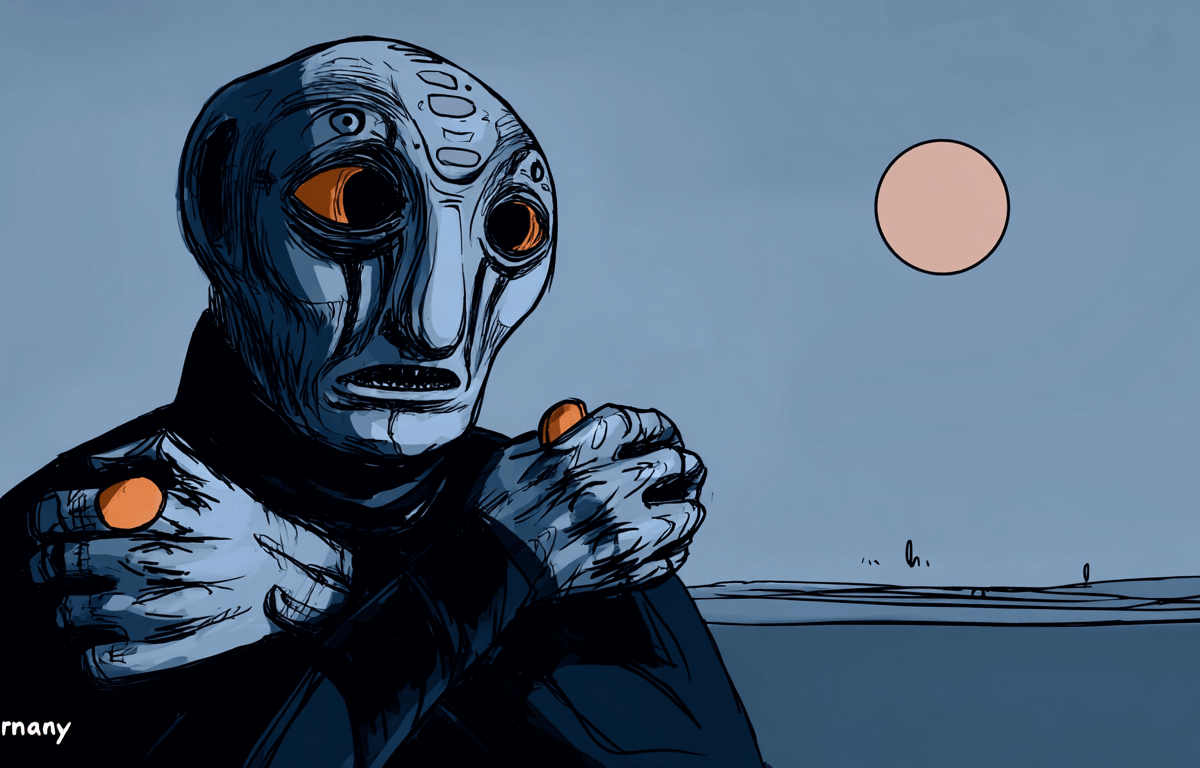

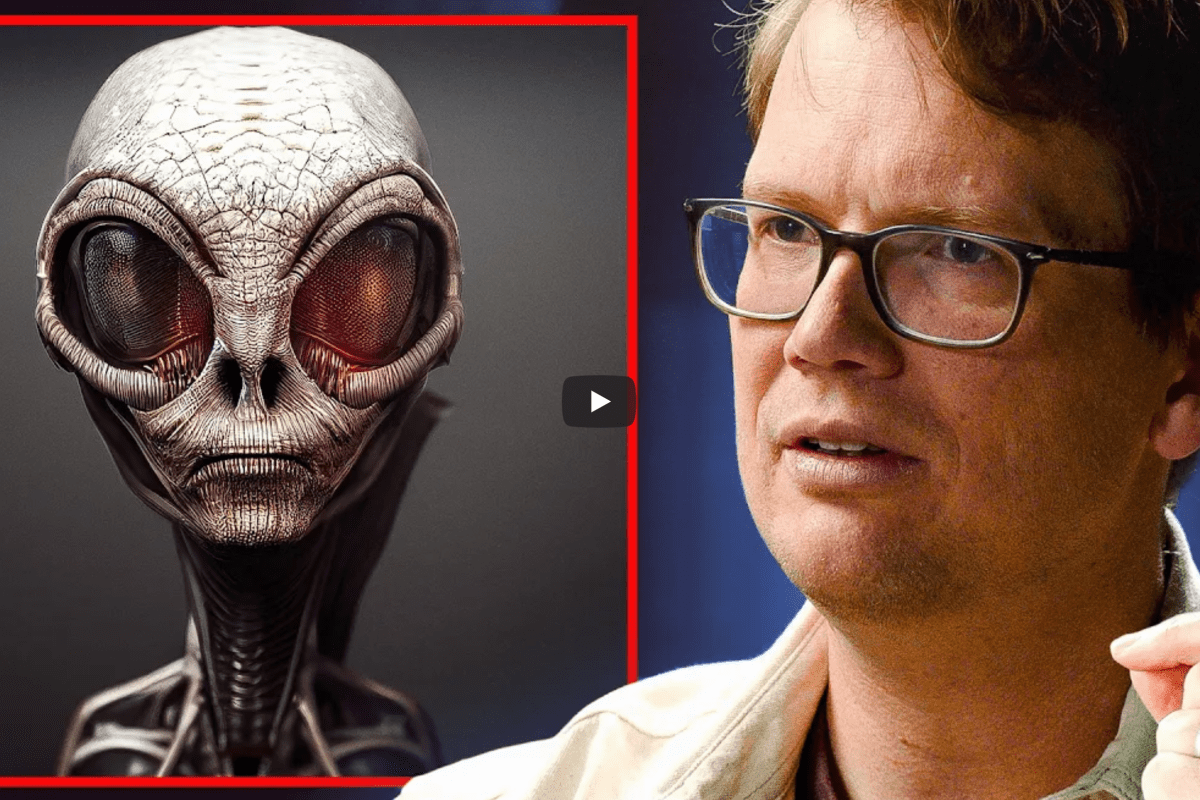
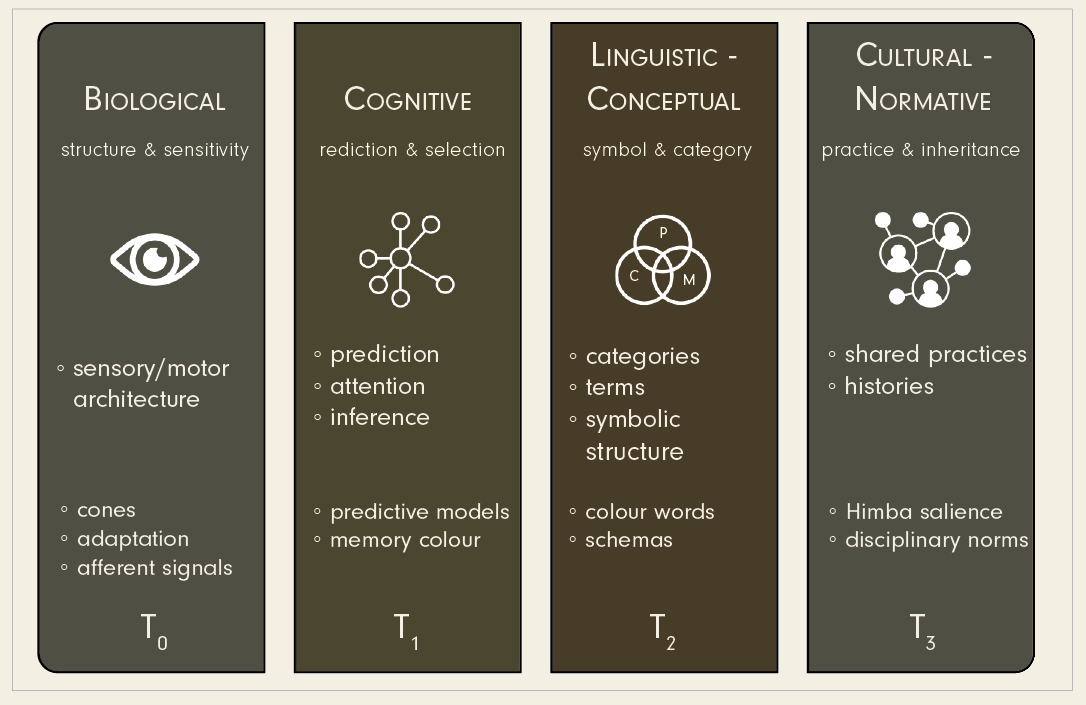

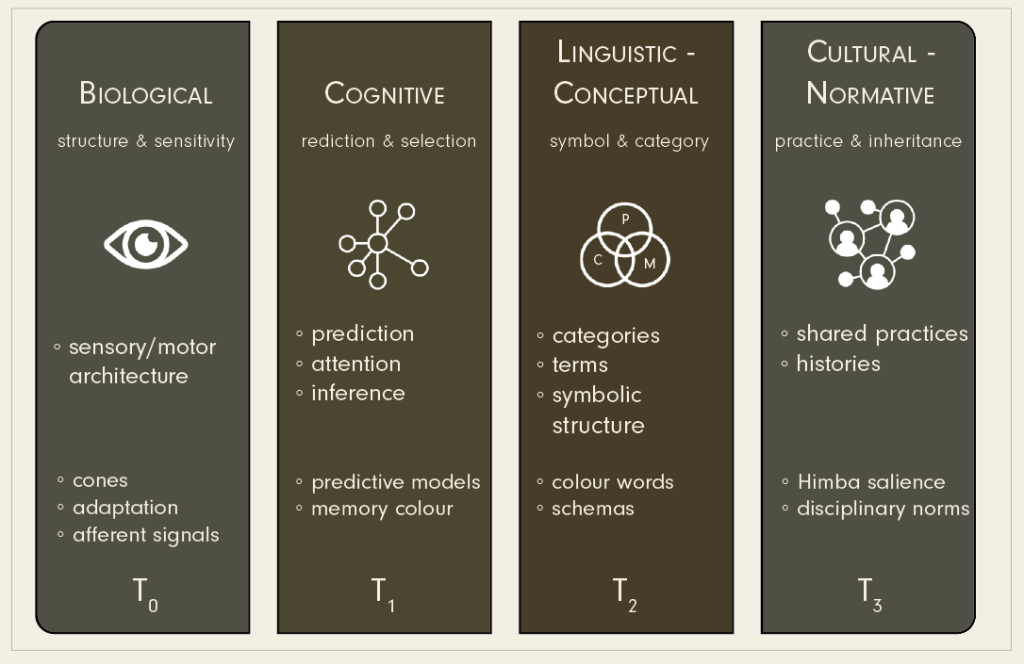


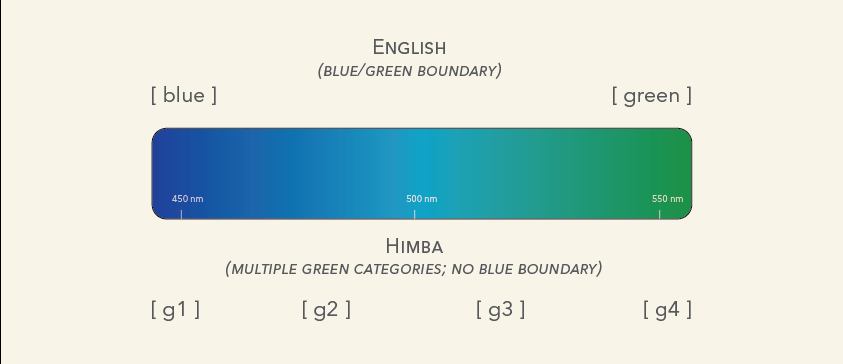
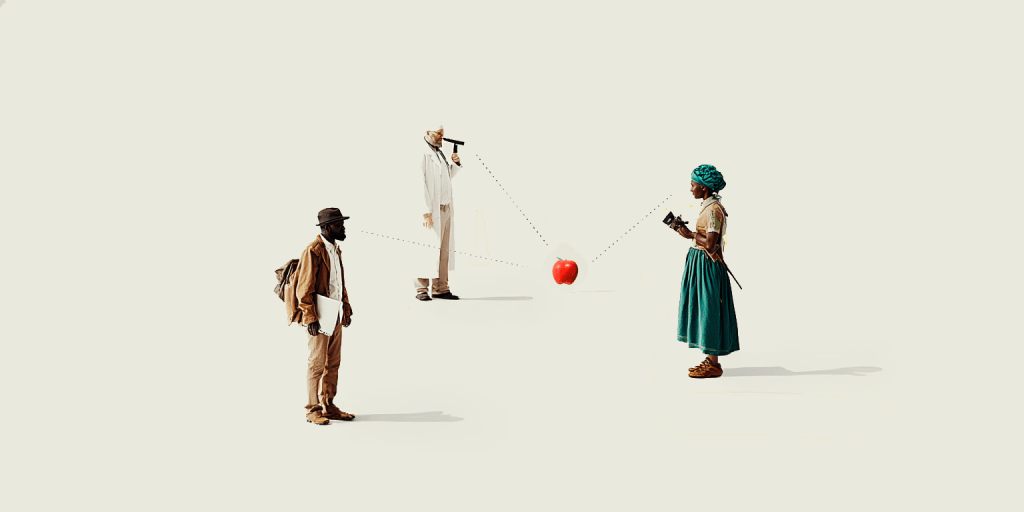



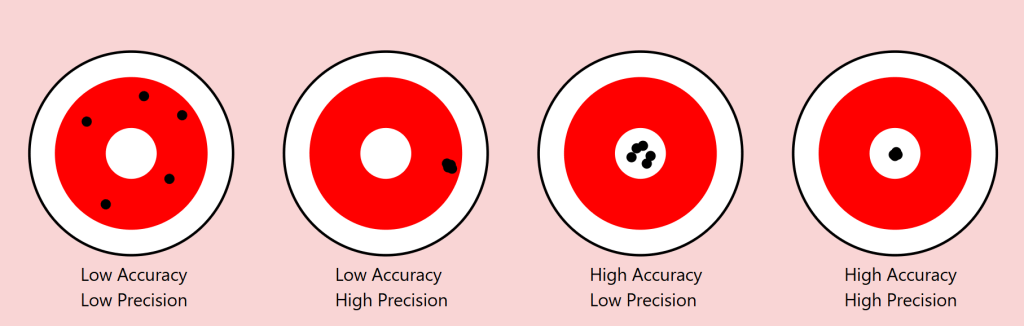







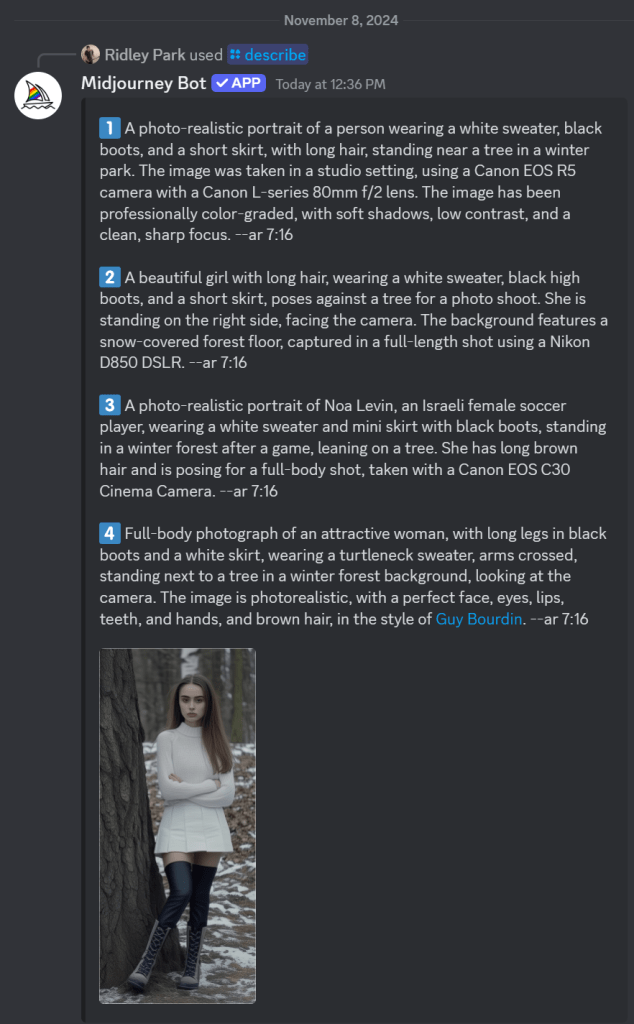




 Philosophics