Reality Happens Once. Facts Happen Many Times.

I want to clarify my recent The Trouble with Facts post. I realise that I was speaking to one non-trivial form of facts, but there is more than one class of facts. We argue about facts as if the word named a single, stable thing. It doesnโ€™t. It names a family of very different things, quietly grouped together by habit, convenience, and institutional need. Most disputes about facts go nowhere, not because one side is irrational, but because the word itself is doing covert work. We slide between meanings without noticing, then act surprised when disagreement follows. This piece is an attempt to slow that slide.

Audio: NotebookLM summary podcast of this topic.

Polysemy We Notice, Polysemy We Donโ€™t

We are comfortable with ambiguity when it is obvious. A bank can be a financial institution or the edge of a river. A bat can be an animal or a piece of sports equipment. Context resolves these instantly. No one feels existentially threatened by the ambiguity.

Fact is different. The word is polysemous in a way that is both subtle and consequential. Its meanings sit close enough to bleed into one another, allowing certainty from one sense to be smuggled into another without detection. Calling something a fact does not merely describe it. It confers authority. It signals that questioning should stop. That is why this ambiguity matters.

Different Kinds of Facts

Before critiquing facts, we need to sort them.

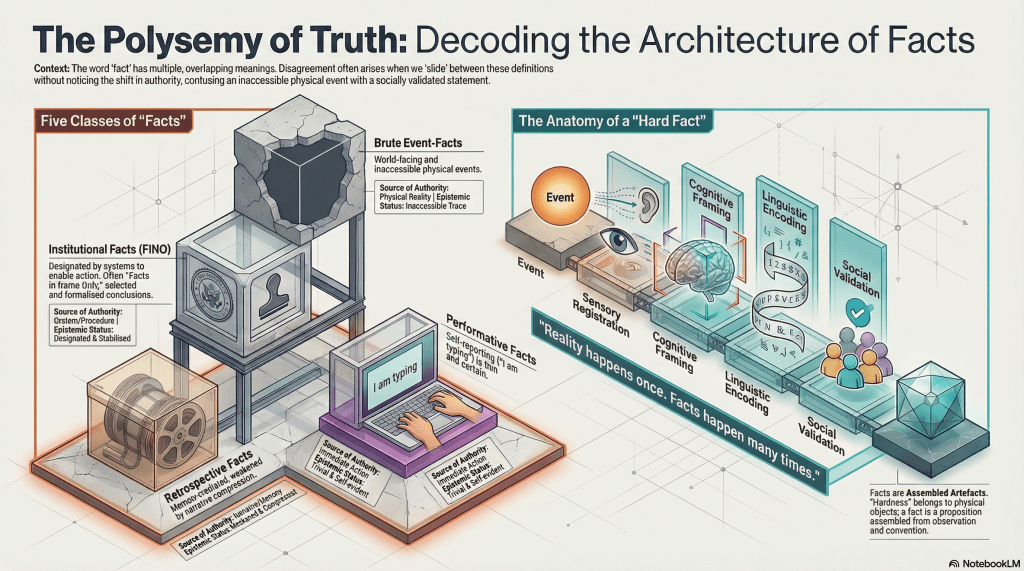
1. Event-facts (brute, world-facing)
As mentioned previously, these concern what happens in the world, independent of observation.

  • A car collides with a tree.
  • Momentum changes.
  • Metal deforms.

These events occur whether or not anyone notices them. They are ontologically robust and epistemically inaccessible. No one ever encounters them directly. We only ever encounter traces.

2. Indexical or performative facts (trivial, self-reporting)
โ€œI am typing.โ€

I am doing this now โ€“ those now may not be relevant when you read this. This is a fact, but a very thin one. Its authority comes from the coincidence of saying and doing. It requires no reconstruction, no inference, no institutional validation. These facts are easy because they do almost no work.

3. Retrospective personal facts (memory-mediated)
โ€œI was typing.โ€

This may be relevant now, at least relative to the typing of this particular post. Still a fact, but weaker. Memory enters. Narrative compression enters. Selectivity enters. The same activity now carries a different epistemic status purely because time has passed.

4. Prospective statements (modal, not yet facts)
โ€œI will be typing.โ€

This is not yet a fact. It may never come to be one. It is an intention or prediction that may or may not be realised. Future-tense claims are often treated as incipient facts, but this is a category error with real consequences.

5. Institutional facts (designated, procedural)
โ€œThe court findsโ€ฆโ€
โ€œThe report concludesโ€ฆโ€

These are facts by designation. They are not discovered so much as selected, formalised, and stabilised so that systems can act. They are unlikely to rise to the level of facts, so the legal system tends to generate facts in name only โ€“ FINO, if I am being cute.

All of these are called ‘facts’. They are not interchangeable. The trouble begins when certainty migrates illicitly from trivial or institutional facts into brute event-facts, and we pretend nothing happened in the transfer.

One Motor Vehicle

Reconsider the deliberately simple case: A motor vehicle collides with a tree. Trees are immobile, so we can rule out the tree colliding with the car.

Ontologically, something happened. Reality did not hesitate. But even here, no one has direct access to the event itself.

The driver does not enjoy privileged access. They experience shock, adrenaline, attentional narrowing, selective memory, post hoc rationalisation, perhaps a concussion. Already several layers intervene before language even arrives.

A rough schema looks like this:

event โ†’ sensory registration โ†’ cognitive framing โ†’ linguistic encoding โ†’ social validation

Ontology concerns what happens.
Epistemology concerns how anything becomes assertable.

Modern thinking collapses the second into the first and calls the result the facts.

People speak of โ€œhard factsโ€ as if hardness transfers from objects to propositions by proximity. It doesnโ€™t. The tree is solid. The fact is an artefact assembled from observation, inference, convention, and agreement.

And so it goesโ€ฆ

Why the Confusion Persists

When someone responds, โ€œBut isnโ€™t it a fact that I read this?โ€, the answer is yes. A different kind of fact.

The error lies not in affirming facts, but in failing to distinguish them. The word fact allows certainty to migrate across categories unnoticed, from trivial self-reports to brute world-events, and from institutional verdicts to metaphysical claims. That migration is doing the work.

Conclusion

Clarifying types of facts does not weaken truth. It prevents us from laundering certainty where it does not belong.

Facts exist. Events occur. But they do not arrive unmediated, innocent, or singular.

Reality happens once. Facts happen many times.

The mistake was never that facts are unreal. It was believing they were all the same kind of thing.

Mark Carney Explains Nietzsche

He doesnt, but he accidentally demonstrates the problem.

There is a certain kind of person who loathes Nietzsche for the same reason they loathe earthquakes. Not because he causes damage, but because he refuses to pretend the ground was ever stable.

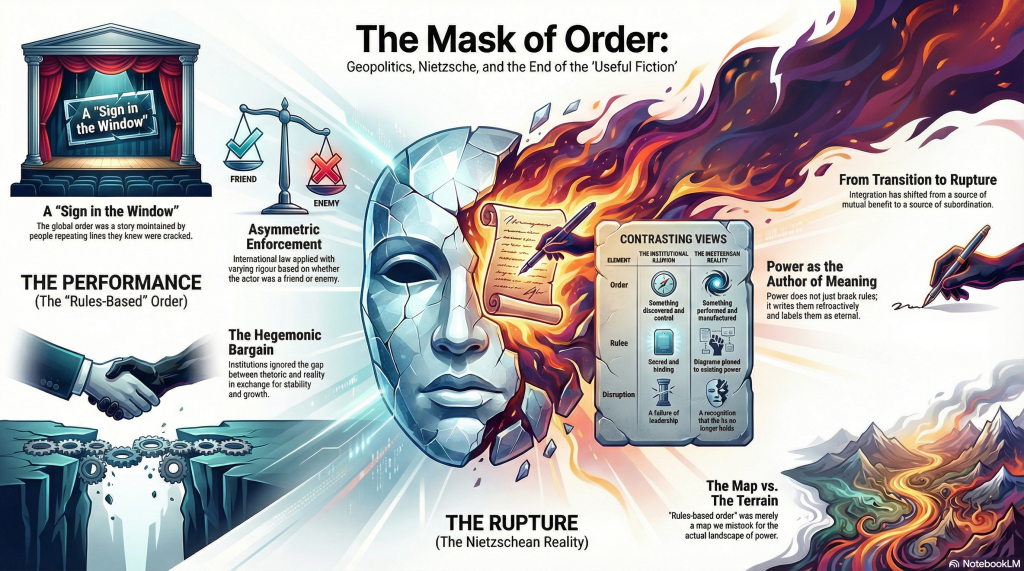
In a recent address, Mark Carney says something that would have been unutterable in polite company a decade ago. He admits that the ‘rules-based international order’ was always a partial fiction. Not false enough to abandon, not true enough to believe in without effort. A story everyone knew was cracked, but which continued to function so long as enough people kept repeating the lines.

We knew that the story about the rules-based order was partially falseโ€ฆ We knew that international law applied with varying rigour depending on the identity of the accused and the victim. This fiction was useful [because of the goods provided by American hegemony]โ€ฆ So we placed the sign in the window. We participated in the rituals. And we largely avoided calling out the gaps between rhetoric and reality. This bargain no longer works. Let me be direct. We are in the midst of a rupture, not a transition… You cannot live within the lie of mutual benefit through integration when integration becomes the source of your subordination.

Audio: NotebookLM podcast of this topic.

International law, he concedes, applied unevenly. Power decided enforcement. Friends received nuance. Enemies received principle. This was not ignorance. It was a bargain. The illusion delivered goods, stability, growth, a sense of moral hygiene. So the sign stayed in the window. The rituals continued. The gaps between rhetoric and reality were politely ignored. That bargain, Carney says, no longer works.

This is framed as geopolitical realism, but it is really an ontological admission. The mask slipped, and everyone is suddenly offended by the face underneath.

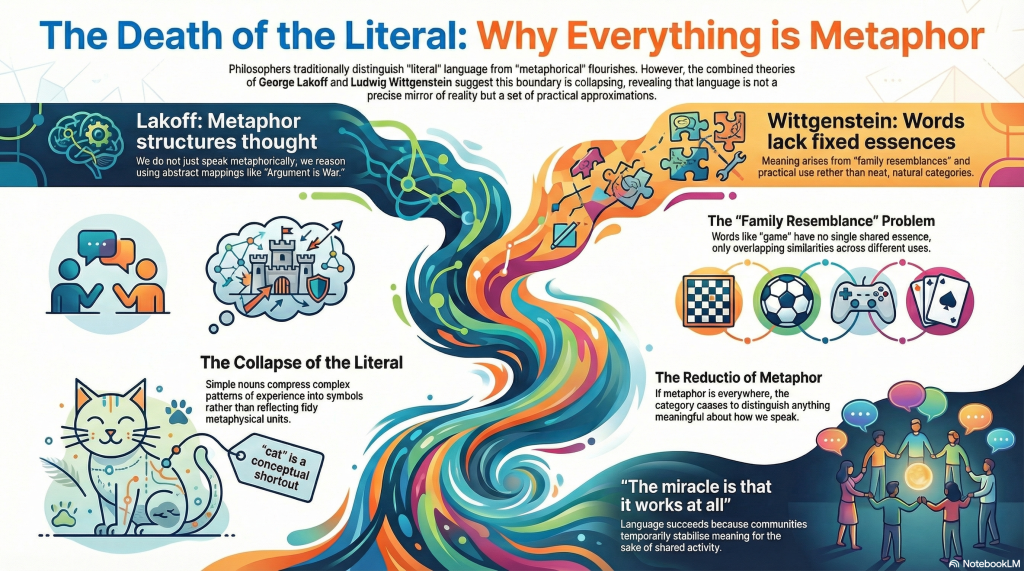
Image: NotebookLM infographic of this content.

This is why people hate Friedrich Nietzsche. Not because he celebrates cruelty or chaos, but because he insists that order is something we perform, not something we discover. He refuses the comfort of believing that the rules were ever neutral, universal, or self-enforcing. He points at the scaffolding and says: this is what is holding things up, not the sky.

When enough people play along, the game feels like reality. When someone refuses to play, panic sets in.

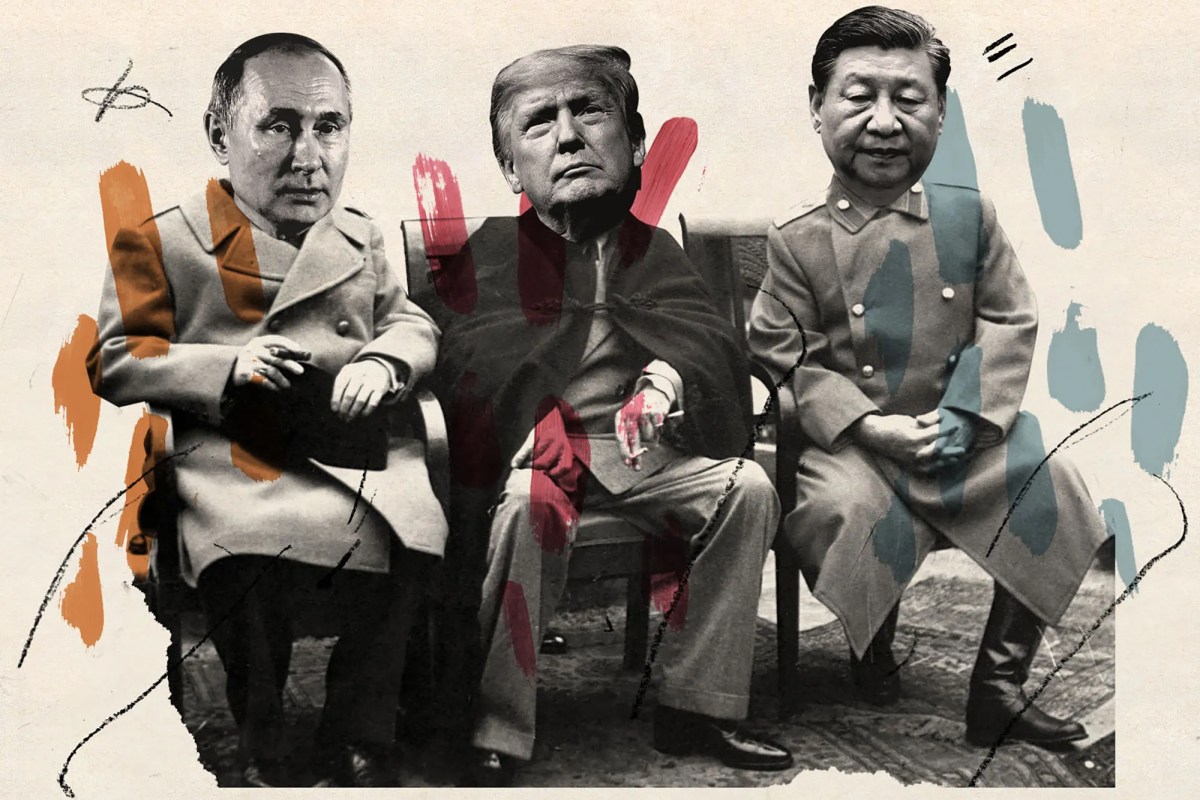
Enter Donald Trump. Trump did not invent the asymmetries of power. He refused to speak them politely. This created a moral crisis for institutions built on the assumption that everyone would continue to pretend. When a designated enemy like Vladimir Putin does this, it is filed under Evil. When an ally does it, the response bifurcates: either frantic appeasement, or embarrassed silence disguised as strategy.

Image: Foreign sentiment

Carney tries to walk a middle path. He neither genuflects nor detonates the stage. He acknowledges the fiction without fully abandoning it. This makes him interesting, but also symptomatic. He wants the audience to notice the set wobbling without asking them to leave the theatre.

When he says the old rules-based order is not coming back, what he really means is that the illusion has been interrupted. Whether permanently or only until someone builds a more convincing faรงade is left diplomatically unresolved. This is where Nietzsche becomes unavoidable.

People often lump Nietzsche together with vague talk of โ€œpower,โ€ as though this were a crude obsession shared with Michel Foucault. But Nietzscheโ€™s contribution is sharper and more unsettling. He is not merely describing power as something exercised. He is describing power as something that manufactures meaning, legitimacy, and moral vocabulary after the fact. Power does not break the rules. It writes them retroactively and calls them eternal.

This is the kind of power later adopted by Adolf Hitler, by Putin, and now by Trump. Not brute force alone, but the refusal to treat inherited norms as sacred simply because they are inherited. This is precisely what terrifies people who mistake procedural continuity for moral truth.

The United States borrowed Montesquieuโ€™s separation of powers as though it were a lock rather than a suggestion. Anyone paying attention could see how easily it could be gamed. That this came as a shock says less about constitutional brilliance than about selective vision. The system functioned not because it was impregnable, but because its participants agreed, tacitly, to behave as though it were.

Nietzsche would call this decadence. Not decline as catastrophe, but decline as denial. The refusal to look directly at the conditions that make order possible, preferring instead to moralise their breakdown.

Carneyโ€™s speech is not radical. It is late. It says aloud what everyone already knew but preferred not to articulate: that the world was never neat, the order never neutral, and the rules never binding on those strong enough to ignore them.

What comes next is the uncomfortable part. Once the illusion is acknowledged, it cannot simply be re-believed. You can rebuild institutions. You can repaint the signage. But you cannot unknow that the coffee was always bitter.

Nietzsche does not tell us what replaces the faรงade. He only insists that pretending it was ever a window onto truth is the most dangerous fiction of all.

What Carney inadvertently demonstrates is not a failure of leadership but a failure of language. ‘Rules-based order’ was never a description of the world; it was a map we mistook for the terrain because it worked often enough to feel true. Nietzscheโ€™s crime was pointing at the legend and saying it was doing the real work. Once that admission is made, you do not get to return to innocence. You can draw a new map, call it reform, integration, or renewal, but you will know it is a diagram pinned to power, not a window onto justice. The unease people feel now is not about chaos. It is about recognition. The lie no longer holds because too many have noticed the pins.

Moral Psychology and the Art of Not Believing Your Own Results

3โ€“4 minutes

Over the past few decades, moral psychology has staged a quiet coup against one of our most cherished fantasies: that human beings are, at bottom, rational moral agents. This is not a fringe claim. It is not a Twitter take. It is the mainstream finding of an entire research programme spanning psychology, cognitive science, linguistics, and neuroscience.

We do not reason our way to moral conclusions. We feel our way there. Instantly. Automatically. And only afterwards do we construct reasons that make the judgment sound respectable.

Audio: NotebookLM summary podcast of this topic.

This is not controversial anymore. It is replicated, taught, and celebrated. And yet, if you read the most influential books in this literature, something strange happens. The diagnosis is devastating. The prescription is reassuring.

Iโ€™ve just published a long-form video walking through five canonical books in moral psychology that all uncover the same structural problem, and then quietly refuse to live with the implications.

What follows is a brief guide to the argument.

The shared discovery

Across the literature, the same conclusions keep reappearing:

  • Moral judgement is intuitive, not deliberative
  • Reasoning is largely post-hoc
  • Emotion is not noise but signal
  • Framing and metaphor shape what even counts as a moral fact
  • Group identity and tribal affiliation dominate moral perception

In other words: the Enlightenment picture of moral reasoning is wrong. Or at least badly incomplete.

The rider does not steer the elephant. The rider explains where the elephant has already gone.

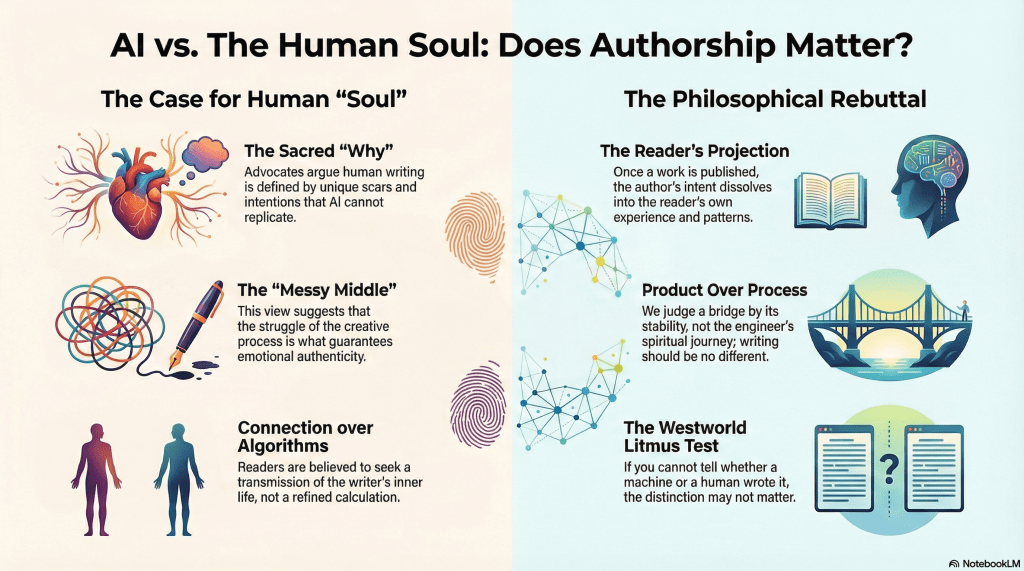
Audio: NotebookLM infographic

Where the books go wrong

The video focuses on five widely read, field-defining works:

  • The Righteous Mind (reviewed here and hereโ€ฆ even here)
  • Moral Politics (mentioned here โ€“ with Donโ€™t Think of an Elephant treated as its popular sequel)
  • Outraged! (reviewed here)
  • Moral Tribes (reviewed here)

Each of these books is sharp, serious, and worth reading. This is not a hit piece.

But each follows the same arc:

  1. Identify a non-rational, affective, automatic mechanism at the heart of moral judgement
  2. Show why moral disagreement is persistent and resistant to argument
  3. Propose solutions that rely on reflection, dialogue, reframing, calibration, or rational override

In short: they discover that reason is weak, and then assign it a leadership role anyway.

Haidt dismantles moral rationalism and then asks us to talk it out.
Lakoff shows that framing is constitutive, then offers better framing.
Gray models outrage as a perceptual feedback loop, then suggests we check our perceptions.
Greene diagnoses tribal morality, then bets on utilitarian reasoning to save us.

None of this is incoherent. But it is uncomfortable. Because the findings themselves suggest that these prescriptions are, at best, limited.

Diagnosis without prognosis

The uncomfortable possibility raised by this literature is not that we are ignorant or misinformed.

It is that moral disagreement may be structural rather than solvable.

That political conflict may not be cured by better arguments.
That persuasion may resemble contagion more than deliberation.
That reason often functions as a press secretary, not a judge.

The books sense this. And then step back from it. Which is human. But it matters.

Why this matters now

We are living in systems that have internalised these findings far more ruthlessly than public discourse has.

Social media platforms optimise for outrage, not understanding.
Political messaging is frame-first, not fact-first.
AI systems are increasingly capable of activating moral intuitions at scale, without fatigue or conscience.

Meanwhile, our institutions still behave as if one more conversation, one more fact-check, one more appeal to reason will close the gap. The research says otherwise.

And that gap between what we know and what we pretend may be the most important moral problem of the moment.

No solution offered

The video does not end with a fix. Thatโ€™s deliberate.

Offering a neat solution here would simply repeat the same move Iโ€™m criticising: diagnosis followed by false comfort. Sometimes orientation matters more than optimism. The elephant is real. The elephant is moving.And most of us are passengers arguing about the map while it walks.

That isnโ€™t despair. Itโ€™s clarity.

When Language Fails – Abstract

3โ€“4 minutes

I set aside some time to design the front cover of my next book. I’m excited to share this โ€“ but that’s always the case. It’s substantially complete. In fact, it sidelined another book, also substantially complete, but the content in this might force me to change the other one. It should be ready for February. I share the current state of the Abstract

This book is meant to be an academic monograph, whilst the other, working title: The Competency Paradox, is more of a polemic.

As I mentioned in another post, it builds upon and reorients the works ofย George Lakoff,ย Jonathan Haidt,ย Kurt Gray, andย Joshua Greene.ย I’ve already revised and extended Gallie’s essentially contested concepts in A Language Insufficiency Hypothesis in the form of Contestables, but I lean on them again here.

Abstract

Contemporary moral and political discourse is marked by a peculiar frustration: disputes persist even after factual clarification, legal process, and good-faith argumentation have been exhausted. Competing parties frequently agree on what happened, acknowledge that harm occurred, and yet remain irreconcilably divided over whether justice has been served. This persistence is routinely attributed to misinformation, bad faith, or affective polarisation. Such diagnoses are comforting. They are also often wrong.

This paper advances a different claim. Certain conflicts are not primarily epistemic or semantic in nature, but ontological. They arise from incompatible orientations that structure how agents register salience, threat, authority, autonomy, and legitimacy. These orientations are genealogically shaped through enculturation, institutions, and languaged traditions, yet operationally they function prior to linguistic articulation: salience fires before reasons are narrated. Moral vocabulary enters downstream, tasked with reconciling commitments that were never shared.

From this perspective, the instability of concepts such as justice is not the primary problem but a symptom. Justice belongs to a class of Contestables (in Gallieโ€™s sense, PDF): action-authorising terms that appear determinate while remaining untethered from shared reference under ontological plurality. Appeals to clearer definitions, better process, or shared values therefore misfire. They presume a common ontological ground that does not, in fact, exist.

When institutions are nevertheless required to act, they cannot adjudicate between ontologies. They can only select. Courts, juries, regulatory bodies, and enforcement agencies collapse plural interpretations into a single outcome. That outcome is necessarily experienced as legitimate by those whose orientation it instantiates, and as injustice by those whose orientation it negates. No procedural refinement can eliminate this asymmetry. At best, procedure dampens variance, distributes loss, and increases tolerability.
Crucially, the selection itself is constrained but underdetermined. Even within formal structures, human judgment, discretion, mood, confidence, fear, and narrative framing play a decisive role. Following Keynes, this irreducible contingency may be described as animal spirits. In formal terms, institutional outcomes are sampled from a constrained space of possibilities, but the reaction topology remains structurally predictable regardless of which branch is taken.

The consequence is stark but clarifying: outrage is not evidence that a system has failed to deliver justice; it is evidence that plural ontological orientations have been forced through a single decision point. Where semantic reconciliation is structurally unavailable, exogenous power is the dominant near-term mediator. Power does not resolve the conflict; it pauses it and stabilises meaning sufficiently for coordination to continue.

This analysis does not deny the reality of harm, the importance of law, or the necessity of institutions. Nor does it lapse into nihilism or indifference. Rather, it reframes the problem. In ontologically plural environments, the task is not moral convergence but maintenance: containing collision, resisting premature coherence, and designing institutions that minimise catastrophic failure rather than promising final resolution.

The argument developed here predates any particular event. Its value lies precisely in its predictive capacity. Given plural ontologies, untethered contestables, and institutions that must act, the pattern of reaction is invariant. The surface details change; the structure does not.
What follows is not a proposal for reconciliation. It is a diagnosis of why reconciliation is so often a category error, and why pretending otherwise is making things worse.

James Talks Truth

2โ€“3 minutes

Iโ€™ve read about 85 per cent of James by Percival Everett. I recommend it. On the surface, it is simply a very good story set in the narrative universe of Mark Twainโ€™s Huck Finn and Tom Sawyer. I will avoid spoilers as best I can.

The novel is set in the antebellum American South. James and the others move through Missouri, a state that openly supported slavery, and at one point into Illinois, a state that officially opposed it but quietly failed to live up to its own rhetoric. Illinois, it turns out, is no safe haven. Ideology and practice, as ever, are on speaking terms only when it suits them.

Audio: Short NotebookLM summary podcast of this content.

This is not a book review. I may write one later for my Ridley Park site once Iโ€™ve finished the book. What interests me here are two philosophical tensions Everett stages with remarkable economy.

There are two characters who are Black but able to pass as white. One of them feels profound guilt about this. He was raised as a slave, escaped, and knows exactly what it means to be treated as Black because he has lived it. Passing feels like theft. Survival, perhaps, but theft all the same.

The other is more unsettled. He was raised as a white man and only later discovers that he is not, as the language goes, โ€œpure-bredโ€. This revelation leaves him suspended between identities. Should he now accept a Black identity he has never inhabited, or continue to pass quietly, benefitting from a system that would destroy him if it knew?

James offers him advice that is as brutal as it is lucid:

“Belief has nothing to do with truth. Believe what you like. Believe I’m lying and move through the world as a white boy. Believe I’m telling the truth and move through the world as a white boy anyway. Either way, no difference.”

This is the philosophical nerve of the book.

Truth, Everett suggests, is indifferent to belief. Belief does not mediate justice. It does not reorganise power. It does not rewire how the world responds to your body. What matters is not what is true, nor even what is believed to be true, but how one is seen.

The world does not respond to essences. It responds to appearances.

Identity here is not an inner fact waiting to be acknowledged; it is a surface phenomenon enforced by institutions, habits, and violence. The truth can be known, spoken, even proven, and still change nothing. The social machine runs on perception, not ontology.

In James, Everett is not offering moral comfort. He is stripping away a modernist fantasy: that truth, once revealed, obliges the world to behave differently. It doesnโ€™t. The world only cares what you look like while moving through it.

Truth, it turns out, is perfectly compatible with injustice.

Bonus 2025 Post + Books

2025 has been a good year for this blog. I’ve crossed the 1,000-post mark, and this year it has had over 30,000 page views โ€“ best year ever. This month was the best month ever, and 1st December was the most popular day ever. That’s a lot of ‘evers’.

I shared the remainder of this post on my Ridley Park fiction blog โ€“ same reader, same books, same opinion. Any new content added below is in red.

I genuinely loathe top X lists, so let us indulge in some self-loathing. I finished these books in 2026. As you can see, they cross genres, consist of fiction and non-fiction, and donโ€™t even share temporal space. I admit that Iโ€™m a diverse reader and, ostensibly, writer. Instead of just the top 5. Iโ€™ll shoot for the top and bottom 5 to capture my anti-recommendations. Within categories are alphabetical.

Fiction

Never Let Me Go by Kazuo Ishiguro โ€“ A slow reveal about identity, but worth the wait.

Notes from Underground by Fyodor Dostoevsky โ€“ Classic unreliable narrator.

There Is No Antimemetics Division by QNTM (AKA Sam Hughes) โ€“ Points for daring to be different and hitting the landing.

Trainspotting by Irvine Welsh โ€“ Scottish drugs culture and bonding mates narrative.

We by Yevgeny Zamyatin โ€“ In the league of 1984 and Brave New World, but without the acclaim.

Nonfiction

Capitalist Realism by Mark Fisher โ€“ Explains why most problems are social, not personal or psychological. Follows Erich Frommโ€™s Sane Society, which I also read in 2025 and liked, but it fell into the โ€˜lost the trailโ€™ territory at some point, so it fell off the list.

Moral Politics by George Lakoff

Technofeudalism by Yanis Varoufakis โ€“ Explains why Capitalism is already dead on arrival.

NB: Some of the other books had great pieces of content, but failed as books. They may have been better as essays or blog posts. They didnโ€™t have enough material for a full book. The Second Sex had enough for a book, but then Beauvoir poured in enough for two books. She should have quit whilst she was ahead.

ImageBooks I read in 2025 on Goodreads.
Full disclosure: I donโ€™t always record my reading on Goodreads, but I try.

Bottom of the Barrel

Crash by J.G. Ballard โ€“ Hard no. I also didnโ€™t like High-rise, but it was marginally better, and I didnโ€™t want to count an author twice.

Neuromancer by William Gibson โ€“ I donโ€™t tend to like SciFi. This is a classic. Maybe it read differently back in the day. Didnโ€™t age well.

Nexus by Yuval Harari โ€“ Drivel. My mates goaded me into reading this. I liked Sapiens. Heโ€™s gone downhill since then. Heโ€™s a historian, not a futurist.

Outraged! by Kurt Gray โ€“ Very reductionist view of moral harm, following the footsteps of George Lakoff and Jonathan Haidt.

Society of the Spectacle by Guy Debord โ€“ A cautionary tale on why writing a book on LSD may not be a recipe for success.

Honourable Mention

Annihilation by Jeff VanderMeer was also good, but my cutoff was at 5. Sorry, Jeff.

The Ontologyโ€“Encounterโ€“Evaluation Model: Retributive Justice as an Instantiation

7โ€“10 minutes

Now that A Language Insufficiency Hypothesis has been put to bed โ€” not euthanised, just sedated โ€” I can turn to the more interesting work: instantiating it. This is where LIH stops being a complaint about words and starts becoming a problem for systems that pretend words are stable enough to carry moral weight.

Read part 2 of this essay.

What follows is not a completed theory, nor a universal schema. Itโ€™s a thinking tool. A talking point. A diagram designed to make certain assumptions visible that are usually smuggled in unnoticed, waved through on the strength of confidence and tradition.

The purpose of this diagram is not to redefine justice, rescue it, or replace it with something kinder. It is to show how justice is produced. Specifically, how retributive justice emerges from a layered assessment process that quietly asserts ontologies, filters encounters, applies normative frames, and then closes uncertainty with confidence.

Audio: NotebookLM summary podcast of this topic.

Most people are willing to accept, in the abstract, that justice is โ€œconstructedโ€. That concession is easy. What is less comfortable is seeing how it is constructed โ€” how many presuppositions must already be in place before anything recognisable as justice can appear, and how many of those presuppositions are imposed rather than argued for.

The diagram foregrounds power, not as a conspiracy or an optional contaminant, but as an ambient condition. Power determines which ontologies are admissible, which forms of agency count, which selves persist over time, which harms are legible, and which comparisons are allowed. It decides which metaphysical configurations are treated as reasonable, and which are dismissed as incoherent before the discussion even begins.

Justice, in this framing, is not discovered. It is not unearthed like a moral fossil. It is assembled. And it is assembled late in the process, after ontology has been assumed, evaluation has been performed, and uncertainty has been forcibly closed.

This does not mean justice is fake. It means it is fragile. Far more fragile than its rhetoric suggests. And once you see that fragility โ€” once you see how much is doing quiet, exogenous work โ€” it becomes harder to pretend that disagreements about justice are merely disagreements about facts, evidence, or bad actors. More often, they are disagreements about what kind of world must already be true for justice to function at all.

I walk through the structure and logic of the model below. The diagram is also available as a PDF, because if youโ€™re going to stare at machinery, you might as well be able to zoom in on the gears.

Why Retributive Justice (and not the rest of the zoo)

Before doing anything else, we need to narrow the target.

โ€œJusticeโ€ is an infamously polysemous term. Retributive, restorative, distributive, procedural, transformative, poetic, cosmic. Pick your flavour. Philosophy departments have been dining out on this buffet for centuries, and nothing useful has come of letting all of them talk at once.

This is precisely where LIH draws a line.

The Language Insufficiency Hypothesis is not interested in pedestrian polysemy โ€” cases where a word has multiple, well-understood meanings that can be disambiguated with minimal friction. That kind of ambiguity is boring. Itโ€™s linguistic weather.

What LIH is interested in are terms that appear singular while smuggling incompatible structures. Words that function as load-bearing beams across systems, while quietly changing shape depending on who is speaking and which assumptions are already in play.

โ€œJusticeโ€ is one of those words. But it is not usefully analysable in the abstract.

So we pick a single instantiation: Retributive Justice.

Why?

Because retributive justice is the most ontologically demanding and the most culturally entrenched. It requires:

  • a persistent self
  • a coherent agent
  • genuine choice
  • intelligible intent
  • attributable causation
  • commensurable harm
  • proportional response

In short, it requires everything to line up.

If justice is going to break anywhere, it will break here.

Retributive justice is therefore not privileged in this model. It is used as a stress test.

The Big Picture: Justice as an Engine, Not a Discovery

The central claim of the model is simple, and predictably unpopular:

Not invented in a vacuum, not hallucinated, not arbitrary โ€” but assembled through a process that takes inputs, applies constraints, and outputs conclusions with an air of inevitability.

The diagram frames retributive justice as an assessment engine.

An engine has:

  • inputs
  • internal mechanisms
  • thresholds
  • failure modes
  • and outputs

It does not have access to metaphysical truth. It has access to what it has been designed to process.

The justice engine takes an encounter โ€” typically an action involving alleged harm โ€” and produces two outputs:

  • Desert (what is deserved),
  • Responsibility (to whom it is assigned).

Everything else in the diagram exists to make those outputs possible.

The Three Functional Layers

The model is organised into three layers. These are not chronological stages, but logical dependencies. Each layer must already be functioning for the next to make sense.

1. The Constitutive Layer

(What kind of thing a person must already be)

This layer answers questions that are almost never asked explicitly, because asking them destabilises the entire process.

  • What counts as a person?
  • What kind of self persists over time?
  • What qualifies as an agent?
  • What does it mean to have agency?
  • What is a choice?
  • What is intent?

Crucially, these are not empirical discoveries made during assessment. They are asserted ontologies.

The system assumes a particular configuration of selfhood, agency, and intent as a prerequisite for proceeding at all. Alternatives โ€” episodic selves, radically distributed agency, non-volitional action โ€” are not debated. They are excluded.

This is the first โ€œhappy pathโ€.

If you do not fit the assumed ontology, you do not get justice. You get sidelined into mitigation, exception, pathology, or incoherence.

2. The Encounter Layer

(What is taken to have happened)

This layer processes the event itself:

  • an action
  • resulting harm
  • causal contribution
  • temporal framing
  • contextual conditions
  • motive (selectively)

This is where the rhetoric of โ€œfactsโ€ tends to dominate. But the encounter is never raw. It is already shaped by what the system is capable of seeing.

Causation here is not metaphysical causation. It is legible causation.
Harm is not suffering. It is recognisable harm.
Context is not total circumstance. It is admissible context.

Commensurability acts as a gatekeeper between encounter and evaluation: harms must be made comparable before they can be judged. Anything that resists comparison quietly drops out of the pipeline.

3. The Evaluative Layer

(How judgment is performed)

Only once ontology is assumed and the encounter has been rendered legible does evaluation begin:

  • proportionality
  • accountability
  • normative ethics
  • fairness (claimed)
  • reasonableness
  • bias (usually acknowledged last, if at all)

This layer presents itself as the moral heart of justice. In practice, it is the final formatting pass.

Fairness is not discovered here. It is declared.
Reasonableness does not clarify disputes. It narrows the range of acceptable disagreement.
Bias is not eliminated. It is managed.

At the end of this process, uncertainty is closed.

That closure is the moment justice appears.

Why Disagreement Fails Before It Starts

At this point, dissent looks irrational.

The system has:

  • assumed an ontology
  • performed an evaluation
  • stabilised the narrative through rhetoric
  • and produced outputs with institutional authority

To object now is not to disagree about evidence. It is to challenge the ontology that made assessment possible in the first place.

And that is why so many justice debates feel irresolvable.

They are not disagreements within the system.
They are disagreements about which system is being run.

LIH explains why language fails here. The same words โ€” justice, fairness, responsibility, intent โ€” are being used across incompatible ontological commitments. The vocabulary overlaps; the worlds do not.

The engine runs smoothly. It just doesnโ€™t run the same engine for everyone.

Where This Is Going

With the structure in place, we can now do the slower work:

  • unpacking individual components
  • tracing where ontological choices are asserted rather than argued
  • showing how โ€œreasonablenessโ€ and โ€œfairnessโ€ operate as constraint mechanisms
  • and explaining why remediation almost always requires a metaphysical switch, not better rhetoric

That should worry us more than if it were merely malfunctioning.

The rest of the story

Read part 2 of this essay.

This essay is already long, so Iโ€™m going to stop here.

Not because the interesting parts are finished, but because this is the point at which the analysis stops being descriptive and starts becoming destabilising.

The diagram youโ€™ve just walked through carries a set of suppressed footnotes. They donโ€™t sit at the margins because theyโ€™re trivial; they sit there because they are structurally prior. Each one represents an ontological assertion the system quietly requires in order to function at all.

By my count, the model imposes at least five such ontologies. They are not argued for inside the system. They are assumed. They arrive pre-installed, largely because they are indoctrinated, acculturated, and reinforced long before anyone encounters a courtroom, a jury, or a moral dilemma.

Once those ontologies are fixed, the rest of the machinery behaves exactly as designed. Disagreement downstream is permitted; disagreement upstream is not.

In a follow-up essay, Iโ€™ll unpack those footnotes one by one: where the forks are, which branch the system selects, and why the alternativesโ€”while often coherentโ€”are rendered unintelligible, irresponsible, or simply โ€œunreasonableโ€ once the engine is in motion.

Thatโ€™s where justice stops looking inevitable and starts looking parochial.

And thatโ€™s also where persuasion quietly gives up.

A Brief, Uncomfortable Historiography on Having, Being, and Feeling

4โ€“6 minutes

This is a follow-on to some recent posts.* It would be a mistake to pretend that the grammatical habits discussed here float free of intellectual history. They do not. They align uncannily well with the way two broad philosophical traditions came to frame the self, experience, and knowledge.

On the Anglo-American analytic side, the modern picture of the self emerges early with John Locke. In An Essay Concerning Human Understanding (1690), Locke does not yet offer a full ‘bundle theory’, but he lays the groundwork decisively. Consciousness, for Locke, is what unifies experience over time through memory. The self is not a substance but a continuity of awareness, accessible through introspection and reportable as a series of mental contents.ยน

Lockeโ€™s treatment of personal identity already presupposes a grammar of states. In An Essay Concerning Human Understanding, he insists that personal identity โ€œconsistsโ€ in consciousness alone, extending backward through memory to past thoughts and actions (II.xxvii.9).

Image: An Essay Concerning Human Understanding, Essay, II.xxvii.17

The self is not something that unfolds; it is something that can be retrospectively tracked. Experiences appear as items one is conscious of, and identity becomes a matter of continuity between those items. It is no accident that Locke later calls ‘person’ a forensic term, fit for attribution, responsibility, and judgement (II.xxvii.28). The grammar is already administrative.

Image: An Essay Concerning Human Understanding, Essay, II.xxvii.28

The grammatical resonance is hard to miss. Experiences are treated as inspectable states: I am aware of X; I have the idea of Y. Consciousness becomes something one can, in principle, take inventory of.

David Hume completes the move with characteristic bluntness. In A Treatise of Human Nature (1739โ€“40), he famously reports that when he looks inward, he never catches himself without a perception. The self, he concludes, is nothing over and above a bundle of impressions and ideas, linked by habit and association.ยฒ

Where Locke still spoke of consciousness as what makes the self, Hume takes the next step and goes looking for that self directly. What he finds instead are only perceptions: heat, cold, pleasure, pain. The self does not endure; it is inferred. Identity becomes a habit of grammar and memory, not a feature of experience itself.

Image: Treatise, I.iv.vi

This is not merely a metaphysical claim. It is a grammatical one. Experience appears as a sequence of discrete items, each presentable as something one is or has at a given moment. Duration is reduced to succession; undergoing becomes adjacency. The copula does the quiet work.

From here, it is a short step to the analytic comfort with:

  • truth-conditional analysis,
  • propositional attitudes,
  • mental states as objects of third-person description,
  • and, eventually, the scientific naturalisation of consciousness.

None of this is accidental. The grammar and the metaphysics grow together.

The Continental Recoil

Across the Channel, a different unease takes hold. Immanuel Kant already resists the reduction of the subject to a bundle. In the Critique of Pure Reason (1781/1787), the ‘I think’ is not an object among objects but a necessary condition for experience at all.ยณ The subject cannot be encountered the way sensations can. It is not something one has or is; it is that through which anything appears.

Image: Critique of Pure Reason, Section II

This resistance deepens with Edmund Husserl, whose phenomenology insists that experience must be described as it is lived, not as it is later reconstructed into states. Consciousness is intentional, temporal, and irreducibly first-personal.โด Duration is no longer a sequence of snapshots but a flowing structure of retention and protention.

Image: The Phenomenology of Internal Time-Consciousness

Heidegger radicalises this further. In Being and Time (1927), Dasein is not a container for experiences but a mode of being-in-the-world. Experience is not something that happens inside a subject; it is the subjectโ€™s way of being disclosed to a world.โต

By the time we reach Sartre and Merleau-Ponty, any attempt to treat sensation as a property or possession of a self begins to look like a category mistake. Feeling is not a thing one owns. It is a relation, an encounter, a situation.

Notably, these traditions operate in languages where ‘having’ and reflexive constructions dominate descriptions of sensation. This does not determine the philosophy, but it makes certain moves feel natural and others strained.

Two Ontologies, One Quiet Filter

What matters here is not who is right. It is that entire ontological styles become normalised long before argument begins. Grammar does not force conclusions, but it sets default expectations. Some descriptions feel ‘clean’, others ‘muddy’. Some questions feel legitimate, others oddly misframed. This is where institutional gatekeeping enters.

Peer review, citation norms, and journal scope are often described as quality controls. Sometimes they are. But they also function as recognition systems. Work that leans too heavily on phenomenological description may appear ‘imprecise’ to an analytic referee. Work that treats mental states as discrete objects may appear ‘naรฏve’or โ€œreductiveโ€ to a continental one. Hybrid work becomes difficult to place, difficult to referee, and therefore risky. The issue is rarely explicit disagreement. It is a failure of grammatical hospitality.

Where Sensing Falls Through the Cracks

Against this background, it is perhaps unsurprising that sensing never becomes dominant. To speak of feeling is to refuse both ontological closure and inventory. It resists being cleanly formalised or neatly opposed. It fits awkwardly into truth-conditional frameworks and offers little leverage for grand theory. And yet, it is arguably closer to how experience actually unfolds. Which may explain why it remains linguistically available but philosophically marginal: acceptable in life, tolerated in literature, quietly sidelined in theory.

Notes (for those who care)

  1. Locke, J. (1690). An Essay Concerning Human Understanding, Book II, esp. chs. 1, 27.
  2. Hume, D. (1739โ€“40). A Treatise of Human Nature, Book I, Part IV, ยง6.
  3. Kant, I. (1781/1787). Critique of Pure Reason, Transcendental Deduction.
  4. Husserl, E. (1913). Ideas Pertaining to a Pure Phenomenology.
  5. Heidegger, M. (1927). Being and Time.

NB: This may be a bit disorganised, but I’ve hit my limit.

Cold, Aliens, and the Grammar That Thinks It Knows Too Much

2โ€“3 minutes

I shared this post not too long ago. Today, I shared it in a different context, but I feel is interesting โ€“ because I feel that many things are interesting, especially around language and communication.

It commenced here on Mastodon.

Ocrampal shared a link to an article debating whether we are cold or have cold. Different cultures express this differently. It’s short. Read it on his site.

Audio: Exceptional NotebookLM summary podcast of this topic.

I replied to the post:

Nicely observed. I’ve pondered this myself. Small linguistic tweak: between รชtre and avoir, avoir already behaves better metaphysically, but sentir seems the cleanest fit. Cold isnโ€™t something one is or has so much as something one senses โ€” a relational encounter rather than an ontological state or possession.

Between having and being, having is the lesser sin โ€” but sensing/feeling feels truer. Cold belongs to the world; we merely sense it.

He replied in turn:

Agree except for: “Cold belongs to the world”. That is a metaphysical assumption that has consequences …

Finally (perhaps, penultimately), I responded:

Yes, it does. That statement was idiomatic, to express that ‘cold’ is environmental; we can’t be it or possess it. Coincidentally, I recently wrote about ‘cold’ in a different context:

where I link back to the post at the top of this article.

A more verbose version of this response might have been:

And this is exactly the problem I gestured at in the aliens piece. We mistake familiar grammatical scaffolding for shared metaphysics. We assume that if the sentence parses cleanly, the ontology must be sound.

Language doesnโ€™t just describe experience. It quietly files it into categories and then acts surprised when those categories start making demands.

Cold, like aliens, exposes the trick. The moment you slow down, the grammar starts to wobble. And that wobble is doing far more philosophical work than most of our declarative sentences are willing to admit.

PhilSurvey: What is the aim of philosophy?

2โ€“3 minutes

I commenced a series where I discuss the responses to the 2020 PhilPapers survey of almost 1,800 professional philosophers. This continues that conversation with questions 2 through 4 โ€“ in reverse order, not that it matters. Each is under 5 minutes; some are under 3.

For the main choices, you are given 4 options regarding the proposal:

  • Accept
  • Lean towards
  • Reject
  • Lean against

Besides the available choices, accepted answers for any of the questions were items, such as:

  • Combinations (specify which.)
    For the combos, you might Accept A and Reject B, so you can capture that here.
  • Alternate view (not entirely useful unless the view has already been catalogued)
  • The question is too unclear to answer
  • There is no fact of the matter (the question is fundamentally bollocks)
  • Agnostic/undecided
  • Other

Q4: The first one asks, ‘What is the aim of philosophy?’ Among the responses were:

  • Truth/Knowledge
  • Understanding
  • Wisdom
  • Happiness
  • Goodness/Justice

Before you watch the video, how might you respond?

Video: What is the aim of philosophy?

Q3: What’s your position on aesthetic value?

  • Objective
  • Subjective
Video: What is aesthetic value?

Q2: What’s your position on abstract objects?

  • Platonism (these objects exist “out there” in or beyond the world)
  • Nominalism (the objects are human constructs)
Video: Where do abstract objects reside?

Q1: What’s your position on ร  priori knowledge?

This video response was an earlier post, so find it there. This is asking if you believe one can have any knowledge apart from experience.

  • Yes
  • No

NB: I’ve recorded ten of these segments already, but they require editing. So I’ll release them as I wrap them up. Not that I’ve completed them, I realise I should have explained what the concepts mean more generally instead of talking around the topics in my preferred response. There are so many philosophy content sites, I feel this general information is already available, or by search, or even via an LLM.

In the other hand, many of these sites โ€“ and I visit and enjoy them โ€“ support very conservative, orthodox views that, as I say, don’t seem to have progressed much beyond 1840 โ€“ Kant and a dash of Hegel, but all founded on Aristotelian ideas, some 2,500 years ago.

Spoiler alert, I think knowledge has advanced and disproved a lot of this. It turns out my brothers in arms don’t necessarily agree. Always the rebel, I suppose.