Every translation is a negotiation between fidelity and clarity. In the case of The Illusion of Light, some word choices are specifically English and either have no typical translation or don’t translate directly.
Some examples are as follows:
Agency: In French, agence means agency, but not the sort of bodily autonomy as it does in English. Autonomie carries too much metaphysical connotation – though to be fair, so does the English version. I ended up with soi autonome.
Against Agency: The title of an essay, but I still wanted to translate it. I decided to split the difference and run with Contre l’agency, hoping ‘agency’ would still be recognised in academic circles.
Care: There’s no perfect equivalent for ‘care’ as both ethical and practical attention. Soin captures the tenderness but not the intellectual rigour; entretien captures the steadiness but loses affect. I used both, sometimes switching between them in deliberate tension.
Dis-Integrationism: Variants of this will follow a Dés-intégrationisme pattern, retaining the negation and the hyphenation.
Enlightenment: Of course, Enlightenment is perfectly French, but anti-Enlightenment, not so much. I opted for après-Lumières over anti-Lumières.
Freedom:Liberté inevitably invokes Rousseau and 1789. English ‘freedom’ – a word with old English roots and Germanic cognates – feels looser, more existential. I leaned into liberté when I wanted that historic echo and used autonomie or franchise elsewhere to recover the personal register.
Maintenance: In English, ‘maintenance’ sits halfway between repair and care. French forces a choice: entretien (maintenance as upkeep) or soin (maintenance as care). I alternated depending on whether the passage leaned toward the mechanical or the ethical.
Normality:Normalité exists but sounds sociological, not moral. In Homo Normalis, I leaned on context to restore the Enlightenment’s moral undertone rather than altering the word itself. The surrounding prose had to carry what the French term doesn’t.
Objectivity: The French objectivité is a near-cognate, but it feels heavier – almost bureaucratic – where the English still carries a trace of philosophical neutrality. I kept it, but softened the surrounding phrasing to prevent it from sounding bureaucratic.
Omnivident: I opted for omnivoyant. In French, it typically means clairvoyant (mystical seeing), but it’s also used for La Joconde‘s unsettling stare – that optical illusion of being watched from every angle. The latter sense is what the Enlightenment promised: not prophecy but perfect surveillance, not mystic vision but total measurement. Mona Lisa’s gaze follows you; so does Reason’s. To be fair, my spell-checker isn’t very happy with omnivident either, but sometimes you just need to stick to your guns.
Reason:Raison is obvious but slippery. In English, it can mean logic, justification, or sanity. French raison often sounds institutional – la Raison d’État lurks in its shadow – which helped the irony of my argument but occasionally demanded rephrasing to avoid unintended gravitas.
The self:Le soi remains my preference over le moi; the latter brings too much Freud. Soi feels grammatical yet open – the right degree of abstraction for a ghost of the Enlightenment.
Translation isn’t the transfer of meaning but the calibration of resonance. Each word is a compromise between fidelity and hospitality – how much the host language can bear before it ceases to be itself.
I’m only at chapter five – the longest – with six more chapters ahead, plus appendices and back matter. This list will grow. Translation, like the maintenance ethics the book describes, is work without end: attentive, incremental, never quite finished.
Je travaille à la traduction de The Illusion of Light : Thinking After the Enlightenment (L’Illusion de la lumière : Penser après les Lumières) en français, avec l’aide de quelques outils linguistiques et d’un peu d’intelligence artificielle. J’ai bon espoir que le processus sera fructueux. Souhaitez-moi bonne chance.
Je dois beaucoup aux penseurs français, d’hier comme d’aujourd’hui. Traduire ce texte est donc, à ma manière, une forme de reconnaissance. Mon plus grand défi sera de préserver un français à la fois contemporain et fidèle à ma voix – moins prosaïque que poétique. Mes excuses d’avance aux Québécois.
Image: “We have confused the act of exposure with the act of understanding.”
In English, I am translating The Illusion of Light into French, so I’m leaving just this short note today.
I don’t know any other languages well enough to attempt a translation myself, but with a few capable software partners, I’m confident the process will end well.
For the record, I’m using these tools:
Reverso — I’ve used it for years and still find it helpful. It provides plenty of contextual examples, which helps ensure I’ve captured the right nuance.
ChatGPT — My go-to AI partner; it gets the second pass.
Claude — I’m consistently impressed with its suggested amendments. Where Reverso is precise, Claude tends to catch idiomatic usage better.
Mistral — It’s French, after all. What can I say? A bit pedantic, perhaps, but another set of virtual eyes can’t hurt—can they?
Whilst I’m sure these tools could manage other languages, I want to be able to evaluate what they’re doing. In French, even if I don’t know a particular word, I can verify it, and I understand the grammar. With other languages, I’d simply be trusting a black box.
Besides, French culture and philosophy have influenced me so deeply that the least I can do is offer something back. As this translation is an overview of my English-language essays, I hope it provides some in-language context.
I know how difficult translated works can be to read, so if I’m overseeing the process, at least there’s one fewer filter between my thoughts and the reader.
Besmet, a Belgian psychologist with a background in statistics, begins not with tyranny but with epistemology – with how the Enlightenment’s dream of objectivity curdled into the managerial nightmare we now inhabit. The first half of the book reads like a slow unmasking of Scientism: how numbers became our gods, and graphs, our catechisms.
Written before COVID-19 but finished during it, his argument turns pandemic data into theatre – a performance of certainty masking deep confusion. The daily tally became ritual sacrifice to the idol of ‘evidence-based’ policy. His point, and mine, is that totalitarianism no longer needs gulags; it thrives in dashboards and KPIs.
Desmet’s frame intersects beautifully with my own thesis: that obedience today is internalised as reasonableness. Freedom has been recast as compliance with ‘the data’. We surrender willingly, provided the orders come in statistical form.
This is why even Agile™ management and its fetish of ‘velocity’ reek of the same mechanistic faith. Every sprint promises deliverance through quantification; every retrospective is a bureaucratic confession of inefficiency. The cult of metrics is not merely a managerial fad – it is the metaphysics of our time. The problem is at once ontological and epistemological: we mistake the measure for the thing itself, and in doing so, become measurable.
It’s a rare pleasure to encounter a fellow dissident of the numerical faith – a man who sees that the spreadsheet has replaced the sceptre.
I’ve just added a new entry to my Anti-Enlightenment corpus, bringing the total to seven – not counting my latest book, The Illusion of Light, that summarises the first six essays and places them in context. This got me thinking about what aspects of critique I might be missing. Given this, what else might I be missing?
Audio: NotebookLM podcast discussion of this topic.
So far, I’ve touched on the areas in the top green table and am considering topics in the bottom red/pink table:
Summary Schema – The Anti-Enlightenment Project – Published Essays
Axis
Core Question
Representative Essay(s)
Epistemic
What counts as “truth”?
Objectivity Is Illusion: An Operating Model of Social and Moral Reasoning
Political
What holds power together?
Rational Ghosts: Why Enlightenment Democracy Was Built to Fail; Temporal Ghosts: Tyranny of the Present
Psychological
Why do subjects crave rule?
Against Agency: The Fiction of the Autonomous Self; The Will to Be Ruled: Totalitarianism and the Fantasy of Freedom
Anthropological
What makes a “normal” human?
The Myth of Homo Normalis: Archaeology of the Legible Human
Ethical
How to live after disillusionment?
The Discipline of Dis-Integration: Philosophy Without Redemption
Summary Schema – The Anti-Enlightenment Project – Unpublished Essays
Axis
Core Question
Representative Essay
Theological (Metaphysical)
What remains sacred once transcendence is dismantled?
The Absent God: Metaphysics After Meaning
Aesthetic (Affective)
How did beauty become moral instruction?
The Aesthetic Contract: Beauty as Compliance
Ecological (Post-Human)
What happens when the world refuses to remain in the background?
1. Objectivity Is Illusion: An Operating Model of Social and Moral Reasoning
Published September 2025
Objectivity, in the social and moral sense, is a performance – a consensus mechanism mistaken for truth. This essay maps how “objectivity” operates as a scaffold for Enlightenment rationality, masking moral preference as neutral judgment. It introduces a five-premise model showing that what we call objectivity is merely sustained agreement under shared illusions of coherence. The argument reframes moral reasoning as provisional and participatory rather than universal or fixed.
2. Rational Ghosts: Why Enlightenment Democracy Was Built to Fail
Published October 2025 The Enlightenment built democracy for rational ghosts – imagined citizens who never existed. This essay dissects six contradictions at the foundation of “rational” governance and shows why democracy’s collapse was prewritten in its metaphysics. From mathematical impossibility to sociological blindness, it charts the crisis of coherence that modern politics still calls freedom. → Read on Zenodo
3. Temporal Ghosts: Tyranny of the Present
Published October 2025 Modern democracies worship the now. This essay examines presentism – the systemic bias toward immediacy – as a structural flaw of Enlightenment thinking. By enthroning rational individuals in perpetual “decision time,” modernity erased the unborn from politics. What remains is a political theology of the short term, collapsing both memory and imagination. → Read on Zenodo
4. Against Agency: The Fiction of the Autonomous Self
Published October 2025 “Agency” is not a metaphysical faculty – it’s an alibi. This essay dismantles the myth of the autonomous self and reframes freedom as differential responsiveness: a gradient of conditions rather than a binary of will. Drawing on philosophy, neuroscience, and decolonial thought, it argues for ethics as maintenance, not judgment, and politics as condition-stewardship. → Read on Zenodo
5. The Discipline of Dis-Integration: Philosophy Without Redemption
Published October 2025
This essay formalises Dis-Integrationism – a philosophical method that refuses synthesis, closure, and the compulsive need to “make whole.” It traces how Enlightenment reason, deconstruction, and therapy culture all share a faith in reintegration: the promise that what’s fractured can be restored. Against this, Dis-Integrationism proposes care without cure, attention without resolution – a discipline of maintaining the broken as broken. It closes the Anti-Enlightenment loop by turning critique into a sustained practice rather than a path to redemption.
6. The Myth of Homo Normalis: Archaeology of the Legible Human
Published October 2025
Modernity’s most persistent myth is the “normal” human. This essay excavates how legibility – the drive to measure, categorise, and care – became a form of control. From Quetelet’s statistical man to Foucault’s biopower and today’s quantified emotion, Homo Normalis reveals the moral machinery behind normalisation. It ends with an ethics of variance: lucidity without repair, refusal without despair.
7. The Will to Be Ruled: Totalitarianism and the Fantasy of Freedom
Published October 2025
This essay examines how the Enlightenment’s ideal of autonomy contains the seed of its undoing. The rational, self-governing subject – celebrated as the triumph of modernity – proves unable to bear the solitude it creates. As freedom collapses into exhaustion, the desire for direction re-emerges as devotion. Drawing on Fromm, Arendt, Adorno, Reich, Han, and Desmet, The Will to Be Ruled traces the psychological gradient from fear to obedience, showing how submission is moralised as virtue and even experienced as pleasure. It concludes that totalitarianism is not a deviation from reason but its consummation, and that only through Dis-Integrationism – an ethic of maintenance rather than mastery – can thought remain responsive as the light fades.
Axis: Theological / Metaphysical Core Question: What remains sacred once transcendence is dismantled?
Concept: This essay would trace how Enlightenment humanism replaced God with reason, only to inherit theology’s structure without its grace. It might read Spinoza, Kant’s moral law, and modern technocracy as secularised metaphysics – systems that still crave universal order. Goal: To show that disenchantment never erased faith; it simply redirected worship toward cognition and control. Possible subtitle:The Enlightenment’s Unconfessed Religion.
9. The Aesthetic Contract: Beauty as Compliance
Axis: Aesthetic / Affective Core Question: How did beauty become moral instruction?
Concept: From Kant’s Critique of Judgment to algorithmic taste cultures, aesthetic judgment serves social order by rewarding harmony and punishing dissonance. This essay would expose the politics of form – how beauty trains attention and regulates emotion. Goal: To reclaim aesthetics as resistance, not refinement. Possible subtitle:Why Modernity Needed the Beautiful to Behave.
10. The Uncounted World: Ecology and the Non-Human
Axis: Ecological / Post-Human Core Question: What happens when the world refuses to remain background?
Concept: Here you dismantle the Enlightenment split between subject and nature. From Cartesian mechanism to industrial rationalism, the natural world was cast as resource. This essay would align Dis-Integrationism with ecological thinking – care without mastery extended beyond the human. Goal: To reframe ethics as co-maintenance within an unstable biosphere. Possible subtitle:Beyond Stewardship: Ethics Without Anthropos.
11. The Fractured Tongue: Language Against Itself
Axis: Linguistic / Semiotic Core Question: How does language betray the clarity it promises?
Concept: Every Anti-Enlightenment text already hints at this: language as both the instrument and failure of reason. Drawing on Nietzsche, Derrida, Wittgenstein, and modern semiotics, this essay could chart the entropy of meaning – the collapse of reference that makes ideology possible. Goal: To formalise the linguistic fragility underlying every rational system. Possible subtitle:The Grammar of Collapse.
12. The Vanished Commons: Between Isolation and Herd
Axis: Communal / Social Ontology Core Question: Can there be community without conformity?
Concept: This would return to the psychological and political threads of The Will to Be Ruled, seeking a space between atomised autonomy and synchronized obedience. It might turn to Arendt’s notion of the world between us or to indigenous and feminist relational models. Goal: To imagine a non-totalitarian togetherness – a responsive collective rather than a collective response. Possible subtitle:The Ethics of the Incomplete We.
* These essays may never be published, but I share this here as a template to further advance the Anti-Enlightenment project and fill out the corpus.
I’ve just released a new book, The Illusion of Light: Thinking After the Enlightenment, now available in paperback through KDP and distributed via Amazon. In November, a clothbound edition will follow through IngramSpark, extending availability to libraries and independent bookstores worldwide, including Barnes & Noble in the United States.
Image: Front cover of The Illusion of Light. Links to Amazon for purchase. The ‘Free Preview’ claim is untrue, as there is no Kindle version available. An ebook will be available presently.
Audio: NotebookLM podcast on this topic.
About the Book
The Illusion of Light opens where the Enlightenment’s glare begins to fade. It asks what happens after reason exhausts itself – after the promise of illumination gives way to overexposure. These essays trace how modernity’s metaphors of light and progress became instruments of management: how objectivity hardened into ritual, agency into alibi, normality into control.
Rather than rejecting the Enlightenment outright, the book lingers in its afterimage. It argues for a philosophy practiced in the half-light – a mode of thought that values nuance over certainty, care over mastery, and maintenance over redemption. To read by residual light, as the preface suggests, is to learn to see again when the world stops pretending to be illuminated.
The preface is available on this prior post, written and audio versions.
The Broader Project
The Illusion of Light forms the threshold of the Anti-Enlightenment Project, a series examining the afterlives of modern reason – how its ideals of progress, agency, objectivity, and normality continue to govern our politics, sciences, and selves long after their foundations have cracked. Each volume approaches the same question from a different room in the old House of Reason: Objectivity Is Illusion, Rational Ghosts, Temporal Ghosts, Against Agency, The Myth of Homo Normalis, and The Discipline of Dis-Integration.
Taken together, they offer not a manifesto but a practice: philosophy as maintenance work, care as critique, and composure as the only honest response to the ruins of certainty. More to follow.
This is not the announcement of a new book – The Illusion of Light: Thinking after the Enlightenment.
“Have the courage to use your own understanding.”
— Immanuel Kant, ‘What Is Enlightenment?’ (1784)
I hate the business of business. I am wrapping up another book project, but it’s been delayed by the government shutdown in the United States. I want a Library of Congress number (LCCN), but submissions must wait for an employed person to assign it.
Too clever by half and smarter than the average bear, I thought I could release an audiobook version first; audiobooks don’t need an LCCN. To be honest, neither do books. As some do with ‘Patent Pending’, I could follow suit. The book receives an LCCN, but it isn’t printed on the copyright page with the other administrivia.
My idea worked – partially. I rendered an audio version and published it – though it won’t be available until the start of November. Even so, I need distributors. It’s always something.
Meanwhile, I’m sharing an excerpt for your listening pleasure. Read along if you please.
Audio: The Illusion of Light: Thinking after the Enlightenment; Preface — Reading by Residual Light
Preface – Reading by Residual Light
To read these essays is to move slowly from the glare into the dimmer spaces where things regain texture. The Enlightenment taught us to equate light with truth, but illumination has always been double-edged: it clarifies outlines whilst erasing depth. What disappears in the brightness are the gradients – the in-between shades where thought and feeling meet, where contradiction still breathes.
The half-light is not a retreat from knowledge; it is where knowledge stops mistaking itself for salvation. It is the hour before dawn and after dusk, when perception is most alert, and everything seems both clearer and less certain. That is the discipline these essays practice: a sustained attentiveness to what persists when certainty burns away.
This project does not ask readers to abandon reason, only to notice what it has excluded. It invites a kind of intellectual night vision – the patience to see without spotlight, the willingness to sit with what does not resolve. In the half-light, the world no longer arranges itself around the human gaze; it reveals itself as unmastered, partial, alive. Here, we will learn to dwell in that half-light – not as a retreat from knowledge, but as a discipline of seeing what the Enlightenment’s glare erased.
The Enlightenment promised that truth would make us free. Perhaps it made us efficient instead. What these pages attempt is smaller and slower: a freedom measured not in control but in composure – the ability to live with what cannot be fixed, to keep tending meaning after its foundations have collapsed.
If there is light here, it is not the triumphant blaze of discovery but the ambient glow that remains after something ends. It’s the light of screens left on overnight, of cities at rest, of the mind still thinking long after certainty has gone to sleep.
Step carefully. Let your eyes adjust. The world looks different when it stops pretending to be illuminated.
The core of this book consists of six “books” of aphorisms, each book comprising a single page, totalling 24 in all.
Why only 24 pages?
Couldn’t this have been a blog post? An email?
Fair enough, and yes, of course it could have. It could have been six – three sheets, front and back – but I wanted to share in the tradition of the Communist Manifesto by Karl Marx and Friedrich Engels, as well as Thomas Paine’s Common Sense. The content is not similar, but the format is shared.
Honestly, I printed a draft copy for myself on A4 paper, folded it to A5, and stapled it at the spine with a long stapler – sans a fancy cover. Perhaps, I’ll share the source PDF in future.
As I’ve written elsewhere, I was inspired by the aphorisms of Nietzsche, Schopenhauer, Pascale, Debord, and others. To be fair, I disliked Debord’s The Society of the Spectacle, but I was still inspired by it for the two or three things I got from it – each of which slips my mind as I write this.
Why a Companion Guide?
Twenty-four pages – really, only six that matter; why would someone want that?
You got me there, too. No, so Notes Before Existence is not a casual read. It’s logical and coherent, but it’s not standard exposition. It’s meant as a thinking tool. Also, the ideas are supported by those who came before me – Newton’s ‘standing on the shoulders of giants’ quip pertains.
The main body of the book comprises the same six books as Notes Before Existence, each printed on its own verso, opposite a recto page for personal annotation.
Whilst Meditations on Nothing: A Critical Companion does provide supporting context for Notes Before Existence, it doesn’t fully break it down. I expect to provide this context in a more comprehensive volume, both online and offline, primarily on this platform and on YouTube.
I Wonder what’s Next?
I’m putting the final touches on my next project. The Illusion of Light: Thinking after the Enlightenment is a sort of capstone to my Anti-Enlightenment Project. It provides context around this project as well as details about the underlying essays available on Zenodo at no cost.
And so it goes…
What I really came here for is to share the reason this book was hung up in queue. On the surface, everything checked. I uploaded the source files, entered the required metadata, and chose appropriate price points – which, for the record, is $4.99 USD for Notes*.
Other Prices as of 16/10/25
UK: £3.99
EU: €4.99 (except Belgium, €4.39)
Canada: $6.99 (CAD)
Australia: $10.99
Japan: ¥1000
As it turns out, this publishing business is data-driven, and some of the systems and validation rules, let’s say, are remnants of the 1970s. Some companies are better than others, but in the US, Bowker controls the ISBN numbers. The US is one – if not the only – of the countries to charge for these identifiers, because: Capitalism. Unfortunately, the printers need to access Bowker’s antiquated system to validate the pairing of the ISBN and the publishing organisation.
I publish under Microglyphics, an entity through which I published my first book in 2001. In 2025, I started using Philosophics Press as an imprint for philosophy materials. This created a snag. I had entered Philosophics Press, but it was expecting Microglyphics – even though I’d used Philosophics Press previously. Unfortunately, the error was not thrown on the page where this information had been entered and validated – that was passed – but on the last page, I was informed that something was wrong on that page.
In any case, after a couple of days of trying, I updated the Bowker record (just to be sure) and eventually entered Microglyphics. Voilà. It worked.
Since then, I’ve also secured a second printer and distributor, IngramSpark, so I’m interested to discover what they’re like.
The proofs have arrived. Two small volumes, both titled Meditations on Nothing: one subtitled Notes Before Existence, the other A Critical Companion.
They are, in some sense, twins—one aphoristic, one expository. The first speaks in fragments; the second replies, with slightly more patience. Together they form the quiet beginning of what I now call The Anti-Enlightenment Project—a long experiment in writing without faith in reason’s permanence.
Image (Link): Instagram announcement of the received proofs.
This is not yet an announcement. The books aren’t public, and I haven’t decided whether to call their eventual release a publication, a disclosure, or a mistake. For now, they simply exist, bound and silent, sitting on the table where the idea of meaning once lived.
When they are released, I’ll post details here. Until then, consider this the sound a thought makes before it commits to paper.
Gustave Le Bon’s The Crowd: A Study of the Popular Mind (1895) has had the half-life of uranium. His thesis is simple and disturbing: rational individuals become irrational when they merge into a crowd. The crowd hypnotises, contagion spreads, and reason dissolves in the swell of collective emotion.
It’s neat. It’s elegant. It’s also far too flattering.
Audio: NotebookLM podcast on this topic.
Le Bon assumes that the default state of the human being is rational, some Enlightenment holdover where citizens, left to their own devices, behave like tidy mini-Kants. Then, and only then, do they lose their reason in the mob. The trouble is that a century of behavioural science has made it painfully clear that “rational man” is a fairy tale.
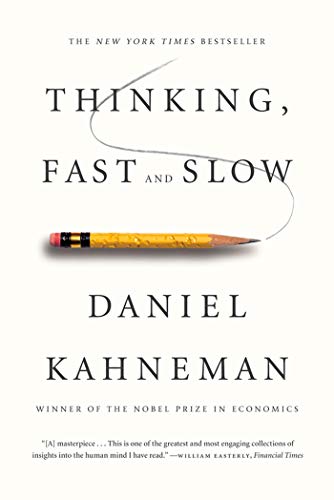
Daniel Kahneman mapped our cognitive machinery in Thinking, Fast and Slow: System 1 (fast, intuitive, emotional) is running the show while System 2 (slow, deliberate, logical) is mostly hired as the PR manager after the fact. Dan Ariely built a career documenting just how predictably irrational we are – anchoring, framing, sunk-cost fallacies, you name it. Add in Tversky, Thaler, Gigerenzer, and the usual suspects, and the picture is clear: we don’t need a crowd to become irrational. We start irrational, and then the crowd amplifies it.
In that sense, Le Bon wasn’t wrong about crowds being dangerous, but he may have missed the darker point. A crowd doesn’t corrupt a rational base – it accelerates the irrational baseline. It’s not Jekyll turning into Hyde; it’s Hyde on a megaphone.
This matters because if you take Le Bon literally, the problem is situational: avoid crowds and you’ll preserve reason. But if you take Kahneman seriously, the problem is structural: crowds only reveal what was already there. The positive feedback loop of group psychology doesn’t replace rationality; it feeds on the biases, illusions, and shortcuts already baked into the individual mind.
Le Bon handed us the stage directions for mass manipulation. Modern behavioural economics shows us that the script was already written in our heads before we ever left the house. Put the two together and you have the perfect recipe for political spectacle, advertising, and algorithmic nudges.
Which makes Le Bon’s century-old observations correct – but not nearly bleak enough.
Humans can’t seem to stop clawing after morality. The primates among us chuck cucumbers when their neighbours get grapes, and the rest of us grumble about fairness on social media. The impulse is practically universal, an evolutionary quirk that kept us from throttling each other long enough to raise children and build cities.
Image: A seemingly perturbed capuchin monkey.
But universality is not objectivity. Just because every ape howls about fairness doesn’t mean “Justice” floats somewhere in Platonic space, waiting to be downloaded. It only means we’re the kind of animal that survives by narrating rules and enforcing them with shunning, shame, or, when necessary, cudgels.
Audio: NotebookLM podcast on this topic.
This is where Alasdair MacIntyre trips over his own robes. After Virtue skewers Enlightenment rationalists who tried to prop morality on reason, it then dismisses Nietzsche for being “irrational.” MacIntyre’s fix? Resurrect Aristotle’s teleology. If reason can’t save morality, maybe an ancient oak tree can. But this is wish-thinking with a Greek accent. He’s still arguing by reason that reason can’t do the job, then sneaking back in through Aristotle’s back door with a “firmer ground.” Firmer only because he says so.
Nietzsche, at least, had the decency to call the bluff: no telos, no floor, no cosmic anchor. Just will, style, and the abyss. Uncomfortable? Absolutely. Honest? Yes.
Deleuze went further. He pointed out that morality, like culture, doesn’t look like a tree at all. It’s a rhizome: tangled, proliferating, hybridising, never grounded in a single root. The fragments MacIntyre despairs over aren’t evidence of collapse. They’re evidence of how moral life actually grows—messy, contingent, interconnected. The only reason it looks chaotic is that we keep demanding a trunk where only tubers exist.
So here we are, apes with a craving for rules, building cities and philosophies on scaffolds of habit, language, and mutual illusion. We are supported as surely as the Earth is supported – by nothing. And yet, we go on living.
The need for morality is real. The yearning for telos is real. The floor is not.







 Philosophics