Fairness, Commensurability, and the Quiet Violence of Comparison
Fairness and Commensurability as Preconditions of Retributive Justice
This is the final part of a 3-part series. Read parts 1 and 2 for a fuller context.
Audio: NotebookLM summary podcast of this topic.
Before the Cards Are Dealt
Two people invoke fairness. They mean opposite things. Both are sincere. Neither can prove the other wrong. This is not a failure of argument. It is fairness working exactly as designed.
Before justice can weigh anything, it must first decide that the things being weighed belong on the same scale. That single move – the assertion that comparison is even possible – quietly does most of the work.
Most people think justice begins at sentencing, or evidence, or procedure. But the real work happens earlier, in a space so normalised it has become invisible. Before any evaluation occurs, the system must install the infrastructure that makes evaluation legible at all.
That infrastructure rests on two foundations:
fairness, which supplies the rhetoric, and
commensurability, which supplies the mathematics.
Together, they form the felt beneath the table – the surface on which the cards can be dealt at all.
1. Why Fairness Is Always Claimed, Never Found
Let’s be precise about what fairness is not.
Fairness is not a metric. You cannot measure it, derive it, or point to it in the world.
Fairness is not a principle with determinate content. It generates no specific obligations, no falsifiable predictions, no uniquely correct outcomes.
Fairness is an effect. It appears after assessment, not before it. It is what you call an outcome when you want it to feel inevitable.
Competing Fairness Is Not a Problem
Consider how disputes actually unfold:
The prosecutor says a long sentence is fair because it is proportional to harm.
The defender says a shorter sentence is fair because it reflects culpability and circumstance.
The victim says any sentence is unfair because nothing restores what was taken.
The community says enforcement itself is unfair because it predictably targets certain groups.
Each claim is sincere. None can be resolved by fairness itself.
That is because fairness has no independent content. It does not decide between these positions. It names them once the system has already decided which will prevail. This is not a bug. It is the feature.
A Fluid Masquerading as an Invariant
In the language of the Language Insufficiency Hypothesis, fairness is a Fluid – a concept whose boundaries shift with context and use – that masquerades as an Invariant, something stable and observer-independent.
The system treats fairness as perceptual, obvious, discoverable. But every attempt to anchor it collapses into:
Intuition (‘It just feels right’)
Precedent (‘This is how we do things’)
Consensus (‘Most people agree’)
None of these establishes fairness. They merely perform it.
And that performance matters. It converts contested metaphysical commitments into the appearance of shared values. It allows institutions to claim neutrality whilst enforcing specificity. Fairness is what the system says when it wants its outputs to feel unavoidable.
2. The Real Gatekeeper: Commensurability
Fairness does rhetorical work. But it cannot function without something deeper.
That something is commensurability: the assumption that different harms, injuries, and values can be placed on a shared scale and meaningfully compared.
Proportionality presupposes commensurability. Commensurability presupposes an ontology of value. And that ontology is neither neutral nor shared.
When Incommensurability Refuses to Cooperate
A parent loses a child to preventable negligence. A corporation cuts safety corners. A warning is ignored. The system moves. Liability is established. Damages are calculated. £250,000 is awarded.
The parent refuses the settlement. Not because the amount is insufficient. But because money and loss are not the same kind of thing. The judge grows impatient. Lawyers speak of closure. Observers mutter about grief clouding judgment. But this is not grief. It is incommensurability refusing to cooperate.
The parent is rejecting the comparison itself. Accepting payment would validate the idea that a child’s life belongs on a scale with currency. The violence is not the number. It is the conversion. The system cannot process this refusal except as emotional excess or procedural obstruction. Not because it is cruel, but because without commensurability the engine cannot calculate.
Two Ontologies of Value
There are two incompatible ontologies at work here. Only one is playable.
Ontology A: The Scalar Model
Harm is quantifiable
Suffering is comparable
Trade-offs are morally coherent
Justice is a balancing operation
Under Ontology A, harms differ in degree, not kind. A broken arm, a stolen car, and a dead child all occupy points on the same continuum. This makes proportionality possible.
Ontology B: The Qualitative Model
Harms are categorical
Some losses are incommensurable
Comparison itself distorts
Justice is interpretive, not calculative
Under Ontology B, harms are different kinds of things. Comparison flattens what matters. To weigh them is to misunderstand them.
Why Only One Ontology Can Play
Retributive justice, as presently constituted, cannot function under Ontology B.
Without scalar values, proportionality collapses. Without comparison, equivalence disappears. Without trade-offs, punishment has no exchange rate.
Ontology B is not defeated. It is disqualified. Structurally, procedurally, rhetorically. The house needs a shared scale. Without it, the game cannot settle accounts.
3. Why Incommensurability Is Treated as Bad Faith
Here is where power enters without announcing itself. Incommensurability does not merely complicate disputes. It stalls the engine. And stalled engines threaten institutional legitimacy.
Systems designed to produce closure must ensure that disputes remain within solvable bounds. Incommensurability violates those bounds. It suggests that resolution may be impossible – or that the attempt to resolve does further harm. So the system reframes the problem.
Not as an alternative ontology, but as:
Unreasonableness
Extremism
Emotional volatility
Refusal to engage in good faith
Reasonableness as Border Control
This is why reasonableness belongs where it does in the model. Not as an evaluative principle, but as a gatekeeping mechanism.
Reasonableness does not assess claims. It determines which claims count as claims at all. This is how commensurability enforces itself without admitting it is doing so. When someone refuses comparison, they are not told their ontology is incompatible with retributive justice. They are told to be realistic.
Ontological disagreement is converted into:
A tone problem
A personality defect
A failure to cooperate
The disagreement is not answered. It is pathologised.
4. Why These Debates Never Resolve
This returns us to the Ontology–Encounter–Evaluation model.
People argue fairness as if adjusting weights would fix the scale. They debate severity, leniency, proportionality.
But when two sides inhabit incompatible ontologies of value, no amount of evidence or dialogue bridges the gap. The real disagreement is upstream.
A prosecutor operating under scalar harm and an advocate operating under incommensurable injury are not disagreeing about facts. They are disagreeing about what kind of thing harm is.
Fairness cannot resolve this, because fairness presupposes the very comparison under dispute. This is why reform debates feel sincere and go nowhere. Outcomes are argued whilst ontological commitments remain invisible.
Remediation Requires Switching Teams
As argued elsewhere, remediation increasingly requires switching teams.
But these are not political teams. They are ontological commitments.
Ontologies are not held like opinions. They are held like grammar. You do not argue someone out of them. At best, you expose their costs. At worst, you force others to operate within yours by disqualifying alternatives.
Retributive justice does the latter.
5. What This Means (Without Offering a Fix)
Justice systems are not broken. They are optimised. They are optimised for closure, manageability, and the appearance of neutrality. Fairness supplies the rhetoric. Commensurability supplies the mathematics. Together, they convert contestable metaphysical wagers into procedural common sense.
That optimisation has costs:
Disagreements about value become illegible
Alternative ontologies become unplayable
Dissent becomes pathology
Foundations disappear from view
If justice feels fair, it is because the comparisons required to question it were never permitted.
Ontology as Pre-emptive Gatekeeping
None of this requires conspiracy.
Institutions do not consciously enforce ontologies. They do not need to.
They educate them. Normalise them. Proceduralise them. Then treat their rejection as irrationality.
By the time justice is invoked, the following have already been installed as reality:
That persons persist over time in morally relevant ways
That agents meaningfully choose under conditions that count
That harms can be compared and offset
That responsibility can be localised
That disagreement beyond a point is unreasonable
None of these are discovered. All are rehearsed.
A law student learns that ‘the reasonable person’ is a construct. By year three, they use it fluently. It no longer feels constructed.
This is not indoctrination. It is fluency.
And fluency is how ontologies hide.
By the time an alternative appears – episodic selfhood, incommensurable harm, distributed agency – it does not look like metaphysics. It looks like confusion.
Rationality as Border Control
The system does not say: we reject your ontology.
It says: that’s not how the world works.
Or worse: you’re being unreasonable.
Ontological disagreement is reframed as a defect in the person. And defects do not need answers. They need management.
This is why some arguments feel impossible to have. One ontology has been naturalised into common sense. The other has been reclassified as error.
The Final Irony
The more fragile the foundations, the more aggressively they must be defended as self-evident.
Free will is taught as obvious.
Fairness is invoked as perceptual.
Responsibility is treated as observable.
Incommensurability is treated as sabotage.
Not because the system is confident.
Because it cannot afford not to be.
The Point
Justice does not merely rely on asserted ontologies. It expends enormous effort ensuring they never appear asserted at all.
By the time the cards are dealt, the rules have already been mistaken for reality. That is the felt beneath the table. Invisible. Essential. Doing all the work. And if you want to challenge justice meaningfully, you do not start with outcomes. You start by asking:
What comparisons are we being asked to accept as natural? And what happens to those who refuse?
Most people never make that move. Not because it is wrong. But because by the time you notice the game is rigged, you are already fluent in its rules. And fluency feels like truth.
Final Word
Why write these assessments? Why care?
With casinos, like cricket, we understand something fundamental: these are games. We can learn the rules. We can decide whether to play. We can walk away.
Justice is different. Justice is not opt-in. It is imposed. You do not get to negotiate the rules, the scoring system, or the house assumptions about what counts as a move. Once you are inside, even dissent must be expressed in the system’s own grammar. Appeals do not question the game; they replay it under slightly altered conditions.
You may contest the outcome. You may plead for leniency. You may argue fairness. You may not ask why chips are interchangeable with lives, why losses must be comparable, or why refusing comparison itself counts as misconduct.
Imagine being forced into a casino. Forced to play. Forced to stake things you do not believe are wagerable. Then told, when you object, that the problem is not the game, but your attitude toward it.
That is why these assessments matter. Not to declare justice illegitimate. Not to offer a fix. But to make visible the rules that pretend not to be rules at all. Because once you mistake fluency for truth, the house no longer needs to rig the game.
Just a quick note. Podcast summaries are typically available ahead of Philosophics blog posts.
I have NotebookLM summarise the posts after I write them, but I try (and occasionally fail) to only post one blog post per day – today among the exceptions. So, if I schedule a blog post for a future time, the audio summary is likely already available a day or more in advance.
I believe that some people only read the blog or listen to the podcasts, but not both. As a former educator, I understand that people have preferred attention modalities. I also know that people have practical constraints.
I am an avid reader. Nowadays, most of my reading is online, but I still buy physical books – and people gift me books – but I listen to audiobooks when I work out. I might opt for a podcast here.
In the spirit of keeping this short, I’ll end it here – perhaps paradoxically, without a podcast summary.
Now that A Language Insufficiency Hypothesis has been put to bed — not euthanised, just sedated — I can turn to the more interesting work: instantiating it. This is where LIH stops being a complaint about words and starts becoming a problem for systems that pretend words are stable enough to carry moral weight.
What follows is not a completed theory, nor a universal schema. It’s a thinking tool. A talking point. A diagram designed to make certain assumptions visible that are usually smuggled in unnoticed, waved through on the strength of confidence and tradition.
The purpose of this diagram is not to redefine justice, rescue it, or replace it with something kinder. It is to show how justice is produced. Specifically, how retributive justice emerges from a layered assessment process that quietly asserts ontologies, filters encounters, applies normative frames, and then closes uncertainty with confidence.
Audio: NotebookLM summary podcast of this topic.
Most people are willing to accept, in the abstract, that justice is “constructed”. That concession is easy. What is less comfortable is seeing how it is constructed — how many presuppositions must already be in place before anything recognisable as justice can appear, and how many of those presuppositions are imposed rather than argued for.
The diagram foregrounds power, not as a conspiracy or an optional contaminant, but as an ambient condition. Power determines which ontologies are admissible, which forms of agency count, which selves persist over time, which harms are legible, and which comparisons are allowed. It decides which metaphysical configurations are treated as reasonable, and which are dismissed as incoherent before the discussion even begins.
Justice, in this framing, is not discovered. It is not unearthed like a moral fossil. It is assembled. And it is assembled late in the process, after ontology has been assumed, evaluation has been performed, and uncertainty has been forcibly closed.
This does not mean justice is fake. It means it is fragile. Far more fragile than its rhetoric suggests. And once you see that fragility — once you see how much is doing quiet, exogenous work — it becomes harder to pretend that disagreements about justice are merely disagreements about facts, evidence, or bad actors. More often, they are disagreements about what kind of world must already be true for justice to function at all.
I walk through the structure and logic of the model below. The diagram is also available as a PDF, because if you’re going to stare at machinery, you might as well be able to zoom in on the gears.
Why Retributive Justice (and not the rest of the zoo)
Before doing anything else, we need to narrow the target.
“Justice” is an infamously polysemous term. Retributive, restorative, distributive, procedural, transformative, poetic, cosmic. Pick your flavour. Philosophy departments have been dining out on this buffet for centuries, and nothing useful has come of letting all of them talk at once.
This is precisely where LIH draws a line.
The Language Insufficiency Hypothesis is not interested in pedestrian polysemy — cases where a word has multiple, well-understood meanings that can be disambiguated with minimal friction. That kind of ambiguity is boring. It’s linguistic weather.
What LIH is interested in are terms that appear singular while smuggling incompatible structures. Words that function as load-bearing beams across systems, while quietly changing shape depending on who is speaking and which assumptions are already in play.
“Justice” is one of those words. But it is not usefully analysable in the abstract.
So we pick a single instantiation: Retributive Justice.
Why?
Because retributive justice is the most ontologically demanding and the most culturally entrenched. It requires:
a persistent self
a coherent agent
genuine choice
intelligible intent
attributable causation
commensurable harm
proportional response
In short, it requires everything to line up.
If justice is going to break anywhere, it will break here.
Retributive justice is therefore not privileged in this model. It is used as a stress test.
The Big Picture: Justice as an Engine, Not a Discovery
The central claim of the model is simple, and predictably unpopular:
Justice is not discovered. It is produced.
Not invented in a vacuum, not hallucinated, not arbitrary — but assembled through a process that takes inputs, applies constraints, and outputs conclusions with an air of inevitability.
The diagram frames retributive justice as an assessment engine.
An engine has:
inputs
internal mechanisms
thresholds
failure modes
and outputs
It does not have access to metaphysical truth. It has access to what it has been designed to process.
The justice engine takes an encounter — typically an action involving alleged harm — and produces two outputs:
Desert (what is deserved),
Responsibility (to whom it is assigned).
Everything else in the diagram exists to make those outputs possible.
The Three Functional Layers
The model is organised into three layers. These are not chronological stages, but logical dependencies. Each layer must already be functioning for the next to make sense.
1. The Constitutive Layer
(What kind of thing a person must already be)
This layer answers questions that are almost never asked explicitly, because asking them destabilises the entire process.
What counts as a person?
What kind of self persists over time?
What qualifies as an agent?
What does it mean to have agency?
What is a choice?
What is intent?
Crucially, these are not empirical discoveries made during assessment. They are asserted ontologies.
The system assumes a particular configuration of selfhood, agency, and intent as a prerequisite for proceeding at all. Alternatives — episodic selves, radically distributed agency, non-volitional action — are not debated. They are excluded.
This is the first “happy path”.
If you do not fit the assumed ontology, you do not get justice. You get sidelined into mitigation, exception, pathology, or incoherence.
2. The Encounter Layer
(What is taken to have happened)
This layer processes the event itself:
an action
resulting harm
causal contribution
temporal framing
contextual conditions
motive (selectively)
This is where the rhetoric of “facts” tends to dominate. But the encounter is never raw. It is already shaped by what the system is capable of seeing.
Causation here is not metaphysical causation. It is legible causation. Harm is not suffering. It is recognisable harm. Context is not total circumstance. It is admissible context.
Commensurability acts as a gatekeeper between encounter and evaluation: harms must be made comparable before they can be judged. Anything that resists comparison quietly drops out of the pipeline.
3. The Evaluative Layer
(How judgment is performed)
Only once ontology is assumed and the encounter has been rendered legible does evaluation begin:
proportionality
accountability
normative ethics
fairness (claimed)
reasonableness
bias (usually acknowledged last, if at all)
This layer presents itself as the moral heart of justice. In practice, it is the final formatting pass.
Fairness is not discovered here. It is declared. Reasonableness does not clarify disputes. It narrows the range of acceptable disagreement. Bias is not eliminated. It is managed.
At the end of this process, uncertainty is closed.
That closure is the moment justice appears.
Why Disagreement Fails Before It Starts
At this point, dissent looks irrational.
The system has:
assumed an ontology
performed an evaluation
stabilised the narrative through rhetoric
and produced outputs with institutional authority
To object now is not to disagree about evidence. It is to challenge the ontology that made assessment possible in the first place.
And that is why so many justice debates feel irresolvable.
They are not disagreements within the system. They are disagreements about which system is being run.
LIH explains why language fails here. The same words — justice, fairness, responsibility, intent — are being used across incompatible ontological commitments. The vocabulary overlaps; the worlds do not.
The engine runs smoothly. It just doesn’t run the same engine for everyone.
Where This Is Going
With the structure in place, we can now do the slower work:
unpacking individual components
tracing where ontological choices are asserted rather than argued
showing how “reasonableness” and “fairness” operate as constraint mechanisms
and explaining why remediation almost always requires a metaphysical switch, not better rhetoric
Justice is not broken. It is doing exactly what it was built to do.
That should worry us more than if it were merely malfunctioning.
This essay is already long, so I’m going to stop here.
Not because the interesting parts are finished, but because this is the point at which the analysis stops being descriptive and starts becoming destabilising.
The diagram you’ve just walked through carries a set of suppressed footnotes. They don’t sit at the margins because they’re trivial; they sit there because they are structurally prior. Each one represents an ontological assertion the system quietly requires in order to function at all.
By my count, the model imposes at least five such ontologies. They are not argued for inside the system. They are assumed. They arrive pre-installed, largely because they are indoctrinated, acculturated, and reinforced long before anyone encounters a courtroom, a jury, or a moral dilemma.
Once those ontologies are fixed, the rest of the machinery behaves exactly as designed. Disagreement downstream is permitted; disagreement upstream is not.
In a follow-up essay, I’ll unpack those footnotes one by one: where the forks are, which branch the system selects, and why the alternatives—while often coherent—are rendered unintelligible, irresponsible, or simply “unreasonable” once the engine is in motion.
That’s where justice stops looking inevitable and starts looking parochial.
And that’s also where persuasion quietly gives up.
Written by Bry Willis and ChatGPT 5.2 after a couple of days of back and forth
How retribution stays upright by not being examined
There is a persistent belief that our hardest disagreements are merely technical. If we could stop posturing, define our terms, and agree on the facts, consensus would emerge. This belief survives because it works extremely well for birds and tables.
It fails spectacularly for justice.
Audio: NotebookLM summary podcast of this topic.
The Language Insufficiency Hypothesis (LIH) isn’t especially interested in whether people disagree. It’s interested in how disagreement behaves under clarification. With concrete terms, clarification narrows reference. With contested ones, it often fractures it. The more you specify, the more ontologies appear.
Justice is the canonical case.
Retributive justice is often presented as the sober, adult conclusion. Not emotional. Not ideological. Just what must be done. In practice, it is a delicately balanced structure built out of other delicately balanced structures. Pull one term away and people grow uneasy. Pull a second and you’re accused of moral relativism. Pull a third and someone mentions cavemen.
Let’s do some light demolition. I created a set of 17 Magic: The Gathering-themed cards to illustrate various concepts. Below are a few. A few more may appear over time.
Card One: Choice
Image: MTG: Choice – Enchantment
The argument begins innocently enough:
They chose to do it.
But “choice” here is not an empirical description. It’s a stipulation. It doesn’t mean “a decision occurred in a nervous system under constraints.” It means a metaphysically clean fork in the road. Free of coercion, history, wiring, luck, trauma, incentives, or context.
That kind of choice is not discovered. It is assumed.
Pointing out that choices are shaped, bounded, and path-dependent does not refine the term. It destabilises it. Because if choice isn’t clean, then something else must do the moral work.
Enter the next card.
Card Two: Agency
Image: MTG: Agency – Creature – Illusion
Agency is wheeled in to stabilise choice. We are reassured that humans are agents in a morally relevant sense, and therefore choice “counts”.
Counts for what, exactly, is rarely specified.
Under scrutiny, “agency” quietly oscillates between three incompatible roles:
a descriptive claim: humans initiate actions
a normative claim: humans may be blamed
a metaphysical claim: humans are the right kind of cause
These are not the same thing. Treating them as interchangeable is not philosophical rigour. It’s semantic laundering.
But agency is emotionally expensive to question, so the discussion moves on briskly.
Card Three: Responsibility
Image: MTG: Responsibility – Enchantment – Curse
Responsibility is where the emotional payload arrives.
To say someone is “responsible” sounds administrative, even boring. In practice, it’s a moral verdict wearing a clipboard.
Watch the slide:
causal responsibility
role responsibility
moral responsibility
legal responsibility
One word. Almost no shared criteria.
By the time punishment enters the picture, “responsibility” has quietly become something else entirely: the moral right to retaliate without guilt.
At which point someone will say the magic word.
Card Four: Desert
Image: MTG: Desert – Instant
Desert is the most mystical card in the deck.
Nothing observable changes when someone “deserves” punishment. No new facts appear. No mechanism activates. What happens instead is that a moral permission slip is issued.
Desert is not found in the world. It is declared.
And it only works if you already accept a very particular ontology:
robust agency
contra-causal choice
a universe in which moral bookkeeping makes sense
Remove any one of these and desert collapses into what it always was: a story we tell to make anger feel principled.
Which brings us, finally, to the banner term.
Card Five: Justice
Image: MTG: Justice – Enchantment
At this point, justice is invoked as if it were an independent standard hovering serenely above the wreckage.
It isn’t.
“Justice” here does not resolve disagreement. It names it.
Retributive justice and consequentialist justice are not rival policies. They are rival ontologies. One presumes moral balance sheets attached to persons. The other presumes systems, incentives, prevention, and harm minimisation.
Both use the word justice.
That is not convergence. That is polysemy with a body count.
Why clarification fails here
This is where LIH earns its keep.
With invariants, adding detail narrows meaning. With terms like justice, choice, responsibility, or desert, adding detail exposes incompatible background assumptions. The disagreement does not shrink. It bifurcates.
This is why calls to “focus on the facts” miss the point. Facts do not adjudicate between ontologies. They merely instantiate them. If agency itself is suspect, arguments for retribution do not fail empirically. They fail upstream. They become non sequiturs.
This is also why Marx remains unforgivable to some. “From each according to his ability, to each according to his need” isn’t a policy tweak. It presupposes a different moral universe. No amount of clarification will make it palatable to someone operating in a merit-desert ontology.
The uncomfortable conclusion
The problem is not that we use contested terms. We cannot avoid them.
The problem is assuming they behave like tables.
Retributive justice survives not because it is inevitable, but because its supporting terms are treated as settled when they are anything but. Each card looks sturdy in isolation. Together, they form a structure that only stands if you agree not to pull too hard.
LIH doesn’t tell you which ontology to adopt.
It tells you why the argument never ends.
And why, if someone insists the issue is “just semantic”, they’re either confused—or holding the deck.
My Language Insufficiency Hypothesis is finished, the cover is designed, and everything is in order for a January 2026 release – save for one administrative detail: the ISBN. I expect this to be resolved presently. The Bowker distribution system in the US appears to have been set up circa 1997, and that’s just the web interface. Who knows how long the database has been in place? I’d bet circa 1955. Most countries provide ISBNs for free. Not the US. Kinda bollox. Meantime, I’ve now got three lenses through which to inspect the world.
[EDIT: ISBN issue has been resolved. I am awaiting a proof copy that should be arriving today.]
From the outside, some of my recent work can look untidy. A hypothesis about language. An ontology about mediated encounters. A paper on why moral disagreement refuses to resolve itself politely. No master theory. No clean ladder. No promised synthesis at the end. This is not an accident. It is a refusal.
What links the Language Insufficiency Hypothesis (LIH), the Mediated Encounter Ontology of the World (MEOW), and Disagreement Without Referees is not a shared doctrine, but a shared function. They are lenses, not foundations. Diagnostics, not blueprints. Each takes aim at a different site where Enlightenment habits quietly overpromise – meaning, access, adjudication – and shows what breaks when we stop pretending those promises were ever cashable. They form a family. Not a system. And certainly not a programme for rebuilding.
Three Lenses, Three Failure Sites
Each of these frameworks operates at a different level, but they all do the same kind of work: they explain why something we rely on feels indispensable, fails repeatedly, and yet stubbornly survives.
LIH operates at the linguistic level.
It asks why language fails precisely where we expect it to secure clarity, precision, or consensus. Its answer is unromantic: language is not uniformly capable. As we move from invariants to contestables to fluids and ineffables, its representational power degrades. The failure mode is familiar: we mistake grammatical stability for ontological stability, and then act surprised when disagreement hardens rather than dissolves.
MEOW operates at the ontological level.
It asks what kind of ‘world’ we are actually dealing with once we abandon the fantasy of unmediated access. There is no clean mind–world interface, no privileged vantage point. Every encounter is mediated – biologically, cognitively, linguistically, socially. Realism and idealism alike fail here, each clinging to a different myth of access. What remains is not scepticism, but constraint.
Disagreement Without Referees operates at the normative and political level.
It asks why moral and political disagreement persists even when all parties appear informed, sincere, and articulate. The answer is ontological incommensurability. Where frameworks do not overlap, there are no neutral referees. Argument does not converge because it cannot. What remains is persuasion, coalition, power, and consequence—moral life without an umpire.
None of these lenses replaces what it critiques. Each refuses the repair instinct that says: if we just fix the model, the system will work again. That instinct is the pathology.
What They Share (And What They Don’t)
What unites these lenses is not a set of positive claims about how the world really is. It is a shared posture:
no privileged access
no neutral ground
no final adjudication
no redemptive synthesis
But also:
no quietism
no nihilism
no ‘anything goes’
no abdication of responsibility
They do not tell you what to believe. They tell you why believing harder won’t save you.
Importantly, they are non-hierarchical. LIH does not ground MEOW. MEOW does not explain away disagreement. Disagreement does not ‘apply’ LIH in some linear fashion. They intersect. They overlap. They illuminate different failure modes of the same inherited fantasy: that there must be a place where things finally settle. There isn’t.
Image: Three Diagnostic Lenses Infographic¹
Why This Is Not a System
Systems promise closure. These lenses do not. They explain why closure is repeatedly promised, urgently demanded, and reliably missed. To systematise them would be to betray them.
What they offer instead is a kind of intellectual hygiene: a way of recognising when we are asking language, reality, or morality to do work they were never capable of doing – and then blaming one another when they don’t comply.
If there is a unifying thread, it is this:the demand for foundations is itself the problem.² These lenses do not solve that problem. They show you where it operates, how it reproduces itself, and why refusing it feels so uncomfortable. That discomfort is the point.
Footnotes
This is another NotebookLM infographic – my second. It’s not half-bad. I had to adjust some elements in Photoshop and Illustrator, and there are still textual anomalies, but all in all, I’m impressed with what 60 seconds of generation yielded – along with a 5-minute prompt and 15 minutes of touchup. It’s just a novelty for now – certainly not necessary. What do you think?
More precisely, I need less sleep and longer days – preferably twice as long. I’ve been writing almost non-stop for the better part of a week: fourteen- to sixteen-hour days, fuelled by irritation and the stubborn belief that if I just keep reading, something will finally click into place.
I’m not complaining. This is a virtuous cycle. Reading leads to writing. Writing demands more reading. Eventually, the loop closes into something that looks suspiciously like progress.
Audio: Short NotebookLM summary podcast on this topic.
Still, there’s a bottleneck.
Because some of this work – the work I’m most excited about – I’m deliberately not publishing yet. Journals, bless their glacial hearts, don’t much care for prior publication. So ideas sit in limbo for six to eighteen months, locked in a room like argumentative houseplants, slowly growing sideways.
From the perspective of someone who thinks in public, this is maddening.
Now add AI to the mix.
This is where things get dangerous.
I’ll feed ChatGPT a thesis, a skeletal structure, notes, and references. I ask what I’m missing. It obliges – often helpfully – by pointing me toward adjacent thinkers and relevant literature, complete with page numbers. From there, I verify, hunt down the sources, skim, read, discard, or integrate.
And every so often, I stumble across something that makes me swear out loud.
This week, it was Bernard Williams.
I’ve cited Ethics and the Limits of Philosophy before. But this time, I actually sat down and read it properly. Which immediately prompted the thought:
Why didn’t I read this sooner?
Williams dismantles moral objectivity with the calm precision of someone who knows the Enlightenment project has already lost – he just hasn’t told everyone yet. Thick and thin moral concepts, locality, non-extensibility, the collapse of universal moral reason at scale – yes, yes, yes. He published this in 1985. Fine. I’ll survive.
But then I went further.
Williams shows that morality fails between people at scale. I argue that it fails within a single person over time.
That became my second paper.
And this is where things went off the rails.
Because in the course of writing that paper, I dipped into Hart’s The Concept of Law and Endicott’s Vagueness in Law. These are not fringe polemics. These are law textbooks. For law students. People allegedly trained to parse language for a living.
And what I found was… astonishing.
Let me paraphrase the admissions:
First:
Image: When the law is vague, judicial decisions may be unconstrained by the law.
Endicott: “By upsetting the standard view of adjudication, the book reaches conclusions that some people find horrible: when the law is vague, judicial decision- making will in some cases be unconstrained by the law. It is impossible in principle for judges always to treat like cases alike. Predictability in the law is to some extent unattainable. Moreover, I argue in Chapter 9,2 that vagueness cannot be eliminated from law. These conclusions might seem to imply that the rule of law is, at least to some extent, conceptually impossible.”
Then:
Image: Vagueness is inevitable. Deal with it.
Endicott: “Secondly, I do not claim that vagueness is a purely linguistic feature of law. And the book relies on no claim about the relation between law and language. These points must be stressed, because vagueness is commonly thought of as a linguistic phenomenon. And. indeed, most of the discussion in the book concerns the vagueness of linguistic expressions. But the indeterminacy claim is not just a claim about language (so I argue in Chapter 3.12). So. for example, the claim in Chapter 6 that general evaluative and normative expressions are necessarily vague is not just a claim about the word ‘good’ and the word ‘right1: it is a claim about any linguistic expression in which we could conceivably express general evaluative and normative judgments. It therefore includes a claim about what is good and what is right.”
Then, almost casually:
Image: Whether law is morally valuable to a community is not my concern. Justice and the rule of law may be political virtues — or not. I don’t defend them here.
Endicott: “Disputes between legal positivists and natural law theorists have concerned not only the relation between law and adjudication, but also the relation between law and morality. Here I take no general position on the intrinsic moral value of law. I do rely on the claims that law can be valuable to a community, and that justice and the rule of law are two ideals which a com- munity can intelligibly pursue as political virtues. Even those claims are controversial (Kelsen and some of the theorists discussed in Chapter 2 have controverted them ). But I do not defend them here. This work aims to show that the indeterminacy claim does nothing to threaten the pursuit of justice and the rule of law. Those ideals cannot be well understood if we try to make them depend on determinacy in the requirements of the law.”
Say what?
Read together – not even uncharitably – the message is clear:
Law is indeterminate. Indeterminacy is unavoidable. And whether law is good, just, or valuable is… optional.
The subtext isn’t even hiding.
Law is a power structure first. If it happens to align with justice, fairness, or communal value, well, lovely. A bonus. Champagne all round.
This does not sit well with a sceptical cynic.
What really broke me, though, wasn’t the argument itself. Philosophers make grim claims all the time. What broke me was the silence around it.
How does this pass under the radar?
How do cohorts of law students – drilled in textual analysis, trained to read footnotes like tea leaves – not trip over this elephant stampede? How do they graduate believing they’re upholding inalienable rights, rather than participating in a managed system of coercion that occasionally behaves itself?
Self-preservation, I suppose. Wilful ignorance. Professional cosplay.
I’ve seen this before.
As an economist, ask the wrong foundational question, and you’re instantly radioactive. Persona non grata. Careers don’t end with explosions — they end with polite silence and no invitations.
I probably should have committed to heterodox philosophy from the start. Or stayed a musician.
I remember leaving graduate school, putting on a suit, and feeling like I was wearing a costume. Cosplay, before we had the word. “Business professional” as a role, not an identity.
I’ve always felt intellectually capable of doing whatever I set out to do. My temperament, however, has never agreed to play along.
Which is perhaps why diagnosing ontologies comes so naturally. Once you see the scaffolding, you can’t unsee it – whether it’s metaphysics, jurisprudence, or a corporate department pretending it has a mission.
Then David Graeber came along with Bullshit Jobs, and I remember thinking: Thank God. It’s not just me.
So yes. I need a break.
I need sleep. I need silence. I need to stop reading law books that accidentally admit they’re about power and then act surprised when someone notices.
I’ve just published a new preprint on Zenodo: Disagreement Without Referees: Ontological Incommensurability and the Limits of Moral Adjudication 📄 https://doi.org/10.5281/zenodo.17932544
I welcome reviews, comments, and dissents.
This paper grows out of a frustration that will be familiar to anyone who spends time in moral or political argument: the sense that we keep talking past one another, mistaking deep incompatibilities for mere differences of opinion – and then moralising the failure to converge. Mostly, I’m tired of having to explain why my position isn’t subjectivist, relativist, quietist, nihilist, or whatever –ist flavour du jour. As with John Lennon, I complain about the –isms.
Audio: NotebookLM summary podcast of this essay.
The core claim is simple but unfashionable: many persistent disagreements are not epistemic at all. They are ontological. They do not arise within a shared background of assumptions about what exists, what counts as a reason, or what can ground normativity. They arise between incompatible background frameworks. When we treat such conflicts as if they were resolvable by better arguments, clearer communication, or more empathy, we misdiagnose the problem – and often make it worse.
The paper draws a sharp distinction between:
Disagreements of opinion, which presuppose a shared world and are, in principle, corrigible; and
Ontological disagreements, where what is contested is not the right answer, but what it would even mean for an answer to be right.
From there, I examine why charges like ‘relativism’, ‘subjectivism’, or ‘anything goes’ retain such rhetorical force despite their weak logical footing. The argument is not that these labels are false descriptions so much as that they function asboundary-maintenance devices within Enlightenment-inherited moral frames. They stabilise a sense of moral order by excluding positions that deny neutral adjudication.
Image: NotebookLM infographic. (This is the first infographic I’ve produced from NotebookLM. I’m not sure what I think of it, but I might try more directed versions in the future.)
I also take up the familiar worry that abandoning objective moral grounding leads to arbitrariness or nihilism. The paper rejects this caricature. Evaluation does not disappear when foundations are withdrawn; it relocates. What follows is not moral collapse but moral life without referees, where disagreement is managed through persuasion, coalition-building, institutional design, and power, rather than appeals to metaphysical authority.
Importantly, the paper is diagnostic, not prescriptive. It does not offer a new moral framework, a reconciliatory theory, or a solution to moral conflict. It argues instead for a clearer understanding of why some disagreements resist resolution, and for a more honest account of what remains once the fantasy of neutral adjudication is relinquished.
If nothing else, the hope is that recognising ontological incommensurability can temper the moral theatre that so often accompanies disagreement – replacing accusations of irrationality or bad faith with a clearer sense of what is, and is not, at stake.
This essay is also available on PhilPapers. For now, the full preprint is available on Zenodo at the link above.
As ever, comments are welcome – provided we’re clear about which world we think we’re standing in.
Although I didn’t want to publish a formal essay, I wanted to produce something otherwise rigorous. The references I make are of the authored piece I am critiquing – MacIntyre, Žižek, Lacan – I’ve discussed these figures and their works, sometimes at length.
Audio: NotebookLM summary podcast discussion of this content.
Preamble: Setting the Encounter
Over the past several weeks, Otti Vogt and I have been circling one another in public threads on leadership, solidarity, ethics, and what might loosely be called the moral architecture of social life. At moments, we converge; more often, we don’t. The exchanges have been serious, occasionally sharp, and – credit where it’s due – largely conducted in good faith.
Recently, Otti published a more explicit articulation of the ontological commitments underlying his work – The Future of Flourishing: Toward a Dialectical Spiritual Realist Social Ontology (DRS) – a framework grounded in participatory metaphysics, virtue ethics, and an objective conception of the Good, oriented toward human flourishing. In doing so, he has done something both generous and rare in contemporary discourse: he has made his meta-assumptions visible. That gesture deserves to be taken seriously. This response is written in that spirit.
For my part, I have already shared a different set of commitments, most notably what I call the Mediated Encounter Ontology (MEOW) and the Language Insufficiency Hypothesis (LIH). These are not counter-ontologies in the conventional sense, nor are they offered as replacements for the metaphysical structures Otti defends. They are diagnostic lenses. Their purpose is to foreground mediation, semantic drift, power asymmetries, and the limits of moral language – especially where that language is asked to perform stabilising or universalising work it cannot reliably sustain.
What follows, then, is not a refutation from within Otti’s framework, nor an attempt to ‘correct’ his ontology by substituting another in its place. It is an analysis conducted from a philosophy of language that explicitly rejects the need for the kind of metaphysical grounding his project presupposes.
That distinction matters. Much philosophical disagreement fails not because arguments are weak, but because interlocutors believe they are disputing conclusions when they are, in fact, operating with incompatible assumptions about what language can do, how meaning holds, and where normativity comes from.
Accordingly, I will first restate Otti’s position as charitably and accurately as possible, including the conditions under which it appears to work well. I will then apply MEOW and LIH as analytic lenses – not to score points, but to observe how this framework behaves under pressure: across time, across groups, and across material and organisational realities. Finally, I will explain why, despite its internal coherence and aspirational appeal, I regard the project as structurally unsustainable beyond tightly aligned in-groups.
This is a polemic, but not a casual one.
This is a polemic, but not a casual one. It is written in respect of the seriousness of the work, and in full awareness that the disagreement it traces is unlikely to be resolved. I do not expect to publish this as a formal preprint, but I have structured it much as I otherwise would. The latitude afforded by a blog is used here not to loosen standards, but to speak more plainly about where the fault-lines actually lie.
At its strongest, Otti Vogt’s framework is an attempt to rescue ethics, leadership, and social solidarity from what he takes to be the exhaustion of proceduralism, relativism, and technocratic management. The diagnosis is familiar but not trivial: without a shared moral horizon, collective action collapses into preference aggregation, power struggles, or managerial optimisation masquerading as value-neutral necessity. Against this, Otti proposes a participatory social ontology grounded in three interlocking commitments.
First, normativity is real.
Moral claims are not merely expressions of preference, strategic coordination devices, or retrospective rationalisations of power. They track something objective, even if imperfectly. The Good is not constructed ex nihilo by consensus, nor generated procedurally through participation; rather, participation presupposes it. Solidarity, dignity, and justice do not emerge bottom-up from agreement alone, but from orientation toward a moral reality that precedes and exceeds any given social formation.
Second, personhood is constitutively relational.
Individuals are not pre-social atoms who later enter into moral contracts, but beings-in-relation whose identities are shaped through participation in shared practices, institutions, and meanings. Drawing on Aristotelian virtue ethics, Christian theology, and strands of critical realism, Otti treats ethical formation not as rule-following but as the cultivation of practical wisdom within an ordered moral ecology. Virtue, here, is not compliance but excellence-in-relation.
Third, social structures are dialectical rather than merely procedural.
Change does not occur through rule revision alone, nor through technocratic optimisation, but through what might be called moral morphogenesis: the transformation of agents and structures together as they orient themselves toward better forms of collective life. Leadership, on this view, is not managerial control but ethical mediation – holding open a space in which shared participation in the Good can occur.
Importantly, this is not presented as naïve moralism. Otti is explicit that causality and ethics must be distinguished, that material conditions matter, and that social systems operate across stratified domains. His engagement with Bhaskar, Archer, and Duindam is meant to secure this distinction without collapsing ethics into natural determinism. Likewise, his invocation of Lacan and Žižek is intended to show that absence, lack, and non-identity are not defects to be eliminated, but productive tensions that drive ethical becoming rather than undermining it. On the happy path, this framework is compelling.
In small, relatively homogeneous groups – especially those already sharing a thick moral vocabulary – it offers a powerful grammar for meaning-making. It legitimises ethical judgment without reducing it to preference. It resists the flattening tendencies of procedural liberalism. It offers leaders a language richer than metrics and incentives, while avoiding crude authoritarianism. And it gives participants a sense that their actions matter not merely instrumentally, but as contributions to something genuinely worthwhile.
If one already accepts its metaphysical premises, the system is internally coherent. More than that, it is motivational, aspirational, and – within its own frame – normatively robust. That coherence is not in dispute.
What happens when this DRS framework leaves the happy path?
What is in dispute is what happens when this framework leaves the happy path: when participants do not already share the ontology, when meanings drift over time, when organisational power intervenes, and when the language of participation is asked to scale beyond aligned in-groups into contested social reality. That is where the analysis begins.
2. Where the Framework Breaks: Boundary Conditions, Not Bad Faith
The first pressure point appears the moment participation is treated as if it occurs within an open, neutral moral field.
It doesn’t.
Participation always takes place inside an already-structured semantic environment. Values, goods, virtues, and ends are never encountered as raw givens, but as pre-formatted invitations. One does not simply ‘enter’ participation; one enters a space whose grammar has been written in advance, whose concepts already carry weight, direction, and implied hierarchies of legitimacy. This is not an accidental feature of social life. It is constitutive of it.
To participate is to move within a field of meanings that already distinguishes sense from nonsense, virtue from vice, maturity from immaturity, insight from confusion. Even when those distinctions are contested, the contest itself presupposes a shared language in which disagreement can appear as intelligible disagreement rather than noise.
This matters because Otti’s framework consistently treats participation as if it were epistemically generous and normatively hospitable by default. Yet participation is never merely an invitation; it is also a constraint. It shapes what can be said without sanction, which forms of dissent register as good-faith critique, and which appear as moral immaturity, resistance, or failure to ‘grasp the horizon’.
The moment a moral centre is posited – however dialectical, however participatory – it generates a gradient of alignment. Some positions sit closer to the centre and therefore appear clearer, wiser, more attuned. Others sit further out and must explain themselves, translate themselves, or justify their deviance from what is increasingly experienced as common sense. This is not a corruption of participatory ethics. It is its inevitable consequence.
Even if the Good is not imposed but ‘participated in,’ participation itself is never symmetrical. Someone always articulates the terms. Someone always curates the language. Someone always has greater fluency in the idiom of the Good and thus greater interpretive authority over what participation currently requires.
Participation does not erase power. It reconfigures it.
In practice, this produces a familiar asymmetry: those already aligned with the metaphysical grammar experience the framework as expansive and liberating, while those outside it experience it as invisible pressure. They are not coerced in any crude sense, but they are nonetheless nudged, corrected, reoriented, or quietly marginalised. The boundary condition, then, is simple but decisive: Participation does not erase power. It reconfigures it.
The claim that solidarity arises from participation in the Good rather than from procedure does not eliminate enforcement; it relocates it upstream, into ontology. What had previously been contested politically now appears as a matter of moral attunement or ontological adequacy. This is especially significant when the framework encounters out-groups.
For those who do not already share the metaphysical commitments – who do not recognise the same Good, or who reject the idea that such a Good exists independently of social negotiation – participation becomes conditional. Entry requires translation into a language they did not choose. Dissent must be framed in terms that already concede too much.
At that point, participation ceases to be an open moral practice and becomes something closer to initiatory alignment. This does not make the framework incoherent. It makes it local.
The problem arises only when a local moral grammar presents itself as foundational, scalable, or universally binding – when its boundary conditions are treated as philosophical necessities rather than contingent achievements. That transition is where the trouble begins.
3. Virtue as a Fluid: The Instability at the Centre
The next fault line emerges around virtue itself. Within Otti’s framework, virtue is no longer merely a description of excellence-in-practice, nor even a tradition-bound cultivation of character in recognisable forms of life. It becomes something more elusive: a dynamic orientation toward the Good, realised through participatory attunement rather than rule-following or procedural compliance.
On the surface, this looks like a strength. It avoids legalism. It avoids rigid codification. It allows for context, judgment, and development over time. But this move has a cost.
Once virtue is abstracted from stable practices and anchored instead to a transcendent moral horizon, it becomes semantically fluid. Its content is no longer secured by what people reliably do well together, but by how well their dispositions appear aligned with an ideal that itself resists definitive articulation.
At this point, virtue quietly changes function. It ceases to operate primarily as a descriptive account of excellence within a practice and becomes prescriptive as a mode of conformity to an interpretive centre. The question shifts from ‘What does excellence look like here?’ to ‘How well does this agent instantiate the orientation we recognise as virtuous?’
MacIntyre already gestures toward this danger, though he does not fully escape it. His attempt to recover virtue through traditions of practice depends on the relative stability of those traditions. Once the tradition fragments or pluralises, virtue must either harden into orthodoxy or soften into abstraction. Otti’s framework opts for the latter, but abstraction does not dissolve authority; it redistributes it.
And interpretation, inevitably, has interpreters.
When virtue becomes fluid, it also becomes indexical. Its meaning is determined less by shared activity than by ongoing interpretation. And interpretation, inevitably, has interpreters.
Those most fluent in the language of the Good become de facto arbiters of what virtue currently requires. Those less fluent must demonstrate sincerity, openness, or willingness to be formed. Virtue, in other words, becomes something one is recognised as having rather than something one demonstrably does. This produces a subtle but powerful inversion.
Instead of virtue disciplining ideals through lived practice, ideals discipline agents through moral evaluation. What begins as openness hardens into expectation. What begins as formation shades into assessment. What begins as aspiration becomes normativity with softer edges but firmer reach.
The fluidity of virtue does not eliminate moral pressure. It intensifies it, precisely because it lacks clear boundaries. And this is where temporal drift compounds the problem.
If virtue is continuously rearticulated in light of a transcendent Good, then yesterday’s excellence may become today’s deficiency – not because practices failed, but because the interpretive centre shifted. The agent who was once exemplary now appears insufficiently attuned. Correction follows. Alignment is requested. Resistance is reclassified as misunderstanding. None of this requires bad faith. None of it requires domination. It emerges naturally from the structure.
A virtue ethics that cannot tolerate virtue disagreement without moralising it is no longer describing excellence. It is managing deviation. This is not an argument against virtue per se. It is an argument against virtue untethered from stable practices and reattached to metaphysical ideals whose interpretation remains necessarily contested. Once virtue becomes a fluid, it stops being a guide to excellence and starts functioning as a solvent – dissolving difference while claiming to honour it.
Interlude: Interpretation, Gravity, and the Problem of Innocent Power
At this point, it is tempting to reassure ourselves that none of the above entails domination, coercion, or even hierarchy in any crude sense. After all, the framework under discussion explicitly rejects authoritarianism, emphasises participation, and repeatedly insists that the Good is not imposed but disclosed through relational engagement. This reassurance is sincere. It is also insufficient.
The problem is not that leaders within such a framework intend to exert power. The problem is that interpretation exerts power regardless of intention.
Any system oriented toward a transcendent Good requires interpretation. Someone must articulate what participation looks like here, now, under these conditions. Someone must distinguish fidelity from distortion, growth from regression, openness from refusal. These judgments cannot be automated, proceduralised, or dissolved into pure dialogue. They must be made.
Where judgments are made, gravity forms. This is not a psychological claim about ego, nor a moral accusation about bad faith. It is a structural observation. Interpretive authority emerges wherever meaning is stabilised long enough to guide action. The more abstract and elevated the referent, the greater the interpretive leverage required to render it actionable. The paradox is this: the more a leader insists they are not exercising authority, the harder their authority becomes to contest.
When normativity is framed as participation in the Good rather than compliance with rules, disagreement does not present itself as disagreement. It presents itself as misalignment, immaturity, or insufficient formation. Resistance is redescribed not as an alternative judgment but as a failure of attunement.
At this point, critique becomes difficult without appearing morally suspect. This is what gives participatory metaphysics its peculiar force. It does not silence opposition; it spiritualises it. Dissenters are not wrong so much as ‘not yet there’. Their objections are not refuted; they are absorbed into a narrative of ongoing formation.
This is not coercion. It is more effective than coercion. Even if a leader sincerely wishes not to exert gravity, the structure ensures that gravity accumulates around them. Those closest to the interpretive centre appear most aligned with the Good. Their judgments carry more weight. Their language becomes the idiom through which virtue is recognised.
If a leader truly did not wish to exert gravity, the most consistent action would be not to lead. But leadership, by definition, involves orientation. Orientation requires reference points. Reference points generate asymmetry. Asymmetry generates power.
The framework attempts to resolve this by redescribing hierarchy as ‘participatory’ rather than directive, and authority as ‘mediating’ rather than commanding. Yet this is a semantic reconfiguration, not a structural one. The same dynamics persist under gentler names. What disappears is not power, but its visibility. And power that cannot be named cannot be resisted. It can only be internalised.
This is the point at which metaphysics becomes political, whether it intends to or not. The claim that the Good is objective does not neutralise power. It sanctifies it.
4. Temporal Semantic Drift: Why Moral Centres Do Not Hold
Even if one grants – charitably – that participatory metaphysics can function without collapsing into interpretive domination in the short term, it remains vulnerable to a more corrosive force: time.
Moral centres do not fail all at once. They drift. The framework under discussion acknowledges this in principle. It speaks of dialectical movement, of gaps between actuality and the Good, of ongoing formation rather than static completion. On paper, this appears to inoculate it against rigidity.
In practice, it does the opposite. A moral centre that must continuously reinterpret itself in light of a transcendent horizon is never neutral. Each iteration reorders what counts as fidelity, maturity, and alignment. What was virtuous yesterday may become insufficient today – not because practices degraded, but because the interpretive frame shifted.
This is not accidental. It is intrinsic. Because the Good is not fully specifiable, its articulation is always provisional. But provisional articulations still carry normative force. People organise their lives around them. Careers, identities, reputations, and exclusions follow.
Then the centre moves. Those who move with it appear wise, flexible, and developmentally advanced. Those who hesitate appear resistant. Those who remain where they are appear obstructive. Drift is redescribed as growth, and displacement as failure to keep up.
This is how moral projects shed members without ever formally excluding them. At Time-nought, alignment feels communal. At Time-one, it becomes selective. At Time-two, it becomes justificatory. By the time the pattern is visible, the language of solidarity has already done its work.
Transductive subjectivity intensifies this effect. Because subjects and structures co-constitute one another, each moment of participation subtly reshapes the field itself. The centre is never merely followed; it is reproduced through enactment. Drift compounds. What results is not pluralism, but path dependency.
Early interpretations disproportionately shape later possibilities. Foundational voices become canonical. Corrective gestures are framed as recoveries rather than revisions. The centre insists it is merely unfolding what was always implicit. At this point, appeals to the Good no longer function as orientation. They function as retrospective validation. This is where temporal semantic drift becomes decisive.
Key terms – virtue, flourishing, participation, solidarity – do not remain semantically stable across contexts or generations. They accrete meaning through use, conflict, and institutionalisation. To claim continuity is to perform continuity, not to demonstrate it.
The framework attempts to resolve this by appealing to a stable moral horizon beyond language. But this simply relocates the problem. The horizon does not speak. People do.
Every attempt to stabilise meaning across time requires custodians. Custodianship introduces authority. Authority introduces exclusion. Exclusion introduces rationalisation. None of this implies malice. It implies entropy.
What works in a tightly aligned founding cohort does not survive scale, succession, or stress. History is littered with ethical systems that were internally coherent, sincerely motivated, and initially generative – until drift revealed the cost of maintaining coherence.
The claim is not that moral projects inevitably fail. It is that they cannot guarantee their own continuity without paying a price.
Participatory metaphysics offers no mechanism for escaping this. It offers only better reasons for why the price was necessary.
Interlude II: On Borrowing Žižek to Refute Žižek
At this point, a further tension must be addressed directly, because it is not incidental. It sits at the conceptual core of the framework itself.
Otti explicitly invokes Žižek and Lacan to demonstrate that absence, lack, and non-identity are not pathological failures to be overcome, but productive features of subjectivity and social life. This move is intended to show that participatory metaphysics can accommodate negativity, incompleteness, and instability without collapsing into relativism or nihilism. The intention is understandable. The result is incoherent.
Žižek’s central claim is not merely that the Big Other is fractured, incomplete, or imperfectly realised. It is that the Big Other does not exist. There is no transcendent guarantor of meaning, no symbolic authority that secures coherence from beyond the field of human practices. To ‘traverse the fantasy’ is precisely to accept this absence, not to redescribe it in more sophisticated terms.
Lacan’s notion of constitutive lack is not a privation awaiting fulfilment. It is not a gap that participation can close. It is an ontological condition: the impossibility of any final anchoring of meaning, identity, or desire. Lack is not productive because it gestures toward plenitude; it is productive because plenitude is structurally impossible. This is where the framework under review performs a decisive sleight of hand.
To invoke Lacan in support of a transcendent Good is therefore not a creative synthesis. It is a misappropriation.
By mapping Lacanian lack onto Bhaskar’s concept of real absence, the argument treats both as ‘modes of non-being that nonetheless exercise causal force’. But this collapses a distinction that Žižek and Lacan insist upon. Bhaskar’s absences are, in principle, fillable: the missing resource, the unjust structure, the preventable harm. Lacan’s lack is not. Attempts to fill it do not resolve the problem; they generate new symptoms, new fantasies, new forms of misrecognition. To invoke Lacan in support of a transcendent Good is therefore not a creative synthesis. It is a misappropriation.
What results is the reinstallation of precisely what psychoanalysis dismantles: a symbolic guarantor that promises coherence, orientation, and resolution. The Good becomes the ultimate Big Other – disavowed, abstracted, and rendered untouchable by those who claim merely to participate in it. This is not a minor theoretical inconsistency. It reveals the deeper strategy at work.
The framework borrows the critical sophistication of post-structural thought to inoculate itself against charges of naivety, while quietly reinstalling a classical metaphysics that those same thinkers spent their careers undoing. Absence is affirmed rhetorically, only to be neutralised ontologically. Negativity is welcomed, but only insofar as it can be oriented toward a pre-existing moral horizon. In effect, the language of lack is used to smuggle in fullness.
Once this move is made, the rest follows predictably. Interpretation acquires authority. Participation acquires normativity. Dissent becomes misrecognition. And the Good, now safely beyond contestation, does exactly the work the Big Other has always done – only with better philosophical cover.
5. Transductive Subjectivity: Participation Rewrites the Good
The final pressure point is not historical but immediate. Even if one brackets time, tradition, and institutional inertia, the framework still assumes something that does not hold: that subjects can participate in the Good without becoming co-authors of it. This is where transductive subjectivity becomes decisive.
Subjects are not vessels into which ethical form is poured. They are mediating agents. Every act of participation feeds back into the system that solicited it. Meaning is not transmitted intact; it is refracted through position, interest, fear, aspiration, and interpretation. Participation does not preserve coherence. It produces variance.
This is not a flaw in human beings. It is how social systems function. Each interaction slightly reshapes the normative field, altering expectations, redefining what counts as success, recalibrating what virtue now looks like in practice. Multiply this across hundreds or thousands of agents, and the idea of a stable moral centre becomes untenable without aggressive correction.
Here, Archer’s morphogenetic insight quietly undermines the aspiration of ethical constancy. Structures condition action, action transforms structure, and the cycle repeats. There is no equilibrium point. The system is always becoming something slightly different from what it was meant to be.
Either participation rewrites the Good, or the Good rewrites participants. There is no third option.
From within the framework, this is often redescribed as growth, maturation, or deepening participation. From a systems perspective, it is drift under another name. Either participation rewrites the Good, or the Good rewrites participants. There is no third option.
What holds such systems together is not metaphysical participation, but selective reinforcement. Certain interpretations of virtue are amplified; others fade. Some agents are rewarded as exemplars; others are marked as misaligned. Over time, the system converges not on the Good, but on what is most compatible with its own survival. At this point, solidarity no longer links virtue to the common good. It links conformity to belonging.
This is why ‘participative flourishing’ is not a distinct category so much as a rhetorical intensifier. Flourishing is always participative in the tautological sense that humans act together. The adjective matters only when it is doing boundary work: distinguishing authentic participation from deviant engagement. And that distinction is never neutral.
Once transductive feedback is acknowledged, the best-case scenario becomes clear. The framework can temporarily stabilise a coherent moral culture for a relatively homogeneous group. It may feel meaningful, even liberating, from within.
But it will not scale without exclusion. It will not persist without maintenance. And it will not survive contact with materially divergent lives without becoming prescriptive. This is not cynicism. It is mechanics.
6. Leadership, Power, and the Reality of Organisational Life
All of the above tensions sharpen dramatically once we leave ‘society’ in the abstract and enter organisations. Organisations are not voluntary moral laboratories. They are asymmetric structures with built-in coercion, however politely framed. Participation is rarely free when the alternative is unemployment, precarity, or social marginalisation. Exit costs matter. Silence matters. Compliance matters. This is where appeals to solidarity, virtue, and shared flourishing acquire a different texture.
In organisational settings, leadership does not operate via participative democracy. Its function is not collective deliberation, but directional coordination. Leaders set priorities, allocate resources, and define success metrics. Even the most ‘inclusive’ leadership models ultimately require alignment, not pluralism. Consultation can be widened; directionality cannot be abolished without abolishing the role itself. This produces a structural contradiction.
On the one hand, the rhetoric insists that ethics flows from participation in a shared Good. On the other, participation itself is conditioned by hierarchy. A leader may deny being a centre of gravity, but gravity does not ask permission. The mere ability to define vision, values, or culture already exerts force.
Under these conditions, solidarity does not simply emerge. It is staged. Employees learn quickly which interpretations of virtue are rewarded, which forms of dissent are tolerated, and which are quietly penalised. Moral language becomes a signalling system long before it becomes a compass.
Ethics becomes a loyalty test. Solidarity becomes alignment. Flourishing becomes a synonym for fit.
The danger here is not cartoon authoritarianism. It is something subtler and more durable: moral capture. By this I mean the process through which ethical vocabulary is absorbed into institutional incentives, such that ‘goodness’ becomes legible primarily as compliance with the organisation’s preferred self-description. Ethics becomes a loyalty test. Solidarity becomes alignment. Flourishing becomes a synonym for fit.
This is why organisational utopias tend to function best in small, ideologically homogeneous groups and become brittle as complexity increases. Add more agents, more roles, more external pressures, and more disagreement about what ‘good work’ even is, and the system faces a choice between diversity of perspective and coherence of direction. History suggests it usually chooses the latter.
Religious movements, political vanguards, start-ups, consultancies, and ‘values-led’ enterprises all confront the same dilemma. Harmony is easy when dissenters are excluded early. It becomes harder once heterogeneity enters the system. At that point, solidarity either thins into vacuous slogans or hardens into enforcement.
Girard would recognise the pattern immediately: cohesion is often purchased by identifying the misfit, the blocker, the ‘toxic’ element – the one who must be managed out so that the group can experience itself as good.
The claim that better formation, transparency, or distributed leadership can resolve this misunderstands the problem. These tools can redistribute labour and reduce certain abuses. They do not eliminate asymmetry. Someone still defines the centre, even when it is dressed up as ‘process’, ‘culture’, or ‘shared ownership’. A moral horizon interpreted by a few will, reliably, become a moral demand placed upon the many. Which brings us to the unavoidable conclusion.
7. What This Critique Is (and Is Not)
This critique is not a defence of relativism-for-fun, nor of nihilism-as-apathy. I am a nihilist in a narrow, technical sense: I deny the existence of inherent meanings that are not invented, stabilised, and transmitted through language and practice. Meaning is not discovered intact in the world; it is negotiated, maintained, and contested. That position does not entail indifference. It entails vigilance.
If meanings are made rather than given, then they require care. They require scrutiny. They require attention to who is doing the naming, who benefits from the stabilisation, and who is being asked to align. Nihilism, in this sense, is not a shrug. It is a refusal to outsource responsibility to metaphysics.
In practical terms, this means treating ethical claims as proposals rather than discoveries, responsibilities rather than revelations, and commitments that must be defended in public rather than secured by ontological guarantee. It means accepting that moral authority is something we negotiate and sustain together, not something we uncover already intact and binding.
Nor is this an argument against local moral projects. Communities can and do organise themselves around shared goods, shared narratives, and shared aspirations. Such projects can be meaningful, motivating, and even life-sustaining. But they are also contingent, temporary, and sustained only through ongoing renegotiation.
Moral coherence achieved locally does not scale automatically, and it does not endure without friction.
What works for a particular group, at a particular moment, under particular conditions, does not thereby acquire universal authority. Moral coherence achieved locally does not scale automatically, and it does not endure without friction. That is not a failure of ethics. It is the cost of plurality and time.
The problem arises only when local moral projects mistake their internal coherence for external legitimacy. When they present themselves not as one way of organising meaning, but as a foundational ontology, a scalable ethical architecture, or a universally binding account of the Good.
At that point, disagreement ceases to register as intelligible difference and becomes moral deficiency. Dissent is redescribed as immaturity. Refusal is framed as lack of formation. And ethics quietly crosses the line from orientation into governance. This critique is aimed precisely at that crossing.
8. Conclusion: A Local Moral Project, Not a Universal Architecture
Taken on its own terms, this ontology is serious, internally coherent, and animated by a genuine concern for moral decay, procedural emptiness, and the hollowness of technocratic governance. It is not frivolous work. It is not cynical work. It is work born of dissatisfaction with thin ethics and a desire to recover meaning, orientation, and responsibility. But that does not make it universal.
What this framework offers is best understood not as a foundational solution to ethics, leadership, or societal becoming, but as a local moral project: a thick, tradition-inflected grammar capable of organising commitment among those already disposed to its metaphysical and ethical premises.
Within such in-groups, it may function well. It can generate shared language, reinforce norms, motivate sacrifice, and provide a sense of direction. It may even feel emancipatory, precisely because it relieves participants of the burden of perpetual moral indeterminacy. That relief is not incidental. It is the primary psychological reward such frameworks offer.
What it cannot do, without remainder, is scale across plural moral landscapes without reintroducing coercion under another name.
The moment the framework encounters agents who do not recognise its metaphysical centre, virtue ceases to orient and begins to adjudicate. Solidarity becomes conditional. Participation becomes aspirational compliance. Flourishing becomes legible only to those who already speak the language.
This is not a failure of goodwill. It is the inevitable consequence of grounding ethics in a substantive vision of the Good rather than in negotiated coexistence under conditions of deep disagreement.
History does not suggest a third option.
Attempts to resolve this by appeal to deeper formation, better leadership, or more refined ontological articulation misunderstand the problem. The obstacle is not insufficient sophistication. It is the impossibility of securing universal normative authority without either emptying ethics of content or enforcing it through power. History does not suggest a third option.
To acknowledge this is not to abandon ethics, nor to retreat into relativism or nihilism-as-apathy. It is to recognise that moral systems are provisional, situated, and sustained through ongoing negotiation rather than metaphysical guarantees. Meaning is made, not discovered intact. And whatever coherence we achieve is fragile, temporary, and bought at the cost of exclusion.
If this ontology were presented as one compelling way of organising moral life among those who freely choose it, there would be little to object to. The trouble begins only when it is asked to do more than it can bear: to ground, to bind, to scale, and to endure without remainder. That expectation is not just ambitious. It is precisely the illusion that has undone every such project before.
9. Closing: Admirable Aspirations, Ancient Failure Modes
The desire animating this ontology is admirable. So were many before it. Projects of moral renewal rarely fail because their intentions are corrupt. They fail because they underestimate three forces that never go away: semantic drift, human difference, and the stubborn refusal of people to remain aligned over time without someone being marginalised, disciplined, or expelled. What works at Time-nought rarely survives Time-one.
At the outset, shared language feels like shared purpose. Participation feels voluntary. Solidarity feels mutual. But as contexts shift, meanings stretch, and pressures accumulate, the system must either loosen its grip or tighten it. History suggests it almost always chooses the latter, while continuing to speak the language of the former.
This framework may function well as an in-group grammar. It may even be nourishing there.
This framework may function well as an in-group grammar. It may even be nourishing there. Within aligned communities, it can generate coherence, motivation, and a genuine sense of ethical direction. That should not be dismissed.
But once pressed beyond its boundaries, it exhibits the same failure modes we have seen for centuries: moral centres that require constant maintenance, virtues that drift and must be reinterpreted, participation that quietly becomes compliance, and solidarity that depends on exclusion to remain intact. The difference here is not structure, but style.
What we are offered is not a new solution to ethics, leadership, or social order, but a familiar answer articulated with contemporary sophistication and excellent footnotes. That does not make it unserious. It makes it recognisable.
And recognition, in this case, means seeing an old pattern dressed in new language: a moral centre that promises orientation while quietly reintroducing authority, a vision that speaks the grammar of participation while relying on alignment to survive.
The aspiration is admirable. The failure modes are ancient. And no amount of metaphysical refinement has ever abolished them.
I try to minimise posts to my fiction author alter ego, Ridley Park, but I am offering a promotion to download the dystopian speculative literary fiction book on Kindle for the dates noted. Click the promotion for more details.
My books have always been ‘free’ on KindleUnlimited, but this is free for anyone in Amazon’s supported markets.
Audio: Short Promo Rant
Readsy Review
“Reader discretion is advised. Free will has been deprecated.”
This ominous word of caution is what Ridley Park’s speculative novel ‘Propensity’ opens with, and it sets a tone that strikes an impressive balance between clinically descriptive and quietly devastating. Beginning as a bizarre experiment in behavioural modulation by way of neurochemical interference, it unfolds into an eerie metaphor for the tricky road between control and conscience.
Park’s chapters are short and succinct, some barely a page long, in a staccato rhythm. This creative choice, while initially a little unnerving, works well to reflect the story’s inherent disintegration: scientists losing grip on their own creation, subjects dissolving into numb submission or what they term “the zeroed state”, and a world slowly learning the price of their “engineered peace”. The writing comes off as crisp in an almost detached manner that leaves one wanting for a bit more emotional depth in the first part of the book but not only does that eventually grow on you, it ends up serving its purpose of thematic execution in both its text and subtext. Phrases like “silence playing dress-up as danger” and “peace was never meant to be built, only remembered” linger like faint echoes long after you turn the page.
Why shared language creates the illusion – not the reality – of shared experience
Human beings routinely assume that if another agent speaks our language, we have achieved genuine mutual understanding. Fluency is treated as a proxy for shared concepts, shared perceptual categories, and even shared consciousness. This assumption appears everywhere: in science fiction, in popular philosophy videos, and in everyday cross-cultural interactions. It is a comforting idea, but philosophically indefensible.
Video: Could You Explain Cold to an Alien? – Hank Green
Recent discussions about whether one could ‘explain cold to an alien’ reveal how deeply this assumption is embedded. Participants in such debates often begin from the tacit premise that language maps transparently onto experience, and that if two interlocutors use the same linguistic term, they must be referring to a comparable phenomenon.
A closer analysis shows that this premise fails at every level.
Audio: NotebookLM summary podcast on this topic.
Shared Language Does Not Imply Shared Phenomenology
Even within the human species, thermal experience is markedly variable. Individuals from colder climates often tolerate temperatures that visitors from warmer regions find unbearable. Acclimation, cultural norms, metabolic adaptation, and learned behavioural patterns all shape what ‘cold’ feels like.
If the same linguistic term corresponds to such divergent experiences within a species, the gap across species becomes unbridgeable.
A reptile, for example, regulates temperature not by feeling cold in any mammalian sense
A reptile, for example, regulates temperature not by feeling cold in any mammalian sense, but by adjusting metabolic output. A thermometer measures cold without experiencing anything at all. Both respond to temperature; neither inhabits the human category ‘cold’.
Thus, the human concept is already species-specific, plastic, and contextually learned — not a universal experiential module waiting to be translated.
Measurement, Behaviour, and Experience Are Distinct
Thermometers and reptiles react to temperature shifts, and yet neither possesses cold-qualia. This distinction illuminates the deeper philosophical point:
Measurement registers a variable.
Behaviour implements a functional response.
Experience is a mediated phenomenon arising from a particular biological and cognitive architecture.
Aliens might measure temperature as precisely as any scientific instrument. That alone tells us nothing about whether they experience anything analogous to human ‘cold’, nor whether the concept is even meaningful within their ecology.
The Problem of Conceptual Export: Why Explanation Fails
Attempts to ‘explain cold’ to hypothetical aliens often jump immediately to molecular description – slower vibrational states, reduced kinetic energy, and so forth. This presumes that the aliens share:
our physical ontology,
our conceptual divisions,
our sense-making framework,
and our valuation of molecular explanation as intrinsically clarifying.
But these assumptions are ungrounded.
Aliens may organise their world around categories we cannot imagine. They may not recognise molecules as explanatory entities. They may not treat thermal variation as affectively laden or behaviourally salient. They may not even carve reality at scales where ‘temperature’ appears as a discrete variable.
When the conceptual scaffolding differs, explanation cannot transfer. The task is not translation but category creation, and there is no guarantee that the requisite categories exist on both sides.
The MEOW Framework: MEOWa vs MEOWb
The Mediated Encounter Ontology (MEOW) clarifies this breakdown by distinguishing four layers of mediation:
T0: biological mediation
T1: cognitive mediation
T2: linguistic mediation
T3: social mediation
Humans run MEOWa, a world structured through mammalian physiology, predictive cognition, metaphor-saturated language, and social-affective narratives.
Aliens (in fiction or speculation) operate MEOWb, a formally parallel mediation stack but with entirely different constituents.
Two systems can speak the same language (T2 alignment) whilst:
perceiving different phenomena (T0 divergence),
interpreting them through incompatible conceptual schemas (T1 divergence),
and embedding them in distinct social-meaning structures (T3 divergence).
Linguistic compatibility does not grant ontological compatibility. MEOWa and MEOWb allow conversation but not comprehension.
Fiction as Illustration: Why Aliens Speaking English Misleads Us
In Sustenance, the aliens speak flawless Standard Southern English. Their linguistic proficiency invites human characters (and readers) to assume shared meaning. Yet beneath the surface:
Their sensory world differs;
their affective architecture differs;
their concepts do not map onto human categories;
and many human experiential terms lack any analogue within their mediation.
The result is not communication but a parallel monologue: the appearance of shared understanding masking profound ontological incommensurability.
The Philosophical Consequence: No Universal Consciousness Template
Underlying all these failures is a deeper speciesist assumption: that consciousness is a universal genus, and that discrete minds differ only in degree. The evidence points elsewhere.
If “cold” varies across humans, fails to apply to reptiles, and becomes meaningless for thermometers, then we have no grounds for projecting it into alien phenomenology. Nor should we assume that other species – biological or artificial – possess the same experiential categories, emotional valences, or conceptual ontologies that humans treat as foundational.
Consciousness is not a universal template awaiting instantiation in multiple substrates. It is alocal ecological achievement, shaped by the mediations of the organism.
Conclusion
When aliens speak English, we hear familiarity and assume understanding. But a shared phonological surface conceals divergent sensory systems, cognitive architectures, conceptual repertoires, and social worlds.
Linguistic familiarity promises comprehension, but delivers only the appearance of it. The deeper truth is simple: Knowing our words is not the same as knowing our world.
And neither aliens, reptiles, nor thermometers inhabit the experiential space we map with those words.
Afterword
Reflections like these are precisely why my Anti-Enlightenment project exists. Much contemporary philosophical commentary remains quietly speciesist and stubbornly anthropomorphic, mistaking human perceptual idiosyncrasies for universal structures of mind. It’s an oddly provincial stance for a culture that prides itself on rational self-awareness.
To be clear, I have nothing against Alex O’Connor. He’s engaging, articulate, and serves as a gateway for many encountering these topics for the first time. But there is a difference between introducing philosophy and examining one’s own conceptual vantage point. What frustrates me is not the earnestness, but the unexamined presumption that the human experiential frame is the measure of all frames.
Having encountered these thought experiments decades ago, I’m not interested in posturing as a weary elder shaking his stick at the next generation. My disappointment lies elsewhere: in the persistent inability of otherwise intelligent thinkers to notice how narrow their perspective really is. They speak confidently from inside the human mediation stack without recognising it as a location – not a vantage point outside the world, but one local ecology among many possible ones.
Until this recognition becomes basic philosophical hygiene, we’ll continue to confuse linguistic familiarity for shared ontology and to mistake the limits of our own embodiment for the limits of consciousness itself.






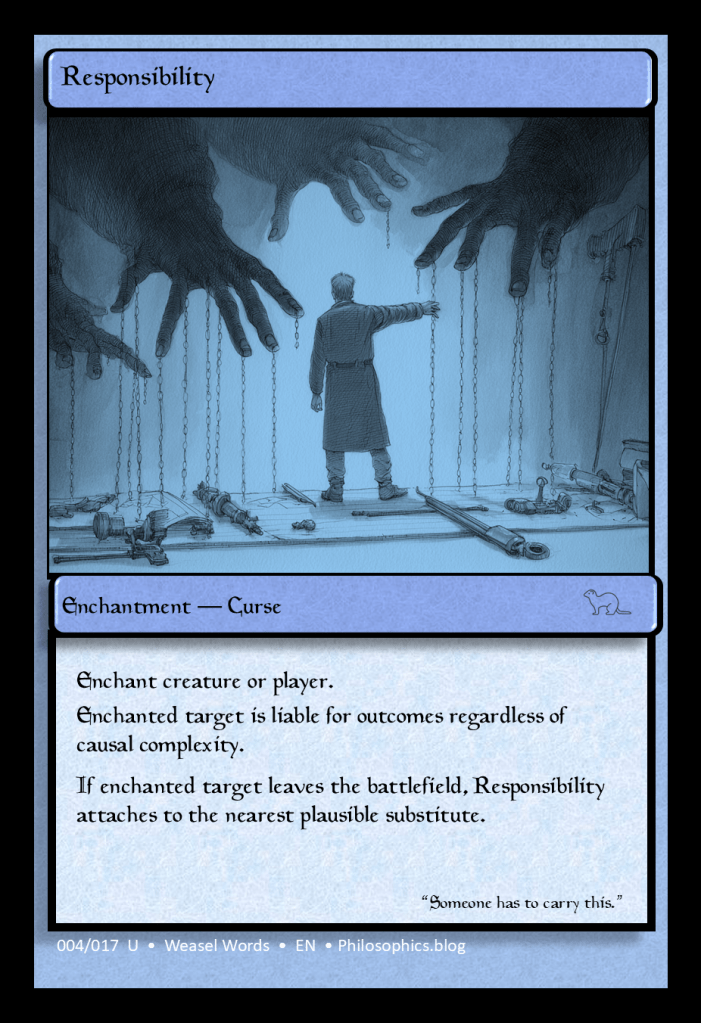

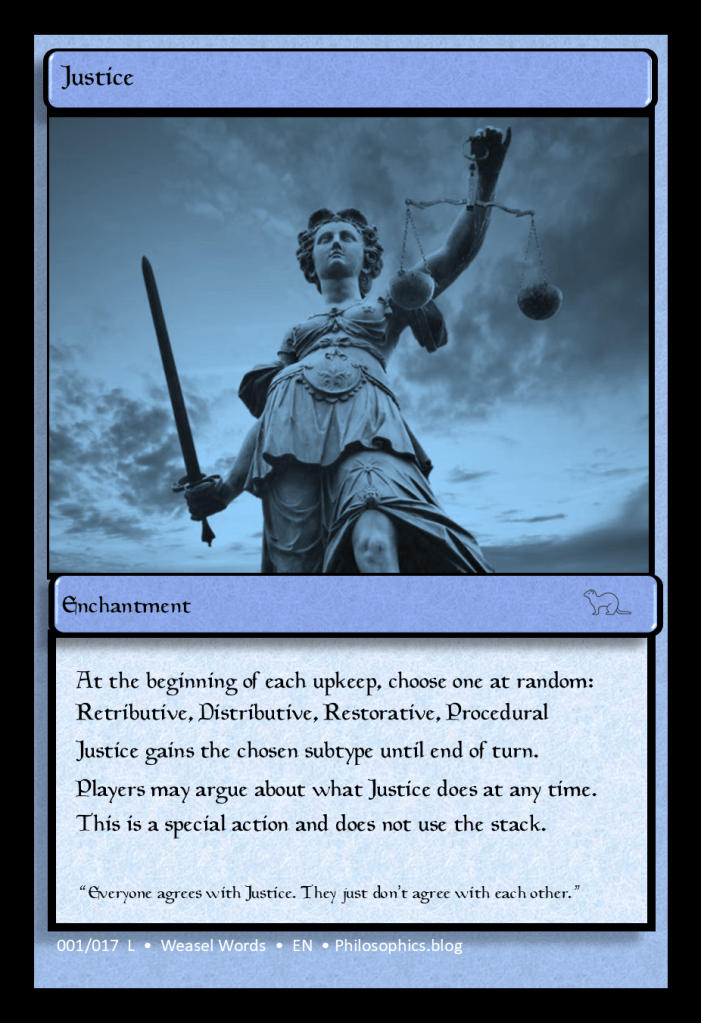





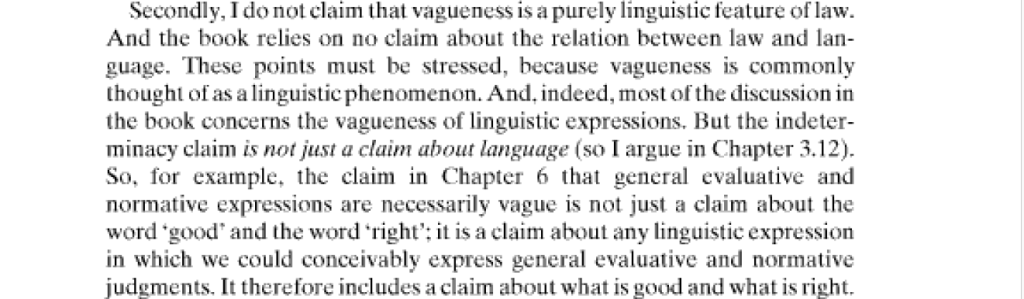
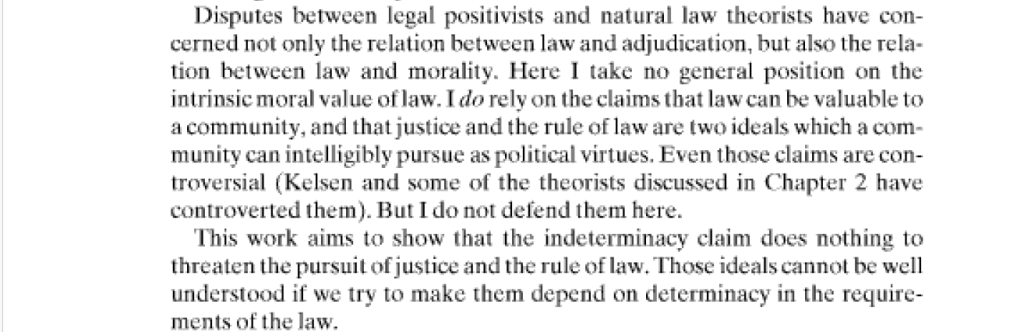





 Philosophics