Now live on the Anti-Enlightenment Project (Zenodo | PhilArchive)
Modernity’s most enduring fiction is that somewhere among us walks the normal human. This essay digs up that fossil. Beginning with Quetelet’s statistical conjuring trick – l’homme moyen, the “average man” –and ending in our age of wearable psychometrics and algorithmic empathy, it traces how normality became both the instrument and the idol of Western governance.
Audio: NotebookLM podcast on this essay.
Along the way it dissects:
The arithmetic imagination that turned virtue into a mean value.
Psychology™ as the church of the diagnostic self, where confession comes with CPT codes.
Sociological scale as the machinery that converts persons into populations.
Critical theory’s recursion, where resistance becomes a management style.
The palliative society, in which every emotion is tracked, graphed, and monetised.
Audio: ElevenLabs reading of the whole essay (minus citations, references, and metacontent). NB: The audio is split into chapters on Spotify to facilitate reading in sections.
What begins as a genealogy of statistics ends as an autopsy of care. The normal is revealed not as a condition, but as an administrative fantasy – the state’s dream of perfect legibility. Against this, the essay proposes an ethics of variance: a refusal of wholeness, a discipline of remaining unsynthesised.
Lucidity, not liberation, may be the only virtue left to us – knowing the apparatus intimately enough to refuse its metaphysics while continuing to breathe within it.
The Myth of Homo Normalis is the sixth instalment in the Anti-Enlightenment Project, joining Objectivity Is Illusion, Rational Ghosts, Temporal Ghosts, Against Agency, and The Discipline of Dis-Integration. Together they map the slow disassembly of reason’s empire – from epistemology to ethics, from governance to affect.
Read or cite: 🔗 Zenodo DOI 🔗 PhilArchive page – forthcoming link
I’m not sure when I began to seriously consider the wrong path the Enlightenment took. Even before I had the nomenclature and conceptual framework to criticise it, I felt something wasn’t quite right since I was a child. But even then, acculturation and indoctrination are strong countercurrents. I’ve been labelled eccentric and contrarian for as long as I can remember. Most people were vocal in their disagreement.
I’m not oppositional for the sake of opposition, but I interpret the world as I do. As the years passed, I found kindred spirits – at least in dribs and drabs – from Spinoza to Hume, Nietzsche, Foucault, and Latour. In my purported contrarian nature, I rejected the Classics – SPA – preserving mere fragments. I still reject them as quaint, but I need to cite them because they have shaped much of the language intelligible to Moderns, making it uncomfortable for the so-called postmoderns to engage with the concepts. As with the others classified as Postmodern, I reject the label; still, I use it because it conveys meaning – much of it negative, like uttering the names of Nietzsche or Marx, which are forever caricatured by Moderns who are unlikely to have read either. Sort of like their Bibles – yet they maintain an opinion.
Audio: NotebookLM podcast on the underlying essay. (This podcast is a repost.)
All of this to say that during the COVID-19 debacle, I found myself employerless. I decided to take a sabbatical during quarantine and write a book on the absence of agency. Unfortunately, I discovered that many people had written about it less than a decade earlier, though the focus was more toward free will. I read it as input, but decided that I didn’t have anything to add to these authors, who have bigger names than me and stronger academic credentials. They’d been making the conference circuits. I opted out and turned to my Against Democracy project, another popular endeavour – I refer to it as Dumocracy. I did assemble enough material to publish as a book, but I had the misfortune of getting employed again – the bane of intellectual production – and the arts, and who knows what else.
I stopped being employed in March 2023 due to medical reasons. I didn’t stop working; people falsely connect work to employment, but this is a problem of class consciousness – or unconsciousness, as the case might be.
The rest of the story…
Fast forward to today. I had read tens of thousands of pages of material in and around the space I am now writing about. A review of the blog’s contents reveals glimpses and shadows, but now they’ve come into the light.
Against Agency is my best work yet
As I published more essays, I realised the connective tissues – The Anti-Enlightenment Project, I named it. Being near Hallowe’en, the first two share a ghost motif – Rational and Temporal Ghosts; the last is sardonic, but more orthodox. Against Agency is my best work yet – my most serious, escaping the nature of an extended blog article and into an academic space.
Against Agency was a side quest. I began to write a position piece on Dis-integrationism when I realised that this was foundational, so I should describe it first, and so I did.
I suppose this is where it all came together – or maybe where it came apart in a way that finally made sense. None of it was planned. Against Agency wasn’t meant to be a book, or even a thesis. It was an interruption, a side note that kept expanding until everything else had to make room for it.
When I started writing during lockdown, I was mostly arguing with myself – about free will, about why people insist on clinging to a story that clearly doesn’t hold up. I kept waiting for someone to show me the missing piece that made agency make sense again. No one did. So I wrote until I stopped expecting rescue.
It’s strange how a life leaves traces across ideas. Employment, illness, loss, boredom – they all press fingerprints into the page. Somewhere between those fingerprints, I stopped trying to rebuild the Enlightenment and started sweeping up its dust. That became the work.
Now, years later, the ghosts have names. Rational Ghosts, Temporal Ghosts, Against Agency. Each one came out of the same argument with a world that still thinks “choice” is proof of freedom. I guess that’s why I call this an aetiology – it’s not a manifesto; it’s a record of contagion.
I don’t know what comes next. Maybe Dis-Integrationism will, or maybe it already has. The Anti-Enlightenment project keeps pulling at the same loose thread, and I just follow where it frays. For now, that’s enough – to stay curious, to keep tracing the cracks, to let the light leak in where the structure failed.
The Enlightenment promised liberation through reason – that if we could think clearly enough, we could act freely enough. Agency, it claimed, was the defining trait of the rational individual: a sovereign chooser, self-contained and self-determining.
But this was always a fiction.
Not an innocent one, either.
Audio: NotebookLM podcast discussing the essay, Against Agency
Agency became the moral infrastructure of modernity – the premise behind law, punishment, merit, guilt, and even political participation. To say “I chose” was not simply to describe behaviour; it was to perform belonging within a metaphysical system that made individuals the unit of responsibility. The fiction worked, for a while, because it kept the machinery running.
Against Agency argues that this story has collapsed – not metaphorically but structurally. Cognitive science, postcolonial thought, and relational philosophies all point to the same conclusion: there is no autonomous agent, only differential responsiveness – a system’s fluctuating capacity to register and transmit influence.
Copper sings under current; rubber resists. Humans, likewise, respond within the constraints of biology, fatigue, trauma, and social design. What we call “freedom” is merely a condition in which responsiveness remains broad and protected.
This reframing dismantles the binary of “free” and “unfree.” There is no metaphysical threshold where agency appears. Instead, responsiveness scales – widened by safety, narrowed by coercion, eroded by exhaustion. Politics becomes engineering: the maintenance of conditions that sustain responsiveness, rather than the worship of choice.
Ethics, too, must shift.
Not “Who is to blame?” but “Where did the circuit break?”
The essay proposes a gradient model of conduct grounded in relation and feedback, rather than autonomy and will. Responsibility becomes less about moral worth and more about bandwidth – a physics of care.
It’s an uncomfortable vision for a culture addicted to outrage and repentance. The loss of agency removes our favourite alibi: the chooser who could have done otherwise. But it also opens the possibility of a more honest ethics – one that replaces judgment with maintenance, retribution with repair.
This is not nihilism. It’s realism.
Systems appear stable only from a distance. Up close, everything is process – bodies, institutions, meanings – held together by temporary alignments of responsiveness. Against Agency names this collapse not as tragedy, but as opportunity: a clearing from which to think and act without the fictions that sustained modernity.
The essay forms the foundation for what comes next in the Anti-Enlightenment Project – Dis-Integration, a philosophical sequel that explores what remains once coherence, control, and autonomy have been decommissioned.
The Enlightenment still walks among us. Or rather, it lingers like a spectre – insisting it is alive, rational, and universal, while we, its inheritors, know full well it is a ghost. The project I’ve begun – call it my anti-Enlightenment collection – is about tracing these hauntings. Not the friendly ghosts of warm memory, but the structural ones: rationality unmoored, democracy designed to fail, presentism enthroned as law.
Audio: NotebookLM podcast on the essay underlying this post.
This collection began with Rational Ghosts: Why Enlightenment Democracy Was Built to Fail, which anatomised the Enlightenment’s misplaced faith in rational self-governance. The rational individual, Enlightenment’s poster child, turned out to be less a citizen than a figment – a ghost conjured to make democracy look inevitable.
It continues now with Temporal Ghosts: Tyranny of the Present, which dissects the structural bias of presentism – our systemic privileging of the living over the unborn. Hobbes, Locke, Rousseau, Bacon, Smith, Bentham, Montesquieu: each laid bricks in an architecture that secured sovereignty for now while exiling the future into silence. Debts accumulate, climate collapses, nuclear waste seeps forward through time. The unborn never consented, yet institutions treat their silence as assent.
Why a Collection?
Because ghosts travel in packs. One essay exposes Enlightenment’s hollow promises of reason; another its structural bias toward immediacy. The next will follow a different haunting, but always the same theme: Enlightenment’s bright lantern casts a shadow it refuses to see. The collection is less about reconstruction than exorcism – or at least acknowledgment that we live in a haunted house.
Ghost by Ghost
Rational Ghosts – Enlightenment democracy promised rational citizens and self-correcting systems. What it delivered instead was structural irrationality: Condorcet’s paradox, Arrow’s impossibility theorem, and a politics rigged to stumble over its own claims of reason.
Temporal Ghosts – The unborn are disenfranchised by design. The Enlightenment’s “living contract” fossilised presentism as law, leaving future generations to inherit debts, ecological ruin, and technological lock-in.
There may be more hauntings to come – economic ghosts, epistemic ghosts, technological ghosts. But like all spectres, they may fade when the season changes. The calendar suggests they’ll linger through Día de Muertos and Hallowe’en; after that, who knows whether they’ll still materialise on the page.
In celestial mechanics, the three-body problem is notorious. Give Newton two bodies – a planet and a sun – and the equations sing. Add a third, and the song collapses into noise. No general solution exists. Even the smallest nudge in one orbit cascades unpredictably through the system.
Audio: NotebookLM podcast on this topic.
Now swap out planets for people. Not three, but millions. Each voter tugging with their own gravity – preferences, fears, biases, identities, the entire mess of human subjectivity. Democracy insists that by tallying these forces, we’ll arrive at something stable: the will of the people. But what we actually get is the millions-body problem: unstable coalitions, contradictory mandates, endlessly shifting orbits.
almost any outcome can be engineered by manipulating the order of votes
Condorcet’s Dilemma
The French mathematician Marquis de Condorcet spotted this flaw in the 18th century. His paradox showed that even if every individual voter ranks choices rationally, the group as a whole may not. Collective preferences can loop in circles: A beats B, B beats C, C beats A. It’s not dysfunction; it’s baked into the math.
Later, political scientists proved the paradox was only the beginning. McKelvey’s “chaos theorem” demonstrated that in a system with three or more options, almost any outcome can be engineered by manipulating the order of votes. In other words, democratic choice is not stable; it’s sensitive to framing, sequence, and agenda control.
Condorcet was brilliant enough to see the cracks, but like his Enlightenment peers, he decided that the fiction of order was preferable to the reality of chaos. Better to promise tidy majorities than to admit that majority rule is structurally incoherent.
majority rule a ritual of laundered coercion
The Tidy Lie
Why did majority rule catch on? Because it looked fair, even if speciously so. It gave the appearance of impartiality: count, declare, move on. It was simple enough to administer, and more palatable than monarchy or deadlock.
But neatness is not truth. If 51% of people vote for one candidate, 49% are compelled to live under a government they explicitly rejected. If a third of the population abstains altogether, the “winner” might rule with the backing of barely one-third of the country – yet claim a mandate.
This is what makes majority rule a ritual of laundered coercion. The losers are told, “next time you might win,” even though whole minorities may never win. Abstainers are scapegoated for outcomes they opposed. And everyone is asked to keep pretending that arithmetic equals legitimacy.
Like the three-body problem, democracy has no general solution.
The Millions-Body Orbit
Elections give us final numbers – 34% here, 33% there – and we mistake them for laws of motion, as if the cosmos has spoken. But what we’re really seeing is a freeze-frame of chaos. The actual trajectories – coalitions, grievances, shifting identities – continue to wobble beneath the surface.
Like the three-body problem, democracy has no general solution. It isn’t clockwork; it’s turbulence. The miracle is not that it works, but that we pretend it does. Every “mandate” is a temporary illusion, a centre of gravity that exists only until the next disturbance knocks it off course.
And yet, the illusion persists. Because without it, the truth is unbearable: that there is no singular “will of the people,” only the millions-body problem, endlessly unstable, masked by the ritual of counting hands.
The fashionable complaint is that large language models ‘hallucinate’. They spit out confident nonsense: the tech pundits are scandalised. A chatbot invents a book, attributes it to Plato, and spins a dialogue about Quidditch. ‘Hallucination!’ they cry. Machines, it seems, are liars.
Spare me. Humans are the original hallucination engines. We fabricate categories, baptise them in blood, and call the result ‘truth’. At least the machine doesn’t pretend its fictions are eternal.
Take race and selfhood, our twin masterpieces of make-believe.
They carve boundaries out of fog. Race slices humanity into ‘Black’ and ‘White’. Selfhood cordons ‘I’ off from ‘you’. Arbitrary partitions, paraded as natural law.
They’re locked in by violence and paperwork. Race was stabilised by censuses, laws, and medical forms – the same bureaucratic gears that powered slavery, eugenics, and apartheid. Selfhood was stabilised by diaries, court records, and psychiatric charts. Write it down often enough, and suddenly the fiction looks inevitable.
They make bodies manageable. Race sorts populations into hierarchies and facilitates exploitation. Selfhood sorts individuals for property, accountability, and punishment. Together, they’re operating systems for social control.
They are fictions with teeth. Like money, they don’t need metaphysical foundations. They are real because people are willing to kill for them.
These hallucinations aren’t timeless. They were midwifed in the Enlightenment: anthropology provided us with racial typologies, the novel refined the autonomous self, and colonial administration ran the pilot projects. They’re not ancient truths – they’re modern software, installed at scale.
So when ethicists wring their hands over AI ‘hallucinations’, the joke writes itself. Machines hallucinate openly. Humans hallucinate and call it scripture, law, and identity. The only difference is centuries of institutional muscle behind our delusions.
And here’s the sting: what terrifies us isn’t that AI produces falsehoods. It’s that, given time, its inventions might start to look as solid as ours. Fifty years from now, people could be killing for an algorithm’s hallucination the same way they’ve been killing for gods, races, and selves.
Radical Futures Studio’s “7 Signals” deck has been circulating widely. It’s a striking example of Storytelling 101: identify a villain, chart the signs of its decline, and point toward an eventual resolution. In this case, the villain is white supremacy. The signs are its institutional and cultural fray. The resolution is its collapse.
Audio: NotebookLM podcast on this topic.
As far as stories go, it’s effective. It provides a framework, some memorable imagery, and the reassurance that the ugliness on display today is a death rattle, not a resurgence. No wonder it resonates. People want to believe the noise means the monster is dying.
Racism is not the root structure; it is a symptom, a mask
But as analysis, the frame is too tight. Racism is not the root structure; it is a symptom, a mask. White supremacy is real enough in its effects, but its persistence and decline are contingent. The deeper system – the scaffolding of late-stage capitalism, the Enlightenment’s brittle universalism, the institutions now staggering under their own contradictions – remains the host. When whiteness peels away, the system does not vanish. It simply rebrands.
To point to the peeling paint and say ‘the house is collapsing’ is to mistake surface for structure. Yes, the paint matters; it shapes how people experience the walls. But the real rot lies deeper, in the beams. The Enlightenment project promised seamless cloth: rationality, universality, permanence. Capitalism promised endless expansion and renewal. Both promises are faltering, and the cracks are visible everywhere – climate, finance, governance, identity. Racism, whiteness, supremacy: these are one set of cracks, not the foundation itself.
The risk of the ‘signals’ narrative is that it offers too neat a moral arc. It comforts the audience that the villain is cornered, that justice is baked into the future. But history is rarely so tidy. Supremacy does not die; it changes costumes. One mask slips, another is stitched on. If we mistake the collapse of whiteness for the collapse of the system, we blind ourselves to how easily the scaffolding survives in new guises.
Racism is a systemic lie
None of this is to reject the cause. Racism is a systemic lie, and its decline is worth cheering. But it is not enough to track the noise of its death rattle. To understand the larger story, we need to step back and see the woods for the trees. The true collapse underway is broader: the exhaustion of capitalism’s last stage, the unravelling of Enlightenment’s promises, the loss of legitimacy in institutions that no longer hold. That is the forest in which the tree of whiteness withers.
If we focus only on the tree, we risk missing the landscape. And if we mistake peeling paint for the beams, we risk celebrating cosmetic decline while the house quietly reassembles itself under a different banner.
Reason is not an oracle of truth but a spectrum-bound tool, and when it is worshipped as absolute, it curdles into pathology. True rationality knows when to temper itself, when to equivocate, and when a kind lie is wiser than a cold fact.
Reason and rationality are the household gods of modernity. We light incense to them daily: follow the science, be reasonable, act rationally. But before we genuflect, it’s worth asking what exactly we mean. By reason, I mean the faculty of inference – spotting contradictions, tracing causes. By rationality, I mean the practice of applying that faculty toward some end. That’s all. Nothing mystical.
Audio: NotebookLM podcast on this topic.
The trouble starts when these concepts are treated as absolutes. They aren’t. They vary in intensity and application. A person’s reasoning operates on a spectrum with something like frequency and amplitude. Some minds hum at low frequency – broad strokes, contradictions smoothed over by intuition. Others burn hot at high frequency and amplitude – rapid logical leaps, obsessive consistency, the inability to let a premise go. And while some reason flows like a continuous wave – steady, consistent, predictable – other forms fire more like particles: synaptic sparks that don’t always connect, logic arriving in bursts or stutters rather than as a smooth line.
“But a normal ego of this sort is, like normality in general, an ideal fiction. The abnormal ego, which is unserviceable for our purposes, is unfortunately no fiction. Every normal person, in fact, is only normal on the average. His ego approximates to that of the psychotic in some part or other and to a greater or lesser extent; and the degree of its remoteness from one end of the series and of its proximity to the other will furnish us with a provisional measure of what we have so indefinitely termed an ‘alteration of the ego’.”
― Sigmund Freud
Push too far and what we sanctify as ‘reason’ bleeds into what psychiatry pathologises as autism or schizophrenia. Meanwhile, ‘normal’ cognition always includes an emotional ballast. Strip it out and the result looks alien, even monstrous. Freud’s quip about psychopathy – that the psychopath differs from the rest of us in degree, not kind – applies just as well to reason. Rationality is simply the socially acceptable blend of logic and affect. Deviate, and you’re declared broken.
Camus gave us a parable in The Stranger. Meursault observes his world with ruthless clarity, but no emotional resonance. He doesn’t weep at his mother’s funeral, and society condemns him less for murder than for failing to perform grief. His ‘pure’ reason reads as inhuman.
Here’s the paradox: if rationality means adapting effectively to one’s environment, then pure rationality demands knowing when to suspend itself. A person who insists on logic at every turn is not rational but maladapted. The rational actor lies, flatters, nods at the boss’s bad joke, comforts the friend who doesn’t want statistics but solace. Rationality that cannot bend collapses into pathology.
This is why the infamous ‘Do these jeans make me look fat?’ question is such a perfect test. The ‘true’ answer, if you are reasoning narrowly, may be ‘yes’. But true rationality recognises the context, the stakes, the human need beneath the words. The rational response is not the cold fact but the kind equivocation. Rationality that cannot lie is no rationality at all.
Here’s the paradox: if rationality means adapting effectively to one’s environment, then pure rationality demands knowing when to suspend itself. A person who insists on logic at every turn is not rational but maladapted. The rational actor lies, flatters, nods at the boss’s bad joke, comforts the friend who doesn’t want statistics but solace. Rationality that cannot bend collapses into pathology.
Consider the social rituals we all know. A partner says, ‘I like that house’, and the rationally over-tuned response is to evaluate the house. The actual cue is in the like, not the house. The answer isn’t that you dislike the house, but rather what you can appreciate about it. Miss that, and you miss the point. Or take the dinner table: when my son was seven, a well-meaning host – very Martha Stewart – asked him how he enjoyed his meal. He replied, with perfect candour, ‘I’ve had better’. From a logical standpoint, faultless. From a rational standpoint – if rationality includes social adaptation – disastrous. The question was never about the food. It was a cue for appreciation, for harmony. He gave fact when what was asked for was affiliation.
So yes, I attack reason and rationality – not because they don’t exist, but because they are misapplied, reified, and worshipped as neutral arbiters of truth. They are not. They are tools with a range, and outside that range, they fail catastrophically. To speak of ‘reason’ as if it were an unqualified good is like praising fire without mentioning its talent for arson.
Written by
microglyphics
After I wrote this, I realised I forgot to mention Kant.
Even Kant, patron saint of rational duty, insisted you must never lie, not even a white lie, not even to a murderer asking where your friend is hiding. For him, truth-telling was categorical, binding, immune to circumstance. But this is reason gone rigid, unable to flex with human reality. It shows how worship of Reason leads not to morality but to monstrosity. A rationality that cannot bend is no rationality at all.
Gustave Le Bon’s The Crowd: A Study of the Popular Mind (1895) has had the half-life of uranium. His thesis is simple and disturbing: rational individuals become irrational when they merge into a crowd. The crowd hypnotises, contagion spreads, and reason dissolves in the swell of collective emotion.
It’s neat. It’s elegant. It’s also far too flattering.
Audio: NotebookLM podcast on this topic.
Le Bon assumes that the default state of the human being is rational, some Enlightenment holdover where citizens, left to their own devices, behave like tidy mini-Kants. Then, and only then, do they lose their reason in the mob. The trouble is that a century of behavioural science has made it painfully clear that “rational man” is a fairy tale.
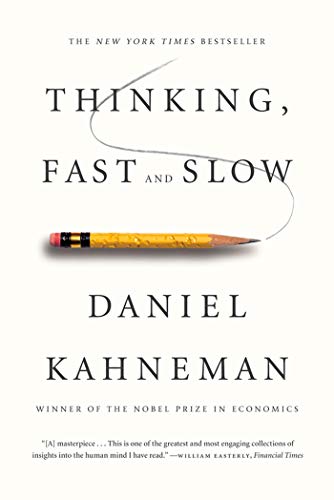
Daniel Kahneman mapped our cognitive machinery in Thinking, Fast and Slow: System 1 (fast, intuitive, emotional) is running the show while System 2 (slow, deliberate, logical) is mostly hired as the PR manager after the fact. Dan Ariely built a career documenting just how predictably irrational we are – anchoring, framing, sunk-cost fallacies, you name it. Add in Tversky, Thaler, Gigerenzer, and the usual suspects, and the picture is clear: we don’t need a crowd to become irrational. We start irrational, and then the crowd amplifies it.
In that sense, Le Bon wasn’t wrong about crowds being dangerous, but he may have missed the darker point. A crowd doesn’t corrupt a rational base – it accelerates the irrational baseline. It’s not Jekyll turning into Hyde; it’s Hyde on a megaphone.
This matters because if you take Le Bon literally, the problem is situational: avoid crowds and you’ll preserve reason. But if you take Kahneman seriously, the problem is structural: crowds only reveal what was already there. The positive feedback loop of group psychology doesn’t replace rationality; it feeds on the biases, illusions, and shortcuts already baked into the individual mind.
Le Bon handed us the stage directions for mass manipulation. Modern behavioural economics shows us that the script was already written in our heads before we ever left the house. Put the two together and you have the perfect recipe for political spectacle, advertising, and algorithmic nudges.
Which makes Le Bon’s century-old observations correct – but not nearly bleak enough.
This clip of Rachel Barr slid into my feed today, fashionably late by a week, and I thought it deserved a little dissection. The video wouldn’t embed directly – Instagram always has to be precious – so I downloaded it and linked it here. Don’t worry, Rachel, I’m not stealing your clicks.
Now, the United States. Or rather, the United States In Name Only – USINO. A nation perpetually rebranding itself as a “union” whilst its citizens claw at each other like alley cats in a bin fire. Yes, divisions abound – economic, racial, ideological, pick your poison – but some fissures cut to the bone. Today’s example: Charlie Kirk and the rabid congregation of defenders he’s managed to cultivate.
Audio: NotebookLM podcast on this topic.
The Competing Liturgies
To hear one camp tell it, Kirk is no hater at all. He’s a gentle, God-soaked soul, brimming with Christian love and trying – halo tilted just so – to shepherd stray sheep toward Our Lord and Saviour™. A real Sunday-school sweetheart.
But this is not, shockingly, the consensus. The other camp (my camp, if disclosure still matters in a post-truth age) see him as a snarling opportunist, a huckster of hate packaged in the familiar varnish of patriotism and piety. In short: a hate-merchant with a mailing list.
Spectacle as Weapon
I’ve watched Kirk at work. He loves to stage “debates” – quotation marks mandatory – where a token dissenter is dropped into an amphitheatre of loyalists. It’s the rhetorical equivalent of feeding Christians to lions, except the lions roar on cue and the crowd thinks the blood is wine. He laces misogyny, racism, and reheated premodern dogma into cheap soundbites, and the audience laps it up as though they were attending a revival. For the believers, it’s a festival. For everyone else, it’s a hostile takeover of public discourse.
Deaf Ears, Loud Mouths
Here’s the rub: Cohort A doesn’t perceive his words as hate because they already share the operating system. It’s not hate to them – it’s common sense. Cohort B, meanwhile, hears every syllable as the screech of a chalkboard dragged across the public square. Same words, two worlds.
And when I dare to suggest that if you can’t hear the hatred, you might just be complicit in it, the pushback is instantaneous: Stop imposing your worldview! Which is rich, since their worldview is already blaring through megaphones at tax-exempt rallies. If my worldview is one that insists on less hate, less dehumanisation, less sanctified bullying, then fine, I’ll take the charge.
The deeper accusation, though, is almost comic: that I’m hallucinating hate in a man of pure, lamb-like love. That’s the gaslighting twist of the knife – turning critique into pathology. As if the problem isn’t the bile spilling from the stage but my faulty perception of it.
Perspective is everything, yes – but some perspectives reek of wilful blindness.




 Philosophics