Dukkha, the Path of Pain, and the Illusion of Freedom: Buddhism, Antinatalism, and the Lonely Road of Individuation

The First Noble Truth of Buddhism—the notion that life is suffering, or dukkha—is often misinterpreted as a bleak condemnation of existence. But perhaps there’s something deeper here, something challenging yet quietly liberating. Buddhism doesn’t merely suggest that life is marred by occasional suffering; rather, it proposes that suffering is woven into the very fabric of life itself. Far from relegating pain to an exception, dukkha posits that dissatisfaction, discomfort, and unfulfilled longing are the baseline conditions of existence.

This isn’t to say that life is an unending stream of torment; even in nature, suffering may seem the exception rather than the rule, often concealed by survival-driven instincts and primal ignorance. But we, as conscious beings, are haunted by awareness. Aware of our mortality, our desires, our inadequacies, and ultimately, of our impotence to escape this pervasive friction. And so, if suffering is indeed the constant, how do we respond? Buddhism, antinatalism, and Jungian psychology each offer their own, starkly different paths.

The Buddhist Response: Letting Go of the Illusion

In Buddhism, dukkha is a truth that urges us not to look away but to peer more closely into the nature of suffering itself. The Buddha, with his diagnosis, didn’t suggest we simply “cope” with suffering but rather transform our entire understanding of it. Suffering, he argued, is born from attachment—from clinging to transient things, ideas, people, and identities. We build our lives on desires and expectations, only to find ourselves caught in a cycle of wanting, attaining, and inevitably losing. It’s a form of existential whiplash, one that keeps us bound to dissatisfaction because we can’t accept the impermanence of what we seek.

The Buddhist approach is both radical and elusive: by dissolving attachment and breaking the cycle of clinging, we supposedly dissolve suffering itself. The destination of this path—Nirvana—is not a state of elation or contentment but a transcendence beyond the very conditions of suffering. In reaching Nirvana, one no longer relies on external or internal validation, and the violence of social judgment, cultural obligation, and personal ambition falls away. This may seem austere, yet it offers a powerful antidote to a world that equates happiness with accumulation and possession.

Antinatalism: Opting Out of Existence’s Violence

Where Buddhism seeks liberation within life, antinatalism takes an even more radical stance: why bring new beings into an existence steeped in suffering? For antinatalists, the suffering embedded in life renders procreation ethically questionable. By creating life, we induct a new being into dukkha, with all its attendant violences—society’s harsh judgments, culture’s rigid impositions, the bureaucratic machinery that governs our daily lives, and the inescapable tyranny of time. In essence, to give birth is to invite someone into the struggle of being.

This perspective holds that the most humane action may not be to mend the suffering we encounter, nor even to accept it as Buddhism advises, but to prevent it altogether. It sees the cycle of life and death not as a majestic dance but as a tragic spiral, in which each generation inherits suffering from the last, perpetuating violence, hardship, and dissatisfaction. Antinatalism, therefore, could be seen as the ultimate recognition of dukkha—an extreme empathy for potential beings and a refusal to impose the weight of existence upon them.

Jungian Individuation: The Lonely Path of Becoming

Jung’s concept of individuation offers yet another approach: to delve deeply into the self, to integrate all aspects of the psyche—the conscious and the unconscious—and to emerge as a fully realised individual. For Jung, suffering is not to be escaped but understood and incorporated. Individuation is a journey through one’s darkest shadows, a confrontation with the parts of oneself that society, culture, and even one’s own ego would rather ignore. It is, in a way, an anti-social act, as individuation requires the courage to step away from societal norms and embrace parts of oneself that might be seen as disturbing or unconventional.

But individuation is a lonely road. Unlike the Buddhist path, which seeks to transcend suffering, individuation requires one to face it head-on, risking rejection and alienation. Society’s judgment, a kind of violence in itself, awaits those who deviate from accepted roles. The individuated person may, in effect, be punished by the very structures that insist upon conformity. And yet, individuation holds the promise of a more authentic existence, a self that is not a mere amalgam of cultural expectations but a reflection of one’s truest nature.

The Delusions That Keep Us Tethered to Suffering

Yet, for all their starkness, these paths might seem almost abstract, philosophical abstractions that don’t fully capture the reality of living within the constraints of society, culture, and self. Human beings are armed with powerful psychological mechanisms that obscure dukkha: self-delusion, cognitive dissonance, and hubris. We fabricate beliefs about happiness, purpose, and progress to protect ourselves from dukkha’s existential weight. We convince ourselves that fulfilment lies in achievements, relationships, or material success. Cognitive dissonance allows us to live in a world that we know, on some level, will disappoint us without being paralysed by that knowledge.

It’s worth noting that even those who acknowledge dukkha—who glimpse the violence of existence and the illusory nature of happiness—may still find themselves clinging to these mental defences. They are shields against despair, the comforting armours that allow us to navigate a world in which suffering is the baseline condition. This is why Buddhism, antinatalism, and individuation require such rigorous, often painful honesty: they each ask us to set down these shields, to face suffering not as a solvable problem but as an intrinsic truth. In this light, psychological defences are seen not as failures of awareness but as survival strategies, albeit strategies that limit us from ever fully confronting the nature of existence.

Finding Meaning Amidst the Violence of Being

To pursue any of these paths—Buddhist enlightenment, antinatalism, or Jungian individuation—one must be prepared to question everything society holds dear. They are radical responses to a radical insight: that suffering is not accidental but foundational. Each path offers a different form of liberation, whether through transcendence, abstention, or self-integration, but they all require a certain fearlessness, a willingness to look deeply into the uncomfortable truths about life and existence.

Buddhism calls us to renounce attachment and embrace impermanence, transcending suffering by reshaping the mind. Antinatalism challenges us to consider whether it is ethical to bring life into a world marked by dukkha, advocating non-existence as an escape from suffering. And individuation asks us to become fully ourselves, embracing the loneliness and alienation that come with resisting society’s violence against the individual.

Perhaps the most realistic approach is to accept that suffering exists, to choose the path that resonates with us, and to walk it with as much awareness as possible. Whether we seek to transcend suffering, avoid it, or integrate it, each path is a confrontation with the violence of being. And maybe, in that confrontation, we find a fleeting peace—not in the absence of suffering, but in the freedom to choose our response to it. Dukkha remains, but we may find ourselves less bound by it, able to move through the world with a deeper, quieter understanding.


Blame is a Social Construct

The propensity to assign blame is deeply intertwined with human moral frameworks, often reflecting our need to ascribe responsibility and maintain social order. Blame allows us to identify transgressions, enforce norms, and establish accountability within our communities. But when it comes to non-human animals, the concept of blame becomes more complex.

Do Non-Human Animals Have a Sense of Blame?

Non-human animals certainly exhibit behaviours that suggest some rudimentary understanding of social rules and consequences. For example, studies on primates show that they can experience forms of moral emotions like guilt or shame. A chimpanzee might avoid eye contact or show submissive behaviour after breaking a social norm, such as stealing food from a dominant individual. Similarly, domestic dogs have been observed to display so-called “guilty” behaviours—such as avoiding eye contact or cowering—when they sense that their human is displeased. However, it’s debated whether this truly indicates guilt or simply a reaction to their owner’s emotional state.

However, the concept of blame as humans understand it—an attribution of moral responsibility that involves complex cognitive processes like intention-reading and understanding of moral rules—appears to be uniquely human. Non-human animals can recognise when another individual’s behaviour deviates from the norm and might react accordingly, but they don’t seem to hold others accountable in the same moral or punitive sense that humans do.

Blame and Morality in Humans vs. Non-Human Animals

In human societies, blame is often accompanied by a desire for reparation or punishment, as well as a cognitive understanding of intentions and causality. We don’t just react to actions; we interpret motives and hold individuals accountable based on our perception of their intentions. This is where non-human animals typically differ. Their responses to perceived wrongdoing are more likely driven by immediate social consequences—like changes in dominance status or access to resources—rather than a sense of moral outrage or an abstract concept of justice.

For example, if a wolf in a pack disobeys a social rule, it might be punished by the alpha, but this is more about reinforcing social hierarchy and cohesion than about assigning moral blame. Similarly, if a cat lashes out at another cat after being disturbed, it’s responding to an immediate violation of its personal space, not holding the other cat morally accountable.

Evolutionary Perspective

From an evolutionary standpoint, blame and moral emotions likely evolved in humans to facilitate cooperation and social cohesion in increasingly complex societies. As our ancestors formed larger and more intricate social groups, the ability to understand others’ intentions, enforce social norms, and hold individuals accountable would have been crucial for maintaining group stability and cooperative behaviours.

Non-human animals, even those that live in complex social structures, do not face the same cognitive demands as humans when it comes to maintaining large-scale social cohesion. Their social rules and enforcement mechanisms are typically less nuanced and more directly linked to survival and reproductive success.

Conclusion

While non-human animals demonstrate behaviours that hint at a basic understanding of social rules and can respond to transgressions, the uniquely human capacity for assigning blame—and the moral frameworks that arise from it—appears to be a product of our advanced cognitive abilities and complex social structures. Blame, in humans, is not just about responding to actions but involves a deeper understanding of intentions, responsibility, and justice—concepts that are foundational to our moral systems but beyond the reach of non-human cognition as we currently understand it.


I started writing a book on blame, agency, and retributive justice a few years back. Perhaps I should revisit it along with the dozen other books in progress.

Choice and Blame: Why We Forgive Some and Condemn Others

A recent parody video making the rounds on social media shows a man at a kitchen table, his girlfriend, and their cat. In a desperate attempt to gain his girlfriend’s attention, he knocks a cup off the table. The moment it hits the floor, she turns on him, scolding him for his clumsiness. Quick to deflect, he blames the cat, and suddenly her anger dissipates. She shifts from reprimanding him to lavishing affection on the supposedly guilty feline. The tension lifts—until he sheepishly confesses that it was, in fact, his doing all along. Her response? An incredulous, “Are you kidding me?”

What’s fascinating about this skit isn’t the comedy of the man’s mischief or even the cat’s unknowing role in the charade. It’s the girlfriend’s starkly different reactions to the same act, depending on who she believes committed it. The cat, in her eyes, can do no wrong; the boyfriend, however, is immediately culpable. It’s easy to laugh at the scenario’s absurdity, but the dynamic it portrays is familiar and, dare I say, quite telling about human behaviour.

The Double Standard of Blame

Why is it that we’re quick to exonerate some and just as quick to indict others? The phenomenon is more than a quirk of personality; it reveals our deeper, often unconscious, biases. While it’s understandable that the girlfriend might think the cat incapable of intentional mischief, her reaction also suggests a predisposition to forgive certain actors—whether due to perceived innocence, attachment, or simply habit.

This dynamic isn’t limited to pets and partners. In families, workplaces, and social groups, we often see a similar pattern. One person becomes the perennial scapegoat, bearing the brunt of blame for any and all misdeeds, while another enjoys a seemingly unshakeable immunity. Think of the “golden child” and the “black sheep” within a family. One can rarely put a foot wrong, while the other’s every move is scrutinised, questioned, or condemned.

Beyond the Blame: Motivations and Consequences

The reasons behind these imbalances can be complex. Sometimes, they stem from past behaviour: if someone has repeatedly erred, we may be primed to expect the worst from them, even if they’ve reformed. Other times, they arise from emotional bonds or biases: we excuse those we love or admire because acknowledging their faults would cause us discomfort or cognitive dissonance.

This phenomenon isn’t just about playing favourites; it can have significant psychological consequences. For the person perpetually cast as the villain, the burden of unwarranted blame can lead to feelings of resentment, anxiety, or self-doubt. Meanwhile, those consistently exonerated may internalise a skewed perception of their own infallibility, which can be equally damaging.

A Broader Reflection on Accountability

Returning to the video’s context, the girlfriend’s swift switch from reproach to indulgence once she believed the cat was at fault, and her subsequent anger when the truth was revealed, invites us to question our own responses to perceived transgressions. Are we, too, guilty of selectively assigning blame based on who we think is responsible? How often do we let our preconceptions shape our judgments, favouring one actor over another without truly weighing the evidence?

The parody is amusing, no doubt, but it also serves as a subtle reminder: our reactions often reveal more about our biases and expectations than about the actions themselves. The next time we find ourselves quick to blame or forgive, it’s worth pausing to ask: are we reacting to the act, or to the actor?

In a world increasingly marked by polarised opinions and knee-jerk reactions, cultivating this kind of self-awareness is crucial. We need to be vigilant not only about how we judge others but also about why we do so. For, in the end, it’s not just about who knocked the cup off the table—it’s about who we believe deserves to be scolded for it.

What’s Wrong with Utilitarianism

Full disclosure. All normative morality frameworks are seriously flawed. Consequentialism and its redheaded stepchild, Utilitarianism, may be among the worst—at least in the top 10.

In this video, I’m introduced to Tommy Curry, who makes a strong point in the face of Western imperialism—any imperialism, but the West seems to do more and better (if better means worse for the world at large). One can’t claim a moral high ground after nearly genociding counter-opinions. As he notes, when the proto-United States “accidentally” murdered ninety-five per cent of the Indigenous population and then applied the majority rule, good of the people rule, that’s the worst of bad faith.

To be fair, the world has a history of killing off and disappearing counter-voices and then voting on issues they opposed. Rinse and repeat until you become the majority. No wonder genocide is so popular. Israel has adopted this approach as a perpetrator after their predecessors escaped a similar fate in the 1940s. They accused Nazi Germany of being evil. I guess it rubbed off. Who knew genocide was contagious?

Peter Singer comments on the full video, a symposium on land ownership and hypocrisy, which can be found here or by following the IAI link from the video above. Eventually, you’ll hit a paywall. Apologies in advance.

I’d love to write more as this is a topic in which I have a passionate interest. Unfortunately, I am otherwise indisposed and will settle on sharing this video content for now. I’ll love to read your thoughts.

Cognitive Processing Flow Model

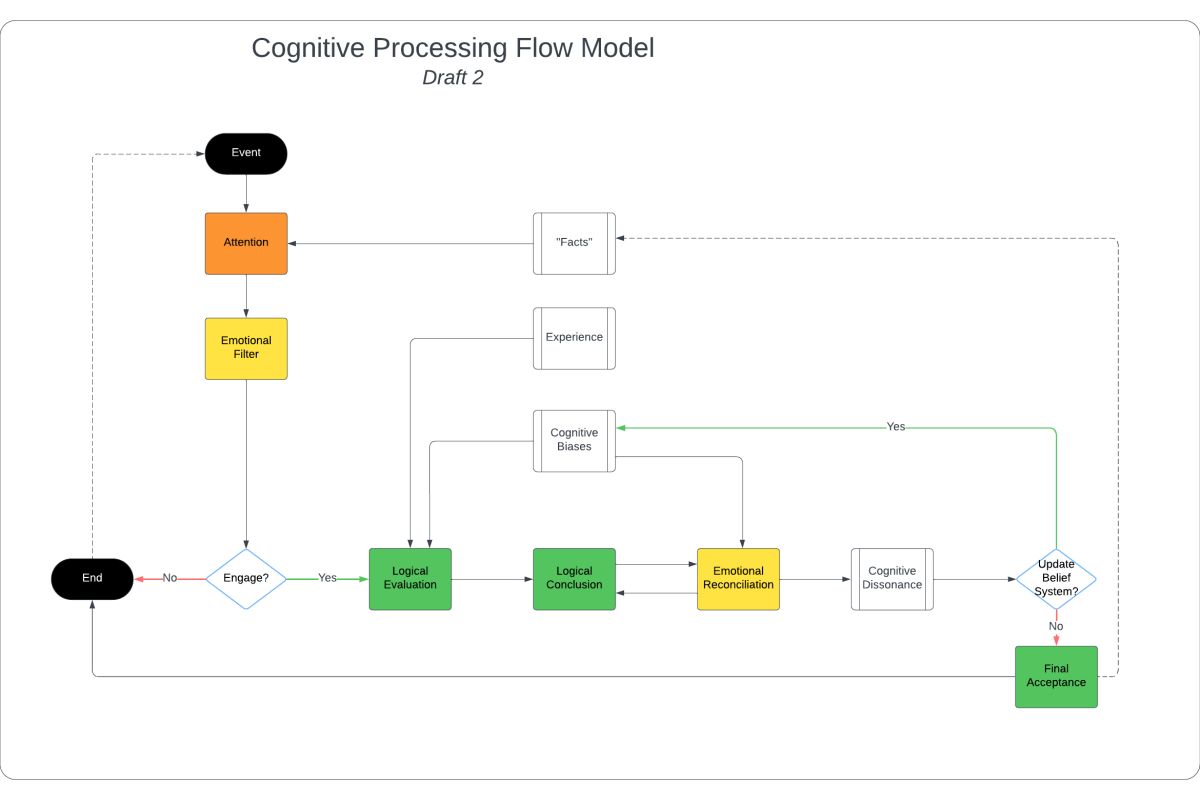
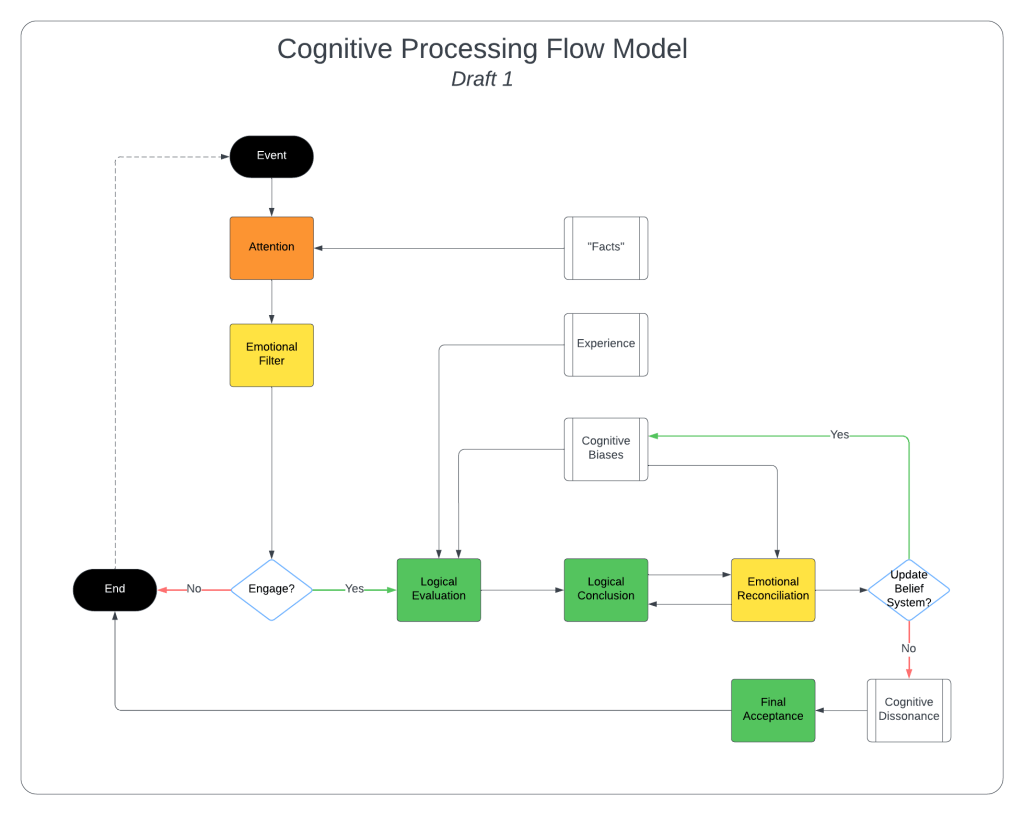
The Cognitive Process Flow Model illustrates how we process the phenomenal world. It’s reductionist and is missing aspects because it is just a back-of-the-napkin sketch. I created it because I uttered, “I can model it for you”. And so I did.

EDIT: I’ve updated the model slightly as the article head image, but the copy content refers to the first draft.

My response was to a person making the claim, that all you need to facts and logic prevails. Rather than restate the argument, I’ll just walk through the diagramme.

There’s meta information to set it up. We are subjective entities in the world. We have a sense-perception apparatus as we exist in it. Countless events occur in this world. We recognise only a few of them within our limited range, though technology expands this range in various ways.

Most of us interact in the world. Some are less ambulatory, so the world visits them. Some have sense-perception deficits whilst others have cognitive deficits. My point is not to capture every edge and corner case. This is just a generalised model.

It starts with an event. Events occur ceaselessly. In our small portion of the world and elsewhere. For the purpose of the model, the first thing that happens is an event catches our attention. We might notice a shape, a colour, or a movement; we might hear a sound, smell an aroma, feel a sensation, or taste something.

A pre-emotion, pre-logic function serves to process these available inputs. Perhaps, you hear a report on anthropogenic climate change or read something about a political candidate. This emotional filter will police sensory inputs and unconsciously or preconsciously determine if you will react to the initial stimulus. If not, you’ll continue in an attention-seeking loop. Not that kind of attention-seeking.

As my dialogue was about the presentation of facts, our next stop will be logical evaluation. Does this make sense to us, or can we otherwise make it? This is a process in itself. I’ll assume here that it requires little elaboration. Instead, I’ll focus on the operating environment.

Our logical processes are coloured by past experiences and tainted by cognitive biases and deficits. We may also trigger the calling of additional facts through past experiences or the current engagement.

We’ll process these fragments and reach some logical conclusion. But we’re not done. We take this intermediate conclusion and run it through more emotional processing. Cognitive biases come back into play. If the event conforms with your past experiences and cognitive biases, we may run it through a cognitive dissonance routine. To be honest, this probably is part of the emotional reconciliation process, but I’ve drawn it here, so I’ll let it be. In this case, it’s just a filter. If it happens to conform to our belief system, it will pass unfettered; otherwise, it will be squared with our beliefs. Again, this leads me to believe it’s a subcomponent of emotional reconciliation. I’ll update the chart later.

In any case, we’ll end at Final Acceptance. This acceptance may be that we accept or reject the logic, but we arrive at an opinion that gets catalogued with the rest of them. Some may be elevated to facts or truths in the epistemological hierarchy. Although an end marker is identified, it’s really a wait state for the next event. Rinse and repeat until death.

I’ll update this presently. Be on the lookout. It could include more dimensions and interactions, but that might have to wait until version 3.

Meantime, does this feel right to you? Did it even get your attention?

An Example: Anthropogenic Climate Change

Let’s wrap up with an example. I’ll use climate change. An article comes into your attention field, and you have an interest in these things, so it passes through the emotional filter. If your propensity for these articles is high, it might race to the next stage.

You read the article, and it contains some facts—rather, it contains claims for evaluation. To do this, you’ll recall past experiences and cognitive biases are always lying in wait. You may have to look for new facts to add to the mix. These will have to take a similar route past your attention gatekeeper and emotional sidekick.

If you are already predisposed that climate change is a hoax, these facts will filter through that lens—or vice versa.

When all of this is resolved, you’ll have arrived at a conclusion—perhaps we’ll call it a proto-conclusion. It hasn’t been set yet.

You are still going to introspect emotionally and decide if this is a position you want to hold. Perhaps, you feel that climate change is a hoax but this doesn’t jive with that position. Here, you’ll either accept these facts and flip a bit to a sceptical believer or cognitive dissonance will kick in and ensure your sense of the world isn’t thrown off kilter. You may update your belief system to include this datum for future assessments.

Now we are ready for final acceptance. You can now express your established opinion. If the net event is to counter that acceptance, rinse and repeat ad infinitum.

Cannabis, Genetics, and Schizophrenia: Unraveling the Correlation

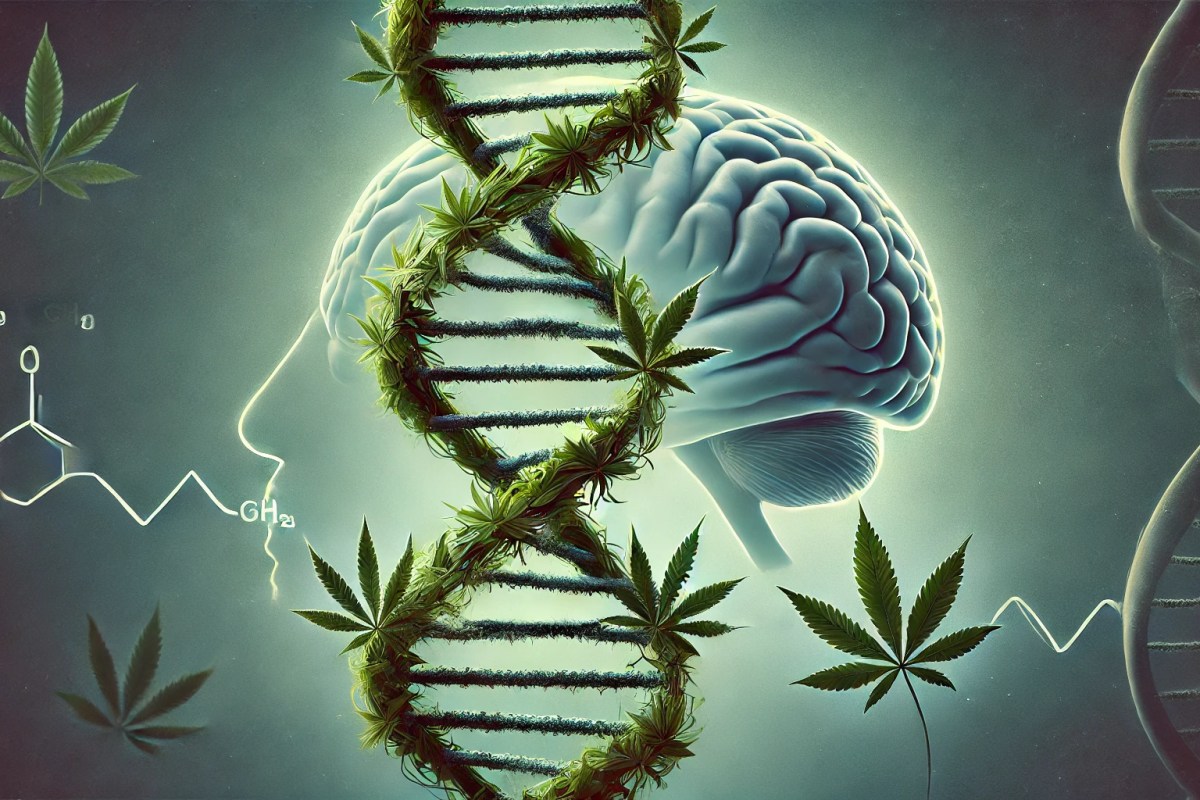
A study on genetics and cannabis found a connexion between marijuana use and genetic states. The study claimed to be looking for epigenetic effects and although there were some correlations, the directions of causality haven’t been determined.

Recent research has delved into the complex interplay between genetics and cannabis use, revealing intriguing correlations but leaving some critical questions unanswered. A recent study aimed to uncover the epigenetic effects of marijuana use, suggesting a link between genetic states and cannabis consumption. Whilst the findings offer some fascinating insights, they also highlight the ambiguity surrounding causality.

The Genetic Link

The study in question sought to explore whether cannabis use might influence genetic expression or, conversely, whether genetic predispositions could affect an individual’s likelihood of using marijuana. The results indicated some noteworthy correlations between cannabis use and certain genetic states, yet they fell short of clarifying the direction of causality. In other words, the research raises important questions but doesn’t definitively answer whether cannabis use leads to changes in genetic expression or if genetic predispositions increase the likelihood of cannabis use.

Cannabis and Schizophrenia: A Complicated Relationship

One of the most contentious aspects of the study is its implications for understanding the relationship between cannabis use and schizophrenia. The association between the two has been a subject of ongoing debate, with some evidence suggesting a connection. However, the study’s findings underscore the complexity of this relationship. It remains unclear whether cannabis use contributes to the development of schizophrenia or if individuals with a predisposition to schizophrenia are more likely to use cannabis.

The ambiguity stems from the fact that whilst correlations exist, they do not establish a clear cause-and-effect relationship. Schizophrenia is a multifactorial disorder, influenced by a combination of genetic, environmental, and neurobiological factors. Cannabis use might interact with these factors, but pinning down the exact nature of this interaction remains elusive.

What’s Next?

This study serves as a reminder of the challenges inherent in unraveling the connections between genetics and behaviour. It highlights the need for further research to elucidate the causal pathways and better understand how genetic predispositions and environmental factors like cannabis use interact. Until then, while correlations provide valuable insights, they are insufficient to draw definitive conclusions about causality.

As research progresses, it’s crucial to approach these findings with a nuanced perspective, recognising that the relationship between cannabis, genetics, and mental health is complex and multifaceted. Continued exploration in this area will hopefully shed more light on these intricate connections and help guide future investigations.

Life Consciousness

Language is life. Yet, this assertion immediately raises a fundamental question: which came first, life or consciousness? It’s a classic chicken-and-egg conundrum. Physicist Stuart Hameroff posits an intriguing idea—that consciousness might predate life itself. This radical notion suggests that consciousness isn’t merely a byproduct of biological processes but could be an intrinsic feature of the universe. However, there’s a snag.

The challenge lies in defining life and consciousness, two terms that lack universally accepted definitions. The absence of clarity here opens the door to a multitude of interpretations, making it easy to drift into what could be considered ‘airy faerie’ ambiguity. One must beware of the temptation to engage in intellectual exercises that lead nowhere—what might be termed ‘mental masturbation.’ This is a prime example of the insufficiency of language.

Audio: Podcast commentary on this topic.

Life and consciousness, as concepts, are elusive. Unlike straightforward nouns or adjectives—where we can confidently say, “That’s a dog,” “That’s a tree,” or “That’s green”—these terms are far more complex. They are attempts to encapsulate observed phenomena, yet we lack the precise language and understanding to pin them down definitively. The video linked above provides perspectives on various approaches to defining these terms, but none prove wholly satisfactory. This lack of satisfaction might suggest that our conventional understanding of life and consciousness is flawed. To be fair, one might even entertain the idea that life itself is an illusion, a construct of consciousness.

This ambiguity isn’t confined to the realms of life and consciousness. I recently shared a post on the topic of gender, which illustrates a similar issue. Originally, there was no concept of gender. The earliest distinctions made were between animate and inanimate. Over time, these distinctions became more nuanced. Whether or not a proto-word for life existed at that time is unclear, but the idea of animation being linked to life was beginning to take shape. The concept of gender evolved much later, driven by the need to categorize and define differences within the animate category.

The evolution of language reflects the evolution of thought. Yet, when we dig deep into these foundational concepts, we encounter the same problem: how can we argue the precedence of two concepts—life and consciousness—when neither has a solid foundation in language? If our words are inadequate, if they fail to capture the essence of what we are trying to convey, then what does that say about our understanding of the world?

Perhaps it suggests that our linguistic and cognitive tools are still too crude to grasp the true nature of reality. Or maybe it hints at a deeper truth: that some aspects of existence are beyond the scope of human understanding, no matter how sophisticated our language becomes. After all, if consciousness predates life, as Hameroff suggests, then we may need to rethink our fundamental assumptions about existence itself.

Ultimately, this exploration reveals a paradox at the heart of human knowledge. We seek to define and categorise, to impose order on the chaos of the universe. Yet in doing so, we must confront the limits of our language and, by extension, our understanding. Perhaps the true essence of life and consciousness lies not in definitions or categories but in the very act of questioning, the relentless pursuit of knowledge that drives us forward, even when the answers remain elusive.

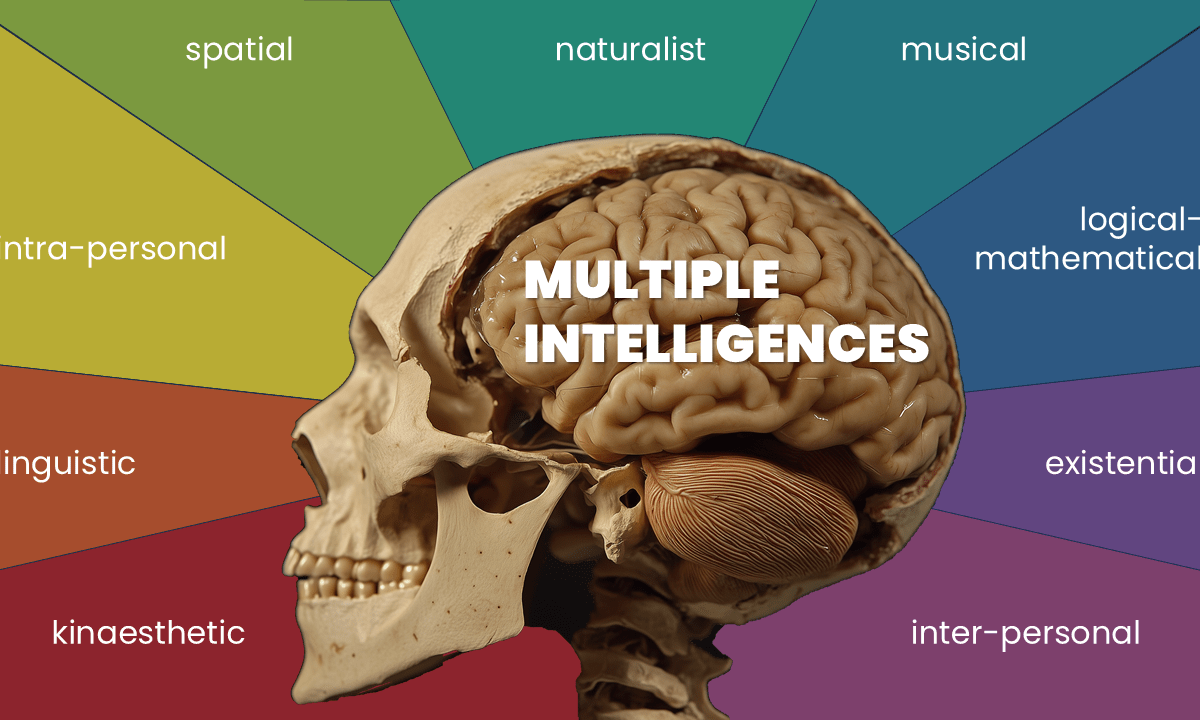
Multiple Intelligences

I engaged in a nice debate recently. Someone suggested that because some executives are smart, they can figure things out. Specifically, she posited that a CTO, Chief Technology Officer, should understand communication and diplomatic skills when interacting with a corporate board because they have the technical skills to get into their current C-level position. I disagreed based on the multiple intelligence theory.

Howard Gardner’s Multiple Intelligences theory posits that intelligence isn’t a monolith, but rather a nine-dimensional construct:

1. Existential (philosophical pondering; questioning the questions of why we live and why we die)

2. Inter-personal (reading people; sensing people’s feelings and motives)

3. Intra-personal (self-awareness; understanding yourself, what you feel, and what you want)

4. Kinaesthetic (mind-body coordination; coordinating your mind with your body)

5. Linguistic (wordsmithing; finding the right word(s) to express what you mean)

6. Logical-Mathematical (quantifying and proving; quantifying things, making hypotheses, and proving them)

7. Musical (discerning sounds; their pitch, tone, rhythm, and timbre)

8. Naturalist (understanding nature; understanding living things and reading nature)

9. Spatial (3D/4D visualisation)

For a deep dive, check out Gardner’s Frames of Mind: The Theory of Multiple Intelligences.

Here’s the rub: a CTO with off-the-charts technical skills might be rubbish at diplomacy (interpersonal) or communication (linguistic). It’s like expecting every pro athlete to be a concert pianist – it’s not on.

Assuming every “intelligent” person can max out all intelligence dimensions is bollocks. It’s as likely as training every smart CTO to be the next Shakespeare or Machiavelli. Language and diplomacy are distinct skills, mate.

While we all love a Renaissance man (or woman), peaking in all these dimensions in one lifetime is a pipe dream. It’s not inherently bad, though. When building teams – be it a corporate board or an exploration party – ensure you’ve got a good mix of skills. I’m not saying you need a bard, a philosopher, and LeBron James on every team, but make sure you’ve covered the bases necessary for success.

If you think you don’t need a particular dimension, ask yourself: is it because you’re weak in that area and can’t see its importance? Don’t let your blind spots become your downfall.

In the end, it’s about recognising and respecting diverse intelligences. So, next time you’re tempted to think your brilliant CTO should just “learn to be diplomatic”, remember: they might be better off focusing on their strengths and leaving the smooth talking to someone else on the team.

Private Property: A Liability, Not an Asset

In the modern Western world, private property is largely viewed as a cornerstone of economic stability and personal freedom. However, this article challenges this conventional wisdom by reevaluating private property ownership not as an asset, but as a significant liability. This perspective considers the broader implications of property ownership on the Earth and its inhabitants, questioning the sustainability and ethics of our current system.

In fact, all land is “stolen”.

Historical Context and Conceptual Foundation

The concept of ‘property’ did not exist in early human societies. It emerged only when the need arose to distinguish “mine” from “yours.” As human settlements expanded into territories, and later into cities and nations, what was once undivided land transformed into distinctly owned parcels. Initially, all land was communal—effectively belonging to everyone and no one simultaneously.

This shift from communal to private ownership marked a fundamental change in human relationships with the land and with each other. A striking historical example of this shift is the Enclosure Movement in England, beginning in the 16th century. This process converted communal lands into private property, significantly impacting rural communities and agricultural practices. It serves as a stark illustration of how the privatization of once-shared resources can dramatically alter societal structures and individual livelihoods.

The Liability Perspective

Applying the principles of double-entry bookkeeping to property ownership offers a unique lens: every recorded asset (property) must correspond to a liability. However, this liability does not accrue to another person but to the Earth itself. This accounting reveals a perpetual debt—not to previous or current landowners, but to all life that has, does, and will inhabit the Earth.

Consider the following:

  1. Environmental Impact: Private ownership often leads to the exploitation of resources without consideration for long-term sustainability. The World Wildlife Fund reports that about 30% of global forest cover has been cleared, with much of this due to private land use for agriculture and development.
  2. Social Exclusion: Property boundaries inherently exclude others from accessing once communal resources. This is exemplified by the concept of the “Tragedy of the Commons,” described by ecologist Garrett Hardin in 1968, where individual cattle herders, acting in self-interest, would overgraze and ultimately destroy shared pastureland.
  3. Intergenerational Inequity: Current property laws may deprive future generations of access to vital resources. This is evident in the concentration of land ownership. According to a 2020 UN report, 1% of the world’s farms operate more than 70% of the world’s farmland, highlighting extreme inequality in land distribution.

Moral and Ethical Implications

From an ethical standpoint, private property ownership imposes a series of unacknowledged moral debts. These debts arise from the exclusion of community and future generations from resources that were once common heritage. The immorality, then, stems from a system that prioritizes individual ownership over collective well-being and sustainable stewardship of the planet.

Key ethical considerations include:

  • Distributive Justice: How can we justify the unequal distribution of Earth’s resources?
  • Environmental Ethics: Does private ownership encourage responsible stewardship or exploitation?
  • Intergenerational Ethics: What obligations do we have to future generations regarding resource access?

Counterarguments and Rebuttals

Proponents of private property might argue that it drives economic growth, encourages maintenance of the property, and upholds individual liberties. However, these benefits must be weighed against the environmental degradation, social inequalities, and ethical dilemmas that private ownership perpetuates.

Argument for Private PropertyRebuttal
Drives economic growthGrowth at the expense of sustainability is ultimately detrimental
Encourages property maintenanceCommunal ownership can also incentivize maintenance through shared responsibility
Upholds individual libertiesIndividual liberties should not come at the cost of collective well-being

The real question is: can a system that inherently generates liabilities for the planet and its future residents be truly just and sustainable in the long term?

Alternative Models and Transition Strategies

Several alternative models of property ownership exist that emphasize community and sustainability:

  1. Community Land Trusts (CLTs): In Burlington, Vermont, the Champlain Housing Trust (a CLT) has helped over 1,000 families become homeowners while keeping housing permanently affordable.
  2. Ejidos in Mexico: This system of communal land ownership, despite challenges, has helped preserve indigenous communities and their traditional land management practices.
  3. Shared Economy Models: Companies like Airbnb and Uber have shown how shared resources can create new economic opportunities, potentially offering insights into larger-scale resource sharing.

Potential strategies for transitioning away from the current private property system include:

  1. Land Value Tax: Implementing a tax on the unimproved value of land, as proposed by economist Henry George, could discourage speculation and encourage more efficient land use.
  2. Gradual Expansion of Public Land Trusts: Cities like Amsterdam have been gradually buying back land to create a more equitable system, offering a model for transitioning away from private ownership.
  3. Universal Basic Income (UBI): While not directly related to property, UBI trials in places like Finland and Kenya suggest that providing a basic standard of living can lead to increased entrepreneurship and community well-being, potentially easing the transition to more communal forms of ownership.

Conclusion

Reevaluating private property as a liability encourages a shift in perspective—from individual entitlement to collective responsibility. It prompts us to question the long-term impacts of our current property laws and to explore more sustainable and equitable alternatives. This paradigm shift could lead to more responsible resource management and a more equitable society.

The challenge lies in balancing individual needs with collective responsibility and long-term sustainability. By engaging in public discourse on these alternatives and seriously considering transition strategies, we can pave the way for a more just and responsible approach to managing the Earth’s resources.

Sex Sells

Sexism is indeed a two-way street. On one side of this street, a Computer Science graduate and programmer is eager to share her expertise in her field—Neural Networks, in this instance. This subject popped up in my feed, reflecting my interests.

Video: What is a Neural Network?

Despite some production issues, such as the audio being quieter than ideal, my focus today is on the sexism surrounding the video. The presenter, whom many would consider attractive, is using social media to disseminate her knowledge. However, even when comments address the topic she presents, many also remark on her appearance. It’s evident she had other options for attire and presentation that might have mitigated such comments. I won’t speculate on her intentions, but it seems likely her aesthetic choices were deliberate to draw viewers. I refrain from slut-shaming; her attire is her choice, and she cannot control the reactions. However, I doubt a thumbnail featuring a burqa would garner as much attention or provoke similar comments.

This situation intrigues me because some women—possibly including this presenter—lament being objectified yet assert their right to wear what they find comfortable or appealing. While attraction has cultural elements, it also operates on a largely subconscious level, a phenomenon not confined to humans but seen in the animal kingdom and across genders.

Ultimately, there’s no need to disparage this woman. She is likely aware of the dynamics at play. Should she achieve her goals, she might well challenge the very viewers who objectified her, a tactic observed among actresses as they approach their forties. They capitalise on sexual appeal while possible, only to critique such approaches when they can no longer utilise them. Humans are, indeed, curious creatures.