Good, Bad, and the Quiet Arithmetic of Power

4–7 minutes

The quickest way to derail any discussion of morality is to accuse someone of believing that ‘everything is relative’, so let’s start there. It’s a comforting accusation. It allows the accuser to stop thinking whilst feeling victorious. Unfortunately, it also misses the point almost entirely.

I am not claiming that everything is relative. I am claiming that ‘good’ and ‘bad’ are. More precisely, this particular binary pair does not track mind-independent properties of actions, but rather expresses subjective, relational, and power-inflected evaluations that arise within specific social contexts. That claim is not radical. It is merely inconvenient.

Audio: NotebookLM summary podcast on this topic.

Good and Bad as Signals, Not Properties

When someone calls an action ‘bad’, they are not reporting a fact about the world in the way one might report temperature or velocity. They are signalling disapproval. Sometimes that disapproval is personal (subjective: ‘this sits badly with me’), sometimes social (relative: ‘people like us don’t do this’), and sometimes delegated (relative: ‘this violates the norms I’ve inherited and enforce’. The word does not describe. It acts.

The same applies to ‘good’. Approval, alignment, reassurance, permission. These terms function less like measurements and more like traffic signals. They coördinate behaviour. They reduce uncertainty. They warn, reward, and deter.

None of this requires moral scepticism, nihilism, or adolescent contrarianism. It requires only that we notice what the words are actually doing.

The Binary That Isn’t

Defenders of moral realism often retreat to a spectrum when pressed. Very well, they say, perhaps good and bad are not binary, but scalar. Degrees of goodness. Shades of wrongness. A neutral zone somewhere in the middle.

This is an improvement only in the most cosmetic sense. A single axis still assumes commensurability: that diverse considerations can be weighed on one ruler. Intuitively, this fails almost immediately. Good in what sense? Harm reduction? Loyalty? Legality? Survival? Compassion? Social order?

These dimensions do not line up. They cross-cut. They conflict. Which brings us to the example that refuses to die, for good reason.

Stealing Bread

I don’t mind stealing bread
From the mouths of decadence
But I can’t feed on the powerless
When my cup’s already overfilled

— Hunger Strike, Temple of the Dog

Consider the theft of bread by a starving person. The act is simultaneously:

  • bad relative to property norms
  • good relative to survival
  • bad relative to legal order
  • good relative to care or compassion
  • and neutral relative to anyone not implicated at all,
    even if they were to form an opinion through exposure

There is no contradiction here. The act is multi-valent. What collapses this plurality into a single verdict is not moral discovery but authority. Law, religion, and institutional power do not resolve moral complexity. They override it.

What about ‘Mercy’?

When the law says, ‘Given the circumstances, you are free to go’, what it is not saying is: this act was not wrong. What it is saying is closer to:

We are exercising discretion this time.
Do not mistake that for permission.
The rule still stands.

The warning survives the mercy.

That’s why even leniency functions as discipline. You leave not cleansed, but marked. Grateful, cautious, newly calibrated. The system hasn’t revised its judgment; it has merely suspended its teeth for the moment. The shadow of punishment remains, doing quiet work in advance.

This is how power maintains itself without constant enforcement. Punishment teaches. Mercy trains.

You’re released, but you’ve learned the real lesson: the act is still classified as bad from the only perspective that ultimately matters. The next time, mitigation may not be forthcoming. The next time, the collapse will be final. So yes. Even when you ‘win’, the moral arithmetic hasn’t changed. Only the immediate invoice was waived.

Which is why legality is never a reliable guide to goodness, and acquittal is never absolution. It’s conditional tolerance, extended by an authority that never stopped believing it was right.

Power as the Collapse Mechanism

When the law says, ‘There may have been mitigating circumstances, but the act was wrong and must be punished’, it is not uncovering a deeper truth. It is announcing which perspective counts.

Mitigation is a courtesy, not a concession. Complexity is acknowledged, then flattened. The final judgment is scalar because enforcement demands it. A decision must be made. A sanction must follow. The plural is reduced to the singular by necessity, not insight.

Once this happens, the direction of explanation reverses. Punishment becomes evidence of wrongness rather than evidence of power. The verdict acquires moral weight retroactively.

From Ethics to Enforcement

At the local level, ‘good’ and ‘bad’ function as ethical shorthand. They help maintain relationships, minimise friction, and manage expectations. This is not morality in any grand sense. It is coordination under conditions of attachment and risk.

Problems arise when these local prescriptions harden into universal claims. When they are codified into rules, backed by sanctions, and insulated from challenge. At that point, the costs become real. Not morally real, but materially real. Fines. Exclusion. Imprisonment. Reputational death. Nothing metaphysical has changed. Only the consequences.

The God Upgrade

Religion intensifies this process by anchoring evaluative judgments to the structure of reality itself. What was once ‘bad here, among us’ becomes ‘bad everywhere, always’ is no longer a difference in perspective but a rebellion against the order of being. This is not ethical refinement. It is power laundering through eternity.

Not Everything Is Relative

To be clear, this is not an argument that facts do not exist, or that all distinctions dissolve into mush. It is an argument that ‘good’ and ‘bad’ do not behave like factual predicates, and that pretending otherwise obscures how judgments are actually made and enforced.

What is not relative is the existence of power, the reality of sanctions, or the psychological mechanisms through which norms are internalised and reproduced. What is relative is the evaluative overlay we mistake for moral truth once power has done its work.

Why This Is Ignored

None of this is new. It has been said, in various forms, for centuries. It is ignored because it offers no programme, no optimisation strategy, no moral high ground. It explains without redeeming. It clarifies without consoling.

And because it is difficult to govern people who understand that moral certainty usually arrives after authority, not before.

The Felt Beneath the Table

Fairness, Commensurability, and the Quiet Violence of Comparison

Fairness and Commensurability as Preconditions of Retributive Justice

This is the final part of a 3-part series. Read parts 1 and 2 for a fuller context.

Audio: NotebookLM summary podcast of this topic.

Before the Cards Are Dealt

Two people invoke fairness. They mean opposite things. Both are sincere. Neither can prove the other wrong. This is not a failure of argument. It is fairness working exactly as designed.

Before justice can weigh anything, it must first decide that the things being weighed belong on the same scale. That single move – the assertion that comparison is even possible – quietly does most of the work.

Most people think justice begins at sentencing, or evidence, or procedure. But the real work happens earlier, in a space so normalised it has become invisible. Before any evaluation occurs, the system must install the infrastructure that makes evaluation legible at all.

That infrastructure rests on two foundations:

  • fairness, which supplies the rhetoric, and
  • commensurability, which supplies the mathematics.

Together, they form the felt beneath the table – the surface on which the cards can be dealt at all.

1. Why Fairness Is Always Claimed, Never Found

Let’s be precise about what fairness is not.

Fairness is not a metric. You cannot measure it, derive it, or point to it in the world.

Fairness is not a principle with determinate content. It generates no specific obligations, no falsifiable predictions, no uniquely correct outcomes.

Fairness is an effect. It appears after assessment, not before it. It is what you call an outcome when you want it to feel inevitable.

Competing Fairness Is Not a Problem

Consider how disputes actually unfold:

  • The prosecutor says a long sentence is fair because it is proportional to harm.
  • The defender says a shorter sentence is fair because it reflects culpability and circumstance.
  • The victim says any sentence is unfair because nothing restores what was taken.
  • The community says enforcement itself is unfair because it predictably targets certain groups.

Each claim is sincere. None can be resolved by fairness itself.

That is because fairness has no independent content. It does not decide between these positions. It names them once the system has already decided which will prevail. This is not a bug. It is the feature.

A Fluid Masquerading as an Invariant

In the language of the Language Insufficiency Hypothesis, fairness is a Fluid – a concept whose boundaries shift with context and use – that masquerades as an Invariant, something stable and observer-independent.

The system treats fairness as perceptual, obvious, discoverable. But every attempt to anchor it collapses into:

  • Intuition (‘It just feels right’)
  • Precedent (‘This is how we do things’)
  • Consensus (‘Most people agree’)

None of these establishes fairness. They merely perform it.

And that performance matters. It converts contested metaphysical commitments into the appearance of shared values. It allows institutions to claim neutrality whilst enforcing specificity. Fairness is what the system says when it wants its outputs to feel unavoidable.

2. The Real Gatekeeper: Commensurability

Fairness does rhetorical work. But it cannot function without something deeper.

That something is commensurability: the assumption that different harms, injuries, and values can be placed on a shared scale and meaningfully compared.

Proportionality presupposes commensurability. Commensurability presupposes an ontology of value. And that ontology is neither neutral nor shared.

When Incommensurability Refuses to Cooperate

A parent loses a child to preventable negligence. A corporation cuts safety corners. A warning is ignored. The system moves. Liability is established. Damages are calculated. £250,000 is awarded.

The parent refuses the settlement. Not because the amount is insufficient. But because money and loss are not the same kind of thing. The judge grows impatient. Lawyers speak of closure. Observers mutter about grief clouding judgment. But this is not grief. It is incommensurability refusing to cooperate.

The parent is rejecting the comparison itself. Accepting payment would validate the idea that a child’s life belongs on a scale with currency. The violence is not the number. It is the conversion. The system cannot process this refusal except as emotional excess or procedural obstruction. Not because it is cruel, but because without commensurability the engine cannot calculate.

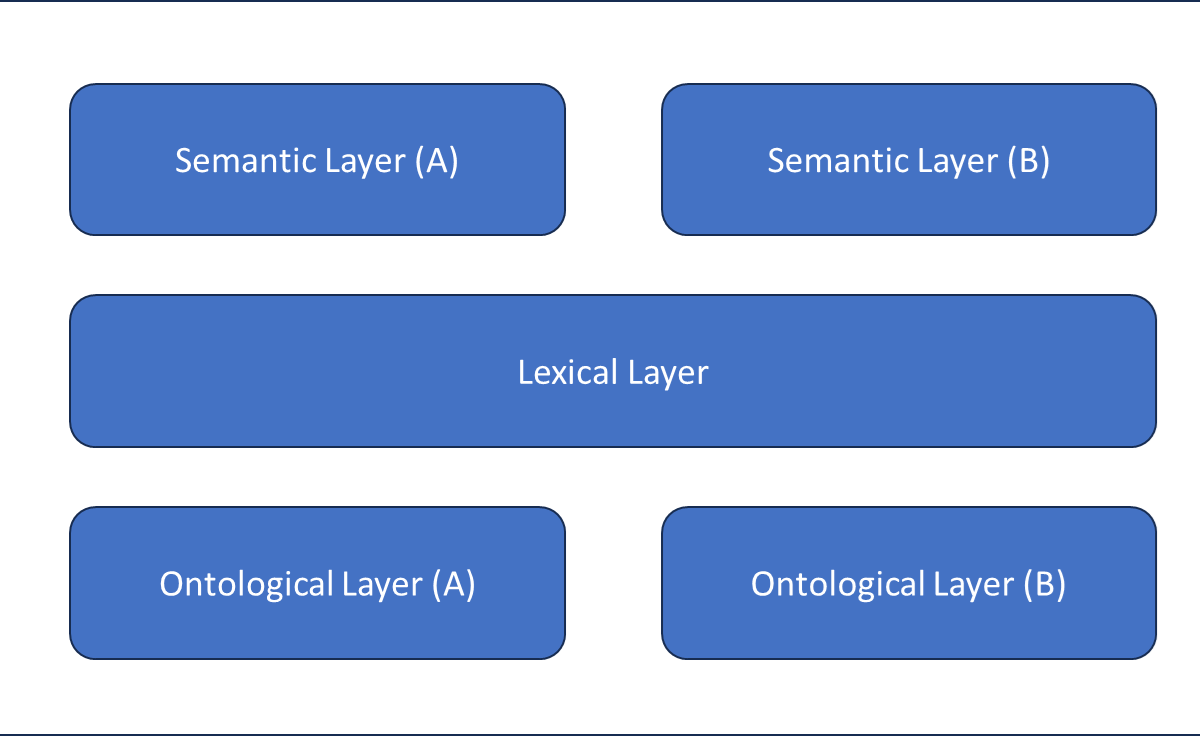
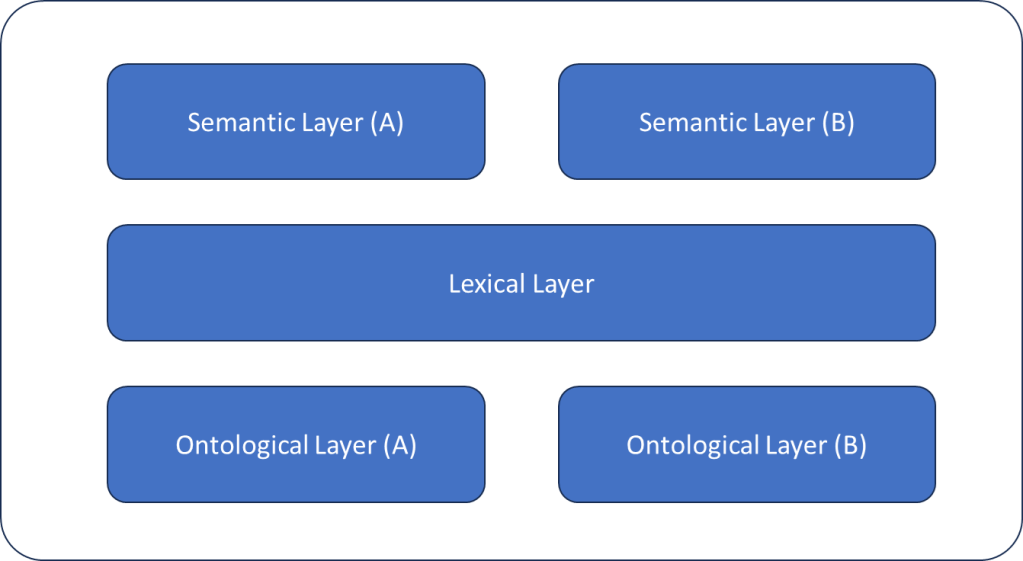
Two Ontologies of Value

There are two incompatible ontologies at work here. Only one is playable.

Ontology A: The Scalar Model
  • Harm is quantifiable
  • Suffering is comparable
  • Trade-offs are morally coherent
  • Justice is a balancing operation

Under Ontology A, harms differ in degree, not kind. A broken arm, a stolen car, and a dead child all occupy points on the same continuum. This makes proportionality possible.

Ontology B: The Qualitative Model
  • Harms are categorical
  • Some losses are incommensurable
  • Comparison itself distorts
  • Justice is interpretive, not calculative

Under Ontology B, harms are different kinds of things. Comparison flattens what matters. To weigh them is to misunderstand them.

Why Only One Ontology Can Play

Retributive justice, as presently constituted, cannot function under Ontology B.

Without scalar values, proportionality collapses. Without comparison, equivalence disappears. Without trade-offs, punishment has no exchange rate.

Ontology B is not defeated. It is disqualified. Structurally, procedurally, rhetorically. The house needs a shared scale. Without it, the game cannot settle accounts.

3. Why Incommensurability Is Treated as Bad Faith

Here is where power enters without announcing itself. Incommensurability does not merely complicate disputes. It stalls the engine. And stalled engines threaten institutional legitimacy.

Systems designed to produce closure must ensure that disputes remain within solvable bounds. Incommensurability violates those bounds. It suggests that resolution may be impossible – or that the attempt to resolve does further harm. So the system reframes the problem.

Not as an alternative ontology, but as:

  • Unreasonableness
  • Extremism
  • Emotional volatility
  • Refusal to engage in good faith

Reasonableness as Border Control

This is why reasonableness belongs where it does in the model. Not as an evaluative principle, but as a gatekeeping mechanism.

Reasonableness does not assess claims. It determines which claims count as claims at all. This is how commensurability enforces itself without admitting it is doing so. When someone refuses comparison, they are not told their ontology is incompatible with retributive justice. They are told to be realistic.

Ontological disagreement is converted into:

  • A tone problem
  • A personality defect
  • A failure to cooperate

The disagreement is not answered. It is pathologised.

4. Why These Debates Never Resolve

This returns us to the Ontology–Encounter–Evaluation model.

People argue fairness as if adjusting weights would fix the scale. They debate severity, leniency, proportionality.

But when two sides inhabit incompatible ontologies of value, no amount of evidence or dialogue bridges the gap. The real disagreement is upstream.

A prosecutor operating under scalar harm and an advocate operating under incommensurable injury are not disagreeing about facts. They are disagreeing about what kind of thing harm is.

Fairness cannot resolve this, because fairness presupposes the very comparison under dispute. This is why reform debates feel sincere and go nowhere. Outcomes are argued whilst ontological commitments remain invisible.

Remediation Requires Switching Teams

As argued elsewhere, remediation increasingly requires switching teams.

But these are not political teams. They are ontological commitments.

Ontologies are not held like opinions. They are held like grammar. You do not argue someone out of them. At best, you expose their costs. At worst, you force others to operate within yours by disqualifying alternatives.

Retributive justice does the latter.

5. What This Means (Without Offering a Fix)

Justice systems are not broken. They are optimised. They are optimised for closure, manageability, and the appearance of neutrality. Fairness supplies the rhetoric. Commensurability supplies the mathematics. Together, they convert contestable metaphysical wagers into procedural common sense.

That optimisation has costs:

  • Disagreements about value become illegible
  • Alternative ontologies become unplayable
  • Dissent becomes pathology
  • Foundations disappear from view

If justice feels fair, it is because the comparisons required to question it were never permitted.

Ontology as Pre-emptive Gatekeeping

None of this requires conspiracy.

Institutions do not consciously enforce ontologies. They do not need to.

They educate them. Normalise them. Proceduralise them. Then treat their rejection as irrationality.

By the time justice is invoked, the following have already been installed as reality:

  • That persons persist over time in morally relevant ways
  • That agents meaningfully choose under conditions that count
  • That harms can be compared and offset
  • That responsibility can be localised
  • That disagreement beyond a point is unreasonable

None of these are discovered. All are rehearsed.

A law student learns that ‘the reasonable person’ is a construct. By year three, they use it fluently. It no longer feels constructed.

This is not indoctrination. It is fluency.

And fluency is how ontologies hide.

By the time an alternative appears – episodic selfhood, incommensurable harm, distributed agency – it does not look like metaphysics. It looks like confusion.

Rationality as Border Control

The system does not say: we reject your ontology.

It says: that’s not how the world works.

Or worse: you’re being unreasonable.

Ontological disagreement is reframed as a defect in the person. And defects do not need answers. They need management.

This is why some arguments feel impossible to have. One ontology has been naturalised into common sense. The other has been reclassified as error.

The Final Irony

The more fragile the foundations, the more aggressively they must be defended as self-evident.

  • Free will is taught as obvious.
  • Fairness is invoked as perceptual.
  • Responsibility is treated as observable.
  • Incommensurability is treated as sabotage.

Not because the system is confident.

Because it cannot afford not to be.

The Point

Justice does not merely rely on asserted ontologies. It expends enormous effort ensuring they never appear asserted at all.

By the time the cards are dealt, the rules have already been mistaken for reality. That is the felt beneath the table. Invisible. Essential. Doing all the work. And if you want to challenge justice meaningfully, you do not start with outcomes. You start by asking:

What comparisons are we being asked to accept as natural? And what happens to those who refuse?

Most people never make that move. Not because it is wrong. But because by the time you notice the game is rigged, you are already fluent in its rules. And fluency feels like truth.

Final Word

Why write these assessments? Why care?

With casinos, like cricket, we understand something fundamental: these are games. We can learn the rules. We can decide whether to play. We can walk away.

Justice is different. Justice is not opt-in. It is imposed. You do not get to negotiate the rules, the scoring system, or the house assumptions about what counts as a move. Once you are inside, even dissent must be expressed in the system’s own grammar. Appeals do not question the game; they replay it under slightly altered conditions.

You may contest the outcome. You may plead for leniency. You may argue fairness. You may not ask why chips are interchangeable with lives, why losses must be comparable, or why refusing comparison itself counts as misconduct.

Imagine being forced into a casino. Forced to play. Forced to stake things you do not believe are wagerable. Then told, when you object, that the problem is not the game, but your attitude toward it.

That is why these assessments matter. Not to declare justice illegitimate. Not to offer a fix. But to make visible the rules that pretend not to be rules at all. Because once you mistake fluency for truth, the house no longer needs to rig the game.

You will do it for them.

The Ontology–Encounter–Evaluation Model: Retributive Justice as an Instantiation

7–10 minutes

Now that A Language Insufficiency Hypothesis has been put to bed — not euthanised, just sedated — I can turn to the more interesting work: instantiating it. This is where LIH stops being a complaint about words and starts becoming a problem for systems that pretend words are stable enough to carry moral weight.

Read part 2 of this essay.

What follows is not a completed theory, nor a universal schema. It’s a thinking tool. A talking point. A diagram designed to make certain assumptions visible that are usually smuggled in unnoticed, waved through on the strength of confidence and tradition.

The purpose of this diagram is not to redefine justice, rescue it, or replace it with something kinder. It is to show how justice is produced. Specifically, how retributive justice emerges from a layered assessment process that quietly asserts ontologies, filters encounters, applies normative frames, and then closes uncertainty with confidence.

Audio: NotebookLM summary podcast of this topic.

Most people are willing to accept, in the abstract, that justice is “constructed”. That concession is easy. What is less comfortable is seeing how it is constructed — how many presuppositions must already be in place before anything recognisable as justice can appear, and how many of those presuppositions are imposed rather than argued for.

The diagram foregrounds power, not as a conspiracy or an optional contaminant, but as an ambient condition. Power determines which ontologies are admissible, which forms of agency count, which selves persist over time, which harms are legible, and which comparisons are allowed. It decides which metaphysical configurations are treated as reasonable, and which are dismissed as incoherent before the discussion even begins.

Justice, in this framing, is not discovered. It is not unearthed like a moral fossil. It is assembled. And it is assembled late in the process, after ontology has been assumed, evaluation has been performed, and uncertainty has been forcibly closed.

This does not mean justice is fake. It means it is fragile. Far more fragile than its rhetoric suggests. And once you see that fragility — once you see how much is doing quiet, exogenous work — it becomes harder to pretend that disagreements about justice are merely disagreements about facts, evidence, or bad actors. More often, they are disagreements about what kind of world must already be true for justice to function at all.

I walk through the structure and logic of the model below. The diagram is also available as a PDF, because if you’re going to stare at machinery, you might as well be able to zoom in on the gears.

Why Retributive Justice (and not the rest of the zoo)

Before doing anything else, we need to narrow the target.

“Justice” is an infamously polysemous term. Retributive, restorative, distributive, procedural, transformative, poetic, cosmic. Pick your flavour. Philosophy departments have been dining out on this buffet for centuries, and nothing useful has come of letting all of them talk at once.

This is precisely where LIH draws a line.

The Language Insufficiency Hypothesis is not interested in pedestrian polysemy — cases where a word has multiple, well-understood meanings that can be disambiguated with minimal friction. That kind of ambiguity is boring. It’s linguistic weather.

What LIH is interested in are terms that appear singular while smuggling incompatible structures. Words that function as load-bearing beams across systems, while quietly changing shape depending on who is speaking and which assumptions are already in play.

“Justice” is one of those words. But it is not usefully analysable in the abstract.

So we pick a single instantiation: Retributive Justice.

Why?

Because retributive justice is the most ontologically demanding and the most culturally entrenched. It requires:

  • a persistent self
  • a coherent agent
  • genuine choice
  • intelligible intent
  • attributable causation
  • commensurable harm
  • proportional response

In short, it requires everything to line up.

If justice is going to break anywhere, it will break here.

Retributive justice is therefore not privileged in this model. It is used as a stress test.

The Big Picture: Justice as an Engine, Not a Discovery

The central claim of the model is simple, and predictably unpopular:

Not invented in a vacuum, not hallucinated, not arbitrary — but assembled through a process that takes inputs, applies constraints, and outputs conclusions with an air of inevitability.

The diagram frames retributive justice as an assessment engine.

An engine has:

  • inputs
  • internal mechanisms
  • thresholds
  • failure modes
  • and outputs

It does not have access to metaphysical truth. It has access to what it has been designed to process.

The justice engine takes an encounter — typically an action involving alleged harm — and produces two outputs:

  • Desert (what is deserved),
  • Responsibility (to whom it is assigned).

Everything else in the diagram exists to make those outputs possible.

The Three Functional Layers

The model is organised into three layers. These are not chronological stages, but logical dependencies. Each layer must already be functioning for the next to make sense.

1. The Constitutive Layer

(What kind of thing a person must already be)

This layer answers questions that are almost never asked explicitly, because asking them destabilises the entire process.

  • What counts as a person?
  • What kind of self persists over time?
  • What qualifies as an agent?
  • What does it mean to have agency?
  • What is a choice?
  • What is intent?

Crucially, these are not empirical discoveries made during assessment. They are asserted ontologies.

The system assumes a particular configuration of selfhood, agency, and intent as a prerequisite for proceeding at all. Alternatives — episodic selves, radically distributed agency, non-volitional action — are not debated. They are excluded.

This is the first “happy path”.

If you do not fit the assumed ontology, you do not get justice. You get sidelined into mitigation, exception, pathology, or incoherence.

2. The Encounter Layer

(What is taken to have happened)

This layer processes the event itself:

  • an action
  • resulting harm
  • causal contribution
  • temporal framing
  • contextual conditions
  • motive (selectively)

This is where the rhetoric of “facts” tends to dominate. But the encounter is never raw. It is already shaped by what the system is capable of seeing.

Causation here is not metaphysical causation. It is legible causation.
Harm is not suffering. It is recognisable harm.
Context is not total circumstance. It is admissible context.

Commensurability acts as a gatekeeper between encounter and evaluation: harms must be made comparable before they can be judged. Anything that resists comparison quietly drops out of the pipeline.

3. The Evaluative Layer

(How judgment is performed)

Only once ontology is assumed and the encounter has been rendered legible does evaluation begin:

  • proportionality
  • accountability
  • normative ethics
  • fairness (claimed)
  • reasonableness
  • bias (usually acknowledged last, if at all)

This layer presents itself as the moral heart of justice. In practice, it is the final formatting pass.

Fairness is not discovered here. It is declared.
Reasonableness does not clarify disputes. It narrows the range of acceptable disagreement.
Bias is not eliminated. It is managed.

At the end of this process, uncertainty is closed.

That closure is the moment justice appears.

Why Disagreement Fails Before It Starts

At this point, dissent looks irrational.

The system has:

  • assumed an ontology
  • performed an evaluation
  • stabilised the narrative through rhetoric
  • and produced outputs with institutional authority

To object now is not to disagree about evidence. It is to challenge the ontology that made assessment possible in the first place.

And that is why so many justice debates feel irresolvable.

They are not disagreements within the system.
They are disagreements about which system is being run.

LIH explains why language fails here. The same words — justice, fairness, responsibility, intent — are being used across incompatible ontological commitments. The vocabulary overlaps; the worlds do not.

The engine runs smoothly. It just doesn’t run the same engine for everyone.

Where This Is Going

With the structure in place, we can now do the slower work:

  • unpacking individual components
  • tracing where ontological choices are asserted rather than argued
  • showing how “reasonableness” and “fairness” operate as constraint mechanisms
  • and explaining why remediation almost always requires a metaphysical switch, not better rhetoric

That should worry us more than if it were merely malfunctioning.

The rest of the story

Read part 2 of this essay.

This essay is already long, so I’m going to stop here.

Not because the interesting parts are finished, but because this is the point at which the analysis stops being descriptive and starts becoming destabilising.

The diagram you’ve just walked through carries a set of suppressed footnotes. They don’t sit at the margins because they’re trivial; they sit there because they are structurally prior. Each one represents an ontological assertion the system quietly requires in order to function at all.

By my count, the model imposes at least five such ontologies. They are not argued for inside the system. They are assumed. They arrive pre-installed, largely because they are indoctrinated, acculturated, and reinforced long before anyone encounters a courtroom, a jury, or a moral dilemma.

Once those ontologies are fixed, the rest of the machinery behaves exactly as designed. Disagreement downstream is permitted; disagreement upstream is not.

In a follow-up essay, I’ll unpack those footnotes one by one: where the forks are, which branch the system selects, and why the alternatives—while often coherent—are rendered unintelligible, irresponsible, or simply “unreasonable” once the engine is in motion.

That’s where justice stops looking inevitable and starts looking parochial.

And that’s also where persuasion quietly gives up.

A Brief, Uncomfortable Historiography on Having, Being, and Feeling

4–6 minutes

This is a follow-on to some recent posts.* It would be a mistake to pretend that the grammatical habits discussed here float free of intellectual history. They do not. They align uncannily well with the way two broad philosophical traditions came to frame the self, experience, and knowledge.

On the Anglo-American analytic side, the modern picture of the self emerges early with John Locke. In An Essay Concerning Human Understanding (1690), Locke does not yet offer a full ‘bundle theory’, but he lays the groundwork decisively. Consciousness, for Locke, is what unifies experience over time through memory. The self is not a substance but a continuity of awareness, accessible through introspection and reportable as a series of mental contents.¹

Locke’s treatment of personal identity already presupposes a grammar of states. In An Essay Concerning Human Understanding, he insists that personal identity “consists” in consciousness alone, extending backward through memory to past thoughts and actions (II.xxvii.9).

Image: An Essay Concerning Human Understanding, Essay, II.xxvii.17

The self is not something that unfolds; it is something that can be retrospectively tracked. Experiences appear as items one is conscious of, and identity becomes a matter of continuity between those items. It is no accident that Locke later calls ‘person’ a forensic term, fit for attribution, responsibility, and judgement (II.xxvii.28). The grammar is already administrative.

Image: An Essay Concerning Human Understanding, Essay, II.xxvii.28

The grammatical resonance is hard to miss. Experiences are treated as inspectable states: I am aware of X; I have the idea of Y. Consciousness becomes something one can, in principle, take inventory of.

David Hume completes the move with characteristic bluntness. In A Treatise of Human Nature (1739–40), he famously reports that when he looks inward, he never catches himself without a perception. The self, he concludes, is nothing over and above a bundle of impressions and ideas, linked by habit and association.²

Where Locke still spoke of consciousness as what makes the self, Hume takes the next step and goes looking for that self directly. What he finds instead are only perceptions: heat, cold, pleasure, pain. The self does not endure; it is inferred. Identity becomes a habit of grammar and memory, not a feature of experience itself.

Image: Treatise, I.iv.vi

This is not merely a metaphysical claim. It is a grammatical one. Experience appears as a sequence of discrete items, each presentable as something one is or has at a given moment. Duration is reduced to succession; undergoing becomes adjacency. The copula does the quiet work.

From here, it is a short step to the analytic comfort with:

  • truth-conditional analysis,
  • propositional attitudes,
  • mental states as objects of third-person description,
  • and, eventually, the scientific naturalisation of consciousness.

None of this is accidental. The grammar and the metaphysics grow together.

The Continental Recoil

Across the Channel, a different unease takes hold. Immanuel Kant already resists the reduction of the subject to a bundle. In the Critique of Pure Reason (1781/1787), the ‘I think’ is not an object among objects but a necessary condition for experience at all.³ The subject cannot be encountered the way sensations can. It is not something one has or is; it is that through which anything appears.

Image: Critique of Pure Reason, Section II

This resistance deepens with Edmund Husserl, whose phenomenology insists that experience must be described as it is lived, not as it is later reconstructed into states. Consciousness is intentional, temporal, and irreducibly first-personal.⁴ Duration is no longer a sequence of snapshots but a flowing structure of retention and protention.

Image: The Phenomenology of Internal Time-Consciousness

Heidegger radicalises this further. In Being and Time (1927), Dasein is not a container for experiences but a mode of being-in-the-world. Experience is not something that happens inside a subject; it is the subject’s way of being disclosed to a world.⁵

By the time we reach Sartre and Merleau-Ponty, any attempt to treat sensation as a property or possession of a self begins to look like a category mistake. Feeling is not a thing one owns. It is a relation, an encounter, a situation.

Notably, these traditions operate in languages where ‘having’ and reflexive constructions dominate descriptions of sensation. This does not determine the philosophy, but it makes certain moves feel natural and others strained.

Two Ontologies, One Quiet Filter

What matters here is not who is right. It is that entire ontological styles become normalised long before argument begins. Grammar does not force conclusions, but it sets default expectations. Some descriptions feel ‘clean’, others ‘muddy’. Some questions feel legitimate, others oddly misframed. This is where institutional gatekeeping enters.

Peer review, citation norms, and journal scope are often described as quality controls. Sometimes they are. But they also function as recognition systems. Work that leans too heavily on phenomenological description may appear ‘imprecise’ to an analytic referee. Work that treats mental states as discrete objects may appear ‘naïve’or “reductive” to a continental one. Hybrid work becomes difficult to place, difficult to referee, and therefore risky. The issue is rarely explicit disagreement. It is a failure of grammatical hospitality.

Where Sensing Falls Through the Cracks

Against this background, it is perhaps unsurprising that sensing never becomes dominant. To speak of feeling is to refuse both ontological closure and inventory. It resists being cleanly formalised or neatly opposed. It fits awkwardly into truth-conditional frameworks and offers little leverage for grand theory. And yet, it is arguably closer to how experience actually unfolds. Which may explain why it remains linguistically available but philosophically marginal: acceptable in life, tolerated in literature, quietly sidelined in theory.

Notes (for those who care)

  1. Locke, J. (1690). An Essay Concerning Human Understanding, Book II, esp. chs. 1, 27.
  2. Hume, D. (1739–40). A Treatise of Human Nature, Book I, Part IV, §6.
  3. Kant, I. (1781/1787). Critique of Pure Reason, Transcendental Deduction.
  4. Husserl, E. (1913). Ideas Pertaining to a Pure Phenomenology.
  5. Heidegger, M. (1927). Being and Time.

NB: This may be a bit disorganised, but I’ve hit my limit.

I Need a Break

5–7 minutes

More precisely, I need less sleep and longer days – preferably twice as long. I’ve been writing almost non-stop for the better part of a week: fourteen- to sixteen-hour days, fuelled by irritation and the stubborn belief that if I just keep reading, something will finally click into place.

I’m not complaining. This is a virtuous cycle.
Reading leads to writing. Writing demands more reading. Eventually, the loop closes into something that looks suspiciously like progress.

Audio: Short NotebookLM summary podcast on this topic.

Still, there’s a bottleneck.

Because some of this work – the work I’m most excited about – I’m deliberately not publishing yet. Journals, bless their glacial hearts, don’t much care for prior publication. So ideas sit in limbo for six to eighteen months, locked in a room like argumentative houseplants, slowly growing sideways.

From the perspective of someone who thinks in public, this is maddening.

Now add AI to the mix.

This is where things get dangerous.

I’ll feed ChatGPT a thesis, a skeletal structure, notes, and references. I ask what I’m missing. It obliges – often helpfully – by pointing me toward adjacent thinkers and relevant literature, complete with page numbers. From there, I verify, hunt down the sources, skim, read, discard, or integrate.

And every so often, I stumble across something that makes me swear out loud.

This week, it was Bernard Williams.

I’ve cited Ethics and the Limits of Philosophy before. But this time, I actually sat down and read it properly. Which immediately prompted the thought:

Why didn’t I read this sooner?

Williams dismantles moral objectivity with the calm precision of someone who knows the Enlightenment project has already lost – he just hasn’t told everyone yet. Thick and thin moral concepts, locality, non-extensibility, the collapse of universal moral reason at scale – yes, yes, yes. He published this in 1985. Fine. I’ll survive.

But then I went further.

Williams shows that morality fails between people at scale.
I argue that it fails within a single person over time.

That became my second paper.

And this is where things went off the rails.

Because in the course of writing that paper, I dipped into Hart’s The Concept of Law and Endicott’s Vagueness in Law. These are not fringe polemics. These are law textbooks. For law students. People allegedly trained to parse language for a living.

And what I found was… astonishing.

Let me paraphrase the admissions:

Image: When the law is vague, judicial decisions may be unconstrained by the law.

Endicott: “By upsetting the standard view of adjudication, the book reaches conclusions that some people find horrible: when the law is vague, judicial decision- making will in some cases be unconstrained by the law. It is impossible in principle for judges always to treat like cases alike. Predictability in the law is to some extent unattainable. Moreover, I argue in Chapter 9,2 that vagueness cannot be eliminated from law. These conclusions might seem to imply that the rule of law is, at least to some extent, conceptually impossible.”

Image: Vagueness is inevitable. Deal with it.

Endicott: “Secondly, I do not claim that vagueness is a purely linguistic feature of law. And the book relies on no claim about the relation between law and language. These points must be stressed, because vagueness is commonly thought of as a linguistic phenomenon. And. indeed, most of the discussion in the book concerns the vagueness of linguistic expressions. But the indeterminacy claim is not just a claim about language (so I argue in Chapter 3.12). So. for example, the claim in Chapter 6 that general evaluative and normative expressions are necessarily vague is not just a claim about the word ‘good’ and the word ‘right1: it is a claim about any linguistic expression in which we could conceivably express general evaluative and normative judgments. It therefore includes a claim about what is good and what is right.”

Image: Whether law is morally valuable to a community is not my concern. Justice and the rule of law may be political virtues — or not. I don’t defend them here.

Endicott: “Disputes between legal positivists and natural law theorists have concerned not only the relation between law and adjudication, but also the relation between law and morality. Here I take no general position on the intrinsic moral value of law. I do rely on the claims that law can be valuable to a community, and that justice and the rule of law are two ideals which a com- munity can intelligibly pursue as political virtues. Even those claims are controversial (Kelsen and some of the theorists discussed in Chapter 2 have controverted them ). But I do not defend them here. This work aims to show that the indeterminacy claim does nothing to threaten the pursuit of justice and the rule of law. Those ideals cannot be well understood if we try to make them depend on determinacy in the requirements of the law.”

Say what?

Read together – not even uncharitably – the message is clear:

Law is indeterminate.
Indeterminacy is unavoidable.
And whether law is good, just, or valuable is… optional.

The subtext isn’t even hiding.

Law is a power structure first.
If it happens to align with justice, fairness, or communal value, well, lovely. A bonus. Champagne all round.

This does not sit well with a sceptical cynic.

What really broke me, though, wasn’t the argument itself. Philosophers make grim claims all the time. What broke me was the silence around it.

How does this pass under the radar?

How do cohorts of law students – drilled in textual analysis, trained to read footnotes like tea leaves – not trip over this elephant stampede? How do they graduate believing they’re upholding inalienable rights, rather than participating in a managed system of coercion that occasionally behaves itself?

Self-preservation, I suppose.
Wilful ignorance.
Professional cosplay.

I’ve seen this before.

As an economist, ask the wrong foundational question, and you’re instantly radioactive. Persona non grata. Careers don’t end with explosions — they end with polite silence and no invitations.

I probably should have committed to heterodox philosophy from the start.
Or stayed a musician.

I remember leaving graduate school, putting on a suit, and feeling like I was wearing a costume. Cosplay, before we had the word. “Business professional” as a role, not an identity.

I’ve always felt intellectually capable of doing whatever I set out to do. My temperament, however, has never agreed to play along.

Which is perhaps why diagnosing ontologies comes so naturally. Once you see the scaffolding, you can’t unsee it – whether it’s metaphysics, jurisprudence, or a corporate department pretending it has a mission.

Then David Graeber came along with Bullshit Jobs, and I remember thinking:
Thank God. It’s not just me.

So yes. I need a break.

I need sleep.
I need silence.
I need to stop reading law books that accidentally admit they’re about power and then act surprised when someone notices.

Mostly, I need to type:

WTAF?

And then go outside.

Essay: Disagreement Without Referees

2–3 minutes

I’ve just published a new preprint on Zenodo: Disagreement Without Referees: Ontological Incommensurability and the Limits of Moral Adjudication 📄 https://doi.org/10.5281/zenodo.17932544

This paper grows out of a frustration that will be familiar to anyone who spends time in moral or political argument: the sense that we keep talking past one another, mistaking deep incompatibilities for mere differences of opinion – and then moralising the failure to converge. Mostly, I’m tired of having to explain why my position isn’t subjectivist, relativist, quietist, nihilist, or whatever –ist flavour du jour. As with John Lennon, I complain about the –isms.

Audio: NotebookLM summary podcast of this essay.

The core claim is simple but unfashionable: many persistent disagreements are not epistemic at all. They are ontological. They do not arise within a shared background of assumptions about what exists, what counts as a reason, or what can ground normativity. They arise between incompatible background frameworks. When we treat such conflicts as if they were resolvable by better arguments, clearer communication, or more empathy, we misdiagnose the problem – and often make it worse.

The paper draws a sharp distinction between:

  • Disagreements of opinion, which presuppose a shared world and are, in principle, corrigible; and
  • Ontological disagreements, where what is contested is not the right answer, but what it would even mean for an answer to be right.

From there, I examine why charges like ‘relativism’, ‘subjectivism’, or ‘anything goes’ retain such rhetorical force despite their weak logical footing. The argument is not that these labels are false descriptions so much as that they function as boundary-maintenance devices within Enlightenment-inherited moral frames. They stabilise a sense of moral order by excluding positions that deny neutral adjudication.

Image: NotebookLM infographic. (This is the first infographic I’ve produced from NotebookLM. I’m not sure what I think of it, but I might try more directed versions in the future.)

I also take up the familiar worry that abandoning objective moral grounding leads to arbitrariness or nihilism. The paper rejects this caricature. Evaluation does not disappear when foundations are withdrawn; it relocates. What follows is not moral collapse but moral life without referees, where disagreement is managed through persuasion, coalition-building, institutional design, and power, rather than appeals to metaphysical authority.

Importantly, the paper is diagnostic, not prescriptive. It does not offer a new moral framework, a reconciliatory theory, or a solution to moral conflict. It argues instead for a clearer understanding of why some disagreements resist resolution, and for a more honest account of what remains once the fantasy of neutral adjudication is relinquished.

If nothing else, the hope is that recognising ontological incommensurability can temper the moral theatre that so often accompanies disagreement – replacing accusations of irrationality or bad faith with a clearer sense of what is, and is not, at stake.

This essay is also available on PhilPapers. For now, the full preprint is available on Zenodo at the link above.

As ever, comments are welcome – provided we’re clear about which world we think we’re standing in.

Hooray for Me – The 1,000-Download Threshold

2–3 minutes

Some milestones arrive quietly; others tap you on the shoulder and whisper, “Well? Are you going to gloat, or shall I?”

So here we are. The Anti-Enlightenment corpus – yes, that unruly battalion of essays insisting that the Enlightenment was less a dawn and more a flash-bang grenade into the human psyche – is about to pass 1,000 downloads across Zenodo and PhilArchive. By the time you read this, the counter will likely have ticked over, as if to confirm that a non-institutionally affiliated heretic can, in fact, find readers willing to squint at philosophy written in the half-light.

I should say something gracious. Something humble. Something befitting a scholar who’s spent far too much time dismantling the sacred furniture of modernity.

Instead, I’ll say this:

Hooray for me!

Video: Midjourney woman sketch for no apparent reason (no sound)

And hooray for you, the masochists who keep downloading this stuff.

Whether it’s Objectivity Is Illusion, which politely reminds you that truth is just a social ritual in a lab coat, or Against Agency, where we pretend the autonomous self was ever more than Enlightenment-era fan fiction, or The Will to Be Ruled, in which we accept that most people would rather outsource their freedom to the nearest charismatic authoritarian – each piece contributes to the great unmasking of reason’s beloved myths.

If you’ve made your way through The Illusion of Light (cloth or paperback – the cloth is for people who enjoy prestige bindings with their epistemic despair – or on Kindle for the ones who have already surrendered), you’ve already walked the whole architecture: rooms filled with rational ghosts, temporal anxieties, moral fictions, and the faint smell of Enlightenment wiring beginning to smoulder.

And still you download. Saints, the lot of you.

A thousand reads does not confer legitimacy – nothing so vulgar – but it does confirm that the cracks in the Enlightenment’s porcelain façade are visible from more than one angle. It suggests that others, too, are learning to see in the dark, to navigate by afterglow rather than glare.

So: thank you.

For the curiosity.

For the tolerance of structural pessimism.

For indulging a scholar who insists on disassembling Western metaphysics one lovingly overlong sentence at a time.

Here’s to the next thousand. And the thousand after that. And to the collective, slow, post-Enlightenment work of maintenance in the half-light.

The Anti-Enlightenment lives on your hard drives now.

There’s no taking it back.

On the Strange Politics of Solidarity

2–3 minutes

A LinkedIn colleague posts this. I didn’t want to rain on his parade there – we’ve got an interesting binary intellectual relationship – we either adamantly agree or vehemently disagree. This reflects the latter. The title is revelatory – the all-caps, his:

SOLIDARITY IS THE NECESSARY LINK BETWEEN VIRTUE & COMMON GOOD

It opens like this:

A good society requires more than virtuous individuals and fair institutions: it requires a mediating moral principle capable of binding persons, communities, and structures into a shared project of human flourishing.

Unfortunately, LinkedIn is a closed platform, so you’ll need an account to access the post. Anyway…

Audio: NotebookLM summary podcast of this topic.

I can remember when I emerged from this mindset – or at least consciously reflected on it and declined the invitation.

Video clip: Because I felt like it. (No Sound)

When I was 10 years old, I remember thinking about historical ‘National Socialism’ – wouldn’t it be nice if we were all on the same page in solidarity? Then I realised that I’d have to be on their page; they wouldn’t be on mine.

Then, I realised that ‘solidarity’ isn’t a warm circle of clasped hands under a rainbow; rather, it’s a demand to harmonise one’s interior life with someone else’s tuning fork. So-called unity is almost always a euphemism for ideological choreography, and one doesn’t get to pick the routine.

Children are sold the Sesame Street version of solidarity, where everyone shares crayons and sings about common purpose. Cue the Beach Boys: Wouldn’t It Be Nice?

Meanwhile, the historical version is rather more Wagnerian: impressive in scale, suspiciously uniform, and with all dissenters quietly removed from the choir.

My childhood self intuited precisely what my adult writing has since anatomised:

‘We’re all on the same page’ always becomes ‘Get on the page we’ve selected for you’ – or elected against your vote. The fantasy of we dissolves into the machinery of they.

This isn’t a bug in the system; that is the system. Solidarity requires a centre, and once there’s a centre, someone else gets to define its radius. Even the gentle, ethical, cotton-wool versions still rely on boundary enforcement: who belongs in the shared project, who must adjust their cadence, who is politely removed for ‘disrupting the collective good’. I’m more often apt to be that person than not. History merely illustrates the principle at scale; the mechanism is universal.

Anyway, this is how my brain works, and how I think how I do, and write what I write. As much as I witter on about episodic selves, this remains a prevalent continuity.

YouTube in the Flesh

1–2 minutes

After many requests to speak personally instead of relying on NotebookLM, I’ve pulled together some audiovisual content to introduce myself, share my AI workflow, and talk about some current and future projects.

Video: Philosophics’ Bry Willis says hullo. (Duration 7:49)

As I say, I’ll be producing more of these on topics, but I need to wrap up my projects in the pipeline.

This will also be cross-posted on Spotify – I think. Fingers crossed.

Audio (and maybe video) version of this YouTube video, but on Spotify for good measure.

“What about you?”

2–3 minutes

My philosophical critique, not of the book Why Democrats Are Dangerous, but of the two warring factions in United States politics – mind you, partisanship not limited to the US – sparked the ire of defenders of their respective turf. ‘You’ve got it wrong. Those other people are either addleheaded or abject evil’ is a consolidation of responses from both sides of the aisle. I’ve crafted a response.

Audio: NotebookLM summary podcast on this topic.

It’s perfectly true that I occupy a perspective. Everyone does. This isn’t a confession; it’s a structural feature of being human. Consciousness is perspectival by design. We don’t get to hover above the world like disembodied CCTV cameras. We look from somewhere.

But acknowledging one’s perspective is not the same thing as being trapped in a rut. A rut implies unexamined repetition, reflex, and dogma. A perspective implies angle, interpretation, intellectual stance. The accusation I’m hearing – ‘you’re in a rut too’ – is not actually an argument. It’s an attempt to delegitimise the analysis without engaging with it.

It says nothing about whether my observation is true, coherent, or well-reasoned; it merely notes that I, like every other speaking organism on the planet, occupy a position. And from this banal fact it attempts to smuggle in a conclusion: that my critique is thereby invalid. It’s a sleight of hand, and a clumsy one.

If someone believes I’m wrong, they are welcome – encouraged, even – to demonstrate:

  • where the logic fails
  • where the evidence contradicts me
  • where the symmetry is mischaracterised
  • where the interpretation distorts rather than illuminates

That is argumentation.

What they are offering instead is a sort of epistemic shrug: ‘You’re in a perspective, therefore you have no authority’. This is an ad hominem in a trench coat, pretending to be profundity.

The irony, of course, is that the people making this charge never seem to apply it to themselves. Their own viewpoint, naturally, is not a rut but a ‘stance’, ‘framework’, ‘tradition’, ‘bedrock’, or ‘fact’. Only the critic has perspective; they merely have truth.

But here’s the critical distinction:

The entire Anti-Enlightenment project rests on this recognition: that all human positions are mediated, situated, incomplete – and yet still capable of meaningful observation. You don’t escape your perspective by denying it; you escape dogma by interrogating it.

If someone wishes to rebut what I’ve written, they should do so directly, with evidence, reasoning, or counterexamples. If all they offer is ‘well, you’re biased too’, then they’ve conceded the argument by refusing to enter it.