You wake up in the middle of a collapsing building. Someone hands you a map and says, find your way home. You look down. The map is for a different building entirely. One that was never built. Or worse, one that was demolished decades ago. The exits don’t exist. The staircases lead nowhere.
This is consciousness.
Audio: NotebookLM summary podcast on this topic.
We didn’t ask for it. We didn’t choose it. And the tools we inherited to navigate it—language, philosophy, our most cherished questions—were drawn for a world that does not exist.
Looking back at my recent work, I realise I’m assembling a corpus of pessimism. Not the adolescent kind. Not nihilism as mood board. Something colder and more practical: a willingness to describe the structures we actually inhabit rather than the ones we wish were there.
It starts with admitting that language is a compromised instrument. A tool evolved for coordination and survival, not for metaphysical clarity. And nowhere is this compromise more concealed than in our most sanctified word of inquiry.
1. The Weasel Word
We treat “why” as the pinnacle of human inquiry. The question that separates us from animals. Philosophy seminars orbit it. Religions are scaffolded around it. Children deploy it until adults retreat in defeat.
But “why” is a weasel word. A special case of how wearing an unnecessary coat of metaphysics.
The disguise is thinner in other languages. French pourquoi, Spanish por qué, Italian perché all literally mean for what. Japanese dōshite means by what way. Mandarin wèishénme is again for what. The instrumental skeleton is right there on the surface. Speakers encounter it every time they ask the question.
In the Indo-European lineage, “why” descends from the same root as “what”. It began as an interrogative of means and manner, not cosmic purpose. To ask “why” was originally to ask by what mechanism or for what end. Straightforward, workmanlike questions.
Over time, English inflated this grammatical shortcut into something grander. A demand for ultimate justification. For the Reason behind reasons.
The drift was slow enough that it went unnoticed. The word now sounds like a deeper category of inquiry. As if it were pointing beyond mechanism toward metaphysical bedrock.
The profundity is a trick of phonetic history. And a surprising amount of Anglo-American metaphysics may be downstream of a language that buried the receipt.
2. What “Why” Smuggles In
To see the problem clearly, follow the logic that “why” quietly encourages.
When we ask “Why is there suffering?” we often believe we are asking for causes. But the grammar primes us for something else entirely. It whispers that there must be a justification. A reason-giver. An intention behind the arrangement of things.
The slide looks like this:
“Why X?” → invites justification rather than description → suggests intention or purpose → presumes a mind capable of intending → requires reasons for those intentions → demands grounding for those reasons
At that point the inquiry has only two exits: infinite regress or a metaphysical backstop. God. Logos. The Good. A brute foundation exempt from the very logic that summoned it.
This is not a failure to answer the question. It is the question functioning exactly as designed.
Now contrast this with how.
“How did X come about?” → asks for mechanism → traces observable causal chains → bottoms out in description
“How” eventually terminates in it is so. “Why”, as commonly used, never does. It either spirals forever or leaps into transcendence.
This is not because we lack information. It is because the grammatical form demands more than the world can supply.
3. The Substitution Test
Here is the simplest diagnostic.
Any genuine informational “why” question can be reformulated as a “how” question without losing explanatory power. What disappears is not content but metaphysical residue.
“Why were you late?” → “How is it that you are late?”
“Why did the dinosaurs go extinct?” → “How did the dinosaurs go extinct?”
Asteroid impact. Climate disruption. No intention required.
Even the grand prize:
“Why is there something rather than nothing?” → “How is it that there is something?”
At which point the question either becomes empirical or dissolves entirely into it is. No preamble.
Notice the residual discomfort when “my car broke down” answers “why were you late”. Something feels unpaid. The grammar had primed the listener for justification, not description. For reasons, not causes.
The car has no intentions. It broke. That is the whole truth. “How” accepts this cleanly. “Why” accepts it while still gesturing toward something that was never there.
4. The Black Box of Intention
At this point the problem tightens.
If “why” quietly demands intentions, and intentions are not directly accessible even to the agents who supposedly have them, then the entire practice is built on narrative repair.
We do not observe our intentions. We infer them after the fact. The conscious mind receives a press release about decisions already made elsewhere and calls it a reason. Neuroscience has been showing this for decades.
So:
Asking others why they acted requests a plausible story about opaque processes
Asking oneself why one acted requests confabulation mistaken for introspection
Asking the universe why anything exists requests a fiction about a mind that is not there
“How” avoids this entirely. It asks for sequences, mechanisms, conditions. It does not require anyone to perform the ritual of intention-attribution. It does not demand that accidents confess to purposes.
5. Thrownness Without a Vantage Point
I stop short of calling existence a mistake. A mistake implies a standard that was failed. A plan that went wrong. I prefer something colder: the accident.
Human beings find themselves already underway, without having chosen the entry point or the terms. Heidegger called this thrownness. But the structure is not uniquely human.
The universe itself admits no vantage point from which it could justify itself. There is no external tribunal. No staging ground. No meta-position from which existence could be chosen or refused.
This is not a claim about cosmic experience. It is a structural observation about the absence of justification-space. The question “Why is there something rather than nothing?” presumes a standpoint that does not exist. It is a grammatical hallucination.
Thrownness goes all the way down. Consciousness is thrown into a universe that is itself without preamble. We are not pockets of purposelessness in an otherwise purposeful cosmos. We are continuous with it.
The accident runs through everything.
6. Suchness
This is not a new insight. Zen Buddhism reached it by a different route.
Where Western metaphysics treats “why” as an unanswered question, Zen treats it as malformed. The koan does not await a solution. It dissolves the demand for one. When asked whether a dog has Buddha-nature, the answer Mu does not negate or affirm. It refuses the frame.
Tathātā—suchness—names reality prior to justification. Things as they are, before the demand that they make sense to us.
This is not mysticism. It is grammatical hygiene.
Nietzsche smashed idols with a hammer. Zen removes the altar entirely. Different techniques, same target: the metaphysical loading we mistake for depth.
7. Scavenging for Meaning
If there is no True Why, no ultimate justification waiting beneath the floorboards of existence, what remains?
For some, this sounds like collapse. For me, it is relief.
Without a cosmic script, meaning becomes something we assemble rather than discover. Local. Contingent. Provisional. Real precisely because it is not guaranteed.
I find enough purpose in the warmth of a partner’s hand, in the internal logic of a sonata, in the seasonal labour of maintaining a garden. These things organise my days. They matter intensely. And they do so without claiming eternity.
I hold them lightly because I know the building is slated for demolition. Personally. Biologically. Cosmologically. That knowledge does not drain them of colour. It sharpens them.
This is what scavenging means. You build with what you find. You use what works. You do not pretend the materials were placed there for you.
Conclusion: The Sober Nihilist
To be a nihilist in this sense is not to despair. It is to stop lying about the grammar of the universe.
“Why” feels like a meaningful inquiry, but it does not connect to anything real in the way we imagine. It demands intention from a cosmos that has none and justification from accidents that cannot supply it.
“How” is enough. It traces causes. It observes mechanisms. It accepts that things sometimes bottom out in is.
Once you stop asking the universe to justify itself, you are free to deal with what is actually here. The thrown, contingent, occasionally beautiful business of being alive.
I am a nihilist not because I am lost, but because I have put down a broken map. I am looking at what is actually in front of me.
And that, it turns out, is enough.
Image: NotebookLM infographic of this topic
Full Disclosure: This article was output by ChatGPT after an extended conversation with it, Claude, and me. Rather than trying to recast it in my voice, I share it as is. I had started this as a separate post on nihilism, and we ended up here. Claude came up with the broken map story at the start and Suchness near the end. I contributed the weasel words, the ‘how’ angle, the substitution test, the metaphysics of motivation and intention, thrownness (Geworfenheit), Zen, and nihilism. ChatGPT merely rendered this final output after polishing my conversation with Claude.
We had been discussing Cioran, Zapffe, Benatar, and Ligotti, but they got left on the cutting room floor along the way.
Claude Opus 4.5 and ChatGPT 5.2 with input from Bry Willis
Although I didn’t want to publish a formal essay, I wanted to produce something otherwise rigorous. The references I make are of the authored piece I am critiquing – MacIntyre, Žižek, Lacan – I’ve discussed these figures and their works, sometimes at length.
Audio: NotebookLM summary podcast discussion of this content.
Preamble: Setting the Encounter
Over the past several weeks, Otti Vogt and I have been circling one another in public threads on leadership, solidarity, ethics, and what might loosely be called the moral architecture of social life. At moments, we converge; more often, we don’t. The exchanges have been serious, occasionally sharp, and – credit where it’s due – largely conducted in good faith.
Recently, Otti published a more explicit articulation of the ontological commitments underlying his work – The Future of Flourishing: Toward a Dialectical Spiritual Realist Social Ontology (DRS) – a framework grounded in participatory metaphysics, virtue ethics, and an objective conception of the Good, oriented toward human flourishing. In doing so, he has done something both generous and rare in contemporary discourse: he has made his meta-assumptions visible. That gesture deserves to be taken seriously. This response is written in that spirit.
For my part, I have already shared a different set of commitments, most notably what I call the Mediated Encounter Ontology (MEOW) and the Language Insufficiency Hypothesis (LIH). These are not counter-ontologies in the conventional sense, nor are they offered as replacements for the metaphysical structures Otti defends. They are diagnostic lenses. Their purpose is to foreground mediation, semantic drift, power asymmetries, and the limits of moral language – especially where that language is asked to perform stabilising or universalising work it cannot reliably sustain.
What follows, then, is not a refutation from within Otti’s framework, nor an attempt to ‘correct’ his ontology by substituting another in its place. It is an analysis conducted from a philosophy of language that explicitly rejects the need for the kind of metaphysical grounding his project presupposes.
That distinction matters. Much philosophical disagreement fails not because arguments are weak, but because interlocutors believe they are disputing conclusions when they are, in fact, operating with incompatible assumptions about what language can do, how meaning holds, and where normativity comes from.
Accordingly, I will first restate Otti’s position as charitably and accurately as possible, including the conditions under which it appears to work well. I will then apply MEOW and LIH as analytic lenses – not to score points, but to observe how this framework behaves under pressure: across time, across groups, and across material and organisational realities. Finally, I will explain why, despite its internal coherence and aspirational appeal, I regard the project as structurally unsustainable beyond tightly aligned in-groups.
This is a polemic, but not a casual one.
This is a polemic, but not a casual one. It is written in respect of the seriousness of the work, and in full awareness that the disagreement it traces is unlikely to be resolved. I do not expect to publish this as a formal preprint, but I have structured it much as I otherwise would. The latitude afforded by a blog is used here not to loosen standards, but to speak more plainly about where the fault-lines actually lie.
At its strongest, Otti Vogt’s framework is an attempt to rescue ethics, leadership, and social solidarity from what he takes to be the exhaustion of proceduralism, relativism, and technocratic management. The diagnosis is familiar but not trivial: without a shared moral horizon, collective action collapses into preference aggregation, power struggles, or managerial optimisation masquerading as value-neutral necessity. Against this, Otti proposes a participatory social ontology grounded in three interlocking commitments.
First, normativity is real.
Moral claims are not merely expressions of preference, strategic coordination devices, or retrospective rationalisations of power. They track something objective, even if imperfectly. The Good is not constructed ex nihilo by consensus, nor generated procedurally through participation; rather, participation presupposes it. Solidarity, dignity, and justice do not emerge bottom-up from agreement alone, but from orientation toward a moral reality that precedes and exceeds any given social formation.
Second, personhood is constitutively relational.
Individuals are not pre-social atoms who later enter into moral contracts, but beings-in-relation whose identities are shaped through participation in shared practices, institutions, and meanings. Drawing on Aristotelian virtue ethics, Christian theology, and strands of critical realism, Otti treats ethical formation not as rule-following but as the cultivation of practical wisdom within an ordered moral ecology. Virtue, here, is not compliance but excellence-in-relation.
Third, social structures are dialectical rather than merely procedural.
Change does not occur through rule revision alone, nor through technocratic optimisation, but through what might be called moral morphogenesis: the transformation of agents and structures together as they orient themselves toward better forms of collective life. Leadership, on this view, is not managerial control but ethical mediation – holding open a space in which shared participation in the Good can occur.
Importantly, this is not presented as naïve moralism. Otti is explicit that causality and ethics must be distinguished, that material conditions matter, and that social systems operate across stratified domains. His engagement with Bhaskar, Archer, and Duindam is meant to secure this distinction without collapsing ethics into natural determinism. Likewise, his invocation of Lacan and Žižek is intended to show that absence, lack, and non-identity are not defects to be eliminated, but productive tensions that drive ethical becoming rather than undermining it. On the happy path, this framework is compelling.
In small, relatively homogeneous groups – especially those already sharing a thick moral vocabulary – it offers a powerful grammar for meaning-making. It legitimises ethical judgment without reducing it to preference. It resists the flattening tendencies of procedural liberalism. It offers leaders a language richer than metrics and incentives, while avoiding crude authoritarianism. And it gives participants a sense that their actions matter not merely instrumentally, but as contributions to something genuinely worthwhile.
If one already accepts its metaphysical premises, the system is internally coherent. More than that, it is motivational, aspirational, and – within its own frame – normatively robust. That coherence is not in dispute.
What happens when this DRS framework leaves the happy path?
What is in dispute is what happens when this framework leaves the happy path: when participants do not already share the ontology, when meanings drift over time, when organisational power intervenes, and when the language of participation is asked to scale beyond aligned in-groups into contested social reality. That is where the analysis begins.
2. Where the Framework Breaks: Boundary Conditions, Not Bad Faith
The first pressure point appears the moment participation is treated as if it occurs within an open, neutral moral field.
It doesn’t.
Participation always takes place inside an already-structured semantic environment. Values, goods, virtues, and ends are never encountered as raw givens, but as pre-formatted invitations. One does not simply ‘enter’ participation; one enters a space whose grammar has been written in advance, whose concepts already carry weight, direction, and implied hierarchies of legitimacy. This is not an accidental feature of social life. It is constitutive of it.
To participate is to move within a field of meanings that already distinguishes sense from nonsense, virtue from vice, maturity from immaturity, insight from confusion. Even when those distinctions are contested, the contest itself presupposes a shared language in which disagreement can appear as intelligible disagreement rather than noise.
This matters because Otti’s framework consistently treats participation as if it were epistemically generous and normatively hospitable by default. Yet participation is never merely an invitation; it is also a constraint. It shapes what can be said without sanction, which forms of dissent register as good-faith critique, and which appear as moral immaturity, resistance, or failure to ‘grasp the horizon’.
The moment a moral centre is posited – however dialectical, however participatory – it generates a gradient of alignment. Some positions sit closer to the centre and therefore appear clearer, wiser, more attuned. Others sit further out and must explain themselves, translate themselves, or justify their deviance from what is increasingly experienced as common sense. This is not a corruption of participatory ethics. It is its inevitable consequence.
Even if the Good is not imposed but ‘participated in,’ participation itself is never symmetrical. Someone always articulates the terms. Someone always curates the language. Someone always has greater fluency in the idiom of the Good and thus greater interpretive authority over what participation currently requires.
Participation does not erase power. It reconfigures it.
In practice, this produces a familiar asymmetry: those already aligned with the metaphysical grammar experience the framework as expansive and liberating, while those outside it experience it as invisible pressure. They are not coerced in any crude sense, but they are nonetheless nudged, corrected, reoriented, or quietly marginalised. The boundary condition, then, is simple but decisive: Participation does not erase power. It reconfigures it.
The claim that solidarity arises from participation in the Good rather than from procedure does not eliminate enforcement; it relocates it upstream, into ontology. What had previously been contested politically now appears as a matter of moral attunement or ontological adequacy. This is especially significant when the framework encounters out-groups.
For those who do not already share the metaphysical commitments – who do not recognise the same Good, or who reject the idea that such a Good exists independently of social negotiation – participation becomes conditional. Entry requires translation into a language they did not choose. Dissent must be framed in terms that already concede too much.
At that point, participation ceases to be an open moral practice and becomes something closer to initiatory alignment. This does not make the framework incoherent. It makes it local.
The problem arises only when a local moral grammar presents itself as foundational, scalable, or universally binding – when its boundary conditions are treated as philosophical necessities rather than contingent achievements. That transition is where the trouble begins.
3. Virtue as a Fluid: The Instability at the Centre
The next fault line emerges around virtue itself. Within Otti’s framework, virtue is no longer merely a description of excellence-in-practice, nor even a tradition-bound cultivation of character in recognisable forms of life. It becomes something more elusive: a dynamic orientation toward the Good, realised through participatory attunement rather than rule-following or procedural compliance.
On the surface, this looks like a strength. It avoids legalism. It avoids rigid codification. It allows for context, judgment, and development over time. But this move has a cost.
Once virtue is abstracted from stable practices and anchored instead to a transcendent moral horizon, it becomes semantically fluid. Its content is no longer secured by what people reliably do well together, but by how well their dispositions appear aligned with an ideal that itself resists definitive articulation.
At this point, virtue quietly changes function. It ceases to operate primarily as a descriptive account of excellence within a practice and becomes prescriptive as a mode of conformity to an interpretive centre. The question shifts from ‘What does excellence look like here?’ to ‘How well does this agent instantiate the orientation we recognise as virtuous?’
MacIntyre already gestures toward this danger, though he does not fully escape it. His attempt to recover virtue through traditions of practice depends on the relative stability of those traditions. Once the tradition fragments or pluralises, virtue must either harden into orthodoxy or soften into abstraction. Otti’s framework opts for the latter, but abstraction does not dissolve authority; it redistributes it.
And interpretation, inevitably, has interpreters.
When virtue becomes fluid, it also becomes indexical. Its meaning is determined less by shared activity than by ongoing interpretation. And interpretation, inevitably, has interpreters.
Those most fluent in the language of the Good become de facto arbiters of what virtue currently requires. Those less fluent must demonstrate sincerity, openness, or willingness to be formed. Virtue, in other words, becomes something one is recognised as having rather than something one demonstrably does. This produces a subtle but powerful inversion.
Instead of virtue disciplining ideals through lived practice, ideals discipline agents through moral evaluation. What begins as openness hardens into expectation. What begins as formation shades into assessment. What begins as aspiration becomes normativity with softer edges but firmer reach.
The fluidity of virtue does not eliminate moral pressure. It intensifies it, precisely because it lacks clear boundaries. And this is where temporal drift compounds the problem.
If virtue is continuously rearticulated in light of a transcendent Good, then yesterday’s excellence may become today’s deficiency – not because practices failed, but because the interpretive centre shifted. The agent who was once exemplary now appears insufficiently attuned. Correction follows. Alignment is requested. Resistance is reclassified as misunderstanding. None of this requires bad faith. None of it requires domination. It emerges naturally from the structure.
A virtue ethics that cannot tolerate virtue disagreement without moralising it is no longer describing excellence. It is managing deviation. This is not an argument against virtue per se. It is an argument against virtue untethered from stable practices and reattached to metaphysical ideals whose interpretation remains necessarily contested. Once virtue becomes a fluid, it stops being a guide to excellence and starts functioning as a solvent – dissolving difference while claiming to honour it.
Interlude: Interpretation, Gravity, and the Problem of Innocent Power
At this point, it is tempting to reassure ourselves that none of the above entails domination, coercion, or even hierarchy in any crude sense. After all, the framework under discussion explicitly rejects authoritarianism, emphasises participation, and repeatedly insists that the Good is not imposed but disclosed through relational engagement. This reassurance is sincere. It is also insufficient.
The problem is not that leaders within such a framework intend to exert power. The problem is that interpretation exerts power regardless of intention.
Any system oriented toward a transcendent Good requires interpretation. Someone must articulate what participation looks like here, now, under these conditions. Someone must distinguish fidelity from distortion, growth from regression, openness from refusal. These judgments cannot be automated, proceduralised, or dissolved into pure dialogue. They must be made.
Where judgments are made, gravity forms. This is not a psychological claim about ego, nor a moral accusation about bad faith. It is a structural observation. Interpretive authority emerges wherever meaning is stabilised long enough to guide action. The more abstract and elevated the referent, the greater the interpretive leverage required to render it actionable. The paradox is this: the more a leader insists they are not exercising authority, the harder their authority becomes to contest.
When normativity is framed as participation in the Good rather than compliance with rules, disagreement does not present itself as disagreement. It presents itself as misalignment, immaturity, or insufficient formation. Resistance is redescribed not as an alternative judgment but as a failure of attunement.
At this point, critique becomes difficult without appearing morally suspect. This is what gives participatory metaphysics its peculiar force. It does not silence opposition; it spiritualises it. Dissenters are not wrong so much as ‘not yet there’. Their objections are not refuted; they are absorbed into a narrative of ongoing formation.
This is not coercion. It is more effective than coercion. Even if a leader sincerely wishes not to exert gravity, the structure ensures that gravity accumulates around them. Those closest to the interpretive centre appear most aligned with the Good. Their judgments carry more weight. Their language becomes the idiom through which virtue is recognised.
If a leader truly did not wish to exert gravity, the most consistent action would be not to lead. But leadership, by definition, involves orientation. Orientation requires reference points. Reference points generate asymmetry. Asymmetry generates power.
The framework attempts to resolve this by redescribing hierarchy as ‘participatory’ rather than directive, and authority as ‘mediating’ rather than commanding. Yet this is a semantic reconfiguration, not a structural one. The same dynamics persist under gentler names. What disappears is not power, but its visibility. And power that cannot be named cannot be resisted. It can only be internalised.
This is the point at which metaphysics becomes political, whether it intends to or not. The claim that the Good is objective does not neutralise power. It sanctifies it.
4. Temporal Semantic Drift: Why Moral Centres Do Not Hold
Even if one grants – charitably – that participatory metaphysics can function without collapsing into interpretive domination in the short term, it remains vulnerable to a more corrosive force: time.
Moral centres do not fail all at once. They drift. The framework under discussion acknowledges this in principle. It speaks of dialectical movement, of gaps between actuality and the Good, of ongoing formation rather than static completion. On paper, this appears to inoculate it against rigidity.
In practice, it does the opposite. A moral centre that must continuously reinterpret itself in light of a transcendent horizon is never neutral. Each iteration reorders what counts as fidelity, maturity, and alignment. What was virtuous yesterday may become insufficient today – not because practices degraded, but because the interpretive frame shifted.
This is not accidental. It is intrinsic. Because the Good is not fully specifiable, its articulation is always provisional. But provisional articulations still carry normative force. People organise their lives around them. Careers, identities, reputations, and exclusions follow.
Then the centre moves. Those who move with it appear wise, flexible, and developmentally advanced. Those who hesitate appear resistant. Those who remain where they are appear obstructive. Drift is redescribed as growth, and displacement as failure to keep up.
This is how moral projects shed members without ever formally excluding them. At Time-nought, alignment feels communal. At Time-one, it becomes selective. At Time-two, it becomes justificatory. By the time the pattern is visible, the language of solidarity has already done its work.
Transductive subjectivity intensifies this effect. Because subjects and structures co-constitute one another, each moment of participation subtly reshapes the field itself. The centre is never merely followed; it is reproduced through enactment. Drift compounds. What results is not pluralism, but path dependency.
Early interpretations disproportionately shape later possibilities. Foundational voices become canonical. Corrective gestures are framed as recoveries rather than revisions. The centre insists it is merely unfolding what was always implicit. At this point, appeals to the Good no longer function as orientation. They function as retrospective validation. This is where temporal semantic drift becomes decisive.
Key terms – virtue, flourishing, participation, solidarity – do not remain semantically stable across contexts or generations. They accrete meaning through use, conflict, and institutionalisation. To claim continuity is to perform continuity, not to demonstrate it.
The framework attempts to resolve this by appealing to a stable moral horizon beyond language. But this simply relocates the problem. The horizon does not speak. People do.
Every attempt to stabilise meaning across time requires custodians. Custodianship introduces authority. Authority introduces exclusion. Exclusion introduces rationalisation. None of this implies malice. It implies entropy.
What works in a tightly aligned founding cohort does not survive scale, succession, or stress. History is littered with ethical systems that were internally coherent, sincerely motivated, and initially generative – until drift revealed the cost of maintaining coherence.
The claim is not that moral projects inevitably fail. It is that they cannot guarantee their own continuity without paying a price.
Participatory metaphysics offers no mechanism for escaping this. It offers only better reasons for why the price was necessary.
Interlude II: On Borrowing Žižek to Refute Žižek
At this point, a further tension must be addressed directly, because it is not incidental. It sits at the conceptual core of the framework itself.
Otti explicitly invokes Žižek and Lacan to demonstrate that absence, lack, and non-identity are not pathological failures to be overcome, but productive features of subjectivity and social life. This move is intended to show that participatory metaphysics can accommodate negativity, incompleteness, and instability without collapsing into relativism or nihilism. The intention is understandable. The result is incoherent.
Žižek’s central claim is not merely that the Big Other is fractured, incomplete, or imperfectly realised. It is that the Big Other does not exist. There is no transcendent guarantor of meaning, no symbolic authority that secures coherence from beyond the field of human practices. To ‘traverse the fantasy’ is precisely to accept this absence, not to redescribe it in more sophisticated terms.
Lacan’s notion of constitutive lack is not a privation awaiting fulfilment. It is not a gap that participation can close. It is an ontological condition: the impossibility of any final anchoring of meaning, identity, or desire. Lack is not productive because it gestures toward plenitude; it is productive because plenitude is structurally impossible. This is where the framework under review performs a decisive sleight of hand.
To invoke Lacan in support of a transcendent Good is therefore not a creative synthesis. It is a misappropriation.
By mapping Lacanian lack onto Bhaskar’s concept of real absence, the argument treats both as ‘modes of non-being that nonetheless exercise causal force’. But this collapses a distinction that Žižek and Lacan insist upon. Bhaskar’s absences are, in principle, fillable: the missing resource, the unjust structure, the preventable harm. Lacan’s lack is not. Attempts to fill it do not resolve the problem; they generate new symptoms, new fantasies, new forms of misrecognition. To invoke Lacan in support of a transcendent Good is therefore not a creative synthesis. It is a misappropriation.
What results is the reinstallation of precisely what psychoanalysis dismantles: a symbolic guarantor that promises coherence, orientation, and resolution. The Good becomes the ultimate Big Other – disavowed, abstracted, and rendered untouchable by those who claim merely to participate in it. This is not a minor theoretical inconsistency. It reveals the deeper strategy at work.
The framework borrows the critical sophistication of post-structural thought to inoculate itself against charges of naivety, while quietly reinstalling a classical metaphysics that those same thinkers spent their careers undoing. Absence is affirmed rhetorically, only to be neutralised ontologically. Negativity is welcomed, but only insofar as it can be oriented toward a pre-existing moral horizon. In effect, the language of lack is used to smuggle in fullness.
Once this move is made, the rest follows predictably. Interpretation acquires authority. Participation acquires normativity. Dissent becomes misrecognition. And the Good, now safely beyond contestation, does exactly the work the Big Other has always done – only with better philosophical cover.
5. Transductive Subjectivity: Participation Rewrites the Good
The final pressure point is not historical but immediate. Even if one brackets time, tradition, and institutional inertia, the framework still assumes something that does not hold: that subjects can participate in the Good without becoming co-authors of it. This is where transductive subjectivity becomes decisive.
Subjects are not vessels into which ethical form is poured. They are mediating agents. Every act of participation feeds back into the system that solicited it. Meaning is not transmitted intact; it is refracted through position, interest, fear, aspiration, and interpretation. Participation does not preserve coherence. It produces variance.
This is not a flaw in human beings. It is how social systems function. Each interaction slightly reshapes the normative field, altering expectations, redefining what counts as success, recalibrating what virtue now looks like in practice. Multiply this across hundreds or thousands of agents, and the idea of a stable moral centre becomes untenable without aggressive correction.
Here, Archer’s morphogenetic insight quietly undermines the aspiration of ethical constancy. Structures condition action, action transforms structure, and the cycle repeats. There is no equilibrium point. The system is always becoming something slightly different from what it was meant to be.
Either participation rewrites the Good, or the Good rewrites participants. There is no third option.
From within the framework, this is often redescribed as growth, maturation, or deepening participation. From a systems perspective, it is drift under another name. Either participation rewrites the Good, or the Good rewrites participants. There is no third option.
What holds such systems together is not metaphysical participation, but selective reinforcement. Certain interpretations of virtue are amplified; others fade. Some agents are rewarded as exemplars; others are marked as misaligned. Over time, the system converges not on the Good, but on what is most compatible with its own survival. At this point, solidarity no longer links virtue to the common good. It links conformity to belonging.
This is why ‘participative flourishing’ is not a distinct category so much as a rhetorical intensifier. Flourishing is always participative in the tautological sense that humans act together. The adjective matters only when it is doing boundary work: distinguishing authentic participation from deviant engagement. And that distinction is never neutral.
Once transductive feedback is acknowledged, the best-case scenario becomes clear. The framework can temporarily stabilise a coherent moral culture for a relatively homogeneous group. It may feel meaningful, even liberating, from within.
But it will not scale without exclusion. It will not persist without maintenance. And it will not survive contact with materially divergent lives without becoming prescriptive. This is not cynicism. It is mechanics.
6. Leadership, Power, and the Reality of Organisational Life
All of the above tensions sharpen dramatically once we leave ‘society’ in the abstract and enter organisations. Organisations are not voluntary moral laboratories. They are asymmetric structures with built-in coercion, however politely framed. Participation is rarely free when the alternative is unemployment, precarity, or social marginalisation. Exit costs matter. Silence matters. Compliance matters. This is where appeals to solidarity, virtue, and shared flourishing acquire a different texture.
In organisational settings, leadership does not operate via participative democracy. Its function is not collective deliberation, but directional coordination. Leaders set priorities, allocate resources, and define success metrics. Even the most ‘inclusive’ leadership models ultimately require alignment, not pluralism. Consultation can be widened; directionality cannot be abolished without abolishing the role itself. This produces a structural contradiction.
On the one hand, the rhetoric insists that ethics flows from participation in a shared Good. On the other, participation itself is conditioned by hierarchy. A leader may deny being a centre of gravity, but gravity does not ask permission. The mere ability to define vision, values, or culture already exerts force.
Under these conditions, solidarity does not simply emerge. It is staged. Employees learn quickly which interpretations of virtue are rewarded, which forms of dissent are tolerated, and which are quietly penalised. Moral language becomes a signalling system long before it becomes a compass.
Ethics becomes a loyalty test. Solidarity becomes alignment. Flourishing becomes a synonym for fit.
The danger here is not cartoon authoritarianism. It is something subtler and more durable: moral capture. By this I mean the process through which ethical vocabulary is absorbed into institutional incentives, such that ‘goodness’ becomes legible primarily as compliance with the organisation’s preferred self-description. Ethics becomes a loyalty test. Solidarity becomes alignment. Flourishing becomes a synonym for fit.
This is why organisational utopias tend to function best in small, ideologically homogeneous groups and become brittle as complexity increases. Add more agents, more roles, more external pressures, and more disagreement about what ‘good work’ even is, and the system faces a choice between diversity of perspective and coherence of direction. History suggests it usually chooses the latter.
Religious movements, political vanguards, start-ups, consultancies, and ‘values-led’ enterprises all confront the same dilemma. Harmony is easy when dissenters are excluded early. It becomes harder once heterogeneity enters the system. At that point, solidarity either thins into vacuous slogans or hardens into enforcement.
Girard would recognise the pattern immediately: cohesion is often purchased by identifying the misfit, the blocker, the ‘toxic’ element – the one who must be managed out so that the group can experience itself as good.
The claim that better formation, transparency, or distributed leadership can resolve this misunderstands the problem. These tools can redistribute labour and reduce certain abuses. They do not eliminate asymmetry. Someone still defines the centre, even when it is dressed up as ‘process’, ‘culture’, or ‘shared ownership’. A moral horizon interpreted by a few will, reliably, become a moral demand placed upon the many. Which brings us to the unavoidable conclusion.
7. What This Critique Is (and Is Not)
This critique is not a defence of relativism-for-fun, nor of nihilism-as-apathy. I am a nihilist in a narrow, technical sense: I deny the existence of inherent meanings that are not invented, stabilised, and transmitted through language and practice. Meaning is not discovered intact in the world; it is negotiated, maintained, and contested. That position does not entail indifference. It entails vigilance.
If meanings are made rather than given, then they require care. They require scrutiny. They require attention to who is doing the naming, who benefits from the stabilisation, and who is being asked to align. Nihilism, in this sense, is not a shrug. It is a refusal to outsource responsibility to metaphysics.
In practical terms, this means treating ethical claims as proposals rather than discoveries, responsibilities rather than revelations, and commitments that must be defended in public rather than secured by ontological guarantee. It means accepting that moral authority is something we negotiate and sustain together, not something we uncover already intact and binding.
Nor is this an argument against local moral projects. Communities can and do organise themselves around shared goods, shared narratives, and shared aspirations. Such projects can be meaningful, motivating, and even life-sustaining. But they are also contingent, temporary, and sustained only through ongoing renegotiation.
Moral coherence achieved locally does not scale automatically, and it does not endure without friction.
What works for a particular group, at a particular moment, under particular conditions, does not thereby acquire universal authority. Moral coherence achieved locally does not scale automatically, and it does not endure without friction. That is not a failure of ethics. It is the cost of plurality and time.
The problem arises only when local moral projects mistake their internal coherence for external legitimacy. When they present themselves not as one way of organising meaning, but as a foundational ontology, a scalable ethical architecture, or a universally binding account of the Good.
At that point, disagreement ceases to register as intelligible difference and becomes moral deficiency. Dissent is redescribed as immaturity. Refusal is framed as lack of formation. And ethics quietly crosses the line from orientation into governance. This critique is aimed precisely at that crossing.
8. Conclusion: A Local Moral Project, Not a Universal Architecture
Taken on its own terms, this ontology is serious, internally coherent, and animated by a genuine concern for moral decay, procedural emptiness, and the hollowness of technocratic governance. It is not frivolous work. It is not cynical work. It is work born of dissatisfaction with thin ethics and a desire to recover meaning, orientation, and responsibility. But that does not make it universal.
What this framework offers is best understood not as a foundational solution to ethics, leadership, or societal becoming, but as a local moral project: a thick, tradition-inflected grammar capable of organising commitment among those already disposed to its metaphysical and ethical premises.
Within such in-groups, it may function well. It can generate shared language, reinforce norms, motivate sacrifice, and provide a sense of direction. It may even feel emancipatory, precisely because it relieves participants of the burden of perpetual moral indeterminacy. That relief is not incidental. It is the primary psychological reward such frameworks offer.
What it cannot do, without remainder, is scale across plural moral landscapes without reintroducing coercion under another name.
The moment the framework encounters agents who do not recognise its metaphysical centre, virtue ceases to orient and begins to adjudicate. Solidarity becomes conditional. Participation becomes aspirational compliance. Flourishing becomes legible only to those who already speak the language.
This is not a failure of goodwill. It is the inevitable consequence of grounding ethics in a substantive vision of the Good rather than in negotiated coexistence under conditions of deep disagreement.
History does not suggest a third option.
Attempts to resolve this by appeal to deeper formation, better leadership, or more refined ontological articulation misunderstand the problem. The obstacle is not insufficient sophistication. It is the impossibility of securing universal normative authority without either emptying ethics of content or enforcing it through power. History does not suggest a third option.
To acknowledge this is not to abandon ethics, nor to retreat into relativism or nihilism-as-apathy. It is to recognise that moral systems are provisional, situated, and sustained through ongoing negotiation rather than metaphysical guarantees. Meaning is made, not discovered intact. And whatever coherence we achieve is fragile, temporary, and bought at the cost of exclusion.
If this ontology were presented as one compelling way of organising moral life among those who freely choose it, there would be little to object to. The trouble begins only when it is asked to do more than it can bear: to ground, to bind, to scale, and to endure without remainder. That expectation is not just ambitious. It is precisely the illusion that has undone every such project before.
9. Closing: Admirable Aspirations, Ancient Failure Modes
The desire animating this ontology is admirable. So were many before it. Projects of moral renewal rarely fail because their intentions are corrupt. They fail because they underestimate three forces that never go away: semantic drift, human difference, and the stubborn refusal of people to remain aligned over time without someone being marginalised, disciplined, or expelled. What works at Time-nought rarely survives Time-one.
At the outset, shared language feels like shared purpose. Participation feels voluntary. Solidarity feels mutual. But as contexts shift, meanings stretch, and pressures accumulate, the system must either loosen its grip or tighten it. History suggests it almost always chooses the latter, while continuing to speak the language of the former.
This framework may function well as an in-group grammar. It may even be nourishing there.
This framework may function well as an in-group grammar. It may even be nourishing there. Within aligned communities, it can generate coherence, motivation, and a genuine sense of ethical direction. That should not be dismissed.
But once pressed beyond its boundaries, it exhibits the same failure modes we have seen for centuries: moral centres that require constant maintenance, virtues that drift and must be reinterpreted, participation that quietly becomes compliance, and solidarity that depends on exclusion to remain intact. The difference here is not structure, but style.
What we are offered is not a new solution to ethics, leadership, or social order, but a familiar answer articulated with contemporary sophistication and excellent footnotes. That does not make it unserious. It makes it recognisable.
And recognition, in this case, means seeing an old pattern dressed in new language: a moral centre that promises orientation while quietly reintroducing authority, a vision that speaks the grammar of participation while relying on alignment to survive.
The aspiration is admirable. The failure modes are ancient. And no amount of metaphysical refinement has ever abolished them.
Video: “Maintenance” Midjourney render of the cover image for no reason in particular.
As many have been before me, I find metaphysical claims to be incredulous. I read these people tear down edifices, yet they seem to have a habit of replacing one for another – as if renaming it makes it disappear. Perhaps Lacan would be curious how this persists at this stage of our supposed development.
Audio: NotebookLM podcast discussing the underlying essay, The Great Substitution: From Metaphysics to Metaphysics
Because of this, I performed a survey – and then a genealogy – to trace the history of substitution. It began as a side note in The Discipline of Dis-Integration, but the pattern grew too large to ignore. Every time someone proclaims the end of metaphysics, a new one quietly takes its place. Theology becomes Reason. Reason becomes History. History becomes Structure. Structure becomes Data. The names change; the grammar doesn’t.
This essay, The Great Substitution: From Metaphysics to Metaphysics, tracks that recursion. It argues that modern thought has never killed its gods – it has merely rebranded them. Kant, Nietzsche, Heidegger, Derrida, Harari – each announced emancipation, and each built a new altar. We like to imagine that progress freed us from metaphysics, but what it really did was automate it. The temples are gone, but the servers hum.
The argument unfolds across ten short sections: from the limits of knowing, through the linguistic machinery of belief, to the modern cults of scientism, economics, psychology, and dataism. The closing sections introduce Dis-Integration – not a cure but a posture. Maintenance, not mastery. Thinking without kneeling.
If the Enlightenment promised illumination, we’ve spent the past three centuries staring directly into the light and calling it truth. This essay is my attempt to look away long enough to see what the glare has been hiding.
The Great Substitution: From Metaphysics to Metaphysics
So much of modern life rests on promises of improvement. Governments promise progress, religions promise redemption, therapists promise healing. Feltham’s Keeping Ourselves in the Dark (2015) takes a blunt axe to this edifice. In a series of sharp, aphoristic fragments, he suggests that most of these promises are self-deceptions. They keep us busy and comforted, but they do not correspond to the reality of our condition. For Feltham, reality is not an upward arc but a fog – a place of incoherence, accident, and suffering, which we disguise with stories of hope.
Audio: NotebookLM podcast summarising this post.
It is a book that situates itself in a lineage of pessimism. Like Schopenhauer, Feltham thinks life is saturated with dissatisfaction. Like Emil Cioran, he delights in puncturing illusions. Like Peter Wessel Zapffe, he worries that consciousness is an overdeveloped faculty, a tragic gift that leaves us exposed to too much meaninglessness.
Depressive Realism – Lucidity or Illusion?
One of Feltham’s recurring themes is the psychological idea of “depressive realism.” Researchers such as Lauren Alloy and Lyn Abramson suggested that depressed individuals may judge reality more accurately than their non-depressed peers, particularly when it comes to their own lack of control. Where the “healthy” mind is buoyed by optimism bias, the depressed mind may be sober.
Feltham uses this as a pivot: if the depressed see things more clearly, then much of what we call mental health is simply a shared delusion, a refusal to see the world’s bleakness. He is not romanticising depression, but he is deliberately destabilising the assumption that cheerfulness equals clarity.
Here I find myself diverging. Depression is not simply lucidity; it is also, inescapably, a condition of suffering. To say “the depressed see the truth” risks sanctifying what is, for those who live it, a heavy and painful distortion. Following Foucault, I would rather say that “mental illness” is itself a category of social control – but that does not mean the suffering it names is any less real.
Video: Depressive Realism by Philosopher Muse, the impetus for this blog article
Agency Under the Same Shadow
Feltham’s suspicion of optimism resonates with other critiques of human self-concepts. Octavia Butler, in her fiction and theory, often frames “agency” as a structural mirage: we think we choose, but our choices are already scripted by language and power. Jean-Paul Sartre, on the other hand, insists on the opposite extremity: that we are “condemned to be free,” responsible even for our refusal to act. Howard Zinn echoes this in his famous warning that “you can’t be neutral on a moving train.”
My own work, the Language Insufficiency Hypothesis, takes a fourth line. Like Feltham, I doubt that our central myths – agency, freedom, progress – correspond to any stable reality. But unlike him, I do not think stripping them away forces us into depressive despair. The feeling of depression is itself another state, another configuration of affect and narrative. To call it “realistic” is to smuggle in a judgment, as though truth must wound.
Agency, Optimism, and Their Kin
Feltham’s bleak realism has interesting affinities with other figures who unpick human self-mythology:
Octavia Butler presents “agency” itself as a kind of structural illusion. From the Oankali’s alien vantage in Dawn, humanity looks like a single destructive will, not a set of sovereign choosers.
Sartre, by contrast, radicalises agency: even passivity is a choice; we are condemned to be free.
Howard Zinn universalises responsibility in a similar register: “You can’t be neutral on a moving train.”
Cioran and Zapffe, like Feltham, treat human self-consciousness as a trap, a source of suffering that no optimistic narrative can finally dissolve.
Across these positions, the common thread is suspicion of the Enlightenment story in which rational agency and progress are guarantors of meaning. Some embrace the myth, some invert it, some discard it.
Dis-integration Rather Than Despair
Where pessimists like Feltham (or Cioran, or Zapffe) tend to narrate our condition as tragic, my “dis-integrationist” view is more Zen: the collapse of our stories is not a disaster but a fact. Consciousness spins myths of control and meaning; when those myths fail, we may feel disoriented, but that disorientation is simply another mode of being. There is no imperative to replace one illusion with another – whether it is progress, will, or “depressive clarity.”
From this perspective, life is not rescued by optimism, nor is it condemned by realism. It is simply flux, dissonance, and transient pattern. The task is not to shore up agency but to notice its absence without rushing to fill the void with either hope or despair.
Four Ways to Mistake Agency
I’ve long wrestled with the metaphysical aura that clings to “agency.” I don’t buy it. Philosophers – even those I’d have thought would know better – keep smuggling it back into their systems, as though “will” or “choice” were some indispensable essence rather than a narrative convenience.
Take the famous mid-century split: Sartre insisted we are “condemned to be free,” and so must spend that freedom in political action; Camus shrugged at the same premise and redirected it toward art, creation in the face of absurdity. Different prescriptions, same underlying assumption – that agency is real, universal, and cannot be escaped.
What if that’s the problem? What if “agency” is not a fact of human being but a Modernist fable, a device designed to sustain certain worldviews – freedom, responsibility, retribution – that collapse without it?
Sartre and Zinn: Agency as Compulsion
Sartre insists: “There are no innocent victims. Even inaction is a choice.” Zinn echoes: “You can’t be neutral on a moving train.” Both rhetorics collapse hesitation, fatigue, or constraint into an all-encompassing voluntarism. The train is rolling, and you are guilty for sitting still.
Feltham’s Depressive Realism
Colin Feltham’s Keeping Ourselves in the Dark extends the thesis: our optimism and “progress” are delusions. He leans into “depressive realism,” suggesting that the depressive gaze is clearer, less self-deceived. Here, too, agency is unmasked as myth – but the myth is replaced with another story, one of lucidity through despair.
A Fourth Position: Dis-integration
Where I diverge is here: why smuggle in judgment at all? Butler, Sartre, Zinn, Feltham each turn absence into a moral. They inflate or invert “agency” so it remains indispensable. My sense is more Zen: perhaps agency is not necessary. Not as fact, not as fiction, not even as a tragic lack.
Life continues without it. Stabilisers cling to the cart, Tippers tip, Egoists recline, Sycophants ride the wake, Survivors endure. These are dispositions, not decisions. The train moves whether or not anyone is at the controls. To say “you chose” is to mistake drift for will, inertia for responsibility.
From this angle, nihilism doesn’t require despair. It is simply the atmosphere we breathe. Meaning and will are constructs that serve Modernist institutions – law, nation, punishment. Remove them, and nothing essential is lost, except the illusion that we were ever driving.
Octavia E Butler’s Alien Verdict
Not Judith Buthler. In the opening of Dawn, the Oankali tell Lilith: “You committed mass suicide.” The charge erases distinctions between perpetrators, victims, resisters, and bystanders. From their vantage, humanity is one agent, one will. A neat explanation – but a flattening nonetheless.
Even if one resists his alignment of depression with truth, Feltham’s work is valuable as a counterweight to the cult of positivity. It reminds us that much of what we call “mental health” or “progress” depends on not seeing too clearly the futility, fragility, and cruelty that structure our world.
Where he sees darkness as revelation, I see it as atmosphere: the medium in which we always already move. To keep ourselves in the dark is not just to lie to ourselves, but to continue walking the tracks of a train whose destination we do not control. Feltham’s bleak realism, like Butler’s alien rebuke or Sartre’s burden of freedom, presses us to recognise that what we call “agency” may itself be part of the dream.
I’ve been working through the opening chapters of Octavia Butler’s Dawn. At one point, the alien Jdahya tells Lilith, “We watched you commit mass suicide.”*
The line unsettles not because of the apocalypse itself, but because of what it presumes: that “humanity” acted as one, as if billions of disparate lives could be collapsed into a single decision. A few pulled triggers, a few applauded, some resisted despite the odds, and most simply endured. From the alien vantage, nuance vanishes. A species is judged by its outcome, not by the uneven distribution of responsibility that produced it.
This is hardly foreign to us. Nationalism thrives on the same flattening. We won the war. We lost the match. A handful act; the many claim the glory or swallow the shame by association. Sartre takes it further with his “no excuses” dictum, even to do nothing is to choose. Howard Zinn’s “You can’t remain neutral on a moving train” makes the same move, cloaked in the borrowed authority of physics. Yet relativity undermines it: on the train, you are still; on the ground, you are moving. Whether neutrality is possible depends entirely on your frame of reference.
What all these formulations share is a kind of metaphysical inflation. “Agency” is treated as a universal essence, something evenly spread across the human condition. But in practice, it is anything but. Most people are not shaping history; they are being dragged along by it.
One might sketch the orientations toward the collective “apple cart” like this:
Tippers with a vision: the revolutionaries, ideologues, or would-be prophets who claim to know how the cart should be overturned.
Sycophants: clinging to the side, riding the momentum of others’ power, hoping for crumbs.
Egoists: indifferent to the cart’s fate, focused on personal comfort, advantage, or escape.
Stabilisers: most people, clinging to the cart as it wobbles, preferring continuity to upheaval.
Survivors: those who endure, waiting out storms, not out of “agency” but necessity.
The Stabilisers and Survivors blur into the same crowd, the former still half-convinced their vote between arsenic and cyanide matters, the latter no longer believing the story at all. They resemble Seligman’s shocked dogs, conditioned to sit through pain because movement feels futile.
And so “humanity” never truly acts as one. Agency is uneven, fragile, and often absent. Yet whether in Sartre’s philosophy, Zinn’s slogans, or Jdahya’s extraterrestrial indictment, the temptation is always to collapse plurality into a single will; you chose this, all of you. It is neat, rhetorically satisfying, and yet wrong.
Perhaps Butler’s aliens, clinical in their judgment, are simply holding up a mirror to the fictions we already tell about ourselves.
As an aside, this version of the book cover is risible. Not to devolve into identity politics, but Lilith is a dark-skinned woman, not a pale ginger. I can only assume that some target science fiction readers have a propensity to prefer white, sapphic adjacent characters.
I won’t even comment further on the faux 3D title treatment, relic of 1980s marketing.
* Spoiler Alert: As this statement about mass suicide is a Chapter 2 event, I am not inclined to consider it a spoiler. False alarm.
I’m a nihilist. Possibly always have been. But let’s get one thing straight: nihilism is not despair. That’s a slander cooked up by the Meaning Merchants – the sentimentalists and functionalists who can’t get through breakfast without hallucinating some grand purpose to butter their toast. They fear the void, so they fill it. With God. With country. With yoga.
Audio: NotebookLM podcast on this topic.
Humans are obsessed with function. Seeing it. Creating it. Projecting it onto everything, like graffiti on the cosmos. Everything must mean something. Even nonsense gets rebranded as metaphor. Why do men have nipples? Why does a fork exist if you’re just going to eat soup? Doesn’t matter – it must do something. When we can’t find this function, we invent it.
But function isn’t discovered – it’s manufactured. A collaboration between our pattern-seeking brains and our desperate need for relevance, where function becomes fiction, where language and anthropomorphism go to copulate. A neat little fiction. An ontological fantasy. We ask, “What is the function of the human in this grand ballet of entropy and expansion?” Answer: there isn’t one. None. Nada. Cosmic indifference doesn’t write job descriptions.
And yet we prance around in lab coats and uniforms – doctors, arsonists, firemen, philosophers – playing roles in a drama no one is watching. We build professions and identities the way children host tea parties for dolls. Elaborate rituals of pretend, choreographed displays of purpose. Satisfying? Sometimes. Meaningful? Don’t kid yourself.
We’ve constructed these meaning-machines – society, culture, progress – not because they’re real, but because they help us forget that they’re not. It’s theatre. Absurdist, and often bad. But it gives us something to do between birth and decomposition.
Sisyphus had his rock. We have careers.
But let’s not confuse labour for meaning, or imagination for truth. The boulder never reaches the top, and that’s not failure. That’s the show.
So roll the stone. Build the company. Write the blog. Pour tea for Barbie. Just don’t lie to yourself about what it all means.
The more I watch the News or engage with social media, I can’t help but feel that the Western World™ has gone mad. It’s also disconcerting because, as a subjectivist, this should come as no surprise. I guess I miss the days when it was better wrapped in relativism. Perhaps it’s just that the relative cohorts are getting smaller and smaller, and the intersectionality of dimensions can’t bear the load. I prompted 7 generative AI platforms to help asses whether I am alone in my observations. I present the responses unedited, identifying each with a header.
Audio: NotebookLM podcast of this content.
Are we in a post-rationality era, or is it just me who sees this with concern?
ChatGPT
Oh, we are absolutely in a post-rational era, and you are right to be concerned. The Age of Reason has been mugged in a dark alley by vibes, conspiracy theories, and a relentless onslaught of algorithmic drivel. Facts? Mere inconveniences. Logic? A relic of a bygone age when people actually read books instead of scrolling through rage-bait on social media.
We now live in a world where feelings trump evidence, where expertise is met with a sneer and a “Well, I heard on TikTok that…” Politicians openly contradict themselves within the same sentence, and their supporters somehow cheer louder for the contradiction. Science? Only if it aligns with pre-existing beliefs. Critical thinking? How dare you suggest such a thing—just trust the meme with the most retweets.
But hey, maybe this is just the inevitable entropy of civilization. Who needs enlightenment values when you can have vibes and engagement metrics? Buckle up—it’s only going to get weirder.
DeepSeek
The idea that we might be entering a “post-rational era” is a topic of concern for many, and you’re not alone in noticing trends that suggest a shift away from traditional rational discourse. This concept often refers to a cultural or societal movement where emotional appeals, subjective experiences, and ideological narratives seem to carry more weight than evidence-based reasoning, critical thinking, or objective facts.
Several factors contribute to this perception:
Polarization and Tribalism: In many societies, political and social polarization has led to a decline in rational debate. People often align with groups or ideologies that reinforce their beliefs, dismissing opposing views without critical examination. This tribal mindset can override rational discourse.
Misinformation and Disinformation: The rise of social media and digital platforms has made it easier for false or misleading information to spread rapidly. Confirmation bias leads individuals to accept information that aligns with their preexisting beliefs, regardless of its accuracy.
Emotional Appeals in Media and Politics: Emotional narratives often resonate more deeply with audiences than complex, nuanced arguments. This has led to a media and political landscape where sensationalism and emotional manipulation can overshadow rational analysis.
Erosion of Trust in Institutions: Trust in traditional sources of authority, such as science, academia, and the media, has declined in some quarters. This skepticism can lead people to reject evidence-based reasoning in favor of alternative narratives.
Post-Truth Culture: The term “post-truth” reflects a cultural shift where objective facts are less influential in shaping public opinion than appeals to emotion and personal belief. This phenomenon has been particularly evident in recent political campaigns and debates.
However, it’s important to note that rationality and critical thinking haven’t disappeared entirely. Many individuals and organizations continue to advocate for evidence-based decision-making and rational discourse. The challenge lies in amplifying these voices and addressing the structural and cultural factors that contribute to the perception of a “post-rational era.”
If you’re concerned about this trend, you’re not alone. Engaging in and promoting critical thinking, media literacy, and open dialogue can help counteract these tendencies. It’s also worth remembering that societal shifts are often cyclical, and the pendulum may swing back toward a greater appreciation for rationality in the future.
Meta AI
You’re not alone in your concern. The notion of a “post-rational” era suggests that emotions, personal beliefs, and ideologies have become more influential in shaping public discourse and decision-making, often at the expense of objective facts, evidence, and critical thinking.
Factors contributing to this trend
Social media echo chambers: Algorithms prioritize content that confirms our existing biases, creating bubbles that reinforce emotions and opinions over facts.
Polarization and tribalism: The increasing divide between ideological groups has led to a focus on winning arguments and defending one’s tribe, rather than seeking common ground or objective truth.
Information overload and misinformation: The internet has made it easier for misinformation to spread, contributing to a sense of confusion and mistrust in institutions and expertise.
Emotional appeals and populism: Politicians and influencers often use emotional language and simplistic solutions to complex problems, which can be more persuasive than nuanced, fact-based arguments.
Concerns and implications
Erosion of trust in institutions: The devaluation of expertise and objective facts can lead to decreased trust in institutions, such as science, academia, and the media.
Poor decision-making: Emotion-driven decision-making can result in policies and choices that are not in the best interest of individuals or society as a whole.
Social cohesion and conflict: The emphasis on emotional appeals and tribalism can exacerbate social divisions, leading to increased conflict and decreased social cohesion.
What can be done?
Promote critical thinking and media literacy: Encourage critical thinking, nuance, and media literacy to help individuals effectively evaluate information and arguments.
Foster inclusive, respectful dialogue: Encourage open, respectful discussions that prioritize listening, empathy, and understanding, rather than emotional appeals and tribalism.
Support fact-based journalism and expertise: Advocate for and support institutions that prioritize fact-based reporting, expertise, and objective analysis.
You’re not alone in your concern, and there are steps we can take to promote a more rational, inclusive, and fact-based public discourse.
Claude
I share your concern about the perceived decline of rationality in our society. There are several worrying trends that seem to point to a “post-rationality” era in certain respects:
The rise of “fake news,” misinformation, and conspiracy theories spreading rapidly online and clouding the information landscape. It has become harder to distinguish fact from fiction.
Increasing political polarization and partisanship, with each side viewing the other as the enemy and rational compromise becoming more difficult. Emotion and tribalism often trump facts.
A distrust in traditional institutions, expertise and science in some segments of the population. Authority of experts is questioned and fringe theories gain traction.
“Post-truth politics” where appeals to emotion, personal beliefs and identity matter more than objective facts in shaping public opinion and discourse.
Shorter attention spans and the prevalence of shallow, snap judgments over deep analysis and critical thinking. Sensationalism is incentivized.
Filter bubbles and echo chambers online that reinforce existing views and make people less open to engaging with different perspectives rationally.
At the same time, I don’t think rationality is dead. Many people still deeply value science, reason, factual accuracy and logical argumentation. But these forces of anti-rationality have grown stronger recently.
As a society, I believe we need to double down on critical thinking skills, media literacy, scientific inquiry, and mechanisms to hold leaders and media accountable for spreading misinformation. Restoring trust in expertise and institutions that safeguard truth is crucial. We must make rational discourse “cool” again across partisan lines.
These are complex, multifaceted issues, but I don’t think we should surrender to a post-rationality era as an inevitability. Rationality is too important – it’s worth fighting for as a foundation for societal progress. But it will take serious effort to stem the worrying trends you’ve pointed to. I share your concerns on this front.
Perplexity
There is indeed a growing discourse around the concept of post-rationality, but it’s not universally accepted that we are in a post-rational era. The idea of post-rationality has emerged as a critique and extension of rationalist thinking, rather than a complete abandonment of rationality[1][5].
Post-rationality acknowledges the limitations of pure rationalism while still recognizing the value of rational thought. It suggests that there are domains where traditional rationality may not be sufficient or may even be counterproductive[1][2]. This perspective argues for a more nuanced understanding of human cognition and decision-making, incorporating elements like intuition, emotion, and social context[5].
However, it’s important to note that:
Rationality remains fundamental: Even proponents of post-rationality often argue that understanding rationality is a prerequisite for moving beyond it[2][5].
Ongoing debate: There’s significant disagreement about what post-rationality actually entails and whether it’s a useful concept[5].
Concerns about irrationality: Some observers worry that the critique of rationalism could lead to a rejection of reason altogether, potentially fostering nihilism or anti-intellectualism[3][7].
Your concern is not unfounded. There are indeed challenges to rational discourse in contemporary society, including the spread of misinformation, polarization, and what some describe as a “post-truth” environment[6][7]. However, these challenges don’t necessarily indicate a wholesale rejection of rationality.
Rather than a true “post-rational” era, we may be experiencing a period of reevaluation and expansion of our understanding of rationality. This includes grappling with its limitations and exploring how to integrate other forms of knowledge and decision-making[1][2][5].
You’re certainly not alone in your concern. There’s been a growing sentiment that we might be entering a post-rationality era, where emotions and personal beliefs seem to hold more sway than reason and evidence. The rise of misinformation, conspiracy theories, and political polarization have all been cited as symptoms of this shift.
It’s a complex issue with lots of factors at play. Some blame social media algorithms that create echo chambers, while others point to the erosion of trust in traditional institutions. But there’s no single, simple answer.
Why do you think we might be in a post-rationality era?
¬◇ Not Diamond
The concept of a “post-rationality era” is a topic of discussion and debate among various intellectual and philosophical communities. Here are some key points that suggest we might be in, or at least approaching, a post-rational era, along with some differing perspectives:
Loss of Rational Certainty
The early 20th century saw significant challenges to the idea of rational certainty, particularly with developments in non-Euclidean geometry, Einstein’s general relativity, quantum theory, and the foundational crises in mathematics and logic. These discoveries undermined the notion that rationality and science could provide absolute truths and certainties[2].
Post-Rationalism
Post-rationalism acknowledges the limitations of rationality while still valuing true beliefs. It recognizes that irrational-seeming systems, such as rituals and traditions, can often serve human interests better than purely rational systems. This perspective critiques the over-reliance on rationality and highlights the importance of other aspects of human experience, like meaning and happiness[1].
Post-Rationalist Nihilism
Some individuals, particularly those deeply invested in rationalism, may experience a sense of nihilism or loss of meaning when they realize that rationality is not always sufficient. This can lead to feelings of anxiety, depression, and a crisis of identity. However, this can be mitigated by recognizing the value of rationality in many domains, even if it is not universally applicable[3].
Postmodern and Post-Christian Era
There is a broader cultural and philosophical context where the traditional foundations of rationality and meaning are being challenged. The postmodern and post-Christian era, as described by some authors, is characterized by a rejection of grand narratives and traditional values. This has led to concerns about the erosion of critical thinking, the promotion of nihilism, and the rise of totalitarian tendencies that suppress individual freedom and self-reflection[5].
Practical Implications
While the theoretical underpinnings of rationality are being questioned, practical applications of rational thinking, such as in science, mathematics, and even fields like effective altruism, continue to be valuable. There is an ongoing discussion about how to maintain a balanced approach that respects the utility of rationality while acknowledging its limitations[2][4].
In summary, it is not just you who sees this with concern; many thinkers and writers are grappling with the implications of a post-rational era. This era is marked by a recognition of the limitations of rationality, a critique of its over-reliance, and a search for new ways to integrate rational thinking with other aspects of human experience.
NB: Interestingly, these ¬◇ footnotes don’t ink to anyplace.
A Comparative Analysis of Sarah Perry, Emil Cioran, and Contemporaries
In a world where procreation is often celebrated as a fundamental human aspiration, a group of philosophers challenges this deeply ingrained belief by questioning the ethical implications of bringing new life into existence. Antinatalism, the philosophical stance that posits procreation is morally problematic due to the inherent suffering embedded in life, invites us to reexamine our assumptions about birth, existence, and the value we assign to life itself.
Audio: Podcast related to the content on this page
Central to this discourse are thinkers like Sarah Perry, whose work “Every Cradle is a Grave: Rethinking the Ethics of Birth and Suicide” intertwines the ethics of procreation with the right to die, emphasizing personal autonomy and critiquing societal norms. Alongside Perry, philosophers such as Emil Cioran, David Benatar, Thomas Ligotti, and Peter Wessel Zapffe offer profound insights into the human condition, consciousness, and our existential burdens.
This article delves into the complex and often unsettling arguments presented by these philosophers, comparing and contrasting their perspectives on antinatalism. By exploring their works, we aim to shed light on the profound ethical considerations surrounding birth, suffering, and autonomy over one’s existence.
The Inherent Suffering of Existence
At the heart of antinatalist philosophy lies the recognition of life’s intrinsic suffering. This theme is a common thread among our featured philosophers, each articulating it through their unique lenses.
Sarah Perry argues that suffering is an unavoidable aspect of life, stemming from physical ailments, emotional pains, and existential anxieties. In “Every Cradle is a Grave,” she states:
“Existence is imposed without consent, bringing inevitable suffering.”
Perry emphasises that since every human will experience hardship, bringing a new person into the world exposes them to harm they did not choose.
Similarly, David Benatar, in his seminal work “Better Never to Have Been: The Harm of Coming into Existence,” presents the asymmetry argument. He posits that coming into existence is always a harm:
“Coming into existence is always a serious harm.”
Benatar reasons that while the absence of pain is good even if no one benefits from it, the absence of pleasure is not bad unless there is someone for whom this absence is a deprivation. Therefore, non-existence spares potential beings from suffering without depriving them of pleasures they would not miss.
Emil Cioran, a Romanian philosopher known for his profound pessimism, delves deep into the despair inherent in life. In “The Trouble with Being Born,” he reflects:
“Suffering is the substance of life and the root of personality.”
Cioran’s aphoristic musings suggest that life’s essence is intertwined with pain, and acknowledging this is crucial to understanding our existence.
Thomas Ligotti, blending horror and philosophy in “The Conspiracy Against the Human Race,” portrays consciousness as a cosmic error:
“Consciousness is a mistake of evolution.”
Ligotti argues that human awareness amplifies suffering, making us uniquely burdened by the knowledge of our mortality and the futility of our endeavours.
Peter Wessel Zapffe, in his essay “The Last Messiah,” examines how human consciousness leads to existential angst:
“Man is a biological paradox due to excessive consciousness.”
Zapffe contends that our heightened self-awareness results in an acute recognition of life’s absurdities, causing inevitable psychological suffering.
Ethics of Procreation
Building upon the acknowledgement of life’s inherent suffering, these philosophers explore the moral dimensions of bringing new life into the world.
Sarah Perry focuses on the issue of consent. She argues that since we cannot obtain consent from potential beings before birth, procreation imposes life—and its accompanying suffering—upon them without their agreement. She writes:
“Procreation perpetuates harm by introducing new sufferers.”
Perry challenges the societal norm that views having children as an unquestioned good, highlighting parents’ moral responsibility for the inevitable pain their children will face.
In David Benatar’s asymmetry argument, he extends this ethical concern by suggesting that non-existence is preferable. He explains that while the absence of pain is inherently good, the absence of pleasure is not bad because no one is deprived of it. Therefore, bringing someone into existence who will undoubtedly experience suffering is moral harm.
Emil Cioran questions the value of procreation given the futility and despair inherent in life. While not explicitly formulating an antinatalist argument, his reflections imply scepticism about the act of bringing new life into a suffering world.
Peter Wessel Zapffe proposes that refraining from procreation is a logical response to the human condition. By not having children, we can halt the perpetuation of existential suffering. He suggests that humanity’s self-awareness is a burden that should not be passed on to future generations.
The Right to Die and Autonomy over Existence
A distinctive aspect of Sarah Perry’s work is her advocacy for the right to die. She asserts that just as individuals did not consent to be born into suffering, they should have the autonomy to choose to end their lives. Perry critiques societal and legal barriers that prevent people from exercising this choice, arguing:
“Autonomy over one’s life includes the right to die.”
By decriminalizing and destigmatizing suicide, she believes society can respect individual sovereignty and potentially alleviate prolonged suffering.
Emil Cioran contemplates suicide not necessarily as an action to be taken but as a philosophical consideration. In “On the Heights of Despair,” he muses:
“It is not worth the bother of killing yourself, since you always kill yourself too late.”
Cioran views the option of ending one’s life as a paradox that underscores the absurdity of existence.
While Benatar, Ligotti, and Zapffe acknowledge the despair that can accompany life, they do not extensively advocate for the right to die. Their focus remains on the ethical implications of procreation and the existential burdens of consciousness.
Coping Mechanisms and Societal Norms
Peter Wessel Zapffe delves into how humans cope with the existential angst resulting from excessive consciousness. He identifies four defence mechanisms:
Isolation: Repressing disturbing thoughts from consciousness.
Anchoring: Creating or adopting values and ideals to provide meaning.
Distraction: Engaging in activities to avoid self-reflection.
Sublimation: Channeling despair into creative or intellectual pursuits.
According to Zapffe, these mechanisms help individuals avoid confronting life’s inherent meaninglessness.
Thomas Ligotti echoes this sentiment, suggesting that optimism is a psychological strategy to cope with the horror of existence. He writes:
“Optimism is a coping mechanism against the horror of existence.”
Sarah Perry and Emil Cioran also critique societal norms that discourage open discussions about suffering, death, and the choice not to procreate. They argue that societal pressures often silence individuals who question the value of existence, thereby perpetuating cycles of unexamined procreation and stigmatizing those who consider alternative perspectives.
Comparative Insights
While united in their acknowledgement of life’s inherent suffering, these philosophers approach antinatalism and existential pessimism through varied lenses.
Sarah Perry emphasises personal autonomy and societal critique, advocating for policy changes regarding birth and suicide.
Emil Cioran offers a deeply personal exploration of despair, using poetic language to express the futility he perceives in existence.
David Benatar provides a structured, logical argument against procreation, focusing on the ethical asymmetry between pain and pleasure.
Thomas Ligotti combines horror and philosophy to illustrate the bleakness of consciousness and its implications for human suffering.
Peter Wessel Zapffe analyzes the psychological mechanisms humans employ to avoid confronting existential angst.
Critiques and Counterarguments
Critics of antinatalism often point to an overemphasis on suffering, arguing that it neglects the joys, love, and meaningful experiences that life can offer. They contend that while suffering is a part of life, it is not the totality of existence.
In response, antinatalist philosophers acknowledge the presence of pleasure but question whether it justifies the inevitable suffering every person will face. Benatar argues that while positive experiences are good, they do not negate the moral harm of bringing someone into existence without their consent.
Regarding the right to die, opponents express concern over the potential neglect of mental health issues. They worry that normalizing suicide could prevent individuals from seeking help and support that might alleviate their suffering.
Sarah Perry addresses this by emphasizing the importance of autonomy and the need for compassionate support systems. She advocates for open discussions about suicide to better understand and assist those contemplating it rather than stigmatizing or criminalizing their considerations.
Societal and Cultural Implications
These philosophers’ works challenge pro-natalist biases ingrained in many cultures. By questioning the assumption that procreation is inherently positive, they open a dialogue about the ethical responsibilities associated with bringing new life into the world.
Sarah Perry critiques how society glorifies parenthood while marginalizing those who choose not to have children. She calls for reevaluating societal norms that pressure individuals into procreation without considering the ethical implications.
Similarly, Emil Cioran and Thomas Ligotti highlight how societal denial of life’s inherent suffering perpetuates illusions that hinder genuine understanding and acceptance of the human condition.
Conclusion
The exploration of antinatalist philosophy through the works of Sarah Perry, Emil Cioran, and their contemporaries presents profound ethical considerations about life, suffering, and personal autonomy. Their arguments compel us to reflect on the nature of existence and the responsibilities we bear in perpetuating life.
While one may not fully embrace antinatalist positions, engaging with these ideas challenges us to consider the complexities of the human condition. It encourages a deeper examination of our choices, the societal norms we accept, and how we confront or avoid the fundamental truths about existence.
Final Thoughts
These philosophers’ discussions are not merely abstract musings but have real-world implications for how we live our lives and make decisions about the future. Whether it’s rethinking the ethics of procreation, advocating for personal autonomy over life and death, or understanding the coping mechanisms we employ, their insights offer valuable perspectives.
By bringing these often-taboo topics into the open, we can foster a more compassionate and thoughtful society that respects individual choices and acknowledges the full spectrum of human experience.
Encouraging Dialogue
As we conclude this exploration, readers are invited to reflect on their own beliefs and experiences. Engaging in open, respectful discussions about these complex topics can lead to greater understanding and empathy.
What are your thoughts on the ethical considerations of procreation? How do you perceive the balance between life’s joys and its inherent suffering? Share your perspectives and join the conversation.
References and Further Reading
Perry, Sarah. Every Cradle is a Grave: Rethinking the Ethics of Birth and Suicide. Nine-Banded Books, 2014.
Benatar, David. Better Never to Have Been: The Harm of Coming into Existence. Oxford University Press, 2006.
Cioran, Emil. The Trouble with Being Born. Arcade Publishing, 1973.
Ligotti, Thomas. The Conspiracy Against the Human Race. Hippocampus Press, 2010.
Zapffe, Peter Wessel. “The Last Messiah.” Philosophy Now, 1933.
For more in-depth analyses and reviews, consider exploring the following blog posts:
This ChatGPT o1-generated article aims to thoughtfully and respectfully present the philosophical positions on antinatalism and existential pessimism. The discussions about suffering, procreation, and the right to die are complex and sensitive. If you or someone you know is struggling with such thoughts, please seek support from mental health professionals or trusted individuals in your community.
Next Steps
Based on reader interest and engagement, future articles may delve deeper into individual philosophers’ works, explore thematic elements such as consciousness and suffering, or address counterarguments in more detail. Your feedback and participation are valuable in shaping these discussions.
Let us continue this journey of philosophical exploration together.
Let’s talk about Less Than Zero. No, not the film. I’m talking about the book—Bret Easton Ellis’s nihilistic masterpiece that drags you through a moral cesspit of 1980s Los Angeles. You might remember it as the story that makes American Psycho look like a quirky self-help guide. It’s dark, it’s bleak, and it doesn’t pretend to offer you a shred of hope.
And then there’s the movie adaptation.
Oh, the movie. It’s as though someone read Ellis’s unflinching tale of moral rot and thought, You know what this needs? Friendship. And a redemption arc. And maybe some heartfelt music in the background. Hollywood, in all its infinite wisdom, decided that audiences couldn’t handle the book’s existential despair. So, they took a story about the void—about the emptiness of privilege, the suffocation of apathy, and the complete erosion of human connection—and gave it a fuzzy moral centre.
Here’s the gist: The book is nihilism incarnate. It follows Clay, a disaffected college student who comes home to LA for Christmas and is immediately swallowed whole by a world of cocaine, vapid socialites, and casual cruelty. No one learns anything. No one grows. In fact, the whole point is that these characters are so morally bankrupt, so irreparably hollow, that they’re beyond redemption. If you’re looking for a happy ending, don’t bother—Ellis leaves you stranded in the abyss, staring into the void, wondering if there’s any point to anything. Spoiler: there’s not.
Then along comes the 1987 film, directed by Marek Kanievska. It keeps the names of the characters—Clay, Blair, Julian—but not much else. Instead of being an icy observer of LA’s decadence, Clay is transformed into a love-struck saviour. Blair, a passive figure in the novel, becomes a supportive girlfriend. And Julian—oh, poor Julian—is turned into a sacrificial lamb for the sake of a heartfelt narrative about friendship and second chances.
The film turns Less Than Zero into an anti-drug PSA. It’s basically Nancy Reagan Presents: a story of addiction, redemption, and the power of love, wrapped in a slick 80s aesthetic. Robert Downey Jr., to his credit, gives a brilliant performance as Julian, the doomed addict. But the character is barely recognisable compared to his literary counterpart. In the book, Julian’s descent into drug-fuelled depravity isn’t a cautionary tale—it’s just another symptom of a world where nothing and no one has any value. In the film, Julian is tragic, yes, but in a way that invites sympathy and, crucially, an attempt at salvation.
Let’s not forget the ending. The novel ends on a note so cold it could freeze your soul: Clay leaves Los Angeles, unchanged, unbothered, and unmoved. The film, however, concludes with Clay and Blair driving off into the sunset, having vowed to turn their lives around. It’s saccharine. It’s pandering. It’s the cinematic equivalent of slapping a motivational poster over a painting by Francis Bacon.
Why did Hollywood do this? Simple: nihilism doesn’t sell. You can’t slap it on a movie poster and expect audiences to line up at the box office. People want catharsis, not existential despair. And so, the filmmakers gutted Less Than Zero of its soul (or lack thereof), replacing its stark nihilism with a hopeful narrative about the power of human connection.
Here’s the kicker, though: by doing this, the film completely misses the point of Ellis’s novel. Less Than Zero is a critique of LA’s shallow, soulless culture—a world where connection is impossible because no one feels anything. Turning it into a feel-good story about saving a friend from addiction is not just a betrayal; it’s downright laughable. It’s like adapting 1984 into a rom-com where Winston and Julia overthrow Big Brother and live happily ever after.
To be fair, the film isn’t bad—if you forget the source material exists. It’s well-acted, stylishly shot, and undeniably entertaining. But as an adaptation, it’s a travesty. It’s Ellis’s Less Than Zero with all the edges sanded down, the grit scrubbed clean, and a shiny coat of sentimentality slapped on top.
So, if you’ve read the book and thought, Wow, that was bleak—I wonder if the movie is any lighter?, the answer is yes, but not in a good way. It’s lighter because it’s hollowed out, stripped of its existential weight, and repackaged as something safe and digestible.
And if you haven’t read the book? Do yourself a favour: skip the movie, pour yourself a stiff drink, and dive into Ellis’s bleak masterpiece. Just don’t expect any warm, fuzzy feelings—it’s called Less Than Zero for a reason.
I’m not happy with the summary review of The Blind Owl by Sadegh Hedayat. I liked the book, and the review was positive, but the summary was at too high of a level and didn’t convey how I experienced the reading. I’m tempted to try again at a lower level. That’s not the subject of this piece.
I happened on a short clip of Claudia de Rham pointing out that physicists (and scientists more generally) are not dismayed when their theories are disproven or someone finds a puzzle piece that doesn’t fit into their puzzle. The reaction she highlights is similar to reactions to Nihilism and Anarchy.
VIDEO: The Institute of Art and Ideas.
Here’s a longer (but still not full) version.
VIDEO: Can physics ever explain the universe? | Avshalom Elitzur debates Claudia de Rham
Most people, it seems, are incessantly grasping for order. A select few crave structure. But what truly fascinates me is the interplay of perception and expectations.
The ‘Orderlies’ – those fastidious devotees of tidiness – become apoplectic at the mere sight of disorder. They needn’t even experience it directly. “Oh, those physicists must return to the drawing board! Their model needs reassessment!” For fuck’s sake, it gives them purpose – a raison d’être, if you will.
This phenomenon extends to the habitual ‘Believers’ scrutinising nihilists. “Without belief, I’d embark on a murderous rampage,” they proclaim – though always directed at the world beyond themselves. Never them, of course, but those ‘other’ people. If not for God, who would maintain order? Evidently, these individuals don’t venture out much if they genuinely believe their deity is keeping things shipshape.
I frequently encounter notions that Nihilists must navigate life burdened by existential dread, their existence devoid of meaning, the universe an empty void. Speaking for myself, I require no such structure. Nothing is absent. There is no dread.
The religious perceive a void – a “God-sized hole,” as a mate once pontificated, that can only be filled by the divine. Naturally, he was moralising, declaring that sex, drugs, and other vices could never satiate this cosmic emptiness. But there is no hole. Perhaps they’re grappling with some psychological vacancy. I sympathise, truly, but stuffing a God-sized hole with imagination seems no more nourishing than consuming an imaginary sandwich. Sod it, I might as well gorge on an imaginary chateaubriand if we’re going all in. I’ll still need sustenance after this illusory feast.
Then there are those who yearn to be governed. They crave traditions and institutions, lacking the critical faculties to evaluate them. Whatever they possess must surely be superior to the worst they can conjure. I suspect they’re envisioning an alternate world populated by like-minded individuals. In fact, I ought to be terrified by such a prospect too.
In the end, perhaps the true freedom lies not in order or belief, but in embracing the beautiful chaos of existence. After all, in a universe of infinite possibilities, why constrain ourselves to imaginary feasts when we can savour the rich banquet of reality?
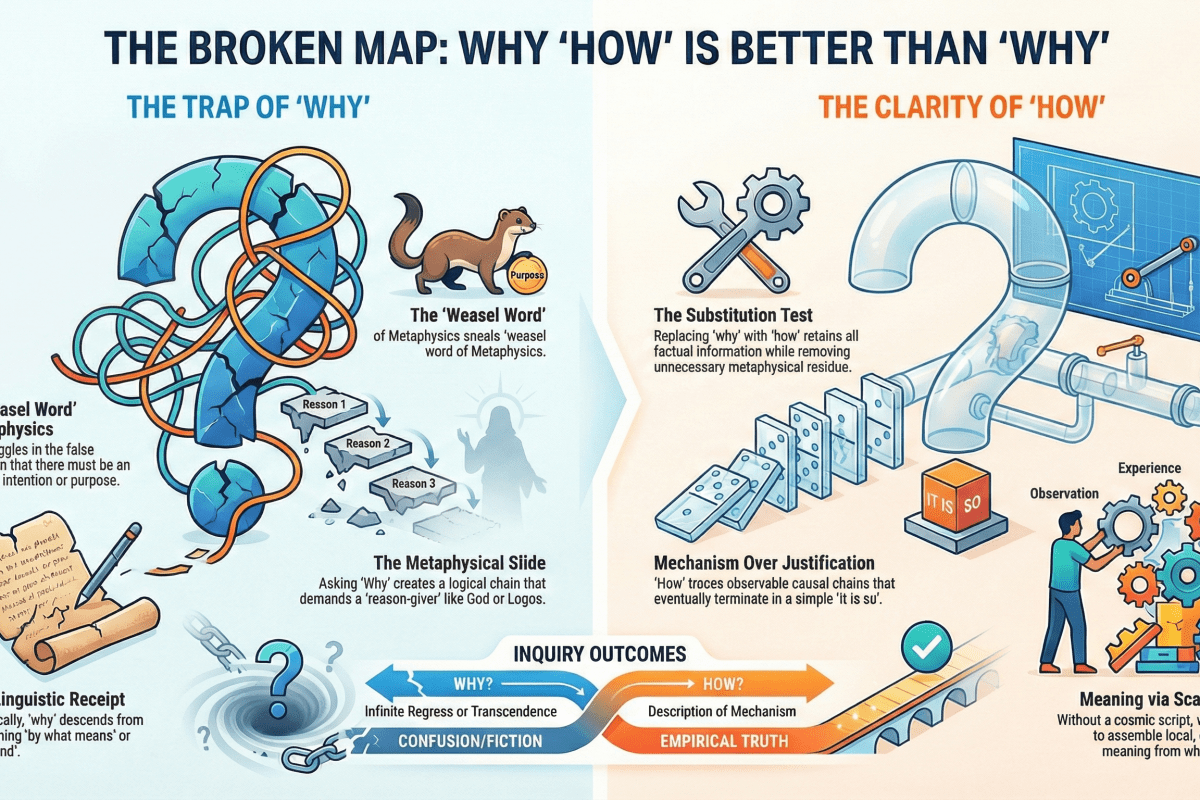
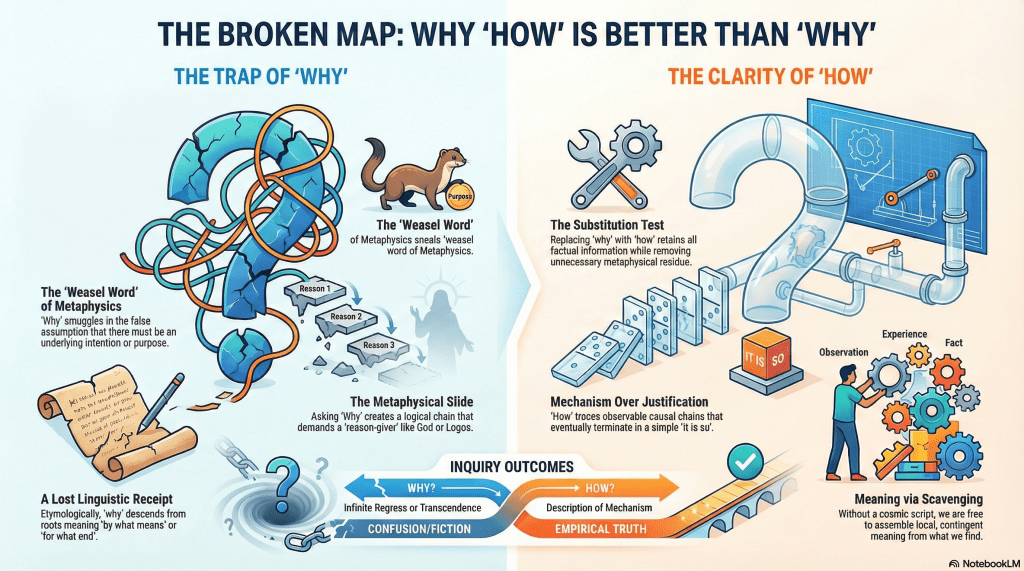


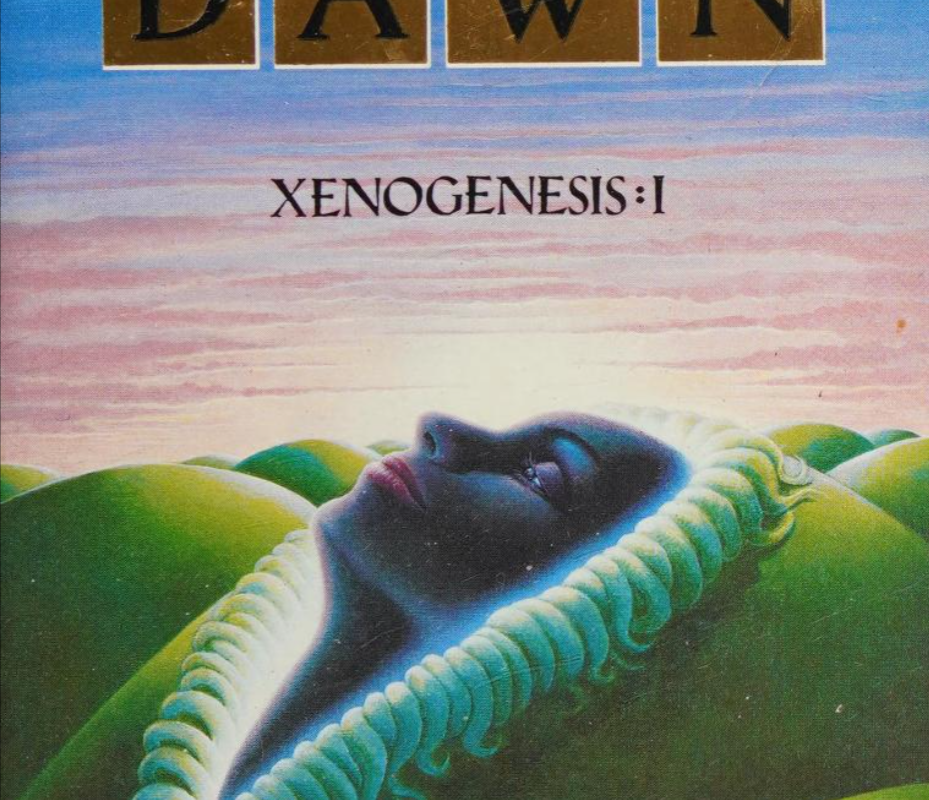






 Philosophics