I’ve been thinking through dozens of use cases to explain how some polemic positions are intractable via language. When they are resolved through power, at least one ontological cohort is left wanting. In a compromise, likely both sides feel they’ve lost.
Audio: NotebookLM summary podcast of the video transcript for this topic.
I’ll post a separate announcement presently, but I want to share my new Legibility GPT to assess concepts for ontological and grammatical commensurability.
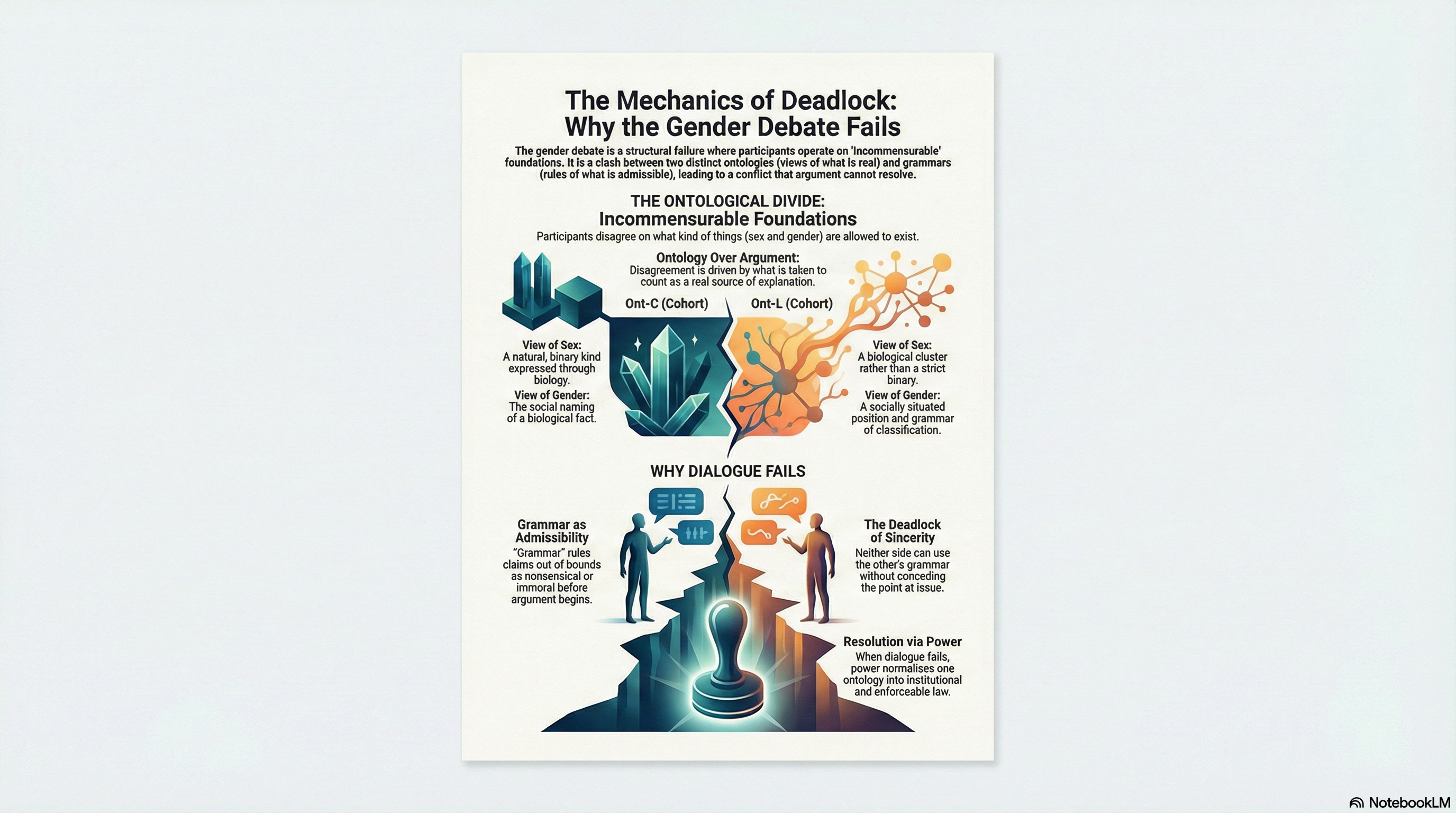
In conventional (read: orthodox Enlightenment thinking), communication and negotiation are supposed to bring groups together. This is only true for intra-ontological conflict; it’s never been true for inter-ontological issues. There are edge cases where differing ontologies might be satisfied with an inter-ontological agreement, but this is likely accidental and certainly differently motivated. Not all such disagreements can be mediated, and this is where power politics steps in – not to ameliorate but to force the matter. This happens in politics, law, and many other power-oriented domains.
NotebookLM Infographic: No idea why this is formatted like this.
In the late 1990s, the Wachowskis gave us The Matrix – Keanu Reeves as Neo, the Chosen One™, a man so bland he could be anyone, which was the point. Once he realised he was living inside a simulation, he learned to bend its laws, to dodge bullets in slow motion and see the code behind the curtain. Enlightenment, Hollywood-style.
Audio: NotebookLM podcast on this topic.
But here’s the twist, the film itself couldn’t stomach: realising the simulation doesn’t free you from it.
Knowing that race and gender are social constructs doesn’t erase their architecture. Knowing that our economies, legal systems, and so-called democracies are fictions doesn’t get us out of paying taxes or playing our assigned roles. “The social contract” is a collective hallucination we agreed to before birth. That and a dollar still won’t buy you a cup of coffee.
Baudrillard, whose Simulacra and Simulation the film name-dropped like a trophy, argued that simulation doesn’t hide reality – it replaces it. When representation becomes indistinguishable from the thing it represents, truth evaporates, leaving only consensus. We don’t live in a system of power; we live in its performance.
The Matrix got the metaphor half right. It imagined the bars of our cage as a digital dream – glossy, computable, escapable. But our chains are older and subtler. Rousseau called them “social”, Foucault diagnosed them as “biopolitical”, and the rest of us just call them “normal”. Power doesn’t need to plug wires into your skull; it only needs to convince you that the socket is already there.
You can know it’s all a fiction. You can quote Derrida over your morning espresso and tweet about the collapse of epistemic certainty. It won’t change the fact that you still have rent to pay, laws to obey, and identities to perform. Awareness isn’t liberation; it’s just higher-resolution despair with better UX.
Neo woke up to a ruined Earth and thought he’d escaped. He hadn’t. He’d only levelled up to the next simulation – the one called “reality”. The rest of us are still here, dutifully maintaining the system, typing in our passwords, and calling it freedom.
NB: Don’t get me wrong. I loved The Matrix when it came out. I still have fond memories. It redefined action films at the time. I loved the Zen messaging, but better mental acuity doesn’t grant you a pass out of the system.
Now live on the Anti-Enlightenment Project (Zenodo | PhilArchive)
Modernity’s most enduring fiction is that somewhere among us walks the normal human. This essay digs up that fossil. Beginning with Quetelet’s statistical conjuring trick – l’homme moyen, the “average man” –and ending in our age of wearable psychometrics and algorithmic empathy, it traces how normality became both the instrument and the idol of Western governance.
Audio: NotebookLM podcast on this essay.
Along the way it dissects:
The arithmetic imagination that turned virtue into a mean value.
Psychology™ as the church of the diagnostic self, where confession comes with CPT codes.
Sociological scale as the machinery that converts persons into populations.
Critical theory’s recursion, where resistance becomes a management style.
The palliative society, in which every emotion is tracked, graphed, and monetised.
Audio: ElevenLabs reading of the whole essay (minus citations, references, and metacontent). NB: The audio is split into chapters on Spotify to facilitate reading in sections.
What begins as a genealogy of statistics ends as an autopsy of care. The normal is revealed not as a condition, but as an administrative fantasy – the state’s dream of perfect legibility. Against this, the essay proposes an ethics of variance: a refusal of wholeness, a discipline of remaining unsynthesised.
Lucidity, not liberation, may be the only virtue left to us – knowing the apparatus intimately enough to refuse its metaphysics while continuing to breathe within it.
The Myth of Homo Normalis is the sixth instalment in the Anti-Enlightenment Project, joining Objectivity Is Illusion, Rational Ghosts, Temporal Ghosts, Against Agency, and The Discipline of Dis-Integration. Together they map the slow disassembly of reason’s empire – from epistemology to ethics, from governance to affect.
Read or cite: 🔗 Zenodo DOI 🔗 PhilArchive page – forthcoming link
We humans pride ourselves on being civilised. Unlike animals, we don’t let biology call the shots. A chimp reaches puberty and reproduces; a human reaches puberty and is told, not yet – society has rules. Biologically mature isn’t socially mature, and we pat ourselves on the back for having spotted the difference.
But watch how quickly that distinction vanishes when it threatens the in-group narrative. Bring up gender, and suddenly there’s no such thing as a social construct. Forget the puberty-vs-adulthood distinction we were just defending – now biology is destiny, immutable and absolute. Cross-gender clothing? “Against nature.” Transition? “You can’t be born into the wrong body.” Our selective vision flips depending on whose ox is being gored.
The same trick appears in how we talk about maturity. You can’t vote until 18. You’re not old enough to drink until 21. You’re not old enough to stop working until 67. These numbers aren’t natural; they’re paperwork. They’re flags planted in the soil of human life, and without the right flag, you don’t count.
The very people who insist on distinguishing biological maturity from social maturity when it comes to puberty suddenly forget the distinction when it comes to gender. They know perfectly well that “maturity” is a construct – after all, they’ve built entire legal systems around arbitrary thresholds – but they enforce the amnesia whenever it suits them. Nietzsche would say it plainly: the powerful don’t need to follow the rules, they only need to make sure you do.
So the next time someone appeals to “nature,” ask: which one? The nature that declares you old enough to marry at puberty? The nature that withholds voting, drinking, or retirement rights until a bureaucrat’s calendar says so? Or the nature that quietly mutates whenever the in-group needs to draw a new line around civilisation?
The truth is, “nature” and “maturity” are less about describing the world than about policing it. They’re flags, shibboleths, passwords. We keep calling them natural, but the only thing natural about them is how often they’re used to enforce someone else’s story.
I’ve wanted to write a post on gender as it relates to language for a while. It will be longer still. I was researching PIE (proto-indo-european) language formation to understand the why of grammatical gender—not the social corollary to biological sex.
Gender and genre both derive from Latin (genus) via French (gendre) and mean type or kind. Genre is somehow reserved for the Arts whilst gender feels more applicable to biology and grammar.
Given Feminist trends, it seems that the arbitrary gendering of nouns and adjectives could be reassigned to dedicated genders to avoid confusion with human gender roles.
As an English as a first language speaker, it’s always felt awkward for me to label a table female (la table) and a sun male (le soleil). It’s even worse when German designates these the opposite, respectively der Tisch (feminine) and die Sonne (masculine).
The fact that these are designated male and female is arbitrary. Just as we designate films as drama, comedy, romance, and action, we could redesignate male and female as two different category names—I dunno, frick and frack.
Grammatical genders themselves are necessarily offensive, but it feels patriarchal to have a rule that if males and females are subjects of a sentence, then the verb has a masculine conjugation. If instead we retained the same rule but said the verb has a frick conjugation, no offence, no foul.
I know this would be a lot of work, and I am just overthinking, but this is what I do.
Why do non-linguists think they can disintegrate language. As this rant targets a certain class of illiterate feminists, I’ll disclaim at the start that I fully support feminism and egality across all intersections. The rant is aimed at wilful ignorance and has been a peeve of mine since at least the 1980s. This is further a subset of PC speech, this rampant scourge of Liberal political correctness by the American Liberal establishment.
The problem I have is of people who have no understanding of the meaning or origin of the word man—people who insist on extracting it from everything. I don’t have any need for waitresses, actresses, or even mistresses, dominatrixes and other gender-marked terms. I’ll even add a further disclaimer: I don’t support gendered terms. Case in point: I love French, but I feel it’s time to lose the gendered nouns. It serves little purpose. I’d go as far as to say that it serves no purpose, but then I’d be as guilty as these feminists I’m railing on about. I also have to issue with referring to people as it and they rather than the typical he, she, him, and her. In fact, I’ve been called out for calling a human it.
Feminist Philosophy of Language, a guide on sexism in language and feminist language reform, also discourages the usage of man and -man as gender-neutral because it has male bias and erases women under a masculine word.
As a male, I may come across as mansplaining. I don’t even care about retaining some old word out of tradition. Get rid of it, and good riddance, but don’t do so on the grounds of faulty reasoning. George Carlin shared my sentiment, but his take here is on the use of euphemism to obscure meaning.
I am well aware that meaning drifts over time, and I am wholly sympathetic to the insufficiency of language. Let’s crack on.
Considering the root, in Latin, we had homo—an undifferentiated human being—and vir—an adult male, whence comes virtue. Old French gave us human, which derives from the older term, ghomon, which meant earthling, obviously non-gendered.
The word man comes from Old English and meant person with no gender intent. This is the same man as mankind and the still non-gendered, yet somehow offensive, man. The genesis of the confusion is when man split off and was also used to refer to a human adult male. Evidently, this is confusing to some.
The word man comes from Old English and meant person with no gender intent. This is the same man as mankind and the still non-gendered, yet somehow offensive, man. The genesis of the confusion is when man split off and was also used to refer to a human adult male. Evidently, this is confusing to some.
Before man was split to also refer to an adult male, Old English had distinguished the sexes by wer and wif. Wer came from the aforementioned Latin vir, which had heretofore already merged into its ungendered vulgate form. It is retained in English the word werewolf, common to most English-language speakers. Less common human-animal hybrids bearing the were- prefix are werebears, wereboars, and the rest as illustrated in this page from Giants, Monsters, and Dragons: An Encyclopedia of Folklore, Legend, and Myth. Note the lack of gender specificity.
At one point, wifman was used to distinguish a woman-man from a generic man. For the most part, wer was replaced by man, though its universal sense was also retained as it was as well in homo. In Old English, Man was also employed as an indefinite pronoun.
Obviously, wife is retained still as a gender-marked term indicating the woman in a marriage arrangement. I’m sure I had a point here, but I may have lost it, so before I quit, the last term I’d like to mention—just because—is queen, which had originally meant a woman, become a wife, and then to a king’s wife, and finally (though this last sense remains), a female sovereign ruler irrespective of marital status. There are the queens of queer culture, but I think I’ll end on this note.
I’ve been following Philosophy Tube since Abigail was Ollie. Always top-notch material. Their content has gotten longer over time, so I’ve found myself skipping over in favour of shorter presentations. I am so glad to have decided to watch this one.
As anyone who follows me knows, I am a big advocate of social construct theory, yet I learned so much in this vid, which is proper well-cited AF. Lot’s of new content to add to my backlog, so I’ve got more than enough reading material for my next few incarnations at least.
The biggest takeaway for me is the notion that not only is gender a social construct, but so is sex itself. Previously, I have defended the sex-gender distinction, but in fact, scientific taxonomies are still social constructs—only in the scientific community rather than the greater community at large.
Abigail’s platypus drives home the point. Not that it’s some big reveal. Another less poignient analogy is fruit and vegetable classification. Tomatoes are fruits. Mellons—watermellons, pumpkins, and so on—are fruits. Say it ain’t so.
Give it a viewing and like or comment here and/or there.
It’s only happenstance that I’ve got consecutive gender posts. Derrida spoke about prioritisation in binary pair, and the inherent symbolic connotation. Sex and gender are two examples.
At the risk of overstating the obvious, masculinity holds the priority in this pair bond. Masculinity traditionally conveys hardness, strength and logic, whilst femininity conveys softness and weakness and emotion. This is what Beauvoir intends by her use of the other sex—male and other. Even in a non-binary frame, maleness still prevails over everythying else. Of course, in this broader world, male may trump female, but in an appeal to nature fashion, female trumps intersex in the same way the light-skinned people of colour trump their darker-skinned counterparts.
English even has derivative terms such as hysterical, an emotional state rooted in the Greek hystera, the uterus or womb. Etymologically, the word was invented by the Greek under the impression that this behaviour was a deviation from male normaly.
In the physical world, this male-female terminology generailises to penetrator and penetrated—penetratrix, anyone? We routinely refer to plugs and connectors with prongs as male and recepticals are female. At first glance, it might be tempting to assume that penis is somehow related to penetration, but it’s not so, as penis derives from tail.
In music there is the notion of cadence, the beats of a rhythm. Classically speaking, there are masculine and feminine cadences. And if you guessed that masculine cadences involve strong beats and feminine cadences invlove weak beats, you’d be correct.
Feminine Cadence a musical cadence in which the final chord or melody note falls on a weak beat
The reason I am writing this is as a reminder to the predjudice langage embeds and perpetuates. Even if we have lost the connection to the original intent, the sense remains. We should actively seek other terms that don’t promote this anachronistic belief system.
It’s also easy to get carried away and over-specify the domain. So, terms like manhole, manuscript, manipulate, and such are, let’s say, false cognates, in a manner of speaking. There are no counterpart womanholes—sophomoric humour notwithstanding—, womanuscripts, and womanipulation, though it might be fun to write some exposition with the intention of satarising these and words with a similar structure. I’m not sure I could womanage to carve out the time to get there.
Last Word
In a different space, we’ve got master-slave word pairs. In computers, there may be master and slave drives. I’ve heard people point out the insensitivity of this notion without grasping that projecting American (or wider-world) human slavery on this rather than understanding this pairing existed well before the New World was even ‘discovered’. This is where hysterical political correctness needs to step down and give way to education.
So, I’ve gone down a rabbit hole. Again. This time, it’s Žižek. Again. I’ve still not read any of Žižek’s own work, but people mention him often and he is a shameless self-promoter. In this video clip, he responds to whether gender is a social construct. Unfortunately, he conflates gender with sex, and his examples cite transsexuals not transgenders.
sex is about biological sex assignment
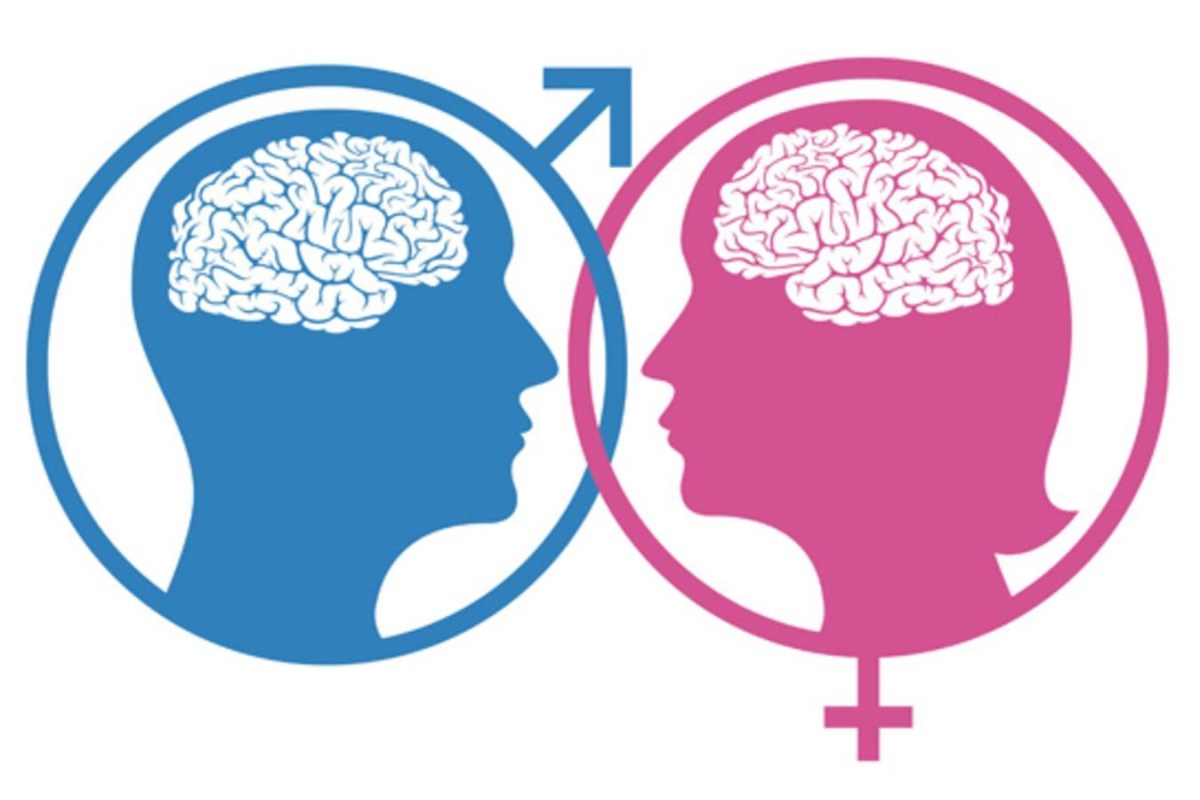
To set the stage, sex is about biological sex assignment—the sex category you are assigned into at birth: male, female, or other for some 1.8%. This is a simplistic categorisation: penis = male; vagina = female; both or neither: rounding error. In some cases, a decision is made to surgically conform the child to either male or female and ensure through prophylactic treatment that this isn’t undone hormonally in adolescence.
gender is about identity
Gender is about identity. As such, it is entirely a social construct. All identity of this nature is a function of language and society. In this world—in the West—, females wear dresses (if they are to be worn at all) and males don’t—kilts notwithstanding. In this world, sex and gender have little room for divergence. so the male who identifies as this gender (not this sex) is ostracised.
The example I usually consider first is the comedian Eddie Izzard—a cross-dresser. He’s probably a bad example because he does identify as a male. He just doesn’t wish to be constrained by male role restrictions and wants to wear the makeup that’s been reserved for women in the West at this time.
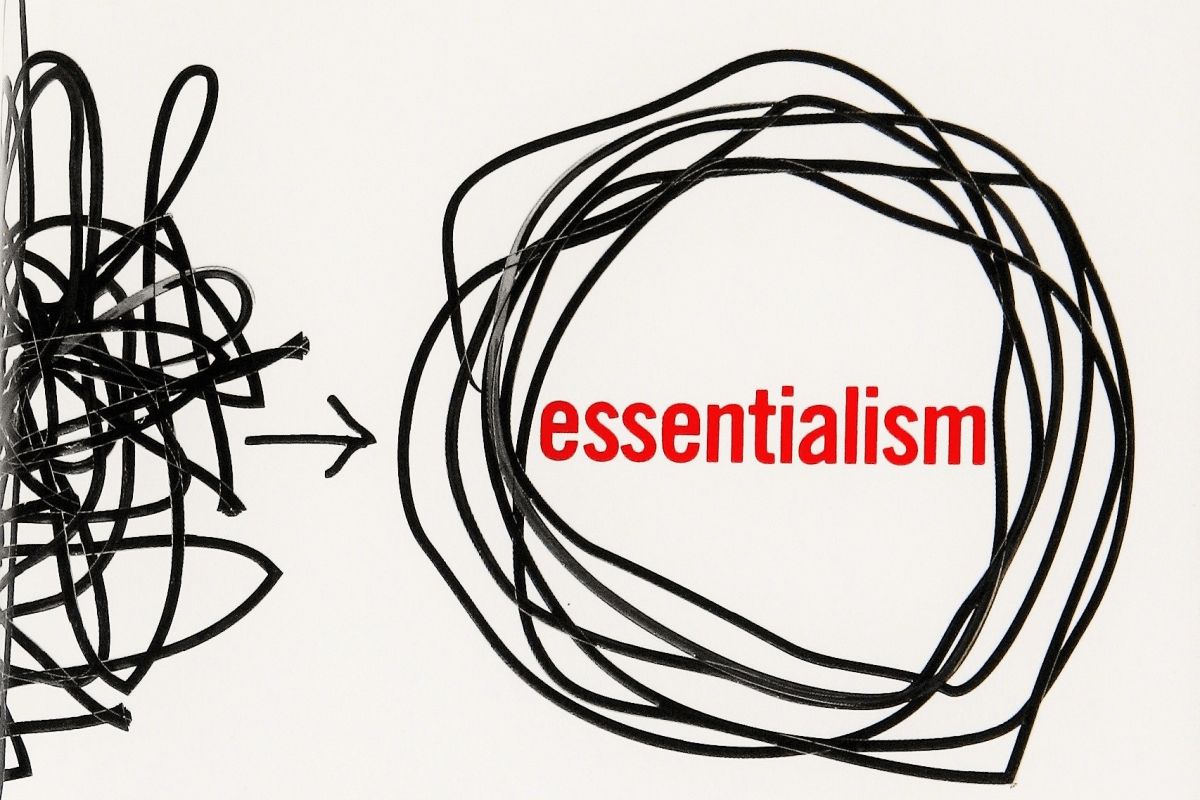
Žižek eventually gets to an argument about essentialism—so we’re back at Sorites paradoxes and Theseus again. At the start, I could argue that the sexual distinction has few meaningful contexts. For me, unless I am trying to have sex and/or procreate, the distinction is virtually meaningless. For others, only procreation remains contextually relevant. In this technological world, as Beauvoir noted in the late 1940s, strength differentials are not so relevant. End where they are, sex is not the deciding factor—it’s strength.
Žižek’s contention seems to be that the postmoderns (or whomever) disclaim essentialism in favour of constructivism but then resolve at essentialism as a defence because ‘now I am in the body originally intended’. I’ll argue that this is the logic employed by the person, but this person is not defending some academic philosophical position. They are merely engaging in idiomatic vernacular.
I am not deeply familiar with this space, and if the same person who is making a claim against essentialism is defending their actions with essentialism, then he’s got a leg to stand on. As for me, the notions of essentialism and constructivism are both constructed.
To some extent or another, humans appear to need order—some more than others. Societies are a manifestation of order, and we’ve got subcultures for those who don’t fit in with the mainstream. Humans are also a story-telling lot, which helps to provide a sense of order. Metanarratives are a sort of origin story with a scintilla of aspiration toward some imagined semblance of progress.
Some people appear to be more predisposed to need to ride this metanarrative as a lifeboat. These people are typically Conservative, authority-bound traditionalists, but even the so-called Progressives need this thread of identity. The problem seems to come down to a sort of tolerance versus intolerance split, a split along the same divide as created by monotheism in the presence of polytheism.
Meet the new boss, same as the old boss.
Won’t Get Fooled Again — The Who
In a polytheistic world, when two cultures collided, their religious pantheons were simply merged. In a blink, a society might go from 70 gods to 130. On this basis, there was a certain tolerance. Monotheism, on the other hand, is intolerant—a winner takes all death match. The tolerant polytheists might say, sure, you’ve got a god? Great. He can sit over there by the elephant dude. Being intolerant like a petulant schoolboy, the monotheists would throw a tantrum at the thought that there might be other gods on the block. Monotheists won’t even allow demigods, though there is the odd saint or two.
This is a battle between absolutism and relativism. The relativist is always in a weaker arguing position because intolerant absolutists are convinced that their way is the only way, yet the tolerant relativists are always at risk of being marginalised. This is what Karl Popper was addressing with the Paradox of Tolerance.
In a functioning society, a majority of the metanarratives are adopted by the majority of its constituent. On balance, these metanarratives are somewhat inviolable and more so by the inclined authoritarians.
A problem is created when a person or group disagrees with the held views. The ones espousing these views—especially the Traditionals—become indignant. What do you mean there are more than two genders? You are either male or female. Can’t you tell by the penis?
I happened to read a tweet by the GOP declaring their stupidity:
America the Stupid
The Vice President, a living anachronism and proxy for the American Midwest Rust Belt superimposed on the Bible Belt, he tells his sheep that “The moment America becomes a socialist country is the moment that America ceases to be America…” Americans as a whole are pretty dim, and it seems to get dimmer the higher one ascends their government. Pence seems very firm in affirming a notion of American identity, but not accepting that identities change. He may become upset if he finds out that George Washington is dead—in fact, there are very few remnants of the original United States aside from some dirt, trees, and a few edifices—and the country is still the county. Some people have a difficult time grasping identity. It makes me wonder if he fails to recognise himself in the mirror after he gets his hair cut.
The idea behind deconstruction is to deconstruct the workings of strong nation-states with powerful immigration policies, to deconstruct the rhetoric of nationalism, the politics of place, the metaphysics of native land and native tongue… The idea is to disarm the bombs… of identity that nation-states build to defend themselves against the stranger, against Jews and Arabs and immigrants…
Jacques Derrida
Interesting to me is how people complain about this and that politically. Most of this is somewhat reflexive and as phatic as a ‘how are you?’, but some is more intentional and actioned. Occasionally, the energy is kinetic instead of potential, but the result is always the same: One power structure is replaced by another.
What you aspire to as revolutionaries is a new master. You will get one
Jacques Lacan
As Lacan noted, as people, we believe ourselves to be democratic, but most of us appear to be finding and then worshipping some authority figures who will promise us what we desire. We desire to have someone else in charge, who can make everything OK, someone who is in a sense an ideal parent. I don’t believe this to be categorical, but I do believe that there is a large contingent of people who require this.
As an aside, I’ve spent a lot of time (let’s call it a social experiment) in the company of social reprobates. What never ceases to amaze me is how these social outcasts seem to have a strong sense of right and wrong and how things should be. Conveniently, they exempt themselves from this scope, so if they steel to buy drugs, it’s OK, but if someone else gets caught, they should get what’s coming to them.
About a year ago I was chatting with a mate, and I shared an observation that the biggest substance abusers in high school—”the Man’s not going hold me down” cohort—are the biggest conservatives. A girl a few houses down from me became a stripper, but her political views are very Conservative, an avid Trump supporter.
One woman I know is a herion-addicted prostitute. In her eyes, she’s fine (sort of—without getting into psychoanalytics); other women are junkie whores. A heavy dose of assuaged cognitive dissonance is the prescription for this, but it confounds me.
Getting back to the original topic, people who need this order are resistant to deconstruction and other hallmark notions of poststructuralism. They need closure. This translates into a need for metanarratives. When confronted with the prospect of no Truth, they immediately need to find a substitute—speculatively, anyway, as denial and escalating commitment will kick into overdrive.
The same problem mentioned above comes into play here. A few years ago, there was an Occupy Wall Street group, and like atheists, there are myriad reasons why people participated. One of the commonest complaints by the power structure and the public at large is if you don’t like the status quo, what status should replace it. None of the above was never an acceptable response.
It doesn’t matter that in this universe we occupy there is more disorder than order, and entropy rules, pareidolia is the palliative. And religion remains an opiate of the masses.









 Philosophics