Butler versus Butler (on a bed of Beauvoir)

2–3 minutes

I’ve been reading Octavia Butler’s Dawn and find myself restless. The book is often lauded as a classic of feminist science fiction, but I struggle with it. My problem isn’t with aliens, or even with science fiction tropes; it’s with the form itself, the Modernist project embedded in the genre, which insists on posing questions and then supplying answers, like a catechism for progress. Sci-Fi rarely leaves ambiguity alone; it instructs.

Find the companion piece on my Ridley Park blog.

Audio: NotebookLM podcast summarising this topic.

Beauvoir’s Ground

Simone de Beauvoir understood “woman” as the Other – defined in relation to men, consigned to roles of reproduction, care, and passivity. Her point was not that these roles were natural, but that they were imposed, and that liberation required stripping them away.

Octavia Butler’s Lilith

Lilith Iyapo, the protagonist of Dawn, should be radical. She is the first human awakened after Earth’s destruction, a Black woman given the impossible role of mediating between humans and aliens. Yet she is not allowed to resist her role so much as to embody it. She becomes the dutiful mother, the reluctant carer, the compliant negotiator. Butler’s narration frequently tells us what Lilith thinks and feels, as though to pre-empt the reader’s interpretation. She is less a character than an archetype: the “reasonable woman,” performing the script of liberal Western femininity circa the 1980s.

Judith Butler’s Lens

Judith Butler would have a field day with this. For her, gender is performative: not an essence but a repetition of norms. Agency, in her view, is never sovereign; it emerges, if at all, in the slippages of those repetitions. Read through this lens, Octavia Butler’s Lilith is not destabilising gender; she is repeating it almost too faithfully. The novel makes her into an allegory, a vessel for explaining and reassuring. She performs the role assigned and is praised for her compliance – which is precisely how power inscribes itself.

Why Sci-Fi Leaves Me Cold

This helps me understand why science fiction so often fails to resonate with me. The problem isn’t the speculative element; I like the idea of estrangement, of encountering the alien. The problem is the Modernist scaffolding that underwrites so much of the genre: the drive to solve problems, to instruct the reader, to present archetypes as universal stand-ins. I don’t identify with that project. I prefer literature that unsettles rather than reassures, that leaves questions open rather than connecting the dots.

So, Butler versus Butler on the bedrock of Beauvoir: one Butler scripting a woman into an archetype, another Butler reminding us that archetypes are scripts. And me, somewhere between them, realising that my discomfort with Dawn is not just with the book but with a genre that still carries the DNA of the very Modernism it sometimes claims to resist.

On Agency, Suicide, and the Moving Train

I’ve been working through the opening chapters of Octavia Butler’s Dawn. At one point, the alien Jdahya tells Lilith, “We watched you commit mass suicide.”*

The line unsettles not because of the apocalypse itself, but because of what it presumes: that “humanity” acted as one, as if billions of disparate lives could be collapsed into a single decision. A few pulled triggers, a few applauded, some resisted despite the odds, and most simply endured. From the alien vantage, nuance vanishes. A species is judged by its outcome, not by the uneven distribution of responsibility that produced it.

This is hardly foreign to us. Nationalism thrives on the same flattening. We won the war. We lost the match. A handful act; the many claim the glory or swallow the shame by association. Sartre takes it further with his “no excuses” dictum, even to do nothing is to choose. Howard Zinn’s “You can’t remain neutral on a moving train” makes the same move, cloaked in the borrowed authority of physics. Yet relativity undermines it: on the train, you are still; on the ground, you are moving. Whether neutrality is possible depends entirely on your frame of reference.

What all these formulations share is a kind of metaphysical inflation. “Agency” is treated as a universal essence, something evenly spread across the human condition. But in practice, it is anything but. Most people are not shaping history; they are being dragged along by it.

One might sketch the orientations toward the collective “apple cart” like this:

  • Tippers with a vision: the revolutionaries, ideologues, or would-be prophets who claim to know how the cart should be overturned.
  • Sycophants: clinging to the side, riding the momentum of others’ power, hoping for crumbs.
  • Egoists: indifferent to the cart’s fate, focused on personal comfort, advantage, or escape.
  • Stabilisers: most people, clinging to the cart as it wobbles, preferring continuity to upheaval.
  • Survivors: those who endure, waiting out storms, not out of “agency” but necessity.

The Stabilisers and Survivors blur into the same crowd, the former still half-convinced their vote between arsenic and cyanide matters, the latter no longer believing the story at all. They resemble Seligman’s shocked dogs, conditioned to sit through pain because movement feels futile.

And so “humanity” never truly acts as one. Agency is uneven, fragile, and often absent. Yet whether in Sartre’s philosophy, Zinn’s slogans, or Jdahya’s extraterrestrial indictment, the temptation is always to collapse plurality into a single will; you chose this, all of you. It is neat, rhetorically satisfying, and yet wrong.

Perhaps Butler’s aliens, clinical in their judgment, are simply holding up a mirror to the fictions we already tell about ourselves.


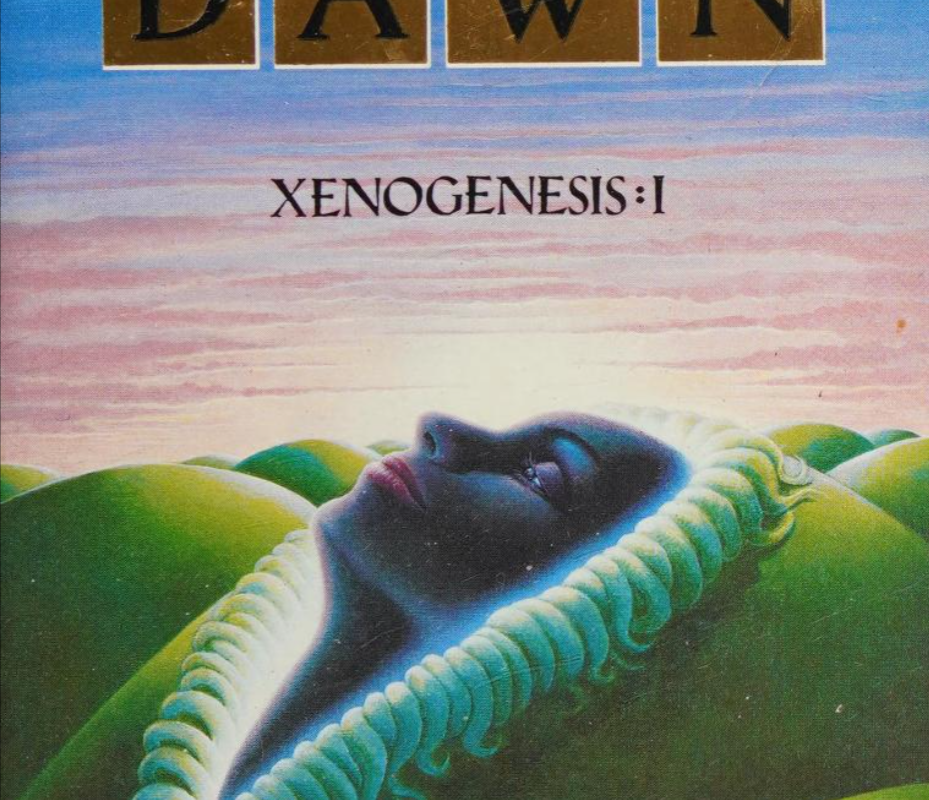
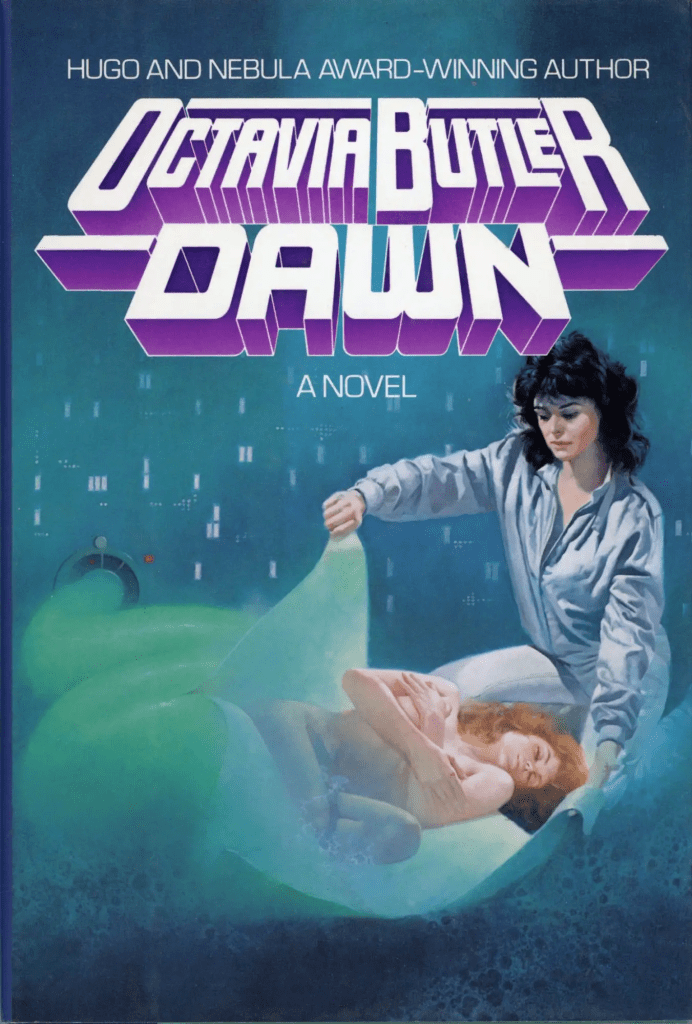
As an aside, this version of the book cover is risible. Not to devolve into identity politics, but Lilith is a dark-skinned woman, not a pale ginger. I can only assume that some target science fiction readers have a propensity to prefer white, sapphic adjacent characters.

I won’t even comment further on the faux 3D title treatment, relic of 1980s marketing.


Spoiler Alert: As this statement about mass suicide is a Chapter 2 event, I am not inclined to consider it a spoiler. False alarm.

The Heuristic Self: On Persona, Identity, and Character

Man is least himself when he talks in his own person. Give him a mask, and he will tell you the truth.”
— Oscar Wilde

Identity is an illusion—but a necessary one. It’s a shortcut. A heuristic, evolved not for truth but for coherence. We reduce ourselves and others to fixed traits to preserve continuity—psychological, social, narrative.

Audio: NotebookLM podcast on this topic. (Direct)

Audio: NotebookLM podcast on this topic. (Spotify)

In the latest post on RidleyPark.blog, we meet Sarah—a woman who survives by splintering. She has three names, three selves, three economies of interaction. Each persona—Sarah, Stacey, and Pink—fulfils a role. Each protects her in a system that punishes complexity.

Identity Is Compression

Cognitive science suggests that we don’t possess a self—we perform one. Our so-called identity is assembled post-hoc from memory, context, and social cues. It’s recursive. It’s inferred.

We are not indivisible atoms of identity. We are bundled routines, personae adapted to setting and audience.

From Performance to Survival

In Needle’s Edge, Sarah doesn’t use aliases to deceive. She uses them to survive contradictions:

  • Stacey is desirable, stable, and profitable—so long as she appears clean and composed.
  • Pink is a consumer, invisible, stripped of glamour but allowed access to the block.
  • Sarah is the residue, the name used by those who once knew her—or still believe they do.

Each persona comes with scripts, limitations, and permissions. Sarah isn’t being dishonest. She’s practicing domain-specific identity. This is no different from how professionals code-switch at work, or how people self-edit on social media.

The Literary Echo

In character development, we often demand “depth,” by which we mean contradiction. We want to see a character laugh and break. Love and lie. But Sarah shows us that contradiction isn’t depth—it’s baseline reality. Any singular identity would be a narrative failure.

Characters like Sarah expose the poverty of reduction. They resist archetype. They remind us that fiction succeeds when it reflects the multiple, the shifting, the incompatible—which is to say, the real.

What Else Might We Say?

  • That authenticity is a myth: “Just be yourself” presumes you know which self to be.
  • That moral judgment often stems from a failure to see multiple selves in others.
  • That trauma survivors often fracture not because they’re broken, but because fracturing is adaptive.
  • That in a capitalist framework, the ability to fragment and role-play becomes a survival advantage.
  • That fiction is one of the few spaces where we can explore multiple selves without collapse.

The Missing Link

For a concrete, narrative reflection of these ideas, this post on RidleyPark.blog explores how one woman carries three selves to survive three worlds—and what it costs her.

Book Review: Outraged! by Kurt Gray: All Sizzle, No Steak?

Kurt Gray’s Outraged! is a fascinating romp through the minefield of moral psychology and outrage culture. It’s snappy, it’s clever, and it’s… shallow. Whilst Gray positions himself as the maestro conducting the cacophony of modern outrage, his approach has left me wondering if the symphony is little more than noise. Here’s why:

Audio: Podcast discussion on this review content.

Oversimplification of Moral Psychology

Gray’s central thesis that “all morality stems from perceptions of harm and threat” is bold, sure, but also reductive. Morality isn’t just a harm detector. It’s a rich tapestry of loyalty, authority, sanctity, and liberty—concepts Gray conveniently glosses over. His approach feels like reducing a fine Bordeaux to “it’s just fermented grapes.” Sure, technically correct, but where’s the depth?

The Age of Competitive Victimhood

By focusing so heavily on harm perception, Gray risks fueling the very outrage culture he’s critiquing. Welcome to the Hunger Games of victimhood, where everyone races to be crowned the most aggrieved. Instead of deflating this dynamic, Gray’s analysis may inadvertently add more oxygen to the fire.

Lack of Diverse Perspectives

Gray’s attempt to bridge divides is commendable but flawed. Critics point out that he gives more airtime to controversial right-wing figures than the left-leaning audience he’s presumably trying to engage. It’s like building half a bridge and wondering why no one’s crossing. If you alienate half your audience, how exactly are you fostering dialogue?

Contradictory Messaging

The book also suffers from a classic case of ideological whiplash. Gray tells us not to get offended by microaggressions, then argues that offensive content needs more careful handling. Which is it, Kurt? Either you’re driving the “sticks and stones” bus, or you’re preaching kid-glove diplomacy. You can’t have it both ways.

Limited Practical Solutions

Like many pop psychology books, Outraged! excels at diagnosing problems but falters when offering solutions. Gray’s suggestion to use personal stories of harm to bridge divides is charmingly naive. Sure, storytelling might work for interpersonal tiffs, but try applying that to global crises like climate change or systemic inequality. Good luck narrating your way to a greener planet.

Oversimplifying Complex Issues

Gray’s harm-based morality seems like an attempt to cram human behaviour’s messy, chaotic sprawl into a tidy spreadsheet. Real moral debates are nuanced, tangled, and frustratingly complex. By filtering everything through the lens of harm, Gray risks missing the bigger picture. It’s morality on Instagram—polished, curated, and ultimately hollow.

Final Thoughts

Outraged! isn’t without merit. Gray is a masterful storyteller and a sharp thinker, but the book feels like a soufflé: all air, no substance. While it might offer a quick, engaging read for those looking to dip a toe into the outrage pool, anyone hoping for deeper insights will come away unsatisfied.

In the end, Gray delivers a sizzling trailer for a movie that never quite materialises. Fun to watch, but ultimately forgettable.

Guns, Germs, and Steel

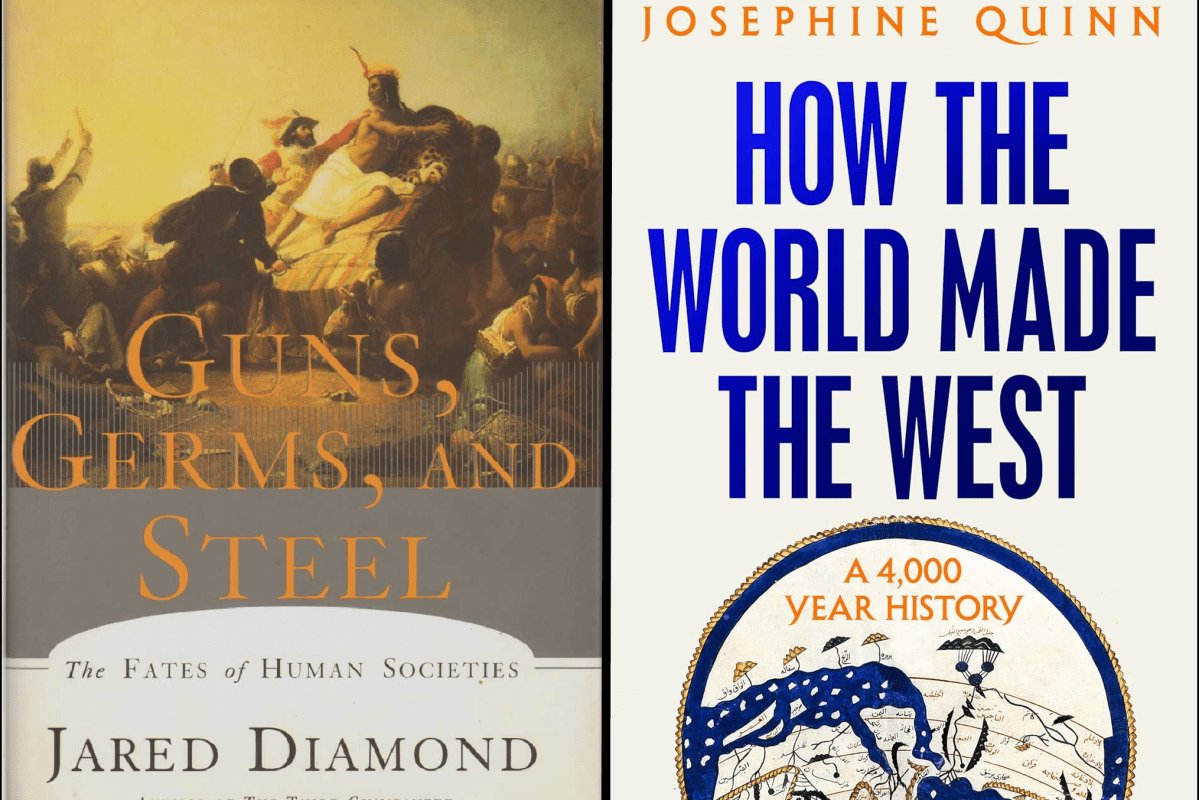
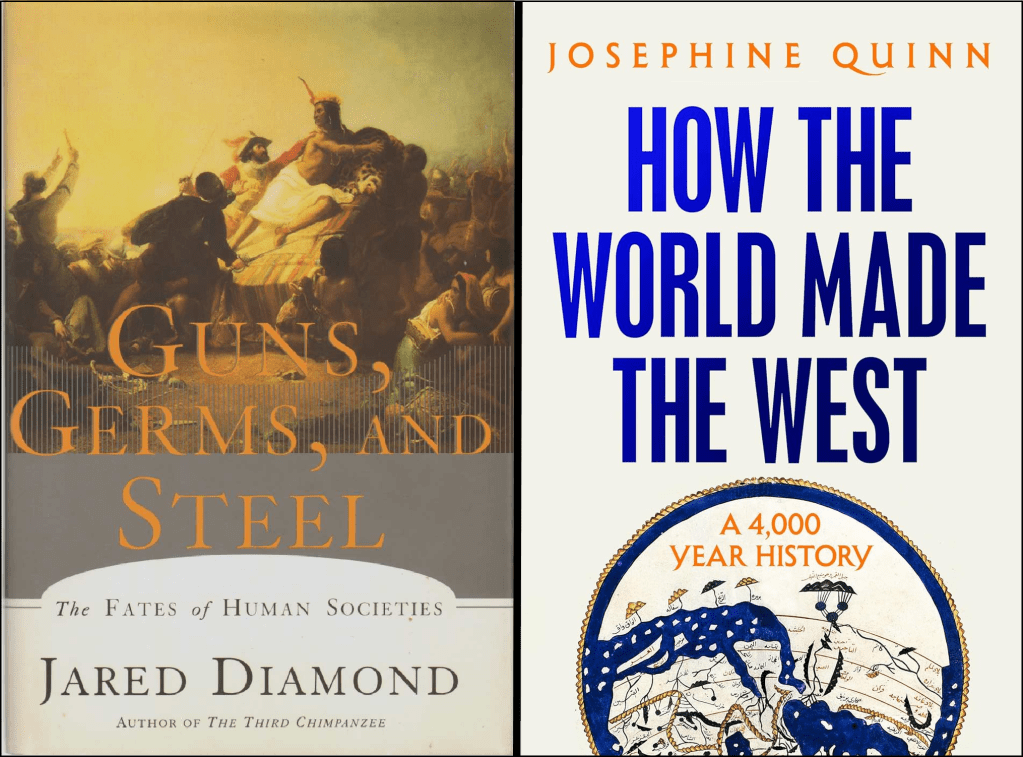
I am reading Jared Diamond’s Guns, Germs, and Steel: The Fates of Human Societies, the first and likely most famous of an informal trilogy. I thought I had already read it, but I think I only saw the PBS show. Having recently finished Josephine Quinn’s How the World Made the West, I wanted to revisit this perspective. The two books are presented in different styles and represent different perspectives, but they seem to be complementary.

Where Diamond focuses on environmental factors (an oft-voiced critique), Quinn focuses on human agency.

Diamond takes a bird’ s-eye view, looking for universal patterns and systemic explanations, whilst Quinn adopts a granular, specific approach, highlighting the fluidity and contingency of history.

Diamond deconstructs European dominance by attributing it to environmental luck, but his narrative risks sidelining the agency of colonised peoples. Quinn critiques the very idea of Western dominance, arguing that the concept of the West itself is a myth born of appropriation and exchange.

Rather than being wholly opposed, Diamond and Quinn’s approaches might be seen as complementary. Diamond provides the structural scaffolding – the environmental and geographic conditions that shape societies – whilst Quinn fills in the cultural and human dynamics that Diamond often glosses over. Together, they represent two sides of the historiographical coin: one focusing on systemic patterns, the other on the messiness of cultural particularities.

Quinn’s approach is more aligned with The Dawn of Everything: A New History of Humanity, co-authored by David Graeber and archaeologist David Wengrow, if you can use that as a reference point.