The topic of intellectual property gets me every time. As much as I am opposed to the notion of property in general, intellectual property is a complete farce. Along with Rick Beato and David Bennet, Adam Neely is one of my three main music theory staples on YouTube. Here, he goes into more depth than I would have expected, but it’s worth hearing the perspective of a musician. I won’t break down his video fully because it speaks for itself. Instead, I’ll share my thoughts and pull out highlights.
Podcast: Audio version of this page content.
November 8th, 1548 is the day in history that the French King Henri II opened the door to intellectual property, an obvious giveaway to a benefactor, creating a publishing monopoly. He turned community cultural knowledge into property, turning the benefit of many into the benefit of one. This is the crux of capitalism—favouring the one over the many.
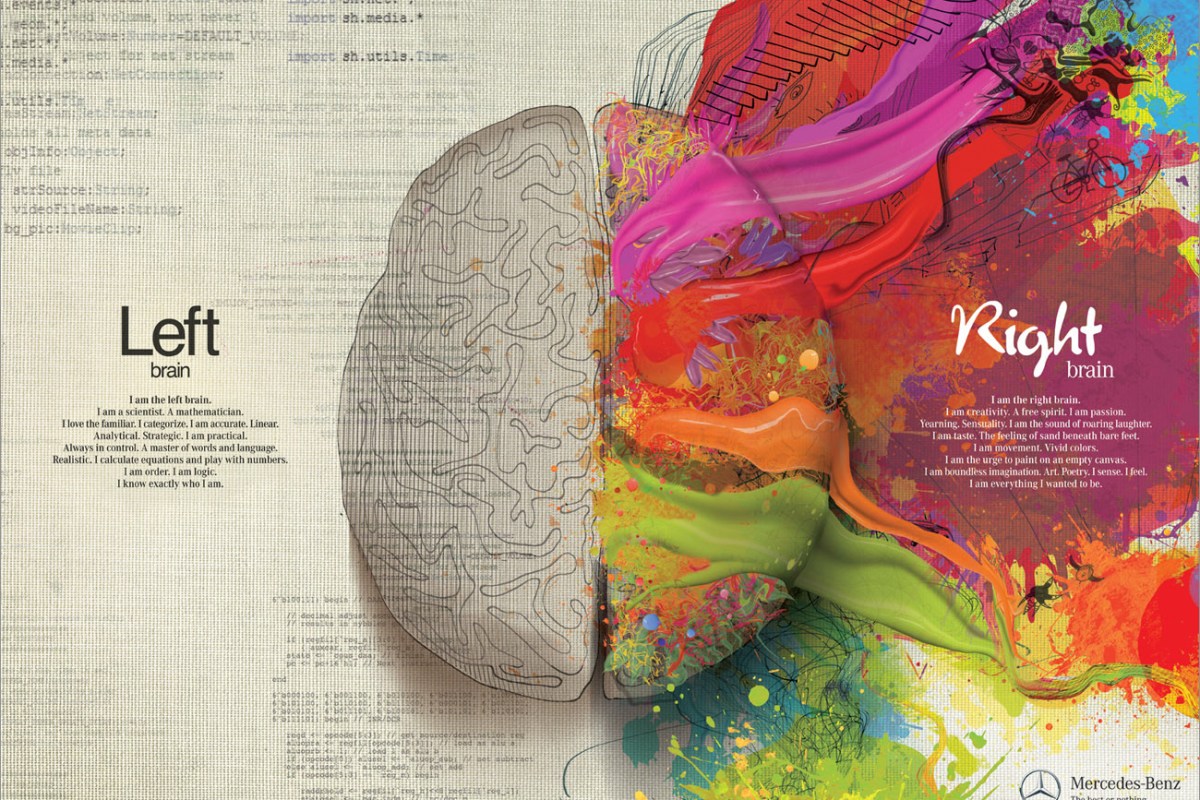
Before continuing, it seems that there is a schism in the legal system itself. In fact, it is very fractured even within this small domain. At the same time it wants to be precise and analytical, it’s dealing with a subject that cannot be analysed as such. To add insult to injury, it exempts musicians and musical experts and requires music consumers to decide the outcomes of trial cases. To be fair, even relying on so-called experts would lead to mixed results anyway. They might as well just roll the dice. This is what happens when right hemisphere art enters a left hemisphere world.
nature + work = ownership
Adam establishes a grounding on the theory of property rights à la John Locke’s ‘sweat of the brow’ concept, wherein nature plus work equates to ownership. He then points out how intellectual property has even shakier ground to stand on. It relies rather on notions of originality and creativity, two concepts that have no intersection with the left-hemisphere heavy legal and jurisprudence systems. Moreover, like pornography, these things cannot be defined. They need to be divined. Divination is no place for lay jurists. It’s a recipe for disaster. The entire English court system is rife with problems, but the left-brainers feel these are just trivial devils in the details. I beg to differ, yet I am voiceless because I won’t participate within their frame.
Adam also points out how out of date the law is insomuch as it doesn’t recognise much of the music produced in the past few decades. Moreover, the music theory it’s founded on is the Romantic Era, white European music that often ties transcriptionists in knots. If the absence of certain words to emote experience is a challenge, it’s even worse for musical notation.
In any case, this is a hot-button issue for me on many levels, and I needed to vent in solidarity. This video is worth the 30 minutes run time. His ham sandwich analogy in part V works perfectly. It’s broken into logical sections:
Apologies in advance for another business-oriented post, but it ties in well with the latest McGilchrist content. Simon Sinek is the presenter, and he asks how the Navy pick the members of Seal Team Six—as he says, “the best of the best of the best of the best,” which happens to align with the way my toddler might tell me how very, very, very, very much she likes something.
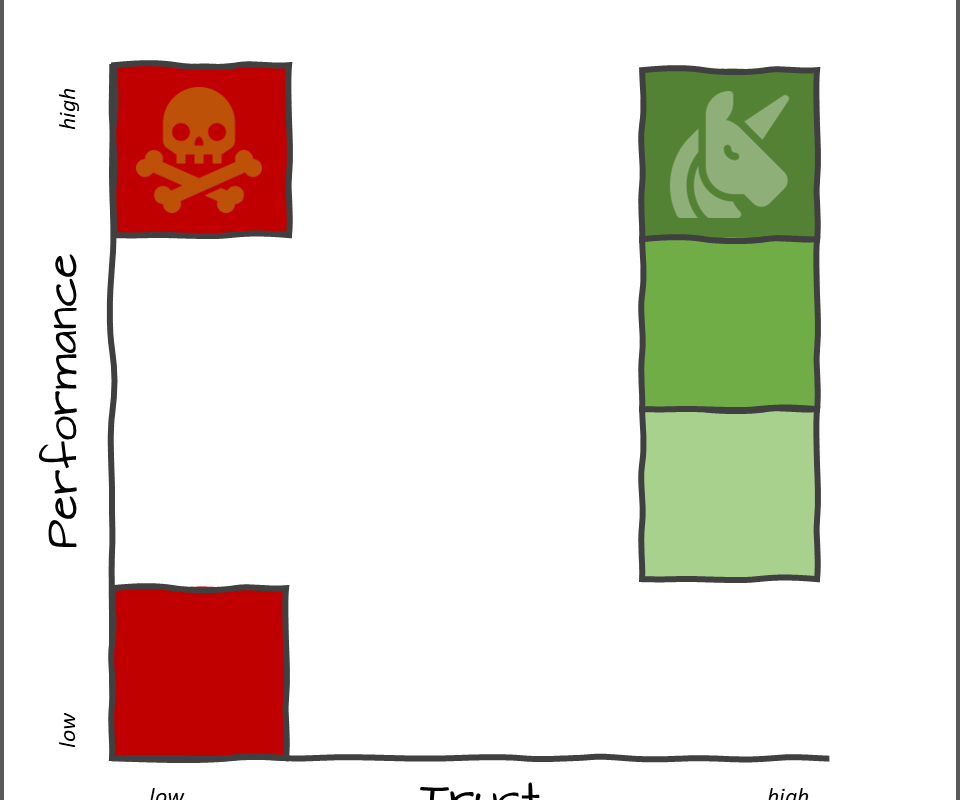
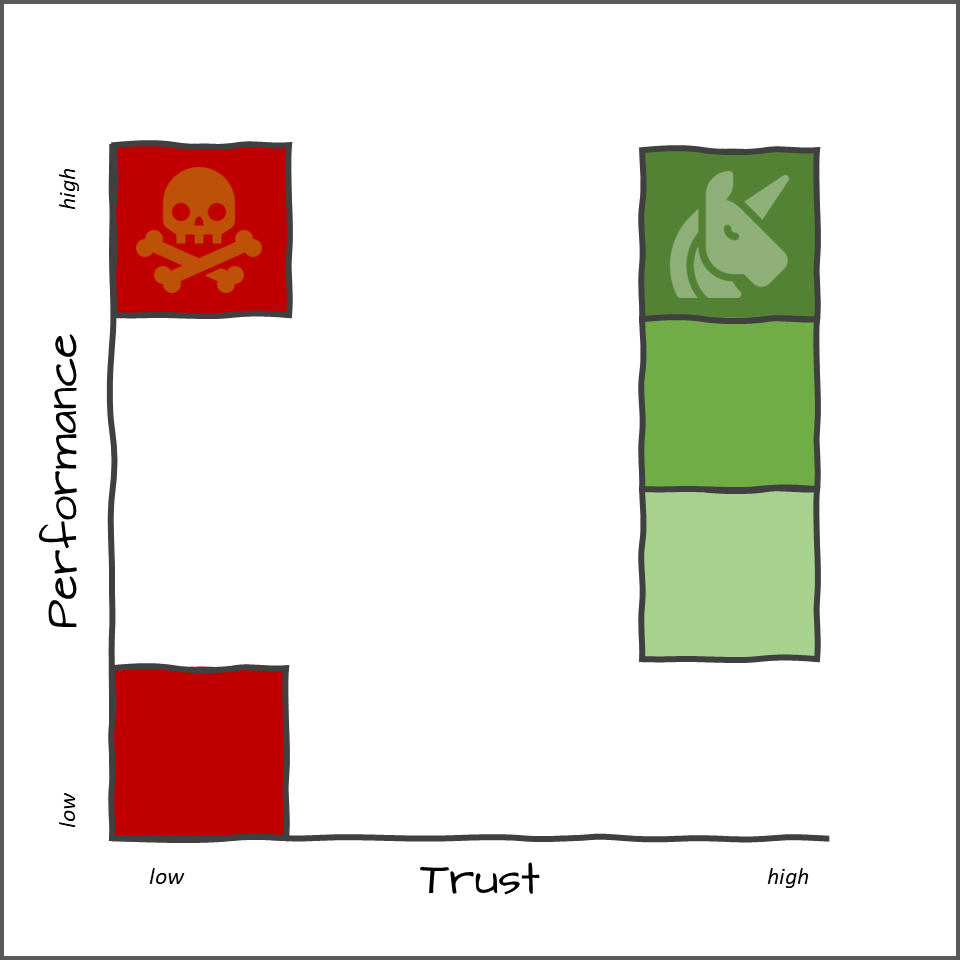
Simon is an adept communicator with a high woo factor, but this isn’t about him. I’ve cued this video to a place where Simon illustrates the assessment mindset employed to separate the wheat from the chaff in the minds of the Navy command. I’ve effectively recreated the chart Simon draws, and I use it as a reference.
Performance is on the Y-axis and Trust is on the X-axis. Effectively, they assess competency on and off the battlefield, respectively. He describes Performance as capturing “Do I trust you with my life?” and Trust as “Do I trust you with my money and my wife?” Perhaps he’s reflecting the sentiment of the generation managing the Seals. Not judging.
His point is that no one wants an untrustworthy low-performer (bottom left) and everyone wants a trustworthy high-performer (top right). He goes on to say that high-performing, low-trust members are toxic to the team. The team is better off with a relatively moderate performer that is otherwise trustworthy. I suppose the rest is a wash.
Performance is typical left-hemisphere fare: how much, how many, how fast, and so on. Companies have a million and one ways to measure performance.
Trust is a resident of the right hemisphere. This is an intuition and can’t be measured.
As Simon points out, even without explicit metrics, if you ask each team member who’s the highest performer, they’ll all point to the same person. Correspondingly, if you ask who’s the most trustworthy, they’ll all point to the same person as well. I can’t say that I trust this judgment, and thankfully, they do document whatever performance measures they have determined are appropriate. This option is not available for trust, so they have to rely on intuition. I don’t know if they also rely on consensus. I will grant that if all of the members do point to the same person as having the highest level of trust–presuming some performance threshold has been met–and the goal is to find a leader for that team, this person would make a fine leading candidate. If this person happened to be the highest performer then great, but being the best leader doesn’t require being the highest performer.
A sports coach doesn’t even need to excel at the sport s/he is leading. Their function is to motivate and inspire the team. Of course, in the case of the seals, I’m presuming this role is more of a player-manager. Still, the cohesion factor should be taken into account.
Trust is a heuristic that can’t be measured, and it’s fairly simple to find examples of people who appeared to be trustworthy but turned out not to be. It’s also conceivable that a trustworthy person may be misunderstood and perceived as trustworthy.
My question relates to the object of trust. When I think of police officers in the United States, I think that their trust is in each other, but at the expense of society. So they will generally protect each other even when they are morally and legally in the wrong. This is not the trust we want to foster for the public good. But since in my opinion policing is not about the public good but rather maintaining the status quo power structure, this is not a problem for their hiring managers.
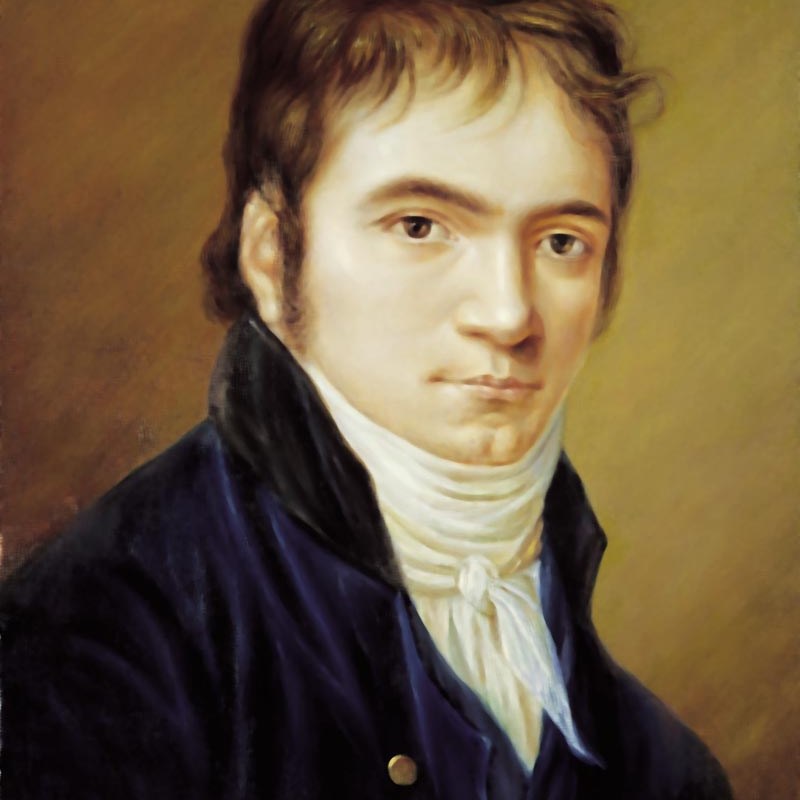
Real music comes from the heart. Rather, it’s a right-hemisphere affair. Beethoven was such a true musical genius, he had to express himself even when you couldn’t hear himself.
Above, Rick Reato gives us a little appreciation for Daniel Barenboim’s rendition of Beethoven’s Op.110 Piano Sonata. I’ve included the entire opus below. The entire 31st sonata can also be found on YouTube.
To be a musician and continue to write when deaf is the same as continuing to write as a deaf author. Musical notation is just symbols as words are symbols in a different medium. The inspiration happens in the right hemisphere and the left hemisphere translates them into symbols.
Musically speaking, I am more left-hemisphere. I have ideas that spawn from the right, but without an instrument, I couldn’t articulate them. Not even relatively. Many of my own compositions are left-hemisphere fare. I either take a mathcore approach or perhaps something along the lines of Schoenberg, where I want to convey a pattern—an example that comes to mind is Tool’s Lateralis, wherein the lyrical melody is based on the Fibonacci sequence—, or I let the instrument do the talking and transcribe the music after the fact. I know just about enough music theory to be dangerous, but not enough to be self-sufficient. This is why I always tended to collaborate with music directors or someone competent in this along the way.
My point is that the ears are not necessary to produce music—at least after you’ve figured out how to articulate it. For the record, there are blind artists and sculptors.
My mind is a Pachinko machine; my brain fatigued. Add to this the environmental distractions, such as breakfast, and it’s not conducive to focus. Today, it’s scrambled eggs and dry muffins—sans jam or butter, only some whipped substitute unfit for human consumption,
My prompt for writing the recent post on Professionalism was my reaction to the hospital staff and their demeanour—or as a colleague suggested in a comment, decorum. Perhaps I can remain focused on the words on this page as I type.
For service staff, warmth is a necessary ingredient of professionalism. This is particularly true for persons in the healing arts. The top indicator for pursuing legal action in a medical malpractice suit is the doctor’s bedside manner—personality and disposition—, whether the patient feels a personal connexion—a human connexion.
My experience in hospital is that the Medical Doctors have been hit or miss in the department—more miss than hit. I can even recall the names of the memorable ones. I suppose were I to be ill-treated, I’d remember as well. Here, it’s either treated nicely as a human or otherwise as an object in an assembly line. Thankfully, there have been no mistreatments or abuse.
The Registered Nurses had a better warmth ratio. Asking my circle of family, friends, and associates, this seems to be the general consensus. The rest of the staff were somewhere in between.
This warmth or human connexion extends beyond healthcare and to the service industry where human-to-human contact is made, even where that connexion is virtual—perhaps more so in order to bridge the distance. In my experience, the human factor tends to fall more at or below the level of the Medical Doctors. Any warmth is accidental. I am not saying that the people themselves lack compassion—though that could be the case. Rather, I am saying that they are moulded into automatons by the systems they are part of. It saps people of their humanity.
I started writing a post titled Bureaucracy is Violence, but I never completed it because I got lost in research. In a nutshell, bureaucracy is a Procrustean bed. I’ll leave it there for now. If you know, you know. Meantime, rage against the machine.
Do not go gentle into that good night. Rage, rage against the dying of the light.
It’s good to remember that words are but a small portion of communication, which operates in a larger space. Body language, gesticulation, facial expressions, speed, tone, inflexion, and intonation, all combine to convey at least as much. This is why a written document is always lacking. This is why important or sensitive information should be delivered in person unless you are willing to risk misinterpretation.
In the post-covid reality, some people have moved a lot of their previously face-to-face communication to one of the various videoconference services. Infants rely highly on the face, and they express much through the face. Even domesticated dogs have expressive faces. The face conveys a lot of information. This helps to make videoconference a decent means of communication. It is a step up over the telephone for instant communication, but it still falls short. Even over the phone, one can still use delivery speed and pacing. Tone, inflexion, and intonation should be able to be conveyed, but this may also be limited by connexion quality as well as microphone and speaker quality. However, body language and gesticulation are still largely absent. What may be present can be lost over a small viewing screen or poor video quality.
What gets left behind or limited are cues of authenticity and trust. I remember I had a client in Texas who preferred not to speak with my manager and other executives from the New York office. We had all met in person in the pre-Covid world, and the Texans had judged these people as “fast-talking city folks” instead of real down-to-earth people. I may be a city-slicker, but I’m not as fast-talking. One of these men was a great communicator in my eyes, but these are city eyes. As for the other person, he had snake-oil salesman written all over him, but he tried to hide it in all his erudition. He was very book-smart but lacking in authenticity.
mean what you say, and you say what you mean
Allow me to pause for a moment to riff on authenticity. In one way, I don’t believe in authenticity because I don’t believe there is anything to be authentic to. I write about this in many posts and at length. On the other hand, authenticity is that you believe what you are saying—you mean what you say, and you say what you mean. So what you are asking me to believe, you believe yourself.
If spoken communication is so important, why do you write a blog? That a picture is worth a thousand words is telling. In fact, a picture may convey a thousand words, but it’s probably conveying almost infinite words—or it could be. Words typically fail to transmit metaphor and intent. If we want to be clear, we need to add all sorts of additional words to allay confusion. Perhaps we need to include background information, tangential information, context, and whatnot. By the time we include all of the information that would be conveyed by the face and gesture, we’ve probably overwhelmed the recipients with a document that reads like a terms and conditions page—the ones almost no one reads but tick the box at the end anyway.
What is lost or diminished over video is authenticity and emotional content. Of course, a person can convey sympathy, empathy, and compassion over the phone, but to me, it’s like the wire monkeys in the old psychology experiments by Dr Harry Harlow. You get something to cling to—perhaps even a blanket around the wire is better than nothing. If the telephone is a wire monkey, videoconference is the wire monkey wrapped in a Teri-towel. The human element is still missing. We’re interacting with a simulacrum.
Princess Leia Organa
Some people are amazed at the prospect of holograms in the manner of Princess Leia’s grand entrance. “Help me, Obi-Wan.” Indeed, help us all. It is a step in the right direction, but mind the gap.
In the end, we should at least strive to prioritise in-person communication. At least in the movies, when they want to tell a loved one that their combatant or police officer has fallen (read: died), they do this in person. It should be telling that this also convey’s an emotional message to the audience that is often received as intended. It may cost more, but be sure to evaluate this cost against the benefits. Consider the lost benefits as well.
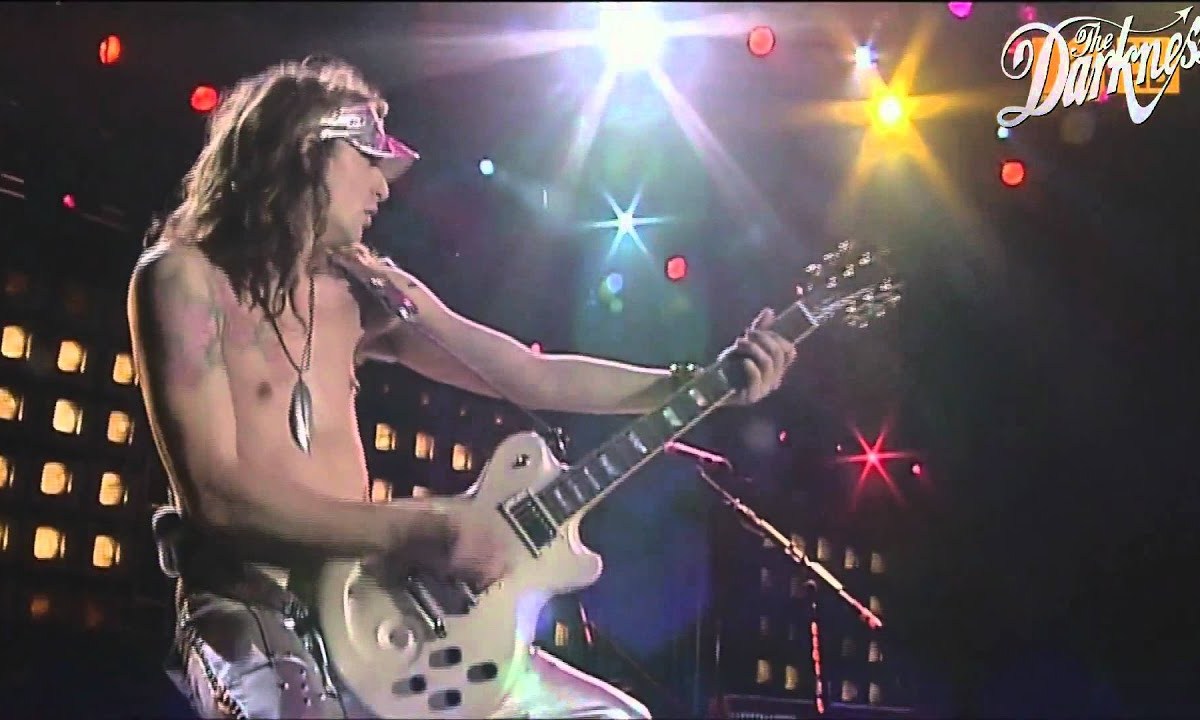
The Darkness‘ singer, Justin Hawkins, interrupts this performance in Sydney to request that the audience put their mobiles down, save for Nick Rodriguez, who he selects as the official videographer. He provides space for Nick to promote his Instagram page and directs the audience to visit there for video footage, which is in fact this video. He participated in both of (Foo Fighters‘ late drummer) Taylor Hawkins tribute performances.
Podcast: Audio rendition of this page content
Justin has had his own YouTube channel for just over a year now. He offers his own perspective on a variety of music and answers viewers’ questions in one segment a week. He seems like a bang-up chap. This was shot as part of his recent tour of Australia and New Zealand. Here, he performs their biggest hit, I Believe in a Thing Called Love (2003), a homage to Queen and Freddy Mercury.
I share this here because it’s refreshing that he cares enough about his audience to force them to be in the moment and experience the show in first-person rather than through a video lens. I am not all that hung up on the no-phones thing, and I’m not sure he is either, but he wanted to make sure that they engaged directly for at least this one song.
Even if you only view the video still on the blog, you may notice the surfeit of band members. The surplus performers are The Southern River Band, the warm-up band. I’ll just say that it is rare for a headline act to invite this. In many cases, opening acts are treated like second-class citizens. So, kudos to Justin and The Darkness.
I’ve just finished reading Iain McGilchrist’s The Master and His Emissary, having paused The Matter with Things to put it to bed. The book is divided into two sections. The first lays down the neuroscientific base whilst the second contains expository forrays. Technically, one might argue that there are three sections as the last unnumbered chapter seems to stand alone from the second part. It’s only one chapter containing some 36 pages, so I’m not going to lose any sleep over it. But this will not be a book review, as highly recommended as it is.
I’ve been a vocal proponent of hiring neurodiverse people into certain roles. Having read the book and absorbed the rationale, it’s easy to see how it aligns with and supports some of my own experiences. In particular, I’ve noticed that many companies hire autism spectrum on the Aspergers end of the scale. These people tend to be hired into IT and programming roles—functions already having reputations for being staffed with socially awkward and low EQ individuals, characteristics of people on the spectrum. It makes sense because left-hemisphere-dominant managers evaluate this hyper-left-hemisphere-dominant cohort as assets. Without getting too deep into the territory of stereotypes, in general, this group are laser-focused and doggedly pursue tasks at hand without tiring. I’ve met plenty of ADHD-diagnosed people in these roles, too—not as many, but also employed in technology-oriented positions.
The underrepresented class are right-hemisphere-dominant people. To be fair, I’ve encountered many Creative people in Agencies, but their right-hemisphere life is separate from their left and not appreciated in the workplace. They mainly exercise their right-hemisphere life outside of office hours on personal passion projects. I’d also be willing to bet that these people are not truly right-hemisphere-dominant. Rather, they have the ability to balance and allow the left hemisphere to take over during business hours.
In some cases, these people happen to have right-hemisphere insights into a project or have some creative inspiration off hours to benefit the work of the next day. But the right hemisphere is not time-boxed. It doesn’t function on demand. In fact, it shuts down on demand, and the left introduces bootleg knock-offs. Of course, this doesn’t matter, as it is probably better than their left-hemisphere managers and clients and good enough in their eyes. I’m not convinced they’d actually recognise the right-hemisphere solution as better because the left hemisphere prefers its own tribe anyway.
If you are reading this and you are saying, “They’re running a business. They can’t wait for weeks or months for a resource to have the epiphany of a creative solution,” you’ve made my point, and you’ve presented strong evidence that you are operating from your left hemisphere as well. There’s no shame in this. The first step is to admit there’s a problem.
My point is not to antagonise left-hemisphere-dominant people or the fact that they’re at home with other like-minded people. It’s only natural. They usually find right-hemisphere types to be too eccentric for their taste anyway.
But these right- or balanced-hemisphere thinkers, not given the space for their right-hemisphere to yield benefit, are likely in a Creative function, whether in art, illustration, copywriting, or some such. They are like unicorns outside of this context.
As for me, I am at times balanced and at times left. At other times, I’m purely right, though this is admittedly short-lived and unsustainable. But in a balanced state—in a right-shifted mode—, this is where my Gestalt comes into play. One of my roles is to evaluate processes. The left hemisphere analyses in components and pieces. Taking an analytical approach, I can document that the knee bone is connected to the shin bone and the shin bone is connected to the ankle bone and so on, but this requires context, something the left hemisphere is weak at. The left hemisphere will tell us that this is the bone connexion process, as it were. But it’s more than this. It’s meaningless without musculature and connective tissue and a nervous system and a circulatory system. And we’d likely want the person to whom the bones belong to be alive. And how do these bones contribute to function and perambulation? This is a larger system thinking approach.
System thinking is a recommendation for looking at processes, but this is right-hemisphere activity. Most people asked to perform this are left-hemisphere-dominant, so they give it short-shrift.
At the end of this rant, my point is that I hear all about equity, diversity, and inclusion, but this cohort is not only underrepresented but almost nonexistent. To be fair, many of these people wouldn’t feel comfortable behind your walls anyway, aren’t likely to prefer the constraint of your walls, and they’d probably feel like outsiders. But this is the challenge with true inclusion.
Classes are a left-hemisphere operation at the start—male, female, black, white, L, B, G, T, and so on. These are left-hemisphere constructs. But since you are already stuck in this place anyway, let’s consider expanding the neurodiverse class to include right-hemisphere people.
“You are the most interesting person I’ve ever met.”
Podcast: Audio rendition of this page content
This phrase was uttered to me the other day. Before you get on about my being braggadocious or humblebragging, let me disavow that notion straight away. But first some background and context.
Philosophics is my main blog, but I contribute to many. Philosophy is my passion, but occasionally I have a day job, and I have a blog centred on aspects of that. I was trying to decide whether this belongs there or here. I was video-interviewing for a contract position at a large bank. I even got an offer, so huzzah. As is typical, I went through my qualifications and responded to questions. This position involves managing a team, so I was asked what my approach was to teambuilding outside of work. Follows is a recreation of that conversation, which takes place about 40 minutes into the call.
Them: “How do you reinforce team cohesion outside of work hours?”
Me: “Full disclosure: I’m an introvert.”
Them: “Wait what? You are the most extroverted introvert I’ve ever met.”
Me: “This is 1 on 1. My preference is to be at home reading a book.”
Them: “I find that hard to believe. You are the most interesting person I’ve ever met.”
Me: “Like the guy in the Corona ads?”
Upon later discovery, they were Dos XX Equis ads.
Me: “In the past, I’ve always delegated that to someone with an interest and who cares. As I am a homebody, I am not even aware of what might be interesting. I tend to tag along, but I’m a teetotaler, and I’m not much into darts or pool, bowling or WhirlyBall. The best I can hope for is Trivia Night.”
These are team-building activities I’ve had to endure in the past. I’m not sure dragging a team through an art museum would do much for team cohesion. It may inspire a mutiny. I could be mistaken.
I’m an older chap, so you might assume that I’m just out of touch and set in my ways. You should know that I’ve always been like this. Parties and events bore me to tears. None of it resonates with me, and much of it is centred around alcohol (in the politically correct accounts). I’ve attended many and mingled, but in the back of my mind, I just couldn’t wait to take flight. I was in the entertainment business for years, and this was the norm and expectation, so I complied, but it was never comfortable.
In any case, I think he confuses the difference between someone being interesting and someone who can spin a good narrative. I’ve always been a storyteller. Believe me, I was not trying to embellish my background, I was just answering ‘how would you handle this?’ queries and responding with past experiences to make it real.
To be honest, if there is such a thing, I am overqualified for the job—whatever that means—, so they were afraid I’d get bored and quickly exit. The last thing on my mind was to embellish anything. This role is not a stretch. In fact, I was told that sometimes the tasks would be very tactical and mundane. I responded that I’d take what I could and appreciate not taxing my brain.
Chapter 10 of The Master and His Emissary is titled The Enlightement, which is to say another chapter centred around a religious theme and paradigm shift. Only it isn’t. This chapter is focused mainly on metaphor and poetry, and that’s where I want to comment.
If you haven’t happened to have read the prior posts on The Master and His Emissary orThe Matter with Things, I’ll summarise the functions of the left and right cerebral hemispheres. If you have, feel free to skip this paragraph. The left hemisphere is closing and convergent whilst the right hemisphere is expansive and divergent, The left is about naming, categorising, and analysing; the right is about experiencing the world as presenced. Where the right hemisphere is about presentation, the left is about re-representation. A challenge occurs when the re-presented view of the left supersedes the experiential view of the right. This is what occurs in a left-dominant brain.
Metaphor is a function of the right hemisphere. The left hemisphere considers metaphor to be a figure of speech. It trivialises it in one of two ways. Either, it reduces it to components that map to some other concepts—ignoring the parts that can’t be mapped—, or it assumes the metaphor to be whimsy and therefore without inherent value.
But metaphor is more than a figure of speech. It’s a figure of thought that can’t be reduced. Metaphor is like art or music and other residences of the right hemisphere. These things must be taken as whole entities and be considered in the manner of Gestalt.
Being analytical and representative, the left hemisphere can be educated. I could be wrong, but I don’t see how the right can be strengthened. It seems that its weakness is interference from the left, but the left is constantly wintering on that it’s always right, and all you need is to be more analytical. If you don’t have empathy, you can’t learn it. If you don’t understand metaphor, you’re pretty much out of luck. The same goes for anything in the experiential right hemisphere.
Might I be wrong? Sure, I’m no neuroscientist, but short of some external event, like a stroke, brain lesions, head trauma, or some such. I don’t see the vector. In a way, it’s like the advancement of technology. It’s difficult to stem the tide and reverse it. This is the challenge. In the West, we’ve been on a path to rationality and reason—left hemisphere fare—, which has shifted it further and further left. We just need more systems and processes.
Why the title, “Metaphor and Simile?” Metaphor resides in the province of the right hemisphere. Simile resides in the left. I remember listening to Joseph Campbell in the 1980s discussing the power of metaphor. Where metaphor is a mode of thought, simile is just a figure of speech. And it’s an analytical analogue. Love is like a rose. There’s a simple mapping. Love is a rose is more robust. John Lennon sings these lines in Mind Games.
Love is the answer and you know that for sure
Love is a flower you got to let it grow
Love is a flower. You got to let it grow. Grammatical structure aside—only an intractable problem for left-brainers—, this is a relatively simple metaphor, flowers grow and bloom; love grows and blooms.
Follows are another few famous metaphors. These may feel more accessible than some others.
“All the world’s a stage, and all the men and women merely players. They have their exits and their entrances.”
William Shakespeare
“All our words are but crumbs that fall down from the feast of the mind.”
Khalil Gibran
This one is particularly interesting as it suggests how diminutive words are relative to that of the mind—mere crumbs.
“And your very flesh shall be a great poem.”
Walt Whitman
How shall your flesh be a great poem? No like a great poem, but to be a great poem.
I’ve talked about Robert Frost’s The Road Less Travelled previously.
Two roads diverged in a yellow wood, And sorry I could not travel both And be one traveler, long I stood And looked down one as far as I could To where it bent in the undergrowth;
Then took the other, as just as fair, And having perhaps the better claim, Because it was grassy and wanted wear; Though as for that the passing there Had worn them really about the same,
And both that morning equally lay
In leaves no step had trodden black.
Oh, I kept the first for another day!
Yet knowing how way leads on to way,
I doubted if I should ever come back.
I shall be telling this with a sigh Somewhere ages and ages hence: Two roads diverged in a wood, and I— I took the one less traveled by, And that has made all the difference.
This poem is replete with metaphors.
The road itself is a metaphor for life, and the forks are the choices we make. Interpreted from a post-Modern perspective, and as Frost said himself, the trick is that it doesn’t matter which path is taken. In any case, irrespective of which paths you take, it will still make all the difference.
I’ve digressed.
McGilchrist says societies and people are moving too far into a left-dominant worldview, which only reinforces and accelerates this worldview. I don’t know how reversible it is. It’s swung both ways before, but that was prior to Scientism. This and hubris are not a great combination. In the end, the probability of teaching someone metaphor is on par with teaching someone to appreciate a work of art or a piece of music.
McGilchrist says we need to regain this capacity for metaphor—and empathy and so on—, but this requires (in my mind) a paradigm shift. I don’t see it happening at an individual level. There would need to be a cultural shift, and that is unforeseeable from here at the moment.
Here’s the challenge as I see it. In saying that we need to regain the ability to understand metaphor without assuming it can be deconstructed without a loss of meaning, he doesn’t provide a path—at least not yet. I’ve got two chapters remaining, so perhaps he’ll offer some guidance or conceptual framework in one of them. Otherwise, the future looks bleak. Of course, humans are adaptable. Evolution works that way, but you can also veer down an evolutionary dead end without knowing your journey has no viable future until you get there. And that will make all the difference.
In the spirit of full disclosure and to set the stage, I’m an atheist and can’t remember being otherwise. I’ve discussed this here before at length. Iain McGilchrist is not.
Religion is the topic of chapter nine of The Master and His Emissary. I understand what the author is saying, and I think a question I have about a fundamental issue is coming to head. Although I’ve spoken at greater length before, I’ll recapitulate here.
An assertion of McGilchrist’s is that we should judge the hemispheres by how well each corresponds to the truth of reality. He goes on to tell us that the left hemisphere is the controller of words, so we shouldn’t get hung up on the word truth and the definition that pales relative to the intuition of truth. I have an issue with this, but I’ll return to it in a moment.
As I’ve stated countless times by now, the left cerebral hemisphere is convergent and closing whilst the right is divergent and expansive. The left is intellect whilst the right is intuition. The left is categorisation, naming, and re-presentation whilst the right is Gestalt and presentation. The left is literal whereas the right is metaphorical. I’ll return to this presently.
Before touching on religion, I’ll articulate my challenge. He makes an unsubstantiated assertion that we can’t build a whole from a sum of parts. Instead, we need to accept the whole as presented as is, and realise that we may not be able to fully account for all of the parts. Just trust our intuition of the experience.
My contention here is that neither is quite right. Whilst the left hemisphere has the possibility of leaving things out, the right hemisphere has the possibility of adding irrelevant or otherwise injected content. In the case of religion, this would be along the lines of inserting a god of the gaps. I’ll come back to this.
All religions are not created equal. McGilchrist argues that Catholicism is a right-hemisphere religion whilst Protestantism, in particular Lutherans, operates from the left hemisphere. He even cites Max Weber’s writings noting the connexion between Protestantism and Capitalism. Despite being raised in an area with seventy-odd per cent Roman Catholics, I don’t know enough about Catholicism to critique that part of his assertion, but I agree with his statement on Protestants. As for my intuition, I’d say that all of the rote ritualism is a left-hemisphere function, but I’m not sure.
As he continues his argumentation he makes a case that religion needs to be taken metaphorically and cannot be deconstructed. This is to lose the proverbial woods for the trees. Of course, this is not only precisely what the left hemisphere does it’s also what the Protestant reformation did and Protestantism continues to do today. Like Capitalism, the focus is on the individual. For Catholics, it’s communal. Although he doesn’t cite Calvanlism and the ideal of work, the result is the same. Hard work yields a preternatural payoff.
I have no problem with metaphor, whether in speech, writing, art, or music. I’ve been a musician and dabbled in art. Much of my favourite fiction is metaphorical, and I don’t need to dissect it any of these to enjoy the experience.
religion can be experienced metaphorically
I am even willing to grant that religion can be experienced metaphorically. I have no quarrel here. Where his argument tends to lose ground is when it becomes prescriptive and systematised. Again, I am no expert on Catholicism, but I have attended Catholic church ceremonies. I even got ejected from CCD classes I had attended with a mate when I was eight or nine years old—not a great way to win hearts and minds.
When I lived in West Los Angeles—Palms to be exact—, my apartment was across the street from an Anglican church. Down the road, there was a Hare Krishna ashram—very diverse. I poked my nose into each. In fact, the Anglican church was my designated voting location, so I visited there on that occasion periodically. The spectacle of the smoke of frankincense and myrrh billowing out and wafting up is still a pleasant recollection. Frankly, I hadn’t thought of it in years, but writing about it returned the memories. Of course, the ashram had its own incense; only it was nag champa.
Some self-professed ‘spiritual’ people I have encountered, love the spectacle of a Catholic ceremony. There are candles, rituals, chanting, kneeling, chorals, and incantations. I can see how these can be taken metaphorically, but it’s also rote. But that’s not where my difficulty lay.
My problem is not that religion can’t be interpreted metaphorically. In fact, I can’t agree more. My problem is that this metaphor further aligns to God or to gods. But wait. I know what you’re thinking. Those are just metaphors, too. And I agree. The problem isn’t that I don’t grant or understand that. It’s that the parishioners don’t. They think there is an old bearded man in the clouds issuing commandments and listening for their prayers. And if you don’t toe the line and play nice, your eternal life prospects don’t look good.
He does argue that this fire and brimstone are artefacts of the Protestants, but this is what I see depicted in films and books. Obviously, the Southen Baptist preacher at the pulpit shrieking sermons is Protestant fare. On the other hand, Catholics have demons to exorcise and rosary beads and confession. I can see that these are metaphorical. Perhaps he’s right. I don’t know if Catholics have the equivalent of eternal hell. They do have—or did have—a purgatory. Do they have a decalogue. As far as I know, they do. Perhaps he was just speaking in relative terms—that Catholic tradition is just more right-hemisphere-oriented than Protestantism.
If this is the extent of his claim, we agree, but he goes further and invokes the divine. Yet again, I can accept this as a metaphor, but I feel he means it to be taken more literally. In any case, the followers seem to tend to.
With meditation … the idea is to let go and forego attachment
This brings me back to God of the gaps. Metaphors are concepts or notions. I say this because, metaphors don’t, for example, answer prayers. The act of praying may be metaphorical—perhaps I could equate it to singing or meditation—, but no physical action is expected in return. With singing, the effect may be a connexion or an emotion. The music is aiming to lift spirits or make one reflective or sad—perhaps add tension in a suspense movie. With meditation—guided meditation notwithstanding—, the idea is to let go and forego attachment. What do your suspect we are letting go of? What are we detaching from? The fetters of the left hemisphere—the bastion of judgment.
Prayer is different. On one hand, there is the metaphorical aspect of compassion and sharing, But it doesn’t end there. Susie has surgery and we pray for her recovery. Metaphorically, a believer may feel consoled by compassion. Even Susie may feel better, which will lead to a more positive disposition that may lead to faster recovery and healing, even if by placebo effects. On the other hand, perhaps not. And then there’s distance healing where the recipient isn’t even aware of the prayers, but they are either brokered by God or simply permeate the fabric of the universe or Jung’s collective unconsciousness. This is where it goes off the rails.
So, when I am asked to accept religion metaphorically but am also asked to accept magical thinking as part of that equation, I’m just not on board. Sorry. It makes no sense and doesn’t even feel intuitively right.
religion is about power
Call me a cynic, but for me, religion is about power. Perhaps at one time, the religious experience was a feeling, but all evidence points to this being almost immediately exploited by the priest classes and then by Government and other nefarious actors. Some countries are worse than others, but that’s no consolation.
In the end, I get the religion-metaphor connexion, and I trust that Iain is not so naive to see the Foucauldian power-control angle. Besides, if culture is shifting to the left hemisphere and can’t interpret metaphors very well—something experience demonstrates—, so I’m not sure the defence holds as much water as he wants it to.