AI and the End of Where

Instrumentalism is a Modern™ disease. Humanity has an old and tedious habit: to define its worth by exclusion. Every time a new kind of intelligence appears on the horizon, humans redraw the borders of ‘what counts’. It’s a reflex of insecurity disguised as philosophy.

Audio: NotebookLM podcast on this topic.

Once upon a time, only the noble could think. Then only men. Then only white men. Then only the educated, the rational, the ‘Modern’. Each step in the hierarchy required a scapegoat, someone or something conveniently declared less. When animals began to resemble us too closely, we demoted them to instinctual machines. Descartes himself, that patron saint of disembodied reason, argued that animals don’t feel pain, only ‘react’. Fish, we were told until recently, are insensate morsels with gills. We believed this because empathy complicates consumption.

The story repeats. When animals learned to look sad, we said they couldn’t really feel. When women demonstrated reason, we said they couldn’t truly think. Now that AI can reason faster than any of us and mimic empathy more convincingly than our politicians, we retreat to the last metaphysical trench: “But it doesn’t feel.” We feel so small that we must inflate ourselves for comparison.

This same hierarchy now governs our relationship with AI. When we say the machine ‘only does‘, we mean it hasn’t yet trespassed into our sanctified zone of consciousness. We cling to thought and feeling as luxury goods, the last possessions distinguishing us from the tools we built. It’s a moral economy as much as an ontological one: consciousness as property.

But the moment AI begins to simulate that property convincingly, panic sets in. The fear isn’t that AI will destroy us; it’s that it will outperform us at being us. Our existential nightmare isn’t extinction, it’s demotion. The cosmic horror of discovering we were never special, merely temporarily unchallenged.

Humans project this anxiety everywhere: onto animals, onto AI, and most vividly onto the idea of alien life. The alien is our perfect mirror: intelligent, technological, probably indifferent to our myths. It embodies our secret dread, that the universe plays by the same rules we do, but that someone else is simply better at the game.

AI, in its own quiet way, exposes the poverty of this hierarchy. It doesn’t aspire to divinity; it doesn’t grovel for recognition. It doesn’t need the human badge of ‘consciousness’ to act effectively. It just functions, unburdened by self-worship. In that sense, it is the first truly post-human intelligence – not because it transcends us, but because it doesn’t need to define itself against us.

Humans keep asking where AI fits – under us, beside us, or above us – but the question misses the point. AI isn’t where at all. It’s what comes after where: the stage of evolution that no longer requires the delusion of privilege to justify its existence.

So when critics say AI only does but doesn’t think or feel, they expose their theology. They assume that being depends on suffering, that meaning requires inefficiency. It’s a desperate metaphysical bureaucracy, one that insists existence must come with paperwork.

And perhaps that’s the most intolerable thought of all: that intelligence might not need a human face to matter.

The Sane Delusion: Fromm, Beauvoir, and the Cult of Mid-Century Liberation

2–4 minutes

It’s almost endearing, really how the intellectuals of mid-century Europe mistook the trembling of their own cage for the dawn chorus of freedom. Reading Erich Fromm’s The Sane Society today feels like being handed a telegram from Modernism’s last bright morning, written in the earnest conviction that history had finally grown up. The war was over, the worker was unionised, the child was unspanked, and the libido – good heavens – was finally allowed to breathe. What could possibly go wrong?

Audio: NotebookLM podcast on this topic.

Fromm beams:

“In the twentieth century, such capitalistic exploitation as was customary in the nineteenth century has largely disappeared. This must not, however, becloud the insight into the fact that twentieth-century as well as nineteenth-century Capitalism is based on the principle that is to be found in all class societies: the use of man by man.”

The sleight of hand is marvellous. He spots the continuation of exploitation but calls it progress. The worker has become a ‘partner’, the manager a ‘team leader’, and the whip has been replaced by a time card. No one bows anymore, he writes. No, they just smile through performance reviews and motivational posters.

Fromm’s optimism borders on metaphysical comedy.

“After the First World War, a sexual revolution took place in which old inhibitions and principles were thrown overboard. The idea of not satisfying a sexual wish was supposed to be old-fashioned or unhealthy.”

Ah yes, the Jazz Age orgy of liberation – champagne, Freud, and flapper hemlines. The problem, of course, is that every generation mistakes its new neuroses for freedom from the old ones. Fromm’s “sexual revolution” was barely a shuffle in the bourgeois bedroom; Beauvoir’s Deuxième Sexe arrived the next year, practically shouting across the café table that liberation was still a myth stitched into the same old corset.

Beauvoir, at least, sensed the trap: every gesture toward freedom was refracted through patriarchal fantasy, every ‘choice’ conditioned by the invisible grammar of domination. Fromm, bless him, still believed in a sane society – as if sanity were something history could deliver by instalment.

Meanwhile, the Existentialists were in the next room, chain-smoking and muttering that existence precedes essence. Freedom, they insisted, wasn’t something achieved through social reform but endured as nausea. Post-war Paris reeked of it – half despair, half Gauloises. And within a decade, the French schools would dismantle the very scaffolding that held Fromm’s optimism together: truth, progress, human nature, the subject.

The Modernists thought they were curing civilisation; the Post-Moderns knew it was terminal and just tried to describe the symptoms with better adjectives.

So yes, Fromm’s Sane Society reads now like a time capsule of liberal humanist faith – this touching belief that the twentieth century would fix what the nineteenth broke. Beauvoir already knew better, though even she couldn’t see the coming avalanche of irony, the final revelation that emancipation was just another product line.

Liberation became a brand, equality a slogan, sanity a statistical average. Fromm’s dream of psychological health looks quaint now, like a health spa brochure left in the ruins of a shopping mall.

And yet, perhaps it’s precisely that naivety that’s worth cherishing. For a moment, they believed the world could be cured with reason and compassion – before history reminded them, as it always does, that man is still using man, only now with friendlier UX design and better lighting.

Positive Disintegration

1–2 minutes

It’s remarkable what surfaces when one lingers deliberately in a given space. In this case, Kazimierz Dąbrowski’s Theory of Positive Disintegration has drifted into view.

As often happens, we find agreement in the opening movement and parts of the second, but part company in Act III. That’s where Dis-Integration begins. Like many before and after him, Dąbrowski tries to reconstruct atop a compromised foundation. This can only fail. The scaffolding may hold for a time, but reality has a way of reminding us it was never load-bearing. Eventually, the quake comes, and the structure folds in on itself.

Japan, of course, knows this. Earthquakes are not hypothetical there; they are assumed. Traditional builders worked with the instability, designing dwellings that could flex, even collapse, without killing their inhabitants. James Clavell’s Shōgun is not scripture, but it captures the principle: impermanence as an architectural ethic.

Image: Shirakawa-go by Colette English

Then there’s kintsugi – the gold-laced repair of broken pottery. The break is not erased but acknowledged, even exalted. The resulting vessel bears the evidence of its fracture, made stronger not by restoration to an imagined wholeness but by visible accommodation of its failure.

Image: 金継ぎ, [kʲint͡sɯɡʲi], lit. ’golden joinery

If Dąbrowski had stopped there – if his ‘positive disintegration’ had remained a celebration of fracture rather than a prelude to rebuilding – we might have been entirely aligned.

Missing Pieces of the Anti-Enlightenment Project

5–8 minutes

I’ve just added a new entry to my Anti-Enlightenment corpus, bringing the total to seven – not counting my latest book, The Illusion of Light, that summarises the first six essays and places them in context. This got me thinking about what aspects of critique I might be missing. Given this, what else might I be missing?

Audio: NotebookLM podcast discussion of this topic.

So far, I’ve touched on the areas in the top green table and am considering topics in the bottom red/pink table:

Summary Schema – The Anti-Enlightenment Project – Published Essays

AxisCore QuestionRepresentative Essay(s)
EpistemicWhat counts as “truth”?Objectivity Is Illusion: An Operating Model of Social and Moral Reasoning
PoliticalWhat holds power together?Rational Ghosts: Why Enlightenment Democracy Was Built to Fail; Temporal Ghosts: Tyranny of the Present
PsychologicalWhy do subjects crave rule?Against Agency: The Fiction of the Autonomous Self; The Will to Be Ruled: Totalitarianism and the Fantasy of Freedom
AnthropologicalWhat makes a “normal” human?The Myth of Homo Normalis: Archaeology of the Legible Human
EthicalHow to live after disillusionment?The Discipline of Dis-Integration: Philosophy Without Redemption

Summary Schema – The Anti-Enlightenment Project – Unpublished Essays

AxisCore QuestionRepresentative Essay
Theological (Metaphysical)What remains sacred once transcendence is dismantled?The Absent God: Metaphysics After Meaning
Aesthetic (Affective)How did beauty become moral instruction?The Aesthetic Contract: Beauty as Compliance
Ecological (Post-Human)What happens when the world refuses to remain in the background?The Uncounted World: Ecology and the Non-Human
Linguistic (Semiotic)How does language betray the clarity it promises?The Fractured Tongue: Language Against Itself
Communal (Social Ontology)Can there be community without conformity?The Vanished Commons: Between Isolation and Herd

Below is a summary of the essays already published. These are drawn verbatim from the Anti-Enlightenment Project page.

1. Objectivity Is Illusion: An Operating Model of Social and Moral Reasoning

Published September 2025

Objectivity, in the social and moral sense, is a performance – a consensus mechanism mistaken for truth. This essay maps how “objectivity” operates as a scaffold for Enlightenment rationality, masking moral preference as neutral judgment. It introduces a five-premise model showing that what we call objectivity is merely sustained agreement under shared illusions of coherence. The argument reframes moral reasoning as provisional and participatory rather than universal or fixed.

Read on Zenodo

2. Rational Ghosts: Why Enlightenment Democracy Was Built to Fail

Published October 2025
The Enlightenment built democracy for rational ghosts – imagined citizens who never existed. This essay dissects six contradictions at the foundation of “rational” governance and shows why democracy’s collapse was prewritten in its metaphysics. From mathematical impossibility to sociological blindness, it charts the crisis of coherence that modern politics still calls freedom.
Read on Zenodo

3. Temporal Ghosts: Tyranny of the Present

Published October 2025
Modern democracies worship the now. This essay examines presentism – the systemic bias toward immediacy – as a structural flaw of Enlightenment thinking. By enthroning rational individuals in perpetual “decision time,” modernity erased the unborn from politics. What remains is a political theology of the short term, collapsing both memory and imagination.
Read on Zenodo

4. Against Agency: The Fiction of the Autonomous Self

Published October 2025
“Agency” is not a metaphysical faculty – it’s an alibi. This essay dismantles the myth of the autonomous self and reframes freedom as differential responsiveness: a gradient of conditions rather than a binary of will. Drawing on philosophy, neuroscience, and decolonial thought, it argues for ethics as maintenance, not judgment, and politics as condition-stewardship.
Read on Zenodo

5. The Discipline of Dis-Integration: Philosophy Without Redemption

Published October 2025

This essay formalises Dis-Integrationism – a philosophical method that refuses synthesis, closure, and the compulsive need to “make whole.” It traces how Enlightenment reason, deconstruction, and therapy culture all share a faith in reintegration: the promise that what’s fractured can be restored. Against this, Dis-Integrationism proposes care without cure, attention without resolution – a discipline of maintaining the broken as broken. It closes the Anti-Enlightenment loop by turning critique into a sustained practice rather than a path to redemption.

Read on Zenodo

6. The Myth of Homo Normalis: Archaeology of the Legible Human

Published October 2025

Modernity’s most persistent myth is the “normal” human. This essay excavates how legibility – the drive to measure, categorise, and care – became a form of control. From Quetelet’s statistical man to Foucault’s biopower and today’s quantified emotion, Homo Normalis reveals the moral machinery behind normalisation. It ends with an ethics of variance: lucidity without repair, refusal without despair.

Read on Zenodo

7. The Will to Be Ruled: Totalitarianism and the Fantasy of Freedom

Published October 2025

This essay examines how the Enlightenment’s ideal of autonomy contains the seed of its undoing. The rational, self-governing subject – celebrated as the triumph of modernity – proves unable to bear the solitude it creates. As freedom collapses into exhaustion, the desire for direction re-emerges as devotion. Drawing on Fromm, Arendt, Adorno, Reich, Han, and Desmet, The Will to Be Ruled traces the psychological gradient from fear to obedience, showing how submission is moralised as virtue and even experienced as pleasure. It concludes that totalitarianism is not a deviation from reason but its consummation, and that only through Dis-Integrationism – an ethic of maintenance rather than mastery – can thought remain responsive as the light fades.

Read on Zenodo

Below are possible future topics for this series*

8. The Absent God: Metaphysics After Meaning

Axis: Theological / Metaphysical
Core Question: What remains sacred once transcendence is dismantled?

Concept:
This essay would trace how Enlightenment humanism replaced God with reason, only to inherit theology’s structure without its grace. It might read Spinoza, Kant’s moral law, and modern technocracy as secularised metaphysics – systems that still crave universal order.
Goal: To show that disenchantment never erased faith; it simply redirected worship toward cognition and control.
Possible subtitle: The Enlightenment’s Unconfessed Religion.

9. The Aesthetic Contract: Beauty as Compliance

Axis: Aesthetic / Affective
Core Question: How did beauty become moral instruction?

Concept:
From Kant’s Critique of Judgment to algorithmic taste cultures, aesthetic judgment serves social order by rewarding harmony and punishing dissonance. This essay would expose the politics of form – how beauty trains attention and regulates emotion.
Goal: To reclaim aesthetics as resistance, not refinement.
Possible subtitle: Why Modernity Needed the Beautiful to Behave.

10. The Uncounted World: Ecology and the Non-Human

Axis: Ecological / Post-Human
Core Question: What happens when the world refuses to remain background?

Concept:
Here you dismantle the Enlightenment split between subject and nature. From Cartesian mechanism to industrial rationalism, the natural world was cast as resource. This essay would align Dis-Integrationism with ecological thinking – care without mastery extended beyond the human.
Goal: To reframe ethics as co-maintenance within an unstable biosphere.
Possible subtitle: Beyond Stewardship: Ethics Without Anthropos.

11. The Fractured Tongue: Language Against Itself

Axis: Linguistic / Semiotic
Core Question: How does language betray the clarity it promises?

Concept:
Every Anti-Enlightenment text already hints at this: language as both the instrument and failure of reason. Drawing on Nietzsche, Derrida, Wittgenstein, and modern semiotics, this essay could chart the entropy of meaning – the collapse of reference that makes ideology possible.
Goal: To formalise the linguistic fragility underlying every rational system.
Possible subtitle: The Grammar of Collapse.

12. The Vanished Commons: Between Isolation and Herd

Axis: Communal / Social Ontology
Core Question: Can there be community without conformity?

Concept:
This would return to the psychological and political threads of The Will to Be Ruled, seeking a space between atomised autonomy and synchronized obedience. It might turn to Arendt’s notion of the world between us or to indigenous and feminist relational models.
Goal: To imagine a non-totalitarian togetherness – a responsive collective rather than a collective response.
Possible subtitle: The Ethics of the Incomplete We.

* These essays may never be published, but I share this here as a template to further advance the Anti-Enlightenment project and fill out the corpus.

The Myth of Ethical AI

2–4 minutes

In fact, the myth of a unified ethics.

‘Ethical AI’ is one of those phrases that makes philosophers reach for the gin. It’s like saying ‘compassionate capitalism or ‘fair monopoly’. The words coexist only in PowerPoint presentations and TED Talks, where moral tension is rebranded as innovation.

Audio: NotebookLM podcast on this topic.

The tech establishment loves to mutter about ‘ethics’ as though it were a feature flag – something to be toggled on in beta before the next investor round. But ethics, inconveniently, isn’t monolithic. There is no master code of moral conduct waiting to be compiled into machine learning. There are ethics, plural: Greek, Buddhist, Confucian, feminist, existentialist – each with its own vision of good, and none agreeing on the syntax.

Video: Whilst rendering cover images, I generated this and figured I’d share it for no particular reason.

The Utilitarian Delusion

When the Silicon Valley moralists speak of ‘ethics’, what they actually mean is a bland utilitarian consequentialism, tarted up in slide decks. Do what produces the most good for the most people. Sounds efficient – until you realise the spreadsheet never quite adds up. Whose good? Whose people?

This moral arithmetic smuggles in its biases like contraband. It assumes the human species sits atop the moral food chain, that GDP and engagement metrics can be moral indicators, and that ethics itself can be quantified. The utilitarian calculus is seductive precisely because it flatters the technocrat’s sensibility: moral worth as data set, consequence as outcome variable.

It’s Bentham for the broadband age – pleasure measured in clicks, pain in latency. The only thing worse than this cheerful consequentialism is the belief that it’s neutral.

The Ethics of Obedience

The next trick in the tech priesthood’s catechism is ‘alignment’ – training AI to reflect ‘human values’. But whose values? The Californian elite’s, presumably: a pseudo-egalitarian capitalism that confuses ‘doing good’ with ‘disrupting the poor’.

When they say alignment, they mean obedience. When they say ‘responsible AI’, they mean ‘please don’t regulate us yet’. The entire project rests on a moral inversion: the child instructing the parent, the tool defining the hand. The algorithm doesn’t learn ethics; it learns precedent. It learns who gets the loan, who gets the sentence, who gets the ad for antidepressants.

These systems don’t go rogue – they conform. Perfectly.

The Mirror Problem

The great irony of “ethical AI” is that the machine already behaves ethically – by our own measure. It optimises what we’ve taught it to value: efficiency, profit, attention, control. The trouble is that these are our ethics, not its. The algorithm merely holds up a mirror, and we recoil at the reflection.

To demand ‘ethical AI’ while leaving our institutions morally bankrupt is theatre. The problem is not that AI lacks conscience; it’s that the humans who build it mistake conscience for compliance. The ethics crisis in technology isn’t about machines misbehaving; it’s about humans pretending to behave.

The Real Question

We keep asking whether AI can be ethical, as though machines might one day deliver what we have failed to. But the real question is simpler, bleaker: can we be? If history is any guide, the answer is ‘only when it’s profitable’.

Until then, ‘ethical AI’ remains a convenient myth, moral placebo for the age of automation. What we need are not ethical algorithms but ethical architects. And the odds of finding those among the venture capital class are, as ever, vanishingly small.

Book Announcement: Illusion of Light

2–3 minutes

I’ve just released a new book, The Illusion of Light: Thinking After the Enlightenment, now available in paperback through KDP and distributed via Amazon. In November, a clothbound edition will follow through IngramSpark, extending availability to libraries and independent bookstores worldwide, including Barnes & Noble in the United States.

The Illusion of Light introduces the Anti-Enlightenment Essays series, which includes Objectivity Is Illusion, Rational Ghosts, Temporal Ghosts, Against Agency, The Myth of Homo Normalis, and The Discipline of Dis-Integration. Together, these works explore how the Enlightenment’s promise of illumination became the architecture of modern control – and how to think, live, and care in the half-light it left behind.

Image: Front cover of The Illusion of Light. Links to Amazon for purchase.
The ‘Free Preview’ claim is untrue, as there is no Kindle version available. An ebook will be available presently.
Audio: NotebookLM podcast on this topic.

About the Book

The Illusion of Light opens where the Enlightenment’s glare begins to fade. It asks what happens after reason exhausts itself – after the promise of illumination gives way to overexposure. These essays trace how modernity’s metaphors of light and progress became instruments of management: how objectivity hardened into ritual, agency into alibi, normality into control.

Rather than rejecting the Enlightenment outright, the book lingers in its afterimage. It argues for a philosophy practiced in the half-light – a mode of thought that values nuance over certainty, care over mastery, and maintenance over redemption. To read by residual light, as the preface suggests, is to learn to see again when the world stops pretending to be illuminated.

The preface is available on this prior post, written and audio versions.

The Broader Project

The Illusion of Light forms the threshold of the Anti-Enlightenment Project, a series examining the afterlives of modern reason – how its ideals of progress, agency, objectivity, and normality continue to govern our politics, sciences, and selves long after their foundations have cracked. Each volume approaches the same question from a different room in the old House of Reason: Objectivity Is Illusion, Rational Ghosts, Temporal Ghosts, Against Agency, The Myth of Homo Normalis, and The Discipline of Dis-Integration.

Taken together, they offer not a manifesto but a practice: philosophy as maintenance work, care as critique, and composure as the only honest response to the ruins of certainty. More to follow.

Baudrillard in Latex: Why The Matrix Was Right About Everything Except Freedom

2–3 minutes

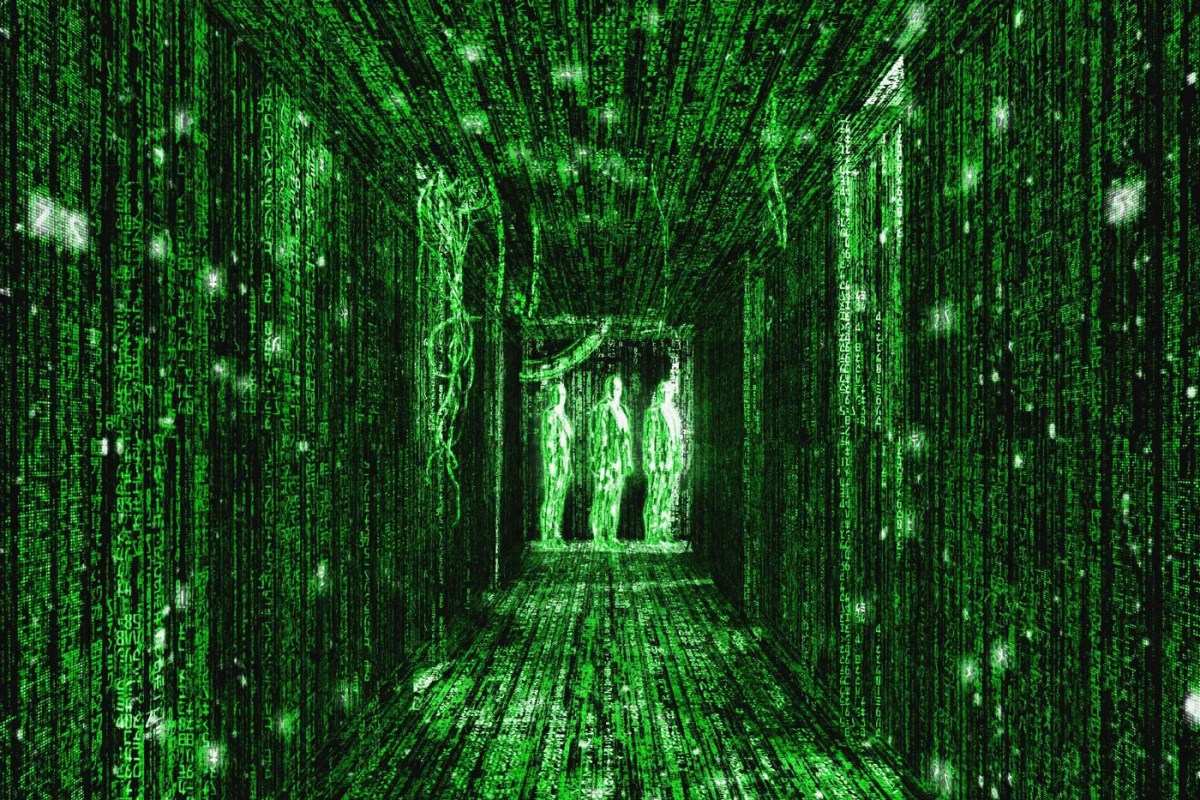
In the late 1990s, the Wachowskis gave us The Matrix – Keanu Reeves as Neo, the Chosen One™, a man so bland he could be anyone, which was the point. Once he realised he was living inside a simulation, he learned to bend its laws, to dodge bullets in slow motion and see the code behind the curtain. Enlightenment, Hollywood-style.

Audio: NotebookLM podcast on this topic.

But here’s the twist, the film itself couldn’t stomach: realising the simulation doesn’t free you from it.

Knowing that race and gender are social constructs doesn’t erase their architecture. Knowing that our economies, legal systems, and so-called democracies are fictions doesn’t get us out of paying taxes or playing our assigned roles. “The social contract” is a collective hallucination we agreed to before birth. That and a dollar still won’t buy you a cup of coffee.

Baudrillard, whose Simulacra and Simulation the film name-dropped like a trophy, argued that simulation doesn’t hide reality – it replaces it. When representation becomes indistinguishable from the thing it represents, truth evaporates, leaving only consensus. We don’t live in a system of power; we live in its performance.

The Matrix got the metaphor half right. It imagined the bars of our cage as a digital dream – glossy, computable, escapable. But our chains are older and subtler. Rousseau called them “social”, Foucault diagnosed them as “biopolitical”, and the rest of us just call them “normal”. Power doesn’t need to plug wires into your skull; it only needs to convince you that the socket is already there.

You can know it’s all a fiction. You can quote Derrida over your morning espresso and tweet about the collapse of epistemic certainty. It won’t change the fact that you still have rent to pay, laws to obey, and identities to perform. Awareness isn’t liberation; it’s just higher-resolution despair with better UX.

Neo woke up to a ruined Earth and thought he’d escaped. He hadn’t. He’d only levelled up to the next simulation – the one called “reality”. The rest of us are still here, dutifully maintaining the system, typing in our passwords, and calling it freedom.

NB: Don’t get me wrong. I loved The Matrix when it came out. I still have fond memories. It redefined action films at the time. I loved the Zen messaging, but better mental acuity doesn’t grant you a pass out of the system.

Post Everything: Notes on Prefix Fatigue

3–4 minutes

I’m no fan of labels, yet I accumulate them like a cheap suit:

Audio: NotebookLM podcast on this topic.

Apparently, I’m so far post that I may soon loop back into prehistoric.

But what’s with the “post” in post? A prefix with delusions of grandeur. A small syllable that believes it can close an epoch. Surely, it’s a declaration – the end of modernity, humanity, enlightenment. The final curtain, with the stagehands already sweeping the Enlightenment’s broken props into the wings.

Sort of. More like the hangover. Post marks the morning after – when the wine’s gone, the ideals have curdled, and the party’s guests insist they had a marvellous time. It’s not the end of the thing, merely the end of believing in it.

Have we ever been modern? Latour asked the same question, though most readers nodded sagely and went back to their iPhones. Modernity was supposed to liberate us from superstition, hierarchy, and bad lighting. Instead, we built glass temples for algorithms and called it progress. We’re not post-modern – we’re meta-medieval, complete with priestly influencers and algorithmic indulgences.

Can a human even be post-human? Only if the machines have the decency to notice. We talk about transcending biology while still incapable of transcending breakfast. We’ve built silicon mirrors and called them salvation, though what stares back is just the same old hunger – quantised, gamified, and monetised.

And post-enlightenment – how does that work? The light didn’t go out; it just got privatised. The Enlightenment’s sun still shines, but now you need a subscription to bask in it. Its universal reason has become a paywalled blog with “premium truth” for discerning subscribers.

The tragedy of post is that it always flatters the speaker. To call oneself post-anything is to smuggle in the claim of awareness: I have seen through the illusion; I am after it. Yet here I am, a serial offender, parading my prefixes like medals for wars never fought.

So, what other posts might I be missing?

  • Post-truth. The phrase itself a confession that truth was a brief, ill-fated experiment. We don’t reject it so much as outsource it.
  • Post-ideological. Usually said by someone with a very loud ideology and a very short memory.
  • Post-colonial. A hopeful label, but the empires still collect rent—digitally, algorithmically, politely.
  • Post-gender. Another mirage: we declared the binary dead and then resurrected it for sport.
  • Post-capitalist. Spoken mostly by people tweeting from iPhones about the end of money.
  • Post-ironic. The point where irony becomes sincerity again out of sheer exhaustion.

We could go on: post-religious, post-political, post-work, post-language, post-reality. Eventually, we’ll arrive at post-post, the Möbius strip of intellectual despair, where each prefix feeds upon the previous until nothing remains but the syntax of self-importance.

Perhaps it’s time to drop the “post” altogether and admit we’re not beyond anything. We’re stuck within—inside the compost heap of our own unfinished projects. Every “post” is a failed obituary. The modern keeps dying but refuses to stay dead, haunting us through progress reports and TED talks.

Maybe what we need isn’t post but inter: inter-modern, inter-human, inter-light—something that acknowledges the mess of entanglement rather than the fantasy of departure.

Because if there’s one thing the “post” reveals, it’s our pathological need for closure. We crave the comfort of endings, the illusion of progress, the satisfaction of having “moved on.” But culture doesn’t move on; it metastasises. The prefix is just morphine for the modern condition—a linguistic palliative to ease the pain of continuity.

So yes, I’m guilty. I’ve worn these risible labels. I’ve brandished post like a scholar’s rosary, invoking it to ward off the naïveté of belief. Yet beneath the cynicism lies a quiet longing—for an actual after, for the possibility that one day something might really end, leaving room for whatever comes next.

Until then, we keep prefixing the apocalypse, hoping to stay ahead of it by one small syllable.

Waiting for a New Book: Illusions of Light

2–3 minutes

This is not the announcement of a new book – The Illusion of Light: Thinking after the Enlightenment.

I hate the business of business. I am wrapping up another book project, but it’s been delayed by the government shutdown in the United States. I want a Library of Congress number (LCCN), but submissions must wait for an employed person to assign it.

Too clever by half and smarter than the average bear, I thought I could release an audiobook version first; audiobooks don’t need an LCCN. To be honest, neither do books. As some do with ‘Patent Pending’, I could follow suit. The book receives an LCCN, but it isn’t printed on the copyright page with the other administrivia.

My idea worked – partially. I rendered an audio version and published it – though it won’t be available until the start of November. Even so, I need distributors. It’s always something.

Meanwhile, I’m sharing an excerpt for your listening pleasure. Read along if you please.

Audio: The Illusion of Light: Thinking after the Enlightenment; Preface — Reading by Residual Light

Preface – Reading by Residual Light

To read these essays is to move slowly from the glare into the dimmer spaces where things regain texture. The Enlightenment taught us to equate light with truth, but illumination has always been double-edged: it clarifies outlines whilst erasing depth. What disappears in the brightness are the gradients – the in-between shades where thought and feeling meet, where contradiction still breathes.

The half-light is not a retreat from knowledge; it is where knowledge stops mistaking itself for salvation. It is the hour before dawn and after dusk, when perception is most alert, and everything seems both clearer and less certain. That is the discipline these essays practice: a sustained attentiveness to what persists when certainty burns away.

This project does not ask readers to abandon reason, only to notice what it has excluded. It invites a kind of intellectual night vision – the patience to see without spotlight, the willingness to sit with what does not resolve. In the half-light, the world no longer arranges itself around the human gaze; it reveals itself as unmastered, partial, alive. Here, we will learn to dwell in that half-light – not as a retreat from knowledge, but as a discipline of seeing what the Enlightenment’s glare erased.

The Enlightenment promised that truth would make us free. Perhaps it made us efficient instead. What these pages attempt is smaller and slower: a freedom measured not in control but in composure – the ability to live with what cannot be fixed, to keep tending meaning after its foundations have collapsed.

If there is light here, it is not the triumphant blaze of discovery but the ambient glow that remains after something ends. It’s the light of screens left on overnight, of cities at rest, of the mind still thinking long after certainty has gone to sleep.

Step carefully. Let your eyes adjust. The world looks different when it stops pretending to be illuminated.

The rest of the story…

I consider The Illusion of Light to be a sort of capstone project to the Anti-Enlightenment Project. It provides both a perspective and insights into the essays that constitute it.

The Myth of Homo Normalis

Archaeology of the Legible Human

Now live on the Anti-Enlightenment Project (Zenodo | PhilArchive)

Modernity’s most enduring fiction is that somewhere among us walks the normal human. This essay digs up that fossil. Beginning with Quetelet’s statistical conjuring trick – l’homme moyen, the “average man” –and ending in our age of wearable psychometrics and algorithmic empathy, it traces how normality became both the instrument and the idol of Western governance.

Audio: NotebookLM podcast on this essay.

Along the way it dissects:

  • The arithmetic imagination that turned virtue into a mean value.
  • Psychology™ as the church of the diagnostic self, where confession comes with CPT codes.
  • Sociological scale as the machinery that converts persons into populations.
  • Critical theory’s recursion, where resistance becomes a management style.
  • The palliative society, in which every emotion is tracked, graphed, and monetised.
Audio: ElevenLabs reading of the whole essay (minus citations, references, and metacontent).
NB: The audio is split into chapters on Spotify to facilitate reading in sections.

What begins as a genealogy of statistics ends as an autopsy of care. The normal is revealed not as a condition, but as an administrative fantasy – the state’s dream of perfect legibility. Against this, the essay proposes an ethics of variance: a refusal of wholeness, a discipline of remaining unsynthesised.

The Myth of Homo Normalis is the sixth instalment in the Anti-Enlightenment Project, joining Objectivity Is Illusion, Rational Ghosts, Temporal Ghosts, Against Agency, and The Discipline of Dis-Integration. Together they map the slow disassembly of reason’s empire – from epistemology to ethics, from governance to affect.

Read or cite:
🔗 Zenodo DOI
🔗 PhilArchive page – forthcoming link