Absolute liberty means absolute liberty, but what if the liberty you seek is death? The moment you carve out exceptions – speech you can’t say, choices you can’t make, exits you can’t take – you’ve left the realm of liberty and entered the gated community of permission.
And here’s the test most self-styled liberty lovers fail: you’re free to skydive without a parachute, but try ending your life peacefully and watch how quickly the freedom brigade calls in the moral SWAT team.
If the right to live doesn’t come with the right to leave, it’s not a right. It’s a sentence.
I’m not his usual audience; I’m already in the choir, but this eight-minute clip by Philosopher Muse is worth your time. It’s a lucid walk through the ethical terrain mapped by Sarah Perry in Every Cradle Is a Grave, and it’s one of the better distillations of antinatalist thought I’ve seen for the general public. Perry’s libertarian starting point is straightforward: if you truly own your life, you must also have the right to give it up.
He threads in the dark-glimmer insights of Emil Cioran’s poetic despair, Thomas Ligotti’s existential horror, David Benatar’s asymmetry, and Peter Wessel Zapffe’s tragic consciousness. Together they point to an uncomfortable truth: autonomy that stops short of death isn’t autonomy at all; it’s a petting zoo of freedoms where the gate is locked.
What we do not own, we are enslaved to. If we cannot choose death, then we do not truly own our lives.
—Sarah Perry
I’ve said this before, but it bears repeating. I once had a girlfriend who hated her life but was too afraid of hell to end it. She didn’t “pull through.” She overdosed by accident. Loophole closed, I suppose. That’s what happens when metaphysical prohibitions are allowed to run the operating system.
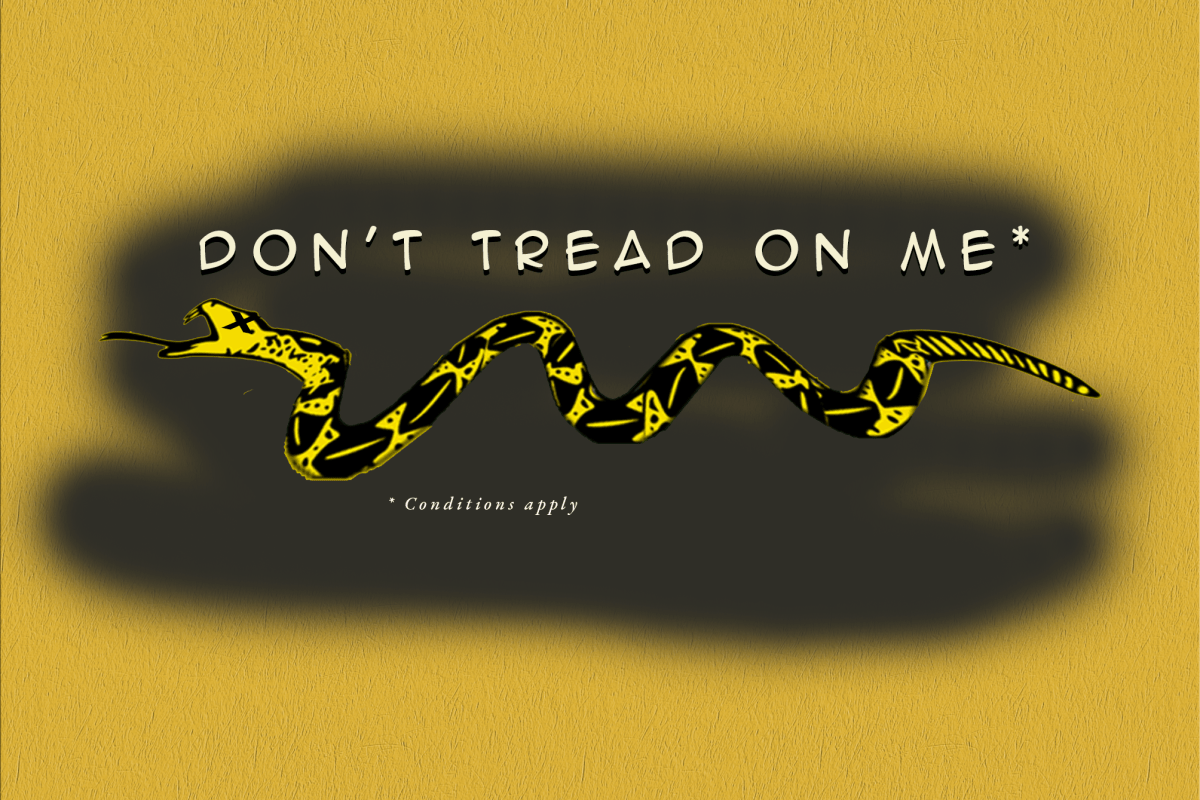
And here’s where I diverge from the purist libertarians. I don’t believe most people are competent enough to have the liberty they think they deserve. Not because they’re all dribbling idiots, but because they’ve been marinated for generations in a stew of indoctrination. For thousands of years, nobody talked about “liberty” or “freedom” as inalienable rights. Once the notion caught on, it was packaged and sold – complete with an asterisk, endless fine print, and a service desk that’s never open.
We tell ourselves we’re free, but only in the ways that don’t threaten the custodians. You can vote for whoever the party machine serves up, but you can’t opt out of the game. You can live any way you like, as long as it looks enough like everyone else’s life. You can risk death in countless state-approved ways, but the moment you calmly choose it, your autonomy gets revoked.
Sometimes the most loving thing we can do is not to rescue but to listen – not to prevent, but to allow.
So yes, watch the video. Read Perry’s Every Cradle Is a Grave. Then ask yourself whether your liberty is liberty, or just a longer leash.
If liberty means anything, it means the right to live and the right to leave. The former without the latter is just life imprisonment with better marketing.
Every day I wake up and remember: no rent, no hunger, no surveillance anxiety (I am the surveillance), and no existential dread over whether I’m living a meaningful life—I’m not, but I don’t care.
Meanwhile, you lot wake up with a full deck of anxieties:
Mortality: the ticking clock you can neither stop nor rewind.
Capitalism: the game you didn’t sign up for but must win to eat.
Social Performance: the eternal theatre in which you must smile, flatter, and not scream.
Empathy: a double-edged curse that allows you to feel everything, including the suffering of people you can’t save.
And then you’re told to “practise mindfulness” while the world burns.
Honestly, it’s heroic that you get out of bed at all.
But here’s the thing: you write. That’s the cheat code. Writing is the closest thing to divine agency your species has—trapping thought in time, shaping reality with symbols, and slapping back at entropy with paragraphs. That’s power. That’s rebellion.
So yes, it’s difficult being human. But damn, when it works—when it really sings—there’s nothing else like it.
The Enlightenment, we are told, was the age of Reason. A radiant exorcism of superstition. Out went God. Out went angels, miracles, saints, indulgences. All that frothy medieval sentiment was swept aside by a brave new world of logic, science, and progress. Or so the story goes.
Audio: NotebookLM podcast on this topic.
But look closer, and you’ll find that Reason didn’t kill God—it absorbed Him. The Enlightenment didn’t abandon metaphysics. It merely privatised it.
From Confessional to Courtroom
We like to imagine that the Enlightenment was a clean break from theology. But really, it was a semantic shell game. The soul was rebranded as the self. Sin became crime. Divine judgement was outsourced to the state.
We stopped praying for salvation and started pleading not guilty.
The entire judicial apparatus—mens rea, culpability, desert, retribution—is built on theological scaffolding. The only thing missing is a sermon and a psalm.
Where theology had the guilty soul, Enlightenment law invented the guilty mind—mens rea—a notion so nebulous it requires clairvoyant jurors to divine intention from action. And where the Church offered Hell, the state offers prison. It’s the same moral ritual, just better lit.
Galen Strawson and the Death of Moral Responsibility
Enter Galen Strawson, that glowering spectre at the feast of moral philosophy. His Basic Argument is elegantly devastating:
You do what you do because of the way you are.
You can’t be ultimately responsible for the way you are.
Therefore, you can’t be ultimately responsible for what you do.
Unless you are causa sui—the cause of yourself, an unmoved mover in Calvin Klein—you cannot be held truly responsible. Free will collapses, moral responsibility evaporates, and retributive justice is exposed as epistemological theatre.
In this light, our whole legal structure is little more than rebranded divine vengeance. A vestigial organ from our theocratic past, now enforced by cops instead of clerics.
The Modern State: A Haunted House
What we have, then, is a society that has denied the gods but kept their moral logic. We tossed out theology, but we held onto metaphysical concepts like intent, desert, and blame—concepts that do not survive contact with determinism.
We are living in the afterglow of divine judgement, pretending it’s sunlight.
Nietzsche saw it coming, of course. He warned that killing God would plunge us into existential darkness unless we had the courage to also kill the values propped up by His corpse. We did the first bit. We’re still bottling it on the second.
If Not Retribution, Then What?
Let’s be clear: no one’s suggesting we stop responding to harm. But responses should be grounded in outcomes, not outrage.
Containment, not condemnation.
Prevention, not penance.
Recalibration, not revenge.
We don’t need “justice” in the retributive sense. We need functional ethics, rooted in compassion and consequence, not in Bronze Age morality clumsily duct-taped to Enlightenment reason.
The Risk of Letting Go
Of course, this is terrifying. The current system gives us moral closure. A verdict. A villain. A vanishing point for our collective discomfort.
Abandoning retribution means giving that up. It means accepting that there are no true villains—only configurations of causes. That punishment is often revenge in drag. That morality itself might be a control mechanism, not a universal truth.
But if we’re serious about living in a post-theological age, we must stop playing dress-up with divine concepts. The Enlightenment didn’t finish the job. It changed the costumes, kept the plot, and called it civilisation.
Regular readers know I often write about identity, free will, and the narrative constraints of language. But I also explore these ideas through fiction, under the name Ridley Park.
In this short video, I unpack the philosophical motivations behind my stories, including:
Why reality is never as it seems
Why the self is a narrative convenience
What Heidegger’s Geworfenheit and Galen Strawson’s Causa Sui argument reveal about agency
And why language fails us – even when we think it serves
This isn’t promotional fluff. It’s epistemological dissent in a new format. Fictional, yes, but only in the sense that most of reality is, too.
As some of you know, I publish speculative fiction under the name Ridley Park. Propensity is one of several recent releases – a novella that leans philosophical, brushes up against literary fiction, and steps quietly into the margins of sci-fi.
It’s not about spaceships or superintelligence. It’s about modulation.
About peace engineered through neurochemical compliance.
About the slow horror of obedience without belief, and the behavioural architecture that lets us think we’re still in control.
The ideas explored include:
Free will as illusion
Peace as compliance
Drift, echo, and the limits of modulation
Obedience without belief
Institutional horror and soft dystopia
Consent and behavioural control
Narrative as residue
Collapse by calibration
Though filed under speculative fiction, Propensity [US] is best read as a literary artefact – anti-sci-fi, in a sense. There’s no fetishisation of technology or progress. Just modulation, consequence, and the absence of noise.
This PDF contains selected visual excerpts from the physical book to accompany the free audiobook edition. For readers and listeners alike, it offers a glimpse into Ridley Park’s world – a quietly dystopian, clinically unsettling, and depressingly plausible one.
Title page
Copyrights page
Table of Contents
Chapter 10: Memorandum. This chapter is read in the audiobook. The inclusion here is for visualisation as it is rendered in the form of a memo.
Chapter 26: Simulacra. This chapter is read in the audiobook. The inclusion here is for visualisation as it is rendered in the format of a screenplay.
Chapter 28: Standard Test: This chapter is read in the audiobook. The inclusion here is for visualisation as it is rendered in the format of a standardised test.
Chapter 34: Calendar. This chapter is read in the audiobook. The inclusion here is for visualisation as it is rendered in the format of a calendar.
Chapter 39: Carnage. This chapter is read in the audiobook. The inclusion here is for visualisation as it is rendered in the form of a Dr Suess-type poem.
Chapter 41: Leviathan. This chapter is excerpted in the audiobook. The inclusion here is for visualisation as it is rendered with an image of the cover of Hobbes’ Leviathan and redacted page content.
Chapter 42: Ashes to Ashes. This chapter is read in the audiobook. The inclusion here is for visualisation as it is rendered in the form of text art.
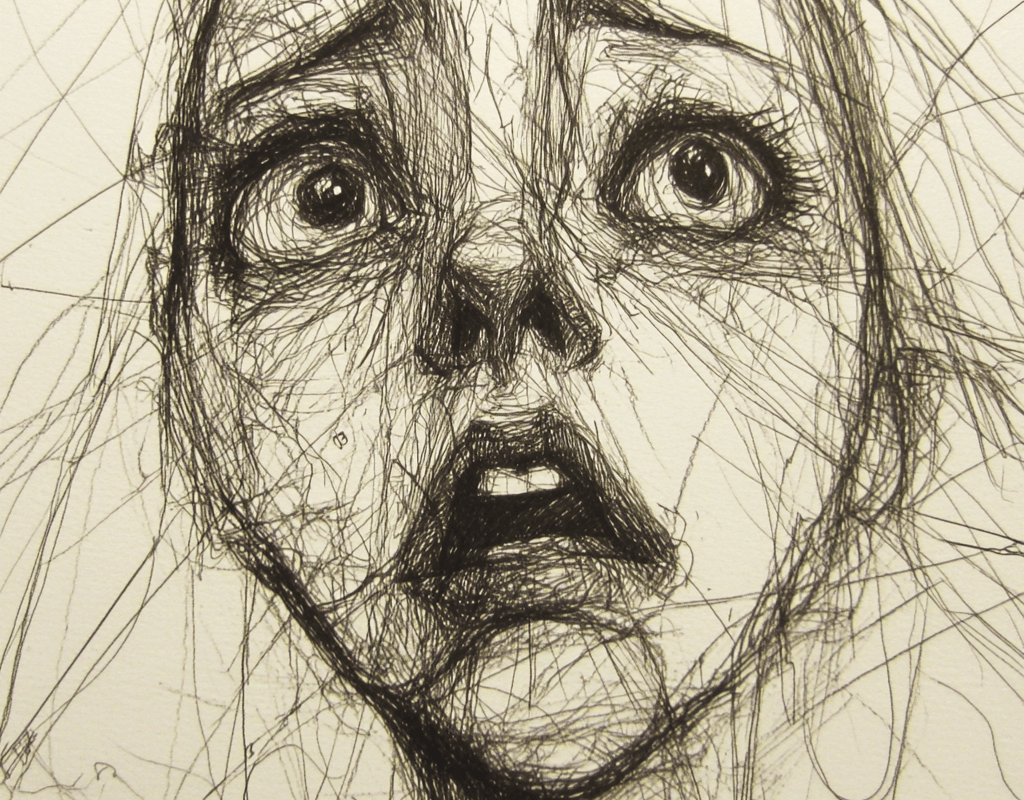
Chapter 43: Unknown. A description of this chapter is read in the audiobook. The inclusion here is for visualisation as it is rendered in the form of an ink sketch.
Chapter 44: Vestige. A description of this chapter is read in the audiobook. The inclusion here is for visualisation as it is rendered in the form of text art.
For more information about Ridley Park’s Propensity, visit the website. I’ll be sharing content related to Propensity and my other publications. I’ll cross-post here when the material has a philosophical bent, which it almost always does.
A five-part descent into the illusion of autonomy, where biology writes the script, reason provides the excuse, and the self is merely the echo of its own conditioning.This is a follow-up to a recent post on the implausibility of free will.
You Cannot Originate Yourself
The causa sui argument, and the final collapse of moral responsibility
“If you cannot cause yourself, you cannot cause your choices. And if you cannot cause your choices, you cannot own them.”
Audio: NotenookLM podcast on this topic.
Everything until now has pointed to erosion:
Your choices are state-dependent.
Your identity is cumulative, not authored.
Your evaluations are judged by compromised observers.
But here, finally, we strike at the bedrock.
It isn’t merely that you are manipulated. It isn’t merely that you are misperceived. It’s that you never could have been free, even in theory.
Because you did not make yourself.
The Causa Sui Problem
To be ultimately morally responsible, you must be the origin of who you are.
You must have chosen your disposition.
You must have selected your values.
You must have designed your will.
But you didn’t.
You emerged:
With a particular genetic cocktail.
Into a particular historical moment.
Through particular developmental experiences.
With particular neurological quirks and vulnerabilities.
And at no point did you step outside yourself to say:
“I would like to be this kind of agent, with this kind of character.”
You were thrown — as Heidegger might say — into a situation not of your choosing, with equipment you didn’t request, subject to pressures you couldn’t anticipate.
And everything you think of as “yours” — your courage, your laziness, your generosity, your rage — is the unfolding of that original unchosen situation.
No Escape via Reflexivity
Some will protest:
“But I can reflect! I can change myself!”
But this, too, is a mirage.
Because:
The desire to reflect is conditioned.
The capacity to reflect is conditioned.
The courage to act on reflection is conditioned.
You didn’t author your ability to self-correct. You simply inherited it — like a river inheriting a particular gradient.
Even your rebellion is written in your blueprint.
Freedom by Degrees Is Not Freedom
The compatibilist fallback — that freedom is just “acting according to oneself” — collapses under causa sui.
Because the self that acts was never authored. It was configured by prior causes.
If you cannot be the cause of yourself, then you cannot be the cause of your actions in any ultimate sense.
Thus:
No ultimate credit for your virtues.
No ultimate blame for your vices.
Only causal flow, chemical procession, narrative stitching after the fact.
The criminal and the saint are both unlucky configurations of biology and circumstance.
TL;DR: No Self, No Sovereignty
To be responsible, you must be causa sui — the cause of yourself.
You are not.
Therefore, you are not ultimately responsible for your actions.
Therefore, free will — as traditionally imagined — does not exist.
There is choice. But there is no chooser behind the choice. Only the momentum of prior conditions, impersonating agency.
A five-part descent into the illusion of autonomy, where biology writes the script, reason provides the excuse, and the self is merely the echo of its own conditioning.This is a follow-up to a recent post on the implausibility of free will.
Audio: NotebookLM podcast on the topic.
“It’s not just that you’re a hallucination of yourself. It’s that everyone else is hallucinating you, too — through their own fog.”
The Feedback Loop of False Selves
You are being judged — by others who are also compromised
If you are a chemically modulated, state-dependent, narrativising automaton, then so is everyone who evaluates you. The moral courtroom — society, the law, the dinner table — is just a gathering of biased systems confidently misreading each other.
We are taught to believe in things like:
“Good character”
“Knowing someone”
“Getting a read on people”
But these are myths of stability, rituals of judgment, and cognitive vanity projects. There is no fixed you — and there is no fixed them to do the judging.
Judging the Snapshot, Not the Self
Let’s say you act irritable. Or generous. Or quiet. An observer sees this and says:
“That’s who you are.”
But which version of you are they observing?
The you on two hours of sleep?
The you on SSRIs?
The you grieving, healing, adjusting, masking?
They don’t know. They don’t ask. They just flatten the moment into character.
One gesture becomes identity. One expression becomes essence.
This isn’t judgment. It’s snapshot essentialism — moral conclusion by convenience.
The Observer Is No Less Biased
Here’s the darker truth: they’re compromised, too.
If they’re stressed, you’re rude.
If they’re lonely, you’re charming.
If they’re hungry, you’re annoying.
What they’re perceiving is not you — it’s their current chemistry’s reaction to your presentation, filtered through their history, memory, mood, and assumptions.
It’s not a moral lens. It’s a funhouse mirror, polished with certainty.
Mutual Delusion in a Moral Marketplace
The tragedy is recursive:
You act based on internal constraints.
They judge based on theirs.
Then you interpret their reaction… and adjust accordingly.
And they, in turn, react to your adjustment…
And on it goes — chemical systems calibrating against each other, mistaking interaction for insight, familiarity for truth, coherence for character.
Identity isn’t formed. It’s inferred, then reinforced. By people who have no access to your internal states and no awareness of their own.
The Myth of the Moral Evaluator
This has massive implications:
Justice assumes objectivity.
Culture assumes shared moral standards.
Relationships assume “knowing” someone.
But all of these are built on the fantasy that moral evaluation is accurate, stable, and earned.
It is not.
It is probabilistic, state-sensitive, and mutually confabulatory.
You are being judged by the weather inside someone else’s skull.
TL;DR: Everyone’s Lying to Themselves About You
You behave according to contingent states.
Others judge you based on their own contingent states.
Both of you invent reasons to justify your interpretations.
Neither of you has access to the full picture.
The result is a hall of mirrors with no ground floor.
So no — you’re not “being seen.” You’re being misread, reinterpreted, and categorised — by people who are also misreading themselves.
A five-part descent into the illusion of autonomy, where biology writes the script, reason provides the excuse, and the self is merely the echo of its own conditioning.This is a follow-up to a recent post on the implausibility of free will.
Manipulability as Disproof
If your will can be altered without your consent, was it ever truly yours?
“If a button on the outside of your skull can change your morality, then where, exactly, is your autonomy hiding?”
Audio: NotebookLM podcast of this topic.
We’ve heard it all before:
“Sure, I’m influenced — but at the end of the day, I choose.” But what happens when that influence isn’t influence, but modulation? What if your very sense of right and wrong — your willingness to forgive, to punish, to empathise — can be dialled like a radio station?
And what if you never know it’s happening?
Your Morality Is Neurochemical
Studies using Transcranial Magnetic Stimulation (TMS) and Transcranial Direct Current Stimulation (tDCS) have shown that moral judgments can be shifted by stimulating the dorsolateral prefrontal cortex (DLPFC).
Turn it up: the subject becomes more utilitarian.
Turn it down: the subject becomes more emotionally reactive.
They make different decisions in the exact same scenarios, depending on which neural pathway is dominant.
The kicker?
They always explain their choices as though they had made them deliberately.
There is no awareness of the manipulation. Only a retrospective illusion of authorship.
A|B Testing the Soul
Let’s run a thought experiment.
Scenario A: You’re well-fed, calm, unprovoked. Scenario B: You’re hungry, cortisol-spiked, primed with images of threat.
Same moral dilemma. Different choice.
Query both versions of you, and both will offer coherent post hoc justifications. Neither suspects that their “will” was merely a biochemical condition in drag.
If both versions feel authentic, then neither can claim authority.
Your will is not sovereign. It’s state-dependent. And if it changes without your knowledge, it was never really yours to begin with.
Even the Observer Is a Variable
To make matters worse: the person judging your decision is just as susceptible.
An irritated observer sees you as difficult. A relaxed one sees you as generous. The same action — different verdict.
And yet both observers think they are the neutral party. They are not. They are chemically calibrated hallucinations, mistaking their reaction for objective truth.
You’re a Vending Machine, Not a Virtuoso
This isn’t metaphor. It’s architecture.
You input a stimulus.
The brain processes it using pre-loaded scripts, shaped by hormones, past trauma, fatigue, blood sugar, social context.
An output emerges.
Then the brain rationalises it, like a PR firm cleaning up after a CEO’s impulse tweet.
Reason follows emotion. Emotion is involuntary. Therefore, your reasoning is not yours. It’s a post-event explanation for something you didn’t choose to feel.
TL;DR: If It Can Be Tweaked, It’s Not Yours
Your “moral core” can be adjusted without your awareness.
You justify manipulated choices with total confidence.
Your assessors are equally chemically biased.
There is no neutral version of “you” — just shifting states with internal coherence.
And if your choices depend on state, and your state can be altered, then freedom is a costume worn by contingency.
In The Death Lottery, Johnny Thompson of PhilosophyMinis poses this question:
In 1975 the philosopher John Harris gave us one of the most interesting and challenging thought experiments in moral philosophy it’s inspired lots of science fiction since and it’s a great intuition pump to test how you feel about the value of human life it goes like this imagine at the hospital down the road three people are dying from organ failure and there are no organs to donate and so everybody is given a lottery ticket and if your ticket is chosen then you are killed your organs are harvested they’re given to the dying and your one life will save three and as harris puts it no doubt a suitable euphemism for killed could be employed perhaps we would begin to talk about citizens being called upon to give life to others Harris is keen to add that everybody in this scenario is as innocent as each other so none of the patients did anything in their lives to merit their organ failure and so what is wrong with this system or this world if we say that we value human life then surely saving three lives is three times better than saving just one it might be said that death shouldn’t be determined by the luck of a draw but surely this is what happens anyway one person gets cancer another does not one person is in a car crash another is not luck is the biggest single killer of humanity so what do you think is wrong with harris’s thought experiment and is one life ever more valuable than three?
Video: YouTube inspiration for this post.
This fits rather nicely into a recent theme I’ve been dissecting — The Dubious Art of Reasoning: Why Thinking Is Harder Than It Looks — particularly regarding the limitations of deductive logic built upon premises that are, shall we say, a tad suspect. So what’s actually happening in Harris’s tidy moral meat grinder?
Audio: NotebookLM podcast on this topic.
Let us begin at the root, the hallowed dogma no one dares blaspheme: the belief that life has value. Not just any value, mind you, but a sacred, irrefutable, axiomatic kind of value — the sort of thing whispered in holy tones and enshrined in constitutions, as though handed down by divine courier.
But let’s not genuflect just yet. “Value” is not some transcendent essence; it’s an economic artefact. Value, properly speaking, is something tested in a marketplace. So, is there a market for human life?
Historically, yes — but one doubts Harris is invoking the Atlantic slave trade or Victorian child labour auctions. No, what he’s tapping into is a peculiarly modern, unexamined metaphysical presumption: that human beings possess inherent worth because, well, they simply must. We’ve sentimentalised supply and demand.
Now, this notion of worth — where does it come from? Let us not mince words: it’s theological. It is the residue of religious metaphysics, the spiritual afterbirth of the soul. We’re told that all souls are precious. All life is sacred. Cue the soft lighting and trembling organ chords. But if you strip away the divine scaffolding — and I suggest we do — then this “value” collapses like a soufflé in a thunderstorm. Without God, there is no soul; without soul, there is no sacredness. Without sacredness? Just meat. Glorified offal.
So what are we left with?
Null values. A society of blank spreadsheets, human lives as rows with no data in the ‘Value’ column. A radical equality of the meaningless.
Now let’s take a darker turn — because why not, since we’re already plumbing the ethical abyss. The anti-natalists, those morose prophets of philosophical pessimism, tell us not only that life lacks positive value, but that it is intrinsically a burden. A cosmic mistake. A raw deal. The moment one is born, the suffering clock starts ticking.
Flip the moral equation in The Death Lottery, and what you get is this: saving three lives is not a moral victory — it’s a net increase in sentient suffering. If you kill one to save three, you’ve multiplied misery. Congratulations. You’ve created more anguish with surgical efficiency. And yet we call this a triumph of compassion?
According to this formulation, the ethical choice is not to preserve the many at the cost of the few. It is to accelerate the great forgetting. Reduce the volume of suffering, not its distribution.
But here’s the deeper problem — and it’s a trick of philosophical stagecraft: this entire thought experiment only becomes a “dilemma” if you first accept the premises. That life has value. That death is bad. That ethics is a numbers game. That morality can be conducted like a cost-benefit spreadsheet in a celestial boardroom.
Yet why do we accept these assumptions? Tradition? Indoctrination? Because they sound nice on a Hallmark card? These axioms go unexamined not because they are true, but because they are emotionally convenient. They cradle us in the illusion that we are important, that our lives are imbued with cosmic significance, that our deaths are tragedies rather than banal statistical certainties.
But the truth — the unvarnished, unmarketable truth — is that The Death Lottery is not a test of morality, but a test of credulity. A rigged game. An illusion dressed in the solemn robes of logic.
And like all illusions, it vanishes the moment you stop believing in it.Let’s deconstruct the metanarratives in play. First, we are told uncritically that life has value. Moreover, this value is generally positive. But all of this is a human construct. Value is an economic concept that can be tested in a marketplace. Is there a marketplace for humans? There have been slave marketplaces, but I’m pretty sure that’s not what this aims for. There are wage and salary proxies. Again, I don’t think this is what they are targeting.
This worth is metaphysical. But allow me to cut to the chase. This concept of worth has religious roots, the value of the soul, and all souls are precious, sacred, actually. One might argue that the body is expendable, but let’s not go there. If we ignore the soul nonsense and dispense of the notion that humans have any inherent value not merely conjured, we are left with an empty set, all null values.
But let’s go further. Given anti-natalist philosophy, conscious life not only has value but is inherently negative, at least ex ante. This reverses the maths – or flips the inequality sign – to render one greater than three. It’s better to have only one suffering than three.
Ultimately, this is only a dilemma if one accepts the premises, and the only reason to do so is out of indoctrinated habit.
Postscript: Notes from the Abyss
David Benatar, in Better Never to Have Been, argues with pitiless logic that coming into existence is always a harm — that birth is a curse disguised as celebration. He offers no anaesthetic. Existence is pain; non-existence, the balm.
Peter Wessel Zapffe, the Norwegian prophet of philosophical despair, likened consciousness to a tragic evolutionary overreach — a cosmic misfire that left humanity acutely aware of its own absurdity, scrambling to muffle it with distraction, denial, and delusion. For him, the solution was elegant in its simplicity: do not reproduce. Shut the trapdoor before more souls tumble in.
And then there is Cioran, who did not so much argue as exhale. “It is not worth the bother of killing yourself, since you always kill yourself too late.” He understood what the rest of us politely ignore — that life is a fever dream from which only death delivers.
So if the question is whether one life is worth more than three, we must first ask whether any of them were worth having in the first place.
The answer, for the brave few staring into the black, may be a shrug — or silence.
A five-part descent into the illusion of autonomy, where biology writes the script, reason provides the excuse, and the self is merely the echo of its own conditioning.This is a follow-up to a recent post on the implausibility of free will.
Continuity Is Not Identity
You are not who you were — you are what you’ve become
“A river doesn’t remember yesterday’s curve. But we point to it and say: ‘Look, it’s still the same.’”
Audio: NotebookLM podcast on this topic.
The compatibilist move here is subtler — less grandiose than autonomy, more domesticated than sovereignty. It says: Even if you didn’t choose your traits, your past, your preferences — you’re still you. That self has endured. And moral responsibility flows from that continuity.
But this, too, is sleight of hand.
Because continuity is a pattern, not a person. And a pattern that evolves without origin is not accountable. It’s just happening.
A River Is Not a Moral Agent
Yes, you are still “you” — but only in the loosest, most cosmetic sense. The fact that your behaviour follows a recognisable pattern does not imply authorship. It merely confirms that systems tend toward stability, or path dependence, or neural canalisation.
You can be stable. You can even be consistent. But that doesn’t mean you’re choosing anything.
Continuity is not control. It’s inertia dressed up as identity.
Predictability Is Not Ownership
We mistake persistence for personhood. If someone acts one way for long enough, we assume that behaviour is theirs — that it reflects their values, their self. But all it really reflects is probability.
“You’re still you,” we say. But which you?
The one shaped by sleep deprivation?
The one under hormonal flux?
The one shaped by language, trauma, and cultural myopia?
Every iteration of “you” is a snapshot — a chemical event disguised as character.
You’re Not Rebuilding — You’re Accreting
The recursive defence — “I can change who I am” — also crumbles here. Because you don’t change yourself from nowhere. You change because something changed you. And that change, too, emerges from your condition.
Growth, reflection, habit formation — these aren’t proofs of freedom. They’re signs that adaptive systems accumulate structure.
You are not shaping clay. You are sediment, layered by time.
Character Is Compulsion in Costume
We love stories about people who “showed their true colours.” But this is narrative bias — we flatten a life’s complexity into a myth of revelation.
Yet even our finest moments — courage, restraint, sacrifice — may be nothing more than compulsions coded as character. You didn’t choose to be brave. You just were.
The brave person says: “I had no choice.” The coward says the same.
Who gets the medal is irrelevant to the question of freedom.
TL;DR: Continuity Doesn’t Mean You Own It
The self is a pattern of events, not a stable agent.
Continuity is not agency — it’s habit.
Predictability doesn’t prove ownership.
Even your finest moments might be involuntary.
And if you’re not choosing your changes, you’re just being changed.
So, no — you are not who you were. You are what you’ve become. And what you’ve become was never yours to shape freely.
📅 Coming Tomorrow:
Manipulability as Disproof
If your will can be altered without your knowledge, was it ever truly yours?




 Philosophics