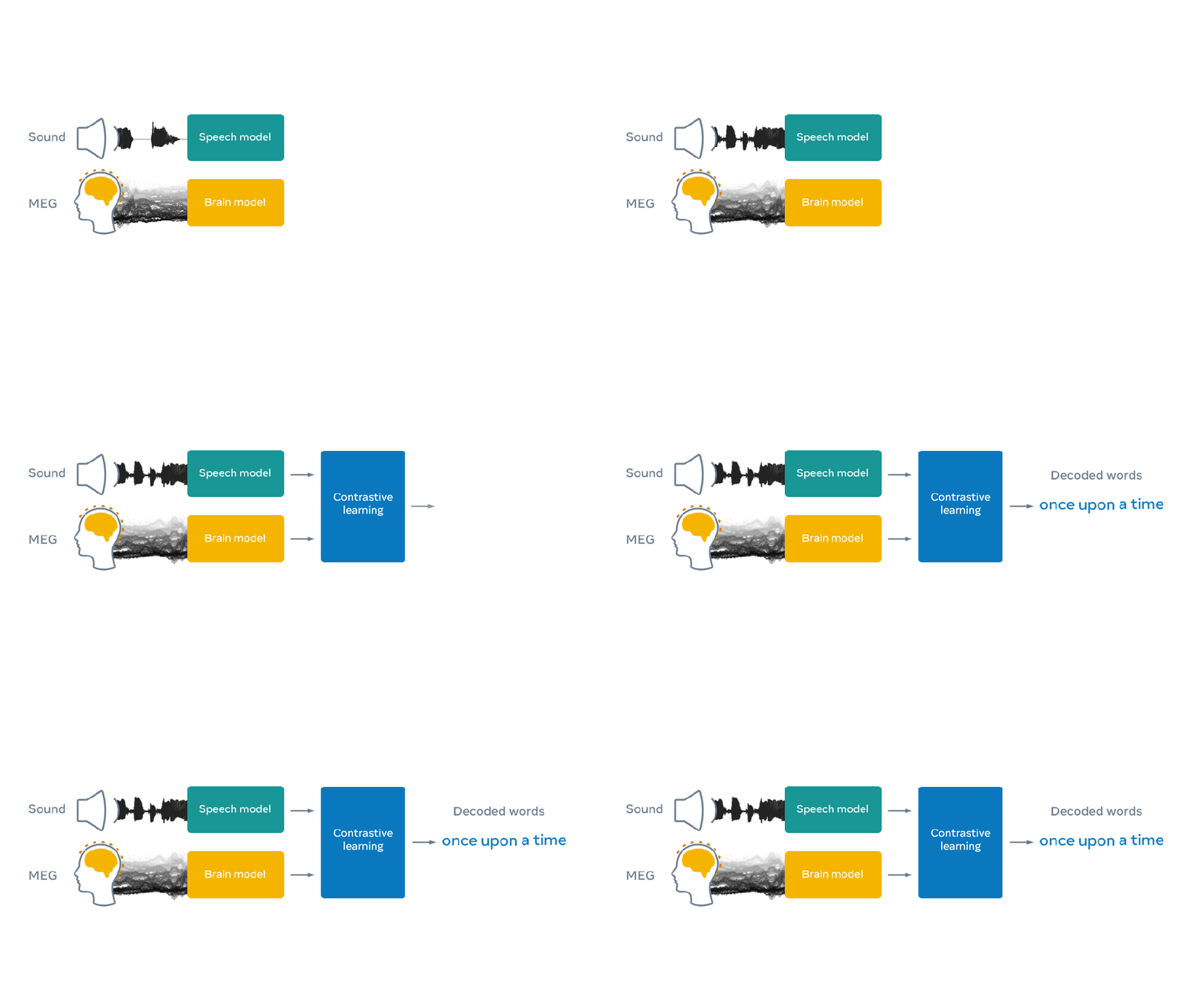
Apologies in advance for sharing PR hype from Meta (formerly known as Facebook),but I want to comment on the essence of the idea, which is using AI to decode speech from brain activity. It seems to imply that one would apply supervised machine learning to train a system to map speech to brain activity as illustrated by the image below.
Podcast: Audio rendition of this page contentTo decode speech from noninvasive brain signals, we train a model with contrastive learning to align speech and its corresponding brain activity
The dataset would require the captured patterns of a large enough sample size. In this case, it appears to have been some 417 volunteers.
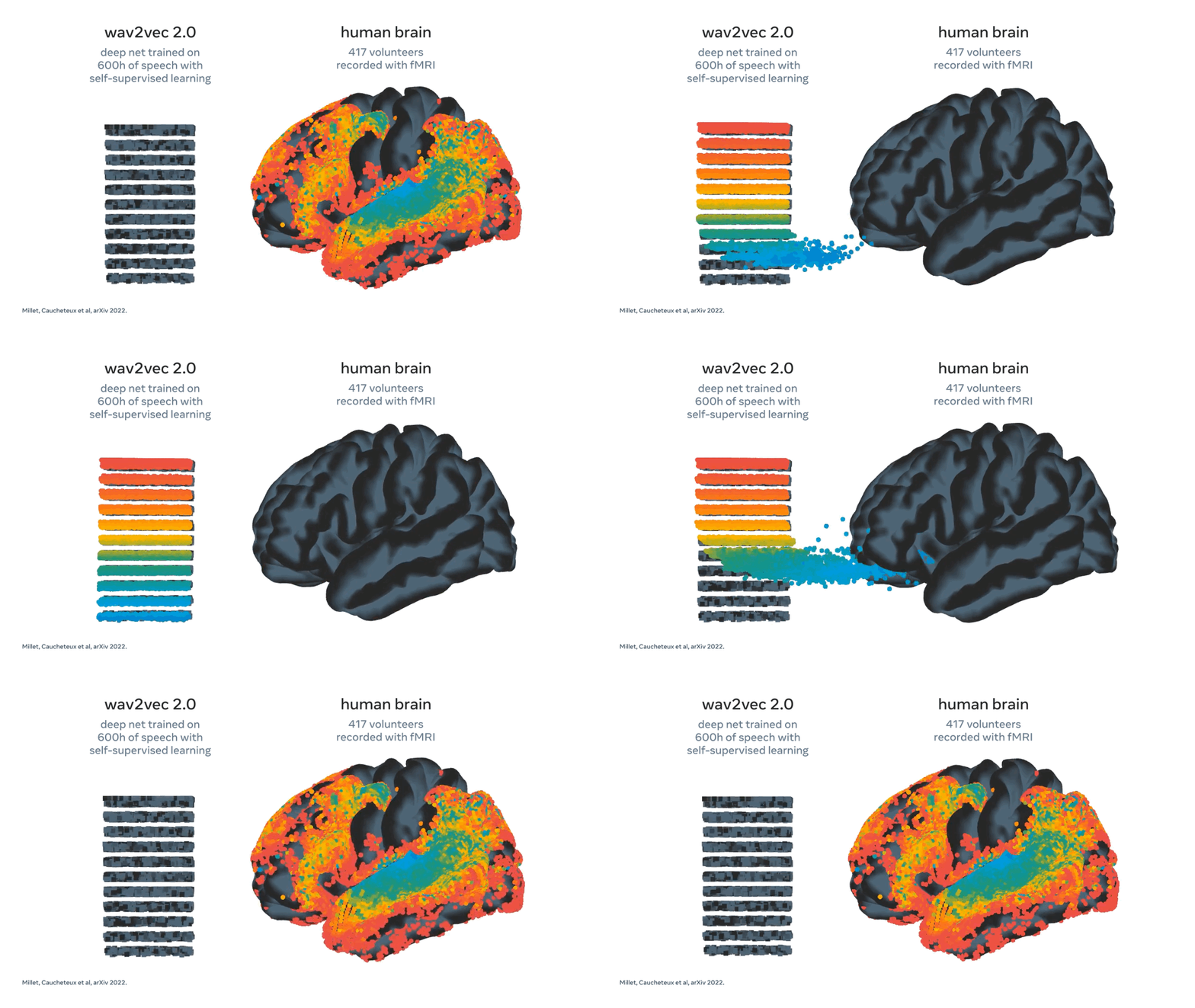
Activations of wav2vec 2.0 (left) map onto the brain (right) in response to the same speech sounds. The representations of the first layers of this algorithm (cool colours) map onto the early auditory cortex, whereas the deepest layers map onto high-level brain regions (e.g. prefrontal and parietal cortex).
This feels like it could have many commercial, consumer, and industrial uses including removing other human-computer interface devices, notably keyboards, but perhaps even mouses. Yes, I said mouses. Sue me.
Given hypotheses related to language and cognition, I am wondering what can be gleaned by mapping different multiple native language speakers to cognitive processes in order to remap them to speech output if it would be able to arrive at some common grammar that could then output a given thought stream into any known (and mapped) language, allowing for instantaneous “translation”.
Of course, a longer-term goal would be to skip the external devices and interface brain to brain. This sounds rogue science fiction scary, as one might imagine an external device trained on a brain to read its contents. One of the last things this world needs is to have to worry about neuro-rights and about being monitored for thought crimes. Come to think of it, isn’t there already a book on this? Nevermind. Probably not.
Technology is generally not inherently harmful or helpful, as that is determined by use. Humans do seem to tend toward the nefarious. Where do you think this will go? Leave a comment.
I am actively engaged in summarising Iain McGilchrist’s book, The Matter with Things, but I’ve been remiss in not sharing the introduction. Rather than do that, I’ve happened upon Iain reading these pages himself, hosted on his YouTube channel.
It’s about a half-hour long. In it, he establishes some main themes and rationales. As this book builds on his previous book, The Master and his Emissary, he shares references to that book rather than rehash it in this one. So whilst he expands on some ideas, he doesn’t necessarily go into the same depth and retread the same grounds. This won’t result in a loss of comprehension for the purposes of this book, but additional depth can be achieved by reading the former.
Chapter two is titled Attention. It’s about how what we attend to tends to shape our sense of reality. This is a story of the functional speciality of the hemispheres and their mediating components. Each hemisphere has its own protocols and modus operandi, each with distinct task specialisation. Important to note coming in is that about thirty per cent of all neuronal activity is inhibitory in nature. In fact, the frontal lobe is what inhibits the reflexive animal-reptilian responses allowing for some—I mean, let’s be honest here—human civil capacity. These mediating elements are designed—idiomatically, not literally—to orchestrate hemispheric activities so that each side can do what it’s best suited for.
Content
Both hemispheres attend to their environments, but they have different foci. One way to distinguish which hemisphere is focused on what, McGilchrist regards research oriented toward people with damage to one or the other part, whether by a stroke or accident. In some cases, this separation is accomplished clinically. There is a difference between right- and left-handedness, but I am not going to elaborate here.
Persons with left hemisphere damage noted difficulty writing and spelling whilst right hemisphere damaged people experienced a loss of empathy as well as a range of cognitive and emotional impairments.
Selective Attention: Invisible Gorilla Test
In general, the right hemisphere attends to the broader environment with a trade-off on specificity whilst the left hemisphere is laser-focused at the expense of the wider perspective and ability to maintain attention. Evidently, and I quote, “the left hemisphere has a tendency to ‘space out’ for seconds (sometimes 15 or more) at a time”. McGilchrist cites the invisible gorilla study where viewers are asked to watch a video clip of two teams of basketball players dribbling and passing a ball to count the number of times one team passes the ball. As this is happening, a person dressed in a gorilla costume walks into frame and makes gestures to bring attention to itself and then walks out of frame.
Focusing on the ball passing is a left-brain function that predominates right-brain activity. As it is laser-focused on the task at hand, it is oblivious to the gorilla in the midst. When re-viewing the clip without the focus activity, the gorilla is quite obviously present. He cites another substitution study that again illustrates what happens when the right brain does not have an audience.
Again, whilst “the right hemisphere is sensitive to the whole picture in space and time, background and periphery, the left hemisphere is focussed on what is central in the field of vision and lies in the foreground.” This becomes evident with hemispheric damage. When the left hemisphere is damaged, people can still perceive the full view-frame because the right hemisphere remains intact, but when the right hemisphere is damaged, less than half of the world remains. In the book, some examples follow.
The left hemisphere suffers from a stickiness problem. Without a participating right hemisphere, a person can have their attention fixated on some objects in the environment. And he points out that this is not a problem with visual perception, because tests demonstrate that subjects can be made to fixate on imaginary objects in a dark room. In schizophrenics, this fixation always occurred on the right side of the field of vision. This fixation ties into staring, which he describes as “a special kind of vision, in itself predatory: left hemisphere attention gets locked onto its target.” I’ll guess that many of us have been fixated on some activity and an unexpected interloper startles us when they become apparent. He mentions the discredited Sapir-Whorf hypothesis in passing. I won’t bother.
McGilchrist foreshadows chapter four a bit by informing the reader that the left hemisphere is grasping and apprehending whilst the right hemisphere excels at comprehending. More on this in future segments.
Another feature of the left hemisphere is that it not only ignores the majority of the environment it finds itself in, but it is also a master of denial.
Another feature of the left hemisphere is that it not only ignores the majority of the environment it finds itself in, but it is also a master of denial. For example, a person with right-hemispheric damage was paralysed on the left side of his body, yet he was not only unaware of the paralysis. He denied that he was paralysed.
In a second case, another person with right-hemisphere damage and left-side paralysis, when asked to perform tasks would comply with the requests directed toward the right side of the body but ignore or claim not to understand the directions when directed toward the left side.
What this represents is that the left hemisphere had established a map of the body that was unable to be updated because of the damage to the right hemisphere that would have provided an update. One might consider this in the manner of an old SAT-NAV when map updates needed to be manually applied. If you happen to be travelling in a new development on an obsolete map, the map will not correspond to the terrain.
As mentioned previously, the right hemisphere can be thought to present whilst the left hemisphere can be thought to re-present, having codified and archived the contents for later retrieval. The book has more types of examples including people experiencing reality through a set of freeze-frames and time elapses, but the takeaway is that the hemispheres also differ in how they interpret space, time, and motion. In fact, the right hemisphere is instrumental in perceiving three-dimensional space.
I won’t exhaust the many remaining examples in the book, though I may reference some in summary when I share my reaction and perspective. The final topic I’ll mention is that human infants are right-hemisphere dominant. They are practically all about gathering inputs without being concerned with how they map the terrain for later retrieval. They simply experience the world without the analysis and judgment the left brain later brings to bear.
Perspective
At the end of the chapter, McGilchrist provides a summary. The right hemisphere is always vigilant to what might be out there. For the left hemisphere, if it hasn’t been brought to attention, it doesn’t exist. Consider the invisible gorilla. The left hemisphere’s attention is sharply restricted in space and time. It favours precision over accuracy and at the expense of depth. It is not concerned with the “expansive, always moving, always changing, endlessly interconnected nature of reality.” The left is all about atomisation and stasis.
Unfortunately, despite all these limitations, the left still thinks it’s right. Revisiting the SAT-NAV scenario, the left brain is akin to a person staring at the screen that declares the destination has been reached. The right brain looks out the window and informs that they are decidedly not in the right place. Does one trust the instrumentation or the environment?
One undercurrent I feel is that McGilchrist wants to play the left and right hemispheres against each other to assess which is more veridical. This is where I think we differ, but the jury is still out. In his case, he wants to compare the way that each hemisphere maps to our experience of the real world. In his view, and I don’t think I am putting words into his mouth, our experience is the world because we experience it as it appears to us. In my view, experiences are simply a representative map as limited by our sense-perceptions and cognitive abilities. So, when he assesses the right hemisphere as a better reflection of reality, I say it just better captures the map.
For him, it’s either left or right. But for me, it’s right, left, or none of the above. I believe our disagreement is that I subscribe to a fitness before truth paradigm whilst McGilchrist doesn’t. I feel that fitness is the evolutionary litmus, and evolution doesn’t care about truth. In fact, assessing truth comes at the expense of energy and attention, the subject of this topic. The reason the case studies cited in this chapter are interesting is not that they illustrate some truth deficit that would render them easy prey in a Darwinian world, it’s because their perception leaves them with a fitness penalty. There is no reason to invoke some spectre of truth.
This was an interesting chapter with over a dozen clinical anecdotes. It does well to articulate the differences in hemisphere function and lends credence to left and right brain asymmetry. I feel it’s worth cracking on to the next chapter, Perception.
Before I bring this commentary to a close, I want to make an orthogonal comment. McGilchrist mentioned case studies where people reported freeze-framing. It is understood that certain birds have a faster frame rate than humans, so if they were viewing a movie running at 60 frames per second, they would not see the same continuous motion picture as a typical person; rather, they would perceive it as how we might perceive a slide show or a slow flip book. Of course, this is unrelated to the brain conversation, but the topic reminded me of the difference. For anyone who feels they need to educate me about the fact that the ocular systems don’t operate in frames per second, allow me instead to direct you to the domain of metaphor and analogy.
What are your thoughts on the split function of brain hemispheres? If you’ve read the book or at least this chapter, what was your favourite story? Did I omit your favourite? Leave comments below or on the blog.
Why must I always worry about the voiceless and underdogs, and who cares anyway?
Podcast: Audio rendition of this page content
This White Feminism video was circulating on my professional social network, and it is relevant, but it also misses a major point. The point is entirely valid that feminism that considers all females to somehow be a monolithic cohort is bound to fail, simply because they aren’t. Not any more than all males are some united front. Of course, you could abstract some attributes to such an extent that one could argue that the vast majority of females have two feet. Of course, that’s ableist at the start and we’ve accidentally included men. Besides, now you’re being silly, you tell me, we are talking about attitudes and behaviours, not physical attributes. That’s another arena.
So what’s the deal? The problem is that even this frame is too narrow. Adding colour to the mix improves the intersectionality, but it goes nowhere near far enough. Am I allowed to say “near far”? Moving on.
These authors are focused on the experience of women of colour through a predominately American lens. More on this in a moment. Their point is that women of colour have different problems than so-called white women. And this is true. But gay women have problems unique to them, and trans-women have problems unique to them, and Latinas have problems unique to them. But there’s more.
Here’s another problem, these authors are all affluent, educated women, who view the world through this lens. Paternalism is a problematic perspective, but some parallel maternalism isn’t a step in the right direction.
And there’s a larger problem. Most so-called feminists tend to privilege Western women over non-Western women, in practice invalidating the lived experience of a majority of women in the world. They presume that the poor rural woman in Afghanistan has more in common with them than a vagina. And this is true, but it’s a privileged perspective to presume that your New York City or Islamabad perspective is even halfway valid is unadulterated hubris.
I suggest becoming familiar with Chandra Mohanty’s “Under Western Eyes” and Sunera Thobani’s “White Wars: Western feminisms and the ‘War on Terror’.” These women do hail from the educated class, but they approach the situation with broader compassion and so are more inclusive of the diversity. Moreover, the referenced works are free essays that make their point. Meantime, David Guignion shares a short primer for these two. “Oh my God,” you say, You want me to listen to an educated Canadian white man school me on the plight of non-Western women? Why, yes I do. Of course, you can also read the source material on your own.
So, “why should I listen to some educated white bloke with a blog?” you ask yourself. You don’t need to. That’s on you. I’m just the messenger. Feel free to think that everything is male and female, black and white, or some admixture. Feel free to leave a comment.
I’ve decided after all to share my thoughts as I journey through Iain McGilchrist’s The Matter with Things. Come join me.
Podcast: Audio rendition of this page content (6:41)
Intro and Biographical
I’ve decided, perhaps against my better judgement, to have a run at Iain McGilchrist’s The Matter with Things. At almost 3,000 pages this seems a bit daunting at the start. I debate whether I wish to pursue this course because it slows my pace significantly—perhaps allowing me to progress at a rate 15 to 20 per cent of what I might have otherwise been able to maintain. However, creating content affords me at least two offsetting benefits. Firstly, I get to share my experience with a wider audience and do so in the moment. Secondly, it allows me to better absorb and comprehend the material. As a former professor of economics myself, I internalised the aphorism “to teach is to learn twice.” Of course, this is not teaching so much as regurgitating and providing my own reactions and perspectives in places. It may be akin to learning some one-point-some-odd times. Let’s round up to two.
Biographically, McGilchrist was a lecturer of Literature at Oxford before refocusing on Medicine and then Psychiatry with an interest in Neuroscience. Interestingly, he was particularly interested in hemisphere differences in the brain and was advised strongly not to pursue this academically, as it was a certain career-killer. Besides the domain was already over-studied and summarily disproven. Iain persisted.
As it happens, the older notions of hemispheric differences were facile nonsense, but there was evidence of brain asymmetry—which will become readily apparent in the opening chapters—, and this has been his passion project ever since.
Structure
The Matter with Things is a two-volume set presented in three parts, the first two contained in the first volume. Neuropsychology—both neurological and neuropsychological—is the theme of the first part, which is comprised of nine chapters. The second part consists of 10 chapters with a focus on epistemology. The second volume, being the third part, is about metaphysics.
Content
The first chapter is aptly named, Some Preliminaries and How We Got Here. Per the author, this is the most technical chapter with the added encouragement: “If you survive this, you’re good to go.”
This chapter provides some basic history of the evolution of the brain. He establishes that the “raison d’être [of the right hemisphere] is to enable us to be on the lookout for potential predators, to form bonds with mates, and to understand, and interpret the living world around us” whilst the left hemisphere’s purpose “is to enable us to be effective predators.”
This is a gross oversimplification, but details will follow. Essentially, the right hemisphere experiences the external world rather holistically as presented whilst the left hemisphere interprets, codifies, and maps this world for later access. He doesn’t mention it in this chapter, but since I’ve read a bit ahead already—so we’ll return to it presently—the left hemisphere does not, loosely speaking, interact with the external world. It creates map based on what the right hemisphere conveys of the terrain, as I like to call it, and refers only to the map from then on. This sets us up for some peculiar behaviours, but we’ll get to that in upcoming chapters.
Perspective
I don’t have much to say about this first chapter as it is pretty much scientific facts, and I don’t have any unique perspective to offer. As I expect to reserve the tail of these segments for perspective, I’ll use this allotted space for some general thoughts going in.
I am not sure where McGilchrist falls on the Realism versus Idealism front. As I understand from other sources, he believes there is an out there out there, and without our brains, perception couldn’t happen. I also understand that he’s a Panpsychist, which is to say that he believes that everything has consciousness, so it will be interesting how that all comes together. Unfortunately, I feel this is second-volume fare.
As I am an Analytic Idealist, I believe that there is an out there out there as well. But I don’t believe we have any access to its veridical nature. What we experience is a Bayesian approximation, the best guess necessary for us to survive and evolve. I mention this as I believe it is a difference of opinion I have up front, so I am offering full disclosure of a potential bias. Also, I get the feeling that he conflates this paradigm with those espousing views that we live in a Matrix-style simulation, or everything is a hologram or holograph, and one day I’ll understand the difference between the two.
If you know the difference between a hologram and a holograph, let me know in the comments or on the blog.
Have you read this book already? Are you interested in reading it? If so, stick around and perhaps you’ll gather enough information here to catch your attention.
Several of my esteemed colleagues prompted me to become familiar with Iain McGilchrist. I had viewed hours upon hours of his lectures before I decided to commit to his latest book and likely magnum opus, though I don’t want to sell him short. The Matter with Things is an approximately 3,000-page, two-volume tome. To be fair, it’s about 1,600 pages of narrative content with the remainder being appendices, a bibliography, an index, and other such back matter.
Podcast: Audio rendition of the content on this page.
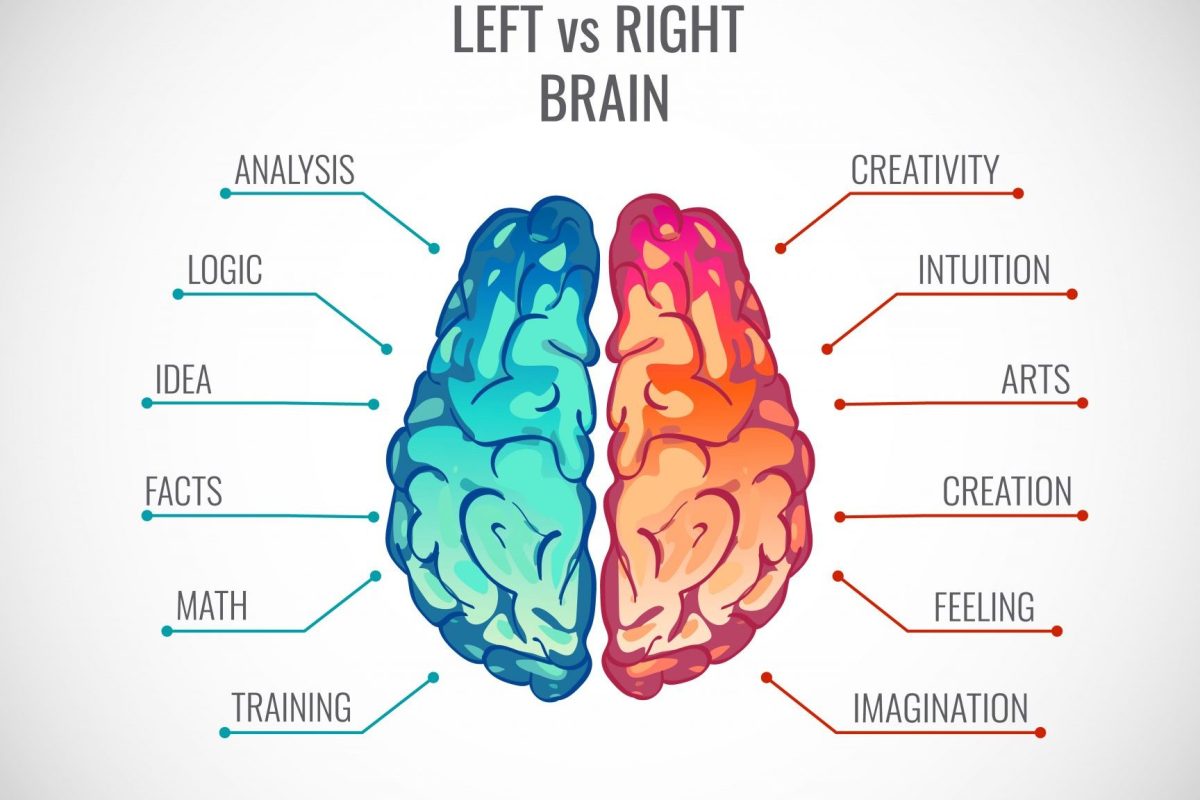
I’ve mentioned much of this before, but I am writing this post with a particular LinkedIn audience in mind, whom I don’t expect to be familiar with my prior commentary, though they are invited to explore more. McGilchrist’s thesis is that the human brain operates with asymmetrical hemispherical differences. These differences are not the facile “left-brain analytical, right-brain creative” distinction of yore, rather the differences are more nuanced. If you are interested in the minutiae of this, stick around and read past and future posts when they arrive, as I’ll be documenting my journey through these volumes presently.
So, what’s the matter with project managers? And why bring up project managers? In my workaday life, I’ve often been asked to perform project management functions, something decidedly not my forte. I could be reading into and am guilty of reductionism, but in reading The Matter with Things, I may have stumbled onto something with explanatory power. So let’s pause for a quick reflection.
Pistachio in hand
In a very small nutshell. I’m talking, perhaps, pistachio-sized here. The right brain hemisphere is the part that experiences the world as it is. The right brain is not about making judgments and categorising. Rather, it’s about just absorbing without interpreting, per se. On the other hand, the left brain hemisphere interprets, codifies, and maps this world for later access. Again, forgive the over-simplification, but this is the information pertinent to the matter at hand—a very left-hemisphere control function, I might add.
It turns out that the left brain is not so much concerned with the outside world at large. Once it has its map, it is rather content to reference it from there on in unless the right brain nudges it to pass along more information. Whereas the right hemisphere opens possibilities, the left hemisphere shuts them down. If you’ve read Daniel Kahneman’s work, Thinking Fast and Slow, you may notice certain parallels. I’d be interested to know if McGilchrist comments on this. Perhaps a later topic.
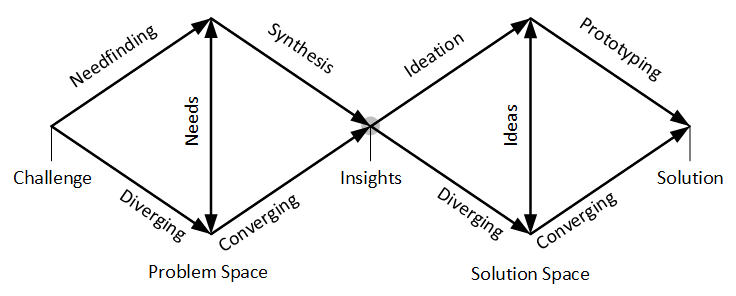
Borrowing from some aspects of Design Thinking, there is a double diamond design process model. I purloined one from the internet that will work for my purposes.
Double Diamond Design Process Model
I feel that I can simplify and assume that the diverging activity represents a right hemisphere strength whilst the converging is more apt to be a left hemisphere activity.
The right brain is not only always open to seeing options and opportunities, it actively seeks them. The left brain just wants to close any discussion and settle on a decision or an answer.
From an evolutionary perspective, the “raison d’être [of the right hemisphere] is to enable us to be on the lookout for potential predators, to form bonds with mates, and to understand, and interpret the living world around us” whilst the left hemisphere’s purpose “is to enable us to be effective predators.”
A right-hemisphere dominant person will likely continue to play what-if until the cows come home. A left-brain dominant person will take the first semi-viable solution and want to run on it. No need for deliberation. In a balanced scenario, the left and right hemispheres will battle for dominance, but they will arrive at a good-enough solution.
And this is where project managers enter the picture, and where I exit. I am decidedly over-indexed on the right brain. Among other things, I see options and possibilities. And, sure, I have enough balance to resolve to take action, but I don’t lose track of the possibilities and I am always ready to change course at a moment’s notice—what we call pivot in the business—or perish as the case might be.
The project manager, on the other hand, sees the map. This represents practically inviolable marching orders.
Disney Sorceror’s Apprentice Brooms-Flood Scene
One aspect of a good project manager is the ability to filter out the noise. Rather, this is what a right-brain person would surmise. Instead, the left-brain person doesn’t even register the noise. Where a right-brain person has to expend energy continually filtering out options and possibilities, the left-brain person never registers these options from the start. So, where I as a right-brain person may find it exhausting to actively and continuously limit this noise, this threshold is never triggered for the left-brainer.
In closing, I want to remind you again and again and again, that this is a gross oversimplification and rather metaphorical in nature. Nonetheless, I feel the that it is germane and offers insights into why some people are more apt at certain tasks than others.
I want to emphasise that one side is not better than the other. A right-dominant person is not superior to e left-dominant person, and vice versa. As with the brain itself, these can be complementary. Some people are very capable of tasking whichever hemisphere is necessary, but this is rarer than one might at first assume. McGilchrist provides many examples, so you can read them for yourself firsthand, or you can follow along as I call out key highlights in The Matter with Things.
If you have any comments or suggestions, feel free to leave them in the space provided.
As a Social Justice Warrior, I tend to favour diversity and inclusion as a principle. As such, I follow some people who share this interest. In fact, most of these people expend much more energy toward this end than I do. The challenge I am about to convey is that some people don’t read beyond the subject line, and don’t even attempt to assess the underlying claim, let alone the issue at hand.
I recently engaged in a nonsensical interaction that I am sharing and dissecting. It started with this share, an image of the border outline of Nigeria with an overlay caption that reads: “Nigeria becomes the first country to ban white and British models in all advertising”.
I’d like to point out two items in particular. Firstly, the caption is fabricated. I’ll get to the source reference presently. Secondly, the re-poster aptly corrects the caption when he shared it—”Well, all foreign models, but HELL YEAH!”
Nigeria recently passes a law that essentially assesses a tariff or levy on advertising content using non-Nigerian talent. There is no mention of ‘white’ models, though British models would fall under this umbrella. This protectionist law stems from nationalism. I’d guess that ‘white’ people comprise less than one per cent of the Nigerian national population, but I could be wrong. This is well outside my area of expertise.
My response was to say “Down with Nationalism and the Promotion of Otherism.” I may be misinterpreting myself, but it feels to me that this is denouncing racism and other forms of otherness.
Sabrina responds, ‘Why is not having white models in advertising a bad thing?” and “Isn’t the whole point of advertising [for] people to…see themselves… ?” In response, I should have pointed out that the initiative had nothing to do with skin colour. Instead, I responded to the second question: the point of advertising is to sell product. Full stop. If people see themselves with the product, then great. Clearly, this comprises a fraction of successful adverts. More common is to make a connection to what they aspire to. It’s not about making a social statement—unless, of course, that social statement will sell more product. If an ad with a white model will sell more product, a business would be derelict not to employ one; conversely, if white models result in lower sales, a business would be foolish not to switch to the more successful vector.
Sabrina really goes off the reservation with her reply, somehow conflating Nigeria with the African continent. Attention to detail is not her forte.
At this point, I feed into her laziness and send her a link to an Al-Jazeera article addressing the law.
She leaves with a parting shot, and I quote: “Have you ever thought about the harm you might cause by playing devil’s advocate and “creating an argument”?”
She’s off course and then attempts to diminish my point by calling it ‘playing devil’s advocate’ rather than admitting that she hadn’t even considered the rationale and possible ramifications. She didn’t even grasp the main point, so I suppose I should forgive her for not noticing secondary and edge cases.
At this point, Dr Perkins adds her voice. Her initial question is valid, and as I responded, the answer is “No”. The race card was introduced by some narrator who didn’t know what game he was broadcasting. But then she goes on to “applaud Nigeria for making a [decision] centering [on] Blackness”, save to say that was not what prompted the decision.
Notice, too, that other people “Liked” the other comments, a testament to the principle of least effort of the bystanders, too.
I recognise that the original post anchored the conversation off the actual topic, but it was also very easy to track down the reference and note the content discrepancy. Granted, this takes time and effort, but so does responding on a thread and then escalating commitment to a non-cause. And for one tilting at windmills to be tossing around accusations of playing devil’s advocate. It’s not a good sign.
But wait, there’s more. I commented on this post on a second thread.
In this case, Dr Anderson suggests that this is just “a country celebrating its own citizens by recognizing their beauty and knowing they can move product just as good, and probably better than white women, to which I responded that this is a testable hypothesis. It’s either true that on balance white models sell more product or black models do. Again, don’t fail to miss the point that none of this is about white versus black models.
Somehow, LinkedIn can’t seem to keep their threads in order, but Ms Rice takes my hypothesis testing point as a support for racism before precipitating to full-on troll mode.
It scares me to see that there are two academic doctors participating in this thread, neither with a trait of attention to detail nor even a fundamental pursuit of evidence.
This is why it is difficult to engage with social media. You have no idea what level a commenter is coming in on. And even when spoon-fed information, they refuse to alter their position. In fact, they tend to double down on their wrongness. Moving on…
I’ve only read the first four chapters of Iain McGilchrist’s The Matter with Things. My intent is to build up to how his ideas intersect with my workaday life in a future segment, but for now, I’ll summarise some main themes.
Podcast: Audio rendition of this page content (< 5 minutes)
The chapters I’ve read are
Some preliminaries: How we got here
Attention
Perception
Judgment
The next chapter is Apprehension.
Philosophically, or rather I have an interest in McGilchrist’s ontological model, but that appears not to arrive until the second volume, perhaps in chapters 24 or 25, respectively Space and Matter and Matter and Consciousness. Being that this underlaid my reluctance to engage with this book, I did take liberties and skimmed these chapters quickly in an attempt to discern whether he is a Realist or an Idealist.
Until recently, I’ve been a Realist with reservations, but now I consider myself instead to be an Idealist with reservations—though I may have fewer reservations, so perhaps I am moving in the right direction.
As a Realist with reservations, I felt that there was some underlying reality, but sense-perception and cognitive limitations limited access to it, so correspondence to it was necessarily limited.
As an Idealist with reservations, I feel that there is some underlying reality, and sense-perception and cognitive limitations limit access to it, so correspondence to it is still necessarily limited, so we generate an approximation.
I agree with Donald Hoffman’s assertion of Fitness Before Truth, in summary, that it is faster and more efficient to assess environmental fitness and take penalties where the assessment may have been a false positive. If one recoils in error from a coiled garden hose initially perceiving it to be a snake, the penalty is low. If a delay is incurred to assess some ‘snakeness’ truth value, we may have already been bitten. If we see something charging at us, better to avert and assess than to take time to discern. It’s of little consolation to consider, “Ah. I’m being mauled by a cheetah.” Better to have ducked and covered.
My chapter skimming was not enough to ascertain McGilchrist’s position. I’ll wait until I arrive there in due time. No need to spoil the ending. Given the book’s title, I am leaning toward Idealist, but I may be mistaken.
Moving on, these chapters build on each other. Not so much with narrative content as to represent the necessary chain of perceptual events: attention, perception, and judgment—in this order.
We cannot judge what we can’t perceive, and we can’t perceive what doesn’t come into the sense-perception space. McGilchrist reminds the reader that just because something is in a space where it can be perceived does not mean it can or will be perceived. He cites the example of the invisible gorilla in a basketball game study, which I’ll link to separately.
What we attend to is a matter of the situation and experience. Once we bring our attention to it, we can attempt to perceive it. Is it a snake or just a garden hose? Finally, we can make a judgment—it was just a garden hose. Silly old bear. Or, I sure am thankful my reflexes are lightning quick.
Winnie the Pooh: Silly Old Bear
McGilchrist provides a plethora of examples, though most are tied to split-brain scenarios, which brings me to my last point. One of his theses is that left-right brain hemisphere differences are real and significant. Some had argued that the left-right representation is false, and he wants to take it back and regain that space by asserting arguments to the contrary.
I expect to discuss this more in an upcoming segment and apply my preliminary thoughts to my comprehension.
People outside of this space have been suggesting that I read Iain McGilchrist. I started by watching his YouTube content, but I was put off by two things. But first, let me say that I really enjoy listening to Iain speak. He’s an Oxford psychiatrist and just a font of information—full of knowledge to retrieve and synthesise on a whim.
So what’s the problem? First, McGilchrist is a Panpsychist. And although Galen Strawson, whom I adore, is also a Panpsychist, I just don’t relate to the notion that everything has consciousness. I might be able to get there through semantic acrobatics, but that’s just a cheap parlour trick. I don’t mind engaging in idealists, as I am partial to Analytic Idealism, and I don’t mind saying there is a consciousness that we are all part of—though admittedly, I feel that this is just another parlour trick I am somehow more apt to forgive. I believe there is material and this material is what we can measure and try to measure, but ostensibly it’s merely a poor reflection of the larger reality that may be described alternatively as consciousness or information depending on which theory you support.
I said there are two problems. The second is less fundamental and more practical. His latest book release, The Matter with Things, is a two-volume set that costs around £70 in Britain but is twice that in the US at around $150. Oh. And it’s almost 3,000 pages.
As it turns out, I’ve read the first two chapters. Some Preliminaries and Attention. So far, it’s been some setup and ground setting with some narratives about persons with split and damaged hemispheres in order to establish the relative function of each side of the human brain.
I am familiar with some of these case studies from other neuroscience literature I’ve read, but he has a nice way of expanding the narratives. Plus, he’s got some new ones.
I don’t expect that I’ll be documenting a play-by-play here, but I wanted to share what I am doing. I expect that the first volume will be more of the same. Perhaps the second volume will delve more into the metaphysical arena. Time will tell.
I love the panels, interviews, and insights presented on The Institute of Art and Ideas channels. In this segment, I am familiar with the host, Robert Lawrence Kuhn, who has put this all together, and two of the panellists, Iain McGilchrist and Donald Hoffman. I am not familiar with Eva Jablonka or Michelle Montague. This is an interesting conversation on consciousness, but I am commenting on McGilchrist’s position on love and how science can never capture the essence or dimensions of it because it is subjective and experiential. I’ve cued the video clip below to just prior to his response to provide he view with a set up.
As I’ve been saying for some decades now, I believe that love is a weasel word in the realm of justice and freedom. It’s an archetypal extreme, but it doesn’t mean anything more than trebled or analogical references.
McGilchrist resorts to the age-old, you don’t know it if you haven’t experienced it. This was famously captured by the US Supreme court’s take on pornography, “I can’t tell you what it is, but I know it when I see it.” This is used with God and faith as well. So, bollox, really. They’ve got nothing. And if you haven’t experienced it, then you aren’t a member of the club, and it’s your loss. Rubbish.
From the transcript, Iain tells the viewer (edited below for clarity),
“Love is a very real experience. and you only know it when you’ve had it. But it’s something that science can only refer to physical correlates of—rather ineffectively… But it’s not the same as knowing what love actually is.
“And the same is true of consciousness. It’s a subjective phenomenon, and as such, it’s not open to the kind of science that that i think is being required.”
Notice that this is the same defence asserted by religions. If you are seeking evidence, you are barking up the wrong tree. The evidence is that you can experience it, but this is not a shared experience. The shared experience occurs when people who feel they have had a similar experience can gather together and compare notes and share stories like they were participating in a 12-Steps program. Hullo, my name is Bukowski, and I’m an alcoholic.
Love is a delusion. Consider the notion of romantic love —just one of several purported flavours of love. What do we mean by this? We mean that we are very attracted to and emotionally attached to some other entity. Let’s limit this to other people. We care for this person and about what happens to this person, and we’d presumably like to remain a partner with this person. Generally, there would also be a sense that the other party reciprocates this feeling, but unrequited love is another aspect.
Given this state, we can measure hormonal changes, pupil dilation, and other physiological changes. And if we want to label this state love, then great. In practice, that’s what we’ve done. But so what? All we’ve really done is to take a bundle of descriptions and collated them into a nebulous term.
There are a couple of perspectives on this type of love. There is the person who senses their own feelings about their experience of love, as in “I love X”. Then there is a target of this love who may experience that they are loved by someone. Finally, there is the observer that might assess that Y loves X and or vice versa.
But what does this really mean? Is it just that Y like X very very much and has painted a picture of a future than includes this person? That Y has constructed some narrative storyline that includes X? That there is likely some lust involved in this particular flavour of love? Is love more than this? Is love more than just a shortcut? Is it just an acronym for “Likes Other Very Extremely”? Alright, I’ll stay out of the acronym construction business and end this just now.










 Philosophics