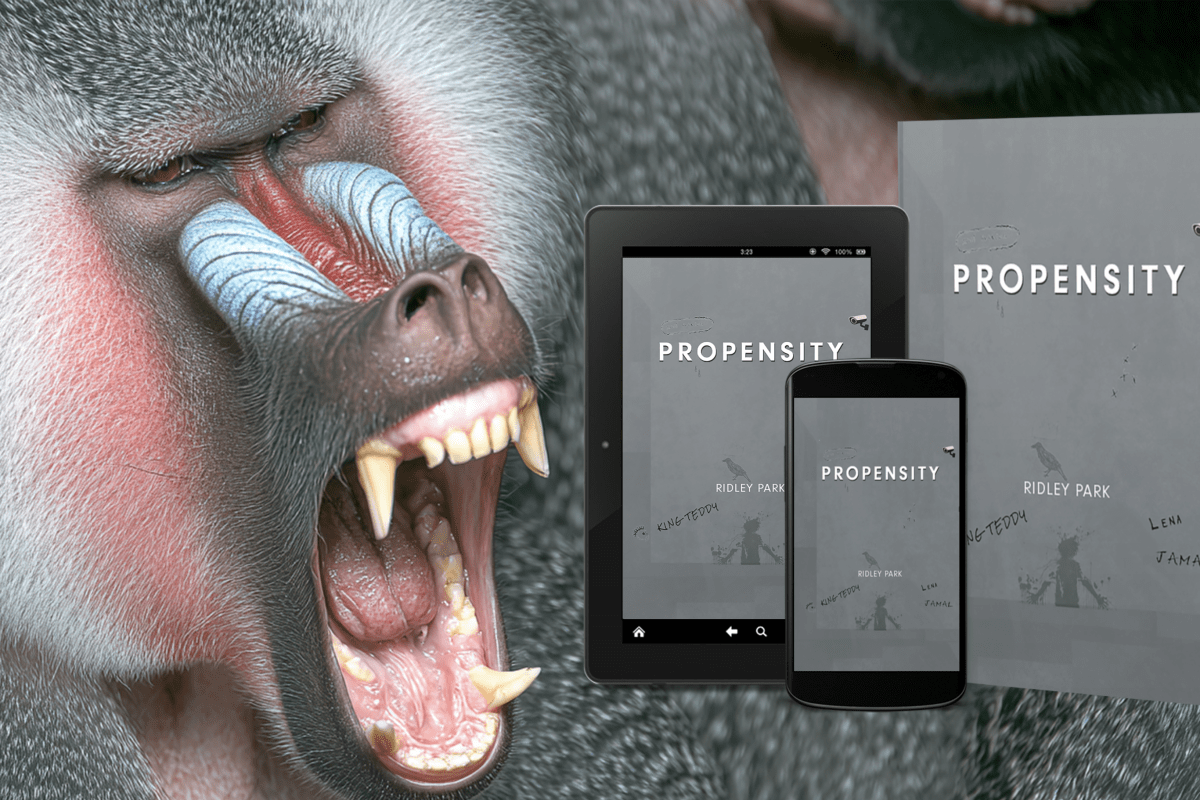
Editing Is Hard and Propensity

2–3 minutes

Well, not so much hard as not particularly or inherently enjoyable.
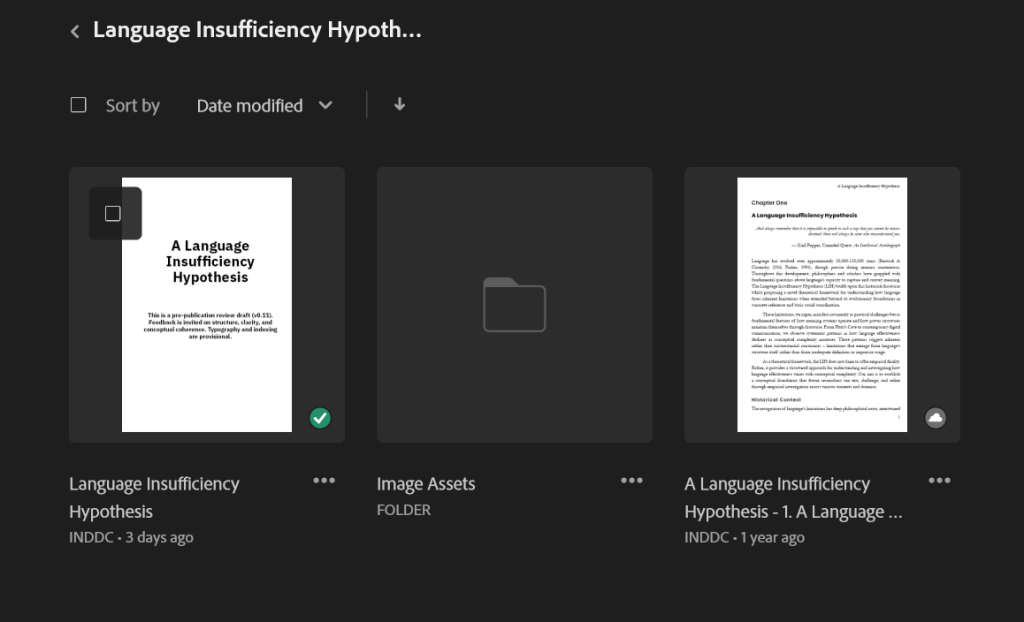
I estimate I’ve got about a day left to complete this manuscript – ‘done’ done. When I open InDesign, it shames me – 3 days ago, I last touched this document. It doesn’t feel like 3 days have passed, but time flies.

On the right is an older version. I began reworking it into this new version over the summer, and here I am come autumn. It’s even worse if I use the Chinese calendar. Evidently, 7th November is the first day of winter. They can’t wait until soltace.

Anyway, just a brief update. This isn’t going to edit itself, and I can’t afford to pay an editor for a passion project. Besides – and let’s be honest – I can’t afford an editor in general – or at least can’t cost-justify it – and all my writing is a passion project.

Of course, editors (and cover artists) insist that one would sell more book if only they were edited or professionally rendered. There is an element of truth to this, but I’ve read some gawdawful books that were professionally edited and published through a traditional publisher, because publishers publish.

Me, I operate on razor-thin margins. Most of my publications haven’t even broken even – even if I ignore opportunity costs, which I can’t because I’m an economist. Accountants get to play that trick.

This said, I do hire reviewers, editors, and artists in small doses – homoeopathic as they might be – and I’ve had mixed results.

I’m rambling

Must really be avoiding the editing process…

Recently, I wanted to redesign the cover of one of my Ridley Park fiction books.

Image Comparison: A Tale of Two Propensities

The cover on the left is the original. It is intentionally a minimal 2-D construction – a representation of the first section of the book, the first 15 chapters.

The cover on the right is the update. It is also minimalist, representing the second section of Propensity. I’m not sure how I would depict the third section. If it comes to me, I may render a third version.

There’s a story to this. I reached out to some cover artists and told them I was unhappy with my original design but had no visual ideas. I’d leave this to the artist. It turns out that some artists don’t want full control over the design process. I can understand the hesitation.

They asked for covers that I might like, so I researched some covers and saved them to a Pinterest board.

As it turned out, after some inspiration, I decided to render this one myself, too. Hey, I tried.

What happened to the rest of the time?

OK, so there’s more. I also created a video book trailer in the evening.

It was fun enough. Give it a watch. It also represents part one of Propensity.

OK, this time for real. Let me know what you think…about anything in particular.

On Ishiguro, Cioran, and Whatever I Think I’m Doing

Sora-generated image of Emil Cioran and Kazuo Ishiguro reading a generic book together

Having just finished Never Let Me Go by Kazuo Ishiguro, I’ve now cracked open my first taste of Cioran—History and Utopia. You might reasonably ask why. Why these two? And what, if anything, do they have in common? Better yet—what do the three of us have in common?

Audio: NotebookLM podcast on this topic.

Recently, I finished writing a novella titled Propensity (currently gathering metaphorical dust on the release runway). Out of curiosity—or narcissism—I fed it to AI and asked whose style it resembled. Among the usual suspects were two names I hadn’t yet read: Ishiguro and Cioran. I’d read the others and understood the links. These two, though, were unknown quantities. So I gave them a go.

Ishiguro is perhaps best known for The Remains of the Day, which, like Never Let Me Go, got the Hollywood treatment. I chose the latter, arbitrarily. I even asked ChatGPT to compare both books with their cinematic counterparts. The AI was less than charitable, describing Hollywood’s adaptations as bastardised and bowdlerised—flattened into tidy narratives for American palates too dim to digest ambiguity. On this, we agree.

What struck me about Never Let Me Go was its richly textured mundanity. That’s apparently where AI saw the resemblance to Propensity. I’m not here to write a book report—partly because I detest spoilers, and partly because summaries miss the point. It took about seven chapters before anything ‘happened’, and then it kept happening. What had at first seemed like a neurotic, wandering narrative from the maddeningly passive Kathy H. suddenly hooked me. The reveals began to unfold. It’s a book that resists retelling. It demands firsthand experience. A vibe. A tone. A slow, aching dread.

Which brings me neatly to Cioran.

History and Utopia is a collection of essays penned in French (not his mother tongue, but you’d never guess it) while Cioran was holed up in postwar Paris. I opted for the English translation—unapologetically—and was instantly drawn in. His prose? Electric. His wit? Acidic. If Ishiguro was a comparison of style, then Cioran was one of spirit. Snark, pessimism, fatalistic shrugs toward civilisation—finally, someone speaking my language.

Unlike the cardboard cut-outs of Cold War polemics we get from most Western writers of the era, Cioran’s take is layered, uncomfortably self-aware, and written by someone who actually fled political chaos. There’s no naïve idealism here, no facile hero-villain binaries. Just a deeply weary intellect peering into the abyss and refusing to blink. It’s not just what he says, but the tone—the curled-lip sneer at utopian pretensions and historical self-delusions. If I earned even a drop of that comparison, I’ll take it.

Both Ishiguro and Cioran delivered what I didn’t know I needed: the reminder that some writers aren’t there to tell you a story. They’re there to infect you with an atmosphere. An idea. A quiet existential panic you can’t shake.

I’ve gotten what I came for from these two, though I suspect I’ll be returning, especially to Cioran. Philosophically, he’s my kind of bastard. I doubt this’ll be my last post on his work.