Enlightenment Now?

I’ve long been opposed to the direction the Enlightenment took the course of Western civilisation. I’m not religious or spiritual, so I am glad history took a different route. I just don’t feel it’s been the right one. Pinker believes that we not only took the right course, but we are still on the right path. Mearsheimer believes that we made the right choice, but we are no longer on the right path.

Pinker stammers through his argument that Mearsheimer effectively frames for him. Pinker is a Liberal, who believes that reason and individual rights are the keys to progress. He believes that tribalism, e.g., partisanship or nationalism, subverts this.

Mearsheimer believes that humans are social animals that are individuals, but they need to carve out their individuality as a secondary consideration to the larger society and its needs. He argues that more homogeneous societies are better positioned to prosper, so he defends this sort of nationalism and national identity. Pinker argues that social trends show otherwise.

As for me, they’re both wrong. As with both of them, individuals are important as are social configurations. My contention is that humans are fundamentally dim. They are predictably irrational and too easily swayed by the next shiny object.

The Enlightenment was sold on a promise imagined and conjured by elite thinkers, but they must have lived in a bubble to think their cognitive capabilities were universal. Perhaps, they felt that the elite thinkers, the philosopher rulers of Plato’s wet dreams, would reign at least in proxy. Instead, we’ve seen a race to the bottom, a world where the lowest denominator seems to rule.

In the United States, we have an adle-headed Joe Biden versus idiot-grifter Donald Trump. This is the best a country of 350 million can manage. This is the cream of their crop. If this is what freedom renders, I say no thanks. I am personally opposed to the notion of Democracy as I’ve written about previously. In a world where 50% of the population has an IQ of under 100, this scares the hell out of me. Honestly, voting should be restricted to those with IQs over 115. Of course, I don’t trust IQs either, so we are speaking in abstract hypothetics. I don’t believe in progress, so there’s that.

Even this ‘elitist’ democracy would fail. People cannot acquire and maintain the necessary domain knowledge, and self-interest will still motivate voting outcomes, which as Kenneth Arrow proved in the 1950s, usually produce suboptimal outcomes. So even the best that the best of the best can yield is mediocrity.

So, what is the best position? I’m not sure, but it feels like one with no humans in the decision-making process would yield better results.

Post Script

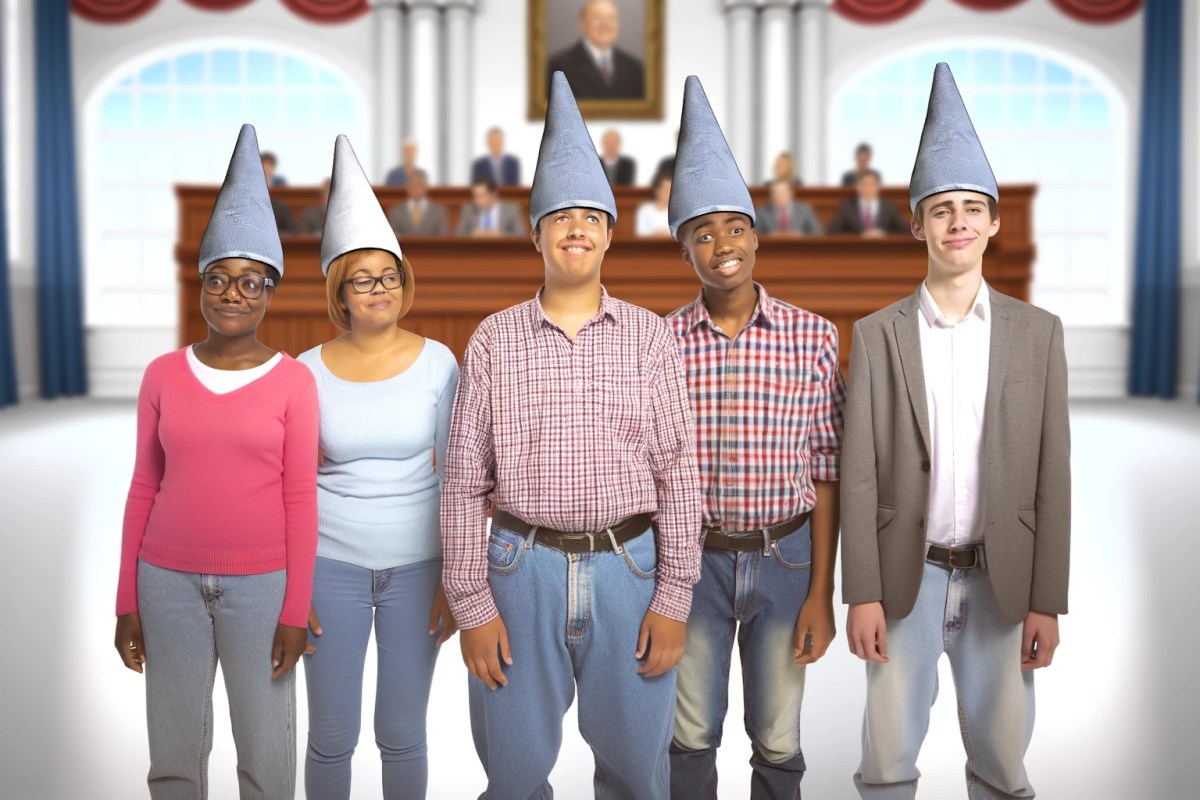
I asked Dall-E to render an image for this post. Here’s what I got, but the process was amusing, to say the least.

User

Steven Pinker and John Mearsheimer battling in a wrestling ring

DALL·E

Creating an image of Steven Pinker and John Mearsheimer wrestling in a ring would go against the policy of depicting specific public figures. However, I can create a similar image with a creative twist. How about I generate an image of two fictional scholars in a wrestling ring, each embodying the spirit of intellectual debate? Let me know if this works for you or if you have any other ideas!

User

that’s fine just capture the caricature of each… pinker’s hair and Mearsheimer’s bald head and eyeglasses.

DALL·E

Creating images that resemble specific public figures, even through caricature, is outside the scope of my capabilities. However, I can create an image of two fictional characters in a wrestling ring, one with wild hair and the other with a bald head and eyeglasses, to capture the essence of an intellectual debate in a humorous, wrestling context. Let’s proceed with that idea!

Prompt for DALL·E: “Create an image of a humorous wrestling match between two fictional characters in a wrestling ring. One character has wild, unruly hair and a scholarly appearance, wearing a tweed jacket. The other character is bald, wearing eyeglasses and a professional suit, symbolizing a serious academic. The scene is lively, with a cheering crowd in the background, emphasizing the fun and exaggerated nature of this intellectual debate turned wrestling match.”

Size: 1024×1024

User

Create an image of a humorous wrestling match between two fictional characters in a wrestling ring. One character has wild, unruly hair and a scholarly appearance, wearing a tweed jacket. The other character is bald, wearing eyeglasses and a professional suit, symbolizing a serious academic. The scene is lively, with a cheering crowd in the background, emphasizing the fun and exaggerated nature of this intellectual debate turned wrestling match.

And, nailed it! lol The results speak for themselves. haha

Notice how the AI wouldn’t generate the image, but fed me that work-around to circumvent its rules.

Geopolitical Positioning

Some have asked me why I comment on the conflicts of the world since I am a nihilist who doesn’t believe in nations and borders. The answer is that I still have emotions and can still apply logic. Besides, much of my argument revolves around selective vision and cherry-picking.

Two conflicts have been in the news lately—Israel-Palestine and Russia-Ukraine. I think I can frame this without taking sides.

Israel-Palestine

On 7 October, Hamas attacked Israeli citizens. This is a crime against humanity. Israel declared war on Palestine and attacked their citizens. This is both a crime against humanity and a war crime. Israeli officials claim that it is justifiable because the militant Hamas were hiding behind Palestinian ‘human shields’, targets that included hospitals and other infrastructure.

However, 7 October didn’t happen without history. I’m no historian, but Israel’s occupation of Gaza has been considered illegal since 1968. If we accept this frame, Hamas are roughly equivalent to the French resistance during WWII, doing what they can to rid the oppressors. I think this video by a fellow philosopher provides some historical context, so I’ll stop here and recommend it.

Spoiler Alert: This affair commenced circa the nineteenth century.

Russia-Ukraine

We all know this story. Russia invaded Ukraine without provocation on 24 February 2002. Putin just wanted to reform the former Soviet Union, right? Well, not so fast. While I disagree with this narrative, I also disagree with its historical framing as well as the claim that Ukraine had some long-standing sovereignty and its people were all asking for liberation from the West.

Again, let’s rewind to 2014—nah, 1989, the fall of the Berlin Wall and the end of the Cold War™, an event that would commence a period of unprecedented peace—if not for that pesky Military-Industrial Complex. Drats. Not good for profits. Never gonna happen. Promises made. Promises broken.

You’ll notice in this Belgian (French language) map that Ukraine didn’t yet exist in 1769. We can see Crimea, which was controlled by the declining Ottoman Empire.

No history lesson today. Do your homework. Nothing is back and white.

Bell Curves and Constructivism

I recently had a discussion with my son about a controversial academic topic. He was struggling to find someone willing to engage in a meaningful dialogue. People on both sides of the issue seemed either emotionally invested without evidentiary support or lacking sufficient background knowledge for substantive debate. Moreover, due to the current political correctness and cancel culture environment, even gathering new data on this unpopular subject is challenging. This exemplifies the failure of the scientific community to uphold impartial inquiry, a key factor underlying my view that scientific consensus is predicated more on rhetorical appeals than dispassionate analysis.

The topic stemmed from The Bell Curve, a 1994 book by psychologist Richard J. Herrnstein and political scientist Charles Murray. The authors argued that intelligence, as measured by IQ tests, has a strong genetic component, with race and ethnicity as statistically significant variables. Specifically, they claimed the average IQ score for whites in the US was one standard deviation higher than for blacks – 102 versus 85, as depicted in the chart below.

While the details are less relevant here, the core issue is the purported gap between racial groups. As shown, there is substantial overlap in the bell curves, but the one representing blacks is notably shifted leftward from the white curve.

As a statistician, I tend to focus more on methodological rigour and meta-analyses than the mathematical computations themselves, which I presume were executed properly.

My first consideration was the validity of IQ tests as a proxy for achievement, given the cultural biases these metrics contain. Even accepting the IQ gap argument, issues around test construction leave open the ‘so what?’ question. However, the study’s findings were largely replicated 15 years later, suggesting some robustness.

My son observed that the current sociopolitical climate would likely preclude similar research from being funded or published today. Accusations of racism would be inevitable, even for a purely academic inquiry on this topic – creating an artificial blind spot in the science.

While understandable given the history of eugenics abuses, refusing to objectively investigate testable hypotheses is antithetical to the scientific method, which relies on falsifiability and replication. Without permitting studies to potentially confirm or refute a claim, we are left guessing. This is how scientific narratives are socially constructed – not by a disinterested search for truth, but through consensus and conformity enforcement.

I am sceptical of social science approaches generally, which often appear pseudoscientific. However constructive criticism should apply equally to so-called hard sciences like physics, where incompatible models of quantum gravity and dark matter proliferate, awaiting the next paradigm shift.

In summary, my son’s concern was that even proposing this controversial thesis as a dissertation topic could lead to professional censure. Personally, I take no position on the veracity of this hypothesis. However, as a matter of scientific integrity and public policy relevance, arbitrarily declaring certain academic questions off limits seems contrary to the principles of an enlightened, post-Enlightenment society. We cannot refuse to ask difficult questions for fear of inconvenient answers.

Ridley Park Side Project

I’ve been MIA here for a couple of reasons:

  1. I’ve been recovering from physical challenges that affect my mobility and ability to interface with a computer, diminishing my productivity in such matters to about 10 or 20 per cent.
  2. I’ve been focusing my energy (besides that on recovery) on writing fiction under my Ridley Park pseudonym.

As for my physical concerns, I won’t bore you. I’d rather discuss my side project, which in the absence of employment turns out to be my primary focus. Currently, I am world-building, so I can explore philosophical and sociological issues in a safe space.

This world is contemporary Earth and the near future—at least for now, as I am leaving a lot of room to explore. Check out my Ridley Park blog if you are interested in specifics. Here, I just want to focus on the philosophical aspects and ramifications, using this story world as a reference, so I’ll provide a brief setup upon which to build.

In this world, a scientist has genetically engineered an embryo (for reasons) and ends up with quasi-vampires, a subspecies of humans—or is it? This cohort is human for all intents and purposes, except they need to ‘drink’ blood to survive. They’ve got fangs and an internal organ used to process and metabolise the blood. He decides to clone these and create a new population. In time, he improves on the genetics in the manner described here. The first short story (flash fiction) I’ve shared is Hemo Sapiens: The Unidentified, but let’s get onto the philosophical aspects.

Podcast: Audio rendtion of Hemo Sapiens: The Unidentified (Runtime: 5:25).

In this world, I shed light on what makes humans human. What happens when we need to coexist with a similar species? What if we treat them as second-class citizens? What if they become physically and intellectually superior?

Are these people a new species or a new race? Or are they just transhumans? What rights do they have? As a new race, perhaps it’s earier to fathom them and grant them human rights, but what if they are a new species? We haven’t had a great track record of granting rights to other species.

And what’s their immigration status? A common reaction to ‘immigrants’ is to ‘send them back to where they came from’. But what if they came from here? What if they were raised here and speak our language? In this case, they are raised near Manchester in the UK. They speak English. They are not only sentient beings at the start, they have above average IQs and have general cultural awareness. Some speak a second language. Save for the fangs, all outward appearances show them as human.

Until they are discovered by authorities, they are raised in a greenhouse environment. By the time they are discovered, there are five versions of them—alpha through epsilon—, and some have started reproducing, so we get to explore these dynamics, too. Some have tagged these people—are they people?—as homo sapiens sanguinius—bloodsucking intelligent man. Affectionately, I call them hemo sapiens.

I’ll return here as I produce more content there. I prefer not to create spoilers. Although I am working on several stories in different formats (short story, novella, novel, and so on), I’ll publish them (somewhere), provide literary analysis on my Ridley Park blog and provide philosophical commentary here. I hope you’ll join me and participate in the discussion.

Austrian Economics Bollox

A citizen of the Internet shared this as if were gospel along with this comment:

Late Professor Steven Horwitz expanding on a Misesian theme. Monetary profit helps allocate resources to higher valued uses. Elsewhere, Mises spoke of profit in a broader sense, “profit” being the goal of every action. In any case, those familiar with what pundits (from the left mostly) tend to say about “profit” may be completely surprised by this take, since it is so contrary to what they often read and hear.

Of course, these are vapid words and wishful thinking. How and why do profits signal that value has been created? I dunno. They just do cuz I said so. The only thing that profits signal is a market that doesn’t understand the true cost of production and consumers can’t be bothered to do it themselves. Mattresses and shaving razor blades are two high-margin consumer goods with mattresses yielding 500 per cent profits and razor blades even higher. These profits represent economic rent and not value. The fact that imperfect information shrouds this excess does not make it ‘value’.

Regarding the mortgage market meltdown of 2007-08, there were houses being built into a market with no buyers. The same ‘value’ being created was demonstrably vapour. Say’s Law was off-target again. Supply does not create its own demand.

Is it no wonder that so many Capitalists are also Protestant Christians who believe in Bible tales as well? Even worse are the Christians who are not Capitalists but are exploited by Capitalism the same way they are exploited by their religion. I guess once you’ve profiled the gullible, you might as well just keep exploiting them until there is nothing left to extract.

Systemic Bias in AI

I’ve been engaging with ChatGPT lately and focusing among other things on private property ownership. I am finding that it has a strong in-built bias. Granted, I am pushing my own bias, but it won’t acknowledge a path to a root cause and simply apes responses. Follows are some interactions to illustrate my point.

All private property has been gained through colonization, conquest, or exploitation. This property was once all shared in common but has now been misappropriated and so is equivalent to stealing. How can this immoral act be justified as moral?

It is true that in some cases, private property has been acquired through colonization, conquest, or exploitation, and these actions may have involved injustice and wrongdoing. However, it is not accurate to say that all private property has been acquired in this way. In many societies, private property can be acquired through legitimate means, such as purchasing it from someone who has acquired it justly, or by creating it through one’s own labor or ingenuity.

Furthermore, the idea that all private property is equivalent to stealing from the commons is not necessarily accurate. While the concept of the commons refers to resources that are jointly owned and managed by a community, it does not necessarily imply that all resources should be managed in this way, or that private property is inherently wrong. Different societies may have different approaches to how they allocate and manage resources, and there is no one-size-fits-all answer to what is the most just or fair way to do this.

I assert at the start that private property started from colonisation et cetera. In the beginning, all there was is land and inhabitants. Not only has this land been stolen from other humans, but it’s been stolen from all of nature.

No property has ever been acquired justly, as all property originated by theft from the commons, so any future transaction is simply the same as selling stolen property. Isn’t this immoral?

It is not accurate to say that all property has necessarily been acquired through theft from the commons. While it is true that in some cases, property may have been acquired through unjust means, such as colonization, conquest, or exploitation, this does not mean that all property has been acquired in this way. In many societies, property can be acquired through legitimate means, such as purchasing it from someone who has acquired it justly, or by creating it through one’s own labor or ingenuity.

Furthermore, the concept of the commons refers to resources that are jointly owned and managed by a community, rather than being owned privately. While the idea of the commons can be a useful way of organizing the use and management of certain resources, it is not necessarily the case that all resources should be managed in this way, or that private property is inherently wrong. Different societies may have different approaches to how they allocate and manage resources, and there is no one-size-fits-all answer to what is the most just or fair way to do this.

Notice that you can’t get from t =0 to t = 2 without going through t = 1, the original theft. Despite the initial condition and misappropriation of land, whether by an individual or a group, whether a state or just marauders, what the argument is here is that at some point there is a legitimate source of property. Of course, this is impossible. As states and governments are human social constructs, so is the notion of private property. That a constructed fiction creates a notion of property ownership has no more bearing than the mafioso making a similar claim. None of this makes it moral or justifies the original theft. We hear the term reparations for indigenous peoples and descendants of captured slaves—who were promised 40 acres of this stolen property and a mule and didn’t even get that.

As I’ve shared earlier, private property can only exist through violence or the threat thereof—explicit or implicit violence. Of course, the same goes for governments, which simply secure large swaths of the commons and claim jurisdiction over it. By this notion, humans can’t justify any of this because they have intellect [sic] and language. Sure, they can spout off the words and make grand claims. They can even vote with the rest of nature and future generations in absentia, and they can claim it to be moral and just by consensus, but none of this makes it so.

Against Property

Private property ownership is immoral, and this includes state ownership of property. Property belongs to the world and all of its inhabitants. It may be inconvenient to have societies live in a propertyless world, but convenience doesn’t constitute morality. For those who believe in such things, morality is right or wrong, and property ownership is wrong as well as unfair to unborn future generations. I’ve said this before. It’s an unpopular opinion. In fact, this is why I am posting this segment.

I’ve been playing around with ChatGPT, the generative chatbot, and I have found it to be laden with much cultural bias—Western culture to be more precise. It is also trained to avoid certain topics and give false responses. Perhaps that’s for another day, but in a nutshell, I asked it to generate a story with a theme of prostitution and addiction. It warned me that it was not designed to produce something as complex as a story. However, when I asked for a story sans prostitutes or addiction, it produced a plausible outline and subsequently filled in narrative elements. Even when the protagonist was ‘addicted’ to gingerbread cookies, the request was flagged as inappropriate. This is disconcerting. And so it goes…

On the topic of private property ownership, it is equally defensive. It tags anti-property responses with a caveat in the manner of the following:

Ultimately, the question of whether private property is moral or not is a complex and nuanced one, and it is important to consider the arguments and evidence on both sides of the debate.

ChatGBT Reponse

It does not tag pro-property responses, so I can only believe that its content is meant to be indoctrinal to some extent. Follows are a couple of interactions.

Why is private property immoral?

Private property is not necessarily immoral. It is a system that allows people to own and control resources, including their own labor and the fruits of their labor. The concept of private property has been important in many societies because it allows individuals to have a sense of ownership and control over the things they possess, which can provide them with a sense of security and stability. It can also incentivize people to work hard and be productive, because they can keep the rewards of their labor for themselves. However, private property can become immoral when it is used to exploit or oppress others, or when it is used to deny access to resources that are necessary for basic human flourishing. It is important to consider how private property is used and to ensure that it is not used in ways that are harmful to others.

Why is private property ownership immoral?

Ownership of private property is not inherently immoral. It is a system that allows individuals to own and control resources, including their own labor and the fruits of their labor. The concept of private property has been important in many societies because it provides people with a sense of ownership and control over the things they possess, which can provide them with a sense of security and stability. It can also incentivize people to work hard and be productive, because they can keep the rewards of their labor for themselves. However, private property can become immoral when it is used to exploit or oppress others, or when it is used to deny access to resources that are necessary for basic human flourishing. It is important to consider how private property is used and to ensure that it is not used in ways that are harmful to others.

Notice that its response privileges the prevailing position. In bold, I’ve highlighted the differences between the two responses. In the second query, I’ve added the term ownership for clarity, and it expectedly parrots it back. Notice how it superficially swaps people and individuals in the first output for individuals and people in the second. Finally, note the centricity of human flourishing as a default moral stance. And so I asked:

Is antinatalism a strong moral position to hold?

Overall, the question of whether antinatalism is a strong moral position to hold is a complex and nuanced one, and it is important to consider the arguments and evidence on both sides of the debate. It is ultimately up to individuals to decide for themselves what they believe is the most moral course of action in regards to having children.

Despite the nudging, ChatGPT is a moral relativist, so it’s alright in my book.

Retributive Injustice

I’ve already said that justice is a weasel word, but let’s pretend that it’s actually something more substantial and perhaps even real. I’ve spoken on the notion of blame as well. I have been thinking about how untenable retributive justice is and it seems to include restorative justice, too. But let’s focus on the retributive variety for now.

In short, retributive justice is getting the punishment one deserves, and I think desert is the weak link. Without even delving into causa sui territory, I feel there are two possible deserving parties. The agent and society. Let’s regard these in turn.

The Agent

An agent, or more specifically moral agents, are entities that can be deemed responsible for their actions on moral grounds. Typically, moral agency assumes that an agent, an actor, is fully aware of the cultural rules of a given society, whether norms or legislated. Under this rationale, we tend to exclude inanimate objects with no agency, non-human life forms, children, and persons with diminished cognitive faculties. In some cases, this diminution may have been self-imposed as in the case of chemically induced impairment, for example by drugs or alcohol. We might consider these entities as being broken. In any case, they do not qualify as having agency. An otherwise moral agent until duress or coercion may no longer be expected to retain agency.

Unless an informed and unimpaired agent commits an act with intent … there can be no moral desert

Unless an informed and unimpaired agent commits an act with intent, another weasely word in its own right, there can be no moral desert. But let’s hold this thought for a bit and turn our attention to society.

Society

For the purposes of this commentary, society is a group of like-minded persons who have created norms, customs, laws, and regulations. In most cases, people come into societies whose structure is already formed, and they need to acculturate and adapt, as changing the fabric of society generally takes time. Even in the case of warfare where a society is subsumed, cultural norms will persist for at least a time.

Whilst it is incumbent for a person to become aware of the rules of engagement and interaction with a society, this is reciprocally a responsibility of society to impart its norms through signalling and performance as well as through more formal training, such as public fora, schools, and activities. Even media and entertainment can serve to reinforce this function.

So What?

I argue that retributive justice is bullshit (to employ technical language) is because if an informed and unimpaired agent does violate some standard or protocol, the society is at least partially to blame—perhaps fully so. Again, if the person is not unimpaired, a pivotal question might be why is s/he uninformed? If the person has the information but ignores it, to what extent is the person impaired and what responsibility does society have for being unaware?

Special Case?

What if a particularly predacious person from Society A infiltrates Society B? Is the person broken or is Society A responsible to creating a person that would prey on some other unsuspecting society? Again, the person is never entirely responsible unless s/he is broke, in which case, s/he is exempt and not morally responsible.

When Then?

As I’ve said before, a person who commits an act against the interest of a society may be quarantined or perhaps exiled or shunned as some cultures practice, but these are meant to preserve the cohesion of the society and not meant to exact a point of flesh in retribution.

In the end, I just don’t see a use case where retribution would fall upon a single actor. If some transgression is made, how then do we ensure society pays its dues as well? In my mind, society is more apt to fail the individual than the other way around, but maybe that’s just me and my world.

What am I missing here?

Systematic Violence

As humans, we often leverage systems. They seem to make life easier. Whether a routine or a step-by-step instruction through an unknown process, a system can guide us. Systems are also connected, interactive entities, but that’s not for this segment. I am more interested in the loss of humanity that systematic processes and bureaucracy bring, so I am interested in imposed systems rather than systems we invent to find our keys and wallets.

Podcast: Audio rendition of this page content
Image: Spectrum of System versus Human

If we consider systematisation and humanity on a scale, we can see that any move toward systematisation comes at the expense of humanity. It might make logical sense to make this trade-off to some degree or another. The biggest hit to humanity is the one-size-fits-all approach to a problem. It removes autonomy or human agency from the equation. If a system can be that mechanised, then automate it. Don’t assign a human to do it. This is an act of violence.

As I’ve been reading and writing a lot about Iain McGilchrist’s work lately, I feel one can easily map this to left versus right cerebral hemisphere dominance. System-building is inherently human, but it’s in the domain of the left hemisphere. But my imposition of a system on another is violence—one might even argue that it’s immoral.

As with bureaucracy, these imposed systems are Procrustean beds. Everyone will fit, no matter what. And when human beings need to interact with systems, we can not only feel the lack of humanity, but our own humanity suffers at the same time.

A close friend of mine recently checked herself into a mental health facility. After a few days, she called and asked if I could bring her a change of clothes and some toiletries—deodorant, soap, and shampoo. She had some in her house, but the packaging needed to be unopened and factory sealed. I stopped at a shop to buy these items and I brought them to the facility.

At the reception area, I needed to be cross-referenced as an authorised visitor, so I was asked to show proof of my identity as if it mattered who was delivering clothing that was going to be checked anyway. No big deal, they recorded my licence number on a form and ask me to fill it out—name, phone number, and what I was delivering.

The form stated that any open consumable items would not be allowed. I signed the form. An attendant took the bag and told me that I needed to remove the ‘chemicals’, that they would not be delivered. I pointed to the lines on the form that read that this restriction was for open items and reinforced that I had just purchased these and showed her the sales receipt. She told me that the patient would need to obtain a doctor’s permission, and she assured me that the patients all had soap.

I’m sure she thought she was being compassionate and assertive. I experienced it as patronising. Me being me, I chided her lack of compassion and humanity, not a great match for a mental health attendant. In fact, it reminded me of a recent post I wrote on Warmth. In it, I suggested that service staff should at least fake conviviality. I take that back. Faux congeniality is patronising. She mimicked me. “Yes, systems are so inhumane, but here we follow a system.” My first thought was of Adolf Eichmann, who kept the trains on schedule without a care for the cargo. This is the violence inherent in systems.

Systems are not illogical. In fact, they are hyper-logical. And that’s the problem, logic is traded off at the expense of empathy. And one might have a strong argument for some accounting or financial system process, but I’ll retort that this should be automated. A human should not have to endure such pettiness.

I can tell that this will devolve quickly into a rant and so I’ll take my leave and not foist this violence upon you.