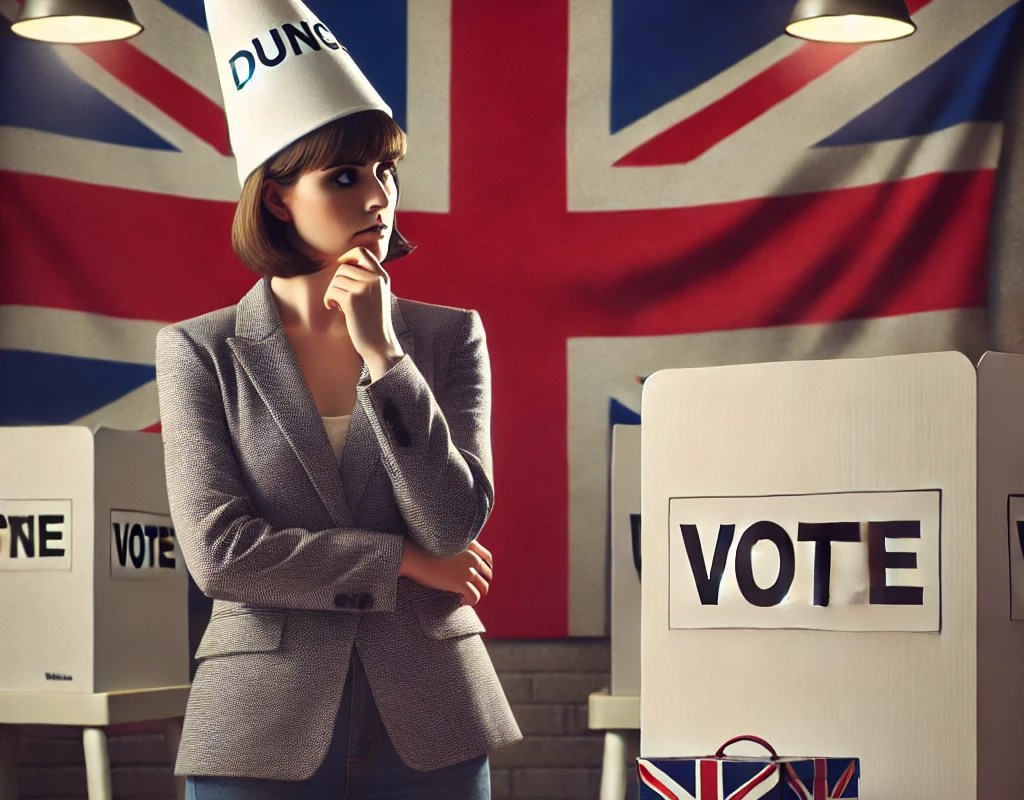
Democracy: The Grand Illusion

As I’ve mentioned, I’m hip-deep into writing another book. I’m about 40,000 words in and 40 per cent done. Many chapters still contain placeholder notes and ideas to flesh out. I’ll be honest. Many of the chapters contain only themes, notes, references, and citations. Some are ostensibly first drafts. For these chapters. I’ve engaged AutoCrit*, an AI copy editing and review application to keep me on track. I don’t particularly want to share too much inside information at this time, but I’d like to share some of AutoCrit’s feedback in dribs and drabs.

AutoCrit can analyse content by chapter. The first is a preamble—a preface. Here’s what AutoCrit has to say about it, categorised. I’ll present the raw responses and comment thereafter.

Synopsis

The non-fiction work “Democracy: The Grand Illusion” challenges the sanctity of democracy and questions its effectiveness by delving into inherent flaws often overlooked. The text opens with a provocative exploration of the fundamental flaws in democracy, arguing that it leads to suboptimal solutions and mediocre results both in theory and practice. It highlights how human nature, cognitive limitations, emotional triggers, and biases impact the execution of democratic systems.

Throughout the book, various forms of democracy are examined across different historical contexts globally. From ancient Mesopotamia to modern-day Western democracies like the United States, the author critiques the shortcomings of democratic governance. By dissecting voter apathy, cognitive biases, and mathematical imperfections in voting systems, they aim to provide a nuanced understanding of why democracy may be fundamentally flawed.

The text concludes by emphasising that while there may not be a perfect solution to address these flaws within democratic systems, incremental reforms can make them fairer and more effective. It acknowledges resistance from those who benefit from maintaining the status quo but argues for ongoing efforts towards improving governance despite historical precedents favouring entrenched power structures.

In its closing remarks on reforming governing systems knowing their inherent imperfections will persist, “Democracy: The Grand Illusion” leaves readers contemplating potential avenues for change within existing frameworks rather than advocating for revolutionary upheavals. Through referencing philosophical critiques dating back to Plato’s “Republic” as well as contemporary works on cognitive limitations like Daniel Kahneman’s “Thinking Fast and Slow,” this book encourages critical thinking about democratisation processes amidst evolving technological landscapes shaping public discourse.

Commentary

This feels like a fair assessment.

Audience

The audience for this text appears to be intellectually curious individuals interested in political theory, governance systems, and critical analysis of democracy. This includes academics, political scientists, philosophers, and readers who enjoy engaging with thought-provoking ideas that challenge conventional wisdom. The text seems tailored for those willing to question deeply held beliefs about democracy and open to exploring alternative perspectives on the subject.

Those who may not be the target audience include staunch defenders of traditional democratic principles without room for critical evaluation or scepticism. Readers seeking a straightforward endorsement of democracy as an ideal system may find the content challenging or even off-putting. Additionally, individuals looking for practical solutions or concrete proposals to improve democratic processes might feel unsatisfied by the lack of definitive recommendations in the text.

To make the text more relevant to its target audience, the author could consider providing more historical context and philosophical insights into various critiques of democracy throughout history. Including case studies or real-world examples that illustrate some of the challenges discussed could also enhance engagement with readers interested in applying theoretical concepts to contemporary issues. Moreover, offering suggestions for further reading or avenues for deeper exploration into specific aspects of democratic theory would cater well to an intellectually engaged audience seeking additional resources for continued study and reflection.

Commentary

This feels like a fair assessment of potential audience acceptance and resistance to engagement. As this is only the preface, historical contexts are in later chapters.

Structure and Organisation

The text is well-organised and follows a logical order. It begins with a preface quoting an anonymous source, setting the tone for introspection and critical analysis. The introduction effectively sets the stage by posing thought-provoking questions about democracy’s efficacy before delving into the main premises of the book. The author then transitions smoothly to discussing inherent challenges in democracy, historical contexts, implications of cognitive limitations, and critiques from various perspectives.

Each section flows seamlessly into the next, building upon previous discussions while maintaining coherence throughout. The text effectively introduces key concepts before expanding on them further, ensuring that readers can follow along with the author’s arguments and insights without confusion or disarray. Additionally, citations are appropriately included at relevant points to support claims made within the text.

Overall, “Democracy: The Grand Illusion” demonstrates strong structure and organisation by presenting its content in a clear and cohesive manner that guides readers through a nuanced exploration of democracy’s flaws and complexities.

Commentary

This feels like a fair assessment of my structural intent. I admit that in its current state, there is more structure than content. I’ll accept this unpaid endorsement.

Clarity

The author effectively conveys their central argument challenging the effectiveness of democracy and highlighting its inherent flaws. The text is well-structured and maintains a coherent flow throughout. However, there are instances where complex sentence structures and specialized terminology may hinder comprehension for some readers.

One example of potentially confusing language is when the author discusses “cognitive limitations exacerbating the execution of democracy from the perspective of voters and representatives.” This phrase might benefit from further clarification or simplification to ensure all readers grasp the intended meaning without difficulty.

Additionally, phrases like “mathematically tenable” and references to specific philosophical critiques or mathematical concepts could be challenging for readers not familiar with these subjects. Providing more context or explanations for such terms would enhance overall clarity for a broader audience.

Overall, while the text generally communicates its message effectively, some areas could be improved by offering clearer explanations or simplifying complex language to ensure maximum reader understanding.

Commentary

This feels like a fair assessment of clarity. I do my best not to muck it up. I’ll tighten up the language in a subsequent review. My modus operandi is to scrawl the stream of consciousness before restricting my flow with editorial concerns.

Argument and Persuasion

In the text, the author presents a provocative argument challenging the effectiveness of democracy and highlighting its inherent flaws. The opinions put forth include questioning the sanctity of democracy as a fair and equal system of governance, suggesting that it leads to suboptimal solutions with mediocre results both in theory and practice, emphasising human cognitive limitations and biases that hinder democratic processes, and proposing that democracy may be fundamentally flawed due to these factors.

Strengths of the persuasive elements in this text lie in its thought-provoking nature. By raising questions about widely held assumptions regarding democracy’s efficacy, the author encourages critical thinking among readers. The logical construction is evident through a systematic breakdown of various aspects contributing to the perceived flaws in democratic systems – from mathematical imperfections in voting mechanisms to challenges posed by human nature and cognitive biases.

The opinions presented are well-supported with references to historical perspectives (such as Ancient Athens) and philosophical critiques (Plato’s “The Republic,” Aristotle’s “Politics”) on democracy. Additionally, citations from contemporary sources like Daniel Kahneman’s work on cognitive biases lend credibility to the arguments made.

Overall, while some readers may find the critique of democracy unsettling or elitist, the text effectively challenges conventional beliefs without offering a definitive alternative solution. This approach prompts readers to engage critically with existing governance structures rather than simply dismissing them outright.

Commentary

This feels like a fair assessment. My goal is to survey the flavours of Democracy to serve as a menu to readers. Democracy is an inherently poor system of governance, but some flavours are better than others if one prefers to remain in this box.

Tone

The tone of the text is critical and provocative, challenging the traditional notions of democracy with a sense of scepticism and urgency. The author’s language conveys a sense of disillusionment with the current democratic systems, highlighting flaws and limitations that are often overlooked or dismissed. There is an underlying frustration with the status quo and a call to action for readers to critically examine their beliefs about democracy. The tone also carries elements of elitism, acknowledging that the critique may not be readily accepted by all but emphasizing the importance of questioning widely held assumptions. Overall, there is a mix of cynicism towards existing democratic structures and a hopeful aspiration for potential reforms or alternative governance models.

Commentary

This feels like a fair assessment of tone. I don’t mind being polemic, but I may work to soften some tonal aspects. As my intended audience are more intellectual critical thinkers, it may be fine as-is.

Interest and Engagement

The text “Democracy: The Grand Illusion” presents a thought-provoking and intellectually stimulating analysis of democracy, challenging conventional perspectives on the subject. Overall, the author effectively engages the audience by presenting a unique perspective and raising important questions about the efficacy of democratic systems.

The introduction sets a captivating tone by questioning the fundamental flaws in democracy and highlighting its limitations. The author’s use of rhetorical questions and provocative statements encourages readers to think critically about commonly held beliefs regarding democracy. Additionally, referencing historical contexts and philosophical critiques adds depth to the discussion, making it more engaging for those interested in political theory.

However, there are sections within the text that may potentially lose some readers’ interest due to their dense nature or repetitive arguments. For instance, parts discussing mathematical flaws in voting systems or technological impacts on democracy could be perceived as overly technical for general audiences. To enhance engagement in these sections, the author could consider incorporating real-world examples or case studies to illustrate complex concepts more clearly.

Furthermore, providing concise summaries or visual aids such as graphs or charts may help break down intricate ideas into digestible segments for readers who may struggle with dense theoretical discussions. By balancing theoretical analyses with practical applications and varied presentation styles, the author can maintain reader engagement throughout all sections of the book.

In conclusion, while “Democracy: The Grand Illusion” successfully captures attention through its bold critique of democracy’s shortcomings, enhancing engagement across all sections through improved clarity and varied presentation methods will ensure sustained interest from a wider range of readers.

Commentary

This feels like a fair assessment of engagement. My goal is to flesh this out in forward revisions as I assess continuity and flow. Meantime, capturing content into buckets is a higher priority than caring about redundancy.

Final Thoughts and Conclusions

The text concludes with a strong and thought-provoking reflection on the challenges and complexities of democracy. It effectively ties together the various points raised throughout the book, emphasizing the inherent flaws in democratic systems while also acknowledging the necessity of governance for societal well-being. The author leaves readers with a sense of urgency to reconsider traditional notions of democracy and encourages critical thinking towards potential reforms or alternative models. Overall, the final thoughts are clear and impactful and provide a compelling conclusion to the discussion presented in the text.

Commentary

I’ll take it.

How does this project sound to you? Leave comments below.


* AutoCrit is an AI editorial review application. Whilst I don’t have enough exposure or experience to fully endorse the programme, I am a subscriber who uses it to critique my writing. I am, however, an affiliate member, so if you purchase a subscription, I will receive compensation from them, and it will benefit this site at no additional expense to you.

Dumocracy

I’m working on a new book—if by new I mean reengaging a book I started in 2022. I’m picking up where I left off with fresh eyes. As I’ve not had time to contribute much to this blog, I thought I’d share the preface as a work in progress. I may share additional subsections over time. Feel free to share any feedback in the comments section.

Preface

“The first step to recovery is to admit there’s a problem.” – Anonymous

Introduction

Imagine a world where the foundation of our governance, the system we hold as the pinnacle of fairness and equality, is fundamentally flawed. What if the mechanisms we trust to represent our voices are inherently incapable of delivering the justice and prosperity we seek? This book embarks on a provocative journey to challenge the sanctity of democracy, not with the intent to undermine its value but to question its effectiveness and expose the inherent limitations that have been overlooked for centuries.

This book is meant to be inclusive, though not necessarily comprehensive. Although focused heavily on a Western experience, particularly the United States, the insights and critiques apply globally.

Democracy feels like an anachronism awaiting a paradigm shift. As a product of the Enlightenment Age, democracy has been sacrosanct in the Western world for centuries. However, a quick glance at current results reveals dissonance. Not all is well. Despite typical defences such as entrenched political parties, low-information voters, rural-urban divides, gerrymandering, and illegal voting, this book sets out to show that democracy is fundamentally flawed. It doesn’t even work well on paper, almost inevitably yielding suboptimal results. When people are added to the equation, it just gets worse.

In this book, we’ll discuss inherent challenges to democracy. The main premises are:

  • In theory, democracy is not mathematically tenable. It always leads to suboptimal solutions with mediocre results. [1]
  • In practice, human nature and cognitive limitations exacerbate the execution of democracy from the perspective of voters and representatives. [2]

We’ll explore democracy from its beginnings and various forms across time, history, scale, and scope. We’ll investigate the impacts of imperfect information, human rationalities, emotional triggers, and cognitive limitations and biases of the general populace. We’ll survey the continents and look at ancient Mesopotamia, India, the Polynesian islands, and beyond.

This book aims to spark critical thinking and dialogue about the efficacy of democracy, encouraging readers to question widely held assumptions and consider the need for potential reforms or alternative governance models. Through this examination, the book hopes to inspire new ideas and solutions that can address the complexities and challenges inherent in democratic systems.


[1] Arrow, 1951; Sen, 1970

[2] Kahneman, 2011; Tversky & Kahneman, 1974

Value of Life

Captain Bonespurs now has a flesh wound. Former president-elect Donald J Trump was the target of a not-so-sharpshooter yesterday. Immediately resorting to Godwin’s Law, I wondered if this was like the philosophical hypothetical asking, ‘Would you kill baby Hitler to prevent the eventualities that unfolded?’ Was Hitler the symptom or the disease? What about Donald J? Whatever the cause or motivation, not unlike the fire at the Reichstag, this event has galvanised his supporters. Let’s hope that the outcome doesn’t follow the same path. There is a fear that he’ll take a path similar to Hitler or Ceasar before him in a quest for power.

What is a life worth? The average US-American life is valued at around $7 million, give or take a few million. The number ranges between $1 MM and $10 MM depending on which agency you see. That they equate lives to dollars is curious enough, but that they can’t agree on a single figure is priceless.

For background, this value is used to determine intervention. For FEMA (Federal Emergency Management Agency), a human life is worth about $7.5 MM For the EPA (Environmental Protection Agency) it’s slightly more than $10 MM. Are these cats playing Monopoly? Nah.

The human life calculus considers factors like lifetime earnings potential and discounts it to Present Value. In action, assume there is a disaster. Let’s not use COVID-19. Instead, there is an island with 1,000 inhabitants. Using the $10 MM per person figure to simplify the maths, we would be justified in spending up to $10,000,000,000 to intervene in some potential disaster – $10 MMM or $1e10.

Human lifetime value is an average. Mr Trump has already shown himself to be worth more than $10 MM. I suppose this means that not all humans are created equal. No matter. Another logical question might be what is the cost of a person’s detriment to society. This is a question for a Modernist or someone who feels that a given configuration of society is preferred to all others – or at least some others. How much damage might one human do?

Trump enriched himself and his family and entourage in his first term. In Ukraine, Zelenskyy and his lot bilked the country out of billions. It’s nothing new, but do we subtract the costs from the benefits or is this a gross calculation?

Irrespective of the costs, the next four years ahead are expected to be tumultuous no matter which corporate-sponsored party prevails. Heads, they win; tails, the country – if not the world – loses.

Understanding the Historical Context of the Ukraine-Russia Conflict

I’ve made several political posts in this space, but I was researching the backstory of the Ukraine-Russia conflict. Yet again, insufficiency of language is involved. It’s been said that the West promised not to expand NATO, ‘not one inch’, but it’s not clear whether NATO was the subject of that promise. Even Gorbachov said that NATO was not a topic of discussion, and that omission fell squarely on him. Even if this is the case, Putin made it clear in 2008 that this was his interpretation. Here’s a brief history for those interested. It’s decidedly not an academic affair, but I try to be neutral.

The Ukraine-Russia conflict is deeply rooted in the complex web of historical tensions and geopolitical dynamics that have shaped Eastern Europe from the Cold War to the present day. This article explores the critical developments and decisions from the end of World War II through to the events leading up to 2014, setting the stage for the current tensions.

From World War II to Cold War End

The geopolitical landscape of post-World War II Europe was significantly shaped at the Yalta Conference, where Allied leaders divided Europe into spheres of influence, leading to the establishment of a Soviet-dominated Eastern bloc. This division set the stage for the Cold War and the creation of NATO in 1949, a collective defence alliance that would come to play a central role in later tensions.

Collapse of the Soviet Union and Early Post-Cold War Hopes

The policies of glasnost and perestroika under Mikhail Gorbachev in the late 1980s, followed by the fall of the Berlin Wall, signalled a shift towards greater openness and potential integration. However, the dissolution of the Soviet Union in 1991 led to new states grappling with independence and the redefining of security and economic relations in the region. Initial hopes for a peaceful Europe were soon challenged by emerging security concerns.

NATO Expansion and Growing Tensions

NATO’s eastward expansion began in earnest in 1999 with the inclusion of the Czech Republic, Hungary, and Poland. This move, perceived by Russia as a strategic threat, reignited long-standing fears of encirclement and influenced Russia’s foreign policy. The expansion was justified by NATO as a way to stabilize Eastern Europe and integrate it into a democratic, peaceful Europe.

The 2008 Bucharest Summit

The 2008 NATO summit in Bucharest was a watershed moment. Although Ukraine and Georgia were not offered immediate membership, NATO’s declaration that they would eventually join the alliance was seen as provocative by Russia. The subsequent Russo-Georgian War in August 2008 underscored Russia’s willingness to use military force in response to perceived encroachments on its sphere of influence.

Deepening Crisis: 2010-2014

Relations continued to deteriorate with the EU’s Eastern Partnership program, which sought to deepen ties with former Soviet states, including Ukraine. The situation escalated dramatically in 2014 following the Euromaidan protests in Ukraine, the ousting of President Viktor Yanukovych, and Russia’s annexation of Crimea, a move widely condemned internationally but justified by Russia as a necessary defensive action.

Putin’s Defensive Stance

Throughout these developments, Vladimir Putin has maintained that NATO expansion represents a direct security threat to Russia. The narrative from the Russian perspective frames the expansion as a continuation of Cold War antagonism and a disregard for Russia’s security concerns, contrary to what they interpret as promises made during the 1990s.

Conclusion

This detailed narrative from the end of World War II through 2014 illuminates the complexities of Eastern European security dynamics and the challenges in reconciling the strategic interests of NATO and Russia. The ongoing conflict in Ukraine is deeply intertwined with these historical tensions, reflecting long-standing struggles for influence and security in post-Cold War Europe.

Additional background and context.

If anything, perhaps this will help with SEO.

To provide a clearer picture of the discussions and statements made about NATO expansion during the early 1990s, particularly around the time of German reunification, here are some notable quotes and summaries from key figures involved:

James Baker (U.S. Secretary of State)

James Baker reportedly told Mikhail Gorbachev during a meeting in 1990:

  • “Not one inch eastward” was a phrase used by Baker to assure Gorbachev about NATO’s military posture not moving eastward, in the context of German reunification. This phrase has been widely cited but is subject to interpretation regarding its precise meaning and whether it referred to broader NATO expansion.

Mikhail Gorbachev (Soviet President)

Gorbachev’s response to these discussions has been a source of significant interest:

  • “The topic of ‘NATO expansion’ was not discussed at all, and it wasn’t brought up in those years. I say this with full responsibility. Not a single Eastern European country raised the issue, not even after the Warsaw Pact ceased to exist in 1991.” – Gorbachev, in later interviews, emphasized that the assurances were more about not deploying NATO troops to Eastern Germany than about preventing future NATO expansion.

Hans-Dietrich Genscher (German Foreign Minister)

Genscher’s position was similarly focused on reducing Soviet fears about NATO:

  • “NATO should rule out an ‘expansion of its territory towards the east, i.e. moving it closer to the Soviet borders.'” – Genscher said this in a speech in Tutzing, Germany, in 1990, which was aimed at assuaging Soviet concerns about German reunification and NATO.

Western and Soviet Interpretations

The assurances regarding NATO not expanding “one inch eastward” were primarily discussed in the context of German reunification and the integration of East Germany into NATO without expanding NATO’s military presence further east. The ambiguity lies in whether these assurances were understood to apply only temporarily or permanently, and specifically to Eastern Germany or more broadly to Eastern Europe.

Later Developments

After these discussions, in 1991 and beyond, the situation changed dramatically with the dissolution of the Soviet Union. The security landscape in Europe was fundamentally altered, leading to different priorities and decisions. By the mid-1990s, the question of broader NATO expansion became a topic of much debate, and in 1999, several former Eastern Bloc countries were admitted into NATO.

Conclusion

The quotes and the context they were spoken in reveal the complexities of diplomatic communications and the difficulties in interpreting what was meant and understood by different parties. These discussions were contingent on numerous factors, including the rapidly changing geopolitical landscape following the end of the Cold War.

Declaration of Independence

It’s July. The season of independence in the United States. Independence from the overt tyranny of Britain, but not from the tacit tyranny of their government—the government purported to be ‘of the people, by the people, and for the people‘ per Abraham Lincoln’s 1863 Gettysburg Address. As their Constitution reads, ‘We the People‘. Governments may be of the people and by the people, but governments are an emergent phenomenon as happens when oxygen and hydrogen combine just so and create water. Two gases combine to create a new substance—water. Some forget that, like water, government are a distinct element to the people that constitute it. Some think it resembles them. It doesn’t. It’s Hobbes’ Leviathan—or a Jabberwok.

In preparation for the traditional Summer season, I took to reading Derrida’s 1976 essay, Declarations of Independence. It was interesting, but I was hoping to get more from it. I decided to deconstruct the opening paragraph—the preamble—of the Declaration of Independence:

Deconstructing Binary Oppositions

Self-Evident vs. Non-Self-Evident

The Declaration boldly asserts that ‘these truths’ are ‘self-evident’,’ a claim that is nothing more than a rhetorical trick. By presenting these ideas as self-evident, the authors seek to place them beyond questioning, discouraging dissent and critical examination. In reality, these ‘truths’ are far from universal; they are the product of a specific cultural and historical context, shaped by the interests and perspectives of the privileged few who drafted the document.

Interrogating Assumptions and Hierarchies The Declaration of Independence asserts that certain truths are ‘self-evident’, implying that these truths are so obvious that they require no further justification. However, the concept of self-evidence itself is far from universally accepted. It is deeply embedded in the philosophical tradition of Enlightenment rationalism, which holds that reason and logic can reveal fundamental truths about the world.

  1. Philosophical Foundations of Self-Evidence
    • Enlightenment Rationalism: The idea of self-evidence relies heavily on Enlightenment rationalism, which posits that certain truths can be known directly through reason and are therefore beyond dispute. Philosophers such as René Descartes and Immanuel Kant emphasised the power of human reason to uncover self-evident truths. Descartes, for instance, argued for the self-evident nature of ‘Cogito, ergo sum‘ (‘I think, therefore I am’) as a fundamental truth (Descartes, Meditations on First Philosophy).
    • Critique of Rationalism: Critics of Enlightenment rationalism, including existentialists like Friedrich Nietzsche and phenomenologists like Martin Heidegger, argue that what is considered self-evident is often culturally and historically contingent. Nietzsche, for example, contended that what we take as ‘truth’ is a product of our perspective and historical context, not an absolute given (Nietzsche, Beyond Good and Evil).
  2. Cultural and Philosophical Contingency
    • Cultural Relativity: Different cultures and philosophical traditions may not find the same truths to be self-evident. For instance, the concept of individual rights as self-evident truths is a product of Western liberal thought and may not hold the same self-evident status in other cultural frameworks. In many Eastern philosophies, the focus is more on community and harmony rather than individual rights.
    • Subjectivity of Self-Evidence: The term ‘self-evident’ implies an inherent, unquestionable truth, yet what one group or culture finds self-evident, another may not. This variability reveals the instability and subjectivity of the claim. For example, in traditional Confucian societies, the emphasis is placed on hierarchy and duty rather than equality and individual rights, demonstrating a different set of ‘self-evident’ truths.
  3. Constructed Nature of Truth
    • Language and Context: Jacques Derrida’s concept of différance illustrates how meaning is not fixed but constantly deferred through language. What we consider to be “truth” is constructed through linguistic and social contexts. Derrida argues that texts do not have a single, stable meaning but rather a multiplicity of interpretations that change depending on the reader’s perspective and context (Derrida, Of Grammatology).
    • Social Construction: Michel Foucault’s analysis of power and knowledge further deconstructs the notion of objective truth. Foucault argues that what is accepted as truth is produced by power relations within society. Truths are constructed through discourses that serve the interests of particular social groups, rather than being objective or self-evident (Foucault, Discipline and Punish).

Created Equal vs. Not Created Equal

The Declaration’s claim that ‘all men are created equal’ is a blatant falsehood, a manipulative promise designed to appease the masses whilst maintaining the status quo. The glaring contradictions of slavery and gender inequality expose the hollowness of this assertion. Equality, as presented here, is nothing more than an ideological construct, a tool for those in power to maintain their dominance while paying lip service to the ideals of justice and fairness.

Creator vs. No Creator

The Declaration refers to a ‘Creator’ who endows individuals with rights, grounding its claims in a divine or natural law. This invokes a theistic worldview where moral and legal principles are derived from a higher power. However, Derrida challenges this by showing that the concept of a creator is a cultural and philosophical construct, not a universal truth.

The presence of the creator in the text serves to legitimise the rights it declares. However, this legitimacy is contingent on accepting the cultural narrative of a creator. Secular and non-theistic perspectives are marginalised by this assertion, revealing the ideological biases inherent in the Declaration. The authority of the declaration is thus shown to be dependent on particular beliefs, rather than an objective reality.

Unalienable vs. Alienable

The notion of ‘unalienable Rights’ is another empty promise, a rhetorical flourish designed to inspire loyalty and obedience. In practice, these supposedly inherent and inviolable rights are regularly violated and denied, particularly to those on the margins of society. The Declaration’s lofty language of ‘Life, Liberty and the pursuit of Happiness’ rings hollow in the face of systemic oppression and injustice. These rights are not unalienable; they are contingent upon the whims of those in power.

Conclusion

Through this deconstruction, we expose the Declaration of Independence for what it truly is: a masterful work of propaganda, filled with false promises and manipulative rhetoric. The document’s purported truths and self-evident principles are revealed as arbitrary constructs, designed to serve the interests of the powerful while placating the masses with empty platitudes.

As some celebrate this 4th of July, let us not be fooled by the high-minded language and lofty ideals of our founding documents. Instead, let us recognise them for what they are: tools of control and manipulation, employed by those who seek to maintain their grip on power. Only by constantly questioning and deconstructing these texts can we hope to expose the truth behind the facade and work towards a more genuine understanding of freedom and equality.

References

  • Jacques Derrida, “Declarations of Independence,” in Negotiations: Interventions and Interviews 1971-2001, ed. Elizabeth Rottenberg (Stanford: Stanford University Press, 2002).
  • Jacques Derrida, Of Grammatology (Baltimore: Johns Hopkins University Press, 1976).
  • Friedrich Nietzsche, Beyond Good and Evil (Cambridge: Cambridge University Press, 2002).
  • Michel Foucault, Discipline and Punish: The Birth of the Prison (New York: Vintage Books, 1995).
  • Immanuel Kant, Critique of Pure Reason (Cambridge: Cambridge University Press, 1998).
  • René Descartes, Meditations on First Philosophy (Cambridge: Cambridge University Press, 1996).

Montesquieu Was Wrong

Montesquieu avait tort. During my research, I realised that Montesquieu’s notion of separation of powers is flawed, much like the cause of the global financial meltdown of 2007-2008.

In both cases, systemic risk was the undoing. The financial crisis revealed the mistaken belief that real estate markets were independent. Diversifying portfolio risk across multiple markets proved futile when an underlying thread unravelled the entire system. Without external intervention, the market would have collapsed.

What does this have to do with Montesquieu? The foundation of many modern governments is the separation of powers. In the United States, the executive, legislative, and judicial branches are supposed to operate independently and keep each other in check. Journalism, once considered the Fourth Estate, was meant to scrutinise these bodies.

However, this system has always been prone to failure. These branches, meant to be independent, often move in tacit coordination due to similar class interests and goals. Even if initially diverse, members end up sharing the same backgrounds, attending the same universities, and working in the same professions, leading to a lack of true diversity.

This issue became glaringly evident when President Trump stacked the Supreme Court with ideologues and surrounded himself with sycophantic legislators. This shared class interest is the root of systemic failure.

Currently, Trump is out of office, and the opposition is determined to prevent his return—not because he’s from a different class, but because of a political rivalry. They’re playing the same game, called politics, and the game survives regardless. The New York Yankees are battling the Boston Red Sox.

Sadly, the Fourth Estate has failed for the same reason. Journalists who want access must play nice. Most comply, and the prominent ones amplify talking points. Those who don’t conform face harsh cancel culture. As George Carlin said, “This is a club, and you ain’t in it.”

Are We Still Too Dumb for Democracy?

I’ve resurrected a book project (working title Dumbocracy) that I commenced at the end of 2021. I’ve revisited the structure and made some amends to the outline before I move forward. I’ve done more research and feel the topic is (sadly) still as relevant now as then. The approach I am taking is to present:

  1. definition and summary
  2. historical perspective of advocates and detractors
  3. the main thesis and antithesis
  4. alternatives
  5. future prospects

I’ve got a lot going on, so this may whither or die on the vine, but I’m hoping to reach the goal line this time. Since I already invested many hours over days since Autumn 2020, the groundwork is already laid.

If anyone has any contributions, I welcome them.

Revised Chapter Order

  1. Position and Setup
    • Introduce the central thesis and set the stage for the book.
  2. Historical Backdrop – Pre-Enlightenment Until Now
    • Provide historical context to ground the reader in the evolution of democratic ideas.
  3. Celebrity Supporters
    • Highlight influential figures who supported democracy, setting up the positive aspects and idealism associated with it.
  4. Celebrity Anti-Democracy Figures
    • Present notable critics of democracy to introduce scepticism and counterpoints early on.
  5. Prima Facie Arguments
    • Lay out the initial arguments against democracy, building on the scepticism introduced in the previous chapter.
  6. Shaky Grounds and Necessarily Suboptimal Outcomes: Arrow’s Impossibility Theorem
    • Dive into the mathematical and theoretical flaws in democratic voting systems to provide a strong foundation for the critiques.
  7. Essential Steelman Counterarguments
    • Present the strongest counterarguments to the prima facie arguments, offering a balanced perspective.
  8. Are We Too Dumb for Democracy?
    • Analyze cognitive limitations and their impact on democratic decision-making.
  9. Dealing with Rational Ignorance and Unknown Unknowns
    • Address the issues of rational ignorance and the limits of voter knowledge.
  10. Reconciling Worldviews: Individualism Versus Collectivism
    • Discuss the philosophical tensions and their implications for democracy.
  11. Possible People-Based Solutions
    • Introduce potential reforms and solutions to address the identified flaws.
  12. People-Based Counterarguments
    • Defend democracy by presenting strong arguments for the capability and resilience of the populace.
  13. Against Democracy
    • Explore Jason Brennan’s epistocracy and other critiques in depth.
  14. Effective Mob Rule
    • Discuss ways to improve voter quality and address historical injustices.
  15. The Representatives
    • Debate the idea of electing more qualified representatives.
  16. Jeremy Bentham’s Panopticon — Watching the Watchers
    • Consider the concept of surveillance and accountability in governance.
  17. US / UK Politics
    • Critique the current state of politics in the US and UK, providing contemporary relevance.
  18. SCOTUS Partisanship
    • Examine the partisanship in the Supreme Court and its implications for democracy.
  19. Jury Systems
    • Analyze the jury system as a microcosm of democratic principles.
  20. What About…?
    • Anarchy and Libertarianism
    • Deliberative Democracy
    • Republicanism
    • Epistocracy
    • Sortition
    • Other Potential ‘What Abouts’
  21. Tea Leaves
    • Speculate on the future of democracy and potential reforms or alternatives.
  22. And So What? Where to Go from Here?
    • Summarize the findings and suggest practical steps for addressing the flaws in democracy and exploring alternatives.

NB: As is typical, these are working titles subject to change.

Is Progress a Zero-Sum Game?

I won’t resolve this here, but I’ve been thinking that Progress™ is a negative-sum game. Perhaps it’s zero-sum, but it’s almost definitely not the positive-sum game they purport it to be. Thinking about this, I am considering the indigenous culture having imposed upon it the culture of process. Almost immediately, we can measure their level on a common scale. Like a video game, they begin at level one. But would they have been better off not to have started the game?

In our relentless pursuit of Progress™, we often herald each technological breakthrough and economic milestone as a step forward for humanity. Yet, beneath the surface of these celebrated advancements lies a more contentious reality—one where the gains of progress are not universally shared and may, in fact, come at a significant cost to others and the planet. But what if this so-called progress is, at its core, an illusion, a zero-sum game cleverly masqueraded as a universal good?

The Subjectivity of Progress

Consider the conventional definitions of progress: a forward or onward movement towards a destination, or development towards an improved or more advanced condition. At first glance, these definitions seem straightforward, suggesting a linear, universally beneficial trajectory. However, this perspective fails to account for the inherent subjectivity of what constitutes “improvement” or “advancement.” What we often celebrate as progress is, in reality, aligned with specific interests and values, frequently at the expense of alternative perspectives and ways of life.

Take, for example, the imposition of industrialised progress on indigenous cultures. To the architects of Progress™, the introduction of modern infrastructure and technology to these communities is a clear marker of advancement. Yet, from the perspective of those communities, this so-called progress can signal the erosion of cultural identity, autonomy, and a harmonious relationship with the environment. Is it truly progress if it diminishes the richness of human diversity and ecological balance?

The Illusion of Linear Progress

The analogy of the expanding universe offers a poignant critique of our linear conception of progress. If I journey from Earth to Mars, I have moved forward in a physical sense, but have I progressed? And if progress is measured by the mere act of movement or change, then how do we reconcile the destructive spread of a disease or the displacement of a community for urban development with our ideals of progress?

This perspective echoes the sentiments of thinkers from Rousseau to Thoreau, who questioned the very notion of progress as a benevolent force. History, often penned by the victors, may paint a picture of continual advancement, but this narrative obscures the losses and regressions that accompany so-called progress.

Redefining Progress

If progress in its current form is a zero-sum game, with winners and losers dictated by narrow definitions and interests, then it’s time we reconsider what true progress means. Perhaps it’s not about the relentless pursuit of growth and innovation but about fostering well-being, sustainability, and equity. This requires us to expand our definition of progress to include the health of our planet, the preservation of cultural diversity, and the well-being of all its inhabitants.

Conclusion: Beyond the Illusion

The assertion that “there is no progress; there just is. We just are,” invites us to transcend the binary of progress and regress, to embrace a more holistic understanding of our place in the world. It challenges us to find balance in being, to recognise that the pursuit of progress at any cost can lead us away from the very essence of what it means to be human and to live in harmony with the natural world.

As we navigate the complexities of the 21st century, let us critically examine the paths we label as progress, mindful of who sets the course and who bears the cost. In redefining progress, we have the opportunity to chart a course that is inclusive, sustainable, and truly forward-moving—for all.

Hemo Sapiens: Awakening

I’ve been neglecting this site as I’ve been focusing on releasing my first novel, which I’ve now managed successfully. I published it under a pseudonym: Ridley Park. The trailer is available here and on YouTube.

Hemo Sapiens: Awakening is the first book in the Hemo Sapiens series, though the second chronologically. The next book will be a prequel that tells the story about where the Hemo Sapiens came from and why. I’ve got a couple of sequels in mind, too, but I don’t want to get ahead of myself.

In summary, Hemo Sapiens is shorthand for Homo Sapiens Sanguinius, a seeming sub-species of Hemo sapiens Sapiens—us. In fact, they are genetically engineered clones. It’s a work of near-future speculative fiction. It’s available in hardcover, paperback, and Kindle. If you’ve got a Kindle Unlimited account, you can view it for free in most markets. The audiobook should be available in a couple weeks if all goes well.

Awakening explores identity, belonging, otherness, and other fictions. It talks about individualism and communalism. It looks at mores, norms, and more.

Check it out, and let me know what you think.

Capitalism Unmasked: The New Age Slavery?

Fast forward a century. The future’s looking back, not with nostalgia but with a critical eye. Will they see our age of capitalism as we see the era of slavery – a moral misstep, a societal blight?

2023: Here we are, knee-deep in capitalism. It’s everywhere, in every transaction, every ambition. But beneath the veneer of progress and prosperity, there’s a darker narrative unfolding.


Wage Slaves in a Modern World

Wage slavery is the reality for many in a capitalist system where survival hinges on selling labour. The concept? Simple yet brutal. People are chained not by physical shackles but by economic necessity, a cycle of paycheck-to-paycheck existence. It’s freedom, but only in the loosest sense.


The Surplus of Inequality

Wage surplus – the lifeblood of capitalism. The more you squeeze out of workers, the fatter the profits. It’s a game of numbers where human cost rarely figures. The working class toil, and the upper echelons reap the rewards. Sounds familiar? It’s a throwback to the days of slavery, just dressed in modern garb.


Capitalists’ Dark Fantasy

A state of slavery – every capitalist’s secret fantasy? Perhaps not all, but for the ruthless, it’s the ultimate dream. A world where workers are mere cogs in the machine, dispensable and replaceable. No rights, no voice, just endless labour for minimal reward.


The Capitalist Paradox

Here’s the paradox – capitalism, in theory, champions freedom and innovation. But in practice, it often veers towards oppression and exploitation. The gap between the haves and have-nots widens, and social mobility becomes a myth, reserved for fairy tales.


The Future’s Judgment

In 2123, will they shake their heads at our era? Will they wonder how we allowed economic systems to morph into modern-day slavery? How we sold our souls for the illusion of prosperity?


A Glimmer of Hope?

But the tide is turning. Voices of dissent are rising, challenging the status quo. The call for a fairer, more humane economic model grows louder. There’s hope yet that we’ll steer away from the shadow of capitalism’s excesses.


Conclusion

As the world spins on, we’re at a pivotal moment. Will we continue down this path, or will we pivot towards a more equitable future? The choices we make today will echo through the annals of history.


Call to Action

What’s your stance? Is capitalism veering too close to a modern form of slavery? Drop your thoughts below. Let’s ignite a dialogue.