‘Luigi Mangione Is Not a Terrorist’

3–4 minutes

This isn’t a political post. It’s about language, the insufficiency of it, and the games we play when pretending words carry more weight than they do.

Luigi Mangione is the man accused of killing UnitedHealthcare CEO Brian Thompson. After his arrest, prosecutors stacked the usual charges – murder, firearms, assorted legal bric-a-brac – then added the cherry on top: domestic terrorism.

Audio: NotebookLM podcast on this topic.

Recently, a pretrial judge cut the cherry loose.

NEW YORK, Sept 16 (Reuters) – A New York state judge dismissed on Tuesday two terrorism-related counts against Luigi Mangione over the December 2024 killing of health insurance executive Brian Thompson, though the 27-year-old remains charged with second-degree murder and eight other criminal counts in the case.

“There was no evidence presented of a desire to terrorize the public, inspire widespread fear, engage in a broader campaign of violence, or to conspire with organized terrorist groups,” Judge Gregory Carro found in a 12-page written decision (pdf). “Here, the crime – the heinous, but targeted and discrete killing of one person – is very different from the examples of terrorism set forth in the statute.” (source)

The prosecution insisted the label fit. The judge disagreed. Cue outrage, applause, and confusion. The crime is still horrific, but suddenly the word “terrorist” is off-limits.

The Elasticity of Terror

How can two educated parties look at the same set of facts and come to opposite conclusions? Because “terrorism” isn’t a Platonic form. It’s an elastic linguistic category. The prosecutor drags it out because “terrorist” is a magical word in American law: it inflates an already ugly act into a civilisation-level threat, unlocks harsher penalties, and lets politicians posture about national security.

The judge, however, reminded everyone that a bullet in Manhattan does not equal al-Qaeda. Murder, yes. Terrorism, no. Not because murder is less grotesque, but because the statutory definition won’t stretch that far without breaking.

Language Games, Legal Hierarchies

This is where it gets trickier. The judge isn’t merely “pulling rank”—though rank does matter. American jurisprudence is hierarchical: trial judges hand down rulings, appellate judges review them, and nine robed partisans in Washington can one day rewrite the whole script. On paper, these tiers are meant to iron out ambiguity. In practice, they multiply it.

Even co-equal judges, reading the same facts, can diverge wildly. Split decisions at the Supreme Court prove the point: five minds say “constitutional,” four say “unconstitutional,” and the one-vote margin becomes binding law for 330 million people. That’s not the discovery of truth; it’s the triumph of one language game over another, enforced by hierarchy.

The Insufficiency Laid Bare

So we return to Mangioni. He has been charged with murder – the second degree flavour; that much is uncontested. But is he a “terrorist”? The prosecution said yes, the judge said no, and another judge, higher up or sitting elsewhere, might well say yes again. Each claim is defensible. Each is motivated by language, by politics, and by the institutional pressures of the bench.

And that’s the point. Language doesn’t tether itself to reality; it choreographs our endless arguments about reality. The law tries to tame it with hierarchies and definitions, but the seams always show. Mangioni is a murderer. Whether he is a terrorist depends less on his actions than on which interpretive dance is winning in the courtroom that day.

« Je pense, donc j’ai raison ! »

3–4 minutes

The Enlightenment promised a universal Reason; what we got was a carnival mirror that flatters philosophers and fools the rest of us. MacIntyre and Anscombe diagnosed the corpse with precision, but then tried to resurrect it with Aristotelian or theological magic tricks. I’m less charitable: you can’t will petrol into an empty tank. In my latest essay, I put ‘Reason’ on the slab, call in Kahneman, Hume, Nietzsche, and others as expert witnesses, and deliver the verdict: morality is a house rule, not a cosmic law. This piece is part of a larger project that includes my Language Insufficiency Hypothesis and Against Dumocracy. The Enlightenment isn’t dying – it’s already dead. We’re just cataloguing the remains.

The Enlightenment was many things: a bonfire of superstition, a hymn to autonomy, a fever dream of “Reason” enthroned. Its philosophers fancied themselves heirs to Aristotle and midwives to a new humanity. And to be fair, they were clever enough to trick even themselves. Too clever by half.

Alasdair MacIntyre, in After Virtue, plays the role of forensic pathologist with admirable precision. He shows us how the Enlightenment dynamited the teleological scaffolding of Aristotle, then tried to keep the vocabulary of virtue, duty, and rights standing in mid-air. The result: what he calls a “moral Babel,” a chorus of shrill assertions dressed up as rational law. Elizabeth Anscombe had already filed the death certificate back in 1958 with Modern Moral Philosophy, where she pointed out that our talk of “moral obligation” is just a Christian relic without a deity to enforce it. And Nietzsche, that perennial party-crasher, cheerfully declared the whole project bankrupt: once the gods are dead, “ought” is nothing but resentment pretending to be metaphysics.

And yet, when MacIntyre reaches the heart of the matter, he can’t quite let the body stay buried. He wants to reattach a soul by importing an Aristotelian telos, even summoning a “new St Benedict” to shepherd us through the ruins. It plays beautifully with those still tethered by a golden string to Aquinas and the premodern, but let’s be honest: this is just hypnosis with a Latin chorus. Descartes told us je pense, donc je suis; MacIntyre updates it to je pense, donc j’ai raison. The trouble is that thinking doesn’t guarantee rightness any more than an empty petrol tank guarantees motion. You can will fuel into existence all you like; the car still isn’t going anywhere.

The behavioral economists – Kahneman, Tversky, Ariely, Gigerenzer – have already demonstrated that human reason is less compass than carnival mirror. Jonathan Haidt has shown that our “moral reasoning” usually lags behind our gut feelings like a PR department scrambling after a scandal. Meanwhile, political practice reduces “just war” to a matter of who gets to publish the rule book. Progress™ is declared, rights are invoked, but the verdict is always written by the most powerful litigant in the room.

So yes, MacIntyre and Anscombe diagnose the corpse with impressive clarity. But then they can’t resist playing resurrectionist, insisting that if we only chant the right metaphysical formula, the Enlightenment’s heart will start beating again. My own wager is bleaker – or maybe just more honest. There is no golden thread back to Aristotle, no metaphysical petrol station in the desert. Morality is not a universal constant; it’s a set of rules as contingent as the offside law. Killing becomes “murder” only when the tribe – or the state – says so. “Life is sacred” is not a discovery but a spell, a linguistic sleight of hand that lets us kill in one context while weeping in another.

The Enlightenment wanted to enthrone Reason as our common oracle. Instead, it handed us a corpse and told us to pretend it was still breathing. My contribution is simply to keep the coroner’s mask on and say: The magic tricks aren’t working anymore. Stop looking for a metaphysical anchor that isn’t there. If there’s to be an “after,” it won’t come from another Saint Benedict. It will come from admitting that the Enlightenment died of believing its own hype – and that language itself was never built to carry the weight of gods.

Nature and Its Paperwork

We humans pride ourselves on being civilised. Unlike animals, we don’t let biology call the shots. A chimp reaches puberty and reproduces; a human reaches puberty and is told, not yet – society has rules. Biologically mature isn’t socially mature, and we pat ourselves on the back for having spotted the difference.

But watch how quickly that distinction vanishes when it threatens the in-group narrative. Bring up gender, and suddenly there’s no such thing as a social construct. Forget the puberty-vs-adulthood distinction we were just defending – now biology is destiny, immutable and absolute. Cross-gender clothing? “Against nature.” Transition? “You can’t be born into the wrong body.” Our selective vision flips depending on whose ox is being gored.

The same trick appears in how we talk about maturity. You can’t vote until 18. You’re not old enough to drink until 21. You’re not old enough to stop working until 67. These numbers aren’t natural; they’re paperwork. They’re flags planted in the soil of human life, and without the right flag, you don’t count.

The very people who insist on distinguishing biological maturity from social maturity when it comes to puberty suddenly forget the distinction when it comes to gender. They know perfectly well that “maturity” is a construct – after all, they’ve built entire legal systems around arbitrary thresholds – but they enforce the amnesia whenever it suits them. Nietzsche would say it plainly: the powerful don’t need to follow the rules, they only need to make sure you do.

So the next time someone appeals to “nature,” ask: which one? The nature that declares you old enough to marry at puberty? The nature that withholds voting, drinking, or retirement rights until a bureaucrat’s calendar says so? Or the nature that quietly mutates whenever the in-group needs to draw a new line around civilisation?

The truth is, “nature” and “maturity” are less about describing the world than about policing it. They’re flags, shibboleths, passwords. We keep calling them natural, but the only thing natural about them is how often they’re used to enforce someone else’s story.

A Critique of Reason (Not to Be Confused with Kant’s)

2–3 minutes

Kant, bless him, thought he was staging the trial of Reason itself, putting the judge in the dock and asking whether the court had jurisdiction. It was a noble spectacle, high theatre of self-scrutiny. But the trick was always rigged. The presiding judge, the prosecution, the jury, the accused, all wore the same powdered wig. Unsurprisingly, Reason acquitted itself.

The Enlightenment’s central syllogism was never more than a parlour trick:

  • P1: The best path is Reason.
  • P2: I practice Reason.
  • C: Therefore, Reason is best.

It’s the self-licking ice-cream cone of intellectual history. And if you dare to object, the trap springs shut: what, you hate Reason? Then you must be irrational. Inquisitors once demanded heretics prove they weren’t in league with Satan; the modern equivalent is being told you’re “anti-science.” The categories defend themselves by anathematising doubt.

The problem is twofold:

First, Reason never guaranteed agreement. Two thinkers can pore over the same “facts” and emerge with opposite verdicts, each sincerely convinced that Reason has anointed their side. In a power-laden society, it is always the stronger voice that gets to declare its reasoning the reasoning. As Dan Hind acidly observed, Reason is often nothing more than a marketing label the powerful slap on their interests.

Second, and this is the darker point, Reason itself is metaphysical, a ghost in a powdered wig. To call something “rational” is already to invoke an invisible authority, as if Truth had a clerical seal. Alasdair MacIntyre was right: strip away the old rituals and you’re left with fragments, not foundations.

Other witnesses have tried to say as much. Horkheimer and Adorno reminded us that Enlightenment rationality curdles into myth the moment it tries to dominate the world. Nietzsche laughed until his throat bled at the pretence of universal reason, then promptly built his own metaphysics of will. Bruno Latour, in We Have Never Been Modern, dared to expose Science as what it actually is – a messy network of institutions, instruments, and politics masquerading as purity. The backlash was so swift and sanctimonious that he later called it his “worst” book, a public recantation that reads more like forced penance than revelation. Even those who glimpsed the scaffolding had to return to the pews.

So when we talk about “Reason” as the bedrock of Modernity, let’s admit the joke. The bedrock was always mist. The house we built upon it is held up by ritual, inertia, and vested interest, not granite clarity. Enlightenment sold us the fantasy of a universal judge, when what we got was a self-justifying oracle. Reason is not the judge in the courtroom. Reason is the courtroom itself, and the courtroom is a carnival tent – all mirrors, no floor.

Go Back Where You Came From (And Other Spells)

2–3 minutes

There’s a certain kind of rhetorical grenade people like to lob when their sense of ownership feels wobbly. You’ve heard it. You’ve maybe had it lobbed in your general direction.

It’s not an argument, of course. It’s a spell. A warding charm. The linguistic equivalent of hissing at a stray cat in the garden. The phrase carries the weight of assumed belonging: we are naturally here, you are obviously not. The incantation is meant to banish you with a puff of words.

The other day, I watched a black activist absorb this spell and toss it back with deadpan precision:

Cue awkward silence. The symmetry was perfect. Suddenly, the verbal hex had reversed polarity, exposing the hypocrisy built into the original curse. The power of the spell depends entirely on who gets to cast it. When it comes from the wrong mouth, the whole structure of “common sense” collapses into farce.

Another example: a Greek immigrant in my orbit, accent still clinging to every consonant, grumbling about a black family that had moved into his neighbourhood. Why didn’t they “go back to Africa”? This from a man who himself had gone “back” from nowhere, except a homeland he happily abandoned for better wages and better weather. Colonialism is apparently a one-way ticket: Europeans roam the globe and call it destiny, but when others move into their postcode, it’s treated like an invasion.

I confess, I once flirted with the same nonsense. Years ago in Japan, in my more callow phase, I asked – half in jest, wholly in arrogance – why these people didn’t have the decency to speak my language. The difference, such as it is, lay in my awareness that I was being ridiculous. My Greek neighbour, my activist’s heckler—no irony there. They were dead serious.

That’s the grotesque comedy of racism: its logic isn’t logic at all. It’s ritual. A mantra recited to reassure oneself of belonging by denying it to others. It dresses itself in the robes of rationality – “go back where you came from” sounds like geography, after all – but it’s closer to medieval exorcism than reasoned debate.

And when the cursed simply whispers the incantation back? The spell collapses. The supposed “truth” reveals itself for what it always was: a desperate attempt to maintain the fiction that one kind of stranger is native and another will always be alien.

Every empire tells its children they were born at home, and tells everyone else they were born trespassing.

Butler versus Butler (on a bed of Beauvoir)

2–3 minutes

I’ve been reading Octavia Butler’s Dawn and find myself restless. The book is often lauded as a classic of feminist science fiction, but I struggle with it. My problem isn’t with aliens, or even with science fiction tropes; it’s with the form itself, the Modernist project embedded in the genre, which insists on posing questions and then supplying answers, like a catechism for progress. Sci-Fi rarely leaves ambiguity alone; it instructs.

Find the companion piece on my Ridley Park blog.

Audio: NotebookLM podcast summarising this topic.

Beauvoir’s Ground

Simone de Beauvoir understood “woman” as the Other – defined in relation to men, consigned to roles of reproduction, care, and passivity. Her point was not that these roles were natural, but that they were imposed, and that liberation required stripping them away.

Octavia Butler’s Lilith

Lilith Iyapo, the protagonist of Dawn, should be radical. She is the first human awakened after Earth’s destruction, a Black woman given the impossible role of mediating between humans and aliens. Yet she is not allowed to resist her role so much as to embody it. She becomes the dutiful mother, the reluctant carer, the compliant negotiator. Butler’s narration frequently tells us what Lilith thinks and feels, as though to pre-empt the reader’s interpretation. She is less a character than an archetype: the “reasonable woman,” performing the script of liberal Western femininity circa the 1980s.

Judith Butler’s Lens

Judith Butler would have a field day with this. For her, gender is performative: not an essence but a repetition of norms. Agency, in her view, is never sovereign; it emerges, if at all, in the slippages of those repetitions. Read through this lens, Octavia Butler’s Lilith is not destabilising gender; she is repeating it almost too faithfully. The novel makes her into an allegory, a vessel for explaining and reassuring. She performs the role assigned and is praised for her compliance – which is precisely how power inscribes itself.

Why Sci-Fi Leaves Me Cold

This helps me understand why science fiction so often fails to resonate with me. The problem isn’t the speculative element; I like the idea of estrangement, of encountering the alien. The problem is the Modernist scaffolding that underwrites so much of the genre: the drive to solve problems, to instruct the reader, to present archetypes as universal stand-ins. I don’t identify with that project. I prefer literature that unsettles rather than reassures, that leaves questions open rather than connecting the dots.

So, Butler versus Butler on the bedrock of Beauvoir: one Butler scripting a woman into an archetype, another Butler reminding us that archetypes are scripts. And me, somewhere between them, realising that my discomfort with Dawn is not just with the book but with a genre that still carries the DNA of the very Modernism it sometimes claims to resist.

The Lie That Invented Whiteness

“What is up with us white people?” asks John Biewen in his TEDx talk The Lie That Invented Racism. It’s the sort of line that makes a roomful of middle-class liberals laugh nervously, because it’s the kind of question we’d rather leave to other people – preferably the ones already burdened with the consequences of our civilisational mess. But Biewen’s point, following Ibram X. Kendi, is that race is not some primordial fact, a tragic misunderstanding of melanin levels. It was invented, quite literally, by a Portuguese royal propagandist in the fifteenth century, and it has been paying dividends to “us” ever since.

Video: TEDx Talk with John Biewen

Yes, invented. Not discovered like a continent, not unearthed like a fossil, not deduced like a law of motion. Fabricated. Gomes de Zurara, a court chronicler under King Afonso V, was tasked with writing a stirring tale to justify Portugal’s shiny new business model: kidnapping Africans and selling them like cattle. Zurara obligingly lumped every tribe and tongue south of the Sahara into a single category – “the Blacks,” beastly and conveniently inferior – and thus performed the intellectual sleight of hand that would metastasise into centuries of racial taxonomy. It wasn’t science. It wasn’t reason. It was marketing.

And here lies the exquisite irony: this happened at the dawn of Modernity, that self-anointed Age of Reason. The Enlightenment’s sales pitch was universality – “all men are created equal,” etc. – but tucked in the fine print was the little caveat that “man” actually meant white, European, propertied man. Everyone else? Barbaric, uncivilised, or in need of civilising at the end of a whip. Modernity congratulated itself on escaping medieval superstition while simultaneously cooking up the most profitable superstition of all: that human worth can be ranked by pigmentation.

Audio: NotebookLM podcast discusses this topic.

This is why racism has proved so stubborn. If it were merely a misunderstanding, like thinking the Earth is flat, we’d have grown out of it. But racism was never about confusion; it was about utility. A well-tuned lie, weaponised to justify land theft, slavery, and empire, then codified into law, census, and property rights. As Kendi and others point out, race became the scaffolding for a political economy that had to square Christian salvation with chains and sugar plantations. Voilà: whiteness – not as an identity, but as a racket.

And yet, “good white people” (Dow’s term, delivered with that Minnesota-nice grimace) still act as though racism is a tragic but external drama: Black people versus hood-wearing villains, while we clap politely from the sidelines. But there are no sidelines. Whiteness was built to privilege us; neutrality is just complicity in better shoes. As historian Nell Irvin Painter reminds us, the Greeks thought they were superior, yes – but on cultural, not chromatic grounds. Race, as a concept, is a modern fix, not a timeless truth.

So what’s the moral? Stop romanticising the Enlightenment as though it were some grand emancipation. It was also a bureaucracy for inequality, a rationalisation engine that could make even human trafficking sound like a noble project. To dismantle racism is not to cleanse an ancient superstition but to tear out one of Modernity’s central operating systems.

The uncomfortable fact – the one Dow leaves hanging like smoke after the torch march – is this: if whiteness was invented for profit, then dismantling it is not philanthropy. It is debt repayment. And debt, as any bank will tell you, compounds with interest.

On Agency, Suicide, and the Moving Train

I’ve been working through the opening chapters of Octavia Butler’s Dawn. At one point, the alien Jdahya tells Lilith, “We watched you commit mass suicide.”*

The line unsettles not because of the apocalypse itself, but because of what it presumes: that “humanity” acted as one, as if billions of disparate lives could be collapsed into a single decision. A few pulled triggers, a few applauded, some resisted despite the odds, and most simply endured. From the alien vantage, nuance vanishes. A species is judged by its outcome, not by the uneven distribution of responsibility that produced it.

This is hardly foreign to us. Nationalism thrives on the same flattening. We won the war. We lost the match. A handful act; the many claim the glory or swallow the shame by association. Sartre takes it further with his “no excuses” dictum, even to do nothing is to choose. Howard Zinn’s “You can’t remain neutral on a moving train” makes the same move, cloaked in the borrowed authority of physics. Yet relativity undermines it: on the train, you are still; on the ground, you are moving. Whether neutrality is possible depends entirely on your frame of reference.

What all these formulations share is a kind of metaphysical inflation. “Agency” is treated as a universal essence, something evenly spread across the human condition. But in practice, it is anything but. Most people are not shaping history; they are being dragged along by it.

One might sketch the orientations toward the collective “apple cart” like this:

  • Tippers with a vision: the revolutionaries, ideologues, or would-be prophets who claim to know how the cart should be overturned.
  • Sycophants: clinging to the side, riding the momentum of others’ power, hoping for crumbs.
  • Egoists: indifferent to the cart’s fate, focused on personal comfort, advantage, or escape.
  • Stabilisers: most people, clinging to the cart as it wobbles, preferring continuity to upheaval.
  • Survivors: those who endure, waiting out storms, not out of “agency” but necessity.

The Stabilisers and Survivors blur into the same crowd, the former still half-convinced their vote between arsenic and cyanide matters, the latter no longer believing the story at all. They resemble Seligman’s shocked dogs, conditioned to sit through pain because movement feels futile.

And so “humanity” never truly acts as one. Agency is uneven, fragile, and often absent. Yet whether in Sartre’s philosophy, Zinn’s slogans, or Jdahya’s extraterrestrial indictment, the temptation is always to collapse plurality into a single will; you chose this, all of you. It is neat, rhetorically satisfying, and yet wrong.

Perhaps Butler’s aliens, clinical in their judgment, are simply holding up a mirror to the fictions we already tell about ourselves.


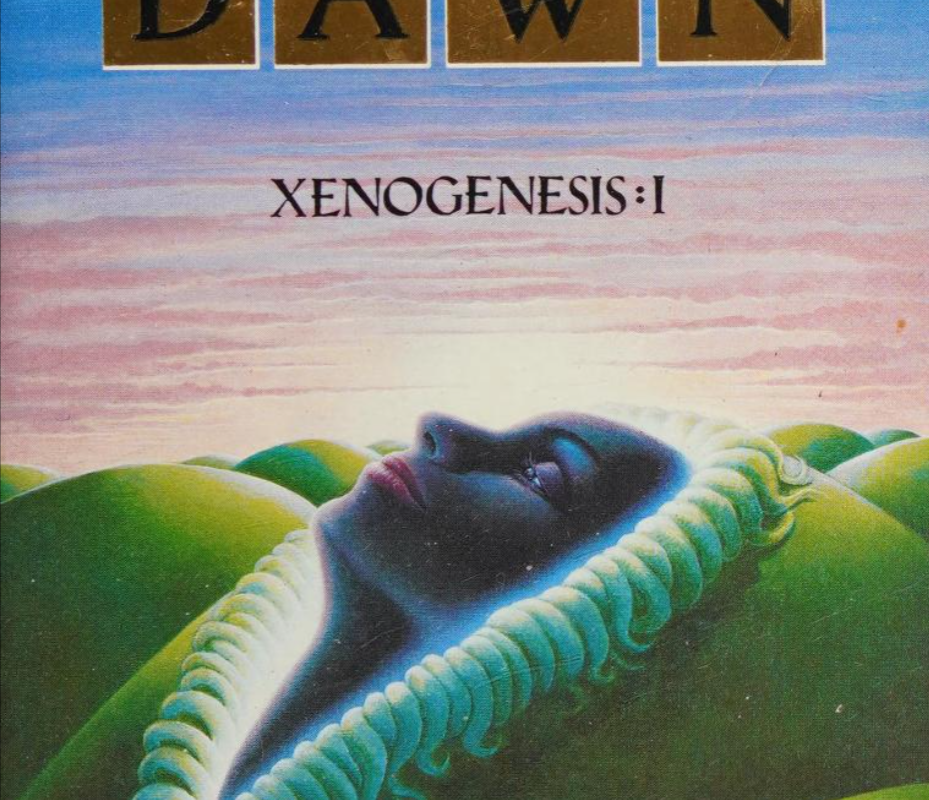
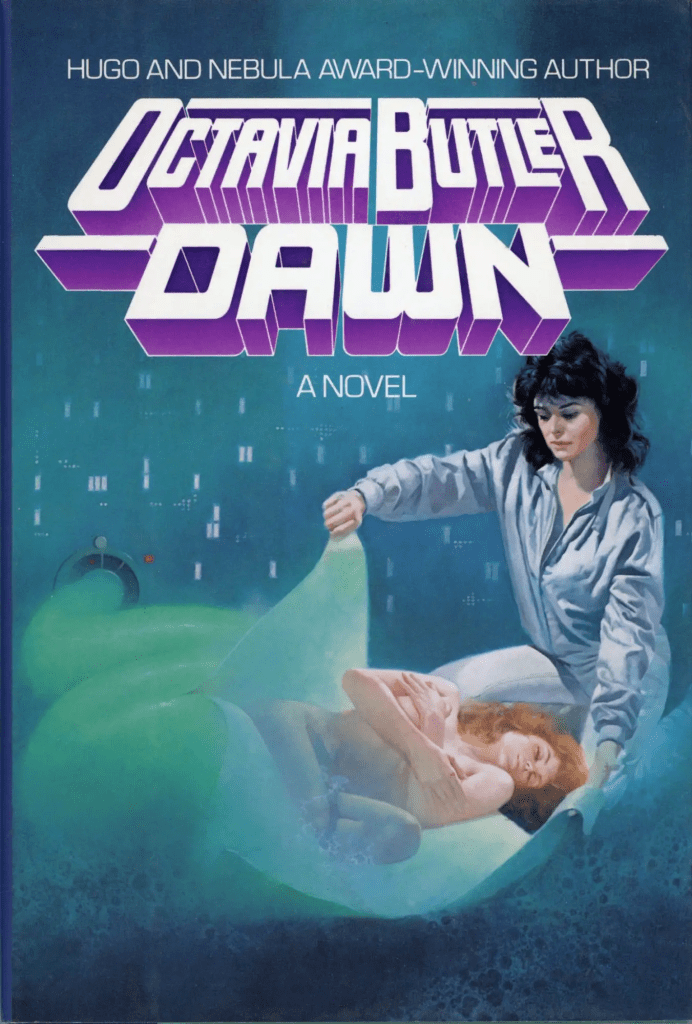
As an aside, this version of the book cover is risible. Not to devolve into identity politics, but Lilith is a dark-skinned woman, not a pale ginger. I can only assume that some target science fiction readers have a propensity to prefer white, sapphic adjacent characters.

I won’t even comment further on the faux 3D title treatment, relic of 1980s marketing.


Spoiler Alert: As this statement about mass suicide is a Chapter 2 event, I am not inclined to consider it a spoiler. False alarm.

The Reasonable Person: From Judge Judy to SCOTUS

2–4 minutes

When I was a child, the United States Supreme Court was still spoken of in hushed, reverent tones, as though nine robed sages in Washington were the Platonic guardians of justice. Impartiality was the word on everyone’s lips, and we were meant to believe that “the law” floated above the grubby realm of politics, as pure and crystalline as the Ten Commandments descending from Sinai.

Audio: NotebookLM podcast on this topic (MP3).

Even then, I didn’t buy it. The whole thing reeked of theatre. And the past few decades have proved that scepticism correct: the Court has become a pantomime. In this robed reality show, nine unelected lawyers cosplaying as oracles interpret the world for us, often by a razor-thin vote that splits exactly along partisan lines. Impartial? Please. A coin toss would be less predictable.

This is why I perked up when I heard Iain McGilchrist, in his recent interview with Curt Jaimungal, wax lyrical about rationality versus reasonableness. Schizophrenia, he tells us, is like a left hemisphere gone berserk, parsing the world in a literalist frenzy without the right hemisphere’s sense of context. The schizophrenic hears a voice in an empty room and, lacking the capacity for metaphor, deduces that it must be the neighbours whispering through the electrical socket. Rational, in its way, but absurd.

Video: Iain McGilchrist and Curt Jaimungal

McGilchrist’s corrective is “reasonableness,” which he casts as the quality of a wise judge: not a slave to mechanistic logic, but able to balance intuition, context, and experience. The problem, of course, is that “reasonable” is one of those delightful weasel words I keep writing about. It claims to be neutral – a universal standard, above the fray – but in practice, it’s just a ventriloquism act. “Reasonable” always turns out to mean what I, personally, consider obvious.

Enter Judge Judy, daytime television’s answer to jurisprudence. Watch her wag a finger and declare, “Any reasonable person would have kept the receipt!” And the studio audience – hand-picked to agree with her every twitch – erupts in applause. It’s reasonableness as spectacle, the mob dressed up as jurisprudence.

Now scale that performance up to SCOTUS. The “reasonable person” test is embedded deep in the common law tradition, but the reasonable person is not you, me, or anyone who has actually missed a bus, pawned a wedding ring, or heard a neighbour’s radio through thin walls. No, the reasonable person is an imaginary, well-groomed gentleman of property whose intuitions happen to dovetail nicely with the prejudices of the bench. The Court, like Judge Judy, insists it is Reason incarnate, when in truth it is reasonableness-by-consensus, a carefully curated consensus at that.

McGilchrist is right that rationality, stripped of context, can lead to absurdity. But in elevating “reasonableness” as if it were a transcendent virtue, he mistakes projection for philosophy. A judge is “reasonable” only when her intuitions rhyme with yours. And when they don’t? Suddenly, she’s a madwoman in robes, and her “reasonableness” is exposed as nothing more than taste disguised as universal law.

The “reasonable person” – whether invoked by the Supreme Court or by Judge Judy – is a ghost that conveniently resembles the speaker. We imagine we’re appealing to some objective standard, when in fact we’re gazing into a mirror. The tragedy of schizophrenia, as McGilchrist notes, is to take metaphor literally. The tragedy of law and politics is the opposite: to dress literal bias in metaphor, to call it “reason,” and to applaud ourselves for our wisdom while the stage set burns behind us.

Boab’s God: Latent Agency in Welsh’s Kafkaesque Metamorphosis

I just read The Granton Star Cause in Irvine Welsh’s short story collection, The Acid House, and couldn’t help but reflect it off of Kafka’s Metamorphosis.

Kafka gave us Gregor Samsa: a man who wakes up as vermin, stripped of usefulness, abandoned by family, slowly rotting in a godless universe. His tragedy is inertia; his metamorphosis grants him no agency, only deeper alienation.

Audio: NotebookLM podcast on this topic.

Welsh replies with Boab Coyle, a lad who is likewise cast off, rejected by his football mates, scorned by his parents, dumped by his girlfriend, and discarded by his job. Boab is surplus to every domain: civic, familial, erotic, and economic. Then he undergoes his own metamorphosis. And here Welsh swerves from Kafka.

Boab meets his “god.” But the god is nothing transcendent. It is simply Boab’s latent agency, given a mask – a projection of his bitterness and thwarted desires. God looks like him, speaks like him, and tells him to act on impulses long repressed. Where Kafka leaves Gregor to die in silence, Welsh gives Boab a grotesque theology of vengeance.

Through a Critical Theory lens, the contrast is stark:

  • Marx: Both men are surplus. Gregor is disposable labour; Boab is Thatcher’s lumpen. Alienated, both become vermin.
  • Nietzsche: Gregor has no god, only the absurd. Boab makes one in his own image, not an Übermensch, but an Über-fly – quite literally a Superfly – a petty deity of spite.
  • Foucault: Gregor is disciplined into passivity by the family gaze. Boab flips it: as a fly, he surveils and annoys, becoming the pest-panopticon.
  • Bataille/Kristeva: Gregor embodies the abjection of his family’s shame. Boab revels in abjection, weaponising filth as his new mode of agency.

The punchline? Boab’s new god-agency leads straight to destruction. His rage is cathartic, but impotent. The lumpen are permitted vengeance only when it consumes themselves.

So Kafka gave us the tragedy of stasis; Welsh provides us with the tragedy of spite. Both are bleak parables of alienation, but Welsh injects a theology of bad attitude: a god who licenses action only long enough to destroy the actor.

Gregor rots. Boab rages. Both end the same way.