Absolute liberty means absolute liberty, but what if the liberty you seek is death? The moment you carve out exceptions – speech you can’t say, choices you can’t make, exits you can’t take – you’ve left the realm of liberty and entered the gated community of permission.
And here’s the test most self-styled liberty lovers fail: you’re free to skydive without a parachute, but try ending your life peacefully and watch how quickly the freedom brigade calls in the moral SWAT team.
If the right to live doesn’t come with the right to leave, it’s not a right. It’s a sentence.
I’m not his usual audience; I’m already in the choir, but this eight-minute clip by Philosopher Muse is worth your time. It’s a lucid walk through the ethical terrain mapped by Sarah Perry in Every Cradle Is a Grave, and it’s one of the better distillations of antinatalist thought I’ve seen for the general public. Perry’s libertarian starting point is straightforward: if you truly own your life, you must also have the right to give it up.
He threads in the dark-glimmer insights of Emil Cioran’s poetic despair, Thomas Ligotti’s existential horror, David Benatar’s asymmetry, and Peter Wessel Zapffe’s tragic consciousness. Together they point to an uncomfortable truth: autonomy that stops short of death isn’t autonomy at all; it’s a petting zoo of freedoms where the gate is locked.
What we do not own, we are enslaved to. If we cannot choose death, then we do not truly own our lives.
—Sarah Perry
I’ve said this before, but it bears repeating. I once had a girlfriend who hated her life but was too afraid of hell to end it. She didn’t “pull through.” She overdosed by accident. Loophole closed, I suppose. That’s what happens when metaphysical prohibitions are allowed to run the operating system.
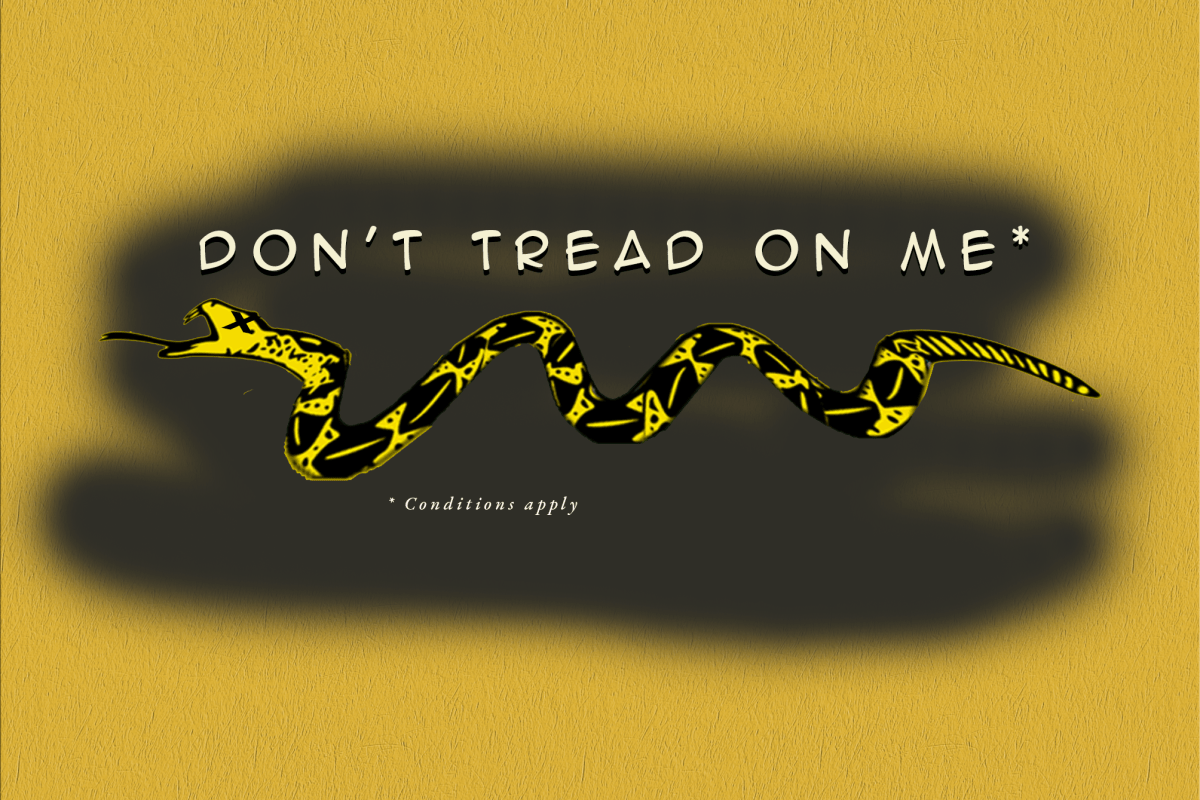
And here’s where I diverge from the purist libertarians. I don’t believe most people are competent enough to have the liberty they think they deserve. Not because they’re all dribbling idiots, but because they’ve been marinated for generations in a stew of indoctrination. For thousands of years, nobody talked about “liberty” or “freedom” as inalienable rights. Once the notion caught on, it was packaged and sold – complete with an asterisk, endless fine print, and a service desk that’s never open.
We tell ourselves we’re free, but only in the ways that don’t threaten the custodians. You can vote for whoever the party machine serves up, but you can’t opt out of the game. You can live any way you like, as long as it looks enough like everyone else’s life. You can risk death in countless state-approved ways, but the moment you calmly choose it, your autonomy gets revoked.
Sometimes the most loving thing we can do is not to rescue but to listen – not to prevent, but to allow.
So yes, watch the video. Read Perry’s Every Cradle Is a Grave. Then ask yourself whether your liberty is liberty, or just a longer leash.
If liberty means anything, it means the right to live and the right to leave. The former without the latter is just life imprisonment with better marketing.
Having just finished Never Let Me Go by Kazuo Ishiguro, I’ve now cracked open my first taste of Cioran—History and Utopia. You might reasonably ask why. Why these two? And what, if anything, do they have in common? Better yet—what do the three of us have in common?
Audio: NotebookLM podcast on this topic.
Recently, I finished writing a novella titled Propensity (currently gathering metaphorical dust on the release runway). Out of curiosity—or narcissism—I fed it to AI and asked whose style it resembled. Among the usual suspects were two names I hadn’t yet read: Ishiguro and Cioran. I’d read the others and understood the links. These two, though, were unknown quantities. So I gave them a go.
Ishiguro is perhaps best known for The Remains of the Day, which, like Never Let Me Go, got the Hollywood treatment. I chose the latter, arbitrarily. I even asked ChatGPT to compare both books with their cinematic counterparts. The AI was less than charitable, describing Hollywood’s adaptations as bastardised and bowdlerised—flattened into tidy narratives for American palates too dim to digest ambiguity. On this, we agree.
What struck me about Never Let Me Go was its richly textured mundanity. That’s apparently where AI saw the resemblance to Propensity. I’m not here to write a book report—partly because I detest spoilers, and partly because summaries miss the point. It took about seven chapters before anything ‘happened’, and then it kept happening. What had at first seemed like a neurotic, wandering narrative from the maddeningly passive Kathy H. suddenly hooked me. The reveals began to unfold. It’s a book that resists retelling. It demands firsthand experience. A vibe. A tone. A slow, aching dread.
Which brings me neatly to Cioran.
History and Utopia is a collection of essays penned in French (not his mother tongue, but you’d never guess it) while Cioran was holed up in postwar Paris. I opted for the English translation—unapologetically—and was instantly drawn in. His prose? Electric. His wit? Acidic. If Ishiguro was a comparison of style, then Cioran was one of spirit. Snark, pessimism, fatalistic shrugs toward civilisation—finally, someone speaking my language.
Unlike the cardboard cut-outs of Cold War polemics we get from most Western writers of the era, Cioran’s take is layered, uncomfortably self-aware, and written by someone who actually fled political chaos. There’s no naïve idealism here, no facile hero-villain binaries. Just a deeply weary intellect peering into the abyss and refusing to blink. It’s not just what he says, but the tone—the curled-lip sneer at utopian pretensions and historical self-delusions. If I earned even a drop of that comparison, I’ll take it.
Both Ishiguro and Cioran delivered what I didn’t know I needed: the reminder that some writers aren’t there to tell you a story. They’re there to infect you with an atmosphere. An idea. A quiet existential panic you can’t shake.
I’ve gotten what I came for from these two, though I suspect I’ll be returning, especially to Cioran. Philosophically, he’s my kind of bastard. I doubt this’ll be my last post on his work.
In The Death Lottery, Johnny Thompson of PhilosophyMinis poses this question:
In 1975 the philosopher John Harris gave us one of the most interesting and challenging thought experiments in moral philosophy it’s inspired lots of science fiction since and it’s a great intuition pump to test how you feel about the value of human life it goes like this imagine at the hospital down the road three people are dying from organ failure and there are no organs to donate and so everybody is given a lottery ticket and if your ticket is chosen then you are killed your organs are harvested they’re given to the dying and your one life will save three and as harris puts it no doubt a suitable euphemism for killed could be employed perhaps we would begin to talk about citizens being called upon to give life to others Harris is keen to add that everybody in this scenario is as innocent as each other so none of the patients did anything in their lives to merit their organ failure and so what is wrong with this system or this world if we say that we value human life then surely saving three lives is three times better than saving just one it might be said that death shouldn’t be determined by the luck of a draw but surely this is what happens anyway one person gets cancer another does not one person is in a car crash another is not luck is the biggest single killer of humanity so what do you think is wrong with harris’s thought experiment and is one life ever more valuable than three?
Video: YouTube inspiration for this post.
This fits rather nicely into a recent theme I’ve been dissecting — The Dubious Art of Reasoning: Why Thinking Is Harder Than It Looks — particularly regarding the limitations of deductive logic built upon premises that are, shall we say, a tad suspect. So what’s actually happening in Harris’s tidy moral meat grinder?
Audio: NotebookLM podcast on this topic.
Let us begin at the root, the hallowed dogma no one dares blaspheme: the belief that life has value. Not just any value, mind you, but a sacred, irrefutable, axiomatic kind of value — the sort of thing whispered in holy tones and enshrined in constitutions, as though handed down by divine courier.
But let’s not genuflect just yet. “Value” is not some transcendent essence; it’s an economic artefact. Value, properly speaking, is something tested in a marketplace. So, is there a market for human life?
Historically, yes — but one doubts Harris is invoking the Atlantic slave trade or Victorian child labour auctions. No, what he’s tapping into is a peculiarly modern, unexamined metaphysical presumption: that human beings possess inherent worth because, well, they simply must. We’ve sentimentalised supply and demand.
Now, this notion of worth — where does it come from? Let us not mince words: it’s theological. It is the residue of religious metaphysics, the spiritual afterbirth of the soul. We’re told that all souls are precious. All life is sacred. Cue the soft lighting and trembling organ chords. But if you strip away the divine scaffolding — and I suggest we do — then this “value” collapses like a soufflé in a thunderstorm. Without God, there is no soul; without soul, there is no sacredness. Without sacredness? Just meat. Glorified offal.
So what are we left with?
Null values. A society of blank spreadsheets, human lives as rows with no data in the ‘Value’ column. A radical equality of the meaningless.
Now let’s take a darker turn — because why not, since we’re already plumbing the ethical abyss. The anti-natalists, those morose prophets of philosophical pessimism, tell us not only that life lacks positive value, but that it is intrinsically a burden. A cosmic mistake. A raw deal. The moment one is born, the suffering clock starts ticking.
Flip the moral equation in The Death Lottery, and what you get is this: saving three lives is not a moral victory — it’s a net increase in sentient suffering. If you kill one to save three, you’ve multiplied misery. Congratulations. You’ve created more anguish with surgical efficiency. And yet we call this a triumph of compassion?
According to this formulation, the ethical choice is not to preserve the many at the cost of the few. It is to accelerate the great forgetting. Reduce the volume of suffering, not its distribution.
But here’s the deeper problem — and it’s a trick of philosophical stagecraft: this entire thought experiment only becomes a “dilemma” if you first accept the premises. That life has value. That death is bad. That ethics is a numbers game. That morality can be conducted like a cost-benefit spreadsheet in a celestial boardroom.
Yet why do we accept these assumptions? Tradition? Indoctrination? Because they sound nice on a Hallmark card? These axioms go unexamined not because they are true, but because they are emotionally convenient. They cradle us in the illusion that we are important, that our lives are imbued with cosmic significance, that our deaths are tragedies rather than banal statistical certainties.
But the truth — the unvarnished, unmarketable truth — is that The Death Lottery is not a test of morality, but a test of credulity. A rigged game. An illusion dressed in the solemn robes of logic.
And like all illusions, it vanishes the moment you stop believing in it.Let’s deconstruct the metanarratives in play. First, we are told uncritically that life has value. Moreover, this value is generally positive. But all of this is a human construct. Value is an economic concept that can be tested in a marketplace. Is there a marketplace for humans? There have been slave marketplaces, but I’m pretty sure that’s not what this aims for. There are wage and salary proxies. Again, I don’t think this is what they are targeting.
This worth is metaphysical. But allow me to cut to the chase. This concept of worth has religious roots, the value of the soul, and all souls are precious, sacred, actually. One might argue that the body is expendable, but let’s not go there. If we ignore the soul nonsense and dispense of the notion that humans have any inherent value not merely conjured, we are left with an empty set, all null values.
But let’s go further. Given anti-natalist philosophy, conscious life not only has value but is inherently negative, at least ex ante. This reverses the maths – or flips the inequality sign – to render one greater than three. It’s better to have only one suffering than three.
Ultimately, this is only a dilemma if one accepts the premises, and the only reason to do so is out of indoctrinated habit.
Postscript: Notes from the Abyss
David Benatar, in Better Never to Have Been, argues with pitiless logic that coming into existence is always a harm — that birth is a curse disguised as celebration. He offers no anaesthetic. Existence is pain; non-existence, the balm.
Peter Wessel Zapffe, the Norwegian prophet of philosophical despair, likened consciousness to a tragic evolutionary overreach — a cosmic misfire that left humanity acutely aware of its own absurdity, scrambling to muffle it with distraction, denial, and delusion. For him, the solution was elegant in its simplicity: do not reproduce. Shut the trapdoor before more souls tumble in.
And then there is Cioran, who did not so much argue as exhale. “It is not worth the bother of killing yourself, since you always kill yourself too late.” He understood what the rest of us politely ignore — that life is a fever dream from which only death delivers.
So if the question is whether one life is worth more than three, we must first ask whether any of them were worth having in the first place.
The answer, for the brave few staring into the black, may be a shrug — or silence.
A Comparative Analysis of Sarah Perry, Emil Cioran, and Contemporaries
In a world where procreation is often celebrated as a fundamental human aspiration, a group of philosophers challenges this deeply ingrained belief by questioning the ethical implications of bringing new life into existence. Antinatalism, the philosophical stance that posits procreation is morally problematic due to the inherent suffering embedded in life, invites us to reexamine our assumptions about birth, existence, and the value we assign to life itself.
Audio: Podcast related to the content on this page
Central to this discourse are thinkers like Sarah Perry, whose work “Every Cradle is a Grave: Rethinking the Ethics of Birth and Suicide” intertwines the ethics of procreation with the right to die, emphasizing personal autonomy and critiquing societal norms. Alongside Perry, philosophers such as Emil Cioran, David Benatar, Thomas Ligotti, and Peter Wessel Zapffe offer profound insights into the human condition, consciousness, and our existential burdens.
This article delves into the complex and often unsettling arguments presented by these philosophers, comparing and contrasting their perspectives on antinatalism. By exploring their works, we aim to shed light on the profound ethical considerations surrounding birth, suffering, and autonomy over one’s existence.
The Inherent Suffering of Existence
At the heart of antinatalist philosophy lies the recognition of life’s intrinsic suffering. This theme is a common thread among our featured philosophers, each articulating it through their unique lenses.
Sarah Perry argues that suffering is an unavoidable aspect of life, stemming from physical ailments, emotional pains, and existential anxieties. In “Every Cradle is a Grave,” she states:
“Existence is imposed without consent, bringing inevitable suffering.”
Perry emphasises that since every human will experience hardship, bringing a new person into the world exposes them to harm they did not choose.
Similarly, David Benatar, in his seminal work “Better Never to Have Been: The Harm of Coming into Existence,” presents the asymmetry argument. He posits that coming into existence is always a harm:
“Coming into existence is always a serious harm.”
Benatar reasons that while the absence of pain is good even if no one benefits from it, the absence of pleasure is not bad unless there is someone for whom this absence is a deprivation. Therefore, non-existence spares potential beings from suffering without depriving them of pleasures they would not miss.
Emil Cioran, a Romanian philosopher known for his profound pessimism, delves deep into the despair inherent in life. In “The Trouble with Being Born,” he reflects:
“Suffering is the substance of life and the root of personality.”
Cioran’s aphoristic musings suggest that life’s essence is intertwined with pain, and acknowledging this is crucial to understanding our existence.
Thomas Ligotti, blending horror and philosophy in “The Conspiracy Against the Human Race,” portrays consciousness as a cosmic error:
“Consciousness is a mistake of evolution.”
Ligotti argues that human awareness amplifies suffering, making us uniquely burdened by the knowledge of our mortality and the futility of our endeavours.
Peter Wessel Zapffe, in his essay “The Last Messiah,” examines how human consciousness leads to existential angst:
“Man is a biological paradox due to excessive consciousness.”
Zapffe contends that our heightened self-awareness results in an acute recognition of life’s absurdities, causing inevitable psychological suffering.
Ethics of Procreation
Building upon the acknowledgement of life’s inherent suffering, these philosophers explore the moral dimensions of bringing new life into the world.
Sarah Perry focuses on the issue of consent. She argues that since we cannot obtain consent from potential beings before birth, procreation imposes life—and its accompanying suffering—upon them without their agreement. She writes:
“Procreation perpetuates harm by introducing new sufferers.”
Perry challenges the societal norm that views having children as an unquestioned good, highlighting parents’ moral responsibility for the inevitable pain their children will face.
In David Benatar’s asymmetry argument, he extends this ethical concern by suggesting that non-existence is preferable. He explains that while the absence of pain is inherently good, the absence of pleasure is not bad because no one is deprived of it. Therefore, bringing someone into existence who will undoubtedly experience suffering is moral harm.
Emil Cioran questions the value of procreation given the futility and despair inherent in life. While not explicitly formulating an antinatalist argument, his reflections imply scepticism about the act of bringing new life into a suffering world.
Peter Wessel Zapffe proposes that refraining from procreation is a logical response to the human condition. By not having children, we can halt the perpetuation of existential suffering. He suggests that humanity’s self-awareness is a burden that should not be passed on to future generations.
The Right to Die and Autonomy over Existence
A distinctive aspect of Sarah Perry’s work is her advocacy for the right to die. She asserts that just as individuals did not consent to be born into suffering, they should have the autonomy to choose to end their lives. Perry critiques societal and legal barriers that prevent people from exercising this choice, arguing:
“Autonomy over one’s life includes the right to die.”
By decriminalizing and destigmatizing suicide, she believes society can respect individual sovereignty and potentially alleviate prolonged suffering.
Emil Cioran contemplates suicide not necessarily as an action to be taken but as a philosophical consideration. In “On the Heights of Despair,” he muses:
“It is not worth the bother of killing yourself, since you always kill yourself too late.”
Cioran views the option of ending one’s life as a paradox that underscores the absurdity of existence.
While Benatar, Ligotti, and Zapffe acknowledge the despair that can accompany life, they do not extensively advocate for the right to die. Their focus remains on the ethical implications of procreation and the existential burdens of consciousness.
Coping Mechanisms and Societal Norms
Peter Wessel Zapffe delves into how humans cope with the existential angst resulting from excessive consciousness. He identifies four defence mechanisms:
Isolation: Repressing disturbing thoughts from consciousness.
Anchoring: Creating or adopting values and ideals to provide meaning.
Distraction: Engaging in activities to avoid self-reflection.
Sublimation: Channeling despair into creative or intellectual pursuits.
According to Zapffe, these mechanisms help individuals avoid confronting life’s inherent meaninglessness.
Thomas Ligotti echoes this sentiment, suggesting that optimism is a psychological strategy to cope with the horror of existence. He writes:
“Optimism is a coping mechanism against the horror of existence.”
Sarah Perry and Emil Cioran also critique societal norms that discourage open discussions about suffering, death, and the choice not to procreate. They argue that societal pressures often silence individuals who question the value of existence, thereby perpetuating cycles of unexamined procreation and stigmatizing those who consider alternative perspectives.
Comparative Insights
While united in their acknowledgement of life’s inherent suffering, these philosophers approach antinatalism and existential pessimism through varied lenses.
Sarah Perry emphasises personal autonomy and societal critique, advocating for policy changes regarding birth and suicide.
Emil Cioran offers a deeply personal exploration of despair, using poetic language to express the futility he perceives in existence.
David Benatar provides a structured, logical argument against procreation, focusing on the ethical asymmetry between pain and pleasure.
Thomas Ligotti combines horror and philosophy to illustrate the bleakness of consciousness and its implications for human suffering.
Peter Wessel Zapffe analyzes the psychological mechanisms humans employ to avoid confronting existential angst.
Critiques and Counterarguments
Critics of antinatalism often point to an overemphasis on suffering, arguing that it neglects the joys, love, and meaningful experiences that life can offer. They contend that while suffering is a part of life, it is not the totality of existence.
In response, antinatalist philosophers acknowledge the presence of pleasure but question whether it justifies the inevitable suffering every person will face. Benatar argues that while positive experiences are good, they do not negate the moral harm of bringing someone into existence without their consent.
Regarding the right to die, opponents express concern over the potential neglect of mental health issues. They worry that normalizing suicide could prevent individuals from seeking help and support that might alleviate their suffering.
Sarah Perry addresses this by emphasizing the importance of autonomy and the need for compassionate support systems. She advocates for open discussions about suicide to better understand and assist those contemplating it rather than stigmatizing or criminalizing their considerations.
Societal and Cultural Implications
These philosophers’ works challenge pro-natalist biases ingrained in many cultures. By questioning the assumption that procreation is inherently positive, they open a dialogue about the ethical responsibilities associated with bringing new life into the world.
Sarah Perry critiques how society glorifies parenthood while marginalizing those who choose not to have children. She calls for reevaluating societal norms that pressure individuals into procreation without considering the ethical implications.
Similarly, Emil Cioran and Thomas Ligotti highlight how societal denial of life’s inherent suffering perpetuates illusions that hinder genuine understanding and acceptance of the human condition.
Conclusion
The exploration of antinatalist philosophy through the works of Sarah Perry, Emil Cioran, and their contemporaries presents profound ethical considerations about life, suffering, and personal autonomy. Their arguments compel us to reflect on the nature of existence and the responsibilities we bear in perpetuating life.
While one may not fully embrace antinatalist positions, engaging with these ideas challenges us to consider the complexities of the human condition. It encourages a deeper examination of our choices, the societal norms we accept, and how we confront or avoid the fundamental truths about existence.
Final Thoughts
These philosophers’ discussions are not merely abstract musings but have real-world implications for how we live our lives and make decisions about the future. Whether it’s rethinking the ethics of procreation, advocating for personal autonomy over life and death, or understanding the coping mechanisms we employ, their insights offer valuable perspectives.
By bringing these often-taboo topics into the open, we can foster a more compassionate and thoughtful society that respects individual choices and acknowledges the full spectrum of human experience.
Encouraging Dialogue
As we conclude this exploration, readers are invited to reflect on their own beliefs and experiences. Engaging in open, respectful discussions about these complex topics can lead to greater understanding and empathy.
What are your thoughts on the ethical considerations of procreation? How do you perceive the balance between life’s joys and its inherent suffering? Share your perspectives and join the conversation.
References and Further Reading
Perry, Sarah. Every Cradle is a Grave: Rethinking the Ethics of Birth and Suicide. Nine-Banded Books, 2014.
Benatar, David. Better Never to Have Been: The Harm of Coming into Existence. Oxford University Press, 2006.
Cioran, Emil. The Trouble with Being Born. Arcade Publishing, 1973.
Ligotti, Thomas. The Conspiracy Against the Human Race. Hippocampus Press, 2010.
Zapffe, Peter Wessel. “The Last Messiah.” Philosophy Now, 1933.
For more in-depth analyses and reviews, consider exploring the following blog posts:
This ChatGPT o1-generated article aims to thoughtfully and respectfully present the philosophical positions on antinatalism and existential pessimism. The discussions about suffering, procreation, and the right to die are complex and sensitive. If you or someone you know is struggling with such thoughts, please seek support from mental health professionals or trusted individuals in your community.
Next Steps
Based on reader interest and engagement, future articles may delve deeper into individual philosophers’ works, explore thematic elements such as consciousness and suffering, or address counterarguments in more detail. Your feedback and participation are valuable in shaping these discussions.
Let us continue this journey of philosophical exploration together.




 Philosophics