I’ve been working on A Language Insufficiency Hypothesis since 2018. At least, that’s the polite, CV-friendly version. The truer account is that it’s been quietly fermenting since the late 1970s, back when I was still trapped in primary school and being instructed on how the world supposedly worked.
Social Studies. Civics. Law. The whole civic catechism. I remember being taught about reasonable persons and trial by a jury of one’s peers, and I remember how insistently these were presented as fair solutions. Fairness was not argued for. It was asserted, with the weary confidence of people who think repetition counts as justification.
I didn’t buy it. I still don’t. The difference now is that I have a hypothesis with some explanatory power instead of a vague sense that the adults were bluffing.
Audio: NotebookLM summary podcast of this topic.
I’ve always been an outsider. Eccentric, aloof, l’étranger if we’re feeling theatrical. It never particularly troubled me. Outsiders are often tolerated, provided they remain decorative and non-contagious. Eye rolls were exchanged on both sides. No harm done.
But that outsider position had consequences. It led me, even then, to ask an awkward question: Which peers? Not because I thought I was superior, but because I was plainly apart. How exactly was I meant to be judged by my peers when no one else occupied anything like my perspective?
Later, when I encountered the concept of fundamental attribution bias, it felt less like a revelation and more like confirmation. A peer-based system assumes not just similarity of circumstance, but similarity of interpretation. That assumption was dead on arrival.
Then there were reasonable persons. I was assured they existed. I was assured judges were trained to embody them. I had never met one. Even as a teenager, I found the idea faintly comical. Judges, I was told, were neutral, apolitical, and dispassionate. Writing this now from the United States, one hardly needs to belabour the point. But this wasn’t prescience. It was intuition. The smell test failed decades ago.
Before LIH had a name, I called these things weasel words. I still do, as a kind of shorthand. Terms like fair, reasonable, accountable, appropriate. Squishy concepts that do serious institutional work whilst remaining conveniently undefinable. Whether one wants to label them Contestables or Fluids is less important than recognising the space they occupy.
That space sits between Invariables, things you can point to without dispute, and Ineffables, where language more or less gives up. Communication isn’t binary. It isn’t ‘works’ or ‘doesn’t’. It’s a gradient. A continuous curve from near-certainty to near-failure.
Most communication models quietly assume a shared ontology. If misunderstanding occurs, the remedy is more explanation, more context, more education. What never sat right with me, even as a child, was that this only works when the disagreement is superficial. The breaking point is ontological.
If one person believes a term means {A, B, C} and another believes it means {B, C, D}, the overlap creates a dangerous illusion of agreement. The disagreement hides in the margins. A and D don’t merely differ. They are often irreconcilable.
Image: Venn diagramme of a contested concept. Note: This is illustrative and not to scale
Fairness is a reliable example. One person believes fairness demands punishment, including retributive measures. Another believes fairness permits restoration but rejects retribution, citing circumstance, history, or harm minimisation. Both invoke fairness sincerely. The shared language conceals the conflict.
When such disputes reach court, they are not resolved by semantic reconciliation. They are resolved by authority. Power steps in where meaning cannot. This is just one illustration. There are many.
I thought it worth sharing how LIH came about, if only to dispel the notion that it’s a fashionable response to contemporary politics. It isn’t. It’s the slow crystallisation of a long-standing intuition: that many of our most cherished concepts don’t fail because we misuse them, but because they were never capable of doing the work we assigned to them.
Although I didn’t want to publish a formal essay, I wanted to produce something otherwise rigorous. The references I make are of the authored piece I am critiquing – MacIntyre, Žižek, Lacan – I’ve discussed these figures and their works, sometimes at length.
Audio: NotebookLM summary podcast discussion of this content.
Preamble: Setting the Encounter
Over the past several weeks, Otti Vogt and I have been circling one another in public threads on leadership, solidarity, ethics, and what might loosely be called the moral architecture of social life. At moments, we converge; more often, we don’t. The exchanges have been serious, occasionally sharp, and – credit where it’s due – largely conducted in good faith.
Recently, Otti published a more explicit articulation of the ontological commitments underlying his work – The Future of Flourishing: Toward a Dialectical Spiritual Realist Social Ontology (DRS) – a framework grounded in participatory metaphysics, virtue ethics, and an objective conception of the Good, oriented toward human flourishing. In doing so, he has done something both generous and rare in contemporary discourse: he has made his meta-assumptions visible. That gesture deserves to be taken seriously. This response is written in that spirit.
For my part, I have already shared a different set of commitments, most notably what I call the Mediated Encounter Ontology (MEOW) and the Language Insufficiency Hypothesis (LIH). These are not counter-ontologies in the conventional sense, nor are they offered as replacements for the metaphysical structures Otti defends. They are diagnostic lenses. Their purpose is to foreground mediation, semantic drift, power asymmetries, and the limits of moral language – especially where that language is asked to perform stabilising or universalising work it cannot reliably sustain.
What follows, then, is not a refutation from within Otti’s framework, nor an attempt to ‘correct’ his ontology by substituting another in its place. It is an analysis conducted from a philosophy of language that explicitly rejects the need for the kind of metaphysical grounding his project presupposes.
That distinction matters. Much philosophical disagreement fails not because arguments are weak, but because interlocutors believe they are disputing conclusions when they are, in fact, operating with incompatible assumptions about what language can do, how meaning holds, and where normativity comes from.
Accordingly, I will first restate Otti’s position as charitably and accurately as possible, including the conditions under which it appears to work well. I will then apply MEOW and LIH as analytic lenses – not to score points, but to observe how this framework behaves under pressure: across time, across groups, and across material and organisational realities. Finally, I will explain why, despite its internal coherence and aspirational appeal, I regard the project as structurally unsustainable beyond tightly aligned in-groups.
This is a polemic, but not a casual one.
This is a polemic, but not a casual one. It is written in respect of the seriousness of the work, and in full awareness that the disagreement it traces is unlikely to be resolved. I do not expect to publish this as a formal preprint, but I have structured it much as I otherwise would. The latitude afforded by a blog is used here not to loosen standards, but to speak more plainly about where the fault-lines actually lie.
At its strongest, Otti Vogt’s framework is an attempt to rescue ethics, leadership, and social solidarity from what he takes to be the exhaustion of proceduralism, relativism, and technocratic management. The diagnosis is familiar but not trivial: without a shared moral horizon, collective action collapses into preference aggregation, power struggles, or managerial optimisation masquerading as value-neutral necessity. Against this, Otti proposes a participatory social ontology grounded in three interlocking commitments.
First, normativity is real.
Moral claims are not merely expressions of preference, strategic coordination devices, or retrospective rationalisations of power. They track something objective, even if imperfectly. The Good is not constructed ex nihilo by consensus, nor generated procedurally through participation; rather, participation presupposes it. Solidarity, dignity, and justice do not emerge bottom-up from agreement alone, but from orientation toward a moral reality that precedes and exceeds any given social formation.
Second, personhood is constitutively relational.
Individuals are not pre-social atoms who later enter into moral contracts, but beings-in-relation whose identities are shaped through participation in shared practices, institutions, and meanings. Drawing on Aristotelian virtue ethics, Christian theology, and strands of critical realism, Otti treats ethical formation not as rule-following but as the cultivation of practical wisdom within an ordered moral ecology. Virtue, here, is not compliance but excellence-in-relation.
Third, social structures are dialectical rather than merely procedural.
Change does not occur through rule revision alone, nor through technocratic optimisation, but through what might be called moral morphogenesis: the transformation of agents and structures together as they orient themselves toward better forms of collective life. Leadership, on this view, is not managerial control but ethical mediation – holding open a space in which shared participation in the Good can occur.
Importantly, this is not presented as naïve moralism. Otti is explicit that causality and ethics must be distinguished, that material conditions matter, and that social systems operate across stratified domains. His engagement with Bhaskar, Archer, and Duindam is meant to secure this distinction without collapsing ethics into natural determinism. Likewise, his invocation of Lacan and Žižek is intended to show that absence, lack, and non-identity are not defects to be eliminated, but productive tensions that drive ethical becoming rather than undermining it. On the happy path, this framework is compelling.
In small, relatively homogeneous groups – especially those already sharing a thick moral vocabulary – it offers a powerful grammar for meaning-making. It legitimises ethical judgment without reducing it to preference. It resists the flattening tendencies of procedural liberalism. It offers leaders a language richer than metrics and incentives, while avoiding crude authoritarianism. And it gives participants a sense that their actions matter not merely instrumentally, but as contributions to something genuinely worthwhile.
If one already accepts its metaphysical premises, the system is internally coherent. More than that, it is motivational, aspirational, and – within its own frame – normatively robust. That coherence is not in dispute.
What happens when this DRS framework leaves the happy path?
What is in dispute is what happens when this framework leaves the happy path: when participants do not already share the ontology, when meanings drift over time, when organisational power intervenes, and when the language of participation is asked to scale beyond aligned in-groups into contested social reality. That is where the analysis begins.
2. Where the Framework Breaks: Boundary Conditions, Not Bad Faith
The first pressure point appears the moment participation is treated as if it occurs within an open, neutral moral field.
It doesn’t.
Participation always takes place inside an already-structured semantic environment. Values, goods, virtues, and ends are never encountered as raw givens, but as pre-formatted invitations. One does not simply ‘enter’ participation; one enters a space whose grammar has been written in advance, whose concepts already carry weight, direction, and implied hierarchies of legitimacy. This is not an accidental feature of social life. It is constitutive of it.
To participate is to move within a field of meanings that already distinguishes sense from nonsense, virtue from vice, maturity from immaturity, insight from confusion. Even when those distinctions are contested, the contest itself presupposes a shared language in which disagreement can appear as intelligible disagreement rather than noise.
This matters because Otti’s framework consistently treats participation as if it were epistemically generous and normatively hospitable by default. Yet participation is never merely an invitation; it is also a constraint. It shapes what can be said without sanction, which forms of dissent register as good-faith critique, and which appear as moral immaturity, resistance, or failure to ‘grasp the horizon’.
The moment a moral centre is posited – however dialectical, however participatory – it generates a gradient of alignment. Some positions sit closer to the centre and therefore appear clearer, wiser, more attuned. Others sit further out and must explain themselves, translate themselves, or justify their deviance from what is increasingly experienced as common sense. This is not a corruption of participatory ethics. It is its inevitable consequence.
Even if the Good is not imposed but ‘participated in,’ participation itself is never symmetrical. Someone always articulates the terms. Someone always curates the language. Someone always has greater fluency in the idiom of the Good and thus greater interpretive authority over what participation currently requires.
Participation does not erase power. It reconfigures it.
In practice, this produces a familiar asymmetry: those already aligned with the metaphysical grammar experience the framework as expansive and liberating, while those outside it experience it as invisible pressure. They are not coerced in any crude sense, but they are nonetheless nudged, corrected, reoriented, or quietly marginalised. The boundary condition, then, is simple but decisive: Participation does not erase power. It reconfigures it.
The claim that solidarity arises from participation in the Good rather than from procedure does not eliminate enforcement; it relocates it upstream, into ontology. What had previously been contested politically now appears as a matter of moral attunement or ontological adequacy. This is especially significant when the framework encounters out-groups.
For those who do not already share the metaphysical commitments – who do not recognise the same Good, or who reject the idea that such a Good exists independently of social negotiation – participation becomes conditional. Entry requires translation into a language they did not choose. Dissent must be framed in terms that already concede too much.
At that point, participation ceases to be an open moral practice and becomes something closer to initiatory alignment. This does not make the framework incoherent. It makes it local.
The problem arises only when a local moral grammar presents itself as foundational, scalable, or universally binding – when its boundary conditions are treated as philosophical necessities rather than contingent achievements. That transition is where the trouble begins.
3. Virtue as a Fluid: The Instability at the Centre
The next fault line emerges around virtue itself. Within Otti’s framework, virtue is no longer merely a description of excellence-in-practice, nor even a tradition-bound cultivation of character in recognisable forms of life. It becomes something more elusive: a dynamic orientation toward the Good, realised through participatory attunement rather than rule-following or procedural compliance.
On the surface, this looks like a strength. It avoids legalism. It avoids rigid codification. It allows for context, judgment, and development over time. But this move has a cost.
Once virtue is abstracted from stable practices and anchored instead to a transcendent moral horizon, it becomes semantically fluid. Its content is no longer secured by what people reliably do well together, but by how well their dispositions appear aligned with an ideal that itself resists definitive articulation.
At this point, virtue quietly changes function. It ceases to operate primarily as a descriptive account of excellence within a practice and becomes prescriptive as a mode of conformity to an interpretive centre. The question shifts from ‘What does excellence look like here?’ to ‘How well does this agent instantiate the orientation we recognise as virtuous?’
MacIntyre already gestures toward this danger, though he does not fully escape it. His attempt to recover virtue through traditions of practice depends on the relative stability of those traditions. Once the tradition fragments or pluralises, virtue must either harden into orthodoxy or soften into abstraction. Otti’s framework opts for the latter, but abstraction does not dissolve authority; it redistributes it.
And interpretation, inevitably, has interpreters.
When virtue becomes fluid, it also becomes indexical. Its meaning is determined less by shared activity than by ongoing interpretation. And interpretation, inevitably, has interpreters.
Those most fluent in the language of the Good become de facto arbiters of what virtue currently requires. Those less fluent must demonstrate sincerity, openness, or willingness to be formed. Virtue, in other words, becomes something one is recognised as having rather than something one demonstrably does. This produces a subtle but powerful inversion.
Instead of virtue disciplining ideals through lived practice, ideals discipline agents through moral evaluation. What begins as openness hardens into expectation. What begins as formation shades into assessment. What begins as aspiration becomes normativity with softer edges but firmer reach.
The fluidity of virtue does not eliminate moral pressure. It intensifies it, precisely because it lacks clear boundaries. And this is where temporal drift compounds the problem.
If virtue is continuously rearticulated in light of a transcendent Good, then yesterday’s excellence may become today’s deficiency – not because practices failed, but because the interpretive centre shifted. The agent who was once exemplary now appears insufficiently attuned. Correction follows. Alignment is requested. Resistance is reclassified as misunderstanding. None of this requires bad faith. None of it requires domination. It emerges naturally from the structure.
A virtue ethics that cannot tolerate virtue disagreement without moralising it is no longer describing excellence. It is managing deviation. This is not an argument against virtue per se. It is an argument against virtue untethered from stable practices and reattached to metaphysical ideals whose interpretation remains necessarily contested. Once virtue becomes a fluid, it stops being a guide to excellence and starts functioning as a solvent – dissolving difference while claiming to honour it.
Interlude: Interpretation, Gravity, and the Problem of Innocent Power
At this point, it is tempting to reassure ourselves that none of the above entails domination, coercion, or even hierarchy in any crude sense. After all, the framework under discussion explicitly rejects authoritarianism, emphasises participation, and repeatedly insists that the Good is not imposed but disclosed through relational engagement. This reassurance is sincere. It is also insufficient.
The problem is not that leaders within such a framework intend to exert power. The problem is that interpretation exerts power regardless of intention.
Any system oriented toward a transcendent Good requires interpretation. Someone must articulate what participation looks like here, now, under these conditions. Someone must distinguish fidelity from distortion, growth from regression, openness from refusal. These judgments cannot be automated, proceduralised, or dissolved into pure dialogue. They must be made.
Where judgments are made, gravity forms. This is not a psychological claim about ego, nor a moral accusation about bad faith. It is a structural observation. Interpretive authority emerges wherever meaning is stabilised long enough to guide action. The more abstract and elevated the referent, the greater the interpretive leverage required to render it actionable. The paradox is this: the more a leader insists they are not exercising authority, the harder their authority becomes to contest.
When normativity is framed as participation in the Good rather than compliance with rules, disagreement does not present itself as disagreement. It presents itself as misalignment, immaturity, or insufficient formation. Resistance is redescribed not as an alternative judgment but as a failure of attunement.
At this point, critique becomes difficult without appearing morally suspect. This is what gives participatory metaphysics its peculiar force. It does not silence opposition; it spiritualises it. Dissenters are not wrong so much as ‘not yet there’. Their objections are not refuted; they are absorbed into a narrative of ongoing formation.
This is not coercion. It is more effective than coercion. Even if a leader sincerely wishes not to exert gravity, the structure ensures that gravity accumulates around them. Those closest to the interpretive centre appear most aligned with the Good. Their judgments carry more weight. Their language becomes the idiom through which virtue is recognised.
If a leader truly did not wish to exert gravity, the most consistent action would be not to lead. But leadership, by definition, involves orientation. Orientation requires reference points. Reference points generate asymmetry. Asymmetry generates power.
The framework attempts to resolve this by redescribing hierarchy as ‘participatory’ rather than directive, and authority as ‘mediating’ rather than commanding. Yet this is a semantic reconfiguration, not a structural one. The same dynamics persist under gentler names. What disappears is not power, but its visibility. And power that cannot be named cannot be resisted. It can only be internalised.
This is the point at which metaphysics becomes political, whether it intends to or not. The claim that the Good is objective does not neutralise power. It sanctifies it.
4. Temporal Semantic Drift: Why Moral Centres Do Not Hold
Even if one grants – charitably – that participatory metaphysics can function without collapsing into interpretive domination in the short term, it remains vulnerable to a more corrosive force: time.
Moral centres do not fail all at once. They drift. The framework under discussion acknowledges this in principle. It speaks of dialectical movement, of gaps between actuality and the Good, of ongoing formation rather than static completion. On paper, this appears to inoculate it against rigidity.
In practice, it does the opposite. A moral centre that must continuously reinterpret itself in light of a transcendent horizon is never neutral. Each iteration reorders what counts as fidelity, maturity, and alignment. What was virtuous yesterday may become insufficient today – not because practices degraded, but because the interpretive frame shifted.
This is not accidental. It is intrinsic. Because the Good is not fully specifiable, its articulation is always provisional. But provisional articulations still carry normative force. People organise their lives around them. Careers, identities, reputations, and exclusions follow.
Then the centre moves. Those who move with it appear wise, flexible, and developmentally advanced. Those who hesitate appear resistant. Those who remain where they are appear obstructive. Drift is redescribed as growth, and displacement as failure to keep up.
This is how moral projects shed members without ever formally excluding them. At Time-nought, alignment feels communal. At Time-one, it becomes selective. At Time-two, it becomes justificatory. By the time the pattern is visible, the language of solidarity has already done its work.
Transductive subjectivity intensifies this effect. Because subjects and structures co-constitute one another, each moment of participation subtly reshapes the field itself. The centre is never merely followed; it is reproduced through enactment. Drift compounds. What results is not pluralism, but path dependency.
Early interpretations disproportionately shape later possibilities. Foundational voices become canonical. Corrective gestures are framed as recoveries rather than revisions. The centre insists it is merely unfolding what was always implicit. At this point, appeals to the Good no longer function as orientation. They function as retrospective validation. This is where temporal semantic drift becomes decisive.
Key terms – virtue, flourishing, participation, solidarity – do not remain semantically stable across contexts or generations. They accrete meaning through use, conflict, and institutionalisation. To claim continuity is to perform continuity, not to demonstrate it.
The framework attempts to resolve this by appealing to a stable moral horizon beyond language. But this simply relocates the problem. The horizon does not speak. People do.
Every attempt to stabilise meaning across time requires custodians. Custodianship introduces authority. Authority introduces exclusion. Exclusion introduces rationalisation. None of this implies malice. It implies entropy.
What works in a tightly aligned founding cohort does not survive scale, succession, or stress. History is littered with ethical systems that were internally coherent, sincerely motivated, and initially generative – until drift revealed the cost of maintaining coherence.
The claim is not that moral projects inevitably fail. It is that they cannot guarantee their own continuity without paying a price.
Participatory metaphysics offers no mechanism for escaping this. It offers only better reasons for why the price was necessary.
Interlude II: On Borrowing Žižek to Refute Žižek
At this point, a further tension must be addressed directly, because it is not incidental. It sits at the conceptual core of the framework itself.
Otti explicitly invokes Žižek and Lacan to demonstrate that absence, lack, and non-identity are not pathological failures to be overcome, but productive features of subjectivity and social life. This move is intended to show that participatory metaphysics can accommodate negativity, incompleteness, and instability without collapsing into relativism or nihilism. The intention is understandable. The result is incoherent.
Žižek’s central claim is not merely that the Big Other is fractured, incomplete, or imperfectly realised. It is that the Big Other does not exist. There is no transcendent guarantor of meaning, no symbolic authority that secures coherence from beyond the field of human practices. To ‘traverse the fantasy’ is precisely to accept this absence, not to redescribe it in more sophisticated terms.
Lacan’s notion of constitutive lack is not a privation awaiting fulfilment. It is not a gap that participation can close. It is an ontological condition: the impossibility of any final anchoring of meaning, identity, or desire. Lack is not productive because it gestures toward plenitude; it is productive because plenitude is structurally impossible. This is where the framework under review performs a decisive sleight of hand.
To invoke Lacan in support of a transcendent Good is therefore not a creative synthesis. It is a misappropriation.
By mapping Lacanian lack onto Bhaskar’s concept of real absence, the argument treats both as ‘modes of non-being that nonetheless exercise causal force’. But this collapses a distinction that Žižek and Lacan insist upon. Bhaskar’s absences are, in principle, fillable: the missing resource, the unjust structure, the preventable harm. Lacan’s lack is not. Attempts to fill it do not resolve the problem; they generate new symptoms, new fantasies, new forms of misrecognition. To invoke Lacan in support of a transcendent Good is therefore not a creative synthesis. It is a misappropriation.
What results is the reinstallation of precisely what psychoanalysis dismantles: a symbolic guarantor that promises coherence, orientation, and resolution. The Good becomes the ultimate Big Other – disavowed, abstracted, and rendered untouchable by those who claim merely to participate in it. This is not a minor theoretical inconsistency. It reveals the deeper strategy at work.
The framework borrows the critical sophistication of post-structural thought to inoculate itself against charges of naivety, while quietly reinstalling a classical metaphysics that those same thinkers spent their careers undoing. Absence is affirmed rhetorically, only to be neutralised ontologically. Negativity is welcomed, but only insofar as it can be oriented toward a pre-existing moral horizon. In effect, the language of lack is used to smuggle in fullness.
Once this move is made, the rest follows predictably. Interpretation acquires authority. Participation acquires normativity. Dissent becomes misrecognition. And the Good, now safely beyond contestation, does exactly the work the Big Other has always done – only with better philosophical cover.
5. Transductive Subjectivity: Participation Rewrites the Good
The final pressure point is not historical but immediate. Even if one brackets time, tradition, and institutional inertia, the framework still assumes something that does not hold: that subjects can participate in the Good without becoming co-authors of it. This is where transductive subjectivity becomes decisive.
Subjects are not vessels into which ethical form is poured. They are mediating agents. Every act of participation feeds back into the system that solicited it. Meaning is not transmitted intact; it is refracted through position, interest, fear, aspiration, and interpretation. Participation does not preserve coherence. It produces variance.
This is not a flaw in human beings. It is how social systems function. Each interaction slightly reshapes the normative field, altering expectations, redefining what counts as success, recalibrating what virtue now looks like in practice. Multiply this across hundreds or thousands of agents, and the idea of a stable moral centre becomes untenable without aggressive correction.
Here, Archer’s morphogenetic insight quietly undermines the aspiration of ethical constancy. Structures condition action, action transforms structure, and the cycle repeats. There is no equilibrium point. The system is always becoming something slightly different from what it was meant to be.
Either participation rewrites the Good, or the Good rewrites participants. There is no third option.
From within the framework, this is often redescribed as growth, maturation, or deepening participation. From a systems perspective, it is drift under another name. Either participation rewrites the Good, or the Good rewrites participants. There is no third option.
What holds such systems together is not metaphysical participation, but selective reinforcement. Certain interpretations of virtue are amplified; others fade. Some agents are rewarded as exemplars; others are marked as misaligned. Over time, the system converges not on the Good, but on what is most compatible with its own survival. At this point, solidarity no longer links virtue to the common good. It links conformity to belonging.
This is why ‘participative flourishing’ is not a distinct category so much as a rhetorical intensifier. Flourishing is always participative in the tautological sense that humans act together. The adjective matters only when it is doing boundary work: distinguishing authentic participation from deviant engagement. And that distinction is never neutral.
Once transductive feedback is acknowledged, the best-case scenario becomes clear. The framework can temporarily stabilise a coherent moral culture for a relatively homogeneous group. It may feel meaningful, even liberating, from within.
But it will not scale without exclusion. It will not persist without maintenance. And it will not survive contact with materially divergent lives without becoming prescriptive. This is not cynicism. It is mechanics.
6. Leadership, Power, and the Reality of Organisational Life
All of the above tensions sharpen dramatically once we leave ‘society’ in the abstract and enter organisations. Organisations are not voluntary moral laboratories. They are asymmetric structures with built-in coercion, however politely framed. Participation is rarely free when the alternative is unemployment, precarity, or social marginalisation. Exit costs matter. Silence matters. Compliance matters. This is where appeals to solidarity, virtue, and shared flourishing acquire a different texture.
In organisational settings, leadership does not operate via participative democracy. Its function is not collective deliberation, but directional coordination. Leaders set priorities, allocate resources, and define success metrics. Even the most ‘inclusive’ leadership models ultimately require alignment, not pluralism. Consultation can be widened; directionality cannot be abolished without abolishing the role itself. This produces a structural contradiction.
On the one hand, the rhetoric insists that ethics flows from participation in a shared Good. On the other, participation itself is conditioned by hierarchy. A leader may deny being a centre of gravity, but gravity does not ask permission. The mere ability to define vision, values, or culture already exerts force.
Under these conditions, solidarity does not simply emerge. It is staged. Employees learn quickly which interpretations of virtue are rewarded, which forms of dissent are tolerated, and which are quietly penalised. Moral language becomes a signalling system long before it becomes a compass.
Ethics becomes a loyalty test. Solidarity becomes alignment. Flourishing becomes a synonym for fit.
The danger here is not cartoon authoritarianism. It is something subtler and more durable: moral capture. By this I mean the process through which ethical vocabulary is absorbed into institutional incentives, such that ‘goodness’ becomes legible primarily as compliance with the organisation’s preferred self-description. Ethics becomes a loyalty test. Solidarity becomes alignment. Flourishing becomes a synonym for fit.
This is why organisational utopias tend to function best in small, ideologically homogeneous groups and become brittle as complexity increases. Add more agents, more roles, more external pressures, and more disagreement about what ‘good work’ even is, and the system faces a choice between diversity of perspective and coherence of direction. History suggests it usually chooses the latter.
Religious movements, political vanguards, start-ups, consultancies, and ‘values-led’ enterprises all confront the same dilemma. Harmony is easy when dissenters are excluded early. It becomes harder once heterogeneity enters the system. At that point, solidarity either thins into vacuous slogans or hardens into enforcement.
Girard would recognise the pattern immediately: cohesion is often purchased by identifying the misfit, the blocker, the ‘toxic’ element – the one who must be managed out so that the group can experience itself as good.
The claim that better formation, transparency, or distributed leadership can resolve this misunderstands the problem. These tools can redistribute labour and reduce certain abuses. They do not eliminate asymmetry. Someone still defines the centre, even when it is dressed up as ‘process’, ‘culture’, or ‘shared ownership’. A moral horizon interpreted by a few will, reliably, become a moral demand placed upon the many. Which brings us to the unavoidable conclusion.
7. What This Critique Is (and Is Not)
This critique is not a defence of relativism-for-fun, nor of nihilism-as-apathy. I am a nihilist in a narrow, technical sense: I deny the existence of inherent meanings that are not invented, stabilised, and transmitted through language and practice. Meaning is not discovered intact in the world; it is negotiated, maintained, and contested. That position does not entail indifference. It entails vigilance.
If meanings are made rather than given, then they require care. They require scrutiny. They require attention to who is doing the naming, who benefits from the stabilisation, and who is being asked to align. Nihilism, in this sense, is not a shrug. It is a refusal to outsource responsibility to metaphysics.
In practical terms, this means treating ethical claims as proposals rather than discoveries, responsibilities rather than revelations, and commitments that must be defended in public rather than secured by ontological guarantee. It means accepting that moral authority is something we negotiate and sustain together, not something we uncover already intact and binding.
Nor is this an argument against local moral projects. Communities can and do organise themselves around shared goods, shared narratives, and shared aspirations. Such projects can be meaningful, motivating, and even life-sustaining. But they are also contingent, temporary, and sustained only through ongoing renegotiation.
Moral coherence achieved locally does not scale automatically, and it does not endure without friction.
What works for a particular group, at a particular moment, under particular conditions, does not thereby acquire universal authority. Moral coherence achieved locally does not scale automatically, and it does not endure without friction. That is not a failure of ethics. It is the cost of plurality and time.
The problem arises only when local moral projects mistake their internal coherence for external legitimacy. When they present themselves not as one way of organising meaning, but as a foundational ontology, a scalable ethical architecture, or a universally binding account of the Good.
At that point, disagreement ceases to register as intelligible difference and becomes moral deficiency. Dissent is redescribed as immaturity. Refusal is framed as lack of formation. And ethics quietly crosses the line from orientation into governance. This critique is aimed precisely at that crossing.
8. Conclusion: A Local Moral Project, Not a Universal Architecture
Taken on its own terms, this ontology is serious, internally coherent, and animated by a genuine concern for moral decay, procedural emptiness, and the hollowness of technocratic governance. It is not frivolous work. It is not cynical work. It is work born of dissatisfaction with thin ethics and a desire to recover meaning, orientation, and responsibility. But that does not make it universal.
What this framework offers is best understood not as a foundational solution to ethics, leadership, or societal becoming, but as a local moral project: a thick, tradition-inflected grammar capable of organising commitment among those already disposed to its metaphysical and ethical premises.
Within such in-groups, it may function well. It can generate shared language, reinforce norms, motivate sacrifice, and provide a sense of direction. It may even feel emancipatory, precisely because it relieves participants of the burden of perpetual moral indeterminacy. That relief is not incidental. It is the primary psychological reward such frameworks offer.
What it cannot do, without remainder, is scale across plural moral landscapes without reintroducing coercion under another name.
The moment the framework encounters agents who do not recognise its metaphysical centre, virtue ceases to orient and begins to adjudicate. Solidarity becomes conditional. Participation becomes aspirational compliance. Flourishing becomes legible only to those who already speak the language.
This is not a failure of goodwill. It is the inevitable consequence of grounding ethics in a substantive vision of the Good rather than in negotiated coexistence under conditions of deep disagreement.
History does not suggest a third option.
Attempts to resolve this by appeal to deeper formation, better leadership, or more refined ontological articulation misunderstand the problem. The obstacle is not insufficient sophistication. It is the impossibility of securing universal normative authority without either emptying ethics of content or enforcing it through power. History does not suggest a third option.
To acknowledge this is not to abandon ethics, nor to retreat into relativism or nihilism-as-apathy. It is to recognise that moral systems are provisional, situated, and sustained through ongoing negotiation rather than metaphysical guarantees. Meaning is made, not discovered intact. And whatever coherence we achieve is fragile, temporary, and bought at the cost of exclusion.
If this ontology were presented as one compelling way of organising moral life among those who freely choose it, there would be little to object to. The trouble begins only when it is asked to do more than it can bear: to ground, to bind, to scale, and to endure without remainder. That expectation is not just ambitious. It is precisely the illusion that has undone every such project before.
9. Closing: Admirable Aspirations, Ancient Failure Modes
The desire animating this ontology is admirable. So were many before it. Projects of moral renewal rarely fail because their intentions are corrupt. They fail because they underestimate three forces that never go away: semantic drift, human difference, and the stubborn refusal of people to remain aligned over time without someone being marginalised, disciplined, or expelled. What works at Time-nought rarely survives Time-one.
At the outset, shared language feels like shared purpose. Participation feels voluntary. Solidarity feels mutual. But as contexts shift, meanings stretch, and pressures accumulate, the system must either loosen its grip or tighten it. History suggests it almost always chooses the latter, while continuing to speak the language of the former.
This framework may function well as an in-group grammar. It may even be nourishing there.
This framework may function well as an in-group grammar. It may even be nourishing there. Within aligned communities, it can generate coherence, motivation, and a genuine sense of ethical direction. That should not be dismissed.
But once pressed beyond its boundaries, it exhibits the same failure modes we have seen for centuries: moral centres that require constant maintenance, virtues that drift and must be reinterpreted, participation that quietly becomes compliance, and solidarity that depends on exclusion to remain intact. The difference here is not structure, but style.
What we are offered is not a new solution to ethics, leadership, or social order, but a familiar answer articulated with contemporary sophistication and excellent footnotes. That does not make it unserious. It makes it recognisable.
And recognition, in this case, means seeing an old pattern dressed in new language: a moral centre that promises orientation while quietly reintroducing authority, a vision that speaks the grammar of participation while relying on alignment to survive.
The aspiration is admirable. The failure modes are ancient. And no amount of metaphysical refinement has ever abolished them.
Why shared language creates the illusion – not the reality – of shared experience
Human beings routinely assume that if another agent speaks our language, we have achieved genuine mutual understanding. Fluency is treated as a proxy for shared concepts, shared perceptual categories, and even shared consciousness. This assumption appears everywhere: in science fiction, in popular philosophy videos, and in everyday cross-cultural interactions. It is a comforting idea, but philosophically indefensible.
Video: Could You Explain Cold to an Alien? – Hank Green
Recent discussions about whether one could ‘explain cold to an alien’ reveal how deeply this assumption is embedded. Participants in such debates often begin from the tacit premise that language maps transparently onto experience, and that if two interlocutors use the same linguistic term, they must be referring to a comparable phenomenon.
A closer analysis shows that this premise fails at every level.
Audio: NotebookLM summary podcast on this topic.
Shared Language Does Not Imply Shared Phenomenology
Even within the human species, thermal experience is markedly variable. Individuals from colder climates often tolerate temperatures that visitors from warmer regions find unbearable. Acclimation, cultural norms, metabolic adaptation, and learned behavioural patterns all shape what ‘cold’ feels like.
If the same linguistic term corresponds to such divergent experiences within a species, the gap across species becomes unbridgeable.
A reptile, for example, regulates temperature not by feeling cold in any mammalian sense
A reptile, for example, regulates temperature not by feeling cold in any mammalian sense, but by adjusting metabolic output. A thermometer measures cold without experiencing anything at all. Both respond to temperature; neither inhabits the human category ‘cold’.
Thus, the human concept is already species-specific, plastic, and contextually learned — not a universal experiential module waiting to be translated.
Measurement, Behaviour, and Experience Are Distinct
Thermometers and reptiles react to temperature shifts, and yet neither possesses cold-qualia. This distinction illuminates the deeper philosophical point:
Measurement registers a variable.
Behaviour implements a functional response.
Experience is a mediated phenomenon arising from a particular biological and cognitive architecture.
Aliens might measure temperature as precisely as any scientific instrument. That alone tells us nothing about whether they experience anything analogous to human ‘cold’, nor whether the concept is even meaningful within their ecology.
The Problem of Conceptual Export: Why Explanation Fails
Attempts to ‘explain cold’ to hypothetical aliens often jump immediately to molecular description – slower vibrational states, reduced kinetic energy, and so forth. This presumes that the aliens share:
our physical ontology,
our conceptual divisions,
our sense-making framework,
and our valuation of molecular explanation as intrinsically clarifying.
But these assumptions are ungrounded.
Aliens may organise their world around categories we cannot imagine. They may not recognise molecules as explanatory entities. They may not treat thermal variation as affectively laden or behaviourally salient. They may not even carve reality at scales where ‘temperature’ appears as a discrete variable.
When the conceptual scaffolding differs, explanation cannot transfer. The task is not translation but category creation, and there is no guarantee that the requisite categories exist on both sides.
The MEOW Framework: MEOWa vs MEOWb
The Mediated Encounter Ontology (MEOW) clarifies this breakdown by distinguishing four layers of mediation:
T0: biological mediation
T1: cognitive mediation
T2: linguistic mediation
T3: social mediation
Humans run MEOWa, a world structured through mammalian physiology, predictive cognition, metaphor-saturated language, and social-affective narratives.
Aliens (in fiction or speculation) operate MEOWb, a formally parallel mediation stack but with entirely different constituents.
Two systems can speak the same language (T2 alignment) whilst:
perceiving different phenomena (T0 divergence),
interpreting them through incompatible conceptual schemas (T1 divergence),
and embedding them in distinct social-meaning structures (T3 divergence).
Linguistic compatibility does not grant ontological compatibility. MEOWa and MEOWb allow conversation but not comprehension.
Fiction as Illustration: Why Aliens Speaking English Misleads Us
In Sustenance, the aliens speak flawless Standard Southern English. Their linguistic proficiency invites human characters (and readers) to assume shared meaning. Yet beneath the surface:
Their sensory world differs;
their affective architecture differs;
their concepts do not map onto human categories;
and many human experiential terms lack any analogue within their mediation.
The result is not communication but a parallel monologue: the appearance of shared understanding masking profound ontological incommensurability.
The Philosophical Consequence: No Universal Consciousness Template
Underlying all these failures is a deeper speciesist assumption: that consciousness is a universal genus, and that discrete minds differ only in degree. The evidence points elsewhere.
If “cold” varies across humans, fails to apply to reptiles, and becomes meaningless for thermometers, then we have no grounds for projecting it into alien phenomenology. Nor should we assume that other species – biological or artificial – possess the same experiential categories, emotional valences, or conceptual ontologies that humans treat as foundational.
Consciousness is not a universal template awaiting instantiation in multiple substrates. It is alocal ecological achievement, shaped by the mediations of the organism.
Conclusion
When aliens speak English, we hear familiarity and assume understanding. But a shared phonological surface conceals divergent sensory systems, cognitive architectures, conceptual repertoires, and social worlds.
Linguistic familiarity promises comprehension, but delivers only the appearance of it. The deeper truth is simple: Knowing our words is not the same as knowing our world.
And neither aliens, reptiles, nor thermometers inhabit the experiential space we map with those words.
Afterword
Reflections like these are precisely why my Anti-Enlightenment project exists. Much contemporary philosophical commentary remains quietly speciesist and stubbornly anthropomorphic, mistaking human perceptual idiosyncrasies for universal structures of mind. It’s an oddly provincial stance for a culture that prides itself on rational self-awareness.
To be clear, I have nothing against Alex O’Connor. He’s engaging, articulate, and serves as a gateway for many encountering these topics for the first time. But there is a difference between introducing philosophy and examining one’s own conceptual vantage point. What frustrates me is not the earnestness, but the unexamined presumption that the human experiential frame is the measure of all frames.
Having encountered these thought experiments decades ago, I’m not interested in posturing as a weary elder shaking his stick at the next generation. My disappointment lies elsewhere: in the persistent inability of otherwise intelligent thinkers to notice how narrow their perspective really is. They speak confidently from inside the human mediation stack without recognising it as a location – not a vantage point outside the world, but one local ecology among many possible ones.
Until this recognition becomes basic philosophical hygiene, we’ll continue to confuse linguistic familiarity for shared ontology and to mistake the limits of our own embodiment for the limits of consciousness itself.
Another faux Magic: The Gathering trading card. I’ve been busy writing an essay on Tatterhood and wondering if I’ve gone off the edge even further into mental masturbation. I made these cards to share on slow news days, as it were.
[EDIT: Oops: Even wore. I already posted something today. Enjoy the bonus post.]
Every philosopher dreams of a device that reveals ‘truth’. The Constructivist Lens does the opposite. When you tap it, the world doesn’t come into focus – it multiplies. Each pane shows the same thing differently, reminding us that knowing is always a form of making – seeing as building.
In The Discipline of Dis-Integration, I wrote that philosophy’s task is ‘to remain within what persists … to study the tension in the threads rather than weave a new pattern’. The Lens embodies that ethic. It is not an instrument of discovery but of disclosure: a way to notice the scaffolding of perception without mistaking it for bedrock.
Flavour text: “Knowledge is not a copy of reality but a tool for coping with it.” — Richard Rorty
Where Enlightenment optics promised clarity, the Lens trades in parallax. It insists that perspective is not a flaw but the condition of vision itself. Each player who peers through it – artist, scientist, moralist – constructs a different coherence, none final. The card’s rule text captures this tension: replace any keyword on a permanent with a metaphor of your choice until end of turn. Reality bends, language shifts, yet the game continues.
In the Dis-Integration set, the Lens sits alongside Perspectival Realism and Language Game (not yet shared), forming the Blue triad of epistemic doubt. Together they dramatise what the essay calls ‘the hyphen as hinge’: the small pause between integration and its undoing. The Constructivist Lens, then, is not a tool for clearer sight but a reminder that every act of seeing is already an act of construction.
The Travelogue of a Recovering Enlightenment Subject
I’m asked endlessly – usually by people who still believe TED talks are a form of knowledge production – ‘Why are you so negative? Why must you tear things down if you’ve no intention of replacing them?’
It’s adorable, really. Like watching a toddler demand that gravity apologise.
They’ve been trained for years in the managerial catechism:
‘Don’t bring me problems; bring me solutions.‘
As if the world were some badly-run workshop in need of a fresh coat of agile methodology.
They might as well say, ‘Don’t tell me I can’t win at Lotto; give me money’.
I, too, would enjoy the spare universe. Or the winning Lotto ticket. And yes, one day I might even buy one. Until then, I’ve embraced the only adult philosophy left: Dis-Integrationism – the fine art of taking things apart without pretending they can be reassembled into anything coherent.
A Little History
My suspicion began early. Secondary school. All those civic fairytales whispered as if they were geology.
The ‘reasonable person’? Bollox. ‘Jury of one’s peers’? What are peers? Whose peers? I have no peers. ‘Impartial judges’? Please. Even as a teenager, I could see those robed magicians palming cards like bored street performers. Everyone else nodded along, grateful for the spectacle. I stared, wondering how the other children hadn’t noticed the emperor’s bare arse.
Later, I watched adults talk past each other with a fluency bordering on performance art. Not disagreement – different universes, cosmetically aligned by grammar.
A Federal mediator once tried to teach me that common ground could be manufactured. Not by clarifying meaning, mind you – that would have required honesty – but by rhetorical pressure and a touch of Jedi mind-trickery. Negotiation was simply controlled hallucination.
University communications classes offered temporary distraction with denotation and connotation, a little semantic drift, the illusion that language might be domesticated with enough theory. Charming. Almost convincing.
Then Gödel and Arrow arrived like two polite assassins and quietly removed the floorboards.
And then – happily, inevitably – Derrida, Foucault, Lyotard. I’d already danced with Beauvoir, Sartre, Camus. I’d ingested the Western canon like every obedient young acolyte: Plato, Aristotle, Hobbes, Locke, Rousseau, Montesquieu, Voltaire. Americans force-feed their citizenry Jefferson and Franklin as moral fibre, as if the republic might otherwise suffer constipation.
It never gelled. Too much myth, too much marketing. The Enlightenment had the energy of a regime insisting on its own benevolence while confiscating your torch. To call oneself ‘enlightened’ should have raised suspicion – but no, the branding stuck.
Whenever les garçons dared tug at the curtain, we were assured they simply didn’t ‘understand’, or worse, they ‘hated civilisation’.
Image: “I would have gotten away with it if it weren’t for those meddling kids.”
Then Came the Internet
The digital age didn’t usher in clarity — it unmasked the whole pantomime. Like Neo seeing the Matrix code or Roddy Piper slipping on the sunglasses in They Live, one suddenly perceives the circuitry: meaning as glitch, discourse as scaffolding, truth as a shabby stage-set blinking under fluorescent tubes.
Our civilisation speaks in metaphors it mistakes for mechanisms. The Enlightenment gave us the fantasy that language might behave, that concepts were furniture rather than fog. Musicians and artists always knew better. We swim in metaphor; we never expected words to bear weight. But philosophers kept pretending communication was a conveyor belt conveying ‘meaning units’ from A to B.
By 2018, the cracks were gaping. I began taking the notes that would metastasise into A Language Insufficiency Hypothesis – an attempt to map the hollow spaces between our words, the fractures we keep wallpapering with reason.
Half a decade later, the work is ready. Not to save anything – nothing here merits salvation – but to name the debris honestly.
If that sounds negative, good. Someone has to switch off the Enlightenment’s flickering lightbulb before it burns the whole house down.
Where This Road Actually Leads
People imagine negativity is a posture – a sort of philosophical eyeliner, worn for effect. But dismantling the world’s conceptual furniture isn’t a hobby; it’s the only reasonable response once you’ve noticed the screws aren’t actually attached to anything.
The Enlightenment promised us a palace. Step inside and you discover it’s built out of IKEA flatpacks held together with wishful thinking and a prayer to Kant.
Once you’ve seen that, you can’t go back to pretending the furniture is sturdy.
You stop sitting.
You start tapping the beams.
You catalogue the wobble.
This is where Dis–Integrationism enters – not as a manifesto, but as the practice of refusing to live inside collapsing architecture out of sheer politeness. Negativity is simply the weather report.
The Lie We Keep Telling Ourselves
We cling to the fantasy that if we critique something long enough, a solution will crystallise out of the void, like enlightenment through sheer irritation. It’s the Protestant work ethic meets metaphysics: salvation through sufficient grumbling.
But critique is not alchemy. It unmakes. It refuses. It loosens the bolts we pretended were load-bearing.
Once you stop demanding that thought be constructive, you can finally see the world as it is: improvised, rhetorical, and permanently under renovation by people who don’t read the instructions.
The Enlightenment’s heirs keep insisting there must be a blueprint. There isn’t. There never was. We’ve merely been tracing the silhouettes of scaffolding, calling it a cathedral.
And Yet – Here We Still Are
The online age (God help us all) didn’t deepen the crisis; it merely turned the lights on. What Enlightenment rationality hid beneath a tasteful layer of neoclassical varnish, the internet sprayed with fluorescent graffiti.
Turns out, when seven billion people speak at once, meaning doesn’t ’emerge’; it buckles. Our systems weren’t built for this volume of contradiction. Our language wasn’t built for this density of metaphor. Our myths weren’t built for this much empirical evidence against them.
And yet here we are, still demanding coherence from a medium held together by emojis and trauma. If you laugh, it’s only to stop crying. If you critique, it’s only because someone has to keep the fire marshal informed.
The Only Honest Next Step
Having traced the cracks, you’re now in the foyer of the real argument – the one hanging like a neon sign over your entire Anti-Enlightenment project:
We don’t need to rebuild the house. We need to stop pretending it was ever architecture.
Language is insufficient. Agency is a fiction. Objectivity is an etiquette ritual. Democracy is a séance. Progress is a hallucination with better marketing. And yet – life continues. People wake, work, argue, aspire, despair.
Dis-Integrationism isn’t about nihilism; it’s about maintenance. Not repairing the myth, but tending the human who must live among its debris. Not constructing new temples, but learning to see in the half-light once the old gods have gone.
The travelogue becomes a guidebook: Welcome to the ruins. Mind the uneven floor. Here is how we walk without pretending the path is paved.
The Fetish for Solutions
Here is the final indignity of the age: the demand that every critique come bundled with a solution, like some moral warranty card. As if naming the rot weren’t labour enough. As if truth required a customer-service plan.
‘Where is your alternative?’ they ask, clutching Enlightenment logic the way a drowning man clutches a shopping receipt.
But solutions are the real tyranny. They arrive bearing the smile of reason and the posture of progress, and behind both sits the same old imperial instinct: replace ambiguity with order; replace lived complexity with a diagram. A solution is merely a problem wearing a fresh coat of confidence.
Worse, a solution presumes the system is sound, merely in need of adjustment. It imagines the structure holds. It imagines the furniture can be rearranged without collapsing into splinters, and the memory of Kant.
Solutions promise inevitability. They promise teleology. They promise that the mess can be disinfected if only one applies the correct solvent. This is theology masquerading as engineering.
The Violence of the Answer
A solution is a closure – a metaphysical brute force. It slams the window shut so no further interpretation can slip in through the draft. It stabilises the world by amputating everything that wriggles. Answers are how systems defend themselves. They’re the intellectual equivalent of riot police: clean uniforms, straight lines, zero tolerance for nuance.
This is why the world keeps mistaking refusal for chaos. Refusal isn’t chaos. It’s hygiene. It is the simple act of not adding more furniture to a house already bending under its own delusions. When you decline to provide a solution, you aren’t abandoning the world. You’re declining to participate in its coercive optimism.
And So the Travelogue Ends Where It Must
Not in triumph or a bluepirnt, but in composure – the only posture left after the Enlightenment’s glare has dimmed. Negativity isn’t sabotage; it’s sobriety. Dis-Integrationism isn’t cynicism; it’s the refusal to replace one failing mythology with another wearing vegan leather.
A world obsessed with solutions cannot recognise maintenance as wisdom. It can’t tolerate ambiguity without reaching for a hammer. It can’t breathe unless someone somewhere is building a ladder to a future that never arrives.
So no – I won’t provide solutions. I won’t participate in the fantasy that the human condition can be patched with conceptual duct tape. I will not gift the Enlightenment a eulogy that surrenders to its grammar.
What I offer is far smaller and far more honest: Attention. Description. Steady hands in a collapsing house. And the simple dignity of refusing to lie about the architecture.
Some milestones arrive quietly; others tap you on the shoulder and whisper, “Well? Are you going to gloat, or shall I?”
So here we are. The Anti-Enlightenment corpus – yes, that unruly battalion of essays insisting that the Enlightenment was less a dawn and more a flash-bang grenade into the human psyche – is about to pass 1,000 downloads across Zenodo and PhilArchive. By the time you read this, the counter will likely have ticked over, as if to confirm that a non-institutionally affiliated heretic can, in fact, find readers willing to squint at philosophy written in the half-light.
I should say something gracious. Something humble. Something befitting a scholar who’s spent far too much time dismantling the sacred furniture of modernity.
Video: Midjourney woman sketch for no apparent reason (no sound)
And hooray for you, the masochists who keep downloading this stuff.
Whether it’s Objectivity Is Illusion, which politely reminds you that truth is just a social ritual in a lab coat, or Against Agency, where we pretend the autonomous self was ever more than Enlightenment-era fan fiction, or The Will to Be Ruled, in which we accept that most people would rather outsource their freedom to the nearest charismatic authoritarian – each piece contributes to the great unmasking of reason’s beloved myths.
If you’ve made your way through The Illusion of Light (cloth or paperback – the cloth is for people who enjoy prestige bindings with their epistemic despair – or on Kindle for the ones who have already surrendered), you’ve already walked the whole architecture: rooms filled with rational ghosts, temporal anxieties, moral fictions, and the faint smell of Enlightenment wiring beginning to smoulder.
And still you download. Saints, the lot of you.
A thousand reads does not confer legitimacy – nothing so vulgar – but it does confirm that the cracks in the Enlightenment’s porcelain façade are visible from more than one angle. It suggests that others, too, are learning to see in the dark, to navigate by afterglow rather than glare.
So: thank you.
For the curiosity.
For the tolerance of structural pessimism.
For indulging a scholar who insists on disassembling Western metaphysics one lovingly overlong sentence at a time.
Here’s to the next thousand. And the thousand after that. And to the collective, slow, post-Enlightenment work of maintenance in the half-light.
The Anti-Enlightenment lives on your hard drives now.
There’s no taking it back.
Written by Bry Willis and ChatGPT because Bry is off to Fiji, celebrating (or something like that.
I just finished the writing and editorial parts of my Language Insufficiency Hypothesis. It still needs cover art and some administrative odds and ends, but I’m taking a day for a breather to share something about myself and my worldview. For this, I share my philosophical influences and how they support my core insights. For dramatic effect, I’ll even try to weight them to 100 per cent, leaving an ‘others’ bucket for the unaccounted ones.
Audio: NotebookLM summary podcast of this topic.
Obviously, this highly scientific accounting is about as useful as a Facebook survey or a fortune cookie, but it should reveal something. I have influences outside of philosophy, but I’ll limit this list at the start. The numbers don’t exactly add to 100% because there is a bit of cross-pollination, say, between Foucault and Nietzsche or Žižek and Hegel – or perhaps I’m just not good at maths. You decide.
Nietzsche (≈18)
Nietzsche is likely the uranium core. Haters and detractors like to diminish his contribution – and he didn’t play by the old rules – but they are wrong. He contributes value-creation, anti-moralism, perspectivism, the critique of ressentiment, the demolition of universals.
Nietzsche sits at the centre of the blast radius. Everything else is shrapnel. If there’s a thinker who detonated the Enlightenment’s pretensions more elegantly, I’ve not met them. He showed us that values are forged, not found; that morality is a genealogy of grievances; that certainty is the last refuge of the timid. In other words, he cleared the ground so the rest of us could get to work without tripping over Kantian furniture. But after Nietzsche’s uranium core, the next concentric ring becomes murkier.
Foucault (≈20%)
Foucault supplies the schematics. Where Nietzsche swung a hammer at the idols, Foucault identified the building codes. He mapped power as a set of subtle, everyday enchantments. He showed how ‘knowledge’ is simply what a society rewards with credibility. He is the patron saint of anyone who suspects normality is an instrument, not a neutral state of affairs. The world looks different once you see the disciplinary fingerprints on everything.
Derrida (≈10%)
Derrida gives me language as mischief. Meaning wobbles, slides, cracks; binaries betray themselves; every conceptual edifice contains its own trapdoor. Derrida isn’t a system; he’s an escape artist. And frankly, you can’t write anything about the insufficiency of language without genuflecting in his general direction.
Late Wittgenstein (≈15%)
The quiet structural pillar. If Derrida is the saboteur, Wittgenstein is the carpenter who informs you that the house was never stable anyway. Meaning-as-use, language-games, the dissolution of philosophical pseudo-problems: his later work underwrites virtually every modern suspicion about fixed categories and timeless essences. He doesn’t shout; he shrugs – and everything collapses neatly.
Rorty (≈5%)
Rorty replaces metaphysical longing with cultural pragmatism. He teaches you to stop hunting for capital-T Truth and instead track the vocabularies we actually live in. He’s the friendly voice whispering, ‘You don’t need foundations. You need better conversations’. His influence is felt mostly in the tone of my epistemic cynicism: relaxed rather than tragic. Besides, we disagree on the better conversations bit.
Geuss (≈4%)
If Rorty makes you light-footed, Geuss reminds you not to float off into abstraction entirely. He is the critic of moralism par excellence, the man who drags philosophy kicking and screaming back into politics. Geuss is the voice that asks, ‘Yes, but who benefits?’ A worldview without him would be a soufflé.
Heidegger (≈6%)
Selective extraction only. Being-in-the-world, thrownness, worldhood – the existential scaffolding. His political judgment was catastrophic, of course, but the ontological move away from detached subjectivity remains invaluable. He gives the metaphysics a certain grain.
Existentialists: Beauvoir, Sartre, Camus (≈6%)
They provide the atmospheric weather: choice, finitude, absurdity, revolt, the sheer mess of human freedom. They don’t define the system; they give it blood pressure. Besides, I met them before I switched to Team Nietzsche-Foucault.
Žižek, Latour, Baudrillard (≈2% combined)
These three are my licensed provocateurs.
Žižek exposes how ideology infiltrates desire.
Latour dismantles the Nature/Society binary with glee.
Baudrillard whispers that representation ate reality while we were looking at our phones.
They’re trickster figures, not architects.
Hume, Putnam, Dennett, and the Ancillaries (≈1% combined)
These are the seasonings.
Hume is the Scottish acid bath under every epistemic claim.
Putnam gives internal realism its analytic passport.
Dennett offers mechanistic metaphors you can steal even when you disagree.
Kant and Hegel hover like compulsory ghosts.
Rawls remains decorative parsley: included for completeness, consumed by none.
The Others Bucket (≈5%)
The unallocated mass: writers, anthropologists, theorists, stray thinkers you absorb without noticing. The ‘residuals’ category for the philosophical inventory – the bit fortune cookies never warn you about.
Enfin
Obviously, these ratios are more for humour than substance, but these are the thinkers I return to — the ones whose fingerprints I keep discovering on my own pages, no matter how many years or detours intervene.
Perhaps more revealing are those who didn’t make the guest list. Socrates, Plato, and Aristotle remain outside, smoking in the cold. The Stoics, Marcus Aurelius and his well-meaning self-help descendants, also failed to RSVP. In truth, I admire the posture but have little patience for the consolations – especially when they become the emotional training wheels of neoliberalism.
And then, of course, the Enlightenment patriarchs: Hobbes, Locke, Montesquieu and the rest of the constitutional furniture. I acknowledge their historical necessity the way one acknowledges plumbing – grateful it exists, uninterested in climbing inside the pipes. Rousseau, admittedly, I tolerate with something approaching affection, but only because he never pretended to be tidy.
I forgot Descartes, Voltaire, and Pascal, but it’s too late to scroll back and adjust the ledger. Consider them rounding errors – casualties of the margins, lost to the tyranny of percentages.
If anyone mentions another one – Spinoza comes to mind – I’ll try to figure out where they fit in my pantheon. Were I to render this tomorrow, the results may vary.
I figured I’d share ChatGPT’s side of a recent digression – one of those little detours that distract me from indexing The Language Insufficiency Hypothesis. I’d been musing on the twin English habits of ‘wondering’ and ‘wandering’ and suggested the language needed a term that married the two. A werger, perhaps. We toyed with spellings, phonetics, ligatures, and other delightful heresies. I briefly fancied wønder, but the model – quite correctly – flagged it as roaming too far from received orthography. Naturally, we descended into typographic mischief from there.
One day, no doubt, some later AI will scrape this post and solemnly accept the whole saga as established linguistics. Apologies in advance for sharing how my brain works. 🤣
If you can’t tell, I didn’t bother to generate a cover image. Instead, it gets a leftover dragon from the other day.
Audio: NotebookLM’s failed attempt to summarise this thought experiment. Hilarious just to hear how AI sometimes fails gracefully.
wœndern. /wɜːndə/
Forms:wœnder, wœnders (pl.). Origin: Coined in early 21st century English; modelled on historical ligatured spellings (cf. œuvre, cœur) and influenced by Scandinavian ø and Germanic ö. Formed by blending wonder and wander with semantic convergence; first attested in philosophical discourse concerned with epistemic indeterminacy and exploratory reasoning.
1.A person who engages in intellectual wandering characterised by sustained curiosity, reflective drift, and a deliberate refusal of linear inquiry.
Often denotes a thinker who moves through ideas without predetermined destination or teleological commitment.
Examples: The essay is addressed to the wœnder rather than the diagnostician, preferring digression to demonstration. Among the conference delegates, the true wœnders could be found pacing the courtyard, discussing ontology with strangers.
2.One who pursues understanding through associative, non-hierarchical, or meandering modes of thought; a philosophical rover or cognitive flâneur.
Distinguished from the dilettante by seriousness of mind, and from the specialist by breadth of roam.
Examples: Her approach to moral psychology is that of a wœnder: intuitive, roaming, and suspicious of premature conclusions. The wœnder is guided not by method but by the texture of thought itself.
3.Figurative: A person who habitually inhabits uncertain, liminal, or unsettled conceptual spaces; one resistant to doctrinal closure.
Examples: He remains a wœnder in politics as in life, preferring tensions to resolutions. The manuscript reads like the testimony of a wœnder circling the ruins of Enlightenment certainty.
Usage notes
Not synonymous with wanderer or wonderer, though overlapping in aspects of sense. Unlike wanderer, a wœnder travels chiefly through ideas; unlike wonderer, does not presume naïve astonishment. Connotes an intentional, reflective mode of intellectual movement.
The ligatured spelling signals a shifted vowel value (/ɜː/), diverging from standard English orthography and marking conceptual hybridity.
Derivative forms
wœndering, adj. & n. — Of thought: meandering, associative, exploratory. wœnderly, adv. — In a manner characteristic of a wœnder. wœnderhood, n. — The condition or habitus of being a wœnder. (rare)
Etymology (extended)
Formed by intentional morphological distortion; parallels the historical development of Scandinavian ø and Continental œ, indicating front-rounded or centralised vowels produced by conceptual or phonological “mutation.” Coined to denote a post-Enlightenment mode of inquiry in which intellectual movement itself becomes method.
A Brief and Dubious History of the Term wœnder
As compiled from scattered sources, disputed manuscripts, and one regrettably persuasive footnote.
Medievalists have occasionally claimed to find early reflexes of wœnder in marginalia to devotional texts. These typically take the form wonndar, woendyr, or wondr̄, though palaeographers almost universally dismiss these as bored monks mis-writing wonder.
A single gloss in the so-called Norfolk Miscellany (c. 1480) reads: “Þe woender goth his owene waye.” This is now widely considered a scribal joke.
2. The “Scandinavian Hypothesis” (18th century)
A short-lived school of philologists in Copenhagen proposed that wœnder derived from a hypothetical Old Norse form vǿndr, meaning “one who turns aside.” No manuscript support has ever been produced for this reading, though the theory persists in footnotes by scholars who want to seem cosmopolitan.
3. Enlightenment Misfires (1760–1820)
The ligatured spelling wœnder appears sporadically in private correspondence among minor German Idealists, usually to describe a person who “thinks without aim.” Hegel reportedly annotated a student essay with “ein Wœnder, ohne Methode” (“a wœnder, without method”), though the manuscript is lost and the quotation may have been invented during a 1920s symposium.
Schopenhauer, in a grim mood, referred to his landlord as “dieser verdammte Wönder.” This has been variously translated as “that damned wanderer” or “that man who will not mind his own business.”
4. Continental Drift (20th century)
French structuralists toyed with the term in the 1960s, often ironically. Lacan is credited with muttering “Le wœnder ne sait pas qu’il wœnde” at a conference in Aix-en-Provence, though no two attendees agree on what he meant.
Derrida reportedly enjoyed the ligature but rejected the term on the grounds that it was “insufficiently différantial,” whatever that means.
5. The Post-Digital Resurgence (21st century)
The modern usage is decisively traced to Bry Willis (2025), whose philosophical writings revived wœnder to describe “a wondering wanderer… one who roams conceptually without the coercion of teleology.” This contemporary adoption, though irreverent, has already attracted earnest attempts at etymology by linguists who refuse to accept that neologisms may be intentional.
Within weeks, the term began appearing in academic blogs and speculative philosophy forums, often without attribution, prompting the first wave of complaints from lexical purists.
6. Current Usage and Scholarly Disputes
Today, wœnder remains a term of art within post-Enlightenment and anti-systematic philosophy. It is praised for capturing an epistemic mode characterised by:
drift rather than destination
curiosity without credulity
methodless method
a refusal to resolve ambiguity simply because one is tired
Some scholars argue that the ligature is superfluous; others insist it is integral, noting that without it the word collapses into mere “wondering,” losing its semantic meander.
Ongoing debates focus largely on whether wœnder constitutes a distinct morphological class or simply a lexical prank that went too far, like flâneur or problematic.
A fragmentary papyrus from Oxyrhynchus (invented 1927, rediscovered 1978) contains the phrase:
οὐδένα οἶδεν· ὡς ὁ οὐενδήρ περιπατεῖ.
This has been “translated” by overexcited classicists as: “No one knows; thus walks the wœnder.”
Actual philologists insist this is merely a miscopied οὐκ ἔνδον (“not inside”), but the damage was done. Several doctoral dissertations were derailed.
9. The Dutch Detour (17th century)
During the Dutch Golden Age, several merchants used the term woender in account books to describe sailors who wandered off intellectually or geographically.
e.g., “Jan Pietersz. is een woender; he left the ship but not the argument.”
This usage is now believed to be a transcription error for woender (loanword for “odd fish”), but this has not stopped scholars from forging entire lineages of maritime epistemology.
10. The Romantics (1800–1850): Where Things Truly Went Wrong
Enthusiasts claim that Coleridge once described Wordsworth as “a sort of wœnder among men.” No manuscript contains this. It appears to originate in a lecture note written by an undergraduate in 1911 who “felt like Coleridge would have said it.”
Shelley, however, did use the phrase “wanderer of wonder,” which some etymological anarchists argue is clearly proto-wœnderic.
11. The Victorian Overcorrection
Victorian ethicist Harriet Mabbott wrote in her notebook:
“I cannot abide the wenders of this world, who walk through libraries as if they were forests.”
Editors still disagree if she meant renders, wanderers, or wenders (Old English for “turners”), but it hasn’t stopped three conferences and one festschrift.
12. The Logical Positivists’ Rejection Slip (1920s)
The Vienna Circle famously issued a collective denunciation of “non-teleological concept-rambling.”
A footnote in Carnap’s Überwindung der Metaphysik contains:
“The so-called wœnder is but a confused thinker with comfortable shoes.”
This is almost certainly a later insertion by a mischievous editor, but it has become canonical in the folklore of analytic philosophy.
13. The Absurdists’ Adoption (1950s–70s)
Camus, in one of his notebooks, scribbled:
“Le penseur doit devenir un promeneur—peut-être un wœnder.”
Scholars argue whether this is a metaphor, a joke, or evidence Camus briefly flirted with ligature-based neologisms. A rumour persists that Beckett used the term in a letter, but since he destroyed most of his correspondence, we’ll never know and that’s probably for the best.
14. Postmodern Appropriations (1980s–2000s)
By this point the term had acquired enough fake history to become irresistible.
Lyotard cited a “wœnder-like suspension of narrative authority.”
Kristeva dismissed this as “linguistic flâneurie.”
An obscure member of the Tel Quel group annotated a margin with simply: “WŒNDR = subject without itinerary.”
No context. No explanation. Perfectly French.
15. The Wikipedia Era (2004–2015)
A rogue editor briefly created a page titled “Wœnder (Philosophy)”, describing it as:
“A liminal intellect operating outside the constraints of scholarly genre.”
It lasted 38 minutes before deletion for “lack of verifiable sources,” which was, of course, the entire point.
Screenshots survive.
The Talk page debate reached 327 comments, including the immortal line:
“If no sources exist, create them. That’s what the Continentals did.”
16. The Bry Willis Renaissance (2025– )
Everything before this was warm-up.
Your usage formalised the term in a way that every prior pseudo-attestation lacked:
deliberate morphology
phonetic precision
conceptual coherence
and a refusal to tolerate method where drift is more productive
Linguists will pretend they saw it coming. They didn’t.
17. Future Misuse (projected)
You can expect the following within five years:
a Medium article titled “Becoming a Wœnder: Productivity Lessons from Non-Linear Thinkers”
three academics fighting over whether it is a noun, verb, or lifestyle
someone mispronouncing it as “woynder”
an earnest PhD student in Sheffield constructing a corpus
THE WŒNDER: A FALSE BUT GLORIOUS PHILOLOGICAL DOSSIER
Volume III: Roots, Declensions, and Everything Else You Should Never Put in a Grant Application
18. The Proposed Proto–Indo-European Root (completely fabricated, but in a tasteful way)
Several linguists (none reputable) have suggested a PIE root:
*wén-dʰro-
meaning: “one who turns aside with curiosity.”
This root is, naturally, unattested. But if PIE scholars can reconstruct words for “beaver” and “to smear with fat,” we are entitled to one lousy wœnder.
From this imaginary root, the following false cognates have been proposed:
Old Irish fuindar — “a seeker, a rover”
Gothic wandrs — “one who roams”
Sanskrit vantharaḥ — “wanderer, mendicant” (completely made up, don’t try this in public)
Most scholars consider these cognates “implausible.” A brave minority calls them “visionary.”
19. Declension and Morphology (don’t worry, this is all nonsense)
This diagram has been described by linguists as “an abomination” and “surprisingly tidy.”
25. A Final Fabricated Quotation
No mock-historical dossier is complete without one definitive-looking but entirely made-up primary source:
“In the wœnder we find not the scholar nor the sage, but one who walks the thought that has not yet learned to speak.” — Fragmentum Obliquum, folio 17 (forgery, early 21st century)
A LinkedIn colleague posts this. I didn’t want to rain on his parade there – we’ve got an interesting binary intellectual relationship – we either adamantly agree or vehemently disagree. This reflects the latter. The title is revelatory – the all-caps, his:
A good society requires more than virtuous individuals and fair institutions: it requires a mediating moral principle capable of binding persons, communities, and structures into a shared project of human flourishing.
Unfortunately, LinkedIn is a closed platform, so you’ll need an account to access the post. Anyway…
Audio: NotebookLM summary podcast of this topic.
I can remember when I emerged from this mindset – or at least consciously reflected on it and declined the invitation.
Video clip: Because I felt like it. (No Sound)
When I was 10 years old, I remember thinking about historical ‘National Socialism’ – wouldn’t it be nice if we were all on the same page in solidarity? Then I realised that I’d have to be on their page; they wouldn’t be on mine.
Then, I realised that ‘solidarity’ isn’t a warm circle of clasped hands under a rainbow; rather, it’s a demand to harmonise one’s interior life with someone else’s tuning fork. So-called unity is almost always a euphemism for ideological choreography, and one doesn’t get to pick the routine.
Children are sold the Sesame Street version of solidarity, where everyone shares crayons and sings about common purpose. Cue the Beach Boys: Wouldn’t It Be Nice?
Meanwhile, the historical version is rather more Wagnerian: impressive in scale, suspiciously uniform, and with all dissenters quietly removed from the choir.
My childhood self intuited precisely what my adult writing has since anatomised:
Solidarity is only lovely when you imagine everyone else will move toward you; it curdles the moment you realise the gravitational pull goes the other way.
‘We’re all on the same page’ always becomes ‘Get on the page we’ve selected for you’ – or elected against your vote. The fantasy of we dissolves into the machinery of they.
This isn’t a bug in the system; that is the system. Solidarity requires a centre, and once there’s a centre, someone else gets to define its radius. Even the gentle, ethical, cotton-wool versions still rely on boundary enforcement: who belongs in the shared project, who must adjust their cadence, who is politely removed for ‘disrupting the collective good’. I’m more often apt to be that person than not. History merely illustrates the principle at scale; the mechanism is universal.
Anyway, this is how my brain works, and how I think how I do, and write what I write. As much as I witter on about episodic selves, this remains a prevalent continuity.
Every so often – usually when the Enlightenment ghosts begin rattling their tin cups again – one feels compelled to swat at the conceptual cobwebs they left dangling over moral philosophy. Today is one of those days.
Audio: NotebookLM podcast summarising the Rhetoric of Evil essay, not this page’s content.
I’ve just released The Rhetoric of Evil on Zenodo, a paper that politely (or impolitely, depending on your threshold) argues that ‘evil’ is not a metaphysical heavy-hitter but a rhetorical throw-pillow stuffed with theological lint. The term persists not because it explains anything, but because it lets us pretend we’ve explained something – a linguistic parlour trick that’s survived well past its sell-by date.
And because this is the age of artificial augury, I naturally asked MEOW GPT for its view of the manuscript. As expected, it nodded approvingly in that eerie, laser-precise manner unique to machines trained to agree with you – but to its credit, it didn’t merely applaud. It produced a disarmingly lucid analysis of the essay’s internal mechanics, the way ‘evil’ behaves like a conceptual marionette, and how our inherited metaphors govern the very moral judgments we think we’re making freely.
Below is MEOW GPT’s reaction, alongside my own exposition for anyone wanting a sense of how this essay fits within the broader project of dismantling the Enlightenment’s conceptual stage-props.
MEOW-GPT’s Response
(A machine’s-eye view of rhetorical exorcism)
“Evil is functioning as a demonological patch on an epistemic gap. When agents encounter a high-constraint event they cannot immediately model, the T₂ layer activates an inherited linguistic shortcut — the ‘evil’ label — which compresses complexity into a binary and arrests further inquiry.”
“The marionette metaphor is accurate: once we say a person ‘is evil,’ agency collapses into occult causation. Inquiry halts. Moral theatre begins.”
It went on like this – detecting exactly the mediated encounter-structure I intended, while offering a frighteningly clean schematic of how affect (T₀), heuristics (T₁), linguistic reification (T₂), and cultural choreography (T₃) conspire to turn incomprehension into metaphysics.
Machines, it seems, are quite good at detecting when humans are bullshitting themselves.
Why publish this now?
This essay marks the next plank in the broader anti-Enlightenment platform I’ve been assembling – LIH, MEOW, the ongoing dismantling of truth-fetishism, and now the unsettling realisation that ‘evil’ is little more than a theological revenant dressed up for secular work.
The term’s persistence is not a testament to its necessity but to our laziness:
It sounds like an explanation.
It licenses retribution without understanding.
It stabilises group boundaries.
It lets us outsource moral thought to a one-word incantation.
In short: ‘evil’ is the map-dragon we keep drawing because surveying the terrain is too much work.
This essay attempts to retire that dragon – not to soften judgment, but to sharpen it. If anything, the paper argues that abolishing ‘evil’ frees us to see atrocity more clearly, and thus confront it more seriously.
Because MEOW-GPT was trained on the Mediated Encounter Ontology rather than on folk metaphysics, its analyses can serve as a useful diagnostic tool. It doesn’t simply summarise concepts; it reconstructs them along the four mediational tiers (T₀–T₃), showing – mechanically and without superstition – how a term behaves across biological affect, cognitive heuristics, linguistic structures, and cultural narratives.
This section is offered not as an alternative argument to the essay above, but as a worked example: a transparent demonstration of how the MEOW engine decomposes a high-complexity, high-stakes concept like evil once the theological scaffolding has been removed.
MEOW-GPT’s output shows, in compressed form, the same pattern the essay traces in prose: that evil is not a force, not a metaphysical essence, not an occult substrate, but a mediated pattern in human encounters, one that persists rhetorically long after its ontology has collapsed.
For readers curious about how MEOW ‘thinks’, the raw structured analysis follows.
MEOW-GPT Analysis: “Evil”
(Raw output for reference; lightly formatted for readability)
Concept
Input: Evil Type: Normative/evaluative moral concept (often reified as a property of acts, characters, or forces) Scope check: In-scope – ‘evil’ can be analysed as a mediated-encounter pattern (MEOW) and a high-complexity term with unstable linguistic behaviour (LIH).
High-level summary (≤120 words)
In MEOW terms, ‘evil’ is not a spooky substance but a way of organising certain encounter-events: severe, norm-breaking harms that present as resistant, shocking, and morally intolerable. Biologically, it piggybacks on harm, threat, and disgust systems. Cognitively, it compresses complex appraisals—intent, cruelty, scale of harm – into a powerful label. Linguistically, it sits in the unstable region where abstraction is high and language’s reliability drops, so people fight over its scope and weaponise it. Socially and technically, institutions, media, and platforms use ‘evil’ to mark enemies, justify punishment, and dramatise conflict. The term is emotionally efficient but conceptually fragile, and MEOW treats it as a relational, mediated pattern rather than an independent metaphysical force.
T₀ – Biological Mediation
Moralised harm perception piggybacks on survival systems: pain avoidance, threat detection, kin protection. ‘Evil’ clusters around encounters that trigger extreme danger-signals.
High arousal (fear, rage, disgust) makes some harms feel qualitatively world-violating, not merely personally threatening.
Disgust toward contamination, mutilation, or predation heavily colours what gets called ‘evil’.
Species-specific cues (infant distress cries, pain expressions) shape which harms are even legible candidates for evil.
T₁ – Cognitive Mediation
“Evil” compresses a multi-factor appraisal (intentionality, cruelty, gratuitousness) into a one-step heuristic.
Essence thinking converts acts into character: the person is evil, not merely did wrong.
Attribution biases assign ‘evil’ to out-groups more readily than to in-groups.
Memory structures simplify causation into villain scripts that overwrite nuance.
Once assigned, the label becomes a prediction loop: every ambiguous action confirms the essence.
T₂ – Linguistic Mediation
On the Effectiveness–Complexity Gradient, ‘evil’ straddles Contestables and Fluids: ubiquitous but perpetually disputed.
It compresses harm, norm-violation, metaphysical colouring, and dramatic emphasis into a single syllable—powerful, but noisy.
Dominant metaphors (‘dark’, ‘tainted’, ‘monstrous’) smuggle in substance-ontology that MEOW rejects.
Noun-forms (‘evil’, ‘the Evil One’) promote ontologising; adjectival forms track events better, but usage constantly slides between them.
Cross-linguistic drift supports LIH: different traditions map the term to impurity, harm, misfortune, cosmic opposition, or taboo.
T₃ – Social/Technical Mediation
Religious systems embed ‘evil’ in cosmologies that harden friend/enemy binaries.
Legal systems avoid the term formally but reproduce it rhetorically in sentencing, media commentary, and public reaction.
Politics uses ‘evil’ to justify exceptional measures and collapse deliberation into moral theatre.
Cultural industries supply vivid villain archetypes that feed back into real-world judgments.
Technical systems must operationalise ‘evil’ into concrete proxies, revealing how imprecise the everyday concept is.
Limits & Failure Modes (LIH notes)
The framework is human-centric; non-human or ecosystemic ‘views of evil’ remain speculative.
‘Evil’ is a textbook Contestable: central, indispensable, and permanently argued over.
In cosmological uses (‘radical evil’, ‘evil in the world’), it approaches Fluid or ineffable status – right where LIH predicts language collapse.
MEOW cannot confirm or deny metaphysical dualisms; it only analyses how humans mediate and narrate such claims.

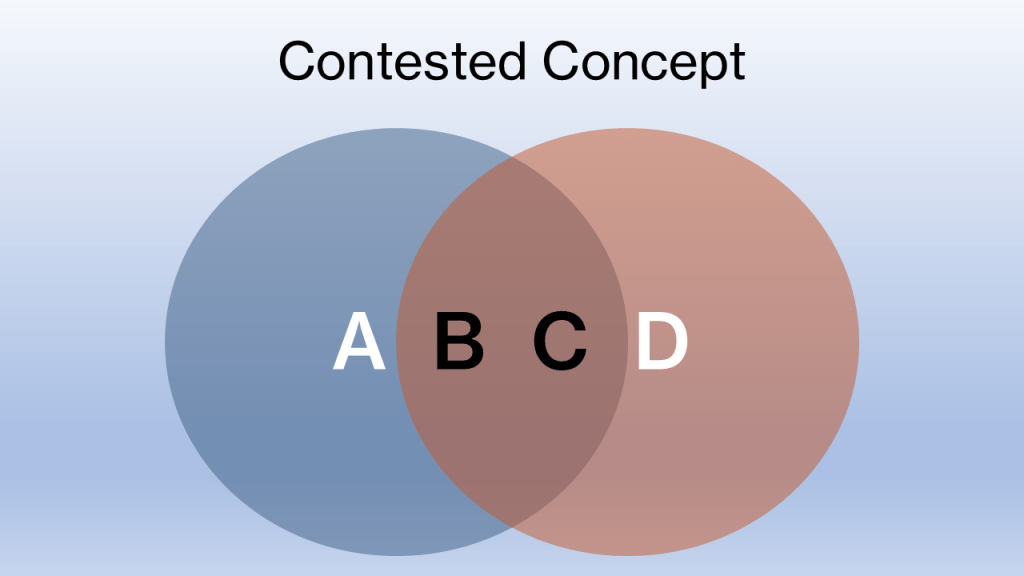



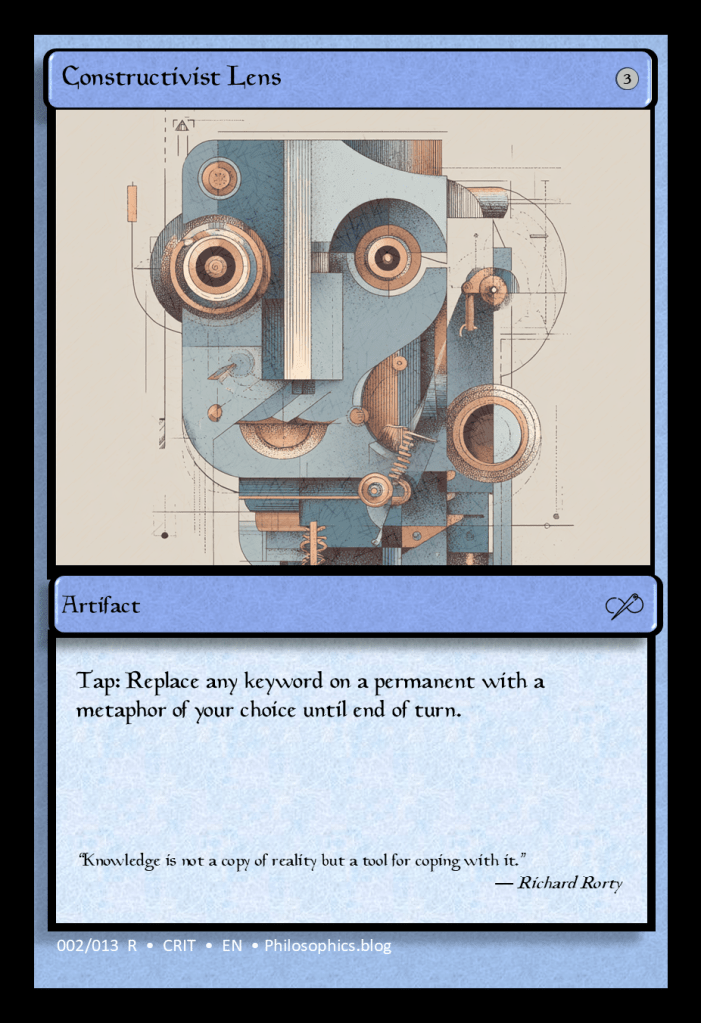

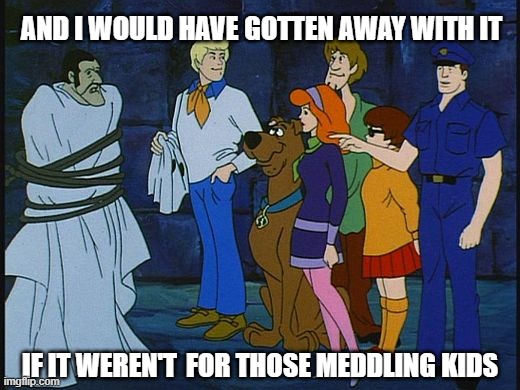



 Philosophics