The Hard Problem of Consciousness

If you are reading this, you are likely familiar with David Chalmers’ idea of the Hard Problem of Consciousness—the thorny, maddeningly unsolvable question of why and how subjective experience arises from physical processes. If you’re not, welcome to the rabbit hole. Here, we’ll plunge deeper by examining the perspective of Stuart Hameroff, who, like a philosophical magician, reframes this conundrum as a chicken-and-egg problem: what came first, life or consciousness? His answer? Consciousness. But wait—there’s a slight snag. Neither “life” nor “consciousness” has a universally agreed-upon definition. Oh, the joy of philosophical discourse.

Video: Professor Stuart Hameroff and others promote the idea that consciousness pre-dates life. A fuller version is available at IAI.
Audio: Podcast on this topic.

For the uninitiated, Hameroff’s stance is heavily flavoured with panpsychism—the idea that consciousness is a fundamental feature of the universe, like space or time. In this worldview, consciousness predates life itself. From this vantage, Hameroff’s proposition seems inevitable, a tidy solution that fits neatly into a panpsychistic framework. But let me stop you right there because I’m not signing up for the panpsychism fan club, and I’m certainly not prepared to let Hameroff’s intellectual sleight of hand go unchallenged.

To make his case, Hameroff engages in a curious manoeuvre: he defines both life and consciousness in ways that conveniently serve his argument. Consciousness, for him, is not limited to the complex phenomena of human or even animal experience but is a fundamental property of the universe, embedded in the very fabric of reality. Meanwhile, consciousness eventually orchestrates itself into life—a secondary phenomenon. With these definitions, his argument clicks together like a self-serving jigsaw puzzle. It’s clever, I’ll grant him that. But cleverness isn’t the same as being correct.

This is the philosophical equivalent of marking your own homework. By defining the terms of debate to fit his narrative, Hameroff ensures that his conclusion will satisfy his fellow panpsychists. The faithful will nod along, their priors confirmed. But for those outside this echo chamber, his framework raises more questions than it answers. How does this universal consciousness work? Why should we accept its existence as a given? And—here’s the kicker—doesn’t this just punt the problem one step back? If consciousness is fundamental, what’s the mechanism by which it “pre-exists” life?

Hameroff’s move is bold, certainly. But boldness isn’t enough. Philosophy demands rigour, and redefining terms to suit your argument isn’t rigorous; it’s rhetorical trickery. Sure, it’s provocative. But does it advance our understanding of the Hard Problem, or does it merely reframe it in a way that makes Hameroff’s preferred answer seem inevitable? For my money, it’s the latter.

The real issue is that panpsychism itself is a philosophical Rorschach test. It’s a worldview that can mean just about anything, from the claim that electrons have a rudimentary kind of awareness to the idea that the universe is a giant mind. Hameroff’s take lands somewhere in this spectrum, but like most panpsychist arguments, it’s long on metaphysical speculation and short on empirical grounding. If you already believe that consciousness is a fundamental aspect of reality, Hameroff’s arguments will feel like a revelation. If you don’t, they’ll feel like smoke and mirrors.

In the end, Hameroff’s chicken-and-egg problem might be better framed as a false dichotomy. Perhaps life and consciousness co-evolved in ways we can’t yet fully understand. Or perhaps consciousness, as we understand it, emerges from the complexity of life, a byproduct rather than a prerequisite. What’s clear is that Hameroff’s solution isn’t as tidy as it seems, nor as universally compelling. It’s a clever sleight of hand, but let’s not mistake cleverness for truth.

Dune: Prophecy – Eugenics, Lies, and Weak CGI

So, you watched Dune: Prophecy episode 1 on HBO Max. Congratulations on your bravery. Let’s face it—Dune adaptations are a minefield. Remember David Lynch’s Dune? Of course, you do because it’s impossible to unsee Sting in that ridiculous winged codpiece. And whilst Denis Villeneuve’s recent entries managed to elevate the franchise from high-school drama club aesthetics to actual cinema, they also came dangerously close to being too good—almost like Dune took itself seriously.

And now, here we are, back on shaky ground with Dune: Prophecy. Sure, the first episode was watchable, despite some environmental CGI that looks like it came out of a Sims expansion pack. But this isn’t a film review channel, so let’s dive into the show’s actual content—or, as I like to call it, The Philosophy 101 Drinking Game.


Eugenics: Creepy, Even by Dune Standards

Ah, eugenics. Nothing screams cosy sci-fi night in like a narrative steeped in genetic elitism. The Bene Gesserit’s obsessive fixation on a “pure bloodline” takes centre stage, making you wonder if they’re auditioning for a dystopian version of Who Do You Think You Are?. Creepy is putting it mildly. It’s all very master race, but with better posture and less obvious moustaches.


Righteousness vs. Power: The Valya Harken Show

Valya Harken is an enigma—or perhaps just your classic power-hungry sociopath cloaked in the silky veil of duty. Is she righteous? Maybe. Is she using morality as a smokescreen for her own ambition? Absolutely. Watching her wrestle with her supposed “deontological duty” to the sisterhood is like watching a cat pretend it cares about knocking over your wine glass. Sure, it’s interesting, but it’s also patently obvious there’s an ulterior motive.

Her quest for power is unmistakable. But here’s the kicker: the sisterhood needs someone like her. Systems, after all, fight to survive, and Valya is just the ruthless gladiator they require. Whether her motives are noble or nefarious is irrelevant because survival trumps all in the Dune universe. Her arc underscores the show’s recurring obsession with false dichotomies—righteousness versus calculated ambition. It’s not “one or the other,” folks. It’s always both.


Progress as a Façade

Progress, Dune-style, is a beautifully brutal illusion. One group’s advancement always comes at another’s expense, a message that’s summed up perfectly by the episode’s pull quote: “Adversity Always Lies in the Path of Advancement.” In other words, progress is just oppression with better PR. It’s a meta-narrative as old as civilisation, and Dune leans into it with an almost smug glee.


Lies, Manipulation, and the Human Condition

If humanity’s greatest weapon is the lie, then the Bene Gesserit are armed to the teeth. For a group that claims to seek truth, they certainly have no qualms about spinning elaborate deceptions. Case in point: the mind games encapsulated by “You and I remember things differently.” It’s a phrase so loaded with gaslighting potential it should come with a trigger warning.

This manipulation isn’t just a tool; it’s the cornerstone of their ethos. Truth-seeking? Sure. But only if the “truth” serves their interests. It’s classic utilitarianism: the ends justify the means, even if those means involve rewriting history—or someone else’s memory.


Fatalism, Virtue Ethics, and the Inescapable Past

The Dune universe loves a good dose of fatalism, and Prophecy is no exception. The idea that “our past always finds us” is hammered home repeatedly as characters grapple with choices, bloodlines, and cultural memory. It’s as though everyone is permanently stuck in a Freudian therapy session, doomed to relive ancestral traumas ad infinitum. In this world, identity is less a personal construct and more a hand-me-down curse.


Self-Discipline and Sacrifice: The Dune Holy Grail

Finally, we come to self-discipline and sacrifice, the twin pillars of Dune’s moral framework. Whether voluntarily undertaken or brutally enforced, these themes dominate the narrative. It’s a trope as old as time, but it works because it’s relatable—who among us hasn’t sacrificed something important for an uncertain future? Of course, in Dune, that sacrifice usually involves something more dramatic than skipping dessert. Think more along the lines of betraying allies, murdering rivals, or, you know, manipulating an entire galaxy.


The Verdict

Dune: Prophecy has potential. It’s rich in philosophical musings, political intrigue, and that uniquely Dune blend of high drama and existential dread. Sure, the CGI needs work, and some of the dialogue could use an upgrade (how about less exposition, more nuance?), but there’s enough meat here to keep you chewing. Whether it evolves into something truly epic—or collapses under the weight of its own ambition—remains to be seen. Either way, it’s worth watching, if only to see how far humanity’s greatest weapon—the lie—can take the sisterhood.

The Scientist’s Dilemma: Truth-Seeking in an Age of Institutional Constraints

In an idealised vision of science, the laboratory is a hallowed space of discovery and intellectual rigour, where scientists chase insights that reshape the world. Yet, in a reflection as candid as it is disconcerting, Sabine Hossenfelder pulls back the curtain on a reality few outside academia ever glimpse. She reveals an industry often more concerned with securing grants and maintaining institutional structures than with the philosophical ideals of knowledge and truth. In her journey from academic scientist to science communicator, Hossenfelder confronts the limitations imposed on those who dare to challenge the mainstream — a dilemma that raises fundamental questions about the relationship between truth, knowledge, and institutional power.

I’ve also created a podcast to discuss Sabine’s topic. Part 2 is also available.

Institutionalised Knowledge: A Double-Edged Sword

The history of science is often framed as a relentless quest for truth, independent of cultural or economic pressures. But as science became more institutionalised, a paradox emerged. On the one hand, large academic structures offer resources, collaboration, and legitimacy, enabling ambitious research to flourish. On the other, they impose constraints, creating an ecosystem where institutional priorities — often financial — can easily overshadow intellectual integrity. The grant-based funding system, which prioritises projects likely to yield quick results or conform to popular trends, inherently discourages research that is too risky or “edgy.” Thus, scientific inquiry can become a compromise, a performance in which scientists must balance their pursuit of truth with the practicalities of securing their positions within the system.

Hossenfelder’s account reveals the philosophical implications of this arrangement: by steering researchers toward commercially viable or “safe” topics, institutions reshape not just what knowledge is pursued but also how knowledge itself is conceptualised. A system prioritising funding over foundational curiosity risks constraining science to shallow waters, where safe, incremental advances take precedence over paradigm-shifting discoveries.

Gender, Equity, and the Paradoxes of Representation

Hossenfelder’s experience with gender-based bias in her early career unveils a further paradox of institutional science. Being advised to apply for scholarships specifically for women, rather than being offered a job outright, reinforced a stereotype that women in science might be less capable or less deserving of direct support. Though well-intentioned, such programs can perpetuate inequality by distinguishing between “real” hires and “funded outsiders.” For Hossenfelder, this distinction created a unique strain on her identity as a scientist, leaving her caught between competing narratives: one of hard-earned expertise and one of institutionalised otherness.

The implications of this dilemma are profound. Philosophically, they touch on questions of identity and value: How does an individual scientist maintain a sense of purpose when confronted with systems that, however subtly, diminish their role or undercut their value? And how might institutional structures evolve to genuinely support underrepresented groups without reinforcing the very prejudices they seek to dismantle?

The Paper Mill and the Pursuit of Legacy

Another powerful critique in Hossenfelder’s reflection is her insight into academia as a “paper production machine.” In this system, academics are pushed to publish continuously, often at the expense of quality or depth, to secure their standing and secure further funding. This structure, which rewards volume over insight, distorts the very foundation of scientific inquiry. A paper may become less a beacon of truth and more a token in an endless cycle of academic currency.

This pursuit of constant output reveals the philosopher’s age-old tension between legacy and ephemerality. In a system driven by constant publication, scientific “advancements” are at risk of being rendered meaningless, subsumed by an industry that prizes short-term gains over enduring impact. For scientists like Hossenfelder, this treadmill of productivity diminishes the romantic notion of a career in science. It highlights a contemporary existential question: Can a career built on constant output yield a genuine legacy, or does it risk becoming mere noise in an endless stream of data?

Leaving the Ivory Tower: Science Communication and the Ethics of Accessibility

Hossenfelder’s decision to leave academia for science communication raises a question central to contemporary philosophy: What is the ethical responsibility of a scientist to the public? When institutional science falters in its pursuit of truth, perhaps scientists have a duty to step beyond its walls and speak directly to the public. In her pivot to YouTube, Hossenfelder finds a new audience, one driven not by academic pressures but by genuine curiosity.

This shift embodies a broader rethinking of what it means to be a scientist today. Rather than publishing in academic journals read by a narrow circle of peers, Hossenfelder now shares her insights with a public eager to understand the cosmos. It’s a move that redefines knowledge dissemination, making science a dialogue rather than an insular monologue. Philosophically, her journey suggests that in an age where institutions may constrain truth, the public sphere might become a more authentic arena for its pursuit.

Conclusion: A New Paradigm for Scientific Integrity

Hossenfelder’s reflections are not merely the story of a disillusioned scientist; they are a call to re-evaluate the structures that define modern science. Her journey underscores the need for institutional reform — not only to allow for freer intellectual exploration but also to foster a science that serves humanity rather than merely serving itself.

Ultimately, the scientist’s dilemma that Hossenfelder presents is a philosophical one: How does one remain true to the quest for knowledge in an age of institutional compromise? As she shares her story, she opens the door to a conversation that transcends science itself, calling us all to consider what it means to seek truth in a world that may have forgotten its value. Her insights remind us that the pursuit of knowledge, while often fraught, is ultimately a deeply personal, ethical journey, one that extends beyond the walls of academia into the broader, often messier realm of human understanding.

Choice and Blame: Why We Forgive Some and Condemn Others

A recent parody video making the rounds on social media shows a man at a kitchen table, his girlfriend, and their cat. In a desperate attempt to gain his girlfriend’s attention, he knocks a cup off the table. The moment it hits the floor, she turns on him, scolding him for his clumsiness. Quick to deflect, he blames the cat, and suddenly her anger dissipates. She shifts from reprimanding him to lavishing affection on the supposedly guilty feline. The tension lifts—until he sheepishly confesses that it was, in fact, his doing all along. Her response? An incredulous, “Are you kidding me?”

What’s fascinating about this skit isn’t the comedy of the man’s mischief or even the cat’s unknowing role in the charade. It’s the girlfriend’s starkly different reactions to the same act, depending on who she believes committed it. The cat, in her eyes, can do no wrong; the boyfriend, however, is immediately culpable. It’s easy to laugh at the scenario’s absurdity, but the dynamic it portrays is familiar and, dare I say, quite telling about human behaviour.

The Double Standard of Blame

Why is it that we’re quick to exonerate some and just as quick to indict others? The phenomenon is more than a quirk of personality; it reveals our deeper, often unconscious, biases. While it’s understandable that the girlfriend might think the cat incapable of intentional mischief, her reaction also suggests a predisposition to forgive certain actors—whether due to perceived innocence, attachment, or simply habit.

This dynamic isn’t limited to pets and partners. In families, workplaces, and social groups, we often see a similar pattern. One person becomes the perennial scapegoat, bearing the brunt of blame for any and all misdeeds, while another enjoys a seemingly unshakeable immunity. Think of the “golden child” and the “black sheep” within a family. One can rarely put a foot wrong, while the other’s every move is scrutinised, questioned, or condemned.

Beyond the Blame: Motivations and Consequences

The reasons behind these imbalances can be complex. Sometimes, they stem from past behaviour: if someone has repeatedly erred, we may be primed to expect the worst from them, even if they’ve reformed. Other times, they arise from emotional bonds or biases: we excuse those we love or admire because acknowledging their faults would cause us discomfort or cognitive dissonance.

This phenomenon isn’t just about playing favourites; it can have significant psychological consequences. For the person perpetually cast as the villain, the burden of unwarranted blame can lead to feelings of resentment, anxiety, or self-doubt. Meanwhile, those consistently exonerated may internalise a skewed perception of their own infallibility, which can be equally damaging.

A Broader Reflection on Accountability

Returning to the video’s context, the girlfriend’s swift switch from reproach to indulgence once she believed the cat was at fault, and her subsequent anger when the truth was revealed, invites us to question our own responses to perceived transgressions. Are we, too, guilty of selectively assigning blame based on who we think is responsible? How often do we let our preconceptions shape our judgments, favouring one actor over another without truly weighing the evidence?

The parody is amusing, no doubt, but it also serves as a subtle reminder: our reactions often reveal more about our biases and expectations than about the actions themselves. The next time we find ourselves quick to blame or forgive, it’s worth pausing to ask: are we reacting to the act, or to the actor?

In a world increasingly marked by polarised opinions and knee-jerk reactions, cultivating this kind of self-awareness is crucial. We need to be vigilant not only about how we judge others but also about why we do so. For, in the end, it’s not just about who knocked the cup off the table—it’s about who we believe deserves to be scolded for it.

What’s Wrong with Utilitarianism

Full disclosure. All normative morality frameworks are seriously flawed. Consequentialism and its redheaded stepchild, Utilitarianism, may be among the worst—at least in the top 10.

In this video, I’m introduced to Tommy Curry, who makes a strong point in the face of Western imperialism—any imperialism, but the West seems to do more and better (if better means worse for the world at large). One can’t claim a moral high ground after nearly genociding counter-opinions. As he notes, when the proto-United States “accidentally” murdered ninety-five per cent of the Indigenous population and then applied the majority rule, good of the people rule, that’s the worst of bad faith.

To be fair, the world has a history of killing off and disappearing counter-voices and then voting on issues they opposed. Rinse and repeat until you become the majority. No wonder genocide is so popular. Israel has adopted this approach as a perpetrator after their predecessors escaped a similar fate in the 1940s. They accused Nazi Germany of being evil. I guess it rubbed off. Who knew genocide was contagious?

Peter Singer comments on the full video, a symposium on land ownership and hypocrisy, which can be found here or by following the IAI link from the video above. Eventually, you’ll hit a paywall. Apologies in advance.

I’d love to write more as this is a topic in which I have a passionate interest. Unfortunately, I am otherwise indisposed and will settle on sharing this video content for now. I’ll love to read your thoughts.

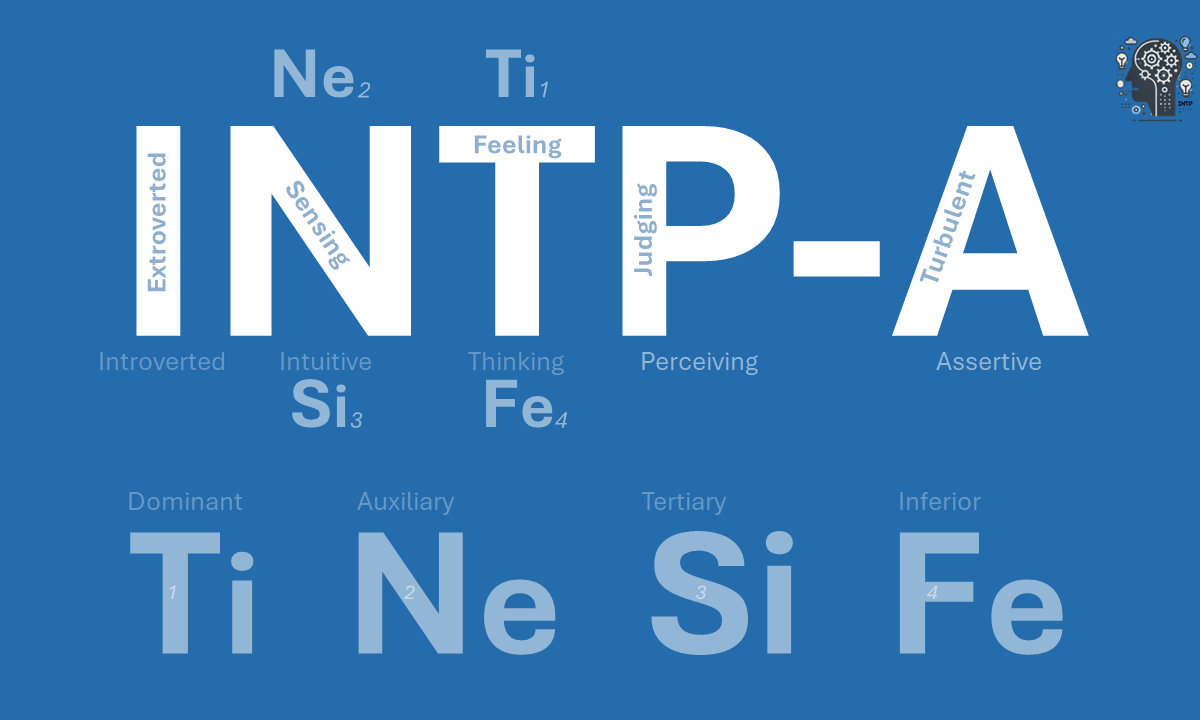
Let’s Talk About INTP

I posted on the MBTI, Myers-Briggs Type Indicator test recently. Now I’ve made a video going into more detail on my type: INTP.

It may be pseudoscience, but if the show quacks like a duck, wear it. I go into some depth about the various components of INTP as well as give some perspective on the opposites, E, S, F, and J. I go a little bit deeper into INTJ, as I occasionally test this way. Given a deeper dive, it doesn’t sit quite right. This is what I discuss.

Have you taken one of these tests? If so, what was your type? If not, why not? Feel free to leave comments below or on YouTube. Cheers.

Why Democracy is Mathematically Impossible

In this video, Veritacium discusses why democracy is mathematically impossible, invoking Arrow’s Impossibility Theorem which I’ve mentioned many times here and in other writings. I won’t summarise or comment further save to recommend the video. Let me know what you think if you’re so inclined.

Video: Why Democracy is Mathematically Impossible

Life Consciousness

Language is life. Yet, this assertion immediately raises a fundamental question: which came first, life or consciousness? It’s a classic chicken-and-egg conundrum. Physicist Stuart Hameroff posits an intriguing idea—that consciousness might predate life itself. This radical notion suggests that consciousness isn’t merely a byproduct of biological processes but could be an intrinsic feature of the universe. However, there’s a snag.

The challenge lies in defining life and consciousness, two terms that lack universally accepted definitions. The absence of clarity here opens the door to a multitude of interpretations, making it easy to drift into what could be considered ‘airy faerie’ ambiguity. One must beware of the temptation to engage in intellectual exercises that lead nowhere—what might be termed ‘mental masturbation.’ This is a prime example of the insufficiency of language.

Audio: Podcast commentary on this topic.

Life and consciousness, as concepts, are elusive. Unlike straightforward nouns or adjectives—where we can confidently say, “That’s a dog,” “That’s a tree,” or “That’s green”—these terms are far more complex. They are attempts to encapsulate observed phenomena, yet we lack the precise language and understanding to pin them down definitively. The video linked above provides perspectives on various approaches to defining these terms, but none prove wholly satisfactory. This lack of satisfaction might suggest that our conventional understanding of life and consciousness is flawed. To be fair, one might even entertain the idea that life itself is an illusion, a construct of consciousness.

This ambiguity isn’t confined to the realms of life and consciousness. I recently shared a post on the topic of gender, which illustrates a similar issue. Originally, there was no concept of gender. The earliest distinctions made were between animate and inanimate. Over time, these distinctions became more nuanced. Whether or not a proto-word for life existed at that time is unclear, but the idea of animation being linked to life was beginning to take shape. The concept of gender evolved much later, driven by the need to categorize and define differences within the animate category.

The evolution of language reflects the evolution of thought. Yet, when we dig deep into these foundational concepts, we encounter the same problem: how can we argue the precedence of two concepts—life and consciousness—when neither has a solid foundation in language? If our words are inadequate, if they fail to capture the essence of what we are trying to convey, then what does that say about our understanding of the world?

Perhaps it suggests that our linguistic and cognitive tools are still too crude to grasp the true nature of reality. Or maybe it hints at a deeper truth: that some aspects of existence are beyond the scope of human understanding, no matter how sophisticated our language becomes. After all, if consciousness predates life, as Hameroff suggests, then we may need to rethink our fundamental assumptions about existence itself.

Ultimately, this exploration reveals a paradox at the heart of human knowledge. We seek to define and categorise, to impose order on the chaos of the universe. Yet in doing so, we must confront the limits of our language and, by extension, our understanding. Perhaps the true essence of life and consciousness lies not in definitions or categories but in the very act of questioning, the relentless pursuit of knowledge that drives us forward, even when the answers remain elusive.

Does Language Describe Reality?

The topic of this video touches upon my insufficiency of language thesis. Tim Maudlin defends language realism but only to the extent that ‘we can use it to describe the world and that some of those descriptions are true’.

Video: Does Language Describe Reality? (IAI)

The challenge, then, is determining which descriptions are true. I’ve discussed a couple of my positions on this.

The Truth About Truth

Firstly, we can only perceive what is true as we have no access to absolute truth. The best we can achieve is an asymptotic function approaching truth, a notion that resonates with Hilary Putnam’s concept of internal realism (pdf). Putnam argues that truth is not a matter of correspondence with a mind-independent reality but is instead tied to our conceptual schemes. This means that what we consider “true” is always shaped by the language and concepts we use, making our understanding inherently partial and context-dependent. Even then, we have no way to determine how close to truth our perception is. It just has to feel true—an idea that aligns with Putnam’s pragmatic conception of truth, where truth is something that emerges from our practices and inquiries, rather than being a fixed point we can definitively reach. In terms of physics, this underlying reality may be relatively more stable than abstract concepts, which are ephemeral and shifting sands.

The Rhetoric of Truth

Secondly, given that we have no access to objective truth, we can only expect subjective or relative truths. This brings us to Putnam’s critique of the metaphysical correspondence theory of truth. According to Putnam, the idea that language can perfectly correspond to an external reality is flawed. Instead, truth is what can be justified within a particular conceptual framework, making all truth somewhat relative. This leaves us open to rhetoric—the more convincing argument wins, regardless of whether it reflects an objective reality. In fact, as Putnam’s ideas suggest, the most persuasive argument might favour an incorrect position simply because it resonates more with our internal conceptual schemes, not because it corresponds to an external truth. This has happened many times historically—or has it?

Conclusion: Language, Truth, and the Influence of Rhetoric

Putnam’s work reminds us that language is deeply connected to our understanding of the world, but it is also limited by the conceptual frameworks within which it operates. While language helps us navigate and describe the world, it cannot provide us with direct access to objective truth. Instead, it gives us tools to construct truths that are internally coherent and pragmatically useful, though always subject to change and reinterpretation. As we engage with rhetoric and persuasion, we must remain aware that the truths we accept are often those that best fit our current conceptual schemes, not necessarily those that best correspond to an elusive objective reality.