On Death and Dying

3–4 minutes

Disclaimer: I should be finishing my Language Insufficiency Hypothesis book, yet I am here writing about death and dying. Why? Because I was watching an interview with Neal Schon by Rick Beato. I should have been working on my book then, too. It seems I can write about death more easily than finish a book about the failure of language. Perhaps because death speaks fluently.

I haven’t produced music professionally since the mid-1980s, and I haven’t performed since 2012, yet I am still drawn to its intricacies. My fingers no longer allow me to play much of anything anymore. This is a sort of death. When the body forgets what the mind remembers, that’s a particular kind of death – one language dying while another can’t translate.

As Neal was walking Rick through his equipment and approach to music, I was taken back to a similar place. I wanted to plug into a Fender Twin or a Hi-Watt, a Lexicon 224 or a Cry Baby wah. I still have nightmares thinking of setting up a Floyd Rose.

Video: Rick Beato interviews Neal Schon

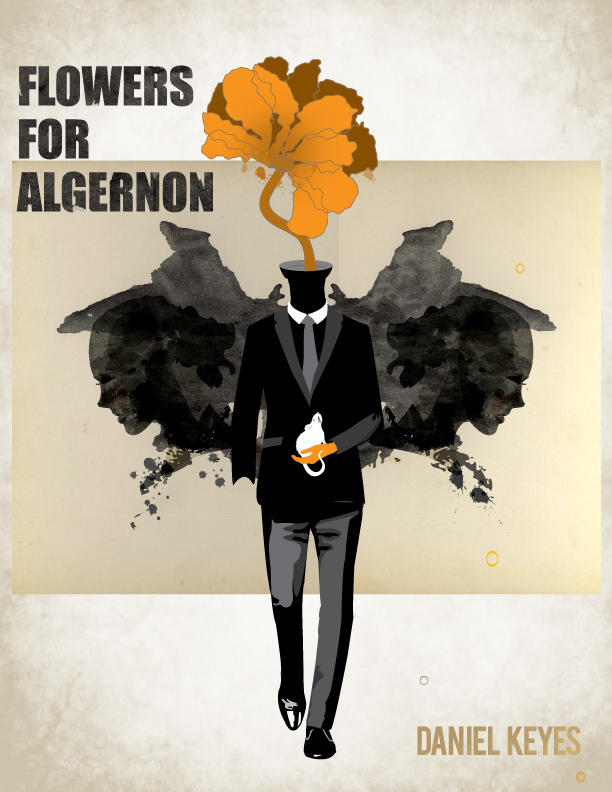
But I can’t go back. As for music, I can’t go forward either. I’m at a standstill, but in a regressed position. It’s uncomfortable. It feels a lot like Charlie in Flowers for Algernon. I used to be able to do that. Don’t get me wrong – I am not claiming to be on the level of Neal Schon, a man I remember from his days with Santana, but when you reach a level of proficiency and then lose it, it hurts; it can be devastating.

Audio: NotebookLM podcast on this topic.

I recall being in hospital in 2023 – a physical rehabilitation facility, really – and I found a piano in a vacant common room. Drawn to the instrument, I rolled over my wheelchair and played…nothing. My fingers wouldn’t work. The piano sat there like a relic of my former self. I rolled toward it as though approaching an altar. My fingers hovered, twitched, failed. The sound of nothing has never been so loud. I cried. I cried a lot those days. I was down to 58 kilos – at 182 cm, I weighed in at just over 9 stone. It wasn’t the best of times.

I still feel a certain nostalgia.

And then there are the people I’ve lost along the way – as another Neal reflected on – The Needle and the Damage Done.

Love and art are both acts of repetition. When one ends, the reflex remains – the impulse to reach, to share, to call out. Death doesn’t stop the motion, only the answer.

I’m lucky to have left Delaware. When a girlfriend died in 2020, I remained and connected with another until 2023, when she died, too. From 2020 to 2023, when I was out and about, something might have caught my eye, and I’d reflect on how Carrie might have liked that.

But it was different. It was more like, ‘I should let Carrie know about that,’ only to realise fractions of a second later that she wouldn’t see whatever it was; she couldn’t. And I’d carry on. I didn’t need to repeat this with Sierra. My relocation to Massachusetts solved this challenge – not so many triggers.

I’m not sure how the loss of ‘professional’ music relates to deceased partners, but it does – at least enough for me to make this connexion. Perhaps I’m just connecting arbitrary dots, but I’ll call it nostalgia.

I don’t play, but I still hear it. The song continues without me. Nostalgia is just rhythm without melody. Perhaps all nostalgia is epistemological error – the confusion of past fluency for present meaning.


The Seduction of the Spreadsheet

1–2 minutes

Whilst researching “The Will to Be Ruled: Totalitarianism and the Fantasy of Freedom”, I stumbled across Mattias Desmet’s The Psychology of Totalitarianism. The title alone was bait enough. I expected the usual reheated liberal anxiety about dictators; instead, I found a critique of data worship and mechanistic reason that hits the nerve of our statistical age.

Besmet, a Belgian psychologist with a background in statistics, begins not with tyranny but with epistemology – with how the Enlightenment’s dream of objectivity curdled into the managerial nightmare we now inhabit. The first half of the book reads like a slow unmasking of Scientism: how numbers became our gods, and graphs, our catechisms.

Written before COVID-19 but finished during it, his argument turns pandemic data into theatre – a performance of certainty masking deep confusion. The daily tally became ritual sacrifice to the idol of ‘evidence-based’ policy. His point, and mine, is that totalitarianism no longer needs gulags; it thrives in dashboards and KPIs.

Desmet’s frame intersects beautifully with my own thesis: that obedience today is internalised as reasonableness. Freedom has been recast as compliance with ‘the data’. We surrender willingly, provided the orders come in statistical form.

This is why even Agile™ management and its fetish of ‘velocity’ reek of the same mechanistic faith. Every sprint promises deliverance through quantification; every retrospective is a bureaucratic confession of inefficiency. The cult of metrics is not merely a managerial fad – it is the metaphysics of our time. The problem is at once ontological and epistemological: we mistake the measure for the thing itself, and in doing so, become measurable.

It’s a rare pleasure to encounter a fellow dissident of the numerical faith – a man who sees that the spreadsheet has replaced the sceptre.

‘Luigi Mangione Is Not a Terrorist’

3–4 minutes

This isn’t a political post. It’s about language, the insufficiency of it, and the games we play when pretending words carry more weight than they do.

Luigi Mangione is the man accused of killing UnitedHealthcare CEO Brian Thompson. After his arrest, prosecutors stacked the usual charges – murder, firearms, assorted legal bric-a-brac – then added the cherry on top: domestic terrorism.

Audio: NotebookLM podcast on this topic.

Recently, a pretrial judge cut the cherry loose.

NEW YORK, Sept 16 (Reuters) – A New York state judge dismissed on Tuesday two terrorism-related counts against Luigi Mangione over the December 2024 killing of health insurance executive Brian Thompson, though the 27-year-old remains charged with second-degree murder and eight other criminal counts in the case.

“There was no evidence presented of a desire to terrorize the public, inspire widespread fear, engage in a broader campaign of violence, or to conspire with organized terrorist groups,” Judge Gregory Carro found in a 12-page written decision (pdf). “Here, the crime – the heinous, but targeted and discrete killing of one person – is very different from the examples of terrorism set forth in the statute.” (source)

The prosecution insisted the label fit. The judge disagreed. Cue outrage, applause, and confusion. The crime is still horrific, but suddenly the word “terrorist” is off-limits.

The Elasticity of Terror

How can two educated parties look at the same set of facts and come to opposite conclusions? Because “terrorism” isn’t a Platonic form. It’s an elastic linguistic category. The prosecutor drags it out because “terrorist” is a magical word in American law: it inflates an already ugly act into a civilisation-level threat, unlocks harsher penalties, and lets politicians posture about national security.

The judge, however, reminded everyone that a bullet in Manhattan does not equal al-Qaeda. Murder, yes. Terrorism, no. Not because murder is less grotesque, but because the statutory definition won’t stretch that far without breaking.

Language Games, Legal Hierarchies

This is where it gets trickier. The judge isn’t merely “pulling rank”—though rank does matter. American jurisprudence is hierarchical: trial judges hand down rulings, appellate judges review them, and nine robed partisans in Washington can one day rewrite the whole script. On paper, these tiers are meant to iron out ambiguity. In practice, they multiply it.

Even co-equal judges, reading the same facts, can diverge wildly. Split decisions at the Supreme Court prove the point: five minds say “constitutional,” four say “unconstitutional,” and the one-vote margin becomes binding law for 330 million people. That’s not the discovery of truth; it’s the triumph of one language game over another, enforced by hierarchy.

The Insufficiency Laid Bare

So we return to Mangioni. He has been charged with murder – the second degree flavour; that much is uncontested. But is he a “terrorist”? The prosecution said yes, the judge said no, and another judge, higher up or sitting elsewhere, might well say yes again. Each claim is defensible. Each is motivated by language, by politics, and by the institutional pressures of the bench.

And that’s the point. Language doesn’t tether itself to reality; it choreographs our endless arguments about reality. The law tries to tame it with hierarchies and definitions, but the seams always show. Mangioni is a murderer. Whether he is a terrorist depends less on his actions than on which interpretive dance is winning in the courtroom that day.

Semantic Drift: When Language Outruns the Science

Science has a language problem. Not a lack of it – if anything, a surfeit. But words, unlike test tubes, do not stay sterile. They evolve, mutate, and metastasise. They get borrowed, bent, misused, and misremembered. And when the public discourse gets hold of them, particularly on platforms like TikTok, it’s the language that gets top billing. The science? Second lead, if it’s lucky.

Semantic drift is at the centre of this: the gradual shift in meaning of a word or phrase over time. It’s how “literally” came to mean “figuratively,” how “organic” went from “carbon-based” to “morally superior,” and how “theory” in science means robust explanatory framework but in the public square means vague guess with no homework.

In short, semantic drift lets rhetoric masquerade as reason. Once a word acquires enough connotation, you can deploy it like a spell. No need to define your terms when the vibe will do.

Audio: NotebookLM podcast on this topic.

When “Vitamin” No Longer Means Vitamin

Take the word vitamin. It sounds objective. Authoritative. Something codified in the genetic commandments of all living things. (reference)

But it isn’t.

A vitamin is simply a substance that an organism needs but cannot synthesise internally, and must obtain through its diet. That’s it. It’s a functional definition, not a chemical one.

So:

  • Vitamin C is a vitamin for humans, but not for dogs, cats, or goats. They make their own. We lost the gene. Tough luck.
  • Vitamin D, meanwhile, isn’t a vitamin at all. It’s a hormone, synthesised when sunlight hits your skin. Its vitamin status is a historical relic – named before we knew better, and now marketed too profitably to correct.

But in the land of TikTok and supplement shelves, these nuances evaporate. “Vitamin” has drifted from scientific designation to halo term – a linguistic fig leaf draped over everything from snake oil to ultraviolet-induced steroidogenesis.

The Rhetorical Sleight of Hand

This linguistic slippage is precisely what allows the rhetorical shenanigans to thrive.

In one video, a bloke claims a burger left out for 151 days neither moulds nor decays, and therefore, “nature won’t touch it.” From there, he leaps (with Olympic disregard for coherence) into talk of sugar spikes, mood swings, and “metabolic chaos.” You can almost hear the conspiratorial music rising.

The science here is, let’s be generous, circumstantial. But the language? Oh, the language is airtight.

Words like “processed,” “chemical,” and “natural” are deployed like moral verdicts, not descriptive categories. The implication isn’t argued – it’s assumed, because the semantics have been doing quiet groundwork for years. “Natural” = good. “Chemical” = bad. “Vitamin” = necessary. “Addiction” = no agency.

By the time the viewer blinks, they’re nodding along to a story told by words in costume, not facts in context.

The Linguistic Metabolism of Misunderstanding

This is why semantic drift isn’t just an academic curiosity – it’s a vector. A vector by which misinformation spreads, not through outright falsehood, but through weaponised ambiguity.

A term like “sugar crash” sounds scientific. It even maps onto a real physiological process: postprandial hypoglycaemia. But when yoked to vague claims about mood, willpower, and “chemical hijacking,” it becomes a meme with lab coat cosplay. And the science, if mentioned at all, is there merely to decorate the argument, not drive it.

That’s the crux of my forthcoming book, The Language Insufficiency Hypothesis: that our inherited languages, designed for trade, prayer, and gossip, are woefully ill-equipped for modern scientific clarity. They lag behind our knowledge, and worse, they often distort it.

Words arrive first. Definitions come limping after.

In Closing: You Are What You Consume (Linguistically)

The real problem isn’t that TikTokers get the science wrong. The problem is that they get the words right – right enough to slip past your critical filters. Rhetoric wears the lab coat. Logic gets left in the locker room.

If vitamin C is a vitamin only for some species, and vitamin D isn’t a vitamin at all, then what else are we mislabelling in the great nutritional theatre? What other linguistic zombies are still wandering the scientific lexicon?

Language may be the best tool we have, but don’t mistake it for a mirror. It’s a carnival funhouse – distorting, framing, and reflecting what we expect to see. And until we fix that, science will keep playing second fiddle to the words pretending to explain it.

Defying Death

I died in March 2023 — or so the rumour mill would have you believe.

Of course, given that I’m still here, hammering away at this keyboard, it must be said that I didn’t technically die. We don’t bring people back. Death, real death, doesn’t work on a “return to sender” basis. Once you’re gone, you’re gone, and the only thing bringing you back is a heavily fictionalised Netflix series.

Audio: NotebookLM podcast of this content.

No, this is a semantic cock-up, yet another stinking exhibit in the crumbling Museum of Language Insufficiency. “I died,” people say, usually while slurping a Pumpkin Spice Latte and live-streaming their trauma to 53 followers. What they mean is that they flirted with death, clumsily, like a drunk uncle at a wedding. No consummation, just a lot of embarrassing groping at the pearly gates.

And since we’re clarifying terms: there was no tunnel of light, no angels, no celestial choir belting out Coldplay covers. No bearded codgers in slippers. No 72 virgins. (Or, more plausibly, 72 incels whining about their lack of Wi-Fi reception.)

There was, in fact, nothing. Nothing but the slow, undignified realisation that the body, that traitorous meat vessel, was shutting down — and the only gates I was approaching belonged to A&E, with its flickering fluorescent lights and a faint smell of overcooked cabbage.

To be fair, it’s called a near-death experience (NDE) for a reason. Language, coward that it is, hedges its bets. “Near-death” means you dipped a toe into the abyss and then screamed for your mummy. You didn’t die. You loitered. You loitered in the existential equivalent of an airport Wetherspoons, clutching your boarding pass and wondering why the flight to Oblivion was delayed.

As the stories go, people waft into the next world and are yanked back with stirring tales of unicorns, long-dead relatives, and furniture catalogues made of clouds. I, an atheist to my scorched and shrivelled soul, expected none of that — and was therefore not disappointed.

What I do recall, before the curtain wobbled, was struggling for breath, thinking, “Pick a side. In or out. But for pity’s sake, no more dithering.”
In a last act of rational agency, I asked an ER nurse — a bored-looking Athena in scrubs — to intubate me. She responded with the rousing medical affirmation, “We may have to,” which roughly translates to, “Stop making a scene, love. We’ve got fifteen others ahead of you.”

After that, nothing. I was out. Like a light. Like a minor character in a Dickens novel whose death is so insignificant it happens between paragraphs.

I woke up the next day: groggy, sliced open, a tube rammed down my throat, and absolutely no closer to solving the cosmic riddle of it all. Not exactly the triumphant return of Odysseus. Not even a second-rate Ulysses.

Here’s the reality:
There is no coming back from death.
You can’t “visit” death, any more than you can spend the afternoon being non-existent and return with a suntan.

Those near-death visions? Oxygen-starved brains farting out fever dreams. Cerebral cortexes short-circuiting like Poundland fairy lights. Hallucinations, not heralds. A final, frantic light show performed for an audience of none.

Epicurus, that cheerful nihilist, said, “When we are, death is not. When death is, we are not.” He forgot to mention that, in between, people would invent entire publishing industries peddling twaddle about journeys beyond the veil — and charging $29.99 for the paperback edition.

No angels. No harps. No antechamber to the divine.
Just the damp whirr of hospital machinery and the faint beep-beep of capitalism, patiently billing you for your own demise.

If there’s a soundtrack to death, it’s not choirs of the blessed. It’s a disgruntled junior surgeon muttering, “Where the hell’s the anaesthetist?” while pawing desperately through a drawer full of out-of-date latex gloves.

And thus, reader, I lived.
But only in the most vulgar, anticlimactic, and utterly mortal sense.

There will be no afterlife memoir. No second chance to settle the score. No sequel.
Just this: breath, blood, occasional barbed words — and then silence.

Deal with it.

The Holy Grail of Longevity: Why Religious People Live Longer

Spoiler Alert: It’s Not About God

If you’re reading this, chances are you’re mortal. Bummer. Even worse, you may not be maximizing your odds of wringing every last drop out of your limited lifespan. But fear not! Science has some answers. And the answer, at least in the United States, is shockingly unsecular: religious people, on average, live longer than their non-religious counterparts. They also tend to be happier. But don’t rush to your nearest house of worship just yet—because it’s not God, the afterlife, or divine intervention at work. It’s something far more mundane: people.

Audio: NotebookLM podcast on this topic.

The Religion-Longevity Link: A Holy Miracle or Just Good Networking?

Multiple studies have confirmed what might seem an inconvenient truth for secular folks like myself: religious participation is associated with longer lifespans. A 2018 study published in JAMA Internal Medicine found that attending religious services more than once a week was associated with a roughly 33% lower risk of mortality. That’s a pretty solid statistical incentive to at least pretend to enjoy Sunday sermons.

Why the boost in longevity? No, it’s not divine reward points. It boils down to a few key factors:

  • Community and Social Support: Regularly showing up to church, temple, mosque, or synagogue means interacting with the same people repeatedly, forming strong social bonds. When life gets tough, these people tend to notice and lend support.
  • Healthier Lifestyles: Many religious traditions frown upon self-destructive behaviours like smoking, heavy drinking, and drug use.
  • Lower Stress Levels: Religious belief systems provide coping mechanisms for hardship, instilling a sense of meaning and reducing existential dread.
  • Volunteerism and Purpose: Many religious folks engage in community service, which has been linked to greater happiness and longevity.

The Not-So-Spiritual Catch: Why Atheists and the “Spiritual but Not Religious” Miss Out

Here’s the kicker: it’s not belief in a deity that grants these benefits. It’s participation in a structured, tight-knit community. That’s why merely identifying as “spiritual” doesn’t deliver the same effects—without a committed social framework, spirituality becomes a solo endeavour. And whilst atheists can certainly find meaning in other ways, they often lack equivalent institutions providing routine, real-world social engagement.

To put it bluntly, God isn’t keeping people alive longer. Other people are. Having a tribe that notices when you don’t show up, checks in when you’re sick, and nags you into a healthier lifestyle has tangible benefits.

The Scandinavian Exception: Thriving Without Religion

“But wait,” you may say, “what about those blissfully secular Scandinavian countries? They’re barely religious, yet they consistently rank among the happiest and longest-living people on Earth.” Good point. The key difference? They have successfully replaced the social function of religion with other strong communal institutions.

Nordic nations boast robust social safety nets, well-funded public spaces, and a culture prioritising collective well-being. They don’t need church groups to function as makeshift welfare systems because the state ensures no one falls through the cracks. They also have thriving clubs, hobby groups, and worker associations that provide built-in social support.

Conclusion: What This Means for Longevity-Seeking Atheists and Introverts

If you, like me, are an atheist and also an introvert who prefers solitude, writing, and the company of generative AI, this presents a bit of a conundrum. How does one reap the benefits of social integration without enduring the horror of group activities?

The lesson here isn’t that you need to feign religious belief or force yourself into suffocating social obligations. But if you want to maximize your lifespan and well-being, some form of consistent, meaningful connection with others is essential. Whether that’s through a socialist co-op, a local philosophy club, a structured hobby group, or even just a tight circle of like-minded misanthropes, the key is to avoid total isolation.

Religion isn’t the magic ingredient—it’s just a well-tested delivery system. And in a society where other forms of community are fraying, it’s not surprising that religious folks seem to be winning the longevity lottery. The real takeaway? Find your people. Even if you’d rather be alone.

The Morality of Ants

Taking Moral Cues from Ants: Because Humans are Too Busy Defending the Indefensible

Ah, ants. Tiny, unassuming, and quite literally beneath us — unless you’re sprawled out on a picnic blanket fighting off a colony swarming your questionable sandwich. Yet, while humanity busies itself polluting oceans, strip-mining rainforests, and justifying corporate bloodsucking as “necessary for the economy,” ants are out here performing life-saving surgeries on their comrades.

You heard that correctly.

Researchers have now observed certain ant species (yes, ants) performing amputations on their injured nestmates to prevent infections from spreading. Picture it: a worker ant limping home, leg shredded by some territorial skirmish, and the squad rolls up like a triage team, deciding whether to (a) gently clean the wound or (b) lop the limb off entirely. Amputation is precise and deliberate — snip at the hip joint if the upper leg is toast. Lower leg injuries? Too risky. Infection spreads faster there, so it’s all hands (or mandibles) on deck for some industrial-strength licking.

It’s a brutal but effective social health system. The results? Injured ants survive. They get patched up, return to work, and contribute to the collective. The colony benefits, everyone thrives, and not a single ant launches into a fevered tirade about how “it’s their individual right to rot from gangrene in peace.”

Contrast this with humanity, where the very notion of collective good seems to spark mass hysteria in certain corners. Here, defending dubious practices — say, unfettered pollution, exploitative labour conditions, or the kind of wealth-hoarding that would make a dragon blush — has become a full-time hobby for some. “Personal responsibility!” they scream whilst someone chokes on smog or shivers in a warehouse set to Arctic temperatures. Heaven forbid we intervene.

Imagine explaining to ants that humans argue about whether everyone deserves basic healthcare. That we let industries poison rivers because regulations might “hurt innovation.” Some believe that letting people suffer and die without help is somehow noble.

Ants would stare at us — or they would if they had discernible faces. Then they’d probably do what they always do: get back to work ensuring their colony survives and thrives, as any halfway intelligent species might.

A Case for the Collective

What makes this ant behaviour so fascinating isn’t just that it exists, but that it demonstrates something humanity supposedly prides itself on: adaptability. Faced with an existential threat to one of their own, ants don’t moralise. They don’t argue about the costs or logistics of care. They don’t abandon the injured because helping them isn’t “profitable.” They just act. Quickly, efficiently, and for the collective good.

Meanwhile, humans act like the collective good is some leftist fever dream. Suggest tax-funded healthcare or basic environmental protections, and someone inevitably starts shrieking about “slippery slopes” toward tyranny, as though being able to breathe clean air or avoid bankruptcy after surgery is the thin edge of some Orwellian wedge.

We have entire systems built on the premise that it’s fine for some to suffer if others can profit. Does that sound hyperbolic? I’ll wait while you Google “externalised costs.” Spoiler alert: your cheap burger came at the expense of rainforest ecosystems and underpaid workers. But hey, as long as we’re prioritising shareholder value, all’s fair, right?

The Ants Would Like a Word

Here’s the thing: ants don’t amputate limbs because they’re altruistic softies. They do it because it makes sense. An injured worker can still contribute to the colony, and the colony’s survival depends on its members pulling together. It’s cold, pragmatic, and effective.

Now consider our own global “colony.” Why do we resist solutions that would make all of us more resilient? Healthcare, environmental protections, workers’ rights — these aren’t radical. They’re practical. Just like amputating a leg to save an ant, safeguarding the vulnerable helps everyone. Yet here we are, letting metaphorical infections spread because someone’s feelings about rugged individualism got in the way.

If Ants Can Do It, So Can We

At this point, humanity doesn’t need a lofty moral awakening. We just need to be marginally smarter than ants. Think about it: they’re tiny-brained insects who figured out that collective care improves survival rates. What’s our excuse?

Perhaps it’s time we take a page out of the ants’ playbook: diagnose the problem, take decisive action, and prioritise the common good. Amputate the rot. Treat the infection. And for the love of whatever deity or science you hold dear, stop defending systems that sacrifice the many for the few.

If ants can do it, we have no excuse.

In Conclusion:

When ants are more socially responsible than we are, it’s time to ask some tough questions. Now get it together, or the ants are going to outlive us all.

Banality of Evil

I thought I was done wittering on about Brian Thompson, the late CEO of United Healthcare, but here we are. His name lingers like the corporate perfume of systemic rot—an enduring testament to how we’ve elevated unethical behaviour into performance art. It got me thinking: what if we brought back a bit of old-school accountability? In Ancient Rome, outlaws lost their citizenship, legal protections, and status as people. That’s right—booted out of polite society. Meanwhile, we’ve done the opposite: we hand out golden parachutes and slap their faces on business magazine covers.

To some, Brian Thompson was a good man – apart from the insider trading, of course. He was successful, a nice guy, funny, and had a good family, and a few million-dollar homes. What else could you ask for? But his success came in the way of blood money. It seems we need fewer people who think like this, not more.

Then I recalled The Purge franchise. And sure, The Purge is a dystopian fantasy, but let’s up the stakes. Picture this: bounties on corporate villains. Not literal carnage, of course—let’s leave that for the big screen—but the return of real consequences. Instead of allowing their PR teams to smooth it all over with buzzwords and philanthropy crumbs, what if we made it socially unacceptable to be a snake in a suit? What if moral suasion—the lost art of persuading someone to do right because it’s, you know, right—actually came back into fashion?

Nietzsche nailed it ages ago. We’ve got two moral codes: one for people and one for money. And guess which one wins every time? All it takes is enough cash and the right rhetoric, and suddenly, everyone forgets who’s really getting fleeced. This is the banality of evil in its purest form: not grand acts of villainy but a shrugging normalisation of corruption. We don’t even consider it corruption. We see it as business as usual. We support and work for these businesses.

The tragedy is that we’ve become so desensitised to it that we are adept at ignoring the stench of moral failure that even calling it out feels quaint. But it’s not hopeless. Some of us still notice. Some of us still care. The real question is, how long can we keep tolerating this farce before we remember that morality isn’t just for the powerless?

Meantime, I just imagine these grubbers being stripped of power and protection, running scared from the likes of Luigi Mangioni.

A Buddhist Critique of Modern Livelihoods

It’s interesting to me that as an atheist and non-cognitivist, I can take the moral high ground relative to health insurance concerns in the United States. So, I write about it.

Blood Money and Broken Principles

In the aftermath of the tragic killing of Brian Thompson, the CEO of a health insurance conglomerate, a striking narrative has emerged. Many Americans view this act—shocking though it is—as emblematic of the anger and despair born of a system that profits by exploiting human vulnerability. Such reactions compel us to examine the ethics of industries that flourish on what can only be described as blood money. From health insurance to tobacco, alcohol, and the arms trade, these livelihoods raise profound ethical questions when viewed through the lens of the Buddhist Noble Eightfold Path, specifically Right Livelihood and Right Action.

The Moral Framework: Buddhism’s Path to Ethical Livelihood

Buddhism’s Eightfold Path provides a blueprint for ethical living, with Right Livelihood and Right Action serving as its ethical cornerstones. These principles demand that one’s work and deeds contribute to the welfare of others, avoid harm, and align with compassion and integrity. In short, they urge us to earn a living in a manner that uplifts rather than exploits. The health insurance industry’s business model—which often prioritises profits over the preservation of life—challenges these tenets in ways that are difficult to overlook.

Consider the denial of coverage for life-saving treatments, the exploitation of legal loopholes to reduce payouts, or the systemic perpetuation of healthcare inequality. These actions, while legally sanctioned, conflict sharply with the Buddhist ideal of avoiding harm and promoting well-being. Yet, this industry is not alone in its ethical failings. Many others—both legal and illegal—fall similarly short.

Industries of Exploitation: Tobacco, Alcohol, and Arms

The tobacco and alcohol industries provide stark examples of livelihoods that thrive on human suffering. Their products, despite their legality, are designed to foster dependency and harm. They exact a heavy toll on both individual lives and public health systems, a reality that makes them incompatible with Right Livelihood. The arms trade—arguably the most egregious example—profits directly from conflict and human misery. How can such industries possibly align with the Buddhist ideal of ahimsa (non-violence) or the compassionate aspiration to alleviate suffering?

In these cases, the harm caused is not incidental; it is fundamental to their business models. Whether one manufactures cigarettes, brews alcohol, or sells weapons, the destruction wrought by these activities is integral to their profitability. The contradiction is stark: the greater the harm, the greater the profit. This stands in direct opposition to the Buddhist call for livelihoods that sustain and support life.

Organised Crime: The Dark Mirror

When we turn to organised crime, the parallels become even more unsettling. Whether it’s the drug trade, human trafficking, or financial fraud, these activities epitomise unethical livelihoods. They exploit the vulnerable, foster violence, and undermine social cohesion. Yet, when viewed alongside certain legal industries, the line between “organised crime” and “corporate enterprise” begins to blur. Is the denial of life-saving healthcare less egregious than a gang’s extortion racket? Both profit by preying on human suffering. Both thrive in systems that prioritise gain over humanity.

The Buddhist Response: From Outrage to Action

Buddhism does not condone violence, no matter how symbolic or righteous it may appear. Right Action demands non-violence not only in deeds but also in thoughts and intentions. The killing of Brian Thompson, though perhaps an act of desperation or symbolism, cannot align with Buddhist ethics. Yet this tragedy should not eclipse the broader systemic critique. The true challenge is not to exact retribution but to transform the systems that perpetuate harm.

To move forward, we must ask how our societies can pivot toward livelihoods that align with compassion and justice. This entails holding exploitative industries to account and fostering economic systems that prioritise well-being over profit. The Buddhist path offers not only a critique of harmful practices but also a vision for ethical living—a vision that demands courage, compassion, and unwavering commitment to the common good.

Conclusion: Choosing a Better Path

The case of Brian Thompson’s killing is a symptom of a much larger ethical crisis. It forces us to confront uncomfortable truths about the industries that shape our world. Whether we scrutinise health insurance, tobacco, alcohol, the arms trade, or organised crime, the moral calculus remains the same: livelihoods that thrive on harm cannot be reconciled with the principles of Right Livelihood and Right Action.

As individuals and societies, we face a choice. We can continue to turn a blind eye to the suffering embedded in these industries, or we can commit to transforming them. The Buddhist path challenges us to choose the latter, to build systems and livelihoods rooted in compassion and justice. In doing so, we can begin to heal not only the wounds of individual tragedies but also the deeper fractures in our collective soul.

The Trolley Problem of For-Profit Healthcare:

Loops of Death and Denial

The trolley problem is a philosophical thought experiment that pits action against inaction. In the original version, a person faces a choice: a trolley hurtles down a track toward five people tied to the rails, but a lever allows the trolley to be diverted onto another track, where one person is tied. The dilemma is simple in its grotesque arithmetic: let five die or actively kill one to save them. A perennial favourite of ethics classes, the trolley problem is most often used to explore Consequentialism, particularly Utilitarianism, and its cool calculus of harm minimisation. Over the years, countless variations have been conjured, but few approach the nightmarish reality of its real-world application: the for-profit healthcare system in the United States.

With the recent death of UnitedHealthcare CEO Brian Thompson, the trolley dilemma takes on a new and morbid relevance. Let’s reframe the challenge.

The Healthcare Trolley Loop

Picture the trolley again on a bifurcated track. The lever remains, as does the moral agent poised to decide its fate. This time, the agent is Brian Thompson. The setup is simple: one track leads to the deaths of five people, and the other is empty. But here’s the twist: the trolley doesn’t just pass once in this version—it’s on a loop. At every interval, Thompson must decide whether to pull the lever and send the trolley to the empty track or allow it to continue its deadly course, killing five people each time.

But Thompson isn’t just deciding in a vacuum. The track with five people comes with a financial incentive: each life lost means higher profits, better quarterly earnings, and soaring shareholder returns. Diverting the trolley to the empty track, meanwhile, offers no payout. It’s not a single moral quandary; it’s a recurring decision, a relentless calculus of death versus dollars.

This isn’t just a metaphor; it’s a business model. For-profit healthcare doesn’t merely tolerate death—it commodifies it. The system incentivises harm through denial of care, inflated costs, and structural inefficiencies that ensure maximum profit at the expense of human lives.

Enter the Shooter

Now, introduce the wildcard: the shooter. Someone whose loved one may have been one of the countless victims tied to the track. They see Thompson at the lever, his decisions ensuring the endless loop of suffering and death. Perhaps they believe that removing Thompson can break the cycle—that a new lever-puller might divert the trolley to the empty track.

Thompson is killed, but does it change anything? The system remains. Another CEO steps into Thompson’s place, hand on the lever, ready to make the same decision. Why? Because the tracks, the trolley, and the profit motive remain untouched. The system ensures that each decision-maker faces the same incentives, pressures, and chilling rationale: lives are expendable; profits are not.

The Problem of Plausible Deniability

The shooter’s actions are vilified because they are active, visible, and immediate. A single violent act is morally shocking, and rightly so. But what of the quiet violence perpetuated by the healthcare system? The denial of coverage, the refusal of life-saving treatments, the bankruptcy-inducing bills—all are forms of systemic violence, their harm diffused and cloaked in the language of economic necessity.

The for-profit model thrives on this plausible deniability. Its architects and operators can claim they’re simply “following the market,” that their hands are tied by the invisible forces of capitalism. Yet the deaths it causes are no less real, no less preventable. The difference lies in perception: the shooter’s act is direct and visceral, while the system’s violence is passive and bureaucratic, rendered almost invisible by its banality.

A System Built on Death

Let’s not mince words: the current healthcare system is a death loop. It’s not an accident; it’s a feature. Profit-seeking in healthcare means there is always a financial incentive to let people die. During the Affordable Care Act (ACA) debates, opponents of universal healthcare decried the spectre of “death panels,” bureaucrats deciding who lives and who dies. Yet this is precisely what for-profit insurance companies do—only their decisions are driven not by medical necessity or moral considerations, but by spreadsheets and stock prices.

This is the logic of capitalism writ large: maximise profit, externalise harm, and frame systemic failures as unavoidable. Healthcare is merely one example. Across industries, the same dynamic plays out, whether in environmental destruction, labour exploitation, or financial crises. The trolley always runs on tracks built for profit, and the bodies left in its wake are just collateral damage.

How to Break the Loop

The death of Brian Thompson changes nothing. The system will simply produce another Thompson, another lever-puller incentivised to make the same deadly decisions. Breaking the loop requires dismantling the tracks themselves.

  1. Remove the Profit Motive: Healthcare should not be a marketplace but a public good. Universal single-payer systems, as seen in many other developed nations, prioritise care over profit, removing the incentive to let people die for financial gain.
  2. Recognise Passive Harm as Active: We must stop excusing systemic violence as “inevitable.” Denying care, pricing treatments out of reach, and allowing medical bankruptcy are acts of violence, no less deliberate than pulling a trigger.
  3. Hold the System Accountable: It’s not just the CEOs at fault; the lawmakers, lobbyists, and corporations sustain this deadly status quo. The blood is on their hands, too.

Conclusion: The Real Villain

The shooter is not the solution, but neither is their act the real crime. The healthcare system—and by extension, capitalism itself—is the true villain of this story. It constructs the tracks, builds the trolley, and installs lever-pullers like Brian Thompson to ensure the loop continues.

When will it end? When we stop debating which track to divert the trolley toward and start dismantling the system that made the trolley inevitable in the first place. Until then, we are all complicit, passengers on a ride that profits from our suffering and death. The question isn’t who’s at the lever; it’s why the trolley is running at all.