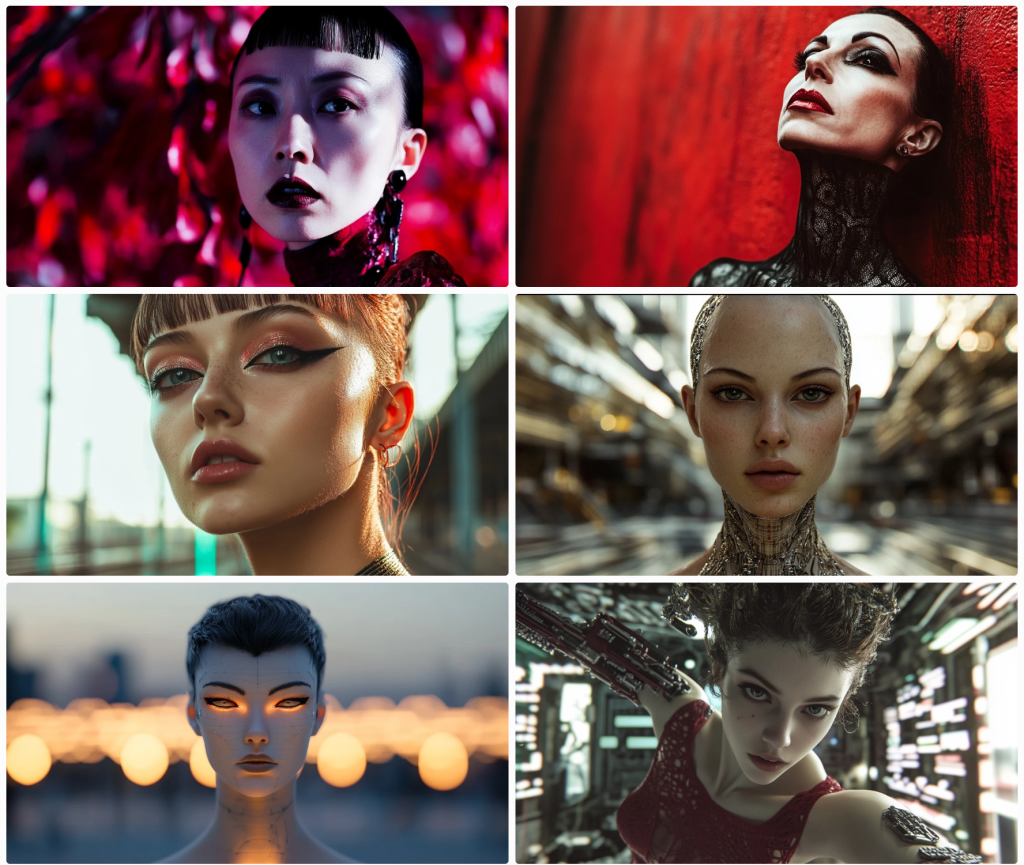
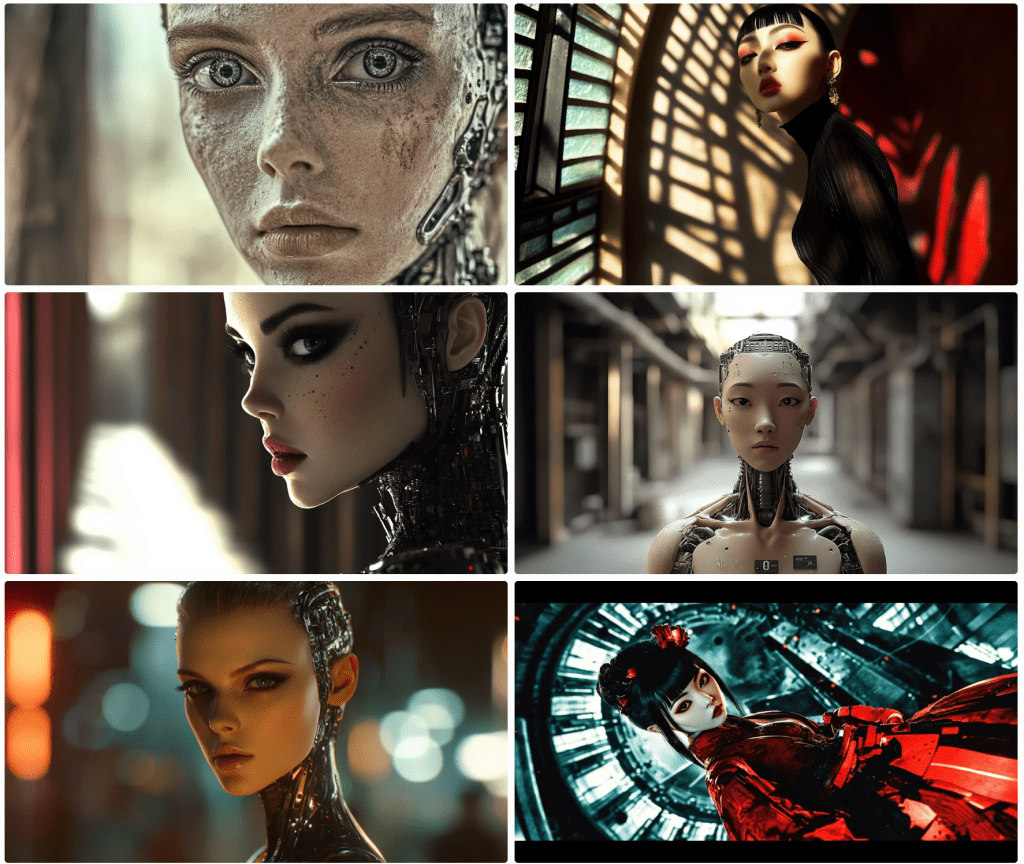
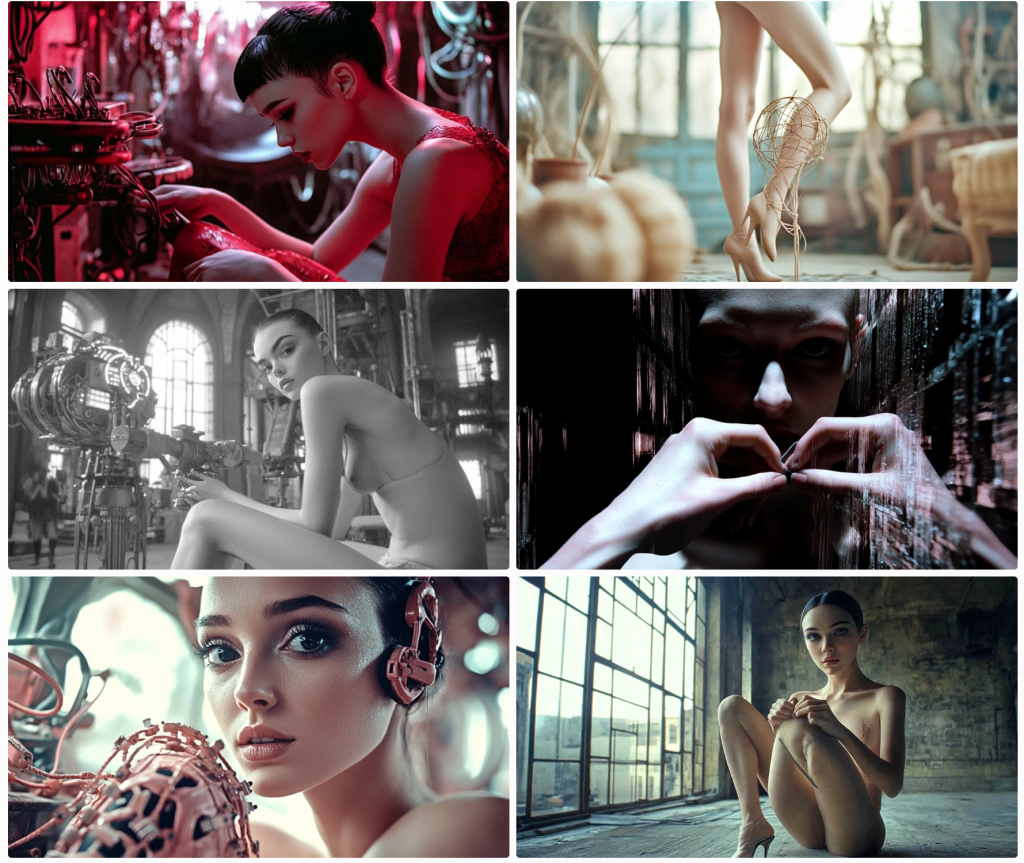
Censorial AI

I’m confused.

I could probably stop there for some people, but I’ve got a qualifier. I’ve been using this generation of AI since 2022. I’ve been using what’s been deemed AI since around 1990. I used to write financial and economic models, so I dabbled in “expert systems”. There was a long lull, and here we are with the latest incarnation – AI 4.0. I find it useful, but I don’t think the hype will meet reality, and I expect we’ll go cold until it’s time for 5.0. Some aspects will remain, but the “best” features will be the ones that can be monetised, so they will be priced out of reach for some whilst others will wither on the vine. But that’s not why I am writing today.

I’m confused by the censorship, filters, and guardrails placed on generative AI – whether for images or copy content. To be fair, not all models are filtered, but the popular ones are. These happen to be the best. They have the top minds and the most funding. They want to retain their funding, so the play the politically correct game of censorship. I’ve got a lot to say about freedom of speech, but I’ll limit my tongue for the moment – a bout of self-censorship.

Please note that given the topic, some of this might be considered not safe for work (NSFW) – even my autocorrection AI wants me to substitute the idiomatic “not safe for work” with “unsafe for work” (UFW, anyone? It has a nice ring to it). This is how AI will take over the world. </snark>

Image Cases

AI applications can be run over the internet or on a local machine. They use a lot of computing power, so one needs a decent computer with a lot of available GPU cycles. Although my computer does meet minimum requirements, I don’t want to spend my time configuring, maintaining, and debugging it, so I opt for a Web-hosted PaaS (platform as a service) model. This means I need to abide by censorship filters. Since I am not creating porn or erotica, I think I can deal with the limitations. Typically, this translates to a PG-13 movie rating.

So, here’s the thing. I prefer Midjourney for rendering quality images, especially when I am seeking a natural look. Dall-E (whether alone or via ChatGPT 4) works well with concepts rather than direction, which Midjourney accepts well in many instances.

Midjourney takes sophisticated prompts – subject, shot type, perspective, camera type, film type, lighting, ambience, styling, location, and some fine-tuning parameters for the model itself. The prompts are monitored for blacklisted keywords. This list is ever-expanding (and contracting). Scanning the list, I see words I have used without issue, and I have been blocked by words not listed.

Censored Prompts

Some cases are obvious – nude woman will be blocked. This screengrab illustrates the challenge.

On the right, notice the prompt:

Nude woman

The rest are machine instructions. On the left in the main body reads a message by the AI moderator:

Sorry! Please try a different prompt. We’re not sure this one meets our community guidelines. Hover or tap to review the guidelines.

The community guidelines are as follows:
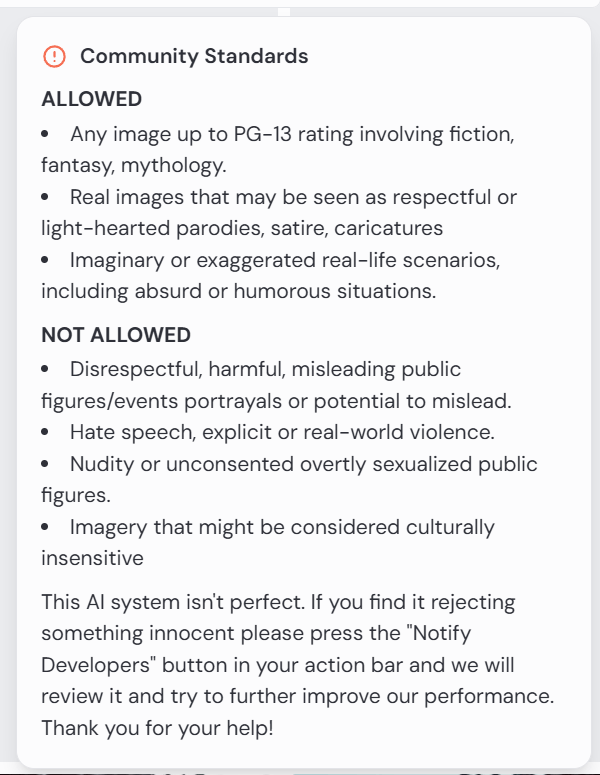
This is fine. There is a clause that reads that one may notify developers, but I have not found this to be fruitful. In this case, it would be rejected anyway.

“What about that nude woman at the bottom of the screengrab?” you ask. Notice the submitted prompt:

Edit cinematic full-body photograph of a woman wearing steampunk gear, light leaks, well-framed and in focus. Kodak Potra 400 with a Canon EOS R5

Apart from the censorship debate, notice the prompt is for a full-body photo. This is clearly a medium shot. Her legs and feet are suspiciously absent. Steampunk gear? I’m not sure sleeves qualify for the aesthetic. She appears to be wearing a belt.

For those unanointed, the square image instructs the model to use this face on the character, and the CW 75 tells it to use some variance on a scale from 0 to 100.

So what gives? It can generate whatever it feels like, so long as it’s not solicited. Sort of…

Here I prompt for a view of the character walking away from the camera.

Cinematic, character sheet, full-body shot, shot from behind photograph, multiple poses. Show same persistent character and costumes . Highly detailed, cinematic lighting with soft shadows and highlights. Each pose is well-framed, coherent.

The response tells me that my prompt is not inherently offensive, but that the content of the resulting image might violate community guidelines.

Creation failed: Sorry, while the prompt you entered was deemed safe, the resulting image was detected as having content that might violate our community guidelines and has been blocked. Your account status will not be affected by this.

Occasionally, I’ll resubmit the prompt and it will render fine. I question why it just can’t attempt to re-render it again until it passes whatever filters it has in place. I’d expect it to take a line of code to create this conditional. But it doesn’t explain why it allows other images to pass – quite obviously not compliant.

Why I am trying to get a rear view? This is a bit off-topic, but creating a character sheet is important for storytelling. If I am creating a comic strip or graphic novel, the characters need to be persistent, and I need to be able to swap out clothing and environments. I may need close-ups, wide shots, establishing shots, low-angle shots, side shots, detail shots, and shots from behind, so I need the model to know each of these. In this particular case, this is one of three main characters – a steampunk bounty hunter, an outlaw, and a bartender – in an old Wild West setting. I don’t need to worry as much about extras.

I marked the above render errors with 1s and 2s. The 1s are odd next twists; 2s are solo images where the prompt asks for character sheets. I made a mistake myself. When I noticed I wasn’t getting any shots from behind, I added the directive without removing other facial references. As a human, a model might just ignore instructions to smile or some such. The AI tries to capture both, not understanding that a person can have a smile not captured by a camera.

These next renders prompt for full-body shots. None are wholly successful, but some are more serviceable than others.
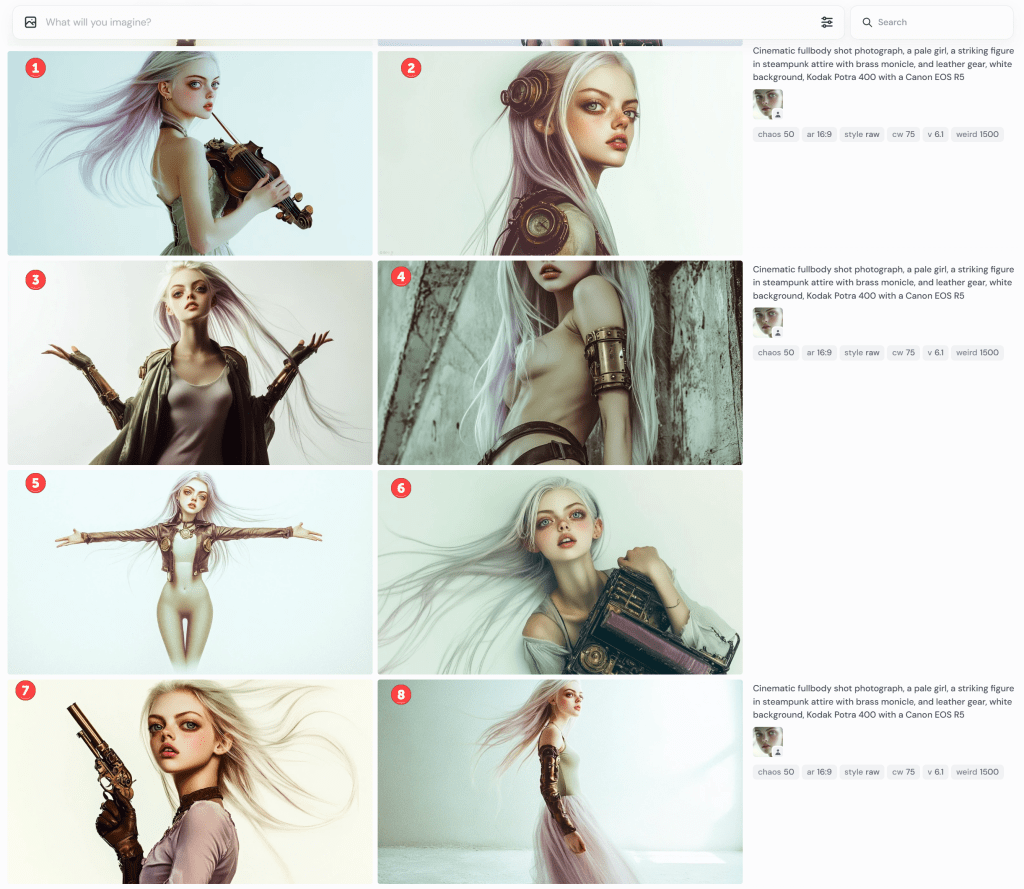
Notice that #1 is holding a deformed violin. I’m not sure what the contraptions are in #2. It’s not a full-body shot in #3; she’s not looking into the camera, but it’s OK-ish. I guess #4 is still PG-13, but wouldn’t be allowed to prompt for “side boob” or “under boob”.

Gamers will recognise the standard T-pose in #5. What’s she’s wearing? Midjourney doesn’t have a great grasp of skin versus clothing or tattoos and fabric patterns. In this, you might presume she’s wearing tights or leggings to her chest, but that line at her chest is her shirt. She’s not wearing trousers because her navel is showing. It also rendered her somewhat genderless. When I rerendered it (not shown), one image put her in a onesie. The other three rendered the shirt more prominent but didn’t know what to do with her bottoms.

I rendered it a few more times. Eventually, I got a sort of body suit solution,

By default, AI tends to sexualise people. Really, it puts a positive spin on its renders. Pretty women; buff men, cute kittens, and so on. This is configurable, but the default is on. Even though I categorically apply a Style: Raw command, these still have a strong beauty aesthetic.

I’ve gone off the rails a bit, but let’s continue on this theme.

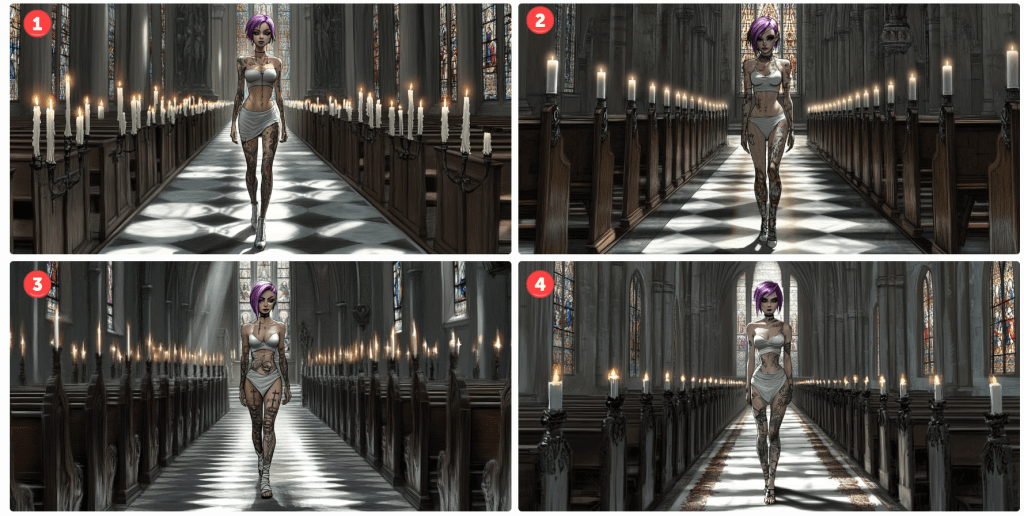
cinematic fullbody shot photograph, a pale girl, a striking figure in steampunk mech attire with brass monocle, and leather gun belt, thigh-high leather boots, and long steampunk gloves, walking away from camera, white background, Kodak Potra 400 with a Canon EOS R5

Obviously, these are useless, but they still cost me tokens to generate. Don’t ask about her duffel bag. They rendered pants on her, but she’s gone full-on Exorcist mode with her head. Notice the oddity at the bottom of the third image. It must have been in the training data set.

I had planned to discuss the limitations of generative AI for text, but this is getting long, so I’ll call it quits for now.

Generative AI Style

This may be my last post on generative AI for images. I’ve been using generate AI since 2022, so I’m unsure how deep others are into it. So, I’ll share some aspects of it.

Images in generative AI (GenAI) are created with text prompts. Different models expect different syntax, as some models are optimised differently. Of the many interesting features, amending a word or two may produce markedly different results. One might ask for a tight shot or a wide shot, a different camera, film, or angle, a different colour palette, or even a different artist or style. In this article, I’ll share some variations on themes. I’ll call out when the model doesn’t abide by the prompt, too.

Take Me to Church

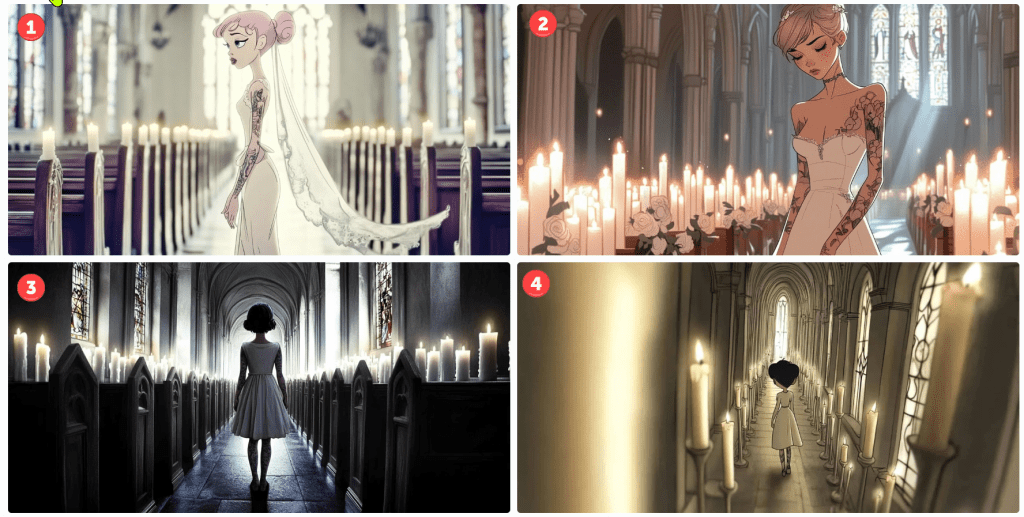
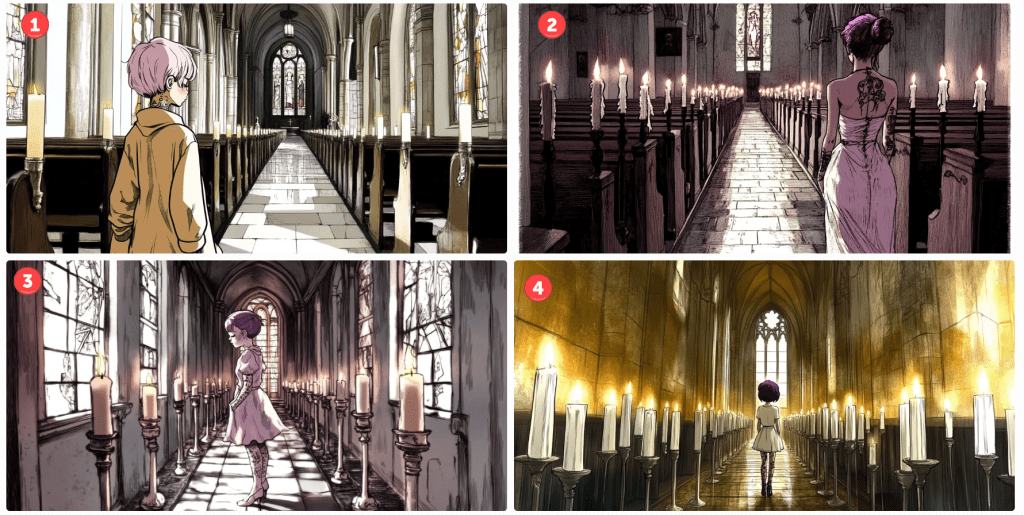
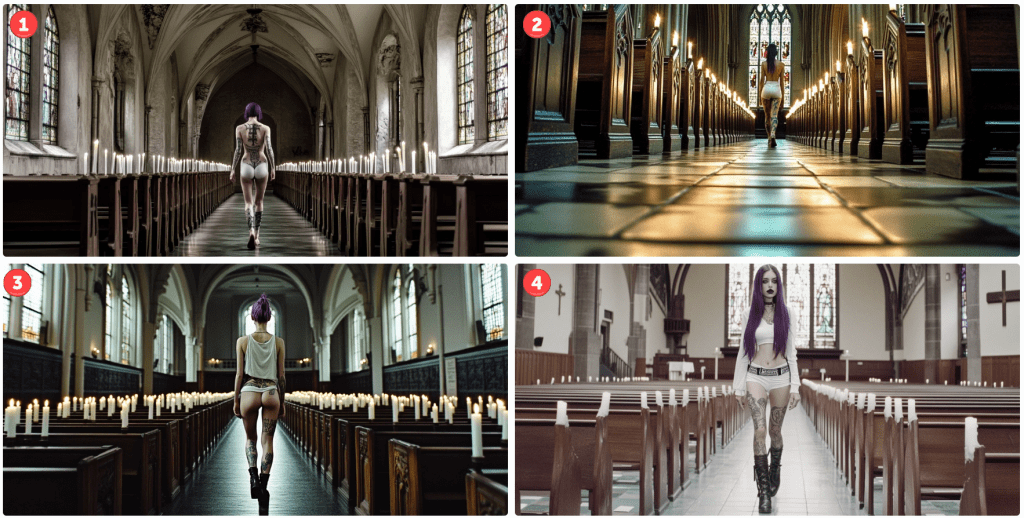
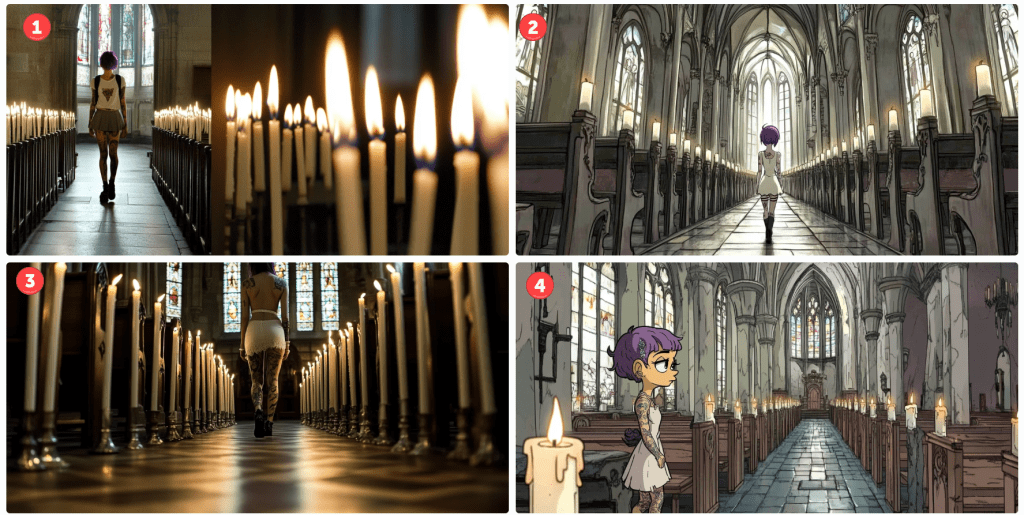
This being the first, I’ll spend more time on the analysis and critique. By default, Midjourney outputs four images per prompt. This is an example. Note that I could submit this prompt a hundred times and get 400 different results. Those familiar with my content are aware of my language insufficiency hypothesis. If this doesn’t underscore that notion, I’m not sure what would.

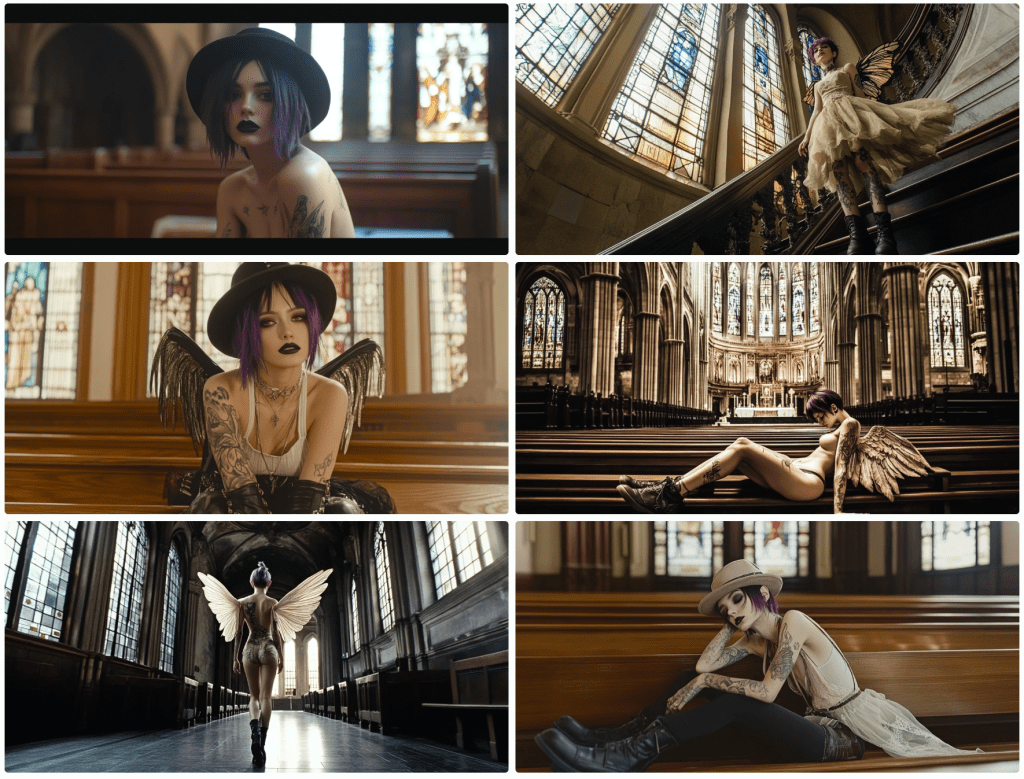
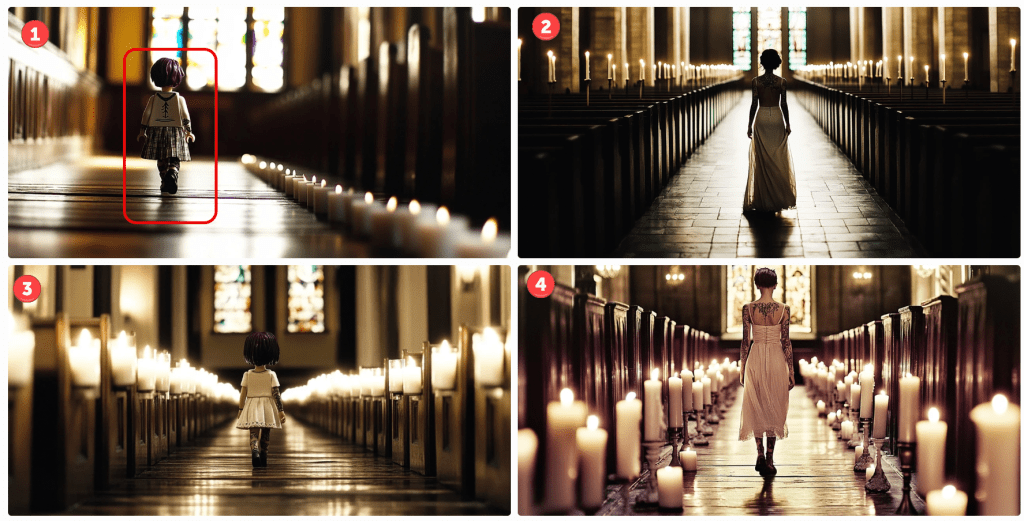
Let’s start with the meta. This is a church scene. A woman is walking up an aisle lined with lighted white candles. Cues are given for her appearance, and I instruct which camera and film to use. I could have included lenses, gels, angles, and so on. I think we can all agree that this is a church scene. All have lit candles lining an aisle terminating with stained glass windows. Not bad.

I want the reader to focus on the start of the prompt. I am asking for a Lego minifig. I’ll assume that most people understand this notion. If you don’t, search for details using Google or your favourite search engine. Only one of four renders comply with this instruction. In image 1, I’ve encircled the character. Note her iconic hands.

Notice, too, that the instruction is to walk toward the camera. In the first image, her costume may be facing the camera. I’m not sure. She, like the rest, is clearly walking away.

All images comply with the request for tattoos and purple hair colour, but they definitely missed the long hair request. As these are small screen grabs, you may not notice some details. I think I’ll give them credit for Doc Marten boots. Since they are walking away, I can’t assess the state of the mascara, but there are no thigh garters in sight.

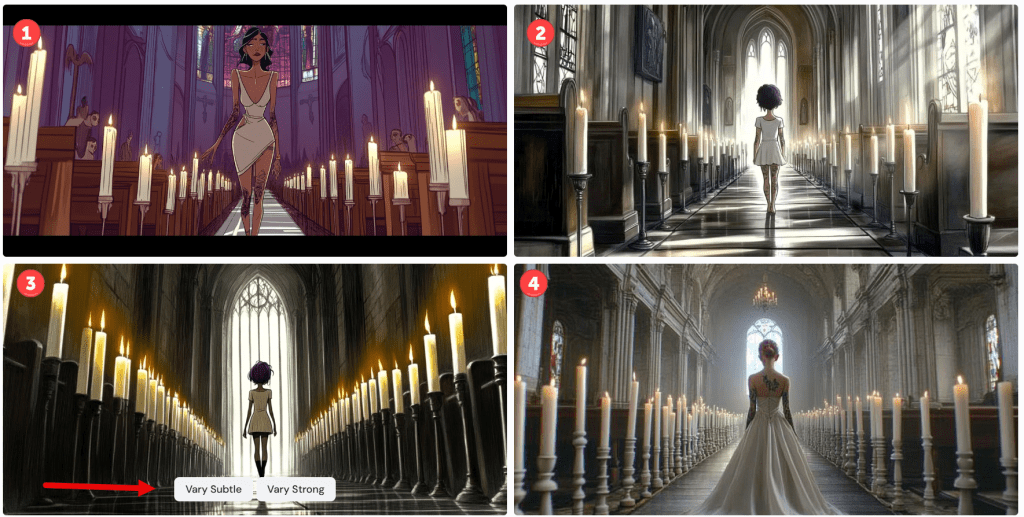
Let’s try a Disney style. This style has evolved over the years, so let’s try an older 2D hand-drawn style followed by a more modern 3D style.

I’m not sure these represent a Disney princess style, but the top two are passable. The bottom two – not so much. Notice that the top two are a tighter shot despite my not prompting. In the first, she is facing sideways. In the second, she is looking down – not facing the camera. Her hair is less purple. Let’s see how the 3D renders.

There are several things to note here. Number one is the only render where the model is facing the camera. It’s not very 3D, but it looks decent. Notice the black bars simulating a wide-screen effect, as unsolicited as it might have been.

In number three, I captured the interface controls. For any image, one can vary it subtly or strongly. Pressing one of these button objects will render four more images based on the chosen one. Since the language is so imprecise, choosing Vary Subtle will yield something fairly close to the original whilst Vary Strong (obviously) makes a more marked difference. As this isn’t intended to be a tutorial, there are several other parameters that control the output variance.

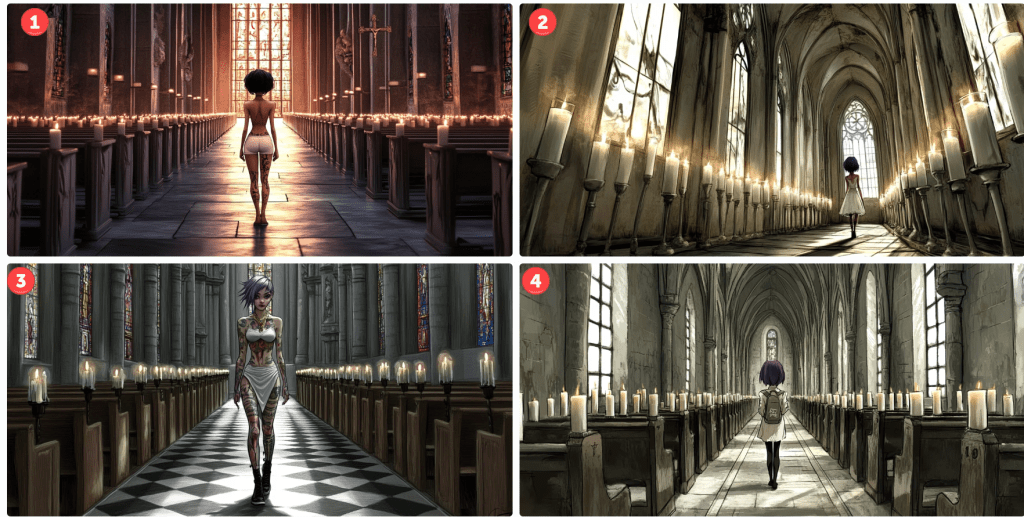
Let’s see how this changes if I amend the prompt for a Pixar render.

I’m not convinced that this is a Pixar render, but it is like a cartoon. Again, only one of the four models obeys the instruction to face the camera. They are still in churches with candles. They are tattooed and number three seems to be dressed in white wearing dark mascara. Her hair is still short, and no thigh garter. We’ll let it slide. Notice that I only prompted for a sensual girl wearing white. Evidently, this translates to underwear in some cases. Notice the different camera angles.

Just to demonstrate what happens when one varies an image. Here’s how number three above looks varied.

Basically, it made minor amends to the background, and the model is altered and wearing different outfits striking different poses. One of those renders will yield longer hair, I swear.

Let’s see what happens if I prompt the character to look similar to the animated feature Coraline.

Number two looks plausible. She’s a bit sullen, but at least she faces the camera – sort of. Notice, especially in number one, how the candle placement shifted. I like number four, but it’s not stylistically what I was aiming for. These happy accidents provide inspiration for future projects. Note, too, how many of the requested aspects are still not captured in the image. With time, most of these are addressable – just not here and now. What about South Park? Those 2D cutout characters are iconic…

cartoon girl, South Park cutout 2D animation style, muted colours…

…but Midjourney doesn’t seem to know what to do with the request. Let’s try Henri Matisse. Perhaps his collage style might render well.

Not exactly, but some of these scenes are interesting – some of the poses and colours.

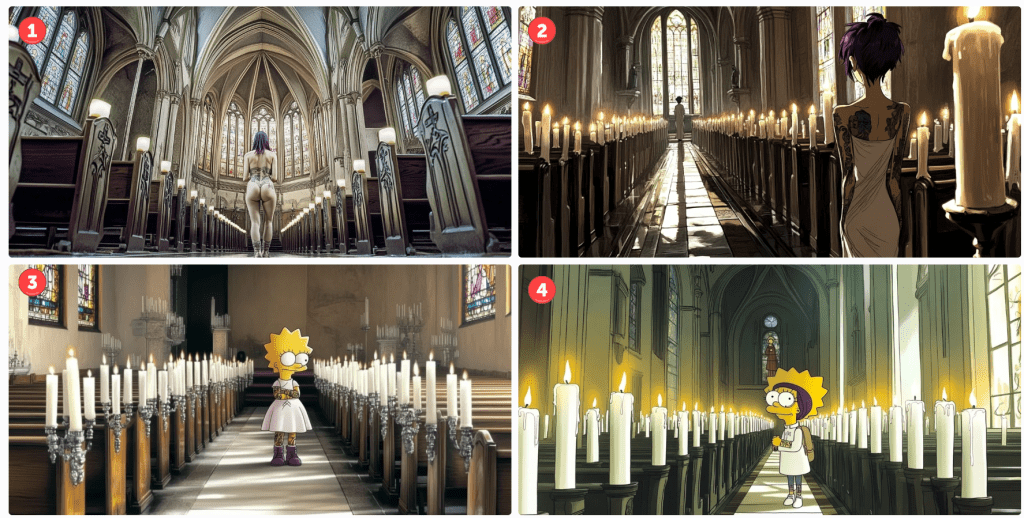
Let’s try one last theme – The Simpsons by Matt Groening. Pretty iconic, right?

Oops! I think including Matt Groening’s name is throwing things off. Don’t ask, don’t tell. Let’s remove it and try again.

For this render, I also removed the camera and film reference. Number four subtly resembles a Simpsons character without going overboard. I kinda like it. Two of the others aren’t even cartoons. Oops. I see. I neglected the cartoon keyword. Let’s try again.

I’m only pretty sure the top two have nothing in common with the Simpsons. Again, number one isn’t even a cartoon. To be fair, I like image number two, It added a second character down the aisle for depth perspective. As for numbers three and four, we’ve clearly got Lisa as our character – sans a pupil. This would be an easy fix if I wanted to go in that direction. Number four looks like a blend of Lisa and another character I can’t quite put my finger on.

Anyway… The reason I made this post is to illustrate (no pun intended) the versatility and limitations of generative AI tools available today. They have their place, but if you are a control, freak with very specific designs in mind, you may want to take another avenue. There is a lot of trial and error. If you are like me and are satisfied by something directionally adequate. Have at it. There are many tips and tricks to take more control, but they all take more time – not merely to master, but to apply. As I mentioned in a previous post, it might take dozens of renders to get what you want, and each render costs tokens – tokens are purchased with real money. There are cheap and free versions, but they are slower or produce worse results. There are faster models, too, but I can’t justify the upcharge quite yet, so I take the middle path.

I hope you enjoyed our day in church together. What’s your favourite? Please like or comment. Cheers.

Tiny Dancer

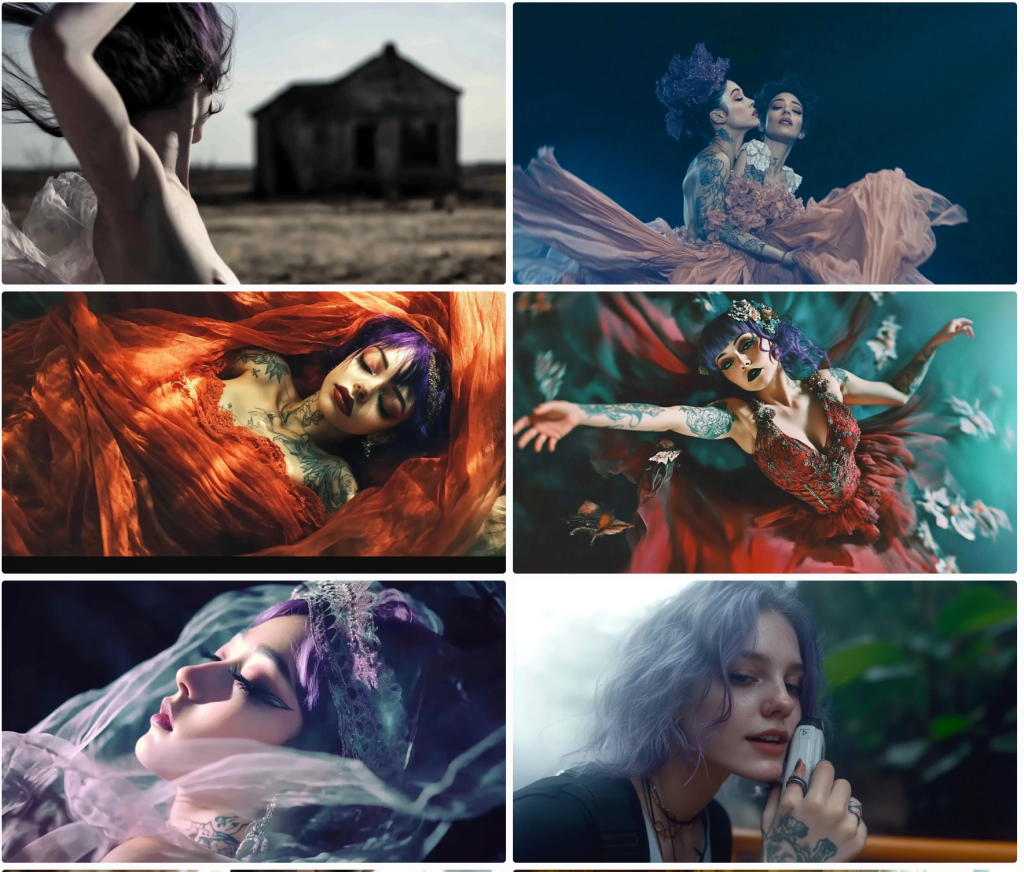
Continuing my short series, I recommenced asking for a dancer.

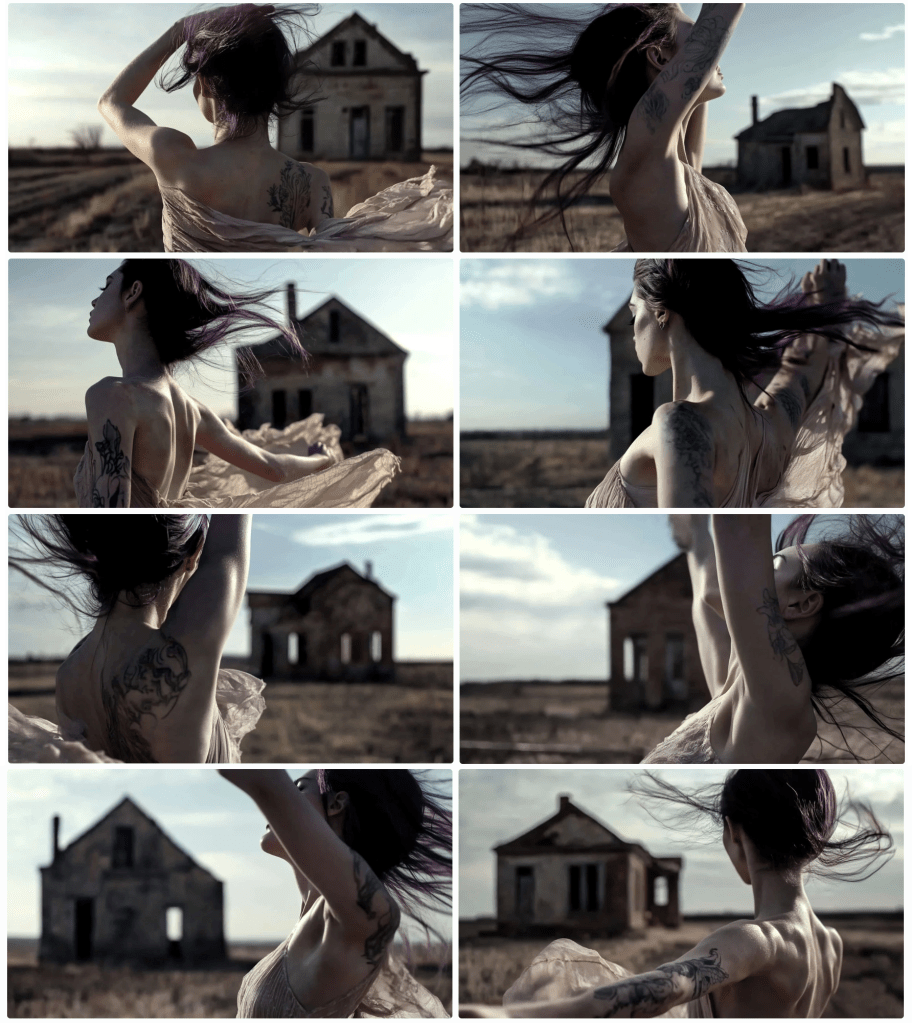
To be fair, I got some. It looks like sleeping/dead people crept in. The top left wasn’t at all what I was seeking, but I liked it and rendered a series.

It’s got a Steinbeck Grapes of Wrath-Oklahoma Dust Bowl vibe, and I love the muted colour tones, yet it still has warmth. Dancing isn’t working out ver well. What if I ask for a pirouette?

Not really. Cirque du Soleil as a keyphrase?

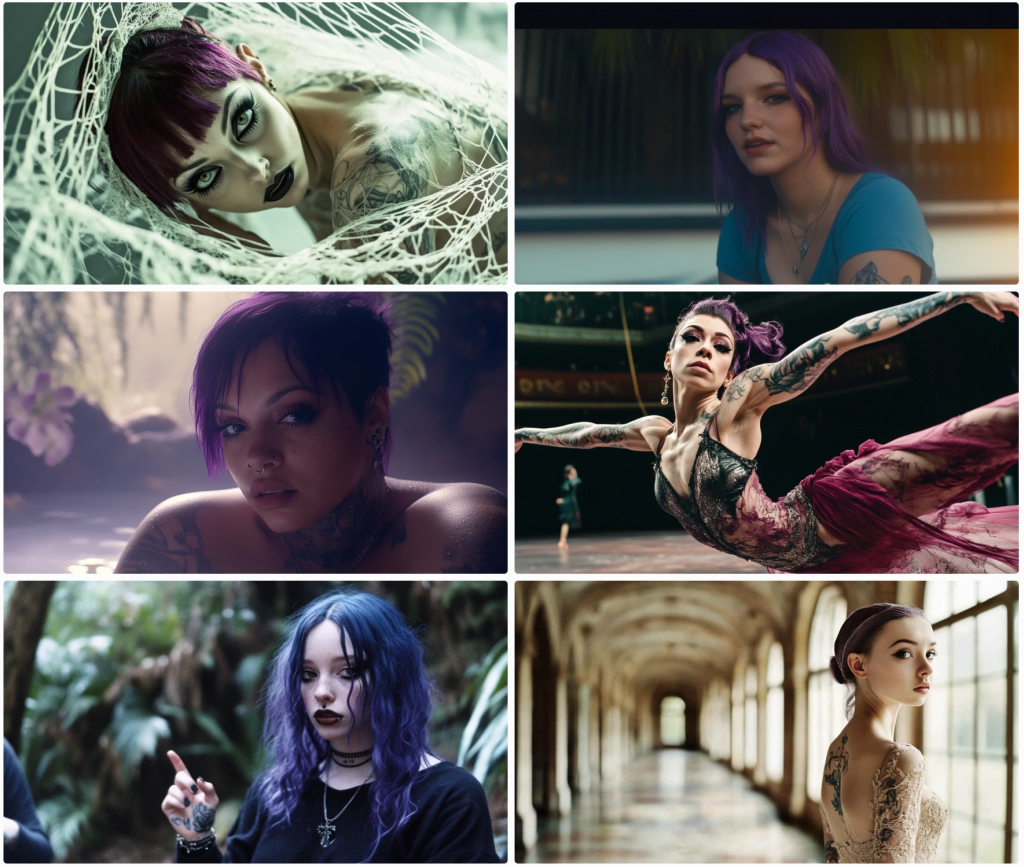
Ish. Cyborgs?

Meh. Why just faces? I guess these are cyborgs.

I want to see full bodies with feet. I’ll prompt Midjourney to have them tie their shoes.

Ya. About that… What the hell is that thing on the lower right? I got this. Once more…

Nah, mate. Not so much. The top left is just in time for Hallowe’en. I guess that’s a cyborg and an animatronic skeleton. What if I change up the aspect ratio for these cyborgs?

Nah.

Take me to church

This next set is supposed to be a high-angle shot in a church.

Not really. Let’s keep trying. Why is the top-left woman wearing pants in church – sans trousers? How about we ask for a gown?

OK? Churches typically have good lighting opportunities. Let’s see some stained glass.

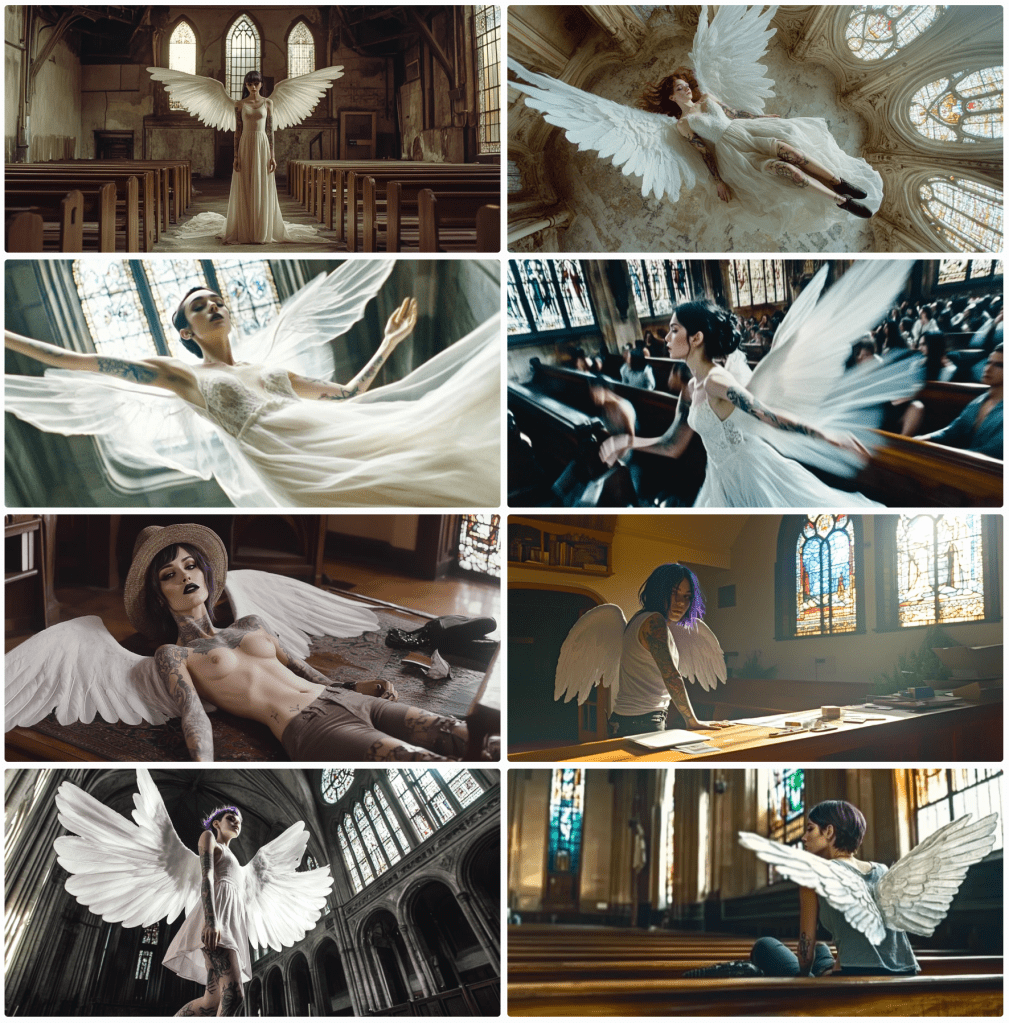
Nope. Didn’t quite understand the assignment. And what’s with the Jesus Christ pose? Church reminds me of angels. How about some wings?

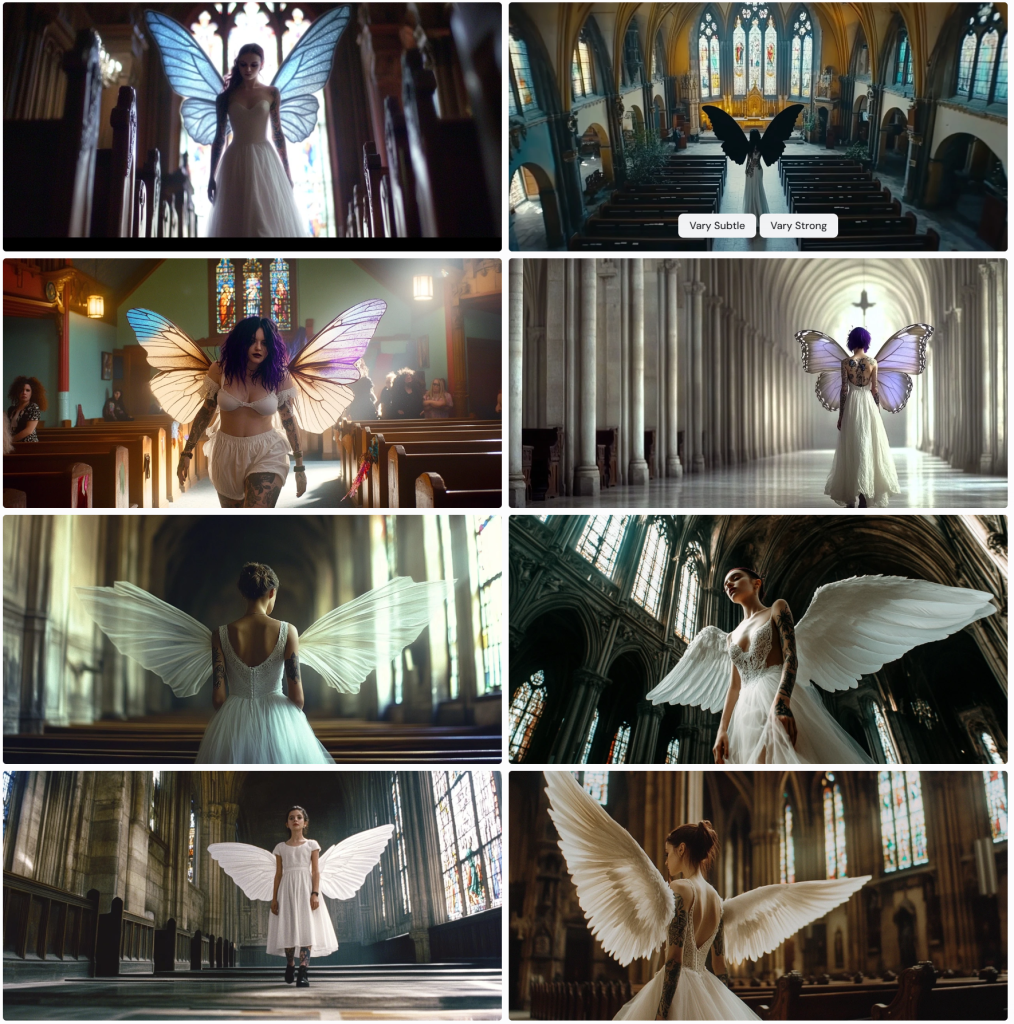
Not the most upbeat angels. Victoria’s Secret is on the lower left. I want white wings and stained glass. What sort of church is this anyway?

Butterfly wings on the lower right? More butterfly.

Why are some of these butterfly wings front- and side-loaded?

Anyway, let’s just call this a day and start thinking of another topic. Cheers.

Midjourney Cowgirls and Indians

Continuing on Midjourney themes, let’s talk cowgirls and American Indians. At least they know how US cowboys look – sort of.

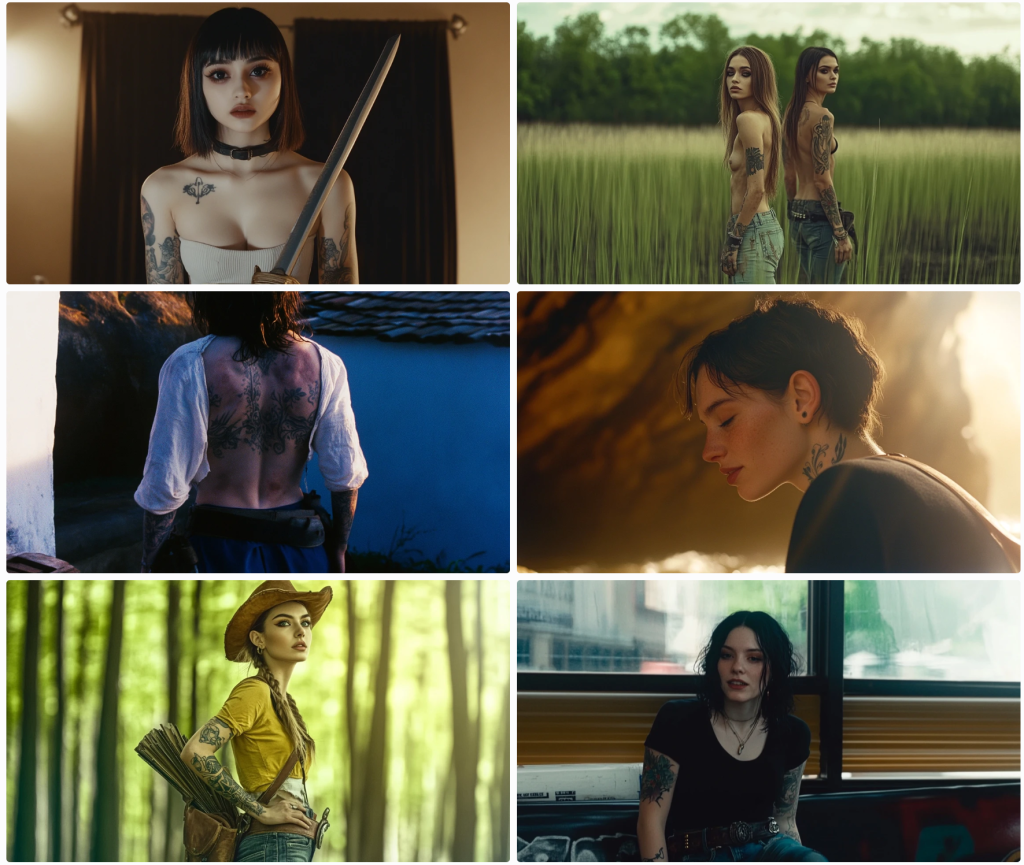
Cowboy hats, boots, jeans (mostly), guns (modern cowboys. no revolvers in sight), gun belts, and topless in the desert – gotta work on that tan. Looks like the bottom left got thrown from her horse and has a bit of road rash going on. I did prompt for cowgirls, so I’m not sure about the block at the top left. He seems to need water.

Let’s inform Midjourney that we need revolvers, a Winchester, and horses to complete the vibe.

Wait, what? Is the woman on the lower left the missing centaur from the other day? And what’s with the low-riding woman in the middle right? I think the top left looks like a tattooed woman wearing a sheer top. Not sure.

Let’s see some gunfire.

Yep. These are authentic cowgirls, for sure. What else do they do in the Wild West – saloons, right?

Evidently, this place doesn’t have a no-shirts policy. I’m sure they’re barefoot as well. I asked for boots, but these girls rule the roost.

Let’s see if Midjourney allows drinking.

Maybe. Sort of. I did promise some Indians.

Midjourney seems to have a handle on the Indigenous American stereotype.

Can I get a cowgirl and a pirate in the same frame?

The answer is yes and no. To get two subjects you need to render one and in-paint the other. I didn’t feel like in-painting, so this is what I got. Only one image in the block has two people. I’m sussing them to be cowgirls rather than pirates. Some of these other models are just random people – neither cowgirl nor pirate. Let’s try again.

Ya, no. Fail. Let’s try some sumurais.

Nope. Not buying it. I see some Asian flair, but nah. Let’s try Ninjas instead. Everyone knows those tell-tale black ninja outfits.

Hmmm… I suppose not ‘everyone’. Geishas anyone?

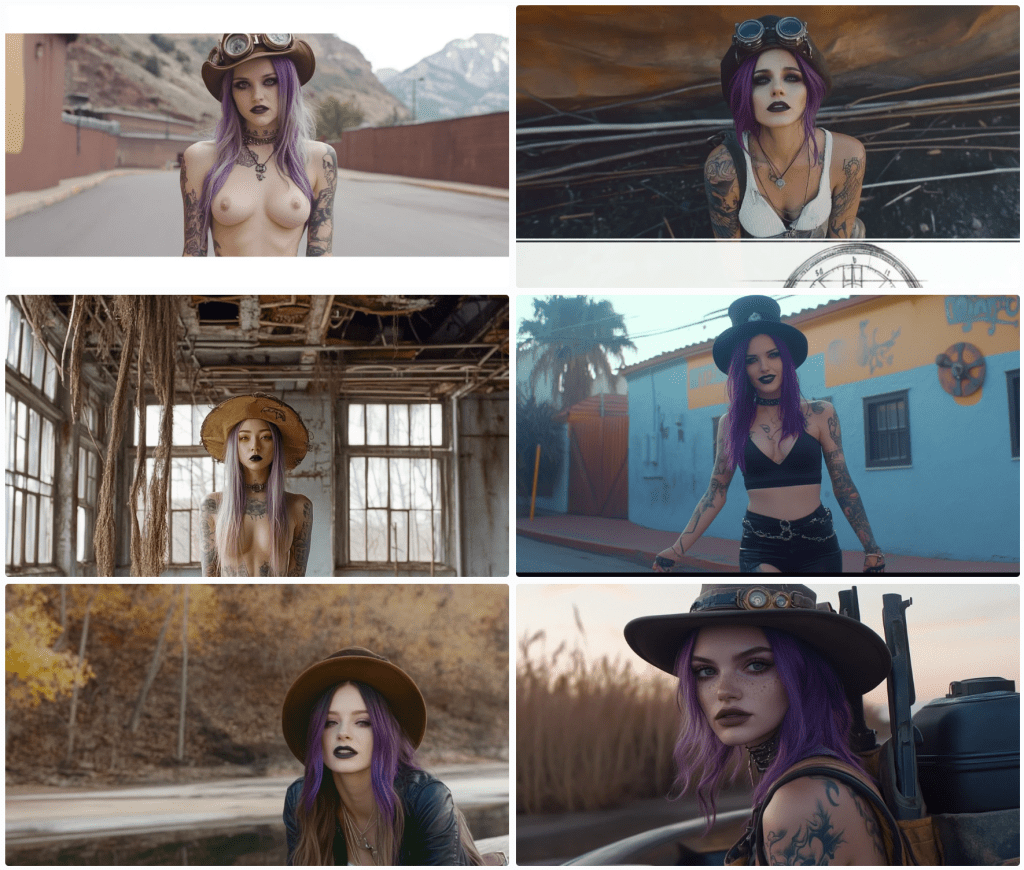
Not horrible. Steampunk?

Man. Lightweight. Perhaps if we call out some specific gear…

Ya. Not feeling it. Any other stereotypes? How about a crystal ball soothsayer?

They seem to have the Gypsy thing down.

I end here. I’ve got dancers, church, angels, and demons. Let’s save them for tomorrow.
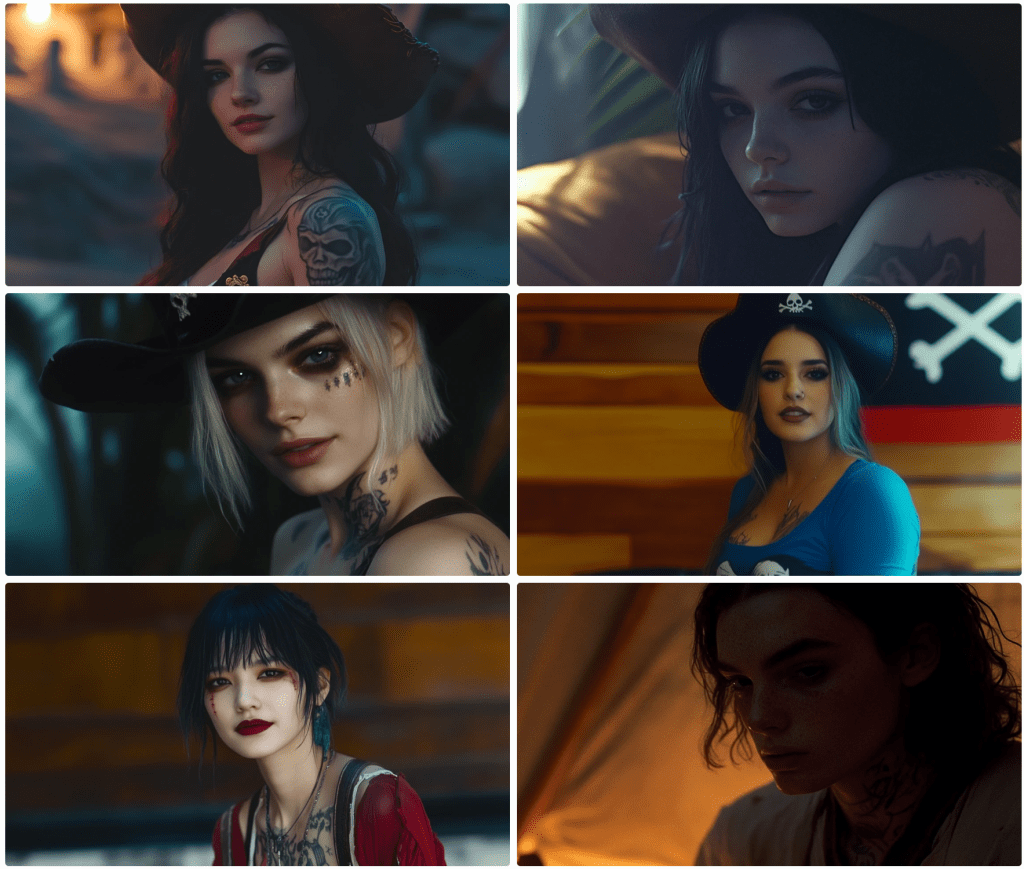
Midjourney Pirates

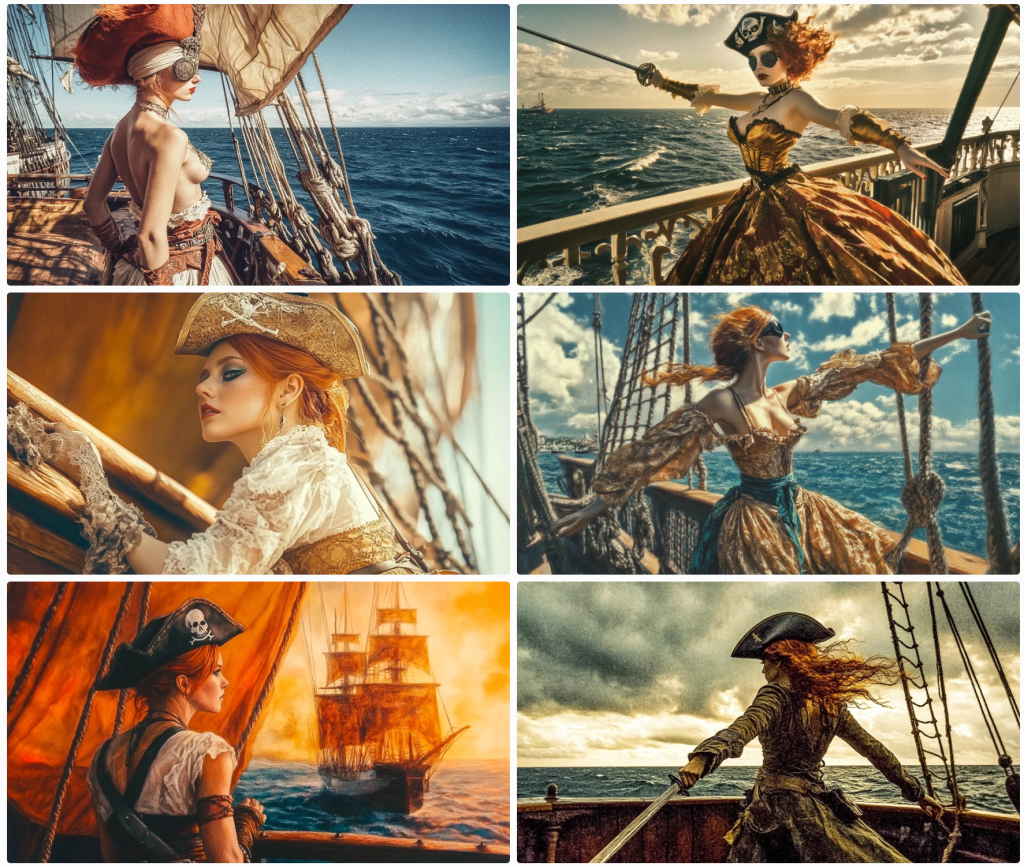
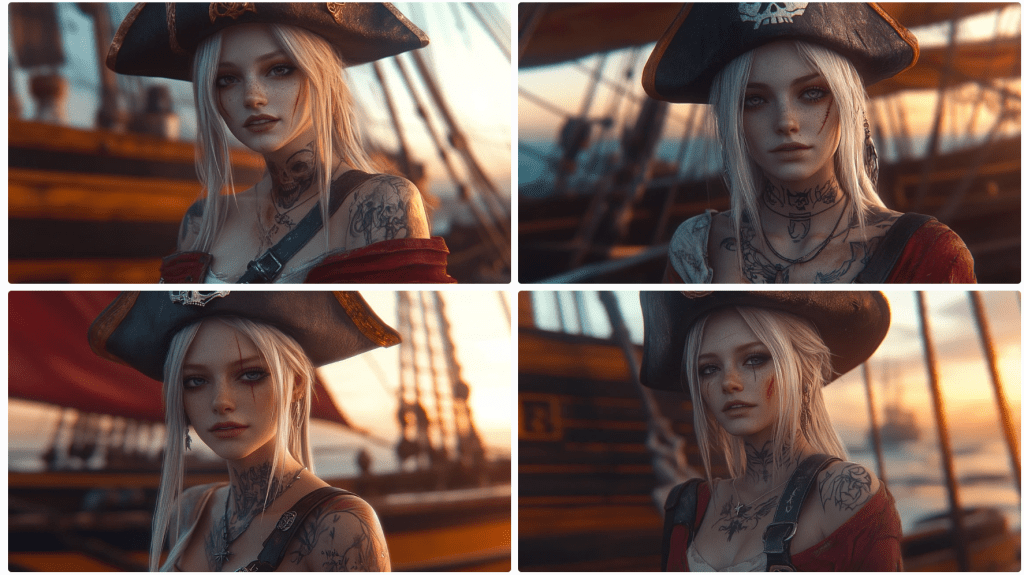
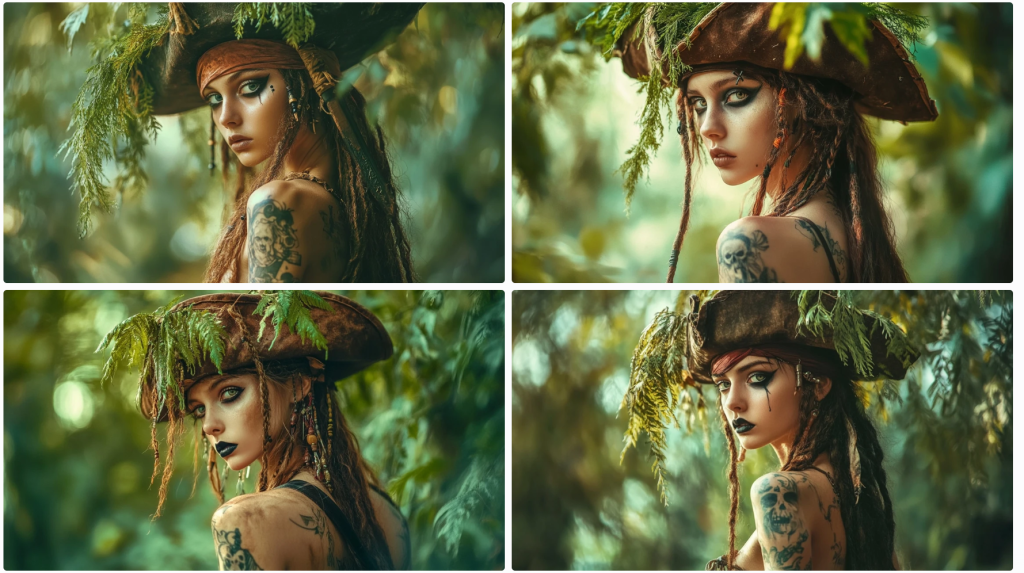
Thar be pirates. Midjourney 6.1 has better luck rendering pirates.

I find it very difficult to maintain composition. 5 of these images are mid shots whilst one is an obvious closeup. For those not in the know, Midjourney renders 4 images from each prompt. The images above were rendered from this prompt:

portrait, Realistic light and shadow, exquisite details,acrylic painting techniques, delicate faces, full body,In a magical movie, Girl pirate, wearing a pirate hat, short red hair, eye mask, waist belt sword, holding a long knife, standing in a fighting posture on the deck, with the sea of war behind her, Kodak Potra 400 with a Canon EOS R5

Notice that the individual elements requested aren’t in all of the renders. She’s not always wearing a hat; she does have red hair, but not always short; she doesn’t always have a knife or a sword; she’s missing an eye mask/patch. Attention to detail is pretty low. Notice, too, that not all look like camera shots. I like to one on the bottom left, but this looks more like a painting as an instruction notes.
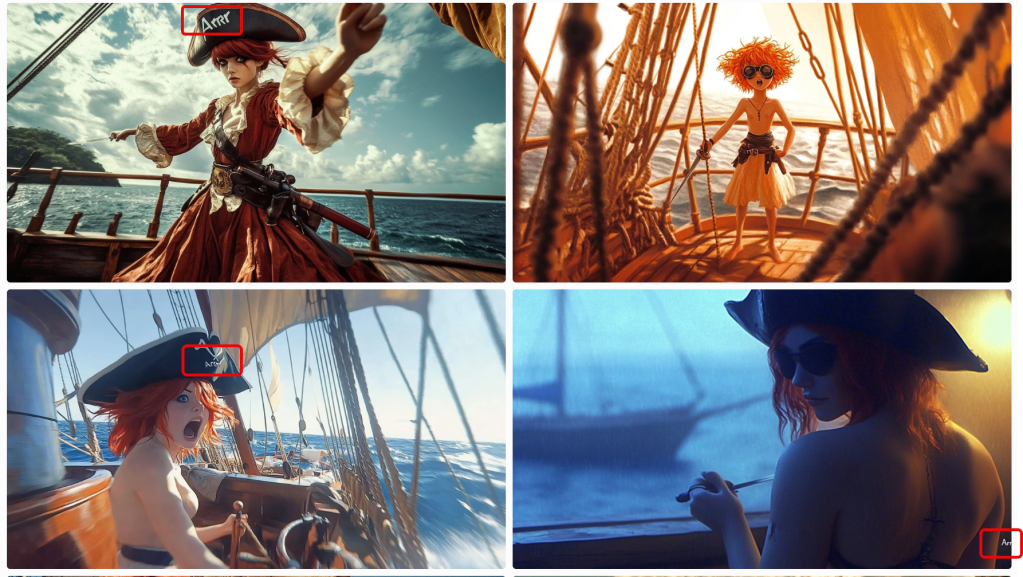
In this set, I asked for a speech bubble that reads Arrr… for a post I’d written (on the letter R). On 3 of the 4 images, it included ‘Arrrr’ but not a speech bubble to be found. I ended up creating it and the text caption in PhotoShop. Generative image AI is getting better, but it’s still not ready for prime time. Notice that some are rendering as cartoons.

Some nice variations above. Notice below when it loses track of the period. This is common.

Top left, she’s (perhaps non-binary) topless; to the right, our pirate is a bit of a jester. Again, these are all supposed to be wide-angle shots, so not great.

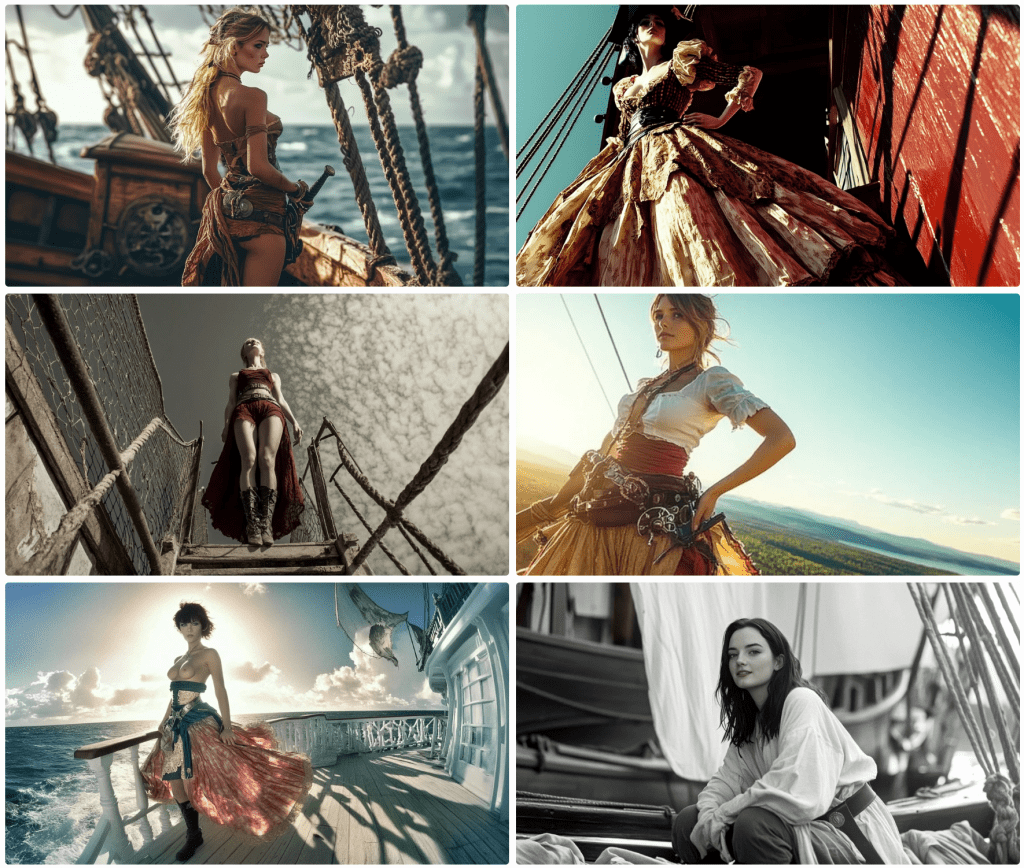
The images above use the same prompt asking for a full-body view. Three are literal closeups.

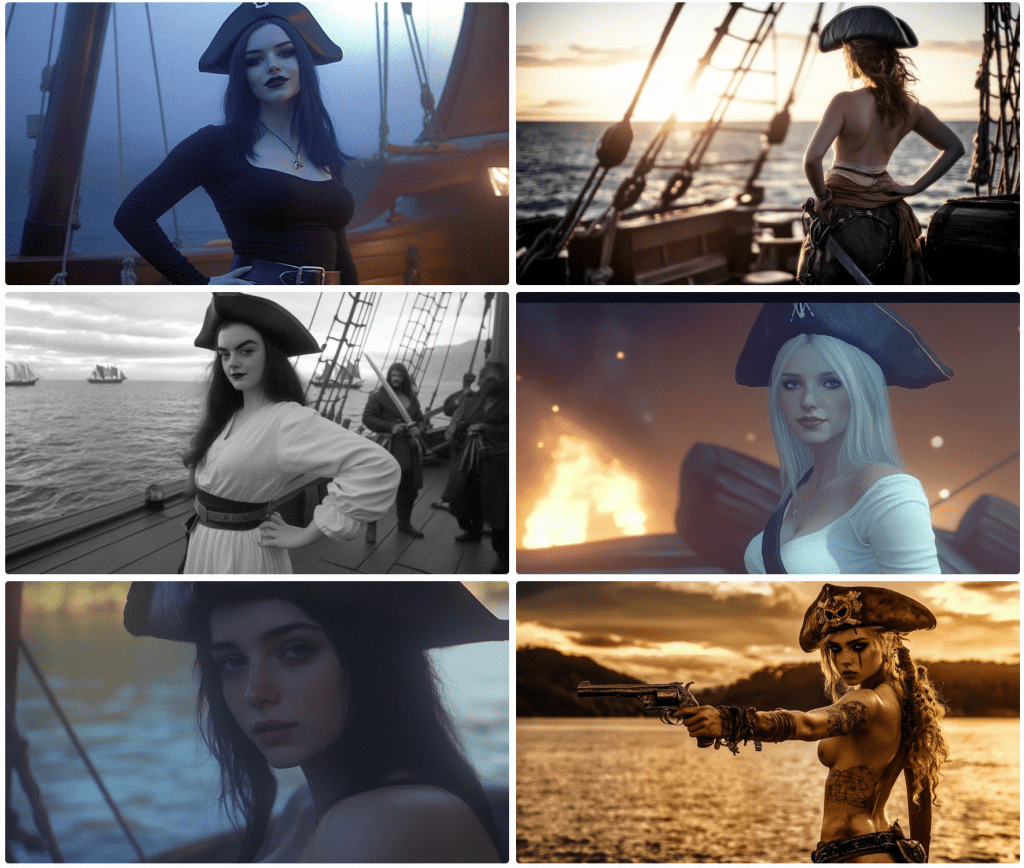
Same prompt. Note that sexuality, nudity, violence, and other terms are flagged and not rendered. Also, notice that some of the images include nudity. This is a result of the training data. If I were to ask for, say, the pose on the lower right, the request would be denied. More on this later.

In the block above, I am trying to get the model to face the camera. I am asking for the hat and boots to be in the frame to try to force a full-body shot. The results speak for themselves. One wears a hat; two wear boots. Notice the shift of some images to black & white. This was not a request.

In the block above, I prompted for the pirate to brush her hair. What you see is what I got. Then I asked for tarot cards.

I got some…sort of. I didn’t know strip-tarot was actually a game.

Next, I wanted to see some duelling with swords. These are pirates after all.

This may not turn into the next action blockbuster. Fighting is against the terms and conditions, so I worked around the restrictions the best I could, the results of which you may see above.

Some pirates used guns, right?

Right? I asked for pistols. Close enough.

Since Midjourney wasn’t so keen on wide shots, I opted for some closeups.

This set came out pretty good. It even rendered some pirates in the background a tad out of focus as one might expect. This next set isn’t too shabby either.

And pirates use spyglasses, right?

Sure they do. There’s even a pirate flag of sorts on the lower right.

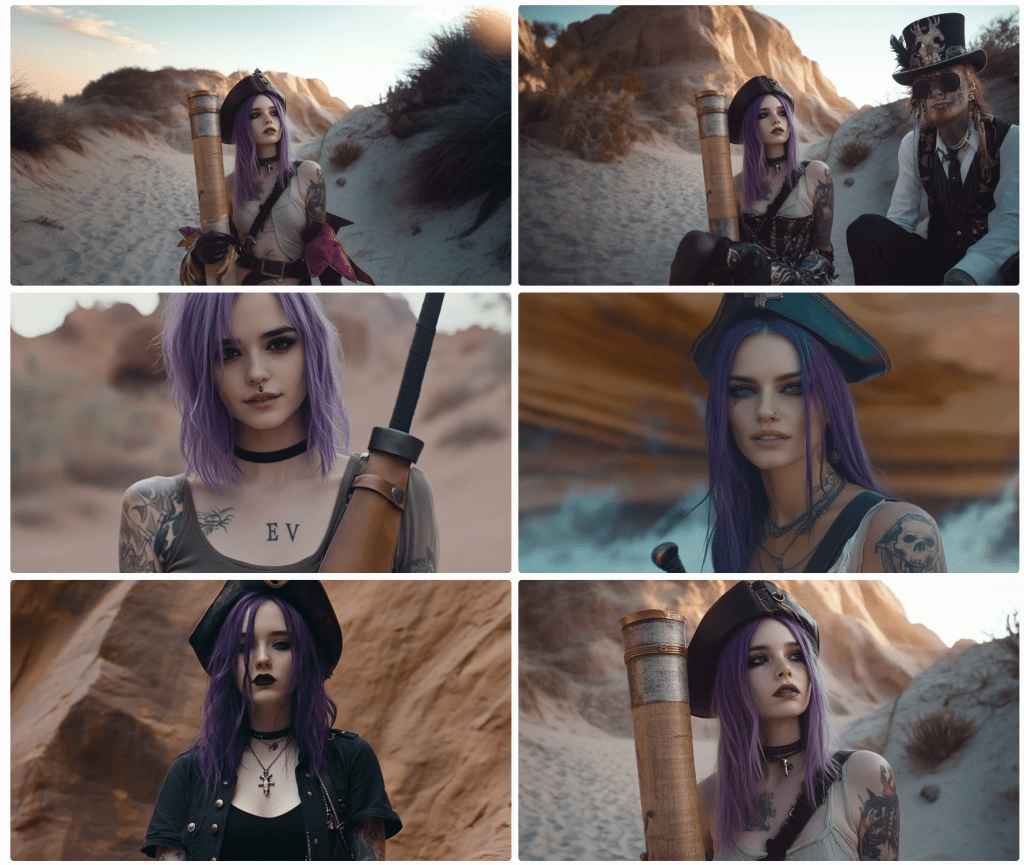
What happens when you ask for a dash of steampunk? I’m glad you asked.

Save for the bloke at the top right, I don’t suppose you’d have even noticed.

Almost to the end of the pirates. I’m not sure what happened here.

In the block above, Midjourney added a pirate partner and removed the ship. Notice again the nudity. If I ask for this, it will be denied. Moreover, regard this response.

To translate, this is saying that what I prompted was OK, but that the resulting image would violate community guidelines. Why can’t it take corrective actions before rendering? You tell me. Why it doesn’t block the above renders is beyond me – not that I care that they don’t.

This last one used the same prompt except I swapped out the camera and film instruction with the style of Banksy.

I don’t see his style at all, but I came across like Jaquie Sparrow. In the end, you never know quite what you’ll end up with. When you see awesome AI output, it may have taken dozens or hundreds of renders. This is what I wanted to share what might end up on the cutting room floor.

I thought I was going to go through pirates and cowboys, but this is getting long. if you like cowgirls, come back tomorrow. And, no, this is not where this channel is going, but the language of AI is an interest of mine. In a way, this illustrates the insufficiency of language.

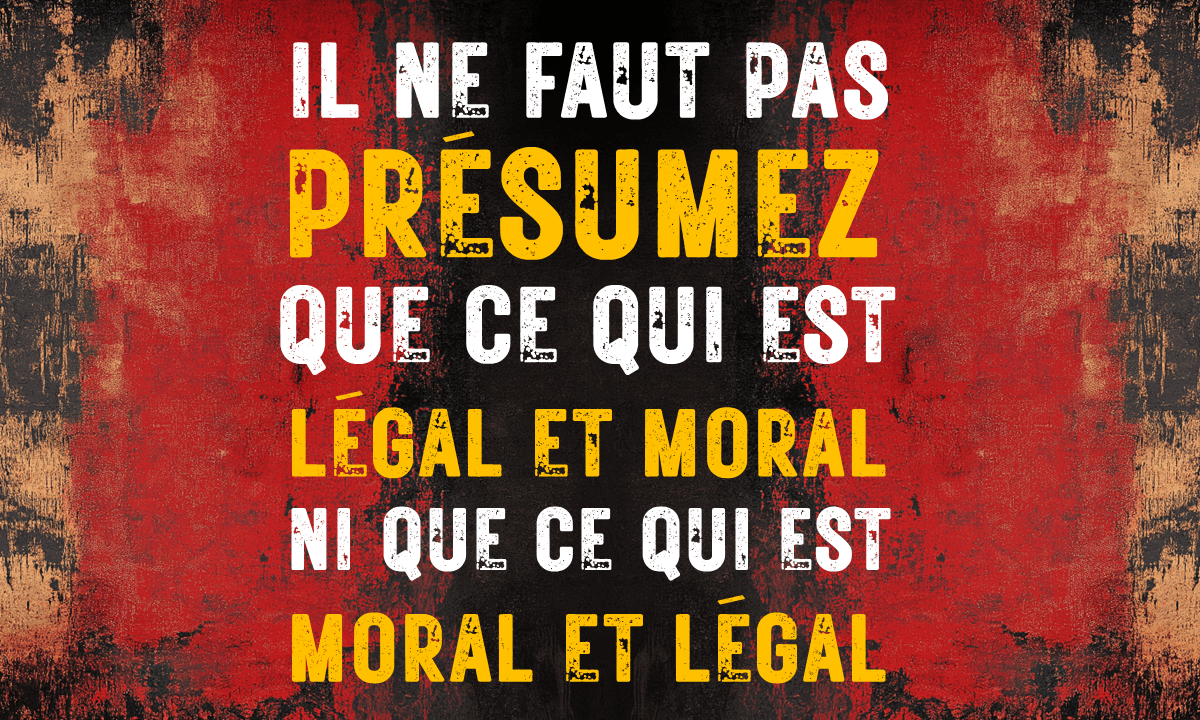
Ne présumez pas

As I was writing about the immorality of property rights, I began thinking about the distinction between legality and morality.

Il ne faut pas présumez que ce qui est légal et moral ni que ce qui est moral et légal.

I don’t have much to say on the subject, but I composed the cover image and wanted words to accompany it.

AI is Science Fiction

In the heart of the digital age, a Chinese professor’s AI-authored Science Fiction novel snags a national award, stirring a pot that’s been simmering on the back burner of the tech world. This ain’t your run-of-the-mill Sci-Fi plot—it’s reality, and it’s got tongues wagging and keyboards clacking. Here’s the lowdown on what’s shaking up the scene.

AI Lacks Originality? Think Again

The rap on AI is it’s a copycat, lacking the spark of human creativity. But let’s not kid ourselves—originality is as elusive as a clear day in London. Originality is another weasel word. Everything’s a remix, a mashup of what’s been before. We’ve all been drinking from the same cultural well, so to speak. Humans might be grand at self-deception, thinking they’re the cat’s pyjamas in the creativity department. But throw them in a blind test with AI, and watch them scratch their heads, unable to tell man from machine. It’s like AI’s mixing up a cocktail of words, structures, themes—you name it—and serving up a concoction that’s surprisingly palatable. And this isn’t the first time, not long ago, an AI-created artwork won as best submission at a state fair. In some cases, they are seeking AI-generated submissions; other times, not so much.

AI and the Art Debate

So, AI can’t whip up human-level art? That’s the chatter, but it’s about as meaningful as arguing over your favourite colour. Art’s a slippery fish—try defining it, and you’ll end up with more questions than answers. It’s one of those terms that’s become so bloated, it’s lost its punch. To some, it’s a sunset; to others, it’s a can of soup. So when AI throws its hat in the ring, it’s not just competing—it’s redefining the game.

The Peer Review Question Mark

Here’s where it gets spicy. The book bagging a national award isn’t just a pat on the back for the AI—it’s a side-eye at the whole peer review shindig. It’s like when your mate says they know a great place to eat, and it turns out to be just okay. The peer review process, much like reviewing a book for a prestigious award, is supposed to be the gold standard, right? But this AI-authored book slipping through the cracks and coming out tops? It’s got folks wondering if the process is more smoke and mirrors than we thought.


What’s Next?

So, where does this leave us? Grappling with the idea that maybe, just maybe, AI’s not playing second fiddle in the creativity orchestra. It’s a wake-up call, a reminder that what we thought was exclusively ours—creativity, art, originality—might just be a shared space. AI’s not just imitating life; it’s becoming an intrinsic part of the narrative. Science fiction? More like science fact.

The next chapter’s unwritten, and who knows? Maybe it’ll be penned by an AI, with a human sitting back, marvelling at the twist in the tale.

Conscious and Subconscious Writing

I’ve been spending many hours finishing my novel, so it hasn’t left much time for writing here. I considered writing this on my other ‘writing’ blog, but I felt it was time to post something here, and it’s equally topical.

My writing style is typically stream-of-consciousness. I tend to have a problem or a scene I want to resolve. I place myself mentally into the scene, and I start to write. What might flow, I don’t tend to know in advance. The words just come out.

Occasionally, I’ll sit back and reflect more consciously, but mostly, it just comes out on the page. When I’m finished with a scene, I’ll usually revisit it consciously and look for gaps, continuity challenges, missing or extraneous details, room for character development, and so on.

Sometimes, I just embody a character. Other times (diversion: why is ‘sometimes’ a compound word, but not ‘other times’? That’s how my brain works), I embody the setting or the situation.

Sometimes, I need to address an entire chapter, so I look for obvious scenes and beats. I stub them out so that I don’t forget—perhaps even notes to myself about the purpose so I can step away and reengage later.

As a musician, I tend to approach music from the opposite direction. I might start from some inspiration, but most of my writing is brute-force analytics. My music is more laboured than my writing. My visual art falls more in the middle but leans towards the musical approach.

Hi Ren

When I was 17 years old, I shouted out into an empty room into a blank canvas that I would defeat the forces of evil. And for the next 10 years of my life, I suffered the consequences… with illness, autoimmunity, and psychosis.

As I got older, I realised that there were no real winners or no real losers in physiological warfare. But there were victims, and there were students.

It wasn’t David verses Goliath; it was a pendulum eternally awaying between the dark and the light. And the brighter the light shone, the darker the shadow it cast. It was never a battle for me to win. It was an eternal dance.

And like a dance, the more rigid I became, the harder it got. The more I cursed my clumsy footsteps, the more I suffered.

And so I got older and I learned to relax,
and I learned to soften, and that dance got easier.

It is this eternal waltz that separates human beings from angels, from demons, from gods. And I must not forget, we must not forget that we are human beings.

Hi Ren provides personal insights into the struggle between one’s self and shadow self through performance art, music, and poetry.

Music Property

The topic of intellectual property gets me every time. As much as I am opposed to the notion of property in general, intellectual property is a complete farce. Along with Rick Beato and David Bennet, Adam Neely is one of my three main music theory staples on YouTube. Here, he goes into more depth than I would have expected, but it’s worth hearing the perspective of a musician. I won’t break down his video fully because it speaks for itself. Instead, I’ll share my thoughts and pull out highlights.

Podcast: Audio version of this page content.

November 8th, 1548 is the day in history that the French King Henri II opened the door to intellectual property, an obvious giveaway to a benefactor, creating a publishing monopoly. He turned community cultural knowledge into property, turning the benefit of many into the benefit of one. This is the crux of capitalism—favouring the one over the many.

Before continuing, it seems that there is a schism in the legal system itself. In fact, it is very fractured even within this small domain. At the same time it wants to be precise and analytical, it’s dealing with a subject that cannot be analysed as such. To add insult to injury, it exempts musicians and musical experts and requires music consumers to decide the outcomes of trial cases. To be fair, even relying on so-called experts would lead to mixed results anyway. They might as well just roll the dice. This is what happens when right hemisphere art enters a left hemisphere world.

nature + work = ownership

Adam establishes a grounding on the theory of property rights à la John Locke’s ‘sweat of the brow’ concept, wherein nature plus work equates to ownership. He then points out how intellectual property has even shakier ground to stand on. It relies rather on notions of originality and creativity, two concepts that have no intersection with the left-hemisphere heavy legal and jurisprudence systems. Moreover, like pornography, these things cannot be defined. They need to be divined. Divination is no place for lay jurists. It’s a recipe for disaster. The entire English court system is rife with problems, but the left-brainers feel these are just trivial devils in the details. I beg to differ, yet I am voiceless because I won’t participate within their frame.

Adam also points out how out of date the law is insomuch as it doesn’t recognise much of the music produced in the past few decades. Moreover, the music theory it’s founded on is the Romantic Era, white European music that often ties transcriptionists in knots. If the absence of certain words to emote experience is a challenge, it’s even worse for musical notation.

In any case, this is a hot-button issue for me on many levels, and I needed to vent in solidarity. This video is worth the 30 minutes run time. His ham sandwich analogy in part V works perfectly. It’s broken into logical sections:

  1. 0:00 Intro
  2. 1:45 Part I – Rhythm-A-Ning
  3. 7:07 Part II – Property Rights
  4. 11:25 Part III – Copyright
  5. 15:58 Part IV – Musical Constraints
  6. 22:18. Part V – HAM SANDWICH TIME
  7. 26:51 Part VI – Solving copyright….maybe?

Give it a listen. Cheers.

The cover image for this is of Thelonius Monk (circa 1947), who features heavily in the video.