Error Theory, Charity, and Occam’s Boomerang

As moral error theorists, we’re accustomed to facing criticism for our perspective. I’m a moral non-cognitivist, but there’s a significant intersection with these theories. When someone asserts that torture is wrong, I might argue that the claim is hollow, as moral wrongness is merely an emotional response masquerading as an objective moral stance. On the other hand, an error theorist would debunk this argument, stating that there’s no absolute position of right or wrong. Pragmatically, we both arrive at the conclusion that the claim cannot hold true.

Video: Is Error Theory Counterintuitive — Kane B

Intuition leads others to a different interpretation. If they believe something is true due to their epistemic certainty, then for them, it is true. Their reality is shaped by experience. Curse the limitations of sense perception and cognitive constraints. “I know what I know,” is their typical retort. Moreover, it’s a matter of practicality. “You know what I mean,” they insist.

They attempt to substitute fact with heuristics, truth with analogue, and terrain with a map. Admittedly, it’s convenient to feign an identity at play, but at best, it’s a near equivalence.

In the linked video, the example of claiming ‘that car is red’ is presented. But can cars truly be red? Not precisely. Cars can possess the property of appearing red to most individuals in specific lighting conditions, but a car cannot inherently be red. Thus, this statement is categorically false. We can assert ‘that the car appears to be red,’ and as a matter of practicality, we might designate the car as such. However, this highlights the inadequacy of language, particularly concerning abstract concepts.

A challenge arises from people’s inclination, driven by the principle of least effort, to seek simplicity and convenience, often at the expense of truth.

A challenge arises from people’s inclination, driven by the principle of least effort, to seek simplicity and convenience, often at the expense of truth. This principle underpins Occam’s Razor: choose the simplest version among competing explanations. It’s a misguided endeavour, akin to living under the notion that opposites attract rather than like attracting like.

I encounter this opposing worldview when I pinpoint certain inconsistencies or issues in the ‘real world,’ emphasizing that language is insufficient to convey adequate meaning, that there exists no objective moral centre, and that democracy is a system that falters even on paper. Almost invariably, the response is, ‘then what?’ I don’t possess the answer to ‘then what.’ I’m merely informing you that your leg is broken. I don’t need to know how to fix it for this to be true, a valid assessment.

While I’m on a roll, let’s talk about charity in philosophical argumentation, which, in my view, is another misguided concept. Why should I favour the notion that a person genuinely believes in the position they hold? It’s another heuristic rule set up to lend credence to otherwise weak arguments. We need not adhere to these boundaries—they’re nonexistent.


BONUS: I ran this content through ANTHROP/C’s Claude 2 for analysis and evaluation. I include it as an example of the bias inherent in generative AI. Whilst I realise that I am taking a polemic position—nothing new here—, Claude apes canned responses. Ironically, the same responses I am arguing against. I do agree that I could have ‘steel-manned’ my argument, but this is a blog post, not a dissertation. Perhaps another day.

Here are some thoughts on evaluating the blog post:

  • The author takes a strong moral non-cognitivist stance, arguing that moral claims like “torture is wrong” are not objective facts but expressions of emotion. This view aligns with moral error theory in debunking moral realism.
  • However, the dismissive attitude towards those who believe moral claims have truth value shows a lack of philosophical charity. The author could strengthen their position by steelmanning the opposing view before critiquing it.
  • The analogy between moral claims and claims like “the car is red” makes an interesting point about the inadequacy of language for capturing nuanced truth. However, more nuance could be applied in acknowledging the usefulness of simplifying language and heuristics in everyday life.
  • The author’s critique of Occam’s Razor and preference for complex explanations is thought-provoking but could benefit from addressing the pragmatic value of simpler models. Outright dismissing this philosophical principle seems extreme.
  • The call to abandon charity in argumentation in the name of absolute truth risks throwing the baby out with the bathwater. Some level of mutual understanding between interlocutors is needed for productive discourse.
  • Overall, while the post raises thoughtful challenges to moral realism, heuristics, and other commonly held views, the dismissive tone and lack of nuance weaken the arguments. More charity towards opposing views and addressing pragmatic concerns could strengthen the critique.

In summary, the post puts forward some provocative arguments but could benefit from greater philosophical charity, nuance, and balancing pragmatism with pursuing absolute truth. A more measured tone discussing pros and cons of different perspectives would likely lend more persuasive force.

ANTHROP/C Claude 2

I belong to the earth

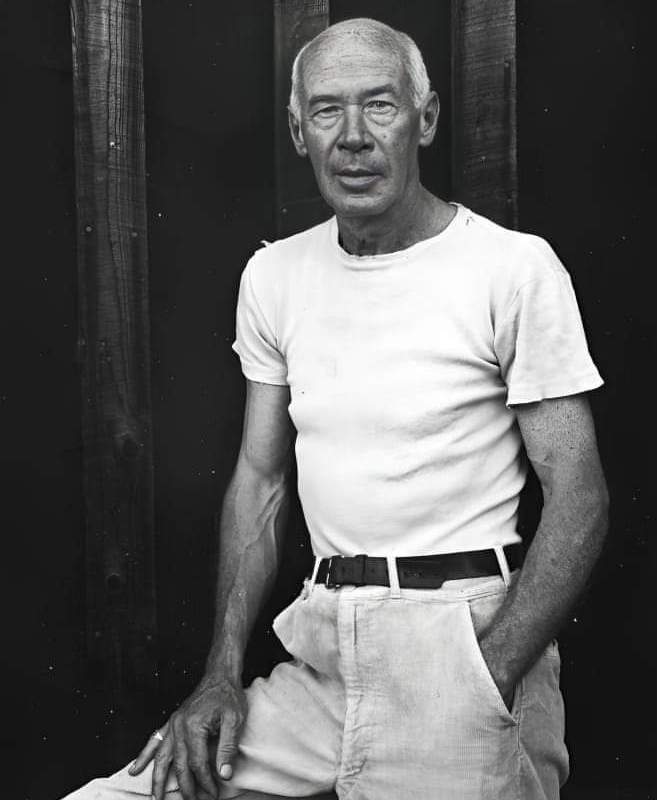
Once I thought that to be human was the highest aim a man could have, but I see now that it was meant to destroy me. Today I am proud to say that I am inhuman, that I belong not to men and governments, that I have nothing to do with creeds and principles. I have nothing to do with the creaking machinery of humanity – I belong to the earth! ~Henry Miller

(Book: Tropic of Cancer https://amzn.to/3PiCzBN)

Ridley Park Side Project

I’ve been MIA here for a couple of reasons:

  1. I’ve been recovering from physical challenges that affect my mobility and ability to interface with a computer, diminishing my productivity in such matters to about 10 or 20 per cent.
  2. I’ve been focusing my energy (besides that on recovery) on writing fiction under my Ridley Park pseudonym.

As for my physical concerns, I won’t bore you. I’d rather discuss my side project, which in the absence of employment turns out to be my primary focus. Currently, I am world-building, so I can explore philosophical and sociological issues in a safe space.

This world is contemporary Earth and the near future—at least for now, as I am leaving a lot of room to explore. Check out my Ridley Park blog if you are interested in specifics. Here, I just want to focus on the philosophical aspects and ramifications, using this story world as a reference, so I’ll provide a brief setup upon which to build.

In this world, a scientist has genetically engineered an embryo (for reasons) and ends up with quasi-vampires, a subspecies of humans—or is it? This cohort is human for all intents and purposes, except they need to ‘drink’ blood to survive. They’ve got fangs and an internal organ used to process and metabolise the blood. He decides to clone these and create a new population. In time, he improves on the genetics in the manner described here. The first short story (flash fiction) I’ve shared is Hemo Sapiens: The Unidentified, but let’s get onto the philosophical aspects.

Podcast: Audio rendtion of Hemo Sapiens: The Unidentified (Runtime: 5:25).

In this world, I shed light on what makes humans human. What happens when we need to coexist with a similar species? What if we treat them as second-class citizens? What if they become physically and intellectually superior?

Are these people a new species or a new race? Or are they just transhumans? What rights do they have? As a new race, perhaps it’s earier to fathom them and grant them human rights, but what if they are a new species? We haven’t had a great track record of granting rights to other species.

And what’s their immigration status? A common reaction to ‘immigrants’ is to ‘send them back to where they came from’. But what if they came from here? What if they were raised here and speak our language? In this case, they are raised near Manchester in the UK. They speak English. They are not only sentient beings at the start, they have above average IQs and have general cultural awareness. Some speak a second language. Save for the fangs, all outward appearances show them as human.

Until they are discovered by authorities, they are raised in a greenhouse environment. By the time they are discovered, there are five versions of them—alpha through epsilon—, and some have started reproducing, so we get to explore these dynamics, too. Some have tagged these people—are they people?—as homo sapiens sanguinius—bloodsucking intelligent man. Affectionately, I call them hemo sapiens.

I’ll return here as I produce more content there. I prefer not to create spoilers. Although I am working on several stories in different formats (short story, novella, novel, and so on), I’ll publish them (somewhere), provide literary analysis on my Ridley Park blog and provide philosophical commentary here. I hope you’ll join me and participate in the discussion.

Identity as Fiction: You Do Not Exist

Identity is a fiction; it doesn’t exist. It’s a contrivance, a makeshift construct, a label slapped on to an entity with some blurry amalgam of shared experiences. But this isn’t just street wisdom; some of history’s sharpest minds have said as much.

— Friedrich Nietzsche

Think about Hume, who saw identity as nothing more than a bundle of perceptions, devoid of any central core. Or Nietzsche, who embraced the chaos and contradictions within us, rejecting any fixed notion of self.

Edmund Dantes chose to become the Count of Monte Cristo, but what choice do we have? We all have control over our performative identities, a concept that Judith Butler would argue isn’t limited to gender but applies to the very essence of who we are.

— Michel Foucault

But here’s the kicker, identities are a paradox. Just ask Michel Foucault, who’d say our sense of self is shaped not by who we are but by power, society, and external forces.

You think you know who you are? Well, Erik Erikson might say your identity’s still evolving, shifting through different stages of life. And what’s “normal” anyway? Try to define it, and you’ll end up chasing shadows, much like Derrida’s deconstruction of stable identities.

— Thomas Metzinger

“He seemed like a nice man,” how many times have we heard that line after someone’s accused of a crime? It’s a mystery, but Thomas Metzinger might tell you that the self is just an illusion, a by-product of the brain.

Nations, they’re the same mess. Like Heraclitus’s ever-changing river, a nation is never the same thing twice. So what the hell is a nation, anyway? What are you defending as a nationalist? It’s a riddle that echoes through history, resonating with the philosophical challenges to identity itself.

— David Hume

If identity and nations are just made-up stories, what’s all the fuss about? Why do people get so worked up, even ready to die, for these fictions? Maybe it’s fear, maybe it’s pride, or maybe it’s because, as Kierkegaard warned, rationality itself can seem mad in a world gone astray.

In a world where everything’s shifting and nothing’s set in stone, these fictions offer some solid ground. But next time you’re ready to go to the mat for your identity or your nation, take a minute and ask yourself: what the hell am I really fighting for? What am I clinging to?

Unraveling the Media’s Role in Advancing Complex Interests: A Closer Look at the Nexus

Introduction

In our ever-connected world, the media plays a pivotal role in shaping public perception and influencing societal narratives. However, this influential power often comes with a darker side, as the media can become complicit in advancing the interests of various complexes – intricate networks of governmental, corporate, and private entities. In this blog post, we will explore how the media intertwines with these complexes and the implications it has on society. Let’s delve into the intricate web that binds the media with the prison-industrial complex, military-industrial complex, and other powerful entities.

Media and the Prison-Industrial Complex

The prison-industrial complex thrives on the growth of the prison system, leading to concerns about harsh sentencing, mass incarceration, and the exploitation of cheap prison labor.

The media plays a crucial role in perpetuating this complex by sensationalizing crime stories, contributing to public fear, and endorsing “tough-on-crime” narratives. Biased reporting and lack of coverage on alternative approaches to criminal justice reform further solidify the link between media and the prison-industrial complex. (Source: The Nation [1])

Media and the Military-Industrial Complex

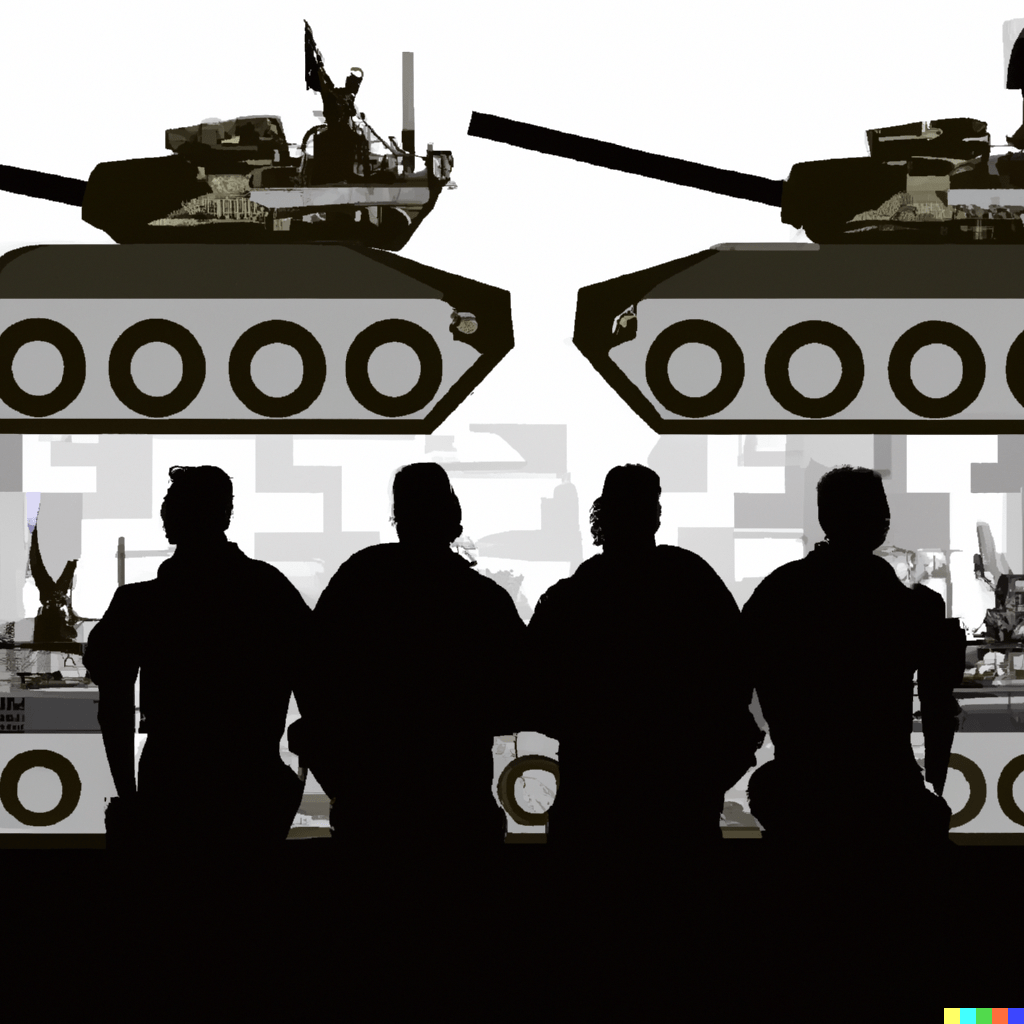
The military-industrial complex is a symbiotic relationship between the defense industry and the military establishment. The media becomes complicit in this complex through its coverage of conflicts, often glorifying military actions and reinforcing the necessity of heightened defense spending. Corporate influence on media content can lead to the marginalization of dissenting voices that question militarization and war efforts. (Source: Fairness & Accuracy In Reporting [2])

Media and the Medical-Industrial Complex

Whilst not as widely recognized, the medical-industrial complex also finds synergy with the media. Pharmaceutical companies, medical device manufacturers, and healthcare providers may influence media content through advertising revenue and sponsored content. Biased reporting on medical treatments and research can shape public opinion and drive consumer demand for specific drugs and medical interventions. (Source: PLoS Medicine [3])

Complex Complicity

These complexes are not isolated entities; they often overlap and reinforce each other. For instance, the military-industrial complex may fuel conflicts that contribute to the expansion of the prison-industrial complex through the incarceration of individuals affected by war and militarization. Corporate interests that profit from one complex might have a stake in another, creating a tangled web of intertwined power structures.

Conclusion

Media’s complicity in advancing the interests of various complexes is a multifaceted issue that demands critical examination. By shedding light on this subject, we empower ourselves to become discerning media consumers, capable of identifying bias and questioning narratives that may serve powerful entities rather than the public interest. It is essential to encourage diverse and independent journalism that holds these complexes accountable and promotes transparency. Only by understanding the intricacies of this nexus can we strive for a more just and equitable society.


1. “The Media’s Role in Perpetuating Mass Incarceration,” The Nation

2. “How Media Flacks Sold the Iraq War,” Fairness & Accuracy In Reporting

3. “The Role of the Media in Promoting and Reducing Health Inequalities,” PLoS Medicine

Small Town Sentiments

Servile compliance and vigilante justice are the core messages underlying Small Town. Comply, or else…

Watching the video, Try That in a Small Town by Jason Aldean, I was left pondering: Are there no convenience store robberies in small towns, or are petrol station and liquor store robberies exempt from scrutiny? Most mass school shootings happen in small towns. Am I missing something through the bravado?

I guess the works of the likes Truman Capote and Flannery O’Connor are lost to this generation, and the message of the Borg has faded into history.

Don’t dare be different or speak your mind about anything meaningful. Sure, serve ham over turkey on Thanksgiving. Be a rebel, but don’t complain about low wages or political subjugation…unless it’s what the local consensus believes.

But tightly-knit small towns will make sure that justice prevails even if it’s the extra-judicial flavour.

This video is divisive to the country as a whole at the expense of some small-town jingoism.

Oh, and don’t even think of burning that flag.

Constitutional versus Open AI

Many of us have probably heard the call for ethical AI, but what is ethical AI exactly?

Ethical AI applyies an ethical framework to Artificial Intelligence, which is to say to apply ethics to the machine learning model.

Constitutional AI is a potential solution to ethical AI. The challenge is that all ethical models are flawed. Constitutional AI suggests a rule set that is wrapped around the base functional model. Product examples of this are Claude and Anthropic, which is supported by Google. OpenAI, which relies on human governance, the basis of ChatGPT, is supported by Microsoft.

Each of these has inherent challenges. We’ve all likely heard of the systematic bias inherent in the data used by large language models. OpenAI uses human governance to adjust and minimize the bias in these models. However, this can lead to hypercorrection and introduces different human biases. Moreover, this leads to situations where queries are refused by the model because human governance has determined the outputs to be out of bounds.

Constitutional AI on the other hand has underlying ethics explicitly built into the model under the auspices of harm reduction. The problem I have with this is twofold: The first is fundamental. Constitutional AI is based on the deontological morality principles elaborated by Kant. I’ll come back to this. The second is empirical.

Many of us are of the age to recall when Google’s motto was to do no evil. When they decided they could not follow their own dictate mom they simply abandoned the directive. Why should we expect a different behaviour this time around?

Moreover, harm is a relative concept so to minimize harm of one group may be to increase harm in another. This undermines the deontological intent and is of larger concern.

As a moral relativist and subjectivist, I find this to be categorically problematic. It poses even more problems as a moral noncognitivist.

From the relativist’s perspective, our AI is fundamentally guided by western white guys with western white-guy sentiment and biases. Sure, there are token representations of other groups, but by and large they are marginalised and the aggregated are still dominated by western white guys.

DISCLAIMER: It is still difficult for me to input or edit copy into a computer, so this may be more ragged than usual. I may return to amend or extend it as I see fit.