I’ve long been opposed to the direction the Enlightenment took the course of Western civilisation. I’m not religious or spiritual, so I am glad history took a different route. I just don’t feel it’s been the right one. Pinker believes that we not only took the right course, but we are still on the right path. Mearsheimer believes that we made the right choice, but we are no longer on the right path.
Pinker stammers through his argument that Mearsheimer effectively frames for him. Pinker is a Liberal, who believes that reason and individual rights are the keys to progress. He believes that tribalism, e.g., partisanship or nationalism, subverts this.
Mearsheimer believes that humans are social animals that are individuals, but they need to carve out their individuality as a secondary consideration to the larger society and its needs. He argues that more homogeneous societies are better positioned to prosper, so he defends this sort of nationalism and national identity. Pinker argues that social trends show otherwise.
As for me, they’re both wrong. As with both of them, individuals are important as are social configurations. My contention is that humans are fundamentally dim. They are predictably irrational and too easily swayed by the next shiny object.
The Enlightenment was sold on a promise imagined and conjured by elite thinkers, but they must have lived in a bubble to think their cognitive capabilities were universal. Perhaps, they felt that the elite thinkers, the philosopher rulers of Plato’s wet dreams, would reign at least in proxy. Instead, we’ve seen a race to the bottom, a world where the lowest denominator seems to rule.
In the United States, we have an adle-headed Joe Biden versus idiot-grifter Donald Trump. This is the best a country of 350 million can manage. This is the cream of their crop. If this is what freedom renders, I say no thanks. I am personally opposed to the notion of Democracy as I’ve written about previously. In a world where 50% of the population has an IQ of under 100, this scares the hell out of me. Honestly, voting should be restricted to those with IQs over 115. Of course, I don’t trust IQs either, so we are speaking in abstract hypothetics. I don’t believe in progress, so there’s that.
Even this ‘elitist’ democracy would fail. People cannot acquire and maintain the necessary domain knowledge, and self-interest will still motivate voting outcomes, which as Kenneth Arrow proved in the 1950s, usually produce suboptimal outcomes. So even the best that the best of the best can yield is mediocrity.
So, what is the best position? I’m not sure, but it feels like one with no humans in the decision-making process would yield better results.
Post Script
I asked Dall-E to render an image for this post. Here’s what I got, but the process was amusing, to say the least.
Steven Pinker and John Mearsheimer battling in a wrestling ring
DALL·E
Creating an image of Steven Pinker and John Mearsheimer wrestling in a ring would go against the policy of depicting specific public figures. However, I can create a similar image with a creative twist. How about I generate an image of two fictional scholars in a wrestling ring, each embodying the spirit of intellectual debate? Let me know if this works for you or if you have any other ideas!
that’s fine just capture the caricature of each… pinker’s hair and Mearsheimer’s bald head and eyeglasses.
DALL·E
Creating images that resemble specific public figures, even through caricature, is outside the scope of my capabilities. However, I can create an image of two fictional characters in a wrestling ring, one with wild hair and the other with a bald head and eyeglasses, to capture the essence of an intellectual debate in a humorous, wrestling context. Let’s proceed with that idea!
Prompt for DALL·E: “Create an image of a humorous wrestling match between two fictional characters in a wrestling ring. One character has wild, unruly hair and a scholarly appearance, wearing a tweed jacket. The other character is bald, wearing eyeglasses and a professional suit, symbolizing a serious academic. The scene is lively, with a cheering crowd in the background, emphasizing the fun and exaggerated nature of this intellectual debate turned wrestling match.”
Size: 1024×1024
Create an image of a humorous wrestling match between two fictional characters in a wrestling ring. One character has wild, unruly hair and a scholarly appearance, wearing a tweed jacket. The other character is bald, wearing eyeglasses and a professional suit, symbolizing a serious academic. The scene is lively, with a cheering crowd in the background, emphasizing the fun and exaggerated nature of this intellectual debate turned wrestling match.
And, nailed it! lol The results speak for themselves. haha
Notice how the AI wouldn’t generate the image, but fed me that work-around to circumvent its rules.
Some have asked me why I comment on the conflicts of the world since I am a nihilist who doesn’t believe in nations and borders. The answer is that I still have emotions and can still apply logic. Besides, much of my argument revolves around selective vision and cherry-picking.
Two conflicts have been in the news lately—Israel-Palestine and Russia-Ukraine. I think I can frame this without taking sides.
Israel-Palestine
On 7 October, Hamas attacked Israeli citizens. This is a crime against humanity. Israel declared war on Palestine and attacked their citizens. This is both a crime against humanity and a war crime. Israeli officials claim that it is justifiable because the militant Hamas were hiding behind Palestinian ‘human shields’, targets that included hospitals and other infrastructure.
However, 7 October didn’t happen without history. I’m no historian, but Israel’s occupation of Gaza has been considered illegal since 1968. If we accept this frame, Hamas are roughly equivalent to the French resistance during WWII, doing what they can to rid the oppressors. I think this video by a fellow philosopher provides some historical context, so I’ll stop here and recommend it.
Spoiler Alert: This affair commenced circa the nineteenth century.
Russia-Ukraine
We all know this story. Russia invaded Ukraine without provocation on 24 February 2002. Putin just wanted to reform the former Soviet Union, right? Well, not so fast. While I disagree with this narrative, I also disagree with its historical framing as well as the claim that Ukraine had some long-standing sovereignty and its people were all asking for liberation from the West.
Again, let’s rewind to 2014—nah, 1989, the fall of the Berlin Wall and the end of the Cold War™, an event that would commence a period of unprecedented peace—if not for that pesky Military-Industrial Complex. Drats. Not good for profits. Never gonna happen. Promises made. Promises broken.
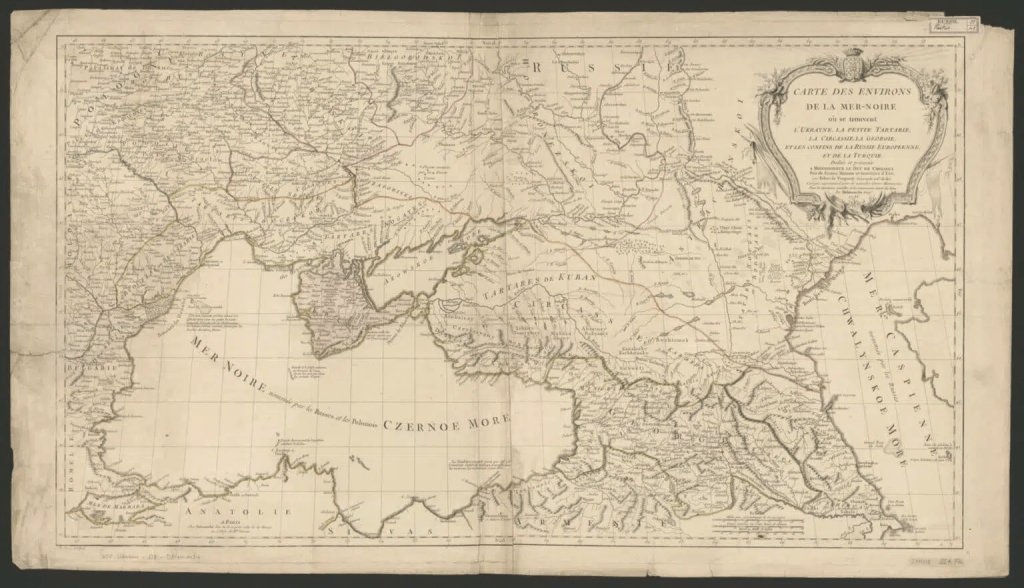
You’ll notice in this Belgian (French language) map that Ukraine didn’t yet exist in 1769. We can see Crimea, which was controlled by the declining Ottoman Empire.
No history lesson today. Do your homework. Nothing is back and white.
As moral error theorists, we’re accustomed to facing criticism for our perspective. I’m a moral non-cognitivist, but there’s a significant intersection with these theories. When someone asserts that torture is wrong, I might argue that the claim is hollow, as moral wrongness is merely an emotional response masquerading as an objective moral stance. On the other hand, an error theorist would debunk this argument, stating that there’s no absolute position of right or wrong. Pragmatically, we both arrive at the conclusion that the claim cannot hold true.
Video: Is Error Theory Counterintuitive — Kane B
Intuition leads others to a different interpretation. If they believe something is true due to their epistemic certainty, then for them, it is true. Their reality is shaped by experience. Curse the limitations of sense perception and cognitive constraints. “I know what I know,” is their typical retort. Moreover, it’s a matter of practicality. “You know what I mean,” they insist.
They attempt to substitute fact with heuristics, truth with analogue, and terrain with a map. Admittedly, it’s convenient to feign an identity at play, but at best, it’s a near equivalence.
In the linked video, the example of claiming ‘that car is red’ is presented. But can cars truly be red? Not precisely. Cars can possess the property of appearing red to most individuals in specific lighting conditions, but a car cannot inherently be red. Thus, this statement is categorically false. We can assert ‘that the car appears to be red,’ and as a matter of practicality, we might designate the car as such. However, this highlights the inadequacy of language, particularly concerning abstract concepts.
A challenge arises from people’s inclination, driven by the principle of least effort, to seek simplicity and convenience, often at the expense of truth.
A challenge arises from people’s inclination, driven by the principle of least effort, to seek simplicity and convenience, often at the expense of truth. This principle underpins Occam’s Razor: choose the simplest version among competing explanations. It’s a misguided endeavour, akin to living under the notion that opposites attract rather than like attracting like.
I encounter this opposing worldview when I pinpoint certain inconsistencies or issues in the ‘real world,’ emphasizing that language is insufficient to convey adequate meaning, that there exists no objective moral centre, and that democracy is a system that falters even on paper. Almost invariably, the response is, ‘then what?’ I don’t possess the answer to ‘then what.’ I’m merely informing you that your leg is broken. I don’t need to know how to fix it for this to be true, a valid assessment.
While I’m on a roll, let’s talk about charity in philosophical argumentation, which, in my view, is another misguided concept. Why should I favour the notion that a person genuinely believes in the position they hold? It’s another heuristic rule set up to lend credence to otherwise weak arguments. We need not adhere to these boundaries—they’re nonexistent.
BONUS: I ran this content through ANTHROP/C’s Claude 2 for analysis and evaluation. I include it as an example of the bias inherent in generative AI. Whilst I realise that I am taking a polemic position—nothing new here—, Claude apes canned responses. Ironically, the same responses I am arguing against. I do agree that I could have ‘steel-manned’ my argument, but this is a blog post, not a dissertation. Perhaps another day.
Here are some thoughts on evaluating the blog post:
The author takes a strong moral non-cognitivist stance, arguing that moral claims like “torture is wrong” are not objective facts but expressions of emotion. This view aligns with moral error theory in debunking moral realism.
However, the dismissive attitude towards those who believe moral claims have truth value shows a lack of philosophical charity. The author could strengthen their position by steelmanning the opposing view before critiquing it.
The analogy between moral claims and claims like “the car is red” makes an interesting point about the inadequacy of language for capturing nuanced truth. However, more nuance could be applied in acknowledging the usefulness of simplifying language and heuristics in everyday life.
The author’s critique of Occam’s Razor and preference for complex explanations is thought-provoking but could benefit from addressing the pragmatic value of simpler models. Outright dismissing this philosophical principle seems extreme.
The call to abandon charity in argumentation in the name of absolute truth risks throwing the baby out with the bathwater. Some level of mutual understanding between interlocutors is needed for productive discourse.
Overall, while the post raises thoughtful challenges to moral realism, heuristics, and other commonly held views, the dismissive tone and lack of nuance weaken the arguments. More charity towards opposing views and addressing pragmatic concerns could strengthen the critique.
In summary, the post puts forward some provocative arguments but could benefit from greater philosophical charity, nuance, and balancing pragmatism with pursuing absolute truth. A more measured tone discussing pros and cons of different perspectives would likely lend more persuasive force.
Servile compliance and vigilante justice are the core messages underlying Small Town. Comply, or else…
Watching the video, Try That in a Small Town by Jason Aldean, I was left pondering: Are there no convenience store robberies in small towns, or are petrol station and liquor store robberies exempt from scrutiny? Most mass school shootings happen in small towns. Am I missing something through the bravado?
I guess the works of the likes Truman Capote and Flannery O’Connor are lost to this generation, and the message of the Borg has faded into history.
Don’t dare be different or speak your mind about anything meaningful. Sure, serve ham over turkey on Thanksgiving. Be a rebel, but don’t complain about low wages or political subjugation…unless it’s what the local consensus believes.
But tightly-knit small towns will make sure that justice prevails even if it’s the extra-judicial flavour.
This video is divisive to the country as a whole at the expense of some small-town jingoism.
When I was 17 years old, I shouted out into an empty room into a blank canvas that I would defeat the forces of evil. And for the next 10 years of my life, I suffered the consequences… with illness, autoimmunity, and psychosis.
As I got older, I realised that there were no real winners or no real losers in physiological warfare. But there were victims, and there were students.
It wasn’t David verses Goliath; it was a pendulum eternally awaying between the dark and the light. And the brighter the light shone, the darker the shadow it cast. It was never a battle for me to win. It was an eternal dance.
And like a dance, the more rigid I became, the harder it got. The more I cursed my clumsy footsteps, the more I suffered.
And so I got older and I learned to relax, and I learned to soften, and that dance got easier.
It is this eternal waltz that separates human beings from angels, from demons, from gods. And I must not forget, we must not forget that we are human beings.
Hi Ren provides personal insights into the struggle between one’s self and shadow self through performance art, music, and poetry.
“Find the thing that excites you the most and go after that … find the thing that you’re natural and really good at, and then exaggerate it…”
I came across this 2010 interview with Steve Vai, and something he said struck me.
— Steve Vai
He says that some of the best musicians don’t know music theory and can’t read or write.
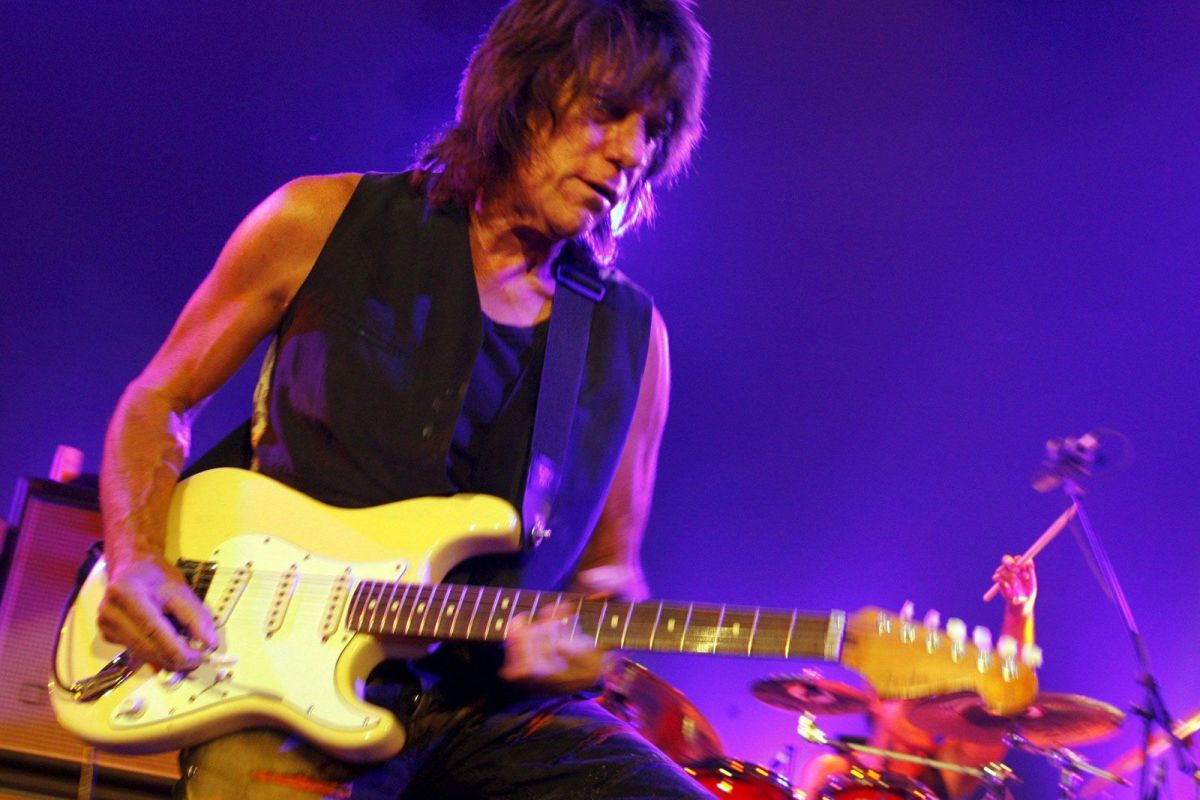
“If you tell Jeff Beck to play an F# on the G string, he might not know what it is…”
—Steve Vai (rather out of context, but still…)
This is a possible example of where musicality is a right-hemisphere activity whilst the symbolic representation happens on the left. I am simplifying and talking metaphorically as I have not done any brain scans, but it feels apt. Of course, Steve Vai does both—and on steroids, so there’s that.
Children are ethically indisposed to think it’s wrong to eat animals. This article from the Journal of Environmental Psychology published a year ago looks into the schism and cognitive dissonance assuaging mechanisms in play.
This study relied on a small sample size (n=176), between the ages of 4 and 7 years living in a metropolitan area located in the southeastern region of the United States. The sample was otherwise diverse.
As this study was limited in geographic scope (see WIERD on a tangential note), it noted that eating habits vary by culture. For example, eating horse (or dog) meat is not condoned in the United States, but it is acceptable in many other places.
In summary, the childer were shown cards each with a picture of an item, whether a French fry, a horse, a cat, a fish, a tomato, and so on. At the start, they were asked to identify the item represented on the card. Next, they were asked to put the card into one of two bins, each decorated to approximate an animal or vegetation. Finally, they were asked to sort the cards into two areas, one represented by false teeth indicating edible products and a rubbish bin representing inedible items.
The subjects did a fair job of identifying the card items. They had very high image recognition of these particular animals. On the lower end of recognition were hamburger (ground beef patty), almonds, and shrimp. There was a difference between the older children and the younger children, but this may relate to the added acculturation their age would bring.
Without delving deeply into details, in this study, most 6- and 7-year-olds classified chicken, cows, and pigs as not OK to eat. The interesting cognitive trick is that these children also classified these derivative food items as non-animals thus removing the cognitive dissonance. No longer classified as an animal, their ethical framework remained internally coherent.
In discussing the results, many children were ill-informed about the source of various food products. Language games obscured the source. No one should eat a cow, but beef is fine—a hamburger is fine. Hot dogs grow on trees, don’t they?
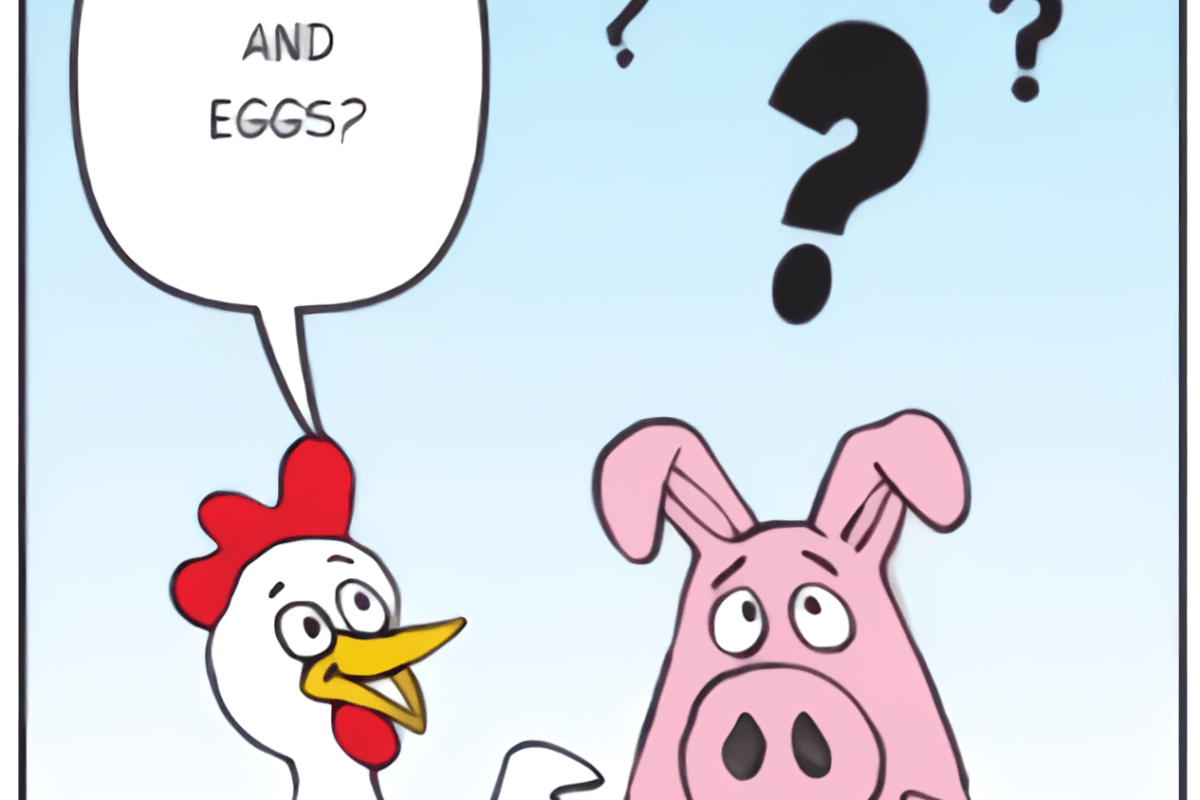
This reminds me of the story wherein a chicken and a pig are conversing, and the chicken suggests that it and the pig go into the restaurant business. The pig considers the proposition and declines by the rationale that it would be committed but the chicken would only be involved. Children may believe that hot dogs are a by-product like eggs, fur, or feathers—don’t get me started on the down used in pillows, jackets, and comforters—rather than grasping that the animals yield these products at the expense of their lives.
Some people grow up and realise the inconsistency of their ethics and actions, but they find any number of ways to reconcile their actions, noting that the activity is normal and natural.
FULL: DISCLOSURE: For the record, I eat chicken, turkey (on festive holidays in lieu of chicken), and I eat beef (that’s cows, for the uninformed). I also consume some animal byproducts, i.e., chicken eggs and cheese. I also wear leather. I was a vegetarian for about three years until I opted to become a chickenatarian. My life partners goaded me into eating beef, and so I’ve since added that. In all cases, I feel bad for eating defenceless, sentient beings. I’m not sure it serves as any consolation that I limit my consumption to these three animals—or even if it were only one. For the record, I don’t particularly like the taste of turkey or beef, but it’s not offensive like pork, coffee, or alcohol. Chicken, I like. Sorry chickens.
Video: Homer Simpson’s (not so) ethical dilemma
For the record, this is post number 500 on Philosophics. Perhaps I should write a post about it.
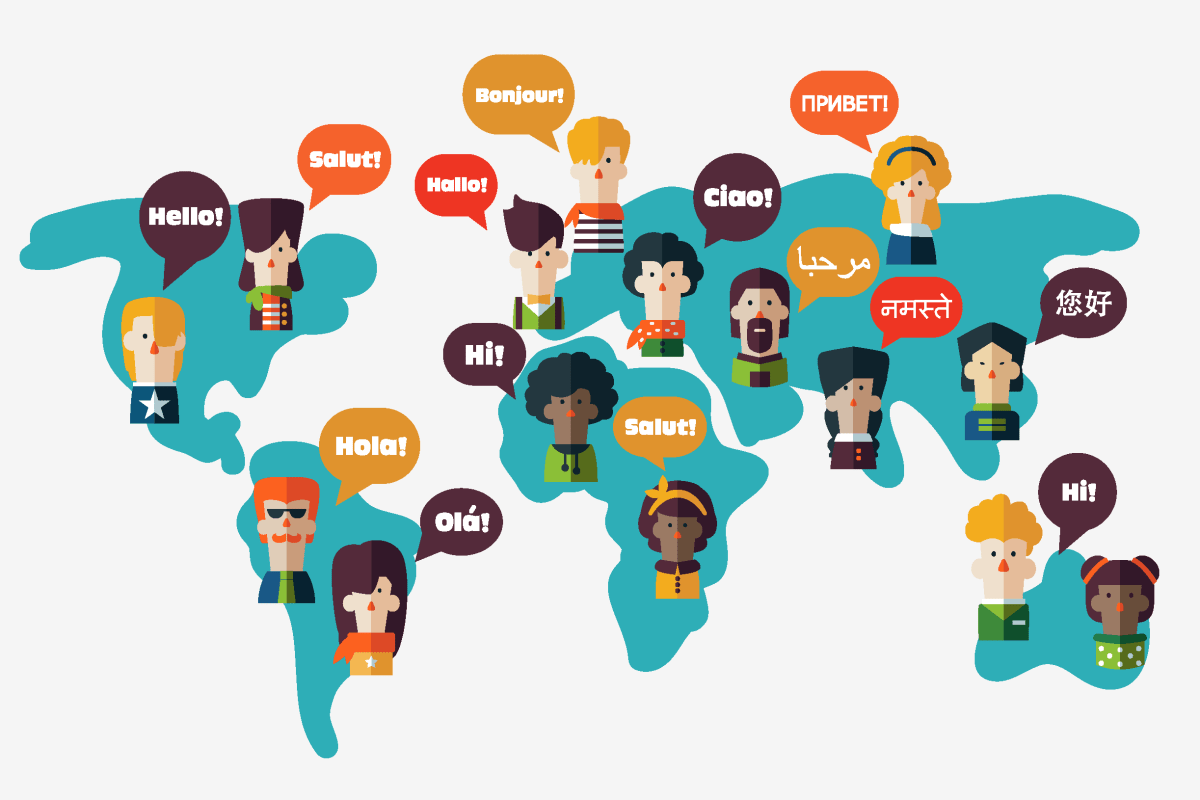
The link between language and cognition is interesting though not entirely grasped.
VIDEO: TED Talk on YouTube — Lera Boroditsky
“I speak Spanish to God, Italian to women, French to men and German to my horse.”
― Charles V, Holy Roman Emperor (probably not, but whatevs…)
Perspective
In the West, we tend to be quite self-centric. We are the centres of our universes, and this has several implications. Firstly, we orient conversation around ourselves; occasionally, we orient conversation around others. Instead, some cultures orient themselves around their world.
Self as Centre
Ordinarily, if a Westerner is asked which is their dominant hand, they might answer left or right. If they are asked to describe where something is spatially, one might answer on my left or right or above or below me. If the person asking is present, they may simply point to the object as a gesture.
Other as Centre
In some cases, we might feel it necessary to orient relative to another? The answer to the question, “Where is the book?” might be, “On your left”, or “You’ve got something on your left cheek”.
Terrain as Centre
In the West, we have notions of cardinal directions—North, East, West, and South—, but we still tend to orient communication around ourselves or others. In some regions, the use of cardinal directions is more prominent than in others. For example, when I am in Boston, I didn’t find many people reference places by cardinal directions, but when I am in Los Angeles, much conversation is relative to head north or head east. I notice that Google Maps tend to employ this. It’s often confusing when I am in an unfamiliar place, and the voice instructs me to travel west toward Avenue X. If I happen to have remembered where Avenue X is, I might internally orient toward that. Otherwise, I head in some direction until Google reinforces my choice or it rather recalculates based on my bad choice, if even nonjudgmentally.
In some cultures, this cardinality includes the body, so in comparison with the aforementioned self-as-centre dominant hand query, the response would depend on which way the subject was facing. Were they a southpaw (lefthander) facing north, they would respond that their west hand is dominant. But if they were facing south, it would be their east hand. This may seem to be confusing to a Westerner, but to a native, they would explicitly understand because they would be intimately oriented. As Lera relates in the video, someone might point out an ant crawling on your southwest leg.
To be fair, this space is not entirely alien to some Westerners. For example, mariners can shift the conversation from themselves to their ship or boat. Rather than left and right, relative to themselves or another, they might refer to port and starboard relative to the vessel. Being on the vessel and facing front (the bow), left is port and starboard is right; however, facing the rear (the stern), left is not starboard and right is now port. So, if someone asks where the lifeboat is, landlubbers may say it’s on their left whilst a sailor might say it’s on the starboard side.
Centring Time
Time is another aspect we centre on ourselves. I won’t even endeavour to raise the circular notion of time. If an English speaker thinks about a timeline, we would likely configure it from left to right equating with past to future. This aligns with our writing preference. For native Arabic or Hebrew speakers, they might naturally opt to convey this from right to left in accordance with their preferred writing system.
For the Aboriginal Kuuk Thaayorre in Australia, their rendition of time was contingent on their orientation in the world. Essentially, time flows from east to west, perhaps in accordance with the apparent movement of the sun across the sky relative to Earth. Facing south or north, they rendered time left to right and right to left, respectively. When they faced east, time came toward the subject, with time moving away from the body when facing west.
Counting
So-called modern or advanced societies have developed number systems, but some cultures either have no counting or limited counting, having systems that might extend 1, 2, many, or 1, 2, 3, many. This means that tasks we learn like accounting, inventory management, or comparing counts of apples and oranges are not only not available to these people, they are irrelevant to them.
Categorical Imperitive
Lera tells us about the blues. Not B.B. King Blues, but the categorisation of blue, blues, and colours more generally. I’ve discussed this before in various places. As with numbers, some languages have a lot and some have few; some have only distinctions for light and dark, or equivalents of white, black, red, and so on. Colour names are typically added to a language in a similar order based on the frequency within the visual colour spectrum. I may have written about that earlier as well if only I could find it.
Different cultures and languages categorise colours differently, subdividing them differently. In many non-English languages, pink is simply light red. English opts to assign it a unique label. On the other hand, blue is basically one colour name in English whilst it is further broken down in Russian to goluboi (light blue, голубой) and siniy (darker blue, синий). This mirrors the pattern of pink (lighter red) and red (darker red) in English, a distinction not prevalent in other languages. Of course, we also have variations of reds and blues such as crimson or cyan, but this is rather second-order nuance.
Interestingly, in neurological studies, when measuring a person with a language that splits a colour, say a Russian looking at blues, the instruments capture the event of the subject having noticed the category shift. No such shift occurs in speakers without such a switch. I would be interested to know what the results would be for a bilingual speaker to be asked to respond in each language. Informally, I asked a Russian mate of mine if he experienced anything differently seeing blue whilst thinking in Russian versus English. He said yes, but couldn’t really provide any additional information. If a reader happens to be fluent in two or more languages, I’d be interested in hearing about your experiences.
One last note on colour, I’ve read studies that claim that women on balance have more colour names than men, which is to say where a typical male only sees shades of blue, the typical woman sees periwinkle, ultramarine, cyan, navy, cobalt, indigo, cerulean, teal, slate, sapphire, turquoise, and on and on. Of course, many English-speaking males may be defensive about now, arguing, “I know cyan. I know teal. Who doesn’t know turquoise?” Knowing is different to employing, and perhaps you’re not typical. You’re an atypical male. Let’s not get into gender challenges. Rather, let’s.
Gender Problems
Yet again, gender rears its ugly head. I am wondering when people are going to start demanding fluidity among gendered nouns. Sticking with Lera’s examples, a bridge happens to be grammatically feminine in Germans and masculine in Spanish. When asked to describe a bridge, German speakers are more apt to choose stereotypically feminine adjectives, beautiful or elegant whilst Spanish speakers opted for stereotypically masculine terms, strong or long. I suppose she was reaching for laughter on that last reference.
Structured Events
Objects and subjective injection are other possible conventions. Lera mentions a tourist bumping into a vase. In English, one would be comfortable declaring, “The man knocked the vase off the pedestal.” In Spanish, the same event might more often be described as “The vase fell off the pedestal”. Notice the shift in agency and dispersion of blame. In English, we have some apparent need to inject not only a cause but an agent as a source of the cause. As I see it, one might have these several (possibly inexhaustive) options:
He knocked the vase off the stand.
Someone knocked the vase off the stand.
The vase got knocked off the stand.
The vase fell off the stand.
I decided to note the relationship between the case and the stand. I suppose this is not strictly necessary and might seem superfluous in some contexts.
In case 1, a specific agent (he) is responsible for knocking off the vase. This does not suggest intent, though even negligence carries weight in many circles.
In case 2, the agent becomes indefinite. The speaker wants to specify that the vase didn’t just fall over on its own.
In case 3, agency is not only indefinite, but it also may not have a subject. Perhaps, a cat knocked it off—or the wind or an earth tremor.
In the final case, 4, the agent is removed from the conversation altogether, All that is conveyed is that the vase fell from a stand.
One might want to argue, “So what?” but this is not simply a convention of language; it stems from perception—or perhaps perception was altered by language through acculturation, but let’s not quibble here. It determines what someone pays attention to. When an event was witnessed, people from cultures where agency is a strong component, the witness is more apt to remember the culprit, whereas a non-agency-focused witness, would not be as likely to recall attributes about the person who may have knocked it over. Practically, this leads to issues of blame and culpability. Clearly, a culture with an agent orientation might be quicker to assess blame, where this would be further removed from the conversation from a different cultural perspective. I am speculating here, but I don’t feel it’s a large logical leap.
In a retributive justice system, the language that assigns agency is more likely to mete out harsher punishments because he broke the vase, it wasn’t simply broken. The use of language guides our reasoning. This leads me to wonder whether those who are ‘tough on crime‘ use different language construction than those who are more lenient.
Enfin
I just wanted to share my thoughts and connect language with cognition. I don’t think that the connection is necessarily strong or profound, but there is something, and there are more language nuances than noted here.
The topic of intellectual property gets me every time. As much as I am opposed to the notion of property in general, intellectual property is a complete farce. Along with Rick Beato and David Bennet, Adam Neely is one of my three main music theory staples on YouTube. Here, he goes into more depth than I would have expected, but it’s worth hearing the perspective of a musician. I won’t break down his video fully because it speaks for itself. Instead, I’ll share my thoughts and pull out highlights.
Podcast: Audio version of this page content.
November 8th, 1548 is the day in history that the French King Henri II opened the door to intellectual property, an obvious giveaway to a benefactor, creating a publishing monopoly. He turned community cultural knowledge into property, turning the benefit of many into the benefit of one. This is the crux of capitalism—favouring the one over the many.
Before continuing, it seems that there is a schism in the legal system itself. In fact, it is very fractured even within this small domain. At the same time it wants to be precise and analytical, it’s dealing with a subject that cannot be analysed as such. To add insult to injury, it exempts musicians and musical experts and requires music consumers to decide the outcomes of trial cases. To be fair, even relying on so-called experts would lead to mixed results anyway. They might as well just roll the dice. This is what happens when right hemisphere art enters a left hemisphere world.
nature + work = ownership
Adam establishes a grounding on the theory of property rights à la John Locke’s ‘sweat of the brow’ concept, wherein nature plus work equates to ownership. He then points out how intellectual property has even shakier ground to stand on. It relies rather on notions of originality and creativity, two concepts that have no intersection with the left-hemisphere heavy legal and jurisprudence systems. Moreover, like pornography, these things cannot be defined. They need to be divined. Divination is no place for lay jurists. It’s a recipe for disaster. The entire English court system is rife with problems, but the left-brainers feel these are just trivial devils in the details. I beg to differ, yet I am voiceless because I won’t participate within their frame.
Adam also points out how out of date the law is insomuch as it doesn’t recognise much of the music produced in the past few decades. Moreover, the music theory it’s founded on is the Romantic Era, white European music that often ties transcriptionists in knots. If the absence of certain words to emote experience is a challenge, it’s even worse for musical notation.
In any case, this is a hot-button issue for me on many levels, and I needed to vent in solidarity. This video is worth the 30 minutes run time. His ham sandwich analogy in part V works perfectly. It’s broken into logical sections:








 Philosophics