When Aliens Speak English: The False Promise of Linguistic Familiarity

5–7 minutes

Why shared language creates the illusion – not the reality – of shared experience

Human beings routinely assume that if another agent speaks our language, we have achieved genuine mutual understanding. Fluency is treated as a proxy for shared concepts, shared perceptual categories, and even shared consciousness. This assumption appears everywhere: in science fiction, in popular philosophy videos, and in everyday cross-cultural interactions. It is a comforting idea, but philosophically indefensible.

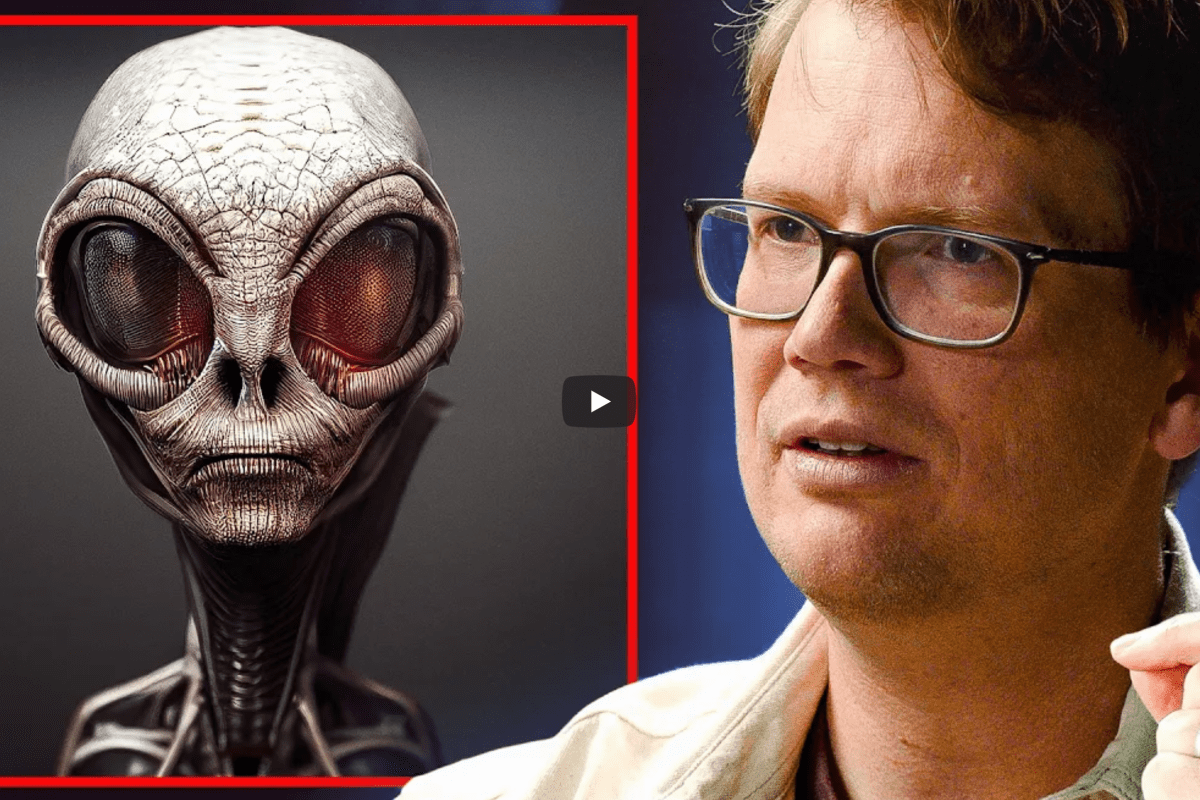
Video: Could You Explain Cold to an Alien? – Hank Green

Recent discussions about whether one could ‘explain cold to an alien’ reveal how deeply this assumption is embedded. Participants in such debates often begin from the tacit premise that language maps transparently onto experience, and that if two interlocutors use the same linguistic term, they must be referring to a comparable phenomenon.

A closer analysis shows that this premise fails at every level.

Audio: NotebookLM summary podcast on this topic.

Shared Language Does Not Imply Shared Phenomenology

Even within the human species, thermal experience is markedly variable. Individuals from colder climates often tolerate temperatures that visitors from warmer regions find unbearable. Acclimation, cultural norms, metabolic adaptation, and learned behavioural patterns all shape what ‘cold’ feels like.

If the same linguistic term corresponds to such divergent experiences within a species, the gap across species becomes unbridgeable.

A reptile, for example, regulates temperature not by feeling cold in any mammalian sense, but by adjusting metabolic output. A thermometer measures cold without experiencing anything at all. Both respond to temperature; neither inhabits the human category ‘cold’.

Thus, the human concept is already species-specific, plastic, and contextually learned — not a universal experiential module waiting to be translated.

Measurement, Behaviour, and Experience Are Distinct

Thermometers and reptiles react to temperature shifts, and yet neither possesses cold-qualia. This distinction illuminates the deeper philosophical point:

  • Measurement registers a variable.
  • Behaviour implements a functional response.
  • Experience is a mediated phenomenon arising from a particular biological and cognitive architecture.

Aliens might measure temperature as precisely as any scientific instrument. That alone tells us nothing about whether they experience anything analogous to human ‘cold’, nor whether the concept is even meaningful within their ecology.

The Problem of Conceptual Export: Why Explanation Fails

Attempts to ‘explain cold’ to hypothetical aliens often jump immediately to molecular description – slower vibrational states, reduced kinetic energy, and so forth. This presumes that the aliens share:

  • our physical ontology,
  • our conceptual divisions,
  • our sense-making framework,
  • and our valuation of molecular explanation as intrinsically clarifying.

But these assumptions are ungrounded.

Aliens may organise their world around categories we cannot imagine. They may not recognise molecules as explanatory entities. They may not treat thermal variation as affectively laden or behaviourally salient. They may not even carve reality at scales where ‘temperature’ appears as a discrete variable.

When the conceptual scaffolding differs, explanation cannot transfer. The task is not translation but category creation, and there is no guarantee that the requisite categories exist on both sides.

The MEOW Framework: MEOWa vs MEOWb

The Mediated Encounter Ontology (MEOW) clarifies this breakdown by distinguishing four layers of mediation:

  • T0: biological mediation
  • T1: cognitive mediation
  • T2: linguistic mediation
  • T3: social mediation

Humans run MEOWa, a world structured through mammalian physiology, predictive cognition, metaphor-saturated language, and social-affective narratives.

Aliens (in fiction or speculation) operate MEOWb, a formally parallel mediation stack but with entirely different constituents.

Two systems can speak the same language (T2 alignment) whilst:

  • perceiving different phenomena (T0 divergence),
  • interpreting them through incompatible conceptual schemas (T1 divergence),
  • and embedding them in distinct social-meaning structures (T3 divergence).

Linguistic compatibility does not grant ontological compatibility.
MEOWa and MEOWb allow conversation but not comprehension.

Fiction as Illustration: Why Aliens Speaking English Misleads Us

In Sustenance, the aliens speak flawless Standard Southern English. Their linguistic proficiency invites human characters (and readers) to assume shared meaning. Yet beneath the surface:

  • Their sensory world differs;
  • their affective architecture differs;
  • their concepts do not map onto human categories;
  • and many human experiential terms lack any analogue within their mediation.

The result is not communication but a parallel monologue: the appearance of shared understanding masking profound ontological incommensurability.

The Philosophical Consequence: No Universal Consciousness Template

Underlying all these failures is a deeper speciesist assumption: that consciousness is a universal genus, and that discrete minds differ only in degree. The evidence points elsewhere.

If “cold” varies across humans, fails to apply to reptiles, and becomes meaningless for thermometers, then we have no grounds for projecting it into alien phenomenology. Nor should we assume that other species – biological or artificial – possess the same experiential categories, emotional valences, or conceptual ontologies that humans treat as foundational.

Conclusion

When aliens speak English, we hear familiarity and assume understanding. But a shared phonological surface conceals divergent sensory systems, cognitive architectures, conceptual repertoires, and social worlds.

Linguistic familiarity promises comprehension, but delivers only the appearance of it. The deeper truth is simple: Knowing our words is not the same as knowing our world.

And neither aliens, reptiles, nor thermometers inhabit the experiential space we map with those words.

Afterword

Reflections like these are precisely why my Anti-Enlightenment project exists. Much contemporary philosophical commentary remains quietly speciesist and stubbornly anthropomorphic, mistaking human perceptual idiosyncrasies for universal structures of mind. It’s an oddly provincial stance for a culture that prides itself on rational self-awareness.

To be clear, I have nothing against Alex O’Connor. He’s engaging, articulate, and serves as a gateway for many encountering these topics for the first time. But there is a difference between introducing philosophy and examining one’s own conceptual vantage point. What frustrates me is not the earnestness, but the unexamined presumption that the human experiential frame is the measure of all frames.

Having encountered these thought experiments decades ago, I’m not interested in posturing as a weary elder shaking his stick at the next generation. My disappointment lies elsewhere: in the persistent inability of otherwise intelligent thinkers to notice how narrow their perspective really is. They speak confidently from inside the human mediation stack without recognising it as a location – not a vantage point outside the world, but one local ecology among many possible ones.

Until this recognition becomes basic philosophical hygiene, we’ll continue to confuse linguistic familiarity for shared ontology and to mistake the limits of our own embodiment for the limits of consciousness itself.


Parfit’s Long-Termism and Property Rights

Cause and effect: This clip by Jonny Thompson influenced this post.

I’ve written extensively (and, some might say, relentlessly) on the immorality of private property, particularly the theological nonsense that undergirds its supposed legitimacy. Locke’s first-come, first-served logic might have sounded dashing in the 17th century, but it now reads like a boarding queue at Ryanair: desperate, arbitrary, and hostile to basic decency.

Audio: NotebookLM podcast on this content.

The core problem? Locke’s formulation assumes land was once freely available, as if Earth were a kind of colonial vending machine: insert labour, receive title. But that vending machine was already jammed by the time most of humanity got a look-in. Worse, it bakes in two kinds of chauvinism: temporal (screw the future) and speciesist (screw anything non-human).

Parfit’s long-termism lays bare the absurdity: why should a bit of land or atmospheric stability belong to those who happened to get here first, especially when their stewardship amounts to strip-mining the pantry and then boarding up the exit?

And no, “mixing your labour” with the land does not miraculously confer ownership—any more than a damp bint lobbing a sword at you from a pond makes you sovereign. That’s not philosophy; that’s Arthurian cosplay.

Vantage

A runner helps a competing runner to complete and win a race. The competitor had been confused, as signage was in a language foreign to him, so the other helped him out.

Iván Fernández Anaya and Adel Mutai Race

Although the debate in the comments thread on LinkedIn of whether the rules of the event supersede the overarching human condition leans heavily toward cooperation over competition, some are vehemently opposed to the thought of ‘breaking the rules’ of the contest.

I suggest that this is an issue of framing. Sporting events are a wholly contained subset of the human condition. If you visualise this as a Venn diagramme envisaged as camera lenses, you’ll see that the event is a deliberate tight shot. One with the broader human experience cropped out. But the viewer has the ability to pull back and capture a wider shot. This shot recognises factors other than winning a petty sporting event. It emphasises cooperation over competition.

There is no moral imperative here. One may adopt either lens without shame. As for me—and apparently most—, the wider shot is preferred. But a wider lens is not always the default view for humans.

Humanism

When it comes to how, as people, we fit into the larger universe, we tend to adopt a human-centric view. And one doesn’t need to be a Humanist to take this position. Most religions do this by proxy, where the gods have appointed humans as the Ones.

How can one not be a racist?

This is the same choice as whether to adopt a tight or a wide shot. And some people take an even tighter shot, where the focus is on nationality or race or colour or sex or gender or affluence or whatever. But the wide shot captures all species on the same plane. Peter Singer is the leading Western philosopher in this space. In his world, Humanism, this human-centred view, is Speciesism.

The most common responses to this charge are to dismiss it on the grounds that ‘humans are superior for reasons’ or that ‘as long as we consider the biosphere as a system, we can still take an elevated position’. I don’t truly accept either of these positions. The first is, frankly, narcissistic, as is the second, but humans have an abysmal track record when systems thinking and complexity are involved.

How can one not be a Speciesist?

The obvious question, then, akin to, ‘How can one not be a racist?’ in these #BlackLivesMatter times, is ‘How can one not be a Speciesist?’ But there are still wider lenses as we pull back to capture the entire taxonomy. We can elevate species to genus to family, order, class, phylum, kingdom, domain, or life. And why stop there except for moral convenience?

Ask yourself: What lens are you using? What is your frame? Where is your focus? What is your depth of field?

Humanism is Speciesism

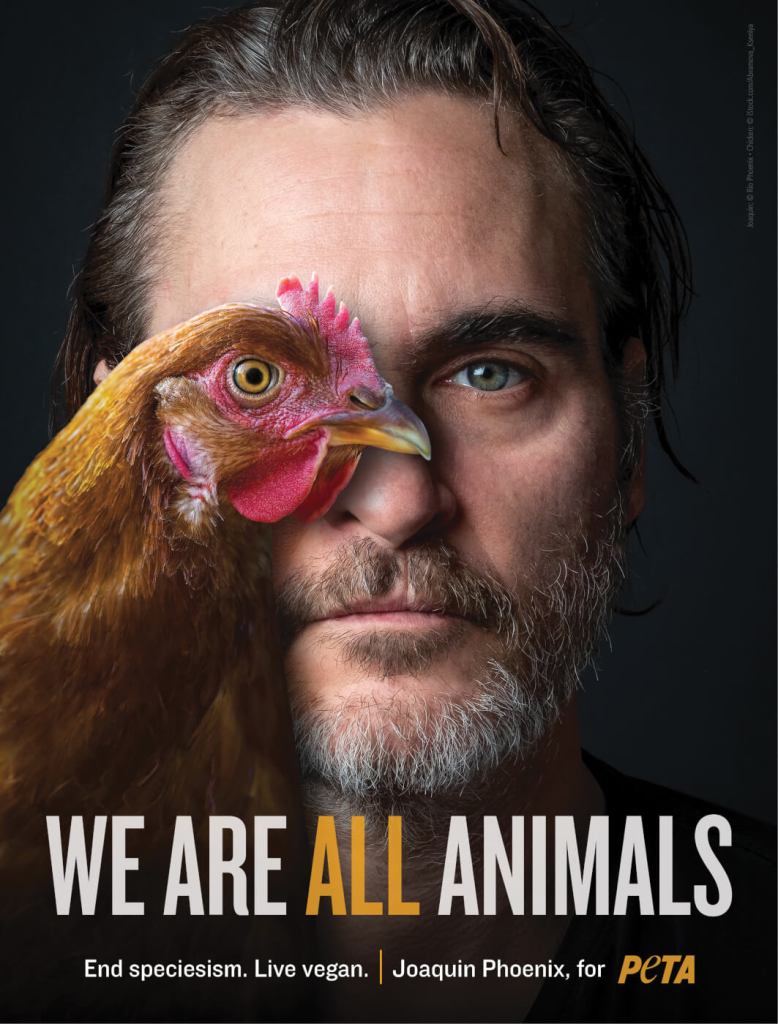
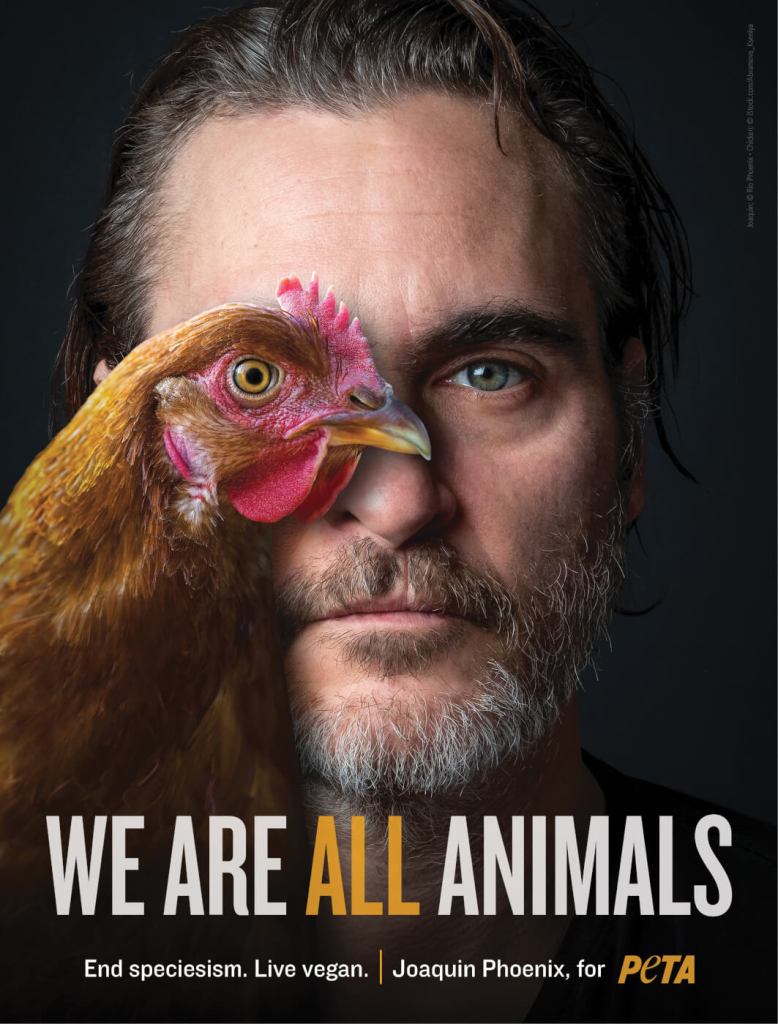
Why is racism wrong but speciesism OK? Primarily, other species have no voice, and to have no voice is to have no say. This advert got my attention.

Joaquin Phoenix Advert

Humanism is part and parcel specious Enlightenment tripe, where ‘coincidentally‘ humans put themselves at the forefront. Copernicus removed Earth from the centre — though to be fair, even Christians had elevated gender-non-specific-Man above other animals — , but Humanism makes it more poignant that it’s Man at centre not God. Gods be damned. In fact, it’s often an afterthought that humans are animals at all, despite only the slightest veneer of consciousness and, more to the point, language to separate us from them.

Otherness has proven itself to be an evolutionary survival aspect, one that has brought me to a point where I can write this, so one can call it natural, another term fraught with connotational baggage. To be able to differentiate and discriminate appear to be valuable attributes, but how much is enough, and how much is too much.

Buddhism teaches that we are all one with the cosmos and that any distinction is an illusion. Buddhist Enlightenment — not to be confused with Western Enlightenment — is to understand this, to not be bound to the illusion.

But, if racism is wrong, why is speciesism OK? Humans do give some animals some rights, and some places give different animals different rights, whilst others give animals categorically more and fewer rights. Some places ascribe divinity upon animals, elevating them above humans.

Racism seems to be more wrong because humans are more genetically homogeneous — at least phenotypically. Other mammals and herptiles don’t look so much like us. In observation, when they do, we have an additional layer of empathy, so chimps and canines with expressive eyes gain sympathy not afforded crustaceans and pinnipeds.

I don’t have an answer save to say that it’s just convenient and someday we may see a world as portrayed by science fiction where some — mostly bipedal species — live quasi-harmoniously with humans. But even there, humans are always the start, front and centre to provide to moral POV.

Moral Realism meets Non-Cognitivism

One particular criticism of non-cognitivism is that it is not intuitive (as if this is the arbiter of truth). Much of statistics is not intuitive. The behaviour of quarks and other quantum events are counter-intuitive. This is a poor argument, especially given the limitations of intuition—whatever that might be.

Quarks[1]

In his book Moral Realism, Kevin Delapp advances his belief ‘that as a descriptive thesis, noncognitivism appears exceptionally counterintuitive’. He advances with argumentum ad numeram (or ad populum—take your pick): Most speakers of most languages do not mean by “killing innocents is wrong” merely that they don’t approve of it, or even that they are simply endorsing a norm, no matter how universal in form. Rather they say, namely that killing innocents is literally wrong.’ Moreover, what people think they mean and what they mean may diverge widely. But these are petty arguments.

“Killing innocents is wrong.”

Let’s unpack the example Delapp uses. Let’s even move forward by accepting common idiomatic notions of these terms. The problem is one of scope. Keeping away from any metaphysical complications but considering a cosmic scope, how is this wrong?

Ignoring that people die routinely of natural and otherwise ‘unnatural’ causes—however these might even be classified—, the absence of some particular human or all humans or all life forms would have a nil effect on planetary motion, the birth and death or stars, or of the creation of other universes. An analogue might be similar to killing a single bacterium in your body, an event that happens countless times daily yet you don’t even notice.

kisspng-buzz-lightyear-sheriff-woody-jessie-toy-story-extr-toy-story-5abbfcdc013fd4.5041701215222694040052.png

The reason that this is considered wrong relates to hubris, the self-importance humans bestow themselves. It would be amazing for another lifeform with the capacity for language—a shared human language—to impose its parallel morality on earth-dwelling mortals…with the twist that they envision themselves as superior lifeforms. Of course, in the work, the earthlings would justify eliminating this hostile species—and vice versa. Yet neither would be right. As we do on earth now, we’d rely on our divine intuition and know that our vantage was the true one and these usurpers would need to be shown the error of their ways.

In any case, the only reason this logic is justified is by some argument of self-preservation, as if the universe somehow cares about this. Of course, the religious attribute the special place occupied by humans to be justified because we are God’s special children—but these are short-bus children indeed.

Returning to recast the original statement, ‘killing innocents is wrong’, we end up with something less than universal and quite contextual more along the lines of ‘killing [human] innocents is wrong [to me as a human with simple cognitive assessment skills and who has been socially indoctrinated to believe that humans are the most important lifeform in the entire universe or any possible multiverse]. Here wrong means ‘not conducive to the furthering of humanity‘, which is miles away from some claim with a deeper foundation, integrally woven into the fabric of space-time itself.

And when these people counter with, ‘would you want me to kill you’ (smugly clever, indeed), taking this to be some logical checkmate as opposed to the “I know you are but what am I” juvenile retort. Weak tea, indeed.

You might be selling it, but I’m not buying it.