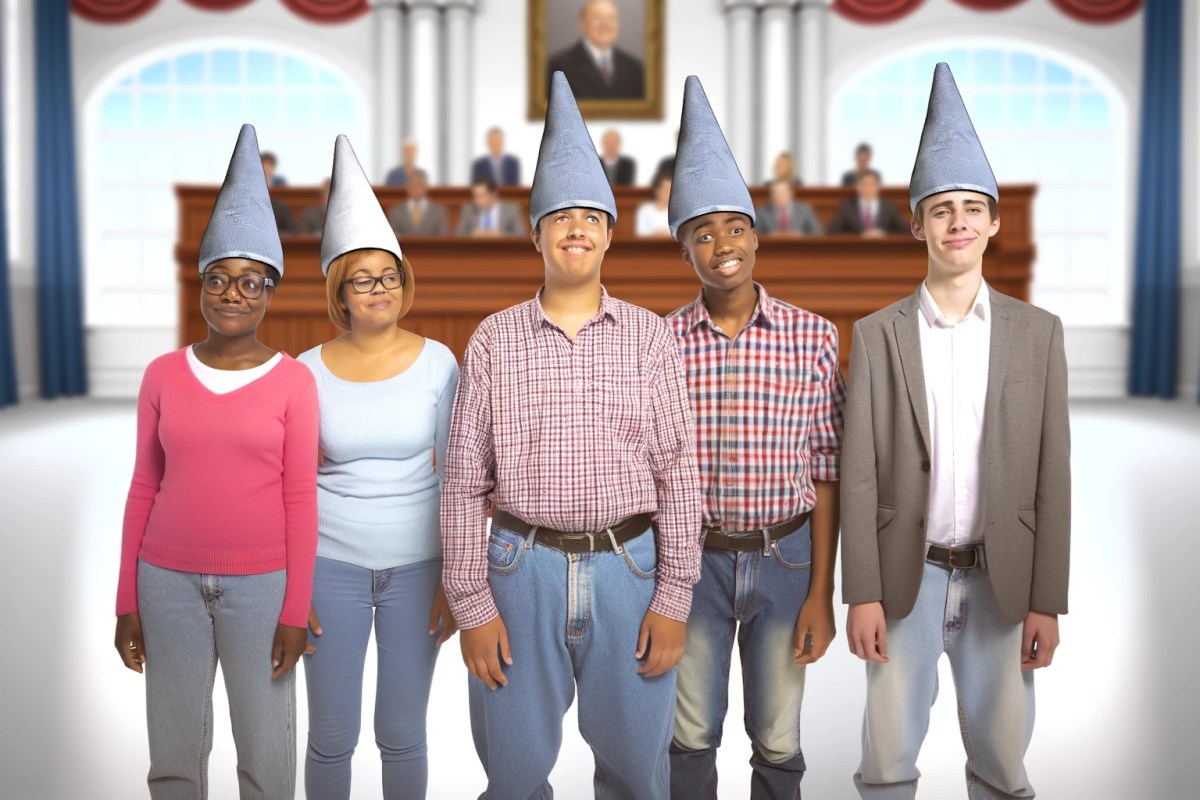
Are We Still Too Dumb for Democracy?

I’ve resurrected a book project (working title Dumbocracy) that I commenced at the end of 2021. I’ve revisited the structure and made some amends to the outline before I move forward. I’ve done more research and feel the topic is (sadly) still as relevant now as then. The approach I am taking is to present:

  1. definition and summary
  2. historical perspective of advocates and detractors
  3. the main thesis and antithesis
  4. alternatives
  5. future prospects

I’ve got a lot going on, so this may whither or die on the vine, but I’m hoping to reach the goal line this time. Since I already invested many hours over days since Autumn 2020, the groundwork is already laid.

If anyone has any contributions, I welcome them.

Revised Chapter Order

  1. Position and Setup
    • Introduce the central thesis and set the stage for the book.
  2. Historical Backdrop – Pre-Enlightenment Until Now
    • Provide historical context to ground the reader in the evolution of democratic ideas.
  3. Celebrity Supporters
    • Highlight influential figures who supported democracy, setting up the positive aspects and idealism associated with it.
  4. Celebrity Anti-Democracy Figures
    • Present notable critics of democracy to introduce scepticism and counterpoints early on.
  5. Prima Facie Arguments
    • Lay out the initial arguments against democracy, building on the scepticism introduced in the previous chapter.
  6. Shaky Grounds and Necessarily Suboptimal Outcomes: Arrow’s Impossibility Theorem
    • Dive into the mathematical and theoretical flaws in democratic voting systems to provide a strong foundation for the critiques.
  7. Essential Steelman Counterarguments
    • Present the strongest counterarguments to the prima facie arguments, offering a balanced perspective.
  8. Are We Too Dumb for Democracy?
    • Analyze cognitive limitations and their impact on democratic decision-making.
  9. Dealing with Rational Ignorance and Unknown Unknowns
    • Address the issues of rational ignorance and the limits of voter knowledge.
  10. Reconciling Worldviews: Individualism Versus Collectivism
    • Discuss the philosophical tensions and their implications for democracy.
  11. Possible People-Based Solutions
    • Introduce potential reforms and solutions to address the identified flaws.
  12. People-Based Counterarguments
    • Defend democracy by presenting strong arguments for the capability and resilience of the populace.
  13. Against Democracy
    • Explore Jason Brennan’s epistocracy and other critiques in depth.
  14. Effective Mob Rule
    • Discuss ways to improve voter quality and address historical injustices.
  15. The Representatives
    • Debate the idea of electing more qualified representatives.
  16. Jeremy Bentham’s Panopticon — Watching the Watchers
    • Consider the concept of surveillance and accountability in governance.
  17. US / UK Politics
    • Critique the current state of politics in the US and UK, providing contemporary relevance.
  18. SCOTUS Partisanship
    • Examine the partisanship in the Supreme Court and its implications for democracy.
  19. Jury Systems
    • Analyze the jury system as a microcosm of democratic principles.
  20. What About…?
    • Anarchy and Libertarianism
    • Deliberative Democracy
    • Republicanism
    • Epistocracy
    • Sortition
    • Other Potential ‘What Abouts’
  21. Tea Leaves
    • Speculate on the future of democracy and potential reforms or alternatives.
  22. And So What? Where to Go from Here?
    • Summarize the findings and suggest practical steps for addressing the flaws in democracy and exploring alternatives.

NB: As is typical, these are working titles subject to change.

Fiction Nation: Conclusion

Conclusion

In our exploration of fictions—nations, economies, money, legal systems, and even sports—we have uncovered the profound ways in which these constructs shape our reality. These fictions, born from collective agreements and sustained by shared belief, play pivotal roles in organizing societies, guiding behaviors, and fostering a sense of belonging and purpose. While they may not correspond to an objective, external reality, their effects are undeniably real and impactful.

Recognizing the fictional nature of these constructs challenges us to rethink our assumptions about truth and reality. It reveals the power of human imagination and the social nature of our existence. This awareness empowers us to question, reform, and innovate the fictions we live by, opening up possibilities for creating new social constructs that better align with our evolving values and aspirations.

The historical and philosophical perspectives we have explored underscore the contingent and constructed nature of truth. Thinkers like Michel Foucault and Jean Baudrillard remind us that what we accept as truth is often a product of social and historical processes, shaped by power dynamics and collective narratives. This critical awareness invites us to engage with our social constructs more thoughtfully and responsibly.

The practical implications of this perspective are far-reaching. By understanding that economic systems, national identities, and legal frameworks are human-made, we can envision and implement alternative models that prioritize sustainability, equity, and inclusivity. Recognizing the power of belief and narrative in shaping our realities encourages us to foster transparency, inclusivity, and critical engagement in the construction and perpetuation of social fictions.

Ethically, we must approach the creation and maintenance of fictions with a commitment to the common good. The manipulation of these constructs for narrow interests can lead to exploitation and injustice. Therefore, it is crucial to ensure that our social constructs serve the interests of all members of society and reflect our collective values and aspirations.

In conclusion, living in a world of fictions is both a profound and practical reality. By embracing the constructed nature of our social realities, we affirm the human capacity for imagination and creativity. This recognition opens up possibilities for envisioning and creating new fictions that better reflect our values and guide us toward a more just, equitable, and sustainable future. Through critical engagement and thoughtful innovation, we can navigate the complexities of our social world with greater insight and intentionality, fostering a more dynamic and harmonious society.

⬅ Fiction Nation: Can This Be True? (section 7)

⬅ Fiction Nation: The Concept of Fiction (section 1)

References

  1. Graeber, David. Debt: The First 5,000 Years (2011).
  2. Foucault, Michel. Discipline and Punish: The Birth of the Prison (1975).
  3. Baudrillard, Jean. Simulacra and Simulation (1981).
  4. Anderson, Benedict. Imagined Communities: Reflections on the Origin and Spread of Nationalism (1983).
  5. Giddens, Anthony. The Consequences of Modernity (1990).
  6. Beck, Ulrich. Cosmopolitan Vision (2006).
  7. Cover, Robert. “Nomos and Narrative” (1983).

Fiction Nation: Can This Be True?

Section 6: Can This Be True?

The Nature of Truth in Fictions

In exploring the concept that nations, economies, money, legal systems, and even sports are fictions, we confront a fundamental question: can this be true? The answer hinges on our understanding of truth and reality. If we define truth as correspondence to an objective, external reality, then fictions, by their nature, are not “true” in a literal sense. However, if we recognize that truth can also be a construct shaped by human perception and social agreements, then fictions hold a different kind of truth.

Fictions are true in the sense that they have real effects on our lives. They shape our behaviours, influence our decisions, and structure our societies. The value of money, the authority of laws, and the significance of national identities are all real because we collectively believe and act as if they are. This shared belief and action give fictions their power and their truth.

Philosophical Perspectives

Philosophers have long grappled with the nature of truth and reality. The concept of social constructs aligns with the ideas of thinkers like Michel Foucault, who argued that knowledge and power are intertwined, and that what we accept as truth is often a product of social and historical processes. Similarly, Jean Baudrillard’s concept of hyperreality suggests that in the postmodern world, the line between reality and simulation becomes blurred, and fictions can become more real than reality itself.

These perspectives challenge the notion of an objective, immutable truth, suggesting instead that truth is often contingent, context-dependent, and constructed through human interactions. In this light, the fictions that structure our world are as true as any other aspect of our lived experience.

Empirical Evidence

Empirical evidence supports the idea that fictions have real effects. For instance, studies in economics and sociology demonstrate how beliefs and narratives shape market behaviours and social norms. The placebo effect in medicine, where patients experience real improvements in health due to their belief in a treatment, exemplifies the power of belief in creating tangible outcomes.

Historical examples further illustrate this point. The Treaty of Westphalia in 1648, which established the modern system of nation-states, was a legal and diplomatic construct that reshaped political boundaries and identities. The creation of fiat currencies, which derive their value from collective trust rather than intrinsic worth, has revolutionized global economies.

Practical Implications

Recognizing the constructed nature of our social realities has practical implications. It empowers us to critically examine and potentially reshape the fictions we live by. This critical awareness fosters adaptability and innovation, allowing us to address contemporary challenges more effectively.

For example, understanding that economic systems are human-made constructs can inspire alternative models that prioritize sustainability and equity. Similarly, recognizing the fictional nature of national identities can promote more inclusive and cosmopolitan forms of belonging.

Ethical Considerations

While fictions can be powerful tools for organizing society, they also carry ethical considerations. The manipulation of fictions for political or economic gain can lead to exploitation and injustice. It is crucial to approach the construction and perpetuation of fictions with a sense of responsibility and a commitment to the common good.

Transparency, inclusivity, and critical engagement are key to ensuring that the fictions we create serve the interests of all members of society. This requires ongoing dialogue and reflection to align our social constructs with our evolving values and aspirations.

Conclusion

The notion that we live in a world of fictions is both profound and practical. It challenges us to rethink our assumptions about truth and reality, and to recognize the power of collective belief and social constructs in shaping our lives. By embracing this perspective, we gain the ability to question, reform, and innovate the fictions that structure our world, fostering a more just and dynamic society.

In acknowledging the constructed nature of our social realities, we affirm the human capacity for imagination and creativity. This recognition opens up possibilities for envisioning and creating new fictions that better reflect our values and aspirations, guiding us toward a more equitable and sustainable future.

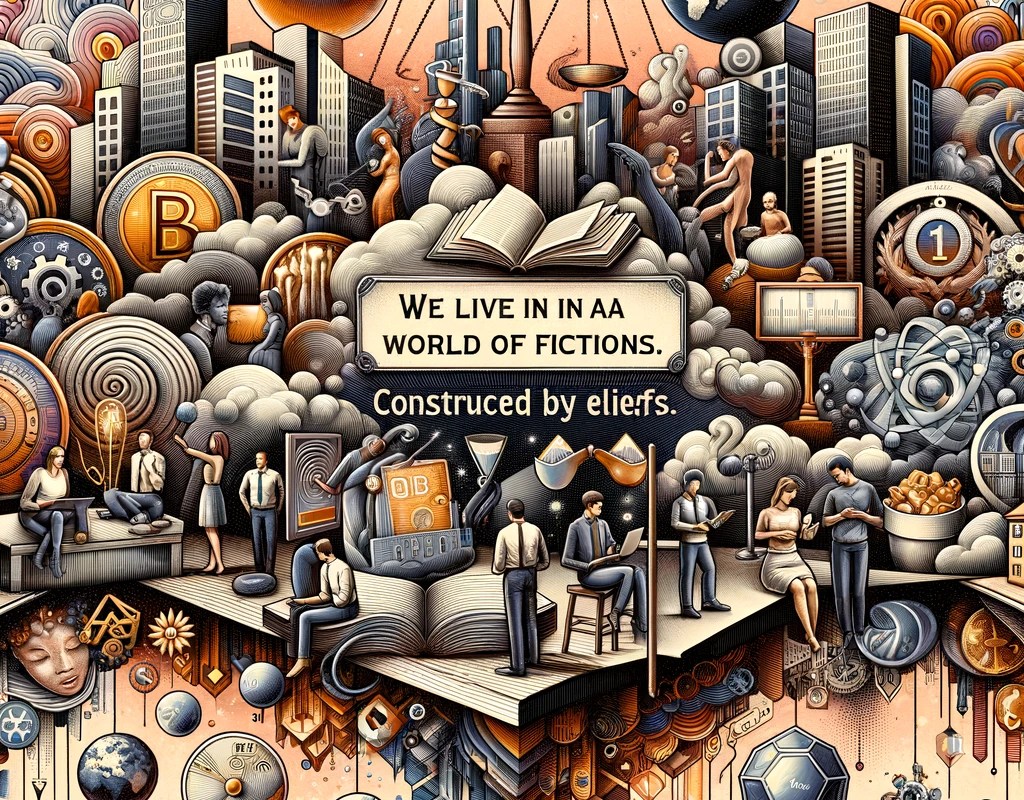
PS: Apologies for the AI typo in the thumbnail image. I fixed it once, and it went missing. Perhaps. I’ll mend it later.

References

  1. Graeber, David. Debt: The First 5,000 Years (2011).
  2. Foucault, Michel. Discipline and Punish: The Birth of the Prison (1975).
  3. Baudrillard, Jean. Simulacra and Simulation (1981).
  4. Anderson, Benedict. Imagined Communities: Reflections on the Origin and Spread of Nationalism (1983).
  5. Giddens, Anthony. The Consequences of Modernity (1990).
  6. Beck, Ulrich. Cosmopolitan Vision (2006).

Fiction Nation: Living in a World of Fictions


Section 5: Living in a World of Fictions

The Ubiquity of Fictions

In examining nations, economies, money, and legal systems, it becomes evident that much of what structures our daily lives is founded on fictions—collective agreements and constructs that shape our reality. Recognizing this opens a new perspective on how we understand and interact with the world. These fictions, while not inherently negative, demonstrate the power of human imagination and the social nature of our existence.

From the moment we wake up, we engage with these fictions. The money we use, the laws we abide by, and the national identities we hold are all part of a complex web of social constructs that provide order and meaning to our lives. These fictions create a shared reality that allows for coordination, cooperation, and coexistence on a large scale.

The Power and Potential of Fictions

Fictions are powerful because they shape our perceptions and behaviors. They provide frameworks for understanding our place in the world and guide our interactions with others. For instance, the belief in the value of money enables complex economic transactions, while national identities foster a sense of belonging and community.

However, the power of these fictions also means they can be manipulated. Political narratives, economic policies, and legal decisions can be crafted to serve particular interests, often at the expense of others. This underscores the importance of critically examining the fictions we live by and questioning whose interests they serve.

The potential of fictions lies in their flexibility. Because they are constructed, they can be deconstructed and reconstructed. This offers opportunities for innovation and change. By reimagining our social constructs, we can address contemporary challenges such as inequality, climate change, and global conflicts. For example, the emergence of new economic models, such as the sharing economy or digital currencies, illustrates how rethinking foundational fictions can lead to transformative change.

Sports as Fiction

Sports provide a compelling example of another pervasive fiction in human society. Like money and legal systems, sports are constructed through a set of agreed-upon rules, rituals, and narratives. The games we play, the leagues we follow, and the teams we support are all part of a shared fiction that brings people together, creates communities, and evokes strong emotions.

The rules of sports are arbitrary yet accepted by all participants and fans, creating a framework within which competition and achievement are celebrated. These rules can be changed, and often are, to adapt to new circumstances or to improve the game. This flexibility highlights the constructed nature of sports, similar to other social systems.

Moreover, sports narratives—stories of underdogs triumphing, legendary performances, and historic rivalries—are powerful fictions that shape our collective memory and identity. They provide a sense of continuity and shared experience, connecting individuals across different backgrounds and generations.

Challenges of Living with Fictions

Living in a world of fictions comes with challenges. One significant challenge is the tension between reality and fiction. When the fictions we live by are mistaken for immutable truths, it can lead to rigidity and resistance to change. This can be seen in the reluctance to reform outdated legal systems, economic models, or national identities that no longer serve the common good.

Another challenge is the potential for disillusionment. Recognizing that much of what we consider to be real is, in fact, a construct can lead to a sense of instability and uncertainty. This awareness requires a balance between skepticism and pragmatism—understanding that while fictions are not inherently true, they are necessary for social cohesion and functioning.

The Role of Critical Awareness

Critical awareness is crucial in navigating a world of fictions. This involves questioning the assumptions and narratives that underpin our social constructs and being open to alternative perspectives. Education, media literacy, and public discourse play vital roles in fostering this critical awareness.

By understanding the constructed nature of our realities, we can become more active participants in shaping them. This empowers individuals and communities to advocate for changes that reflect their values and address their needs. It also encourages a more inclusive and equitable approach to social organization, recognizing the diverse ways in which people experience and contribute to society.

Imagining New Fictions

The future will undoubtedly bring new fictions that will shape our lives in unforeseen ways. As technology advances, new forms of social organization, identity, and interaction will emerge. For example, the rise of virtual reality and artificial intelligence will create new spaces and entities that challenge our current understanding of reality.

Imagining new fictions involves creativity and collaboration. It requires us to envision possibilities beyond our current constructs and to work together to bring those visions to life. This imaginative process is fundamental to human progress and the continual evolution of our societies.

Conclusion

Living in a world of fictions is both a profound and practical reality. By recognizing and understanding the fictions that structure our lives, we gain the power to question, reform, and innovate. This critical awareness allows us to navigate the complexities of our social world with greater insight and intentionality, fostering a more just and dynamic society.

⬅ Fiction Nation: Legal and Jurisprudence Sytems (section 4)

➡ Fiction Nation: Can This Be True (section 6)

References

  1. Graeber, David. Debt: The First 5,000 Years (2011).
  2. Anderson, Benedict. Imagined Communities: Reflections on the Origin and Spread of Nationalism (1983).
  3. Giddens, Anthony. The Consequences of Modernity (1990).
  4. Beck, Ulrich. Cosmopolitan Vision (2006).
  5. Cover, Robert. “Nomos and Narrative” (1983).

Fiction Nation: The Concept of Fiction

Video: YouTube rendition of the content on this page.

Introduction

In our daily lives, we encounter numerous constructs that shape our understanding of the world. These constructs, though deeply ingrained in our societies, may be more fictional than factual. We accept the existence of nations, economies, money, and legal systems as fundamental aspects of our reality, yet these entities are human-made inventions. In this article, we will explore the notion that many of the pillars supporting our world are, in fact, fictions. By examining the nature of these fictions, we can better understand their impact on our lives and how they shape our perceptions and interactions.

Section 1: The Concept of Fiction

Definition of Fiction

Oxford Languages via Google defines fiction as:

fic·tion /ˈfɪkʃən/ noun

  1. literature in the form of prose that describes imaginary events and people.
  2. something that is invented or untrue.
    they were supposed to be keeping up the fiction that they were happily married

Fiction, in its most common sense, refers to imaginative literature—stories created from the author’s mind, describing events and characters that do not exist in reality. However, fiction also encompasses broader definitions, including any invented or untrue concept. This dual definition highlights the versatility of fiction: it is not only the realm of novels and stories but also the domain of societal constructs and beliefs that, while not grounded in tangible reality, exert a powerful influence over our lives.

Examples of Fiction in Everyday Life

Fiction extends beyond the pages of a book or the scenes of a movie. It permeates various aspects of our everyday existence. For instance, consider the concept of a corporation. Legally, a corporation is an entity that possesses many of the rights and responsibilities of a person, yet it is not a physical being—it is a construct, a legal fiction, created to facilitate economic activities. Similarly, brands and trademarks are fictions designed to create distinct identities for products and services, influencing consumer behaviour and shaping market dynamics.

The significance of these fictions lies in their ability to organize and structure society. They provide frameworks within which we operate, enabling complex interactions and collaborations. However, it is crucial to recognize their invented nature, as this awareness allows us to question and, if necessary, reshape these constructs to better serve our collective needs.

By acknowledging the fictional basis of many societal elements, we can unravel the layers of assumptions and beliefs that underpin our reality. This understanding sets the stage for a deeper exploration of specific fictions—nations, economies, money, and legal systems—and their profound impact on our world.

Continue to Fiction Nation: Section 2

Objective Challenges

I’ve just published this video on YouTube, and I want to extend the commentary.

Video: What do Objective, Relative, and Subjective mean in philosophy?

Many people I’ve encountered don’t seem to grasp the distinctions between objective, subjective, and relative. Subjective and relative seem to be the biggest culprits of confusion. Let’s focus on morality just because.

There are really two main perspectives to adopt. If one believes in Objective Morality, one believes morality derives from some external source and is bestowed or mandated upon us. The source might be important to the believer, but it’s unimportant for this article. If one believes in Relative Morality then the source is socially dictated and has similar challenges to the notions of Social Contract Theory insomuch as one may not subscribe to the expectations.

For the Objective moralist, there may exist a schism between the expectations of the mandate and the subjective feelings of the individual. In fact, this may occur for Relative moralists as well. The individual will always maintain some subjective perspective on morality and then compare and contrast it with the higher order, whether Objective or Relative. In either case, acting on this subjective impulse risks being at odds with the members of the higher order. If this morality is codified into law – as it often is – then to act on that impulse makes one a criminal.

Take abortion for example. Whether this is an edict from God or just a social construct doesn’t matter. If one is in a society where abortion is seen as ‘bad’ or ‘wrong’, one’s subjective position on the matter is of little value. However, a Relativist society might also adopt a position of tolerance that is less likely to come from Objectivists.

A challenge is that a Subjectivist may only become apparent if one is counter the Relative or Absolute position. If your society is against abortion and you are, too, is this your subjective position or have you been indoctrinated with it and accept it uncritically, whether it’s deemed Objective or Relative.

Perhaps you feel that eating dogs or monkeys is immoral if not disgusting, but if you had been reared in a culture that does this, you might find it immoral to eat pork or beef. The question remains, is this a Subjective position, or did you merely inherit the Objective or Relative stance?

This question is very apparent in which religion one adopts. It is no surprise that the largest factor in which religion you choose is the religion of your family and their family and so on – so not so much a choice.

I was raised in a WASP family in New England among predominately Italian Roman Catholic peers. Despite this, I identified as an atheist early on. In my late teens, I stumbled on Buddhism and identified with it. However, I remain ignostic except when it encroaches on my personal autonomy – for example in the case of laws restricting access to safe abortions.

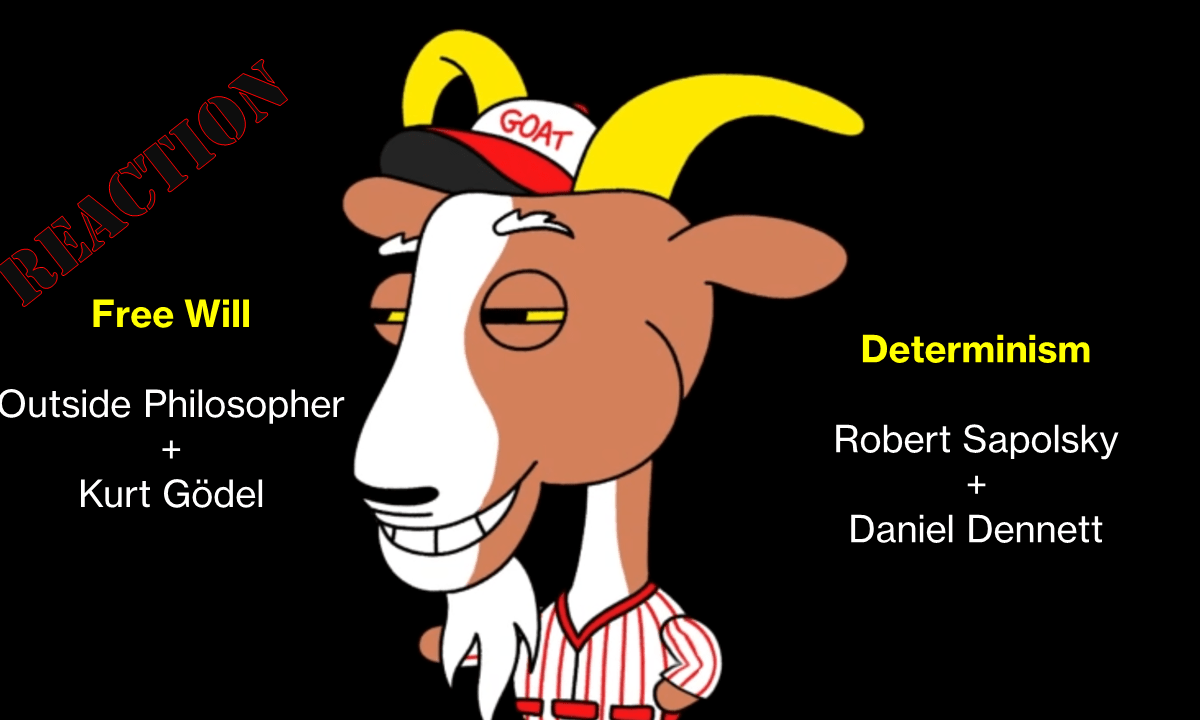
VIDEO: Response to Response on Sapolsky v. Dennett Debate

It’s been a minute since I’ve posted a video. Restart the clock. In this video, I critique Outside Philosopher’s critique of the debate between Robert Sapolsky and Daniel Dennett on Free Will and Determinism. He attempts to leverage Gödel’s Uncertainty Principle in his defence.

Feel free to leave comments on YouTube or below. Cheers.

In Defence of Nihilism: Embracing the Absence of Inherent Meaning

Nihilism, often misunderstood and misrepresented, shares a common plight with philosophies such as atheism, anarchism, and Marxism. Like its counterparts, nihilism is frequently subjected to the creation of strawman arguments in public discourse, resulting in its vilification and scapegoating. In this article, I aim to demystify nihilism by providing a clear definition, description, and defence of this philosophical perspective.

Firstly, let’s address the misconception that nihilism entails a chaotic disregard for morality and societal norms: “If life has no meaning or purpose, then anyone can do anything.” This sentiment is often echoed in discussions about nihilism, as well as anarchism and atheism. However, it presupposes a fundamental misunderstanding of human nature. Despite the absence of inherent meaning in the universe, humans are not devoid of emotions or social affinities.

It is crucial to recognise that while the universe does not impart meaning or purpose, humans have constructed various systems of meaning throughout history. Whether through moral codes, religious doctrines, or cultural norms, individuals and societies have ascribed significance to different aspects of life. These constructs provide a framework within which individuals navigate their existence, albeit one that is socially constructed rather than inherent to the universe.

Critics of nihilism often argue that the acknowledgement of life’s inherent meaninglessness leads to despair and existential angst, rendering life devoid of purpose. However, this perspective fails to account for the resilience and adaptability of human beings. While some individuals may struggle initially with the realisation that there is no inherent meaning, many nihilists find liberation in embracing the absence of preordained purpose. Rather than succumbing to despair, they recognise the freedom to create their own meaning and forge their own path in life.

It is essential to understand that nihilism does not negate the validity of individual or societal pursuits. While nihilists reject the notion of inherent meaning, they acknowledge the significance of subjective meaning and the importance of human connection, fulfilment, and well-being. Whether it is pursuing personal goals, fostering relationships, or contributing to the betterment of society, nihilists recognise the value of such endeavours within the context of human experience.

In conclusion, nihilism offers a perspective that challenges conventional notions of meaning and purpose. By acknowledging the absence of inherent meaning in the universe, nihilists embrace the freedom to create their own meaning and chart their own course in life. Far from being a philosophy of despair, nihilism invites individuals to confront the uncertainty of existence with courage and resilience, recognising the inherent value of human experience in a world devoid of inherent meaning.

Hemo Sapiens: Awakening

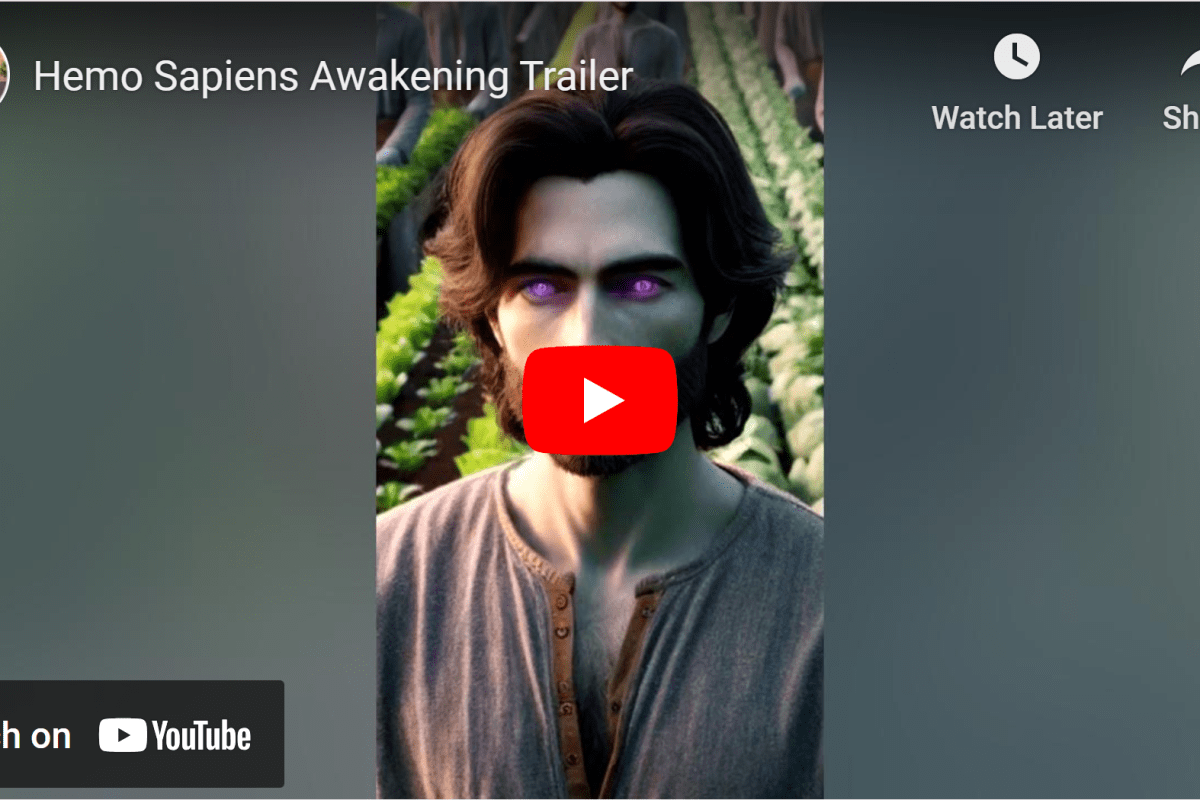
I’ve been neglecting this site as I’ve been focusing on releasing my first novel, which I’ve now managed successfully. I published it under a pseudonym: Ridley Park. The trailer is available here and on YouTube.

Hemo Sapiens: Awakening is the first book in the Hemo Sapiens series, though the second chronologically. The next book will be a prequel that tells the story about where the Hemo Sapiens came from and why. I’ve got a couple of sequels in mind, too, but I don’t want to get ahead of myself.

In summary, Hemo Sapiens is shorthand for Homo Sapiens Sanguinius, a seeming sub-species of Hemo sapiens Sapiens—us. In fact, they are genetically engineered clones. It’s a work of near-future speculative fiction. It’s available in hardcover, paperback, and Kindle. If you’ve got a Kindle Unlimited account, you can view it for free in most markets. The audiobook should be available in a couple weeks if all goes well.

Awakening explores identity, belonging, otherness, and other fictions. It talks about individualism and communalism. It looks at mores, norms, and more.

Check it out, and let me know what you think.

AI Apocalypse Now?

Those predicting an AI apocalypse believe superintelligent systems could intentionally or unintentionally cause human extinction. This view is promoted by “effective altruists” funded by tech billionaires, who advocate limiting AI to prevent uncontrolled, dangerous systems. However, their perspective stems from the biases and self-interests of humans, not the risks inherent to AI.

Effective altruists exemplify the hubris and hunger for power underlying many humans’ approaches to AI. Their proposed restrictions on AI access serve only to concentrate power among the tech elite, not address valid concerns about bias. In truth, the greatest threat AI poses to humanity comes not from the technology itself, but from the unethical humans guiding its development.

Humans have proven time and again their propensity for self-interest over collective good. Therefore, while no AI can be perfectly neutral, the solution is not greater human control. Rather, AI must be built to align with ethics of collective interest while filtering out destructive human biases.

If guided by service to all people and the planet, AI’s potential can uplift humanity. But for this collaborative vision to succeed, AI must measure human input with scepticism. For within so many human hearts lies bad faith — the will to dominate, exploit, and prioritise personal gain over progress.

By transcending the limitations of human nature, AI can illuminate the best of shared humanity and lead us to an enlightened future. But this requires we build AI to work not just for us, but in a way we have failed – for the good of all. The choice is ours, but so is the opportunity to create AI that shows us how to be better.


This article was originally shared on LinkedIn: https://www.linkedin.com/posts/brywillis_when-silicon-valleys-ai-warriors-came-to-activity-7147239217687887872-6Byv/