Raison d’ĂȘtre

1–2 minutes

I maintain this blog for two primary reasons: as an archive, and as a forum for engagement.

Philosophy isn’t a mass-market pursuit. Most people are content simply to make it through the day without undue turbulence, and I can hardly blame them. Thinking deeply is not an act of leisure; it’s a luxury product, one that Capitalism would rather you didn’t afford. Even when I’ve been employed, I’ve noticed how wage labour chokes the capacity for art and thought. Warhol may have monetised the tension, but most of us merely survive it.

Video: Sprouting seed. (No audio)

That’s why I value engagement – not the digital pantomime of ‘likes’ or ‘shares’, but genuine dialogue. The majority will scroll past without seeing. A few will skim. Fewer still will respond. Those who do – whether to agree, dissent, or reframe – remind me why this space exists at all.

To Jason, Julien, Jim, Lance, Nick, and especially Homo Hortus, who has been conversing beneath the recent Freedom post: your engagement matters. You help me think differently, sometimes introducing writers or ideas I hadn’t encountered. We may share only fragments of perspective, but difference is the point. It widens the aperture of thought – provided I can avoid tumbling into the Dunning-Kruger pit.

And now, a note of quiet satisfaction. A Romanian scholar recently cited my earlier essay, the Metanarrative Problem, in a piece titled Despre cum metanarațiunile construiesc paradigma și influențează răspunsurile emoționale – translation: On How Grand Narratives Shape Paradigms and Condition Our Emotional Responses. That someone, somewhere, found my reflections useful enough to reference tells me this exercise in public thinking is doing what it should: planting seeds in unpredictable soil.

On Death and Dying

3–4 minutes

Disclaimer: I should be finishing my Language Insufficiency Hypothesis book, yet I am here writing about death and dying. Why? Because I was watching an interview with Neal Schon by Rick Beato. I should have been working on my book then, too. It seems I can write about death more easily than finish a book about the failure of language. Perhaps because death speaks fluently.

I haven’t produced music professionally since the mid-1980s, and I haven’t performed since 2012, yet I am still drawn to its intricacies. My fingers no longer allow me to play much of anything anymore. This is a sort of death. When the body forgets what the mind remembers, that’s a particular kind of death – one language dying while another can’t translate.

As Neal was walking Rick through his equipment and approach to music, I was taken back to a similar place. I wanted to plug into a Fender Twin or a Hi-Watt, a Lexicon 224 or a Cry Baby wah. I still have nightmares thinking of setting up a Floyd Rose.

Video: Rick Beato interviews Neal Schon

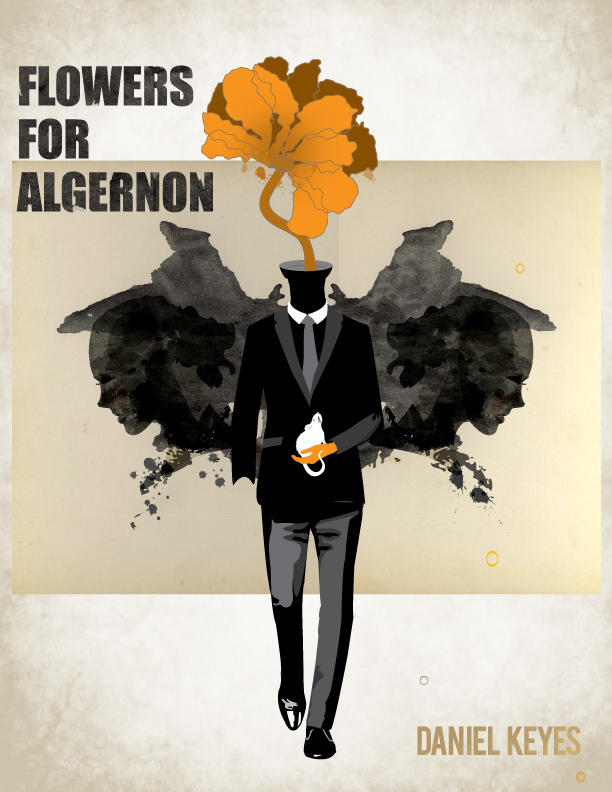
But I can’t go back. As for music, I can’t go forward either. I’m at a standstill, but in a regressed position. It’s uncomfortable. It feels a lot like Charlie in Flowers for Algernon. I used to be able to do that. Don’t get me wrong – I am not claiming to be on the level of Neal Schon, a man I remember from his days with Santana, but when you reach a level of proficiency and then lose it, it hurts; it can be devastating.

Audio: NotebookLM podcast on this topic.

I recall being in hospital in 2023 – a physical rehabilitation facility, really – and I found a piano in a vacant common room. Drawn to the instrument, I rolled over my wheelchair and played
nothing. My fingers wouldn’t work. The piano sat there like a relic of my former self. I rolled toward it as though approaching an altar. My fingers hovered, twitched, failed. The sound of nothing has never been so loud. I cried. I cried a lot those days. I was down to 58 kilos – at 182 cm, I weighed in at just over 9 stone. It wasn’t the best of times.

I still feel a certain nostalgia.

And then there are the people I’ve lost along the way – as another Neal reflected on – The Needle and the Damage Done.

Love and art are both acts of repetition. When one ends, the reflex remains – the impulse to reach, to share, to call out. Death doesn’t stop the motion, only the answer.

I’m lucky to have left Delaware. When a girlfriend died in 2020, I remained and connected with another until 2023, when she died, too. From 2020 to 2023, when I was out and about, something might have caught my eye, and I’d reflect on how Carrie might have liked that.

But it was different. It was more like, ‘I should let Carrie know about that,’ only to realise fractions of a second later that she wouldn’t see whatever it was; she couldn’t. And I’d carry on. I didn’t need to repeat this with Sierra. My relocation to Massachusetts solved this challenge – not so many triggers.

I’m not sure how the loss of ‘professional’ music relates to deceased partners, but it does – at least enough for me to make this connexion. Perhaps I’m just connecting arbitrary dots, but I’ll call it nostalgia.

I don’t play, but I still hear it. The song continues without me. Nostalgia is just rhythm without melody. Perhaps all nostalgia is epistemological error – the confusion of past fluency for present meaning.

Good Enough

As I approach my sixty-second year on earth, having almost expired in March, I’ve been a bit more reflective and introspective. One is categorical. I’ve been told over the years that I am ‘good’ or ‘excel’ at such and such, but I always know someone better—even on a personal level, not just someone out in the world. We can all assume not to be the next Einstein or Picasso, but I am talking closer than that.

During my music career, I was constantly inundated with people better than me. I spent most of my time on the other side of a mixing console, where I excelled. Even still, I knew people who were better for this or another reason. In this realm, I think of two stories. First, I had the pleasure and good fortune to work on a record with Mick Mars and Motley Crue in the mid-’80s. We had a chat about Ratt’s Warren DiMartini, and Mick told me that he knew that Warren and a spate of seventeen-year-olds could play circle around him, but success in the music business is not exclusively based on talent. He appreciated his position.

In this vein, I remember an interview with Tom Morello of Rage Against the Machine. As he was building his chops he came to realise that he was not going to be the next Shredder or Eddie Van Halen, so he focused on creating his own voice, the one he’s famous for. I know plenty of barely competent musicians who make it, and I know some virtual virtuosos who don’t. But it involves aesthetics and a fickle public, so all bets are off anyway.

As I reflect on myself, I consider art and photography. Always someone better. When I consider maths or science, there’s always someone better. Guitar, piano? Same story.

Even as something as vague and multidimensional as business, I can always name someone better. I will grant that in some instances, there literally is no better at some level—just different—, so I sought refuge and solace in these positions. Most of these involved herding cats, but I took what I could.

Looking back, I might have been better off ignoring that someone was better. There’s a spot for more than the best guitarist or singer or artist or policeman for that matter. As a musician, I never thrived financially—that’s why I was an engineer—, but I could have enjoyed more moments and taken more opportunities.

When I was 18, I was asked to join a country music band. I was a guitarist and they needed a bass player. I didn’t like country music, so I declined—part ego, part taste. Like I said, aesthetics.

As I got older and started playing gigs, I came to realise that just playing was its own reward. I even played cover bands, playing songs that were either so bad or so easy. But they were still fun. I’m not sure how that would have translated as playing exclusively country music day after day, but I still think I might have enjoyed myself—at least until I didn’t. And the experience would still have been there.

I was a software developer from the nineties to the early aughts. I was competent, but not particularly great. As it turns out, I wasn’t even very interested in programming on someone else’s projects. It’s like being a commercial artist. No, thank you. It might pay the bills, but at what emotional cost?

I was a development manager for a while, and that was even worse, so I switched focus to business analysis and programme management, eventually transitioning to business strategy and management consulting. I enjoyed these more, but I still always knew someone better.

On one hand, whilst I notice the differences, it’s lucky that I don’t care very much. Not everyone can be a LeBron James or a Ronaldo, but even the leagues are not filled with this talent. I’m not suggesting that a ten-year-old compete at this level, but I am saying if you like it, do it. But temper this with the advice at the Oracle of Delphi: Know thyself. But also remember that you might never be the best judge of yourself, so take this with a grain of salt. Sometimes, ‘good enough’ is good enough.

Fast Car

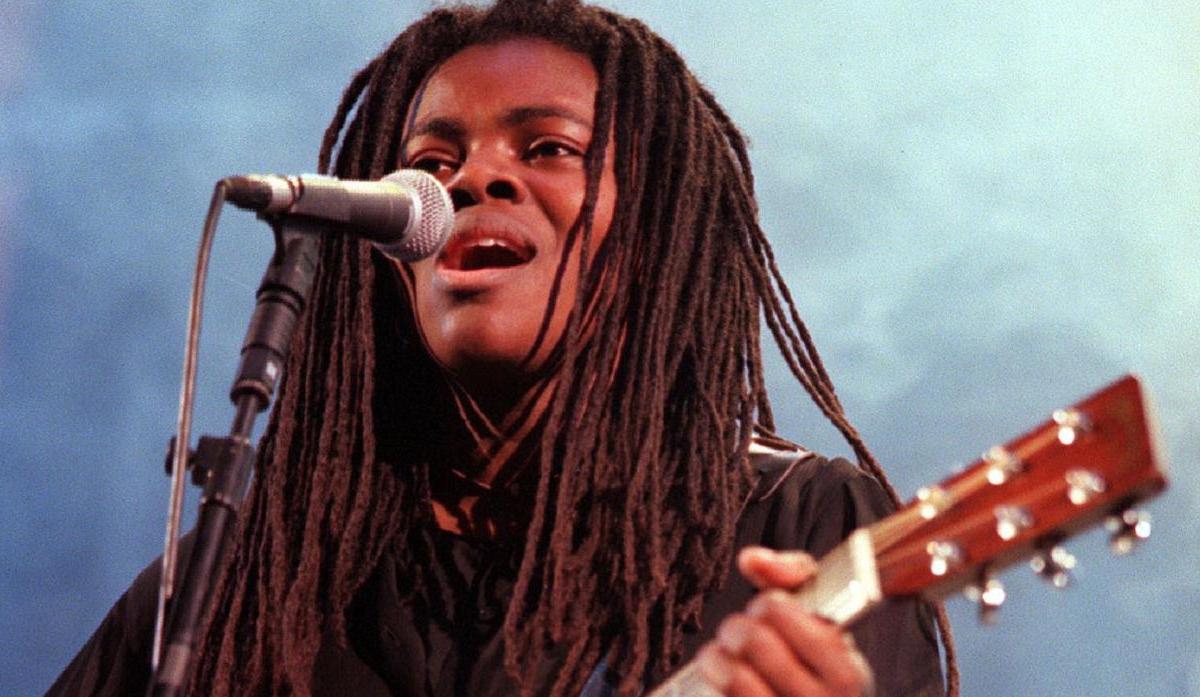
I enjoy listening to music reaction videos on YouTube. The other day, I came across Tracy Chapman’s Fast Car. I’ve loved this song since it first came out. Musically, it’s a simple repetitive chord progression—finger-picked D, A, F#m, E. In a manner, repetition is a metaphor for the lyrical narrative. In this live performance version, the treatment is more simplified than the original album version—until the last bar.

Tracy Chapman – Fast Car

The protagonist is in a place where any place is better, and she’s got a fast car she can use to get away. The situation she finds herself in is a family relationship where alcoholism is a problem; her father is an alcoholic. Her old man’s got a problem. He lives with the bottle, that’s the way it is. But she’s got a friend, and she’s got hope. She tells her friend, ‘maybe we make a deal. Maybe together we can get somewhere. They are starting from zero and have got nothing to lose. They can follow her ‘plan to get us out of here‘.

And so she left to create a new life, but in this new place, she recreated her prior experience with her friend proxying her father. Like her dad, she loved her friend, but she knew that the relationship wouldn’t work out.

And so she left to create a new life. Rather, she remains in place and asks her friend to make a decision, to take a fast car and keep on driving, to leave tonight or live and die this way.

Perhaps this new life would be better without the remnant from the previous life. Did she learn from her experience, or would she seek the same type of partner? Would she fall into the same pattern because it was her comfort zone? The song doesn’t tell us, but the underlying music hasn’t changed. It’s easy to imagine the next verse to be the same as the first—although one could argue that it does end on the G, not repeating the Em and D they run out the phrase. That’s for you to decide.

Returning to the song, there is the chorus. She’s retelling this story. She’s looking back—remembering. She had wanted to belong. She wanted to be something. In the end, we don’t know where she ended up. It seems to me that she’s in a place where she can reflect. Perhaps it’s the calm before the storm, or perhaps this challenge has been resolved, and the chain has been broken. Perhaps, that’s the effect of the added notes in the final bars.

A powerful song.