Where does morality come from? I believe that there exists three possible vectors for morality in one of two categories—objective and subjective. Absolute objective morality derives from some single source outside of the subjective experience. Monotheistic religions have the propensity to adopt this ontology. Subjective morality is a human social construct and may be subdivided into logical and emotional subcategories. As a non-cognitivist, I feel that I am biased toward the emotional vector.
Podcast: Audio rendition of this page content
In my view, emotion always proceeds logic. I’ve been told for as long as I remember that I am hyper-logical and can be as dispassionate as Mr Spock or the Data character from the Star Trek franchise. As an economist, I was trained to stand back and objectify problems. However, the impetus for attention in the first place is always emotional. Or at least I can claim it to be alogical or prelogical. Even so, there would be a chain of events that moved from prelogical to emotional to logical. One may claim that applying logic to 2 + 3 requires no emotional content, but this has been habituated. Neither is there emotion nor logic. It’s a simple rote recitation.
I am going to take literary licence and dismiss objective reality out of hand as excessively unlikely. I think it’s fair to categorise the logical view as Kantian. In this view, humans employed reason and I suppose a consequentialist framework to arrive at the notion that it just made sense to construct moral underpinnings. Of course, by the time of Kant, the Enlightenment was firmly afoot, so we could just borrow and advance the same moral notions. I feel he’d be OK accepting the claim that some classes, say religious, if we follow the money and power trail, and realised that they could exert control and manipulate the playing field if they were the arbiters of morality. I am neither a deeply-read Kant scholar nor an anthropologist, but this is how I see it.
I feel that the emotional impetus for morality might best be characterised by David Hume. In his view, morals would have been made on sentiment and empathy. Then they were interpreted and amended by different cultures and societies. I feel this adjustment is actually the logical element in play.
Fundamentally, animals want a sense of fairness. This is well-documented even in monkeys, so morals are an attempt to codify fairness and fair outcomes. Of course, fairness means different things to different people, so that makes for an unstable foundation. I think Nietzsche takes a more instrumental stance but would side more with Kant with the addition of the power plays that caught Foucault’s attention in the last century.
I’ve shared my perspective here several times. As a non-cognitivist—in the manner of Ayer, Stephenson, and Hare—, morals are entirely emotive responses that then become prescriptive as a template for a civil society. However, as Nietzsche points out inGenealogy of Morals, this template is on the one hand not neutral and, on the other hand, applied differently to different cohorts.
This is not an attempt to provide a deep discourse on morality. Rather, it is just documenting my current perspective on a yet unresolved topic. I’m not sure there that the Kantian or Humean perspective will be the definitive answer. Evolutionary biologists have been tossing their proposals in the hat, but I don’t think we’ll ever get beyond speculation and opinion. This reflects mine.
As humans, we often leverage systems. They seem to make life easier. Whether a routine or a step-by-step instruction through an unknown process, a system can guide us. Systems are also connected, interactive entities, but that’s not for this segment. I am more interested in the loss of humanity that systematic processes and bureaucracy bring, so I am interested in imposed systems rather than systems we invent to find our keys and wallets.
Podcast: Audio rendition of this page contentImage: Spectrum of System versus Human
If we consider systematisation and humanity on a scale, we can see that any move toward systematisation comes at the expense of humanity. It might make logical sense to make this trade-off to some degree or another. The biggest hit to humanity is the one-size-fits-all approach to a problem. It removes autonomy or human agency from the equation. If a system can be that mechanised, then automate it. Don’t assign a human to do it. This is an act of violence.
As I’ve been reading and writing a lot about Iain McGilchrist’s work lately, I feel one can easily map this to left versus right cerebral hemisphere dominance. System-building is inherently human, but it’s in the domain of the left hemisphere. But my imposition of a system on another is violence—one might even argue that it’s immoral.
As with bureaucracy, these imposed systems are Procrustean beds. Everyone will fit, no matter what. And when human beings need to interact with systems, we can not only feel the lack of humanity, but our own humanity suffers at the same time.
A close friend of mine recently checked herself into a mental health facility. After a few days, she called and asked if I could bring her a change of clothes and some toiletries—deodorant, soap, and shampoo. She had some in her house, but the packaging needed to be unopened and factory sealed. I stopped at a shop to buy these items and I brought them to the facility.
At the reception area, I needed to be cross-referenced as an authorised visitor, so I was asked to show proof of my identity as if it mattered who was delivering clothing that was going to be checked anyway. No big deal, they recorded my licence number on a form and ask me to fill it out—name, phone number, and what I was delivering.
The form stated that any open consumable items would not be allowed. I signed the form. An attendant took the bag and told me that I needed to remove the ‘chemicals’, that they would not be delivered. I pointed to the lines on the form that read that this restriction was for open items and reinforced that I had just purchased these and showed her the sales receipt. She told me that the patient would need to obtain a doctor’s permission, and she assured me that the patients all had soap.
I’m sure she thought she was being compassionate and assertive. I experienced it as patronising. Me being me, I chided her lack of compassion and humanity, not a great match for a mental health attendant. In fact, it reminded me of a recent post I wrote on Warmth. In it, I suggested that service staff should at least fake conviviality. I take that back. Faux congeniality is patronising. She mimicked me. “Yes, systems are so inhumane, but here we follow a system.” My first thought was of Adolf Eichmann, who kept the trains on schedule without a care for the cargo. This is the violence inherent in systems.
Systems are not illogical. In fact, they are hyper-logical. And that’s the problem, logic is traded off at the expense of empathy. And one might have a strong argument for some accounting or financial system process, but I’ll retort that this should be automated. A human should not have to endure such pettiness.
I can tell that this will devolve quickly into a rant and so I’ll take my leave and not foist this violence upon you.
This is the caption on the sign for this segment. The sign advertises a solution, which is to “Vote for DEMOCROBOT… The first party run by artificial intelligence”. It also promises to “give everyone a living wage of £1436.78 a week”.
I have been very vocal that I find the idea of humans governing humans is a bad idea at the start. By and large, humans are abysmal system thinkers and easily get lost in complexity. This is why our governments and economies require so much external energy and course correction. Not only were they poorly designed and implemented, but they’re also trying to manage a dynamic system—a complex system. It won’t work.
What about bots and artificial intelligence? The above image was posted elsewhere, and a person commented that our governments are already filled with artificial intelligence. I argued that at best we’ve got pseudo-intelligence; at worse, we’ve got artificial pseudo-intelligence, API.
The challenge with AI is that it’s developed by humans with all of their faults and biases in-built.
The challenge with AI is that it’s developed by humans with all of their faults and biases in-built. On the upside, at least in theory, rules could be created to afford consistency and escape political theatre. The same could be extended to the justice system, but I’ll not range there.
Part of the challenge is that the AI needs to optimise several factors, at least, and not all factors are measurable or can be quantified. Any such attempt would tip the playing field one way or another. We might assume that at least AI would be unreceptive to lobbying and meddling, but would this be the case? AI—or rather ML, Machine Learning or DL, Deep Learning—rely on input. It wouldn’t take long for interested think tanks to flood the source of inputs with misinformation. And if there is an information curator, we’ve got a principle-agent problem—who’s watching the watcher?—, and we may need to invoke Jeremy Bentham’s Panopticon solution.
One might even argue that an open-source, independently audited system would work. Who would be auditing and whose interpretation and opinion would we trust? Then I think of Enron and Worldcom. Auditors paid to falsify their audit results. I’d also argue that this would cause a shift from the political class to the tech class, but the political class is already several tiers down and below the tech class, so the oligarchs still win.
This seems to be little more than a free-association rant, so I’ll pile on one more reflection. Google and Facebook (or Meta) have ethical governing bodies that are summarily shunned or simply ignored when they point out that the parent company is inherently unethical or immoral. I wouldn’t expect much difference here.
I need a bot to help write my posts. I’ll end here.
At heart, I’m an Emotivist. Following Ayer, I don’t believe that morals (and their brethren ethics) convey more than, “I like this, and I don’t like that.” Stevenson’s Prescriptivist extension makes sense, too: “I think this is good, and so should you.”
It seems that Hilary Lawson and I share this perspective. He makes the further point, one I’ll surely adopt, that morals and ethics are effectively ‘designed’ to shut down argument and discussion. It’s akin to the parent telling the kid, “Because I said so”—or “because it’s the right thing to do”.
Podcast: Audio rendition of this page content
I’m a moral non-cognitivist, but people have difficulty enough grasping relativism and subjectivism, so I’m only going to reference moral relativism here. As a moral relativist, right and wrong were both subjective and contextual. One person’s freedom fighter is another person’s terrorist. I won’t derail this with obvious examples. Once one adopts a position, they enjoy the luxury of turning off any critical thinking.
I’ll presume that morals predate religion and deities, but now that the thinking world has abandoned the notion of gods, they’ve replaced it with morals and ethics—and nature, but that’s a topic for another day. The faith-based world retains a notion of gods, but that is fraught with the same relativism of my god is right, and your god is wrong.
As Hilary notes, we’ve transferred the authority, per Nietzsche, from gods to morals in and of themselves, so it again becomes a device for the unengaged. He notes, as I do, that some absolute Truth is a fool’s errand. Echoing Donald Hoffman, what we need is fitness—what Lawson calls usefulness—, not Truth, which is inaccessible anyway—even if it did exist, which of course it doesn’t.
He cites the position Wittgenstein arrives at in his Tractatus. There is and can never be a place where language—words and symbols—intersect with ‘reality’, so the best we can do is to talk about it in a third-person sort of way.
As I consider the works of McGilchrist, it feels like Lawson is establishing moral simplicity as a left hemisphere function. Seeing beyond this is a right hemisphere activity, so that’s not promising. There seem to be few right-brain thinkers and then it comes to convincing the left-brain crowd. In a poor metaphor, the challenge is rather like trying to convey the maths of special relativity to the same crowd. They are going to tune out before they hear enough of the story. The left-brain is good at saying, ”la la la la, la la, la”.
Without getting too far off track, a major challenge is that systems of government and laws are facile left hemisphere-dominant activities. These are people in power and influential. Rhetoricians have right hemisphere dominance, but they understand that their power depends on defending the status quo that has elevated them to where they are. As Upton Sinclair said, “’It is difficult to get a man to understand something, when his salary depends on his not understanding it.” This holds true for women and non-binary others.
In closing, Lawson asserts that apart from comic book supervillains, people tend to do what they believe to be good, and yet all goods are not created equally, nor all bads. And in the manner that one person’s trash is another’s treasure, one person’s good is another’s bad.
This moral discourse is not benign. It’s dangerous. I don’t want to steep this in contemporary politics, but this is being propagandised in things like the Ukraine conflict or the Covid response. If you’re not with us, you’re against us. This is divisive and creates a rift. That governments are propagating this divide is even more disconcerting, especially when they unapologetically backtrack only a few months later in the wake of people suffering economic impacts, including getting fired, for opposing a position that has turned out to be wrong and that was being asserted in the name of science and yet with little empirical support. These people are politicians and not scientists but attempting to hide behind science like a human shield, it serves to erode trust in science. Trust in science is a separate topic, so I’ll leave it there.
I recommend watching the complete video of Hilary Lawson to gain his perspective and nuance. My point is only to underscore his positions and to say that I agree. What do you think about morals? Are they a device to assert power over others, or is there something more to it than this? If not moral, then what? Leave a comment.
I’ve been reading David Benatar’s Better Never to Have Been, which I expect to review presentlyhave reviewed, but that’s not what this post is about. In it, I happened upon the Non-Identity Paradox asserted by Derek Parfit. In essence, the argument affecting three intuitions runs like this:
Person-affecting, intuition. According to that intuition, an act can be wrong only if that act makes things worse for, or (we can say) harms, some existing or future person.
A person an existence, though flawed, is worth having in a case in which that same person could never have existed at all, and the absence of that act does not make things worse for, or harm, and is not “bad for,” that person.
The existence-inducing acts under scrutiny in the various nonidentity cases are wrong.
The first intuition is my interest: an act can be wrong only if that act makes things worse for some existing or future person. In particular, relative to the future person.
I’ve long held that private property is immoral. One reason is that it favours an extant person over a non-extant person. It also favours humans over non-humans, but I suppose that’s an argument for another day. Plus, it appropriates common public property into private hands—and by ‘public’, I don’t mean property of the state, which is of course just another misappropriation but at a higher level
I believe that this intuition hones the edge of the extant person, person-affecting, argument insomuch as it puts future persons at a disadvantage relative to existing ones.
Nothing more to add. Back to reading Benatar. Thoughts?
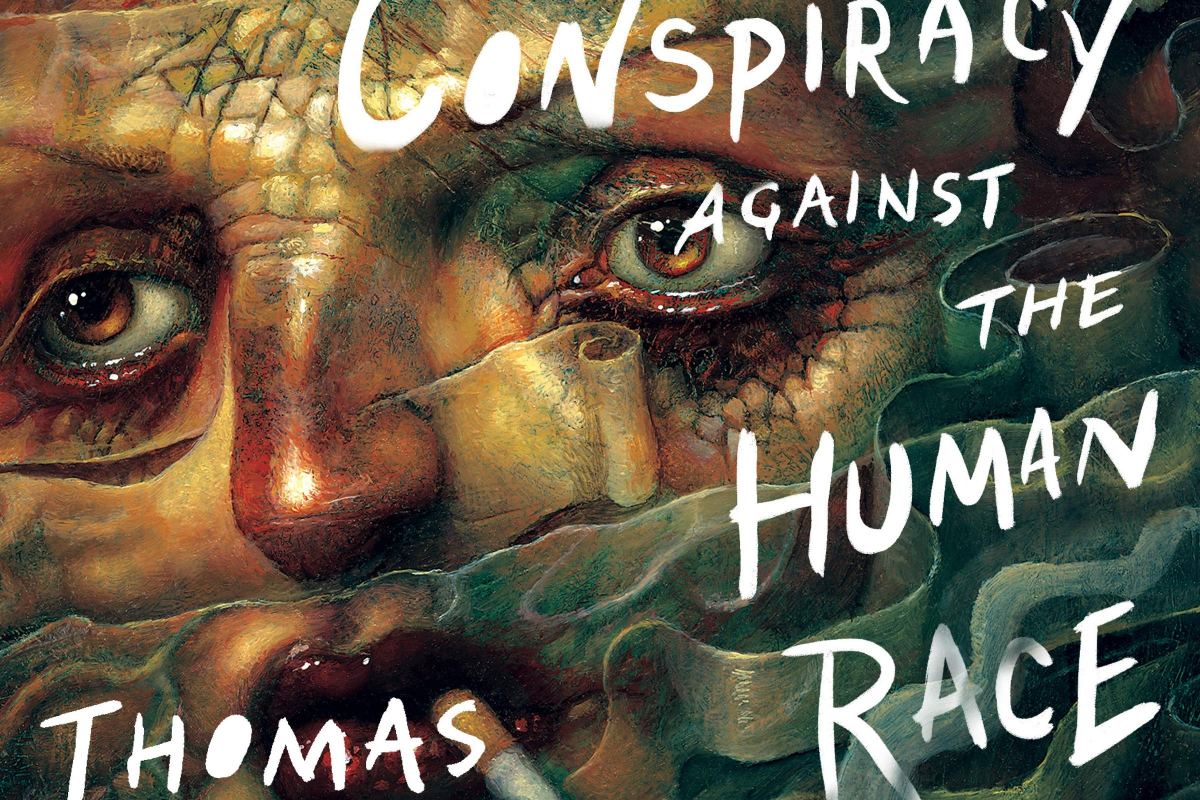
The Conspiracy against the Human Race is a work of non-fiction by horror author Thomas Ligotti. There is an audio podcast version and a YouTube video version. Feel free to leave comments in the space below or on YouTube.
Transcript
In this segment, I’ll be reviewing a book by Thomas Ligotti, The Conspiracy Against the Human Race, A Contrivance of Horror.
I haven’t done any book reviews, but since I tend to read a lot of books, I figure why not share my take and see how it’s received? If you like these reviews, click the like button and I’ll consider creating more.
Let’s get started.
First, I’ll be providing a little background, and then I’ll summarise some of the content and main themes. I’ll close with my review and perspective.
The author is Thomas Ligotti. He is a published writer in the horror genre in the vein of Lovecraft’s atmospheric horror. I’ve not read any of his work and haven’t read much fiction in ages.
The Conspiracy Against the Human Race is Ligotti’s first work of non-fiction. The book was originally published in 2010. I read the 2018 paperback version published by Penguin Books.
Conspiracy Against the Human Race falls into the category of Ethics and Moral Philosophy in a subcategory of pessimism. The main thesis of this book is that humans ought never to have been born. Following in the footsteps of anti-natalist David Benatar, who published Better Never to Have Been Born in 2007, Ligotti doubles down on Benatar’s position on the harm of coming into existence and argues that humans should just become extinct. Moreover, we should take out life in general.
In the book, Ligotti posits that consciousness was a blunder of nature and is the root of all suffering. He argues the derived Buddhist position of dukkha, which translates as Life is suffering. He establishes that most people are aware of this fact, but that we are nonetheless wired to be biased toward optimism through delusion and what a psychoanalyst might call repressed memories. Moreover, pessimists are a cohort not tolerated by society, who don’t want their delusions shattered.
Philosophically, Ligotti is a determinist. I’ve created content on this topic, but in a nutshell, determinism is the belief that all events are caused by antecedent events, leading to a chain of causes and effects stretching back to the beginning of time and bringing us to where we are now. If we were able to rewind time and restart the process, we would necessarily end up in the same place, and all future processes will unfold in a like manner.
Ligotti likes the metaphor of puppets. He employs puppets in two manners. Firstly, being the determinist he is, he reminds us that we are meat puppets with no free will. Our strings are controlled by something that is not us. This something ends up being Schopenhauer’s Will, reminding us that one can want what we will, but we can’t will what we will. This Will is the puppeteer. Secondly, puppets are soulless, lifeless homunculi that are employed in the horror genre to create unease by means of an uncanny association. He cites the work and philosophy of Norwegian author Peter Zapffe, who also elucidates human existence as a tragedy. Humans are born with one and only one right—the right to die. And death is the only certainty. The knowledge of this causes unnecessary suffering.
Quoting Ligotti,
“Stringently considered, then, our only natural birthright is a right to die. No other right has ever been allocated to anyone except as a fabrication, whether in modern times or days past. The divine right of kings may now be acknowledged as a fabrication, a falsified permit for prideful dementia and impulsive mayhem. The inalienable rights of certain people, on the other hand, seemingly remain current: somehow we believe they are not fabrications because hallowed documents declare they are real.”
Ligotti reminds us that consciousness is a mystery. We don’t really know what it is or what causes it other than it exists and we seem to have it, to be cursed with it. He adopts Zapffe’s position that consciousness is also responsible for the false notion of the self.
As all life is, humans are the result of an evolutionary process. Consciousness was just the result of an evolutionary blunder. He cites Zapffe and conveys that “mutations must be considered blind. They work, are thrown forth, without any contact of interest with their environment.”
Whilst pessimists view consciousness as a curse, optimists such as Nicholas Humphry think of it as a marvellous endowment.
He summarises the reason humans have it worse than the rest of nature:
“For the rest of the earth’s organisms, existence is relatively uncomplicated. Their lives are about three things: survival, reproduction, death—and nothing else. But we know too much to content ourselves with surviving, reproducing, dying—and nothing else. We know we are alive and know we will die. We also know we will suffer during our lives before suffering—slowly or quickly—as we draw near to death. This is the knowledge we “enjoy” as the most intelligent organisms to gush from the womb of nature. And being so, we feel shortchanged if there is nothing else for us than to survive, reproduce, and die. We want there to be more to it than that, or to think there is. This is the tragedy: Consciousness has forced us into the paradoxical position of striving to be unself-conscious of what we are—hunks of spoiling flesh on disintegrating bones.”
I’ll repeat that: Consciousness has forced us into the paradoxical position of striving to be unself-conscious.
He cites Zapffe’s four principal strategies to minimise our consciousness, isolation, anchoring, distraction, and sublimation
Isolation is compartmentalising the dire facts of being alive. So, he argues, that a coping mechanism is to push our suffering out of sight, out of mind, shoved back into the unconscious so we don’t have to deal with it.
Anchoring is a stabilisation strategy by adopting fictions as truth. We conspire to anchor our lives in metaphysical and institutional “verities”—God, Morality, Natural Law, Country, Family—that inebriate us with a sense of being official, authentic, and safe in our beds.
Distraction falls into the realm of manufactured consent. People lose themselves in their television sets, their government’s foreign policy, their science projects, their careers, their place in society or the universe, et cetera. Anything not to think about the human condition.
Sublimation. This reminds me of Camus’ take on the Absurd. Just accept it. Embrace it and incorporate it into your routine. Pour it into your art or music. Ligotti invokes Camus’ directive that we must imagine Sisyphus happy, but he dismisses the quip as folly.
Ligotti underscores his thesis by referencing the works of other authors from David Benatar to William James.
Interestingly, he suggests that people who experience depression are actually in touch with reality and that psychology intervenes to mask it again with the preferred veil of delusion and delf-deception. Society can’t operate if people aren’t in tune with the masquerade. Citing David Livingstone Smith in his 2007 publication, Why We Lie: The Evolution of Deception and the Unconscious Mind, Ligotti writes: “Psychiatry even works on the assumption that the “healthy” and viable is at one with the highest in personal terms. Depression, “fear of life,” refusal of nourishment and so on are invariably taken as signs of a pathological state and treated thereafter.”
Ligotti returns to the constructed notion of the self and presents examples of how a lack of self is an effective horror trope, citing John Carpenter’s The Thing and Invasion of the Body Snatchers.
He spends a good amount of time on ego-death and the illusion of self, a topic I’ve covered previously. He mentions Thomas Metzinger and his writings in several places including his Being No One, published in 2004, ostensibly reinforcing a position described as naïve realism, that things not being knowable as they really are in themselves, something every scientist and philosopher knows.
He delves into Buddhism as a gateway to near-death experiences, where people have dissociated their sense of self, illustrating the enlightenment by accident of U. G. Krishnamurti, who after some calamity “was no longer the person he once was, for now he was someone whose ego had been erased. In this state, he had all the self-awareness of a tree frog. To his good fortune, he had no problem with his new way of functioning. He did not need to accept it, since by his report he had lost all sense of having an ego that needed to accept or reject anything.” Krishnamurti had become a veritable zombie. He also cited the examples of Tem Horwitz, John Wren-Lewis, and Suzanne Segal, but I won’t elaborate here.
Russian Romantic author, Leo Tolstoy, famous for War and Peace and Anna Karenina, was another pessimist. He noticed a coping approach his associates had employed to deal with their morality.
Ignorance is the first. As the saying goes, ignorance is bliss. For whatever reason, these people are simply blind to the inevitability of their mortal lives. As Tolstoy said these people just did not know or understand that “life is an evil and an absurdity”.
Epicureanism comes next. The tactic here is to understand that we are all in here and no one gets out alive, so we might as well make the best of it and adopt a hedonistic lifestyle.
Following Camus’ cue, or rather Camus following Tolstoy and Schopenhauer, he suggests the approach of strength and energy, by which he means the strength and energy to suicide.
Finally, one can adopt the path of weakness. This is the category Tolstoy finds himself in, writing “People of this kind know that death is better than life, but not having the strength to act rationally—to end the deception quickly and kill themselves—they seem to wait for something.”
The last section of the book feels a bit orthogonal to the rest. I won’t bother with details, but essentially he provides the reader with examples of how horror works by exploring some passages, notably Radcliffe’s, The Mysteries of Udolpho; Conrad’s Heart of Darkness; Poe’s Fall of the House of Usher; Lovecraft’s Call of Cthulhu; and contrasting Shakespeare’s Macbeth and Hamlet.
This has been a summary of Thomas Logotti’s Conspiracy against the human race. Here’s my take. But first some background, as it might be important to understand where I am coming from.
I am a Nihilist. I feel that life has no inherent meaning, but people employ existentialist strategies to create a semblance of meaning, much akin to Zapffe’s distraction theme or perhaps anchoring. This said I feel that, similar to anarchism, people don’t understand nihilism. Technically, it’s considered to be a pessimistic philosophy because they are acculturated to expect meaning, but I find it liberating. People feel that without some constraints of meaning, that chaos will ensue as everyone will adopt Tolstoy’s Epicureanism or to fall into despair and suicide. What they don’t know is they’ve already fabricated some narrative and have adopted one of Zappfe’s first three offerings: isolation, which is to say repression); anchoring on God or country; or distracting themselves with work, sports, politics, social media, or reading horror stories.
Because of my background, I identify with Ligotti’s position. I do feel the suffering and anguish that he mentions, and perhaps I am weak and rationalising, but I don’t feel that things are so bad. I may be more sympathetic to Benatar’s anti-natalism than to advocate for a mass extinction event, though I feel that humans are already heading down that path. Perhaps this could be psychoanalysed as collective guilt, but I won’t go there.
I recommend reading this. I knocked it out in a few hours, and you could shorten this by skipping the last section altogether. If you are on the fence, I’d suggest reading David Benatar’s Better Never to Have Been. Perhaps I’ll review that if there seems to be interest. If you’ve got the time, read both.
So there you have it. That’s my summary and review of Thomas Ligotti’s The Conspiracy against the Human Race.
Before I end this, I’ll share a personal story about an ex-girlfriend of mine. Although she experienced some moments of happiness and joy, she saw life as a burden. Because she had been raised Catholic and embodied the teachings, she was afraid that committing suicide would relegate her to hell. In fact, on one occasion, she and her mum had been robbed at gunpoint, and her mum stepped between my girlfriend and the gun. They gave the gunmen what they wanted, so the situation came to an end.
My girlfriend laid into her mother that if she ever did something like that again and took a bullet that was her ticket out, she would never forgive her. As it turned out, my girlfriend died as collateral damage during the Covid debacle. She became ill, but because she was living with her elderly mum, she didn’t want to go to hospital and bring something back. One early morning, she was writhing in pain and her mum called the ambulance. She died later that morning in hospital, having waited too long.
For me, I saw the mercy in it all. She got her ticket out and didn’t have to face the hell eventuality. Not that I believe in any of that, but she was able to exit in peace. Were it not for the poison of religion, she could have exited sooner. She was not, in Tolstoy’s words, weak, so much as she had been a victim of indoctrination. I feel this indoctrination borders on child abuse, but I’ll spare you the elaboration. So, what are your thoughts on this book? Is there a conspiracy against humanity? Are optimists ruining it for the pessimists? What do you think about anti-natalism or even extinction of all conscious beings or the extreme case of all life on earth? Is Ligotti on to something or just on something?
I finally decided to read Peter Strawson’s essay, Freedom and Resentment, as it seems to be a somewhat seminal work. As the essay is part of a larger collection, Freedom and Resentment and Other Essays, I also read Strawson’s autobiography, which is interesting. I especially enjoyed the part where he had published a piece only to discover that it dovetailed with some of Frege’s work and was cast as the Frege-Strawson view despite him never having read Frege.
Although on a lesser scale, I feel this captures some of my circumstances where I feel I have some original thought only to discover that someone’s already been there, in some cases before I was even born—or before my grandparents for that matter. There is just so much to read and time is a limited resource. In any case. Moving on.
He begins with these two sentences:
Some philosophers say they do not know what the thesis of determinism is. Others say, or imply, that they do know what it is.
Strawson employs the terminology of optimism and pessimism. These are in consideration of the notion of free will. Each claims that as far as we know, determinism cannot be shown to be false. But optimists believe that we can assume we have an adequate basis for moral practices whilst pessimists believe that we cannot make this assumption, so we must find some other basis; this means that the pessimists are forced to concede that although determinism cannot be proven to be false, it must nonetheless be false.
Some pessimists “hold that if the thesis [of determinism] is true, then the concepts of moral obligation and responsibility really have no application, and the practices of punishing and blaming, of expressing moral condemnation and approval, are really unjustified.”
Some optimists “hold that these concepts and practices in no way lose their raison d’être if the thesis of determinism is true.”
as far as we know, determinism cannot be shown to be false
A genuine moral sceptic may hold that “the notions of moral guilt, of blame, of moral responsibility are inherently confused and that we can see this to be so if we consider the consequences either of the truth of determinism or of its falsity.”
Like Frege to Strawson, I now find myself adopting his line of argumentation—that people presume people to be competent agents by default unless exempted as non compos mentis and such. If one or more of these mitigating factors is not present, then one may be considered to be a morally responsible agent. (In my mind, this creates many false positives in the resultant sample, but let’s continue.)
Then he establishes the groundwork for moral obligation and responsibility to arrive here:
Strawson contrasts optimistic with pessimistic with a smattering of sceptics.
If I am asked which of these parties I belong to, I must say it is the first of all, the party of those who do not know what the thesis of determinism is.
But this does not stop me…
Desert is his next topic. What does the threshold of the agent to have to deserve “blame or moral condemnation”?
Effectively, Strawson separates determinists and libertarians (philosophical, not the capital-L political flavour).
He distinguishes reasons from rationalisation, with the former having more weight and the second being akin to excuses. Here, he tries to tease out notions of positive and negative freedoms on a concept defined negatively, i.e., the absence of some deficiency. He also calls out supporters for not only having an insufficient basis but “not even the right sort of basis”.
Strawson makes a point to delineate desert as following from a positive act rather than some omission, allowing for ignorance to serve as an escape clause. Being an older publication, he points out the by-now obvious contradiction between freedom and determinism, but he continues to clarify the waffling between various definitions of freedom, hiding behind the ambiguous meaning, whether intentioned or not.
Soon enough, he notes a challenge. Humans have a cognitive bias wherein they have a difficult time maintaining an objective attitude toward people who we interact with. Instead, we engage in participant reactive attitudes. This is to say that we make judgments we would not make on a non-reactive object. If we bump into a chair (object), we don’t activate the same mental protocols as if we bump into a person (participant reactive). In the latter case, our blame-resentment mechanism is activated. This may result in feelings of ‘resentment, gratitude, forgiveness, anger‘ or some sort of reciprocated love in another instance. In the end, he supposed that we blame people because we have reactive attitudes toward them.
Ultimately, irrespective of whether determinism is true or not, we cannot seem to control our personal reactive urges, so we need to deal with it.
To be honest, I don’t feel I got a lot out of this essay. Perhaps it just didn’t age well or others have already incorporated this into their work, so the logic may be sound, but it doesn’t feel particularly profound. I can tick off the ‘read this’ box and move on.
My attention is otherwise occupied, so I won’t take time for a longer post, but I feel this illustrates my point that people just need to blame. It’s a knee-jerk response, and target accuracy is unnecessary, as this demonstrates.
tl;dr – Karen misplaced her headphones in her bag
From an evolutionary perspective, this also highlights theories supporting fitness over truth—fitness beats truth, FBT. Were that a rival stealing hard-earned food, better to apprehend or remediate than gather all the facts only to allow the culprit to escape. Of course, in cases like this, one gets false positives.
In this segment, I ponder the interplay between blame and Causa Sui. I’ll discuss the implications for moral responsibility as well as legal responsibility, which are not as in sync as one might imagine they might be.
Video: Blame & Causa Sui
To the uninitiated, Western legal systems have no pretensions about being about morality or justice. Legal systems are designed to maintain power structures and the status quo. They are deontological machines, making them prime targets for automation by the machine learning associated with artificial intelligence. This would also diminish the power of rhetoric over facts to some extent. But, I am no legal scholar, and all of this will have to wait for another segment.
I recently shared a video on causa sui and the basics of blame and blameworthiness, so I want to intersect those topics here.
Peter Strawson suggested that for humans, blame is a reactive response. It’s reflexive like having your knee jerk when tapped. Essentially, his position is that if blame didn’t naturally exist, we’d have to invent it, mirroring Voltaire’s quip, ‘If God did not exist, it would be necessary to invent Him’. Of course, this is because they serve the same power control purpose.
If God did not exist, it would be necessary to invent Him
Voltaire
To be fair, blame is closer to real than God, but the point remains. Strawson’s point is also that humans are saddled with blame and it’s not going anywhere no matter how nebulous it becomes in execution. It’s natural.
To me, this starts to sound suspiciously like a naturalistic fallacy. Humans seem to selectively cherry-pick which so-called natural tendencies they choose to defend. One might use nature to argue that female sexual availability begins at menstruation, and yet we have decided to ignore this and defer this on the grounds of civility. It’s obvious that we could consider blame to be an animal instinct we want to domesticate away, but because it serves other purposes, per Strawson’s perspective, it’s a useful tool. But what’s the causa sui challenge. Let’s quickly recapitulate.
Causa sui argues that one cannot be the cause of oneself, ex nihilo. Being full products of nature and nurture to adopt the lay parlance, any blameworthiness lies with the sources or creators. Since we are concerned with moral responsibility, we can eliminate nature forthrightly. Nature may be responsible—by many estimations approximately 40 per cent responsible—, it possesses no moral agency. And if the individual is not responsible, then we are left with the environment and society, including the social environment. Of course, the environment gets off the hook in the same manner as the genetic and hereditary factors of nature.
Before we consider society, let’s regard the individual.
Albeit the brain-as-computer is a bit facile, it’s still good enough for illustrative purposes. When you are born, your cognitive hardware is installed, as are your edge peripherals and update protocols. Any of these can become damaged through some degenerative processes, or external environmental factors, but since my interest is in optimistic rather than pessimistic scenarios, I’ll ignore these instances. Given that blameworthiness is directly related to presumed cognitive processing, factors that diminish these faculties, mitigate blameworthiness and factors than increase it, ameliorate it.
As a—quote—’normal’ child becomes an adolescent and then an adult, the probability it will become blameworthy, increases with age, ceteris paribus. A person with cognitive deficits or conditions such as aphasia or dementia decreases the probability of blame assignment. Even temporary impairment mitigates judgment—oh, she was drunk.
So, following the brain-as-computer analogy, your brain is a CPU with a self-updating cognitive operating system and instruction set. Essentially, there is also short and long-term memory. In the case of cognitive deficits, one of these components might be effectively broken. The CPU might process too slowly; it might misinterpret what it receives; there may be issues with the sense organs or the nerves that transport signals.
I’ve got a mate who, due to medical malpractice at birth, experienced nerve damage. Although his eyes and brain are normal, his optic nerve cannot carry signals very well, effectively leaving him blind. Neither can he taste nor smell. So there’s that.
But assuming that this processing and storage hardware are intact, the causa sui constraint still applies, but let’s spend some time evaluating societal interactions.
All inputs come from society—cultures and subcultures. Apart from misinterpreted processing scenarios, if a person doesn’t receive a particular moral instruction set, that person should surely be considered to be exempt from moral blame. It may be difficult to assess whether an instruction has been input. This is a reason why children are categorically exempted: they may not have received all of the expected moral codes, they may not have been stored or effectively indexed, and their processing hardware is still in development—alpha code if you will. Brain plasticity is another attribute I won’t spend much time on, but the current state of science says that the brain is still not fully developed even by age 30, so this is certainly a mitigating factor, even if we allow leeway for the causa sui argument.
I mention subculture explicitly because the predominant culture is not the only signal source. A child raised by, I don’t know, say pirates, would have an amended moral code. I am sure we can all think of different subcultures that might undermine or come at cross odds with the dominant culture, whether hippies, religious cultists, militia groups, racial purist groups, and so on.
So, a commonly held moral in the subdominant group may counter that of the prevailing one. An example that comes to mind is some religious organisations that do not agree with human medical intervention. There have been cases where parents have allowed a child to die from an otherwise curable condition. Although in the United States, there is a claim of freedom of religion—a claim that is spotty at best—, parents or guardians in situations like these have been convicted and sentenced for following their own moral codes. But as with all people, these people are as susceptible to the limitations of causa sui as the rest of us. They are not responsible for creating themselves, but moral responsibility was asserted based on the beliefs of the prevailing culture. Even besides the legal context, persons in the larger society would likely blame the parents for their neglect—though they may be praised for being resolute in their righteousness by their in-group. This just underscores that morality is a collection of socially constructed conventions rather than something more objective.
Returning to causa sui, let’s say a person commits an act that society would typically assign blame. Rather than exercise some act of retributive justice—a concept with no foundation in a causa sui universe—the course of action was remediation. In this case, the desired moral instruction would be delivered thereby seemingly making the moral offender blameworthy. But would they be?
Presumably, (for what it’s worth) psychologists would evaluate the subject for competency in maintaining the programming. In the case of the aforementioned religious parents, they may be threatened with retribution for not abiding by the superseding rules of the prevailing power structure.
Although I might personally allow some leeway even with the causa sui in full force and effect, but I can’t say that I have much faith in the ability of humans to make a correct assessment. My impression is that any assessment would be one of convenience than something sounder.
Perhaps I’ll produce a more robust segment on retributive justice, but my feeling is that retributive justice is an area that legal systems should avoid altogether. If necessary, focus on restorative justice, rehabilitation (or ‘habilitation’ as the case might be) and quarantine models to ensure any bad actors are contained away from society. Again, this puts individuals at the mercy of cultures they find themselves a part of. I am not going to delve into this any further save to remind the listener of gang initiation schemes where a person needs to kill a member of a rival gang to become a trusted member. This is their moral code—quite at odds with the mainstream.
So there you have it. Owing to causa sui constraints, a person cannot be ultimately responsible for their actions. My primary thesis is—apart from metaphorical equipment failures—that any moral responsibility falls wholly on the society or culture. Full stop. And this isn’t as foreign as one might first feel. Although for most people blame is natural, in an individualistic society, people are interested in finding the culprit. In collectivist cultures, any culprit might do. Perhaps I’ll share some stories in a future segment. Meantime, what are your thoughts on moral responsibility? Can someone be ultimately responsible? Some have said the ‘ultimate responsibility’ is a philosophical red herring and that we can still hold someone responsible, even if not in the ultimate sense, which causa sui disallows. Are you more in this camp? Is this enough to mete out so-called retributive justice? For me, retributive justice is a euphemism for vengeance, and justice is a weasel word. But that’s just me, and perhaps a topic for another segment.
Are there any topics you’d like me to cover? Leave a comment below.








 Philosophics