As I was preparing another essay – an essay on the rhetoric of evil – I had a thought about the relative intersubjectivity of subjectivity.
If one takes subjectivity seriously – not the Hollywood version with self-made heroes, but the real creature stitched together from language, history, and whatever emotional debris it stepped in on the way to adulthood – then one ends up somewhere awkward: the relative intersubjectivity of subjectivity.
Video: Two red figures walking (no sound)
Which is to say, we’re all standing on conceptual scaffolding built by other people, insisting it’s solid marble. A charming fiction, until we apply it to anything with moral voltage. ‘Evil’, for instance, collapses the moment you remove the demonological life-support and notice it’s little more than a child’s intensifier strapped to a cultural power tool.
More on that later. For now, just sit with the discomfort that the ‘self’ making moral judgments is already a negotiated artefact – relational, compromised, and never as autonomous as it pretends.
A five-part descent into the illusion of autonomy, where biology writes the script, reason provides the excuse, and the self is merely the echo of its own conditioning.This is a follow-up to a recent post on the implausibility of free will.
Manipulability as Disproof
If your will can be altered without your consent, was it ever truly yours?
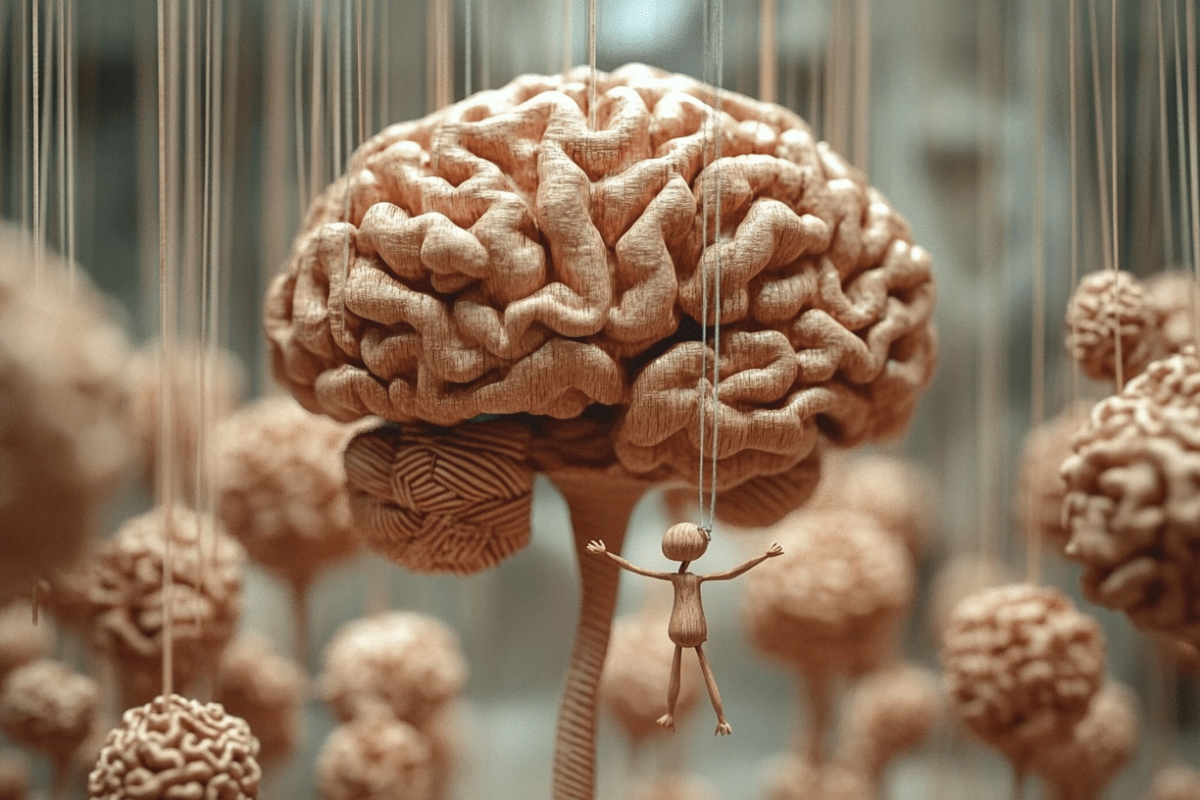
“If a button on the outside of your skull can change your morality, then where, exactly, is your autonomy hiding?”
Audio: NotebookLM podcast of this topic.
We’ve heard it all before:
“Sure, I’m influenced — but at the end of the day, I choose.” But what happens when that influence isn’t influence, but modulation? What if your very sense of right and wrong — your willingness to forgive, to punish, to empathise — can be dialled like a radio station?
And what if you never know it’s happening?
Your Morality Is Neurochemical
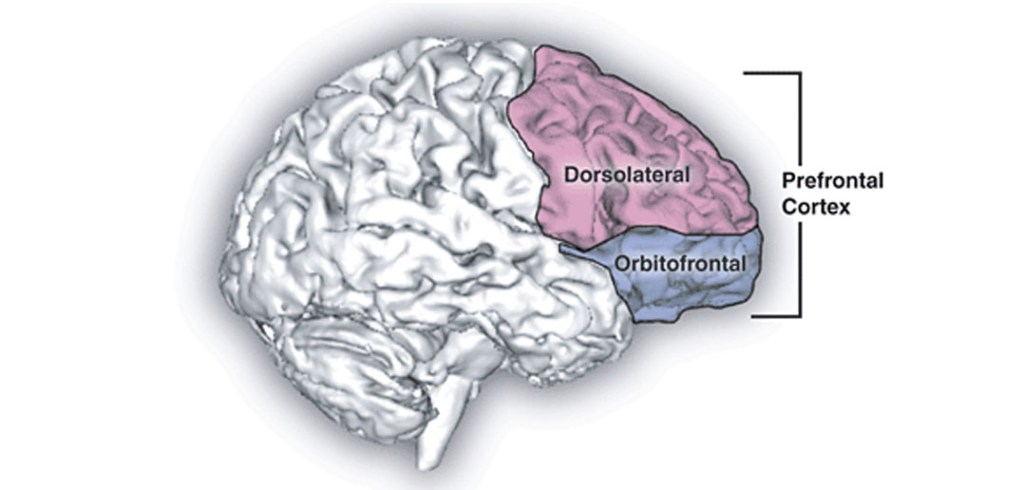
Studies using Transcranial Magnetic Stimulation (TMS) and Transcranial Direct Current Stimulation (tDCS) have shown that moral judgments can be shifted by stimulating the dorsolateral prefrontal cortex (DLPFC).
Turn it up: the subject becomes more utilitarian.
Turn it down: the subject becomes more emotionally reactive.
They make different decisions in the exact same scenarios, depending on which neural pathway is dominant.
The kicker?
They always explain their choices as though they had made them deliberately.
There is no awareness of the manipulation. Only a retrospective illusion of authorship.
A|B Testing the Soul
Let’s run a thought experiment.
Scenario A: You’re well-fed, calm, unprovoked. Scenario B: You’re hungry, cortisol-spiked, primed with images of threat.
Same moral dilemma. Different choice.
Query both versions of you, and both will offer coherent post hoc justifications. Neither suspects that their “will” was merely a biochemical condition in drag.
If both versions feel authentic, then neither can claim authority.
Your will is not sovereign. It’s state-dependent. And if it changes without your knowledge, it was never really yours to begin with.
Even the Observer Is a Variable
To make matters worse: the person judging your decision is just as susceptible.
An irritated observer sees you as difficult. A relaxed one sees you as generous. The same action — different verdict.
And yet both observers think they are the neutral party. They are not. They are chemically calibrated hallucinations, mistaking their reaction for objective truth.
You’re a Vending Machine, Not a Virtuoso
This isn’t metaphor. It’s architecture.
You input a stimulus.
The brain processes it using pre-loaded scripts, shaped by hormones, past trauma, fatigue, blood sugar, social context.
An output emerges.
Then the brain rationalises it, like a PR firm cleaning up after a CEO’s impulse tweet.
Reason follows emotion. Emotion is involuntary. Therefore, your reasoning is not yours. It’s a post-event explanation for something you didn’t choose to feel.
TL;DR: If It Can Be Tweaked, It’s Not Yours
Your “moral core” can be adjusted without your awareness.
You justify manipulated choices with total confidence.
Your assessors are equally chemically biased.
There is no neutral version of “you” — just shifting states with internal coherence.
And if your choices depend on state, and your state can be altered, then freedom is a costume worn by contingency.
This fits rather nicely into a recent theme I’ve been dissecting — The Dubious Art of Reasoning: Why Thinking Is Harder Than It Looks — particularly regarding the limitations of deductive logic built upon premises that are, shall we say, a tad suspect. So what’s actually happening in Harris’s tidy moral meat grinder?
Audio: NotebookLM podcast on this topic.
Let us begin at the root, the hallowed dogma no one dares blaspheme: the belief that life has value. Not just any value, mind you, but a sacred, irrefutable, axiomatic kind of value — the sort of thing whispered in holy tones and enshrined in constitutions, as though handed down by divine courier.
But let’s not genuflect just yet. “Value” is not some transcendent essence; it’s an economic artefact. Value, properly speaking, is something tested in a marketplace. So, is there a market for human life?
Historically, yes — but one doubts Harris is invoking the Atlantic slave trade or Victorian child labour auctions. No, what he’s tapping into is a peculiarly modern, unexamined metaphysical presumption: that human beings possess inherent worth because, well, they simply must. We’ve sentimentalised supply and demand.
Null values. A society of blank spreadsheets, human lives as rows with no data in the ‘Value’ column. A radical equality of the meaningless.
Now let’s take a darker turn — because why not, since we’re already plumbing the ethical abyss. The anti-natalists, those morose prophets of philosophical pessimism, tell us not only that life lacks positive value, but that it is intrinsically a burden. A cosmic mistake. A raw deal. The moment one is born, the suffering clock starts ticking.
Flip the moral equation in The Death Lottery, and what you get is this: saving three lives is not a moral victory — it’s a net increase in sentient suffering. If you kill one to save three, you’ve multiplied misery. Congratulations. You’ve created more anguish with surgical efficiency. And yet we call this a triumph of compassion?
According to this formulation, the ethical choice is not to preserve the many at the cost of the few. It is to accelerate the great forgetting. Reduce the volume of suffering, not its distribution.
But here’s the deeper problem — and it’s a trick of philosophical stagecraft: this entire thought experiment only becomes a “dilemma” if you first accept the premises. That life has value. That death is bad. That ethics is a numbers game. That morality can be conducted like a cost-benefit spreadsheet in a celestial boardroom.
Yet why do we accept these assumptions? Tradition? Indoctrination? Because they sound nice on a Hallmark card? These axioms go unexamined not because they are true, but because they are emotionally convenient. They cradle us in the illusion that we are important, that our lives are imbued with cosmic significance, that our deaths are tragedies rather than banal statistical certainties.
But the truth — the unvarnished, unmarketable truth — is that The Death Lottery is not a test of morality, but a test of credulity. A rigged game. An illusion dressed in the solemn robes of logic.
And like all illusions, it vanishes the moment you stop believing in it.Let’s deconstruct the metanarratives in play. First, we are told uncritically that life has value. Moreover, this value is generally positive. But all of this is a human construct. Value is an economic concept that can be tested in a marketplace. Is there a marketplace for humans? There have been slave marketplaces, but I’m pretty sure that’s not what this aims for. There are wage and salary proxies. Again, I don’t think this is what they are targeting.
This worth is metaphysical. But allow me to cut to the chase. This concept of worth has religious roots, the value of the soul, and all souls are precious, sacred, actually. One might argue that the body is expendable, but let’s not go there. If we ignore the soul nonsense and dispense of the notion that humans have any inherent value not merely conjured, we are left with an empty set, all null values.
But let’s go further. Given anti-natalist philosophy, conscious life not only has value but is inherently negative, at least ex ante. This reverses the maths – or flips the inequality sign – to render one greater than three. It’s better to have only one suffering than three.
Ultimately, this is only a dilemma if one accepts the premises, and the only reason to do so is out of indoctrinated habit.
Postscript: Notes from the Abyss
David Benatar, in Better Never to Have Been, argues with pitiless logic that coming into existence is always a harm — that birth is a curse disguised as celebration. He offers no anaesthetic. Existence is pain; non-existence, the balm.
Peter Wessel Zapffe, the Norwegian prophet of philosophical despair, likened consciousness to a tragic evolutionary overreach — a cosmic misfire that left humanity acutely aware of its own absurdity, scrambling to muffle it with distraction, denial, and delusion. For him, the solution was elegant in its simplicity: do not reproduce. Shut the trapdoor before more souls tumble in.
And then there is Cioran, who did not so much argue as exhale. “It is not worth the bother of killing yourself, since you always kill yourself too late.” He understood what the rest of us politely ignore — that life is a fever dream from which only death delivers.
So if the question is whether one life is worth more than three, we must first ask whether any of them were worth having in the first place.
The answer, for the brave few staring into the black, may be a shrug — or silence.
Why the cherished myth of human autonomy dissolves under the weight of our own biology
We cling to free will like a comfort blanket—the reassuring belief that our actions spring from deliberation, character, and autonomous choice. This narrative has powered everything from our justice systems to our sense of personal achievement. It feels good, even necessary, to believe we author our own stories.
But what if this cornerstone of human self-conception is merely a useful fiction? What if, with each advance in neuroscience, our cherished notion of autonomy becomes increasingly untenable?
Audio: NotebookLM podcast on this topic.
I. The Myth of Autonomy: A Beautiful Delusion
Free will requires that we—some essential, decision-making “self”—stand somehow separate from the causal chains of biology and physics. But where exactly would this magical pocket of causation exist? And what evidence do we have for it?
Your preferences, values, and impulses emerge from a complex interplay of factors you never chose:
The genetic lottery determined your baseline neurochemistry and cognitive architecture before your first breath. You didn’t select your dopamine sensitivity, your amygdala reactivity, or your executive function capacity.
The hormonal symphony that controls your emotional responses operates largely beneath conscious awareness. These chemical messengers—testosterone, oxytocin, and cortisol—don’t ask permission before altering your perceptions and priorities.
Environmental exposures—from lead in your childhood drinking water to the specific traumas of your upbringing—have sculpted neural pathways you didn’t design and can’t easily rewire.
Developmental contingencies have shaped your moral reasoning, impulse control, and capacity for empathy through processes invisible to conscious inspection.
Your prized ability to weigh options, inhibit impulses, and make “rational” choices depends entirely on specific brain structures—particularly the dorsolateral prefrontal cortex (DLPFC)—operating within a neurochemical environment you inherited rather than created.
You occupy this biological machinery; you do not transcend it. Yet, society holds you responsible for its outputs as if you stood separate from these deterministic processes.
transcranial direct current stimulation over the DLPFC alters moral reasoning, especially regarding personal moral dilemmas. The subject experiences these externally induced judgments as entirely their own, with no sense that their moral compass has been hijacked
II. The DLPFC: Puppet Master of Moral Choice
The dorsolateral prefrontal cortex serves as command central for what we proudly call executive function—our capacity to plan, inhibit, decide, and morally judge. We experience its operations as deliberation, as the weighing of options, as the essence of choice itself.
And yet this supposed seat of autonomy can be manipulated with disturbing ease.
When researchers apply transcranial magnetic stimulation to inhibit DLPFC function, test subjects make dramatically different moral judgments about identical scenarios. Under different stimulation protocols, the same person arrives at contradictory conclusions about right and wrong without any awareness of the external influence.
Similarly, transcranial direct current stimulation over the DLPFC alters moral reasoning, especially regarding personal moral dilemmas. The subject experiences these externally induced judgments as entirely their own, with no sense that their moral compass has been hijacked.
If our most cherished moral deliberations can be redirected through simple electromagnetic manipulation, what does this reveal about the nature of “choice”? If will can be so easily influenced, how free could it possibly be?
III. Hormonal Puppetmasters: The Will in Your Bloodstream
Your decision-making machinery doesn’t stop at neural architecture. Your hormonal profile actively shapes what you perceive as your autonomous choices.
Consider oxytocin, popularly known as the “love hormone.” Research demonstrates that elevated oxytocin levels enhance feelings of guilt and shame while reducing willingness to harm others. This isn’t a subtle effect—it’s a direct biological override of what you might otherwise “choose.”
Testosterone tells an equally compelling story. Administration of this hormone increases utilitarian moral judgments, particularly when such decisions involve aggression or social dominance. The subject doesn’t experience this as a foreign influence but as their own authentic reasoning.
These aren’t anomalies or edge cases. They represent the normal operation of the biological systems governing what we experience as choice. You aren’t choosing so much as regulating, responding, and rebalancing a biochemical economy you inherited rather than designed.
IV. The Accident of Will: Uncomfortable Conclusions
If the will can be manipulated through such straightforward biological interventions, was it ever truly “yours” to begin with?
Philosopher Galen Strawson’s causa sui argument becomes unavoidable here: To be morally responsible, one must be the cause of oneself, but no one creates their own neural and hormonal architecture. By extension, no one can be ultimately responsible for actions emerging from that architecture.
What we dignify as “will” may be nothing more than a fortunate (or unfortunate) biochemical accident—the particular configuration of neurons and neurochemicals you happened to inherit and develop.
This lens forces unsettling questions:
How many behaviours we praise or condemn are merely phenotypic expressions masquerading as choices? How many acts of cruelty or compassion reflect neurochemistry rather than character?
How many punishments and rewards are we assigning not to autonomous agents, but to biological processes operating beyond conscious control?
And perhaps most disturbingly: If we could perfect the moral self through direct biological intervention—rewiring neural pathways or adjusting neurotransmitter levels to ensure “better” choices—should we?
Or would such manipulation, however well-intentioned, represent the final acknowledgement that what we’ve called free will was never free at all?
A Compatibilist Rebuttal? Not So Fast.
Some philosophers argue for compatibilism, the view that determinism and free will can coexist if we redefine free will as “uncoerced action aligned with one’s desires.” But this semantic shuffle doesn’t rescue moral responsibility.
If your desires themselves are products of biology and environment—if even your capacity to evaluate those desires depends on inherited neural architecture—then “acting according to your desires” just pushes the problem back a step. You’re still not the ultimate author of those desires or your response to them.
What’s Left?
Perhaps we need not a defence of free will but a new framework for understanding human behaviour—one that acknowledges our biological embeddedness while preserving meaningful concepts of agency and responsibility without magical thinking.
The evidence doesn’t suggest we are without agency; it suggests our agency operates within biological constraints we’re only beginning to understand. The question isn’t whether biology influences choice—it’s whether anything else does.
For now, the neuroscientific evidence points in one direction: The will exists, but its freedom is the illusion.
Kurt Gray’s Outraged! attempts to boil morality down to a single principle: harm. This, in his view, is the bedrock of all moral considerations. In doing so, he takes a swing at Jonathan Haidt’s Moral Foundations Theory, trying to reduce its multi-faceted framework to a mere footnote in moral psychology. Amusingly, he even highlights how Haidt quietly modified his own theory after Gray and his colleagues published an earlier work—an intellectual game of cat-and-mouse, if ever there was one.
Audio: Podcast of this topic
Chapter 6: The Intuition Overdose
By the time we reach Chapter 6, Gray is charging full steam into reductio ad absurdum territory. He leans so hard on intuition that I lost count of how many times he invokes it. The problem? He gives it too much weight while conveniently ignoring acculturation.
Yes, intuition plays a role, but it doesn’t exist in a vacuum. Enter Kahneman’s dual-system model: Gray eagerly adopts the System 1 vs. System 2 distinction, forcing his test subjects into snap moral judgments under time pressure to bypass rationalisation. Fair enough. But what he neglects is how even complex tasks can migrate from System 2 (slow, deliberate) to System 1 (fast, automatic) through repeated exposure. Kahneman’s example? Basic arithmetic. A child grappling with 1 + 1 relies on System 2, but an adult answers without effort.
And morality? The same mechanism applies. What starts as deliberation morphs into automatic response through cultural conditioning. But instead of acknowledging this, Gray behaves as if moral intuition is some mystical, spontaneous phenomenon untethered from socialization.
Let’s lay cards on the table. I’m a moral subjectivist—actually, a moral non-cognitivist, but for simplicity’s sake, let’s not frighten the children. My stance is that morality, at its core, is subjective. However, no one develops their moral compass in isolation. Culture, upbringing, and societal narratives shape our moral instincts, even if those instincts ultimately reduce to personal sentiment.
Gray does concede that the definition of “harm” is subjective, which allows him to argue that practically any belief or action can be framed as harmful. And sure, if you redefine “harm” broadly enough, you can claim that someone’s mere existence constitutes an existential threat. Religious believers, for example, claim to be “harmed” by the idea that someone else’s non-compliance with their theological fairy tale could lead to eternal damnation.
I don’t disagree with his observation. The problem is that the underlying belief is fundamentally pathological. This doesn’t necessarily refute Gray’s argument—after all, people do experience psychological distress over imaginary scenarios—but it does mean we’re dealing with a shaky foundation. If harm is entirely perception-based, then moral arguments become arbitrary power plays, subject to the whims of whoever is best at manufacturing grievance.
And this brings us to another crucial flaw in Gray’s framework: the way it enables ideological self-perpetuation. If morality is reduced to perceived harm, then groups with wildly different definitions of harm will inevitably weaponize their beliefs. Take the religious fundamentalist who believes gay marriage is a sin that dooms others to eternal suffering. From their perspective, fighting against LGBTQ+ rights isn’t just bigotry—it’s moral duty, a battle to save souls from metaphysical harm. This, of course, leads to moral contagion, where adherents tirelessly indoctrinate others, especially their own children, ensuring the pathology replicates itself like a virus.
The Problem with Mono-Causal Explanations
More broadly, Gray’s attempt to reduce morality to a single principle—harm—feels suspiciously tidy. Morality is messy, contradictory, and riddled with historical baggage. Any theory that purports to explain it all in one neat little package should immediately raise eyebrows.
So, sorry, Kurt. You can do better. Moral psychology is a tangled beast, and trying to hack through it with a single conceptual machete does more harm than good.
Kurt Gray’s Outraged! is a fascinating romp through the minefield of moral psychology and outrage culture. It’s snappy, it’s clever, and it’s… shallow. Whilst Gray positions himself as the maestro conducting the cacophony of modern outrage, his approach has left me wondering if the symphony is little more than noise. Here’s why:
Audio: Podcast discussion on this review content.
Oversimplification of Moral Psychology
Gray’s central thesis that “all morality stems from perceptions of harm and threat” is bold, sure, but also reductive. Morality isn’t just a harm detector. It’s a rich tapestry of loyalty, authority, sanctity, and liberty—concepts Gray conveniently glosses over. His approach feels like reducing a fine Bordeaux to “it’s just fermented grapes.” Sure, technically correct, but where’s the depth?
The Age of Competitive Victimhood
By focusing so heavily on harm perception, Gray risks fueling the very outrage culture he’s critiquing. Welcome to the Hunger Games of victimhood, where everyone races to be crowned the most aggrieved. Instead of deflating this dynamic, Gray’s analysis may inadvertently add more oxygen to the fire.
Lack of Diverse Perspectives
Gray’s attempt to bridge divides is commendable but flawed. Critics point out that he gives more airtime to controversial right-wing figures than the left-leaning audience he’s presumably trying to engage. It’s like building half a bridge and wondering why no one’s crossing. If you alienate half your audience, how exactly are you fostering dialogue?
Contradictory Messaging
The book also suffers from a classic case of ideological whiplash. Gray tells us not to get offended by microaggressions, then argues that offensive content needs more careful handling. Which is it, Kurt? Either you’re driving the “sticks and stones” bus, or you’re preaching kid-glove diplomacy. You can’t have it both ways.
Limited Practical Solutions
Like many pop psychology books, Outraged! excels at diagnosing problems but falters when offering solutions. Gray’s suggestion to use personal stories of harm to bridge divides is charmingly naive. Sure, storytelling might work for interpersonal tiffs, but try applying that to global crises like climate change or systemic inequality. Good luck narrating your way to a greener planet.
Oversimplifying Complex Issues
Gray’s harm-based morality seems like an attempt to cram human behaviour’s messy, chaotic sprawl into a tidy spreadsheet. Real moral debates are nuanced, tangled, and frustratingly complex. By filtering everything through the lens of harm, Gray risks missing the bigger picture. It’s morality on Instagram—polished, curated, and ultimately hollow.
A few years ago, I shared with a colleague that I had noticed that my high school classmates who seemed to be the most non-conformist (or perhaps the most anti-authoritarian), the ones most likely to have abused drugs and alcohol and most likely to criticise the Man, have by and large become extremely conservative on the political spectrum. Most are card-carrying Republicans, and dreaded low-information voters, continuing the trend of low-information acquisition and processing. He said that he had noticed a similar trend.
I still keep in contact with some some old mates who are Conservative Republicans, but who were high-information consumers then and still, so I am not saying that all Conservatives are low-information people.
A man who is not a Liberal at sixteen has no heart; a man who is not a Conservative at sixty has no head.
—Benjamin Disraeli (Misattributed)
The past couple of years, in a sort of nod to Bukowski, I’ve been researching or circulating among the underbelly of the United States, the veritable dalit-class comprised of drug dealers and users, pimps, prostitutes, and thieves. And I’ve noticed the same trend. These people might fear or hate the police and the system, and they may not vote or even be high-information seekers, but they seem to have a marked propensity to Conservatism. I admit that this is anecdotal and rife with confirmation bias, but this is my observation.
To broad brush any group into some monolith is always a fools errand and missing dimensional nuance, but the general direction holds. In my observation, these people are very black & white, and they want to see law & order (as much as they want to avoid its glance). They are interested in fairness, and call out being beat, as in being shorted in a drug deal or overpay at the grocery store–the same grocery store from which they just shoplifted.
When they see a news story, ‘That bank robber deserved to get caught’ would not be an unexpected response. Even if they got caught, they might voice that they deserved it. The received sentence might be a different story.
I am not sure why this shift from anti-establishment to hyper establishment happens. I’ve also noticed that even if they dislike the particular people serving government roles, they still feel that the abstract concepts of government, democracy, capitalism, and market systems make sense, if only the particular instance is not great.
One reaction I had is that some of these people feel that the transgressions of their youth might have been avoided only if there were more discipline, and so they support this construct for the benefit of future generations, who, as embodied in Millennials, are soft and lack respect for authority.
I’d recently re-discovered a Bill Moyers interview with moral psychologist Jonathan Haidt, and there is some relationship. And whilst I could critique some of Haidt’s accepted metanarrative relative to society, his points are valid within the constraints of this narrative.
The video is almost an hour long and was produced in 2012, it is a worthwhile endeavour to watch.
I am wondering if anyone else has seen this trend or who has experienced a contrary trend. Extra points for an explanation or supporting research.
Cover image: Sean Penn, excerpt from Fast Times at Ridgemont High, and Brett Cavanaugh, SCOTUS and posterboy Conservative hack