The Ethics of Maintenance: Against the Myth of Natural Purpose

3–4 minutes

Telos is humanity’s most persistent delusion – the idea that existence is crawling toward some luminous conclusion. From Aristotle’s perfect forms to Nietzsche’s Will to Power to Silicon Valley’s AI salvation, the story barely changes: history, we are told, has direction. But direction is not destiny; it is momentum misinterpreted as meaning. Much of my Anti-Enlightenment attention – and my drive toward Dis-Integration – centres on this notion.

Audio: NotebookLM podcast on this topic.

Progress is the Enlightenment’s secular gospel. Its promise – that every change is improvement – keeps the engine of exploitation humming. But change is inevitable; progress is propaganda. The arrow of time doesn’t point toward justice or enlightenment; it just points forward, indifferent to who’s crushed under it.

The Myth of Self-Correcting Systems

We are taught to place faith in systems: markets, democracies, algorithms. If they falter, it’s because of bad actors, not bad architecture. Replace the managers, swap the politicians, tweak the code. But the rot is structural, not moral.

These systems aren’t misfiring; they’re functioning exactly as designed – to preserve their own inertia while leaking meaning, resources, and compassion. The obsession with fixing individuals while sparing the machine is moral sleight of hand. At some point, tightening bolts on a burning engine becomes absurd. What we need is not a tune-up but a renovation.

This is where the philosophy of care and maintenance enters – not as sentimental housekeeping, but as radical engineering. Care is not complacent; it’s insurgent. It means facing the filth under the hood and admitting that the design itself is faulty.

Feminism and the Forgotten Labour of Repair

For centuries, the labour of care has been feminised, dismissed, and exploited – a quiet background hum while men congratulated themselves for building civilisation. Yet it is care, not conquest, that prevents collapse.

Philosophical feminists like Carol Gilligan, Joan Tronto, and María Puig de la Bellacasa saw this long before innovation culture learned to rebrand it as sustainability. They argued that ethical life is not about fulfilment or growth but about tending to fragile systems, material and social. Their revolution is not cosmic; it’s custodial.

The so-called masculine ethos – endless expansion, disruption, will to power – has delivered us burnout disguised as achievement. Its gods are metrics, its sacraments quarterly reports, its apocalypse deferred until after the IPO.

The Maintenance Ethic

Abandon the myth of natural or supernatural telos, and what remains is the duty of upkeep: a civic, psychological, and planetary responsibility. Maintenance is not stagnation; it’s resistance to decay through conscious intervention. It recognises that the world does not move toward betterment but toward breakdown – and that care is the only counter-force we possess.

Progress, as we’ve sold it, is the fever dream of a species mistaking acceleration for evolution. Maintenance is what happens when the dream fades and the mechanic steps in with a wrench.

Societies and cultures are constructs. As with twelve-step programmes, once we recognise this, we can move on to the next step. This is a notion of progress I can endorse: not the myth of inevitable improvement, but the humble acknowledgement that we built these machines and we can rebuild them differently.

The Workshop, Not the Temple

Civilisation doesn’t need another prophet or disruptor. It needs a caretaker with dirty hands. Meaning is not discovered; it is serviced. Systems are not sacred; they are rebuilt.

We can keep worshipping progress and watch the engine seize again, or we can accept the more humbling task of renovation – not of souls or nations, but of the machinery we ourselves assembled. The future, if it exists, will not be a miracle of purpose but a triumph of maintenance.

On Death and Dying

3–4 minutes

Disclaimer: I should be finishing my Language Insufficiency Hypothesis book, yet I am here writing about death and dying. Why? Because I was watching an interview with Neal Schon by Rick Beato. I should have been working on my book then, too. It seems I can write about death more easily than finish a book about the failure of language. Perhaps because death speaks fluently.

I haven’t produced music professionally since the mid-1980s, and I haven’t performed since 2012, yet I am still drawn to its intricacies. My fingers no longer allow me to play much of anything anymore. This is a sort of death. When the body forgets what the mind remembers, that’s a particular kind of death – one language dying while another can’t translate.

As Neal was walking Rick through his equipment and approach to music, I was taken back to a similar place. I wanted to plug into a Fender Twin or a Hi-Watt, a Lexicon 224 or a Cry Baby wah. I still have nightmares thinking of setting up a Floyd Rose.

Video: Rick Beato interviews Neal Schon

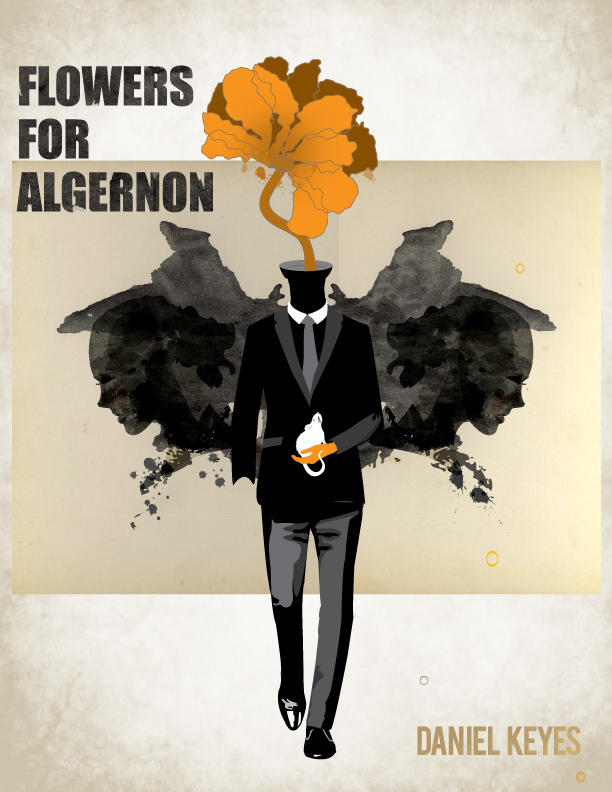
But I can’t go back. As for music, I can’t go forward either. I’m at a standstill, but in a regressed position. It’s uncomfortable. It feels a lot like Charlie in Flowers for Algernon. I used to be able to do that. Don’t get me wrong – I am not claiming to be on the level of Neal Schon, a man I remember from his days with Santana, but when you reach a level of proficiency and then lose it, it hurts; it can be devastating.

Audio: NotebookLM podcast on this topic.

I recall being in hospital in 2023 – a physical rehabilitation facility, really – and I found a piano in a vacant common room. Drawn to the instrument, I rolled over my wheelchair and played…nothing. My fingers wouldn’t work. The piano sat there like a relic of my former self. I rolled toward it as though approaching an altar. My fingers hovered, twitched, failed. The sound of nothing has never been so loud. I cried. I cried a lot those days. I was down to 58 kilos – at 182 cm, I weighed in at just over 9 stone. It wasn’t the best of times.

I still feel a certain nostalgia.

And then there are the people I’ve lost along the way – as another Neal reflected on – The Needle and the Damage Done.

Love and art are both acts of repetition. When one ends, the reflex remains – the impulse to reach, to share, to call out. Death doesn’t stop the motion, only the answer.

I’m lucky to have left Delaware. When a girlfriend died in 2020, I remained and connected with another until 2023, when she died, too. From 2020 to 2023, when I was out and about, something might have caught my eye, and I’d reflect on how Carrie might have liked that.

But it was different. It was more like, ‘I should let Carrie know about that,’ only to realise fractions of a second later that she wouldn’t see whatever it was; she couldn’t. And I’d carry on. I didn’t need to repeat this with Sierra. My relocation to Massachusetts solved this challenge – not so many triggers.

I’m not sure how the loss of ‘professional’ music relates to deceased partners, but it does – at least enough for me to make this connexion. Perhaps I’m just connecting arbitrary dots, but I’ll call it nostalgia.

I don’t play, but I still hear it. The song continues without me. Nostalgia is just rhythm without melody. Perhaps all nostalgia is epistemological error – the confusion of past fluency for present meaning.

Constructivist Lens — Artifact

Parody Magic: The Gathering trading card

When drawn, this card alters perception itself. It reminds the player that truth is not something one finds under a rock but something one polishes into shape. Each metaphor becomes a spell; each keyword a crutch thrown aside.

Those who wield the Constructivist Lens see not “facts,” but fictions so useful they forgot to call them that. Reality wobbles politely to accommodate belief.

Knowledge is not a copy of reality but a tool for coping with it.”
— Richard Rorty

In game terms: Tap to reframe existence as interpretation. Duration: until the next disagreement.

Derrida’s Deconstruction Summarised

David Guignion describes Derrida’s Deconstruction in under three minutes.

Video: YouTube short on Derrida’s notion of deconstruction.

The confusion he mentions is why I chose a different term – dis-integration – to describe “deconstructing” communication to discover underlying metanarratives.

I am busy editing my next novel, so that’s all the time I want to allocate to this matter, but David is a trusted resource of mine. Meantime, check out my deconstructed cover image.

Disintegration Street

Riffing on my recent post, I wanted to provide a tab more perspective on my claim that postmodernism serves a purely disintegrative function. Anyone can disintegrate a narrative into constituent parts, but postmodernism provides no grounds for privileged reintegration, as this too can be disintegrated. So, whilst one is free to disintegrate and even to reassemble the parts, one is never in a position to claim that this is how it should be put together because this privileges the subject and another subject can always come along and privilege another perspective. Also, there is no PoMo toolkit available to reassemble the parts that I am aware of.

When I was a child, a neighbour owned and operating a demolition company. He disintegrated buildings. He kept some of the materials and sold some other for scrap. Whilst these materials could be repurposed and used in the construction of another building—or a picnic table—, this was not the function of the demolition company. It’s safe to say that no one was ringing him up under the premise that he had tools, so why won’t he build them a house. He knows houses, right?

This is the same problem we face when deconstructing a narrative with postmodern tools. If we want to construct something, we can, but we should expect that no matter what we do, the next wave can readily knock it down. And though we can rebuild more castles made of sand, they are all subject to the same forces.


* I admit that this title was lent from The Cure’s Fascination Street, which does happen to be on their album Disintegration.

The Cure – Fascination Street video