Disclaimer: I should be finishing my Language Insufficiency Hypothesis book, yet I am here writing about death and dying. Why? Because I was watching an interview with Neal Schon by Rick Beato. I should have been working on my book then, too. It seems I can write about death more easily than finish a book about the failure of language. Perhaps because death speaks fluently.
I haven’t produced music professionally since the mid-1980s, and I haven’t performed since 2012, yet I am still drawn to its intricacies. My fingers no longer allow me to play much of anything anymore. This is a sort of death. When the body forgets what the mind remembers, that’s a particular kind of death – one language dying while another can’t translate.
As Neal was walking Rick through his equipment and approach to music, I was taken back to a similar place. I wanted to plug into a Fender Twin or a Hi-Watt, a Lexicon 224 or a Cry Baby wah. I still have nightmares thinking of setting up a Floyd Rose.
Video: Rick Beato interviews Neal Schon
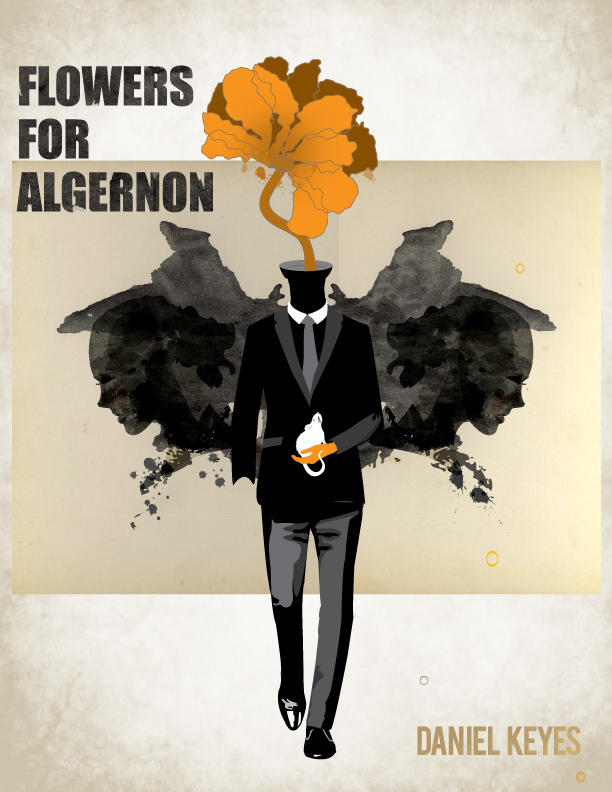
But I can’t go back. As for music, I can’t go forward either. I’m at a standstill, but in a regressed position. It’s uncomfortable. It feels a lot like Charlie in Flowers for Algernon. I used to be able to do that. Don’t get me wrong – I am not claiming to be on the level of Neal Schon, a man I remember from his days with Santana, but when you reach a level of proficiency and then lose it, it hurts; it can be devastating.
Audio: NotebookLM podcast on this topic.
I recall being in hospital in 2023 – a physical rehabilitation facility, really – and I found a piano in a vacant common room. Drawn to the instrument, I rolled over my wheelchair and played…nothing. My fingers wouldn’t work. The piano sat there like a relic of my former self. I rolled toward it as though approaching an altar. My fingers hovered, twitched, failed. The sound of nothing has never been so loud. I cried. I cried a lot those days. I was down to 58 kilos – at 182 cm, I weighed in at just over 9 stone. It wasn’t the best of times.
I still feel a certain nostalgia.
And then there are the people I’ve lost along the way – as another Neal reflected on – The Needle and the Damage Done.
Love and art are both acts of repetition. When one ends, the reflex remains – the impulse to reach, to share, to call out. Death doesn’t stop the motion, only the answer.
I’m lucky to have left Delaware. When a girlfriend died in 2020, I remained and connected with another until 2023, when she died, too. From 2020 to 2023, when I was out and about, something might have caught my eye, and I’d reflect on how Carrie might have liked that.
But it was different. It was more like, ‘I should let Carrie know about that,’ only to realise fractions of a second later that she wouldn’t see whatever it was; she couldn’t. And I’d carry on. I didn’t need to repeat this with Sierra. My relocation to Massachusetts solved this challenge – not so many triggers.
I’m not sure how the loss of ‘professional’ music relates to deceased partners, but it does – at least enough for me to make this connexion. Perhaps I’m just connecting arbitrary dots, but I’ll call it nostalgia.
I don’t play, but I still hear it. The song continues without me. Nostalgia is just rhythm without melody. Perhaps all nostalgia is epistemological error – the confusion of past fluency for present meaning.
I died in March 2023 — or so the rumour mill would have you believe.
Of course, given that I’m still here, hammering away at this keyboard, it must be said that I didn’t technically die. We don’t bring people back. Death, real death, doesn’t work on a “return to sender” basis. Once you’re gone, you’re gone, and the only thing bringing you back is a heavily fictionalised Netflix series.
Audio: NotebookLM podcast of this content.
No, this is a semantic cock-up, yet another stinking exhibit in the crumbling Museum of Language Insufficiency. “I died,” people say, usually while slurping a Pumpkin Spice Latte and live-streaming their trauma to 53 followers. What they mean is that they flirted with death, clumsily, like a drunk uncle at a wedding. No consummation, just a lot of embarrassing groping at the pearly gates.
And since we’re clarifying terms: there was no tunnel of light, no angels, no celestial choir belting out Coldplay covers. No bearded codgers in slippers. No 72 virgins. (Or, more plausibly, 72 incels whining about their lack of Wi-Fi reception.)
There was, in fact, nothing. Nothing but the slow, undignified realisation that the body, that traitorous meat vessel, was shutting down — and the only gates I was approaching belonged to A&E, with its flickering fluorescent lights and a faint smell of overcooked cabbage.
To be fair, it’s called a near-death experience (NDE) for a reason. Language, coward that it is, hedges its bets. “Near-death” means you dipped a toe into the abyss and then screamed for your mummy. You didn’t die. You loitered. You loitered in the existential equivalent of an airport Wetherspoons, clutching your boarding pass and wondering why the flight to Oblivion was delayed.
As the stories go, people waft into the next world and are yanked back with stirring tales of unicorns, long-dead relatives, and furniture catalogues made of clouds. I, an atheist to my scorched and shrivelled soul, expected none of that — and was therefore not disappointed.
What I do recall, before the curtain wobbled, was struggling for breath, thinking, “Pick a side. In or out. But for pity’s sake, no more dithering.” In a last act of rational agency, I asked an ER nurse — a bored-looking Athena in scrubs — to intubate me. She responded with the rousing medical affirmation, “We may have to,” which roughly translates to, “Stop making a scene, love. We’ve got fifteen others ahead of you.”
After that, nothing. I was out. Like a light. Like a minor character in a Dickens novel whose death is so insignificant it happens between paragraphs.
I woke up the next day: groggy, sliced open, a tube rammed down my throat, and absolutely no closer to solving the cosmic riddle of it all. Not exactly the triumphant return of Odysseus. Not even a second-rate Ulysses.
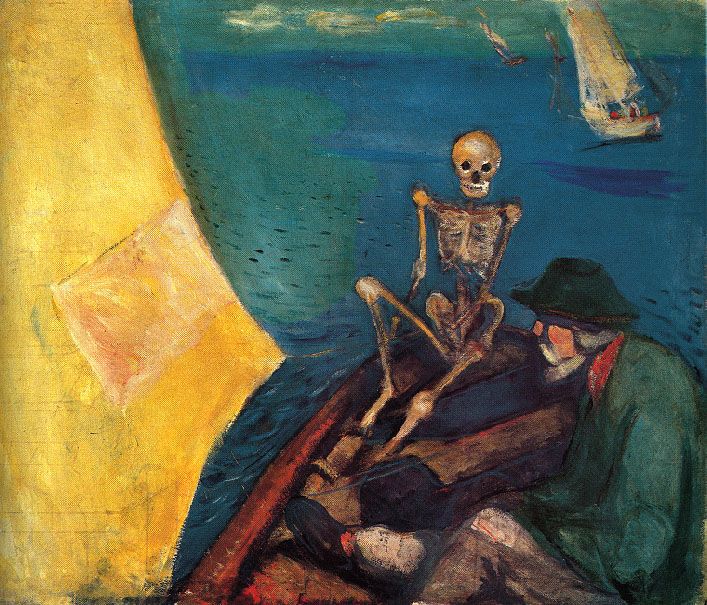
Here’s the reality: There is no coming back from death. You can’t “visit” death, any more than you can spend the afternoon being non-existent and return with a suntan.
Those near-death visions? Oxygen-starved brains farting out fever dreams. Cerebral cortexes short-circuiting like Poundland fairy lights. Hallucinations, not heralds. A final, frantic light show performed for an audience of none.
Epicurus, that cheerful nihilist, said, “When we are, death is not. When death is, we are not.” He forgot to mention that, in between, people would invent entire publishing industries peddling twaddle about journeys beyond the veil — and charging $29.99 for the paperback edition.
No angels. No harps. No antechamber to the divine. Just the damp whirr of hospital machinery and the faint beep-beep of capitalism, patiently billing you for your own demise.
If there’s a soundtrack to death, it’s not choirs of the blessed. It’s a disgruntled junior surgeon muttering, “Where the hell’s the anaesthetist?” while pawing desperately through a drawer full of out-of-date latex gloves.
And thus, reader, I lived. But only in the most vulgar, anticlimactic, and utterly mortal sense.
There will be no afterlife memoir. No second chance to settle the score. No sequel. Just this: breath, blood, occasional barbed words — and then silence.
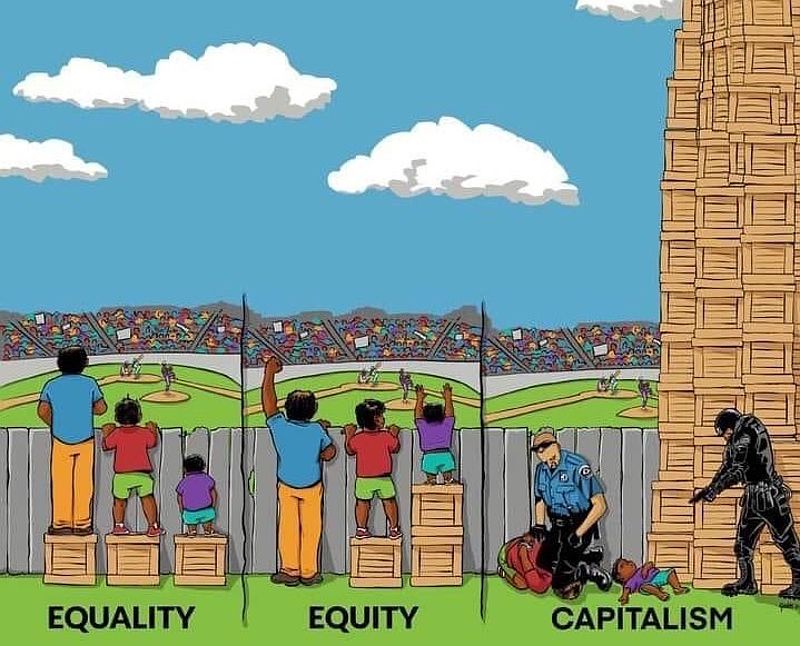
Capitalism, often celebrated for its ability to generate wealth and innovation, also brings with it a darker legacy: the untold millions of lives prematurely lost due to its systemic failures. Capitalism can be attributed to more than 10 million excess deaths per year, and these numbers will continue to increase. These deaths are not simply unfortunate byproducts but are structurally baked into the system itself. Whether through poverty, healthcare inequality, environmental destruction, or war, capitalism’s logic of profit maximisation places human life at the mercy of market forces, with devastating consequences.
Audio: NotebookLM podcast on this topic.
Friedrich Engels famously referred to these preventable deaths as social murder, a term that highlights how capitalism creates conditions in which certain populations are systematically neglected, deprived, and ultimately destroyed. Today, Engels’ critique is more relevant than ever as we examine the staggering human toll that capitalism has left in its wake, often invisible in the glow of GDP figures and economic growth.
Poverty and Hunger: The Silent Killers
One of the most pervasive ways capitalism generates excess deaths is through poverty and hunger. Despite the extraordinary wealth produced by capitalist economies, millions still die from hunger-related causes every year. According to the World Health Organization (WHO), around 9 million people die annually from hunger and malnutrition, mostly in regions where capitalist-driven global inequality has made basic necessities unaffordable or inaccessible.[1]
Capitalism’s defenders often point to rising standards of living as evidence of the system’s success, but this narrative suffers from survivorship bias. The success stories of those who have benefited from capitalist growth obscure the countless lives that have been lost to the system’s structural inequalities. As Engels noted, these deaths are not natural or inevitable—they are preventable. They occur because the capitalist system concentrates wealth in the hands of a few while leaving vast populations to suffer without access to food, healthcare, or basic resources.
“For the dead, there is no measure of progress or rising standards; they are simply erased from the narrative.”
This disparity in wealth and access to resources creates a global system of social murder, where the deaths of the poor are written off as collateral damage in the pursuit of profit. These deaths are not merely unfortunate consequences; they are inherent to the capitalist system’s prioritisation of wealth accumulation over human life.
Healthcare Inequality and Preventable Deaths
The lack of access to adequate healthcare is another major driver of deaths attributable to capitalism. In the United States, the richest nation in the world, an estimated 500,000 deaths between 1990 and 2010 were linked to healthcare inequality, according to a Lancet study.[2] Globally, millions die each year from preventable causes—such as pneumonia, diarrhoea, and malaria—because market-driven healthcare systems fail to provide for those without the means to pay.
In a for-profit healthcare system, those without money are often denied life-saving treatment. Healthcare becomes a commodity, rather than a human right. This commodification of care creates deadly disparities, where a wealthy few receive world-class medical attention while millions die from treatable conditions. Engels’ notion of social murder is evident here as well: the system does not kill through direct violence but by neglecting the vulnerable.
“Capitalism’s market-driven healthcare system perpetuates a structural violence where the poor die from treatable conditions simply because they cannot pay.”
This situation is exacerbated by the ongoing commodification of healthcare through privatisation and austerity measures, which strip public systems of resources and force them to operate on capitalist principles. The result is a world where profit motives dictate who lives and who dies.
Environmental Destruction and Climate Change: Capitalism’s Long-Term Death Toll
Capitalism’s unrelenting focus on short-term profit also drives environmental destruction, contributing to a growing death toll linked to climate change. The WHO estimates that by 2030, climate change will cause approximately 250,000 additional deaths each year, driven by heat stress, malnutrition, and the spread of diseases like malaria and diarrhoea.[3] These figures are conservative, as the cascading effects of climate-induced migration and conflict are difficult to quantify.
David Harvey’s concept of accumulation by dispossession is central to understanding how capitalism contributes to environmental devastation. Capitalist economies extract and commodify natural resources, often at the expense of local populations who bear the brunt of environmental degradation. Deforestation, mining, and fossil fuel extraction displace communities and destroy ecosystems, creating conditions that lead to death, displacement, and disease.
“The victims of capitalism’s environmental destruction are not accidental casualties; they are the inevitable outcomes of a system that prioritises short-term profit over long-term sustainability.”
This environmental violence is compounded by disaster capitalism, a term coined by Naomi Klein to describe how capitalist interests exploit crises like natural disasters or financial collapses for profit.[4] The destruction of vulnerable communities by climate change is not simply a tragedy—it is a consequence of capitalist expansion into every corner of the planet, sacrificing human and ecological health for economic gain.
War and Imperialism: Capitalism’s Violent Expansion
The human toll of capitalism extends beyond poverty and environmental degradation to include the millions of lives lost to wars driven by capitalist interests. The illegal invasion of Iraq in 2003, for example, led to hundreds of thousands of deaths, many of which were tied to the geopolitical aims of securing control over oil reserves. Wars like Iraq are not isolated failures of policy but integral to the functioning of a global capitalist system that seeks to dominate resources and expand markets through military force.
David Harvey’s theory of new imperialism explains how capitalist economies rely on the expansion of markets and the extraction of resources from other nations, often through military means.[5] The military-industrial complex, as described by President Dwight D. Eisenhower, thrives under capitalism, profiting from perpetual war and the destruction of human life.
“Wars driven by capitalist interests are not just geopolitical strategies; they are extensions of capitalism’s relentless drive to dominate resources and secure markets.”
The death toll of wars driven by capitalist expansion is staggering. From the millions killed in conflicts over resources to the long-term destabilisation of regions like the Middle East, these deaths are directly tied to capitalism’s global ambitions. The victims of these wars—like those who suffer from poverty and environmental destruction—are casualties of a system that prioritises wealth and power over human life.
Conclusion: Reckoning with Capitalism’s Death Toll
The deaths attributable to capitalism are not abstract or incidental; they are the direct consequences of a system that places profit above all else. From hunger and poverty to healthcare inequality, environmental destruction, and war, the capitalist system has claimed millions of lives—lives that could have been saved under a more just and equitable economic model.
“Capitalism’s greatest violence is not its wars, but its everyday acts of neglect, where millions die not from bombs but from lack of food, water, and care.”
The true success of capitalism, then, is not in its ability to generate wealth for the few, but in its capacity to obscure the structural violence that sustains it. By framing poverty, healthcare inequality, and environmental destruction as unfortunate consequences of “market forces,” capitalism avoids accountability for the millions it leaves behind.
It is time to reckon with this hidden death toll. Only by facing the human cost of capitalism can we begin to imagine a future where economic systems prioritise human life over profit. The victims of capitalism are not just numbers—they are the casualties of a system that, as Engels pointed out, murders through neglect, exploitation, and greed.
Endnotes:
[1]: World Health Organization, “Hunger and Malnutrition: Key Facts,” 2022. [2]: “The Lancet Public Health,” Study on healthcare inequality in the U.S., 2010. [3]: World Health Organization, “Climate Change and Health,” 2022. [4]: Naomi Klein, The Shock Doctrine: The Rise of Disaster Capitalism (Picador, 2007), pp. 9-10. [5]: David Harvey, The New Imperialism (Oxford University Press, 2005), pp. 145-147.
A year ago, in March 2023, I spent nine weeks in hospitals. I remember the day I almost died. It was not life-changing or life-affirming. No tunnels, lights, angels, or life on replay in slow motion. Just me monologuing. Gasping for breath.
I was breathing three units of Oxygen through my nose, but I wasn’t getting enough. The staff upped the dose to five units and administered it through a face mask. I was gasping. They were pushing on a string. I wasn’t getting the Oxygen. Instead, I was gasping like a fish out of water.
No lights – just monologue. Being contemplative, I do this often anyway. I remember telling myself, just pick a side; flip a coin; in or out; live or die. I was indifferent to the outcome. I just wanted the suffering to end. Full stop. I had no investment in either outcome. I’ve lived a good life. I was at peace. I am at peace. A year on, and I’m still recovering.
The last thing I remember was telling a nurse, “I think you need to intubate me.”
“We might have to; she replied.
The next day, I awoke with tubes down my throat after an emergency surgery to drain fluid around my heart.
I can’t claim to have experienced a near-death experience, NDE, but I was on the threshold. There was no other side. No pleading. No review. Just me in the world I was thrown into – what Heidegger termed Geworfenheit.
This is all of us. Here without volition. Just trying to make it through. Before this incident, I didn’t believe in ageing. I was invincible. I lived life like a younger person, and no end was in sight.
Perhaps I was too quick to say this was not life-changing. Now, I realise the fragility in life – at least I was fragile. I aged overnight – and then some. Overshot my chronological age. This is where I remain. Vulnerable.
Although I’d like to return to work, I am still not employable. Besides all of the medical visits and physiotherapist, my ankle is broken, awaiting repair, and my hands still don’t quite work. I can type. I’m typing this. Slowly. Twenty words a minute. Lots of backspacing. A computer application might assist with this, but none do quite so. This translates to a twenty per cent productivity output. Not great.
I’ve always considered myself to be a knowledge worker, but I never realised how much I still need my hands. I’m not just a brain in a vat. I need to engage with the world.
I am recovering – slowly and not without setbacks. Still, I persist. I took the road less travelled. Might I have been better off taking the other road? It’s hard to say.
Cognitively, we humans have an endowment effect: We value what we have. For now, I have life. Irrational or otherwise, I’ll cling to it. I’ll hope for a better tomorrow, but hope floats. Hope and a dollar won’t buy you a cup of coffee at Starbucks. It’s a vapid yet very human fiction. I hope this next year will be better than the last. Let’s see where it goes.
Many lives were changed in 2019 as fentanyl replaced heroin as the opiate of the masses on the streets of Philadelphia. Ten times more potent than heroin, fentanyl lasts half the time between fixes. It cost many lives.
But look deeper. Look away from the streets and towards the medical-industrial complex. The state of pain management is in its infancy. In some hundred years we’ll look back on this period and cringe in the same manner as when we regard bloodletting and humours. We have myriad solutions, but as many cases have none. Opiates fill some of this void, whether by prescription or on the streets, but even this only masks the symptoms.
The goal is not always to obviate physical pain, but for some mental torment feels as real. Those with mental anguish are marginalised whilst the rest are accused of overreacting. It all in their heads, too. Drug-seekers. Mental illness. Bollox.
Medical science in this arena is in its Infancy. Not quite yet toddlers, but they won’t admit it. Better to blame the patients and victims. Better to make it a moral issue. Public health regulations are in the same state of maturity. Hubris kills. Capitalism kills. Calvinistis protestant work ethic kills. Fetanyl kills, too.
Ninety per cent of fetanyl is cut with Xylazine, tranq, a veterinary tranquiliser. This makes fetanyl cheaper and is reported by some to extend the euphoric effects, but it’s not an opioid, so interventions are different to opiate-induced overdose.
Xylazine renders the user to sleep, but it doesn’t stop withdrawal symptoms. Addicts awaken to need another fix. If there isn’t enough opiate, one may awaken already in withdrawal.
Whilst heroin might last eight hours between fixes, fentanyl lasts closer to four. The addict needs to seek twice as often.
But I’m rambling. I’ve been in hospital since 9 March. It’s still difficult to focus. My girlfriend died the next day, on the 10th. She overdosed on a chemical cocktail of fentanyl, alcohol, and who knows what.
Her pain was psychological, but that’s a topic for another day. She was in recovery. This is where some are most susceptible to overdose.




 Philosophics